Ch. 19 – Return to Kyiv* (Re-Posted 12/5/23)

* NOTE: In deference to the tragically and brutally besieged, independent nation of Ukraine and its strong preference for the use of its own language, I have switched to the Ukrainian spelling of its capital city, Kyiv, rather than the Russian “Kiev.” Slava Ukraini.

*. *. *

Things had changed.

The day after Christmas of 1991, the Soviet Union had ceased to exist. In its place were now fifteen independent nations that previously had been Soviet Republics. And in the summer of 1993, most were still in the process of establishing their chosen forms of government, legal codes, and the institutions required to administer them. Ukraine was one of those fifteen nations, and as part of its development had established Embassies in various countries around the world . . . including neighboring Russia. It had also created official crossings along its nearly 7,000 miles of border abutting seven countries . . . also including Russia.
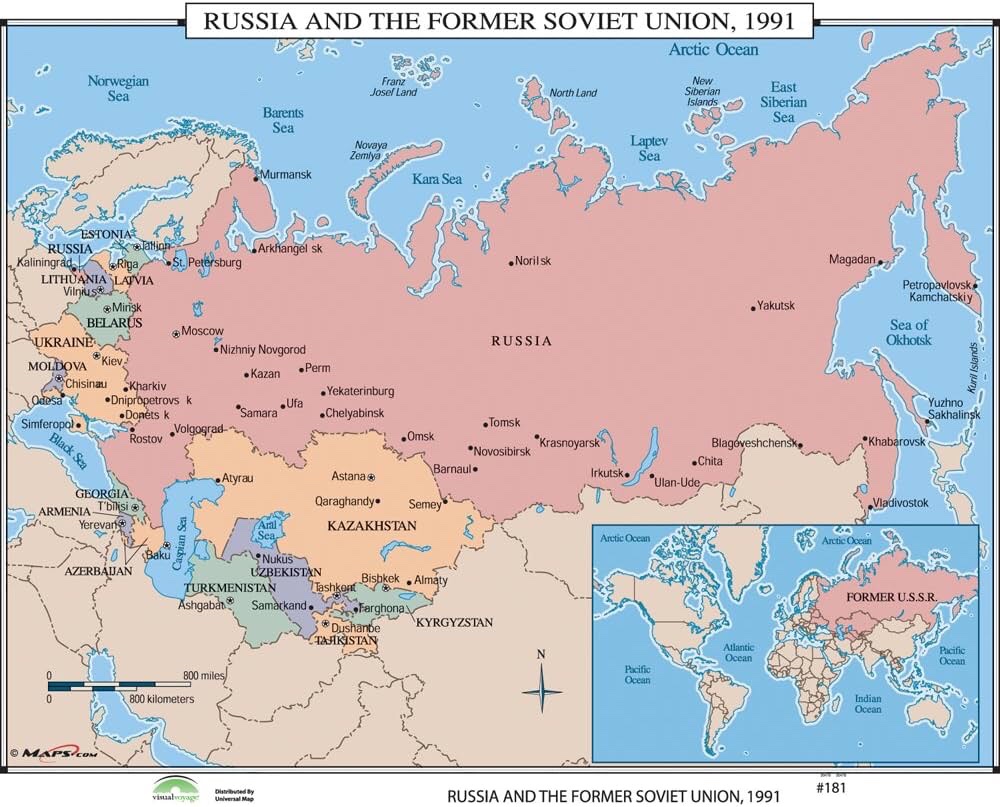
The 15 Former Soviet Republics

When I arrived in Moscow in May of 1993, much of this work was still in the process of being completed by the Ukrainian government, and my first train trip to Kyiv was easy and seamless. But by the time I was planning my second visit there, it was a whole new ballgame. There was now a Ukrainian Embassy in Moscow, and so I called to inquire whether I would need a visa to cross the border as a U.S. citizen with an American passport. It took a while to find someone who would even attempt to answer that question, and when I did, I was told that people with U.S. passports did not require visas to cross into Ukraine. Good news.

It was especially good news because this time I would be traveling with two American companions. Scott was working with the Foundation in the U.S., assisted by Michelle. Neither of them spoke Russian, and would be relying on my limited translation skills during the trip.

The fun began when we arrived at the Kyivsky Train Station in plenty of time for our scheduled evening departure. There was a woman taking tickets and checking I.D.s, and when she looked at our passports, she asked, in Russian, “But where are your Ukrainian visas?” Stretching my linguistic ability to the max, I explained to her the details of my call to the Embassy and what I had been told about not needing visas with U.S. passports. And she said, quite authoritatively, “Nyet!” I had apparently been given bad information, and her instructions were to see visas from everyone — Americans included.

Kyivsky Railroad Station, Moscow

I also explained that we had to leave that day as we had meetings scheduled the following morning with Ukrainian government officials and could not postpone our departure. She asked how we would get back into Russia, and I said we could get our return visas in Kyiv. She then asked what we would do about the border crossing. At that point, I moved a little closer to her, smiled conspiratorially, and whispered, “Well, that’s the Ukrainian government’s problem, not yours. Right?” Something from her lifetime of Soviet upbringing must have clicked into place. She smiled, handed our passports back to us, and said, “Khorosho” — “Fine.” And we boarded, three foreigners en route to Ukraine without visas. What a great start!

It got even better when the same lady who had taken our tickets showed up as concierge on the train and offered us tea. She obviously wore two hats for her job with the railroad, and I wasn’t crazy about this one, to say the least. She knew we didn’t have visas. What was going to happen when we reached the border? She would be blamed, unless she had a plan in place. This did not bode well for us, but it was too late to do anything about it now. We were already underway, captive on the train for the next 14 or 15 hours.

Michelle and I were sharing a two-bunk sleeper compartment, and Scott had a single at the far end of the same car. I was glad of the company, and we all sat up late in the “girls’ dorm,” swapping stories from our life histories, eating the food we had brought with us, and drinking good Russian tea, before finally kicking Scott out to his own quarters and locking our door. We had dressed comfortably for the trip, and something told me that Michelle and I should sleep in our clothes that night. I was later to be grateful for that decision.

At the border

The movement of the train soon lulled us to sleep, and it was around dawn when we were awakened by the screeching sound of brakes being applied and a whole lot of rattling and clanking going on. We had arrived at the border. Suddenly our door — the carefully locked door — was unlocked and slammed open with great force. Michelle and I both bolted upright in our bunks and were confronted by a very tall, very young, heavily-armed Ukrainian border guard, who stuck out one hand, palm up, and demanded, “Passports.”

Uh-oh. The moment of truth had arrived. Thank goodness we were spared the indignity of having to face it in pajamas!
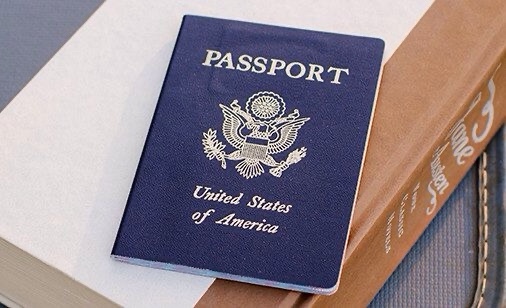
I told Michelle to hand over her passport and to say nothing. Suddenly, I found myself in charge. Yeah, right. He was the one with the sidearm, not I. And he knew it. He also knew — compliments of the ticket-taker/tea service lady — that I spoke some Russian, and that we had no visas. But he dutifully scanned through our passports before saying to me, “Where are your Ukrainian visas?” Once more, I went through the whole story of the telephone exchange with the Embassy in Moscow. Then the following dialogue — in Russian — ensued.

Guard: “But you must have visas.”

Me: “No, they told me we didn’t need them with American passports.”

Guard: “But you must have them.”

Me: “We will get them in Kyiv.”

Guard: “No, you must get them in Moscow.”

Me: (Looking dramatically at my wristwatch): “But it’s too late.”

Guard: (Repetitiously): “No, you should have gotten them there.”

Me: (For the umpteenth time): “But they told me we didn’t need them.”

Guard: “Well, they told you wrong.”

That was when my patience ran out. I recalled what someone had told me years before, in an entirely different context: that you have as much power as you can make other people believe you have. So — from my still-seated position — I slammed my hand on the small table attached to the wall between our bunks, making the water bottles and glasses do a little dance, and angrily declared, “Well, that’s not my fault, is it?!!”

“So there!”

And there stood one very surprised border guard, wondering who this tough-talking, unintimidated, Russian-speaking American woman might be. At best, I probably reminded him of his mother; at worst, I could have been the First Lady of the United States for all he knew. He clearly had no idea of what to do next. So he did what came naturally: he passed the buck. Taking two steps backward into the corridor, he beckoned to someone farther along the car, and suddenly we had two young, tall, well-armed border guards in our little compartment. They began whispering between themselves, and all I could catch were what sounded like “psst-psst-psst-Americans,” and “psst-psst-psst-no visas.” Then the second guard looked at me and asked, “You will get your visas in Kyiv?” to which I replied, still with supposed authority, “Yes; I already said we would.” Shaking an index finger at me, he came back, “You be sure?” And as I waved a hand dismissively toward the door, I replied, “Yes. Now you get out!”

And by some miracle, they did just that. I had known all along that they were just waiting for me to offer a bribe (undoubtedly to be shared with the tea lady who had tipped them off), and I was prepared to pay if all else failed. But when I didn’t offer, they backed off as any schoolyard bully would have done. But I also realized that they had had the power to put us off the train in the middle of nowhere. Thank God they were young and inexperienced!

When they were gone, Michelle finally exhaled and asked what had just happened. I shrugged and told her we would get our visas in Kyiv. No worries.

“Yes-s-s-s!”

After more rattling and clanking sounds, the train started forward, and Michelle and I looked at each other and in unison exclaimed, “Scott!” He had been on his own, with no visa, and not speaking a word of Russian. As we rushed out into the corridor to find him, he was walking toward us, grinning from ear to ear. He asked if we were all right, and I said we were fine — that I had managed to talk our way out of it. But how had he gotten through it? Still smiling broadly, he replied, “Oh, I just kept babbling at them in English until they gave up and went away.” There’s frequently more than one way out of a tough situation, and Scott had found his.

P.S. For the remainder of the trip, we saw no more of the tea service lady. Perhaps, being Russian and not Ukrainian, she was dropped off at the border.

*. *. *

But as clever as Scott had been on the train, he nearly got us into big trouble in Kyiv. On an afternoon when we had some spare time between meetings, we decided to go for a stroll through a nearby park. We were delighted to come across two elderly gentlemen playing chess at a permanently-affixed stone table — a classic scene, just as you see in practically every movie about Russia. I talked to them for a few moments, introducing us as American visitors, and leaving with a traditional Russian farewell, “Vsevo khoroshevo” — “All the best.”
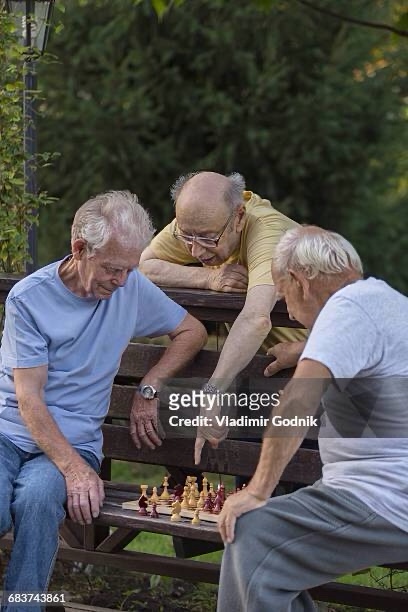
Passing the Time

A little farther on, we came to the banks of the Dnieper River, and followed it for a while, enjoying the sound of the rushing water. And then we found ourselves at the edge of the park, on a quiet street alongside a large office building. Turning right, in the general direction of our hotel, I wondered what the building was used for, saying I was feeling an eerie vibe from it. Of course, Scott and Michelle laughed at me. So when we saw a local lady walking toward us, I stopped her and asked, “Excuse me, do you know what this building is?” Her facial expression changed dramatically as she looked all around and over her shoulder. Then she whispered, “KGB.” I just mumbled a quick “Thank you,” as she hurried on her way. I was right about that vibe, and didn’t hold back from rubbing it in.

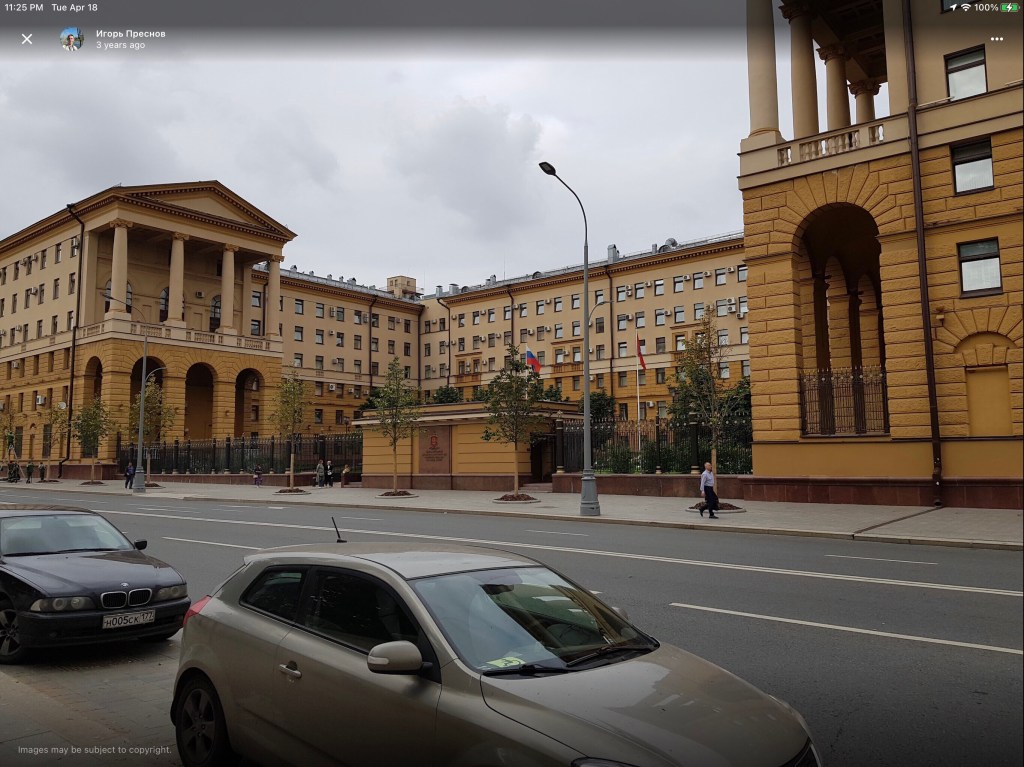
But Scott had an idea of his own. When we reached the corner and looked at the side of the building, we saw the name clearly engraved above the entrance: Komitet Gosudarstvennoi Bezopastnosti “Committee for State Security.” KGB. Suddenly calling out “Take my picture,” Scott went charging up the tall staircase to the landing at the entrance and struck a pose, shouting for one of us to snap a photo. Knowing that it’s never a good idea to photograph a government building in that part of the world — and especially the offices of an intelligence agency — I yelled at him to get the hell out of there and refused to photograph him. But he decided this was fun, and wouldn’t budge. Finally I convinced Michelle that we should just walk away, and after a momentary pause he grudgingly gave up and joined us.

Old KGB Headquarters of the Ukrainian Soviet Socialist Republic (Kyiv, Ukraine) | by courthouselover
Main KGB Building, Kyiv (not the auxiliary building we saw)

And as we left, I noticed a car parked just yards from us, with two men seated in it. Just sitting . . . and watching. And I knew we had been spotted by KGB security. I quietly pointed them out to Scott and Michelle, both of whom finally realized that I hadn’t been joking and that we all needed to behave ourselves. The Soviet Union may have broken apart; but the KGB was, unfortunately, still very much alive. Needless to say, we had no further trouble with Scott on that trip.

In two days we had wrapped up the business side of our visit — my last one ever to Kyiv — and headed back on another long train ride to Moscow, this time with our return visas safely in hand. Scott and Michelle left for home a couple of days later, and I began preparing for the big event scheduled at Militia Headquarters: Petrovka 38.

‘Til next time,
Brendochka
4/20/23 (re-posted 12/5/23)
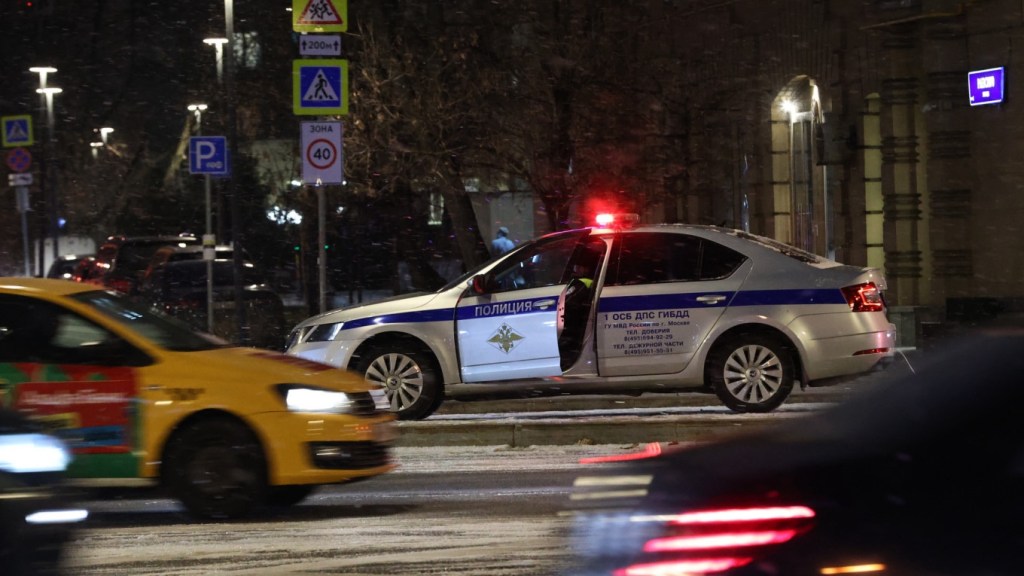
12/4/23: “Police raid Moscow gay clubs,” media say. Well, that didn’t take long.

The LGBT folks I wrote about earlier today were not exaggerating. Under the pretext of a drug raid, the Moscow police— just one day after the new, onerous “family values” legislation was pushed through the Duma in record time — on Friday invaded three popular gay clubs where private parties were being held, taking the time before they were finished to photograph every patron’s official ID.

Moscow Police – Dec. 1, 2023

Eyewitnesses said that “In the middle of the party, they stopped the music and [the police] started entering the halls.” [Darya Tarasova, Gul Tuysuz and Jen Deaton, CNN, Dec. 4, 2023, citing Ostorozhno Moskva media outlet.] In a video from the same source, another eyewitness described the scene thus:

“I was there. I honestly sh** myself when the music stopped and they said there was a police raid. I thought that was it, I would be imprisoned for 12 years. On the way out, they took a photo of my passport [ID]. So you understand, 300 of us stood naked, in only underwear, and waited for somebody to bring us clothes, and no one understood what was happening.”

The image of that deliberately demoralizing police action gives new meaning to the term “strip search.”

*. *. *

Also on Friday, the Central Station Club — a gay club in St. Petersburg — announced its closure. The club’s management said they had been refused further rental of their premises due to the “new law.” In a truly law-based society, that’s called eviction . . . without just cause.

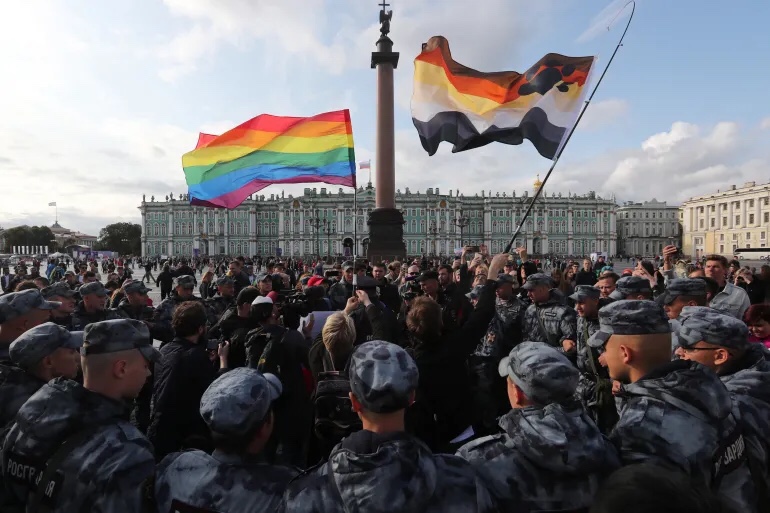
Demonstration in Support of LGBTQ Rights – Palace Square, St. Petersburg, Russia

The speed with which these actions were planned and carried out following implementation of a law that, just days ago, was still “in progress,” is mind-boggling. There is nothing even remotely spontaneous about it; it was meticulously planned, down to the last detail. And there is no doubt that this is just the beginning.

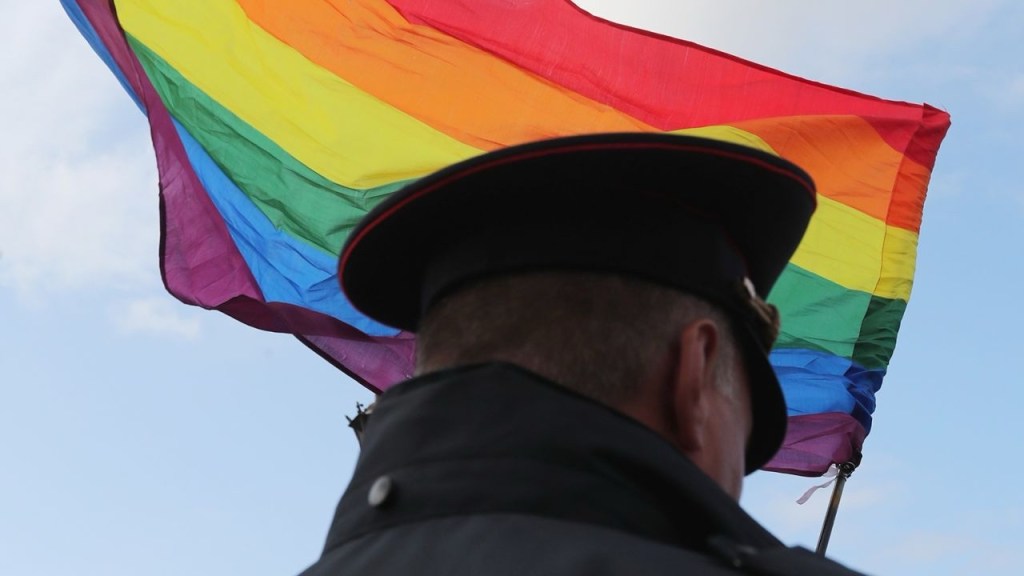
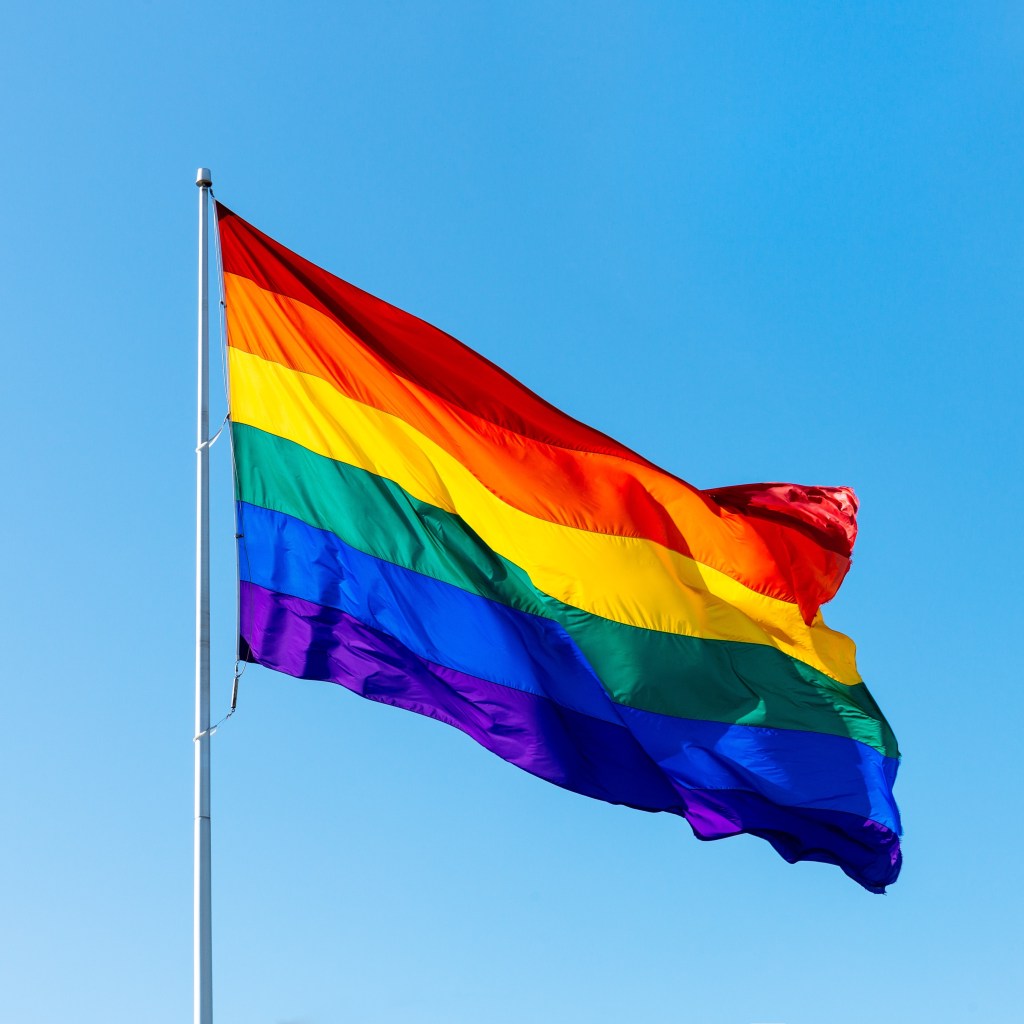
So now the Rainbow Flag may no longer be flown in Russia. And I would hesitate to play “Over the Rainbow” too loudly, just in case anyone’s listening. Your life — including the most personal parts of it — is no longer your own. And an entire stratum of Russian society is being chased out of the country, taking with them their skills, their talents, and their money. And for what? To further solidify central control, while also satisfying the standards of “morality” of one pathetic little man sitting in isolation in the Kremlin? Are you really satisfied now, President Putin?

Or are you already working on your next victims?

Just sayin’ . . .

Brendochka
12/4/23

12/4/23: “We can ban any activities from LGBT international organisations here in Russia. That’s nice. We don’t need them.”

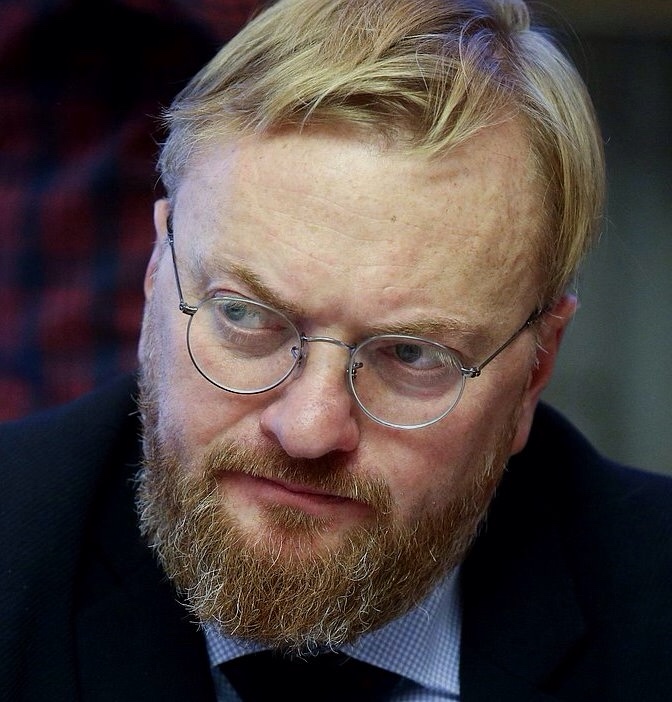
Thus spake — not Zarathustra — but Vitaly Milonov, Member of Parliament for the United Russia party — Russia’s ruling political party, ultra-conservative, and fully supportive of Vladimir Putin. No surprise there.

Vitaly Milonov: The Face of Ugliness

But I’m getting ahead of myself. Here’s the background:

During this past week, Russia’s Supreme Court banned the activities nationwide of an “extremist organization” they dubbed “the international LGBT public movement.” The ruling was made on the basis of a motion from the Ministry of Justice . . . although there is no such organization in existence as a legal entity. The Supreme Court’s hearing “was held behind closed doors, but reporters were allowed in to hear the court’s decision. Nobody from ‘the defendant’s side’ had been present, the court said.” [Steve Rosenberg, Russia editor, Reuters Moscow, as reported by BBC News, Dec. 2, 2023.]

According to a Russian constitutional amendment three years ago, marriage is defined as a union between a man and a woman. Period, end of discussion. Same-sex unions are not recognized in Russia.

Reuters’ Steve Rosenberg asked Sergei Troshin, a municipal deputy in St. Petersburg who came out as gay last year, what the effect of the ruling would be. His response — unequivocal and frightening — was:

“I think this will mean that anyone whom the state considers an LGBT activist could receive a long prison sentence for ‘participating in an exremist organisation.’ For the organizer of such a group, the prison term will be even longer. This is real repression. There is panic in Russia’s LGBT community. People are emigrating urgently. The actual word we’re using is evacuation. We’re having to evacuate from our own country. It’s terrible.”

In accordance with the draconian legislation, and under threat of active enforcement of those laws, the LGBT community has obviously felt increased pressure to go into hiding. In 2013, a law was adopted prohibiting “the propaganda [amongst minors] of non-traditional sexual relations.” As of last year, those restrictions have been extended to include all age groups. References to LGBT people have even been deleted from books, films, advertisements and TV shows.

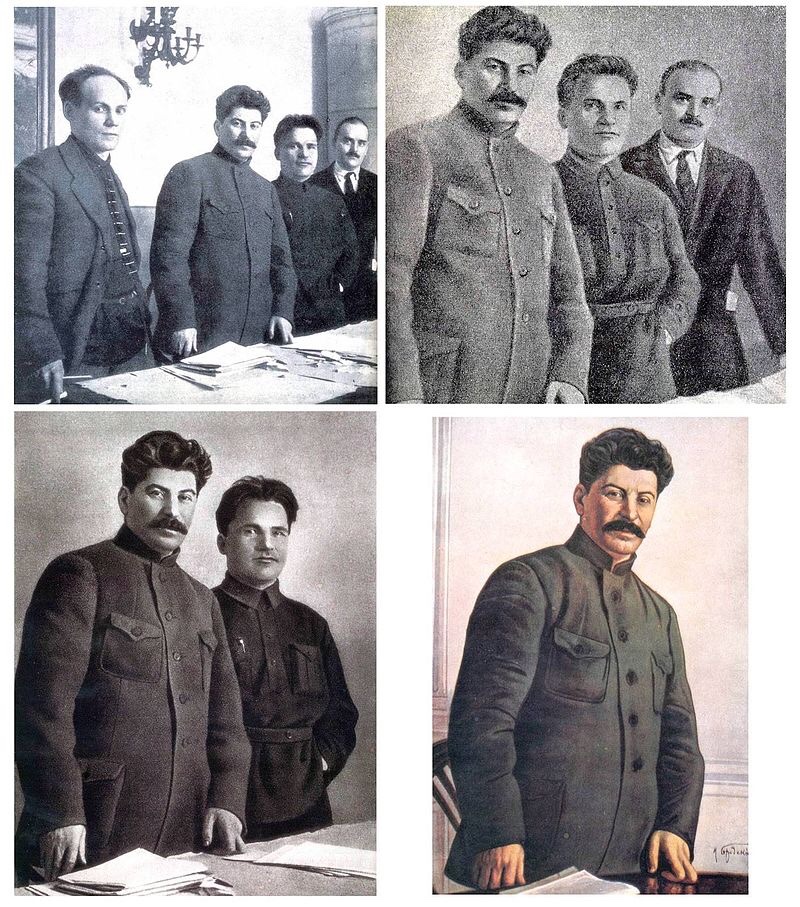
Shades of the Stalinist era, when attempts were made to erase history by deleting from history books and other publications the names — and even the pictures — of people who had fallen out of favor. If you don’t see it, it doesn’t exist . . . and never did.

Now you see them . . . now you don’t.

*. *. *

And that brings us to Vitaly Milonov, described by Mr. Rosenberg as “a famously homophobic MP from the ruling party, United Russia,” who has claimed that the ban on LGBT groups was “not about sexual minorities or the private life of individuals. It’s more about the political agenda proclaimed by this LGBT international movement. They have their own tasks, their own goals. They act as a political force, a political structure and the goals of this structure contravene the Russian Constitution.”

Right. All of my gay friends are out there trying to overthrow the government, so it must be true in Russia too . . . right? It’s a freakin’ international conspiracy . . . or so Mr. Milonov would have us believe. As though they’re not already busy enough, just trying to live their lives without being hassled.

Then Mr. Rosenberg asked Milonov how the government could ban a “political structure” that doesn’t exist as such; and that was when Mr. Congeniality came back with his lovely response:

“Oh, it’s easy. We can ban any activities from LGBT international organisations here in Russia. That’s nice. We don’t need them. And I’m looking forward to the next step: banning the six-colour rainbow flag. We don’t need this flag. It’s a symbol of the fight with the traditional family. I hope that no-one can show this flag in Russia.”

Here it is, Mr. Milonov. Offended? Yes? Good!

All right, then. Now we’re getting somewhere. President Putin has already expounded on the importance of “traditional family values” when he implored Russian women to get busy having eight or more children in keeping with their grandparents’ and great-grandparents’ way of life. Back to the days when large families were needed to grow the population, to work on the farms and in the factories, when infant mortality rates were high . . . and when the only known method of birth control was abstinence.

Back to the days when the country’s leader was known as the Tsar.

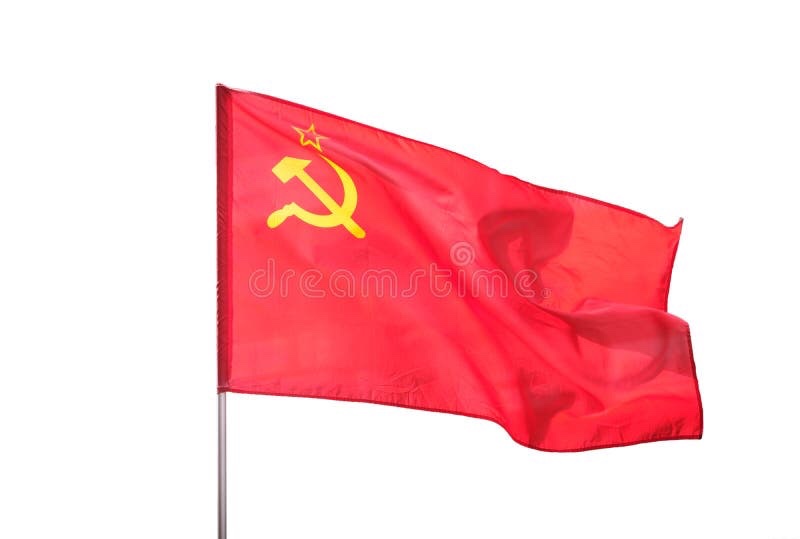
And perhaps while he’s liberating one of those old bejeweled thrones from the Kremlin Armory for his office, he’d also like to bring back the old hammer-and-sickle flag. They’re from two different eras, of course; but truth and accuracy aren’t really the point here.

*. *. *

But what’s really behind it? Sergei Troshin believes it is political:

“I think [the court hearing] is linked to the presidential election next March. [The authorities] are creating an artificial enemy. They say ‘We are battling the West.’ The battle with LGBT people fits in with this anti-Western rhetoric. Fighting both the West and the LGBT community is popular amongst the conservative, anti-Western part of society. So this topic will be pushed in the run-up to the election.” [Steve Rosenberg, Reuters.]

Okay, so blame the U.S. again. Go ahead . . . we’re used to it.

Mr. Rosenberg also spoke with Maxim Goldman, who works for a Russian group that offers support to LGBT people. “As soon as we heard about the Supreme Court hearing, the people who run our organisation realised we would have to leave the country urgently. It became an emergency.” Mr. Goldman was headed to the airport with a small suitcase, but continued:

“I feel totally rejected by my own country. We’re supposed to have a democracy here. The people we put in power are supposed to take care of us. But the opposite is happening. They’re punishing us. They’re wiping their feet on us. I’m being forced out.”

Another diaspora?

“Soon I’ll be a stranger in a strange new place . . .” [Fiddler On the Roof]

*. *. *

Sergei Troshin, the St. Petersburg municipal deputy, is staying in Russia for now. But he admits:

“I have spoken a lot in the past about LGBT rights. It’s possible this will be enough to launch a criminal case against me. I hope not, but maybe. And this is terrifying. Russian society is soaked in fear. With every word you’re crossing a mine field. Say one thing and it might land you in prison for five years; say something else, and you’ll get 10 or 15 years behind bars.” [Steve Rosenberg, Reuters.]

*. *. *

So there you have it: life in Russia for today’s LGBT community. A few decades ago, the Soviet government denied that homosexuality existed in their workers’ paradise. They also denied the existence of AIDS. They had come a long way since then, finally facing and admitting the realities of the late 20th Century. And now . . . well, now we just climb into that old DeLorean, rev up the “flux capacitor,” and we’re Back To the Future.

“Back To the Future”

I can’t help wondering, though: Just how far back does Putin want to go?

Just sayin’ . . .

Brendochka
12/4/23

12/3/23: You say you haven’t committed a crime? No worries — we’ll just make one up for you.

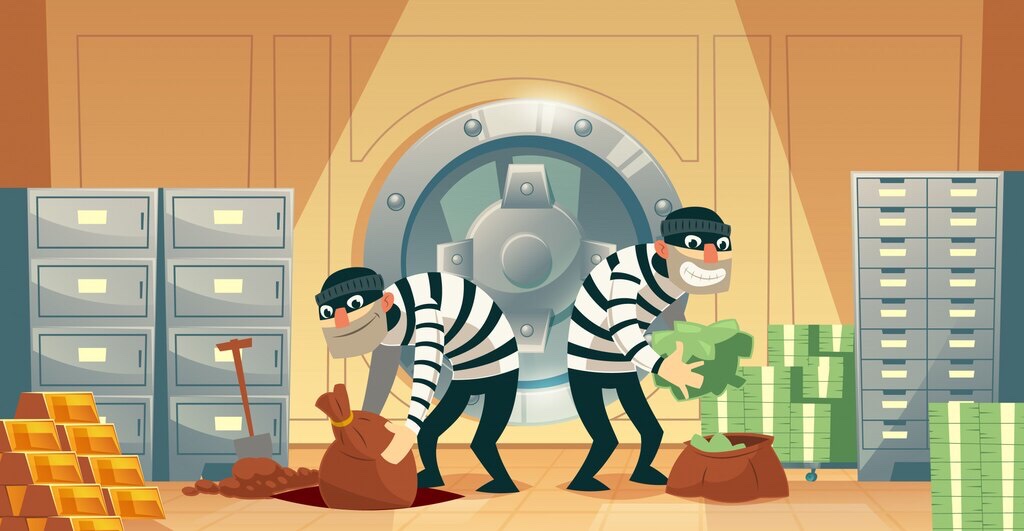
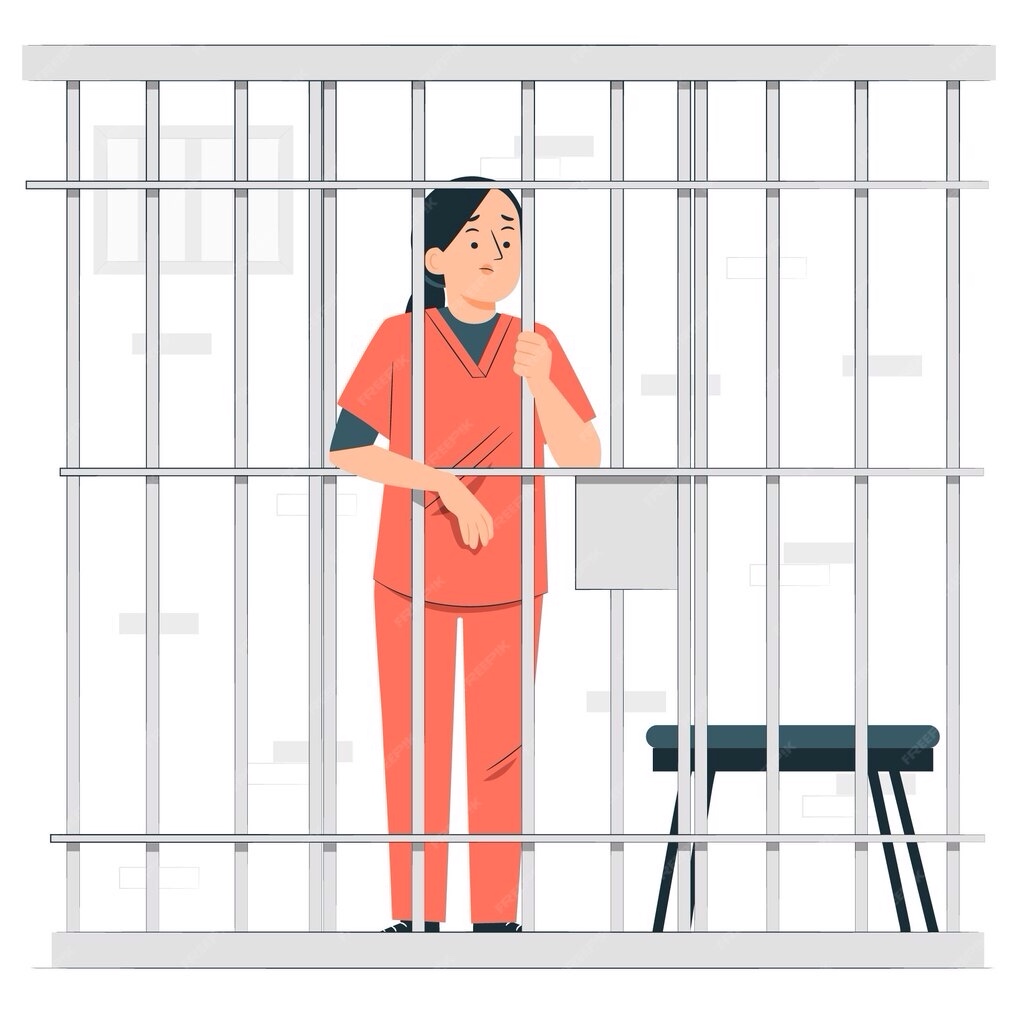
“Nyet voinye” — “No to war.” Written in the snow, that little phrase gets you ten days in jail . . . in Russia, anyway. Imagine what bank robberies go for these days.

If you’re waiting for a punchline, give it up — this is a true story, not a joke. A man named Dmitry Fyodorov was near the entrance to an ice-skating rink in Moscow’s famous Gorky Park on November 23rd, when he doodled those words with his finger on a snow-covered turnstile. Unfortunately, he was observed and detained by police, and was sentenced the following day for having committed a civil offense: specifically, publicly discrediting Russia’s armed forces.

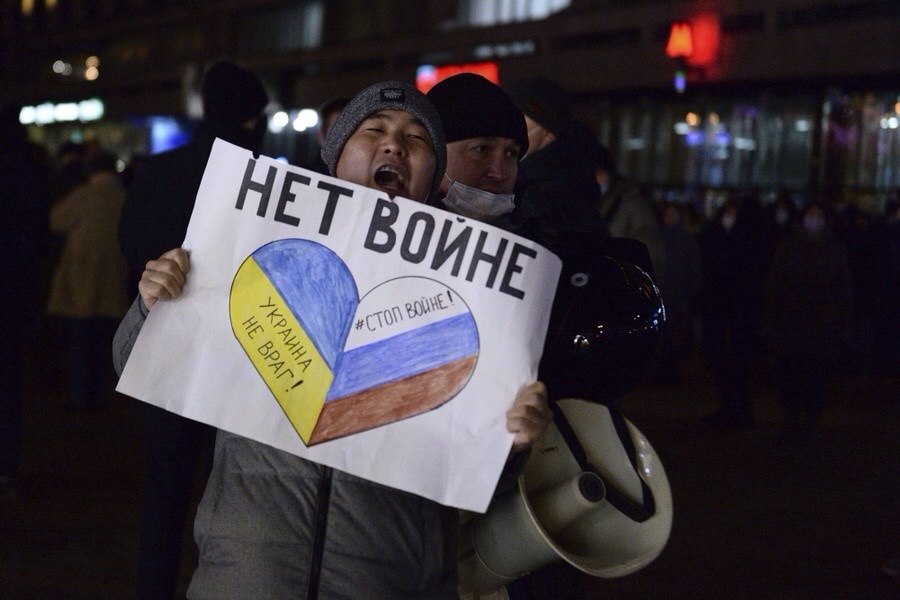
“No to war.” “Stop the war.” “Ukraine is not the enemy.”

Apparently, some 20,000 people, give or take a few, have been detained for similar acts, and over 800 criminal cases opened. Dmitry Fyodorov’s case should have resulted in a fine, but he was given a ten-day jail sentence for “disobeying the police” and allegedly refusing to go to a police station. He denied the additional charges, but no one was listening; that’s what the police charged him with, and that’s what the court sentenced him for. [Reuters, Nov. 29, 2023.]

Actually, he was pretty lucky. Imagine if, at that exact moment when Dmitry’s artistic impulses struck on that snowy day in Gorky Park, he had also had to pee and decided to write, instead of with his finger . . . well, you get the picture. I wonder what the sentence would have been for that! (Not to mention freezing his paintbrush off.)

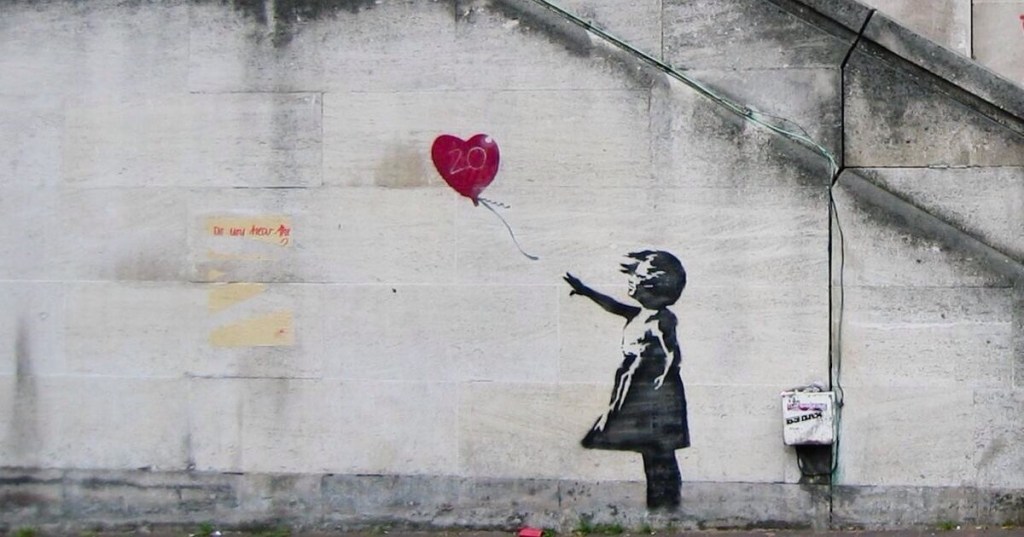
And let’s hope that Banksy never decides to visit Moscow!

“Girl With Balloon,” by Banksy

*. *. *

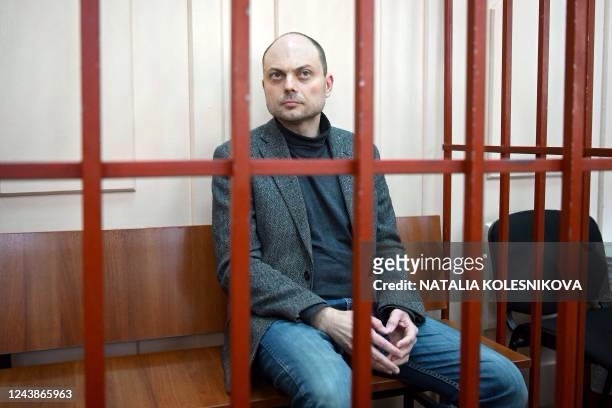
Equally amusing — in a diabolical sense — is the recent charge against Vladimir Kara-Murza, the joint Russian-British citizen currently serving 25 years in a Siberian penal colony for treason and allegedly spreading “false information” concerning the war in Ukraine.

Consider how difficult it would be for someone in his position to commit any sort of punishable offense, other than perhaps using the toilet too many times in one day. But poor Vladimir has recently been fined 50,000 rubles ($560) “for not providing a full report of his conduct as a registered ‘foreign agent.’” [Reuters, Dec. 1, 2023.] (Kara-Murza was declared a foreign agent on April 22, 2022, the same day he was detained for having made anti-war speeches . . . while outside of Russia.)

Vladimir Kara-Murza

Apparently, a “foreign agent” in Russia must regularly submit detailed reports on their activities and finances. Well, that’s nothing new; the same is true here in the U.S., where representatives of specified foreign entities doing business or engaging in political activities here must file periodic reports under the Foreign Agents Registration Act (FARA). So what’s the problem?

Well, the problem is in the definition of “foreign agent.” It seems that in Russia, that term still carries visions of spies, or intelligence operatives. For some people, the good old days of the Cold War and their spy games were just too good to let go.

I do have to ask myself why no one in Russia has seen the irony — or idiocy, if you will — of expecting actual spies to register their activities. But what do I know?

*. *. *

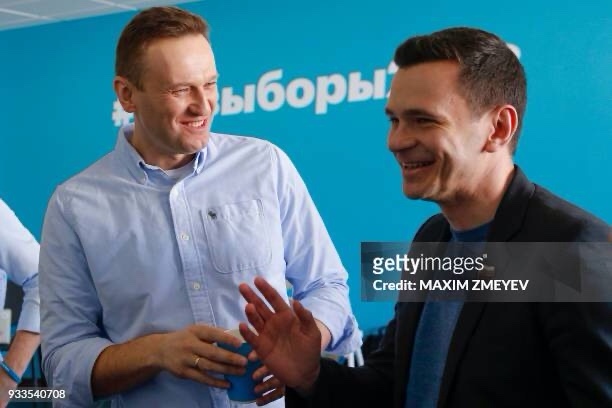
Then there’s the equally bizarre case of Ilya Yashin, another opposition activist and supporter of the better-known Alexei Navalny (about whom I have had much to say in earlier chapters). Yashin is serving 8-1/2 years in prison for making statements on his YouTube channel about Russian war crimes allegedly committed in the notorious battle for Bucha, Ukraine.

His more recent offense, supposedly committed while in prison — and for which he has been fined 45,000 rubles ($500) by a Moscow court — consisted of his “failing to attach a mandatory rider advertising his ‘foreign agent’ status in capital letters to his posts on the Telegram messaging app.” [Reuters, Dec. 1, 2023.]

Ilya Yashin (right), with Alexei Navalny

Aside from the ludicrous nature of the charges themselves, what’s wrong with this story? Well, to quote Ilya Yashin: “I don’t have any opportunity to post materials, I’m in a penal colony, and before that [I was] in a pre-trial detention centre. I reject the status of a foreign agent.”

Makes sense to me. But somehow, he was supposedly magically able to produce a post on Telegram from prison, and — horror of horrors! — he forgot to write “foreign agent” in capital letters on that post! And you say he was only fined 45,000 rubles? You mean that’s not a hanging offense? Those Russian judges must be getting soft.

*. *. *

And, as a piece de resistance, Alexei Navalny himself — while serving a combined sentence of more than 30 years on various charges — has been presented with new charges under a criminal law regarding . . . drumroll, please . . . vandalism. Now, what do you suppose he might have done? Written “nyet voinye” on the walls of his cell?

*. *. *

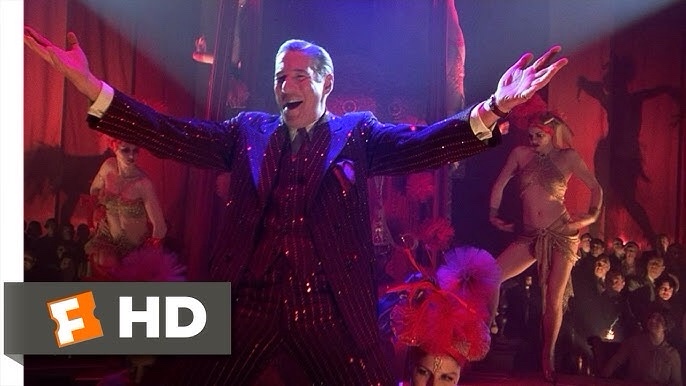
I am reminded of a scene in the film version of the Broadway smash hit Chicago, in which Richard Gere — in the role of a slightly unorthodox criminal defense lawyer — likens the trial of a murder case to a vaudeville tap-dance routine. And in Moscow, at least, he may have a point.

“Give ‘em the Old Razzle-Dazzle”

Just sayin’ . . .

Brendochka
12/3/23

Ch. 18 – A Yankee Doodle Dandy in Moscow (Re-Posted 12/2/23)
July 4, 1993 – So far, so good. I had been in Moscow for nearly two months, and I was still alive and unscarred. In fact, I was thoroughly enjoying myself. And with the occasional unscheduled drop-by visit from Vladimir Bragin of the KGB, I was feeling well protected.

No, not James Bond! The KGB!

I had received a surprise phone call earlier that week from a friend in Washington, Mary Saba. (You may remember her from the London and Prague episodes.) Her husband, Joe, had just left on a business trip to one of the “Stans” — the five Central Asian Republics of the former Soviet Union whose names all end in “stan” (Kazakhstan, for example) — and Mary and their teenage son, Colin, were going to join him there. Since they would have to travel through Moscow and had never been there before, she and Colin were planning to stay over for a couple of days, and she was letting me know of their imminent arrival.

I was thrilled to be seeing a good friend from home. When she told me where they were staying — a Soviet-style hotel on the outskirts of the city — I told her they would find that to be both inconvenient and generally miserable, and that I would pick them up and bring them to my apartment, where I had two spare bedrooms. It didn’t take much to convince her.

The Sabas are the kind of people who fit in anywhere. They’re smart, funny, caring, personable, and genuine — that rare breed known as completely lovable, good people. Mary got along beautifully with Olga, Lena and Tamara; and Colin managed to find common ground with Tamara’s two teenaged daughters, even though they didn’t speak each other’s languages. We did the usual sightseeing tour, and then Colin said he had a special request: he wanted to see the Moscow Military Museum. Tamara’s husband was an Army officer, and he gladly offered his services. He arranged for our admittance, and five of us crammed into his little car.

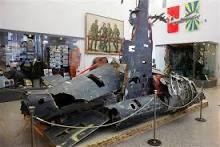
U-2 Spy Plane Wreckage At Military Museum

But first came lunch — at McDonald’s, of course. Doesn’t every American travel 5,000 miles to eat at a Mickey D’s? Colin and Mary were just curious to compare it to the ones at home; Tamara and her husband had never eaten there, because it was too expensive for them as a family of four. So off we went, my treat. Cheapest restaurant meal I ever had — and surprisingly good. Far better quality than in the U.S., in fact. All of the meat and vegetables were locally sourced, and the rolls freshly baked. It was worth the wait in line.

At the museum, admission was free — but I found that I had to pay one ruble (about 1/10 of a cent at the time, as I recall) for the privilege of taking pictures with my own camera. These, of course, were the days before cell phones, so my camera was simply that: a camera — and with actual film, as it was also the pre-digital age. (God, I am old, aren’t I?)

As we wandered through the several rooms and I snapped away, I lost track of how many pictures I had taken, and suddenly ran out of film. I only realized it because my camera told me so, when it started beeping . . . and beeping . . . and beeping. At the unfamiliar sound, all of the other visitors in the room froze where they were standing, and two armed guards came rushing in from the next room, hands on their holstered weapons, to find out who had the bomb. When I saw them, I instinctively held the camera up in the air and called out, “Nyet, nyet! Fotoapparat! Fotoapparat!” (I’m sure you’ve figured out that that means “No! No! Camera! Camera!” I have no idea why I said it twice.) That quick action saved me, though, and I was neither shot, tackled, nor arrested; but the guards and I had managed to scare the bejeezus out of each other . . . and quite a few more people besides. Clearly, I still hadn’t mastered the art of quietly blending in. Come to think of it, I never did.

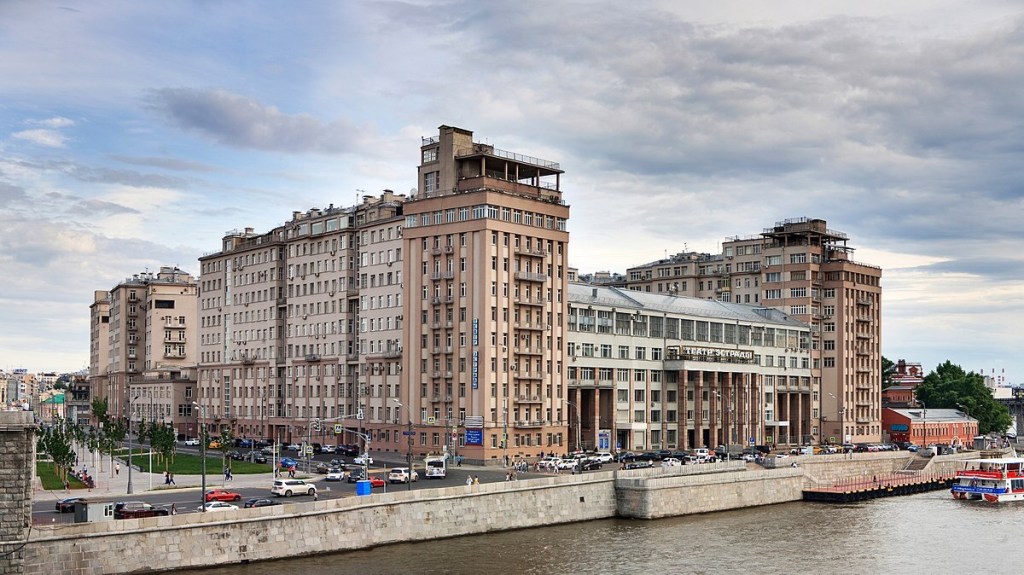
Mary’s trip happened to fall over the 4th of July weekend, when it turned out that there was to be a show given by some Broadway musical performers at the Estrada Theatre in the renowned (or infamous, depending upon the year) House on the Embankment. Just one of the many outsized Stalinist monstrosities still dotting the landscape throughout the city, this one was completed in 1931 specifically to house the government elite of the time, many of whom later became victims of Stalin’s paranoid political purges. (Sorry — I just seem to keep alliterating). Anyway, someone had given Gil Robinson a pair of tickets, but he wasn’t going to be in Moscow that weekend, so he passed the tickets along to me. Leaving Colin in the safe company of Tamara’s family, Mary and I set out for a girls’ night on the town. As we had done in London, we managed to make it a memorable one.

The House on the Embankment
Moscow

Vitold had offered to drive us to the theatre, and said he would be happy to come back to pick us up as well, but I felt that would be too inconvenient for him. The traffic pattern in front of the building was a total mess, and there was no way of knowing what time the show would end. I knew there was a taxi stand in front of the Kempinski Baltschug Hotel, about a 15-minute walk from the theater, so I told him we would manage to get home on our own. Brave words.

For once, Vitold managed to get us to our destination without being stopped by the police for speeding, running a red light, or nearly knocking down any pedestrians. We actually arrived a little early, and since it was a lovely, mild evening, we stood outside the theatre for a while, watching the arrivals and chatting with a couple of acquaintances I had seen in the crowd. The U.S. Ambassador, Thomas Pickering, had already arrived for the occasion. As a motorcade of three or four expensive foreign cars flying Russian flags pulled up, I knew that a Russian VIP had to be in one of them. President Yeltsin was out of the country that week, so I was curious to see who might be taking his place that night. As a man emerged from the car and started up the steps toward us, flanked by three improbably large bodyguards, he passed within a few yards of us and I recognized him immediately. I drew a sharp breath and grabbed Mary’s arm, exclaiming, “Oh my God! It’s Yevgeny Primakov!” Mary wasn’t familiar with the name, and when I told her he was the head of the KGB, she was startled, but also delighted to have a story to bring home to Colin. The crowd then began to move inside, and we headed to our seats.

Yevgeny Primakov

The show was outstanding. The performers were members of the supporting casts of several hit Broadway shows, and had the audience in the palms of their hands from the get-go, singing and dancing to Broadway tunes and a few patriotic songs to honor the holiday. First, however, the orchestra had played the national anthems of both countries, for which everyone stood in unison, but with the Russian and American halves of the audience singing their respective anthems in turn. I am proud to report that our half was louder and much more enthusiastic. Living in Moscow — fascinating though it was — made you all the more proud and happy to be an American.

Happy 4th of July!

The performance ended much too soon, as all good things seem to do, and we filed out into the dark Moscow night around 11:00 p.m. The crowd was huge, and some of the people were walking, as we were, in the direction of the Baltschug, so we didn’t feel at all uncomfortable. And as we approached the hotel, we could clearly see the line of waiting taxis. They were facing away from us, and we had to pass the entire row of about a half dozen cars in order to get to the first taxi in line. No problem.

Mary walked around to the left rear door, behind the driver, and I opened the right rear door. When we were both seated and had closed our doors, the driver turned to his right, looked over his shoulder at me, and said, “Rublevskoye Shosse shestnadtsat?” — my exact address. Rublevskoye Shosse 16. And my heart leapt up into my throat. What the hell . . . ???

My first impulse was: RUN! But that was obviously not an option. And I had Mary to think of. Since she didn’t know a word of Russian, she assumed the driver had asked where we were going. So I gulped my heart back down into place, smiled weakly at the driver, and said — in Russian — “That’s right. You have a very good memory.” Mary thought I was giving him our address.

Good memory, my ass! I hardly ever took taxis in Moscow — I had two drivers and an excellent Metro system at my disposal, so who needed taxis? Then who the hell was this guy? He simply nodded, smiled back, and began moving the taxi slowly forward. Once again, I mentally foresaw my imminent death. But as I watched to see the direction he would take, he drove straight along the quickest route, sticking to the main roads, and right up to my building and around to the entrance in the rear. He knew exactly where he was going, and never said another word throughout the 30-minute ride — quite possibly the longest half hour of my life. I thanked him, added a generous tip to the fare, and he waited until we were safely inside before driving off.

So, once again, who was he? How did he happen to be at exactly the right spot at exactly the right moment? If I had ridden with him once before and just didn’t remember, what were the odds of my getting the same taxi twice? Or of his recognizing me, in the dark, in a city of nine million people, and remembering my address? And not saying a word about the coincidence? Was this just another manifestation of Moscow paranoia, or was something spooky actually going on? Could Officer Bragin somehow be keeping tabs on me? But how would it even be possible to arrange such a thing? Again, too many questions without answers.

“Not so elementary after all, eh, Watson?”

I still don’t know the truth, and never will; but I can still feel the fear in the pit of my stomach when I think back on that night. I never did tell Mary.

And while I give you a while to mull that over, I will be — in writing, at least — hopping another train to Kyiv, but this time with two American companions, and complications on the Ukrainian side.

TTFN,
Brendochka
4/13/23 (re-posted 12/2/23)
12/1/23: Here I Am — Arrest Me!

“Psst! I’m over here, the one with the devilish sense of humor and the big mouth that doesn’t know when to shut itself. And by entering your country, I’ve just painted a big red target on my back. So you may as well just take me now, toss me into the slammer, and forget about me. Because I won’t last a day in your new, ‘sacred’ environment.”

“Don’t I even get to call my embassy?”

That would have been me, 30 years ago, if Vladimir Putin had been President of Russia when I was living and working there, during that summer of 1993. Or if I were idiotic enough to go back today, even for a brief visit. Because now, another new law is about to be added to the mega-volume of new, ever-more-restrictive edicts being issued by His Majesty, Tsar Vladimir (as I assume he wishes to be addressed these days).

You see, I committed a heinous crime; I made a joke out loud. I referred to him as “Mad King Vlad from Leningrad.” But I had signed the mandatory loyalty oath on entering the country, and some rat fink (not sure how that translates into Russian) turned me in. My bad. I’m guilty as shit. Slap on the cuffs.

*. *. *

This is all in my imagination, of course; I’m actually safe and sound, right here in the U.S. of A. But the reason for this bad, bad dream is real enough. Because yesterday I read that “Russia’s interior ministry has prepared draft legislation that would force foreigners to sign a ‘loyalty agreement’ forbidding them from criticising official policy, discrediting Soviet military history, or contravening traditional family values.” [Guy Faulconbridge and Lidia Kelly, Reuters, Nov. 29, 2023.]

“Have you heard . . . ?”

According to a report from the TASS state news agency, the draft legislation would prohibit a foreigner entering Russia from “interfering with the activities of public authorities of the Russian Federation, discrediting in any form the foreign and domestic state policy of the Russian Federation, public authorities and their officials.” It would also include clauses about “morality, family, ‘propaganda about non-traditional sexual relations’ and history . . . [as well as] distorting the historical truth about the feat of the Soviet people in the defence of the Fatherland and its contribution to the victory over fascism.

Further, “The Kremlin said earlier this month that some measure of censorship was needed as Russian troops were fighting in Ukraine, and cautioned those who wanted to criticise the military to think carefully before they did.” [Reuters, Nov. 29, 2023.]

Well, that seems to cover just about everything but the weather . . . and you should probably be careful what you say about that as well, because what the draft law doesn’t state (as far as I know) is precisely what constitutes those various violations. And I’m not really fond of things that are left wide open to someone else’s interpretation.

As of this writing, the new law — it’s not clear what they’re going to name it — is not in effect, as it has not yet been presented to Putin for signature. But . . .

Yes, there’s that Russian “but” again. And it’s a big one.

“No! No! No! Not that big butt!”

But . . . it seems to be well on its way to his desk. As clarified in the Reuters report, in order for the draft to become law, it first has to be introduced to the State Duma, then go through a committee review and “several readings” (by whom, is also unclear), before it can be presented to Putin for signature. The Chairman of the Duma’s CIS* Affairs Committee (the rough equivalent of the U.S. House Foreign Affairs Committee) has said that the draft law was “well advanced” and “being worked on” by the Ministry of the Interior, “the government,” the presidential administration, and by his own committee.

[* CIS: Commonwealth of Independent States.]

The Reuters report also quotes one Leonid Kalashnikov as having told Interfax that “[t]he draft law on the so-called ‘loyalty agreement’ with migrants entering the Russian Federation is in a high degree of readiness” . . . though “some details of the proposed law were still to be worked out.”

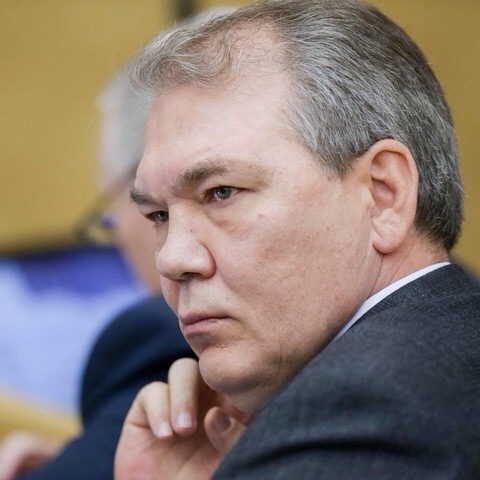
It was not clear to me whether this Kalashnikov (yes, the same name as the famous Russian rifle) and the Chairman of the CIS Affairs Committee are one and the same person. So, of course, I looked him up on the Duma’s website, and they are indeed just one man. And here he is, hopefully not in what would be considered one of his more cheerful moments:

Leonid Ivanovich Kalashnikov

Kalashnikov, age 60, is a deputy in the 7th State Duma representing the CPSU: the Communist Party of the Soviet Union. Of course, it’s now called the Communist Party of the Russian Federation, though still somehow known by its old initials. Some things just refuse to die.

And not incidentally, he is under U.S. and other sanctions, and is further considered a “politically exposed person” — an individual who is or has been in a prominent position and may be subject to coercion or other illegal abuse. So, clearly a guy in the know, though probably not one you’d want to do business with, or bring home to meet the family. Would you?

Naahhh . . . probably not.

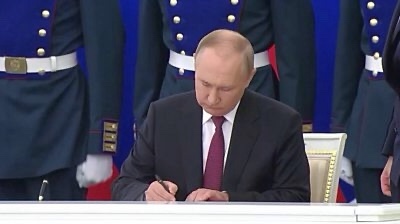
All in all, it appears that this draft law will have little difficulty passing muster and being submitted to His Excellency . . . His Majesty? . . . His Holiness . . . or whatever Putin calls himself these days. And you know he has his pen already poised to sign off on it, since it was most likely his idea in the first place.

I loved my time in Russia. I will always be grateful for having had the opportunity . . . when it was presented to me, 30 years ago. But today? Hell, no! It took a modicum of courage back then; today it requires complete and absolute lunacy. Stay away! Are you hearing me? Unless you’re suicidal, don’t go! They’re arresting people right and left over there. Please . . . if you must travel abroad, go to Italy, or Japan, or Australia. There are so many beautiful places in this world where the people are lovely and the food is good and the laws do not require you to remain mute and stay inside the box. Try one of those. I’m begging you . . .

Done . . . and Done.

*. *. *

So, while I have no further need to travel to Russia . . . nor any desire to do so, in the current environment . . . a lot of people do, for a number of reasons: diplomats from around the world, various other government representatives, journalists, the few remaining foreign business reps, and perhaps even a stray (and seriously misguided) do-gooder from an NGO or a religious organization. I wish them the best of luck, and I have one word of advice to offer them: DON’T. If you have any choice at all, for God’s sake . . . DON’T!

“Please, don’t go!”

Just sayin’ . . .

Brendochka
12/1/23

Ch. 17 – An Unholy Triumvirate: The Moscow Militia, the KGB, and the Russian Mafia (Re-Posted 11/30/23)
Back in Moscow following my first visit to Kiev, I had settled into a comfortable routine of busy days and quiet evenings. I’d even begun venturing out by myself on weekends. The nearest Metro stop was an easy walk of only about a kilometer, along a pleasant pathway that skirted a patch of undeveloped, public parkland; and it was a quick ride from there into the city. More often, though, I would investigate my own neighborhood, finding handy little shops and introducing myself to the shopkeepers who didn’t quite know what to make of the newly-arrived American lady in their territory. Or friends would take me to some of the non-touristy areas of Moscow, and invite me to their homes for some good food and “kitchen conversation” — the traditional Russian after-dinner talks around the table that go on for hours. I finally came to understand why my grandparents had rarely used their living rooms: the kitchen was the true heart of the home.

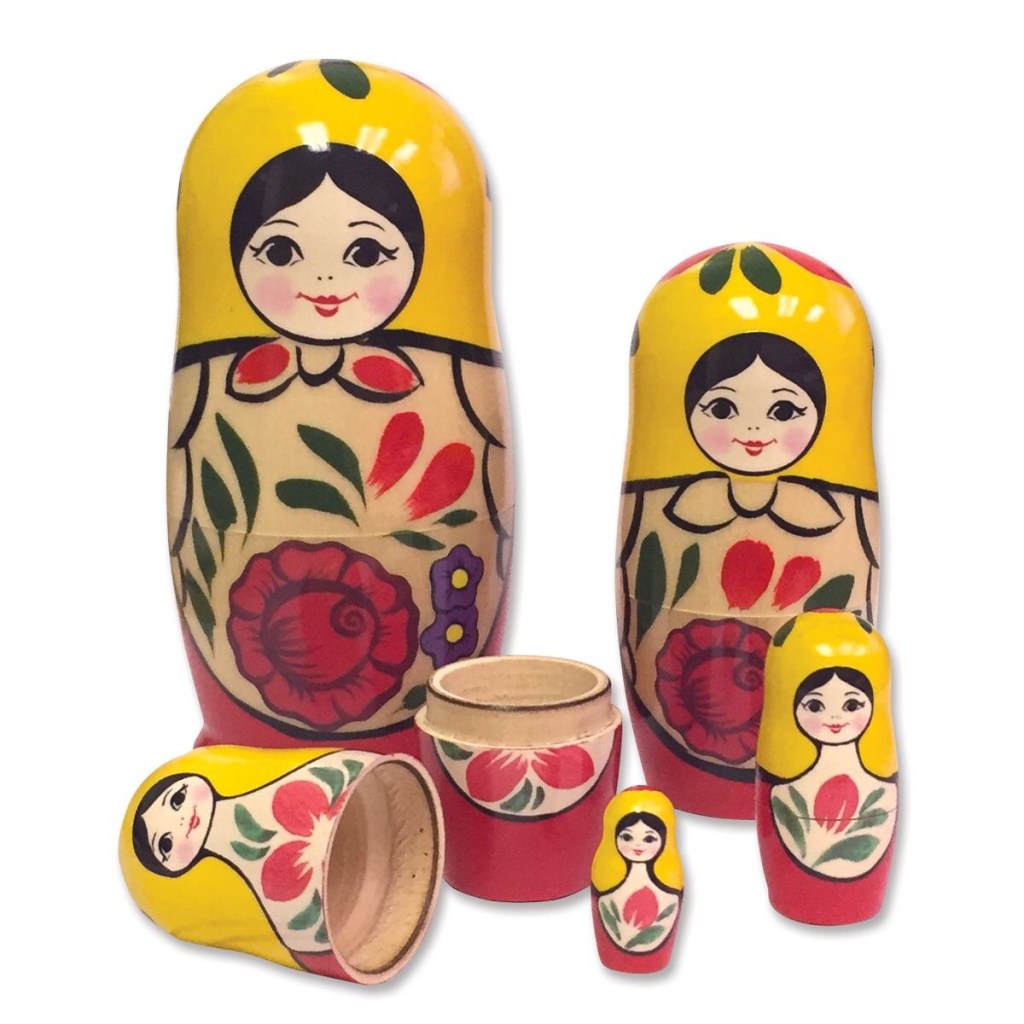
One weekend, Vitold offered to drive me to an amazing place called Izmailovsky Park on the outskirts of the city, which featured a huge weekend open-air market that quickly became my favorite place to find items for the apartment: hand-woven rugs, hand-embroidered tablecloths, hand-crocheted bedspreads, hand-sewn curtains — everything beautifully handmade. And there was the odd trinket, like the famous Russian matryoshka (nesting doll) — a couple of which are staring across the room at me even now, thirty years later, as I write this chapter.
Then one day the office phone rang, and I answered it to hear a man’s deep voice introducing himself as Mikhail Pashkin of the Moscow Militia — and specifically, head of the Moscow Police Workers’ Union. I waved Lena over to the phone to be sure I didn’t miss anything, as Pashkin was, of course, speaking Russian. She was understandably a little nervous, since no law-abiding (or other) Russian citizen wants to be involved with the law enforcement authorities for any reason, even over the phone. And we’d already had one unannounced drop-in by a uniformed officer, “just checking to see how things are going.” Why had we become the beneficiaries of such loving attention? Surely, I thought, they must have better things to do. Did they check up on all registered foreign organizations this way? Quite possibly. Or was there something special about ours? My association with Aksilenko, for example? There was no way of knowing.

This day, however, Officer Pashkin was calling to invite me to visit him at Militia Headquarters, known to Muscovites by its infamous street address, Petrovka 38. He had heard of our Foundation and was interested in obtaining — gratis, of course — a quantity of our Veggieburger product “for the widows and orphans of Militia officers killed in the line of duty.” A nice way of making it impossible to refuse.

Militia HQ, Petrovka 38, Moscow

As luck would have it, the head of our Foundation, Gil Robinson, was due to arrive in Moscow in a few days. I relayed that information to Officer Pashkin, and we scheduled a meeting several days ahead in order to include Gil. That gave me plenty of time to work up a good case of nerves. But from a practical point of view, I decided it was better to have friends in certain places, in case I ever needed a favor. Spoken like a true Russian citizen.

A few days later, Gil arrived as scheduled. He decided that Maya should accompany us on the visit to Petrovka, mainly because she was the most self-assured of our three interpreters and least likely to be intimidated. So off we went at the appointed time, with Vitold driving but refusing to enter the scary building with us. He would wait in the car, no matter how long it might take, but would not set foot inside. We had been given directions, not to the main headquarters, but to a small, dilapidated old building around the corner. The guard at the desk was expecting us, and accompanied us up the stairway to the third floor (there was no elevator), gratuitously pointing out along the way the “interrogation room” on the second floor — mercifully unoccupied at the moment.

Oh, please! Was that really necessary? Did he actually think we’d enjoy a touch of gallows humor to begin our day? Speaking for myself, I could have done without it.

“Spill it, dirtbag!”

On the third level, three men were waiting in a small — really small — office: one seated behind an old, somewhat scarred desk, and one standing to either side and slightly behind him. There were three mismatched chairs on the front side of the desk for us. And that’s all there was room for in the office; it wasn’t exactly the executive suite. Gil took his seat in the middle, flanked by Maya to his right and me to his left.

The man seated at the desk was, of course, Mikhail Pashkin. He was movie-star handsome, dark-haired, with shoulders, pecs and biceps that strained at the seams of his short-sleeved, light blue shirt. This was not a man you would ever challenge to an arm-wrestling contest. If his intention was intimidation, he succeeded magnificently. (All right, now I’m starting to sound like a Mickey Spillane novel. Enough of that.)

Pashkin introduced the uniformed man to his left (our right) as Militia Officer Kostylev. And on Pashkin’s other side, now perched casually on a windowsill, was a pleasant-looking man in khakis and a plaid sport shirt, who introduced himself as Bragin. Just . . . Bragin.

Mr. Anonymous

After we three had identified ourselves, Gil began by politely asking a couple of questions as to the specific jobs of our hosts. Pashkin talked a bit about his work within the Police Workers’ Union, and Kostylev said that as an officer in the Militia, he was also a member of the Union. Then Gil turned to Bragin and asked, “Are you also with the Militia?”

And that was when the fun began. Bragin simply shook his head and softly replied, “No.” Obviously a man of few words.

Now remember, please, that Gil Robinson was a former Ambassador-at-Large with the U.S. State Department — supposedly a trained diplomat, right? In Washington, and every other world capital, when someone gives you a non-responsive response like that, you don’t press them; you assume their job involves some sort of classified work. And Gil, of all people, should have remembered that. But did he? Oh, no. Instead, he asked, “Well, where do you work?” And when Bragin responded, “A different department,” Gil incredibly went on: “Well, what department is that?” And Bragin softly replied, “It doesn’t matter.”

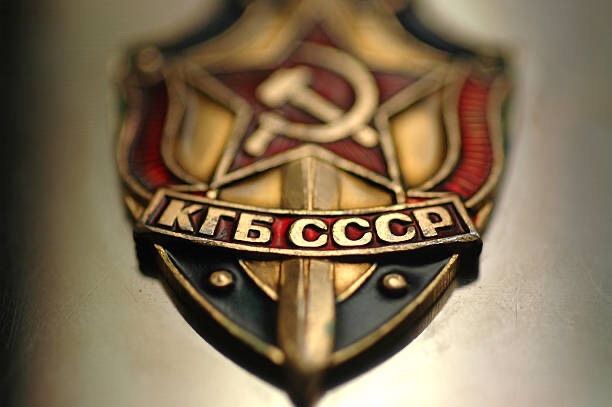
At this point, as Gil prepared to push the envelope with yet another idiotic question, Maya and I began elbowing him in the ribs from both sides, saying quietly, “Gil, drop it.” “Let it go, Gil.” “Just leave it.” Maya understood; I got it; but the professional diplomat remained clueless. Meanwhile, Bragin had caught my eye. Seeing that I was shaking my head in embarrassed disbelief, he smiled and nodded knowingly at me. In that instant I sensed that Vladimir Bragin (I learned his full name later) had become my newest friend in Moscow. He then looked at Gil again, shrugged resignedly, and said, in Russian, “КГБ” — which Maya and I translated for Gil, in unison: “KGB.”

KGB USSR Badge

If the floor had opened up beneath Gil’s chair at that moment, he would have been a happy man. As it was, he was trapped in that little office, trying to worm his way out of a gigantic faux pas. His face turned several shades of reddish-purple, and he began to stammer. I believe the only word he actually managed to choke out was, “Oh.” To his credit, though, he did shift gears fairly quickly, turning from Bragin to Pashkin and asking what we could do for the good folks of the Militia; and the meeting then began in earnest.

When I looked again in Bragin’s direction, he was once more looking at me and smiling. You might say we bonded over Gil’s embarrassment, and I was to be the beneficiary of that connection throughout my stay in Moscow. He was my Russian krysha, literally “roof” — my protection — and it never cost me a thing. It didn’t change what he did for a living, of course, but he turned out to be a very likable fellow.

Now, you’re probably wondering where the Russian Mafia comes into play in this story. At that time in Russia — and I’m not sure how this may have changed under the current regime and with the rise of the oligarchs — it was difficult to know with whom you were dealing at any given time. The so-called “Mafia” families — actually just criminal gangs who named themselves after the Italian originals — were so seamlessly woven into the Russian hierarchy and society in general, you simply couldn’t avoid them.

Family Reunion

In the case of Pashkin and his buddies at Petrovka, it all had to do with the final distribution of the huge shipping container of Veggieburger we were able to deliver to them. Information we later received indicated that the widows and orphans had enjoyed little, if any, of it. All or most of it went in the front door and right out the back, directly onto the black market, earning a sizable profit for both the “wholesalers” and the “retailers.” And those operations were generally controlled by the various Mafia gangs. So while I spent those months in Moscow for the most part steering clear of the criminal elements, it proved impossible to bypass them entirely.

A Good Day’s Work

One example of the steps we took to protect ourselves was the safe in the apartment. The ‘90s were a time of rampant criminal activity in Russia, sometimes referred to as “The Great Mafia Wars.” There were daily drive-by shootings; burnt-out vehicles by the side of the road; and kidnappings or slayings of individuals as they entered or left their banks with large amounts of cash — much like living in Newark or Detroit. So we had a sturdy safe in one of the bedrooms in which we kept the thousands of dollars periodically carried over by Gil Robinson for payroll, rent and other expenses. As with the front door, it would have taken a bomb to get into that safe; and it relieved me of the need to go near a bank . . . ever.

*. *. *

When I was preparing to leave D.C. for Moscow that May of 1993, people had frequently asked whether I wasn’t afraid to be going to such a dangerous location. At the time, I had been living in the metropolitan Washington D.C. area for most of my life, and I simply pointed out to them that I was already in what was then known as the murder capital of the United States. The only difference, I argued, was geography. I had long since developed a “que sera sera” attitude, and didn’t think too much about the daily hazards of life. My philosophy was, and still is, that we’re all born with a pre-determined expiration date — though it’s not stamped on our bottoms like a can of beans — and if my time was due to come up in Moscow, then so be it. I was going to have a grand time while I could.

And so I did, for the most part. But there were nerve-wracking moments as well. One of those involved the aforementioned need for my continuing contact with Valentin Aksilenko. We kept our telephone communications brief and infrequent, and only actually met a couple of times during the entire summer. He seemed relaxed enough, but again, I attributed that to his years of KGB training. We would “walk and talk” — strolling outside in busy places near my apartment building to avoid any electronic bugs that might be hidden in the apartment — and I think I managed to appear nonchalant enough. But my insides always felt as though I’d swallowed a gallon of Mexican jumping beans. I fully expected at any moment to be pounced upon by a couple of big thugs, dragged into a car with darkened windows, and driven to an isolated spot where I would be shot in the back of the head and left for the crows to feed on. But then, I always did watch too many bad spy movies. Obviously, I survived without anything of the sort ever happening.

“Uh-oh!”

*. *. *

But there were other moments as well. It seemed that even a holiday — specifically, in this case, the American Fourth of July celebration — could turn scary in Moscow, and not just from any errant fireworks. Join me next time for that memorable episode, which still gives me the willies when I think about it.

So long for now,
Brendochka
4/6/23 (re-posted 11/30/23)

11/29/23: It’s Baby-Making Time In the Tundra!

You’re probably laughing right now; I did too, when I read today’s news flash. But it’s not a joke. I don’t think Vladimir Putin knows how to crack jokes about such serious matters as zero . . . no, negative . . . population growth. Russia’s in trouble, people. Like that other Wicked Witch — you know, the one from the West — Russia is melting!

“I’m melting! I’m melting!”

Well . . . shrinking, actually. But close enough for government work. (“Melting” sounds too much like the global warming thing, which is a whole other really serious issue and not the one we’re talking about today.)

In Russia’s case, it took more than tossing a bucket of water at a Witch to start the process; it took an entire war (or “special military operation,” in Putin parlance), and the resultant deployment of around 300,000 Russian troops (of whom an estimated 50,000 have died), for Mr. Putin to become fully aware of the problem. Those losses, together with the “Flight of the Draft-Dodgers” and others — a total of another 900,000 or so people — have taken a serious bite out of Russia’s workforce since February of 2022. Not to mention the inevitable reduction in the birth rate.

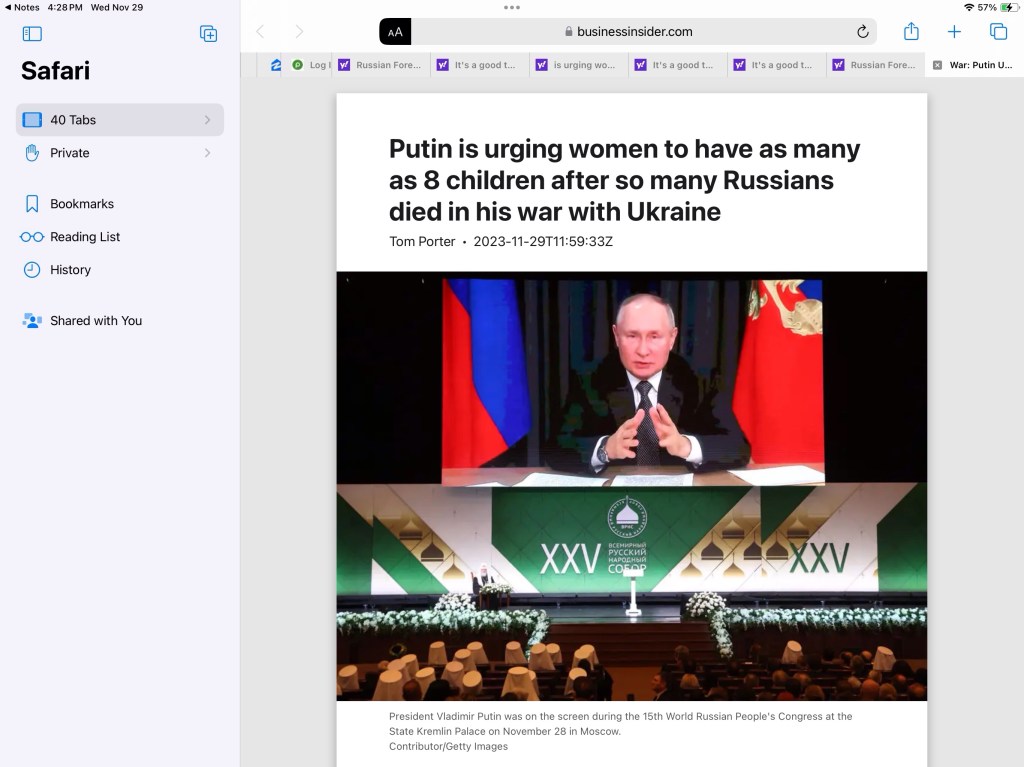
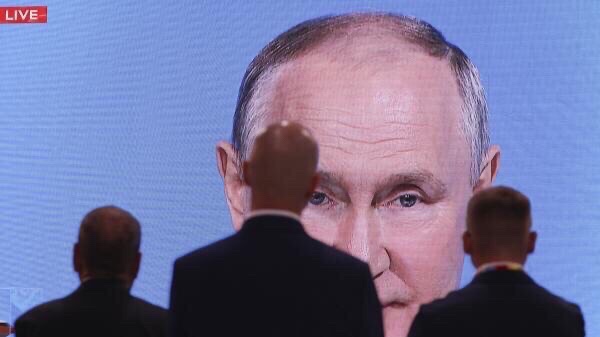
So on November 28th, Putin again appeared on the big — really big — screen before the 15th World Russian People’s Congress at the State Kremlin Palace in Moscow, where he urged Russian women to get busy and start popping out babies as quickly as possible:

“Many of our grandmothers and great-grandmothers, had seven, eight, or even more children. Let us preserve and revive these excellent traditions. Large families must become the norm, a way of life for all of Russia’s people. The family is not just the foundation of the state and society, it is a spiritual phenomenon, a source of morality.

“Preserving and increasing the population of Russia is our goal for the coming decades and even generations ahead. This is the future of the Russian world, the millennium-old, eternal Russia.”

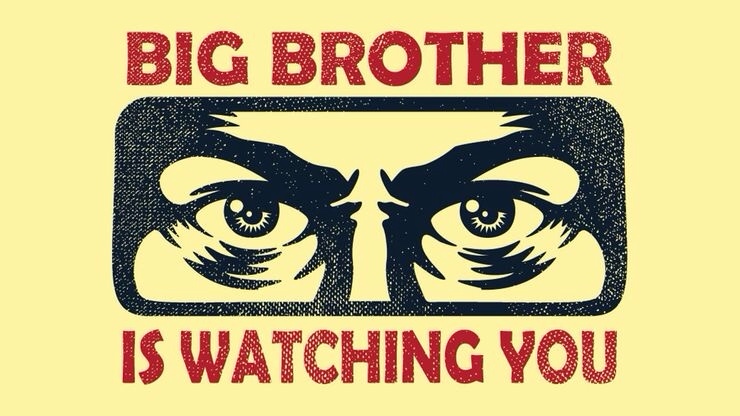
“Big Brother” On the Big Screen

*. *. *

Wow! Get crankin’, folks. Let the orgy begin!

Class in “How To Conduct A Roman-Style Orgy.101”

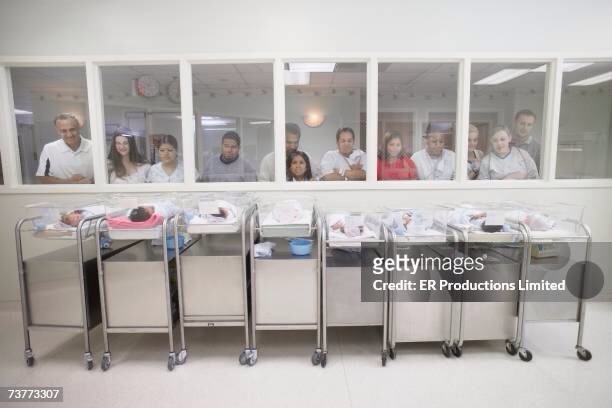
Granted, the decline in Russia’s population is not new. Since the start of Putin’s reign some 24 years ago, he has offered “a range of government incentives for those who have children, including payouts for families who have more than one child.” But, in a country already suffering from the effects of massive inflation, as well as the impact from more recent sanctions imposed since the start of the war against Ukraine, it appears that these incentives have fallen far short of their goal. According to Rosstat, Russia’s federal statistics service, the country’s population as of January 1st of this year stood at 146,447,424 — lower than it was in 1999 when Putin first became president. [Tom Porter, Business Insider, Nov. 29, 2023.] For purposes of comparison, the population of the United States on January 1st was 334,233,854 — a slight increase of about 1/2% over the previous year.

So now Putin is trying a different tactic: appealing to the patriotic, moral, and spiritual values held dear by this generation’s grandparents and great-grandparents. Yeah . . . good luck with that one, Vlad. I can’t wait to see how it goes over with all of those already overworked, underpaid, physically and emotionally exhausted couples who are now being told they’re nothing more than baby-making machines for the state. Forget about making love; it’s now just a manufacturing process.

Meeting the Quota

*. *. *

You say you want my personal opinion on this vital matter? Okay, here it is:

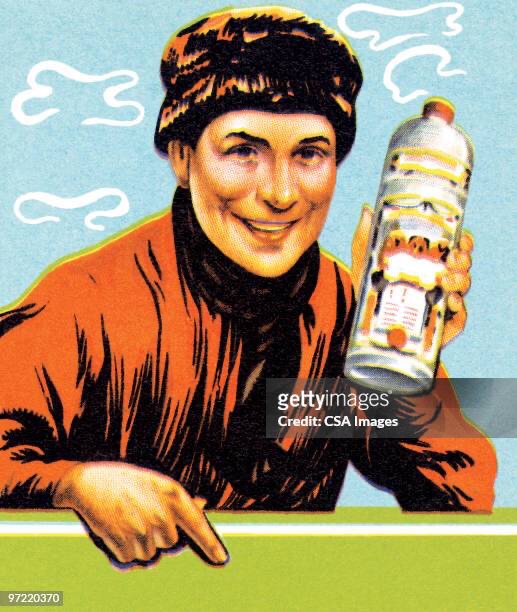
That’s gonna take one hell of a lot of vodka!

Na zdoroviye”

Just sayin’ . . .

Brendochka
11/29/23

11/29/23: Just Rename It “2084” and It May As Well Have Been Written Today.

In 1949, just half a year before his death, George Orwell’s novel “1984” was published. Orwell was an English novelist, essayist, journalist and critic, known for his political opposition to totalitarianism and his support of democratic socialism. Any adult who hasn’t heard of “1984” and its infamous, larger-than-life “Big Brother” must have been living in a bunker. For those who would like to catch up, it is best described as a “dystopian novel” satirizing life in a totalitarian state (obviously patterned after the Soviet Union). It has become an award-winning classic, and if it isn’t required reading in our high schools, it should be (in my opinion). (The paperback costs less than $10 on Amazon. Don’t bother watching the movie, though; it’s terrible.)

“1984”

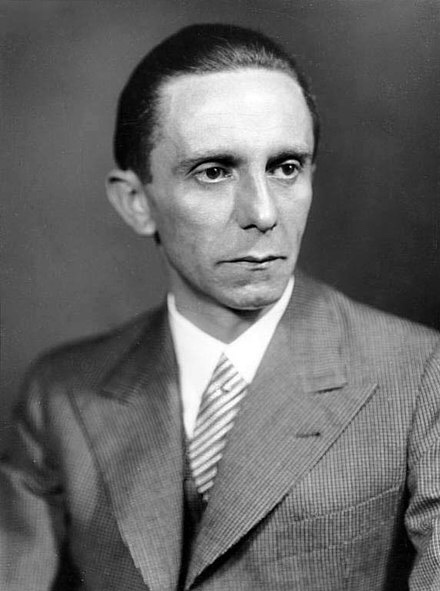
So why am I promoting this 75-year-old novel by a long-deceased writer? I’m not, actually. But I was reminded of it the other day when I was researching information on a particular Russian government ministry and stumbled across one I didn’t know existed: the Ministry of Enlightenment of the Russian Federation. And I gasped. Literally gasped, out loud, for two reasons. First, although there was no “Ministry of Enlightenment” in Orwell’s novel, the principal focus of the book was on the forced dissemination of the government’s lies and propaganda under the guise of enlightenment. And second, the last such ministry in the real world of which I am aware was the “Reich Ministry of Public Enlightenment and Propaganda,” created by Adolph Hitler in Nazi Germany in 1933 and headed by Joseph Goebbels until the war’s end in 1945. (There may, of course, be others by different names in other countries that are not as well known).

Joseph Goebbels – Reich Minister of Propaganda

See why I gasped? Because Orwell’s prescience has extended, not just to 1984, but into yet another century. Russia now has one of those real-life ministries, established in 2018, passing along the teachings and the mandates of a virtual clone of Orwell’s Big Brother: none other than Vladimir Putin himself.

Interestingly, if you do a Google search of “Russian Ministry of Enlightenment,” what pops up is the Ministry of Education. And when I double-checked the Russian words for “enlightenment” and “education” — because my Russian language skills are less than perfect and really rusty — I found a cute little translational word play. The most commonly-used Russian word for education is obrazovaniye. But the Ministry of Education is described online as the Ministry of Prosvescheniya — Ministry of Enlightenment, according to the word’s principal usage. However, Prosvescheniye also has a secondary meaning. You guessed it: it’s “education.”

Confused? I’d be shocked if you weren’t. It’s a fine distinction, so just take my word for it: while not technically incorrect, it appears that the word Prosvescheniye was intentionally used in the creation of the new (2018) Ministry to muddy the waters. It would have been so easy to avoid confusion by naming it the Ministerstvo Obrazovaniya, which does not have a dual meaning.

(By the way, the different word endings (“e” and “a”) are not typos; they have to do with the Russian grammatical cases, and you really don’t want me trying to explain those!)

But . . .

As I’ve said before, in Russia there is always a “but.”

No! Not those butts!

But in any event, my point is that Russia already had a Ministry of Education, long before 2018. I know, because I met with Dr. Kezina, then the head of that Ministry, in Moscow, way back in 1993. A highly intelligent, competent woman with a strong personality and direct manner, I found her to be very impressive; she was not a figment of my imagination. She and her Ministry were very real. *

* NOTE: The Ministry existed, under various names, from the early days of the USSR. Until 1946, it was known as the People’s Commissariat for Education — in Russian, the Narodniy Kommissariat Prosvescheniya, or its acronym, Narkompros. Note that the word used for “Education” was the word whose principal definition is “Enlightenment” — Prosvescheniya. Was Vladimir Putin’s chosen naming of the new (2018) Ministry a coincidence, or was it an intentional homage to Narkompros?

So, why the need for a second institution, purportedly with the same or similar functions? Or perhaps it’s just a restructuring of the original Ministry of Education. But in either case, why cloak it under a misleading name?

21st Century “Big Brother”

Although not widely publicized, there has been an awareness of this development in Russia at least since early 2022. On March 3rd of that year, it was reported:

“Russia has a ‘Ministry of Enlightenment’ and it is as dystopian as it sounds.

’The ministry is basically the country’s answer to the ministry of education and the Kyiv Independent today drew people’s attention to its existence when it revealed something the ministry is planning today.


“On Facebook, the ministry announced it is holding a virtual lesson for children to explain why the war on Ukraine is necessary and about the ‘danger’ of Nato [sic] today.

[Quoting from the Ministry’s Facebook post about the lesson]:

‘At the All-Russian Open Lesson, schoolchildren will be told why the liberation mission in Ukraine is a necessity.

The broadcast will take place tomorrow, March 3 in the community of the Ministry of Enlightenment starting at 12 o’clock Moscow time.

Viewers will be told the background of today’s events: about the danger NATO represents to our country, why Russia stood up for the protection of the civilians of the Donetsk and Luhansk People’s Republics, and will also help to figure out how to distinguish the truth from lies in the huge stream of information, photos and videos that are flooding the internet today.

You can use the materials on the broadcast website to conduct such an open lesson in your classroom, in the institute of education’ . . .”
[Kate Plummer, indy100, March 3, 2022.]

Young and Vulnerable

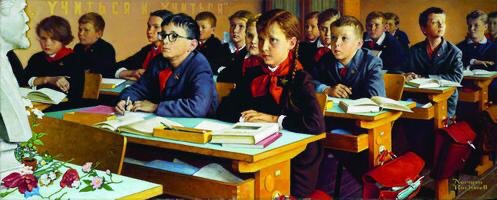
The Hitler Youth . . . the All-Union Leninist Young Communist League (Komsomol) . . . whatever they might name the new Russian youth organization . . . they’re all the same. Get those kids young enough, while they’re still vulnerable and their little psyches still malleable, and you’ve got a whole new generation of zombies eager to do your bidding. Perhaps they should be called “Putin’s Pioneers.” *

* NOTE: The Soviet Union’s “Youth Pioneers” was a compulsory organization for children and adolescents aged 9-14, founded in 1922 and continuing in existence until the dissolution of the Soviet Union in 1991. 

*. *. *

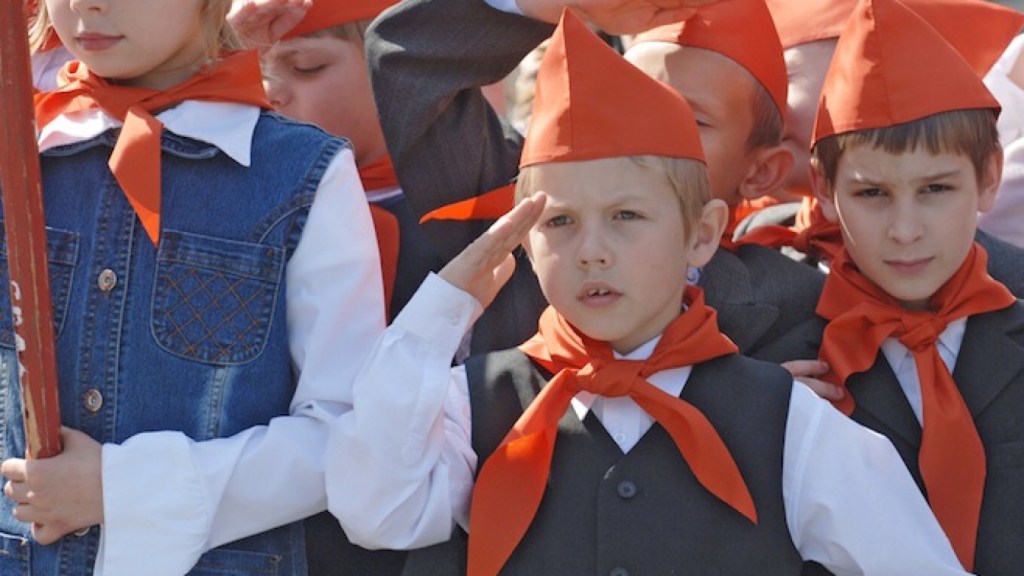
But wait . . . they already exist!

And here they are, complete with the red scarves of yesteryear.

Dig deep enough, and you find the most amazing things. On October 29, 2015 — the 97th anniversary of the 1918 founding of the Soviet Union’s Komsomol* — Vladimir Putin, in a master stroke combining nostalgia and foresight, created what he calls The Russian Schoolchildren’s Movement. Komsomolskaya Pravda said in its website headline: “On Komsomol’s birthday, Putin signed a decree on creating new Pioneers.” But the article went on to clarify that the new movement would be “free from Communist or any other ideology.” Ministry of Education officials “appeared unfamiliar with Putin’s plans, while a social affairs official in Russia’s Cabinet said the new movement was ‘exclusively the presidential administration’s’ idea.” [Anna Dolgov, The Moscow Times, Oct. 30, 2015.]

* NOTE: Komsomol was the Soviet Union’s political youth organization for 14-to-28-year-olds who had graduated from the Pioneers. Komsomol was also dissolved in 1991.

*. *. *

So this apparently was all Putin’s brainchild. And within three years following its inception, along came the new Ministry of Enlightenment, with its Soviet-style, almost subliminal, daily dosage of official rhetoric, now complete with programs available for use in classrooms.

Free from propaganda, huh?

Really?

*. *. *

Just sayin’ . . .

Brendochka
11/29/23


11/28/23: Living To A Ripe Old Age

Someone asked me yesterday how I’d managed to live so long.

No, not that long!

Only a young person would ask a question like that, thinking it was a compliment; and I’m sure she meant it that way. I actually thought it was rather funny, and as I contemplated my answer, I realized that I had never thought about it before. And my answer was:

By doing pretty much whatever I wanted to do.

I’ve never smoked, but not because of the health hazard; I tried it twice in my teens, and hated it. Plus, it’s a very expensive habit. But lots of other people did, so there was a good bit of second-hand smoke being inhaled.

I didn’t do drugs because they were illegal and I was afraid of being caught. Plus — even more so than cigarettes — there was the cost. But otherwise . . .

Did I drink? Sure. Did I drink and drive? Sorry to say, I did, and the fact that I didn’t kill myself or anyone else is due to just plain dumb luck. And in my younger days, I was hell on wheels, even when sober.

Did I eat red meat? Oh, yeah . . . lots of it. A day without beef was an incomplete day. And fatty foods, spicy foods, all kinds of ethnic foods, without consideration for the grams of fat, sodium, or cholesterol. And dessert? To me, dessert was an essential food group. Every meal ended with something sweet.

Did I get enough sleep? Never! There was too much partying going on to waste my time sleeping. How about staying hydrated? We didn’t think about that when I was younger. Exercise? Every now and then, but it was too much work to keep at it.

I traveled, to countries where food wasn’t always properly stored or refrigerated. I never got sick from the food, or from spending hours in an airplane with people exhaling germs. And antibacterial soaps weren’t readily available. I learned not to worry about it.

And even before young adulthood. When I was a kid, we roller skated, rode bikes, climbed trees . . . and all without helmets. We fell and skinned our knees. So what? A little iodine and a bandaid, and we were back outside. Cars didn’t have seat belts. Kids shared soda bottles and popsicles, exchanging germs without thinking about it. Nobody cared.

And finally, I guess I have good genes. Most of my family members lived long, productive lives. They . . . we . . . have always worked hard, taken care of one another, and lived decent lives (apart from that drinking-and-driving thing).

Let’s face it . . . life’s a crap shoot. You can do all the right things, and still die young; or you can jump out of a plane without a parachute, and survive. (I don’t recommend that, however.) Basically, it’s a matter of luck. And I’ve been pretty lucky . . . so far, anyway.

Thanks to that young lady for asking.

Brendochka
11/28/23