No, not physically tired; I’m feeling just fine, and thanks for asking.
But as I sat down on Friday evening to prepare this post for Saturday morning, I found myself stymied. Oh, there’s plenty of subject matter, thanks to the people (you know who they are) who remain hard at work transforming our world into one gigantic, sucking wound. In fact, there’s so much material, I’m thinking the world should have an Exchange Department where we could simply turn in the unacceptable parts for better ones.
Honestly, I’m sick and tired of all of it. How much more can I say about . . . let’s see, now . . . Donald Trump, Vladimir Putin, Elon Musk, Xi Jinping, Kim Jong Un, Stephen Miller, Pete Hegseth, that Ayatollah guy in Iran, Natalie Harp, secret meetings in Moscow, a trade war with Canada (!), Venezuelan oil, drones crossing into NATO countries, and all the rest of the daily ration of crap?
And on top of all that, our world has been further diminished this week by the loss of Dolly Parton, Tim Curry, and King Harald V of Norway. It’s been a sad, sad week.
So I’m taking the rest of the night off to recharge. I think a good, old-fashioned gothic novel is just what I need tonight to transport me back to a simpler, more genteel time.
I’m sure something will happen overnight, somewhere in the world, to snap me back to attention when I read about it in the morning. Until then, I wish everyone a peaceful night.
Even if you’re not a particular fan of the Bard, you are almost certain to recognize these lines:
“What’s in a name? that which we call a rose By any other name would smell as sweet.”
– William Shakespeare, “Romeo and Juliet,” Act II, Scene 2
Balcony Scene from “Romeo and Juliet”
I can’t help wondering what Shakespeare would have made of a man who thinks names — not just of star-crossed lovers, but of buildings, airports, and bodies of water — are more important than the survival of the human race.
Methinks he would have said something on the order of:
“It is a tale told by an idiot, full of sound and fury, signifying nothing.” *
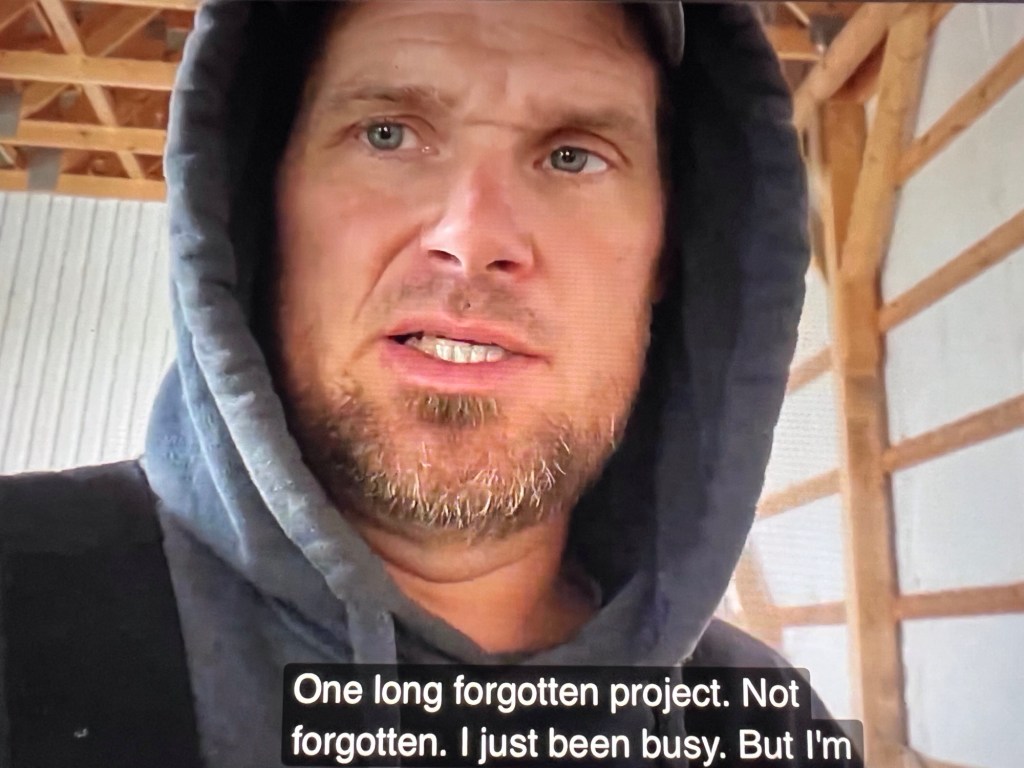
I’m very worried about the Feenstras —Arend, Anneesa, and their eight children — on their farm in Nizhny Novgorod, Russia.
Since returning from their long stay in Canada and the U.S., followed rather quickly by a puzzling visit to Crimea, there has been little news of interest coming from the Canadian family now calling Russia their home. What were almost daily reports have become less frequent, and those have dealt with the mundane details of life on a farm: tending the animals, or Arend fixing his tractor with parts he was only able to find while in America.
Then there was eldest daughter Cora taking us on a tour of their vegetable gardens, which have apparently not seen the best of summers.
But I suppose that’s life; it’s not always about travel and awards and birthday parties.
What has me concerned, though, is the report of Ukrainian drone strikes at the Lukoil NORSI oil refinery in Kstovo, Nizhny Novgorod Oblast, overnight on August 25-26. Though no casualties were reported, the refinery — one of Russia’s largest oil-processing plants — sustained a significant fire, forcing the plant to halt all operations. This, in turn, has caused the temporary shut-down of all major Lukoil refineries across Russia.
In addition, Nizhny Novgorod’s governor reported that falling debris from intercepted drones caused damage to another industrial facility, several cars, and residential buildings in the region.
How close that was to the Feenstras’ farm, I do not know; but it feels as though Vladimir Putin’s “special military operation” is suddenly much too close for comfort. And, aside from the threat of personal danger, this is bound to have an effect on agricultural operations throughout the region.
Drone Attack at Nizhny Novgorod
My other concern is for the eldest Feenstra son, Wesley, who has been out of the picture since the rest of the family left for their Crimean holiday back in the early part of the summer. He was reportedly left at home to tend the farm, but where was the happy reunion when they returned? And where is he now? In recent videos — unless I missed something, which is entirely possible — Wes , who has always been his father’s right-hand man, seems to be absent.
So where is he, and why aren’t we seeing him in the videos? Does it have anything to do with the war in Ukraine? Is he ill? In some sort of trouble with the authorities? Any of those situations would be too horrible to contemplate.
With the worsening crackdown by the Putin regime on social media and other means of communication, it is impossible to know what is really happening behind the scenes. It may be that everything is fine — or as “fine” as possible — and the Feenstras are simply keeping a low profile, which is always wise in Russia, even in the best of times. I certainly hope that’s all it is.
Under the circumstances, though, I have to wonder how they feel now about having left their native Canada, where the only “danger” was from what they considered to be an excess of “wokeness.”
But I’m not here to judge them, or to second-guess their life choices. I just hope they’re going to be all right.
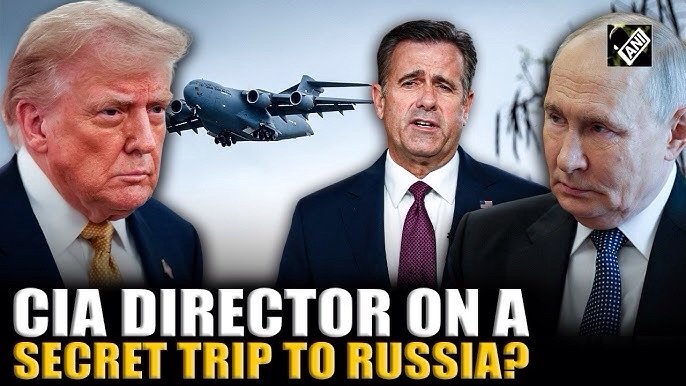
Bit by bit, we continue to receive reports — most of them still speculative — about CIA Director John Ratcliffe’s mysterious visit to Moscow on Tuesday.
We hear that, during an exceedingly quick eight-hour turnaround, he may have been discussing with his counterparts in the intelligence community:
> An end to the destruction in Ukraine; > Cessation of Russian assistance to Iran; > Backing off on the Kremlin’s threats against NATO countries; > Or, Heaven forbid, some new issue we civilians aren’t aware of as yet.
As for the other three, it could be any or all of them, or something entirely different. And it’s too soon to tell what, if anything, might have been accomplished by Ratcliffe’s endeavors. But thus far, there doesn’t seem to be much cause for optimism. Consider:
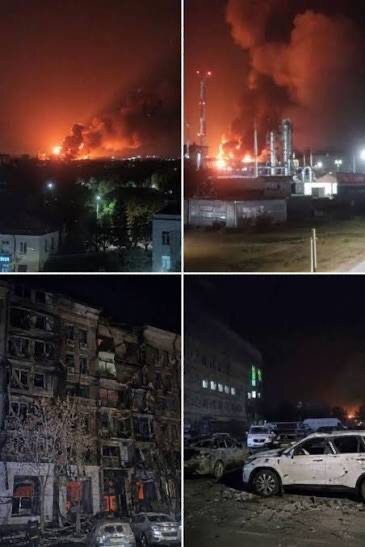
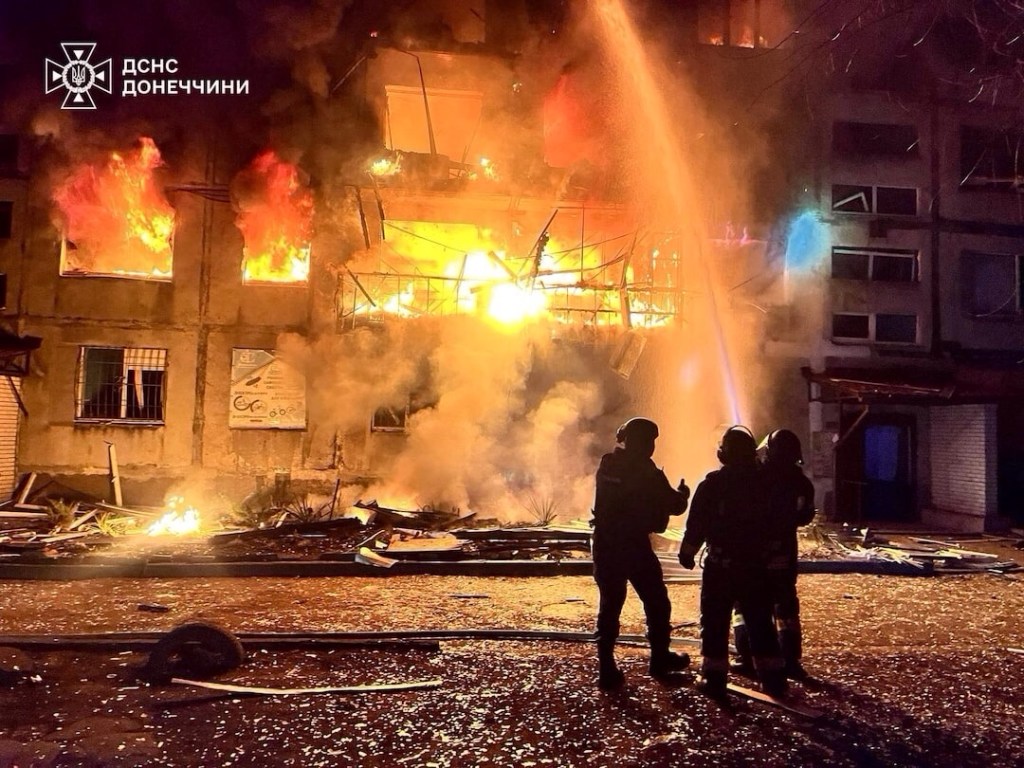
* Overnight, Russian drones and missiles struck four regions in Ukraine:
> Kyiv, where residential buildings, a school, medical facilities, and retail centers were hit; > Odessa — ports, a grain elevator, fuel storage tanks, and a 16-story apartment building; > Kharkiv — a shopping center; and > Poltava and Kryvyi Rih — an oil refinery, steel works, an industrial site, and energy infrastructure.
Overnight in Kyiv
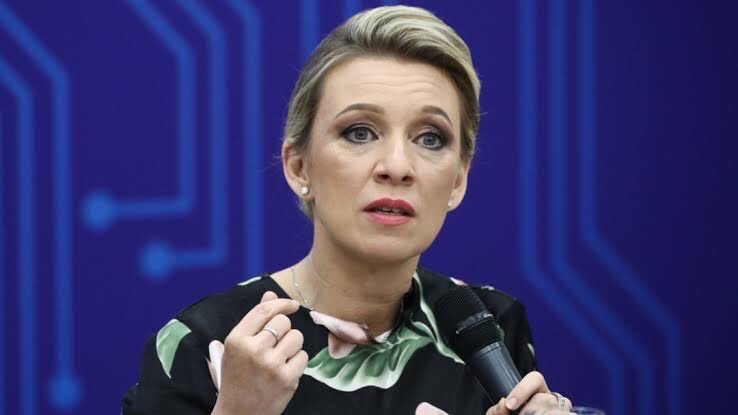
* Today, Russian Foreign Ministry spokeswoman Maria Zakharova said in a news briefing:
“We have repeatedly warned that any British military installations and equipment in Ukraine and beyond its borders could be targeted in response to Ukrainian strikes on Russian territory carried out using British weapons. We propose that the British leadership once again carefully analyse the situation and immediately, in the most resolute and unequivocal manner, abandon the hostile, aggressive line, which can only . . . create the risk of the conflict escalating to an entirely new level.” [Dmitry Antonov and Andrew Osborn, Reuters, August 27, 2026.]
Maria Zakharova
My “spidey senses” have me leaning toward those threats against NATO.
If the two sides were still just discussing a ceasefire in Ukraine, the White House would most likely have sent its two most useless special envoys, Steve Witkoff and Jared Kushner — not the Director of the Central Intelligence Agency. And Donald Trump would also have sent an envoy — or he might have been inclined to pick up the phone to call Putin directly — if the subject were Iran. Those are both longer-term, ongoing issues.
But the threats against NATO have added a new, terrifying facet to an already turbulent situation.
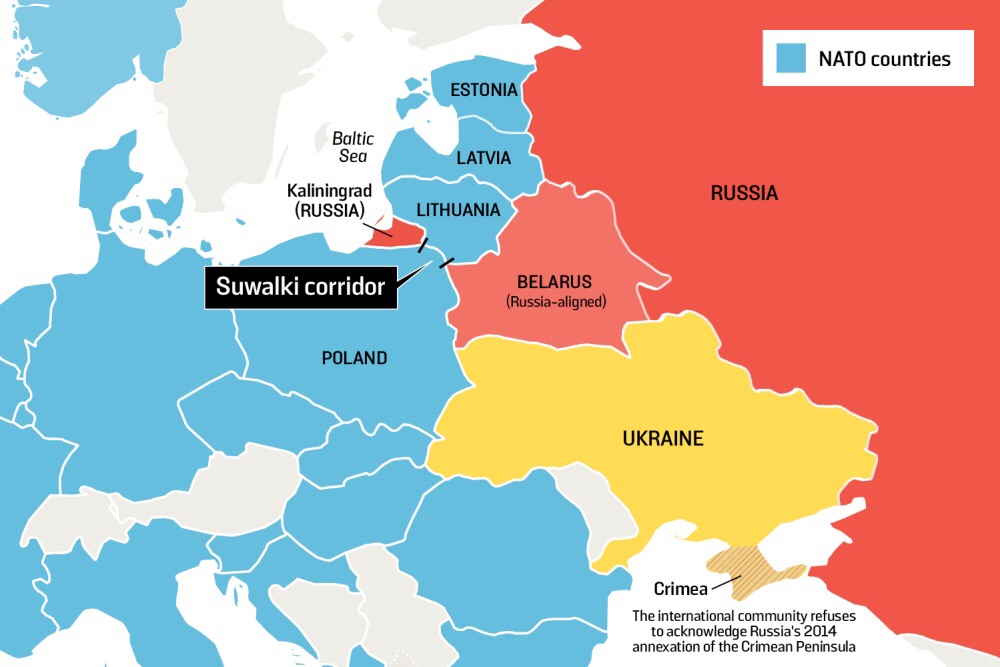
The Wall Street Journal has said that the Russian military is carrying out mobilization readiness exercises in the Kaliningrad region: its territory in the Baltic that would be central to a conflict between Moscow and any NATO member countries. [Brendan Cole, Newsweek, August 26, 2026.]
And that immediately brought to my mind one little strip of land that I’ve written about at some length over the past year: the Suwalki Gap.
Remember Suwalki? It’s that narrow, strategically-located passage that forms the border between NATO members Poland and Lithuania, and also happens to be the only direct land passage between Russia’s vassal state of Belarus and its naval fleet at all-important Kaliningrad. (See my post: “9/15/25: The Suwalki Gap: The Most Important Strip of Land You’ve Probably Never Heard Of.”)
So, if the WSJ is correct in its assessment, then Poland, Lithuania — and, by extension, the rest of Western Europe as well — have every right to be making frantic preparations for a worst-case scenario. And under the terms of Article 5 of the NATO Treaty, the U.S. is similarly obligated to join in the defense of every other NATO member in the event of an attack.
That would certainly warrant a visit to the Kremlin by our top spy, who would be privy to the latest available intelligence. But my next question is:
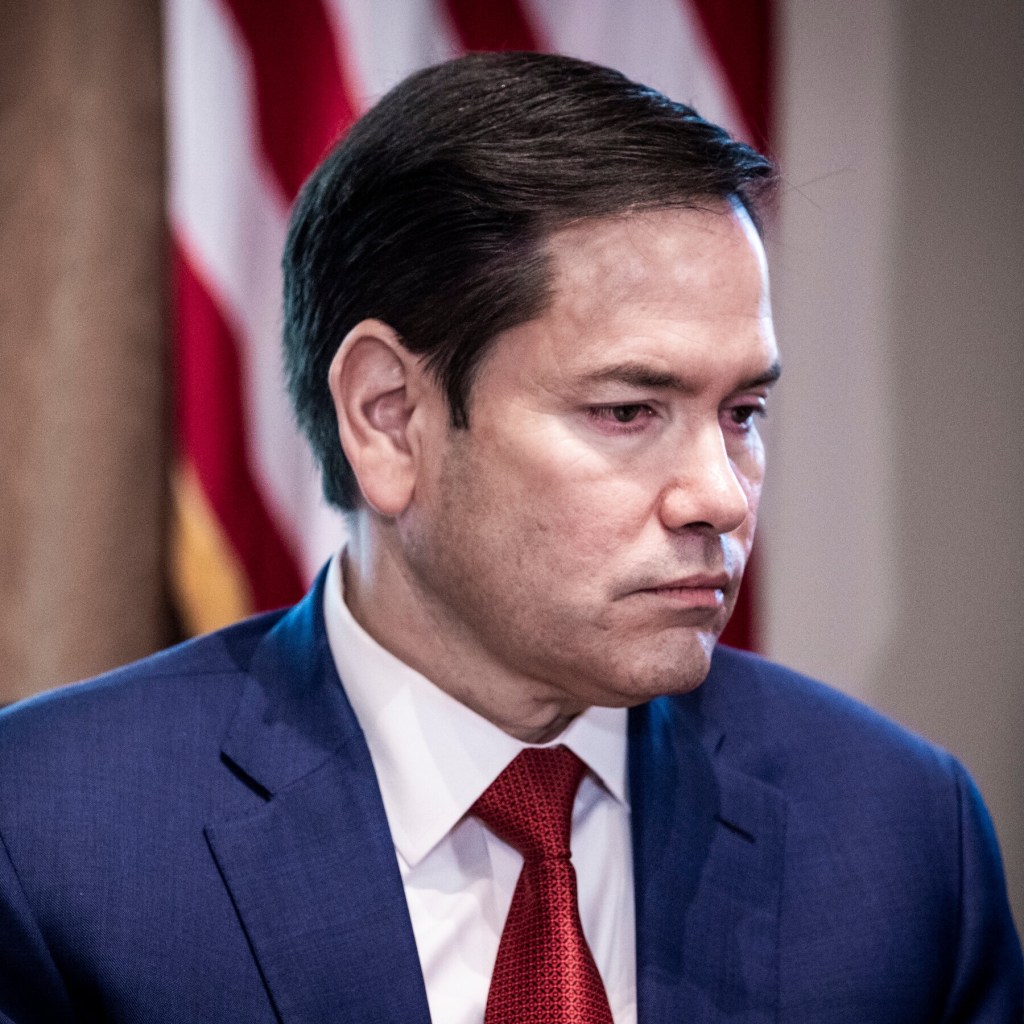
* Where was our #1 diplomat — Secretary of State Marco Rubio?
Marco Rubio
Surely, whatever the subject of Ratcliffe’s meeting in Moscow, it was important enough to have benefited from the presence of the one individual charged with — and supposedly most capable of — keeping us out of World War III.
Is there something besides diplomacy taking place — something that Donald Trump and Vladimir Putin don’t want to be directly involved in, or are deliberately being left out of, perhaps to provide deniability if the s*it hits the fan?
Or, once again, have I been reading too many John Le Carre novels?
In the parlance of today’s cyber world, it’s what is known as “TMI.”
Since beginning this blog, I’ve come to the realization that being a news junky has its down side, which is that the more information we possess, the more we have to worry about.
English poet Thomas Gray summed it up perfectly in 1742, when he wrote:
“Where ignorance is bliss, ‘tis folly to be wise.”
– Thomas Gray, “Ode on a Distant Prospect of Eton College”
Thomas Gray (1716 – 1771)
Still, I don’t see total ignorance as being particularly blissful . . . although I could be wrong.
That was how much time I had on Tuesday morning to hope that the surprise visit of CIA Director John Ratcliffe to Moscow might actually result in a measure of good news: possibly the promise of serious ceasefire negotiations, or an imminent prisoner swap.
Hoping Against Hope
But no . . . it was not to be. Because that same afternoon, word was received that the Kremlin had issued a threat of “attacks from ‘unknown sources’” against UK factories for having provided long-range drones being used by Ukraine in its recent counter-attacks on Russian territory. And I had to face the harsh truth: that Ratcliffe’s trip was more likely a sign of deepening tensions and an attempt to forestall any such aggression on Putin’s part against a NATO nation.
That Kremlin comment arrived on the heels of an earlier statement that had been issued by the Russian Embassy in London:
“The United Kingdom is acting as an accomplice and co-perpetrator of the bloody crimes and terrorist attacks committed by Ukrainian neo-Nazis. London’s actions will inevitably carry consequences for which it will have to answer . . . The deeper its involvement in the conflict and the greater its support of Kiev’s [sic] terrorist machinery, the higher the price it will pay.” [Owen Matthews, Independent, August 20, 2026.]
And yesterday it was revealed that the purpose of Ratcliffe’s trip was indeed to warn Russia against attacking NATO. According to the Wall Street Journal, U.S. officials are concerned that Putin’s mounting difficulties in Ukraine and at home could push him to take action — anything from a cyberattack to an actual land incursion — and possibly against a Baltic nation. [Lara Seligman, Alexander Ward and Josh Dawsey, Wall Street Journal, August 26, 2026.]
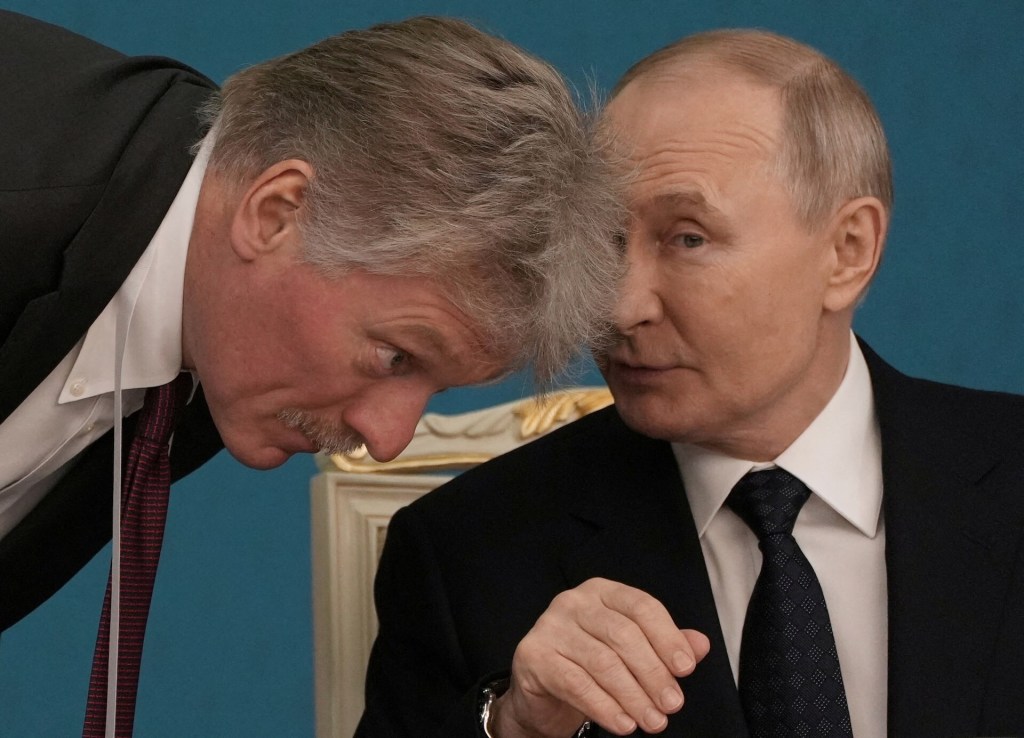
Kremlin spokesman Dmitry Peskov — having a day earlier denied even knowing about Ratcliffe’s plane landing at Moscow’s Vnukovo Airport — finally conceded that both the plane and its passenger were indeed there, saying:
“All I can tell you is that there have been contacts via the security services. These contacts often continue even during the most difficult periods in bilateral relations. Our president, incidentally, has spoken about this.
“However, it is still too early to say to what extent this will, overall, help to steer our bilateral relations out of the profound crisis in which they currently find themselves.” [Arpan Rai and James C. Reynolds, Independent, August 27, 2026 04:14 BST.]
Peskov added that Ratcliffe had met with intelligence officials, but not with Putin himself — though Putin was, of course, being briefed on the matter.
Briefing the Boss
The White House has not been forthcoming with further information, though Donald Trump told radio host Glenn Beck on Wednesday that Ratcliffe’s trip was “semi-routine,” and that, as far as the war in Ukraine is concerned, “Something may come out of it. We’re working very hard to get that war ended and frankly they both want to see it ended at this point.” [WSJ, op.cit.]
I can’t even imagine how Trump defines “semi-routine.” But in my experience, there is nothing routine — “semi” or otherwise — about a CIA Director secretly hopping on a military flying fortress to pay a sudden, rushed visit to meet with his counterparts in Moscow . . . and particularly in a time of “profound crisis,” as Dmitry Peskov so bluntly described the situation.
*. *. *
From what little we do know, this is an interesting development, to say the least. I can hardly wait to see what the rest of the week has in store for us.
The world lost another great one this week. For decades, the mention of Dolly Parton’s name immediately conjured up images of big blonde hair, an even bigger bosom above a tiny waistline, a gorgeous smile, and a wonderful musical talent.
Dolly Parton (1946 – 2026)
But her death has reminded us of the Dolly beneath the surface: the woman who used her gifts to climb from abject poverty to tremendous success . . . and then used that success, not to build palaces and monuments to herself, but to help countless others in need as she once had been.
And that has made me think about my own life, and the lives of most people who, like myself, aren’t fortunate enough to have been born with Dolly’s musical talent and business acumen. We’ll never have the financial wherewithal to do the things she did for others: sending hundreds of millions of books to children to promote literacy, helping victims of natural disasters rebuild their lives, contributing to medical research, bringing business to her home state, and so much more.
Yes, most of us make our contributions to society by working hard at whatever it is we do best, living honest lives, and teaching our children to do the same. But is that all we have to offer? So many of us — myself included — would like to do more, perhaps in some volunteer capacity, but always seem to find an excuse: demanding jobs, family obligations, our own physical limitations.
But that didn’t stop Dolly. Even in her last, terrible illness, she released a new recording and directed that 100% of the proceeds go to the care of children fighting cancer. She never stopped thinking of others; and she dug down to find that last measure of strength to do one final good deed.
Reading all of the beautiful, well-deserved tributes to Dolly in the past two days, I have been feeling pretty inadequate. I hope I’ve done a bit of good in my life . . . but is it enough? Have I really made the maximum effort? Do I have more to give?
I’m wrestling with those questions today, and searching for ways in which I might leave more of a legacy when my turn comes . . . not for self-aggrandizement, but for having left the world a little better than I found it.
And while I ruminate on those possibilities, maybe — at the very least — my words will inspire someone else to do the same. If so, it’s a start.
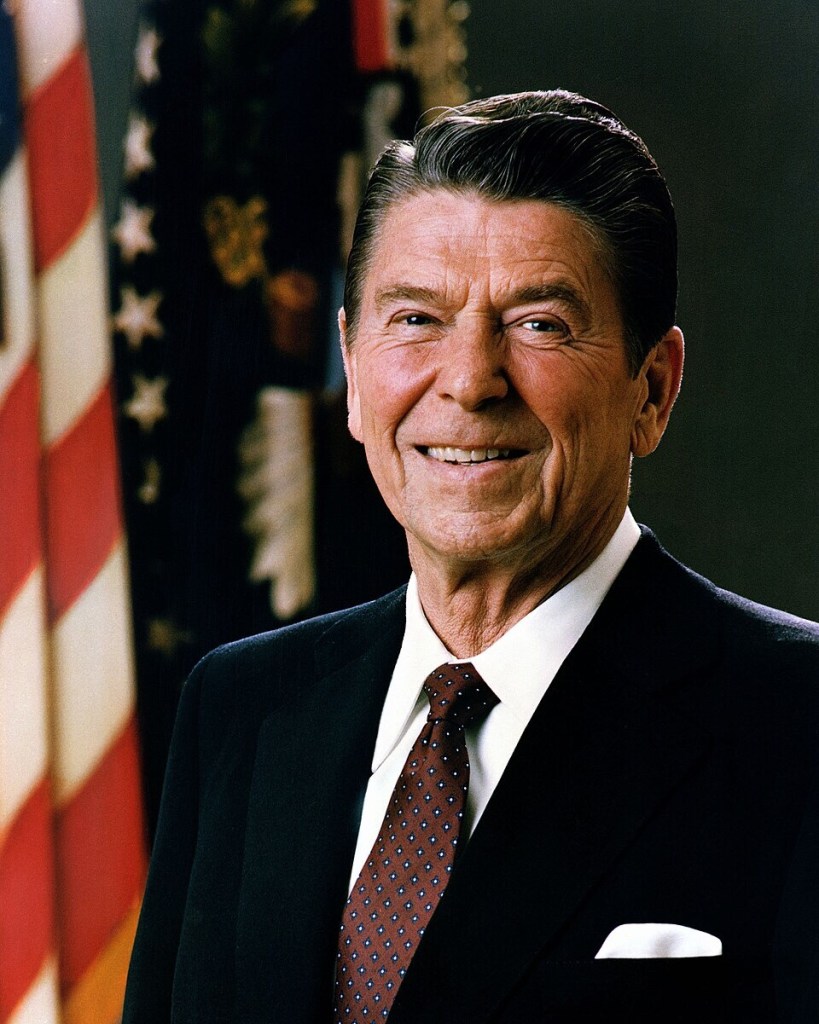
This is from a 1988 speech by a conservative Republican president:
“We should beware of the demagogues who are willing to declare a trade war against our friends, weakening our economy, our national security, and the entire free world, all while cynically waving the American flag.”
– Ronald Reagan
Ronald Reagan (1911 – 2004)
I am neither Democrat nor Republican. I have voted for members of both parties, based on the qualifications of the individual candidates, because neither party is without fault.
Ronald Reagan was no more perfect than any other president . . . but he got this one right. Governing is not — or it shouldn’t be — about what political party you belong to; and it sure as hell shouldn’t be about serving your own interests. It is — or it should be — about intelligence, compassion, decency, preserving our Constitution, and sincerely trying to do what is best for the country as a whole.
Somewhere along the way, on both sides of the aisle, we seem to have lost the script.
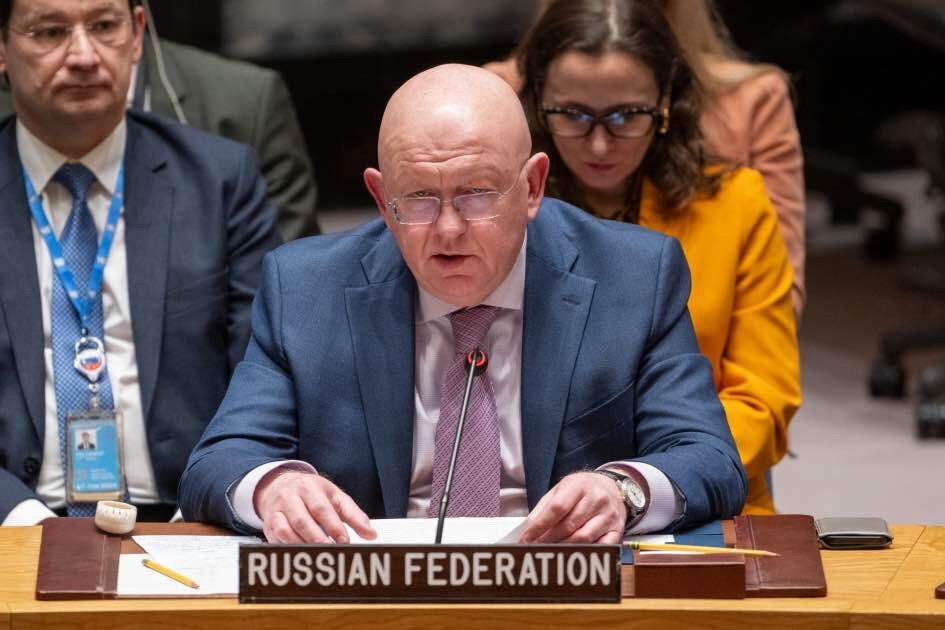
While UK and EU leaders met in Kyiv with Ukrainian President Volodymyr Zelensky; while the United Nations presented a joint statement, signed by 50 member nations, demanding Russia’s immediate cessation of hostilities against Ukraine; and while CIA Director John Ratcliffe suddenly and secretly flew to Moscow for as-yet-undisclosed reasons; Vladimir Putin, through his Permanent Representative to the UN, Vassily Nebenzia, once again dug in his heels and attempted to lay the blame for his war at Ukraine’s doorstep.
Vassily Nebenzia
What Nebenzia had to say at the August 24th UN Security Council meeting on Ukraine is so perfectly illustrative of Putin’s intentions that it bears repeating here in pertinent part:
“Today’s meeting is being held under the grand banner of the 35th anniversary of Ukraine’s ‘independence.’
“But is there really anything to celebrate?
“Over these decades, under successive leaders, the country has been brought to the brink. Those who have loudly proclaimed Ukraine’s independence and bright prospects have in fact, whether deliberately or otherwise, been destroying it.
***
“Having failed to achieve its objectives on the battlefield, the Kiev [sic] regime has now descended into outright terror against Russia’s civilian population.
“Its Westrn patrons, not to mention Zelensky himself, still cling to the dangerous illusion that further escalation, strikes deep inside our territory and terror against civilians will force us to accept an ultimatum disguised as ‘peace.’
“The negotiating demands being put to us are, to say the least, strange.
***
“There will be no agreements at the expense of Russia’s security interests.
“Any attempt to impose a freeze on the conflict under the guise of a ceasefire, merely to give Kiev [sic] a temporary respite to regroup and rearm, is doomed to fail.
“As long as we are addressed in the language of ultimatums, terror and threats, while realities on the ground are ignored, there will be no basis for political and diplomatic dialogue.”
[Excerpted from report at russiaun.ru, August 24, 2026 . . . well worth reading in full.]
It would be tempting, and much too easy, to write this off as merely the delusional ramblings of a person seemingly in the grip of dementia. But this is the Putin regime talking, and Mr. Nebenzia is, from all available evidence, perfectly sane. These are not misstatements of fact; they are the deliberate twisting of the truth in order to justify the continuation of a brutal and illegal war of attrition started nearly five years ago by the one who now accuses his victims.
Vladimir Putin may be overestimating his country’s ability to fulfill his goals; but he knows perfectly well what he and his representatives are saying.
Make no mistake: the Russian Bear is alive and well, and will continue to menace the world until someone stops it.
Earlier today, I commented on the mysterious presence of an American military transport plane at Vnukovo Airport in Moscow, said to be carrying CIA Director John Ratcliffe, and I contemplated what possible reason there could be for such a sudden, unexplained visit.
My two immediate thoughts — both optimistic — were a possible breakthrough in negotiations for an end to the war in Ukraine, and/or a long-overdue return of American political prisoners still being held in Russia.
But not long after posting my remarks — as I sat awaiting my turn to be helped at the local Motor Vehicle Department — I received an alert on my phone, which read as follows:
“Putin adviser warns UK factories face attacks from ‘unknown sources’ for helping Ukraine.” [Rich Booth, Independent UK, August 25, 2026.]
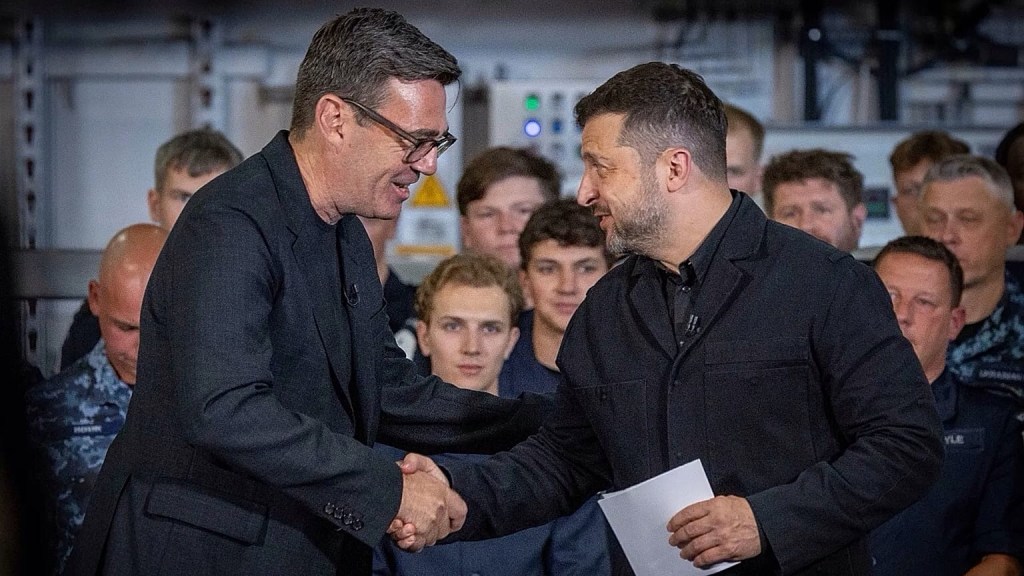
And that familiar little bell began ringing in my head as I read that Andrei Fedorov, a former deputy foreign minister for Russia, said that he could not “100% exclude” the possibility of “semi-military” operations directed at Britain . . . a pronouncement made simultaneously with British Prime Minister Andy Burnham’s trip to Kyiv.
In addition to Burnham, a multi-national delegation meeting this week with Ukrainian President Volodymyr Zelensky in Kyiv issued a firm pledge of continuing support for Ukraine in its battle against Russia’s aggression.
Prime Minister Burnham and President Zelensky
And meanwhile, at the United Nations, a joint statement issued by 50 member states was presented by Danish Foreign Minister Lars Lokke Rasmussen, calling on Russia to agree to a full, immediate, and unconditional ceasefire in Ukraine, among other stringent terms certain to be met by Putin with something less than pleasure.
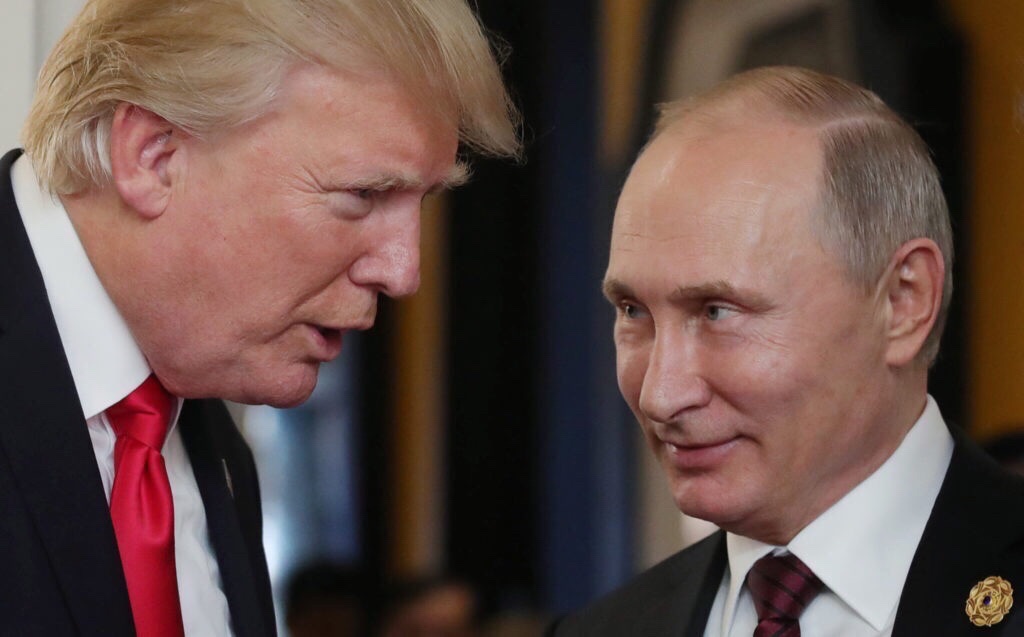
Significantly, the United States did not join in the UN statement, for reasons that may be known only to these two:
So what the hell is CIA Director Ratcliffe doing in Moscow? I certainly don’t know; but I’m feeling somewhat less optimistic this evening than I was this morning.