Having a wonderful time reminiscing about all my past travel (and other) adventures. Hope you’ll share them with me in my blog, “All Roads Led to Russia.”
I usually look for inspiration, wisdom, or humor in my favorite quotations. But recent events have provided such a wealth of mind-bending comments from a wide variety of sources, I find it hard to resist passing them along to those who may have missed them.
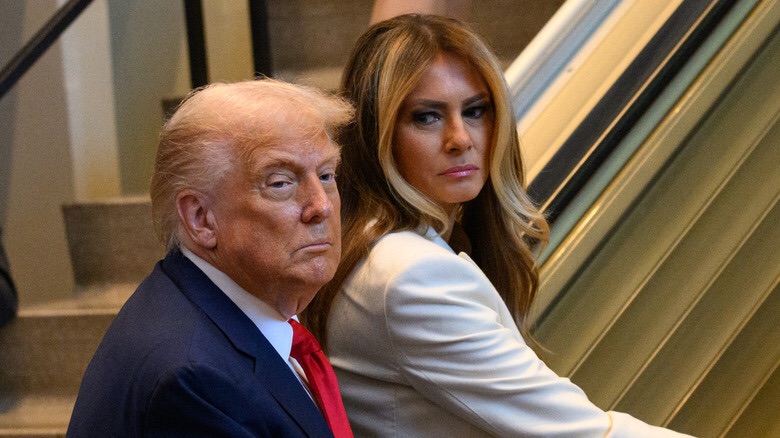
Yesterday was no exception. In fact, I was originally undecided between Donald Trump’s description of Canada as “one of the worst countries in the entire world,” and his wife’s characterization of his presidency as “doing the best that he can.”
Good stuff, huh?
The Happy Couple
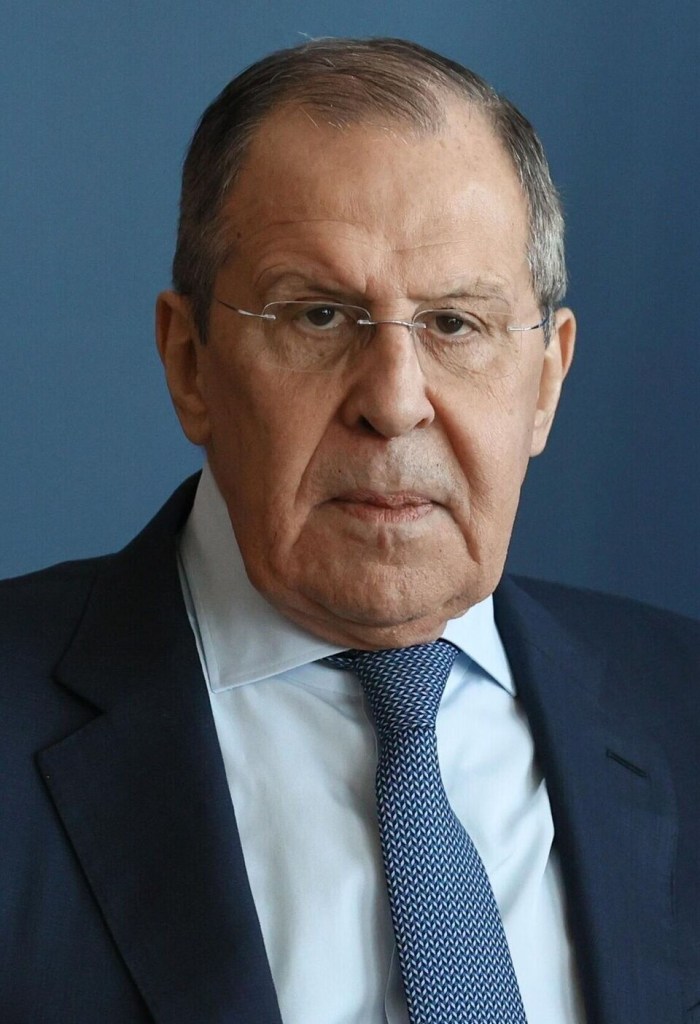
But then I read this from Russian Foreign Minister Sergey Lavrov, uttered after his meeting with German Foreign Minister Johann Wadephul on the sidelines of the United Nations meeting in New York on September 26th. When Wadephul urged that Russia deescalate the war in Ukraine as well as its hybrid attacks in Europe, Lavrov unflinchingly responded:
“[The fighting] will continue through to the end. . . . Does Berlin understand what this could lead to? Didn’t they not [sic] learn the lessons of World War II?”
[Source: Rikard Jozwiak, RFE/RL, September 28, 2026.]
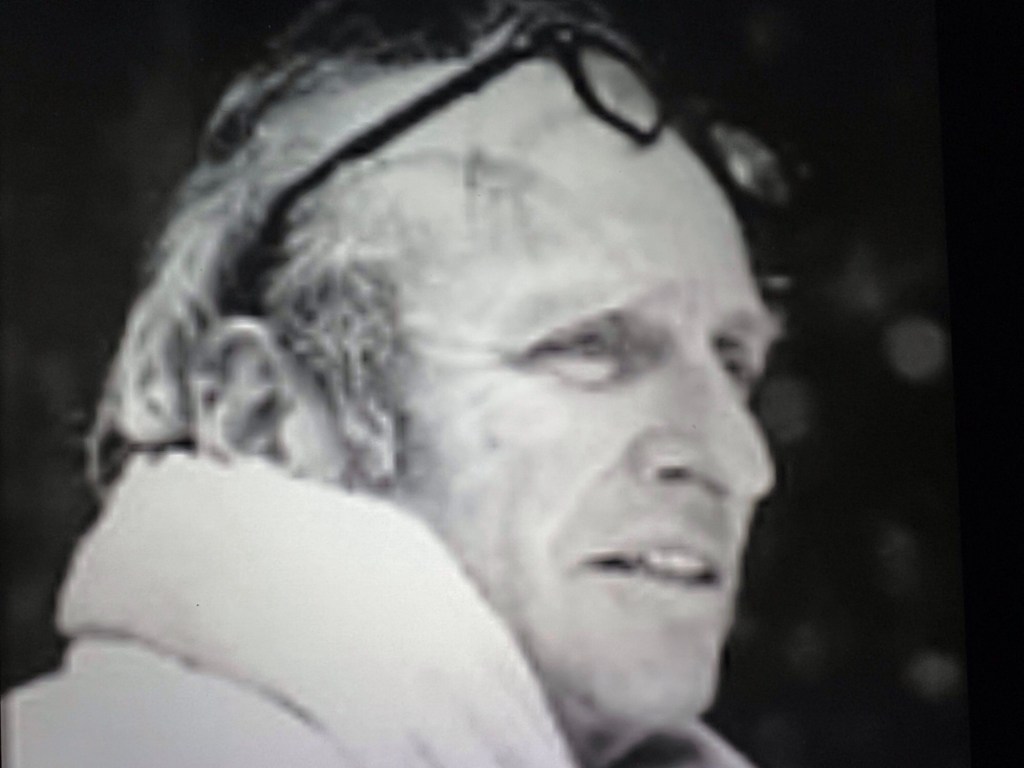
Sergey Lavrov: The Great Stone Face
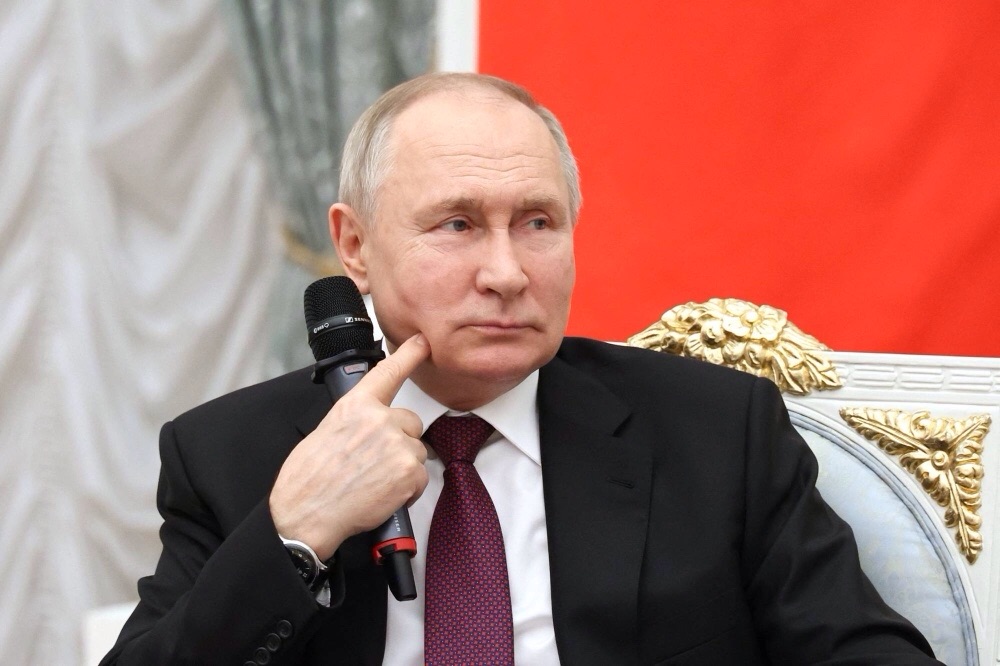
That’s not inspirational, wise, or funny. But I felt it bore repeating, in case anyone out there had any doubts about Vladimir Putin’s intentions.
The royal families of Europe have been arranging marriages between dynasties for centuries, to an extent that would make a DNA database explode. And don’t even think about trying to create a multinational family tree . . . even a giant redwood doesn’t have enough branches to handle that.
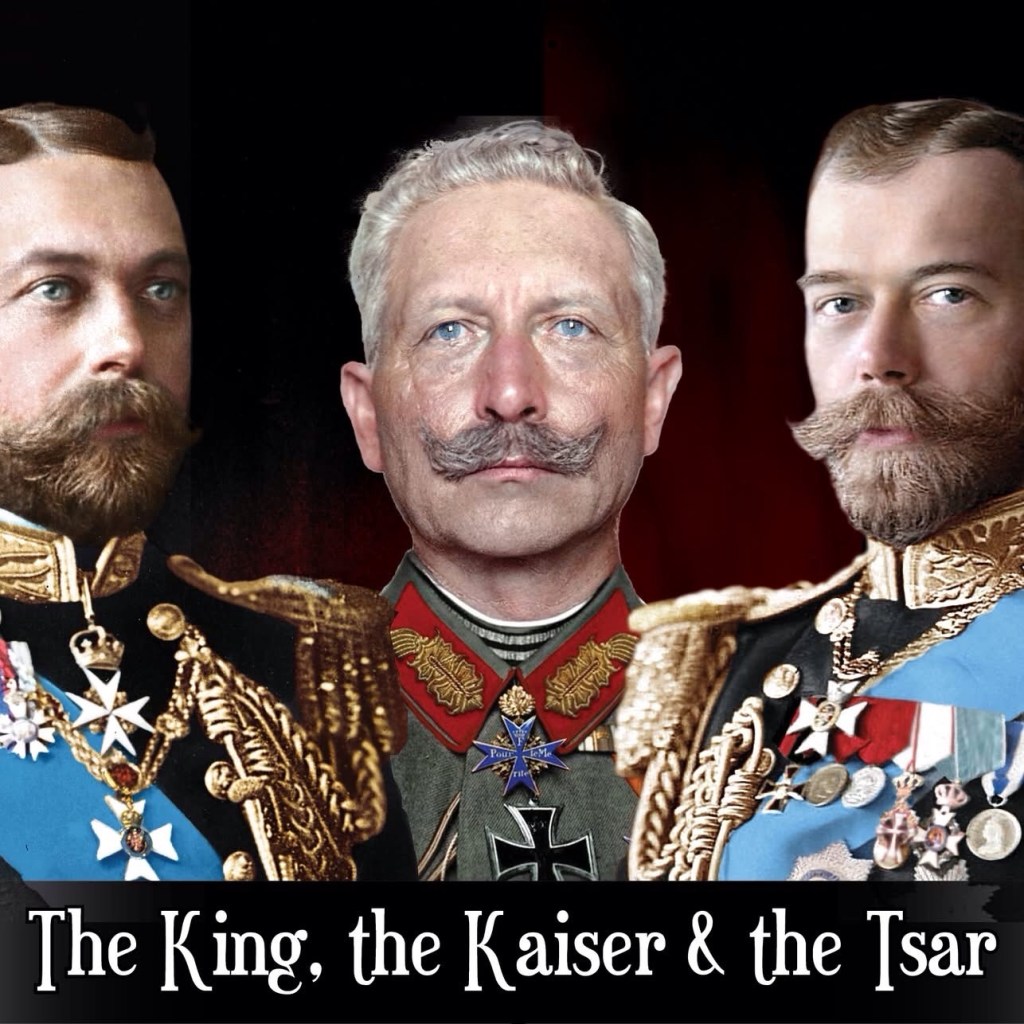
But my favorite example of interconnecting families goes back to the late 19th and early 20th centuries, and involves the unlikely trio of Great Britain, Germany and Russia.
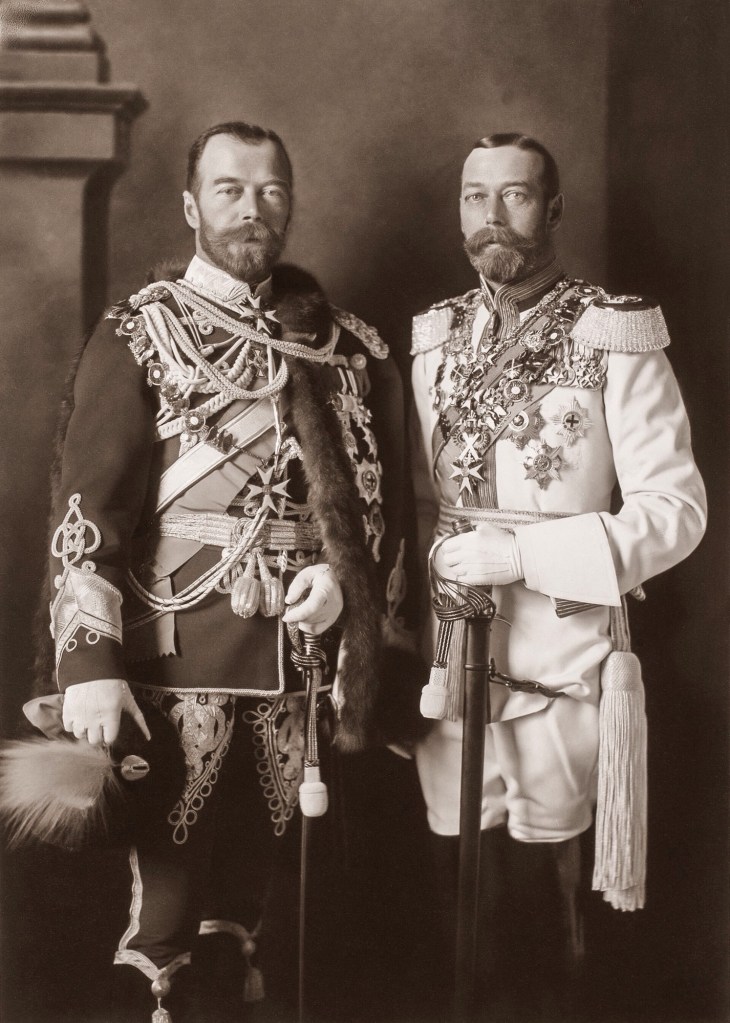
(L-R) King George V, Kaiser Wilhelm II, and Tsar Nicholas II
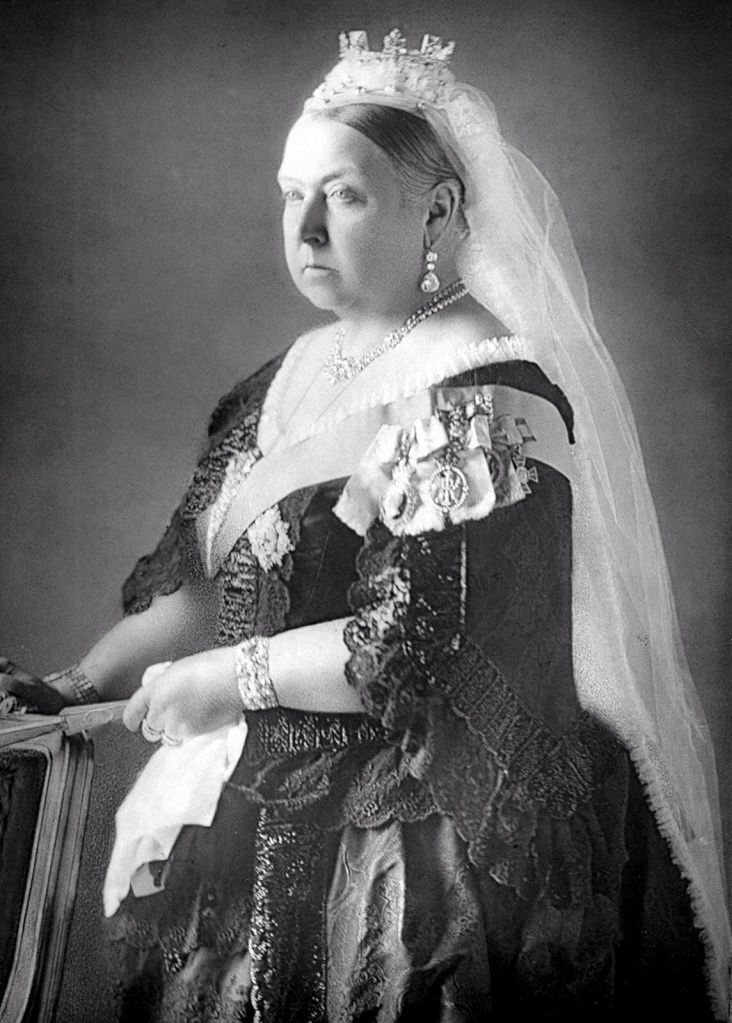
How these three came to be cousins, as improbable as it may seem at first face, is really quite simple. Britain’s Queen Victoria managed to bear nine children — five daughters and four sons — all of whom survived to adulthood and eventually produced for the Queen a total of 42 grandchildren, and they . . . well, you get the picture.
No wonder she was known as “the Godmother of Europe”!
Queen Victoria
Victoria and Albert’s eldest child, a daughter also named Victoria, married German Emperor Frederick III, and they begat a son who grew up to become Kaiser Wilhelm II.
Victoria’s eldest son, King Edward VII, was the father of King George V.
Another daughter, Princess Alice, married Grand Duke Louis IV of Hesse, and one of their children became Empress Aleksandra Feodorovna of Russia when she married Nicholas II.
And to top it off, Nicholas and George were first cousins; their mothers were sisters. And because they were also both grandsons of Queen Victoria, that meant that Nicholas and Aleksandra were cousins at some level before they became husband and wife.
Oy!
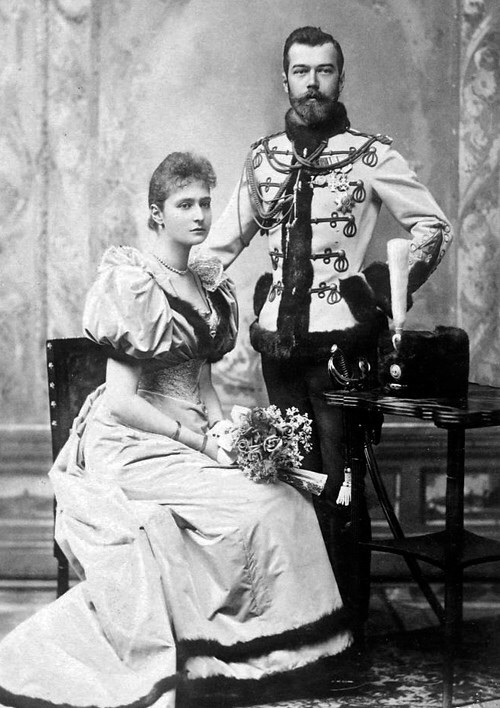
A Young Nicholas and Aleksandra
And there you have it: three countries, often at odds with one another, ruled by close blood relatives. And sadly, but not really surprisingly, their familial relationship took a back seat to political considerations when the chips were down.
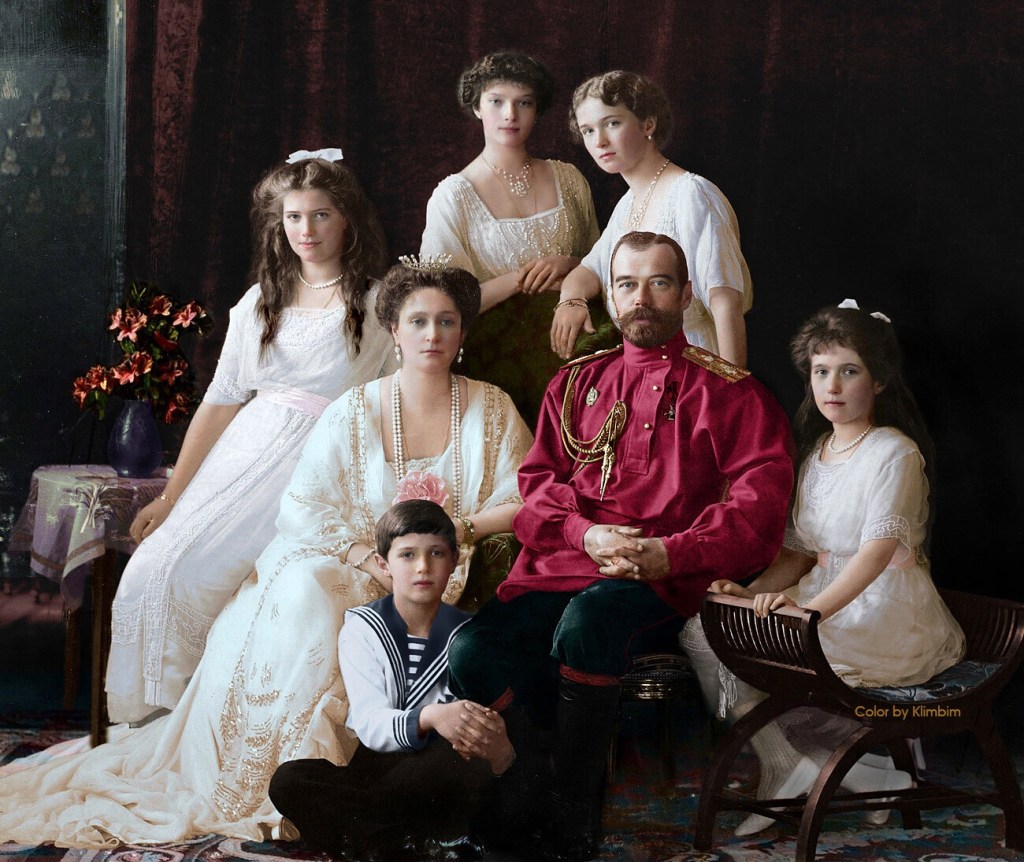
The story of the end of the Romanov dynasty — the brutal murder of Nicholas, Aleksandra, and their five children by the Bolshevik revolutionaries — is well known. But how many people are aware that, as Nicholas realized his reign was at an end and chose to abdicate in favor of his younger brother (Grand Duke Mikhail Aleksandrovich, who wisely refused the honor), he sought refuge in Britain from his cousin, King George V . . . and was turned down flat.
It wasn’t because there weren’t enough spare bedrooms in the palace. But George was having political problems of his own. World War I was raging in Europe, and working-class unrest in Britain was on the rise. Aleksandra was half German, and unpopular in Russia and elsewhere. George feared that offering the Russian monarch and “that German woman,” as she was referred to in Russia, would exacerbate conditions in Britain.
And so — despite being blood relatives and lifelong friends — George refused entry to his cousin’s family, leaving them to face a most grisly end in a basement in Yekaterinburg on the night of July 16-17, 1918.
The Tsar’s Family, in Happy Times
But personal and political considerations aside, there is no escaping one’s genetic makeup. Look at King George V and Tsar Nicholas II side-by-side, and tell me which is which:
Cousins and Doppelgangers
And now — five generations later — look at today’s young Prince George, second in line to the throne of the United Kingdom:
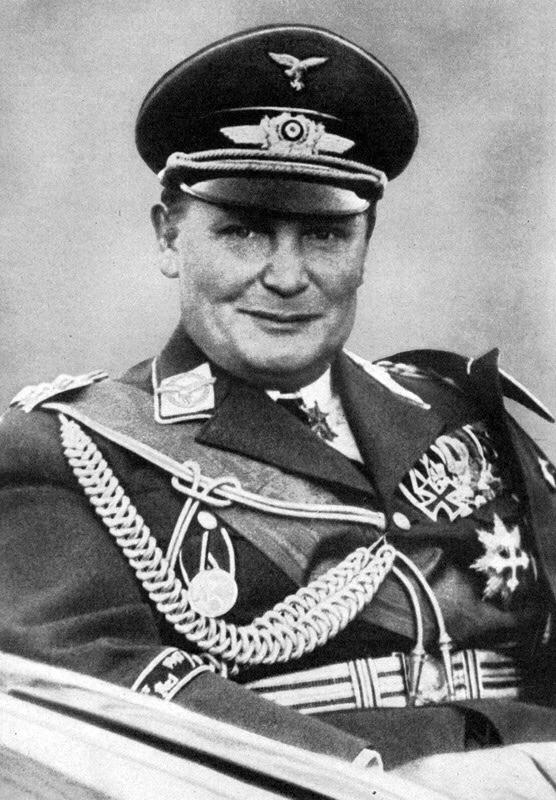
1946. World War II was over; Europe was focused on rebuilding; and Nazi war criminals were on trial at Nuremberg. One of them was Hitler’s right-hand man, the monster Hermann Goering.
Hermann Goering (1893 – 1946)
American psychologist Gustave Gilbert, together with psychiatrist Douglas Kelley, had been assigned to interview Goering and others in private sessions at the prison where they were being held. Gilbert’s later report stated that Goering — whose testing placed him at an IQ of 138 — showed no remorse for the millions of deaths and the vast devastation caused by the war; instead, he offered a clinical analysis of political power that explained how easy it had been — and always would be — to convince ordinary people that war was necessary and justifiable.
When Gilbert commented that most people would, to say the least, not feel grateful toward leaders who brought them to ruin, Goering shrugged contemptuously and said in part:
“Why, of course, the people don’t want war. Why would some poor slob on a farm want to risk his life in a war when the best that he can get out of it is to come back to his farm in one piece?”
But, he said, it was “always a simple matter to drag the people along . . . the people can always be brought to the bidding of the leaders. That is easy. All you have to do is tell them they are being attacked and denounce the pacifists for lack of patriotism and exposing the country to danger. It works the same way in any country.”
[Source: History After Dark, September 27, 2026.]
“Is it really that simple?”
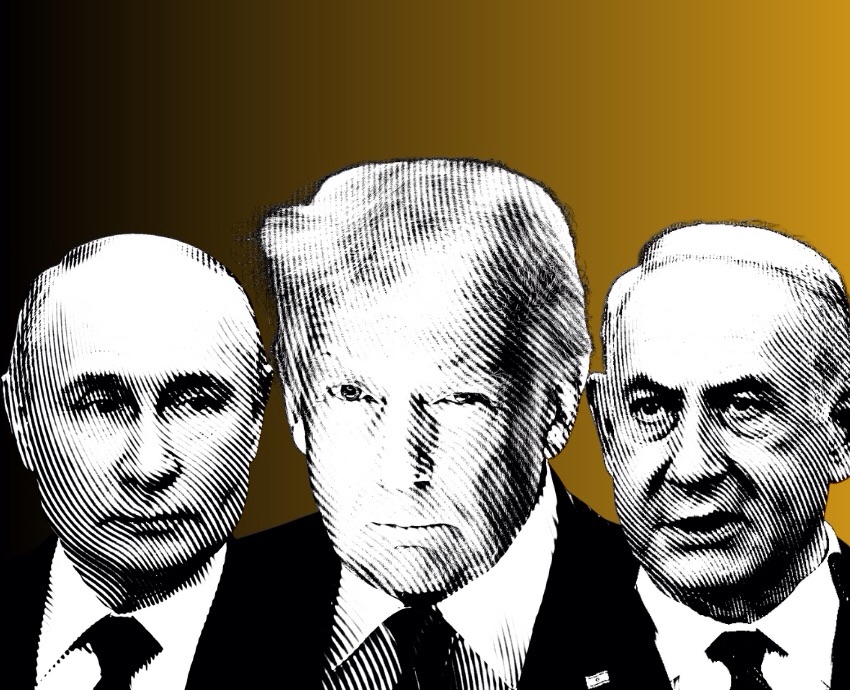
Was he right? Well, let’s think about the present time: Vladimir Putin convincing the Russian people that they were in peril from Ukraine and its NATO allies; Benjamin Netanyahu using one attack by Hamas — while unquestionably a horrific event — as an excuse to commit genocide in Gaza; Donald Trump justifying a war against Iran by claiming they were building nuclear weapons to use against us and our allies.
I could fill a book with tales of my years with Walter Surrey; in fact, I just may do that. But for now, I’ll continue here with a story of some of my U.S.-China adventures.
Walter Sterling Surrey (1915 – 1989)
Having worked with Richard Nixon and Henry Kissinger in the reopening of relations with the People’s Republic of China (PRС) — more commonly known then as “Red” China — Walter naturally encouraged some of his corporate clients to become more involved in doing business there. And as Chairman of the National Council for US-China Trade (now the US-China Business Council), and legal counsel for the Embassy of the PRC in Washington, he was uniquely positioned to assist his clients in establishing some very successful joint ventures and other commercial relationships in Beijing, where he traveled frequently and several times met with Chinese leader Deng Xiaoping. In fact, China became the principal focus of his work for many years.
It was not unusual, therefore, for meetings to be held in our offices with representatives of the Chinese Embassy, as well as dignitaries visiting Washington from China. One such occasion involved negotiations for the establishment of a joint venture between a multinational corporate client and the China Council for the Promotion of International Trade (CCPIT), for which their representatives had flown in from Beijing. After a week of discussions, involving much wining and dining and bowing and cowtowing, an agreement was finally hammered out. When it was over, I was responsible for arranging a celebratory luncheon at an authentic Chinese restaurant. When I told the restaurant manager that we were bringing a delegation from Beijing, they pulled out all the stops.
Our group — about ten or twelve people, including two interpreters — were seated at a large round table in a quiet alcove, and were being served from the banquet menu. Dish after dish of the most incredible food made their way around the table. Seated to my right was a rather plump Chinese gentleman who spoke no English, and who seemed to have taken a liking to me. As the food was passed to him, he would serve himself, and then begin scooping food onto my plate.
Now, I had recently succeeded in losing those last five stubborn pounds that so many of us have to deal with, and was determined not to gain them back. So, as my new friend prepared to load me up with yet another plateful, I tried to make myself understood by shaking my head from side to side, and holding a hand above my plate. Then I placed my hands by my sides and — still shaking my head — said, “No, no. Fat. Fat.” To which the smiling gentleman, clearly understanding my meaning, bobbed his head up and down, and proceeded with great glee to plop yet another spoonful of food onto my plate.
Walter told me later that my benefactor was possibly searching for an American wife to take back to China with him, but that I was not quite curvy enough to make the grade and needed to be fattened up a bit. And to think . . . I could have spent the last 40 years living in China, happily not dieting. Damn!
But though I was able to make my escape on that occasion, it wasn’t to be my last offer from our friends from the Far East. At another meeting in our office, with a group of officials from the PRC Embassy in Washington, there was one particularly distinguished gentleman in uniform, a Military Attache with the rank of Colonel. The conference was concluded without incident, but a week or so later, when Walter returned from a meeting at the Embassy, he was wearing a huge, rather devilish grin. He said he had bumped into the Colonel, who had stopped him to chat. Somewhat uncomfortably, the Colonel had said, in his rather limited English (and this is verbatim, as reported by Walter, with his usual lack of concern for political correctness and a dreadful Charlie Chan impersonation):
“Uh, Miss Brenda. She pretty lady, yes?” Walter was taken aback, and cautiously replied, “Yes, I guess so.”
The Colonel then asked, “She married?”
Walter, still cautiously: “No, not any longer.”
Colonel, eagerly wagging a finger back and forth between Walter and himself: “You fix?”
Now, Walter was an incredibly quick thinker, and realized that Chinese culture would require certain social niceties in these circumstances, so he replied, “Oh, no, I can’t do that. First of all, I am not a matchmaker; and second, that is not how we do things in this country. If you want to see her again, you will have to call her yourself.” Obviously, he knew that would never be allowed to happen, so once again I had been snatched from the jaws of a potentially awkward situation.
*. *. *
I don’t know what it was those two gentlemen saw in me. I was, I guess, not totally unattractive, but certainly no raving beauty. Whatever it was, I was very flattered, and had another couple of great stories to bring home to my family.
Life with Walter could be frustrating, exhausting, and sometimes infuriating; but it was never, ever dull.
Yesterday I noticed that one of my readers had searched out an old post of mine that I recalled clearly because I had had so much fun writing it. As I re-read it, I found myself chuckling again at the absurdities of life and language . . . and specifically from the Russian point of view. And it occurred to me that today’s world could use a lot more of this kind of absurdity.
So, in the hope of bringing a little humor into an otherwise stressful news day, here again is:
“OH, THOSE FUNNY FUNNY RUSSIANS”
Yes, I know . . . when you think of Russians, your first thought isn’t usually about how witty they are. Unless, of course, you’re thinking of Yakov Smirnoff, who is freakin’ hilarious.
Yakov Smirnoff
The Russian people do, of course, have their own brand of humor — much of it satirical and geared toward political issues. But I find them to be at their funniest when they’re trying to be dead serious, as when Kremlin spokesman Dmitry Peskov spouts his daily ration of horse manure for the world to swallow.
Or consider their everyday manner of expressing themselves. Every language has its nuances, its slang expressions, and its dirty talk, of course. But if there were to be a worldwide contest to name the most varied and — let’s be honest here — the most obscene, the Russian lexicon would win hands-down. Making vodka and declaring war aren’t the only things they’re good at.
Allow me to enlighten you . . .
I have this delightful little book titled “What They Didn’t Teach You in Russian Class.” ** It’s chock full of useful — and some not-so-useful — phrases to carry you through the average day in Moscow, Omsk, or Novosibirsk. The book is arranged by categories, so let’s start with the section on “Acquaintances, coworkers, and enemies.”
** By Erin Coyne and Igor Fisun, Ulysses Press, 2008, 2017.
This one is useful, but not if you want to live much longer:
“All broads are wenches.”
Why the authors think a visitor to Russia would need to know how to say that is beyond me; perhaps they were just trying to give us some insight into the mind of the average (or below average) Russian male. And by the way, there is also a Russian word for guys who say things like that, but it has 15 letters and 6 syllables, so you don’t really want to bother because you’re never going to use it anyway.
But here’s one that might be likely to come up in daily conversation over the water cooler at work: “My boss pays me under the table.” And the reason the boss does that is probably because:
“My manager is sleeping with his secretary.”
And one more for the workplace: “Their CEO was arrested last week for fraud.”
My advice: Quit that job. Now.
*. *. *
After a day at the office, there’s nothing quite so refreshing (or so they tell me) as a trip to a Russian banya, or steambath, where — according to my little book, “It’s fun to hang out naked with your friends.” Yeah? Well, they obviously haven’t seen my friends.
But besides the naked thing, I decided it would probably be best to skip the banya after reading that the following sentences might come in handy:
“Hey, Vasya, could you beat me with that branch a little more?”
And: “Now that we’ve steamed up, let’s go jump in the snow!”
Or my favorite: “He drank too much vodka and steamed himself to death.”
Holy crap!
“Harder! Harder!”
*. *. *
According to the authors of this priceless little book, if you ask a Russian why they’re sick, they’ll most likely blame it on the weather, the atmospheric pressure, or “the fact that they sat on concrete under a clear sky while not wearing a hat.” The authors’ words, not mine. And here are some examples:
“He got sick because he wasn’t wearing a hat.”
”One hundred grams of vodka with pepper will cure anything.” (Note: In my personal experience, I have found that 100 grams of vodka — although it might not actually cure you — will likely ensure that you don’t give a damn how sick you are.)
How about this: “Someone must have given me the evil eye, because I’ve been getting sick a lot lately.” (Not actually weather-related, but having grown up with four Russian grandparents, I can attest to the variety of their superstitions.)
Here’s one I don’t recommend trying: “My aunt cured her cancer with special herbal tea.”
And a really scary one: “If you sit on concrete, your ovaries will freeze.” (I’m not sure what they tell the little boys, and frankly, I’d rather not think about it.)
My maternal grandmother didn’t talk about ovaries, but she used to say that if I sat on cold concrete, I would get “piles” (hemorrhoids). It took 60 years for me to find out she knew what she was talking about.
You’ll be sorry … 60 years from now.
*. *. *
Now here’s a useful chapter . . . on STDs (sexually-transmitted diseases, not short-term disability). In Russian, they’re called BPPPs — and you really don’t want me to spell all that out for you. Putting aside the nasty things that might be said by someone who has caught a BPPP, there are two sentences that you conceivably might — though hopefully not — find useful:
“Do you need a prescription for penicillin in Russia?” and “Where can I find a doctor who treats venereal disease?”
Moving right along now . . .
We come to the dirty stuff. In Russia, there are more ways to tell someone to go f*** themselves than there are North Korean soldiers in Ukraine. If you want to know all of them, you’ll have to buy the book. But I found one in the list that I had actually used once, on my very first trip to Russia in 1988. Some sleazy character in Moscow tried to convince me his car was a taxi (it wasn’t), and offered to drive me to my destination (the U.S. Embassy) for $50 U.S. (which was an outrageous amount, besides being illegal). When he wouldn’t take no for an answer, I used the one phrase I had taken the trouble to learn for just such an occasion: “Yob tvoyu mat.”
In other words, I told him to do something unspeakable to his mother. And it worked. He gave up and walked away . . . at which point the little old man who had been standing nearby witnessing the exchange stepped closer, began patting me on the shoulder, saying (in Russian, of course): “Good for you! No taxi. No dollars. Good for you!”
*. *. *
I loved my time in Russia. But it wouldn’t be the same now, as evidenced (as if we need more evidence) by the inclusion of this sentence in the little book:
An eloquent response from Senator Mitch McConnell to reporters’ questions upon his return to work:
“ . . .”
This is not meant to be funny or cruel. It is a serious matter, when a legislator who is clearly non-functional, and barely sentient, is propped up and told how to vote on matters of national importance.
From a legal standpoint, it is highly questionable at best. And from a personal point of view, it is despicable.
What is wrong with people today? How can this be allowed to continue? When will it stop?
No one knows. But November 3rd is just 36 days away. See you at the polls.
– William Shakespeare, “Julius Caesar,” Act III, Scene 1
Mark Antony, at Caesar’s Funeral
We never learn.
Yesterday was the anniversary of the day in 1938 when President Franklin D. Roosevelt wrote to German Chancellor Adolf Hitler, reiterating his earlier plea to find a peaceful resolution to the ongoing dispute over the Sudetenland region of Czechoslovakia.
Germany had been harboring resentment of its treatment under the Treaty of Versailles since the end of World War I, some 20 years earlier. Part of that treaty involved giving the Sudetenland — a territory believed by Hitler to be inherently German — to Czechoslovakia. And Hitler wanted it back, reasoning that it was rightfully his.
But he assured Roosevelt that he too wanted to avoid another war in Europe. Roosevelt, though pleased to hear Hitler’s assurances, was not naive; and in his letter of September 27th, he wrote of his desire that “negotiations [between Germany and Czechoslovakia] be continued until a peaceful settlement is found.” [“This Day in History,” History.com, September 26, 2026.]
He added a further inducement, saying that “ . . . should you agree to a solution in this peaceful manner I am convinced that hundreds of millions throughout the world would recognize your action as an outstanding historic service to all humanity.” [Id.]
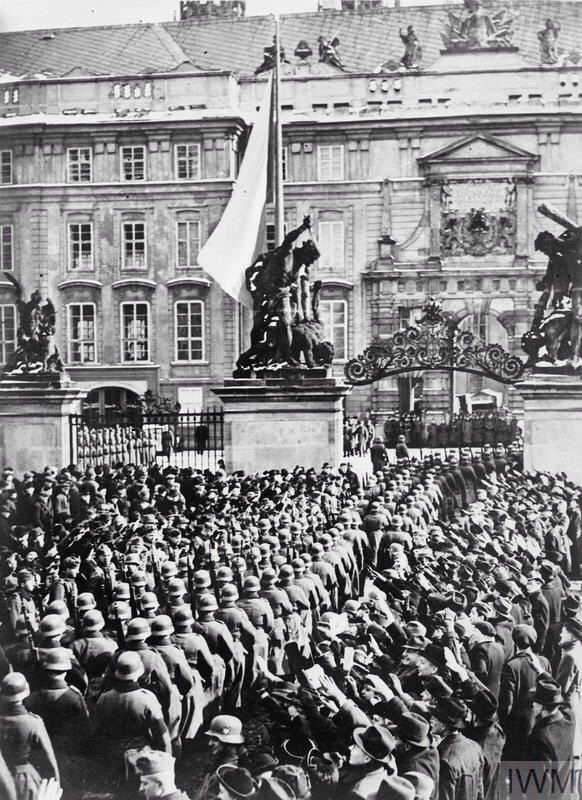
On March 15, 1939, Hitler invaded Czechoslovakia. Six months later, he did the same to Poland, and World War II had begun. The dogs of war had been let slip, and the war Hitler promised not to start would rage for six years.
Nazi Germany Invades Czechoslovakia – March 1939
(Coincidentally, it was on March 15, 44 B.C., that Julius Caesar was stabbed to death in the Roman Senate, leading to Shakespeare’s coining of the phrases “let slip the dogs of war” and “beware the Ides of March”in his telling of the story. But I digress.)
*. *. *
Fast forward to February 2022. Vladimir Putin’s “routine military exercises” are massed near the border of Ukraine. The West has warned Putin against an invasion of its neighbor, and he has assured the world that he has no such action in mind. Some in the West believe him, or want to. Others, including Ukrainian President Volodymyr Zelensky, are not so naive.
On February 24, 2022, Putin invaded Ukraine. What he first said would never happen, and then promised would be a quick “special military operation” to retrieve what he believes to be a rightful part of Russia, is now nearing the end of its fifth year.
Sound familiar?
But that’s not the end of it. Because, just as Hitler didn’t stop at Czechoslovakia, Putin is not satisfied with whatever portions of Ukraine he may be able to hold onto. He has already begun a hybrid war against Europe, engaging in acts of sabotage, cyber attacks, incursions into NATO airspace, election interference, and old-fashioned spying tactics, while blithely maintaining his total innocence.
But the people of Europe are not sitting idly by. They, their parents and their grandparents have lived through two world wars and numerous smaller conflicts, and they know the sound of dogs barking. They are preparing for the worst.
Does Vladimir Putin have the means to expand his war beyond Ukraine? It’s questionable, particularly with Ukraine striking back at Russia’s oil refineries and other strategic targets, the economy suffering, and the number of Russian military casualties growing exponentially by the day.
And will the Russian people stand for an extension of a war they are already sick of? Perhaps not. But when has that ever stopped a tyrant from doing as he pleased?
So, while Western leaders continue urging Putin to engage in serious peace negotiations — just as Roosevelt did with Hitler — the world holds its collective breath.
Donald Trump may think Artificial Intelligence is “super,” and “real” (as opposed to fake). But he knows nothing.
“Duh!”
Artificial Intelligence is the creation of mankind; and mankind is naturally, inherently flawed. And here’s your proof.
I wanted an exact quote of the “dogs of war” reference from Shakespeare’s Julius Caesar, so naturally I Googled it. And this was the first response that came up — from AI, of course:
Screen Shot from Google
Do you see what immediately jumped out at me? No? Then let me help you:
SHAKESPEARE DID NOT WRITE JULIUS CAESAR — OR ANYTHING ELSE, FOR THAT MATTER — IN 1999. HE DIED IN 1616!
Sorry for shouting. But I am very excited to have found this irrefutable evidence that one ordinary, reasonably intelligent human being (in this case, but not exclusively, yours truly) can still out-think a machine.
You have heard me rail against AI for some time. And now, I rest my case.
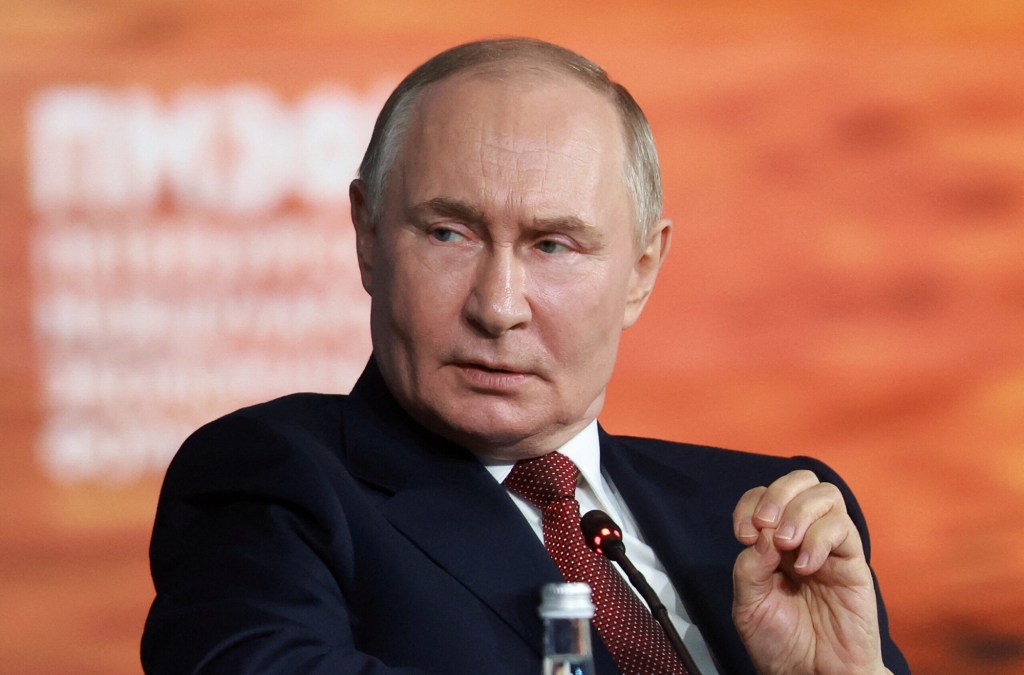
It takes a special brand of chutzpah to issue a statement like the one below . . . to know exactly what you are saying, and to expect the entire world to accept it as gospel. Speaking about the current proposals from Ukraine for the next steps toward a possible settlement of the nearly five-year-old war — the war that began with Russia’s invasion of Ukraine on February 24, 2022 — Vladimir Putin told journalists in his home town of St. Petersburg on Friday:
“They [Ukraine] are the ones who started it. Everywhere, on every front. Are these playthings, child’s play? They should therefore be made to feel Russia’s retaliatory strikes and understand that no provocative actions, no stirring up the situation to secure a result, will work. They’re only making things worse for themselves.”
Then he tried to present himself as both the peacemaker and the stalwart defender of his country’s honor:
“They [the proposals] are all on the table. It’s all possible. But after everything they have done, we will still have to think carefully about what we need to do in response.”
– Reported by Reuters, September 25, 2026.
“They are the ones who started it”?!!
Maybe it’s not chutzpah. Maybe it’s insanity. Because he seems to have convinced himself that the war he started is indeed Ukraine’s doing . . . that they have no one but themselves to blame for the years of death and devastation wrought by Russia’s missiles, drones, and ground assaults . . . and that Ukraine’s counterattacks are indeed “provocative,” rather than retaliatory.
But no, I don’t think he’s crazy. I believe he’s desperate . . . desperate to find a means of turning a disastrous failure into a reasonable facsimile of success while he still retains a measure of credibility with his own people.