The royal families of Europe have been arranging marriages between dynasties for centuries, to an extent that would make a DNA database explode. And don’t even think about trying to create a multinational family tree . . . even a giant redwood doesn’t have enough branches to handle that.
But my favorite example of interconnecting families goes back to the late 19th and early 20th centuries, and involves the unlikely trio of Great Britain, Germany and Russia.
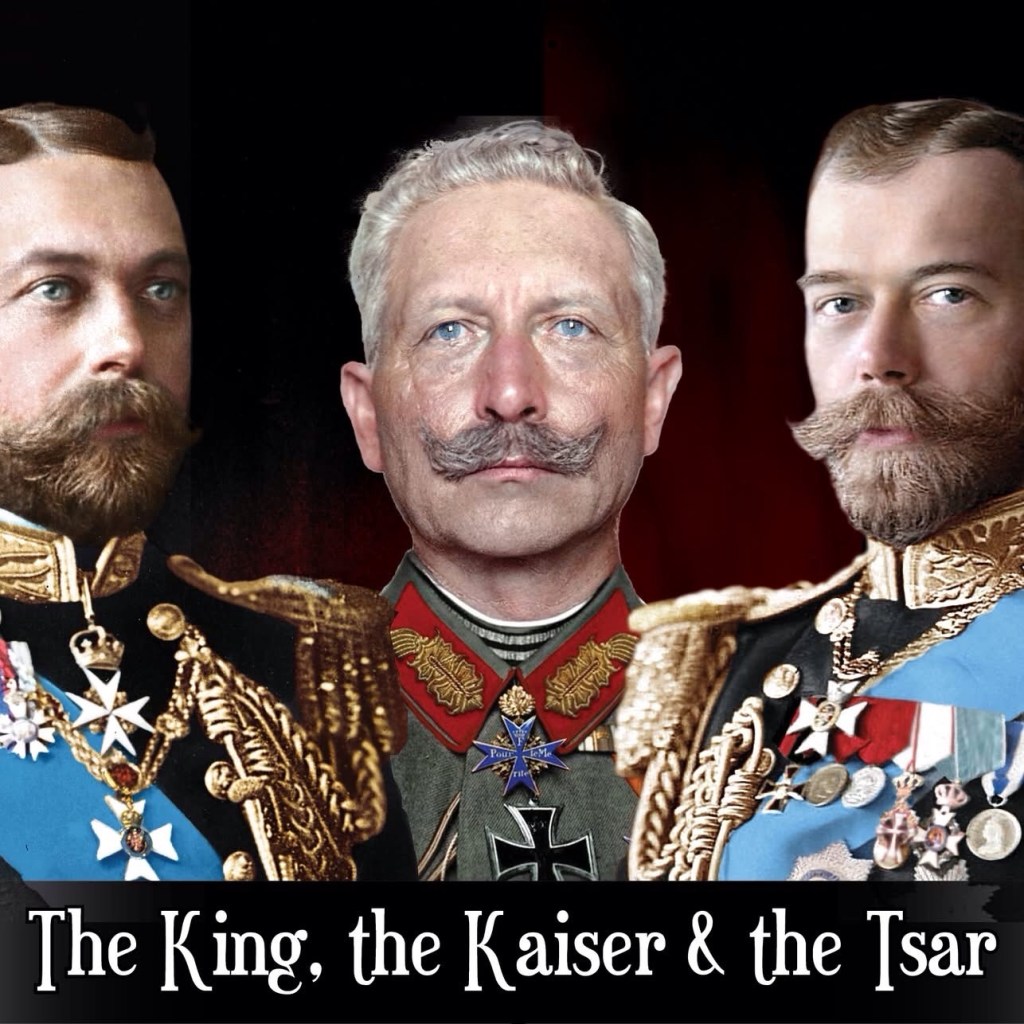
How these three came to be cousins, as improbable as it may seem at first face, is really quite simple. Britain’s Queen Victoria managed to bear nine children — five daughters and four sons — all of whom survived to adulthood and eventually produced for the Queen a total of 42 grandchildren, and they . . . well, you get the picture.
No wonder she was known as “the Godmother of Europe”!
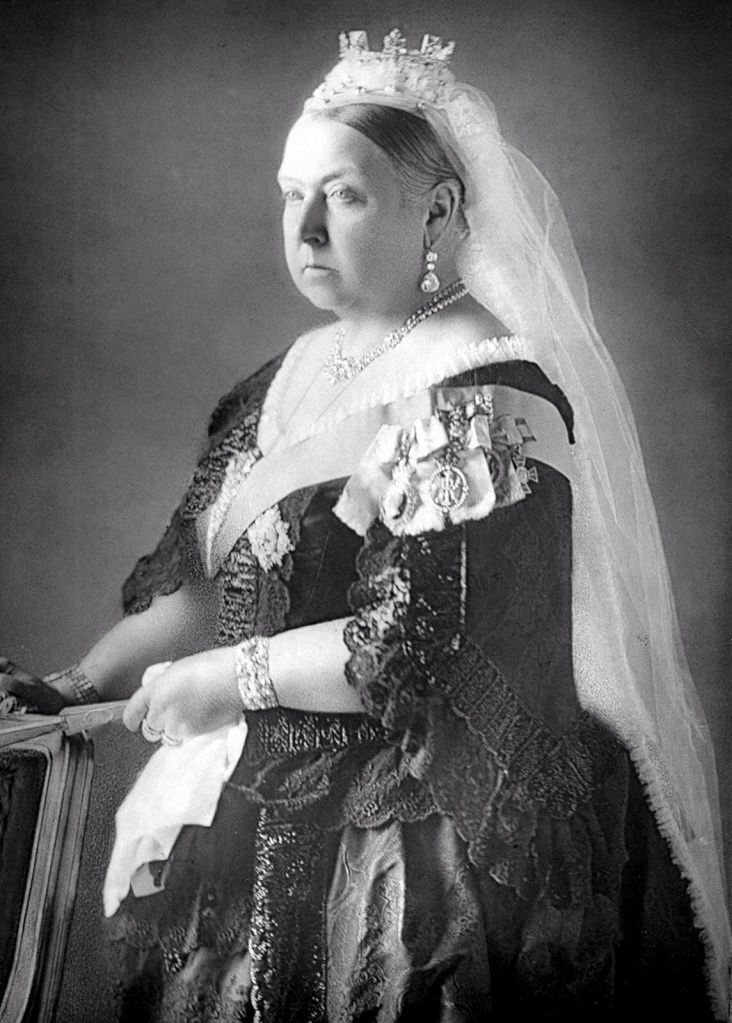
Victoria and Albert’s eldest child, a daughter also named Victoria, married German Emperor Frederick III, and they begat a son who grew up to become Kaiser Wilhelm II.
Victoria’s eldest son, King Edward VII, was the father of King George V.
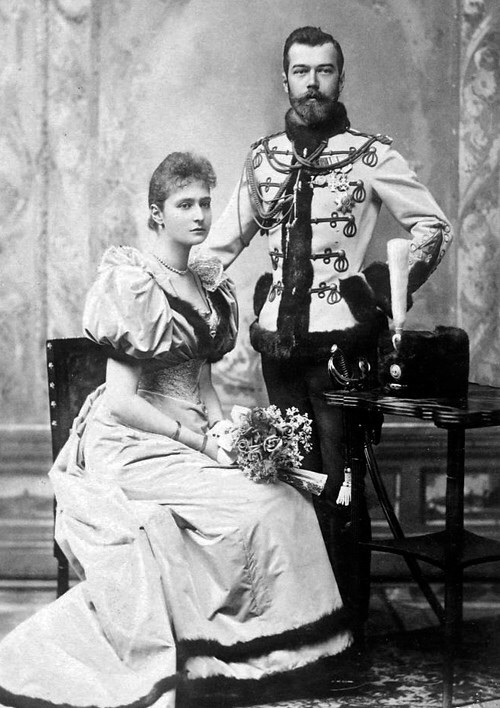
Another daughter, Princess Alice, married Grand Duke Louis IV of Hesse, and one of their children became Empress Aleksandra Feodorovna of Russia when she married Nicholas II.
And to top it off, Nicholas and George were first cousins; their mothers were sisters. And because they were also both grandsons of Queen Victoria, that meant that Nicholas and Aleksandra were cousins at some level before they became husband and wife.
Oy!
And there you have it: three countries, often at odds with one another, ruled by close blood relatives. And sadly, but not really surprisingly, their familial relationship took a back seat to political considerations when the chips were down.
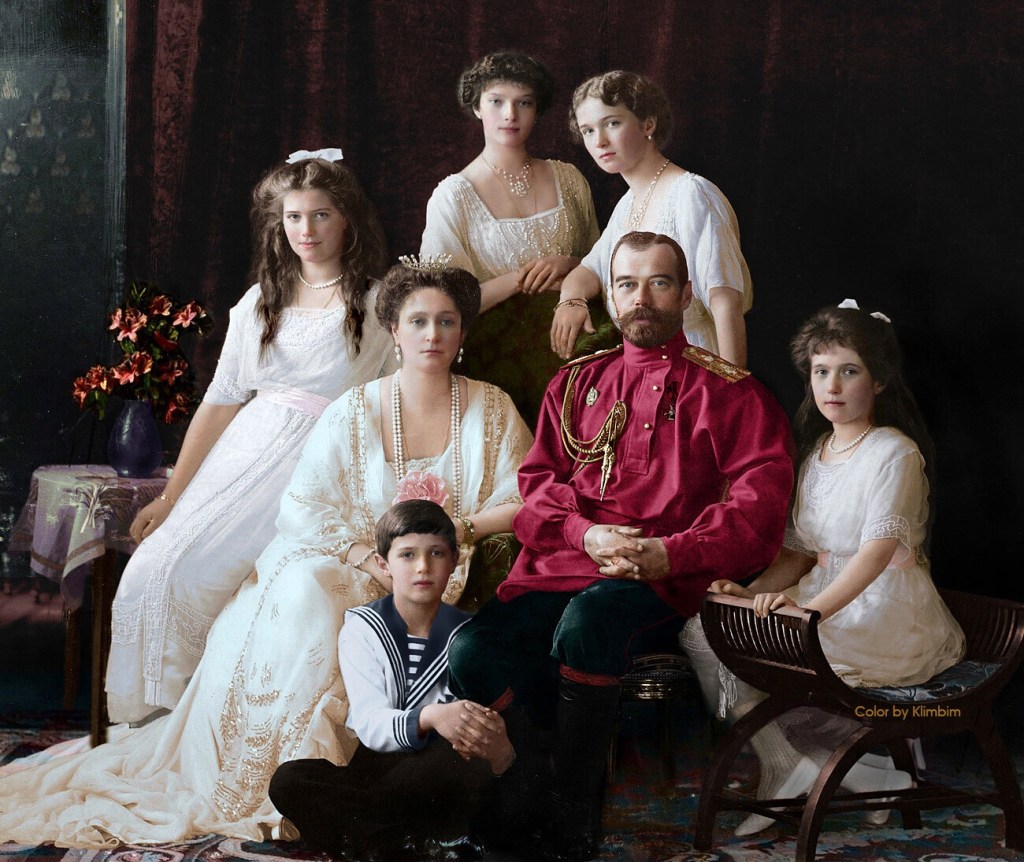
The story of the end of the Romanov dynasty — the brutal murder of Nicholas, Aleksandra, and their five children by the Bolshevik revolutionaries — is well known. But how many people are aware that, as Nicholas realized his reign was at an end and chose to abdicate in favor of his younger brother (Grand Duke Mikhail Aleksandrovich, who wisely refused the honor), he sought refuge in Britain from his cousin, King George V . . . and was turned down flat.
It wasn’t because there weren’t enough spare bedrooms in the palace. But George was having political problems of his own. World War I was raging in Europe, and working-class unrest in Britain was on the rise. Aleksandra was half German, and unpopular in Russia and elsewhere. George feared that offering the Russian monarch and “that German woman,” as she was referred to in Russia, would exacerbate conditions in Britain.
And so — despite being blood relatives and lifelong friends — George refused entry to his cousin’s family, leaving them to face a most grisly end in a basement in Yekaterinburg on the night of July 16-17, 1918.
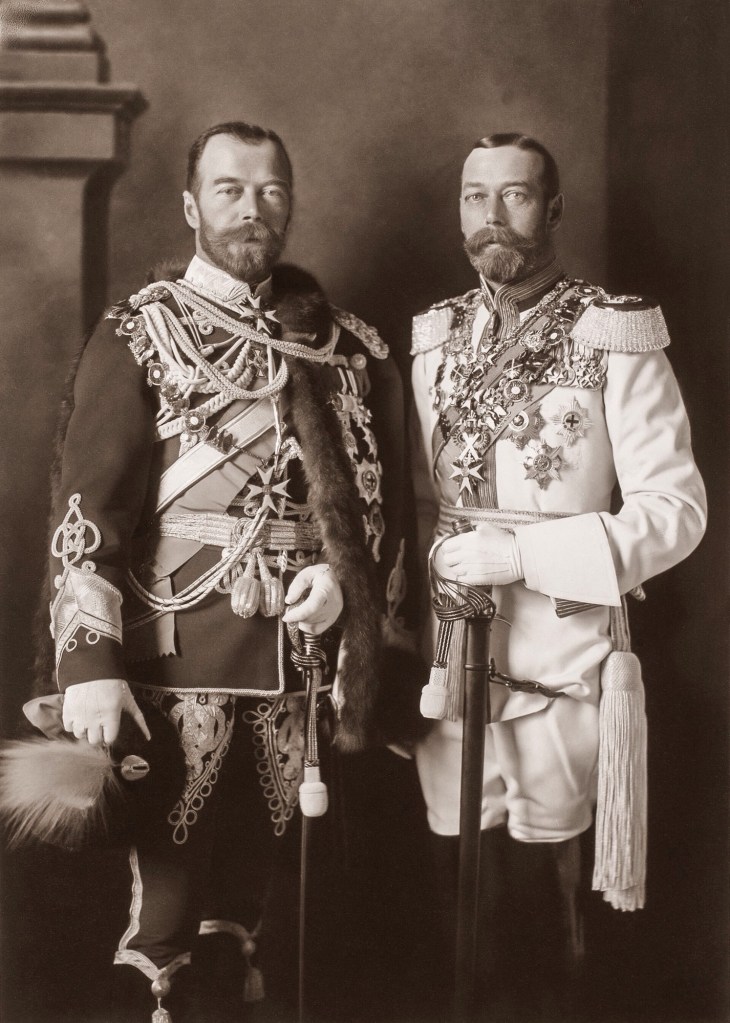
But personal and political considerations aside, there is no escaping one’s genetic makeup. Look at King George V and Tsar Nicholas II side-by-side, and tell me which is which:
And now — five generations later — look at today’s young Prince George, second in line to the throne of the United Kingdom:

Not much question about his lineage, is there?
Just sayin’ . . .
Brendochka
9/30/26

