More and more frequently of late, I find myself wondering why I am still here, when my life seems to have so little purpose now: there are no children dependent upon me, my years of meaningful work and joyous travels are in my rear-view mirror, and so many of my friends are gone. Even this blog, which I do enjoy writing, has only a few loyal readers.
It’s an age thing, and there is no cure.
But then something will happen to remind me that there is a reason for everything, although it may not be given us to understand it.
Today is the third “No Kings Day” in America. Millions of proud citizens are gathering peaceably to oppose the autocratic regime of Donald Trump, and to demand that our democracy be preserved and our Constitution obeyed. Sadly, I am physically unable to join them, though I am with them in spirit.
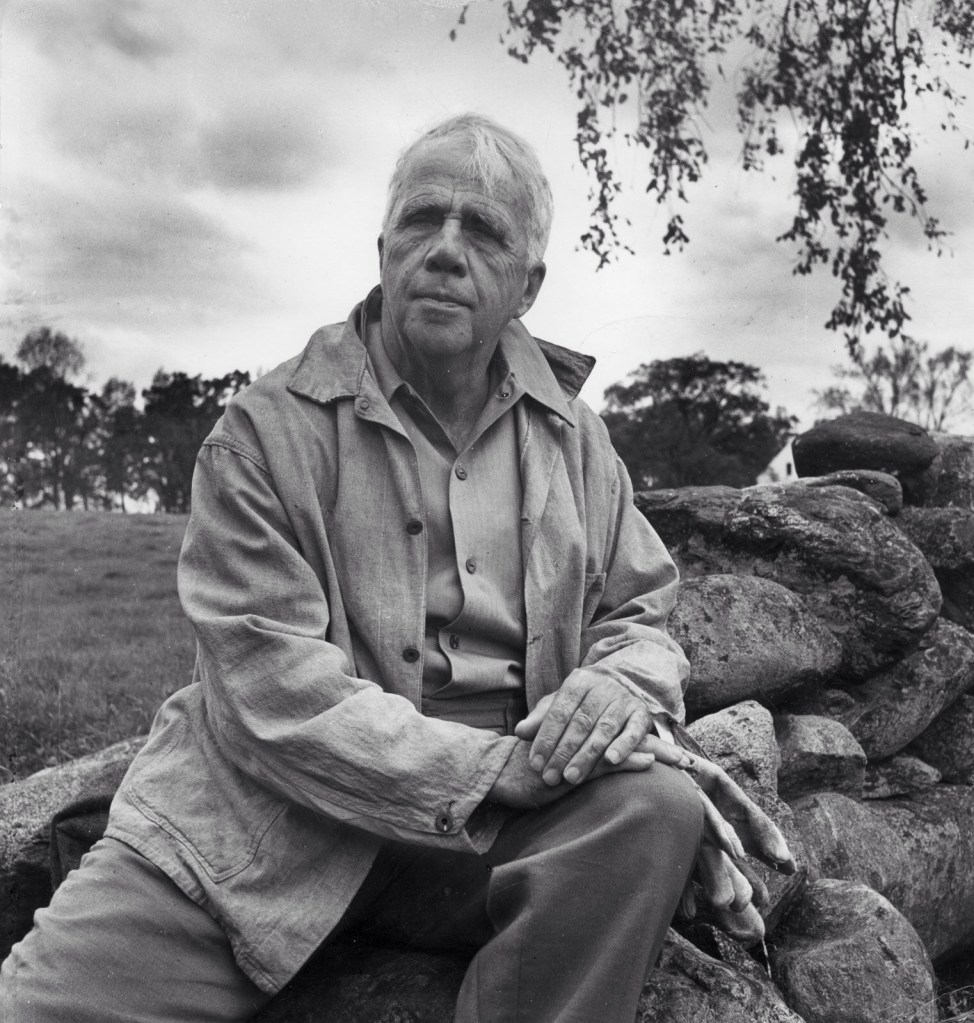
This morning, as I was thinking about how, in my younger days, I would have been right out there with those protesters, I stumbled upon a beloved old verse by the celebrated American poet Robert Frost, and that little light bulb in my head switched on.
As I read, for perhaps the hundredth time, those immortal last lines, I remembered that I do indeed have a reason for lingering on this “mortal coil,” as another poet (Shakespeare) called it: to keep writing, sending my verbal support out there for even a handful of readers, joining the marchers and fighting for our freedom in the only way left to me: with my words. And not only for my fellow Americans, but for oppressed people throughout the world.
The lines that spoke so clearly to me this morning are these:
“The woods are lovely, dark and deep, But I have promises to keep, And miles to go before I sleep, And miles to go before I sleep.”
– Robert Frost, “Stopping by Woods on a Snowy Evening”
Robert Frost (1874 – 1963)
So I’m still here, keeping my promise to continue the fight for whatever time may be left to me, and hoping that a few more people will join me.
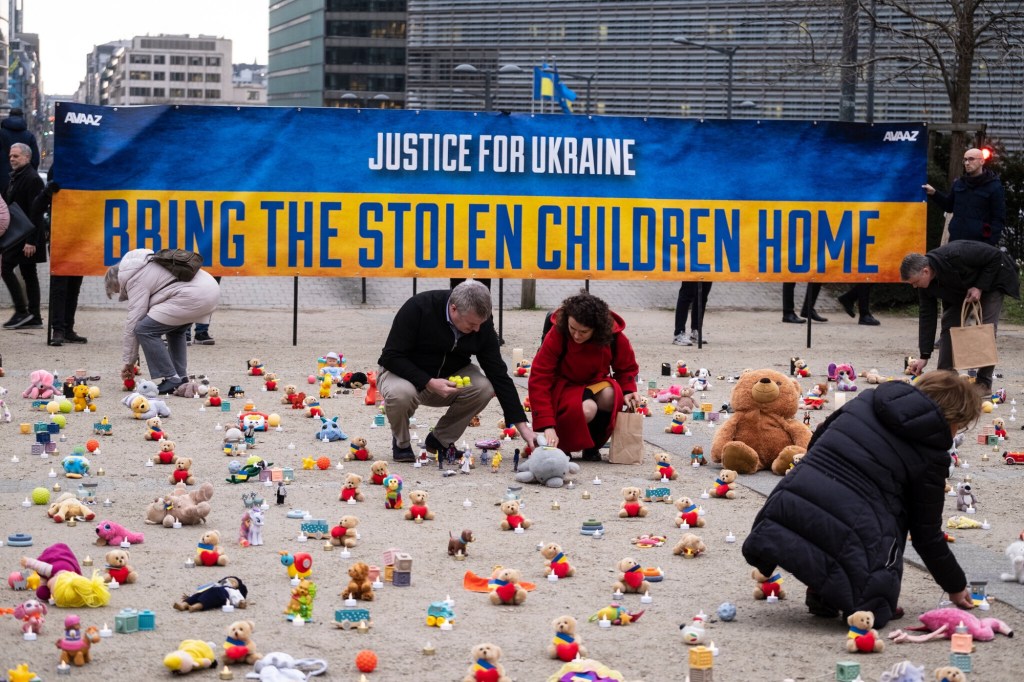
VFor some time now, I have expressed my dismay concerning the estimated 20,000 Ukrainian children who have been kidnapped and “re-homed” by Russian authorities since the start of Putin’s war in February of 2022 — a despicable war crime of the greatest magnitude and the utmost urgency, which Ukraine and its allies have been trying without success to rectify.
And now, a new report by the Yale School of Public Health’s Humanitarian Research Lab concludes “with high confidence” that Russian state-owned energy giants Gazprom and Rosneft have been directly involved in the transportation and political indoctrination of at least 2,158 children from Russian-occupied areas of Ukraine since 2022.
The report identifies six camps in Russia and Russian-occupied territories to which children have been taken, including facilities owned by Gazprom subsidiaries, stating:
“Gazprom and Rosneft are critical components of President [Vladimir] Putin’s industrial-scale campaign of child deportation, transportation [and] indoctrination.” [Alex Raufoglu, RFE/RL, March 25, 2026.]
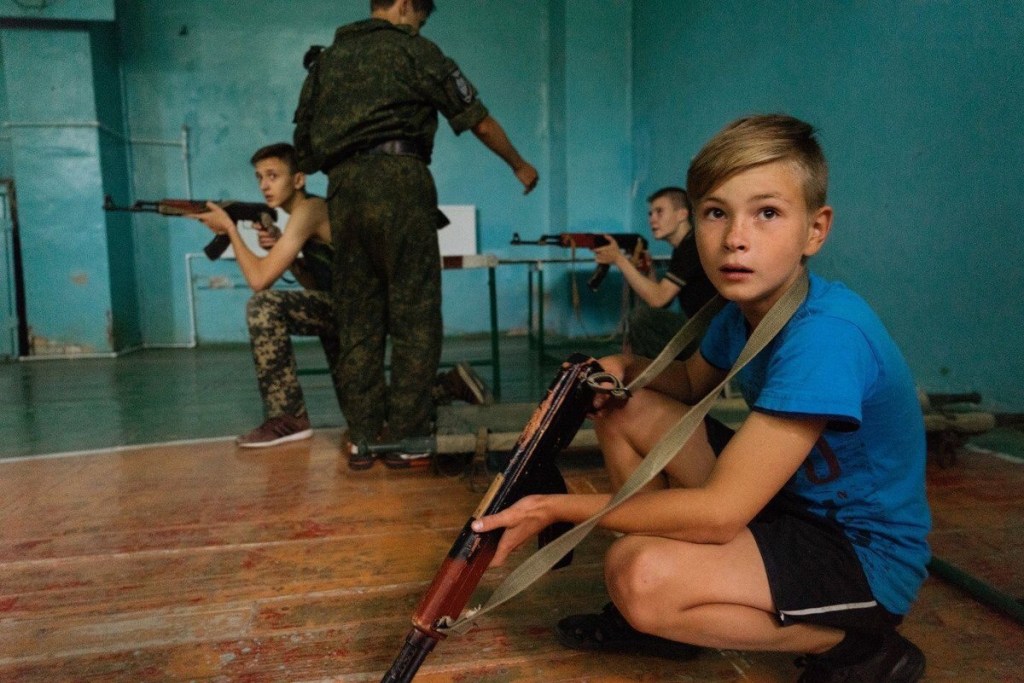
The children, from the Donetsk, Luhansk and Zaporizhzhia regions of Ukraine, have been relocated to camps where they are indoctrinated into pro-Russian propaganda, patriotic education, and, in some cases, military activities.
While both Gazprom and Rosneft are the subjects of extensive sanctions by the US, UK and EU, the report identifies 44 subsidiaries and trade unions tied to the parent companies, some 80 percent of which are not currently under sanctions. Researcher Ruth Gibson said:
“This matters, because American foreign policy is . . . putting dollars directly into the pockets of two Russian companies implicated in the forcible transfer and reeducation of Ukrainian children.” [Id.]
And this month, a U.S. exception was granted allowing certain Russian oil shipments to proceed — in the hopes of alleviating some of the havoc created by Donald Trump’s invasion of Iran — potentially providing further benefit to the two energy giants.
But while Trump continues to play Russian Roulette with the world’s economy, the U.S. Congress, at least, has finally done something right in an effort to help the youngest, most innocent victims of Vladimir Putin’s war.
On March 25th, the same day the Yale report was released, a hearing was held by the Tom Lantos Human Rights Commission — a House of Representatives panel focused on global human rights — in which bipartisan support and a demand for accountability was issued.
And the following day, the U.S. Department of State announced that, in conjunction with Congress, it is “providing $25 million in new assistance to support the identification, return, and rehabilitation of Ukrainian children and youth who have been forcibly transferred or otherwise held away from their families and communities.” [Alex Raufoglu, RFE/RL, March 26, 2026.]
Comments from Congress included the following:
> From Chris Smith (R.-New Jersey): “There’s no space between us [Republicans and Democrats].”
> From Lloyd Doggett (D.-Texas): [The forced transfer of children] is not a side effect of war — it’s a crime.”
> And from Suzanne Bonamici (D.-Oregon): The fact that thousands of children remain unaccounted for is “gut-wrenching.” [Id.]
Personally, I would like to have seen a higher dollar figure offered; but the fact that bipartisan action has been taken is a huge step in the right direction . . . and proof that Congress can act, as a unified entity, when they really want to. And for that, honor is due.
*. *. *
There is much more to the story of Ukraine’s missing children, and that will be the subject of my regular Sunday post on Putin’s hostages tomorrow. See you then.
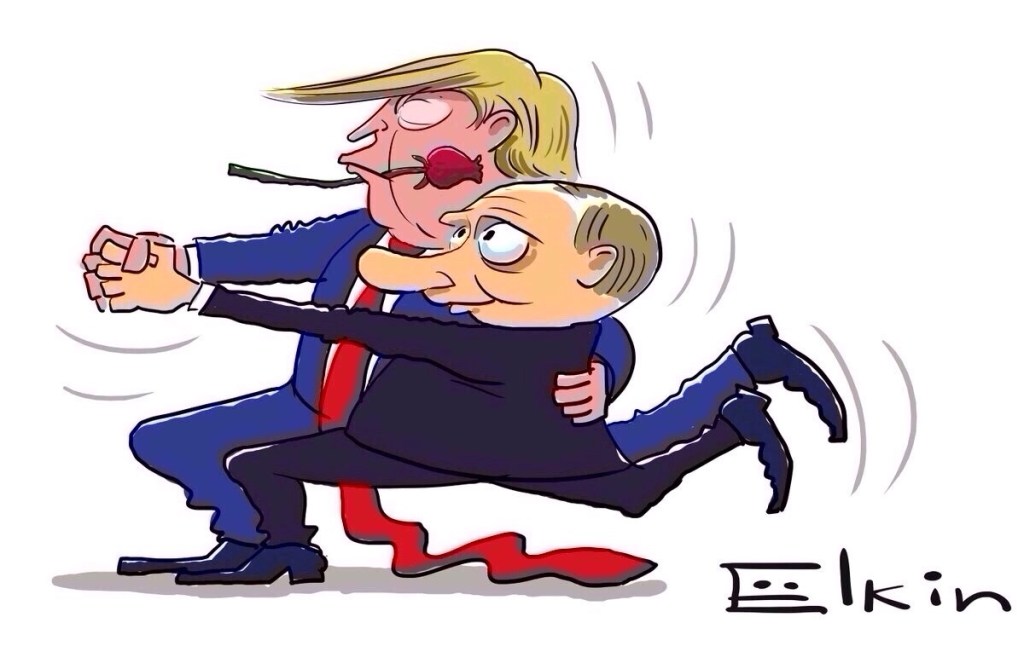
It is obvious to everyone that Donald Trump is a great admirer of “strong men” (a.k.a. autocrats) — and the more tyrannical, the better. And his favorite is clearly Vladimir Putin, as evidenced by the warm reception Vlad received on the red carpet in Alaska last year, and the continued leverage being granted in his pursuance of the war in Ukraine.
Trump has even mimicked Putin’s naming the war in Ukraine a “special military operation” by calling his own invasion of Iran a “military operation.”
Well, I guess we all have our idols — even malignant narcissists like Trump. So, if he really wants to let Putin know how much he admires him, I have a suggestion.
As reported both by Russia’s independent news outlet The Bell and by The Financial Times, Putin — whose economy has suffered greatly from four years of his non-war — has turned to his oligarchs for financial help, broaching the subject in a closed-door meeting with the country’s leading businessmen.
Thus far, at least two are said to have responded favorably: Russian Senator Suleiman Kerimov, worth an estimated $25 billion or more, has offered the equivalent of $1.23 billion; and metals tycoon Oleg Deripaska, with a personal fortune of more than $7 billion, also agreed to “contribute” an unspecified amount to the cause. Both men, not surprisingly, are already under sanctions by the U.S. and Ukraine.
And, as noted by The Financial Times, the request coming personally from Putin rendered it “all but inconceivable” that any of the others would refuse to help. [Ewan Palmer, The Daily Beast, March 27, 2026.]
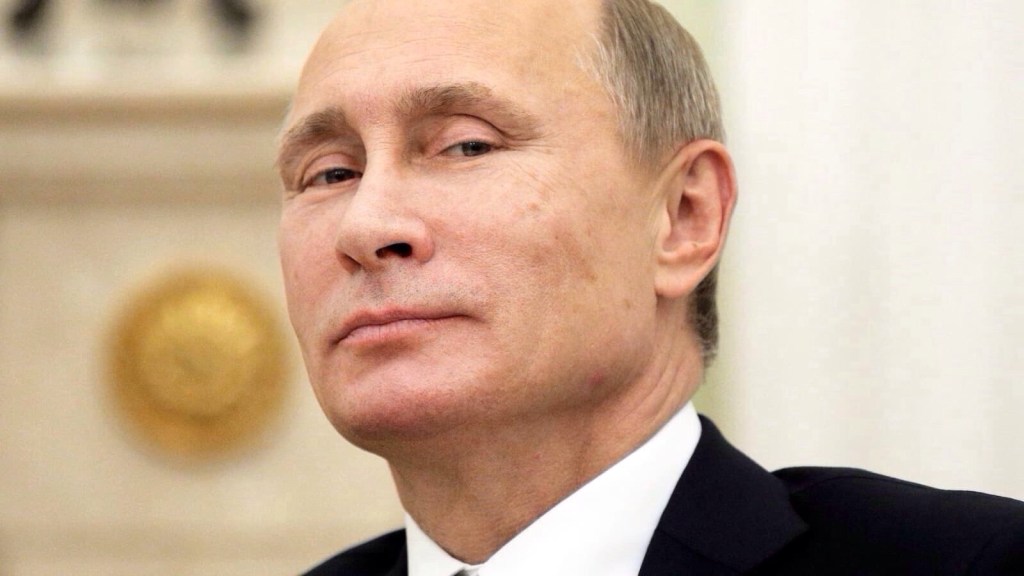
A hard man to say “no” to
It should be noted, however, that the Kremlin has denied that Putin actually asked for assistance, claiming instead that one of the participants in the meeting — whose name was not provided — had volunteered to donate a “very large sum of money” to the state. Kremlin spokesman Dmitry Peskov said that the anonymous individual felt it was their duty to contribute; since he and his fellow billionaires had made their fortunes from businesses initially obtained from the government following the breakup of the Soviet Union in the 1990s, it was the least they could do to express their appreciation. According to Peskov:
“This was absolutely his initiative, and not President Putin’s. Although, of course, the head of state welcomed such an initiative.” [Reuters, March 27, 2026.]
Well, of course he did. And we all know how altruistic those oligarchs can be, don’t we?
Peskov also added that the “contributions” were not for the furtherance of the war in Ukraine. And if you believe that — or any of the rest of his bullsh*t — then I have a bridge I’d like to sell you.
Brooklyn Bridge, New York: For sale to the highest bidder. Call me.
*. *. *
Anyway, the whole purpose of this story is to point out to Trump that he is missing a great opportunity. He has certainly done enough favors for his uber-rich friends (whose names we need not reiterate here), such as: “encouraging” Congressional passage of legislation in favor of their business holdings; overlooking blatant violations of antitrust, financial, and environmental laws and regulations; erasing criminal convictions with a presidential pardon; redacting and burying relevant portions of the Epstein files; etc., etc., etc.
Those guys owe him . . . BIG TIME!
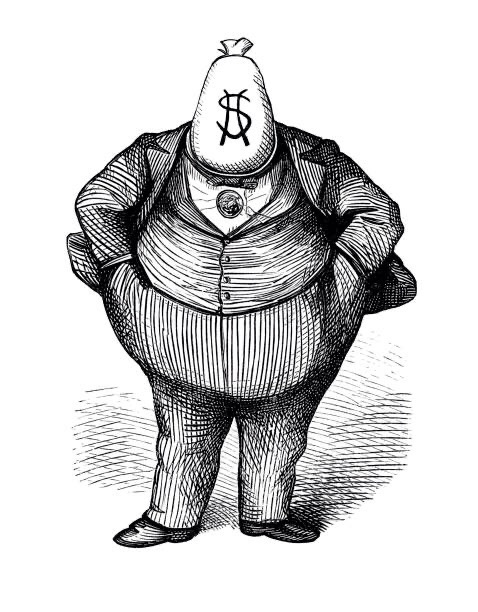
So, instead of dealing in penny-ante stuff like increased tariffs, taxes, and job eliminations, he should try gathering all of those patriotic American gazillionaires into one room — preferably the one with a view of that future ballroom he’s so orgasmically excited about — and raking in some really big bucks by making them an offer they can’t refuse.
And this time — just for once — not putting the money into his own pockets.
What do you do when you’re in a position requiring you to speak in public — a lot — but you have a very limited vocabulary and a third-grade-level command of your native language (in this case, English)? Well, that’s easy. You do what you probably did all through school: you copy the smart kids.
In this case, the smarter kid happens to be Vladimir Putin, and the cheater is . . . well, you know:
Donald Trump has made a big deal out of trying to decide what to name his month-long incursion (which he has called an “excursion”) into Iran. Sometimes it’s a “war”; but when he’s having one of his more lucid moments, and he realizes that a real war would have required Congressional approval, then it’s not a war — it’s a “military operation,” necessitated by an imaginary imminent threat and thus not requiring anyone’s permission.
What he actually said, at the annual fund-raising dinner of the National Republican Congressional Committee on Wednesday, was this:
“I won’t use the word ‘war’ because they say if you use the word ‘war,’ that’s maybe not a good thing to do. They don’t like the word ‘war’ because you’re supposed to get approval. So, I’ll use the word ‘military operation,’ which is really what it is. It’s a military decimation.”
– Donald J. Trump
*. *. *
Setting aside, for the moment, the fact that he just admitted to having started an illegal war, let’s look at the term he chose to use instead of calling a war a war.
Who remembers February 24, 2022, when Vladimir Putin’s military invaded Ukraine? You know — the “excursion” that continues to this day?
Yeah, that’s the one.
Well, do you also remember what Putin called it then, what he still calls it today, and what everyone in Russia is required to call it? Not a “war,” but a “Special Military Operation.” That is its official name, and woe betide anyone who dares to suggest otherwise.
So either Trump got the idea from his trusted friend Vladimir, or they actually think alike. Either way, it’s a scary experience, hearing POTUS mimicking POTUSSR.
I’m so excited, I just had to share this with the world.
I celebrated another birthday last week, and yesterday I had my regular semi-annual medical checkup. The lab results aren’t back yet, but everything looked good from the exam . . . and especially the cognitive test that is apparently required by Medicare because they want to be sure we senior citizens haven’t all gone as ga-ga as those government officials in Washington.
Well, I am thrilled beyond words . . . in fact, I’d be jumping for joy, if I could still jump. You see — although I do have arthritis, a bad back, and occasional wooziness on standing — I am officially at least as smart as Donald Trump.
Because I aced the same “IQ” test he did.
Yes, folks, it’s true. I could be President of the United States, if I had the money to buy an election. Yesterday I was able to remember three words for five whole minutes; in fact, I still remember them today: “baby,” “village,” and “kitchen.” Wow! Am I not incredible?
And, though I’m no artist, I drew a beautiful circular clock, with all of the numbers going . . . well . . . clockwise. And I knew where the big hand and the little hand pointed to show ten minutes past eleven. Whoopee!!
Come on . . . nobody likes a smart aleck!
That’s better.
Plus — and this will amaze you — I know the difference between a camel and a tiger. Can you believe it??!!!!
Okay, okay — thank you very much, but please hold the applause. This is not a campaign rally. You see, I’ve thought about it overnight, and I’ve decided I’m simply too smart to run for any political office, much less the presidency.
I mean, what person in their right mind would want to take charge of a war that isn’t a war, a government that has ceased to function, an entire world of allies that hate us, a bunch of declared enemies that want to bury us, and a gold-plated house with a broken right wing?
Seriously, I’m asking . . . WHO??
Maybe this guy . . .
Well, not I. Because I am, according to my doctor, the smartest, most stable octogenarian she’s ever met, and probably who has ever lived . . . smarter than Socrates, Albert Einstein, and Adlai Stevenson rolled into one. I got the highest score she’s ever seen on that brain-busting IQ test — higher than Kamala Harris or Barack Obama, for sure. And that qualifies me, if not to be president, then at least to write this blog every day (which is more than what’s-his-name can do by himself).
My little blog doesn’t pay anything, but it’s a great gig: no worries, no stress, no enemies, no skeletons in my closet, and no Secret Service detail or reporters following me everywhere. And at my age, what would I do with a gazillion dollars anyway . . . take over Cuba? Honestly, who needs that “shithole country”? (Sorry, Cuba; just quoting you-know-who.)
Again, not I. Because, you see, I’m also smart enough to know when it’s time to call it quits. And that’s why I’m retired.
After a couple of weeks off-camera, Arend Feenstra has finally popped back into view.
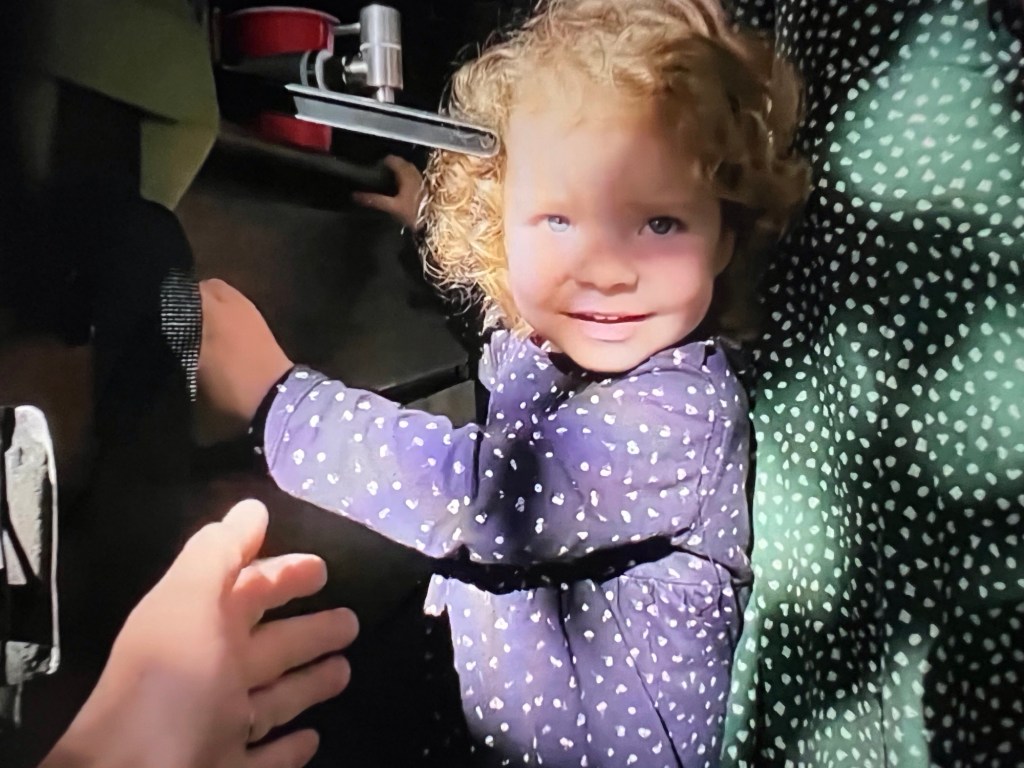
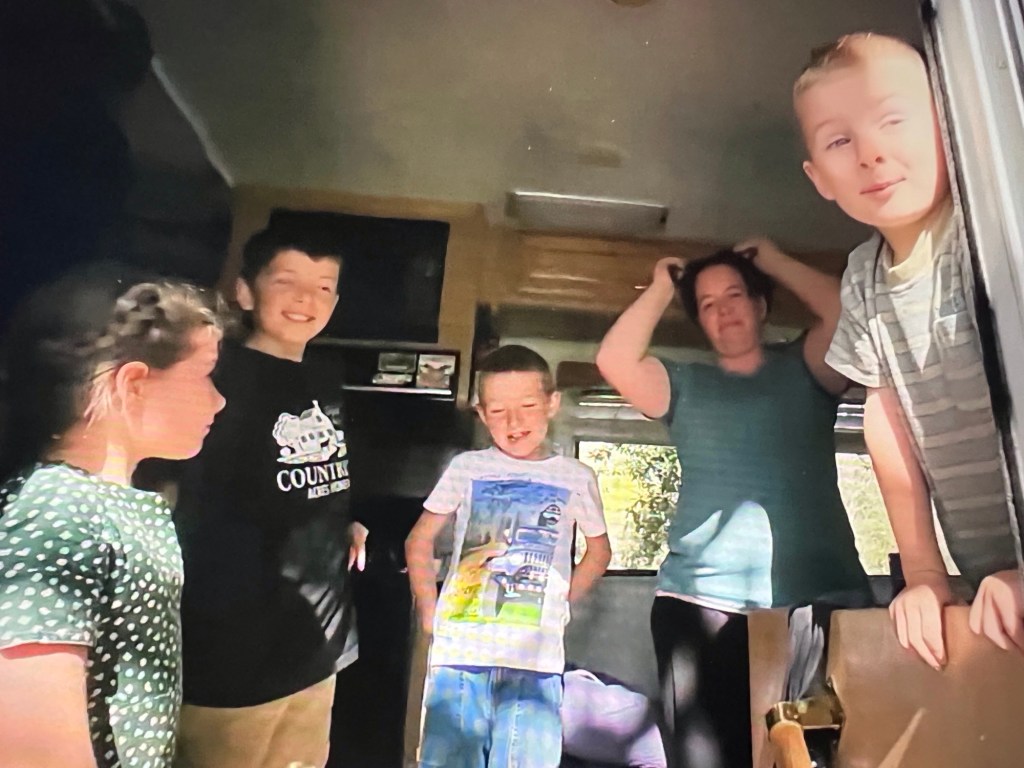
While Anneesa and the six youngest kids have been living in the family’s RV at a campground somewhere in Florida, Arend has been back in Ontario with the three oldest offspring — Ben, Cora and Wes — while working hard to earn some money for the family.
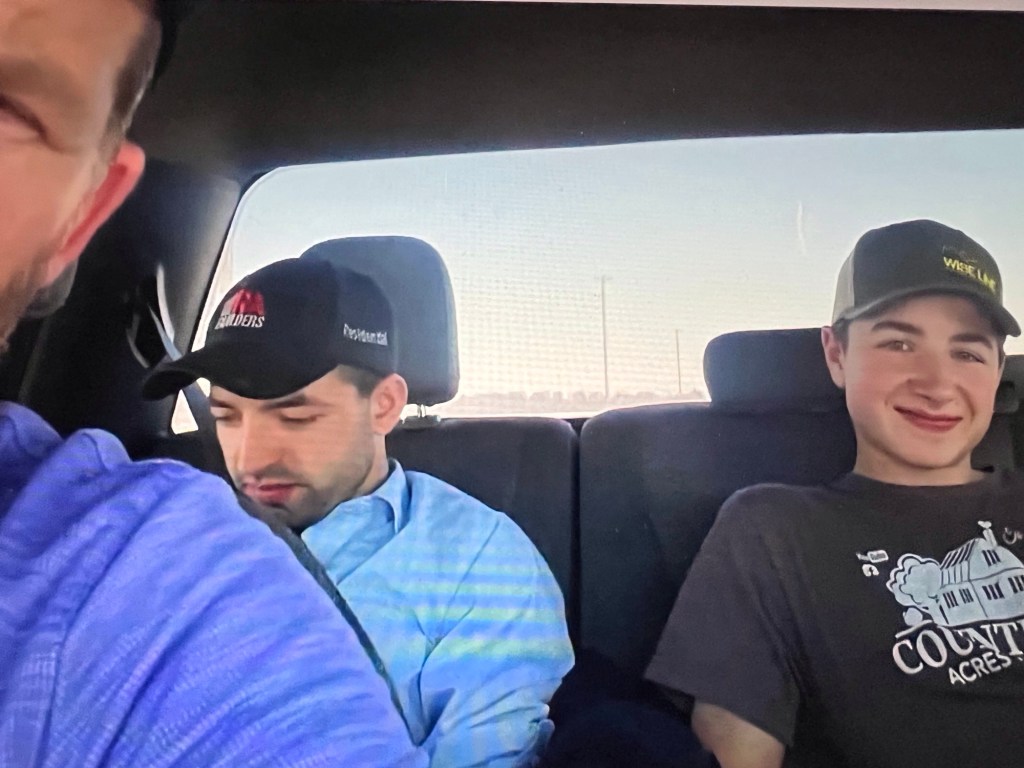
But with Anneesa’s birthday coming up, Arend planned a surprise for her. Piling into Ben’s van, the four of them took off for the long trek to Florida, even using Ben’s credit or debit card for gas along the way so that Anneesa wouldn’t see any charges to their joint account. Good thinking!
Cora got to do some of the early driving while still in Canada, but had to hand the wheel over to Dad and Ben before reaching the border, as she is not licensed in the U.S. And for the rest of the 27-hour trip, the two men took turns driving straight through, finally reaching the campground and locating their RV without the rest of the family being any the wiser.
On the Road
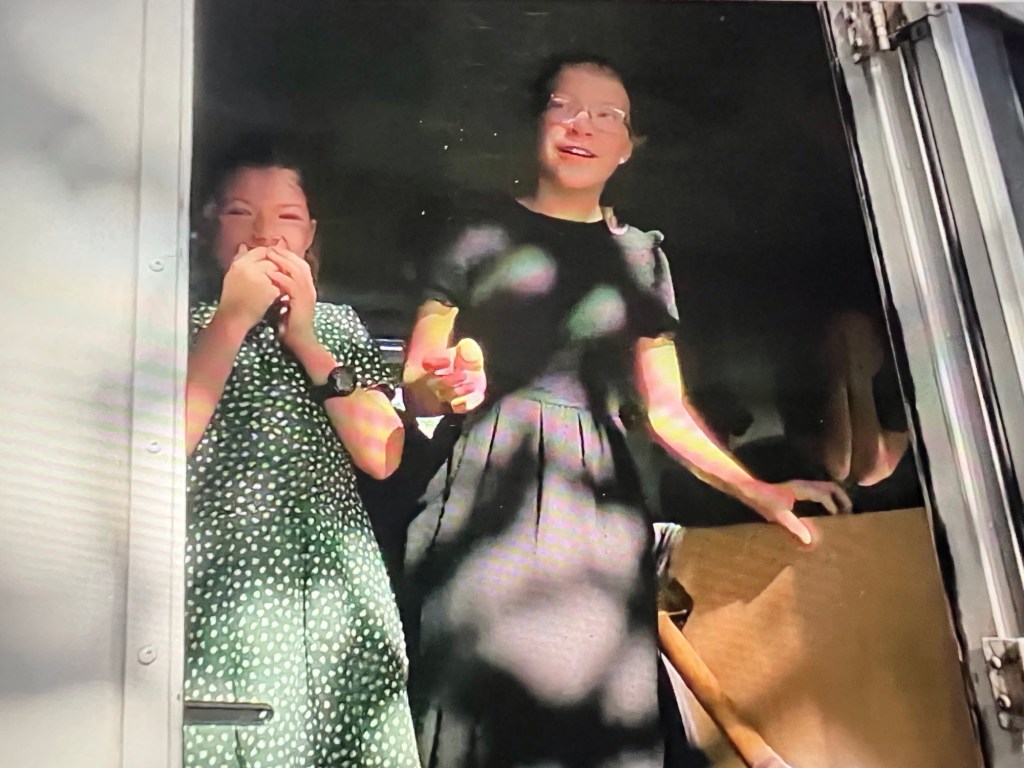
And when they knocked on the door . . .
“Surprise!”
“Oh my gosh!”
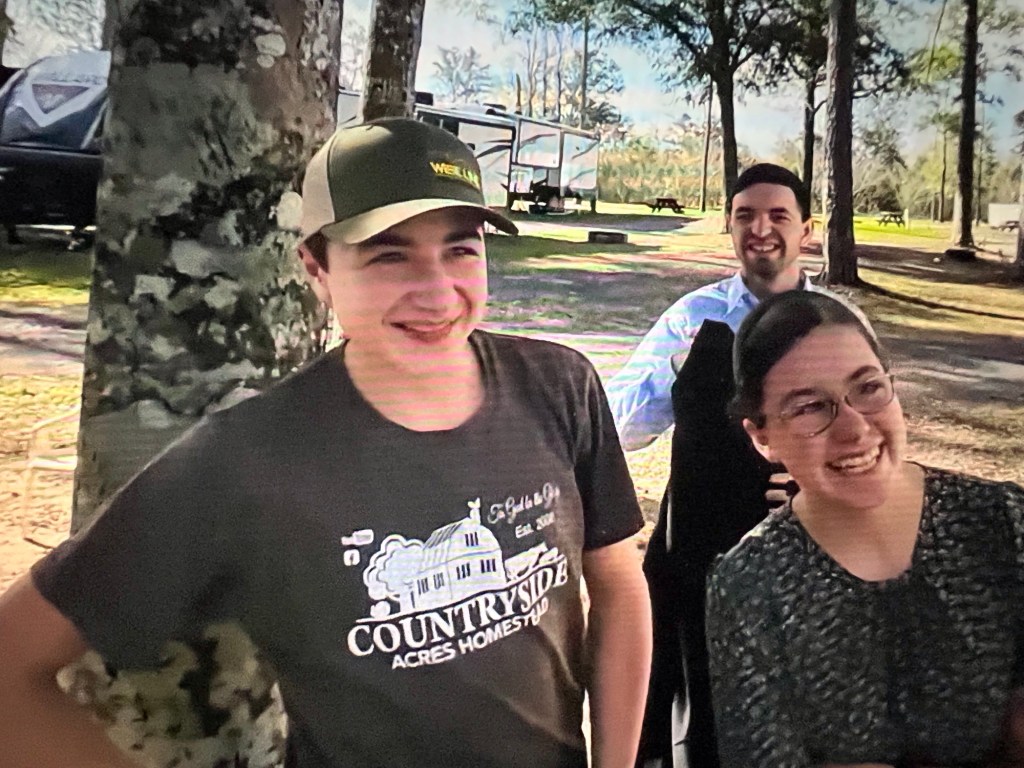
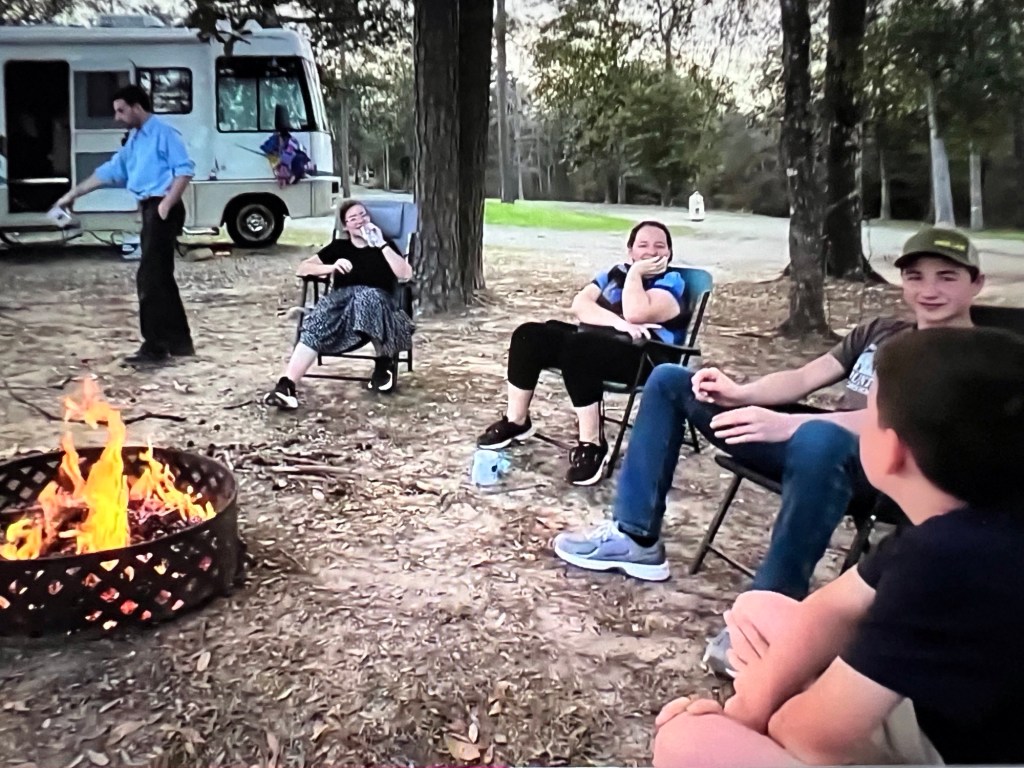
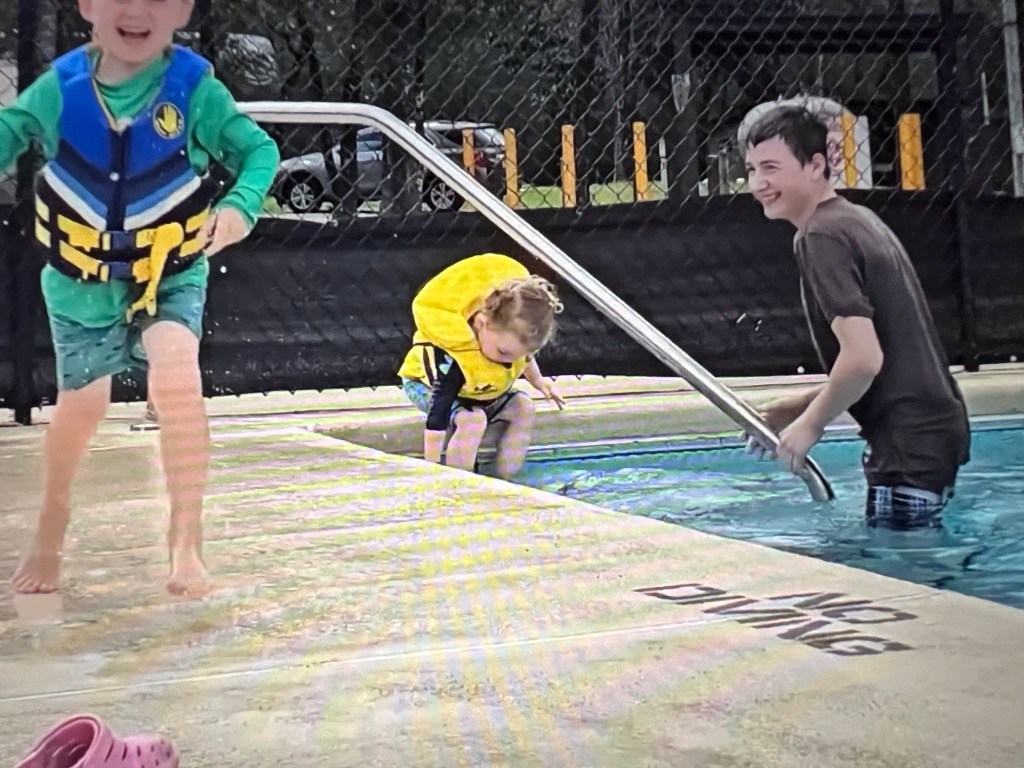
Later, everyone settled down around the fire to roast hot dogs and marshmallows, took a dip in the pool, and explored the area before the weary travelers headed indoors for some much-needed sleep.
The whole clan, back together again
As of today, the only update has been a video of Arend’s visit, with some of the children, to a Florida dairy farm — again, keeping their activities within their comfort zone. As I’ve said before, I do wish they would take advantage of this opportunity to open the kids up to new experiences. From my own years of travel, the best times — the ones I still recall most vividly — were the ones in which I was able to see, hear, taste, smell, and participate in lifestyles that were completely different from my own. It didn’t change my way of life when I returned home; but it did broaden my perspective, it was educational, and it left me with some wonderful memories.
However, as I’ve also said many times, to each his own. I can’t say the Feenstras aren’t adventurous; after all, they did move permanently to Russia. And they think nothing of traveling around the U.S. with six young children, in a 30-year-old RV, on a limited budget. So, good for them!
At the start of this latest road trip, Arend said they would only be able to stay in Florida for a few days, as he, Ben, Cora and Wes all needed to get back to work in Canada. There was still no mention of when Anneesa and the six littlest kids would return to Ontario . . . or when they would all be heading back to Russia.
It is now nearly April, and even in Nizhny Novgorod the snow will soon start to disappear, ushering in a new planting season. Judging from the videos posted by their tenants, the Pulleys, it’s been a rough winter, and there’s likely to be a lot of work ahead.
But with conditions in Russia being as they are — drone attacks reaching from Ukraine all the way to Moscow, internet communications being disrupted and shut down completely, and a new military mobilization being talked about — I worry about their returning at all.
I wouldn’t try to second-guess anyone else. But in the Feenstras’ place, I know I’d be giving serious consideration to saying “do svidaniya” to Mother Russia, and settling back down in the safety, comfort and security of their native Canada.
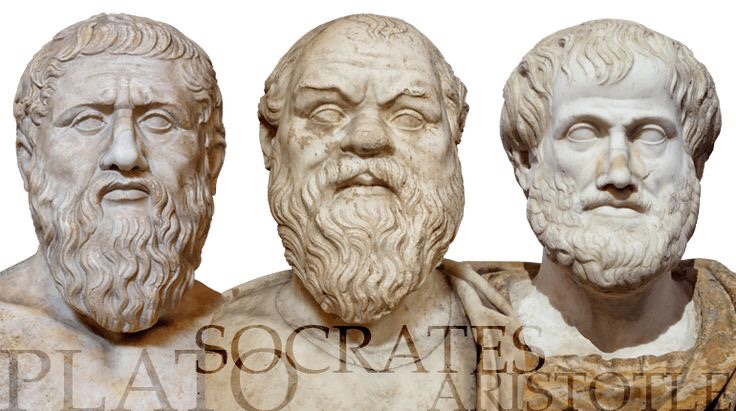
I am not in the habit of quoting myself, primarily because . . . well, because I’m just not that quotable. Instead, I defer to Shakespeare, or Eleanor Roosevelt, or one of the ancient Greek philosophers, who were obviously so much more astute, insightful, and eloquent than I could ever hope to be.
Some Really Smart Guys
But sometimes — the law of averages being on my side — I do get it right. And such was the case on February 21st, when I posted an article titled “Iran Is Not Venezuela,” in which I warned Donald Trump that he shouldn’t let his January “success” in Caracas muddy his thinking (any more than it already was) about invading Iran. In part, what I said was:
“Of course, I’m talking about Donald Trump, who — fresh off of his Venezuelan “success” — now has his sights, and a sizable number of U.S. military forces, aimed at Iran. The issue there is bigger than the Latin American drug trade; it involves ongoing talks concerning nuclear containment, which have dragged on with little or no progress for longer than he anticipated.
“At the first meeting of his ironically-named “Board of Peace” in Washington this week, Trump gave the Iranian regime another ten days to knuckle under to his demands, saying:
“‘We have to make a meaningful deal otherwise bad things happen.’ [Bernd Debusmann, Jr., BBC, February 20, 2026.]
“Trump did not explain what he meant by “bad things.” But I doubt that what then actually happened on Thursday was what he had in mind. That was the day that Iran and Russia began joint military drills in the Gulf of Oman and the Indian Ocean, with the purported goal of ‘upgrading operational coordination as well as exchange of military experiences.’ [Ryan Mancini, The Hill, February 19, 2026.]
“Apparently, Trump does not understand the difference in consequences between stepping on an anthill and poking a hornets’ nest. Furthermore, in his own ignorance concerning the history, the culture and the mindset of the Middle East nation — and his failure to anticipate Russia’s willingness to step into the fray — he placed responsibility for the negotiations in the hands of two equally unqualified individuals: realtor Steve Witkoff, and Trump’s own wunderkind son-in-law, Jared Kushner.
“Yes, the same pair who have thus far failed to bring Ukraine a millimeter closer to peace have simultaneously been tasked with convincing Iran’s leaders to bow down before the Temple of Trump.
“Well, good luck with that, boys. The countdown has begun.
“10 . . . 9 . . . 8 . . .”
But — and I’m really rather glad about this — Donald Trump obviously does not read my blog or my FB page. (Why would he, when he doesn’t even read his own daily intel reports?) Because just a week later, he went ahead — without consulting Congress, any of our NATO allies, or anyone else with a brain — and invaded Iran anyway.
And we all know where that has led: “bad things” have indeed been happening since then, just as Trump promised . . . but nowhere close to the way he anticipated they would.
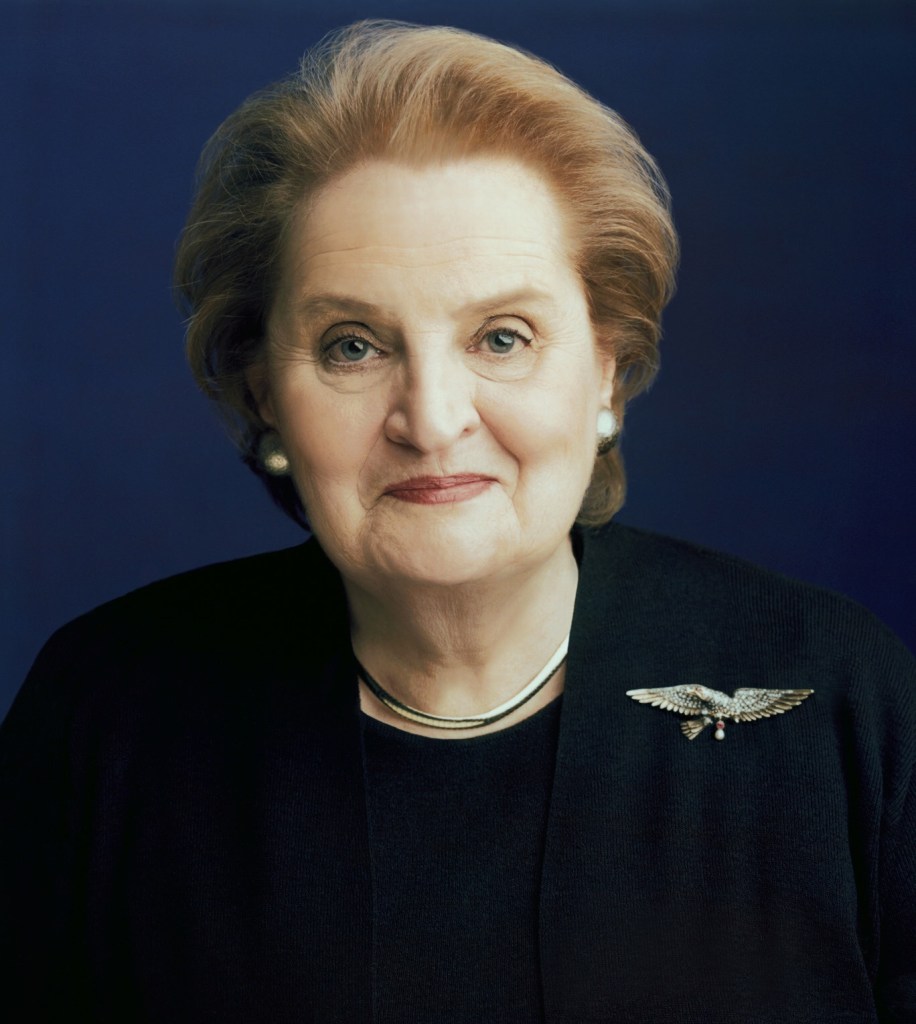
Madeleine Albright was born in Czechoslovakia in 1937. Following the communist coup of 1948, her father — diplomat Josef Korbel — emigrated with his family to the United States, where Madeleine became a citizen in 1957. She graduated from Wellesley College in 1959, and earned a Ph.D. from Columbia University in 1975, writing her thesis on the Prague Spring.
Madeleine Albright (1937 – 2022)
After working as an aide to Senator Edmund Muskie for two years, she served as a staff member on the National Security Council under Zbigniew Brzezinski. Later, as a member of the faculty of Georgetown University, she helped assemble then-President Bill Clinton’s National Security Council. She was subsequently appointed U.S. Ambassador to the United Nations, and in 1997 became Clinton’s Secretary of State.
Albright had lived under both communist tyranny and constitutional democracy. Her views were solidified, not only by formal education and years of public service, but by her lived experience:
“Democracies, as we know, are prone to every error from incompetence and corruption to misguided fetishes and gridlock. Therefore, it is astonishing, in a sense, that we would be willing to submit the direction of our societies to the collective wisdom of an imperfect and frequently disengaged public. How could we be so naive? To that fair question, we must reply: how could anyone be so gullible as permanently to entrust power — an inherently corrupting force — to a single leader or party? When a dictator abuses his authority, there is no legal way to stop him. When a free society falters, we still have the ability — through open debate and the selection of new leaders — to remedy those shortcomings. We still have time to pick a better egg. That is democracy’s comparative advantage, and it should be recognized and preserved.”
-Madeleine K. Albright, “Fascism: A Warning”
Such was the measure of our statesmen (and women) of yesteryear. We are losing them, one by one, to the natural cycle of life and death. And our world is so much the poorer for each loss.
Well, it’s actually Vladimir Putin’s fault, of course. But it seems to have been his introduction of Max that finally sent the people in Moscow, St. Petersburg, and practically every corner of Russia into panic mode.
It’s most noticeable in the cities, where the last 35 years have seen Russia reborn in terms of modern conveniences. Having slept through most of the 20th century, the country was able to join the rest of the world as it entered the new millennium following the collapse of the Soviet Union. And, like a pack of starving wolves, they have devoured technology with a vengeance.
Let me paint a picture of life in Moscow as it was in 1993, when I lived there.
Although Western businesses had begun arriving, there was still a lot of catching up to be done. Computers were mostly restricted to government facilities and larger companies; home computers were virtually unheard of. There were, of course, no cell phones. In fact, there was still a long waiting list for home phones.
You couldn’t order a taxi online, because there was no online. Which meant you couldn’t order anything that way: no home deliveries, no shopping, no banking transactions. There was no GPS; in fact, there were few paper maps of the city to be had, for “security” reasons dating back to the war years . . . and only a handful of telephone directories, generally located near public pay phones that rarely worked.
I became acclimated to the city with the help of my Russian co-workers and friends. I learned to navigate the Metro (which worked exceptionally well), how to hail a taxi if I needed it, and where to find the best shops for food and other necessities. In return, I educated them in the use of such miracles as a fax machine, desktop copier, and a staple remover, which they particularly loved because it rescued their fingernails from breakage.
Life was decidedly slower. I lived on the outskirts of the city, and when I had a meeting in the city center, I relied on our hired driver to get me there. On weekends, though, I rode the Metro and walked . . . and somehow survived.
In general, life was more as I remembered it in the U.S. back in the 1950s.
But now, an entire generation of Russians has reached adulthood never having experienced life without the conveniences they take for granted. And, having joined the world’s multitudes whose cell phones are like a fifth bodily appendage, they are being told that many of the most useful and vital features of those phones will no longer be available to them.
It’s a truism that you don’t miss what you’ve never had. But imagine having all of those things taken away from you today!
Today’s Moscow
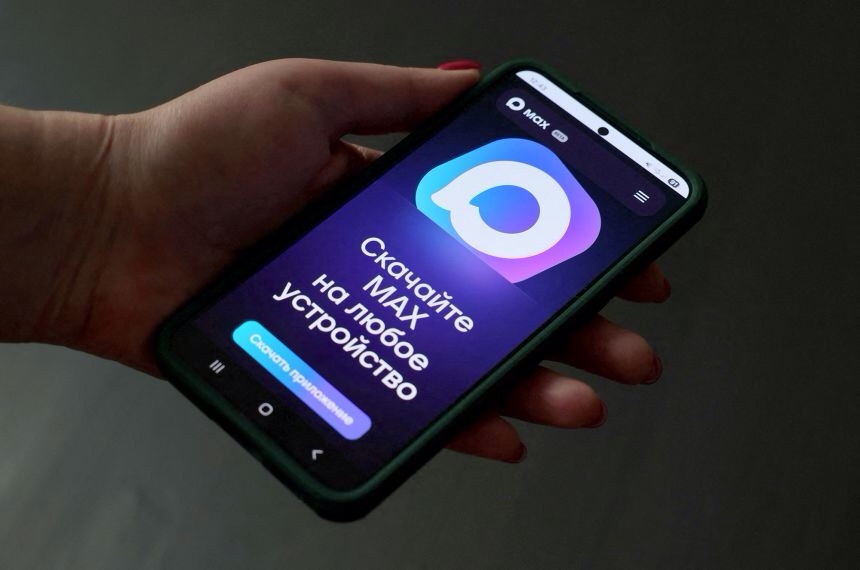
As I’ve written before, Putin has been gradually shutting down mobile Internet services, blocking YouTube, WhatsApp, and others, and offering instead his new, state-supported Max app, which severely limits accessibility. Even Telegram — the most widely used messaging app by the government itself, and by families trying to communicate with their relatives fighting in Ukraine — is being blocked. Max is being forced on everyone, and is pre-installed on all new smart phones.
When asked how the Kremlin is functioning without their usual services, spokesman Dmitry Peskov said: “We’re using land lines.” [Mike Eckel, RFE/RL, March 23, 2026.]
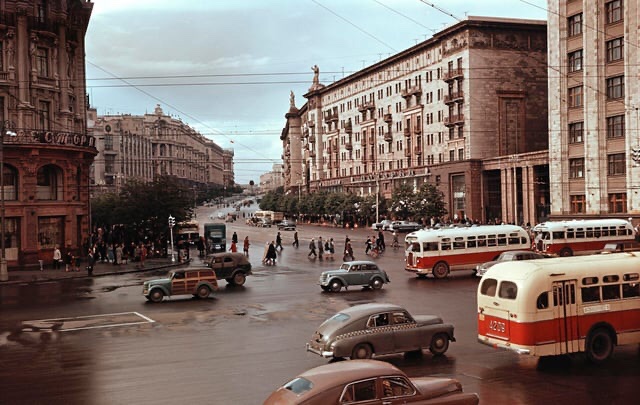
Back to the future.
Moscow, USSR – C. 1950s
Igor Yakovenko, a Russian sociologist, described the situation:
“A significant portion of Muscovites are accustomed to a very comfortable Internet experience, accustomed to living in cozy Telegram channels and communicating via a very convenient messenger. Now Muscovites are being kicked out of this rather comfortable environment.” [Id.]
*. *. *
The Kremlin would have the people believe these steps are necessary for their protection against recent Ukrainian “aggression” (in reality, counter-attacks), in which drones have been reaching farther and farther into Russian territory. But, while that may sound reasonable to some, the truth is that these communication interruptions were started long before Ukraine began retaliating against Russia’s assaults.
In fact, it’s all about control.
According to an article written for the Carnegie Russia Eurasia Center by Russian commentator Maria Kolymchenko:
“The Kremlin is trying to make the Russian Internet into a closed ecosystem, where all the important services are controlled and accessible [to the Federal Security Service]. If there are foreign platforms that haven’t been blocked yet, it’s only because there’s no viable domestic alternative yet.” [Id.]
And as Telegram’s creator and owner, exiled Russian billionaire Pavel Durov, said in a post to X last month:
“Russia is restricting access to Telegram to force its citizens onto a state-controlled app built for surveillance and political censorship.” [Id.]
*. *. *
It’s standard operating procedure for dictators: In order to control the populace, you must first silence them and prevent them from organizing a resistance by cutting off their means of communication. In earlier times, it meant physically attacking and seizing the local telegraph office and railroad station.
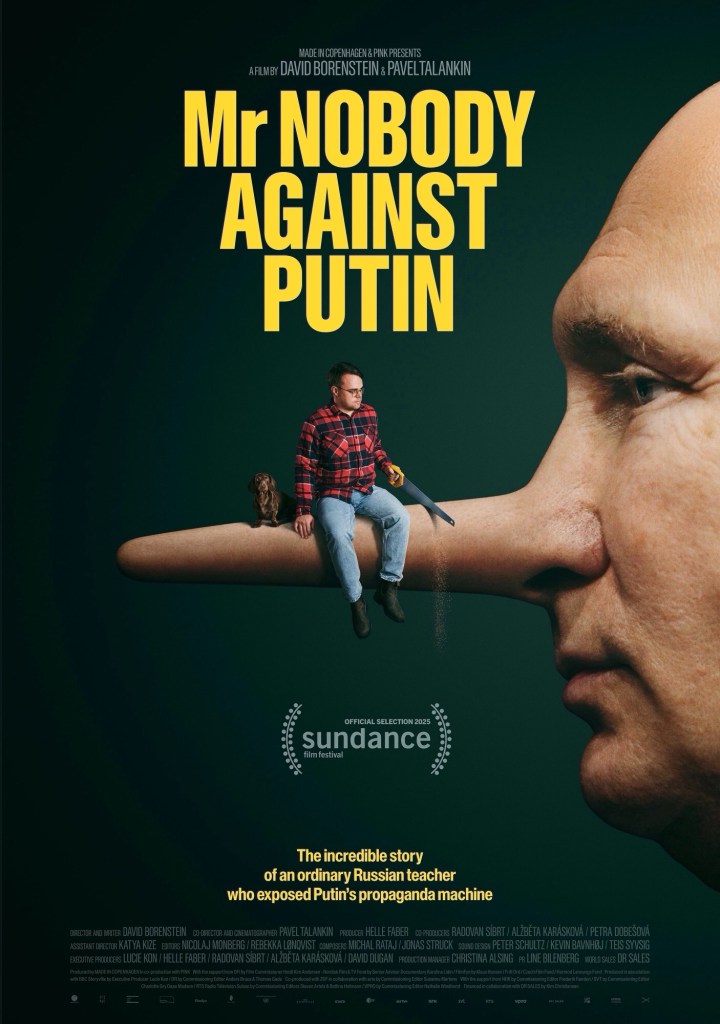
I have just finished watching Pavel (“Pasha”) Talankin’s Academy Award-winning documentary, “Mr. Nobody Against Putin.” And I can’t stop crying.
In the interest of full disclosure, I must admit to a certain prejudice in my judgment of this film. As my regular readers know, I have a connection with Russia . . . in fact, several connections . . . and thus will read, watch, or listen to virtually anything related to that poor, misbegotten land.
First, my DNA is 99% Russian (the other 1% is rather odd). All four of my grandparents came from the Russian Empire to the United States in 1905 — that part of old Russia that is now Ukraine. So, while my political sympathies today lie entirely with the sovereign nation and the people of Ukraine, I was taught as a child that I was of Russian descent.
Because of that background, I later undertook to immerse myself in Russian studies: the language, history, politics and culture of one of the most fascinating, enigmatic, perpetually downtrodden places on Earth.
And in the middle part of my life, I found myself putting those studies to good use when I lived and worked in Moscow in the early 1990s.
So I have an emotional attachment to the place, and especially to the people — who, despite the efforts of the Putin regime to turn them into obedient servants of the state, I found to be among the warmest, most generous, most soulful people to be found anywhere.
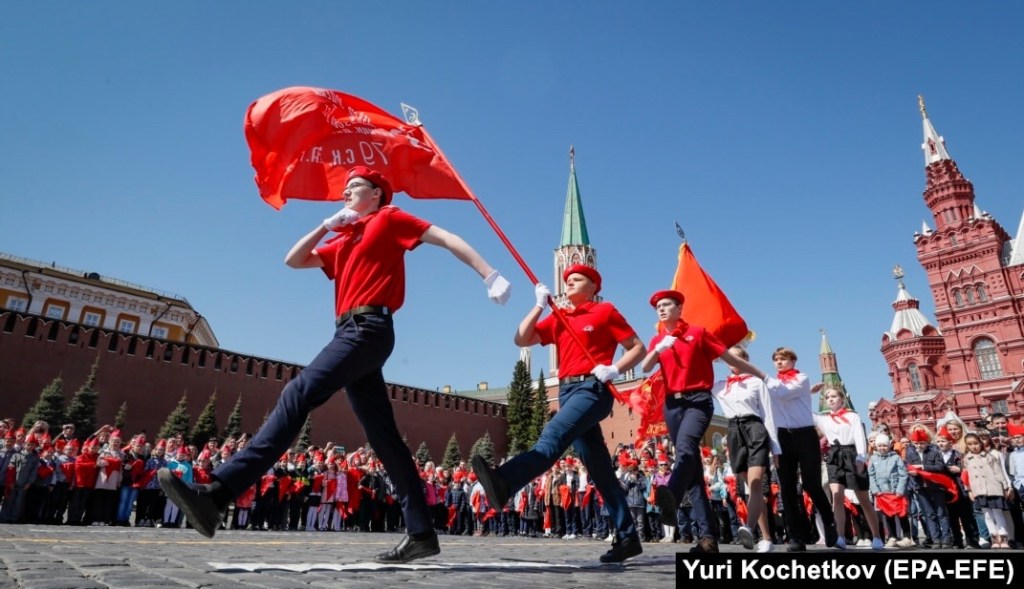
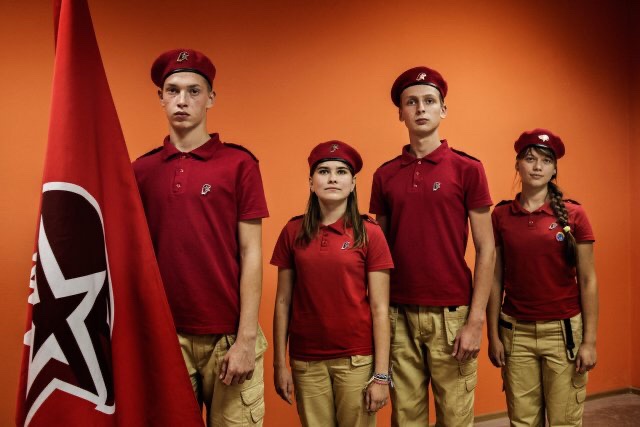
Which is why, as I watched Pasha Talankin’s report on the effect of Putin’s war in Ukraine on the people — and specifically the children — of Russia, my heart shattered. Because I recall all too clearly the “Young Pioneers” of the Soviet era . . . now being reconfigured as “Young Patriots,” complete with chauvinistic recitations, propaganda films, rewritten textbooks, and the too-familiar red hats and neck scarves of bygone days.
Soviet “Young Pioneers” – C. 1960s
Putin’s “Young Patriots”
These are kids who never knew the Soviet Union; they have lived their entire lives in the “new Russia” — with all of its open communications, modern conveniences, and opportunities. And now they are being fed the same propaganda and subjected to the same form of mind control that their parents and grandparents fought so hard to vanquish.
Their teachers have been given rewritten textbooks, new curricula, and new activities with which to indoctrinate their students, beginning with the very youngest. Most of the educators hate the changes . . . with some exceptions, of course, such as one history teacher in Pasha’s own school. But they know that their only options are either to obey orders, quit their jobs, or protest and risk being arrested.
In 2023, Pasha decided to resign the position he loved rather than be complicit in Putin’s tyranny. But, as school videographer in charge of filming all of the school’s (and some of the community’s) activities, he saw an opportunity to take positive action. Despite the risks, he withdrew his resignation, and began secretly keeping unedited copies of his films, which he was able to smuggle out to a movie director in the West.
And in 2024, with people in his small town beginning to avoid him because of his anti-war stance, and a mounting suspicion that he was under surveillance, he made the agonizing decision to leave his mother, his friends, his students, and the home he loved.
He stayed long enough to celebrate his senior students’ graduation with them. Then, under the guise of a one-week vacation, with a round-trip ticket that would only be half-used, he fled Russia.
And in the West, he and his co-director, David Borenstein, took his videos and made them into a simple, honest, low-key documentary that has taken the world by storm.
*. *. *
I would love to share some screen shots of Pasha’s video with you, but to do so would undoubtedly constitute a copyright violation. All I can offer instead is my strongest recommendation that you watch it for yourself.






















 The Blog About Everything … and Sometimes Nothing