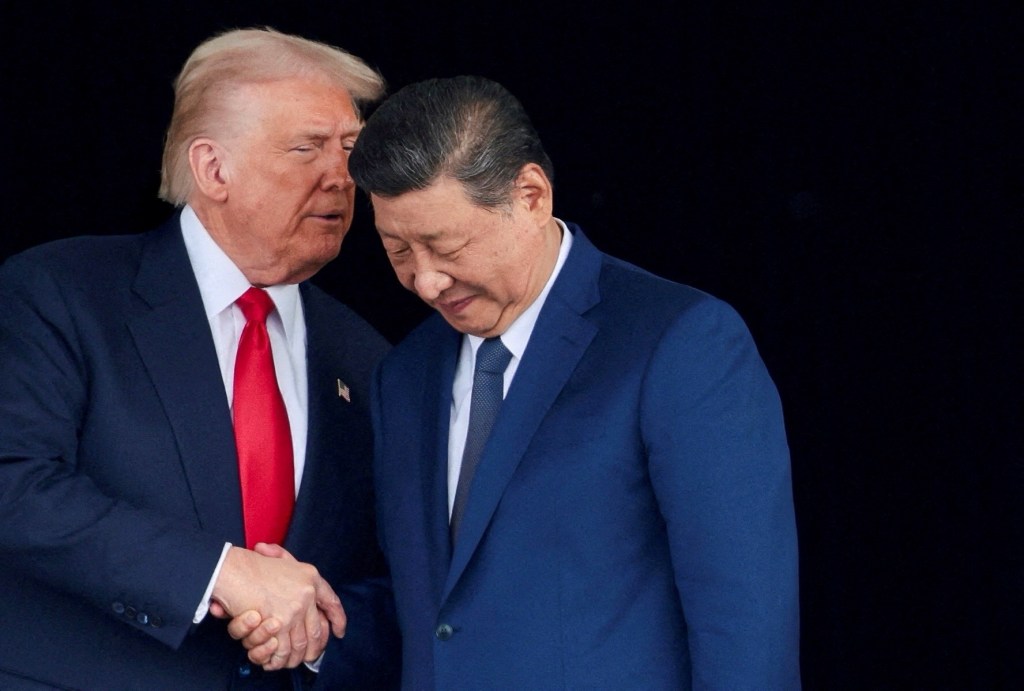
Last week, Donald Trump flew to Beijing to meet with Chinese President Xi Jinping, and received an appropriate red-carpet welcome. But he returned home with little more than a promise of some lovely rose seeds for the non-existent (paved-over) White House Rose Garden and a verbal agreement to discuss trade and tariff issues in the future.
Xi got a few good laughs at Trump’s expense, and a deal to buy 200 Boeing aircraft, thus ending a decade-long freeze on Boeing sales to China.
Trump, of course, thought the two-day meeting was a huge success . . . or so he said.
Whispering Sweet Nothings?
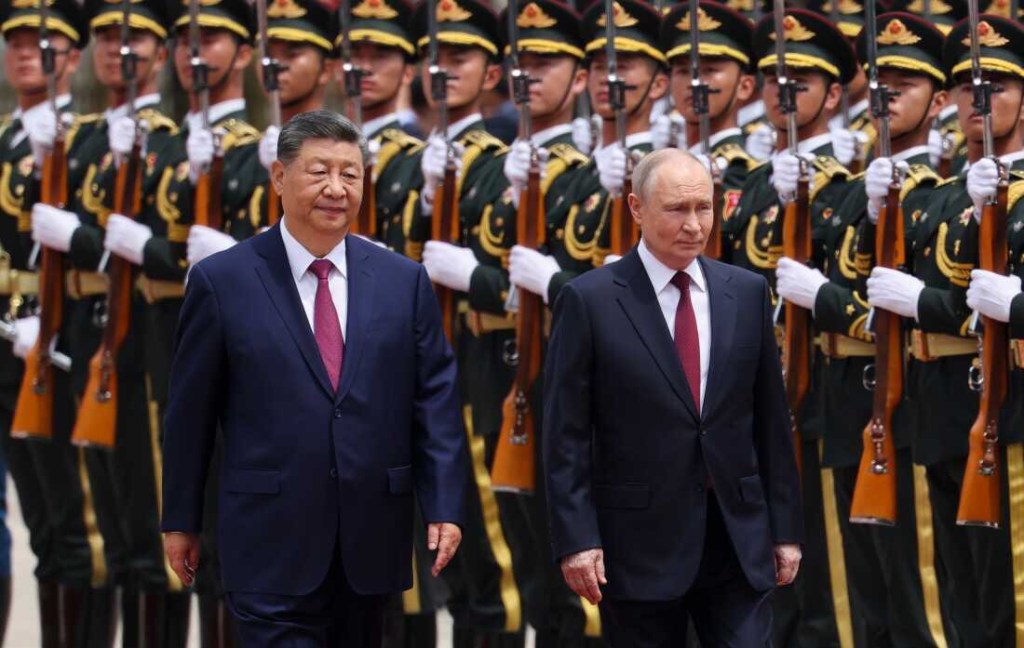
This week — while the seat of honor at the table was still warm — Trump’s presence was replaced by Vladimir Putin’s, who had flown to Beijing for a day of meetings in the Great Hall of the People. After being similarly welcomed with the fanfare due a head of state, Putin and Xi wasted no time in getting down to business.
Xi — in an obvious jab at the United States — said that the “international situation is marked by intertwined turbulence and transformation, while unilateral hegemonic currents are running rampant.” Because of this, he added, China and Russia should enhance their “comprehensive strategic coordination.” [Simone McCarthy, CNN, May 20, 2026.]
The two leaders ended their meeting by signing a joint statement — something that did not happen during Trump’s visit — reiterating the close ties between Russia and China and a desire for a “multipolar world.” Putin said that their relations had reached an “unprecedentedly high level” and were among the “main stabilizing factors on the international stage.” [Id.]
Reviewing the Troops
While we haven’t been told of any earth-shaking agreements resulting from either of these meetings, what we are seeing is the subtle positioning of China as the rising force in a world long dominated by the U.S. and Russia — both of whose current leaders are now viewed as declining in power and prestige, largely due to their nearly identical, disastrous military and economic miscalculations.
And make no mistake: Xi knew exactly what he was doing when he scheduled the two meetings back-to-back.
It’s a whole new ball game, folks; and we have front-row seats.
While taking a little scroll through some of my earlier blog posts this morning, I happened upon one from February 2nd of this year concerning the establishment of Donald Trump’s “Board of Peace.” And I wondered why we haven’t heard anything from them since then. So, of course, I went fishing . . . and it turns out that there was an update just this week. (I still don’t think I’m psychic, but . . . )
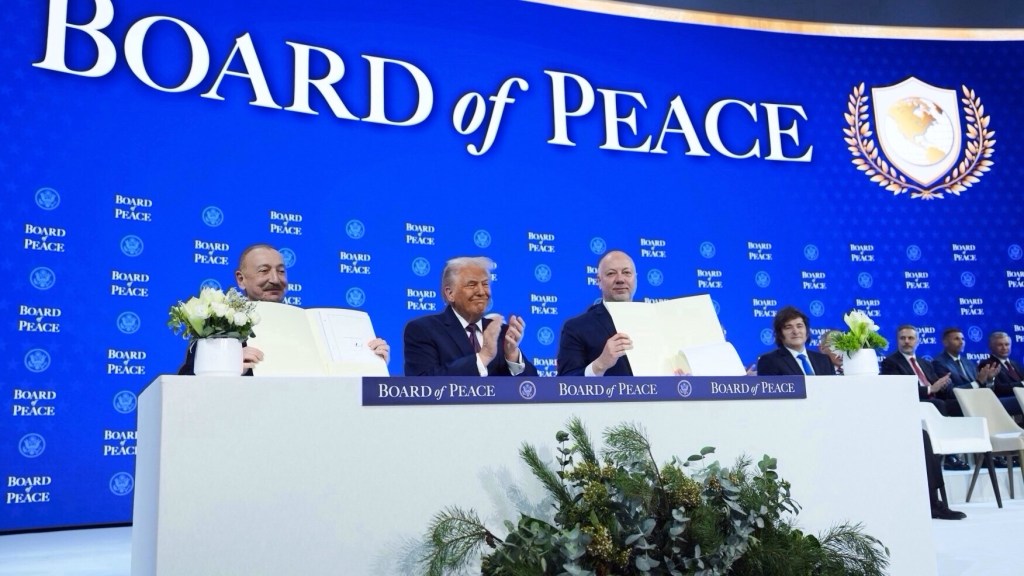
You may recall that this organization was initially promoted as a means of settling conflicts throughout the world, beginning with Gaza — a sort of alternative United Nations. Trump, of course, would be chairman for life, with unrestricted veto power over the Board’s decisions, including the choice of his successor. A permanent seat on the Board could be obtained by eligible countries for a mere $1 billion (or more, if one was feeling generous). It wasn’t immediately clear what the money would be used for, though presumably the chairman would let everyone know in due time.
A number of countries immediately applied for membership, reportedly pledging a total of $17 billion. These predictably consisted mainly of autocratic regimes, such as Saudi Arabia, Qatar, Egypt, Turkey, Belarus, Kosovo, and Uzbekistan. Vladimir Putin said he might consider membership, though he was holding out for the release of some frozen Russian assets to cover the $1 billion fee.
Those who promptly said “thanks but no thanks” included Canada, Denmark, France, Germany, Greece, Italy, New Zealand, Norway, Slovenia, Sweden, the U.K., and Ukraine. No surprises there, either, as Trump has not particularly endeared himself to our traditional allies since reclaiming occupancy of the Oval Office.
Selling the Board of Peace
You should note that the initial $17 billion consisted of pledges, and not cold, up-front cash payments. Now — and this is the reason for the sudden flurry of news items — it appears that those pledges may not have been engraved in stone, or set within a specific time period. Because, though he vehemently denies it, Trump may be facing a cash crunch.
He calls it a “funding gap,” saying that the Board is an “execution-focused organisation that calls capital as needed . . . [and that there] are no funding constraints.” [Emma Farge and Alexander Cornwell, Reuters, May 19, 2026.]
That’s a nice way of saying that only a small portion of the pledged funding has actually been received. And now Trump is calling for “faster disbursement of funding pledges” to cover his proposed $70 billion — yes, that’s $70 billion, not a mere $17B — plan to end the war in Gaza and to rebuild the territory.
And there it is: “ . . . to rebuild the territory.”
This is something the United Nations is not equipped to do. While it does assist with recovery in war-affected areas such as Gaza, it is not a bank; instead, it coordinates with the World Bank and other entities to assess damages and fund the immediate needs of recovery, such as clearing rubble and restoring basic health and water services. The U.N. also relies on agencies like the UNDP, UNHCR and UNICEF to provide humanitarian aid, temporary housing, and financial opportunities to people in war-torn regions.
It does not build high-end resorts and commercial/residential communities.
But that is precisely what Donald Trump and his son-in-law Jared Kushner have in mind.
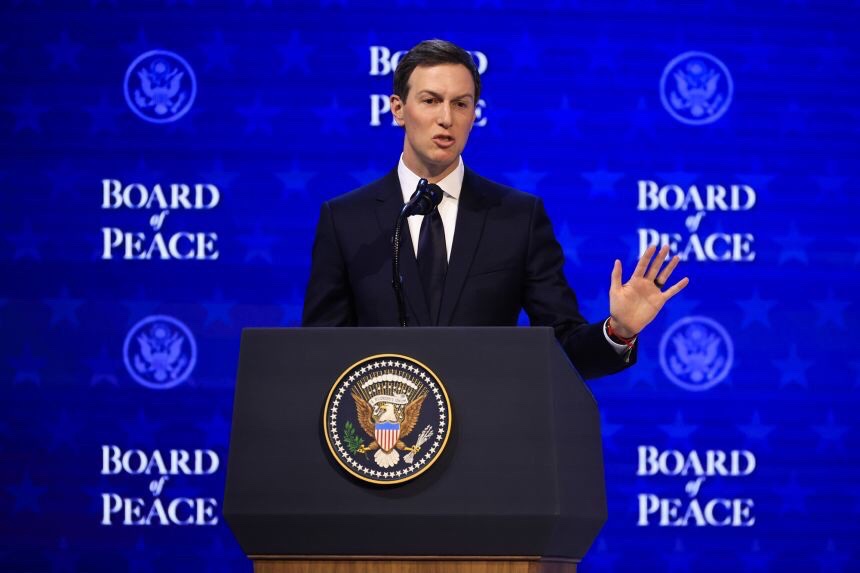
At the World Economic Forum in Davos, Switzerland, in January of this year, Kushner described a plan that begins with a “coastal tourism” zone to include up to 180 skyscrapers, many of which would likely be hotels. A residential zone would consist of high-end homes and apartments. He envisioned a new Dubai: another Middle Eastern playground for the rich and infamous. And he said:
“We have a masterplan. . . . There is no Plan B. If Hamas does not demilitarize, that will be what holds back the people of Gaza from achieving their aspirations.” [Andrew Carey , CNN, January 22, 2026.]
Jared Kushner – The Real Estate Salesman
I hardly think the wounded, homeless, starving people of Gaza are really dreaming of a “new Dubai” to replace their former homes and rebuild their shattered lives. That is the dream of a family of billionaires looking for their next billion in profits from the sale and operation of those skyscrapers and apartments.
Kushner did go on to describe his proposed provision for the current residents of Gaza: an area called “New Rafah,” which would offer more than 100,000 permanent housing units, plus schools and medical facilities. But he didn’t explain what would happen to the rest of the estimated 2,000,000 displaced persons currently living in the Gaza Strip, nearly half of whom remain in the devastated northern region. Nor did he offer a plan for temporary accommodations while his “new Dubai” is under construction.
Trump’s Vision of a “New Dubai” in Gaza
*. *. *
I wonder whether the delay in fulfilling their pledges is due to Trump’s friends’ awakening to the fact that what they signed onto was not a peacekeeping mission at all, but another Trump-branded scheme to further enrich himself and his family, and to gain a foothold in yet another part of the world.
Ask yourself this: Would you invest any sum of money in a start-up organization created by, and under the sole control of, someone with this man’s record?
On Friday, May 15th, I wrote about Donald Trump’s latest threats against the neighboring island nation of Cuba, and wondered why he had sent the Director of the CIA, John Ratcliffe, to Havana rather than a diplomatic team. I closed with the following words of apprehension:
“Those of my generation remember all too well what happened when the CIA stuck its nose into Cuba 65 years ago. Maybe they’ve learned from their earlier mistakes . . . but this still makes me nervous.”
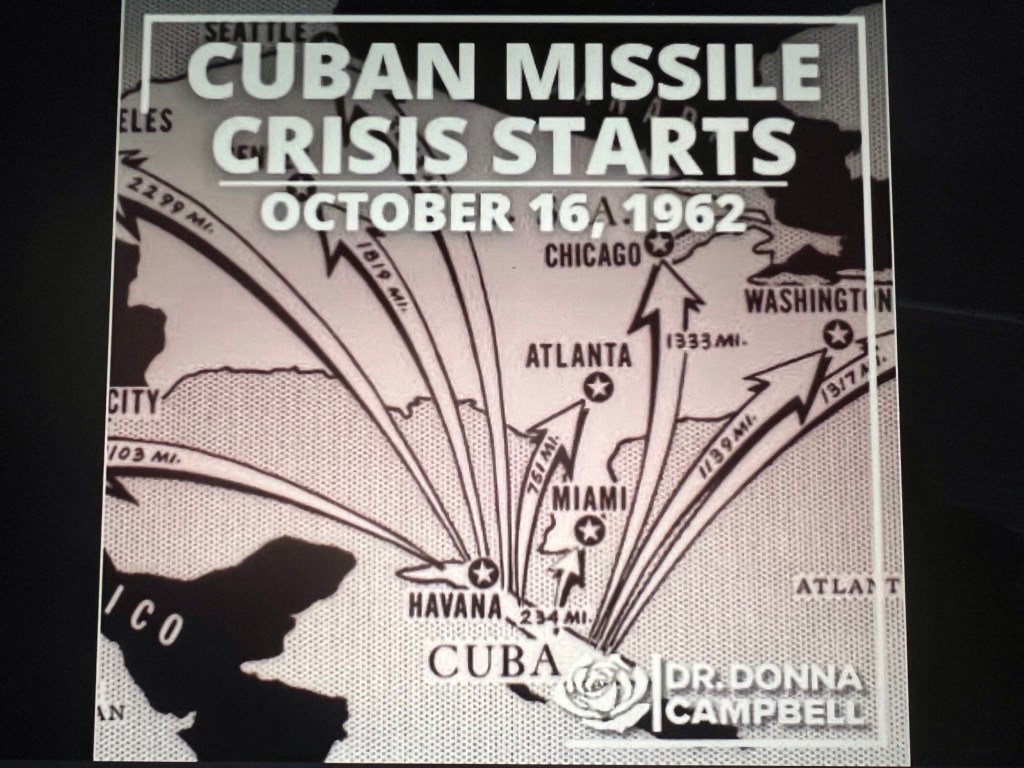
I was, of course, referencing the disastrous (for us) “Bay of Pigs” invasion of April 1961, which in turn triggered the following year’s Cuban Missile Crisis, when the Soviet Union stepped in to “defend” Cuba against any further U.S. threats.
The Threat From Cuba – 1962
For 13 days in October of 1962, the world trembled on the brink of World War Three. I remember clearly the feeling of going to bed each night, convinced that — because I lived at “Ground Zero” in Washington, D.C. — I would not wake up the following morning.
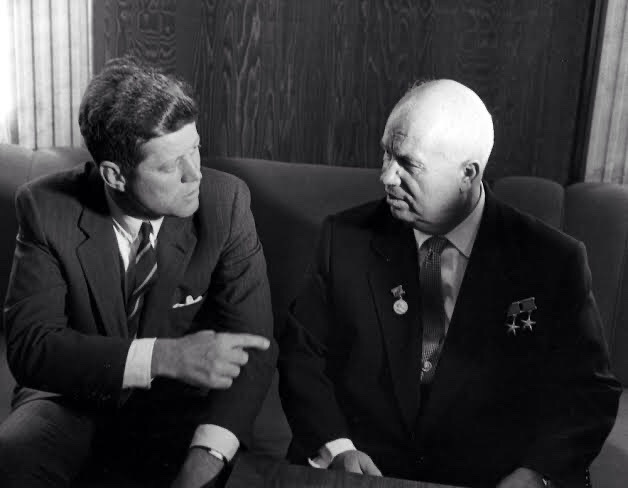
We were lucky then; our President was John F. Kennedy — a learned, seasoned politician and diplomat who kept his finger away from the nuclear button, and was able to convince Soviet Premier Nikita Khrushchev to take a deep breath, withdraw his missiles from Cuba, and let the world continue living for a while longer.
JFK with Khrushchev
Today, our world is not the same as it was 64 years ago. There are — as far as I know — no Russian missiles on their way to Cuba. But Vladimir Putin’s Russia still has a strong presence there. And the White House is now occupied, not by a man of reason, but by a hotheaded malignant narcissist who delights in threatening to wipe out entire civilizations if they do not bend to his will.
Donald Trump has made no secret of his intention to “take over” Cuba, allegedly to rescue it from a very real economic and political crisis, but in reality to allow him to claim another victory in his parade of hostile takeovers.
And now, as though in answer to my question of a few days ago concerning the involvement of the CIA, U.S. intelligence sources have reported that Cuba has acquired more than 300 military drones and has recently begun discussing plans to attack the U.S. base at Guantanamo Bay, U.S. military vessels, and possibly even Key West, Florida. [Marc Caputo, Axios, May 17, 2026.]
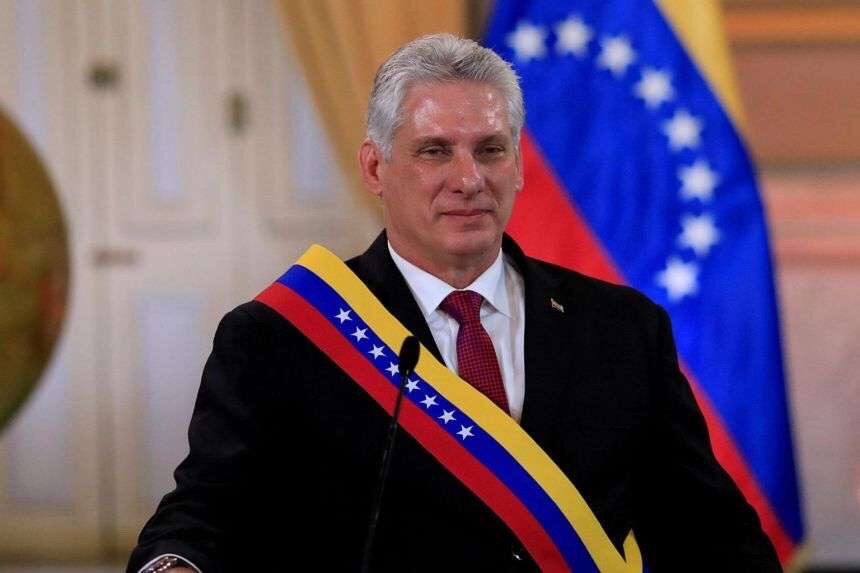
Cuban President Miguel Diaz-Canel has responded by accusing the U.S. of fabricating a case in order to justify potential military intervention, and said in a post on X that “Cuba does not represent a threat.” He added that any offensive military action against Cuba would lead to a “bloodbath.” [Kylie Madry, Reuters, May 18, 2026.]
Cuban President Miguel Diaz-Canel
And Cuba’s Foreign Minister Bruno Rodriguez posted that Cuba, “like every nation in the world,” has every right to defend itself against foreign aggression under the U.N. Charter and international law. [Id.]
So here we are again — though now in a world of drone warfare, splintering political alliances, and inmates running the asylum that is Washington. Who is telling the truth? Cuba’s president did not deny having the drones; but does he believe his country really has the capacity to launch and sustain an attack against the United States?
Or is Trump indeed fabricating a Cuban threat as an excuse for yet another unwarranted invasion?
And if he does make a move against Cuba, will Russia once again step in to defend its ally in order to maintain a toehold in the Caribbean?
And finally . . . will we all wake up again tomorrow morning?
“They’d better get moving, FAST, or there won’t be anything left of them. TIME IS OF THE ESSENCE!”
– Donald J. Trump, May 17, 2026
So said Trump about Iran on Sunday, as he spoke with Israeli Prime Minister Benjamin Netanyahu, according to the Times of Israel. [Ella Kipling, BBC, May 18, 2026.]
On Monday, after Iran said it had responded to the most recent U.S. proposal and that talks were continuing through Pakistani mediators, Trump did another of his dizzying U-turns and said that he would “hold off” on his plan to attack Iran on Tuesday, in accordance with a request from the leaders of Qatar, Saudi Arabia and the United Arab Emirates. [Kit Maher, Kevin Liptak and Kaitlan Collins, CNN, May 18, 2026.]
Adding that negotiations were becoming more “serious,” he nevertheless posted that he has instructed his leadership “to be prepared to go forward with a full, large scale assault of Iran, on a moment’s notice” if a deal isn’t reached . . . and that “This Deal will include, importantly, NO NUCLEAR WEAPONS FOR IRAN.” [Id.]
He later told reporters:
“It’s a very positive development, but we’ll see whether or not it amounts to anything.” Referring to other occasions when he thought a deal was close, he added, “but this is a little bit different. We were getting ready to do a very major attack tomorrow. I put it off for a little while — hopefully, maybe, forever — but possibly for a little while, because we’ve had very big discussions with Iran, and we’ll see what they amount to. I was asked by Saudi Arabia, Qatar, UAE, and some others if we could put it off for two or three days, a short period of time, because they think that they are getting very close to making a deal. . . . If we can do that without bombing the hell out of them, I’d be very happy.” [Id.]
“SAY WHAT?!!”
So tomorrow (now today, Tuesday) was supposed to be Doomsday. But then it wasn’t. Although it might be just around the corner. Or not. He really doesn’t want to annihilate Iran. But he will gladly do it if they don’t meet his demands . . . whatever they might be. But definitely NO NUKES.
But hey — what ever happened to regime change? Has that already taken place, or did I imagine that it was ever an issue? And there was the little matter of opening the Strait of Hormuz . . . which, the last I heard, we (the U.S.) were still blocking. Though it was open before he tore up the prior agreement, thus giving Iran carte blanche to go ahead and develop the nukes they didn’t have before this all started.
The whole ugly mess is more than confusing; it’s downright vertiginous. Is he trying to scare the Iranians to death? Or does he really not know what the f*ck he’s doing? Maybe he’s just getting bored with this war, and is ready to move on to Cuba.
Seriously . . . who the hell knows anything anymore?
The other day, a friend told me her age (she’s just a few years younger than I), and then asked mine. I did tell her; but I was surprised at my reluctance to say the number out loud. And that led me to thinking about women and age.
Today’s quote comes from a Chinese philosopher . . . though surprisingly not attributed to Confucius, as is so much of that culture’s wisdom. In fact, I don’t even know whether it’s an old or a newer saying.
Confucius (c. 551 B.C. – c. 479 B.C.)
But it is about women, and about age: two perfectly normal subjects that, when combined, tend to react like a mixture of chlorine and ammonia. And it appears that the Chinese have always understood this very well, because these words — whether ancient or recent — explain perfectly how we women feel about the subject:
“The woman who tells her age is either too young to have anything to lose or too old to have anything to gain.”
– As quoted by Advaita Suresh, US News, May 17, 2026
So now you can understand why you should never ask the age of a woman who is, or appears to be, anywhere between 18 and 80, because if you do, you are likely to have your lights knocked out.
And now, perhaps you could help me figure out how to deal with my new-found realization that, according to the Chinese proverb, I have nothing left to gain.
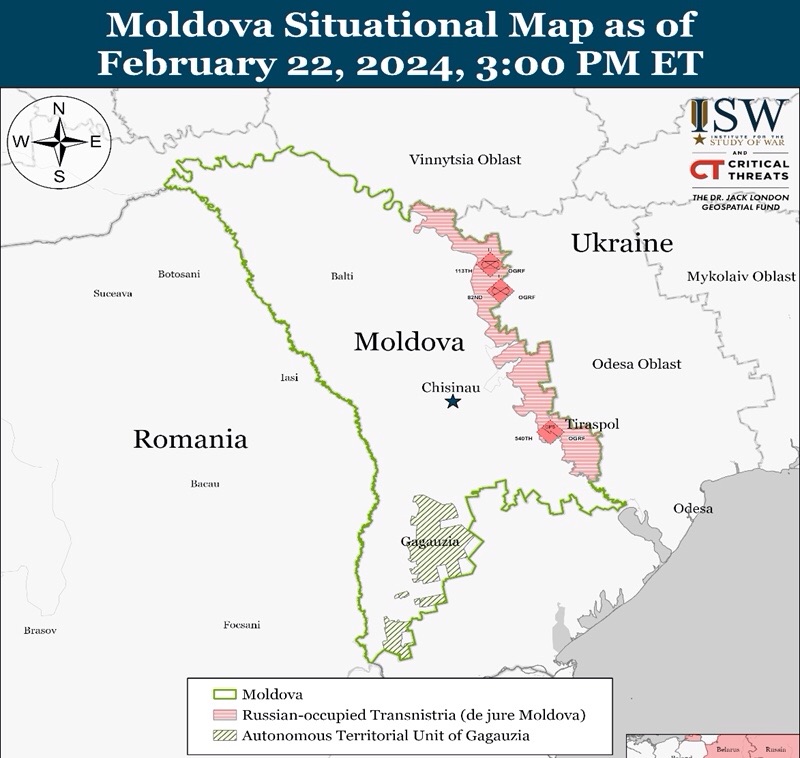
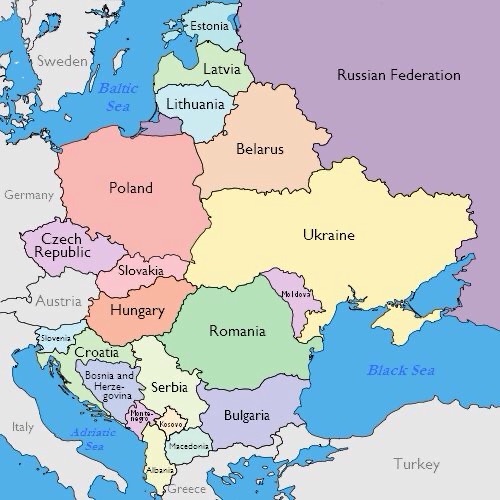
If you’ve been contemplating where Vladimir Putin’s wandering eye might focus next, you may have been thinking about one of the Baltic states: Latvia, Lithuania or Estonia. And you could be right. But don’t overlook an area that a lot of people aren’t familiar with: the Transnistria region of Moldova.
Transnistria (in pink)
Moldova — the former Soviet Socialist Republic of Moldavia — formally applied for membership in the EU in March of 2022, and was granted candidate status in June of the same year . . . clearly signaling its intention to remain outside the sphere of Vladimir Putin’s influence. And, while not a member of NATO, it does cooperate with the bloc through its Partnership for Peace program.
Despite the breakup of the Soviet Union in 1991, Russia has continued to claim hegemony over other former Soviet regions — most notably, the Crimean Peninsula and other regions of Ukraine, but also the de facto independent Transnistria region of Moldova.
Like much of that part of the world, the history of Transnistria is complex. Pro-Russian separatists declared the region’s independence from Moldova (then still part of the USSR) on September 2, 1990. Russia then — and this will sound very familiar — sent in troops to occupy the area as a “peacekeeping” force; and, even after the breakup of the Soviet Union, and despite pledges to withdraw over the years, has not left. In March of 2022, the Parliamentary Assembly of the Council of Europe formally designated Transnistria as Moldovan territory occupied by the Russian Federation; and there the matter stands.
Looking at the map, it is easy to see why Russia wants so badly to hang onto Transnistria: its eastern side forms the border with the western side of Putin’s primary objective . . . Ukraine.
On its west, Moldova also shares a long border with NATO/EU member Romania, further rendering it of great strategic importance as a buffer (from Putin’s standpoint) or a connector (for Ukraine) between Ukraine and Romania.
As we all know, Putin is adept at creating excuses to send his armies into non-Russian territories. He did it in 2008 in the Abkhazia and South Ossetia regions of Georgia. In 2014, he repeated his success in Crimea. And he did it yet again in February of 2022, when he claimed that Russian-speaking separatists in the Donbas region of Ukraine were being persecuted by the so-called Nazi regime in Kyiv and needed protection. Since then, he has expanded his control to other areas of Ukraine, including Donetsk, Luhansk, Kherson, Zaporizhzhia — all in the guise of “liberation.”
Once entrenched, he “granted” Russian citizenship status to the residents of those areas. And now, he has signed a decree doing the same for the citizens of Transnistria who are at least 18 years of age and were living there permanently on the day the decree took effect (May 15, 2026), even offering expedited citizenship by waiving three of the requirements of Russia’s citizenship law: five years of residency, Russian language proficiency, and passing exams on Russian history and legal foundations. [Katherina Popilnichenko, United24Media, May 15, 2026.]
On May 13th, the Russian State Duma unanimously approved legislation expanding Putin’s authority to deploy Russian armed forces abroad, amending existing regulations on citizenship and defense, and allowing the Kremlin to use military force to “protect” Russian citizens against alleged persecution by foreign states and by international courts not recognized by Moscow. [Id.]
Over the years, this has become a tried-and-true tactic of Putin’s, intended to destabilize areas formerly belonging to the Soviet Union that have now become members of NATO and/or the EU, or that simply border on NATO and/or EU member nations. It is one more weapon in his hybrid attacks throughout Europe, which have included sabotage, assassination plots, attacks against infrastructure and security . . . and all as part of his master plan to recreate, in some form, the Russian Empire.
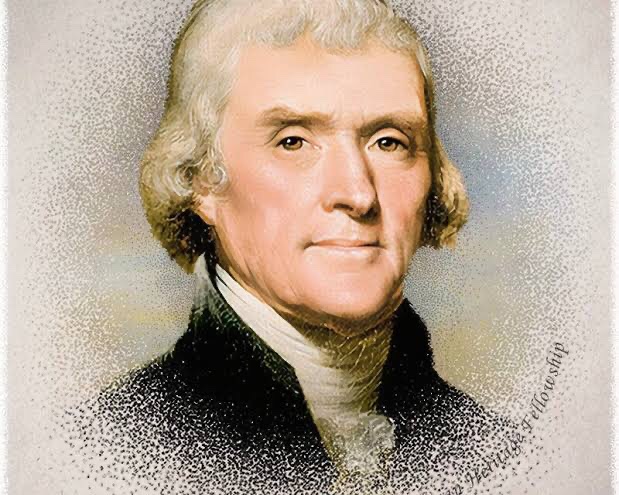
On June 24, 1826, as the 50th anniversary of the signing and approval of the Declaration of Independence approached, an aging Thomas Jefferson wrote what would be his last letter. It was addressed to Roger C. Weightman: an American politician, civic leader, printer, and the eighth Mayor of Washington, D.C.
Thomas Jefferson (April 13, 1743 – July 4, 1826)
Jefferson would die on that Independence Day, just ten days after writing his final letter. But his words live on as a history lesson and a caution to succeeding generations . . . if only we have the wisdom to heed them:
“May it [American independence] be to the world, what I believe it will be (to some parts sooner, to others later, but finally to all), the signal of arousing men to burst the chains under which monkish ignorance and superstition had persuaded them to bind themselves, and to assume the blessings and security of self-government. That form which we have substituted, restores the free right to the unbounded exercise of reason and freedom of opinion. All eyes are opened, or opening, to the rights of man. The general spread of the light of science has already laid open to every view the palpable truth, that the mass of mankind has not been born with saddles on their backs, nor a favored few booted and spurred, ready to ride them legitimately . . . These are grounds of hope for others. For ourselves, let the annual return of this day forever refresh our recollections of these rights, and an undiminished devotion to them.”
– Thomas Jefferson, Letter to Roger C. Weightman, 24 June 1826.
As we prepare to celebrate the 250th anniversary of that momentous event with fireworks, patriotic music, and enormous amounts of picnic food, let’s also take a few minutes to recall what it is we’re actually commemorating . . . and what we are now fighting to keep alive for our children and their succeeding generations.
Each week, I mention the sad fact that my list of Putin’s political hostages consists of only a small fraction of those actually held in prisons and penal colonies throughout Russia, Belarus, and other Russia-friendly locations.
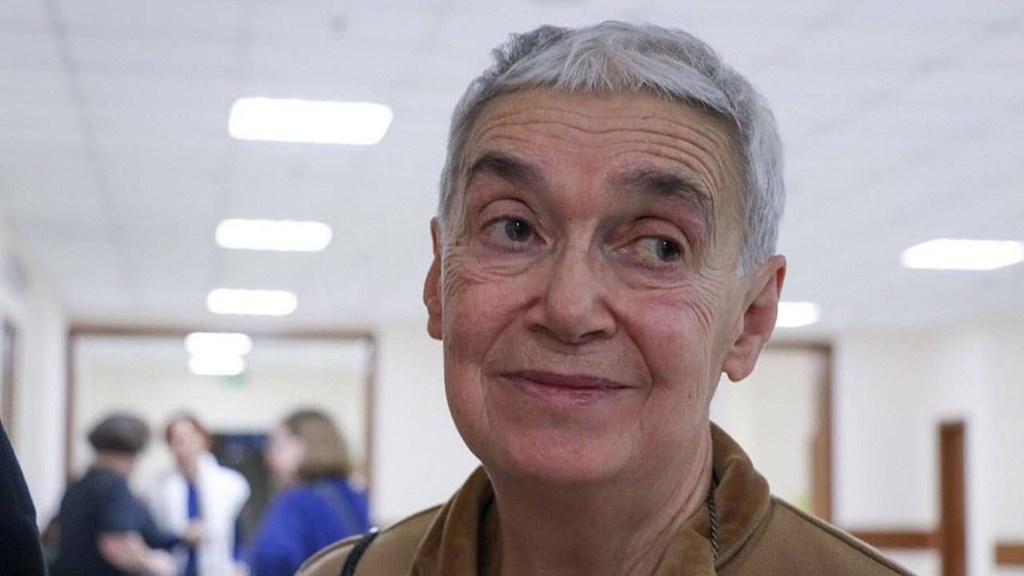
And every now and then, I happen across the names of others previously unknown to me. Such was the case this week, when I read about the recent death of Russian human rights activist and dissident Nina Litvinova at the age of 80.
Nina Litvinova (1945 – 2026)
Nina, a prominent ocean researcher, was not a prisoner; her body was found on a street in central Moscow. And she had left behind a suicide note. [The Moscow Times, May 15, 2026.]
According to the Russian human rights organization Memorial, Nina had been advocating for political prisoners since the 1960s, including for her own brother, Pavel Litvinov, who had taken part in a demonstration against the Soviet invasion of Czechoslovakia in 1968. She attended high-profile trials, including those of historian Yury Dmitriyev, Memorial co-founder Oleg Orlov, and numerous lesser-known prisoners. She had also appeared briefly in a 2022 documentary by RFE/RL’s Russian Service when she visited imprisoned activist Olga Bendas. [RFE/RL’s Russian Service, May 15, 2026.]
Nina Litvinova’s death was first reported on May 13, 2026. The next day, her cousin, journalist Maria Slonim, published a story on social media that included what she said was an excerpt from Nina’s suicide note. As Slonim wrote:
“Nobody — neither RIA nor Gazeta.Ru, which first reported it — will, of course, publish the note, because it lays out the reasons for her death far too plainly. So we decided to show the real reasons: Putin killed her!” [Id.]
Nina’s farewell note is a testament to the extremes to which Putin’s repressive regime has gone and the effect it has had on the entire country; and as such, it bears repeating here:
“I love all of you and think about you. But I must leave; living has become unbearable for me. Ever since Putin attacked Ukraine and has been killing innocent people, while here at home thousands are endlessly thrown into prison, suffering and dying there simply because, like me, they oppose the war and oppose killing. I can do nothing to help them. Yevgenia Berkovich, Svetlana Petriichuk, Karina Tsurkan, and thousands of others behind bars are suffering and dying. I tried to help them, but my strength is gone, and day and night I suffer from helplessness. I am ashamed, but I gave up. Please forgive me.” [Id.]
From RFE/RL 2022 Documentary
*. *. *
It is from Nina Litvinova’s story that I have gathered the names of Yury Dmitriyev, Oleg Orlov, Olga Bendas, Yevgenia Berkovich, Svetlana Petriichuk, and Karina Tsurkan, for inclusion in my list of political prisoners. In the coming week, I will research their histories to relate to you in next Sunday’s chapter.
In the meantime, they are included in my weekly tribute to those who remain in limbo, awaiting our help. Once again, here is the list of those known, which is still only a fraction of the total:
Prisoners of War:
The 20,000+ Kidnapped Ukrainian Children The People of Ukraine
Immigrant Detainees in Russia:
Migrants from the Central Asian nations of Kazakhstan, Kyrgyzstan, Tajikistan, Turkmenistan and Uzbekistan
Endangered Exiles:
Pavel “Pasha” Talankin Mikita Losik Yulia Navalnaya Countless Journalists and Other Dissidents
Political Prisoners:
In Afghanistan:
Mahmoud Habibi (Afghan-American) Paul Overby (American, missing since 2018)
Andrei Chapiuk Uladzimir Labkovich Andrzej Poczobut Marfa Rabkova Valiantsin Stafanovic Yuras Zyankovich
In Georgia:
Mzia Amaglobeli
In Russia:
The “Crimea 8”: — Oleg Antipov — Artyom Azatyan — Georgy Azatyan — Aleksandr Bylin — Roman Solomko — Artur Terchanyan — Dmitry Tyazhelykh — Vladimir Zloba
James Scott Rhys Anderson (British) Aleksandr Andreyev David Barnes (American) Olga Bendas Yevgenia Berkovich Gordon Black (American) Hayden Davies (British) Yury Dmitriyev Anastasia Dyudyaeva Antonina Favorskaya Konstantin Gabov Robert Gilman (American) Stephen James Hubbard (American) Sergey Karelin Timur Kishukov Vadim Kobzev Darya Kozyreva Artyom Kriger Michael Travis Leake (American) Aleksei Liptser Grigory Melkonyants Nika Novak Oleg Orlov Svetlana Petriichuk Leonid Pshenychnov (in Russian-occupied Crimea) Nadezhda Rossinskaya (a.k.a. Nadin Geisler) Lev Schlossberg Sofiane Sehili (French) Igor Sergunin Dmitry Shatresov Robert Shonov Grigory Skvortsov Eugene Spector (American) Joseph Tater (American, disappeared) Karina Tsurkan Laurent Vinatier Robert Romanov Woodland (American)
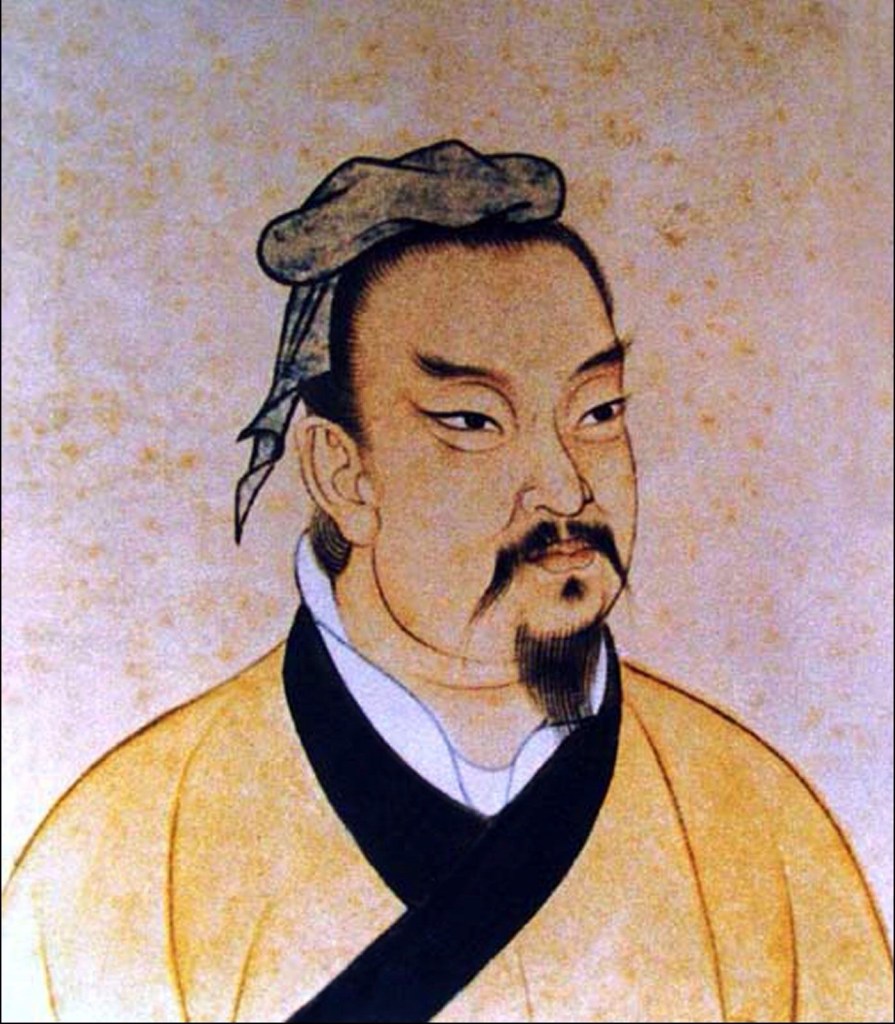
Sun Tzu, it turns out, was more than just a great warrior; he would also have been an outstanding Human Relations Director, if there had been such a thing 2,500 years ago.
Sun Tzu (544 B.C. – 496 B.C.)
He was, of course, speaking of the oversight of military forces; but his philosophy is applicable to all walks of life, from the treatment of one’s own family, to the running of a business, to the operation of an entire government:
“When one treats people with benevolence, justice, and righteousness, and reposes confidence in them, the army will be united in mind and all will be happy to serve their leaders.”
Anyone who has ever held a job, or been part of a family or other cohesive group, understands the wisdom of those words.













 The Blog About Everything … and Sometimes Nothing