If you’ve been contemplating where Vladimir Putin’s wandering eye might focus next, you may have been thinking about one of the Baltic states: Latvia, Lithuania or Estonia. And you could be right. But don’t overlook an area that a lot of people aren’t familiar with: the Transnistria region of Moldova.
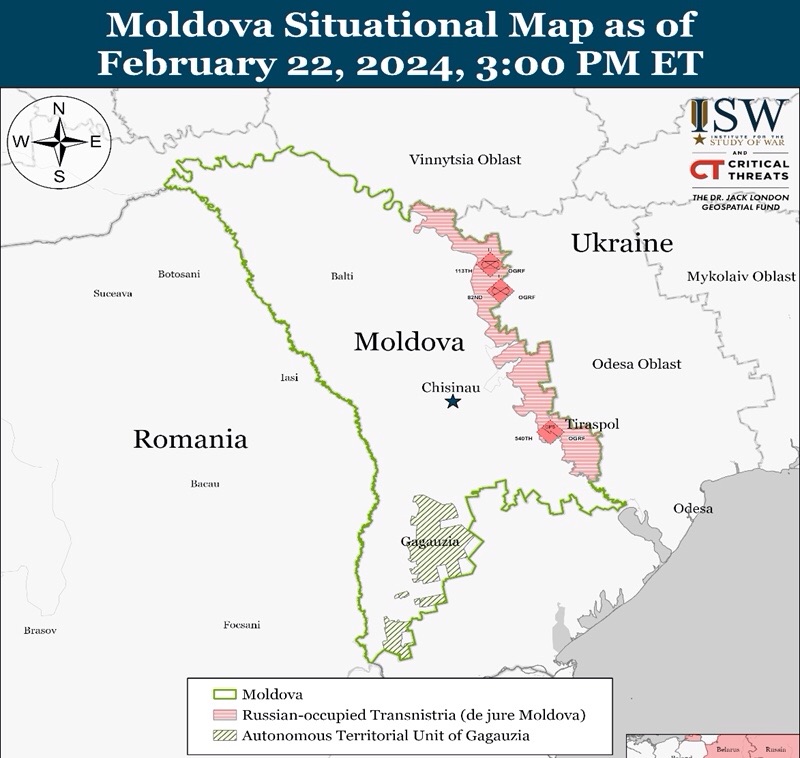
Moldova — the former Soviet Socialist Republic of Moldavia — formally applied for membership in the EU in March of 2022, and was granted candidate status in June of the same year . . . clearly signaling its intention to remain outside the sphere of Vladimir Putin’s influence. And, while not a member of NATO, it does cooperate with the bloc through its Partnership for Peace program.
Despite the breakup of the Soviet Union in 1991, Russia has continued to claim hegemony over other former Soviet regions — most notably, the Crimean Peninsula and other regions of Ukraine, but also the de facto independent Transnistria region of Moldova.
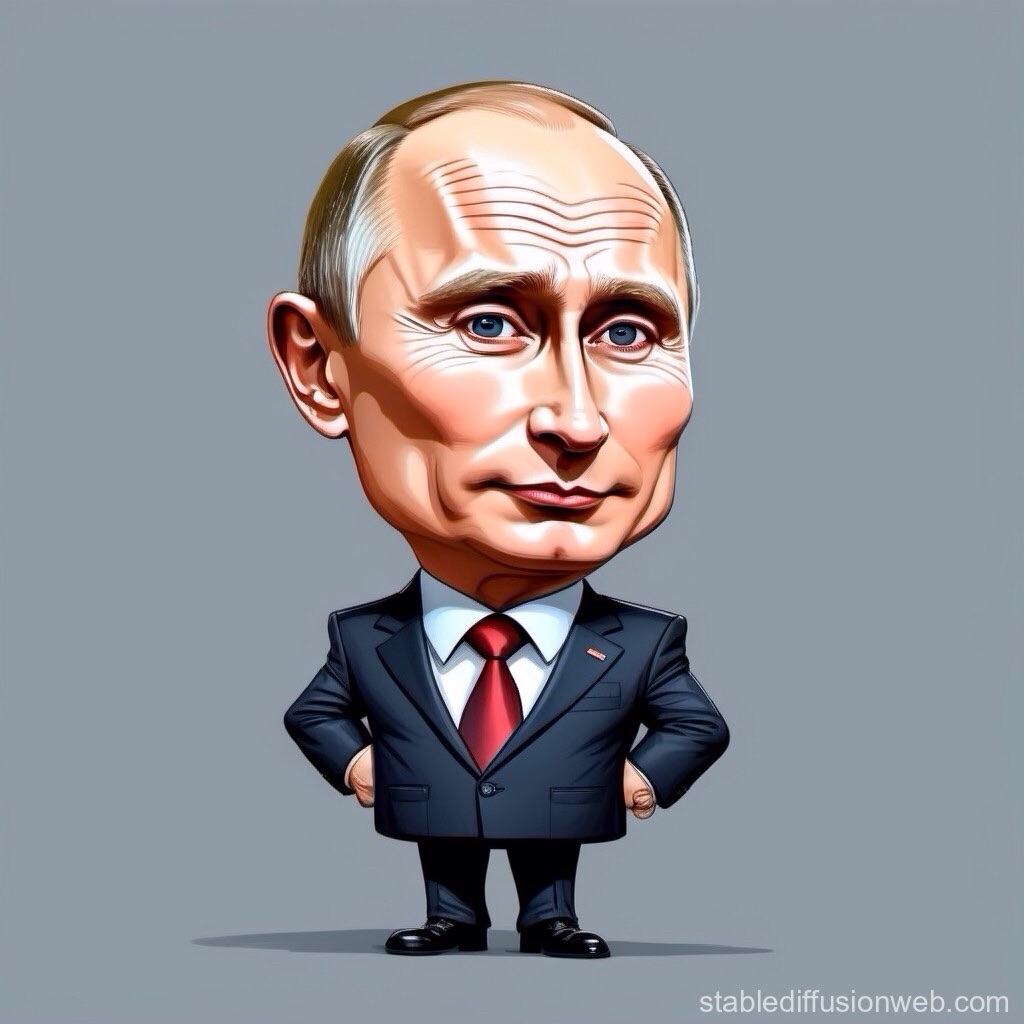
Like much of that part of the world, the history of Transnistria is complex. Pro-Russian separatists declared the region’s independence from Moldova (then still part of the USSR) on September 2, 1990. Russia then — and this will sound very familiar — sent in troops to occupy the area as a “peacekeeping” force; and, even after the breakup of the Soviet Union, and despite pledges to withdraw over the years, has not left. In March of 2022, the Parliamentary Assembly of the Council of Europe formally designated Transnistria as Moldovan territory occupied by the Russian Federation; and there the matter stands.
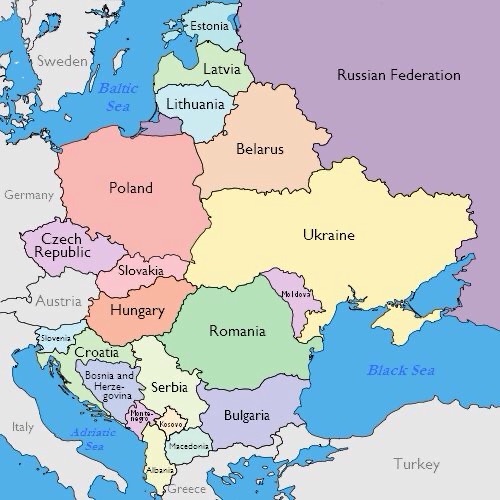
Looking at the map, it is easy to see why Russia wants so badly to hang onto Transnistria: its eastern side forms the border with the western side of Putin’s primary objective . . . Ukraine.
On its west, Moldova also shares a long border with NATO/EU member Romania, further rendering it of great strategic importance as a buffer (from Putin’s standpoint) or a connector (for Ukraine) between Ukraine and Romania.
As we all know, Putin is adept at creating excuses to send his armies into non-Russian territories. He did it in 2008 in the Abkhazia and South Ossetia regions of Georgia. In 2014, he repeated his success in Crimea. And he did it yet again in February of 2022, when he claimed that Russian-speaking separatists in the Donbas region of Ukraine were being persecuted by the so-called Nazi regime in Kyiv and needed protection. Since then, he has expanded his control to other areas of Ukraine, including Donetsk, Luhansk, Kherson, Zaporizhzhia — all in the guise of “liberation.”
Once entrenched, he “granted” Russian citizenship status to the residents of those areas. And now, he has signed a decree doing the same for the citizens of Transnistria who are at least 18 years of age and were living there permanently on the day the decree took effect (May 15, 2026), even offering expedited citizenship by waiving three of the requirements of Russia’s citizenship law: five years of residency, Russian language proficiency, and passing exams on Russian history and legal foundations. [Katherina Popilnichenko, United24Media, May 15, 2026.]
On May 13th, the Russian State Duma unanimously approved legislation expanding Putin’s authority to deploy Russian armed forces abroad, amending existing regulations on citizenship and defense, and allowing the Kremlin to use military force to “protect” Russian citizens against alleged persecution by foreign states and by international courts not recognized by Moscow. [Id.]
Over the years, this has become a tried-and-true tactic of Putin’s, intended to destabilize areas formerly belonging to the Soviet Union that have now become members of NATO and/or the EU, or that simply border on NATO and/or EU member nations. It is one more weapon in his hybrid attacks throughout Europe, which have included sabotage, assassination plots, attacks against infrastructure and security . . . and all as part of his master plan to recreate, in some form, the Russian Empire.
With himself as Emperor, of course.
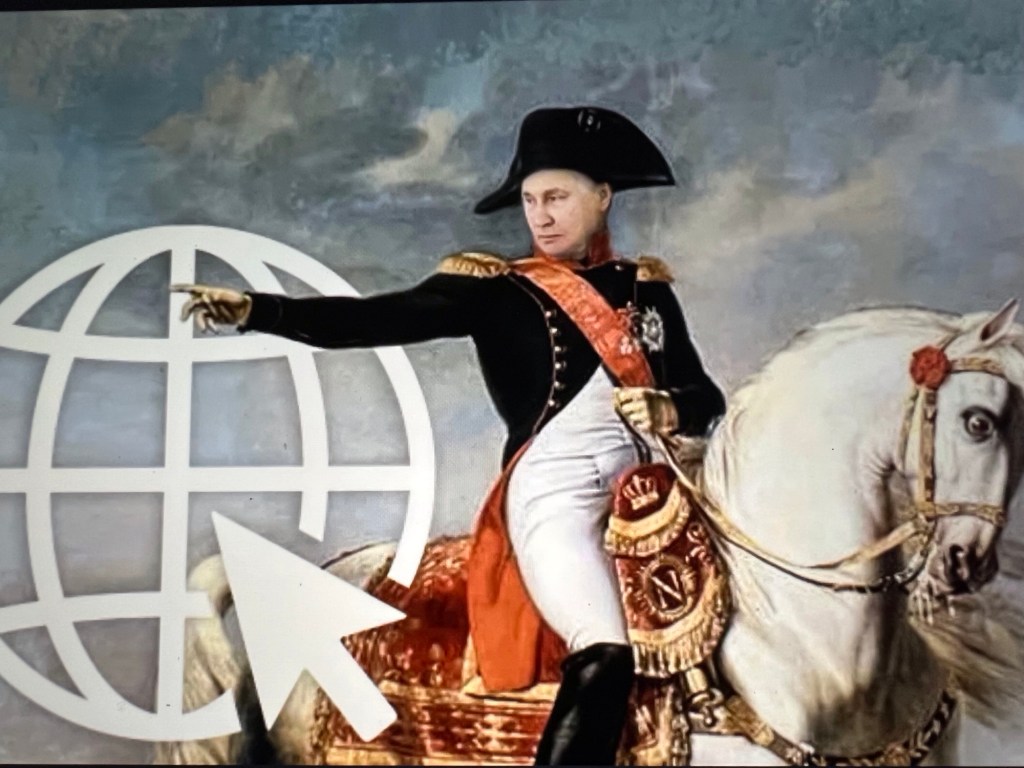
Just sayin’ . . .
Brendochka
5/18/26
 The Blog About Everything … and Sometimes Nothing