Today is Memorial Day in the United States — a day when families and friends enjoy some free time together, away from work, ushering in the unofficial start of summer.
But it is, first and foremost, a day that is dedicated to the remembrance of those who have given the “last full measure of devotion” for their country throughout the 250 years of her existence, from the American Revolution to the present day.
In honor of the occasion, I found what I think are the perfect words of thanks and remembrance in the writing of an English poet and dramatist, Laurence Binyon, as he paid tribute to the fallen heroes of World War I:
“They shall grow not old, as we that are left grow old: Age shall not weary them, nor the years condemn. At the going down of the sun and in the morning, We will remember them.”
– Laurence Binyon, “For the Fallen”
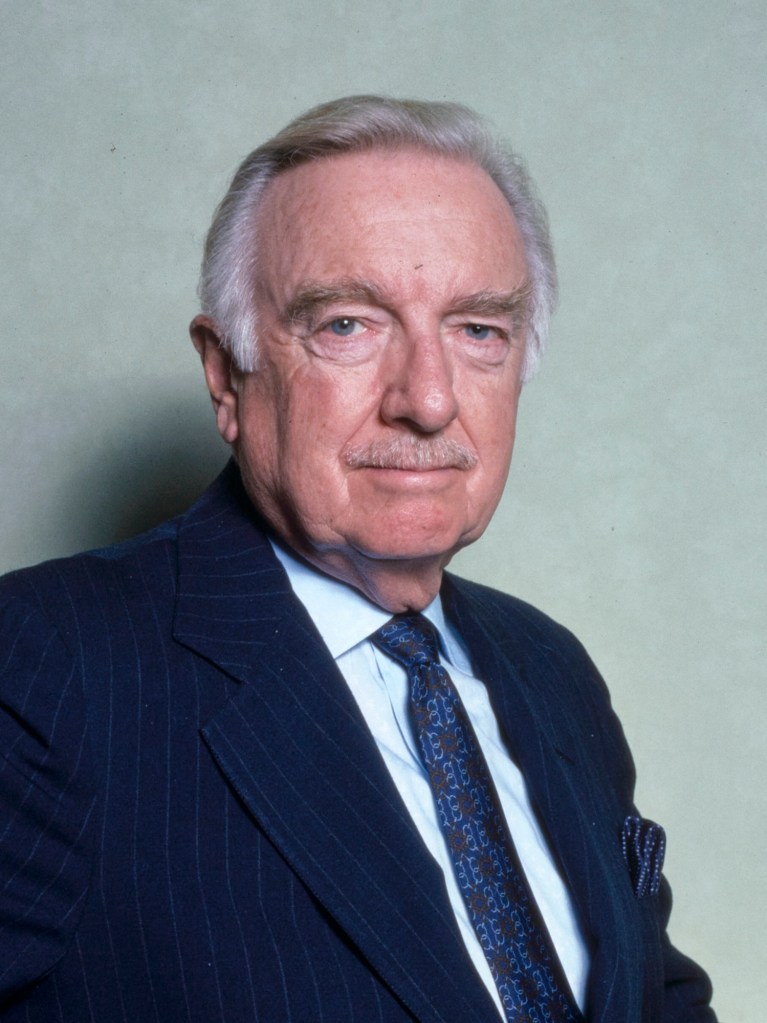
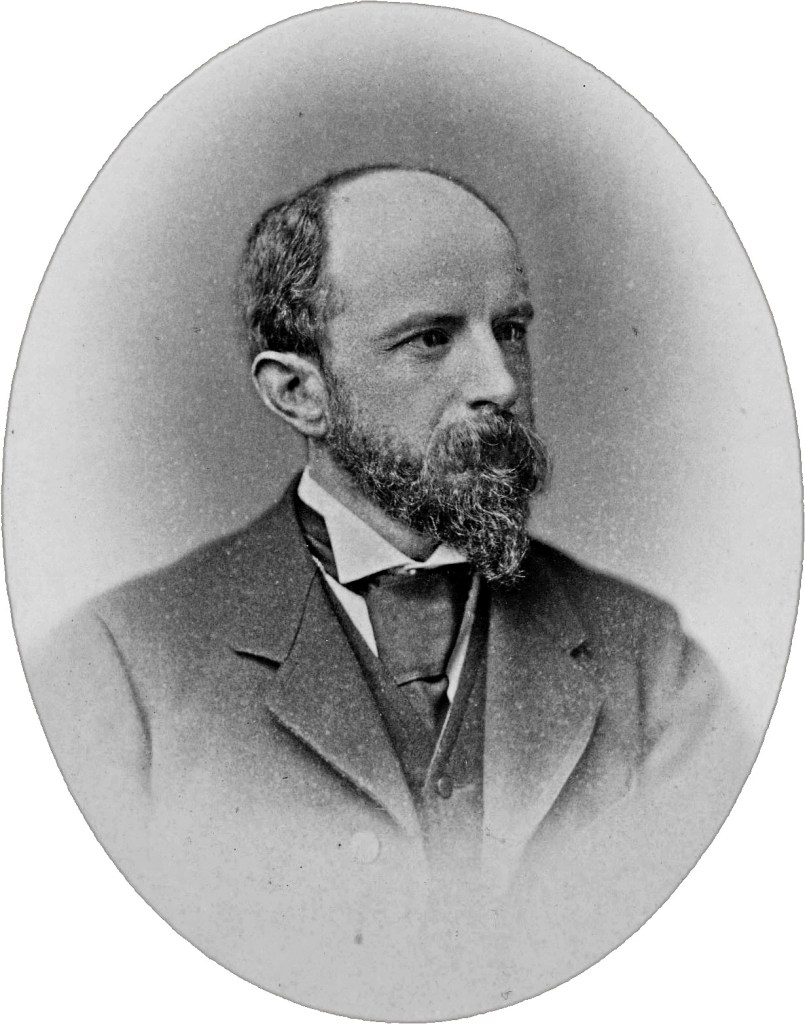
Laurence Binyon (1869 – 1943)
Enjoy the long weekend, everyone. But let’s not forget what our country is really about, what all of those young men and women gave their lives to preserve, and the battle in which we are now engaged to save our Republic from those who would destroy her.
“I lift my lamp beside the golden door!” – Emma Lazarus, The New Colossus
And in the final analysis, they all seem intended to turn our attention away from these:
The 3 Million Missing Epstein Files
The first big fish tales to draw our attention had to do with Donald Trump’s insistence that Canada and the Danish island of Greenland should be annexed to the United States. But, to his surprise and dismay, both Canada and Denmark refused to relinquish their sovereign territories.
And the Epstein Files were still there.
So he next turned to Venezuela, blowing up suspected drug-smuggling boats in international waters, threatening to invade the country, and finally kidnapping the president, Nicolas Maduro, and spiriting him away to the U.S. to stand trial.
But the Epstein scandal wouldn’t go away.
So he expanded his horizons, threw caution to the wind, and — against all advice and logic to the contrary — invaded Iran. Claiming they were building nukes (again, despite all intel saying otherwise), he blockaded the Strait of Hormuz, which had long been wide open, creating worldwide economic havoc; swore to the American people that Iran was sure to capitulate within two weeks at most; and launched a war with no plan and no end game. It has now been three months, Iran is still there, the Strait is still closed, and . . .
. . . the ghost of Jeffrey Epstein continues to haunt him.
Judged by the company you keep
Next on Trump’s bucket list was Cuba. He cut off their oil supply, severely worsening an already dire economic crisis, then said he needed to rescue the Cuban people from themselves. He has also filed charges against 94-year-old Raul Castro for something that happened 30 years ago when he (Castro) wasn’t even in charge. This most recent distraction has yet to play itself out, and in the meantime . . . do I have to say it? . . .
. . . the Epstein files haven’t gone anywhere.
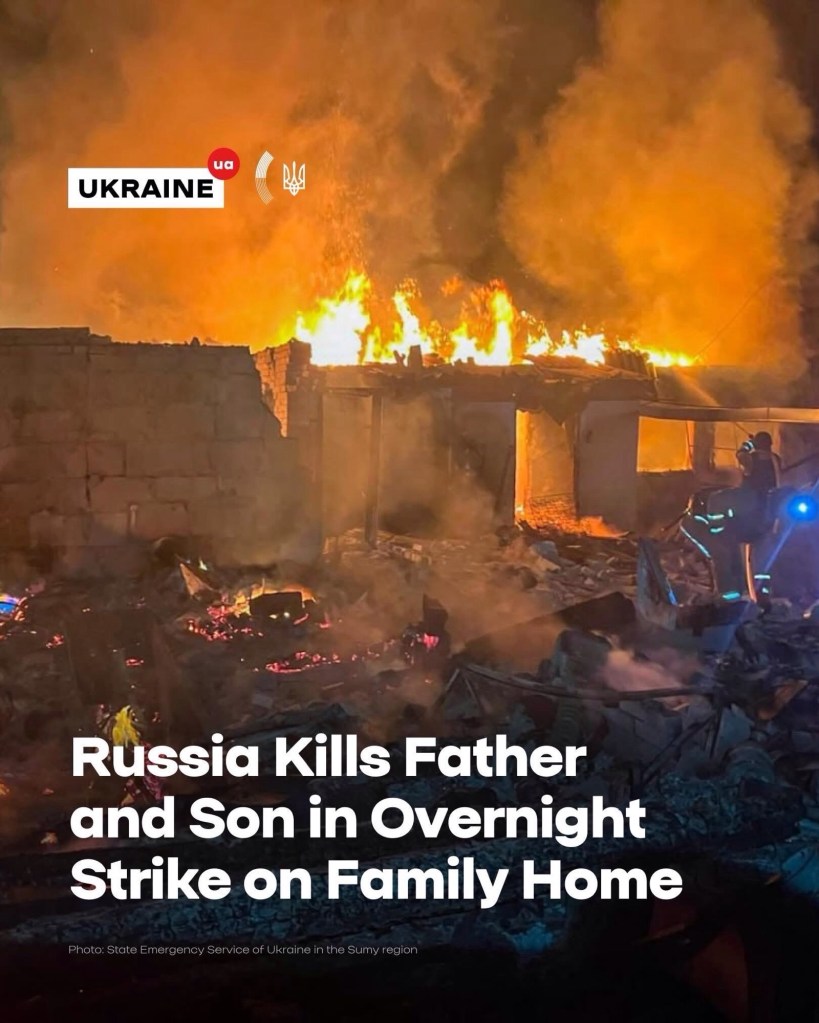
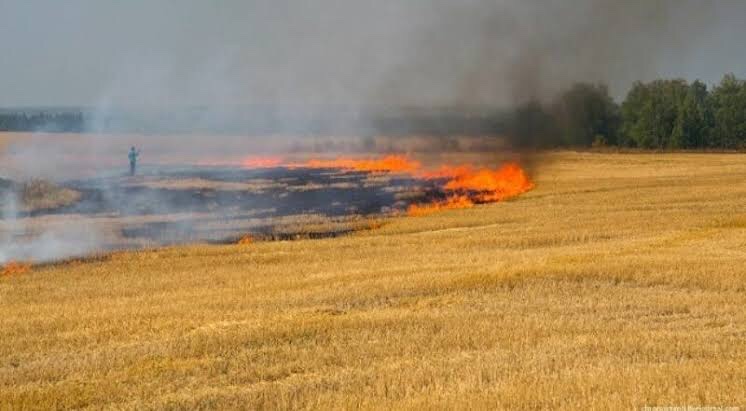
But, as serious a matter as this international pedophilia scandal is . . . and as fervently as I want to see every guilty party held to account . . . an even more immediate situation continues unabated, even accelerated, as Vladimir Putin relentlessly increases his devastating attacks on the civilian population and infrastructure of Ukraine. While claiming, with a straight face, that he only targets military and military-related installations, the evidence clearly says otherwise:
Kyiv, Ukraine – May 24, 2026
And all of Trump’s red herrings continue to draw attention, not only from the Epstein Files, but also from the ongoing conflagration in Ukraine.
By all accounts, Russia is gradually losing its war of attrition against Ukraine. But it’s not over yet, and Putin continues his punishing attacks, taking the lives of more and more innocent people, destroying historic landmarks and civilian property, and illegally occupying territory that does not, never did, and never should belong to him.
Now, after more than four years of indescribable horror, the allies that have so faithfully supported Kyiv in its defense against Putin’s murderous regime are growing weary — not because they have lost interest, but because there is simply too much else to deal with in the daily insanity that Donald Trump has brought down upon the earth.
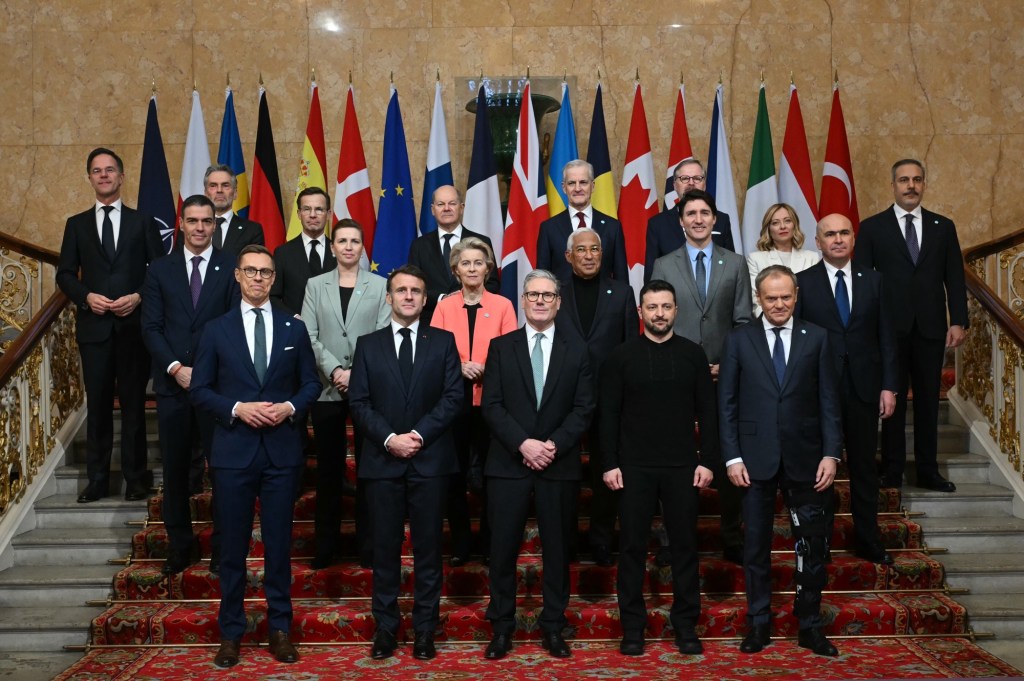
Coalition of the Willing
It is truly almost too much to bear. But we cannot give up the fight against tyranny, whichever side of the world it comes from. And we cannot give up on Ukraine, both for its own sake and for the future of the rest of Europe.
The world’s democratic forces are big enough and strong enough to take on Jeffrey Epstein’s co-conspirators and Vladimir Putin at the same time. We must not let Trump’s endless school of red herrings — or, as they say in Russia, “distracting maneuvers” — be the cause of Ukraine’s downfall.
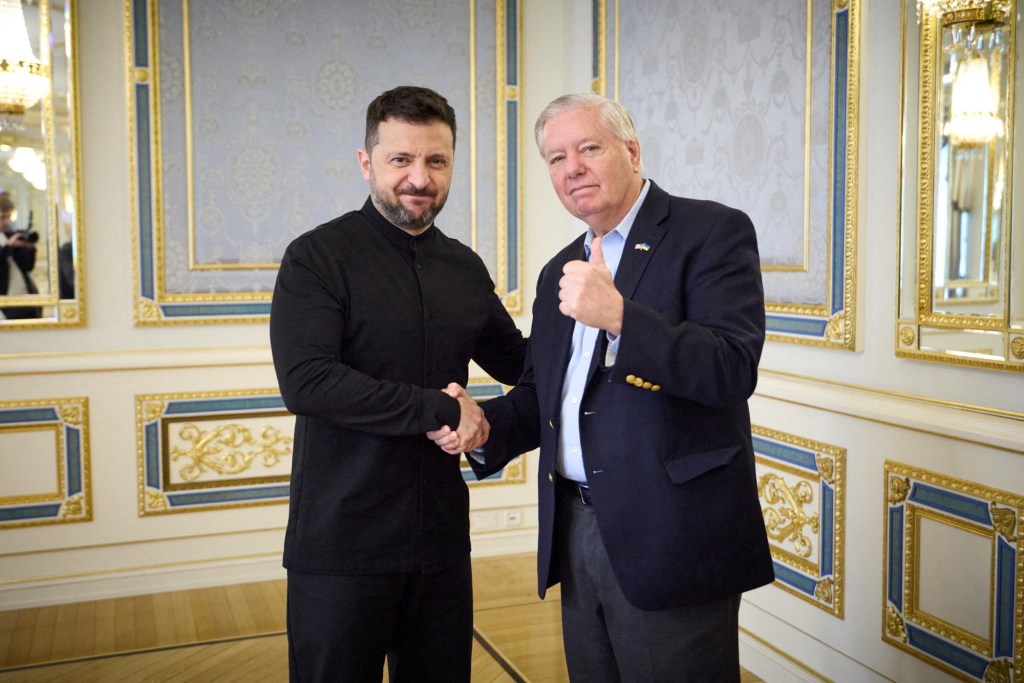
The result of four years of war: President Volodymyr Zelensky
You’re probably getting tired of seeing Shakespeare’s picture in my daily quotes. But there’s a reason I cite him so often: because he can always be counted on to offer just the right words to express whatever I may be thinking or feeling at any given moment. Here is my find for today, which I will explain below:
“Words are easy, like the wind; faithful friends are hard to find.”
– Shakespeare, “The Passionate Pilgrim”
William Shakespeare (1564 – 1616)
Well, words may have been easy for old Will, but not so for most of the rest of us. Still, I’ll give it my best shot.
I had a dear, dear friend named Marilyn, who sadly passed away several years ago. She was the kindest, wisest, gentlest, yet strongest woman I have ever known, and I miss her terribly. But she lives on in her two beautiful daughters, who are blessed with the same wonderful qualities as their beloved mother.
Yesterday I needed a sounding board for a problem I’m trying to solve, and I knew they were just the right people to help. So I sent them a joint email — a rather lengthy one — and hoped to hear back in the next couple of days, as both are extremely busy with work and family.
But I didn’t have to wait. They happened to be together at the time, and called me during a brief respite in their frantic schedule (a graduation, a wedding, and two long-distance moves, all in the span of a couple of weeks!). First they apologized — actually apologized — for being unable to drop everything and run to my side. Which is exactly what their mother would also have done.
When I explained that I was only calling for information and advice, they came up with just the answers I needed, as I knew they would. And they said they would follow up with me soon — as I also know they will.
When we finished talking, I thought about how rare such friendships are — especially when they span generations. I consider myself the luckiest of people to have had a few such angels in my life. Some are gone now, but happily, not all. And I wanted to share this as a reminder that there is still so much good in the world, even in the midst of all the other stuff.
It’s what keeps us going, and we should never take it for granted. Hold on to the love.
Last week I wrote about the death by suicide of Russian human rights activist and dissident Nina Litvinova, whose suicide note spoke of some of the imprisoned dissidents she had tried to help. In part, she wrote:
“I tried to help them, but my strength is gone, and day and night I suffer from helplessness. I am ashamed, but I gave up. Please forgive me.”
She also named several of the individuals she had attempted to assist, and I added their names to my list of hostages. During the past week, I have researched their stories as promised, and present them to you here:
*. *. *
YURY DMITRIYEV: A prominent Russian historian, human rights activist, and former head of the Karelian branch of the human rights group Memorial, best known for uncovering hidden Soviet-era atrocities, now serving a 15-year sentence in a strict-regime penal colony on politically-motivated charges.
Yury Dmitriyev
*. *. *
OLEG ORLOV: Another well-known human rights activist, Chairman of the Board of Memorial and board member of its Historic-Educational Society, Orlov was the recipient of the prestigious Sakharov Prize in 2009. He was previously on my list of hostages: In February of 2024, he was sentenced to two years and six months in a penal colony for having “discredited” the Russian army. He was released in the much-publicized prisoner exchange of August 1, 2024, and now lives in exile, unable to return to his native land; so he is back on the list as an “endangered exile.”
Oleg Orlov (Endangered Exile)
*. *. *
YEVGENIA BERKOVICH and SVETLANA PETRIICHUK: Arrested together in December of 2024, the two women were charged with “justifying terrorism” for having written and produced their award-winning play “Finist the Brave Falcon,” which tells the story of Russian women manipulated by online recruiters into marrying Islamist militants in Syria. Both were sentenced to six years in a penal colony, which was later reduced to five years and seven months. It is hardly coincidental that their arrest followed on the heels of Berkovich’s release of anti-war poetry criticizing the invasion of Ukraine.
Yevgenia Berkovich
Svetlana Petriichuk
*. *. *
KARINA TSURKAN: This case is different from the others, in that it involves charges of spying for Moldova — charges vehemently denied by Tsurkan, and found by her attorneys to have been based in large part on forged “evidence.” Now seven years into a 15-year sentence, Tsurkan was the head of the trading division of state-owned Inter RAO, Russia’s fourth-largest producer of power and its monopolistic exporter and importer of electricity. Her job involved overseeing electricity trades in parts of Eastern Europe, including Moldova. Because the trial was a closed proceeding, few details are available, but the Memorial Human Rights Center has classified Tsurkan as a political prisoner because of the indications of falsified charges.
Karina Tsurkan
*. *. *
And another week in prison has passed for the thousands trapped in Putin’s web of political persecution. Once again, here is the full list of those hostages known to me, which is still only a fraction of the total:
Prisoners of War:
The 20,000+ Kidnapped Ukrainian Children The People of Ukraine
Immigrant Detainees in Russia:
Migrants from the Central Asian nations of Kazakhstan, Kyrgyzstan, Tajikistan, Turkmenistan and Uzbekistan
Endangered Exiles:
Pavel “Pasha” Talankin Mikita Losik Yulia Navalnaya Oleg Orlov Countless Journalists and Other Dissidents
Political Prisoners:
In Afghanistan:
Mahmoud Habibi (Afghan-American) Paul Overby (American, missing since 2018)
Andrei Chapiuk Uladzimir Labkovich Andrzej Poczobut Marfa Rabkova Valiantsin Stafanovic Yuras Zyankovich
In Georgia:
Mzia Amaglobeli
In Russia:
The “Crimea 8”: Oleg Antipov Artyom Azatyan Georgy Azatyan Aleksandr Bylin Roman Solomko Artur Terchanyan Dmitry Tyazhelykh Vladimir Zloba
James Scott Rhys Anderson (British) Aleksandr Andreyev David Barnes (American) Yevgenia Berkovich Gordon Black (American) Hayden Davies (British) Yury Dmitriyev Anastasia Dyudyaeva Antonina Favorskaya Konstantin Gabov Robert Gilman (American) Stephen James Hubbard (American) Sergey Karelin Timur Kishukov Vadim Kobzev Darya Kozyreva Artyom Kriger Michael Travis Leake (American) Aleksei Liptser Grigory Melkonyants Nika Novak Svetlana Petriichuk Leonid Pshenychnov (in Russian-occupied Crimea) Nadezhda Rossinskaya (a.k.a. Nadin Geisler) Lev Schlossberg Sofiane Sehili (French) Igor Sergunin Dmitry Shatresov Robert Shonov Grigory Skvortsov Eugene Spector (American) Joseph Tater (American, disappeared) Karina Tsurkan Laurent Vinatier Robert Romanov Woodland (American)
I had never heard of it. But, based on my own recent experiences and those of my closest friends and relatives, I was beginning to believe it was real. So I did what I always do: I looked it up.
And there it was, on the website of the American Psychological Association (APA). There is, of course, some comfort in knowing I haven’t been imagining it; but on the other hand, my fellow sufferers and I are having a hell of a time trying to deal with it.
The APA Dictionary of Psychology describes Pre-TSD as:
“a condition characterized by prolonged, significant anxiety about a potential threatening or otherwise devastating event, such as a terrorist attack or wartime violence. The individual remains in a constant state of worry and heightened stress at their perceived helplessness to prevent the expected future trauma and often mentally experiences the dreaded event again and again. . . . The resulting symptoms (e.g., fear, anger, vulnerability, uncertainty, irritability, concentration difficulties, insomnia, appetite disturbances) are so intense as to negatively affect daily functioning. Also called pretraumatic stress syndrome.”
Happily, I can’t say that I, or anyone I know, is in such bad shape that we are hallucinating specific disastrous events. (We won’t discuss my weird nighttime dreams here.) But in a world dominated by the likes of Donald Trump, Vladimir Putin, Xi Jinping, Kim Jong Un, Benjamin Netanyahu, and a few others, is it any wonder that so many of us are feeling fearful, vulnerable, irritable, and generally batshit crazy?
I remember a time — not that many years ago — when I would awaken each morning anticipating what the day might bring: an interesting new legal case at work, lunch with friends, a chance encounter with an interesting new acquaintance, a travel opportunity, a relaxing evening at home with a good movie and a bowl of popcorn, and finally a good night’s sleep. Nothing spectacular; just simple pleasures that told me life was mostly good.
When there was still something to laugh about
But we now live in a digital age, constantly bombarded from all sides by up-to-the-minute news reports. And in today’s world, if it’s not bad, it’s not news. So our phones and laptops and tablets ding constantly with reports of Trump’s latest multi-billion-dollar scam; Ukraine’s casualty count from Russia’s overnight drone attack; Netanyahu’s most recent assault on Gaza or wherever; Trump’s newest tacky decimation of the Washington landscape and history; mass job layoffs; Xi’s friendly overtures to Putin; another war; the disenfranchisement and deportation of legal immigrants; the Supreme Court’s (or two-thirds of its members’) abdication of their duties; Congress’ lily-livered obeisance to Trump; the Justice Department’s amnesia concerning its proper mission; mandatory White Christian prayer meetings at the Pentagon; the rising cost of everything; Trump’s bruises, swollen “cankles,” drooping face, and midnight social media dumps; and so on, and on, and on.
And, lest we forget, there are still those three million mysteriously absent Epstein files.
So now, I awaken every day wondering what new disasters the world has in store for us. And I pull the blankets up to my chin, bury my head in my pillow, and try to go back to sleep for a couple of extra hours of blissful ignorance before facing it all again.
I may not be hallucinating (yet), but I’d say I definitely show early signs of Pre-TSD. And I’m pretty certain I’m not alone.
Okay, so he can’t tell the difference between a windmill and a wind turbine. But when you’re talking about someone who doesn’t know an excursion from an incursion, or reality from delusion, the correct name of a power source hardly seems significant.
The Difference Should Be Obvious
What does matter, though, is Donald Trump’s obsession with the cockamamie idea that “windmills” — i.e., wind turbines — are dangerous, disruptive, ugly, and unjustifiably expensive.
Of course, he also believes that you can cure COVID with the anti-malarial drug Hydroxychloroquine . . . but that’s a whole other can of worms.
The earliest windmills were designed by Persians (modern-day Iran and Afghanistan) between the 8th and 10th centuries; improved upon in Northwestern Europe in the 12th century; and made their way to America around 1854, when a machinist named Daniel Halladay patented the first commercially viable, self-governing windmill capable of adjusting to changing wind speeds and directions. For centuries, in a virtually pollution-free world, they were an incomparable boon to farmers, ranchers and others who depended upon the water they pumped for agricultural and domestic use.
As technology advanced in the 20th century, windmills began to generate electricity. But it wasn’t until the 1970s, when it became obvious that oil and gas prices would only continue to rise, that many countries began developing more efficient wind turbines. By 2012, there were over 45,000 wind turbines active throughout the world, with more being added each year.
But Donald Trump doesn’t like them. He and his billionaire friends are oil-and-gas devotees, heavily invested in non-renewable fossil fuels; and wind turbines are their natural enemy. But he can’t just say that, so he has come up with a list of objections that he tries to sell as facts. Let’s take them one at a time.
CLAIM:They’re unsightly and noisy.He says they ruin the beauty of the natural landscape and are “incredibly noisy,” referring to wind farms as looking like a “junkyard of steel.”
FACT: One of the most beautiful sights I’ve seen from the air was the offshore wind farm abutting the magnificent Oresund Bridge that connects Copenhagen, Denmark, and Malmo, Sweden, as my flight approached the Copenhagen Airport. To me, they resembled gigantic seabirds: graceful, still, wings fluttering gently as they rested on the water’s surface between flights. While beauty is indeed in the eye of the beholder, these hardly qualify to any reasonable person as “junkyards of steel.” Even their soft, “whooshing” sound is barely audible above the human and mechanical ambient noise of everyday life.
Oresund Bridge and Wind Turbines, Denmark-Sweden
And compared to a coal- or gas-fired power plant . . . Well, you decide which you’d rather have in your back yard.
Coal-Fired Power Plant
Gas-Fired Power Plant
*. *. *
CLAIM: Bird Fatalities. He asserts that wind turbines kill huge numbers of birds, and calls the areas underneath them “bird graveyards.”
FACT: Yes, birds do sometimes fly into them — just as they do into glass window panes and airplane engines. But estimated bird deaths caused by wind turbines in the U.S. total less than 0.01% of bird deaths from other man-made causes. Also, new technologies are addressing the issue and minimizing even that small number.
*. *. *
CLAIM: Economic Cost. He says wind energy is the “most expensive energy ever conceived,” and that the industry only survives because of massive government subsidies.
FACT: While wind turbines are expensive to construct, their maintenance requirements are minimal, and fuel is free. It’s air. The cost of their operation averages between $30 and $86 per megawatt hour (MWh), compared to $48 to $109 per MWh for new natural gas, and $71 to $173 for new coal. Again, Trump’s imagination runs amok.
*. *. *
CLAIM:Foreign Manufacturing. He has often alleged that most wind turbines are built in China, and that China itself barely uses any wind power.
FACT: Well, he’s half right on this one. Yes, China is the world leader in the manufacture of wind turbines. But, contrary to Trump’s allegations, they also operate more wind capacity and install more wind turbines annually in their own country than the rest of the world combined. Methinks I sense a bit of turbine envy in the Oval Office.
Onshore Wind Farm in China
*. *. *
CLAIM: Health and Environment. Among other bizarre claims, he says that the noise from wind turbines causes cancer, and that offshore wind farms are “driving the whales crazy.”
FACT: Another falsehood. While construction of the turbines will temporarily disturb the whales’ natural environment, there is no credible evidence to support claims that they are being harmed. And as for cancer . . . How? I mean, it’s just air. If the air itself is polluted, don’t blame the turbines; we humans are responsible for every bit of the crap that’s been floating around out there for decades.
*. *. *
It’s impossible to know where Trump gets his “facts” on any subject, other than from Fox “News” and his appointed “experts” (Bobby Kennedy, Jr. comes immediately to mind). But once he fixates on a subject, he never detaches from it.
Or perhaps this is just a campaign to justify his promotion of more fossil-fuel usage for the benefit of the big oil and gas industries. And let’s not forget all of those new AI data centers popping up like dandelions.
Either way, if he succeeds in decimating the wind turbine industry in the United States, not only will he have done irreparable harm to our environment; he will also have handed Xi Jinping another big, beautiful addition to China’s growing list of superior technological achievements.
I suppose congratulations are in order . . . but not to Donald Trump.
Maybe . . . just maybe . . . we’re a little more civilized than we were 170 years ago. Or, more likely, we’re just more underhanded in the way we take our revenge on our perceived enemies.
The Brooks-Sumner Brouhaha – May 22, 1856
Case in point: the caning of a Northern U.S.. Senator by a Southern U.S. Congressman over the most controversial issue of the day: slavery.
In 1856, slavery had already been banned in the Northern United States for more than 30 years. But the passage of the Kansas-Nebraska Act of 1854 had granted the new territories of Kansas and Nebraska the right to decide the slavery issue by vote, nullifying the Missouri Compromise of 1820.
Northerners were incensed; violence broke out in the Kansas Territory; and by 1856, the U.S. Congress had become embroiled in the issue. On May 19th, Massachusetts abolitionist Senator Charles Sumner began a two-day filibuster, raging against the “crime against Kansas,” and naming three of his colleagues, including pro-slavery South Carolina Senator Andrew P. Butler. [“This Day In History,” History.com, May 22, 2026.]
On May 22nd, Butler, then elderly and ill, was absent from the proceedings. But his cousin, Representative Preston Brooks of South Carolina — a man with a history of violence — decided it was his duty to defend his relative’s honor. Walking with a cane as the result of injuries incurred in an 1840 duel over a different political issue, Brooks entered the Senate chamber and attacked Sumner with his cane, trapping him behind his desk which was bolted to the floor. It was only due to the intervention of other legislators that Sumner escaped with his life. [Id.]
But he suffered severe head injuries from the bludgeoning by the heavy, metal-topped cane, and was forced to vacate his Senate seat for three years in order to recuperate. His seat remained empty during his absence, his Massachusetts colleagues refusing to replace him and choosing instead to leave his desk empty as a public reminder of the horrific event.
As for Brooks, while he was reviled in the North, he was celebrated as a hero in the South. The U.S. House of Representatives was unable to garner the two-thirds vote required for his expulsion; but he resigned in protest, and his South Carolina constituents immediately re-elected him. [Google AI Overview, May 22, 2026.]
*. *. *
Even then, it seems, there was the occasional bad egg in government, with the ability to escape accountability for his unconscionable actions. But Brooks was one of a very small minority; and he was acting out his personal anger and frustration — not following the commands of an authoritarian president.
So are we indeed more civilized today? Or have we simply learned to use quieter, more devious methods of dealing with our adversaries, rather than resorting to physical battery?
Aleksei Navalny gave his life for his country. An opponent of Vladimir Putin’s corrupt regime, he was poisoned, miraculously survived, then was arrested and imprisoned in a Siberian penal colony, where he died under suspicious circumstances on February 16, 2024.
Aleksei Navalny (1976 – 2024)
His book, “Patriot: A Memoir,” published posthumously in October of 2024, is a treasure trove of wisdom, insight, and advice from a man of courage and conviction. Among my favorite quotes, because of its stunning relevance to my own country today, is this one:
“Having spent my first year in prison, I want to tell everyone exactly the same thing I shouted to those who gathered outside the court when the guards were taking me off to the police truck. Don’t be afraid of anything. This is our country and it’s the only one we have. The only thing we should fear is that we will surrender our homeland to be plundered by a gang of liars, thieves, and hypocrites. That we will surrender without a fight, voluntarily, our own future and the future of our children.”
– Aleksei Navalny, “Patriot: A Memoir”
Our two countries, once politically diametrically opposed, are now — beyond all comprehension — fighting the same sort of evil internal forces. Navalny and his contemporaries, and their parents and grandparents, lived their lives under autocratic rule. They are experienced in fighting the pervasive corruption, the lies, and the cruelty of such regimes.
But we Americans are new at this. We need to listen to them, and to learn from them, while there is still time.
January 6, 2021, is a date that will forever live in infamy . . . and in the memories of those members of Congress who were present in the U.S. Capitol when Donald Trump’s fanatic right-wing followers attacked, beating police officers, breaking down doors, and screaming to kill then Vice President Mike Pence and House Speaker Nancy Pelosi.
Trump’s “Peaceful Demonstration” – January 6, 2021
Members of Congress barricaded themselves in locked rooms, hiding as best they could from the uncontrollable, violent mob until police were finally able to quell the riot.
Trying to Survive
Trump — having just lost an election that he said (and still says) had been “stolen” from him — called that day a show of patriotism. What it was, was an insurrection, designed to nullify the election and overthrow the democratic government of the United States.
During the ensuing four years, he built a base of followers and managed to be elected for a second term in 2024. You already know the rest of the story: With a loyal Republican majority in both the Senate and the House, sycophants installed in every Cabinet post, and a Supreme Court with a majority of six ultra-conservative justices more interested in serving their lord and master than upholding their oaths of office, he has run rough-shod over our laws, our Constitution, and international law since re-entering the White House on January 20, 2025.
But when he recently sued his own Internal Revenue Service for $10 billion of taxpayer money for releasing information that should have been made public long ago, and then “settled” for $1.8 billion as it became apparent that the case would be thrown out of court, he may have gone one giant step too far. Because the $1.8 billion was earmarked as an “anti-weaponization” slush fund to be used for the benefit of people he deems to have been wronged by the previous administration — likely including those same felons who attacked the Capitol five years ago, were convicted or pled guilty, and have since been pardoned by . . .
Well, you know whom.
For some reason Trump will never understand, the members of Congress who were there that day in 2021, or who have every reason to fear a possible repeat of that incident, found his illegal attempt to reward his criminal followers . . . shall we say . . . somewhat distasteful.
His “settlement” had been included in a broader bill that would provide funding for U.S. Immigration and Customs Enforcement (ICE) and border patrol. And he had demanded that that legislative package be presented to him for signature by June 1st.
But even some Republicans in the Senate said they were blindsided by the inclusion of the slush fund, and did not believe that the bill as written would garner the necessary votes for passage. So they all packed up and left for their ten-day Memorial Day vacations.
Somewhere, perhaps buried deep inside their subconscious minds, the memory of that January 6th seems to have resonated with some of the Republicans who usually blindly follow wherever Trump leads. Maybe they came to see this latest abomination for what it really is: another unconstitutional move by a fascist dictator who, in whatever delusional world he occupies, truly believes he is anointed by God.
*. *. *
On the House side, as it also became apparent that Democrats were about to push through a vote on a bipartisan resolution to limit Trump’s war powers in Iran, House Republican leaders abruptly cancelled the vote without explanation. In a joint statement, top House Democratic leaders said that “the Republican-controlled House continues to behave like a wholly-owned subsidiary of the Trump administration.” [Manu Raju, Camila DeChalus and Morgan Rimmer, CNN, May 21, 2026.]
And House Democratic Leader Hakeem Jeffries, Whip Katherine Clark, and Caucus Chair Pete Aguilar issued the following statement:
“Republicans cowardly pulled a scheduled vote on a War Powers Resolution — legislation that would have passed with bipartisan support and required the President to end the conflict in the Middle East.“ [Id.]
Representative Gregory Meeks (D.-NY) added this:
“Here we are on the eve of Memorial Day, with prices for gasoline going up, prices for food going up. We had a vote because of this president’s war of choice that was going to pass, we had the votes without question, and they [Republicans loyal to Trump] knew it, and as a result they’re playing a political game, they’re cheating and have delayed the vote until we get back.” [Id.]
Congressman Gregory Meeks
*. *. *
So, the good news seems to be that more and more Republican legislators are beginning to see the light, either because they have actually grown consciences, or simply because they realize that tying their professional futures to Donald Trump’s wagon may turn out to have been a huge mistake. But, whether theirs has been a moral choice or a pragmatic one, those of us who love our country can begin to hope the tide is turning in favor of the principles of the Founding Fathers.
The not-so-good news is that change won’t happen overnight. But if we keep up the good fight, it will happen.
In the meantime, have a safe and memorable holiday weekend.
In yet another bizarre turn of events, the Trump administration has instituted criminal proceedings against former Cuban President Raul Castro for conspiracy to kill U.S. nationals, destruction of aircraft, and murder . . . events that occurred 30 years ago.
Former Cuban President Raul Castro
While there is no statute of limitations in the United States on the crimes of murder or conspiracy to commit murder, I fail to see how Donald Trump envisions prosecuting Castro . . . unless he intends to kidnap the 94-year-old and whisk him off to the U.S. as he did Venezuelan President Nicolas Maduro.
Considering Trump’s recent threats against the Cuban government, we can’t rule out anything, no matter how extreme or improbable. But if that is what he has in mind, he should consider carefully what kind of precedent he may be setting, and how it might backfire.
Think about it. The indictment against Castro stems from the 1996 shoot-down of two civilian aircraft, killing four men, of whom three were U.S. citizens.
Now fast forward to 2025 and 2026, when we have seen approximately 50 Venezuelan boats blown up in international waters, annihilating an estimated 200 people on suspicion — but without proof — of intending to smuggle drugs into the United States . . . all on Donald Trump’s orders.
And now ask yourself this: If Trump can prosecute Castro for taking three American lives 30 years ago, what is to stop Venezuela from doing the same to Trump on behalf of those 200 lost souls?
Not to mention the governments of Iran, and Gaza . . .