And that, in six words, sums up politics in Russia when you have the cojones to even think about running against Vladimir Putin.
Boris Nadezhdin: “So what else is new?”
Boris Nadezhdin tried. He knew the odds were stacked against him. He knew he didn’t have a snowball’s chance in hell of winning. But he did better than anyone anticipated, and in the end he made a significant statement: Not everyone in Russia is pro-Putin or in favor of his “special military operation” in Ukraine.
But of the 105,000 signatures Nadezhdin submitted in support of his candidacy (100,000 are required), the Election Commission — surprise! surprise! — found “flaws” in more than 9,000 of them. A 5% error rate is permitted; they clearly needed to find more than that, and they did. Nadezhdin’s team says those were minor typos that occurred when the handwritten signatures were typed into the computers. Nice try, but “no” means “no,” where the Russian authorities are concerned.
Boris hasn’t given up yet. He says he’ll appeal to the Supreme Court, and that he’ll continue to campaign against Putin: “Sooner or later I will be president of the Russian Federation. I wish it would be sooner.” [AFP, Feb. 8, 2024.]
So do I. But until that day — if it ever comes — take care of yourself, Boris.
I called this one. And I really can’t brag about it, because it was pretty much of a no-brainer. Boris Nadezhdin has now been warned by the Election Commission that they have found “flawed” signatures on his petition for approval as a candidate for the presidency of the Russian Federation in next month’s election.
Well, color me surprised . . . NOT!
Boris Nadezhdin, Candidate . . . Maybe
On February 1st, I expressed my concern for this courageous man who has already managed to develop a substantial following, and gathered more than twice the number of signatures required to support his petition for inclusion on the ballot. I also wondered whether the Election Commission would still find a way to block his inclusion. And that may just be what is happening now. They have two more days in which to announce their final decision.
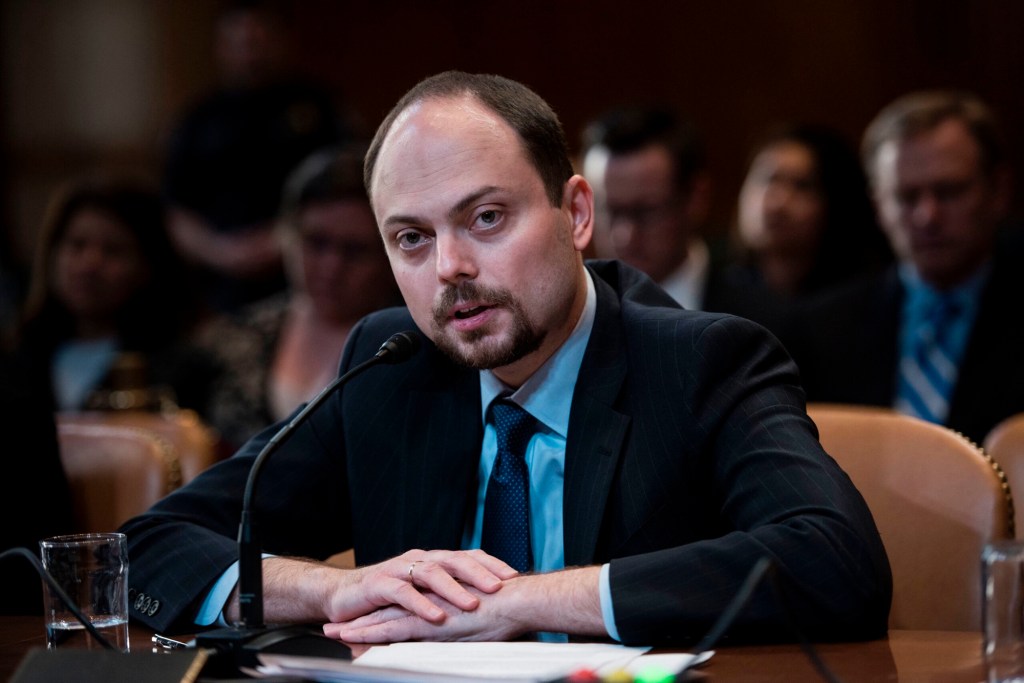
Whether he succeeds or fails, the next — and greatest — concern is for his future safety. Will he end up, like Alexei Navalny and Vladimir Kara-Murza, charged with and convicted of the heinous “crime” of speaking out against the war in Ukraine, and consigned for the next 25 or 30 years to some barren Siberian penal colony inside the Arctic Circle? Or will he follow Yevgeny Prigozhin into that growing collection of unfortunate souls who have met with suspicious “accidents” or premature “heart attacks”? Will the public clamor in his favor be enough to save him from the government’s . . . oh, wait. We’re talking about Vladimir Putin’s government, not anything even vaguely resembling a democracy. Scratch that last half-question.
In a society where the laws are changed daily at the whim of one individual, and order is forcefully maintained by jack-booted militias, public opinion becomes irrelevant and life hangs by a thread. As always when dealing with Putin’s Russia, we can only wait and see what happens in Mr. Nadezhdin’s case, and hope that his worst punishment turns out to be the agony of defeat at the polls.
I’m writing this on Monday, February 5th, having just perused the day’s headlines for inspiration while trying to keep it on the lighter side. And what I’ve come up with are, first, some guy in Patterson, New York spray-painting squirrels bright red in order to identify which ones have been coming onto his property and “tormenting” his dogs; second, a lady, now happily married, who found an old, pre-marriage selfie in which her then-unknown husband appears in the background; and finally, Miley Cyrus appearing at the Grammy Awards dressed in nothing but gold safety pins somehow fashioned together into a form-fitting, transparent garment . . . in other words, effectively naked.
Now, admittedly, Miley’s looking really good these days. But I’d still rather look at a painted squirrel than a twerking exhibitionist. Call me old-fashioned; it’s just my personal preference.
“Hey, dude, what are you doin’ with that spray paint?”
In fact, I can’t seem to work up much interest in any of those subjects. But I did sit up and take notice when a breaking news item flashed onto my screen, announcing that Britain’s King Charles III has been diagnosed with an unspecified form of cancer, discovered while he was in the hospital for what was supposed to have been a fairly routine treatment of an enlarged prostate — not an unusual issue for a 75-year-old man.
Now, the world has not yet been — and may never be — advised of the specifics of Charles’ condition. The Crown is, of course, traditionally reticent when it comes to sharing personal details. But this monarch has been far more open than his mother, Queen Elizabeth II, stating that he wishes to help others by drawing attention to the dangers of not taking proper care of one’s health. Good for him. And all the best in his fight against this disease that, while now far more treatable and curable than just a few years ago, is still frightening to contemplate.
King Charles III
And it made me think of another current issue that scares the crap out of me: the upcoming U.S. presidential election, in which the most likely nominees appear to be the incumbent Joe Biden, 81 (with another birthday coming up in November), and Donald Trump, soon to be 78 (in June). Barring any unforeseen calamity between now and the November election, we’ll probably be making a choice between a tired-looking octogenarian and a total sociopath just three years younger. And by the time the next four-year term ends, they will be 86 and 82, respectively.
Now, as a member of their generation, I can attest to the fact that we don’t necessarily lose all of our mental faculties as we get older. And everyone ages differently. But in general, there are things I’ve observed, in comparing notes with friends and relatives around my age, that are pretty much guaranteed to happen to all of us around this time of our lives.
— Physically, you don’t have the energy or the stamina you had a few short years ago. You just don’t. Getting out of bed in the morning — or simply getting out of a chair — can sometimes seem like an enormous effort, and there are days you wonder if it’s really worth it.
— Things ache. Backs, shoulders, necks, arms, legs . . . any and every part of your body, sometimes one at a time, sometimes all at once. A roll-on analgesic becomes your best friend and constant companion.
— Your bladder makes its presence felt much more frequently, suddenly, and urgently. When in an unfamiliar location, the rest rooms are the first thing you look for . . . just in case.
— Your eyesight and hearing are suddenly somewhat diminished. The old bifocals become trifocals, and everyone seems to be mumbling.
— Your annual physical, which always brought in a verdict of “everything looks great,” now ends with, “except for that, you’re in good shape for your age.” Thanks a lot, Doc.
— The little shelf in the kitchen or the bathroom where you keep your prescription bottles is overflowing. Those things seem to multiply like rabbits.
— And mentally . . . well, you’re still compos mentis, as far as you (or anyone else) can tell. But what was the name of that person you were just introduced to? And how many times did you have to read that last sentence before you remembered what it said? Or what was the word for . . . oh, you know . . . that thing . . . ? You can remember every detail of what you and your date wore to the junior prom 60 years ago, but yesterday’s schedule . . . a complete blur. And quick recall . . . well, let’s just say you probably shouldn’t apply to be on Jeopardy. (It’s not the same without what’s-his-name anyway.)
*. *. *
I’m sure you get the picture. And you’re probably wondering whether I think King Charles should abdicate in favor of his son now. In fact, I do not. First, because he’s waited 70 long years to sit on that throne, and he deserves to enjoy it for a while. But also because there’s a huge difference between the demands of his role as King and the role of the President of the United States. The King of England (and all the other parts of the British Commonwealth), while incredibly busy, operates in a largely ceremonial role and as an overseer, while the job of running the country is primarily in the hands of the Prime Minister and Parliament. The King is actually required to stay out of politics. So if he has to cancel some of his public appearances for a while in order to look after his health, the country keeps running smoothly, with other members of the royal family jumping in to fill some of the gaps.
But the job of the U.S. President is that of King and Prime Minister combined, and it’s a job that demands 100 percent of both physical and mental faculties, 24/7. Queen Elizabeth II wore the crown for 70 years. Judging from the “before” and “after” photos of past presidents, even four years of that kind of pressure takes a huge toll on the occupants of the White House.
And yes, if the President is temporarily out of commission, the 25th Amendment kicks in and provides for continuity. And in the worst-case scenario, we have a constitutional order of . . . dammit, I’ve forgotten the word! . . . you know . . . oh right, succession! Next is the Vice President, then Speaker of the House . . . Omigod, no! Please — not him!
*. *. *
So, to get to the end of this diatribe, the point I’m trying to make is . . . uh . . . well, I hope you know, because I’ve lost my train of thought. Feels like time for a nap.
Years ago, I was astonished to learn of the huge market for something called “bat guano,” which is the proper name for bat poop. As I recall, China was particularly eager to obtain it for agricultural use at that time. Today it can be bought — in dried form — online, but back in the 1980s it was a big deal. And I have to wonder . . . were those the ancestors of the bats that are now being blamed for starting the whole Covid thing? Hmmm . . .
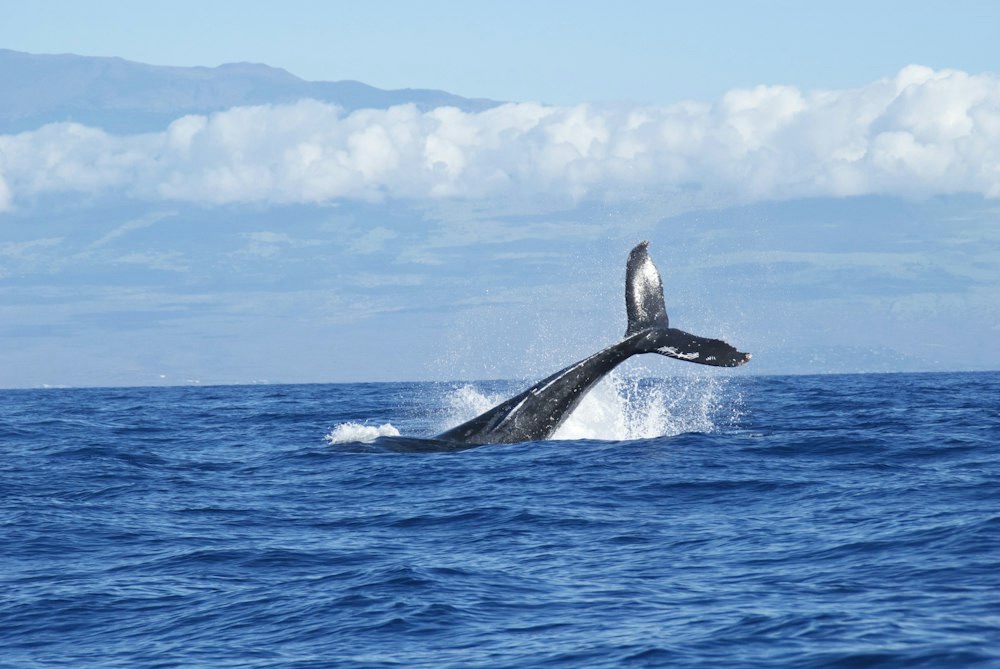
Well, recently I have read that everyone is now going batshit over something called “ambergris,” more commonly known as whale poop. And the first thing that came to my mind was, “how do you get a whale to poop in a pot?” Because otherwise, isn’t that stuff all going to be at the bottom of the ocean?
Actually, no, it isn’t — that would only be the excrement from living whales. And apparently, it doesn’t sink anyway; it floats. But there’s also what’s left in the intestines of dead sperm whales that can be harvested and sold for — of all things! — an ingredient in perfumes. Lovely, expensive, mostly French perfumes. Perfumes with lovely French names, like . . . Eau de Fumier. (Don’t bother looking it up — fumier is French for “dung.”)
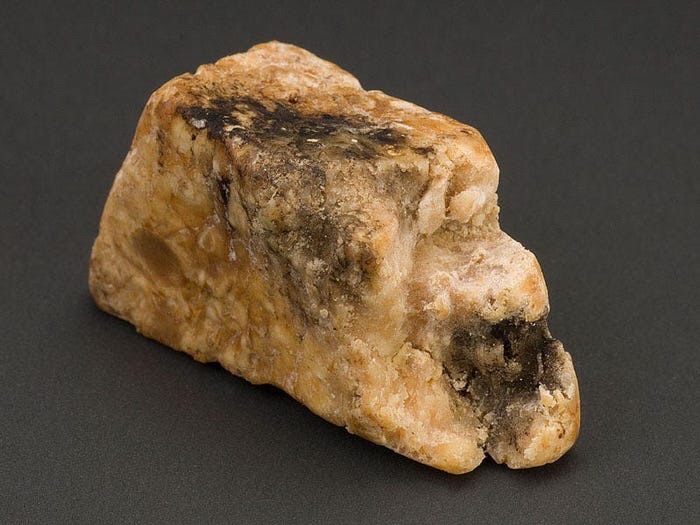
A Chunk of Ambergris: Too Pretty To Be Poop
*. *. *
So how, I began to wonder, does a substance transform from a sperm whale’s digested dinner into a rock-hard solid, and thence into an enchanting liquid to be dabbed on the pulse points of a pampered Parisian princess? Thanks to Nathan Rennolds of Business Insider, I was able to find an answer to that question . . . in rather excruciating detail.
Actually, its discovery dates back to the whaling industry of the 1800s, when “the mysterious substance, which is often snagged floating in the sea, was . . . found [to have been] produced by sperm whales.” We now know that “ A large part of the whales’ diet is made up of cephalopods like squid. While most of the indigestible parts are vomited out by the whales, some bits find their way into the intestines and stick together . . . This mass continues to grow and eventually becomes a lump of ambergris.” [Nathan Rennolds, Business Insider, July 8, 2023.] Sounds to me like a plain, old-fashioned bowel obstruction.
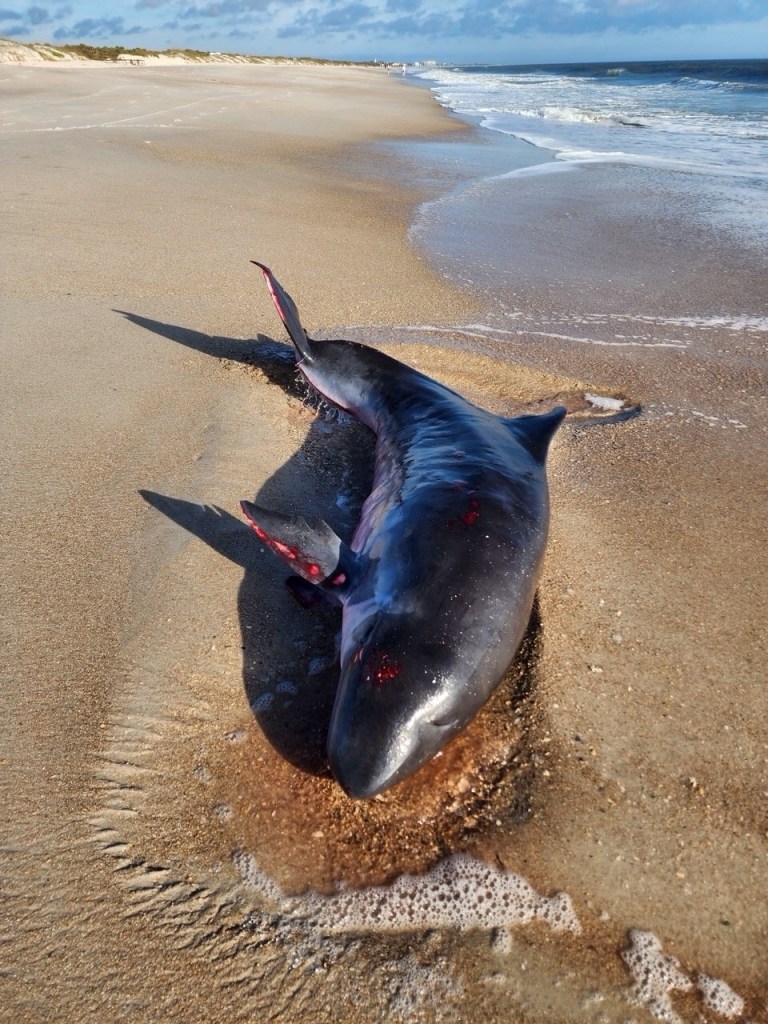
So much for the excruciating detail. But how did a 21-pound lump of it, found in the intestines of a dead sperm whale that washed up on a beach on the Spanish Island of La Palma, come to be worth more than half a million dollars? Well, the same way as do most valuable substances — diamonds, gold, oil, uranium: it’s their rarity, and the difficulty involved in extracting and refining them once they are found, plus the availability of a well-heeled niche market greedy for them.
The article goes on to describe the scent of the ambergris and the extraction from it of a substance called ambrein, which apparently is used to make perfume aromas last longer — all fairly technical and not terribly exciting, but crucial to the development of the final product.
And then I began thinking about the future of all of those magnificent, already endangered behemoths of the sea, and what might happen to them if poachers decided to cash in on their amazing payload. And again, Mr. Rennolds’ article came to my rescue:
“Richard Sabin, the curator of marine mammals at the Natural History Museum, said that ‘whales are now protected worldwide, but could still be at risk in the future.’ He added that ‘synthetic alternatives to ambergris do exist, and the use of these should be encouraged, [as it] would prevent whales being viewed in any way as a resource that humans can exploit.’” [Id.]
Well, they’d better hurry, because there have apparently been instances of this already. “In 2021, a group of fishermen in the Gulf of Aden sold a chunk of ambergris worth around $1.5 million to a buyer in the United Arab Emirates. The 35 fishermen purchased houses, cars, and boats from their profits, the BBC reported.” [Id.]
Easy Prey
*. *. *
Other than the long-prized cow manure your nose detects when driving through farm country, who knew that more exotic feces could be such prized material? It makes one wonder whether we should actually be throwing away all those little Zip-Loc baggies we bring back from our walks with Lassie, or the leftovers from the kitty litter box . . . not to mention the stuff on the bottom of the bird cage. That puppy/kitty/parakeet poop could be worth a pile (pun intended) one day . . . much like all those original Barbie dolls and GI Joes and first-edition comic books we wish we’d kept. But where would one store the baggies while waiting for them to increase in value? In the kitchen freezer? Not in my house!
But the next time I see a fund-raiser for a “Save the Whales” group, you can be sure I’ll be digging deep into my pockets to contribute. I’ll just use some of the money I might have spent on that French parfum.
This week we heard from Vladimir Kara-Murza’s wife Evgenia, who said on January 29th that her husband had left the “strict regime” penal colony where he had been held since last September, and that there was no word as to where he was being taken. In circumstances eerily mirroring the case of opposition leader Alexei Navalny, Mrs. Kara-Murza said that “her husband, who suffers from a nerve disorder after surviving two poison attacks, had been in solitary confinement during the four months he had spent in the harsh-regime IK-6 colony in Omsk.” He now suffers from polyneuropathy, a condition that causes the loss of sensation in his limbs unless controlled by medication and exercise. His wife, not unreasonably, fears for his life in prison. [Reuters, Jan. 29, 2024.]
Russian Penal Colony IK-3, “Polar Wolf”
One of the few outspoken dissidents who have opted to remain in Russia despite the harsh punishments being meted out by the increasingly repressive Putin regime, Kara-Murza has been sentenced to 25 years for “treason” and “spreading false information” about the Russian invasion of Ukraine. His only real crime? Speaking the truth. And now — as they did to Navalny — the authorities have removed Kara-Murza to . . . where? No one knows, because they are not required to inform the prisoner’s family or legal counsel. It took three weeks for Navalny to resurface, and when he did, he was in one of the harshest prison camps — IK-3, also referred to as “Polar Wolf” — some 40 miles inside the Arctic Circle.
During the period of Navalny’s “unavailability,” I posted articles titled “Where Is Alexei Navalny?” Do I now have to do the same for Vladimir Kara-Murza? I hope not; but if it becomes necessary, I assure you, I will. My voice, in and of itself, may not have any effect; but if enough voices are added to the mix, perhaps . . . just perhaps . . .
Because if Vladimir Kara-Murza and Alexei Navalny — and the other courageous men and women who dare to speak out against Putin’s blatantly totalitarian rule — are silenced, there will be no hope for Russia in the foreseeable future.
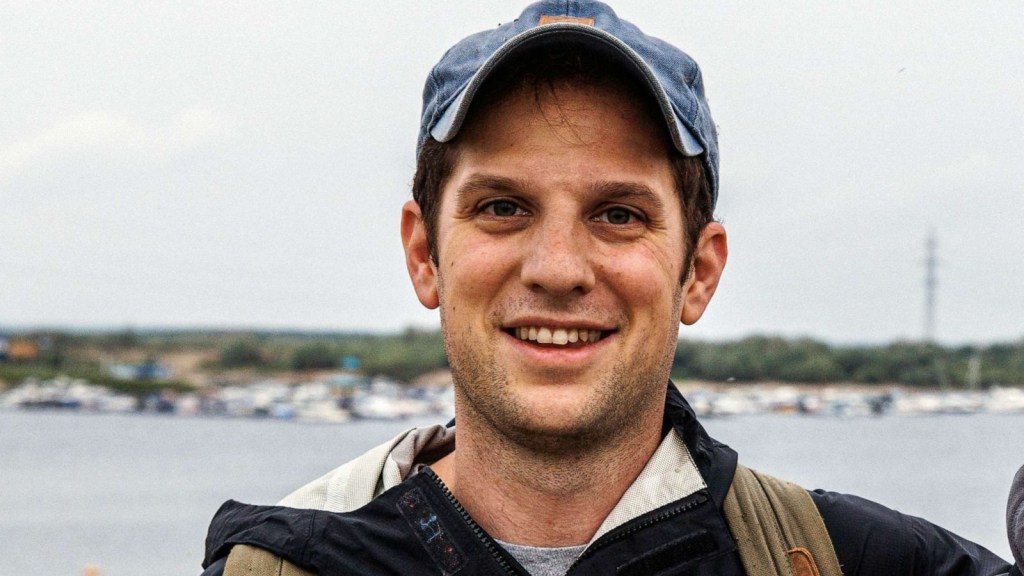
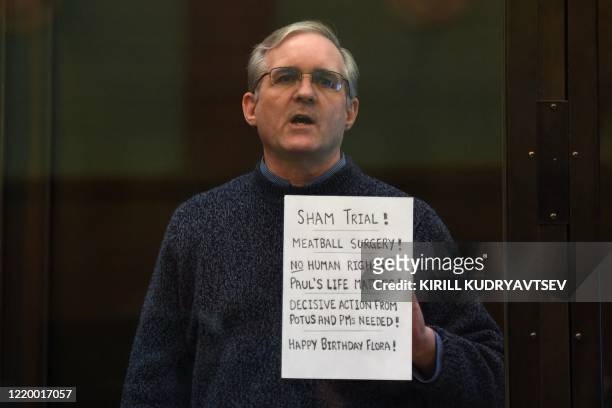
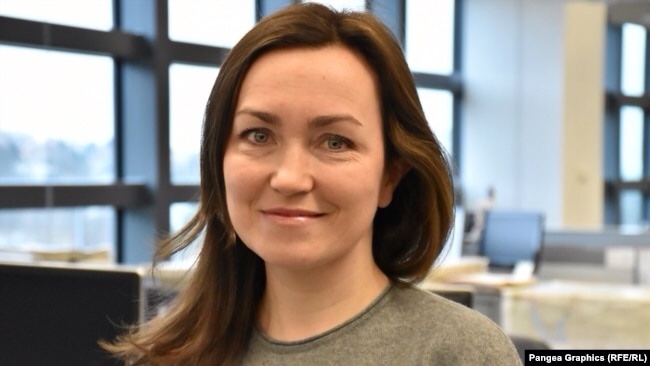
Always believe, and never forget this: Their power resides in their words . . . These HOSTAGES — this “band of brothers” in the truest sense — must be brought home.
Again, from CNN’s “The Good Stuff” column this Saturday, compliments of A.J. Willingham, I have been able to glean a few light-hearted items to brighten your Sunday:
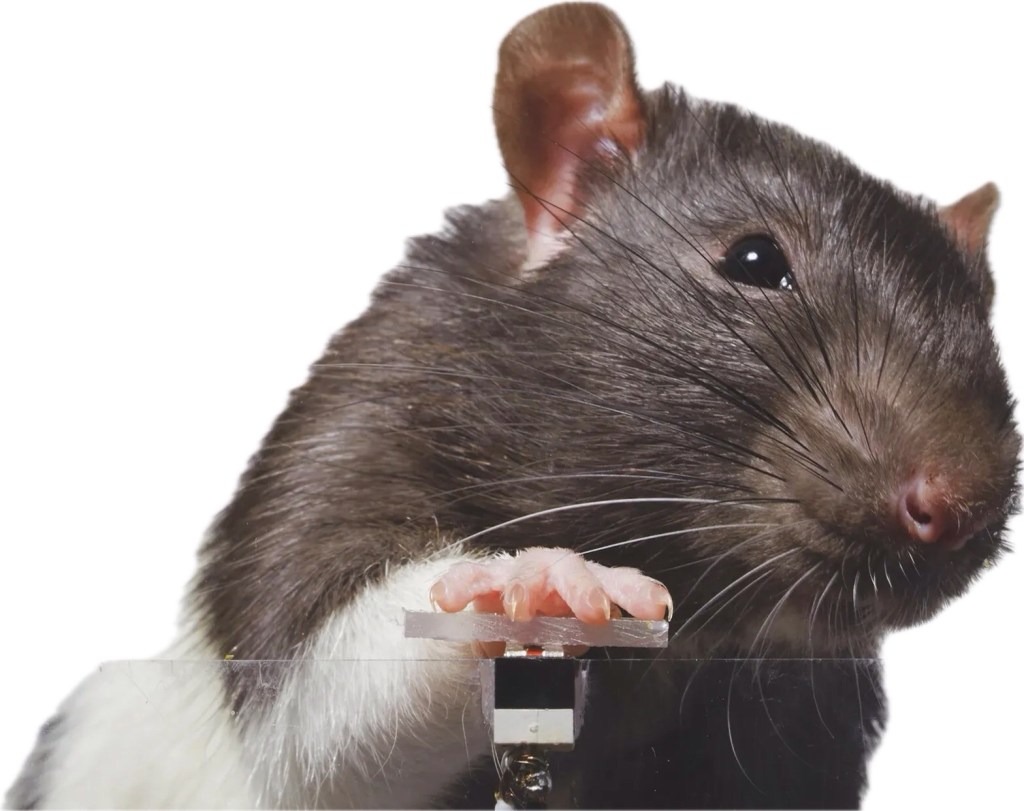
First up is a story about a rodent I’ve always considered to be ugly, repulsive, and probably diseased. That would be a rat. But I have to admit, this little guy is kind of cute, and definitely photogenic. Most selfies don’t turn out that well.
That’s right — this is a selfie. Apparently, a French artist named Agustin Lignier bought two rats as pets a couple of years ago and built them an elaborate cage. No doubt taking his cue from 19th Century physiologist Ivan Pavlov and his now-famous dogs, M. Lignier devised a mechanism that dispensed sugar whenever his rats pressed a button, which also happened to be connected to a camera aimed directly at the button-pusher. He said the project “is a commentary on the notions of pleasure, reward and the addictive behaviors induced by social media,” and that “the images offered a ‘playful’ way to explore topics like reduced attention spans and the impact of social media algorithms.” So what do we have here . . . junkie rats with ADHD? Fascinating!
After a brief time of modeling as guinea pigs for the curious artist, the two little rodents were packed up and sent off to M. Lignier’s mother’s house in the lovely Provence region of France, where they are expected to live out the remainder of their natural lives in comfort. All I can say to that is: Mme. Lignier is a better woman than I. There would be no rats, cute or otherwise, living in my chateau.
*. *. *
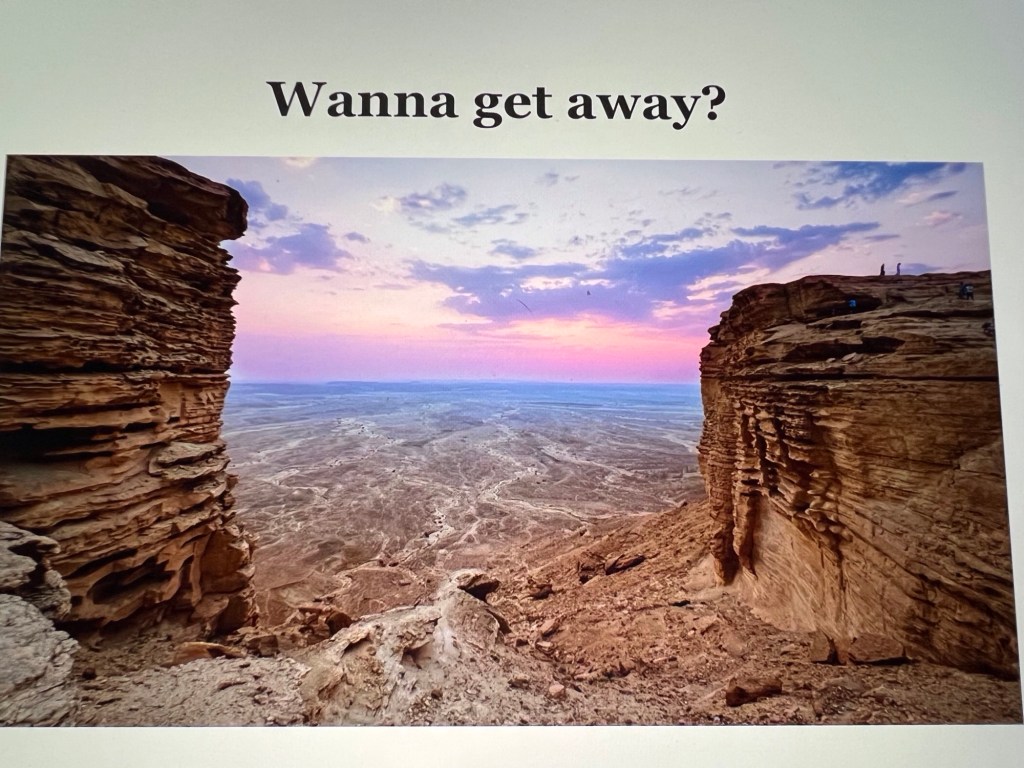
Next up is a lovely picture of a place known as the “Edge of the World,” and a suggestion that it’s a great place to visit. I’m something of a klutz, so I’m not at all sure about going anywhere near the “edge” of anything, much less the whole world. The picture is stunning, taken in the Tuwaiq Mountains of Saudi Arabia, with “pastel skies [that] stretch out clear to the horizon.” It’s apparently a popular weekend spot for hikers, and there is talk about adding easier trails for the less experienced adventurers.
Maybe . . . but not quite that far!
I’m going to have to take a pass on this one. But if anyone does try it, let me know how it went if . . . er, when . . . you get back.
*. *. *
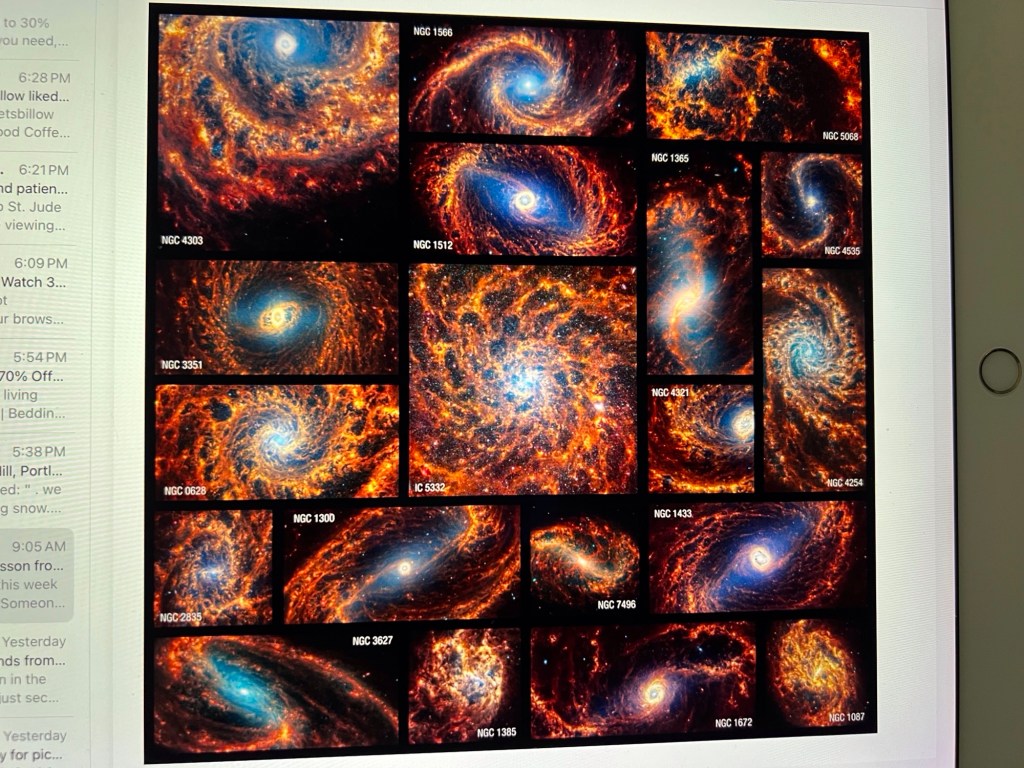
And finally, on a much, much larger scale, we have this series of pictures taken by the James Webb Space Telescope:
At first glance, they reminded me of a bunch of robins’ nests with very shiny eggs waiting to be hatched. (Remind me never to take a Rohrshach test, please.) What they really are, are “. . . portraits of 19 spiral galaxies and the millions of stars that call them home. The telescope’s ability to observe the universe in different wavelengths of infrared light, such as near-infrared and mid-infrared, showcases the stars, gas and dust within the intricate structure of each galaxy. Our own little solar system resides in one of the spiral arms of the Milky Way.” [CNN, The Good Stuff, Feb. 3, 2024.]
I’m not clear on the wavelengths of infrared light, but I am gobsmacked (my new favorite word) by the enormity of the universe. So, never one to simply shrug something off, I went searching for some statistics.
— The observable universe (and who can even imagine what lies beyond that?) contains as many as an estimated 2 trillion galaxies, and more stars and earth-like planets than all the grains of beach sand on planet Earth.
That’s a lot of sand!
— Our galaxy is known as the Milky Way. The latest data collected by NASA indicates that there are 3,916 solar systems within our galaxy.
— There are also 5,240 confirmed exoplanets, which are planets that exist outside our solar system.
I’ll let someone else do the exact math, and correct me if I’m off by a few zeros, but with those numbers — and assuming the other 2,000,000,000,000 (that’s 2 trillion) galaxies are about the same size as ours — I’m seeing something like 18-20 quadrillion (that’s 15 zeros) solar systems or star systems in the observable universe.
And we still want to believe there’s no one else out there? Really?
Everyone needs an escape plan, from getting yourself and your family out of the house in case of fire, to getting out of town if the nearby dam breaks or the “damn, I thought it was dormant!” volcano erupts. But what about getting off the Earth when you just can’t take it any longer? When all the ecological, political, and “my-weapons-are-better-than-your-weapons” crap just becomes too much and it’s time to move on . . . then what?
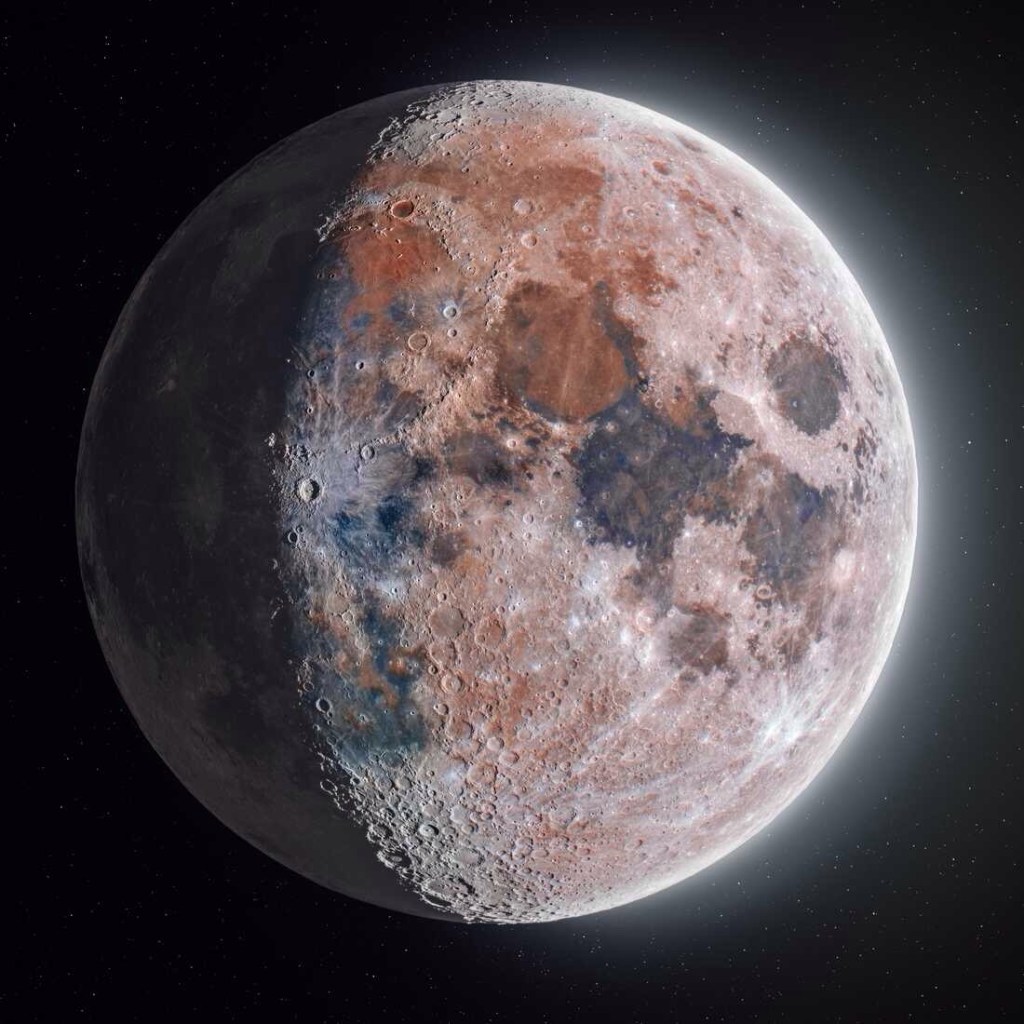
Well, the closest alternative would of course be the moon. A mere 238,900 miles from here, give or take a few miles depending on our relative positions at any given time of year, it has already been proven reachable in a matter of just a few days. But is it habitable?
Earth’s Moon
For example, what are those splotches? Are they land masses? Why are they different colors? Different terrains? Are some of them just heaps of noxious gases? Or continents as designated by the already existing clans of moon-people? And if there are moon-people, do they have their own governmental structures? What are their immigration policies? Job opportunities? And how about that dark side . . . how long does it stay dark? Is there electricity, or do we need to bring lots of lanterns and batteries?
Even more concerning is a recent report that the moon is actually shrinking. You see, in the course of the latest international space race, a NASA study has revealed the following:
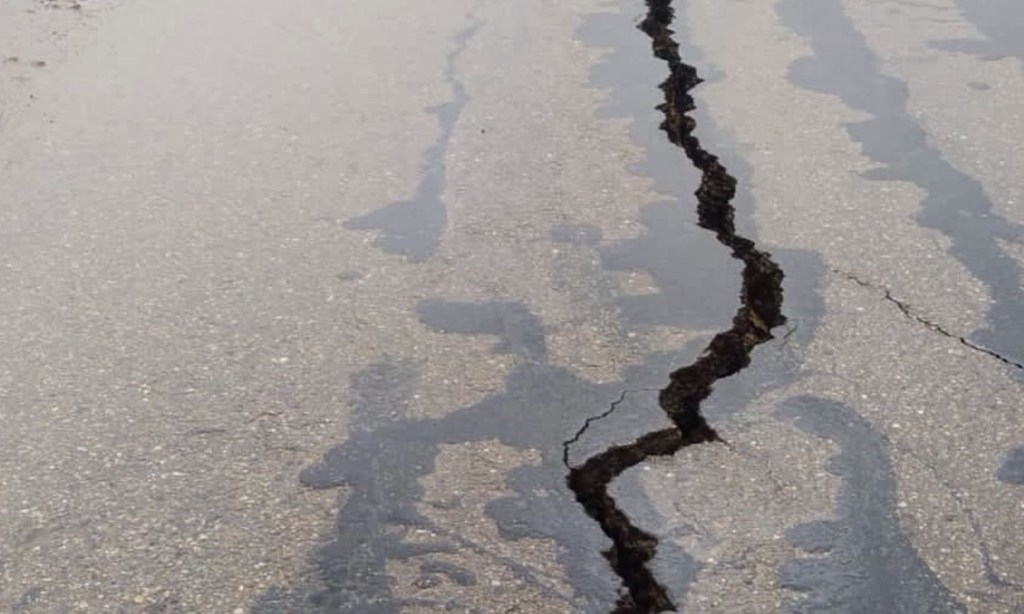
“As the moon’s core gradually cools and shrinks, its surface develops creases — like a grape shriveling into a raisin — that creates ‘moonquakes’ that can last for hours, as well as landslides.Much like the rest of the natural satellite’s surface, the area of the south pole that is the subject of so much interest is prone to these seismic phenomena, potentially posing a threat to future human settlers and equipment.
Before and After
“‘This is not to alarm anyone and certainly not to discourage exploration of that part of the south pole of the moon,’ said the study’s lead author, Thomas R. Watters, a senior scientist emeritus in the National Air and Space Museum’s Center for Earth and Planetary Studies, ‘but to raise the caution that the moon is not this benign place where nothing is happening.’” [Jacopo Prisco, CNN, Jan. 31, 2024.] No, of course we’re not alarmed. Not too much. But if it’s earthquakes I’m craving, I can just move to California, or Turkey.
Not having scared us sufficiently, Mr. Prisco goes on to say that despite its benign appearance, “the moon still has a hot interior, which makes it seismically active.” He quotes Thomas Watters: “There is an outer core that’s molten and is cooling off. As it cools, the moon shrinks, the interior volume changes and the crust has to adjust to that change — it’s a global contraction, to which tidal forces on the Earth also contribute. . . . We’ve actually detected landslides that have occurred during the time that the Lunar Reconnaissance Orbiter has been in orbit around the moon.” [Id.]
(So, not content with ravaging our planet, we’re working on the moon too? What the hell is wrong with us?!!)
There have also been moonquakes detected, the strongest of which was the equivalent of magnitude 5.0. “On Earth, that would be considered moderate, but the moon’s lower gravity would make it feel worse,” Mr. Watters said. [Id.]
The Opening To the Center of the Moon?
The article goes on to present a good deal of technical jargon that, quite frankly, I did not finish reading because it was scaring the crap out of me. Yes, we have earthquakes here on Earth; but at least we have emergency rescue services, which I don’t think have yet been established on our lunar satellite.
So, not only have I scratched the moon off my list of possible new residences; I’m not even sure I will ever again be able to gaze at it from here on Earth as that beautiful, romantic orb in the star-studded sky.
*. *. *
But assuming I’m still considering relocating, where else is there to search? Well, according to that guy I love to pick on (no, not Donald Trump) — Elon Musk — Mars may be a good bet. But, rather than 238,900 miles away, it’s a commute of anywhere from 140,000,000 to 250,000,000 miles (the longer distance being when Mars and Earth are on opposite sides of the Sun; and no, I don’t understand that either). And the trip is about seven months to arrive at someplace called the Jezero Crater, which is apparently a choice area for development . . . if you don’t mind waiting a while for your house, or igloo, or yurt to be ready, depending on what kind of climate we’ll actually find there. I don’t know about you, but I don’t have enough information about the “red planet” to risk putting down a deposit just yet. And it’s simply too far away to be able to come home for Christmas.
Surface of Mars?
Oh, did I mention that I recently came across the title of an article — “How Living On Mars Would Warp the Human Body”? [Salon.com.] No, I did not read it; my dreams are already nightmarish enough, thank you. Let’s just go on.
*. *. *
Writing has always been a catharsis for me, a form of psychotherapy that costs me absolutely nothing. But sometimes I also find answers during the process . . . answers to questions I didn’t even realize I had been asking myself. And that’s what just happened here. I’ve come to realize that our problems here on Earth — in whatever country you call home — may not be so unmanageable after all. At least they’re the problems we know. Whereas the unknown — unless you’re Elon Musk and you thrive on that kind of mystery — can be pretty terrifying.
Bottom line: I’m staying put, thank you. Maybe I’ll try to make my present environment, here in the good old U.S. of A., just a little bit better, and leave the exploration of other worlds to someone younger, stronger, braver . . . and, to my way of thinking, a whole lot crazier.
Oh, wait . . . that movie has already been done, and I loved it. But we do keep repeating the whole groundhog thing, just not every day, but once a year. Every year. Almost exactly six weeks before the official first day of spring. Anyone else notice the coincidence?
Member of Punxsutawney Phil’s extended family: adorable … but is he clairvoyant?
But accuracy aside, it’s a charming tradition, and the good folks of Punxsutawney, Pennsylvania seem to get a kick out of it. There may not be much else to do in Punxsutawney in February, so I wouldn’t dream of ruining this for them. But I was curious about Phil’s history, so I did a little reading, and here’s what I found:
The tradition is an offshoot of Europe’s Candlemas Day, and was brought to the U.S. by German settlers in Pennsylvania in the 1700s.
Phil — whose full name is “Punxsutawney Phil, Seer of Seers, Sage of Sages, Prognosticator of Prognosticators, and Weather Prophet Extraordinary” — first achieved recognition on February 2, 1886, when the first official Groundhog Day was proclaimed by the local Punxsutawney Spirit newspaper.
He once (in 1986) traveled to Washington, DC to meet with then President Reagan. Wow! I spent most of my life in Washington and never got to meet a president. That’s impressive. He has also (in 1995) appeared on the Oprah Winfrey show. I’ve never been invited to do that, either. Now I’m getting annoyed. What’s a groundhog got that I don’t (besides fur)?
Phil (and his guardian) on “Oprah”
Now, this next one really ticks me off. Since 2010, the well-meaning but sometimes over-zealous folks at PETA (People for the Ethical Treatment of Animals) have apparently been calling for Phil’s retirement. That’s not the problem — he is, after all, at least 138 years old, counting from the first official Groundhog Day in 1886. What’s infuriating is that the PETA people want to replace him with an “animatronic groundhog.”
What the hell is that??!!! A wind-up Punxsutawney Phil? Or perhaps a more advanced, remote-controlled version? Artificial intelligence?
I DON’T F**KING THINK SO!!!!
Who’s with me on this? Okay, maybe Phil should retire; but even the Queen — who was almost as old as Phil — was granted the dignity of being replaced by another human. Surely there’s an adorable groundhog out there who could be trained to do Phil’s job. It’s not that hard: just wake up, be held in the air by a man in a tall silk hat, look around to see if the sun is shining, and go back to sleep. Hell, a chipmunk could do that! But a piece of tin coated in fake fur? Are they serious??!!! And it’s not as though he’s ever been mistreated or neglected. What is their problem?
PETA In Action
I have to end this now . . . I’ve become too emotionally invested in the whole story. In addition to which, I’m really tired of typing “Punxsutawney.” I even remember how to spell it now!
By the way, I am happy to report that Phil apparently predicts an early spring this year . . . possibly as early as March 19th. Imagine that.
They were all the stuff of science fiction at one time or another: electricity, “horseless carriages,” plastics, TV, the airplane, the telephone, frozen foods, the atom bomb, knee replacements, ball point pens, computers . . . all the manmade wonders of the 19th, 20th and 21st Centuries . . . all those things that once, if even dreamt of, were off-handedly dismissed as impossible. Yet, here they all are, now everyday items so seamlessly woven into our lives that we can’t imagine life ever having existed without them.
But there’s still some stuff that is so mind-boggling, so totally creepy that I don’t even want to think about it. Like AI — artificial intelligence. It seems as though a year ago it was just this vague concept, the way we once believed computers could never be taught to “think.” And now, suddenly, it’s become nearly impossible to distinguish a real photograph from an AI-created picture. And those baby dolls that look and feel and act so lifelike, you want to get them Social Security numbers. You can’t tell me that’s not creepy!
Your Baby: Available Now at Amazon, No Pregnancy Required
And of course, all the scientific uses I’ll never comprehend because I’m scientifically and technologically challenged. Those are the concepts that really bother me because I don’t understand how they work, but I can imagine how easily they might one day be coopted by some psycho wannabee Dr. Strangelove intent on taking over the world.
“Dr. Strangelove”
If you’re wondering what set me off on this little journey into the wild world of paranoia, it was a very brief article in CNN’s “5 things” column on Wednesday (January 31st), titled “Brain chips.” Now, being a lifelong snacker, my first thought was “Yuck . . . they’re making chips out of brains?!! What are they . . . some kind of health food?” Then I came to my senses and realized that it was yet another article about one of my favorite people to pick on: Elon Musk.
I had read a while ago that his Neuralink company was developing a chip to be implanted in the brains of people with certain specific disabilities that would enable them to regain control and use of one or more damaged limbs, basically by willing them to work. But despite its apparently noble intent, I had more or less dismissed it as . . . well . . . science fiction. It was just too eerily Frankensteinish.
“By God, Igor . . . I Think I’ve Done It!”
And then Wednesday’s article blew my skepticism right out of the water. It said that Neuralink, having first received the necessary approvals, had actually completed its first implant in a living person’s brain, and that the patient was recovering well. Naturally, that individual has not been identified, and it’s too soon to tell what the eventual results of the experimental operation will be. But by God! Elon has gone and done it again — he has delivered on what initially seemed an idle, crazy boast. Honor is due.
*. *. *
That night, I lay awake listening to the jumble of random thoughts coursing through my mind as frequently happens at 3:00 a.m., and my brain zoomed in on Mr. Musk’s Marvelous Manmade Miracle. “What,” I wondered, “was next in store for his little super-chip? And the next generation of super-duper chips?” Perhaps it would be possible to program a chip to act as a next-generation Alexa . . . not to manage your household, but to operate you personally — subliminally massaging a sore muscle, calming an overactive bladder, or banishing those pesky monthly cramps. Or my personal favorite — adjusting my metabolism so that I could eat whatever, whenever, and never gain an ounce. Reflux? Gone! Allergies? No more. Migraines? A distant memory. The possibilities are endless.
Yes, there’s a whole universe of wondrous imaginings out there, just waiting to be made reality. So get busy, Elon . . . we’re counting on you.
Most people who live in a repressive society where an unpopular opinion or a wrong word can land you in prison (or worse) have the good sense to shut up when they’re within earshot of strangers.
Then there are those who say that the silent ones aren’t smart . . . they’re cowards. This second group of people are known as dissenters, or challengers, or oppositionists.
Of course, the first group would label the second group as fools, or idiots, or cockeyed optimists.
Which brings us to the matter of Boris Nadezhdin, whose surname, ironically, is a form of the Russian word for “hope.”
Boris Nadezhdin: Truly “Hopeful”
Boris belongs to the second group. Whether time ultimately proves him to be a fool, an idiot, or whatever, one thing is for certain: he is an optimist. He has hope for the future of his country, and he is willing to take the risks involved in getting the ball rolling by declaring himself a candidate for the presidency of the Russian Federation in the election coming up in mid-March of this year.
Now, we all know that there is already a shoo-in candidate for that office, who has the advantage of being the incumbent. Add to that the fact that he already controls the military, the SVR and FSB (together, formerly known as the KGB), the GRU (military intelligence), the parliament, all the regional and local militia units, the various mercenary groups, the media, the Young Pioneers, the unions of trash collectors and street sweepers and teachers and artists, the senior citizen groups, and a whole bunch of “dead souls”* . . . well, then you see why the odds are stacked against Boris from the get-go. He’s running against none other than Vladimir Putin. But he has hope. And you’ve really got to respect that.
[* “Dead Souls”: A novel by Nikolai Gogol, first published in 1842, wherein land owners who were allowed to claim their serfs for tax purposes were often guilty of continuing to claim them — or their souls — after their deaths. Recommended reading.]
Boris doesn’t really believe he has a chance of winning, of course, but at least hopes that he might garner enough votes to make it clear that anything is possible. If not now, perhaps next time. And as of this writing, he appears already to have engineered a small miracle by attracting long lines of people anxious to add their signatures to the list, “not just in progressive cities like Moscow and St. Petersburg but also in Krasnodar in the south, Saratov and Voronezh in the southwest, and beyond the Ural Mountains in Yekaterinburg.” [Robert Coalson, RadioFreeEurope/RadioLiberty (RFE/RL), Jan. 30, 2034.] As of this writing, he has beaten the odds by gathering more than twice the 100,000 signatures needed to get his name on the ballot . . . provided, of course, that the authorities don’t disqualify a substantial number of those signatures on one pretext or another, which is a distinct possibility . . . or disqualify him on some other “technicality.”
His submission to the Central Election Commission was due yesterday, January 31st. The Commission now has ten days to “verify the signatures and decide whether to register his candidacy.” [Id.] It is even possible that he will be allowed to continue his campaign, simply as a display of Putin’s magnanimity (since he is already assured of the vast majority of votes in any event).
“Tsar For Life”
Political analyst and former Kremlin speechwriter Abbas Gallyamov disagrees with me on that point. As told to RFE/RL:
“If an anti-war candidate is registered, he will be against Putin and all the other candidates will . . . be irrelevant. People won’t be voting for Nadezhdin . . . but against Putin, because Putin represents the war. That is why I don’t think the Kremlin will register Nadezhdin. The risk is very great.” [Id.] He’s probably right.
*. *. *
But either way, I worry about Boris. The world has seen what happens to dissenters and protesters in today’s Russia: the scores of Alexei Navalnys and Vladimir Kara-Murzas, banished for decades to Siberian penal colonies on manufactured charges of corruption, terrorism, treason, or simply spreading “fake” news about the “special military operation” in Ukraine. The dozens of alleged “suicides,” “heart attacks,” and “falls” from windows sustained by those who have fallen (no pun intended) out of favor with the Kremlin. And, most dramatically, mercenary and former Putin friend Yevgeny Prigozhin and the nine others whose plane was simply blown out of the sky.
“So Many Ways To Die”
I admire Boris Nadezhdin’s courage and his worthy goals for his country. But I can’t help wondering whether he wouldn’t have been better off staying with the first group, the silent ones. From the standpoint of personal safety, obviously that would have been the logical choice. But in that case, could he have lived with his conscience? Only he can answer that.
As to the long-term effect his brave candidacy will have on Russia’s political future . . . that, of course, also remains to be seen. If I were a betting woman, I’m not sure where I’d put my money; but my hopes and best wishes are with Boris and those 200,000 gutsy citizens who signed his petition.