What a day! First, it has been reported that Hamas has agreed to release all of the remaining Israeli hostages in exchange for a cessation of hostilities on Israel’s part. Israeli Prime Minister Benjamin Netanyahu has indicated that he will agree to a temporary cease-fire of two weeks in order to consider the details of a permanent solution. This is the most promising news on that front to date.
And equally exciting is word that both Vladimir Putin and Volodymyr Zelensky appear to be willing to sit down at the negotiating table, each realizing that some concessions will be necessary on both sides in order to end the war in Ukraine. The talks are to be mediated by representatives of the governments of Belarus, North Korea, and Lichtenstein, and two ISIS-K suicide bombers from Tajikistan.
APRIL FOOL!!!
Okay, so . . . not funny?
I do apologize, but it was hard to come up with something that wouldn’t scare the crap out of you. And on a Monday to boot — and one that is starting off, for me, with a dental appointment. Yuck.
But maybe, in retrospect, it was just a little bit funny? Not even a teensy bit . . . ?
It’s Sunday again . . . and Easter Sunday, to boot. What better time to resurrect the names of some of the hostages — American, British, and Russian citizens — being wrongfully held in Russian prisons and penal colonies on charges ranging from treason, to acting as a foreign agent, to the made-up crime of “extremism.”
And sadly, there are updates — and not hopeful ones — on some of the prisoners already on my list, as well as new name to be added: new arrests, time added to existing sentences, and one American hostage who (I am ashamed to say) escaped my attention until recently.
Let me start with the updates. As I reported on March 27th, the following day would mark the one-year anniversary of the arrest of Evan Gershkovich on charges of spying, during which he has been held in Moscow’s notorious Lefortovo Prison . . . without benefit of trial. Two days before that grim anniversary, a hearing was held in a Moscow court, the result of which was an extension of Gershkovich’s pretrial detention to “at least June 30th.” No reason given; none required.
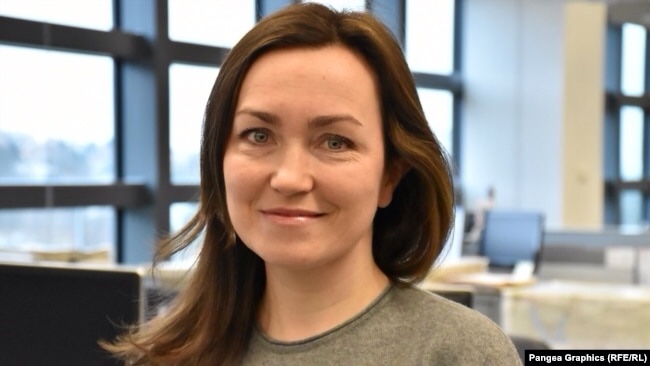
Alsu Kurmasheva. A dual Russian/American citizen residing in the U.S. with her husband and two daughters, Kurmasheva traveled to Russia last summer to visit her ailing mother and was arrested on charges of failing to properly declare her U.S. citizenship. But now the journalist and co-editor of a book that criticized the invasion of Ukraine has been further charged with “disseminating false information about Russia’s military” — a crime that can result in a prison sentence of up to 15 years.
There has been little publicity for Marc Hilliard Fogel, an American schoolteacher who was arrested in August of 2021 for trying to enter Russia with 17 grams (0.6 ounces) of medical marijuana. In June of 2022, he was sentenced to an incredible 14 years in prison for “drug trafficking.” Trafficking?!! Just over a half-ounce of medical weed?! That’s barely even possession. But he is serving out his sentence in Rybinsk, a penal colony some 311 km. (around 193 miles) north of Moscow.
You might be wondering how Britney Griner, the American basketball star who was arrested in Russia on similar charges in February 2022, was swapped so quickly — and for notorious Russian arms trader Viktor Bout, at that — while Marc Fogel continues to languish in prison. The answer is simple . . . and revolting. Under U.S. law, in order for negotiations for a release or trade to begin, the American prisoner must first be declared “wrongfully detained” by the U.S. Government. Griner was almost immediately so designated; Fogel, despite lobbying in Congress by his family and others, still has not been. The reason — or excuse — is unknown; and anything that comes to my mind would be just . . . well . . . so wrong.
Marc Hilliard Fogel, American: HOSTAGE (Rybinsk Penal Colony)
*. *. *
And finally (for today), my weekend was ruined by an article headed “Russia is rounding up more journalists a year after the arrest of Evan Gershkovich.” [Radina Gigova, Anna Chernova and Olesya Dmitracova, CNN, March 29, 2024.] It seems that — perhaps as some sort of grotesque commemoration of the anniversary of Gershkovich’s detention — six journalists, all representing independent media outlets in Russia, were arrested over the course of just a few hours this week.
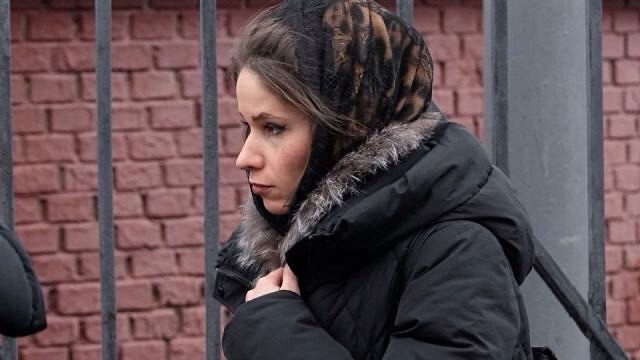
Perhaps the best-known of the six is Antonina Favorskaya, who works for SOTA Vision, an independent Russian media outlet. She has been accused of that new favorite crime, “extremist activities,” because of her work in covering the late dissident Alexei Navalny. According to independent outlet Mediazona, Favorskaya has covered all of Navalny’s court hearings over the last two years, traveled to the penal colonies where he was imprisoned, and filmed his last video before his death. [CNN, March 2, 2024.]
Antonina Favorskaya, Russian: HOSTAGE (In detention)
Two other journalists who had come to meet Favorskaya — Alexandra Astakhova and Anastasia Musayeva — were also detained and have been designated as “involved in the case as witnesses.” [Id.] In Russia, you are indeed judged by the company you keep.
I have no further information at this point on these most recent incidents or the status of the individuals; but you, my readers, know me well enough by now to know that I have only just begun to dig . . . and to voice my indignation, for what it is worth.
*. *. *
So I once more urge you not to forget or forsake those men and women being held HOSTAGE by the Russian government, who have done no more than speak out against the dictatorial, fascist regime of Vladimir Putin. While they have been forced into silence, we have not.
We must continue to use our voices for them. Please just click to share this message on any and every social media platform of your choice. It’s so easy to create that multitude of voices.
It began around 4:30 a.m., when I suddenly awoke from an odd dream and realized I felt like crap, physically and otherwise. And it didn’t go away, even after hanging out in my p.j.s all day, treating myself to a total day off. Just hunkered down: no writing, no reading, no communicating with the human race. Turned the TV on . . . and my mind off.
So, no blog post for today; maybe tomorrow. Wish me luck.
March 29, 2024, obviously. And since the day’s news offerings are pretty much a grim repeat or continuation of yesterday’s, I thought I’d give myself (and you) another break and have a little fun with history trivia. Are you with me? Let’s start with . . .
Holidays: Did you know that, in addition to being Good Friday, today is also “National Hot Cross Bun Day” and “National Lemon Chiffon Cake Day”? (Yes, please — I’ll have one of each.) And there is something called “National Mom and Pop Business Owners Day” (that’s just lovely); “Smoke and Mirrors Day” (for all you spies out there); “Texas Loves the Children Day” (glad to hear it, but didn’t know it was an issue); “World Marbles Day” (perhaps for those who have lost theirs?); and “Niagara Falls Runs Dry Day” (hopefully not a prediction, or did it happen and the world slept through it?). Also, March 24-30 has been designated “National Cleaning Week.” (Glad that one’s almost over. In fact, to be completely honest, I’ve pretty much ignored it all week anyway.)
Niagara Falls – No longer dry
Births and Deaths: There were a few, but it doesn’t seem to be a popular date for either. March 29th did see the births of one U.S. President — John Tyler (in 1790), and one American First Lady — Lou Hoover, wife of President Herbert Hoover (1874). We lost America’s first multi-millionaire — John Jacob Astor — on this date in 1848. And sadly, actress Patty Duke passed away at the tender age of 69 years in 2016.
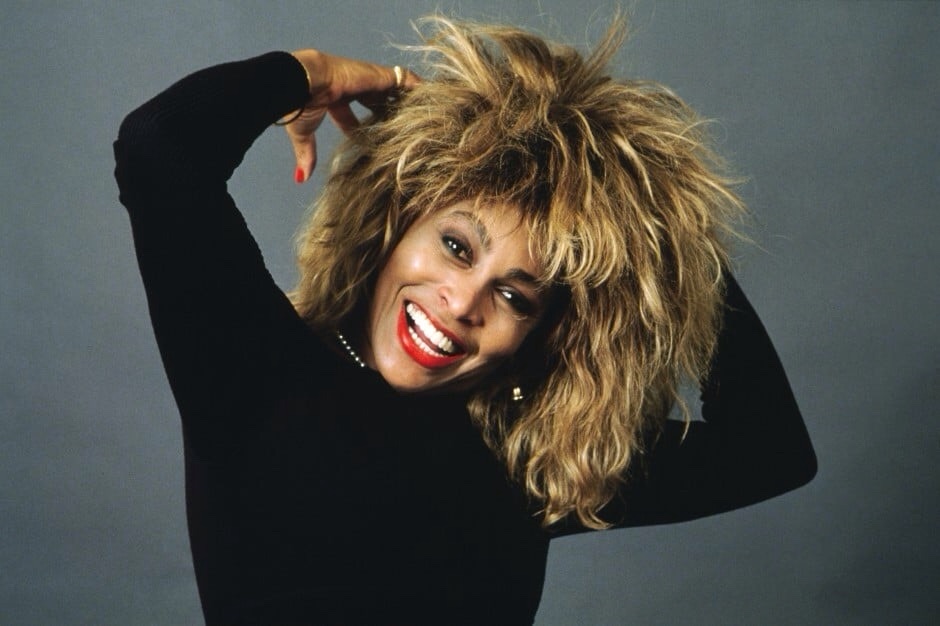
Divorce: This would not normally be considered good news, but in one instance, it was widely celebrated by the wife’s friends, family and fans everywhere . . . because on this date in 1978, the talented Tina Turner was finally officially divorced from her abusive husband Ike after sixteen years of misery. And a lot of women took note, and began to take control of their own lives.
A Much Happier Tina Turner
Word of the Day: From Wiktionary, of course. And at least today it’s a fairly useful noun: otorhinolaryngology. Now, I have always heard my ear, nose and throat doctor called an otolaryngologist, without the “rhino” part. But I rather like the longer form; think of how impressed your friends will be when you casually mention that you’ve made an appointment with your otorhinolaryngologist. You’d better just hope they don’t ask you to spell it.
History: There were a good many historic events on this date that didn’t involve giving birth or planning a funeral . . . some good, some not so good, and some dependent on your point of view. But let’s touch on just a few:
– 1848: Niagara Falls stopped flowing for 30 hours due to an ice jam. (Aha! That might explain the whole “Niagara Falls Runs Dry Day” thing.)
– 1852: It became illegal in Ohio for children under 18 and women to work more than ten hours a day. (That’s mighty big of them. And did that include the hours those women put in at home after work, cooking and cleaning and doing laundry?)
The Bad Old Days
– 1867: Congress approved the Lincoln Memorial. (Possibly the only thing the two Houses of Congress ever agreed on without months of arguing and name-calling.)
– 1886: The first batch of Coca-Cola was brewed in a backyard in Atlanta, Georgia, by Dr. John Pemberton. (And in case you didn’t know, the original recipe included the fluid extract of coca leaves. That’s cocaine, folks. Way to go, Dr. Pemberton.)
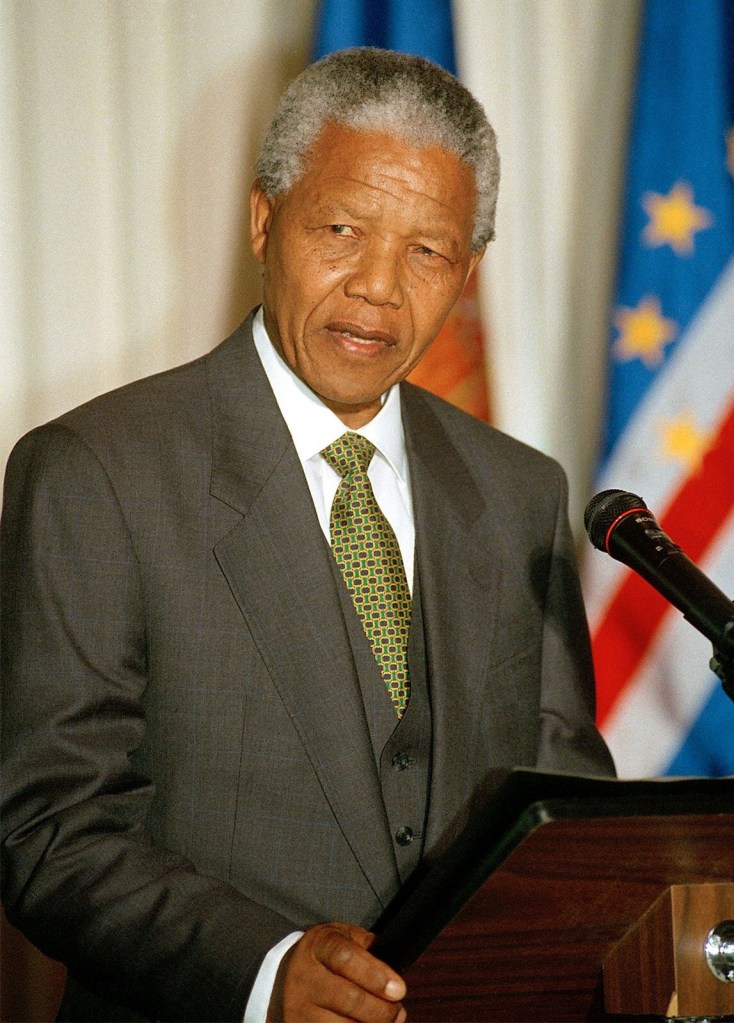
– 1961 – Nelson Mandela was finally acquitted on treason charges following a 4-1/2-year trial. (Amen.)
Nelson Mandela
– 1973: The last U.S. combat troops left South Vietnam. (Not one of our finer moments.)
– 2017: The United Kingdom invoked Article 50, beginning the formal process of Brexit. (And they’re still debating whether it should have happened.)
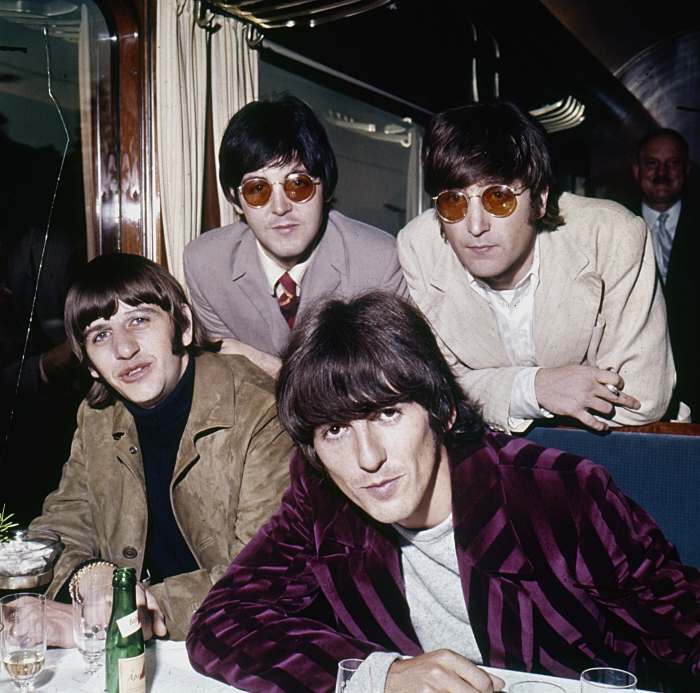
– 1986: Yes, I know it’s out of chronological order, but it’s my favorite, and I like to keep the best for last (which is why dessert comes at the end of the meal). On this date in that year, Beatles recordings officially went on sale in Russia.
Do you think it’s coincidence that just five years later, the Soviet Union collapsed?
I’m in one of those moods today. You know, when it all becomes too much to deal with: wars; acts of terrorism; bridges collapsing; natural disasters; Netanyahu being out of his freakin’ mind; and Putin, Xi, Trump, Musk, and Bobby Kennedy, Jr., all being . . . well . . . all just being themselves.
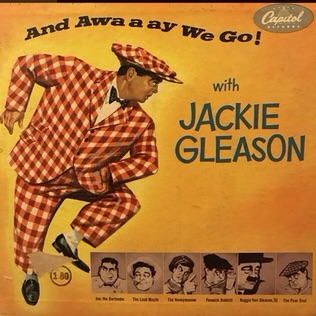
So I went on a search, and I found a wonderful website that reveals everything that this day, and every other day of the year, is known for. And since it gave me a bit of joy on a gray and rainy afternoon, I absolutely had to share it with you. And awa-a-a-ay we go . . .
Holidays: Unfortunately, not the kind you get to take off from work, but still fun to take note of. There’s “Barnum & Bailey Day” (when life presumably is a circus); “Eat an Eskimo Pie Day” (that should be every day); “National Hot Tub Day” (which I understand is every day in California); and “Piano Day” (the 88th day of the year — which, if your name is Schroeder and you also celebrate Beethoven’s birthday on December 16th while playing a toy piano, makes a weird sort of sense).
There is also, oddly, “National Triglycerides Day” — a day in celebration of unhealthy body fat. Only in America.
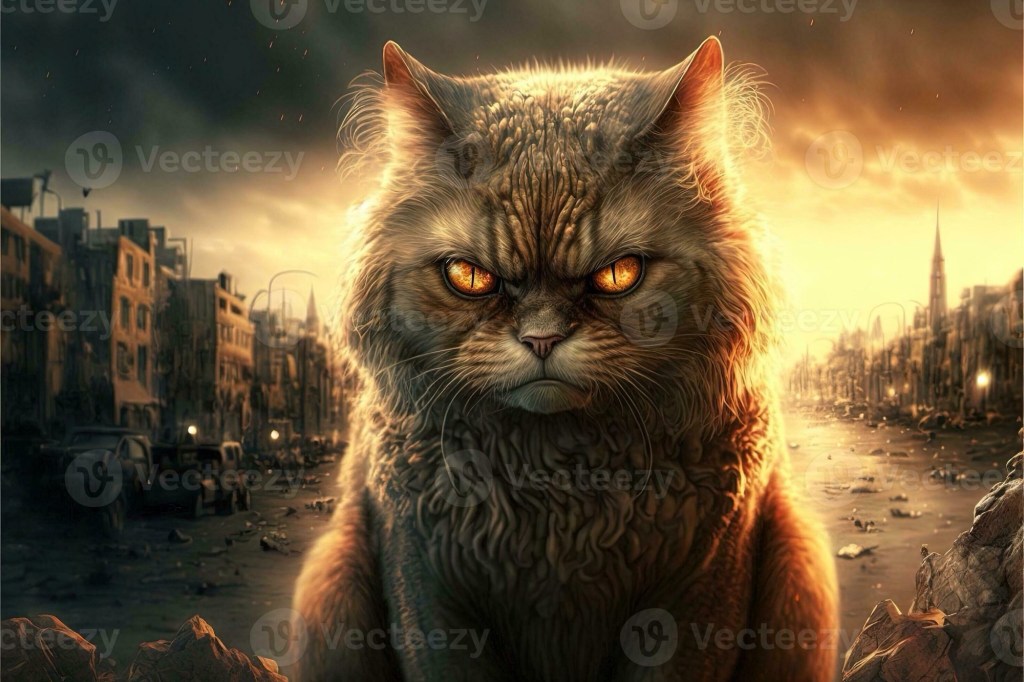
And probably the most superfluous holiday of all: “Respect Your Cat Day.” I mean, isn’t that a requisite daily thing for all cat families? We love our dogs, but we must respect our cats, for failing to do so would result in untold horrors. You cat people know what I mean.
A Disrespected Kitty: The Stuff of Nightmares
Finally, I see that there is something called “Something on a Stick Day” (I assume the Eskimo Pie would fill the bill here); and “Weed Appreciation Day” (for all of you too-lazy-to-clear-out-the-garden folks, or perhaps a few old hippies who still prefer to smoke theirs).
Then there are the week-long holidays, some of which are legitimate, like Holy Week and (this year) part of Ramadan. But you might also want to indulge in my favorite, “Make Mine Chocolate Week” (hurry up — it ends on March 31st this year); “National Second-Hand Shopping Week” (to ease the guilt of all you shopaholics); and, somewhat portentously, “Tsunami Awareness Week” (but only in Alaska and California).
*. *. *
Famous Anniversaries: A few famous people celebrate their birthdays today, so let’s send good wishes to the multi-talented Reba McEntire, gymnast Bart Conner, actors Vince Vaughn and Julia Stiles, novelist Jayne Ann Krentz, and the amazing Lady Gaga. Out of respect, I have omitted their ages. You’re welcome, birthday guys and gals.
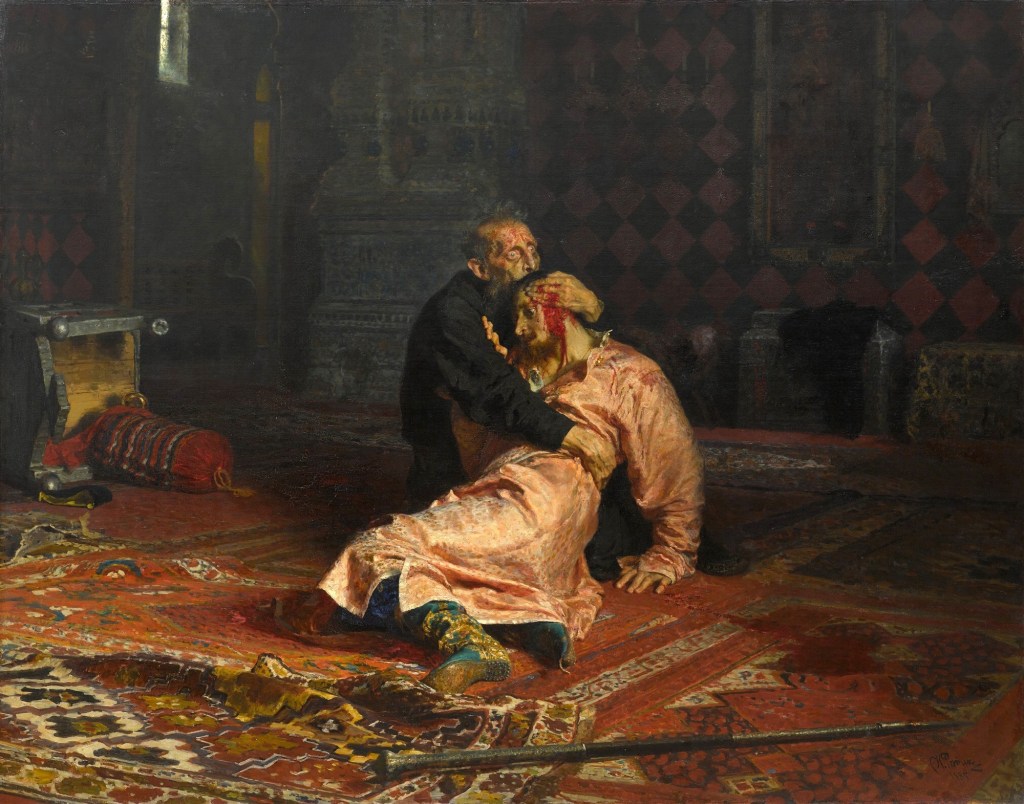
Today is also the anniversary of some famous people’s departures: the writer Virginia Woolf, in 1882 (of whom Richard Burton and Elizabeth Taylor presumably lived in fear, at least in the movie); President Dwight D. Eisenhower (1969); and Maria von Trapp (♬ “The hills are alive with the sound of music” ♬ ) (1987). And let us not forget — though we’d probably like to — the notorious Tsar Ivan IV of Russia, better known as Ivan the Terrible, who kicked the bucket on this date in 1530. Would it be rude to say “good riddance”?
A Fitting End To a “Terrible” Tsar
This Day In History: How many of us are aware that on March 28th, 1854, France and Britain declared war on Russia, in what became known as the Crimean War? Imagine . . . someone actually invaded Russia before Russia had a chance to do it to them. Makes a nice change, especially for the people of 21st-Century Crimea.
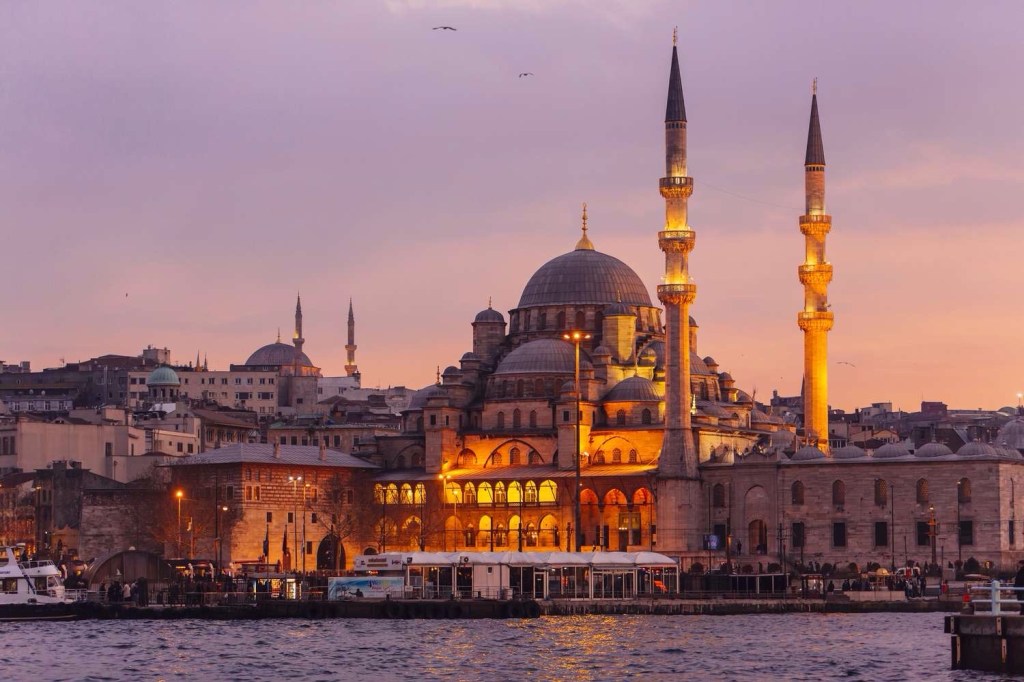
Also on this date, the U.S. Salvation Army was officially organized (1895); a 9.2 earthquake hit Alaska (1964); and some changes occurred in Turkey (both in 1930), when the capital city of Angora was renamed Ankara, and Constantinople became Istanbul (as memorialized by songwriters Jimmy Kennedy and Nat Simon in 1953). (♬ “Why they changed it, I can’t say; people just liked it better that way. ♬)
Constantinople, Turkey (pre-Istanbul)
And Finally: There is a Word of the Day, from . . . who would have guessed . . . Wiktionary. It seems there’s a Wiki for everything. And today’s word — actually a compound word — is a Latin plural noun: lacrimae rerum. I hate to go out on such a sad note, but it means tears of things. I have no idea why it was chosen as the word of the day, or specifically of this day in this year, but I wasn’t consulted. I don’t even know how you would use it in a sentence . . . or why. Do things cry? Ask the folks at Wiktionary, if you can find out who they are.
*. *. *
Well, this was fun. Certainly more so than yesterday’s headlines, which included an announcement of the passing of Joe Lieberman, and the finding of the bodies of two of the victims of that bridge collapse in Baltimore, Maryland. See what I mean? Some days, you just don’t want to deal with it.
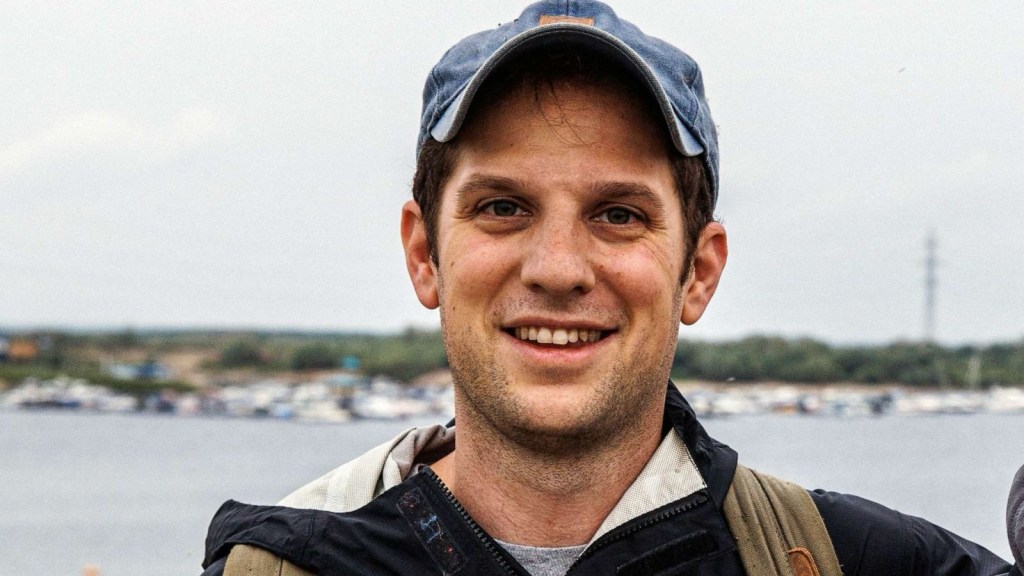
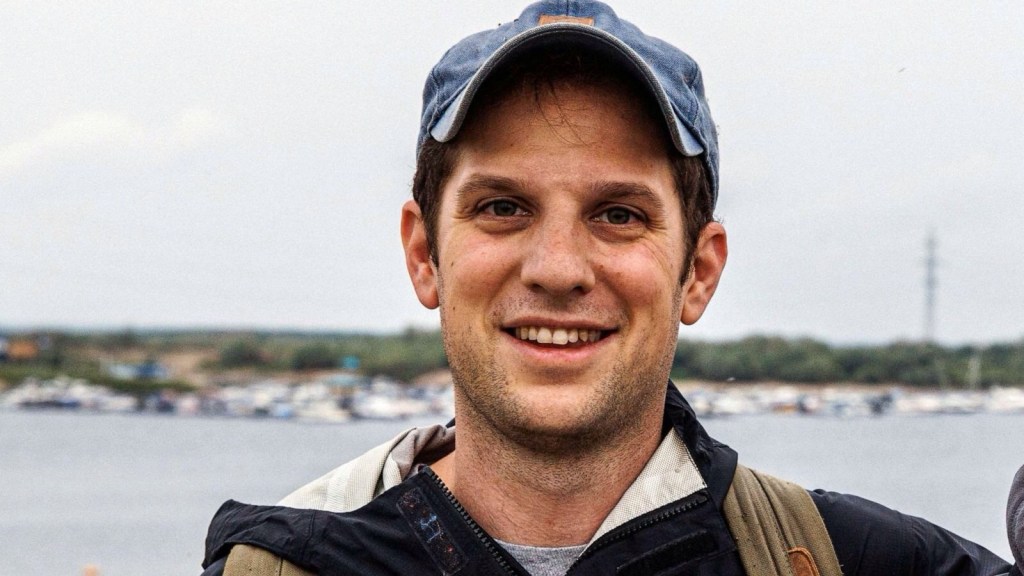
Tomorrow marks the unhappy one-year anniversary of the detention of American journalist Evan Gershkovich in Russia on the bogus charge of espionage. On March 28, 2023, he was arrested while on a reporting trip for The Wall Street Journal in the city of Yekaterinburg; he has been held in Moscow, without trial, ever since.
Evan Gershkovich
He is one of Vladimir Putin’s hostages . . . an innocent man, being held as a commodity to be traded at some unknown future time in exchange for an unspecified Russian convicted criminal in the United States or one of its allied countries.
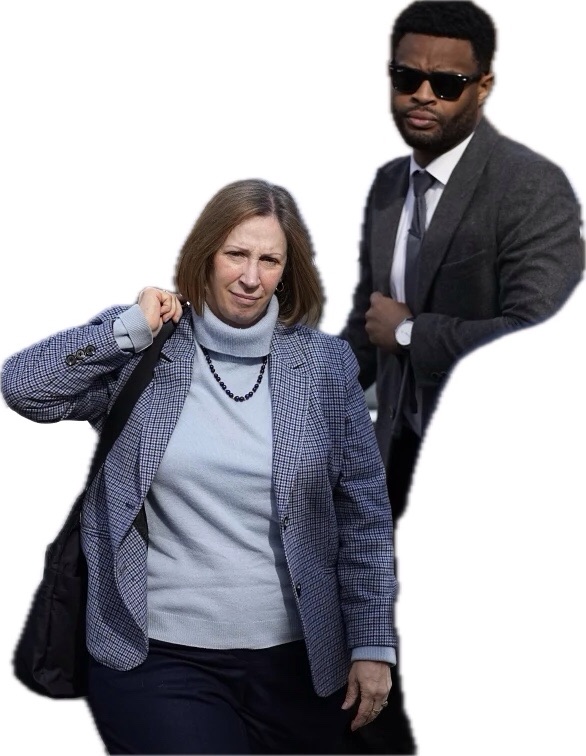
And on Tuesday, just two days before this anniversary, a Moscow court ordered an extension until at least June 30th of his detention, again without trial. U.S. Ambassador to Russia Lynne Tracy attended the hearing, and offered the following statement to reporters outside of the courthouse:
“The accusations against Evan are categorically untrue. They are not a different interpretation of circumstances. They are fiction.No justification for Evan’s continued detention, and no explanation as to why Evan doing his job as a journalist constituted a crime. Evan’s case is not about evidence, due process or rule of law. It is about using American citizens as pawns to achieve political ends.” [AP World News, March 26, 2024.]
Ambassador Tracy, Attending Gershkovich Hearing – March 26, 2024
And there it is: life in Russia today, where no one is safe from the diabolical whims of Vladimir Putin. Evan Gershkovich continues to occupy his rightful place on my list of HOSTAGES who must be brought home. We know that official negotiations have been underway for some time; let us continue to hope and pray for their success . . . sooner, rather than later.
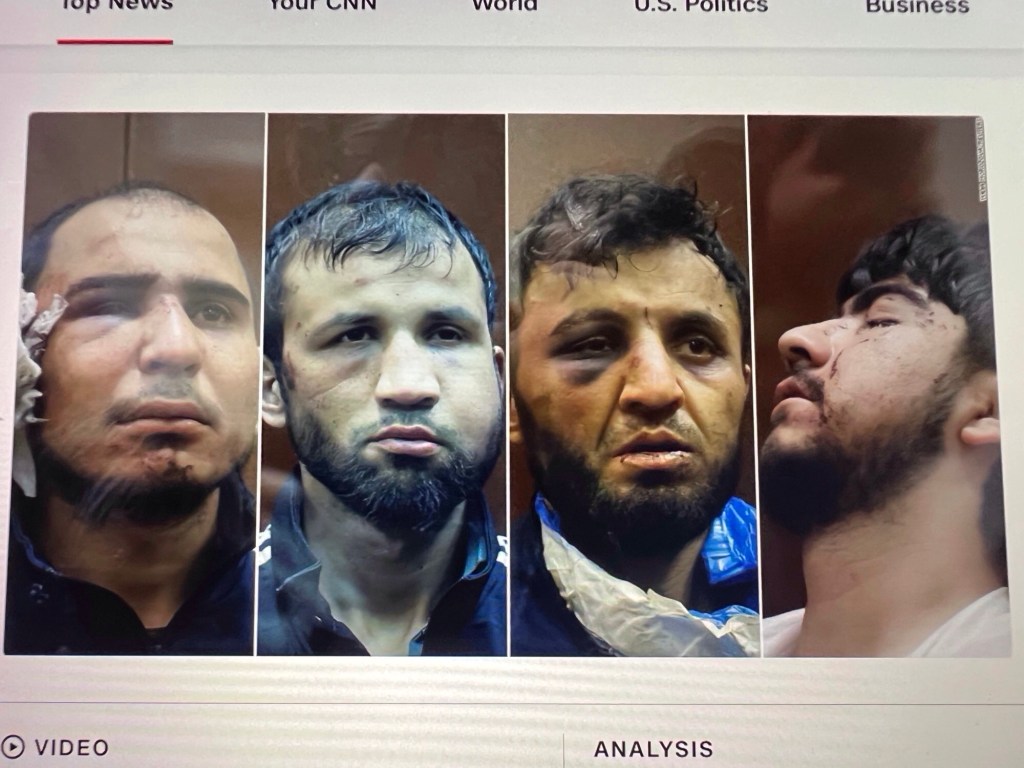
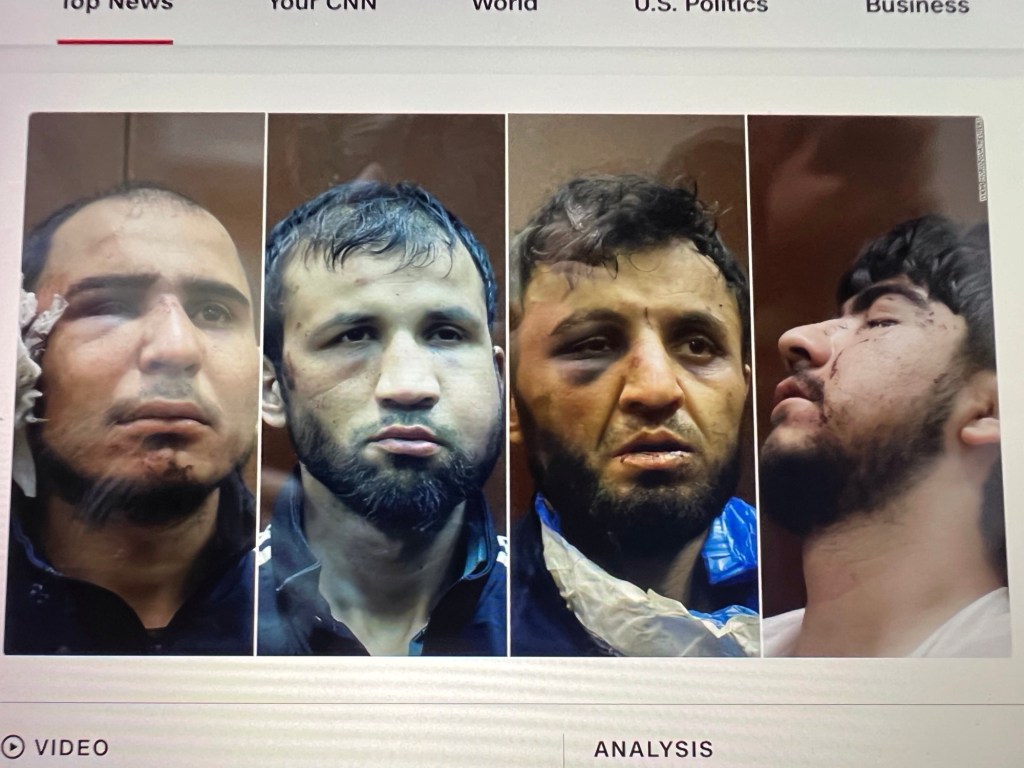
Amidst all the noise, the accusations, and the threats in the wake of Friday’s horrific terror attack in Moscow, there is one topic on which the usually verbose Kremlin spokesman, Dmitry Peskov, remains mum. When asked by a journalist about the “visible signs of violence” on the suspected perpetrators when they appeared in court on Sunday, his response was simply: “I am leaving this question without an answer.”
I have no comment on his no-comment. His eight-word non-response, and the pictures of the suspects, speak for themselves.
But there has been no dearth of verbal exchanges among the involved, and the uninvolved, parties on every other aspect of this disastrous event. It took Vladimir Putin a full day to address the subject at all. And when he did, it was to take advantage of the opportunity to point the finger of blame — where else? — at Ukraine. More than 135 Russian citizens slaughtered; another 100 or so in hospitals, severely wounded; and his first thought is how to pin it on the country he has already subjected to all-out war for the past two years.
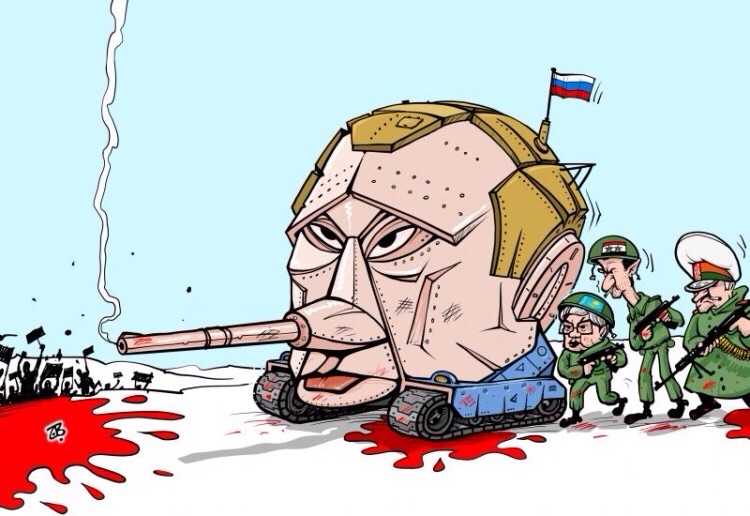
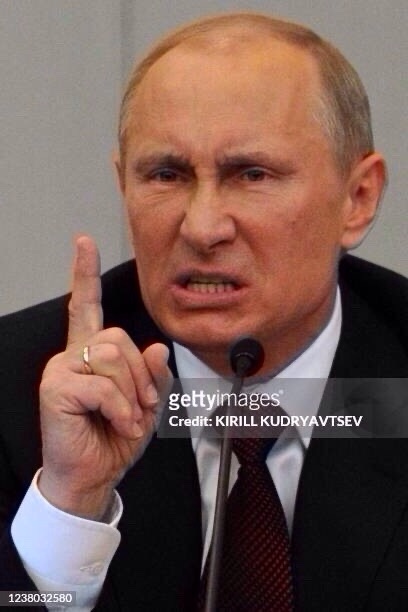
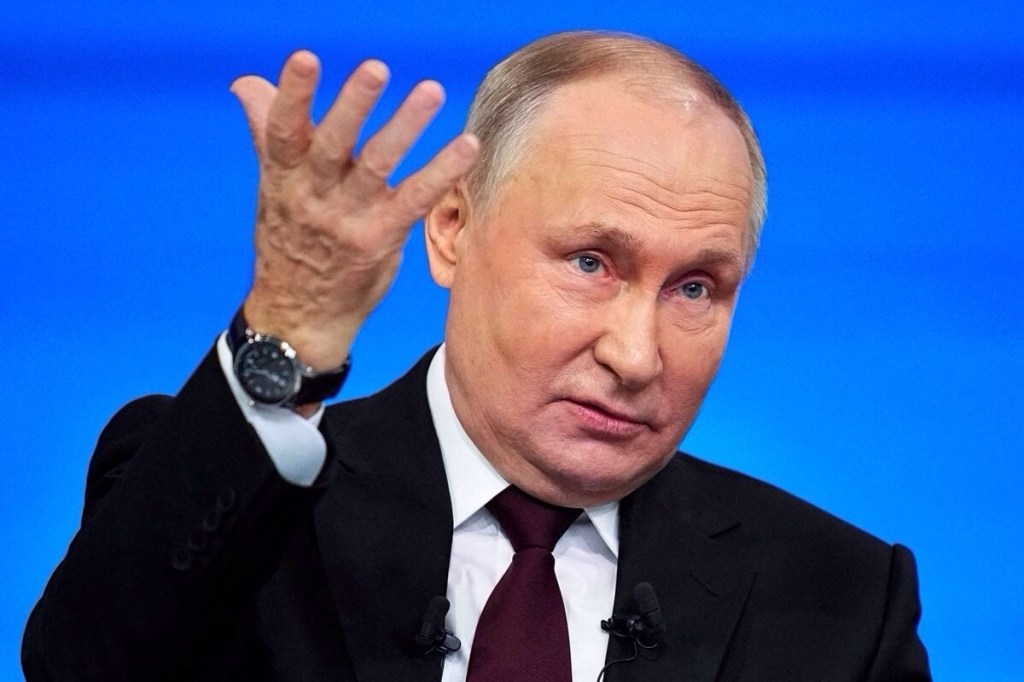
How many synonyms are there for “scum of the earth”? When it comes to describing Vladimir Putin . . . not nearly enough.
And when he finally acknowledged that the terrorists — whom he now had in custody — were indeed radical Islamist members of ISIS-K, he did not ease up on his accusations against Ukraine. Instead, he tried to convince the world — without a shred of evidence — that that country had been complicit in the horrific crime by providing an opening at their border for the terrorists to take shelter. Yeah . . . right. Are we even talking about the same border? You know, the one that, because of the ongoing war with Russia, is probably the most heavily fortified in all of Europe?
But wait . . . there’s more. It seems there’s always more.
“How much more can there be?”
In a meeting on Monday with government officials, Putin said that the attack had been carried out by extremists “whose ideology the Islamic world has been fighting for centuries.” Without specifically referring to ISIS-K, he continued:
“We know that the crime was committed by radical Islamists. . . . But we also see that the United States is trying to convince its satellites and other countries of the world that there is supposedly no trace of Kyiv in the Moscow terrorist attack.” [RadioFreeEurope/RadioLiberty, March 25, 2024.]
Needless to say, both Kyiv and Washington have treated Putin’s assertions like the bullshit propaganda they are. Ukraine’s President Zelensky, in vehemently denying his country’s involvement, said:
“Again, he accuses Ukraine. A sick and cynical creature. Everyone is a terrorist to him except for himself although he has been fueled by terror for two decades already.” [Id.]
Not surprisingly, Kremlin-friendly Russian journalists have jumped happily into the fray, echoing Putin’s assertions as though they were holy writ. And, once again, the Russian people are left to pick through the verbal rubbish in search of an inkling of the truth.
A People In Search of Truth
*. *. *
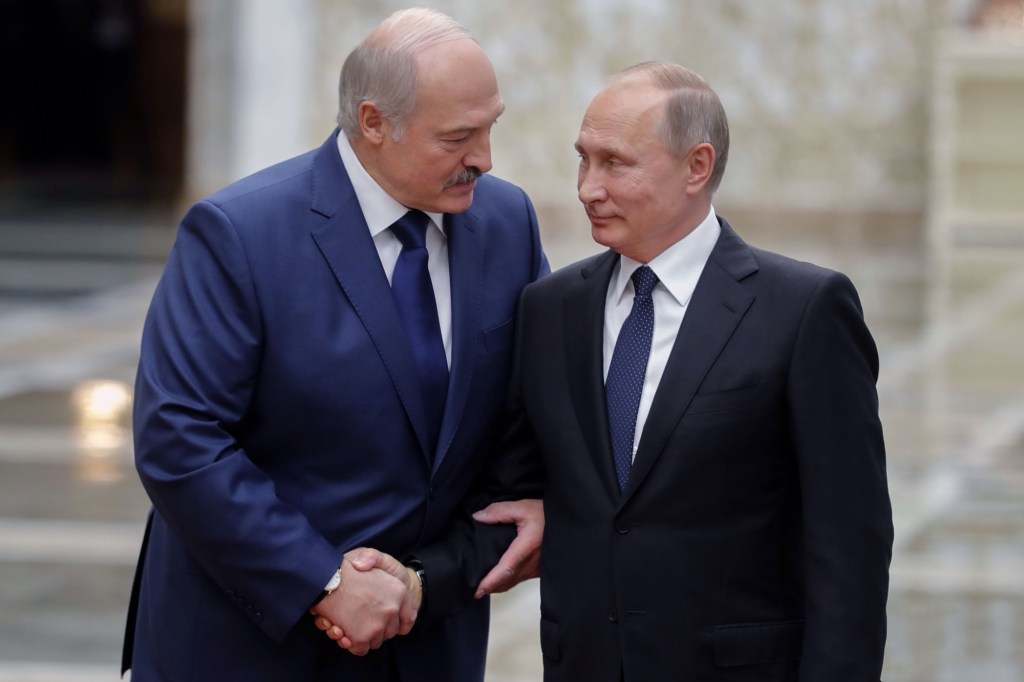
But if there is any humor to be found in any of this, it comes from a most unlikely source: Aleksandr Lukashenko, self-declared President of Belarus and willing toady of Vladimir Putin. While Putin and his mouthpiece Peskov continued to accuse Ukraine of keeping a door open for the terrorists, Lukashenko stated on Tuesday that the attackers had actually tried to flee to his country, but were unable to do so because of the additional security measures at his borders.
Oops! Doesn’t he know it’s not nice to contradict the boss?
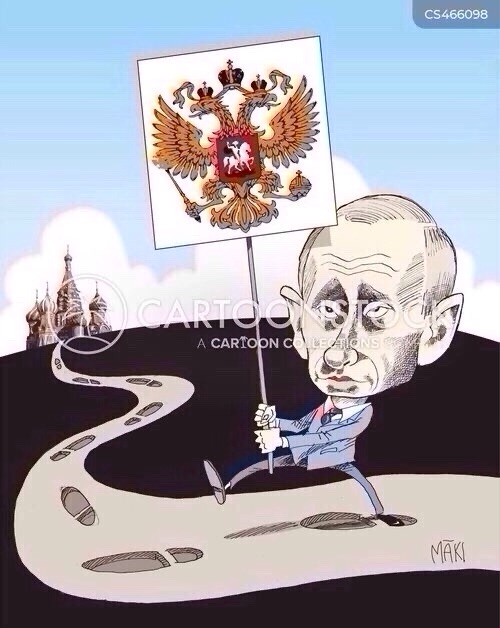
Even when your name is Vladimir Putin, you’ve just begun your fifth term as President of the Russian Federation, and you consider yourself invincible. Because somewhere — several somewheres, actually — along the way, you f**ked up. Big time.
Tsar For Life . . . Maybe
Things were actually rolling along fairly smoothly for Vlad — or at least everything was pretty much under control — until a little over two years ago, when he decided to order a “special military operation” along the Russia-Ukraine border. When the world — and not least of all Ukraine — became understandably concerned, he swore that he had no designs on Ukraine . . . no intention whatsoever of violating that country’s borders.
February 24, 2022: Surprise! He lied. As Ukraine and the rest of the free world had suspected and feared all along, Putin’s routine military exercise . . . or “special military operation” . . . was a red herring. A cover. A 21st-Century Potёmkin Village hiding the truth behind the facade.
But Vlad had badly miscalculated. He truly seemed to believe that because there were some break-away regions in Eastern Ukraine that were sympathetic to Russia, the whole of the country would follow suit and welcome him as their new leader, swallowing whole his bullshit propaganda that the Ukrainian government was a fascist regime led by a closet Nazi. (That would be Volodymyr Zelensky . . . in reality, a non-closeted Jewish man who was and is President of a nation that had been brutalized by the real Nazis.)
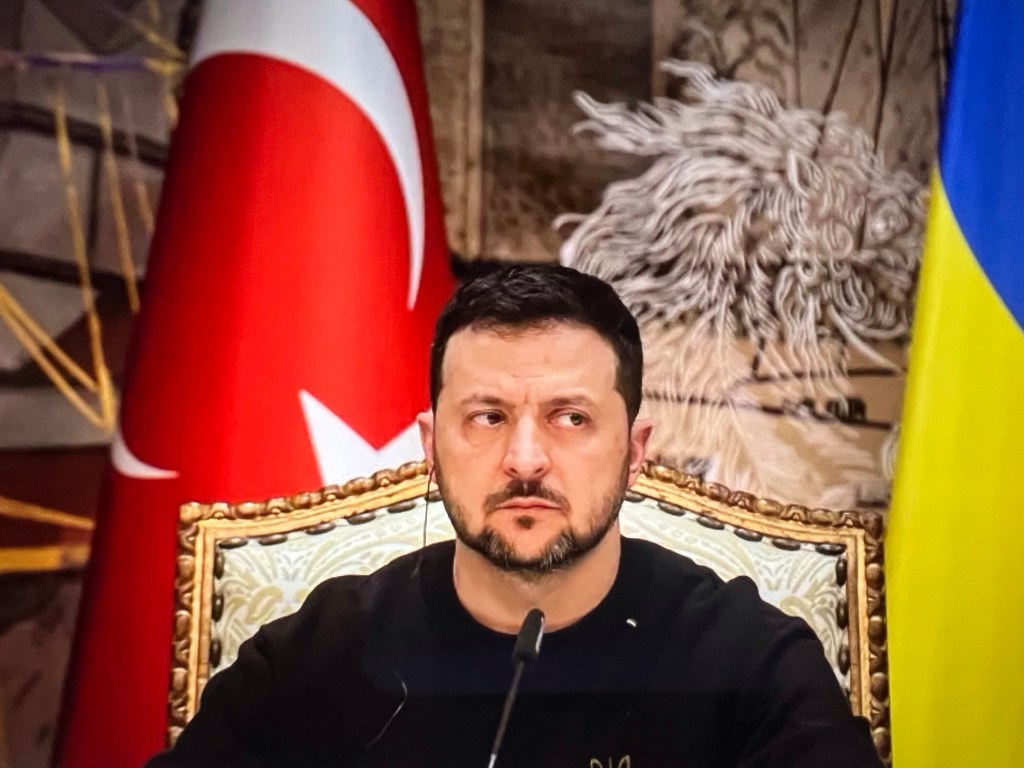
President Volodymyr Zelensky – No Nazi, He
Anyway, we all know what has transpired in the past two years: how Putin’s quick invasion has dragged on . . . and on . . . and on, costing his own country dearly in terms of lives lost, economic sanctions, military mismanagement, and personal loss of credibility. So . . . HUGE MISTAKE.
*. *. *
Then it turned out that old Vlad is not the judge of character he believed himself to be. Aside from the incompetence of so many of his military officers, he has managed to keep most of his closest people in line — whether through blackmail, threats, or having them pushed out of windows. But he seriously misjudged his old friend Yevgeny Prigozhin. Remember him? He was the founder and head of the Wagner Group of mercenaries who could always be counted on to do Putin’s dirty work anywhere in the world. But one day Prigozhin realized how incompetent the Russian military leaders of the Ukraine war actually were, and his complaints to Putin were ignored. So he got some of his merry men together and staged a revolt: a march on the Kremlin, beginning all the way down south in Rostov. Well, that failed, Prigozhin’s fate was up in the air for some time, and he finally came crashing down — literally — in an exploding airplane, along with six of his colleagues and three crew members. Putin thought it was another problem solved, but the world knew it was no accident, and he was, once again, labeled a murderer. BIG MISTAKE.
*. *. *
Next, our Vlad tackled the most outspoken dissidents, along with a number of foreigners for good measure, and simply locked them up on a variety of specious charges. But one of those dissidents was the beloved Alexei Navalny. And that problem just wouldn’t go away. Navalny continued to rally his followers from his Siberian prison cell, as did his team living in exile in various parts of Europe. And when Putin couldn’t shut them down, he did what he always does: saw to it that Alexei Navalny never reached his 48th birthday. GIGANTIC MISTAKE!
*. *. *
In the Shadow of Navalny
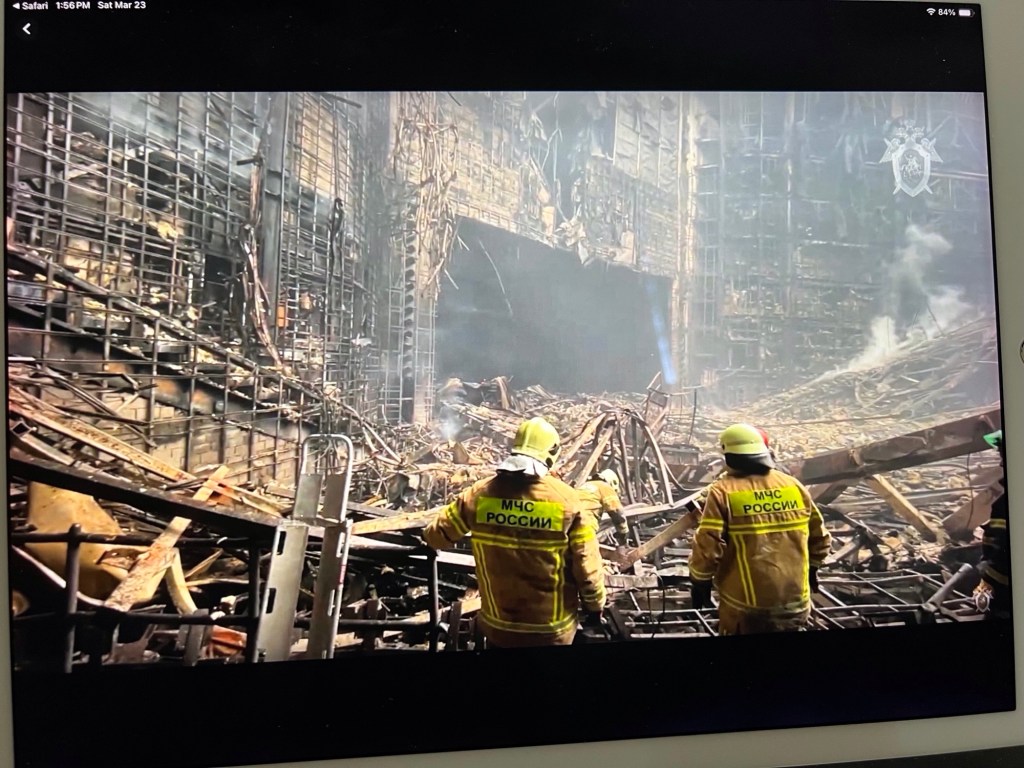
And so we come to Vladimir Putin’s most recent headache: an actual terrorist attack on Moscow itself, in which more than 135 people were brutally slain, more than 100 others seriously injured, and a popular shopping and entertainment venue all but demolished. “Credit” for this monstrous act has been claimed by a radical Islamic group known as ISIS-K, allegedly in retaliation for Moscow’s friendly relations with countries in opposition to ISIS-K’s interests, or something of the sort. In other words, to twist a well-known axiom: The friend of my enemy is my enemy.
But Putin’s problem goes beyond the mere horror of the attack. To begin with, he was warned . . . and ignored the warning. The U.S. had received credible intelligence indicating an imminent attack on Moscow by Islamic radicals. And the American intelligence community takes very seriously its ethical duty to warn — not just its own citizens or those from friendly nations, but adversaries as well — of any such apparent dangers. And so it did in this case. But Putin chose to believe that the warning was “provocative,” and resembled “outright blackmail and an intention to intimidate and destabilize our society.”
And when the warning turned out to be real, and Putin found himself faced with the horrific results of his own stupidity, he did what he does best: blamed it on someone else . . . in this case, Ukraine.
Wait . . . WHAT?? WHO? Ukraine?!! Seriously?!!
No, no, no! Don’t laugh. He’s serious . . . or at least he managed to say it with a straight face. You see, according to Putin’s side of the story, the small group of terrorists somehow managed, first of all, to carry off this well-planned attack in full view of Moscow’s CCTV cameras; evaded the immediate emergency response teams; got out of Moscow; and made it across Russia to Bryansk, en route to the closest border with a non-NATO, non-Russia-friendly country, which happened to be Ukraine . . . where they also had managed to inveigle some misguided, friendly souls on the other side of the border to clear the way for them. A drive of about seven hours (to Bryansk) under ideal conditions, during which they were never apprehended . . . until — wonder of wonders! — they were on an obvious path to Putin’s favorite scapegoat: Ukraine.
And now we are supposed to believe that Ukraine is in league with reputedly the fourth most dangerous terrorist group in the world: ISIS-K. And of course, the United States — in fact, all of the “collective West” — is in cahoots with them.
HOLY SHIT!
You just can’t make this stuff up — at least, I can’t. But if your name is Vladimir Putin . . .
*. *. *
Now, there are those who consider it possible that the Kremlin itself is behind the whole thing: that they sacrificed a couple of hundred of their own people; hired a handful of lunatics as scapegoats to do the dirty work, perhaps expecting them to die in the explosion and fire; and when they didn’t, “captured” them and roughed them up to make it all look as realistic as possible. That’s a pretty extreme conspiracy theory, and I don’t know . . . But here are some pictures (compliments of CNN News, March 24, 2024) of the alleged perpetrators after being taken into custody by Russian authorities:
*. *. *
I have no words. None. For one of the few times in my life, I am officially speechless . . . without comment or conclusion . . . totally gobsmacked. And so I leave you for today, on your own, to draw whatever inferences you like. We shall all see what tomorrow brings . . . including, I hope, a rational thought or two of my own.
Is it when one country invades another country? When the invaded country fights back? Or when Vladimir Putin says so?
Apparently, it’s that last one.
From the time Russia’s forces — which had been mobilized at the Ukrainian border for months — finally launched a full-scale invasion of Ukraine’s territory on February 24, 2022, Vladimir Putin has staunchly refused to refer to the invasion — and the ensuing two years (and counting) of all-out slaughter and destruction — as anything more than a “special military operation” (or “SVO,” to use the Russian initials). In fact, he rammed through a new censorship law making it a crime, punishable by up to 15 years of imprisonment, to so much as utter the word “war” in connection with Ukraine, or to “discredit” the military, or promote “fake” information . . . leaving the definition of those terms open to interpretation by the courts. His courts.
And for two years, he has been having countless people — journalists, political dissidents, disillusioned military personnel, and ordinary citizens — arrested, locked up, exiled, or eliminated for uttering the “wrong” words in the “wrong” context, or simply the “wrong” tone of voice.
But last week, suddenly and unexpectedly, something changed. On Friday, March 22nd, Kremlin spokesman Dmitry Peskov offered this statement to the Russian media outlet Argumenty i Fakty:
“We are at war. Indeed, it started as a special military operation but as soon as a clique was formed and the collective West joined in on Ukraine’s side, it turned into war for us. I am convinced of that. Everyone should understand this to summon up inner strength.” [RFE/RL, March 22, 2024.]
“Oh . . . sorry. You were serious???”
Well, of course he was serious. Dmitry Peskov is never, ever not serious. After all, he works for Vladimir Putin. One slip, and . . .
The Boss
And just to make sure we understood, Peskov added comments to the effect that Russia must fully “liberate” its “new regions” — four regions in Ukraine it illegally annexed during the war — “to protect the people in these regions and liberate the territory of these regions.” [RFE/RL, March 22, 2024.]
Well, they’ve talked about “liberating” what they claim as “their territories” from the beginning. But what is new is the claim that their SVO turned into a full-fledged war when the “collective West” formed some sort of coalition — or “clique,” to use Peskov’s terminology — and dared to step in to assist Ukraine in its alleged assault on Russia.
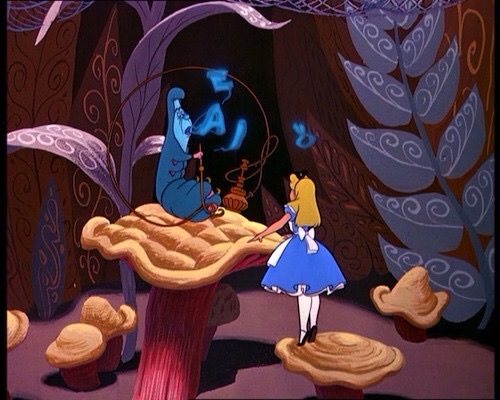
Looking at it from an objective viewpoint (what a radical idea!), you might wonder what anyone — in this case, Putin, Peskov & Company — would have to have been smoking in order to view this two-year massacre as an assault by Ukraine on Russia. I’m thinking . . .
Yup, that’s clearly it: their own little Wonderland blend.
But why now? Well, from a public relations standpoint, things have not been going so well for Mr. Putin recently. Barely a week into his fifth term as President, he is faced with growing demonstrations of opposition to his SVO, to his onerous new laws, and to his rule in general. The economy, while seeming to be thriving, is actually only doing so on a war-time footing, and would likely collapse under the weight of international sanctions if the Ukrainian adventure were to end, and end badly for him. He needed a way to blame the West for all of it, and turning an SVO into a war seemed the right vehicle.
And that’s not all. Talk about the perfect storm! Earlier in March, Putin had received a warning from the United States about credible intelligence indicating a strong possibility of an imminent terror attack by radical Islamic forces on Moscow itself. The threat was fairly specific: probably within 48 hours, and located at a crowded venue, possibly a concert.
But Putin chose to view that from his upside-down, through-the-looking-glass perspective . . . and ignored it. And when it didn’t happen within 48 hours, he was able to say “I told you so.”
“Didn’t I tell you it was fake?”
Well, of course it didn’t happen within 48 hours. When word of the U.S. warning was made public, the terrorists — being certifiably insane, but not stupid — withdrew under threat of increased security measures. And they regrouped. But Putin misread the delay as a withdrawal, or proof that no such threat ever existed . . . and he relaxed. For once, his raging paranoia failed him, and he allowed his distrust of the United States to outweigh his normally cautious nature. Life went on as usual, some 6,500 people bought tickets to a rock concert, and . . .
Crocus City Center, Moscow
On the very evening of the day that Dmitry Peskov was shooting off his big mouth, all hell broke loose at the Crocus City Music Hall on the outskirts of Moscow. An estimated 135-150 people were killed, another 100-plus seriously injured, and Putin’s alleged 87% popularity took a major hit. Today, Moscow mourns . . . and its people want to know why.
*. *. *
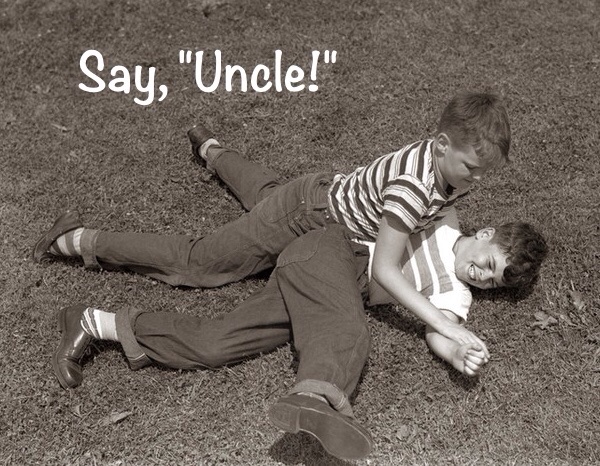
More about Putin’s actions, or inactions, in the wake of that horrific disaster in tomorrow’s post. For now, it’s enough just to know we finally got him to say “war.” It’s even more satisfying than “uncle.”
When I began this crusade to free Vladimir Putin’s political HOSTAGES, I promised to continue publishing my reminders weekly until the HOSTAGES were once more at home with their loved ones. Not that I believe my words alone are having any effect on anyone in the Kremlin; but the more voices, the better.
So I once more urge you not to forget or forsake those men and women being held HOSTAGE by the Russian government, who have done no more than speak out against the dictatorial, fascist regime of Vladimir Putin. While they have been forced into silence, we have not.
We must continue to use our voices for them. Please just click to share this message on any and every social media platform of your choice. It’s so easy to create that multitude of voices.









 The Blog About Everything … and Sometimes Nothing