Category Archives: History, Travel, Memoirs

2/5/24: Putin’s Hostages: Bring Them Home, Week 6 – Update (but not good news)

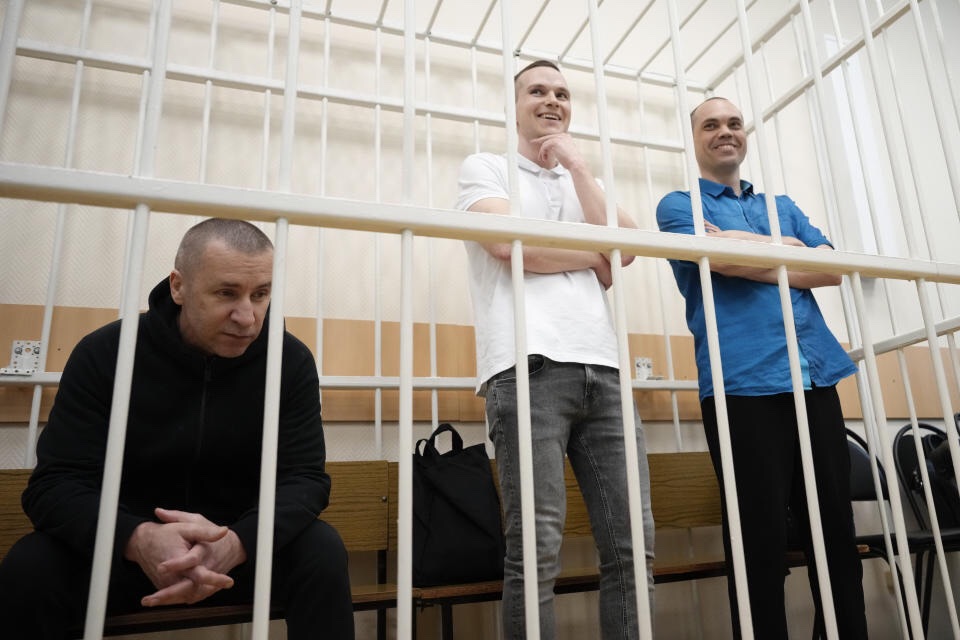
This week we heard from Vladimir Kara-Murza’s wife Evgenia, who said on January 29th that her husband had left the “strict regime” penal colony where he had been held since last September, and that there was no word as to where he was being taken. In circumstances eerily mirroring the case of opposition leader Alexei Navalny, Mrs. Kara-Murza said that “her husband, who suffers from a nerve disorder after surviving two poison attacks, had been in solitary confinement during the four months he had spent in the harsh-regime IK-6 colony in Omsk.” He now suffers from polyneuropathy, a condition that causes the loss of sensation in his limbs unless controlled by medication and exercise. His wife, not unreasonably, fears for his life in prison. [Reuters, Jan. 29, 2024.]

Russian Penal Colony IK-3, “Polar Wolf”

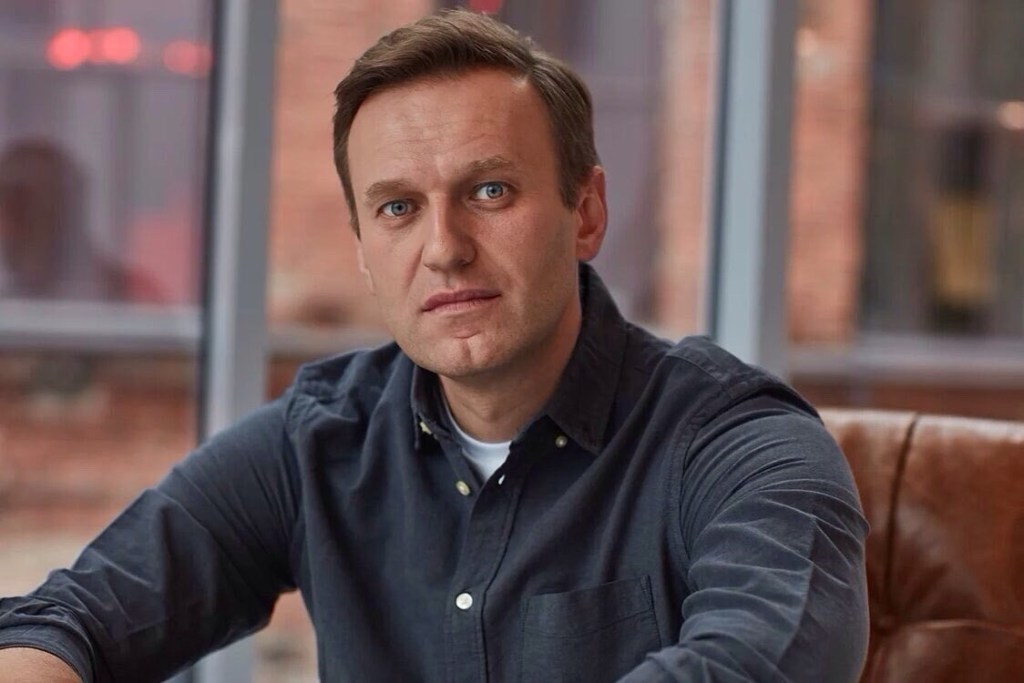
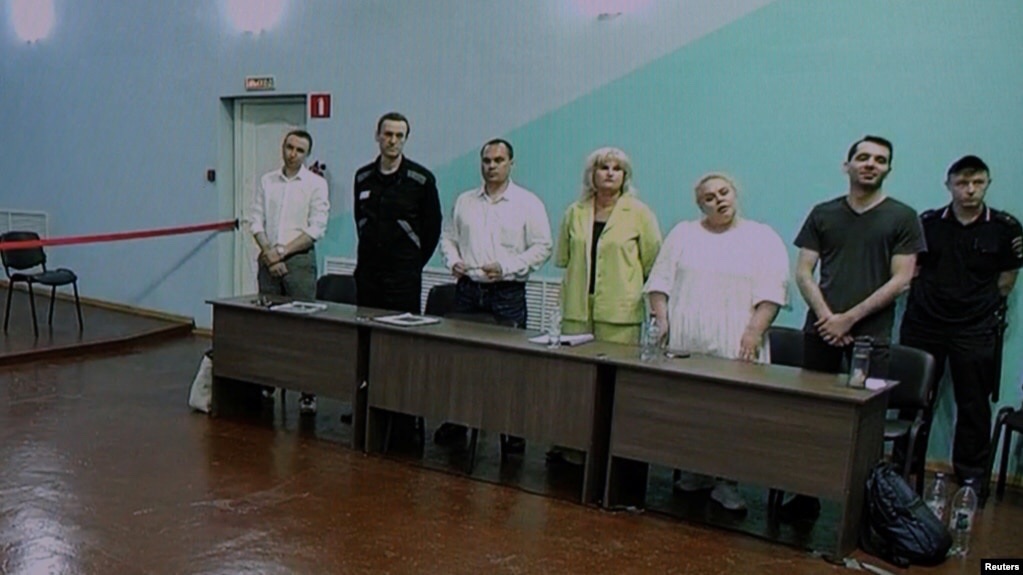
One of the few outspoken dissidents who have opted to remain in Russia despite the harsh punishments being meted out by the increasingly repressive Putin regime, Kara-Murza has been sentenced to 25 years for “treason” and “spreading false information” about the Russian invasion of Ukraine. His only real crime? Speaking the truth. And now — as they did to Navalny — the authorities have removed Kara-Murza to . . . where? No one knows, because they are not required to inform the prisoner’s family or legal counsel. It took three weeks for Navalny to resurface, and when he did, he was in one of the harshest prison camps — IK-3, also referred to as “Polar Wolf” — some 40 miles inside the Arctic Circle.

During the period of Navalny’s “unavailability,” I posted articles titled “Where Is Alexei Navalny?” Do I now have to do the same for Vladimir Kara-Murza? I hope not; but if it becomes necessary, I assure you, I will. My voice, in and of itself, may not have any effect; but if enough voices are added to the mix, perhaps . . . just perhaps . . .

Because if Vladimir Kara-Murza and Alexei Navalny — and the other courageous men and women who dare to speak out against Putin’s blatantly totalitarian rule — are silenced, there will be no hope for Russia in the foreseeable future.

Always believe, and never forget this: Their power resides in their words . . . These HOSTAGES — this “band of brothers” in the truest sense — must be brought home.

*. *. *

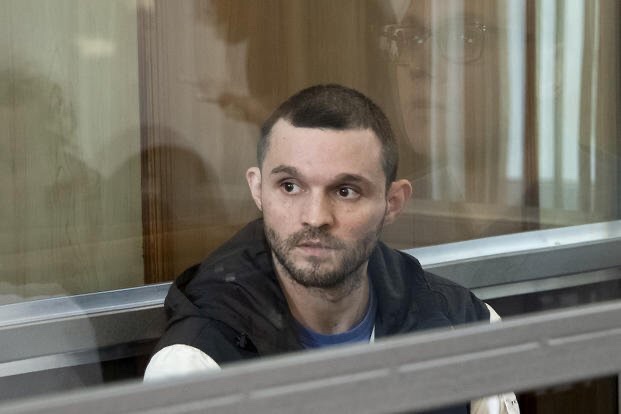
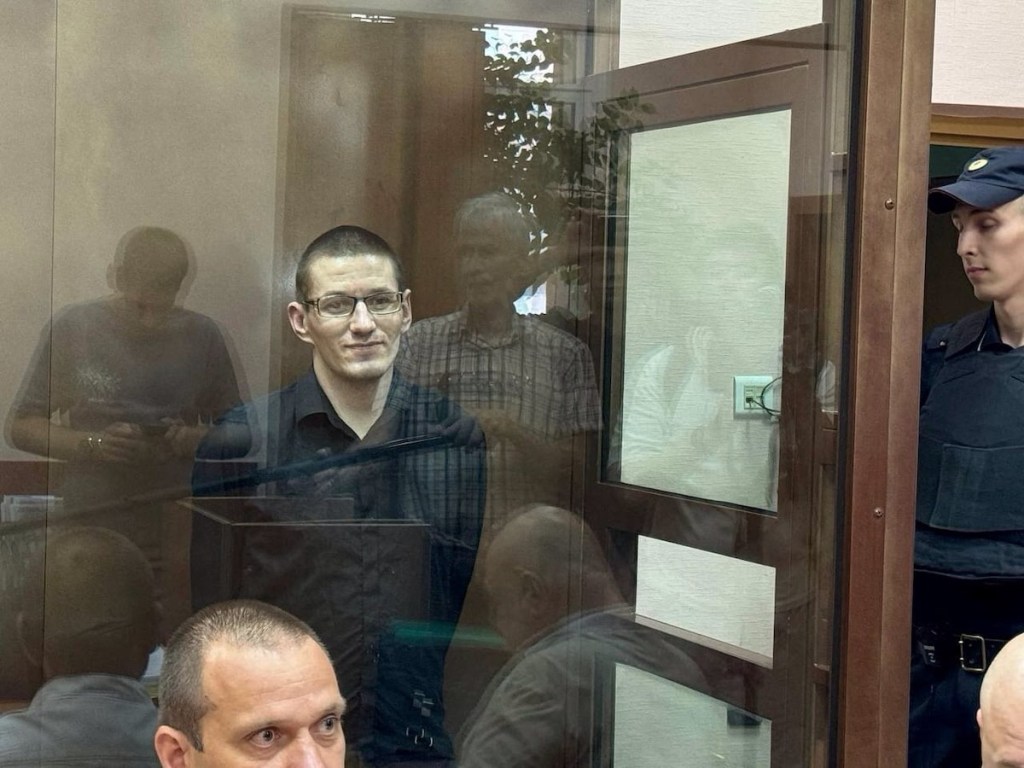
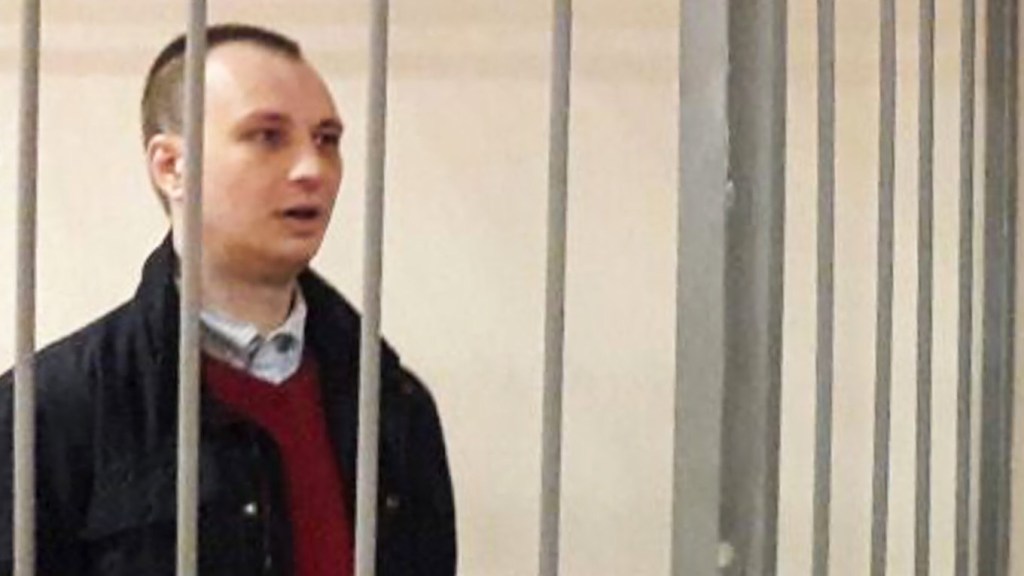
Vladimir Kara-Murza, Dual Russian/British: HOSTAGE (Penal Colony ??)
Alexei Navalny, Russian: HOSTAGE (Penal Colony IK-3, Kharp, Siberia)
Evan Gershkovich, American: HOSTAGE (Lefortovo Prison, Moscow)
Paul Whelan, American/British/Irish/Canadian: HOSTAGE (Penal Colony IK-17, Mordovia, Russia)
Alsu Kurmasheva, Dual Russian/American: HOSTAGE (Remand Prison, Kazan, Russia)
Ksenia Fadeyeva, Russian: HOSTAGE
Lilia Chanysheva, Russian: HOSTAGE
Vadim Ostanin, Russian: HOSTAGE
Sergei Udaltsov, Russian: HOSTAGE

Please . . . bring them home!

Brendochka
2/5/24

2/4/24: A Little Bit of the Good Stuff

Again, from CNN’s “The Good Stuff” column this Saturday, compliments of A.J. Willingham, I have been able to glean a few light-hearted items to brighten your Sunday:

First up is a story about a rodent I’ve always considered to be ugly, repulsive, and probably diseased. That would be a rat. But I have to admit, this little guy is kind of cute, and definitely photogenic. Most selfies don’t turn out that well.

That’s right — this is a selfie. Apparently, a French artist named Agustin Lignier bought two rats as pets a couple of years ago and built them an elaborate cage. No doubt taking his cue from 19th Century physiologist Ivan Pavlov and his now-famous dogs, M. Lignier devised a mechanism that dispensed sugar whenever his rats pressed a button, which also happened to be connected to a camera aimed directly at the button-pusher. He said the project “is a commentary on the notions of pleasure, reward and the addictive behaviors induced by social media,” and that “the images offered a ‘playful’ way to explore topics like reduced attention spans and the impact of social media algorithms.” So what do we have here . . . junkie rats with ADHD? Fascinating!

After a brief time of modeling as guinea pigs for the curious artist, the two little rodents were packed up and sent off to M. Lignier’s mother’s house in the lovely Provence region of France, where they are expected to live out the remainder of their natural lives in comfort. All I can say to that is: Mme. Lignier is a better woman than I. There would be no rats, cute or otherwise, living in my chateau.

*. *. *

Next up is a lovely picture of a place known as the “Edge of the World,” and a suggestion that it’s a great place to visit. I’m something of a klutz, so I’m not at all sure about going anywhere near the “edge” of anything, much less the whole world. The picture is stunning, taken in the Tuwaiq Mountains of Saudi Arabia, with “pastel skies [that] stretch out clear to the horizon.” It’s apparently a popular weekend spot for hikers, and there is talk about adding easier trails for the less experienced adventurers.

Maybe . . . but not quite that far!

I’m going to have to take a pass on this one. But if anyone does try it, let me know how it went if . . . er, when . . . you get back.

*. *. *

And finally, on a much, much larger scale, we have this series of pictures taken by the James Webb Space Telescope:

At first glance, they reminded me of a bunch of robins’ nests with very shiny eggs waiting to be hatched. (Remind me never to take a Rohrshach test, please.) What they really are, are “. . . portraits of 19 spiral galaxies and the millions of stars that call them home. The telescope’s ability to observe the universe in different wavelengths of infrared light, such as near-infrared and mid-infrared, showcases the stars, gas and dust within the intricate structure of each galaxy. Our own little solar system resides in one of the spiral arms of the Milky Way.” [CNN, The Good Stuff, Feb. 3, 2024.]

I’m not clear on the wavelengths of infrared light, but I am gobsmacked (my new favorite word) by the enormity of the universe. So, never one to simply shrug something off, I went searching for some statistics.

— The observable universe (and who can even imagine what lies beyond that?) contains as many as an estimated 2 trillion galaxies, and more stars and earth-like planets than all the grains of beach sand on planet Earth.

That’s a lot of sand!

— Our galaxy is known as the Milky Way. The latest data collected by NASA indicates that there are 3,916 solar systems within our galaxy.

— There are also 5,240 confirmed exoplanets, which are planets that exist outside our solar system.

I’ll let someone else do the exact math, and correct me if I’m off by a few zeros, but with those numbers — and assuming the other 2,000,000,000,000 (that’s 2 trillion) galaxies are about the same size as ours — I’m seeing something like 18-20 quadrillion (that’s 15 zeros) solar systems or star systems in the observable universe.

And we still want to believe there’s no one else out there? Really?

Just sayin’ . . .

Brendochka
2/4/24

2/3/24: The Best Evacuation Plan May Be None At All

Everyone needs an escape plan, from getting yourself and your family out of the house in case of fire, to getting out of town if the nearby dam breaks or the “damn, I thought it was dormant!” volcano erupts. But what about getting off the Earth when you just can’t take it any longer? When all the ecological, political, and “my-weapons-are-better-than-your-weapons” crap just becomes too much and it’s time to move on . . . then what?

Well, the closest alternative would of course be the moon. A mere 238,900 miles from here, give or take a few miles depending on our relative positions at any given time of year, it has already been proven reachable in a matter of just a few days. But is it habitable?

Earth’s Moon

For example, what are those splotches? Are they land masses? Why are they different colors? Different terrains? Are some of them just heaps of noxious gases? Or continents as designated by the already existing clans of moon-people? And if there are moon-people, do they have their own governmental structures? What are their immigration policies? Job opportunities? And how about that dark side . . . how long does it stay dark? Is there electricity, or do we need to bring lots of lanterns and batteries?

Even more concerning is a recent report that the moon is actually shrinking. You see, in the course of the latest international space race, a NASA study has revealed the following:

“As the moon’s core gradually cools and shrinks, its surface develops creases — like a grape shriveling into a raisin — that creates ‘moonquakes’ that can last for hours, as well as landslides. Much like the rest of the natural satellite’s surface, the area of the south pole that is the subject of so much interest is prone to these seismic phenomena, potentially posing a threat to future human settlers and equipment.

Before and After

“‘This is not to alarm anyone and certainly not to discourage exploration of that part of the south pole of the moon,’ said the study’s lead author, Thomas R. Watters, a senior scientist emeritus in the National Air and Space Museum’s Center for Earth and Planetary Studies, ‘but to raise the caution that the moon is not this benign place where nothing is happening.’” [Jacopo Prisco, CNN, Jan. 31, 2024.] No, of course we’re not alarmed. Not too much. But if it’s earthquakes I’m craving, I can just move to California, or Turkey.

Not having scared us sufficiently, Mr. Prisco goes on to say that despite its benign appearance, “the moon still has a hot interior, which makes it seismically active.” He quotes Thomas Watters: “There is an outer core that’s molten and is cooling off. As it cools, the moon shrinks, the interior volume changes and the crust has to adjust to that change — it’s a global contraction, to which tidal forces on the Earth also contribute. . . . We’ve actually detected landslides that have occurred during the time that the Lunar Reconnaissance Orbiter has been in orbit around the moon.” [Id.]

(So, not content with ravaging our planet, we’re working on the moon too? What the hell is wrong with us?!!)

There have also been moonquakes detected, the strongest of which was the equivalent of magnitude 5.0. “On Earth, that would be considered moderate, but the moon’s lower gravity would make it feel worse,” Mr. Watters said. [Id.]

The Opening To the Center of the Moon?

The article goes on to present a good deal of technical jargon that, quite frankly, I did not finish reading because it was scaring the crap out of me. Yes, we have earthquakes here on Earth; but at least we have emergency rescue services, which I don’t think have yet been established on our lunar satellite.

So, not only have I scratched the moon off my list of possible new residences; I’m not even sure I will ever again be able to gaze at it from here on Earth as that beautiful, romantic orb in the star-studded sky.

*. *. *

But assuming I’m still considering relocating, where else is there to search? Well, according to that guy I love to pick on (no, not Donald Trump) — Elon Musk — Mars may be a good bet. But, rather than 238,900 miles away, it’s a commute of anywhere from 140,000,000 to 250,000,000 miles (the longer distance being when Mars and Earth are on opposite sides of the Sun; and no, I don’t understand that either). And the trip is about seven months to arrive at someplace called the Jezero Crater, which is apparently a choice area for development . . . if you don’t mind waiting a while for your house, or igloo, or yurt to be ready, depending on what kind of climate we’ll actually find there. I don’t know about you, but I don’t have enough information about the “red planet” to risk putting down a deposit just yet. And it’s simply too far away to be able to come home for Christmas.

Surface of Mars?

Oh, did I mention that I recently came across the title of an article — “How Living On Mars Would Warp the Human Body”? [Salon.com.] No, I did not read it; my dreams are already nightmarish enough, thank you. Let’s just go on.

*. *. *

Writing has always been a catharsis for me, a form of psychotherapy that costs me absolutely nothing. But sometimes I also find answers during the process . . . answers to questions I didn’t even realize I had been asking myself. And that’s what just happened here. I’ve come to realize that our problems here on Earth — in whatever country you call home — may not be so unmanageable after all. At least they’re the problems we know. Whereas the unknown — unless you’re Elon Musk and you thrive on that kind of mystery — can be pretty terrifying.

Bottom line: I’m staying put, thank you. Maybe I’ll try to make my present environment, here in the good old U.S. of A., just a little bit better, and leave the exploration of other worlds to someone younger, stronger, braver . . . and, to my way of thinking, a whole lot crazier.

Home Sweet Home

Just sayin’ . . .

Brendochka
2/3/24

2/2/24: An Early Spring

Well, it’s Groundhog Day again.

Well, it’s Groundhog Day again.

Well, it’s Groundhog day again.

Well . . .

Oh, wait . . . that movie has already been done, and I loved it. But we do keep repeating the whole groundhog thing, just not every day, but once a year. Every year. Almost exactly six weeks before the official first day of spring. Anyone else notice the coincidence?

Member of Punxsutawney Phil’s extended family: adorable … but is he clairvoyant?

But accuracy aside, it’s a charming tradition, and the good folks of Punxsutawney, Pennsylvania seem to get a kick out of it. There may not be much else to do in Punxsutawney in February, so I wouldn’t dream of ruining this for them. But I was curious about Phil’s history, so I did a little reading, and here’s what I found:

The tradition is an offshoot of Europe’s Candlemas Day, and was brought to the U.S. by German settlers in Pennsylvania in the 1700s.

Phil — whose full name is “Punxsutawney Phil, Seer of Seers, Sage of Sages, Prognosticator of Prognosticators, and Weather Prophet Extraordinary” — first achieved recognition on February 2, 1886, when the first official Groundhog Day was proclaimed by the local Punxsutawney Spirit newspaper.

He once (in 1986) traveled to Washington, DC to meet with then President Reagan. Wow! I spent most of my life in Washington and never got to meet a president. That’s impressive. He has also (in 1995) appeared on the Oprah Winfrey show. I’ve never been invited to do that, either. Now I’m getting annoyed. What’s a groundhog got that I don’t (besides fur)?

Phil (and his guardian) on “Oprah”

Now, this next one really ticks me off. Since 2010, the well-meaning but sometimes over-zealous folks at PETA (People for the Ethical Treatment of Animals) have apparently been calling for Phil’s retirement. That’s not the problem — he is, after all, at least 138 years old, counting from the first official Groundhog Day in 1886. What’s infuriating is that the PETA people want to replace him with an “animatronic groundhog.”

What the hell is that??!!! A wind-up Punxsutawney Phil? Or perhaps a more advanced, remote-controlled version? Artificial intelligence?

I DON’T F**KING THINK SO!!!!

Who’s with me on this? Okay, maybe Phil should retire; but even the Queen — who was almost as old as Phil — was granted the dignity of being replaced by another human. Surely there’s an adorable groundhog out there who could be trained to do Phil’s job. It’s not that hard: just wake up, be held in the air by a man in a tall silk hat, look around to see if the sun is shining, and go back to sleep. Hell, a chipmunk could do that! But a piece of tin coated in fake fur? Are they serious??!!! And it’s not as though he’s ever been mistreated or neglected. What is their problem?

PETA In Action

I have to end this now . . . I’ve become too emotionally invested in the whole story. In addition to which, I’m really tired of typing “Punxsutawney.” I even remember how to spell it now!

By the way, I am happy to report that Phil apparently predicts an early spring this year . . . possibly as early as March 19th. Imagine that.

TTFN,
Brendochka
2/2/24

2/2/24: Thank You, Dr. Frankenstein

They were all the stuff of science fiction at one time or another: electricity, “horseless carriages,” plastics, TV, the airplane, the telephone, frozen foods, the atom bomb, knee replacements, ball point pens, computers . . . all the manmade wonders of the 19th, 20th and 21st Centuries . . . all those things that once, if even dreamt of, were off-handedly dismissed as impossible. Yet, here they all are, now everyday items so seamlessly woven into our lives that we can’t imagine life ever having existed without them.

But there’s still some stuff that is so mind-boggling, so totally creepy that I don’t even want to think about it. Like AI — artificial intelligence. It seems as though a year ago it was just this vague concept, the way we once believed computers could never be taught to “think.” And now, suddenly, it’s become nearly impossible to distinguish a real photograph from an AI-created picture. And those baby dolls that look and feel and act so lifelike, you want to get them Social Security numbers. You can’t tell me that’s not creepy!

Your Baby: Available Now at Amazon, No Pregnancy Required

And of course, all the scientific uses I’ll never comprehend because I’m scientifically and technologically challenged. Those are the concepts that really bother me because I don’t understand how they work, but I can imagine how easily they might one day be coopted by some psycho wannabee Dr. Strangelove intent on taking over the world.

“Dr. Strangelove”

If you’re wondering what set me off on this little journey into the wild world of paranoia, it was a very brief article in CNN’s “5 things” column on Wednesday (January 31st), titled “Brain chips.” Now, being a lifelong snacker, my first thought was “Yuck . . . they’re making chips out of brains?!! What are they . . . some kind of health food?” Then I came to my senses and realized that it was yet another article about one of my favorite people to pick on: Elon Musk.

I had read a while ago that his Neuralink company was developing a chip to be implanted in the brains of people with certain specific disabilities that would enable them to regain control and use of one or more damaged limbs, basically by willing them to work. But despite its apparently noble intent, I had more or less dismissed it as . . . well . . . science fiction. It was just too eerily Frankensteinish.

“By God, Igor . . . I Think I’ve Done It!”

And then Wednesday’s article blew my skepticism right out of the water. It said that Neuralink, having first received the necessary approvals, had actually completed its first implant in a living person’s brain, and that the patient was recovering well. Naturally, that individual has not been identified, and it’s too soon to tell what the eventual results of the experimental operation will be. But by God! Elon has gone and done it again — he has delivered on what initially seemed an idle, crazy boast. Honor is due.

*. *. *

That night, I lay awake listening to the jumble of random thoughts coursing through my mind as frequently happens at 3:00 a.m., and my brain zoomed in on Mr. Musk’s Marvelous Manmade Miracle. “What,” I wondered, “was next in store for his little super-chip? And the next generation of super-duper chips?” Perhaps it would be possible to program a chip to act as a next-generation Alexa . . . not to manage your household, but to operate you personally — subliminally massaging a sore muscle, calming an overactive bladder, or banishing those pesky monthly cramps. Or my personal favorite — adjusting my metabolism so that I could eat whatever, whenever, and never gain an ounce. Reflux? Gone! Allergies? No more. Migraines? A distant memory. The possibilities are endless.

Yes, there’s a whole universe of wondrous imaginings out there, just waiting to be made reality. So get busy, Elon . . . we’re counting on you.

Just sayin’ . . .

Brendochka
2/2/24

2/1/024: Another Brave Soul Throws His Hat Into the Ring

“Eeny, meeny . . .”

Most people who live in a repressive society where an unpopular opinion or a wrong word can land you in prison (or worse) have the good sense to shut up when they’re within earshot of strangers.

Then there are those who say that the silent ones aren’t smart . . . they’re cowards. This second group of people are known as dissenters, or challengers, or oppositionists.

Of course, the first group would label the second group as fools, or idiots, or cockeyed optimists.

Which brings us to the matter of Boris Nadezhdin, whose surname, ironically, is a form of the Russian word for “hope.”

Boris Nadezhdin: Truly “Hopeful”

Boris belongs to the second group. Whether time ultimately proves him to be a fool, an idiot, or whatever, one thing is for certain: he is an optimist. He has hope for the future of his country, and he is willing to take the risks involved in getting the ball rolling by declaring himself a candidate for the presidency of the Russian Federation in the election coming up in mid-March of this year.

Now, we all know that there is already a shoo-in candidate for that office, who has the advantage of being the incumbent. Add to that the fact that he already controls the military, the SVR and FSB (together, formerly known as the KGB), the GRU (military intelligence), the parliament, all the regional and local militia units, the various mercenary groups, the media, the Young Pioneers, the unions of trash collectors and street sweepers and teachers and artists, the senior citizen groups, and a whole bunch of “dead souls”* . . . well, then you see why the odds are stacked against Boris from the get-go. He’s running against none other than Vladimir Putin. But he has hope. And you’ve really got to respect that.

[* “Dead Souls”: A novel by Nikolai Gogol, first published in 1842, wherein land owners who were allowed to claim their serfs for tax purposes were often guilty of continuing to claim them — or their souls — after their deaths. Recommended reading.]

Boris doesn’t really believe he has a chance of winning, of course, but at least hopes that he might garner enough votes to make it clear that anything is possible. If not now, perhaps next time. And as of this writing, he appears already to have engineered a small miracle by attracting long lines of people anxious to add their signatures to the list, “not just in progressive cities like Moscow and St. Petersburg but also in Krasnodar in the south, Saratov and Voronezh in the southwest, and beyond the Ural Mountains in Yekaterinburg.” [Robert Coalson, RadioFreeEurope/RadioLiberty (RFE/RL), Jan. 30, 2034.] As of this writing, he has beaten the odds by gathering more than twice the 100,000 signatures needed to get his name on the ballot . . . provided, of course, that the authorities don’t disqualify a substantial number of those signatures on one pretext or another, which is a distinct possibility . . . or disqualify him on some other “technicality.”

His submission to the Central Election Commission was due yesterday, January 31st. The Commission now has ten days to “verify the signatures and decide whether to register his candidacy.” [Id.] It is even possible that he will be allowed to continue his campaign, simply as a display of Putin’s magnanimity (since he is already assured of the vast majority of votes in any event).

“Tsar For Life”

Political analyst and former Kremlin speechwriter Abbas Gallyamov disagrees with me on that point. As told to RFE/RL:

“If an anti-war candidate is registered, he will be against Putin and all the other candidates will . . . be irrelevant. People won’t be voting for Nadezhdin . . . but against Putin, because Putin represents the war. That is why I don’t think the Kremlin will register Nadezhdin. The risk is very great.” [Id.] He’s probably right.

*. *. *

But either way, I worry about Boris. The world has seen what happens to dissenters and protesters in today’s Russia: the scores of Alexei Navalnys and Vladimir Kara-Murzas, banished for decades to Siberian penal colonies on manufactured charges of corruption, terrorism, treason, or simply spreading “fake” news about the “special military operation” in Ukraine. The dozens of alleged “suicides,” “heart attacks,” and “falls” from windows sustained by those who have fallen (no pun intended) out of favor with the Kremlin. And, most dramatically, mercenary and former Putin friend Yevgeny Prigozhin and the nine others whose plane was simply blown out of the sky.

“So Many Ways To Die”

I admire Boris Nadezhdin’s courage and his worthy goals for his country. But I can’t help wondering whether he wouldn’t have been better off staying with the first group, the silent ones. From the standpoint of personal safety, obviously that would have been the logical choice. But in that case, could he have lived with his conscience? Only he can answer that.

As to the long-term effect his brave candidacy will have on Russia’s political future . . . that, of course, also remains to be seen. If I were a betting woman, I’m not sure where I’d put my money; but my hopes and best wishes are with Boris and those 200,000 gutsy citizens who signed his petition.

Just sayin’ . . .

Brendochka
2/1/24

1/31/24: Good News for Dick and Jane; Not So Good for Porky and Petunia

I read a fascinating — well, interesting — article the other day about the advances being made in medical science, specifically in the area of organ transplants, and the disturbing fact that the demand for transplantable organs is fast outweighing the availability of healthy ones. So we’re now looking — not at the traditional kind — but at transplants of organs from pigs. Those adorable little pink or grey or spotted creatures named Babe, or Petunia, or Porky, whose tissues and organs are remarkably compatible with ours.

Piglets In a Homburg

The article went into a good bit of technical detail as to how the scientists first create a clone of an existing pig, then somehow alter it to reduce the likelihood of organ rejection or the transmission of innate infectious something-or-other . . . way beyond my ability to absorb. And I found myself wanting to save all the little porkers, and swearing to switch to turkey bacon.

And then I remembered something . . .

*. *. *

Back in the 1990s, somehow or other the rotator cuff in my right shoulder was torn. I have no idea how it happened; I’m not a tennis player . . . not an athlete of any kind. But there it was . . . it hurt, I could barely raise my right arm, and it needed to be repaired. So my favorite orthopedic surgeon — we’ll call him Dr. L. — scheduled me for the procedure, I arranged medical leave from my job, and I began practicing doing all sorts of things left-handed.

Nighty-Night

The surgery went well, and I was only in the hospital for a couple of days. About a week after returning home, I was set to have the stitches removed in my doctor’s office. Now, it’s important to know that Dr. L. — in addition to being an exceptionally skilled surgeon — has a devilish sense of humor. Having already done knee replacements for both my sister and me, he joked that it would just take a couple more operations and he would be able to afford to build a wing on his house, which he would name after us.

When he walked into the examining room that morning, he had with him a student from one of the local medical schools — a quiet, eager young man who was clearly honored to be learning at the side of this eminent physician. And as Dr. L. was snipping away at the new railroad track on my shoulder, he was also providing the student with a running commentary on the original procedure. And that was when I learned just how badly torn my rotator cuff had been — so bad that “extraneous tissue” had been needed for the repair. As it happened, the best available option was porcine tissue. Yes, that’s “porcine,” as in “from a pig.” In effect, I had a piece of pork now residing in my right shoulder. This was something very new at the time, and still on the innovative side, and I could see the student looking at me as though waiting for me to freak out. Which I didn’t. Instead, I was fascinated. My initial response, as I recall, was, “Really? That is so cool!”

Then came the funny part. Seeming to switch gears, Dr. L. launched into a story about the evening following my operation, which happened to be the first night of Passover. He had been hosting the traditional seder at his home, and was describing this new procedure using porcine tissue. Not my idea of dinner table conversation, but I didn’t grow up in the household of a physician.

Anyway, his adult son appeared disturbed about something, and asked (this, of course, is paraphrased): “Dad, I don’t understand. How could you ethically put the tissue of a pig into the body of a Jewish woman without her permission . . . and on the eve of Passover??!!!”

To which Dr. L. calmly replied: “Well, it was an unforeseen circumstance, and I could hardly wake her to ask if it was okay. And besides, you don’t know this woman. She would have just yelled at me for bothering her and told me to do my damned job.” And he was right.

As he talked, I saw the med student’s eyes getting wider and wider, just waiting for me to react. And I did . . . but not as he had expected. Instead, I burst out in laughter that was heard all the way down the hall to the reception room. I immediately named my right shoulder “Babe,” and went on a search for the perfect little pig brooch, which I have proudly worn on the right shoulder of my jackets ever since.

Babe (not my real one)

I should also point out that my sister had a favorite expression when she wanted to indicate that something was never going to happen: “When pigs fly!” Thus, the little wings.

*. *. *

As for the much more serious matter of heart, liver and kidney transplants, I’m torn between cheering for the potential benefits to mankind and mourning the loss of all of those sweet little oinkers. I’m afraid it’s a moral dilemma I’m not really qualified to solve . . . though at the moment, vegetarianism is starting to look really good to me.

Just sayin’ . . .

Brendochka
1/31/24

1/30/24: HIPAA, HIPAA, Hooray!

It’s the end of January, and my first doctor’s appointment of the year will be coming up soon. To me, that means two things: 1) I get to “earn” my medical, dental and prescription deductibles . . . yet again; and 2) this year’s round of new privacy forms — the ones we affectionately call HIPAA agreements — will be thrust at me for signature . . . yet again.

Here we go again!

We Americans have become all too familiar with these forms since the U.S. Congress enacted the federal Health Insurance Portability and Accountability Act (HIPAA . . . get it?) of 1996. But do we really understand what it means? Has anybody actually read it? What protections does it offer us? Is it mandatory? And why do we have to renew it every single year, year after year after year? Our driver’s licenses, passports, even our credit cards are all issued for several years at a time. Our marriage vows are forever (hopefully). But HIPAA? Oh, no! Every single year, in every single doctor’s office . . .

I can’t answer the “why” question. But as to its purpose, it is supposed to “make it easier for people to keep health insurance, protect the confidentiality and security of healthcare information and help the healthcare industry control administrative costs.”

Really?

The confidentiality part, okay. I get that, and I appreciate it . . . although in today’s cyberworld, any sort of confidentiality has become something of an amorphous concept. But if good intentions count, then this is nice.

But how does it make it easier for people to keep their health insurance? I know people who have been struggling with that issue for years, because they’ve changed jobs or become unemployed, or their spouse has passed away, and they simply can’t afford individual coverage. Or because they’ve retired, found that Medicare is practically worthless, and Medicare supplemental coverage is outrageously expensive. (Trust me; I know.)

And as for the healthcare industry controlling administrative costs . . .

They’re kidding . . . right?

But is it mandatory? Short answer: No, not really. As to what happens to your life if you don’t sign it . . . well, that’s another good question. Sorry I don’t have the answer to that one either. But supposedly a healthcare provider cannot refuse to treat you just because you don’t sign it.

*. *. *

Well, all of these questions drove me to do a little research on HIPAA, and this is what I found. The Act is codified as 45 C.F.R. [Code of Federal Regulations], Parts 160, 162 and 164. (Part 163 is marked “Reserved” — presumably until someone thinks of something else they’d like to spend taxpayer money on to get it passed through Congress.) Part 160 alone has five subparts (A-E), with 552 sections thereunder. A .pdf copy of the unofficial, “simplified” version takes up 829 kb. of valuable space; in solid form, it’s about 105 pages of gobbledegook.

Now, my years of legal training have served me well from time to time, and I always try to do my due diligence. Therefore, for purposes of comparison — and having not much else to do today — I also looked up the following:

— The Magna Carta, written in the year 1217 A.D., originally contained just 63 clauses . . . four of which are still valid today;

— The U.S. Declaration of Independence was written on a single page, including the signatures;

U.S. Declaration of Independence

— Abraham Lincoln managed to keep the Gettysburg Address to just three paragraphs;

— That bedrock of American democracy known as the United States Constitution occupies a mere four handwritten pages, also including signatures. It contains just seven Articles. Since its ratification in 1788, only 27 amendments have been added. Twenty-seven changes in a period of 236 years: just over one every decade. These cover another 20 or so pages, with nearly half of that space taken up by footnotes as to the dates of the individual states’ ratifications. So, we’re talking about 24 pages, more or less, original and amendments combined.

— And finally, there’s the noteworthy Molotov-Ribbentrop Pact, signed on August 23, 1939, by emissaries of Josef Stalin and Adolf Hitler (Vyacheslav Molotov and Joachim von Ribbentrop, respectively), guaranteeing a ten-year period of non-agression between the Soviet Union and Germany . . . Oh, wait a minute. Maybe not the best example, because it was terminated less than two years later, on June 22, 1941, when Hitler apparently had a memory lapse and invaded the Soviet Union. But my point is, it was only two pages of historic crappola.

Molotov-Ribbentrop Pact

I wonder how many kilobytes all of those documents together would require. Not that many; certainly not 829.

*. *. *

Now, personally, I don’t give a rat’s patootie who knows what doctors I visit, or what ailments have ravaged my body in recent years (or in the distant past, for that matter). I suppose if I were running for elected office, I might not want my opponents to know if I’d, say, had an abortion in my younger days (which I did not). Or I can understand not wanting my significant other to find out about that embarrassing social disease I may have picked up during my pot-smoking, hippie-commune-living years (that’s not me, either). But other than that, my attitude is: What’s the big deal? So the scars from all my orthopedic surgeries make me look like the sister of Frankenstein’s monster. So what? You want to see them? No problem.

But that’s just me. And I understand that many people — possibly the great majority — would not agree with me. So all in all, any privacy protection seems like a good thing. Although, considering the stuff that some of those same privacy-obsessed people put out there on social media for the entire world to snicker about and comment on . . . well, I’m sensing a little inconsistency here. But that doesn’t bother me either. It’s not my business.

Just sayin’ . . .

Brendochka
1/30/24

1/29/24: Bring Them Home, Week 5 – Still Waiting . . . and Waiting . . .

Your weekly reminder, lest we forget.

Their power resides in their words . . .

Alexei Navalny, Russian: HOSTAGE (Penal Colony IK-3, Kharp, Siberia)
Evan Gershkovich, American: HOSTAGE (Lefortovo Prison, Moscow)
Paul Whelan, American/British/Irish/Canadian: HOSTAGE (Penal Colony IK-17, Mordovia, Russia)
Vladimir Kara-Murza, Dual Russian/British: HOSTAGE (Penal Colony IK-6, Omsk, Siberia)
Alsu Kurmasheva, Dual Russian/American: HOSTAGE (Remand Prison, Kazan, Russia – 100+ days in “pretrial detention”)
Ksenia Fadeyeva, Russian: HOSTAGE
Lilia Chanysheva, Russian: HOSTAGE
Vadim Ostanin, Russian: HOSTAGE
Sergei Udaltsov, Russian: HOSTAGE

Please . . . bring them home!

Brendochka
1/29/24

1/28/24: I Can’t Believe I Missed This!

How could I have missed it? The 100th anniversary of the death of Vladimir Ilyich Ulyanov — better known to most of the world as Vladimir Lenin — came and went (on January 21st), and I slept right through it. Shame on me.

“Lenin Lived, Lenin Lives, Lenin Will Live”
– Vladimir Mayakovsky

In my defense, however, I will point out that it didn’t make a huge splash in the news, considering the mountain of articles on the war in Ukraine, the Israel-Hamas war, the war between Donald Trump and the entire U.S. judicial system, and Travis Kelce’s war with himself over the relative importance of his career versus his romance with Taylor Swift. But still, I must take responsibility for my own oversight.

Fortunately, I did come across one interesting article about the effect — or lack of it — of Lenin’s role in Soviet history on today’s Russia. Apparently, Lenin’s image today is “largely an afterthought in modern Russia . . .” [Jim Heintz, Associated Press, Jan. 21, 2024.]

In 1988, when a friend and I joined a tour group and headed off to the Soviet Union for a two-week adventure, one of our stops in Moscow was — in Mr. Heintz’s words — the “near-mandatory pilgrimage” to Lenin’s mausoleum in Red Square, where his embalmed corpse lies under glass, in full view of God and country. As the line of visitors snaked slowly but steadily (no stopping allowed!) around the sarcophagus, I whispered something to my friend, and she chuckled softly. You would have thought we’d pelted old Vlad with rotten tomatoes, judging from the guard’s immediate reaction . . . an angry, almost growling “Silence!” from the other side of the narrow enclosure, virtually scaring the breakfast out of everyone in line. We were obviously in sacred territory, in the presence of a demigod (albeit a dead one), and we had sinned. We were lucky not to have been arrested.

Vladimir Lenin, 100 Years Later

Not so today, apparently. The mausoleum is currently open only 15 hours a week, and draws fewer visitors than the Moscow Zoo. (I can understand that. Who wouldn’t rather spend time with some beautiful live animals than a creepy, waxy-looking dead guy?)

Statues of Lenin do still stand around the country, but Mr. Heintz informs us that many of those have been the targets of vandals and pranksters. My favorite is at St. Petersburg’s Finland Station, which commemorates Lenin’s return from exile; apparently, it was “hit by a bomb that left a huge hole in his posterior.” [Id.] How fitting, for one who has apparently become something of a pain in Russia’s ass.

According to historian Konstantin Morozov of the Russian Academy of Sciences, Lenin has “turned out to be completely superfluous and unnecessary in modern Russia.” [Id.] That’s really rather sad, in a metaphysical sense.

*. *. *

The Communist Party, led by one Gennady Zyuganov — something of an anomaly himself — also still exists in Russia, and is the largest opposition party in parliament. Yet it holds only 16% of the seats, dwarfed by Putin’s United Russia Party. So the question arises: If not communism, then what form of government does Vladimir Putin have in mind for the future? He clearly has brought repressive, totalitarian rule back to Russia after 30 years of relative freedom; he rules from the top of his own mountain, with an iron fist; and he has made it clear that he finds much to admire in the accomplishments of the late Josef Stalin. So is Russia facing a new era of Stalinism . . . or perhaps some hybrid of Putin’s own creation? Only time will tell.

*. *. *

Looking back on the past 100 years, and contemplating the next decade and beyond, perhaps it’s just as well that Lenin isn’t here to see what’s happened to the country for which he had such big dreams. I can almost see myself walking into his mausoleum again, only to find him lying face-down, weeping silently into his satin pillow.

Just sayin’ . . .

Brendochka
1/28/24