Having a wonderful time reminiscing about all my past travel (and other) adventures. Hope you’ll share them with me in my blog, “All Roads Led to Russia.”
As I read the daily reports of man’s inhumanity to man — including the outrageous perversions of justice being committed by members of my own government — I can’t help musing on how lovely it would be if the perpetrators could be on the receiving end of their own heinous actions . . . having to live for a couple of months on minimum wage or Social Security, without medical insurance, for example.
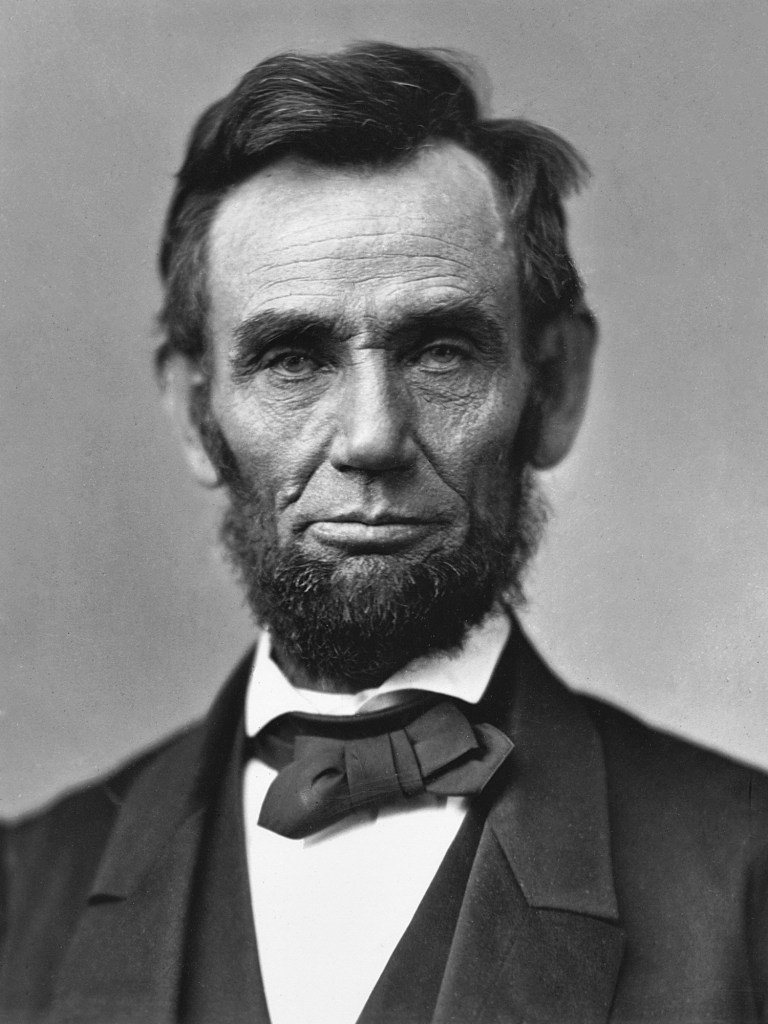
I know that millions of people are thinking along the same lines. And it’s fascinating to know that Abraham Lincoln was way ahead of us . . . in his case, with respect to the issue of slavery, but equally applicable to today’s problems.
“Honest Abe” (1809 – 1865)
What he said was:
“Whenever I hear anyone arguing for slavery, I feel a strong impulse to see it tried on him personally.”
This will be brief, because as I’ve already told the world, I’m cutting back on the writing for a few weeks to concentrate on my upcoming interstate move. But I can’t resist three quick comments on this week’s news:
Hooray for the Knicks!
Hooray for the people taking down the extraneous lettering from the Kennedy Center!
Hooray for Ukraine’s counter-attacks on Russian territory! (But please don’t hit the Hermitage in St. Petersburg.)
It’s not what you could call a vacation, R&R, or even work-related. The big news is that I am in transition — preparing to move from the great State of Georgia, where I have lived for the past six years, back to the equally great Commonwealth of Virginia, whence I came.
As I wrote on my blog’s Pages a few days ago, it’s time for this city girl to leave the peace and quiet of country living and head back to more urban surroundings, to reconnect with people I left behind and miss greatly, and to reacquaint myself with winter.
This will all take place over the next four weeks, and since I don’t move very quickly or steadily these days, it’s taking me longer than I would like to get through the sorting and packing and donating and recycling and trashing that such a move invariably entails. Unfortunately, that doesn’t leave much time for writing about the daily news, or sharing the random thoughts that I’ve been tossing out into the universe for the past few years.
So I will be taking a semi-break from my daily writing routine . . . though I do intend to keep my regular Sunday vigil on behalf of Putin’s political hostages. And I’m sure I’ll be popping back in from time to time when there’s a bit of world news too juicy to ignore, or perhaps simply to let you know how the packing is coming along. It just won’t be every day. So please do keep an eye open for me.
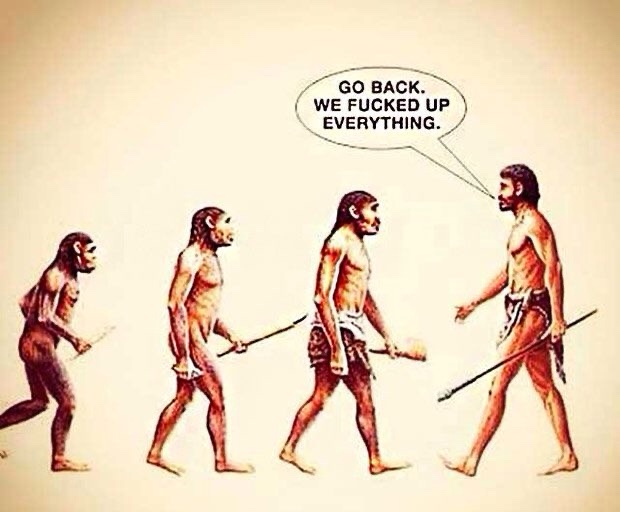
Meanwhile, be well, be good to each other, and remember these words of wisdom (source unknown):
Tomorrow, a new milestone in the modern-day history of war will be reached. But it is an occasion to be mourned, not celebrated.
World War I — optimistically dubbed by British author H. G. Wells as “the war to end all wars” — lasted 1,568 days, between 1914 and 1918.
And today marks the 1,568th day of Russia’s war of attrition against Ukraine, beginning with the full-scale invasion of February 24, 2022. And its instigator, Vladimir Putin, continues to evade any serious hope of ending it.
Photos From Kyiv Post – June 10, 2026
As of tomorrow, Putin will have outdone Kaiser Wilhelm II. We can only hope that he is stopped long before he is able to break Adolf Hitler’s six-year record (1939 – 1945).
What person over the age of about 40 doesn’t remember this terrifying news photo of a five-year-old Cuban boy being removed from his relatives’ home in Miami, Florida, to be sent back to his father in Cuba?
Repatriating Elian Gonzalez – April 2000
His mother had tried to escape the Castro regime with Elian in November 1999, planning to join family members already living in the U.S. Those were the days when boatloads of desperate Cuban citizens risked everything to make the treacherous water crossing to Florida. Elian’s boat capsized, his mother and others drowned; but a few survived, including Elian, who was rescued by two fishermen.
He was taken in by his paternal granduncle, Lazaro Gonzalez, who wanted to keep him in the U.S. But Elian’s father, Juan Miguel Gonzalez Quintana, fought to have him returned home to Cuba. After a protracted legal battle between the two men, which involved both U.S. and Cuban officials, Elian was forcefully taken from his granduncle’s home by Immigration officials and returned to his father, stepmother and baby half-brother in Cuba.
Back in Cuba
Elian’s story was followed in the news for some time, showing him growing and thriving in a loving household, and being treated as something of a folk hero by the Castro regime. Eventually, of course, his story became old news, and the world (and I) lost track of Elian.
Until yesterday, that is, when his name cropped up in, of all places, a crossword puzzle. Remembering the heart-rending story of the adorable little boy, I did some checking to see what Elian has been up to over the past 26 years, and found that — as was predicted at the time of his return — he became a product of the Cuban communist regime, saying in a 2005 interview on 60 Minutes that Fidel Castro was considered “not only as a friend but as a father.” It is also reported that the following year, when Castro was unable to attend Elian’s 13th birthday party, he sent his brother Raul instead. [Wikipedia biography, as of June 9, 2026.]
Elian, now 32, joined the Young Communist Union of Cuba in June 2008, and began military school at age 15. In 2013, he described his time in the United States as “very sad times for me, which marked me for my whole life,” and blamed the U.S. Cuban Adjustment Act for denying him his rights, including “the right to be together with my father, the right to keep my nationality and to remain in my cultural context.” [Id.]
Spoken like a good little communist.
Elian holds a degree in industrial engineering from the University of Matanzas, and is now an elected member of the National Assembly of People’s Power — Cuba’s supreme (and only) governmental authority.
Elian Gonzalez Today
So while the rest of the world may have forgotten about Elian Gonzalez over the years, the Cuban government did not. He received a good education, and is apparently on his way to a successful political career.
But how do you suppose Elian feels about the U.S. government today? Does he ever think that, if he had been allowed to remain with his granduncle and become an American citizen, he might now be a member of the U.S. Congress? Or, conversely, he could as easily be one of the people targeted by the Trump administration for de-naturalization?
How must he feel when he hears Donald Trump boasting about taking over his “shithole” country (Trump’s word, not mine)? What would his reaction be if he — and his fellow countrymen — were to wake up one morning and find that their homeland had just become a territory of the United States?
A Street in Havana, Cuba: Trump’s Latest Target
Granted, Cuba is a nation with enormous political, economic and social problems. But it is their country, and as far as I know, it has not been offered for sale. Threatening to take it by force is no different than what Russia has been doing to Ukraine. What Cuba needs is assistance, not forced assimilation into a different culture.
*. *. *
Seeing Elian’s name in print yesterday and being reminded of his life story has made Trump’s threats feel much more personal than merely geopolitical. And, while Trump doesn’t concern himself with such trivia as the effect of his actions on ordinary people, in reality it is all about the people.
Are the citizens of Cuba living their best life? In most cases, probably not. But would they be better off living under a Trump-led regime?
I wonder how many of my readers are old enough to remember — or have at least learned about — the infamous McCarthy Hearings of the early 1950s. I was just a kid, but I vividly recall sitting in front of our black-and-white TV, fascinated by the spectacle and simultaneously terrified at the idea that our country might be massively infiltrated by . . . GASP! . . . communists.
Army-McCarthy Hearings – 1954
Senator Joseph McCarthy’s paranoia-driven crusade did incalculable damage to the lives of countless innocent people. As the Republican Senator from Wisconsin, his party, which led the Senate, allowed him to continue the closed-door hearings of his “Red Scare” campaign because they reflected badly on the Democratic Truman administration.
But finally, on June 9, 1954, with Republican Dwight Eisenhower in the White House, the Senate — and Americans as a whole — had had quite enough of Joe McCarthy. And he sealed his own fate when he decided to take on the U.S. Army, declaring it to be “soft” on communism and opening hearings into the matter.
The attorney representing the Army was one Joseph N. Welch, who brilliantly attacked and debunked every one of McCarthy’s charges, sending the already unbalanced Senator into rage after rage. Finally, when in a moment of desperation McCarthy accused a member of Welch’s firm of being involved with an organization considered to be a “legal arm of the Communist Party,” Welch had had enough.
Staring McCarthy in the eye, he said:
“Until this moment, Senator, I think I never really gauged your cruelty or your recklessness. Have you no sense of decency, sir, at long last?”
– Source: “This Day In History,” History.com, June 9, 2026.
Joseph N. Welch (1890 – 1960)
Joseph McCarthy’s career ended in disgrace. Following official condemnation by the Senate for contempt against his colleagues, he managed to retain his office, but descended into alcoholism and died in 1957.
*. *. *
The United States, and the world as a whole, was a different place in 1954. There was an innate sense of decency that we had grown up with, and that had been firmly embedded in us during the recently hard-won Second World War. All it took then to bring down a hateful, destructive, egomaniacal tyrant were ten words that have become famous in the annals of our country’s illustrious history:
“Have you no sense of decency, sir, at long last?”
. . . words that we would do well to remember today.
If you saw yesterday’s post, you know that I was on my way to the podiatrist’s office to deal with a sore toe that has had me hobbling around in pain for several weeks. What I didn’t mention was that I had convinced myselfz the only cure would be amputation, and that I was doomed to spend my remaining years as a nine-toed circus attraction.
But sometimes life’s little surprises turn out to be pleasant ones.
First, yesterday had been predicted to be rainy and thunder-stormy — the most appropriate weather for a funeral or a dreaded visit to the doctor. But, while it was mostly cloudy, the rain held off and the sun occasionally peeked through . . . a truly auspicious start.
Then the friend who had referred me to this new doctor and offered to accompany me there said that she and her husband wanted to take me out to dinner after my appointment, if I was feeling up to it. Pleasant surprise #2.
Now, about the offending phalange (that’s podiatrist-speak for “toe”). It turned out that it wasn’t being devoured by a flesh-eating bacterium, or otherwise in need of being divorced from its nine siblings. Without going into boring detail, it was a simple matter of a little novocaine, a little scraping and digging (totally painless, thanks to the novocaine), and a padded bandaid to be worn for a couple of days.
Oh . . . and some really nice people, including the entire office staff and the doctor himself. Lovely surprise #3.
Then a good seafood dinner with friends, and back home with all of my lower digits intact, and absolutely pain-free even after the novocaine wore off.
Finally, for the icing on the cake, I got to spend an entire afternoon away from the news of the day. No Trump, no Russia, no China, no Iran or Cuba or Venezuela or Israel or Greenland or . . . well, no negativity at all. Just good company, and a happy toe.
It doesn’t get much better than that, so I wanted to be sure to share it with all of my friends out there.
In the early days of my blog, I wrote two very long chapters on my summer in Zlata Praha (Golden Prague) in 1991. There was so much that was simply magical about a city with a “modern” history going back more than a millennium, that in more recent times had survived the Nazi occupation of World War II and the 23-year Soviet occupation of 1968-1991, and that really knew how to celebrate the departure of the last of the Soviet troops . . . the very week that I arrived.
Old Town Square, Prague
But during a recent mental stroll through some of the more amusing episodes of my travels during the ‘80s, ‘90s and 2000s, two things somehow stood out from those months in Prague — both involving dogs. And since there are far more people who didn’t read my first posts than actually did, here are those two tales again. They still make me laugh, and I hope they’ll give you an idea of what Prague was like in those heady post-Soviet days.
*. *. *
Meeting the Neighbors. I had been sent overseas for a few months by my American law firm to work in our newly-established Prague office. My apartment there was on the second floor of a generic Soviet-style building near the foot of a ridiculously steep hill. The hallway light operated on a timer and had to be switched on each time I entered the building or left my apartment, if I didn’t want to commit suicide on the uneven stairs. The apartment itself had a fairly large bedroom, and a small living room, where there was a wardrobe with a man’s clothes still hanging in it. (I never did find out who they belonged to, and no one ever came to claim them.) There was also a tiny bathroom where the hot water ran reddish-brown for several minutes before clearing enough for a quick shower. A sit-down bath was out of the question. The kitchen contained a working refrigerator, stovetop and sink; but I never learned to use the oven, which showed temperatures in centigrade, or the Russian-made microwave, which I was sure would zap me with some sort of deadly rays if I dared try.
My Old Neighborhood in Prague
But none of that mattered, as I only slept, showered, and changed clothes there. The rest of my time was spent at the office, followed by dinner every evening with one or more of my co-workers at any of the many outstanding restaurants the city had to offer, and sightseeing all weekend, every weekend. So there wasn’t a lot of opportunity to become acquainted with the neighbors.
But there was the night I met the Dobermans. No, not the nice Jewish couple next door; this couple was from upstairs on the third floor. When I got out of the taxi in front of my building after dinner one evening, there was a small group of men standing nearby, just talking and enjoying the mild summer air. One of them called out to me, but he was speaking Czech and I couldn’t understand him. Thinking they were just being neighborly, I gave them a friendly wave as I opened the door to my building . . . and was confronted in the pitch-dark hallway by two humongous, solid black, barking, snarling, drooling, straining-at-the-leash Doberman Pinschers, ears up and tails down, obviously looking for someone to kill. Someone like me.
Startled out of my wits, I did what any rational person would have done when facing imminent death: I let loose with a primal scream . . . the dogs’ owner screamed in response . . . the dogs barked louder . . . and all the while the men on the street were roaring with laughter. That was what they had been trying to tell me: look out for the dogs, who had just come back from their evening walkies. And when my neighbor and I finally stopped screaming, we joined the others in laughing at ourselves. The dogs — who lived directly above me — finally turned off the bark machines, and my heart rate slowed to a survivable 120 or so. The Doberman couple turned out to be sweethearts, once they got to know me, and their owner was a very pleasant guy . . . though I would have preferred to meet them some other way. Any other way.
Howdy, Neighbors
*. *. *
And then there was . . .
The Minister’s Dog, who proved to me that in Prague, even a tragedy can end with a good laugh.
Dogs are treasured as pets in Europe, just as they are here in the U.S. And that included the dog belonging to the Czech Foreign Minister.
We had an American attorney working with us — a bright but spoiled young woman from a well-to-do family, who never quite adapted to the easy-breezy way of life in Prague. Our law firm had been retained by the new Czech government to advise and assist in formulating a new constitution and legal framework, and she — we’ll call her Valerie — had been assigned a desk at the Foreign Ministry where she worked pretty much full-time. As a convenience, she brought her lunch to work every day and kept it in the Minister’s refrigerator, as did many others.
Now, I have to insert here that Valerie was, shall we say, less than popular with the Ministry staff. She had way too much Attitude, with a capital “A.” On the day in question, the Foreign Minister was leaving town on government business, and had brought along his beloved dog — a terrier, I believe — to hand over to a friend who was going to care for the pooch during his master’s absence. The Minister parked in his reserved spot in front of the building, opened the driver’s-side car door, and before he could turn around, his dog ran out into the street — and directly into the path of an oncoming vehicle. The poor baby was killed instantly as his owner watched, helpless.
Needless to say, the Minister was devastated, but was unable to cancel or postpone his official trip at the last moment. So he had to make some hasty arrangement for the pooch until a burial could be planned for the following week. And this being Prague, the solution turned out to be . . . well . . . unique.
When Valerie arrived at the Ministry for work a little later that morning, no one took the trouble to warn her that anything was amiss. She went directly to the kitchen to put her lunch into the refrigerator, and had one item that needed to be kept frozen. So she opened the freezer door . . . and let out a SHRIEK that must have been heard in Belgium. Because in the freezer — staring sightlessly out at her, arms and legs akimbo, a silvery frost already forming on his fur and his little black nose and protruding pink tongue — was the Minister’s dog. The Minister’s dead dog. Sad . . . stiff . . . broken . . . bloody . . . undeniably, irretrievably dead doggie . . . without so much as a blanket or a newspaper to cover his sorrowful condition. And the shrieking continued, while all around her, Valerie’s co-workers were laughing their asses off. Not at the dog, of course, but at her. They really didn’t like her.
NOT the Minister’s Dog, Just a Cool Facsimile
You will be relieved to know, incidentally, that that sweet, unfortunate, cryogenically-preserved canine received what was reportedly a lovely burial the following week in the Minister’s home town, alongside all of his previous pets. I assume he was thawed first. The dog, not the Minister. Requiescat in pace — R.I.P., little pup.
Unlike myself after my meeting with the Dobermans, Valerie never did quite get over her canine encounter. It wasn’t so much the initial fright; but that woman really knew how to carry a grudge.
And Prague seemed intent on getting back at Valerie for not being happy there. Sometime during the summer, we suffered a city-wide power failure for nearly an entire day. As the locals were fond of saying, “Oh, well . . . that’s Prague.” While the rest of us enjoyed a lunch at a nearby restaurant, consisting of cold cuts and fresh vegetables, with potatoes cooked slowly over a huge collection of candles (Czech ingenuity at its finest), Valerie was stuck in the elevator at the Ministry. Stranded alone in the car, she again displayed her usual aplomb in times of crisis: she screamed, pounded the elevator door, screamed some more, repeatedly pushed the buttons to all the floors . . . and continued to holler for someone to get her the %#*#& out of there. When stressed, it seemed her upper-class upbringing went directly down the drain. She was, of course, ultimately rescued. But no one was in the least surprised — or in the least saddened — when she finally was granted a transfer back to the States.
Homeward Bound
*. *. *
But that was just Prague. Valerie may have considered it to be a living theatre of the absurd; but to me it was an endless tapestry of humanity at its best, and life as it is meant to be lived: freely, joyously, and always hopefully.