Vladimir Putin continues to insist that he has “no plans for military action against Europe.” [The Washington Institute for Poland, September 28, 2026.]
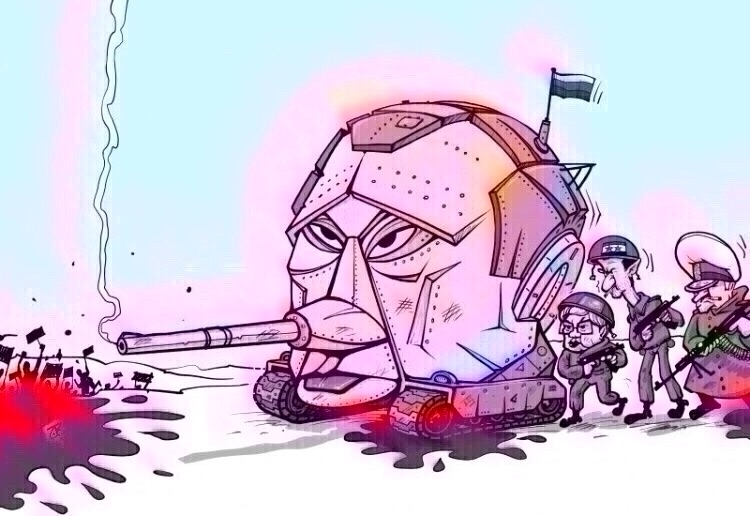
Yet, as always, his actions belie his words. A joint investigation by journalists from Lithuania, Latvia and Estonia has unearthed evidence that Russian Foreign Ministry lawyers have been preparing legal arguments since the invasion of Ukraine in 2022. And in May of this year, Moscow announced that it plans to bring a case before the International Court of Justice against the three Baltic nations, alleging “discrimination against Russian speakers [and of running] a punitive campaign of repression and intimidation” — specifically accusing them of banning the use of the Russian language. [Id.]
While offering no proof or examples of the alleged actions, he said that Moscow is responding “on humanitarian grounds and within the framework of international law.” [Id.]
While their case may be laughed out of court, it still lays the groundwork for his next moves.
Also in May, Putin signed into effect a law authorizing him to deploy Russian military forces to “protect Russian citizens” abroad. [Id.]
If this sounds more than a little familiar, it is because he used the very same justification for his actions against Georgia in 2008, Crimea in 2014, and the full-scale invasion of Ukraine in 2022, making unproven accusations of discriminatory actions against Russian speakers living in those regions, and claiming that they amounted to “ethnic cleansing.”
And now it’s the Baltics . . . but not exclusively. Poland, because of its geographic location between Ukraine and Lithuania — as well as its shared borders with Russia’s vassal state of Belarus and the small Russian enclave of Kaliningrad — is in a similarly vulnerable position.
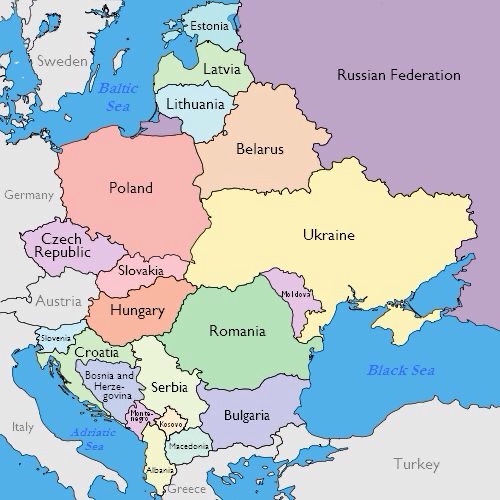
Time after time, Putin ignores — and hopes the world won’t notice — the irony of his charges against others precisely mirroring his own past and present actions. In the currently occupied areas of Ukraine, he has outlawed the public use of the Ukrainian language; removed all Ukrainian literature from libraries; and required the adoption of a new school curriculum to include Russian academic, political, patriotic, and even military training . . . all in the Russian language.
This is his standard modus operandi, and Europe — already reinforcing its defenses — is not falling for his protestations of innocence.
Not this time.

Just sayin’ . . .
Brendochka
10/1/26

