In the midst of the turmoil that is life in the 21st century, I find myself increasingly wondering what it will all mean 100 or 1,000 years from now, and how long it will take for all traces of our current civilization to fade from existence and from memory.
So I’m bypassing politics and other world events today in favor of a look at some millennia-old marvels that have survived beyond all reason . . . and that, in fact, should have been impossible for humans of their times to have created in the first place.
Let’s start with one that is “only” about 2,200 years old: Emperor Qin Shi Huang’s Mausoleum, more commonly known today as the Terra Cotta Army at Xi’an, China.
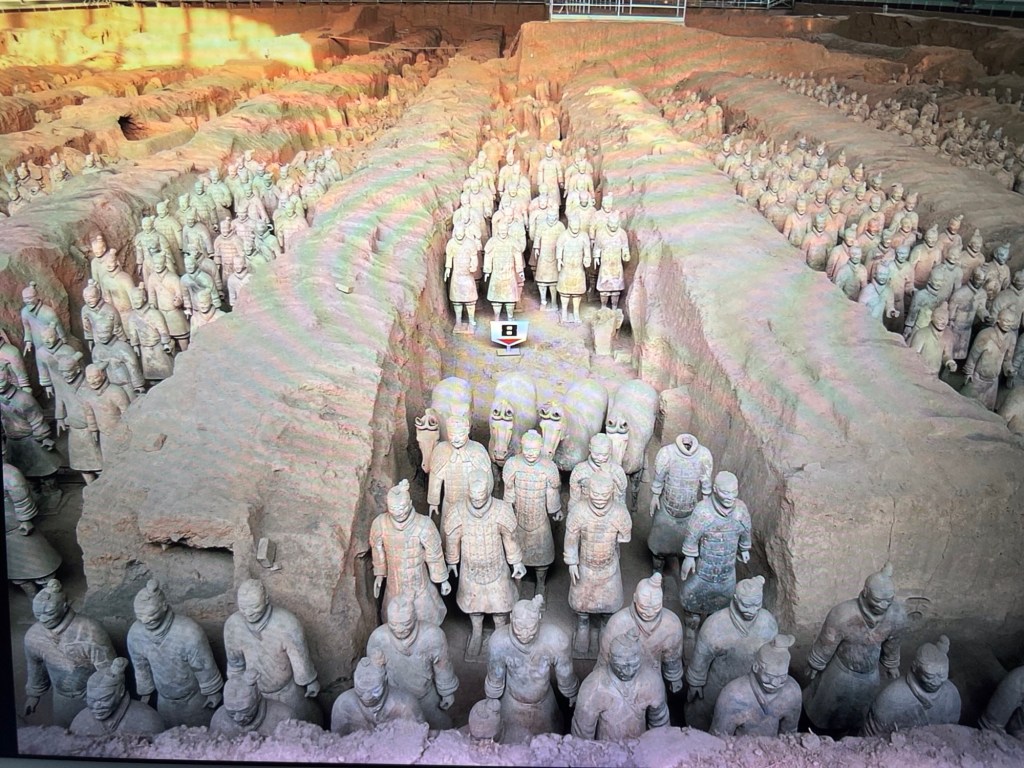
Unearthed accidentally in March of 1974 during the digging of a well, it consists of over 8,000 life-sized pottery soldiers, horses and chariots believed to have been built over the course of 38 years (from 246 to 208 B.C.), under the orders of the Emperor, to guard his tomb in the afterlife.
I was privileged to see an exhibit of a number of the soldiers and horses when it was brought from China to the United States many years ago, and I was astonished at the detail in the carvings; the fact that no two are identical in facial or other features; and the anatomical accuracy at a time when man’s scientific knowledge of anatomy was limited.
The fact that they have survived more than 2,000 years underground is nothing short of miraculous.
*. *. *
Moving ahead — or rather, back — to about 3100 B.C., we come to perhaps the most famous of all of the world’s mysterious stone structures: Stonehenge. Located on the Salisbury Plain in Wiltshire, England, the most familiar circle of stones is estimated to have been placed between 2600 and 2400 B.C.
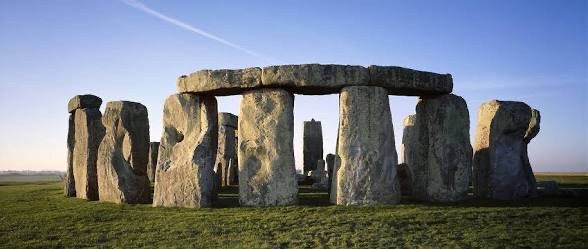
Its exact purpose is unknown, though some think it may have been a burial ground. An air of mystery surrounds the site, with many believing that it might have been an early celestial observatory due to the alignment of the stones with the sunset of the winter solstice and the sunrise of the summer solstice. The two events continue to draw crowds of observers each year in what can best be described as a pilgrimage. And year-round, visitors are drawn simply to marvel at the placement of the enormous stones that were somehow dragged great distances, without benefit of machinery, and arranged just so — for whatever purpose.
*. *. *
Similarly “impossible” are the Pyramids of Giza, Egypt, dating back some 4,500 years. We know that they are the burial places of the pharaohs; but again, how men were able to construct the perfect shapes, using only brute strength, remains a mystery.

The largest of the pyramids — the Great Pyramid of Khufu — is the last surviving Ancient Wonder of the World. The other six, including the Hanging Gardens of Babylon and the Colossus of Rhodes, were lost to fire, earthquakes, or the ravages of time. But the Pyramids live on.
*. *. *
What started me on this bit of time travel was an article I recently ran across on an ancient structure I had not previously heard of: the Carnac Stones, or the Alignements of Carnac, in Brittany, France.
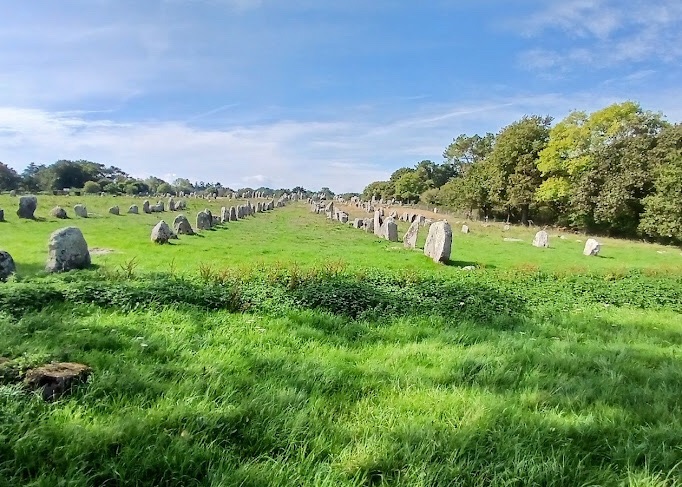
Erected between 4500 and 2000 B.C., these consist of more than 3,000 local granite menhirs (standing stones, or monoliths), stretching across four kilometers and arranged in precise parallel rows. They were built by pre-Celtic Neolithic farming communities over more than two millennia; and though their precise purpose remains unknown, some theories suggest they may have been sacred gathering paths, astronomical observatories, or ancestor memorials.
Whatever their purpose, they are yet another example of early man’s ingenuity, determination, and perseverance.
*. *. *
And again, I find myself contemplating whether anything built in the last 100 years or so, using modern technology, materials and equipment, will be around even a couple of centuries from now.
Imagine, if you can, our descendants’ sense of wonder as they gaze at this:
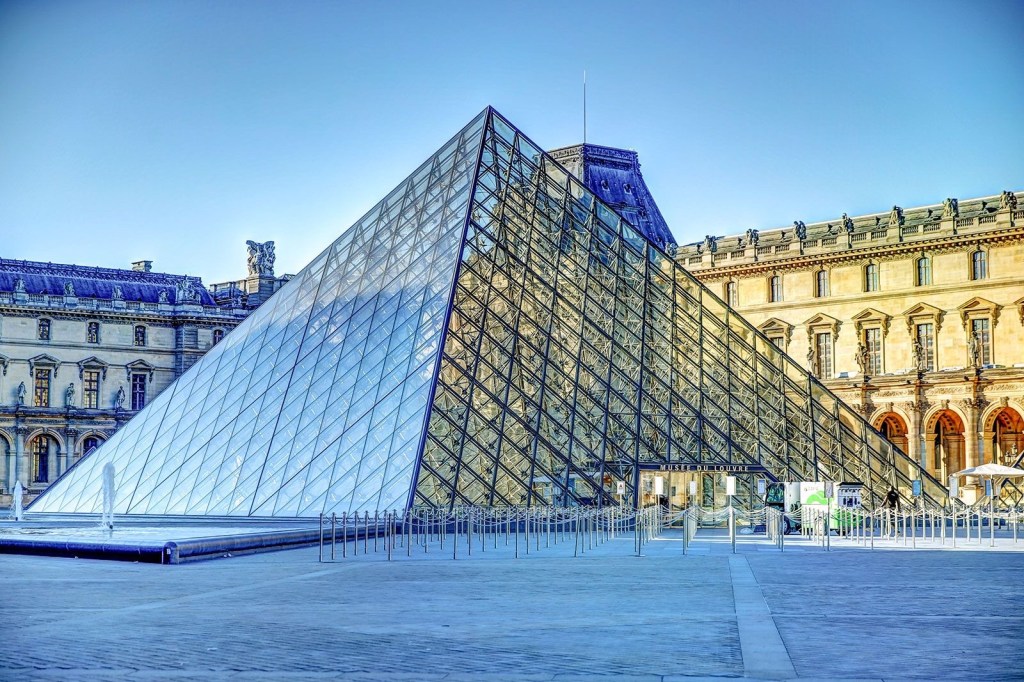
. . . or this:
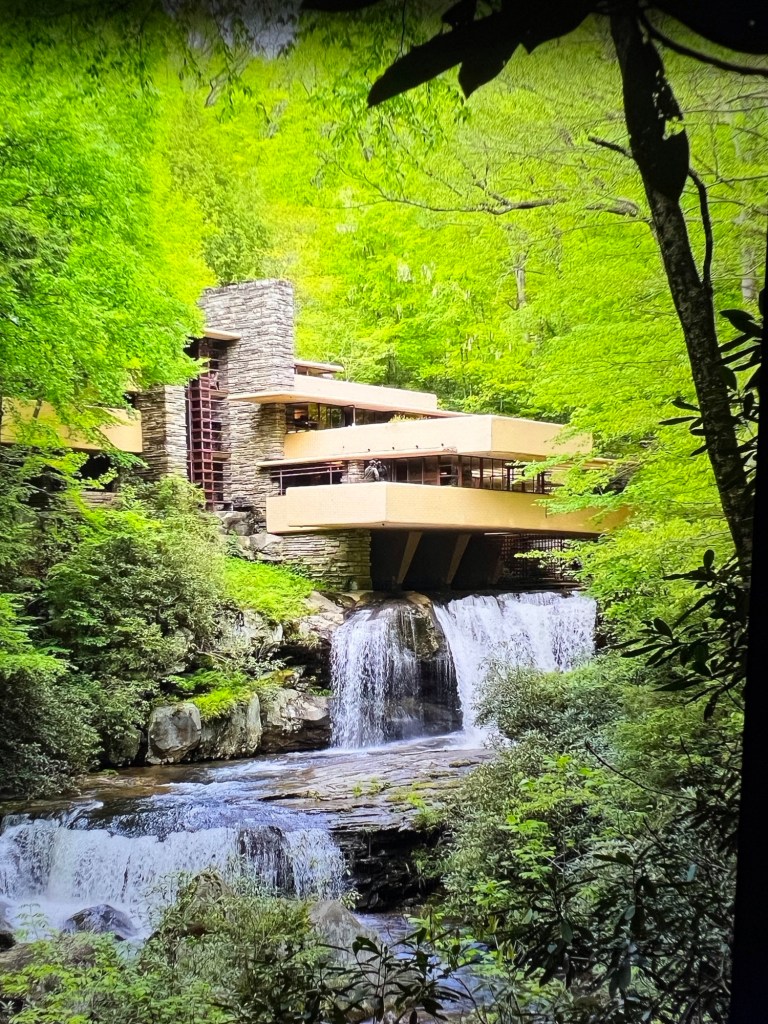
. . . or even this:

We, at least, are able to leave written and recorded histories for later generations. But will the structures themselves still be here, or will this be the last remaining evidence of our era:

If that turns out to be the case, I can only say that I’m glad I won’t be around to have to explain it!
Just sayin’ . . .
Brendochka
8/14/26

