As I was writing yesterday’s post about Vladimir Putin’s purge of Russian Orthodox priests who have spoken out against his war in Ukraine, I was reminded of my own, surprisingly spiritual, experience in one of the churches at the famed Novodevichy Monastery in Moscow, more than 30 years ago.

February 1993. In a lead-up to my being hired to manage the Moscow office of a U.S. humanitarian aid foundation later in the year, I was in the Russian capital to accompany the foundation’s Washington office director, Kate Williams, for a week of organizational meetings.
One bitterly cold afternoon when Kate and I had some free time, our driver Vitold took us on a little sightseeing tour, ending at the historic Novodevichy Monastery. Most of the buildings were not open to the public, but we were able to wander the snow-packed lanes through the cemetery where the creme-de-la-creme of Russian and Soviet society were spending eternity: famed writers such as Chekhov, Gogol and Bulgakov; the composer Prokofiev; and the unforgettable former Soviet leader Nikita Khrushchev; among numerous other cultural, political and military elites.

After an hour or so, when we were just about frozen to the bone, we suddenly heard an unexpected sound . . . a sound best described as the distant voices of angels.
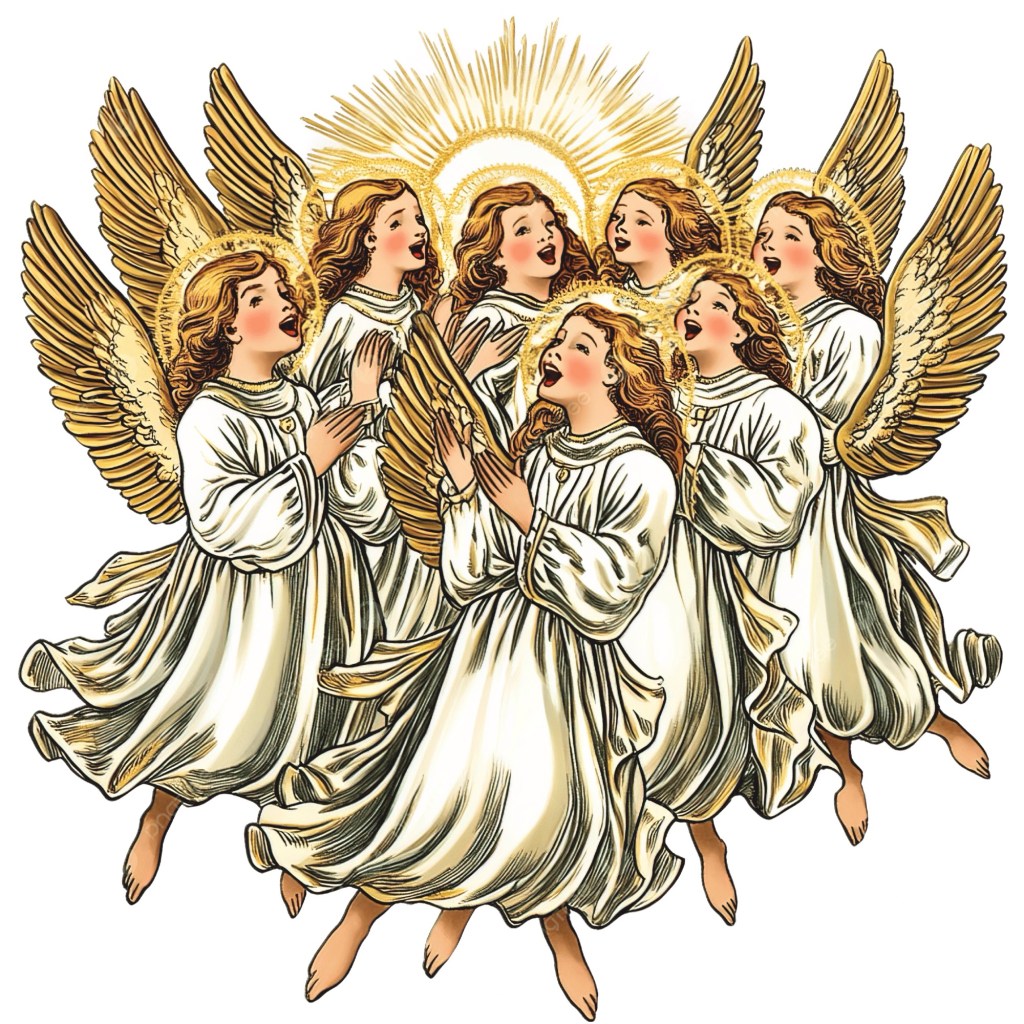
No . . . we were not hallucinating. What we were hearing was the liturgical music of a choir practicing in one of the Monastery’s churches . . . and the doors were open. We headed for the warm interior, excited at the opportunity to thaw out and to see what the inside of a Russian Orthodox church looked like.
The first surprise was the emptiness — no pews, no benches, no seats of any kind; just a large expanse of concrete flooring. Along the left and right sides were tall windows, below which were statues of various saints, and tables with long, thin candles to be lit for the saint of one’s choice. And at the front was a large altar, behind which loomed an incredibly beautiful, nearly ceiling-high iconostasis separating the main part of the church from the sanctuary. The angelic voices were drifting out from behind that screen.

There were a few worshipers — mostly old women, who, despite the obvious pain involved, would periodically kneel and touch their heads to the hard floor. Seventy-five years of communist rule had done nothing to diminish their faith.
But most interesting were the men in suits and overcoats strategically posted on either side of the room, one on each side, just standing and watching. Kate wondered who they might be — perhaps security? Vitold didn’t respond, knowing the answer but concentrating on trying to ignore them. So I whispered that they were most likely from the KGB.
She thought at first that I was joking; but when she saw that I wasn’t, and Vitold nodded in agreement, she looked understandably nervous. So I told her, “It’s okay; just ignore them” — which was pure bravado, of course. I was feeling jittery myself; but I knew that the last thing we needed was for them to think we had anything to be nervous about. The Soviet Union may have disintegrated more than a year earlier, but some things hadn’t changed, despite glasnost.
Then we were distracted by some activity at the front of the church. To our delight, we had arrived at the perfect time. Without any fanfare, a priest — in long, white-and-gold robes and headdress, snowy white beard flowing from his chin halfway down his chest — emerged from the sanctuary and began a service for the small gathering. Of course, Kate and I couldn’t understand a syllable of the old Church Slavonic language, but with the choir of angels in the background, it sounded divine.
The three of us were standing in front near the altar, soaking in the atmosphere, when suddenly the priest looked around and his eyes caught mine . . . and held. And held. And held some more. His gaze was mesmerizing, and I could not bring myself to look away. I felt as though he was looking deep into my soul, and I somehow sensed that I was being blessed . . . though I couldn’t imagine why.
Perhaps I stood out as a foreigner, and he was trying silently to warn me about the KGB’s presence. But why me, and not Kate? I still think about it, and wonder. It was unlike anything I had ever experienced, or have felt since. And if I close my eyes today, I can see that priest’s eyes and feel the power of his gaze.

Finally, after what felt like an eternity, he looked away and the service ended shortly thereafter. It was time for us to leave — and to walk past those KGB watchers still hanging out in the warmth of the church. I wondered if either of them had noticed my visual exchange with the priest, and I half expected them to stop us, if only to find out who we were and where we were from; but they didn’t.
We stopped briefly to light candles to a couple of saints whose identities were a complete mystery to us, left a generous donation of rubles in the plate, and hurried out of the church and the Monastery grounds to Vitold’s little heap of a car waiting nearby on the street.
*. *. *
That experience has stayed with me for 33 years, which is probably why I have had such a strong reaction to the treatment of today’s Orthodox priests by the Putin administration, and by their own Moscow Patriarch Kirill. Even though I was raised in the Jewish faith, I have always been interested in, and maintained a great respect for, all other religions. And that day, standing in the warmth of a Russian Orthodox church, I felt the strength of that priest’s faith and his spirit of human kindness.
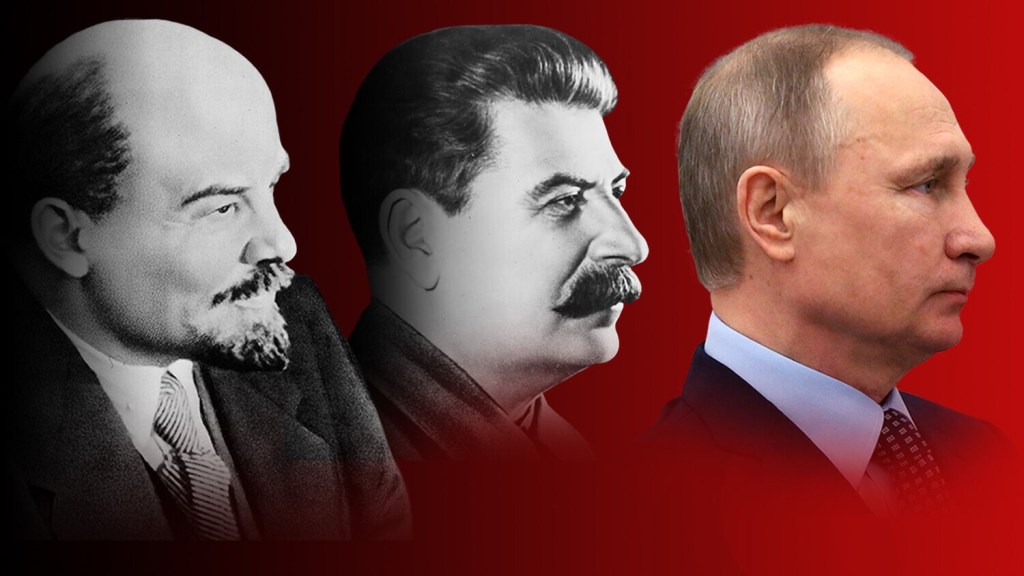
Both Vladimir Lenin and Josef Stalin tore down countless magnificent cathedrals and churches in an effort to stamp out religion. Putin, thus far, has been smarter than that, choosing instead to pay lip service to the Orthodox Church while maintaining control over its teachings.
The Russian Orthodox Church and its proponents survived Lenin, Stalin, and their communist successors; and their faith will outlive Putin as well. But unfortunately, it won’t be without a struggle.
Just sayin’ . . .
Brendochka
5/28/26

