That simple sentence can be read two ways: first, the absence of any news means that at least there’s no bad news; but alternatively, it could mean that there is news but none of it is good. Unfortunately, the second circumstance is the one we most frequently encounter in newspapers, TV broadcasts, and onine. Doom and gloom prevail. If it’s good, it’s just not news.
Since I am admittedly a news junkie, I recently began a second series of blog posts I call “Extras” (concurrent with my “Reflections”), briefly commenting on bits and pieces of the news of the day. And I have found — not surprisingly — that there’s not much to write about that isn’t depressing or downright frightening. And then I remembered: CNN has a column called “CNN’s Good Stuff,” printed online every Saturday and featuring stories about the more pleasant, cheerful, often heartwarming side of life. It’s a delightful departure from the norm, and I decided to refer to it this morning for inspiration.
Saturday Morning Ritual
But wait a minute! Is this the best they could come up with today, from the whole of last week? Two articles about Barbie; the story of an AI program that tried to follow crochet instructions and didn’t do so well; a recommendation of some off-the-beaten-track national parks; one nice story about a couple who met in a chocolate shop in Brussels 40 years ago and are still married; and — most interesting of all, but ultimately depressing — the tale of a sea otter who is going to be relocated as soon as they can catch it because it dares to snatch the surfboards from people who are intruding upon its watery home in the first place. (I’m rooting for the otter.)
“Aawww . . . c’mon!”
Then, reading to the bottom of the column, I see that CNN is “opening the floor” to readers for their “heartwarming” real-life stories so that CNN can “spread the positive news.” And I’m thinking: OMG, they’ve actually run out of good stuff to write about and are reaching out for help! The well is dry. There is no joy in Mudville . . . or anywhere else, apparently. Life officially sucks.
But hopefully not. I’m basically a realist, which means that I have a dual personality: both optimist and pessimist, ideally in fairly equal proportions. So I’ll try again next Saturday, and see how successful CNN’s search for good news turns out to be. And maybe I’ll even try to submit an uplifting item myself . . . if I can come up with anything. Maybe the otter will outsmart the people who want to evict it. Wish me (and the otter) luck.
As the Russian Navy’s “training class” ship sits docked in Havana’s harbor, we are now told that it is there for a four-day “visit,” during which its crew will “carry out a wide range of activities,” and Cuban citizens will be invited aboard, for . . . what? Tea and blini?
Havana
Prior to the collapse of the Soviet Union in 1991, Cuba was largely dependent upon its relationship with the Soviet Union to shore up its fragile economy. Since that time, the Cuban economy has faltered and virtually collapsed. President Obama saw the opportunity to help Cuba begin throwing off the shackles of Soviet authority by restoring diplomatic relations and easing existing economic sanctions previously imposed by the U.S. Unfortunately, Donald Trump, in his presumed superior wisdom, did away with all of that by reversing Obama’s reversals. And President Biden has done virtually nothing to improve the situation.
So now, Cuba is ripe to become, once again, a vassal state of Russia. Its current President (more accurately, dictator), Miguel Diaz-Canel, himself a staunch Marxist-Leninist socialist, stands firmly behind Putin’s Russia, loudly voicing approval of the “special military operation” in Ukraine and opposing NATO’s proposed inclusion of countries in close proximity to Russia’s borders, such as Sweden and Ukraine itself. Sound like someone else we know all too well? Perhaps a man who has been much in the news lately, one of Vladimir Putin’s many puppets: Aleksandr Lukashenko, the President of Belarus.
The presence of the Russian warship in Havana is only one of a recent series of Russian incursions into Cuba. The island nation has lately been the recipient of tens of millions of dollars worth of desperately-needed oil, along with the promise of future development and investment. No savvy businessperson could seriously think that this is all being offered out of the goodness of Putin’s (or anyone’s) heart. There has to be a tit-for-tat in there somewhere.
“Santa Putin”
This may all seem to be business as usual for Russia — except that it is happening on America’s doorstep. Is it “deja vu all over again”? If so, let us hope that we — the United States — don’t make the same disastrous mistake we made following the breakup of the USSR some 30 years ago, when so many wanted so much to believe that the new Russia was now our trusted friend. Or just last year, when Putin expected us to accept as fact the preposterous claim that the enormous buildup of Russian troops on Ukraine’s border was merely a routine military exercise. I would hope that we’re smarter today, and that we recall the words of Sir Winston Churchill: “Those that fail to learn from history are doomed to repeat it.”
A few years ago I finally retired, and after careful consideration and consultation with some of my family members, made the decision to leave my home of 65 years in the Washington, D.C. area, and travel south to the unfamiliar land of Georgia to be with family. And after one year here, I jotted down a few thoughts on my impressions of my new home away from home, to send to a Washington friend.
But first, for those readers who may be from the heart of Dixie, I sincerely hope I haven’t given offense — that is not my intention. It’s all in good fun. This is really a lovely place, filled with warm, friendly, good people. It’s just that it isn’t Washington, and it’s hard to change 65 years of habit, and impossible not to miss some things as they were. So, taking that into consideration, here we go . . .
“In them old cotton fields back home”
“The great Tom Lehrer — one-time Harvard math professor turned songwriter/satirist/balladeer in the 1950s and ‘60s — wrote a shamefully irreverent song about the American South. He called it ‘I Wanna Go Back to Dixie,’ and if written today, it would have gotten him hanged from the nearest live oak tree, and not undeservedly so. A small sample:
‘Old times there are not forgotten, Whuppin’ slaves and sellin’ cotton . . .’
“He called the South ‘that y’all and shut-my-mouth land’ (rhyming it with ‘southland’), and summed it up with the immortal, ‘Be it ever so decadent, there’s no place like home.’
“Lehrer was from New England, and as far as I know, never lived in the South. I’ve been here in rural Georgia for just over a year [at the time of the original writing], and not in Atlanta or any other large city, but out in the country about 30 miles from Savannah; and I can tell you that Tom Lehrer pretty much nailed it (except, of course, for the part about the slave-whuppin’). This is a place like no other I’ve encountered in my travels throughout the U.S., or anywhere else, for that matter. And they tell me this isn’t even the deepest of the deep South! The scenery is beautiful, but the lifestyle . . . well, it just isn’t Washington. Here are some of the differences that jump out at me:
Instead of: Apartment Buildings Georgia has: Trailer parks
Instead of: Department stores Georgia has: Dollar General stores
Instead of: Smithsonian Museum Georgia has: More Satellite TV
Instead of: Uber, Taxis, and Buses Georgia has: Trucks and motorcycles Instead of: Food delivery Georgia has: Curbside pickup
Instead of: Four distinct seasons Georgia has: Two seasons: Summer, and Hell’s Front Porch
Instead of: The King’s English Georgia has: ‘Y’all,’ ‘sho’ nuf,’ and words with no “g” on the end
*. *. *
“Again, I’m talking about the rural South, not cities like Atlanta and Savannah. And lest you form a completely negative impression of this exceptional bit of country real estate, let me assure you that there are many very positive aspects as well, such as:
– Peace and quiet.
– Light traffic (except when some clown in a pick-up tries to beat the train through the crossing).
– Low stress level . . . really low.
– Low crime rate. (Everyone owns and carries at least one gun, which is supposed to serve as a deterrent to the occasional would-be criminal. It seems to work — around here, at least.)
– Deer in the back yard.
Actual photo, right here in the neighborhood.
– Deer poop in the back yard (maybe not so great).
– Low Country Boil
– Those fried green tomatoes — scrumptious!
– The sweetest, juiciest peaches in the world.
– Tybee and the other Islands
– People who call you ‘ma’am’ or ‘sir’ and hold the door open for you.
– Did I mention peace and quiet?
– And guns?”
*. *. *
So what do I do with all of this peace and quiet? Well, for the most part — in case you haven’t already figured it out — I write. There’s this blog, and poems to an old friend, and a book (which may even be published one day, if I’m very, very lucky). All of which I never seemed to find the time to do when I was living in D.C. and gainfully employed. Now, if I could only find a way to get paid for it . . .
But no one ever told me life was perfect.
A much younger, idealized version of me
I kid about the differences between country living and city life — and they are very, very different. But that doesn’t make one better than the other . . . just different. And those differences — just as with the differences among people — are what give life its zest. And what give me something to write about. As they say in France: Vive la difference! So, au revoir until next week.
July 12, 2023. As is my habit, I checked the online news headlines when I awoke this morning — o.k., shortly before noon — and was shocked to see a report of a Russian warship that had arrived in Havana, Cuba, just the day before. I couldn’t believe my eyes, and I even checked the calendar to be sure I hadn’t somehow been transported back to 1962. What was this: the Cold War, Part Two?!!
“The Russians Are Coming! The Russians Are Coming!”
Well, yes . . . maybe . . . sort of. We’re not talking about live missiles being sneaked in under cover of night and hidden under camouflage. But we are looking at a strengthening of ties between Russia and a desperately poor, needy island nation just 90 miles off the coast of Florida, at a time when even the larger, stronger country — Russia — sorely needs a booster shot of self-esteem. And what better place to stage a little saber-rattling toward the United States than from a former Soviet dependency just a stone’s throw from our shores?
Those of us born before 1950 can never forget those 13 days in October of 1962 that became known as the Cuban Missile Crisis. We Americans — particularly those of us on the East Coast — lived every moment in fear of Armageddon being rained down on us. I lived in Washington — the presumed first-strike target of any enemy attack — and did not sleep for those two weeks. And even after President Kennedy stood his ground, and Nikita Khrushchev finally “blinked” and — realizing that his effort at intimidation had failed — withdrew his missiles, it was many months before most of us felt any sense of security again.
Is that what we’re facing now? Is this the Cuban Missile Crisis, Redux? We all hope not, of course. But, as we have seen so clearly this past year and a half, first with the invasion of Ukraine, and now with the confusion surrounding Yevgeny Prigozhin’s attempted rebellion against the Russian government, no one really seems to know what Vladimir Putin is thinking, or what he is capable of doing. I certainly don’t pretend to have the answers, and it’s probably too soon for even the experts to know what’s going on. But I do know this: I’m not going to sleep quite so soundly tonight.
No, I don’t believe we’re at the stage when we should start digging our fallout shelters, or teaching our school children to “duck and cover” (that’s obviously useless anyway). I guess I’m just sharing this because it’s what people do when they’re nervous — we seek comfort in the company of friends. And we hope for the best.
So you’ve worked your whole adult life, taking care of business, taking care of your family, doing all the right things — just so you could retire someday and take it easy. And now, at last, that time is right around the corner, and your friend at work asks you what you’re going to do when you don’t have to get up early and come to work anymore. And you say the first day you’re going to set the alarm clock as usual, and when it jolts you awake at 6:30 in the morning, you’re going to pick it up and hurl it across the room and roll over for another couple of hours of blissful sleep. And then for the rest of that day you’re going to hang around in your pajamas and watch TV and eat raw cookie dough until it’s time to go online to GrubHub and order $100 worth of Chinese takeout for dinner.
Then your friend asks, “And what about the second day?” And you don’t have an answer.
“Now what?”
But then you remember: you do have a plan, of sorts. You’ve been smart and made your bucket list well in advance, so you go and find that list when you get home that night, and remind yourself of all the things you’ve been wanting to do: climb Machu Picchu, take that cruise around the Greek Islands, sign up for Salsa dance lessons, read the entire set of Great Books you bought 25 years ago . . . maybe even write a book of your own, or take up painting and become another Grandma Moses.
That’s if you’re single.
If you have a husband, wife, or live-in significant other, that’s a whole different ballgame. Let’s say you’re a man who’s lucky enough to have been happily married to the same lovely woman for 45 years. The kids have long since moved away — well, except for the one who keeps running into bad luck and coming back home from time to time — and you and your wife now have to decide on activities you’ll both enjoy. You’d like to rent that RV and drive to Alaska for some salmon fishing; she wants to renovate the kitchen. Or you want to build that sexy little red sports car out of spare parts; and she’d rather take French cooking lessons — in Paris.
Or if you’re a woman who’s been putting up with . . . oh, excuse me, happily married to . . . the same wonderful man for those 45 years, just reverse the above examples. And don’t forget to retrieve that honey-do list that’s been buried in the junk drawer since Jimmy Carter was President. And you both need to remember that everything has to be planned around the dates you promised to babysit with your six — or is it seven now? — grandkids so their parents can take their dream vacations.
“Are we having fun yet?”
So you sit down together and once more fall back on that solid ingredient of every successful marriage: compromise. One for him, and one for her. First, will it be salmon fishing or a new kitchen? Considering the length of that ride to Alaska with the two of you confined to an RV for weeks on end, the traffic you’ll encounter, days of bad weather, only to wind up catching cold from the damp, rainy Alaska climate, and ending up with a couple of fish you could have bought at the local fish market at home for maybe $25 apiece . . . well, this was probably not the best idea.
“Look, honey . . . dinner!”
On the other hand, a new kitchen will last the rest of your lives and add resale value to your house so that your kids will see a bigger profit from it when you’re both dead and gone. So, score one for the wife: new kitchen it is.
Next: sports car or trip to Paris? Admittedly, two round-trip tickets to Paris, plus hotel and meals, the cost of the cooking lessons, and the likely shopping trips (because who goes to Paris without buying a few couture items you’ll probably never wear but will make your friends green with envy?) — well, that’s all horribly expensive. But what else have you been saving and scrimping for all your lives? To leave it to those same ungrateful kids? No? Okay, then — maybe you can afford it after all.
But how about that little red bomb you’ve been dreaming about since you were 16? You already know where to get the parts, you’ve got the manual on how to build it, and you could work on it in . . . oops, wait a minute. The garage! You’ve forgotten about that. It’s jam-packed with a lifetime’s collection of stuff — mostly junk, but not entirely, so it would have to be carefully gone through and cleared out, some of it to be donated, some to be offered in a garage sale, some to be trashed . . . That’s a shitload of back-breaking work before you can even start on the car. And if you manage to do all that, and you actually finish creating your beautiful, sleek little chick magnet, when and where are you ever going to drive it? To the orthopedist’s office? The supermarket? The courthouse to pay the speeding tickets? Suddenly, Paris is starting to look really good. So, score one for the wife.
“Oo-la-la”
Hey — wait just a damned minute! That’s two out of two for the wife!!!
You’re not seriously going to try to tell me you’re surprised, are you? Face it, buddy — marriage after retirement isn’t much different than the first 45 years, except that you spend a lot more time together. So just call in the kitchen designer, and while your wife is busy with that project, you can start reading the guide books to seeing Paris on $100 a day. (And good luck with that!)
*. *. *
But let’s say that life has thrown you some curves over the years and you’ve lost your soulmate too soon; or maybe you’ve kicked the bum out the door years ago, and you’re a single woman again. Time to revisit those earlier options: Machu Picchu, the Greek islands, Salsa lessons, the Great Books, a second career as a writer or painter or whatever you’re good at. At least you don’t have to worry about having to compromise with anyone, although there still may be the issue of the grandkids. But what the hell — you’ve done your years of child rearing; let their parents take care of them and wait their turn for retirement. Now is your time; it’s okay to be a little bit selfish.
First, those trips to Peru and Greece. Both sound heavenly! So it’s “eenie-meenie,” and you decide on the Greek Island cruise, buy the latest travel guides, and hunker down for an evening of pizza and planning. First, do you want to ask a friend to go with you, or would you rather go solo? Having a friend along would make sure you don’t ever have to dine alone on the ship, but might also create some of those compromise issues, and could get in the way of your meeting a gorgeous, suntanned, gray-haired Greek shipping magnate and indulging in a thoroughly scandalous romantic interlude. So, solo it is. And you’ve found exactly the trip you want, and it’s only . . . HOLY SHIT!!! It can’t cost that much, can it? Well, sure it can. First, there’s the round-trip plane fare to Greece, then the single stateroom on the ship, and although the meals are included, the drinks, tips, amenities, shore excursions, shopping, taxes and fees are not. OMG . . . there goes a big chunk of your 401(k), right out the porthole.
“Come back! Come back!”
So . . . okay, let’s consider a Plan B. Maybe you could meet Mr. Hunky at Salsa lessons. But your left knee isn’t doing so well, which is why you didn’t choose Machu Picchu in the first place, and you’d hate to make a fool of yourself on the dance floor. And how likely is it that any guy taking Salsa lessons by himself is going to be more than a “5” on a “10” scale anyway? So, where else can you go to have a little fun and maybe meet someone interesting? You’re clearly too old for the bar scene. Church? You already know all those people and they’re mostly married couples. Online dating? Good God, no!! Not in a million years — not with the horror stories you’ve heard. So, if there is to be a second love in your life, you’re just going to have to hope you’ll find him squeezing melons at the farmer’s market at the same time you are.
“Where are you, Mr. Right?”
Now we’re down to reading, writing, or arts and crafts. How thrilling! Have you really worked all your life to end up with your nose buried in a book or a pottery wheel? Hell, no . . . so let’s try again.
Night classes at the local college? Lots of interesting subjects out there that attract both men and women: history, foreign languages, politics, auto mechanics, English lit., computer science. A definite possibility, though there is the issue of homework. So, score “maybe” on that one. Or there’s volunteer work — so many people needing a helping hand. Good one. Or even a part-time job, something fun instead of just a paycheck. But that’s too much like the past half-century of alarm clocks and commuting. Sigh!
So what is the answer?
Well, it seems the answer is . . . there is no single right answer for everyone. Because all of our lives have been different, all of our current situations (and limitations) are different, and all of our likes and dislikes are different. So whatever seems to suit you, stop with the excuses, get off your behind, and just go for it. Only one word of advice: Make the most of whatever time is allotted to you. Like the money through the porthole, time has wings . . . so enjoy.
Oh, yeah . . . and one more thing: Lay off the cookie dough before you can’t get up off the couch!
Author Mitch Albom has written many delightful books, my favorite being “The Five People You Meet In Heaven.” (The movie is equally wonderful, and can be found on Amazon Prime.) After I’d read the book for the second time and watched the movie, I started thinking about the five people I’d really, really like to meet in my afterlife, and I found that five weren’t enough. Perhaps I’m greedy, or maybe I’ve just lost too many wonderful people; that’s what happens as you grow older. So I allowed myself an extra five to include some people I never actually knew but would like to, and I made a list. Then I gave myself explanations as to why I had chosen those particular people. It was an exercise that offered me an entirely new perspective on the people who have had the greatest effect on my life — and, in some cases, how I affected theirs.
As Good a Guess As Any
Obviously, no living person knows where or what Heaven actually is, or whether it exists at all; but the general consensus seems to be that, if there is a Heaven, it’s up. Probably because that’s where there’s the most room for all of those dead souls, or angels, or whatever we become in the next life. In my imagination, it would look something like Cape Cod, or maybe a never-ending English garden — someplace pretty and smelling like flowers or the sea. And all of the people there would be good, and happy, and healthy, even if they hadn’t been exactly like that on Earth.
So here are my ten choices, from last to first, and my reasons for wanting to meet up with them when I take my final trip.
No. 10: Mikhail Sergeevich Gorbachev. It should be no surprise to anyone who knows me that I would wish for a chance to talk to one or two dead Russians — not people I knew personally, but a couple of individuals of great historical importance, not the least of whom would be Mikhail Gorbachev. I would like to start my conversation with Gorby by asking him what on earth he was thinking when he dismantled his country’s political and economic structure (communism) before he’d had a chance to create something viable to take its place (presumably, democracy and capitalism). By doing so, he left the door wide open for every opportunist, every charlatan, every criminal in Russia to jump in and create total chaos — which is exactly what happened. He thus also created the foundation for his own political demise.
My second question to him would be, “If you had it to do over again, what would you do differently?” Not that it’s possible to rewrite history, but I’d love to know the answer to that one. I often wonder: what would Russia — and the entire world order — be like today if things had not played out for him as they did? Sadly, he was a good man, with good intentions, who just didn’t get it quite right.
Mikhail Sergeevich Gorbachev
No. 9: Vladimir Ilyich Ulyanov (Lenin). Vladimir Lenin may seem an odd choice for my list, since it’s not clear to me that a mass-murdering despot would ever have made it into Heaven in the first place. But he’s the guy who started it all, so I’d really like to chat with him. Therefore, on the off-chance that he may at the last moment have repented his sins, and that his repentance was sufficient to have earned him admittance through the Pearly Gates, I imagine asking him this: Why — since his initial aim was allegedly to rescue the Russian people by ridding them of the tyrannical rule of the Tsars — did he then feel compelled to become the worst possible version of himself . . . far worse than Nicholas II, the Tsar he had so cruelly overthrown? Or was he simply an inherently evil individual with a good sales pitch?
And while I was at it, I would like to ask him to autograph the portrait of him that has been hanging above the desk in my den since 1993 — the one I smuggled out of Moscow in my suitcase after buying it from a Russian government official who had undoubtedly stolen it from some government facility specifically to sell it to me for $50 U.S. money. This, of course, is on the assumption that I will have been allowed to bring that prized possession into Heaven with me — along with (I would hope) some family photos, a couple of favorite books, my iPad, and a big bag of M&Ms.
My Portrait of Vladimir Ilyich Ulyanov, a.k.a. Lenin
No. 8: Abraham Lincoln. Talk about a 180-degree turn-around — from Lenin to Lincoln! There would be so much to discuss with this remarkable man, whose portrait looks for all the world as though he was envisioning his own demise. Or perhaps he was just unbearably sad at the state of the world. If so, it’s a good thing he can’t see it as it is today . . . or perhaps he can.
I would first ask him whether he regrets, or ever regretted, issuing the Emancipation Proclamation, in view of the turmoil that followed . . . and which, to a different degree, continues to this day. And I would like to know whether he issued that Proclamation as a result of his firm belief in the inherent equality of all people, or for the more pragmatic purpose of hopefully bringing an end to the Civil War and preventing a permanent dissolution of the union. Or, more likely, both.
The one question I would not ask is the one that has become a meme of sorts — and a sick one at that: “Other than that, Mr. Lincoln, how was the show?” Not cool. Not cool at all.
Abraham Lincoln
No. 7: Marilyn Lewis. One of the Golden Girls — my Golden Girls, not the ones on TV. We were five women who worked together and became BFFs, then brought my sister into the fold making it an even half dozen. Marilyn was the mother to all of us; not because she was the oldest (she wasn’t), but because she was by nature an Earth Mother — loving, nurturing, at once a tower of strength and an incurable softie — caring for her own family, her friends, and everyone she met who needed a hug or a helping hand. She exuded warmth and a joy of living that was contagious. I would have no questions to ask of her; I would simply tell her how happy I was to see her again, and then move in for one of those huge, heavenly hugs.
No. 6: Dora Lipson. My mother. At once a smart, attractive, honest, hard-working, practical, sometimes funny woman; but also an insecure, jealous, controlling, possessive, manipulative one. I would first want to determine whether she had shed the negative traits and retained the positive ones, as I would hope we all have a chance to do in Heaven. And then I would want to ask whether she had been aware of the effect those negative qualities had on her family and friends. And I would wait for an apology.
Then I would forgive her — because that’s what you do in Heaven — and I would begin making up for lost time, perhaps by mixing up a pitcher of her favorite whiskey sours and sitting down at the piano with her to play one of her favorite duets. She loved the “Poet and Peasant Overture” — but, as always, she would want to play the melody while I got stuck with the rhythm part. Oh, well . . . baby steps, even in Heaven.
No. 5: Rose Swartz. My maternal grandmother: my Bubbe. Always there, always ready with a bit of old-world wisdom, a lecture, a word of encouragement, something to eat . . . or all of the above. A steady, loving, non-judgmental presence in my early life, she brought comfort when it was needed and gentle discipline when it was called for. And the best food I have ever eaten, even to this day. Of her I would ask for stories of what her life had been like in the old country (Ukraine), and how she and my Zaide (grandfather) had managed to come to the United States and make new lives for themselves here.
I would also like to know what her maiden name (Goldman) and married name (Swartz) were originally, back in Ukraine, before the Immigration folks in America mangled them into something more pronounceable here.
And then I would ask: “What’s for dinner?” Given a choice, it would be her rolled cabbages (golubtsi), or pot roast with potato latki, and maybe some blueberry varenniki for dessert, and later a midnight snack of rugelach filled with raisins and walnuts and cinnamon, and a cup of tea. I’ll bring the Pepto Bismol, since my digestive system isn’t what it used to be; but it will be well worth it. Or maybe indigestion doesn’t exist in Heaven. That would be really nice!
No. 4: Emily Ross Taggart. My beloved granddaughter. In my imaginary Heaven, Emily has cast off her physical challenges and become whole, enabling her finally to be the beautiful, healthy, active, happy-go-lucky girl she should have been on Earth. Her brilliant mind and huge heart led her to do so much good for so many during her short time in this world; hopefully, she has been able to carry that over into her second life.
I would have only one question for my Emily: “Are you happy?”
I love you and miss you, my sweet girl.
Emily
No. 3: Merna Lipson. I’ve already devoted an entire chapter to my sister, so you know that she was my best friend and stalwart confidante. But I would first tell her that I’m sorry about so many things: about the years we spent arguing instead of fully enjoying one another; about tarnishing her perfect school reputation with my mischief and misbehavior; and mostly about not being able to ease the suffering of her last illness.
As for all the times I embarrassed her in public by fainting, or shooting off my big mouth, I have only this to say: Sorry, not sorry. Had to do it.
And then I would ask her if she’s made our reservations at the spa, and reserved our tickets to Les Miz. This is, after all, Heaven . . . right?
Merna, with Emily and Nate, c.2000
No. 2: Walter Sterling Surrey. Where do I begin with this man who had unquestionably the greatest influence on the second half of my life? His accomplishments were legion: brilliant attorney; former member of the OSS during World War II; principal draftsman of the Marshall Plan and the NATO Treaty; advisor and confidant to heads of state and corporate leaders; and father figure to so many, myself included. For me, he opened up a whole new world of international relations, history, and intrigue.
I would have so many questions for him — far too many to list here. But there are three that are foremost in my mind:
1) How would you fix the current problems with Russia, China, North Korea, Iran, India . . . ? Okay, that’s a multitude of questions, but you can’t fix one without the others.
2) Do you think I did the right thing in 1993 when I agreed to help the two KGB officers defect to the United States? and
3) What was the origin of your nickname “Dink”? You trusted me with everything else, but never that.
See you later, Walter.
Walter Sterling Surrey
*. *. *
And finally . . .
No. 1: Robin Williams. Because I just want to exit this life, and enter the next one, laughing my ass off. And this is the guy who could do it for me.
I’ve been doing a little midweek mental meandering as I finish polishing this coming Thursday’s chapter on leaving Moscow; and for some reason, I’ve been focused on the subject of obsolescence. Not the obsolescence of things — we all know what science and technology have wrought . . . and discarded. Just think of the gas lamp, dial phones, manual typewriters, clotheslines, gigantic boomboxes, the Blackberry, and the icebox. No, I’m talking about the obsolescence of people.
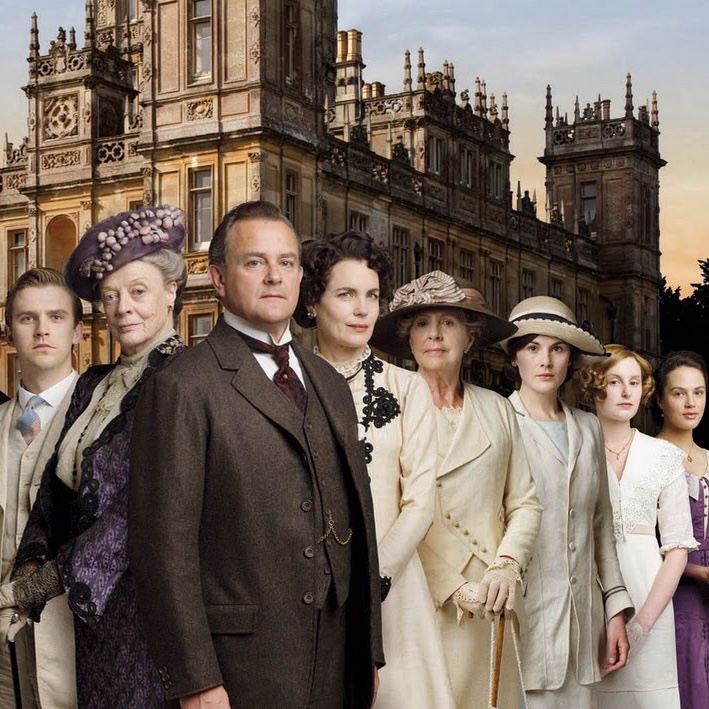
I always planned to age gracefully and beautifully, gradually becoming the matriarch of my little family — revered for my wisdom and accomplishments, feared for my authoritative nature, and loved for . . . well, just for being me. Or are matriarchs limited to wealthy, aristocratic English families, like the Crawleys of Downton Abbey? That’s certainly not my life.
The Crawleys
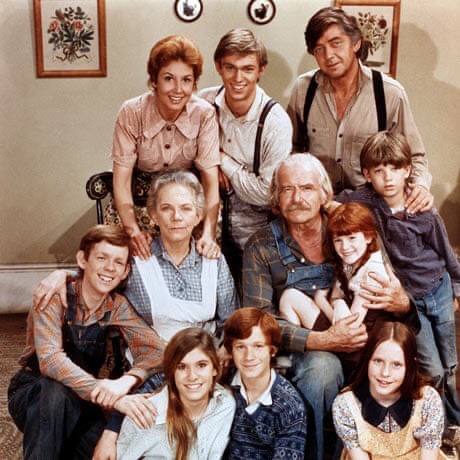
Or maybe the other end of the economic spectrum: the Depression-era Waltons of the Blue Ridge Mountains? Enormous, wonderful family; dirt poor. Nope, not me either.
The Waltons
So, no matriarchy for me.
The Japanese revere their elderly. So do the Chinese, Koreans, Native Americans, and many others. So maybe I should move to Japan and get myself adopted by a lovely family there. Not practical, but worth considering.
Yet what about the rest of us here in the United States? When did we become a nation that values the foolishness of youth above the knowledge and wisdom of experience? Why do we push people into retirement at 65, when they still have so much to contribute? When did those beautiful grandparents become an annoyance to be shuffled off to an old folks’ home where they live out their days thinking about the past because they have no future, and no present worth living?
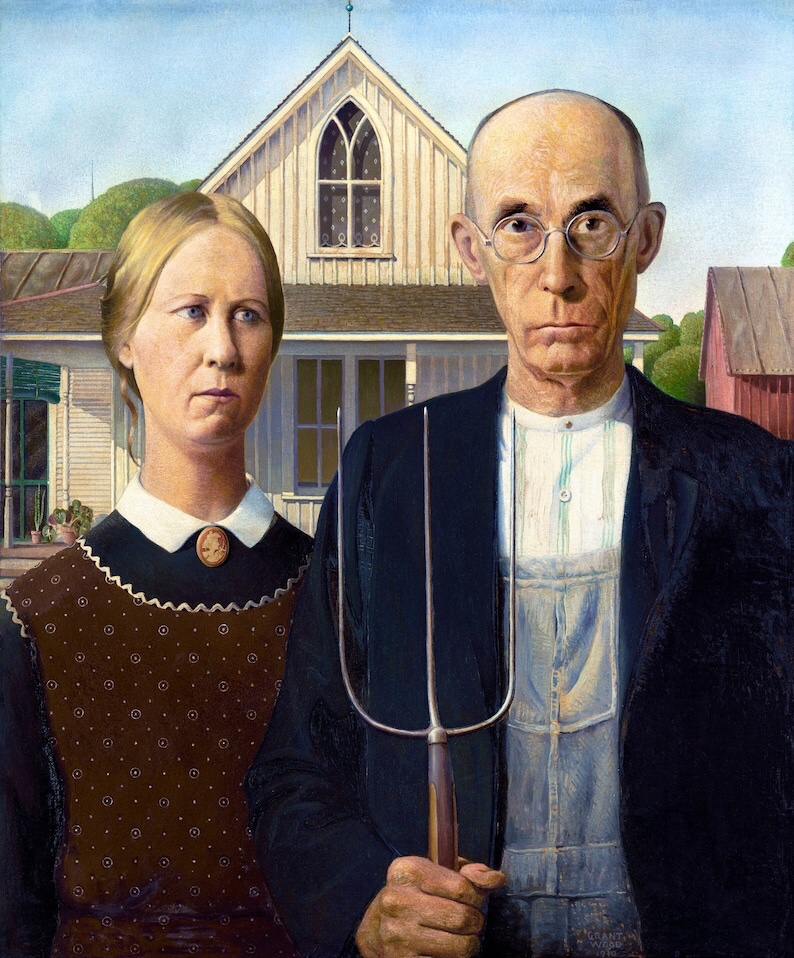
American GothicUkrainian Ideal
Whether your “grands” are the stern-faced couple from the American heartland, or the sweet, rosy-cheeked Babushka and Dyedushka from the old country . . . treasure them. They’ve spent their lives caring for their children (your parents, aunts and uncles), and spoiling you, your siblings and cousins. Give them back the love and respect they deserve while they’re still here. They’ll be gone all too soon.
Back in February, I took a detour from my travel adventure series of blog posts and had a little fun with my first “Reflection,” a sardonic look at the “joys” of getting older. Because of the direction my current series of posts has taken, it seems appropriate to resurrect former Chapter 8 — and the later Chapter 22 dealing with obsolescence — and present them again as part of my current Reflections series. So here is the first; the second will follow directly behind.
My next scheduled blog was supposed to have been about my taking to the road again, but something happened a few days ago that caused me to take a brief detour and post some extra thoughts today. We will be off to Europe on Thursday as planned, but in the meantime, please let me share the following with you.
I just learned that another long-time friend has passed away. Not a BFF in the traditional sense, but an overseas friend with whom I shared a past business association, mutual friends, and the exchange of Christmas cards every year for some 30 years. And the sad news started me thinking of all the people I’ve lost over the past couple of decades, and how those losses have become an all-too-common feature of my life as I grow older.
But, true to my innate, somewhat wacky nature, I try not to depress myself by dwelling too long on the sadness of those occasions. I prefer, instead, to think of the good times, and of course, the funny stuff. Stuff that was always among the topics of conversation with my actual BFFs — we called ourselves the Golden Girls of Washington — over lunch or whenever.
Like hair.
Why is it that hair always seems to grow where we don’t want it, and disappear where we would prefer to keep it? Not the hair on our legs or underarms; those, for us women at least, are superfluous, and who wants to keep shaving for the rest of her life anyway? But our scalps, which used to be kept warm by our crowning glories of blonde, brunette, black, or red tresses that we spent so much time washing, conditioning, drying, curling, brushing, and showing off, and insisting, “This? Oh, no, this is completely natural,” and which suddenly seem to become thinner and thinner each day until one morning we wake up, look in the mirror, and see looking back at us . . . YODA!
“OH, MY GOD! I’M FREAKIN’ YODA!”
Yoda
So we think, if only we could pluck and transplant the unwanted follicles that have come alive elsewhere on our otherwise baby-naked bodies. Like the one that keeps reappearing just below my left nostril, that I don’t notice until it begins to tickle my upper lip when I exhale. And the slightly stiffer little hair that sprouts, time after time, from an old childhood scar on my chinny-chin-chin, despite being pulled out root and all. Or the fuzzy blonde ones on the sides of my friend’s face just in front of her ears, looking for all the world like soft sideburns. All of which send me rushing for my tweezers and magnifying mirror again.
And about that chin. When the hell did it decide to double in size and drop halfway down to my collar bone? Perhaps it’s been searching for the rest of my descending flesh, which also seems to have been on a long, slippery slope toward my swollen ankles while I wasn’t looking. I have a feeling I should have been paying attention to Jane Fonda all those years ago — not her politics, just her fitness advice. Too late now, I fear.
The aches and pains of age go without saying. Like the first time one of your group lets out an audible grunt as she sits down at the restaurant table, and the conversation immediately shifts from the latest party or theater production you attended to the best topical medication for arthritis, or the best orthopedist for that snapping sound in your hip. Or when you realize you’ve stopped bragging about your kids and are now showing off pictures of your amazing grandchildren and complaining that you can’t keep up with them. “Grunt.”
Then, of course, there’s the issue of gas. Now, I know that occasional flatulence is a natural bodily function — though obviously not one of the more attractive ones. But we’re talking today about bellies that inflate like Chinese weather balloons, then suddenly let loose — not only in the moments following a colonoscopy — but at the most inauspicious times, like the middle of Thanksgiving dinner with the entire extended family, or at opening night of the opera at the Met. (No, I’ve never been to the Met, but I have seen Moonstruck a half dozen times. Great flick.) So, for those of us who try to keep to a fairly healthy diet and avoid all the spicy and fatty foods we loved in our younger days, it’s a complete mystery. Where does it all come from? And shouldn’t there be a better way of dealing with it? Preferably in private? My mother used to blame hers on our dog Toby, though no one actually believed her. Perhaps we should all just keep a dog handy — a big English bulldog would be perfect. They just look the part.
“The dog did it”
And about shrinking. Not our hips, to which we’d love to bid farewell, but our vertical measurement. I was never even close to tall — 5’2” tops, and as a kid always in the front row in school, right where the teacher could see me sneaking the little hard cinnamon candies from my desk. So I really couldn’t spare any of the 62 inches allotted to me, and yet they’re somehow being stolen away, bit by bit. Now I can no longer even reach the bottom shelf of the overhead kitchen cabinets, or straighten a crooked picture on the wall — and for one who is ever-so-slightly OCD, that’s a real issue. Some of that loss I blame on the two operations in which all five of my lumbar vertebrae were fused, but most of it is just another of the joys of getting old. Which, as some wise old person once said, really ain’t for sissies.
“I’m shrinking! I’m shrinking!”
For the sake of all of our waning dignities, I won’t even go into the subjects of post-menopause, prostates, incontinence, IBS, liver spots, or our libidos. Those are better left for chats with our ever-expanding lists of medical specialists, or for our interminable online research.
But on the upside, we seniors do have our memories of good times, many of which are now the subjects of my series of blogs. And of old friends — like the other five Golden Girls, who are gone now but still fresh in my mind. In order of age, oldest to youngest, they were Amelia, my sister Merna, Marilyn, Simin, and Diane: a wonderfully diverse group, yet somehow totally compatible. I was the second youngest, wedged in between Simin and Diane. We lost two to cancer, one to heart disease, one to complications from Type 1 diabetes, and one to the ravages of some pulmonary disease as a result of a lifetime of smoking. I miss them every day. And here I am, the Betty White of our namesake group, determined to make it to 100. We shall see. In the meantime, I continue to write.
As for the friend I just lost, I wish him a happy journey to the other side — assuming, and devoutly to be desired, there is one. And wishing myself all sorts of heavenly reunions in the (hopefully not-too-near) future, I remain, until next time,
I’ve just realized that my last ten Reflections have carried us up to the 1980s, which means that those of you who have been reading my blog from the very beginning (December ‘22) already know what happens next: I take that job in 1979 that changes the entire direction of my life and pulls me — fully compliant and even joyously — into my “Russian Adventure.” And if you haven’t yet read my first 28 Chapters on that subject, I invite you to do so; they represent the most exciting time of my life.
But I have not yet run out of words, and I pray that that never happens; for what are we, really, if we can’t communicate? So today I’ve chosen to reflect upon another subject with which I am intimately familiar: Jewish mothers. And you can’t talk about Jewish mothers without also running into the whole guilt thing. And if you’re old enough, orphanhood will inevitably follow if it hasn’t already — possibly, but not necessarily, relieving you of all that pent-up guilt at long last. So, moving on . . .
“Are you telling the truth?”
As I see it, there are three basic kinds of Jewish mothers. First, there are the old-fashioned ones like my mother’s mother — my Bubbe — the loving, caring, fussing, apron-wearing, cooking, never-sitting-down, can’t-do-enough-to-make-her-family-and-the-whole-world-happy kind of mother, whose own happiness depended on only one thing: seeing everybody else safe, healthy, and above all, well-fed. I’ve already described her at length in Reflections 1 and 2. Thinking about her always makes me feel warm and fuzzy.
Then there’s the second kind: the guilt maven. The kind who could just look at you and make you confess to crimes you would never even dream of committing. The mothers like mine. (Anyone have Dr. Freud’s number handy?)
According to my favorite aunt, my mother had been practicing the Art of Guilt for her entire life, until she finally became the Queen of Guilt. When she was just a teenager, and her whole group of friends wanted to do one thing and she wanted to do another, she would use the “Never mind — just go ahead without me” routine, until they felt sorry for her and went along with whatever she wanted to do. And she honed that act until she had it down pat, so that by the time she was married and had two daughters, it worked like a charm. Every. Single. Time. And not only on us.
Example: One Mother’s Day, when I was already grown and had two children of my own, we were all going to lunch with a group of close friends to a favorite family-style restaurant on a beautiful farm far out in the Maryland countryside, more than an hour’s drive from home. We had made the necessary reservations weeks before, and everyone was looking forward to it. It was a warm, sunny spring Sunday, the drive (in two cars) had been pleasant, and we arrived in plenty of time. When we got there, we found that orders had to be placed on arrival and we were given menus to make our selections before being seated — which should have been no problem. And it wasn’t a problem . . . except for one person: my mother, of course.
A little background: she had very high cholesterol, and had suffered one heart attack several years before, at which time she decided that she had to spend the rest of her life depriving herself of everything she loved . . . and sharing her misery with everyone within earshot. To her, that meant eating nothing with butter, eggs, chocolate, animal fat of any kind — all the good stuff. Not a taste, not ever, because even a bite was going to kill her on the spot. (She used to say that when she was dying, she wanted her last meal to be a bologna sandwich — an odd choice, but apparently what she was missing the most.)
“I told you so . . .”
So this lovely Mother’s Day, she took one look at the menu and announced, as usual, that there was nothing there that she could eat. Nothing. Nada. Zip. There was beef (too fatty), there was pork (ditto), and there was chicken (usually o.k., but this was fried). How about the fish? Not in the mood. A nice veggie platter? Yuk. And out came the sad face and the sulk, and the declaration that she would just sit and watch the rest of us eat. But the restaurant had a rule (admittedly, an unfair one) that you couldn’t be seated, even with a large group, unless you ordered an entree; even an appetizer wouldn’t satisfy their requirements. And she was adamant that there was nothing that she could order.
We all stood around looking at one another, totally stumped. I don’t recall the exact conversation, so I’ll just skip to the end. We wound up telling the manager what we thought of their rule, which had just cost him a large number of customers, and finding another restaurant a couple of miles away that could accommodate all eight of us. It was very nice, but not as good as the one we had been looking forward to, and the entire mood of the day was spoiled. But the Queen of Guilt was happy, which apparently was all that mattered. I firmly believe that the only thing that saved her from being strangled to death that day was the fact that it was Mother’s Day, and the irony would have been just too great.
*. *. *
There was also the kind of guilt she dropped on my sister and me when we were growing up. If she thought we’d been up to something — goodness knows what, since we really were pretty good kids — she’d grill us until we became convinced we actually had done something wrong, and then she’d inflict the ultimate punishment: the Silent Treatment. Sometimes for days.
And when we were a bit older and wanted to go somewhere for a sisters’ day together, just the two of us, she’d pull out the old “Don’t-worry-about-me-I’ll-be-fine-by-myself” routine again. Fortunately, we eventually outgrew that one; but there was always that little remnant of guilt that we felt for leaving her behind. And if she ever thought we needed reminding, she’d pull out the one she kept in reserve: “You’ll miss me when I’m gone.”
OH, YEAH? DON’T COUNT ON IT, OLD WOMAN!
She also took advantage of Christmases and her birthdays to remind us every year that she was getting older and that “this might be my last [Christmas] [birthday]” . . . you fill in the occasion. But we noticed throughout the years that she was a different person when she had had a couple of drinks, so for every celebration we made sure to start her out with her favorite whiskey sour (or two). Too bad we couldn’t keep her loaded all the time, because on those social occasions when she let loose, she was really a lot of fun. She could have been such a happy drunk.
Another round, barkeep!
*. *. *
Then there is the third type of Jewish mother — the Jewish mother of sons, a.k.a. “the Smotherer” — like the mother of the first young man I was engaged to. Let’s call her Sadie. She was a widow, and her son — we’ll name him Lennie — was her entire reason for living. To say she doted on him would be the grossest of understatements. He was, in her eyes, solely responsible for the rotation of the earth around the sun.
Lennie and I met through a co-worker of mine when I was just 18 and he was 25. He was an attorney with the U.S. Government, intelligent, nice-looking, and fun to be with. He always thought of great places to go on our dates; and before I knew it, he had proposed. Being very young, and very flattered, I said yes; but I was smart enough to know that I was too young to get married just yet, which he understood, and thankfully a long engagement was planned.
Then he told Sadie the big news.
Now let me backtrack a bit. Before Lennie and I started dating, he had a regular Saturday night “date” with Sadie. He would take her to dinner, perhaps a show, mainly to get her out of the house for a while. He was a nice, thoughtful guy. But when he met me, he wanted his weekend date nights to be with his girlfriend, not his mother. The nerve! — right? So he told her he’d like to switch his regular evening out with her to another night in the middle of the week. Not like she had anything else on her schedule, and not like he’d dumped her. But she was less than thrilled because she had been relegated to second place.
So now he was telling her he was engaged, and she was envisioning her precious boy flying off with some little trollop and forgetting all about her — the woman who had gone through countless hours of labor to give birth to him, seen him through all his childhood illnesses, and been both mother and father to him for all these years. I was competition! Even my mother, who was surprisingly cool with the whole thing, couldn’t get through to her. This was potentially the mother-in-law from Hell.
Third Wheel In My Own Marriage?
The person I am today would simply have made verbal mincemeat out of the old bat. But I was a more timid 18-year-old, and had been taught respect for my elders. So I told myself I wasn’t marrying the mother . . . until it became clear that I would be. Suffice it to say, that engagement didn’t last very long — I preferred to marry a man, not a momma’s boy. But I did benefit from it in one way: it made me eternally grateful that my mother had never had a son!
*. *. *
Maybe there is a fourth kind of Jewish mother out there, and if so, I’d love to hear about her. Or maybe I’m the fourth kind: not nice enough to be like my Bubbe, but too nice to be like Sadie or my own mother. I shudder to think of what my kids will blog about me when I’m gone.
And speaking of being gone . . .
Eventually, and inevitably, my mother’s predictions of her own demise came true. She passed away peacefully, of congestive heart failure, on the morning of September 18, 1991, at the age of 84. Sadly, she never got her bologna sandwich because if we’d given it to her, she would have accused us of trying to kill her.
That day was my sister’s 58th birthday — one final “gotcha!” from the woman who would not be denied center stage. And as we planned her funeral and all of the other things that follow a death, we began reminiscing, mostly about the funny stuff, and came to realize that the years of guilt had indeed finally evaporated. She had been, after all, an honest, hard-working, attractive, clean-living woman, able to squeeze 110 cents out of every dollar, and dedicated to the welfare — as she defined it — of her daughters. And we threw her one helluva farewell party.
“Bon Voyage!”
Do I miss her, as she said I would? Sometimes, when I remember how we would sit at the piano together, playing duets; or when I would take her to Maryland to play the slot machines (she loved to gamble); or, most of all, when she’d had a couple of whiskey sours and danced with every man in the room. And occasionally, even today, I’ll get a whiff of her perfume — Oscar de la Renta — and I know she’s hanging around, making sure I’m not doing anything I shouldn’t be . . . although at my age, I can’t even imagine what that would be. Maybe eating too much chocolate?
*. *. *
Becoming an orphan is a weird thing. You wake up one day and realize that “Oh my God! I’m the older generation!” And I’ve found that when that happens, the best thing to do . . . is just reach for the whiskey sours.
Just sayin’.
Have a happy and safe 4th of July, Brendochka 7/3/23
And here they are: not all, but a substantial part of my family (on my mother’s side) in the 1940s. If you enlarge it, you’ll be able to see the faces of my childhood, named below.
Top left: My bathing beauty mother, front and center as always; her parents (my Zayde and Bubbe, seated); and I have no clue who the woman behind them is. Maybe this was the first photo bomb.
Top right: My mother’s brother, Uncle Bem, with three-year-old me on his knee.
Second row left: My Aunt Selma (married to Uncle Monty, pictured later), holding little me, with my sister Merna standing beside us, squinting in the sun.
Second row right: My mother’s older sister, Aunt Minnie, holding my little cousin Andy. Note the tumor under his right eye — he was born with it, it was benign and was successfully removed when he was a little older.
Third row left: Me, around age five, looking cute.
Third row right: Uncle Bem again, with his wife Simone (white blouse dark skirt) and his sister, my Aunt Ethel. In the rear are Aunt Minnie again (left), and a lady we nicknamed “Aunt Minnie in the green dress,” to differentiate her from the real Aunt Minnie. I can’t for the life of me remember what the relationship was, but I remember that we liked her.
Fourth row left: Little Andy, sullen little me.
Fourth row right: Me again, seated in an inexplicably uncomfortable position.
Bottom row left: My sister Merna, holding cousin Andy.
Bottom row right: A rare photo of my maternal great-grandmother, with my Bubbe, Aunt Selma, and her husband Monty (my mother’s other brother). If you look hard enough, you’ll also see my sister Merna hanging out on the porch in the background.
So there we are: a “typical” American family. Only, who can say what is typical? In our case, we’ve got a great-grandmother and grandparents who were all born in Russia, and left because they were Jewish and saw the handwriting on the wall — the pogroms against the Jews. We have two sons/brothers/uncles in the Army (and another, not shown here, in the Navy), all of whom served overseas — and survived — in World War II. Other “typical” families may have come from France, or England, or Poland, or China. But together, we all made up the patchwork that was, and is, America.