Children today have so many things my generation never dreamed of: television; the internet; online home schooling; school buses and mothers with SUVs to drive them everywhere; neighborhood swimming pools; electronic everything . . . and also, unfortunately, online bullying, stalkers, and something called Child Protective Services.
But there are so many things they will never know, and they are the poorer for it. Things that all added up, in my day, to the freedom of childhood.
The Wonder of Childhood
First, kids of my generation were virtually worry-free. Their concerns were pretty much limited to the grades on their report cards, what gifts Santa would leave under the tree, and whether the little boy or girl they currently liked would ever notice them. They didn’t worry about nuclear war, or climate change, or COVID, or whether there might be a recession. Because if any of those things had even threatened their little world, no responsible adult would ever think of discussing it in front of the kids.
They rode their bikes or tricycles all over the neighborhood — without helmets. I’m not sure anyone even made helmets for kids in those days. They sat unrestrained in the family car, because seat belts didn’t exist. They played in the dirt, and only washed their hands before dinner but not with antibacterial soap, because it didn’t exist. They drank from each other’s soda bottles, and ate little dots of candy that had to be peeled from long strips of paper, and little wax “bottles” filled with some unidentified sugary liquid. And they ate chips of ice cut from the big block in the iceman’s truck.
The Iceman Cometh
My friends and I didn’t have play dates; we just went outside, found whatever other kids were out at the time, and got together. We played silly games, skipped rope, rode bikes or roller skated together, got up scratch softball teams, or just hung around talking about what to do next. And when it was time for dinner, or just about dark, our parents called out to us and we went back inside.
We got a kick out of catching lightning bugs and putting them into glass jars that had air holes punched in the metal lids. We tried counting the stars in the night sky, or picked dandelions and clover flowers to make bouquets for our mothers. We lay on the grass and imagined animal shapes in the fluffy white clouds. We played tag or hide-and-seek, and when we fell down and scraped our knees, we waited until it was time to go inside for the night before reporting it to our mothers because we didn’t want to be kept indoors any earlier than necessary. And nobody lost a leg from the dirt in the wound.
A Bouquet For Mom
Kids today have a lot more “stuff” — more high-tech toys and games, more access to information, more cool clothes, lessons in everything, “quality time” with their parents. But what they don’t have, and will never know, is the freedom and joy of just being kids. Of being left alone to use their imaginations and make up their own games with their own friends, without parental oversight. Or being shielded from the sordid side of life, and worrying about nothing more than getting their arithmetic homework done before bedtime.
I feel kind of sorry for them, because I remember those years as the very best years of my life, and I wonder what memories will follow today’s kids throughout the years to come.
Once upon a time, in the land known as Russia, there lived a very scary troll named Yevgeny Prigozhin. As a young troll, he lived under a bridge in a city called Leningrad, where he got into a lot of trouble and wound up in prison for a number of years. His family was poor, and he stole stuff; but apparently he wasn’t very good at it because he did get caught.
“But, Officer . . .”
And one day, when he was released from prison, he decided to start a legitimate business, selling hot dogs from a kiosk. And he was much more clever about business than he was about outright theft, and he began to make lots of money, which he used to open some really nice restaurants — several of them — which made even more money for him.
Yevgeny had a friend named Vladimir, who also had come from a pretty poor family in Leningrad, and he helped Yevgeny build his restaurant and catering business by sending contracts his way. You see, this Vladimir kid was also a pretty shrewd character, and he had come up through the ranks — not always the honest way — to become President of Russia. And the two friends accumulated lots of money and power.
One million, two million, half a billion . . .
Years passed, as they tend to do, and Yevgeny had branched out into a second business, called a Private Military Company. Now, such companies were strictly forbidden in Russia; but because Yevgeny and Vladimir were such good friends, this company was allowed to grow and prosper; and soon Yevgeny was providing Vladimir with all the mercenary fighters he could ask for to do his dirty work in countries in many parts of the world.
And then, one day the shit hit the fan, because Yevgeny got fed up with Vladimir’s regular military troops and the way their war in a nearby country was being mismanaged. And he decided to stage a revolt by his mercenaries against Vladimir’s military leaders, which really pissed Vladimir off.
And this is where the water gets really murky, because no one — outside of the actual participants — knows exactly what did happen.
Now, in a fairy tale, the good guys vanquish the bad guys and everyone lives happily ever after.
Only In Fairy Tales
But what do you do when you can’t tell the good guys from the bad guys, or who is doing what to whom, and why? The fairy tale becomes a mystery.
What this fairy tale book tells us is that Yevgeny went off the rails and started an insurrection against his old friend Vladimir. But something happened to stop him, and soon Yevgeny was banished to another kingdom nearby, with all of his wealth to be taken from him. However, he kept showing up in places he wasn’t supposed to be, and no one could figure out whether Vladimir had forgiven him, or what else might be going on.
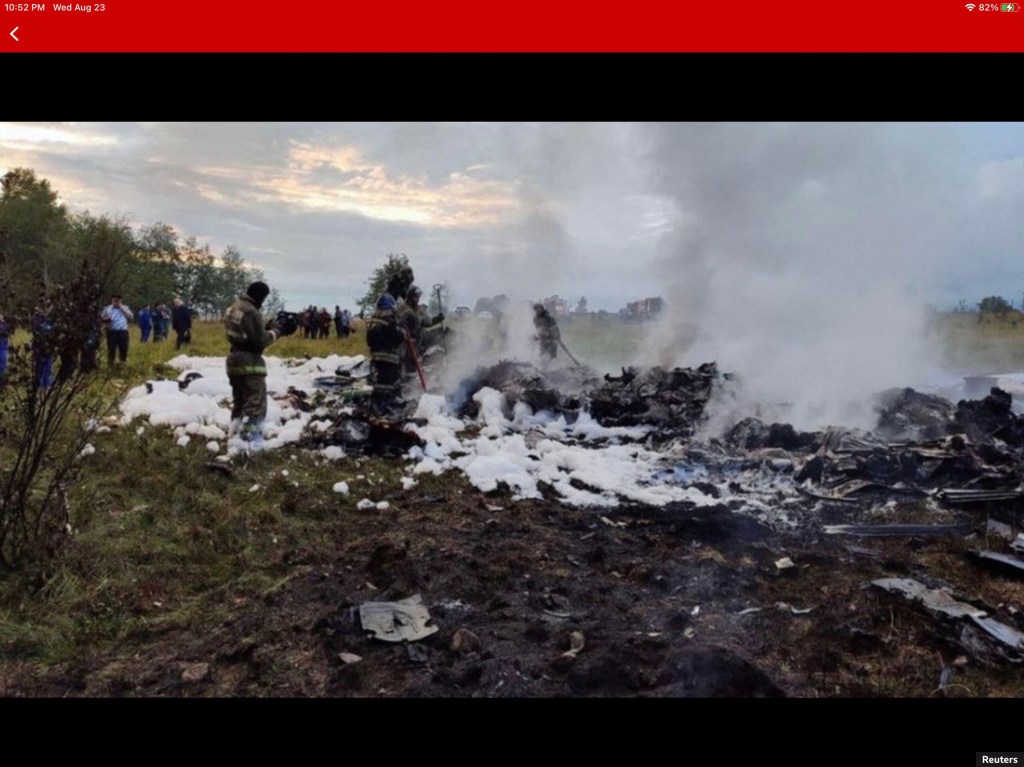
And after a couple of months, a terrible thing happened. A private plane — allegedly carrying Yevgeny and nine other people — crashed and burned, killing everyone onboard. And the questions began as to the true ending to the fairy tale, because there were several possibilities.
The Fatal Flight
Ending No. 1: The official word was that Yevgeny’s name was on the passenger list of that ill-fated plane, and he was indeed dead. End of story, right? RIGHT?? Well . . . maybe.
Ending No. 2: There was a brief mention of a second plane in the area that had landed safely in Moscow. But who was on it? Good question. Could Yevgeny have sensed a plot against him, or perhaps just missed the first flight, and landed safely with the second plane? Another good question . . . but no answer.
Ending No. 3: Let’s go back to Ending No. 1 for a moment. Vladimir was awfully quick to confirm that Yevgeny was on the first plane, even though forensic examinations had not yet been concluded of any of the ten people on the plane. It was as though the authorities really wanted the world to believe that Yevgeny had died in the crash-and-burn of that aircraft. And some witnesses to the crash had spoken of two loud bangs and smoke trails as the plane “fell from the sky.” So, does this ending show the plane being shot down, or perhaps a bomb being exploded onboard? And if so, was that in order to actually kill Yevgeny, or to create that illusion? More questions.
Ending No. 4: If it should come to pass that Yevgeny is still alive (which we would probably never know for sure even if that were the case), the big question is: WHY? The most obvious answer, to my mind, would be that the whole mind-blowing scenario — from the supposed revolt against Vladimir, to the taking of Rostov-on-Don, to the march toward Moscow, to the cessation of the march and the supposed deal under which Yevgeny would be banished to Belarus, to his re-appearances and disappearances, to the ultimate plane crash (in which, let us not forget, nine other people became collateral damage) — was one gigantic farce from beginning to end. Which was exactly what many people have believed from the get-go. But, again, WHY? That would almost be too elaborate a plan to be believable. Wouldn’t it?
Too Many Questions, No Answers
I was going to begin this sentence with “the most logical answer.” But everything about this case defies logic. So all we can do is guess, and surmise, and argue, and wonder, and try to make sense of it. But only a handful of people know for sure, and they’re certainly not talking. Which shows us possibly the greatest advantage of living in a closed society: the ability to hide their secrets from the rest of the world. And in this age of electronic snooping, that is no small advantage.
Over the past five weeks, I have written six chapters titled “Where’s Yevgeny?” And the world is still asking the same question. Considering that the answer can only come from Russia, we may never know for sure. But at this point in time, I’m voting for Ending No. 1. Or No. 4. Or No. . . .Well, we shall see . . . maybe.
When Frank Sinatra sang those lyrics in 1965, the mood was purely romantic. Today, uttering those same words would have Elon Musk or Samuel Peralta signing you up for one of their forthcoming space missions.
Romantic Mystery, or Lunar Club Med?
If you don’t know who Elon Musk is, you’ve clearly been doing the Rip Van Winkle thing. But who — you might well be asking — is Samuel Peralta? That was my question when I stumbled across an article several days ago about something called “Lunar Codex.” I had never heard of that, either, so I read on.
In all honesty, the technical aspects of it are light years beyond my comprehension. But here’s a brief description of Mr. Peralta’s stated goal:
“I dreamed of going to the Moon and one day it was possible. I’m sharing that dream with many of the artists, authors, musicians, and filmmakers whose work I love.
”Welcome, my name is Samuel Peralta. The Lunar Codex is that dream realized, a collection of works from tens of thousands of creative artists across the globe, launched in time capsules to the Moon.”
Okay, then.
Science fiction? Apparently not . . . or not for long, anyway, according to Mr. Peralta, who sees his plans intersecting with those of NASA in sending scientific instruments and other payloads to the Moon between this year and 2026 under the aegis of its “Artemis” program. I’d have to hear more of what NASA has to say about that, but for now, let’s just take Mr. Peralta at his word.
So this of course started me thinking about what else I’d like to find waiting for me when I relocate to a nice little retirement villa on the Moon, beyond his string of art galleries and movie theaters. And this is what I came up with.
Silver City, The Moon
First, because the Moon’s gravitational pull is so many degrees less than Earth’s, I’m hoping someone will have designed some sort of magnetic footwear to help us keep our feet on the ground — literally. Something comfy in a size 8M for me, please. I have enough problems staying upright already, and I do not need to be floating around, bumping into my neighbors, their pets, or the nearest oak tree.
As a senior citizen, I would be most interested in employing a personal robot who would keep my little house spotlessly clean and prepare my simple and delicious meals for me. It would also be nice if she enjoyed playing Scrabble.
The TV schedules would be filled with quality programming for people of all ages and interests, and not just a steady diet of sex and violence. And those, if they’re included at all, should be limited to late-night viewing after the kiddies are asleep.
Next: Flowers. Lots and lots of flowers, flowering trees and shrubs, and parks everywhere. I’ve always wanted to live in a garden.
My Ideal
There would be lovely little shops, run by friendly, helpful people, and selling beautiful, unique goods. Sort of like Cape Cod. And an ice cream shoppe on every corner, please.
All of the streets would have moving sidewalks, and there would be no steps anywhere. There would be bicycle lanes, and people would adhere to the traffic laws, as they do in Copenhagen, Denmark, where there are far fewer traffic accidents than in our cities in the United States. And if it snows on the Moon, all of the streets and sidewalks would be heated in the winter.
For the young and able-bodied, we should have beautiful spaces for outdoor activities: hiking, camping, swimming, fishing, golf, tennis, etc. And walking trails in the villages for less strenuous exercise.
Parents and teachers shall be required by law to teach children respect, manners, honesty, care and consideration for others, and the virtue of obeying their elders. Discipline shall be fair but stern, and children shall be taught to take responsibility for their own behavior. Actions shall have consequences.
Classroom on the Moon
The Moon shall consist of one large country, so there will be no need for wars or “special military operations.” In fact, there shall be no need for military anything — just local police forces to uphold the laws. There shall be no guns or other weaponry — not for the police or for any citizen. When life is good, you don’t need guns. *
* Note: Just yesterday, it was reported that India has successfully landed a spacecraft on the south pole of the Moon, so I may be stretching it a bit to wish for one big country. Crap! That means all my other wishes would apply only to the American territory. And here we go again . . .
The government on the Moon should be established in strict accordance with the original Constitution of the United States and its Amendments. No messing around, no special interests, and any politician caught breaking or circumventing any law or regulation would immediately be banished and sent back to Earth.
Taxes shall be no more than necessary for the efficient operation of the government, and every person shall pay the same percentage, with no special tax shelters for the rich.
Medical care and prescriptions, as well as health insurance, shall be reasonably priced, and of the highest quality. This is not socialized medicine; you still have the right to choose your own doctors, and the doctors do not work for the government.
There shall be free education for all, through four years of college. If Finland can do it on Earth, we should be able to manage it on the Moon.
“No charge.”
*. *. *
There’s probably more, but this is all I can think of right now, except for one very important first item: When boarding the space ship that will take us to our new home on the Moon, there will be a gigantic sign reading, “No bias, discrimination, fanaticism, injustice, racism, sexism, ageism, unfairness, narrow-mindedness, partiality, or hatred of any sort permitted on the Moon. WE MEAN IT. Only happy people are allowed. And pets, of course, because they’re perfect.”
The astonishing news today is that he is — or may be — dead. He is listed as being aboard a private plane, registered in his name, that has crashed in the Tver Region of Russia just north of Moscow, killing all ten persons aboard. As of the latest report I have read (from BBC), four bodies have so far been recovered, but there is no report of identification as yet.
Yevgeny Prigozhin
But until all ten bodies have been definitely identified, I’m not willing to write him off. This is a man who is a total enigma, and historically a survivor: a former convict who started a catering business; became “Putin’s Chef” by providing catering services for the Kremlin; created and headed a “private military company” of mercenaries called the Wagner Group — something that is completely illegal in Russia, but was not only allowed to exist, but has been utilized by the Kremlin itself to augment its presence in various African and Middle Eastern countries as well as in Ukraine; became one of Vladimir Putin’s closest confidants; has been considered one of the group of oligarchs, the wealthiest and most powerful individuals in Russia today; and finally, inexplicably, attempted a rebellion against the Russian military, and failed miserably.
Since that time, his whereabouts — and his status — have been a total mystery. He was supposed to have been exiled to Belarus, but he kept showing up in Moscow and St. Petersburg. By all normal standards, he should have been in prison . . . but that never happened. He was apparently removed as head of the Wagner Group, but there has been no definitive word as to a successor, even on a temporary basis.
Wagner Group HQ, St. Petersburg, Russia
And now we are told that Yevgeny Prigozhin has probably been killed in the crash of his own plane . . . along with nine other people (six fellow passengers and three crew members). Local residents in the area of the crash have reported hearing two bangs and seeing two vapor trails before the actual crash. Strictly on the basis of the 23-year history of the Putin administration and its usual modus operandi, I have to wonder whether this is the Kremlin’s way of finally dealing with him, or whether it’s some sort of red herring designed to create the appearance of his death — though by whom, and for what reason, even my circuitous train of thought hasn’t been able to fathom as yet. And news out of Russia, as we all know, is not always the most reliable.
So, once more, we wait and we wonder. The mystery that is Russia is endlessly fascinating and frustrating.
That is a question, at the present time, that only Elon Musk himself can answer. The rest of the world is left with only outward appearances and speculation by which to judge his recent words and proposed actions with reference to the survival of Ukraine.
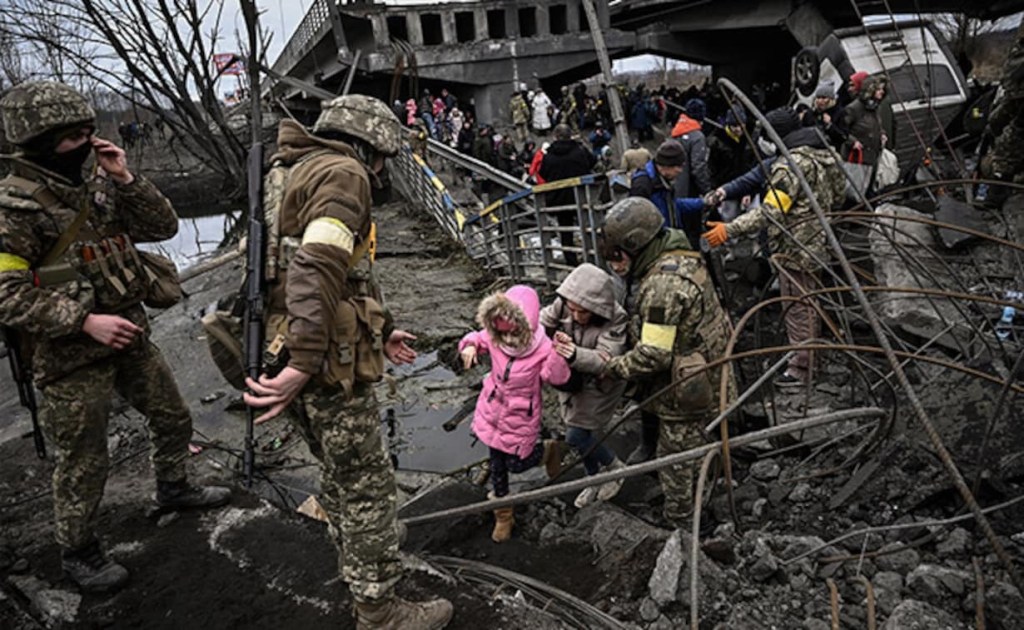
Today’s news reportage does not look favorable to Mr. Musk. After earlier deciding to step up and provide StarLink internet service to Ukraine in the face of its invasion by Russia, he was lauded as the ultimate good guy — the one whose SpaceX company had the resources, and who saw the need, and did the right thing to help save a country that continues to be the victim of an unspeakable, ongoing crime against humanity. The free world applauded him, and deservedly so. That internet service has been of incalculable value to the effort to keep Ukraine alive. Mr. Musk was a true hero.
Saving Lives in Wartime Ukraine
But what has changed? Simply put — and according to current reporting — he had a conversation with Vladimir Putin.
A Fearsome Twosome
Uh-oh!
Assuming reporter Joe Barnes of The Telegraph (UK) is correct, “Elon Musk pondered pulling Starlink satellite internet from Ukraine because he feared being perceived as a warmonger in Russia, a former Pentagon official has said.”
Further: “ . . . [Musk] expressed his concerns after Ukrainian forces reported network outages close to the front lines separating them from their Russian occupiers.”
And continuing: “‘Colin Kahl, a US undersecretary of defence [sic] for policy until last month, was charged with brokering a deal to prevent Mr. Musk from turning the system off altogether. . . . My inference was that he was getting nervous that Starlink’s involvement was increasingly seen in Russia as enabling the Ukrainian war effort, and was looking for a way to placate Russian concerns,’ the former US official added.”
Yes, there does seem to be a good deal of inference, supposition, interpretation, or whatever you choose to call it. And no, it has not happened as yet . . . mercifully. But the concern here is that this all came to light following contacts by Mr. Musk with the (apparently) irresistible Mr. Putin.
Mr. Barnes goes on to report that: “Last year, Mr. Musk was accused of publishing a Kremlin-friendly peace proposal, suggesting Ukraine should mirror sovereignty referendums organised by Russia in regions it occupied.”
And I find myself thinking that this sounds disturbingly like “deja vu all over again,” eerily reminding me of Donald Trump’s well-remembered presidential bromance with Vladimir Putin — who apparently can spot an outsized ego a mile away, and knows instinctively how to stroke it.
A “Moment” . . . or just a photo op?
Then I read on and spotted a separate item by Sarah Jackson of Insider, wherein she quoted comments by LinkedIn cofounder Reid Hoffman, to the effect that Musk had “bought what Putin was selling, hook, line, and sinker” regarding the war in Ukraine.
Again, second- or third-hand information. But what is behind it? Is it all smoke and no fire? I certainly hope so, because the alternative would be terrifying.
*. *. *
I do not accuse Elon Musk, or anyone else, of anything at this time. I am merely trying to make sense of what is happening from day to day in the world, and hoping to find clarification of the reportage and inferences I see from other sources. Mr. Musk is a total enigma to me — a man who would pay $44 billion for a going concern named Twitter, and immediately lay off huge numbers of its employees, make radical changes to its theretofore successful operating formula, and inexplicably change its familiar and popular name to . . . what does it even stand for? . . . “X.” And so I’d very much like to know more about his thought processes; not so much with regard to his actions at Twitter, but about his views and intentions toward the current war . . . or “special military operation” . . . fomented by Russia against Ukraine, and threatening to spill over now into Poland, Lithuania and Latvia.
“What the Tweet is ‘X’?“
So, Mr. Musk, I ask you directly: What’s going on in your busy mind as regards Ukraine? The world would like to know.
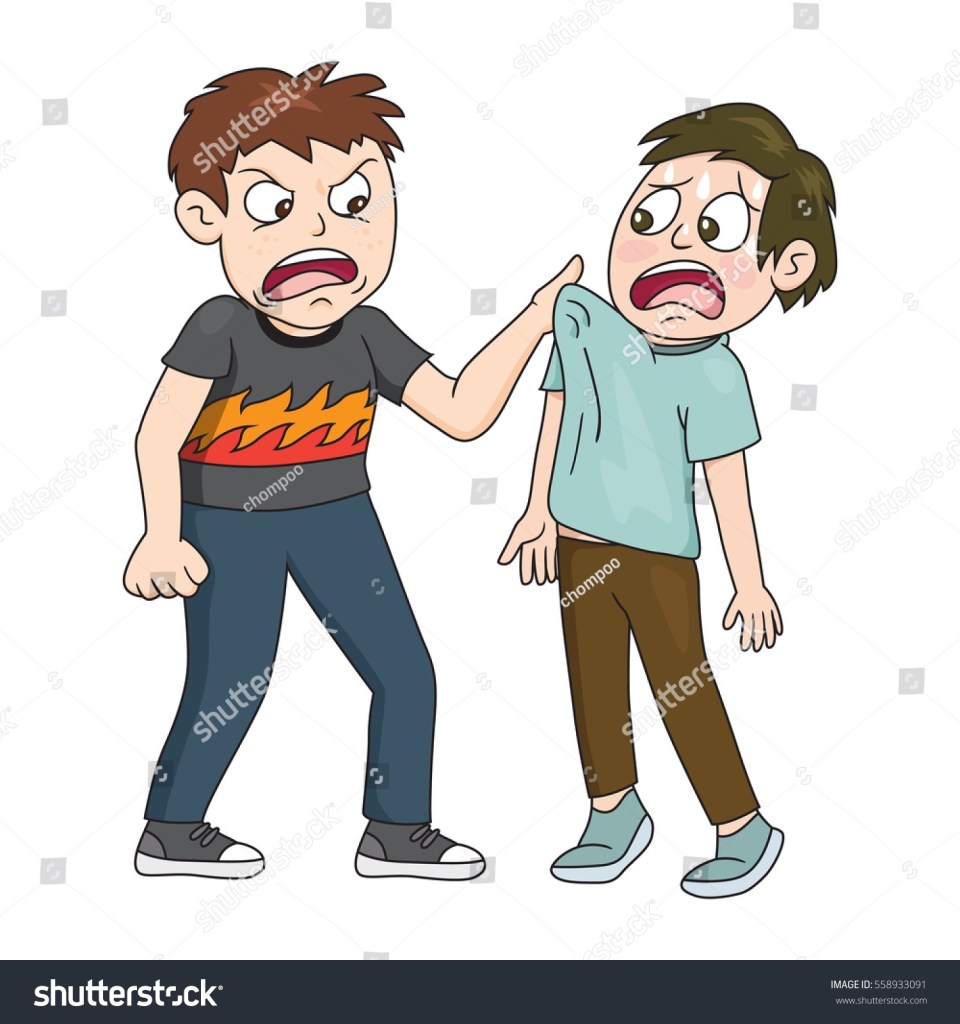
We’ve all seen it: the big, not-so-smart kid who just can’t resist pushing the quiet, respectful kid around for his lunch money, or his cool jacket . . . or just because he can.
“Coz I said so, that’s why!”
Or, even worse today, the cyberbully who spreads malicious lies about his victims online, for the whole world to see and believe. Unforgivable — both of them.
But what happens when those bullies grow up, but don’t grow out of their vicious tendencies, and the bullying begins on a larger scale? Or — worst-case scenario — when they become leaders of countries? And when those countries begin bullying other countries; destroying their lands and cities with missiles and bombs; raping, torturing and killing their citizens — all because they want what the other “kid” has? And before you know it, the bully’s friends join in for a piece of the action, the victim’s friends rush to his defense, and . . .
The answer is obvious: in the schoolyard, you’ve got a rumble. But what happens in a country is a coup, or a revolution, or an all-out war (even when the bully euphemistically insists it’s just a “special military operation”). And there’s no sense in pussy-footing around. We all know who I’m talking about. The big bully in today’s schoolyard is Russia, and the leader of the pack is Vladimir Putin. The victim, of course, is Ukraine . . . for now.
“Slava Ukraine”
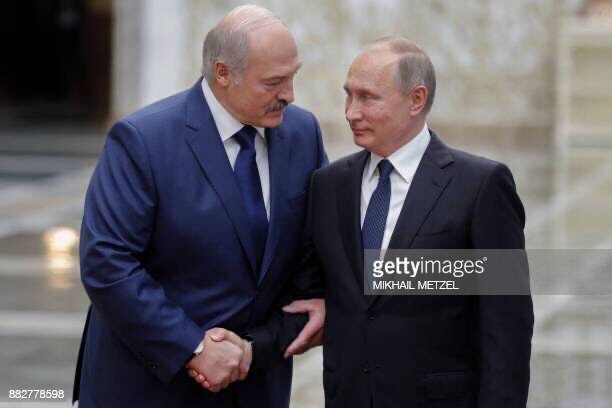
But let us not forget about the bully’s buddies — in this case, Putin’s best friend, Aleksandr Lukashenko, self-proclaimed president of Belarus. By itself, this wasn’t a country that previously gave us much to worry about. But now . . . well, its strategic location as Ukraine’s immediate neighbor to the north, and the nature of its crazed and ambitious leader, do give us cause for grave concern. And especially when he starts spouting threats of responding to “aggression” with nuclear weapons. Weapons which, by the way, have been entrusted to him by none other than his BFF, Mr. Putin.
A match made in . . . well, not Heaven!
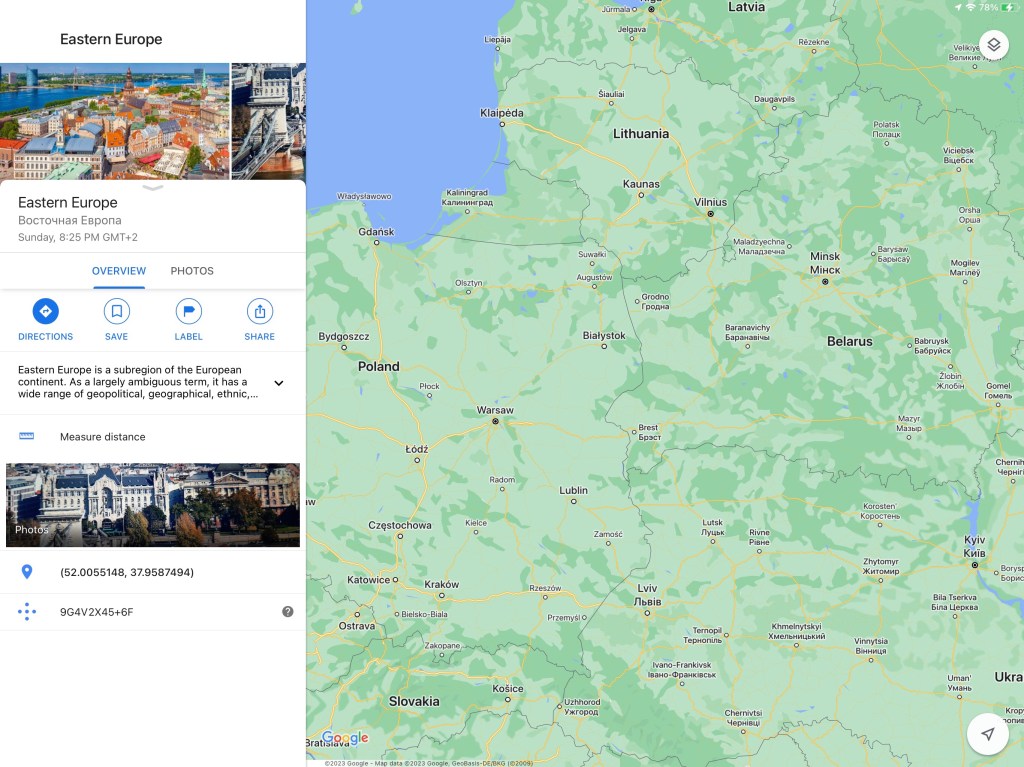
So, what about that strategic location? Well, first of all, in order for Russian troops to travel by land from Belarus to another strategic bit of Russian territory — Kaliningrad, on the Baltic Sea — they have to pass through a small piece of neighboring Poland known as the Suwalki Gap. And Poland’s long eastern border is also shared by both Belarus and Ukraine. So Poland is a juicy temptation to our Russian and Belarusian bullies. And recently, there have been apparent violations of Polish airspace by Belarus, as well as repeated attempts to cross the border into Poland. As a result, the Polish government has deployed some 10,000 defensive troops to their shared border.
Too Close For Comfort
And that is when Lukashenko began loudly threatening retaliation against any so-called “aggression” on the part of Poland or two other NATO neighbors, Lithuania and Latvia.
BOOM!
The bully’s best friend has a big mouth and a short fuse. He also now has the means to back up his threats. What we don’t know is whether he’s suicidal enough to follow through. Or just how much control Putin actually is able to maintain over him. In the meantime, we wait, and wonder, and worry.
As private citizens, and not policymakers or lawmakers or military strategists, that’s all we can do. That, and try to make sure that our elected officials are fully cognizant of the true situation, and not blinded by the flattery and outright lies of the bullies who would try to win us over to their side.
We’re already in the lead-up to an election year, you know . . . Just sayin’ . . .
Yesterday I took you on a quick tour of a small law firm in 1955, which of course got me thinking back to some of the funnier clients and others I encountered over my many years of exposure to the wonderful world of legal conflict. And I’ve come up with a couple of beauts from the ‘70s I’d like to share with you.
First was a middle-aged lady we’ll call Ms. Smith, who had been involved in a very minor fender-bender. She was stopped at a red light when a vehicle on the cross street, with the green light, turned the corner, misjudged, and ever-so-slightly clipped the left front fender of Ms. Smith’s car. Annoying as hell, but not the end of the world, right? Well, not according to Ms. Smith.
Upon feeling the slight impact of metal upon metal, she immediately went into crisis mode. Never mind the car — we’re talking life-threatening, mind-numbing, permanent physical and emotional impairment here. Every part of her body had just been attacked, from her neck to her ankles. She couldn’t move. She was taken by ambulance to the nearest hospital emergency room, where she was given a thorough examination and found to be . . . completely uninjured. Big surprise. But she didn’t believe the physicians there, and went on a search for an unscrupulous doctor of her own, and finally found one. Then she swore out a vendetta against the driver who had caused her to become a total wreck, and proceeded to file suit for a ridiculous amount of money.
“Sue the Bastards!”
The law firm I was working for at the time represented the insurance companies that provided coverage against various types of liability, including motor vehicle accidents. And the person Ms. Smith sued happened to be insured by one of those companies. When they received notice of the lawsuit, they called our office, and I got the call. When that happens, there is a protocol to be followed: first, interview the insured driver; file certain more-or-less routine documents to protect the client’s interests; and have the claimant — in this case, the lovely Ms. Smith — examined by one or more physicians of our choice. All of which, we did.
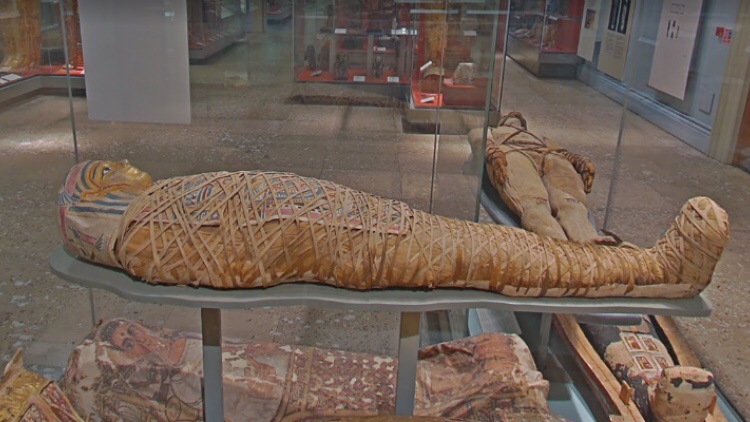
The real fun began when I read the Complaint Ms. Smith had filed with the Court. Among her litany of claimed injuries, she had included one that none of us in the office had ever heard before. Apparently — if one were to take her seriously — her nerves were so shattered by this catastrophic collision that she couldn’t work, couldn’t concentrate, couldn’t think, could barely move . . . and was so cold all the time she couldn’t sleep, and had to wrap herself completely in Saran Wrap to stay warm at night. Since she lived alone, how she accomplished this feat on her own remained a mystery.
Ms. Smith? Are you in there?
I will wait now until you stop laughing. Wait . . . wait. Okay now? Let’s continue.
There was a very prominent neurologist in Washington at that time who was also a licensed psychiatrist, though he didn’t actually practice psychiatry — he just found it extremely useful in working with some of his patients. And so we sent Ms. Smith to see him. Ordinarily, we would simply have waited for his written report, but in this case he couldn’t stand it — he just had to call. And what that consummate professional told me sent me into gales of laughter because it was so out of character for him:
“You know me,” he began. “I have never said this about a patient or about anyone. But just between us: this lady is NUTS. There’s no other word for it. She’s just plain nuts.”
Well . . . yeah. I mean, after all, we’re talking Saran Wrap here.
When confronted with our doctor’s report (in which the word “nuts” most assuredly did not appear), Ms. Smith’s attorney came to his senses, reasoned with her as best he could, and the suit was settled out of court for her expenses and a little extra (perhaps enough for a lifetime supply of Saran Wrap). And I don’t believe the “Saran Wrap Cure” ever caught on in either the medical or the legal profession. I don’t know what ultimately became of Ms. Smith, but I do hope she finally managed to get her body temperature properly adjusted.
*. *. *
Fast forward a couple of years. Same law firm, different case . . . this one involving an outhouse and an injured party’s sex life.
We’ll call this one Mr. Jones. He was a construction worker, a large man, employed at the time on an outdoor site somewhere in the Washington, D.C. suburbs. One lovely day, while on the job, he felt the call of nature and walked over to the port-a-potty reserved for the workers. At that very moment, while Mr. Jones was doing what one would expect him to be doing in a port-a-potty, a dump truck driver failed to see the little outhouse in his rear-view mirror and backed right into it, knocking it over on its side — thus rudely interrupting Mr. Jones’ attempt to relieve himself. I can only imagine what he must have thought as he heard the “beep . . . beep . . . beep” of the truck coming closer and closer and realized he was not in a position to make a run for it.
The Perfect Target
The good news is, the truck did not actually run over the toppled outhouse, and Mr. Jones’ physical injuries consisted mainly of a whole bunch of bruises and — if I recall correctly — a broken arm. Of course, the construction company’s insurer realized that their client was liable for the truck driver’s mistake, and offered to cover Mr. Jones’ financial damages, plus a reasonable payment for his pain, lost wages, and inconvenience. But no . . . that wasn’t enough. Mr. Jones seemed to have taken the class alongside Ms. Smith on “How To Build a Case and Bilk an Insurance Company 101.” So he filed suit.
Well, if you think the Saran Wrap Mummification was amusing, you ain’t heard nothin’ yet. Because Mr. Jones would have us believe that, as a result of being tipped on his side while urinating, his male organ had somehow become rearranged and now was suspended at a most unusual and unattractive angle — and to such a degree that none of his girlfriends would have anything to do with him because he was now so grossly deformed.
I swear, that’s what he said. (Pause for more laughter . . . )
Mwah-ha-ha-ha!!
Within the confines of our office and the insurance company, this case became what was known as “too good to be true.” Because we not only got to send the self-described Romeo to a medical specialist of our choosing; we insisted on pictures of the allegedly damaged body part. And when those photos arrived in our office and were passed around to every single person, there was not a dry eye in the house. We all — men and women alike — were screaming with laughter. Even if I could remember any of the comments that were made, which I can’t, I wouldn’t be able to repeat them here. But I did write a poem about the case, which I titled “The Angle of the Dangle,” and delivered it to the insurance adjuster in charge of the claim; and I quickly became famous — or infamous — in the Washington insurance community for some time to come.
I don’t recall the amount of compensation Mr. Jones received for his actual injuries, but I do know that his most outlandish claim had been debunked — there was absolutely nothing wrong with his manhood. And apparently his love life got back on track, because we never heard from him, or any of his girlfriends, again.
*. *. *
Such was the nature of my work experience all those years ago. I loved it, but finally moved on from general practice to join an international law firm in 1979 — a smart move that led to the overseas adventures about which I have already written more than enough. I may never have discovered a cure for cancer, won a Nobel Prize, or prevented a war or other disaster. But, by golly, I have had some laughs along the way.
Congratulations! You’re a high school graduate. It’s 1955, and you are just 16 years (and 3 months) old. You’re a nearly straight-A student, but you lost out on that scholarship . . . to a BOY! But he’s a good kid, smart, and deserving, so it’s o.k., really. And now it’s decision time. Your mom can only manage tuition at the nearby state university, and only if you live at home and commute, but you don’t have a car. And you know she can’t really afford it anyway. You have good office skills, and could work and contribute to the household expenses. And you’re really antsy to join the adult world — at the ripe old age of 16. So what do you do?
The Big Day
I’ll tell you what I did: I made a deal with my mother. I said I’d look for a job over the summer, and if I found one I loved, I’d stay with it. I could always go to college in a year or two —or take classes at night. And if I didn’t find the perfect job, I’d enroll in some regular classes in the fall. I couldn’t believe she went for it, but she did. It must have been the money thing.
A friend of hers knew a woman who ran a small employment agency, and arranged for me to meet her. The lady tested my shorthand and typing skills — absolute requirements in 1955, remember — and said she had just the thing for me: a job with a small, but prominent and very well-respected Washington law firm desperate for someone to fill a position working for a junior partner. To make a long story short, she added a year to my age, I interviewed, they hired me on the spot, and I started work the following Monday. They really were desperate. Three days out of high school, still just 16 years (and 3 months) old, and I was not just a secretary, but a legal secretary, at a starting salary of $60 a week. Law firms in Washington always have paid very well.
But this story isn’t really about me; it’s about the passage of time and how things have changed . . . sometimes for the better, and sometimes not.
*. *. *
So what were offices — and specifically law offices — like in those days? To begin with, the practice of law was still about service to the client: gathering facts, negotiating honestly, and ensuring a fair resolution for all parties. The law firm’s bottom line was secondary. Not so much like today’s profit-driven corporate mentality.
The larger firms were more regimented; but our office was small — just nine attorneys, five secretaries, one law clerk, and a receptionist — better known then as a switchboard operator. It was a family. And work was actually fun. Our office was on the fifth floor of the old Rust Building at the corner of 15th and K Streets, N.W., in downtown Washington, D.C. It had two elevators, manually operated by two young men who knew every occupant’s name, were always happy to run an errand or two, and were well remembered at Christmas every year. The building’s air-conditioning “system” consisted of window units in each room. There was one bathroom for the whole office, unisex. The “kitchen” was a coffee machine and a mini fridge in a closet; the supply room was a slightly bigger closet.
“How may I direct your call?”
We had our own law library — not a very large one, so that we sometimes had to borrow books from some of the bigger firms, or run down to the U. S. Courthouse or one of the law schools to use their libraries. I immediately fell in love with the smell of all of those leather-bound books, and set about learning what each one represented.
Law Library
My “computer” was an IBM electric typewriter — very high-tech for those days. Changing the ribbon each time it ran out was messy work, but this was before the days of snap-in ribbon cartridges. The IBM service guy came regularly as per our contract, and was on call when anyone had a mechanical problem — the early version of today’s IT specialist. But I couldn’t always wait for him, so I figured out how to fix the simpler issues myself. Sort of like changing your own oil in a ‘55 Chevy.
The Model “A”
Of course, there was no such thing as electronic court filings in those days. All legal documents had to be typed in multiple copies: the original to be filed at Court, with carbon copies for each party’s attorney, of which there could be several. And yes, I said “carbon,” as in carbon paper. By the time you got to the fifth or sixth copy, it was barely legible; and if you made a mistake . . . well, that’s what typewriter erasers were for — and for the bigger mistakes, there was White-Out. This was also a time before Xerox made copiers.
And then, one wonderful day, it wasn’t. I distinctly recall our first copier: a tabletop model, with a two-step process. First was the photographic step. You put your page between two sheets of specially treated paper, and slid it into the slot where an eerie green light glowed and projected outward as a picture was taken of the original. I remember one of our attorneys jumping back in horror, saying, “Omigod! Is that going to make me sterile?” We all laughed, but he was only half joking. Actually, I don’t think we ever got an answer to that question, but I do know that he and his wife never had a third child.
Anyway, you then carefully removed your original, and fed the two blank sheets of paper, one on either side of a metal plate, into the developing liquid. Uh-huh . . . I said liquid. And when the two pages emerged from the other side, you peeled them apart and VOILA! . . . there was your copy, still damp but perfectly clear. It was a sort of supersized version of a Polaroid camera, and it was miraculous.
So, great — we had something that would copy one page at a time, taking about two minutes per page. But what if you had a 50-page brief to be copied in multiples? Well, that’s where the mimeograph machine came into play. We didn’t have one in the office, but I recall many a trip to the U.S. Courthouse to use theirs. I won’t even begin to describe the process, but it was a hell of a lot faster than that two-step thing. The only problem was that you first had to “cut the stencils” — those waxy green or blue sheets on which the letters were actually cut by the typewriter keys as you typed so that the ink in the machine would pass through onto the paper. And there were no “Delete” or “Undo” keys, so your typing had to be perfect. Sound like fun? Nah . . . not so much.
Mimeograph Machine
*. *. *
Obviously, routine tasks took a lot longer back in 1955 than they do today. But there is much to be said for that. Not everything had to be done yesterday. There was a recognition of the fact that human beings can only accomplish so much in a given period of time. And our nervous systems were the beneficiaries.
We also took time to go out to lunch together and talk to one another — not just about work, but about our lives, our likes and dislikes, our ups and downs. We were friends, sharing each day, and sincerely caring about each other. When one man’s wife passed away, we closed the office so everyone could attend the funeral. When someone was ill, the others checked up on them. And when someone got married, or had a baby, or a birthday, or for any other reason . . . we all celebrated.
There was also an acceptable business dress code — not just in Washington, or in law firms, but in all offices. Men wore suits, dress shirts and ties, even on the hottest summer days. And women were required to wear dresses, or suits — with skirts, never pants — and shoes with high or medium heels, nylons, or later, panty hose. Gloves and hats were optional, but looked on favorably. We were professionals and we dressed the part.
That job was where I really did join the adult world. I learned to swear; I learned to drink; I learned to fend off unwanted sexual advances; and I learned to think like a lawyer. I also learned the meaning of friendship, and of empathy, and of giving. I grew up during my seven years at that firm, and when it was time to move on, I was truly sad to leave.
Friday Afternoon
Most office environments today can’t compare to that little law office, and the world is poorer for it. Would I go back to those more primitive times? You know . . . I think I might. But only if I could have my flat-screen computer with dual monitors, my laser printer, and that big copier that sorts up to 25 sets at a time, and the kitchen with the big fridge and the two microwaves, and . . .
Okay, so maybe I wouldn’t go all the way back. But it’s fun to remember the good old days. In so very many ways, they really were good, and I’m so glad I had the chance to be part of them.
My sister passed away nearly six years ago. She was my childhood nemesis, who then became my best friend, closest confidante, and co-conspirator when one of us needed an ally. When we were older, we lived a block apart, but not together; we checked on one another daily, but respected each other’s privacy; and while we were so much alike in so many ways, we recognized the differences in our personalities and tastes. And sometimes, because of those differences, we got on each other’s nerves.
We managed to accommodate most of our differences, compromising on which restaurant to choose, or which excursions to schedule on a cruise. But there were two things about which neither of us ever managed to change the other one’s mind: her passion for football, and more specifically the Washington Redskins; and mine for everything and anything to do with Russia, which she called “that place.” And when one of us would begin to talk about her special passion, the other one’s eyes would glaze over in complete and utter boredom.
She did get me to go to a Redskins game once . . . and only once. She was sure that if I got into the spirit of it amid the crowd of crazed fans, I’d feel differently. So I went. And I sat — uncomfortable on the hard seat, freezing cold, unable to follow the action, and bored out of my mind — for three miserable hours. I just don’t like team sports. The hot dogs were pretty good, though.
I never did get her to a Russian ballet or a balalaika concert, but on a Baltic cruise where one of our ports was St. Petersburg, she did appreciate the history of the place. And she enjoyed the fact that I was nearly mugged in a crowded square in broad daylight.
Accommodation.
A good spot for a mugging
If my sister were alive today, she would be really pissed, because “that place” is so much in the news again — every day, day after day, for one reason or another. And, as I’m sure you’ve noticed if you’ve been following my blog for a while, those recent events have occupied my mind — and my writing — perhaps a little too much. By now, she would have been telling me to shut the f*** up. And especially yesterday and today.
Why now? Well, because when I clicked on Yahoo’s daily news column yesterday, I found, first, the usual lead article about a certain former U.S. President now under indictment (actually several indictments), and next, ten additional items, all having to do with “that place.” Ten! Holy crap! I just hit the freakin’ mother lode!
News Overload?
All right . . . I’ll try to tone down the excitement now. But, most likely due to my ancestral ties to Russia, everything about the place fascinates me: its history, politics, natural wonders, language, architecture, food, music, literature, art, and the wonderfully complex nature of its people — the whole nine yards. As my Russian language teacher told me decades ago, it’s in my blood. But now, I have no one left who comes close to sharing my passion . . . or would even be willing to listen to my frequent ravings. So I’ve been taking it out on you, good readers, and I thank you for your indulgence.
I will not burden you further today, as I have not yet had time to digest all ten of those articles, or to check other news sources for updates. So I’m off now to do just that, and when I’m done, I’ll make a mental phone call to my sister and imagine hearing her sigh in resignation as I (silently) launch into my summary of today’s events in “that place.”
In 1961, Newton N. Minow, then Chairman of the the Federal Communication Commission (FCC), referred to the television industry as “a vast wasteland.” And the name stuck.
There was then, and is now, a great deal of pure, unadulterated crap on TV. But is it all bad, mostly bad, or are we just over-emphasizing the bad stuff and overlooking the good? And which was worse — the 1961 bad stuff, or the 2023 bad stuff? Let’s take a look and see just what was what back in the day.
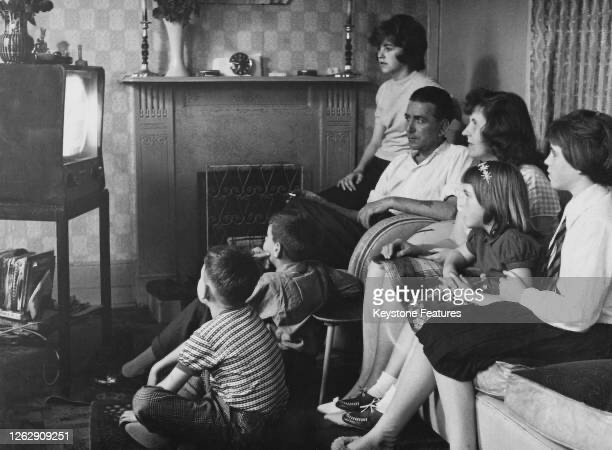
Togetherness: Watching TV in the ‘60s
In 1961, there was no cable or satellite TV; there wasn’t even Public Broadcasting (PBS) until 1970. We had three nationwide network channels — NBC, CBS and ABC — and one local channel where I lived, in the Washington, D.C. area: WTTG-TV (now owned by Fox). That may sound grim to today’s cable and satellite viewers accustomed to hundreds of channels (most of which I’ll bet you never watch). But we had variety. Sure, we did. We had a dozen or so family-friendly shows, though sometimes it was hard to tell them apart, as for example:
– The Dick Van Dyke Show: About a married couple with a young son, a stay-at-home mom, and twin beds.
– My Three Sons: About a widower bringing up . . . you guessed it . . . three perfect sons.
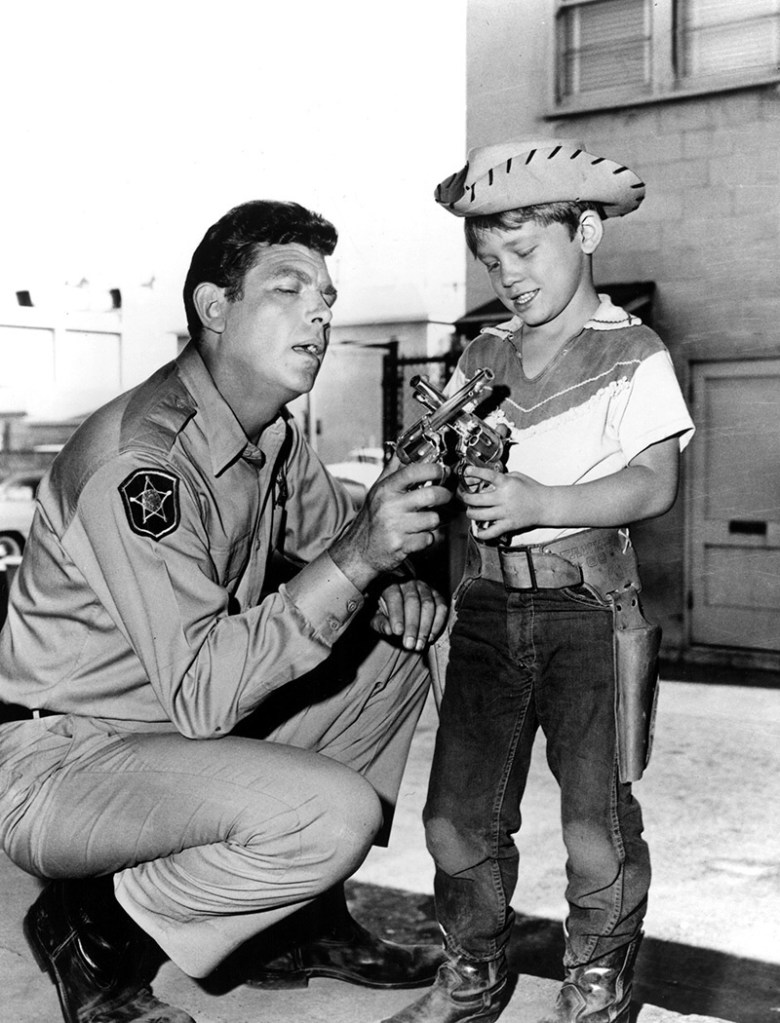
– The Andy Griffith Show: Another bashful widower, bringing up another perfect son, this time with the help of a spinster aunt in a town called Mayberry.
Andy and “Opie” (Ron Howard)
– The Donna Reed Show: A happily married couple this time, also with perfect kids.
– The Danny Thomas Show: Same as Donna Reed.
And for something a little different:
– Hazel: I don’t remember the plot exactly, but I do recall she was somebody’s very bossy housekeeper.
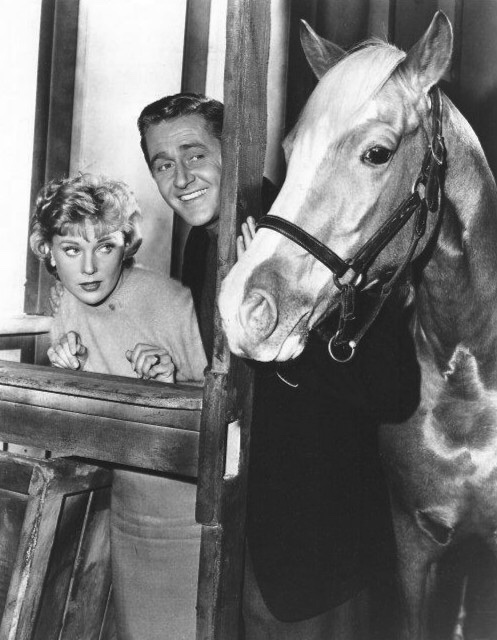
– Mister Ed: A talking horse. No comment.
“A horse is a horse, of course, of course . . .”
– Candid Camera: Possibly the first reality show. Not sleazy, but sometimes embarrassing in its own way.
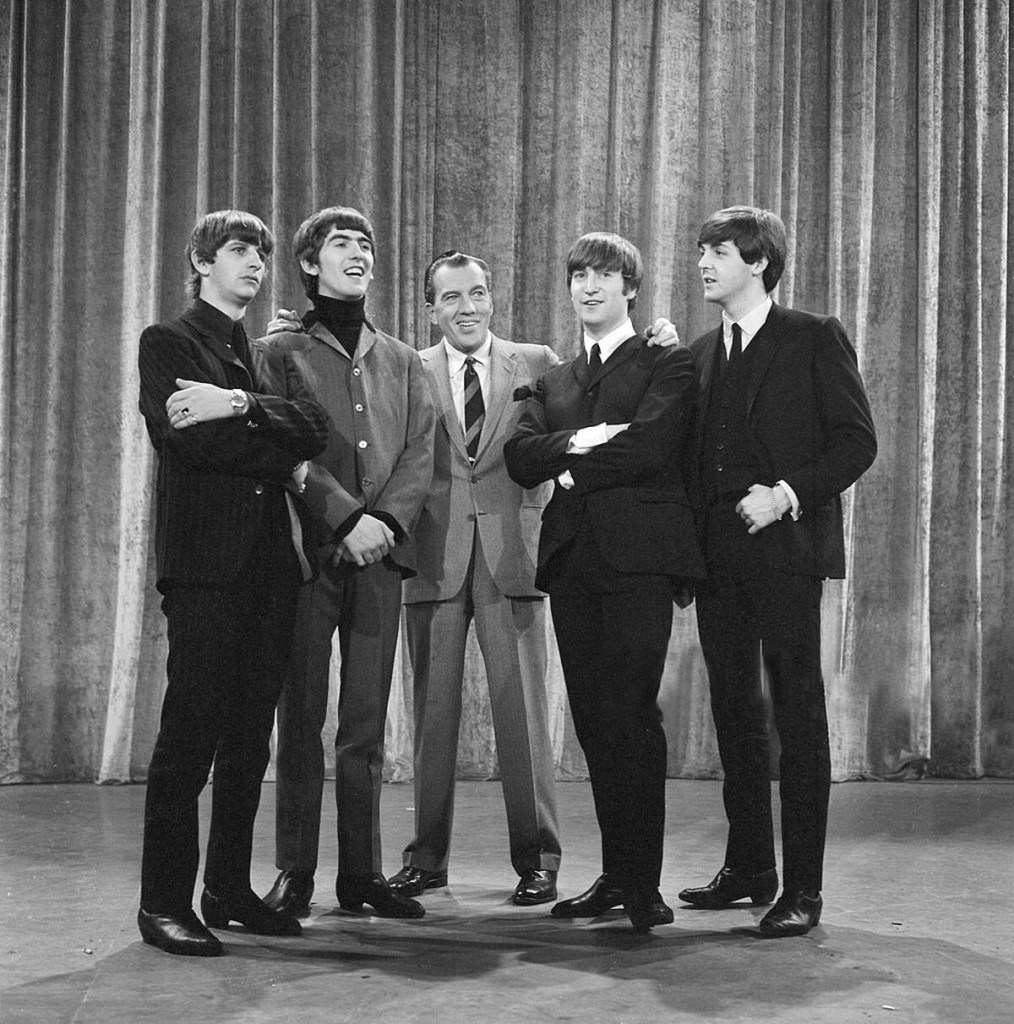
– The Ed Sullivan Show: At last, something actually entertaining — a true variety show featuring various musical, acrobatic, and other acts; best remembered for the American debut of The Fab Four (the Beatles, of course).
Ringo, George, Ed Sullivan, John and Paul – 1964
And there were a number of westerns: Wagon Train, Rawhide, Have Gun – Will Travel, Bonanza, and Gunsmoke. Plus some evening dramas for the grownups: Dr. Kildare, The Avengers, Ben Casey, Alfred Hitchcock Presents, and Perry Mason come to mind. And the kids had The Flintstones, plus every parent’s built-in baby-sitter: Saturday morning cartoons.
Well, Mr. Minow, I’m beginning to see what you meant. America’s favorite family pastime in the ‘60s seems to have consisted largely of a gigantic serving of mindless pap. The only positive thing I can say about it is that it was clean and non-violent. In fact, violence, sex and swearing apparently didn’t exist then . . . although smoking certainly did, on the shows and in the commercials.
*. *. *
In contrast, today’s fare is overwhelmed with people blowing up buildings, eviscerating other people, sabotaging their teammates in order to be the last one left on the island, and everyone jumping into bed with everyone else’s mate. Much more realistic, they say . . . but is it entertainment? I suppose the answer to that is in the eye of the beholder; lots of sex and violence seem to be what draw the big audiences today. Just be sure you don’t show anyone smoking.
“Survivor”
And don’t forget all those 600-pound people exposing their lives (and themselves) to the world, along with the desperate hoarders and others in dire need of real, caring, professional help. How can we stand by and watch them being exploited for the sake of . . . what? . . . a bit of money they’ll just spend on more food, or trinkets from the nearest flea market? What kind of sadistic person thinks of these things?!!
Of course, there are a few good, clean shows — well, clean, anyway — like the endlessly repetitious Hallmark made-for-TV movies . . . and especially the Christmas series, usually beginning in July. And the world-wide phenomenon of talent shows, where the judges — and the viewers — have to sit through the ranks of screeching contestants in order to find an occasional real talent. Or the fake shows: the home renovations with the beautiful furnishings that aren’t really included in the deal; the “chefs” who travel the world, gorging on mountains of food that would destroy the average person’s stomach lining; the unreal housewives from everywhere; and those talk show hosts whose sole purpose in life seems to be the demolition of other people’s last remaining shreds of dignity. It’s a wonder our brains haven’t melted.
*. *. *
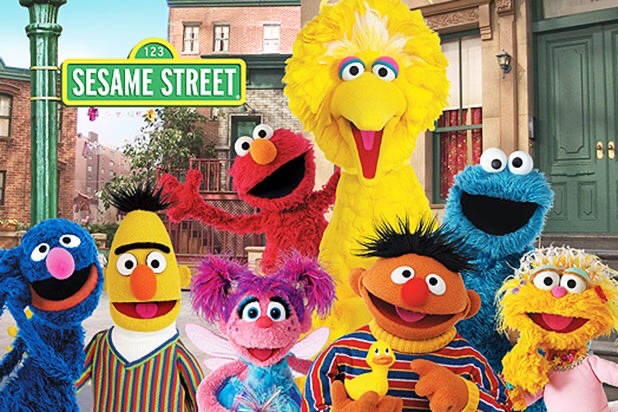
On the plus side, though, the kiddies do still have Sesame Street and Nickelodeon.
The Gang at Sesame Street
And amidst all of the drek, there actually is much for the adults to thank the television gods for. What would so many of us do without the educational and cultural programming of such networks as PBS, the History Channel, TCM (Turner Classic Movies), and the news outlets like CNN, MSNBC and the others? Or the reruns of some of the better shows of the ‘80s and ‘90s, like M*A*S*H, The Golden Girls, and The West Wing? I guess we’d just stash our TV sets in the attic until they became collectibles worth a small fortune on eBay, and do something really drastic, like dive into all those books we’ve been collecting for years.
Come to think of it, that’s not such a bad idea. Look out, John Le Carre and Will Shakespeare . . . here I come!