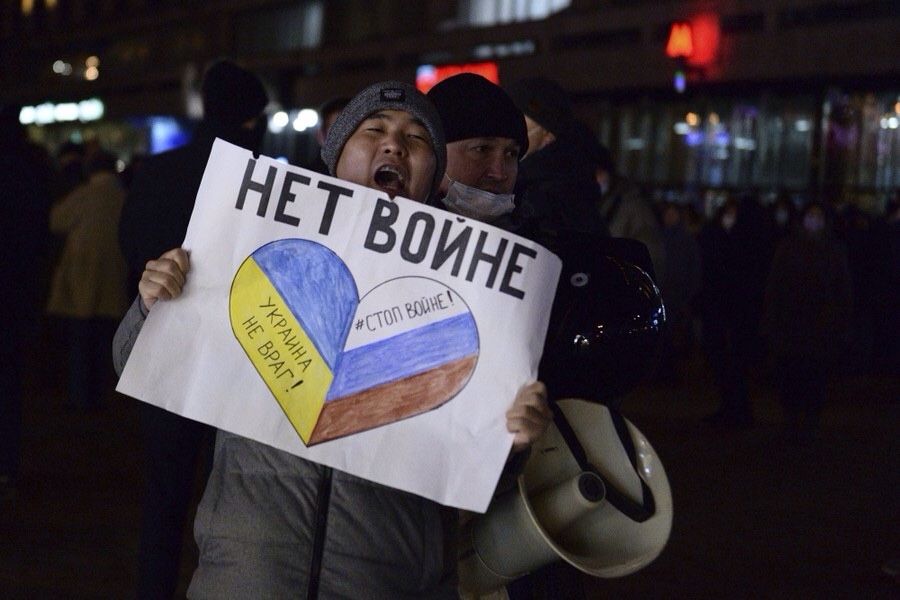
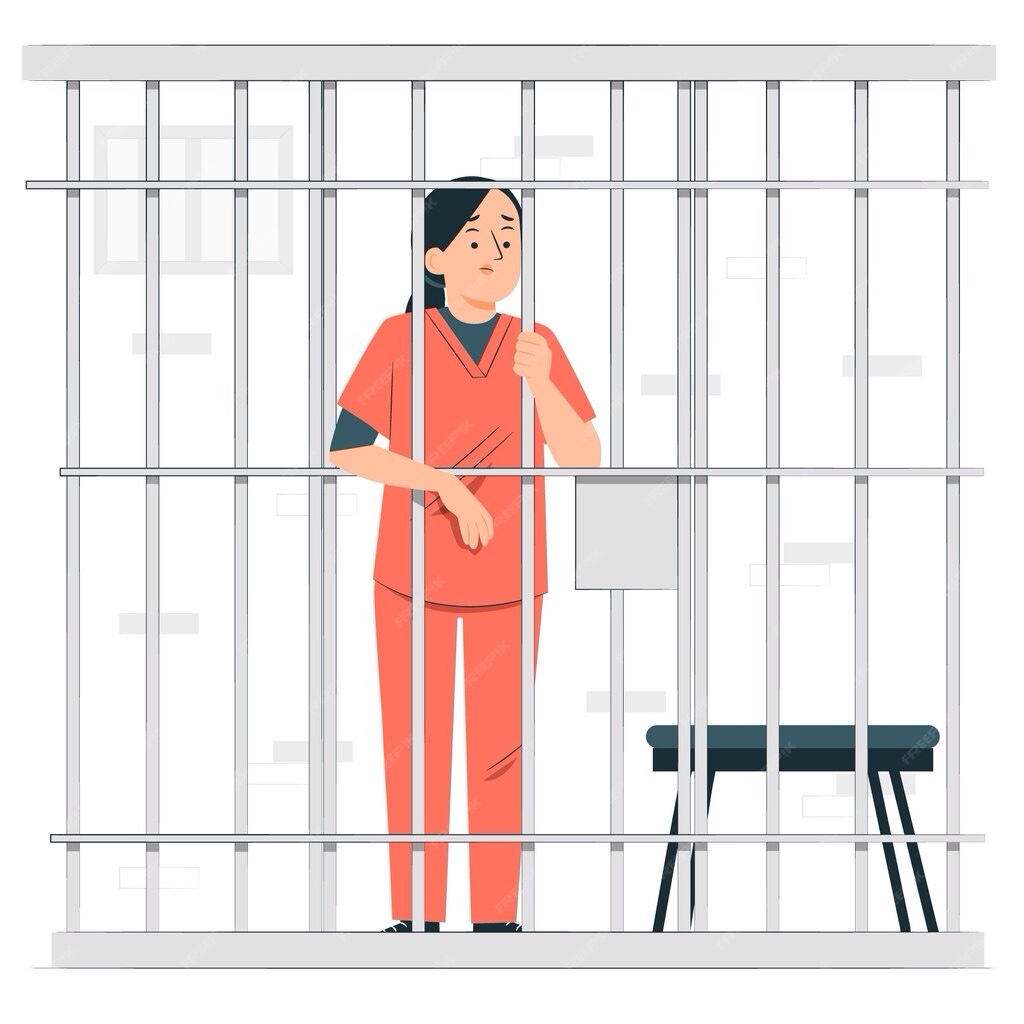
“Nyet voinye” — “No to war.” Written in the snow, that little phrase gets you ten days in jail . . . in Russia, anyway. Imagine what bank robberies go for these days.
If you’re waiting for a punchline, give it up — this is a true story, not a joke. A man named Dmitry Fyodorov was near the entrance to an ice-skating rink in Moscow’s famous Gorky Park on November 23rd, when he doodled those words with his finger on a snow-covered turnstile. Unfortunately, he was observed and detained by police, and was sentenced the following day for having committed a civil offense: specifically, publicly discrediting Russia’s armed forces.
“No to war.” “Stop the war.” “Ukraine is not the enemy.”
Apparently, some 20,000 people, give or take a few, have been detained for similar acts, and over 800 criminal cases opened. Dmitry Fyodorov’s case should have resulted in a fine, but he was given a ten-day jail sentence for “disobeying the police” and allegedly refusing to go to a police station. He denied the additional charges, but no one was listening; that’s what the police charged him with, and that’s what the court sentenced him for. [Reuters, Nov. 29, 2023.]
Actually, he was pretty lucky. Imagine if, at that exact moment when Dmitry’s artistic impulses struck on that snowy day in Gorky Park, he had also had to pee and decided to write, instead of with his finger . . . well, you get the picture. I wonder what the sentence would have been for that! (Not to mention freezing his paintbrush off.)
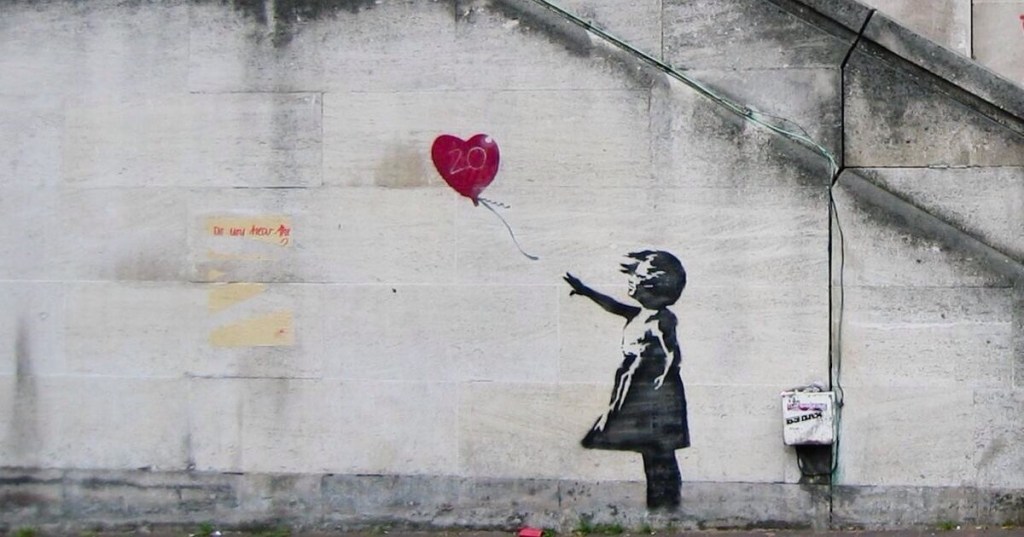
And let’s hope that Banksy never decides to visit Moscow!
“Girl With Balloon,” by Banksy
*. *. *
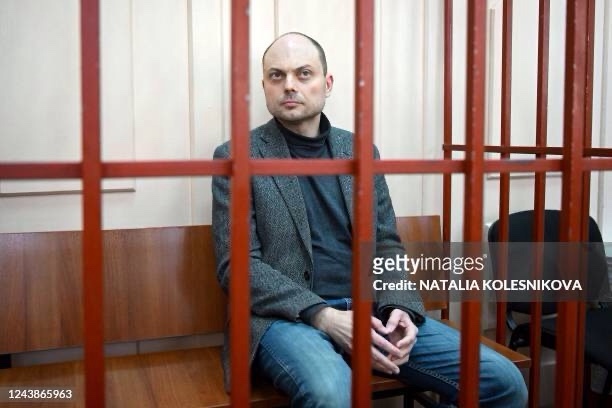
Equally amusing — in a diabolical sense — is the recent charge against Vladimir Kara-Murza, the joint Russian-British citizen currently serving 25 years in a Siberian penal colony for treason and allegedly spreading “false information” concerning the war in Ukraine.
Consider how difficult it would be for someone in his position to commit any sort of punishable offense, other than perhaps using the toilet too many times in one day. But poor Vladimir has recently been fined 50,000 rubles ($560) “for not providing a full report of his conduct as a registered ‘foreign agent.’” [Reuters, Dec. 1, 2023.] (Kara-Murza was declared a foreign agent on April 22, 2022, the same day he was detained for having made anti-war speeches . . . while outside of Russia.)
Vladimir Kara-Murza
Apparently, a “foreign agent” in Russia must regularly submit detailed reports on their activities and finances. Well, that’s nothing new; the same is true here in the U.S., where representatives of specified foreign entities doing business or engaging in political activities here must file periodic reports under the Foreign Agents Registration Act (FARA). So what’s the problem?
Well, the problem is in the definition of “foreign agent.” It seems that in Russia, that term still carries visions of spies, or intelligence operatives. For some people, the good old days of the Cold War and their spy games were just too good to let go.
I do have to ask myself why no one in Russia has seen the irony — or idiocy, if you will — of expecting actual spies to register their activities. But what do I know?
*. *. *
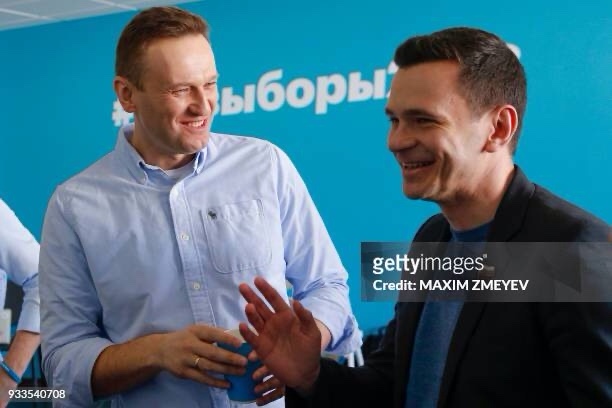
Then there’s the equally bizarre case of Ilya Yashin, another opposition activist and supporter of the better-known Alexei Navalny (about whom I have had much to say in earlier chapters). Yashin is serving 8-1/2 years in prison for making statements on his YouTube channel about Russian war crimes allegedly committed in the notorious battle for Bucha, Ukraine.
His more recent offense, supposedly committed while in prison — and for which he has been fined 45,000 rubles ($500) by a Moscow court — consisted of his “failing to attach a mandatory rider advertising his ‘foreign agent’ status in capital letters to his posts on the Telegram messaging app.” [Reuters, Dec. 1, 2023.]
Ilya Yashin (right), with Alexei Navalny
Aside from the ludicrous nature of the charges themselves, what’s wrong with this story? Well, to quote Ilya Yashin: “I don’t have any opportunity to post materials, I’m in a penal colony, and before that [I was] in a pre-trial detention centre. I reject the status of a foreign agent.”
Makes sense to me. But somehow, he was supposedly magically able to produce a post on Telegram from prison, and — horror of horrors! — he forgot to write “foreign agent” in capital letters on that post! And you say he was only fined 45,000 rubles? You mean that’s not a hanging offense? Those Russian judges must be getting soft.
*. *. *
And, as a piece de resistance, Alexei Navalny himself — while serving a combined sentence of more than 30 years on various charges — has been presented with new charges under a criminal law regarding . . . drumroll, please . . . vandalism. Now, what do you suppose he might have done? Written “nyet voinye” on the walls of his cell?
*. *. *
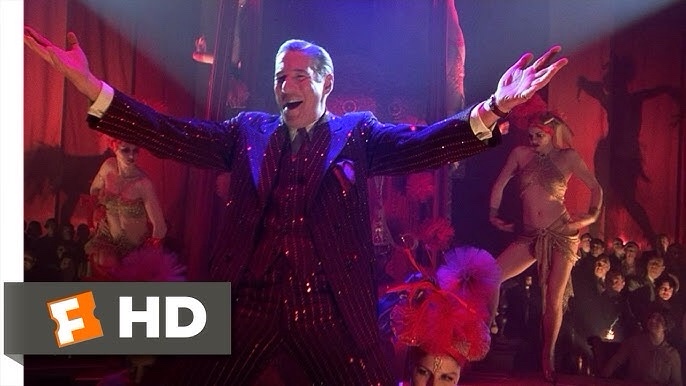
I am reminded of a scene in the film version of the Broadway smash hit Chicago, in which Richard Gere — in the role of a slightly unorthodox criminal defense lawyer — likens the trial of a murder case to a vaudeville tap-dance routine. And in Moscow, at least, he may have a point.
July 4, 1993 – So far, so good. I had been in Moscow for nearly two months, and I was still alive and unscarred. In fact, I was thoroughly enjoying myself. And with the occasional unscheduled drop-by visit from Vladimir Bragin of the KGB, I was feeling well protected.
No, not James Bond! The KGB!
I had received a surprise phone call earlier that week from a friend in Washington, Mary Saba. (You may remember her from the London and Prague episodes.) Her husband, Joe, had just left on a business trip to one of the “Stans” — the five Central Asian Republics of the former Soviet Union whose names all end in “stan” (Kazakhstan, for example) — and Mary and their teenage son, Colin, were going to join him there. Since they would have to travel through Moscow and had never been there before, she and Colin were planning to stay over for a couple of days, and she was letting me know of their imminent arrival.
I was thrilled to be seeing a good friend from home. When she told me where they were staying — a Soviet-style hotel on the outskirts of the city — I told her they would find that to be both inconvenient and generally miserable, and that I would pick them up and bring them to my apartment, where I had two spare bedrooms. It didn’t take much to convince her.
The Sabas are the kind of people who fit in anywhere. They’re smart, funny, caring, personable, and genuine — that rare breed known as completely lovable, good people. Mary got along beautifully with Olga, Lena and Tamara; and Colin managed to find common ground with Tamara’s two teenaged daughters, even though they didn’t speak each other’s languages. We did the usual sightseeing tour, and then Colin said he had a special request: he wanted to see the Moscow Military Museum. Tamara’s husband was an Army officer, and he gladly offered his services. He arranged for our admittance, and five of us crammed into his little car.
U-2 Spy Plane Wreckage At Military Museum
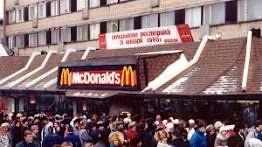
But first came lunch — at McDonald’s, of course. Doesn’t every American travel 5,000 miles to eat at a Mickey D’s? Colin and Mary were just curious to compare it to the ones at home; Tamara and her husband had never eaten there, because it was too expensive for them as a family of four. So off we went, my treat. Cheapest restaurant meal I ever had — and surprisingly good. Far better quality than in the U.S., in fact. All of the meat and vegetables were locally sourced, and the rolls freshly baked. It was worth the wait in line.
At the museum, admission was free — but I found that I had to pay one ruble (about 1/10 of a cent at the time, as I recall) for the privilege of taking pictures with my own camera. These, of course, were the days before cell phones, so my camera was simply that: a camera — and with actual film, as it was also the pre-digital age. (God, I am old, aren’t I?)
As we wandered through the several rooms and I snapped away, I lost track of how many pictures I had taken, and suddenly ran out of film. I only realized it because my camera told me so, when it started beeping . . . and beeping . . . and beeping. At the unfamiliar sound, all of the other visitors in the room froze where they were standing, and two armed guards came rushing in from the next room, hands on their holstered weapons, to find out who had the bomb. When I saw them, I instinctively held the camera up in the air and called out, “Nyet, nyet! Fotoapparat! Fotoapparat!” (I’m sure you’ve figured out that that means “No! No! Camera! Camera!” I have no idea why I said it twice.) That quick action saved me, though, and I was neither shot, tackled, nor arrested; but the guards and I had managed to scare the bejeezus out of each other . . . and quite a few more people besides. Clearly, I still hadn’t mastered the art of quietly blending in. Come to think of it, I never did.
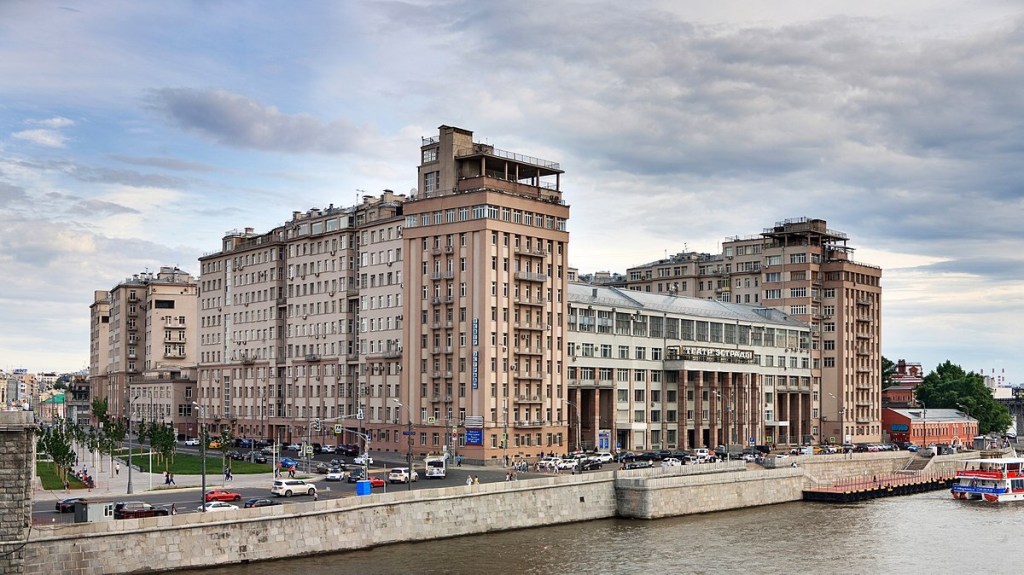
Mary’s trip happened to fall over the 4th of July weekend, when it turned out that there was to be a show given by some Broadway musical performers at the Estrada Theatre in the renowned (or infamous, depending upon the year) House on the Embankment. Just one of the many outsized Stalinist monstrosities still dotting the landscape throughout the city, this one was completed in 1931 specifically to house the government elite of the time, many of whom later became victims of Stalin’s paranoid political purges. (Sorry — I just seem to keep alliterating). Anyway, someone had given Gil Robinson a pair of tickets, but he wasn’t going to be in Moscow that weekend, so he passed the tickets along to me. Leaving Colin in the safe company of Tamara’s family, Mary and I set out for a girls’ night on the town. As we had done in London, we managed to make it a memorable one.
The House on the Embankment Moscow
Vitold had offered to drive us to the theatre, and said he would be happy to come back to pick us up as well, but I felt that would be too inconvenient for him. The traffic pattern in front of the building was a total mess, and there was no way of knowing what time the show would end. I knew there was a taxi stand in front of the Kempinski Baltschug Hotel, about a 15-minute walk from the theater, so I told him we would manage to get home on our own. Brave words.
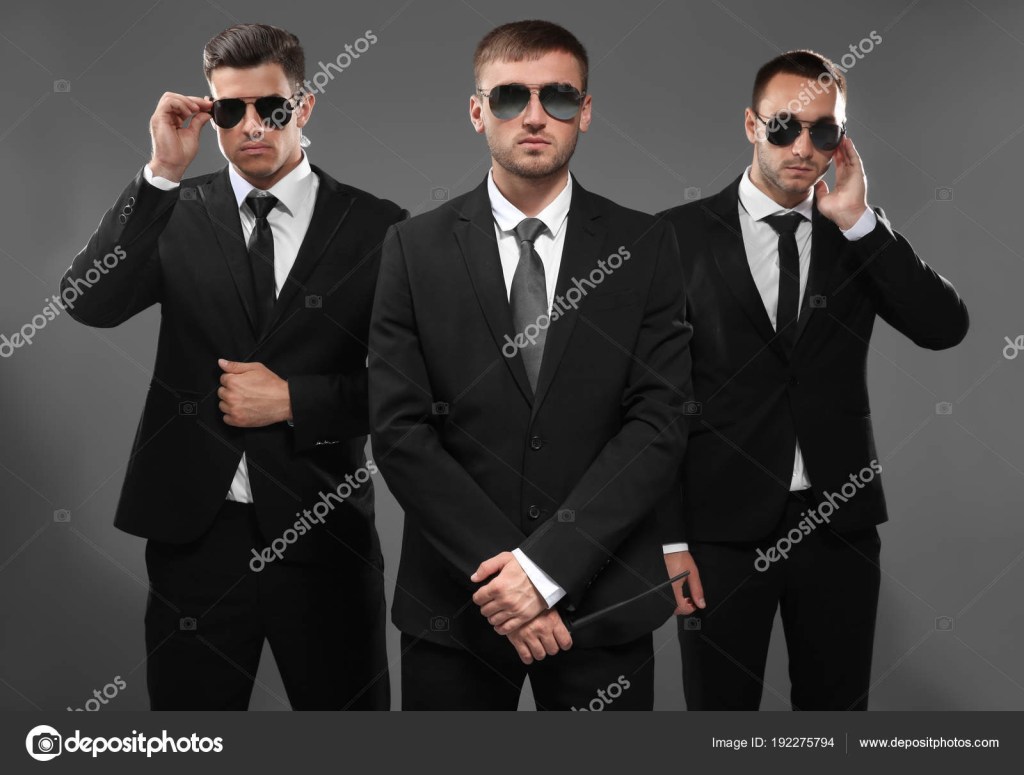
For once, Vitold managed to get us to our destination without being stopped by the police for speeding, running a red light, or nearly knocking down any pedestrians. We actually arrived a little early, and since it was a lovely, mild evening, we stood outside the theatre for a while, watching the arrivals and chatting with a couple of acquaintances I had seen in the crowd. The U.S. Ambassador, Thomas Pickering, had already arrived for the occasion. As a motorcade of three or four expensive foreign cars flying Russian flags pulled up, I knew that a Russian VIP had to be in one of them. President Yeltsin was out of the country that week, so I was curious to see who might be taking his place that night. As a man emerged from the car and started up the steps toward us, flanked by three improbably large bodyguards, he passed within a few yards of us and I recognized him immediately. I drew a sharp breath and grabbed Mary’s arm, exclaiming, “Oh my God! It’s Yevgeny Primakov!” Mary wasn’t familiar with the name, and when I told her he was the head of the KGB, she was startled, but also delighted to have a story to bring home to Colin. The crowd then began to move inside, and we headed to our seats.
Yevgeny Primakov
The show was outstanding. The performers were members of the supporting casts of several hit Broadway shows, and had the audience in the palms of their hands from the get-go, singing and dancing to Broadway tunes and a few patriotic songs to honor the holiday. First, however, the orchestra had played the national anthems of both countries, for which everyone stood in unison, but with the Russian and American halves of the audience singing their respective anthems in turn. I am proud to report that our half was louder and much more enthusiastic. Living in Moscow — fascinating though it was — made you all the more proud and happy to be an American.
Happy 4th of July!
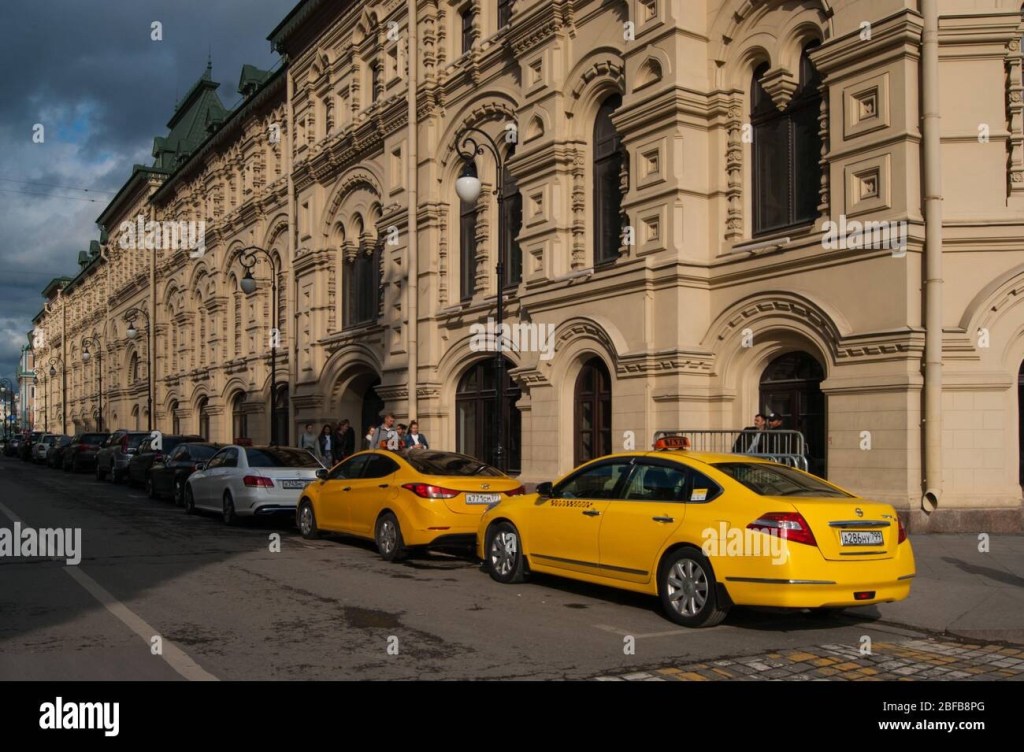
The performance ended much too soon, as all good things seem to do, and we filed out into the dark Moscow night around 11:00 p.m. The crowd was huge, and some of the people were walking, as we were, in the direction of the Baltschug, so we didn’t feel at all uncomfortable. And as we approached the hotel, we could clearly see the line of waiting taxis. They were facing away from us, and we had to pass the entire row of about a half dozen cars in order to get to the first taxi in line. No problem.
Mary walked around to the left rear door, behind the driver, and I opened the right rear door. When we were both seated and had closed our doors, the driver turned to his right, looked over his shoulder at me, and said, “Rublevskoye Shosse shestnadtsat?” — my exact address. Rublevskoye Shosse 16. And my heart leapt up into my throat. What the hell . . . ???
My first impulse was: RUN! But that was obviously not an option. And I had Mary to think of. Since she didn’t know a word of Russian, she assumed the driver had asked where we were going. So I gulped my heart back down into place, smiled weakly at the driver, and said — in Russian — “That’s right. You have a very good memory.” Mary thought I was giving him our address.
Good memory, my ass! I hardly ever took taxis in Moscow — I had two drivers and an excellent Metro system at my disposal, so who needed taxis? Then who the hell was this guy? He simply nodded, smiled back, and began moving the taxi slowly forward. Once again, I mentally foresaw my imminent death. But as I watched to see the direction he would take, he drove straight along the quickest route, sticking to the main roads, and right up to my building and around to the entrance in the rear. He knew exactly where he was going, and never said another word throughout the 30-minute ride — quite possibly the longest half hour of my life. I thanked him, added a generous tip to the fare, and he waited until we were safely inside before driving off.
So, once again, who was he? How did he happen to be at exactly the right spot at exactly the right moment? If I had ridden with him once before and just didn’t remember, what were the odds of my getting the same taxi twice? Or of his recognizing me, in the dark, in a city of nine million people, and remembering my address? And not saying a word about the coincidence? Was this just another manifestation of Moscow paranoia, or was something spooky actually going on? Could Officer Bragin somehow be keeping tabs on me? But how would it even be possible to arrange such a thing? Again, too many questions without answers.
“Not so elementary after all, eh, Watson?”
I still don’t know the truth, and never will; but I can still feel the fear in the pit of my stomach when I think back on that night. I never did tell Mary.
And while I give you a while to mull that over, I will be — in writing, at least — hopping another train to Kyiv, but this time with two American companions, and complications on the Ukrainian side.
“Psst! I’m over here, the one with the devilish sense of humor and the big mouth that doesn’t know when to shut itself. And by entering your country, I’ve just painted a big red target on my back. So you may as well just take me now, toss me into the slammer, and forget about me. Because I won’t last a day in your new, ‘sacred’ environment.”
“Don’t I even get to call my embassy?”
That would have been me, 30 years ago, if Vladimir Putin had been President of Russia when I was living and working there, during that summer of 1993. Or if I were idiotic enough to go back today, even for a brief visit. Because now, another new law is about to be added to the mega-volume of new, ever-more-restrictive edicts being issued by His Majesty, Tsar Vladimir (as I assume he wishes to be addressed these days).
You see, I committed a heinous crime; I made a joke out loud. I referred to him as “Mad King Vlad from Leningrad.” But I had signed the mandatory loyalty oath on entering the country, and some rat fink (not sure how that translates into Russian) turned me in. My bad. I’m guilty as shit. Slap on the cuffs.
*. *. *
This is all in my imagination, of course; I’m actually safe and sound, right here in the U.S. of A. But the reason for this bad, bad dream is real enough. Because yesterday I read that “Russia’s interior ministry has prepared draft legislation that would force foreigners to sign a ‘loyalty agreement’ forbidding them from criticising official policy, discrediting Soviet military history, or contravening traditional family values.” [Guy Faulconbridge and Lidia Kelly, Reuters, Nov. 29, 2023.]
“Have you heard . . . ?”
According to a report from the TASS state news agency, the draft legislation would prohibit a foreigner entering Russia from “interfering with the activities of public authorities of the Russian Federation, discrediting in any form the foreign and domestic state policy of the Russian Federation, public authorities and their officials.” It would also include clauses about “morality, family, ‘propaganda about non-traditional sexual relations’ and history . . . [as well as] distorting the historical truth about the feat of the Soviet people in the defence of the Fatherland and its contribution to the victory over fascism.”
Further, “The Kremlin said earlier this month that some measure of censorship was needed as Russian troops were fighting in Ukraine, and cautioned those who wanted to criticise the military to think carefully before they did.” [Reuters, Nov. 29, 2023.]
Well, that seems to cover just about everything but the weather . . . and you should probably be careful what you say about that as well, because what the draft law doesn’t state (as far as I know) is precisely what constitutes those various violations. And I’m not really fond of things that are left wide open to someone else’s interpretation.
As of this writing, the new law — it’s not clear what they’re going to name it — is not in effect, as it has not yet been presented to Putin for signature. But . . .
Yes, there’s that Russian “but” again. And it’s a big one.
“No! No! No! Not that big butt!”
But . . . it seems to be well on its way to his desk. As clarified in the Reuters report, in order for the draft to become law, it first has to be introduced to the State Duma, then go through a committee review and “several readings” (by whom, is also unclear), before it can be presented to Putin for signature. The Chairman of the Duma’s CIS* Affairs Committee (the rough equivalent of the U.S. House Foreign Affairs Committee) has said that the draft law was “well advanced” and “being worked on” by the Ministry of the Interior, “the government,” the presidential administration, and by his own committee.
[* CIS: Commonwealth of Independent States.]
The Reuters report also quotes one Leonid Kalashnikov as having told Interfax that “[t]he draft law on the so-called ‘loyalty agreement’ with migrants entering the Russian Federation is in a high degree of readiness” . . . though “some details of the proposed law were still to be worked out.”
It was not clear to me whether this Kalashnikov (yes, the same name as the famous Russian rifle) and the Chairman of the CIS Affairs Committee are one and the same person. So, of course, I looked him up on the Duma’s website, and they are indeed just one man. And here he is, hopefully not in what would be considered one of his more cheerful moments:
Leonid Ivanovich Kalashnikov
Kalashnikov, age 60, is a deputy in the 7th State Duma representing the CPSU: the Communist Party of the Soviet Union. Of course, it’s now called the Communist Party of the Russian Federation, though still somehow known by its old initials. Some things just refuse to die.
And not incidentally, he is under U.S. and other sanctions, and is further considered a “politically exposed person” — an individual who is or has been in a prominent position and may be subject to coercion or other illegal abuse. So, clearly a guy in the know, though probably not one you’d want to do business with, or bring home to meet the family. Would you?
Naahhh . . . probably not.
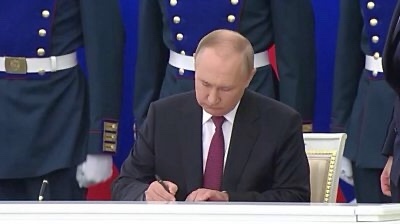
All in all, it appears that this draft law will have little difficulty passing muster and being submitted to His Excellency . . . His Majesty? . . . His Holiness . . . or whatever Putin calls himself these days. And you know he has his pen already poised to sign off on it, since it was most likely his idea in the first place.
I loved my time in Russia. I will always be grateful for having had the opportunity . . . when it was presented to me, 30 years ago. But today? Hell, no! It took a modicum of courage back then; today it requires complete and absolute lunacy. Stay away! Are you hearing me? Unless you’re suicidal, don’t go! They’re arresting people right and left over there. Please . . . if you must travel abroad, go to Italy, or Japan, or Australia. There are so many beautiful places in this world where the people are lovely and the food is good and the laws do not require you to remain mute and stay inside the box. Try one of those. I’m begging you . . .
Done . . . and Done.
*. *. *
So, while I have no further need to travel to Russia . . . nor any desire to do so, in the current environment . . . a lot of people do, for a number of reasons: diplomats from around the world, various other government representatives, journalists, the few remaining foreign business reps, and perhaps even a stray (and seriously misguided) do-gooder from an NGO or a religious organization. I wish them the best of luck, and I have one word of advice to offer them: DON’T. If you have any choice at all, for God’s sake . . . DON’T!
Back in Moscow following my first visit to Kiev, I had settled into a comfortable routine of busy days and quiet evenings. I’d even begun venturing out by myself on weekends. The nearest Metro stop was an easy walk of only about a kilometer, along a pleasant pathway that skirted a patch of undeveloped, public parkland; and it was a quick ride from there into the city. More often, though, I would investigate my own neighborhood, finding handy little shops and introducing myself to the shopkeepers who didn’t quite know what to make of the newly-arrived American lady in their territory. Or friends would take me to some of the non-touristy areas of Moscow, and invite me to their homes for some good food and “kitchen conversation” — the traditional Russian after-dinner talks around the table that go on for hours. I finally came to understand why my grandparents had rarely used their living rooms: the kitchen was the true heart of the home.
One weekend, Vitold offered to drive me to an amazing place called Izmailovsky Park on the outskirts of the city, which featured a huge weekend open-air market that quickly became my favorite place to find items for the apartment: hand-woven rugs, hand-embroidered tablecloths, hand-crocheted bedspreads, hand-sewn curtains — everything beautifully handmade. And there was the odd trinket, like the famous Russian matryoshka (nesting doll) — a couple of which are staring across the room at me even now, thirty years later, as I write this chapter.
Then one day the office phone rang, and I answered it to hear a man’s deep voice introducing himself as Mikhail Pashkin of the Moscow Militia — and specifically, head of the Moscow Police Workers’ Union. I waved Lena over to the phone to be sure I didn’t miss anything, as Pashkin was, of course, speaking Russian. She was understandably a little nervous, since no law-abiding (or other) Russian citizen wants to be involved with the law enforcement authorities for any reason, even over the phone. And we’d already had one unannounced drop-in by a uniformed officer, “just checking to see how things are going.” Why had we become the beneficiaries of such loving attention? Surely, I thought, they must have better things to do. Did they check up on all registered foreign organizations this way? Quite possibly. Or was there something special about ours? My association with Aksilenko, for example? There was no way of knowing.
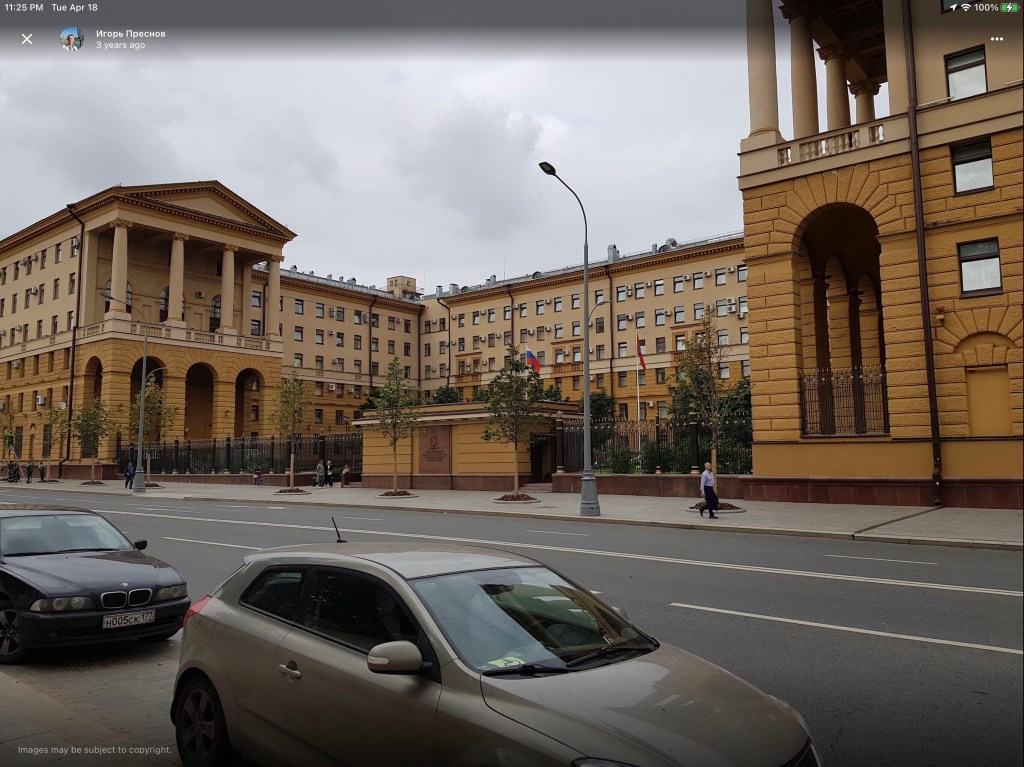
This day, however, Officer Pashkin was calling to invite me to visit him at Militia Headquarters, known to Muscovites by its infamous street address, Petrovka 38. He had heard of our Foundation and was interested in obtaining — gratis, of course — a quantity of our Veggieburger product “for the widows and orphans of Militia officers killed in the line of duty.” A nice way of making it impossible to refuse.
Militia HQ, Petrovka 38, Moscow
As luck would have it, the head of our Foundation, Gil Robinson, was due to arrive in Moscow in a few days. I relayed that information to Officer Pashkin, and we scheduled a meeting several days ahead in order to include Gil. That gave me plenty of time to work up a good case of nerves. But from a practical point of view, I decided it was better to have friends in certain places, in case I ever needed a favor. Spoken like a true Russian citizen.
A few days later, Gil arrived as scheduled. He decided that Maya should accompany us on the visit to Petrovka, mainly because she was the most self-assured of our three interpreters and least likely to be intimidated. So off we went at the appointed time, with Vitold driving but refusing to enter the scary building with us. He would wait in the car, no matter how long it might take, but would not set foot inside. We had been given directions, not to the main headquarters, but to a small, dilapidated old building around the corner. The guard at the desk was expecting us, and accompanied us up the stairway to the third floor (there was no elevator), gratuitously pointing out along the way the “interrogation room” on the second floor — mercifully unoccupied at the moment.
Oh, please! Was that really necessary? Did he actually think we’d enjoy a touch of gallows humor to begin our day? Speaking for myself, I could have done without it.
“Spill it, dirtbag!”
On the third level, three men were waiting in a small — really small — office: one seated behind an old, somewhat scarred desk, and one standing to either side and slightly behind him. There were three mismatched chairs on the front side of the desk for us. And that’s all there was room for in the office; it wasn’t exactly the executive suite. Gil took his seat in the middle, flanked by Maya to his right and me to his left.
The man seated at the desk was, of course, Mikhail Pashkin. He was movie-star handsome, dark-haired, with shoulders, pecs and biceps that strained at the seams of his short-sleeved, light blue shirt. This was not a man you would ever challenge to an arm-wrestling contest. If his intention was intimidation, he succeeded magnificently. (All right, now I’m starting to sound like a Mickey Spillane novel. Enough of that.)
Pashkin introduced the uniformed man to his left (our right) as Militia Officer Kostylev. And on Pashkin’s other side, now perched casually on a windowsill, was a pleasant-looking man in khakis and a plaid sport shirt, who introduced himself as Bragin. Just . . . Bragin.
Mr. Anonymous
After we three had identified ourselves, Gil began by politely asking a couple of questions as to the specific jobs of our hosts. Pashkin talked a bit about his work within the Police Workers’ Union, and Kostylev said that as an officer in the Militia, he was also a member of the Union. Then Gil turned to Bragin and asked, “Are you also with the Militia?”
And that was when the fun began. Bragin simply shook his head and softly replied, “No.” Obviously a man of few words.
Now remember, please, that Gil Robinson was a former Ambassador-at-Large with the U.S. State Department — supposedly a trained diplomat, right? In Washington, and every other world capital, when someone gives you a non-responsive response like that, you don’t press them; you assume their job involves some sort of classified work. And Gil, of all people, should have remembered that. But did he? Oh, no. Instead, he asked, “Well, where do you work?” And when Bragin responded, “A different department,” Gil incredibly went on: “Well, what department is that?” And Bragin softly replied, “It doesn’t matter.”
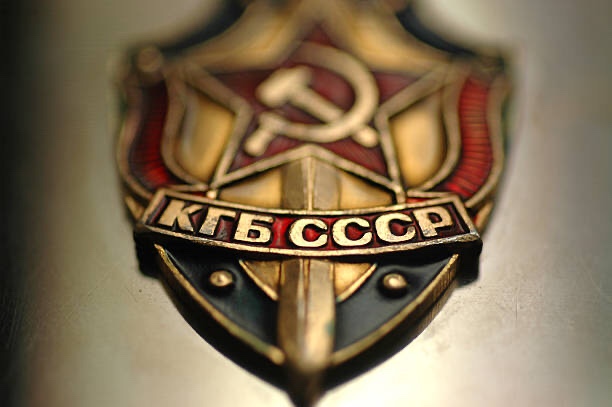
At this point, as Gil prepared to push the envelope with yet another idiotic question, Maya and I began elbowing him in the ribs from both sides, saying quietly, “Gil, drop it.” “Let it go, Gil.” “Just leave it.” Maya understood; I got it; but the professional diplomat remained clueless. Meanwhile, Bragin had caught my eye. Seeing that I was shaking my head in embarrassed disbelief, he smiled and nodded knowingly at me. In that instant I sensed that Vladimir Bragin (I learned his full name later) had become my newest friend in Moscow. He then looked at Gil again, shrugged resignedly, and said, in Russian, “КГБ” — which Maya and I translated for Gil, in unison: “KGB.”
KGB USSR Badge
If the floor had opened up beneath Gil’s chair at that moment, he would have been a happy man. As it was, he was trapped in that little office, trying to worm his way out of a gigantic faux pas. His face turned several shades of reddish-purple, and he began to stammer. I believe the only word he actually managed to choke out was, “Oh.” To his credit, though, he did shift gears fairly quickly, turning from Bragin to Pashkin and asking what we could do for the good folks of the Militia; and the meeting then began in earnest.
When I looked again in Bragin’s direction, he was once more looking at me and smiling. You might say we bonded over Gil’s embarrassment, and I was to be the beneficiary of that connection throughout my stay in Moscow. He was my Russian krysha, literally “roof” — my protection — and it never cost me a thing. It didn’t change what he did for a living, of course, but he turned out to be a very likable fellow.
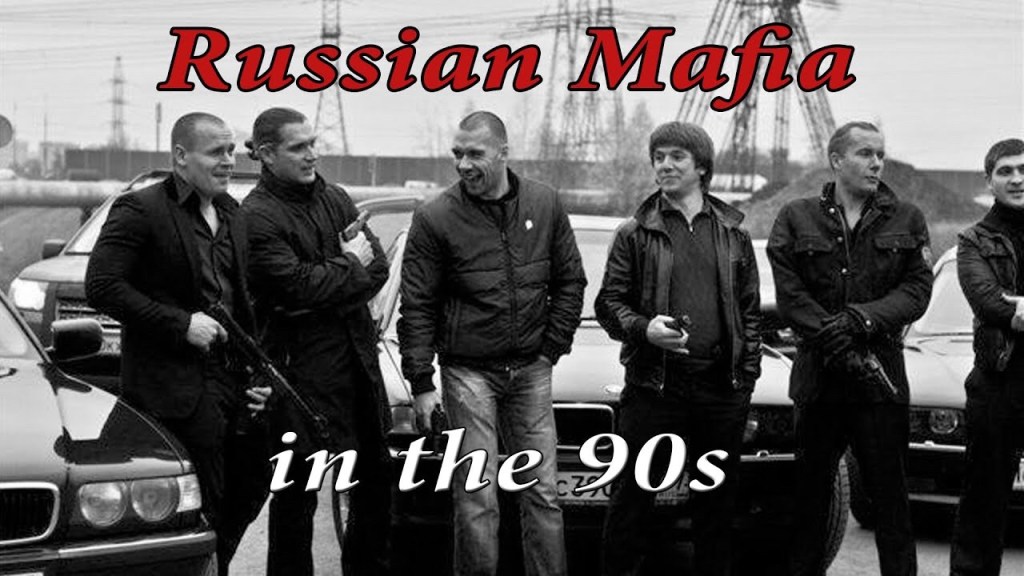
Now, you’re probably wondering where the Russian Mafia comes into play in this story. At that time in Russia — and I’m not sure how this may have changed under the current regime and with the rise of the oligarchs — it was difficult to know with whom you were dealing at any given time. The so-called “Mafia” families — actually just criminal gangs who named themselves after the Italian originals — were so seamlessly woven into the Russian hierarchy and society in general, you simply couldn’t avoid them.
Family Reunion
In the case of Pashkin and his buddies at Petrovka, it all had to do with the final distribution of the huge shipping container of Veggieburger we were able to deliver to them. Information we later received indicated that the widows and orphans had enjoyed little, if any, of it. All or most of it went in the front door and right out the back, directly onto the black market, earning a sizable profit for both the “wholesalers” and the “retailers.” And those operations were generally controlled by the various Mafia gangs. So while I spent those months in Moscow for the most part steering clear of the criminal elements, it proved impossible to bypass them entirely.
A Good Day’s Work
One example of the steps we took to protect ourselves was the safe in the apartment. The ‘90s were a time of rampant criminal activity in Russia, sometimes referred to as “The Great Mafia Wars.” There were daily drive-by shootings; burnt-out vehicles by the side of the road; and kidnappings or slayings of individuals as they entered or left their banks with large amounts of cash — much like living in Newark or Detroit. So we had a sturdy safe in one of the bedrooms in which we kept the thousands of dollars periodically carried over by Gil Robinson for payroll, rent and other expenses. As with the front door, it would have taken a bomb to get into that safe; and it relieved me of the need to go near a bank . . . ever.
*. *. *
When I was preparing to leave D.C. for Moscow that May of 1993, people had frequently asked whether I wasn’t afraid to be going to such a dangerous location. At the time, I had been living in the metropolitan Washington D.C. area for most of my life, and I simply pointed out to them that I was already in what was then known as the murder capital of the United States. The only difference, I argued, was geography. I had long since developed a “que sera sera” attitude, and didn’t think too much about the daily hazards of life. My philosophy was, and still is, that we’re all born with a pre-determined expiration date — though it’s not stamped on our bottoms like a can of beans — and if my time was due to come up in Moscow, then so be it. I was going to have a grand time while I could.
And so I did, for the most part. But there were nerve-wracking moments as well. One of those involved the aforementioned need for my continuing contact with Valentin Aksilenko. We kept our telephone communications brief and infrequent, and only actually met a couple of times during the entire summer. He seemed relaxed enough, but again, I attributed that to his years of KGB training. We would “walk and talk” — strolling outside in busy places near my apartment building to avoid any electronic bugs that might be hidden in the apartment — and I think I managed to appear nonchalant enough. But my insides always felt as though I’d swallowed a gallon of Mexican jumping beans. I fully expected at any moment to be pounced upon by a couple of big thugs, dragged into a car with darkened windows, and driven to an isolated spot where I would be shot in the back of the head and left for the crows to feed on. But then, I always did watch too many bad spy movies. Obviously, I survived without anything of the sort ever happening.
“Uh-oh!”
*. *. *
But there were other moments as well. It seemed that even a holiday — specifically, in this case, the American Fourth of July celebration — could turn scary in Moscow, and not just from any errant fireworks. Join me next time for that memorable episode, which still gives me the willies when I think about it.
So long for now, Brendochka 4/6/23 (re-posted 11/30/23)
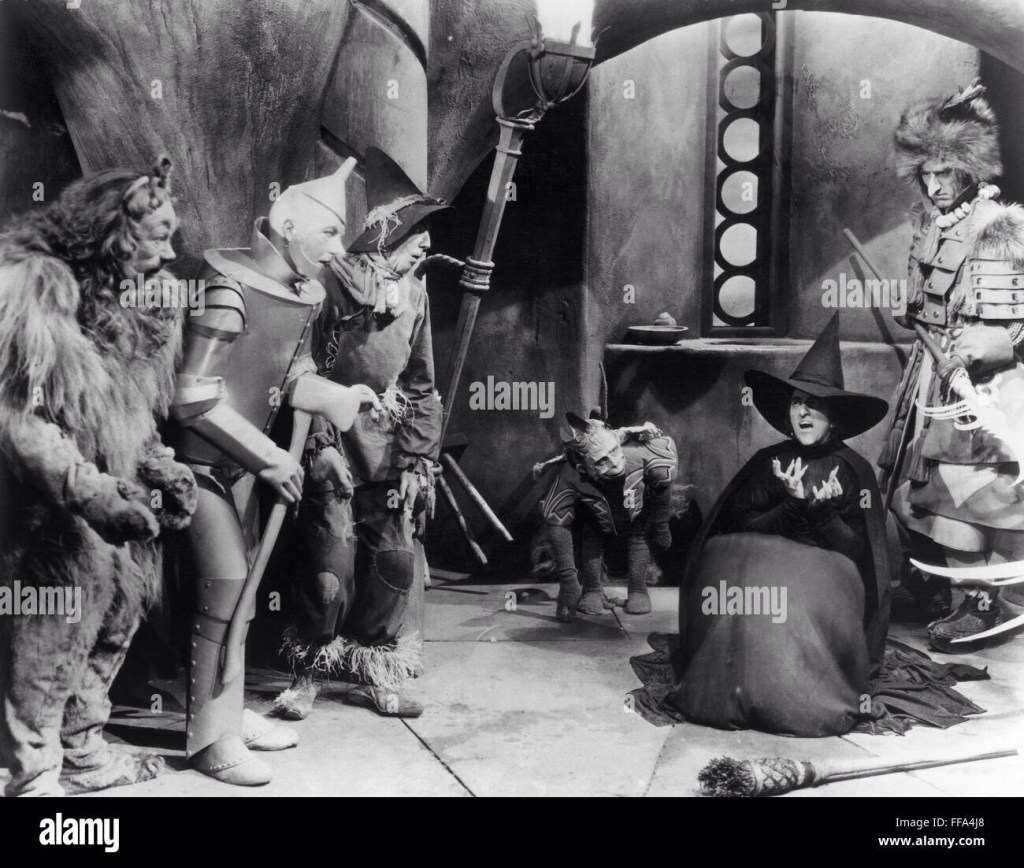
You’re probably laughing right now; I did too, when I read today’s news flash. But it’s not a joke. I don’t think Vladimir Putin knows how to crack jokes about such serious matters as zero . . . no, negative . . . population growth. Russia’s in trouble, people. Like that other Wicked Witch — you know, the one from the West — Russia is melting!
“I’m melting! I’m melting!”
Well . . . shrinking, actually. But close enough for government work. (“Melting” sounds too much like the global warming thing, which is a whole other really serious issue and not the one we’re talking about today.)
In Russia’s case, it took more than tossing a bucket of water at a Witch to start the process; it took an entire war (or “special military operation,” in Putin parlance), and the resultant deployment of around 300,000 Russian troops (of whom an estimated 50,000 have died), for Mr. Putin to become fully aware of the problem. Those losses, together with the “Flight of the Draft-Dodgers” and others — a total of another 900,000 or so people — have taken a serious bite out of Russia’s workforce since February of 2022. Not to mention the inevitable reduction in the birth rate.
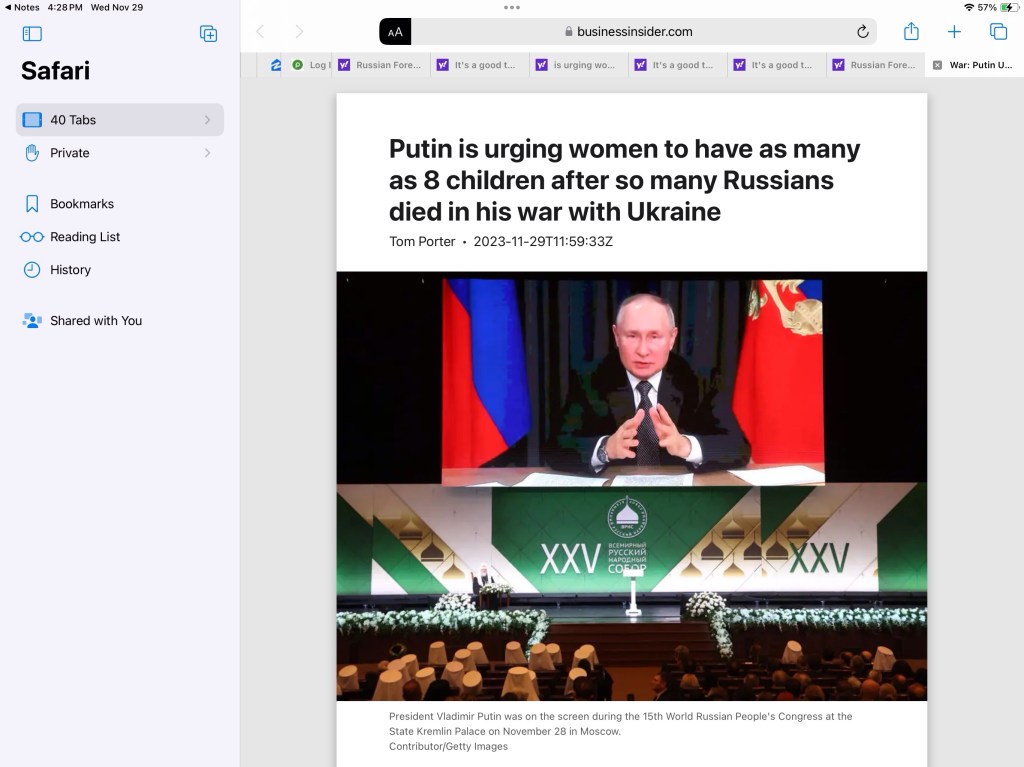
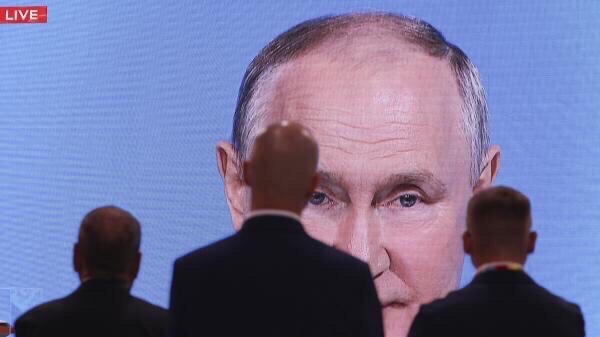
So on November 28th, Putin again appeared on the big — really big — screen before the 15th World Russian People’s Congress at the State Kremlin Palace in Moscow, where he urged Russian women to get busy and start popping out babies as quickly as possible:
“Many of our grandmothers and great-grandmothers, had seven, eight, or even more children. Let us preserve and revive these excellent traditions. Large families must become the norm, a way of life for all of Russia’s people. The family is not just the foundation of the state and society, it is a spiritual phenomenon, a source of morality.
“Preserving and increasing the population of Russia is our goal for the coming decades and even generations ahead. This is the future of the Russian world, the millennium-old, eternal Russia.”
“Big Brother” On the Big Screen
*. *. *
Wow! Get crankin’, folks. Let the orgy begin!
Class in “How To Conduct A Roman-Style Orgy.101”
Granted, the decline in Russia’s population is not new. Since the start of Putin’s reign some 24 years ago, he has offered “a range of government incentives for those who have children, including payouts for families who have more than one child.” But, in a country already suffering from the effects of massive inflation, as well as the impact from more recent sanctions imposed since the start of the war against Ukraine, it appears that these incentives have fallen far short of their goal. According to Rosstat, Russia’s federal statistics service, the country’s population as of January 1st of this year stood at 146,447,424 — lower than it was in 1999 when Putin first became president. [Tom Porter, Business Insider, Nov. 29, 2023.] For purposes of comparison, the population of the United States on January 1st was 334,233,854 — a slight increase of about 1/2% over the previous year.
So now Putin is trying a different tactic: appealing to the patriotic, moral, and spiritual values held dear by this generation’s grandparents and great-grandparents. Yeah . . . good luck with that one, Vlad. I can’t wait to see how it goes over with all of those already overworked, underpaid, physically and emotionally exhausted couples who are now being told they’re nothing more than baby-making machines for the state. Forget about making love; it’s now just a manufacturing process.
Meeting the Quota
*. *. *
You say you want my personal opinion on this vital matter? Okay, here it is:
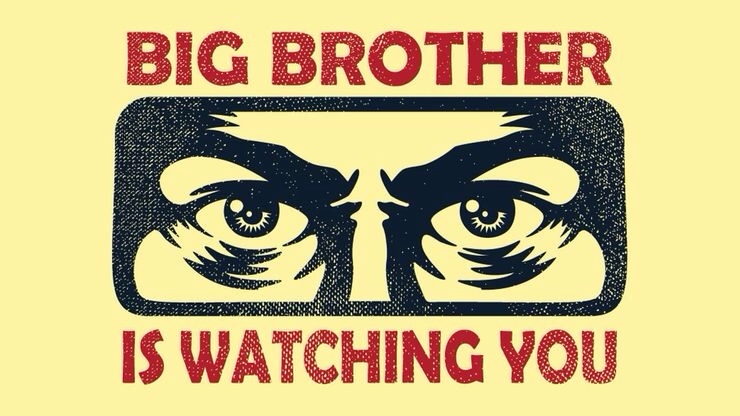
In 1949, just half a year before his death, George Orwell’s novel “1984” was published. Orwell was an English novelist, essayist, journalist and critic, known for his political opposition to totalitarianism and his support of democratic socialism. Any adult who hasn’t heard of “1984” and its infamous, larger-than-life “Big Brother” must have been living in a bunker. For those who would like to catch up, it is best described as a “dystopian novel” satirizing life in a totalitarian state (obviously patterned after the Soviet Union). It has become an award-winning classic, and if it isn’t required reading in our high schools, it should be (in my opinion). (The paperback costs less than $10 on Amazon. Don’t bother watching the movie, though; it’s terrible.)
“1984”
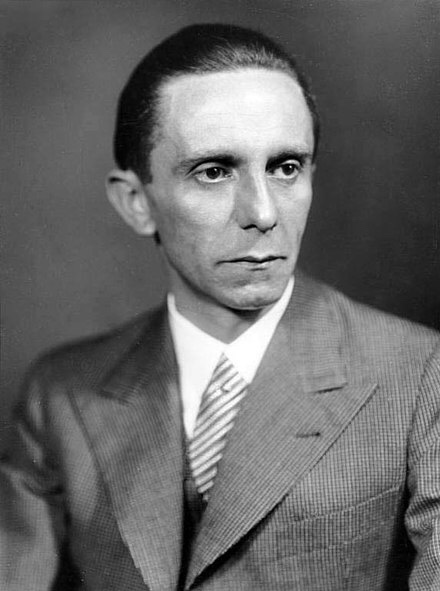
So why am I promoting this 75-year-old novel by a long-deceased writer? I’m not, actually. But I was reminded of it the other day when I was researching information on a particular Russian government ministry and stumbled across one I didn’t know existed: the Ministry of Enlightenment of the Russian Federation. And I gasped. Literally gasped, out loud, for two reasons. First, although there was no “Ministry of Enlightenment” in Orwell’s novel, the principal focus of the book was on the forced dissemination of the government’s lies and propaganda under the guise of enlightenment. And second, the last such ministry in the real world of which I am aware was the “Reich Ministry of Public Enlightenment and Propaganda,” created by Adolph Hitler in Nazi Germany in 1933 and headed by Joseph Goebbels until the war’s end in 1945. (There may, of course, be others by different names in other countries that are not as well known).
Joseph Goebbels – Reich Minister of Propaganda
See why I gasped? Because Orwell’s prescience has extended, not just to 1984, but into yet another century. Russia now has one of those real-life ministries, established in 2018, passing along the teachings and the mandates of a virtual clone of Orwell’s Big Brother: none other than Vladimir Putin himself.
Interestingly, if you do a Google search of “Russian Ministry of Enlightenment,” what pops up is the Ministry of Education. And when I double-checked the Russian words for “enlightenment” and “education” — because my Russian language skills are less than perfect and really rusty — I found a cute little translational word play. The most commonly-used Russian word for education is obrazovaniye. But the Ministry of Education is described online as the Ministry of Prosvescheniya — Ministry of Enlightenment, according to the word’s principal usage. However, Prosvescheniye also has a secondary meaning. You guessed it: it’s “education.”
Confused? I’d be shocked if you weren’t. It’s a fine distinction, so just take my word for it: while not technically incorrect, it appears that the word Prosvescheniye was intentionally used in the creation of the new (2018) Ministry to muddy the waters. It would have been so easy to avoid confusion by naming it the Ministerstvo Obrazovaniya, which does not have a dual meaning.
(By the way, the different word endings (“e” and “a”) are not typos; they have to do with the Russian grammatical cases, and you really don’t want me trying to explain those!)
But . . .
As I’ve said before, in Russia there is always a “but.”
No! Not those butts!
But in any event, my point is that Russia already had a Ministry of Education, long before 2018. I know, because I met with Dr. Kezina, then the head of that Ministry, in Moscow, way back in 1993. A highly intelligent, competent woman with a strong personality and direct manner, I found her to be very impressive; she was not a figment of my imagination. She and her Ministry were very real. *
* NOTE: The Ministry existed, under various names, from the early days of the USSR. Until 1946, it was known as the People’s Commissariat for Education — in Russian, the Narodniy Kommissariat Prosvescheniya, or its acronym, Narkompros. Note that the word used for “Education” was the word whose principal definition is “Enlightenment” — Prosvescheniya. Was Vladimir Putin’s chosen naming of the new (2018) Ministry a coincidence, or was it an intentional homage to Narkompros?
So, why the need for a second institution, purportedly with the same or similar functions? Or perhaps it’s just a restructuring of the original Ministry of Education. But in either case, why cloak it under a misleading name?
21st Century “Big Brother”
Although not widely publicized, there has been an awareness of this development in Russia at least since early 2022. On March 3rd of that year, it was reported:
“Russia has a ‘Ministry of Enlightenment’ and it is as dystopian as it sounds.
’The ministry is basically the country’s answer to the ministry of education and the Kyiv Independent today drew people’s attention to its existence when it revealed something the ministry is planning today.
“On Facebook, the ministry announced it is holding a virtual lesson for children to explain why the war on Ukraine is necessary and about the ‘danger’ of Nato [sic] today.
[Quoting from the Ministry’s Facebook post about the lesson]:
‘At the All-Russian Open Lesson, schoolchildren will be told why the liberation mission in Ukraine is a necessity.
The broadcast will take place tomorrow, March 3 in the community of the Ministry of Enlightenment starting at 12 o’clock Moscow time.
Viewers will be told the background of today’s events: about the danger NATO represents to our country, why Russia stood up for the protection of the civilians of the Donetsk and Luhansk People’s Republics, and will also help to figure out how to distinguish the truth from lies in the huge stream of information, photos and videos that are flooding the internet today.
You can use the materials on the broadcast website to conduct such an open lesson in your classroom, in the institute of education’ . . .” [Kate Plummer, indy100, March 3, 2022.]
Young and Vulnerable
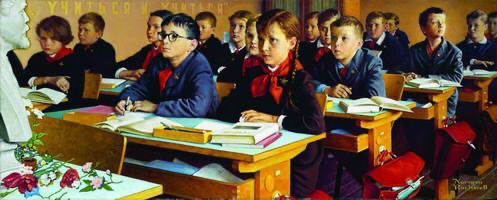
The Hitler Youth . . . the All-Union Leninist Young Communist League (Komsomol) . . . whatever they might name the new Russian youth organization . . . they’re all the same. Get those kids young enough, while they’re still vulnerable and their little psyches still malleable, and you’ve got a whole new generation of zombies eager to do your bidding. Perhaps they should be called “Putin’s Pioneers.” *
* NOTE: The Soviet Union’s “Youth Pioneers” was a compulsory organization for children and adolescents aged 9-14, founded in 1922 and continuing in existence until the dissolution of the Soviet Union in 1991.
*. *. *
But wait . . . they already exist!
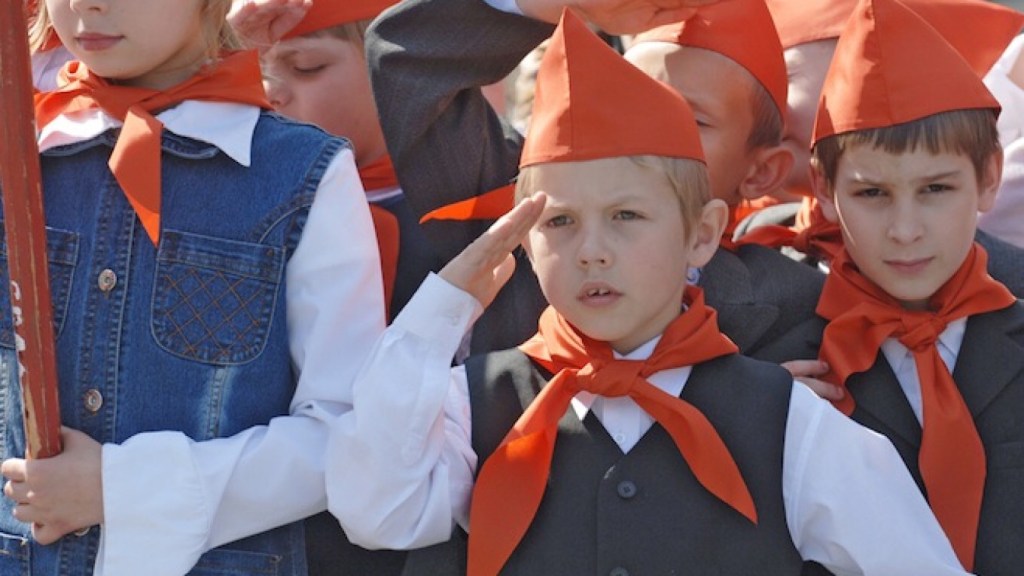
And here they are, complete with the red scarves of yesteryear.
Dig deep enough, and you find the most amazing things. On October 29, 2015 — the 97th anniversary of the 1918 founding of the Soviet Union’s Komsomol* — Vladimir Putin, in a master stroke combining nostalgia and foresight, created what he calls The Russian Schoolchildren’s Movement. Komsomolskaya Pravda said in its website headline: “On Komsomol’s birthday, Putin signed a decree on creating new Pioneers.” But the article went on to clarify that the new movement would be “free from Communist or any other ideology.” Ministry of Education officials “appeared unfamiliar with Putin’s plans, while a social affairs official in Russia’s Cabinet said the new movement was ‘exclusively the presidential administration’s’ idea.” [Anna Dolgov, The Moscow Times, Oct. 30, 2015.]
* NOTE: Komsomol was the Soviet Union’s political youth organization for 14-to-28-year-olds who had graduated from the Pioneers. Komsomol was also dissolved in 1991.
*. *. *
So this apparently was all Putin’s brainchild. And within three years following its inception, along came the new Ministry of Enlightenment, with its Soviet-style, almost subliminal, daily dosage of official rhetoric, now complete with programs available for use in classrooms.
Someone asked me yesterday how I’d managed to live so long.
No, not that long!
Only a young person would ask a question like that, thinking it was a compliment; and I’m sure she meant it that way. I actually thought it was rather funny, and as I contemplated my answer, I realized that I had never thought about it before. And my answer was:
By doing pretty much whatever I wanted to do.
I’ve never smoked, but not because of the health hazard; I tried it twice in my teens, and hated it. Plus, it’s a very expensive habit. But lots of other people did, so there was a good bit of second-hand smoke being inhaled.
I didn’t do drugs because they were illegal and I was afraid of being caught. Plus — even more so than cigarettes — there was the cost. But otherwise . . .
Did I drink? Sure. Did I drink and drive? Sorry to say, I did, and the fact that I didn’t kill myself or anyone else is due to just plain dumb luck. And in my younger days, I was hell on wheels, even when sober.
Did I eat red meat? Oh, yeah . . . lots of it. A day without beef was an incomplete day. And fatty foods, spicy foods, all kinds of ethnic foods, without consideration for the grams of fat, sodium, or cholesterol. And dessert? To me, dessert was an essential food group. Every meal ended with something sweet.
Did I get enough sleep? Never! There was too much partying going on to waste my time sleeping. How about staying hydrated? We didn’t think about that when I was younger. Exercise? Every now and then, but it was too much work to keep at it.
I traveled, to countries where food wasn’t always properly stored or refrigerated. I never got sick from the food, or from spending hours in an airplane with people exhaling germs. And antibacterial soaps weren’t readily available. I learned not to worry about it.
And even before young adulthood. When I was a kid, we roller skated, rode bikes, climbed trees . . . and all without helmets. We fell and skinned our knees. So what? A little iodine and a bandaid, and we were back outside. Cars didn’t have seat belts. Kids shared soda bottles and popsicles, exchanging germs without thinking about it. Nobody cared.
And finally, I guess I have good genes. Most of my family members lived long, productive lives. They . . . we . . . have always worked hard, taken care of one another, and lived decent lives (apart from that drinking-and-driving thing).
Let’s face it . . . life’s a crap shoot. You can do all the right things, and still die young; or you can jump out of a plane without a parachute, and survive. (I don’t recommend that, however.) Basically, it’s a matter of luck. And I’ve been pretty lucky . . . so far, anyway.
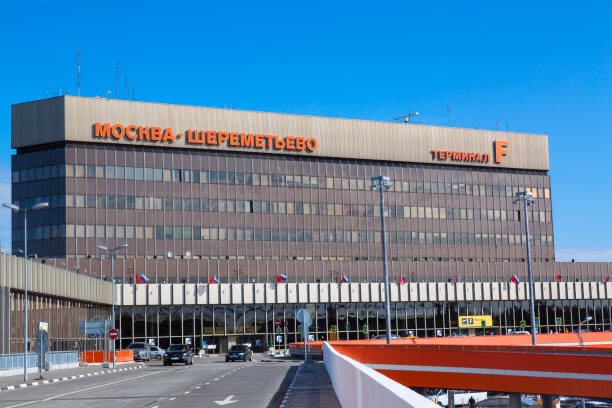
May 11, 1993 – Sheremetyevo Airport, again. But at least this time, it wasn’t a snowy February. It was springtime, and I had someone waiting for me at the baggage claim area: good old Vitold. He had thoughtfully brought a friend with him, one who owned a truck. Vitold was a little crazy, but he wasn’t stupid — he knew his Lada automobile would never be able to hold a woman’s six-months-worth of luggage and office supplies.
Sheremetyevo International Airport, Moscow
That ride — from the airport far to the north of central Moscow, to the Foundation’s apartment at the far opposite end of the city — has to go down in the record books as one of the most miserably uncomfortable rides in history. In my history, at least. This truck wasn’t a Ford pickup, or anything even close. It was a nameless rattletrap, a junkyard reject, a pitiful conglomeration of spare parts seemingly held together with Scotch tape and baling wire. Its creator had obviously never heard of shock absorbers — or, for that matter, padding in the seats. Welcome home, Brenda; your limousine awaits.
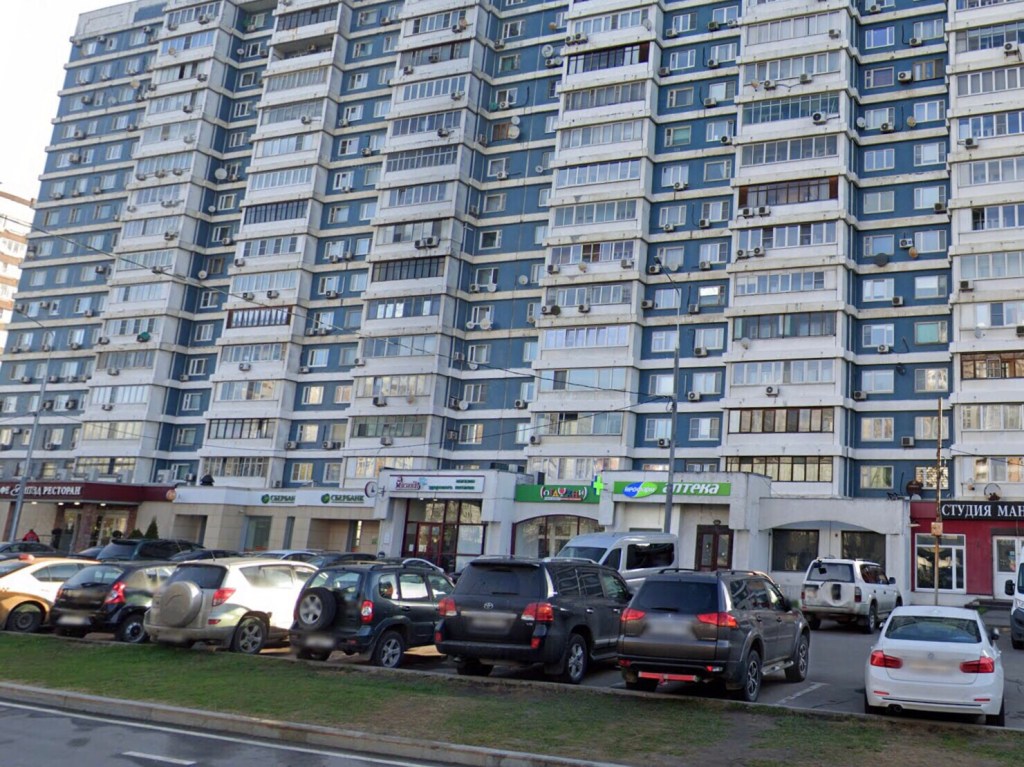
Add to that, the driver from hell and the notoriously rutted Russian roads (pardon the alliteration), and it’s no wonder I was ready to kiss the ground when we finally arrived at No. 16 Rublevskoye Shosse: a 16-story, blue and white Soviet monstrosity, ground-floor commercial space in the front, parking and entrance in the rear, springtime mud everywhere. And in the dismal little entryway, a small desk at which was seated the ubiquitous dezhurnaya: the lady concierge cum watchdog whose responsibility it was to report — to whomever her bosses were — on the comings and goings of all residents and visitors. Innately suspicious of the newly-arrived American on the sixth floor, she eventually decided that I wasn’t there to kill her or to steal anything, and by the time I left Moscow, she had almost come to accept me. I considered that one of the major accomplishments of my time in Russia.
Home Sweet Home – Moscow
The building was owned by the Ministry of Defense; but the apartment belonged to an army officer who had been sent, along with his family, on indefinite assignment to Tajikistan. I’m sure they were thrilled. But they were allowed to rent out their apartment, and were delighted to find American tenants willing to pay in dollars. They had hired one of their neighbor families on the same floor to look after the place and collect the rent, and we in turn hired the lady of that household, Tamara, to do a bit of cleaning and cooking. I do not know what I would have done without her. She was a great cook, and she knew where to shop for the best meats, produce and bread. In return, I would bring items for her from the hard currency stores that weren’t otherwise available to her. She also volunteered to do my laundry for me. I would have adopted her and brought her home with me when I left Moscow, but her husband and daughters objected rather strenuously for some reason.
Happily, the interior living spaces were far superior to the building’s exterior. My apartment was unusually large for Moscow, clearly indicating that it belonged to a somewhat privileged family. It had a spacious living-dining room, three big bedrooms, two well-appointed bathrooms, and a very nice eat-in kitchen that had been upgraded with German-made appliances and cabinetry. The furniture wasn’t beautiful, but it was comfortable and clean, and I immediately felt right at home. There was also a large enclosed balcony, which became a very handy storage room. Part of the main living area had been portioned out as office space, with a desk, file cabinet, computer, satellite phone, and a Xerox printer/copier (one of the 16 pieces I had brought with me).
My favorite feature of the place, though, was the apartment door. It was made of steel, roughly three inches thick, and had a three-fingered steel deadbolt, each finger, or rod, measuring a good inch or so in diameter and about six inches in length. Nobody was going to break through that sucker — not without a bomb, anyway.
And more people came with the office as well. Olga and Lena had been hired by Gil, and were soon my new best friends. They were delightful women, both fluent in English, who acted as interpreters and office assistants. Olga was outgoing, Lena more on the shy side, but we all got along beautifully, and I soon was referring to them as my Russian sisters. Many an evening I would invite them to stay after work for zakusky (hors d’oeuvres), vodka and a movie. With Vitold’s help — I nicknamed him “the Scrounger” — I discovered kiosks where I could buy the best caviar at the equivalent of about $3.00 for a two-ounce container, decadently rich ice cream to stock the freezer, and vodka that wasn’t rotgut. With all that good food and a VCR player, my popularity was pretty much assured, even though they did suspect I was a CIA agent because why else would an American learn to speak Russian? It had been less than two years since the breakup of the Soviet Union, and paranoia still ran deep.
Queuing Up For Ice Cream
The final two members of our little family were Vitaly and Maya. Vitaly was a quiet sort, and acted as a back-up driver and gofer. Maya was a strikingly beautiful young woman, married without children, and the spoiled daughter of an army general. She was also intelligent and an excellent interpreter, but was obviously more interested in her social life and eventually visiting America than in actually doing any work.
So this was my home, and these were my people, for the next several months. How on earth had this come to be? What twists of fate had led me from my prosaic childhood in New England to this strange and forbidding place? As I thought about it, the answer became obvious: it was all Walter Surrey’s fault. (Sure, blame the guy who’s not here to defend himself.) When I walked into the offices of Surrey, Karasik & Morse for the first time in April of 1979, I was taking the initial, unsuspecting step toward this moment. Every path, every byway, every road from that point on led me directly — do not pass “Go,” do not collect $200 — to my lifelong obsession with all things Russian . . . and now, to Russia itself.
As I write about these people who were such a big part of my life that summer, I have a hard time picturing them as they would be now, thirty years later, and I can’t help wondering how their lives have turned out. It broke my heart when, less than a year after leaving, the roads to Russia were suddenly closed off to me, and I had to lose touch with them — but that’s a whole other story for another chapter (or two).
*. *. *
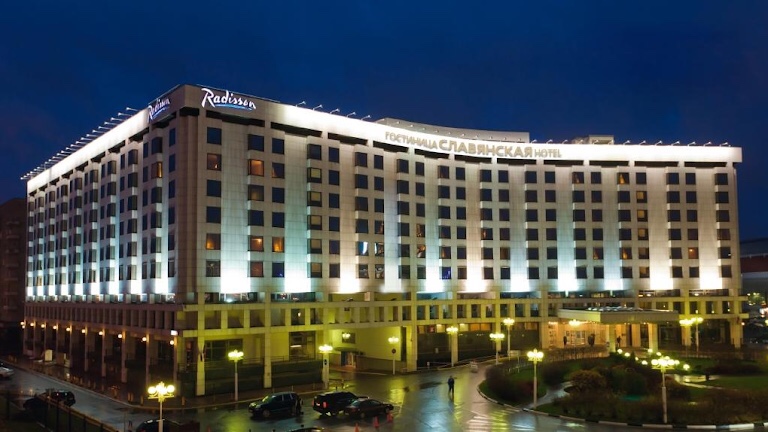
There was little time to get acquainted that first day — I was off to Kiev just 24 hours later, compliments of Gil, who had arranged for me to meet with our Ukrainian partner. Olga had made my train reservations, I had brought a small bag already packed for a two-nighter, and Vitold drove me to the Kievskiy Vokzal — the Kiev Train Station — which, coincidentally, is located around the corner from my old standby, the Radisson Hotel.
I had a sleeping compartment on the train, and headed off — alone once more — into the unknown. The train left Moscow around 5:00 p.m., and arrived in Kiev in the morning. I had brought along food and bottled water, and had been warned to use the bathroom early in the voyage, as it was unisex and would be too disgusting to use later. They were right. It’s hard to aim on a moving train.
Somewhere Between Moscow and Kiev
Somewhere in Ukraine, we made a fairly lengthy stop at a village where we were able to leave the train and mill around the station for a few minutes. There were vendors, of course, and I bought a couple of pieces of fruit and bottles of mineral water. I even had a chance to talk with a very sweet lady, who was tickled to learn that I was an American whose grandparents had emigrated from her region around the time of the first, failed Revolution of 1905.
Around 9:00 p.m., I left my compartment to stretch my legs in the corridor, and was looking out the window at the passing scenery (it was not quite dark), when we made a brief stop at a small station. As I glanced at the people on the platform, I suddenly noticed a familiar face: a woman who appeared to be the identical twin of my mother’s older sister — or, rather, as she had looked many years before. Unfortunately, there was no time to disembark, and I have always regretted that I was unable to talk with her. She may have been a distant relative; I will never know, but I like to think so.
We arrived without incident in Kiev in the morning, and as I stepped down onto the platform, a woman approached me and introduced herself as Irina Shakhova. Irina was a little younger than I, spoke fluent English, and looked enough like my mother’s side of the family to have been my cousin. It was obvious that we felt an immediate affinity for one another; we talked as though we’d known each other all our lives, and soon became fast friends. Later, when she and her husband Yuri moved to the Washington area with their two children and Irina’s mother, we remained close.
In addition to meetings at the Ukrainian Ministry of Health and the storage facility that housed our shipments of food, Irina did manage to give me a driving tour of the beautiful, historic city of Kiev, and a couple of exquisite restaurant experiences where the food was reminiscent of my grandmother’s cooking when I was a little girl. But the most amusing incident involved a small demonstration of coal miners from the Donbas region — an area so tragically in the news this past year — in front of a government building across the street from my hotel. I had some free time, and wandered over to see what I could learn, and to take a few pictures.
The crowd was peaceful; they had no choice, really, as the militia seemed to outnumber the demonstrators. As I was wandering about among the two hundred or so miners, a man — obviously spotting me as a foreigner — approached and began speaking to me in Russian. He asked where I was from, and when I said “Washington,” he became very excited and asked me to take a message back to my President. Okay, sure, glad to; I’m from Washington so obviously I know the President, right? And what was his message? Quite simply, that a dentist had implanted a radio transmitter in his mother’s teeth through which the government was spying on their family. [Cue Twilight Zone theme.] Never mind the other coal miners’ legitimate complaints about poor wages and working conditions; let’s first take care of Mama’s listening device. The poor man must have inhaled one too many liters of coal dust. I didn’t want to upset him, or invite trouble for him by enlisting the help of a Militsionaire, so I assured him I would do my best and hightailed it out of there, back to the safety and quiet of my hotel room.
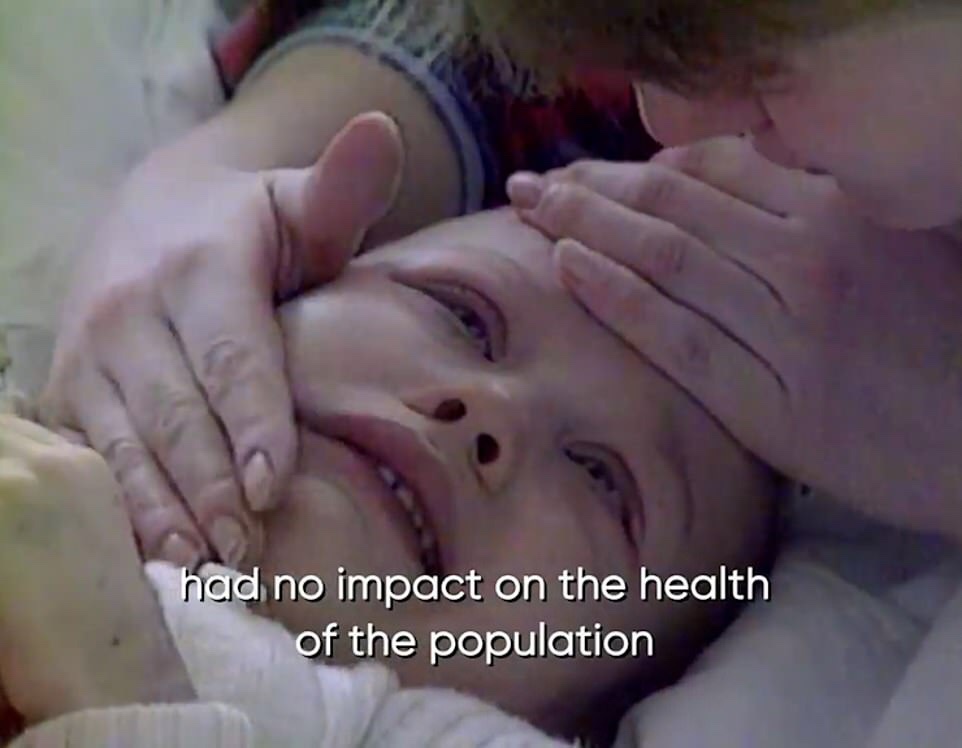
But the most memorable — and saddest — event of that trip to Kiev was my visit with Irina to a treatment center for child victims of the Chernobyl nuclear disaster some seven years earlier. These were some of the children who were receiving our Veggieburger. If you can recall how the poor orphans were portrayed in the movie versions of Charles Dickens’ “A Christmas Carol,” you’ll have an idea of how these children looked: pale, emaciated, eyes dark-ringed and sunken, and faces sad beyond description. There was not a spoken word or a hint of a smile from any of them, as though they had never known a moment when they weren’t ill, and they realized the future wasn’t going to be any better. Their faces haunt me to this day. And these were just some of the less-afflicted children — the ones who were mobile and not visibly deformed. I was not given access to an inpatient hospital or an orphanage, undoubtedly for good reason. And of course, I was not allowed to touch the children, though I wanted desperately to give each one a huge hug. But the danger of radiation contamination was still too great.
What the government said . . . vs. what I saw.
Yet their condition, as greatly as it affected me, in no way surprised me. For those three days in Kiev, I had a sore throat that felt for all the world like tonsillitis, only it couldn’t be, because I’d had my tonsils removed decades earlier. But I had breathed the Chernobyl-polluted air and eaten locally-grown food, and that was enough. As soon as I left Kiev, I felt fine again; my sore throat disappeared, and to my knowledge I have suffered no lasting ill effects from that brief exposure to nuclear contamination. But those children had been breathing that foul air for all or most of their young lives. An entire generation had been sacrificed to the ravages of mankind’s insatiable lust for advancement.
Then it was back “home” to Moscow on another overnight train, and onward to a summer of fun and games in the ancient land of the Tsars, the Commissars, and the Oligarchs. Near the top of my to-do list: discreetly reestablishing contact with Valentin Aksilenko.
*. *. *
Today, I can’t remember what I had for dinner last night; but the details of those months in 1993 remain etched in my mind as though I had just lived them. Please join me again next time, when I revisit my first encounter with the Moscow Militia and the local KGB, on their turf, at a place known only by its address: Petrovka 38.
February 21, 1993 – Eight time zones away in Moscow, Valentin Aksilenko answered the ringing telephone: “Allo?”
“Valentin, what in hell is going on over there?!!” I was clearly in no mood for preliminaries.
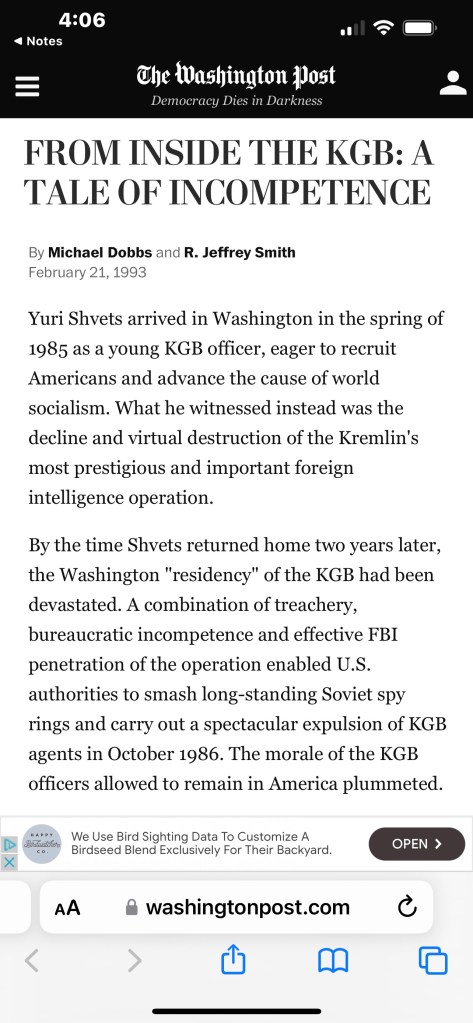
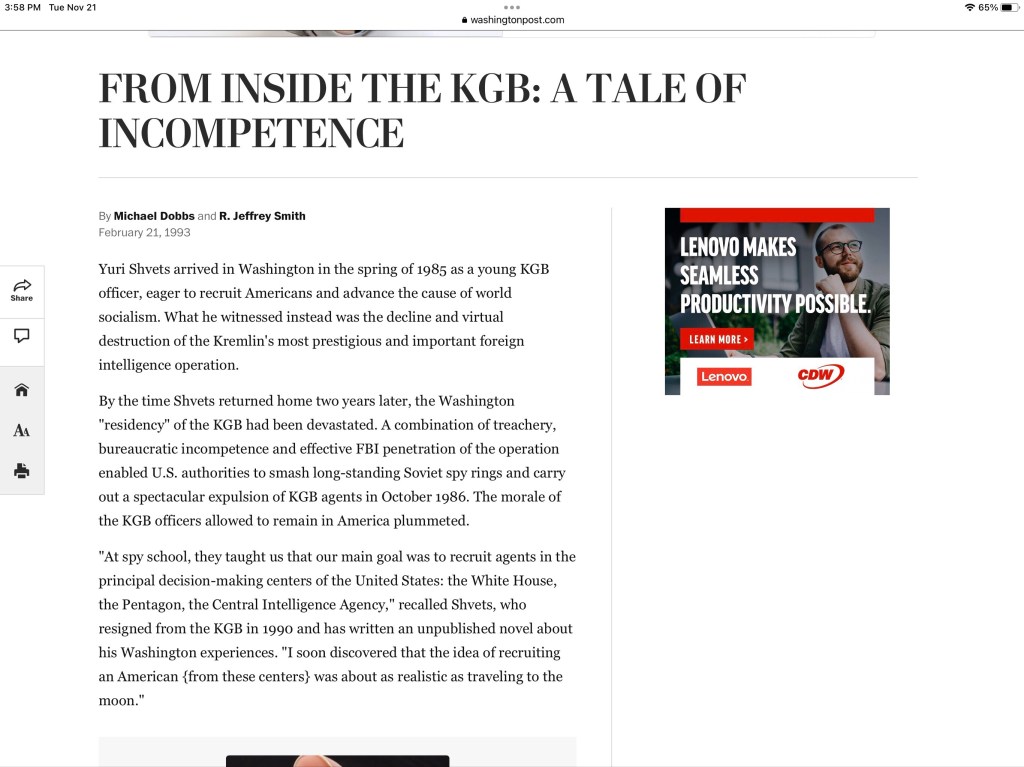
Valentin chuckled, not at all surprised to have heard from me. “Oh, you saw the Washington Post?”
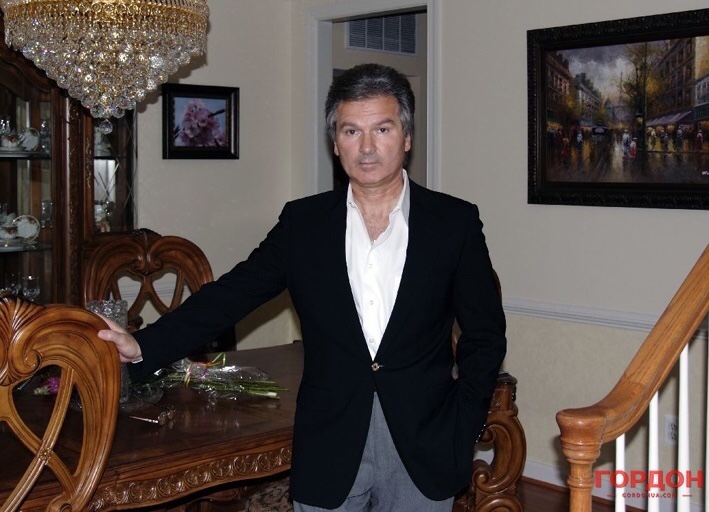
So this Yuri Shvets quoted in the article was the friend he had told me about in Moscow. The entire scenario had obviously been carefully planned, by both of them, well in advance. And Shvets’ last interview had taken place while I was still in Moscow — perhaps at the very moment that I had been sitting and talking with Valentin in the Radisson’s business center. What kind of dangerous game were they playing? And how had I managed to be dragged into it? Was my being in Moscow at that exact time just the worst kind of serendipity?
The Front-Page Headline
In disbelief, I responded: “Is he crazy? Does he know what he’s doing?’
I was clearly upset, yet Valentin remained perfectly calm. He assured me that everything was fine, that there was no cause for concern, and that his friend had things well under control. Seriously?? This Shvets guy was advertising the fact that he was about to blow the whistle on the KGB, and everything was “under control”? How was that even possible? But I somehow managed to restrain myself, and not ask any further questions. I reminded myself that we were, after all, on an unsecured phone line between Moscow and the United States. Valentin’s calm demeanor, at first puzzling, was actually smart; he had been well trained. I should have realized that in the first place, but this was unfamiliar territory for me.
Valentin further confirmed that our business arrangement was still in place; they would draft an agreement to be signed by the three of us, granting me a percentage of any income from the “transaction”; and I should please go ahead with the search for a publisher. That was the least of my worries at the moment, but I took my cue and thanked him, told him I looked forward to receiving the agreement, and we said our goodbyes. Then I started pacing from room to room.
I never did get breakfast that day, and I’m not all that sure about lunch either. I kept rereading the newspaper article and trying to imagine a scenario in which Shvets’ book could be published without creating a firestorm in Moscow; but I wasn’t having any luck. First, however, I decided I had to protect myself on this end — not just financially, but legally. I needed to be sure that a commercial transaction of this type would not be in violation of any U.S. laws, regulations, or existing sanctions against Russia. As for the controversial content of the book, that would be the publisher’s problem, not mine. It was Sunday, so I couldn’t make any phone calls that day, but I knew whom I had to call on Monday: a friend in the Justice Department.
I woke early Monday morning and made the call. My friend asked a few questions, then assured me that there was no legal restriction against the type of business arrangement I had described, and no reason why a book by a Russian author couldn’t be published in the U.S. One of his questions concerned the identities of the two men.
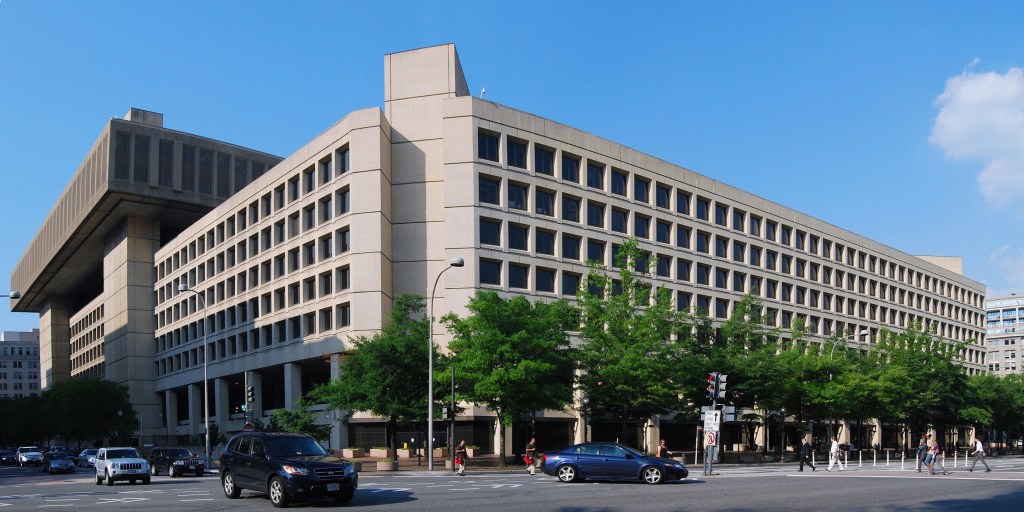
The next day, the FBI came to call.
FBI Headquarters, Washington, DC
One or both of the names had apparently sent up a red flag in the Justice Department’s database, and my inquiry had immediately been referred to the Department’s investigative arm, the FBI. My first thought was that they were going to suggest that I back off and not get involved with anyone, former or current, from the KGB — which, of course, would have been sound advice. But that’s not what happened. In fact, they said they saw no problem, but asked that I keep them informed of my progress.
If you’ve never been in this type of situation, let me assure you that it’s really hard to say no to the FBI. They’re the good guys, right? — no threats, no strong-arm tactics, polite and friendly, bravely protecting our country’s interests. If you’ve done nothing wrong, not broken any laws, then you naturally want to help, to give something back to the country that has given you so much. It’s a no-brainer . . . or so it seemed. So I said fine, I’ll keep in touch.
Without going into the boring details, I was able, through a mutual acquaintance, to arouse the interest of a leading literary agent in New York, John Brockman. John was taken with the story of the would-be author Shvets and his colleague Aksilenko, but said that he could not consider representing an author he had never met or spoken to. He urged me to send an invitation to the two men to visit the U.S. for a brief period, during which he could assess the validity of their story and the likely value of Shvets’ manuscript.
Oh, okay, sure . . . no problem. Two (allegedly) retired, high-ranking KGB officers — Colonel Aksilenko and Major Shvets — would certainly be allowed to leave Russia for the United States, and thereafter be permitted by our State Department to enter the U.S., unquestioned and unrestrained at both ends. Just a little ten-day business jaunt — a piece of cake.
What it really was, was insane.
But I told myself I had to try. Regardless of who they were, or had been, I was representing them in a legitimate commercial transaction, and had a contractual obligation to them as my clients. I also, of course, had made a promise to the FBI, and I dutifully reported this development to them. I issued the requisite official letter of invitation to each of the men for a ten-day business-related visit in the spring, and sat back to wait for the State Department’s inevitable (I assumed) denial of their visa applications.
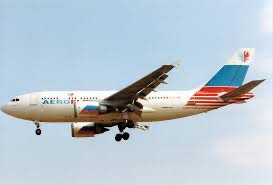
But what actually occurred was mind-boggling. With lightning speed, the visas were approved by State and issued by our embassy in Moscow; the two men managed to make airline reservations on the Russian airline, Aeroflot; and Aksilenko advised me that they would be arriving at JFK International Airport in New York on April 25, 1993, for a ten-day stay. Someone obviously wanted them here — but who? And why? And how had they managed their departure from Moscow so easily? These were just the first of scores of questions yet to be encountered . . . and never answered. Regardless of how or why, the Russians were coming.
*. *. *
I was to travel to New York to meet them on their arrival. John Brockman had invited all three of us to stay overnight at his country home in Connecticut, and was sending a car and driver to transport us there from JFK Airport. We would drive back into New York City the following morning for meetings with prospective publishers. It was VIP treatment, and all very efficiently arranged. But a funny thing happened on the way to the airport . . .
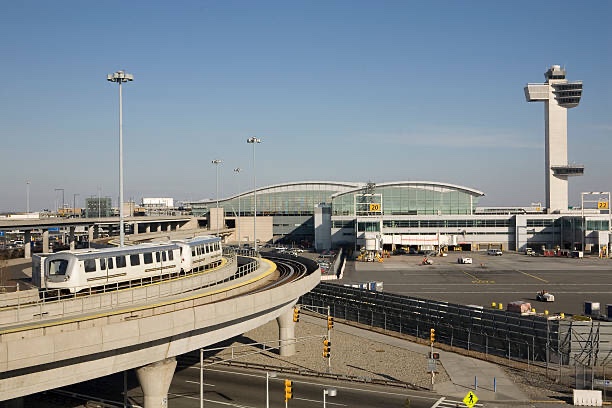
I had opted to travel to New York by Amtrak’s express train. On arrival at New York’s Penn Station, I took a taxi to JFK Airport, instructing the driver to drop me at the international arrivals terminal for incoming Aeroflot flights. Whether he didn’t understand me, or simply didn’t know his way around the airport, I don’t know; but I was delivered to the wrong terminal. And by the time I got inside and realized it, my taxi was gone and there were no others around. And no shuttle bus in sight. I had no idea of how to get where I was supposed to be; I’m a Washingtonian, not a New Yorker.
And just then the clouds parted, the hand of God descended and delivered to this lost lamb an angel from Heaven.
No, no! Not so dramatic!
Or, more likely, the FBI had reached out and sent me an agent. A very respectable-looking man approached me, said I appeared to be lost, and asked if he could help. I explained my problem, and he said — miracle of miracles! — that he was also going to international arrivals and would be happy to give me a lift. His car just happened to be parked nearby.
Now, I’m not a stupid person, and under normal circumstances I do not get into vehicles with strangers. But this was not a normal circumstance, and he was not your average stranger. Plus, I was running late and becoming desperate. So with some trepidation and a silent prayer, I accepted the Good Samaritan’s offer. He knew exactly where to go, dropped me off in front of the correct terminal, said goodbye and good luck, and drove off. I never saw him again; apparently he had no business in international arrivals after all.
Hopelessly Lost at JFK
But there was no time to think about that. I ran into the terminal, looked around near baggage claims, and found Valentin Aksilenko standing next to a man, obviously our driver, who was holding a card with my name written on it. What a relief! But where was Yuri Shvets?
As I greeted Valentin and the driver, apologizing for my tardiness, a man came inching out of a nearby corner, where he had been partially hidden in the shadows. He was of average height, slight build, with luxuriant dark hair that was styled in what could only be described as a pompadour (you younger readers can look that up), and conspicuously well dressed and unwrinkled for a long-distance traveler. Was this the mysterious author, whistle-blower, and spy extraordinaire? Really?
After a quick introduction, we grabbed our respective suitcases and headed for the car to take us to Connecticut. I sat in the front seat with the driver, giving the two visitors a bit of privacy in the rear. In addition to jet lag, they must surely have been stressed beyond belief. We chatted a bit about their flight, the lovely countryside, and other nonsense, and then I left them alone to talk softly between themselves — in Russian, of course. I couldn’t catch a word of their conversation, nor did I try.
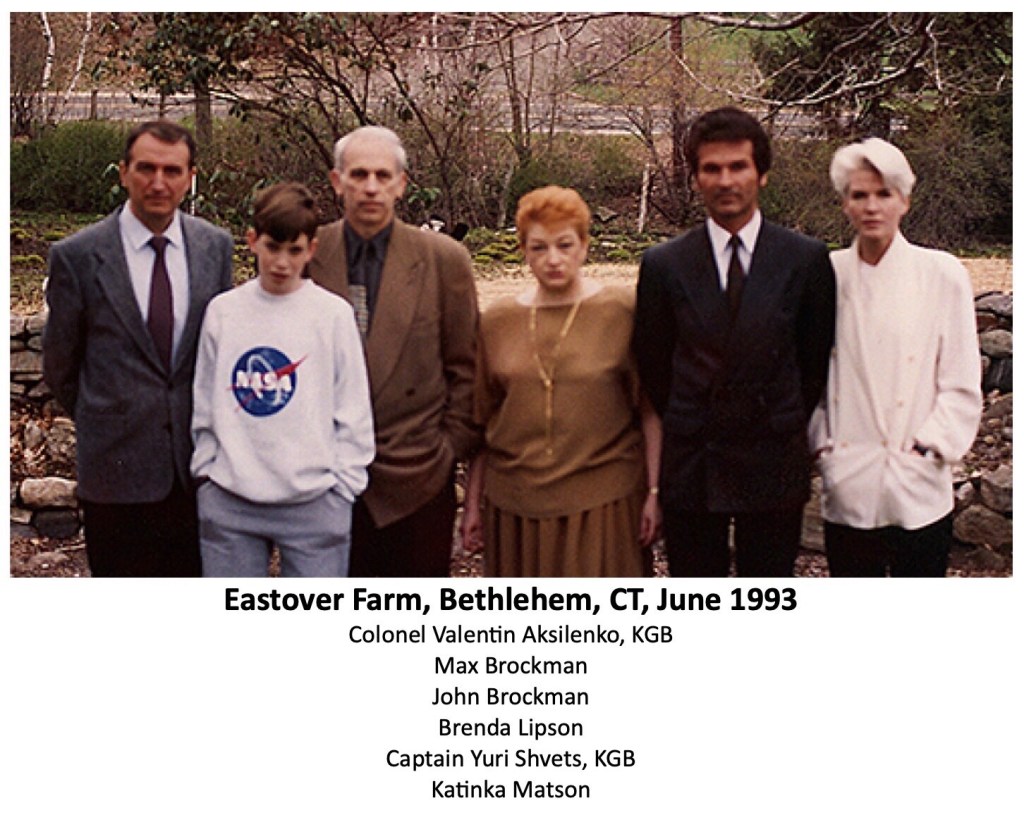
The Brockmans were the perfect hosts, and we all spent a delightful evening, with drinks on the enclosed porch, a stroll through the historic farm property, a lovely dinner, and endless conversation. The following morning, we rode into the city, met with three prospective publishers, and Shvets’ book was quickly bought for publication by Simon & Schuster. After a brief meeting back at the offices of Brockman, Inc., we enjoyed a celebratory lunch (again, compliments of John Brockman) in a restaurant with a beautiful view of Rockefeller Plaza, and three of us — the two exhausted Russians and I — hopped a train back to Washington, where I had left my car parked in the Union Station garage. I drove across the Potomac River via the 14th Street Bridge, checked them into their previously-reserved rooms in a suburban Virginia hotel, and took myself home to collapse. They weren’t the only ones feeling the stress.
(Corrections: Date was April, not June; and Shvets was by that time a Major, not Captain)
It later became public knowledge that, during their stay in Washington, they met with the FBI. How many times they met, or for how long, or what was discussed, I do not know — and I’m sure it’s better that I don’t.
*. *. *
I have to backtrack a bit here. Following my February trip to Moscow with Kate Williams, I had received an offer from Gil Robinson to join his Foundation as their Moscow office manager for an estimated three to six months. Needless to say, I jumped at the opportunity. I spent a couple of weeks part-time in the Foundation’s Washington office, and was scheduled to leave for Moscow on May 10th. Valentin’s and Yuri’s visas were due to expire on May 5th. I was cutting it close, with only five days between their departure and my own in which to get ready for the move. And all the while I was spending time with them, with the FBI (whose presence had increased dramatically since the arrival of the two visitors), with my family and friends, on the phone with Brockman, suspending home deliveries and services, cleaning out my refrigerator, and packing half my wardrobe and an entire pharmacy. Today, just thinking about it is exhausting.
So when they took off as scheduled on May 5th, I was relieved, to say the least. And on May 10th, I left on an Air France flight from Dulles International Airport with 16 pieces of baggage — seven or eight of my own, the remainder being office supplies and equipment belonging to the Foundation. The overweight charges were enormous, but luckily a very sympathetic Air France supervisor, on hearing that we were doing humanitarian aid work for children, cut the costs in half. Also fortunately, I had the Foundation’s American Express corporate card to cover the still hefty charges.
Heading Into the Unknown
And off I went, leaving everyone and everything behind, heading into . . . what? I had no idea, but I was sure it wouldn’t be dull. And I was so right.
Join me next time, as I arrive in Moscow to get settled, meet my new “family,” visit Kyiv at last, and become much too well acquainted with the Russian authorities.
So long for now, Brendochka 3/23/23 (re-posted 11/27/23)
“‘Glasnost’ is on everyone’s lips, but the rules haven’t changed for either side.” — The Russia House, John le Carre (1989).
Scene from The Russia House
*. *. *
The remainder of 1992, following my return from Moscow, passed in a blur of activity: refining and promoting my business plan; consulting with my new associates in Moscow; meeting with people at the Russian Embassy and the local college; and — having quit my full-time job to devote myself to my real passion — even doing a little temp work to bring in some extra income. And then, toward the end of the year, another bolt out of the blue struck with perfect timing.
I received a heads-up phone call one day from Ben Fishburne, a former partner at Surrey & Morse / Jones Day who had worked closely with Walter Surrey for years on transactions in China, the Soviet Union, and elsewhere. He had recently bumped into an old client and friend of Walter’s, Gil Robinson, who told Ben that he was heading up a humanitarian aid foundation in Russia. While he already had a top-notch staff in Washington, Gil was searching for someone to accompany their D.C. manager, Kate Williams, to Moscow for a week — preferably someone who spoke the language and knew something about the country. Eureka! Ben asked if Gil remembered me — which he did — and gave him my number, saying that he thought I might be interested. Talk about understatement.
When Gil called, I tried not to get too excited, remembering the APCO disappointment. But this time was the real thing, if only for a week. There were meetings scheduled, but I would still have adequate time to pursue my own interests. We were booked into my old stomping grounds, the Slavyanskaya Radisson Hotel; it was February, 1993.
February in Moscow, again. I know I said I loved the whole Doctor Zhivago thing, but two years in a row? Still, you don’t pass up a golden opportunity just because of a little snow.
“A Little Snow” In Moscow
Corporations To End World Hunger Foundation seemed a lofty name for a small group with a noble purpose but limited reach. But they were doing good work. With funding from the U.S. Department of Agriculture, and food product from ADM Corporation, they were supplying healthy, high-protein food — the first Veggieburger — to children in orphanages and hospitals in Moscow, St. Petersburg, Kiev (Ukraine), and Minsk (Belarus). I was thrilled to be associated with them, helping children in need and — optimistically — building bridges between our two countries.
Gil Robinson had at one time been an Ambassador-at-Large in the U.S. State Department, and had an impressive biography overall, giving him access to people and places that might not be available to everyone. He had somehow managed — without anyone on his team who spoke a word of Russian — to start the registration process in Moscow; locate and rent a large apartment in a building owned by the Ministry of Defense and occupied by high-ranking military officers; develop contacts in all four cities; and hire a driver and jack-of-all-trades named Vitold, who was a maniac on wheels but knew where and how to acquire virtually anything.
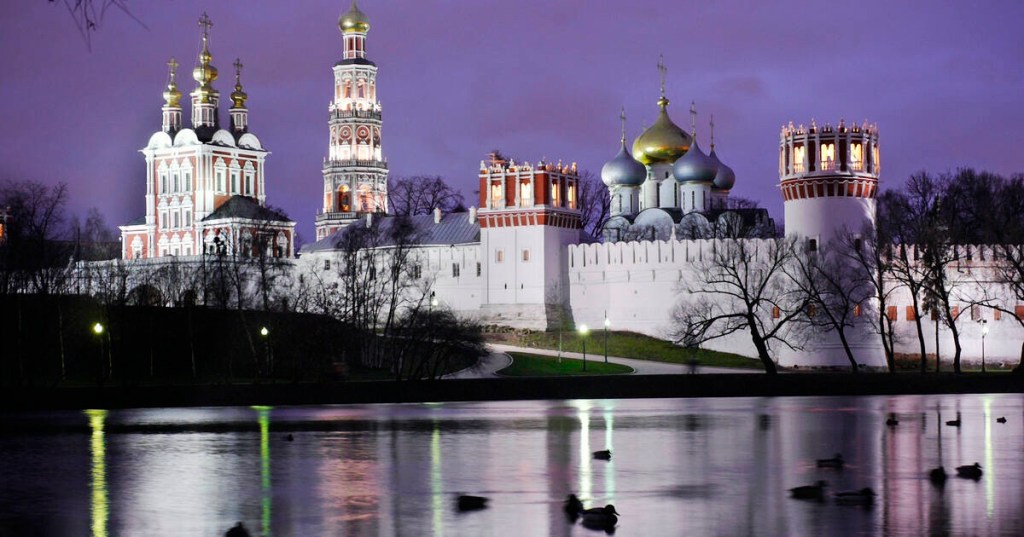
One afternoon when Kate and I both had some free time, Vitold took us on a little sightseeing tour, ending at the famous Novodevichy Monastery. Most of the buildings were not open to the public, but we were able to wander the snow-packed lanes through the cemetery where the creme-de-la-creme of Russian and Soviet society were spending eternity: famed writers such as Chekhov, Gogol and Bulgakov; the composer Prokofiev; and the unforgettable former Soviet leader Nikita Khrushchev, among numerous other cultural, political and military elites. After an hour or so, when we were just about frozen to the bone, we suddenly heard . . . the distant voices of angels.
Seriously?
Novodevichy Monastery, Moscow
No . . . and we were not hallucinating. What we were hearing was the liturgical music of a choir practicing in one of the Monastery’s churches . . . and the doors were open. We headed for the warm indoors, excited at the opportunity to thaw out and to see what the inside of a Russian Orthodox church looked like. The first surprise was the emptiness — no pews, no benches, no seats of any kind; just a large expanse of concrete flooring. Along the left and right sides were tall windows, below which were statues of various saints, and tables with long, thin candles to be lit for the saint of one’s choice. And at the front was a large altar, behind which loomed an incredibly beautiful, nearly ceiling-high iconostasis separating the main part of the church from the sanctuary. The angelic voices were drifting out from behind that screen.
There were a few worshipers — mostly old women, who, despite the obvious pain involved, would periodically kneel and touch their heads to the hard floor. And strategically posted on either side of the room were two men in suits and overcoats, one on each side, just standing and watching. Kate wondered who they might be — perhaps security? Vitold didn’t respond, but I did: I was sure they were KGB. She thought at first that I was joking, but when she saw that I wasn’t, and Vitold nodded in agreement, she looked understandably nervous. So I whispered, “It’s okay; just ignore them” — which was pure bravado, of course. But the last thing we needed was for them to think we had anything to be nervous about. It may no longer have been called the Soviet Union, but some things hadn’t changed, despite glasnost.
To our delight, we had arrived at the church at the perfect time. Without any fanfare, a priest — in long, white-and-gold robes and headdress, snowy white beard flowing from his chin halfway down his chest — emerged from the sanctuary and began a service for the small gathering. Of course, Kate and I couldn’t understand a syllable of the old Church Slavonic language, but with the choir of angels in the background, it sounded divine. The three of us were standing in front near the altar, soaking in the atmosphere, when suddenly the priest’s eyes caught mine . . . and held. And held. And held. His eyes were mesmerizing, and I could not bring myself to look away. I felt as though he was looking deep into my soul, and I wondered whether I was being blessed or cursed, or whether perhaps he was trying silently to warn me about the KGB’s presence; but it was unlike anything I had ever experienced. If I close my eyes today, I can still see that priest’s eyes and feel the power of his gaze.
Finally, after what felt like an eternity, he looked away and the service ended shortly thereafter. It was time for us to leave — and to walk past those KGB watchers still hanging out in the warmth of the church. I wondered if either of them had noticed my visual exchange with the priest, and I half expected them to stop us, if only to find out who we were and where we were from; but they didn’t. We did stop briefly to light candles to a couple of saints whose identities were a complete mystery to us, left a few rubles in the plate, and hurried out of the church and the Monastery grounds to Vitold’s heap of a car waiting nearby on the street — miraculously, with all of its parts intact. Spare auto parts were notoriously difficult to come by, and had a habit of walking away if left unguarded.
*. *. *
There was also time during that week to fulfill another of my long-time dreams: a night at the Bolshoi. Kate and I were able to get tickets, at premium prices, to a performance of the Aleksandr Borodin opera Prince Igor. While I was a little disappointed that there was no ballet performance scheduled that week — I much prefer ballet to opera — it was still the Bolshoi Theatre, and that was joy enough for me. Vitold drove us there, and on the way was stopped by the traffic police, the GAI, for some unknown violation. He was going to try to argue his way out of it when I told him to take the damned ticket and I would pay the fine — just get us to the theatre in time. The way that man drove, I’d have bet he was on a first-name basis with every traffic cop in Moscow.
But of course, we were late. We had orchestra seats, but since the opera had already started, we were not allowed to disturb the performance, and instead were directed naverkh — “upstairs.” At each level, puffing and panting, we were sent up another flight, and another, and another, until we wound up in nosebleed territory — the cheap seats, where most of the patrons were locals who couldn’t afford more and considered themselves lucky to be there at all. And as we sat down, trying to get our breath after scaling Mount Bolshoi, I noticed that most of the people there were families with children, all of them obviously enthralled by the performance on the stage far below them. I had to wonder how many American children would even allow themselves to be dragged to an opera, much less enjoy it. In some respects, culturally at least, Russian society seemed far ahead of ours.
Bolshoi Theatre, Moscow
During intermission, we sipped champagne and mingled with the crowd, enjoying a bit of people-watching. We were then able to go to our assigned seats in the orchestra section for the remainder of the opera, but quite frankly, I missed watching the faces of the little kids upstairs under the eaves.
*. *. *
You know how sometimes you can go to a party expecting it to be a total drag, and end up having a wonderful time? Or on a blind date you’re really dreading, where it turns out you meet the love of your life? Well, my next event wasn’t a party or a date, but a simple get-together with an old acquaintance for a bit of pleasant conversation. I certainly never anticipated that that afternoon meeting would be one of the most significant turning points of my life.
“Viktor Akimov” — the commercial/economic First Secretary from the Soviet Embassy in Washington in the late 1970s and early ‘80s — was in fact Valentin Pavlovich Aksilenko. Everything else I’ve told you about him was factual, but I had originally thought to protect the privacy of some individuals by not naming them in my earlier narratives. However, since the stories I’m about to relate are already matters of public record, what would be the point? So, here we go . . .
Valentin Aksilenko
On one of my free afternoons during that week of February 14, 1993, I again met with Valentin Aksilenko in the business center of the Slavyanskaya Radisson Hotel in Moscow. As we had done the previous February, we caught up on world events of the past year, and what each of us had been doing. This time, though, Valentin dropped a seemingly offhand comment to the effect that he was so glad to be “out of intelligence work.”
EXCUSE ME??? I could not have heard that correctly! Were those really the words of a man who obviously had never admitted being in the intelligence field, now telling me how happy he was to be out of it? And why was he revealing it at this particular moment? And why to me?
It’s thought that if you want another person to keep talking, you should just keep quiet. So I did. But instead of continuing, he became still. Leaning forward in his chair, with his forearms resting on his legs, hands clasped between his knees, he stared at the carpeted floor for a seemingly endless moment, deep in thought. I waited, scarcely breathing. At last he sighed as though having made a crucial decision, sat up straight, and looked back at me. To paraphrase his next words:
“I have a friend here in Moscow who was also an intelligence officer at the Embassy in Washington. He’s secretly writing a book about his experiences as a KGB spy in the United States, but obviously he can’t get it published here. We were wondering if you know anyone in the publishing business, and if you think you could help us?”
And there it was: that exact moment in the movie of John le Carre’s The Russia House, when the Russian Katya Orlova delivers a manuscript from her scientist friend to be placed in the hands of the British publisher, Barley Blair, for publication in England because its content is too explosive to be released in Russia.
Only this wasn’t a movie; this was real. And it was happening to me, right then, and right there, in Moscow. Oh! My! God!
Slavyanskaya Radisson Hotel, Moscow – Where It All Began
It never ceases to amaze me how quickly the human brain can process information and make decisions in sink-or-swim situations. I reasoned that I had a choice between a flat-out “Sorry, no, I don’t” and a totally false “Actually, yes, I do.” But my brain, now in overdrive, told me there was a third option: stall. So what I finally said was that, in all honesty, I did not personally know anyone, but that I did know people in New York who might well have connections in publishing. And thereby I unknowingly altered the course of my future, as well as Valentin’s and his friend’s.
. . . that is, if there even was such a friend. He hadn’t mentioned the friend’s name. Wasn’t it just possible that Valentin himself might be this anonymous author, and the unidentified “friend” was merely a kind of misdirection? But there was no time for reasoning just then. I told him I would see what I could do, and left the thinking for later. We parted with a handshake and a promise to be in touch.
When Kate asked me at dinner how my meeting with my friend had gone, I said it had been really nice to see him again, and let it go at that. This was not the sort of information you share with the world. But I hardly slept that night, or for the next couple of nights. We left Moscow on Saturday morning, February 20th, arriving at Dulles International Airport in mid-afternoon Washington time — nighttime in Moscow. I was so exhausted by then — both mentally and physically — that I was in bed by 9:00 p.m. and actually did sleep, not waking until noon on Sunday, February 21st.
Yawning and stretching, I opened my apartment door, bent down to pick up the Sunday edition of the Washington Post, dropped it face-up on the kitchen counter, and headed toward the refrigerator for my customary wake-up glass of orange juice. And halfway there, I stopped dead in my tracks.
Something had caught my eye as that newspaper landed on the countertop. What was it . . . something about the KGB? Turning back, I focused on an article by Michael Dobbs, then the Post’s Moscow Bureau Chief, about a series of interviews given in Moscow — the last one just a few days earlier — by a former KGB Major named Yuri Shvets, who had served in the Soviet Embassy in Washington from 1985-87, and was now writing a tell-all book about his experiences there.
Washington Post, February 21, 1993
The words that came flying from my mouth as I stood alone in my kitchen that day are not fit for printing in this blog. Or anywhere else.
“That #&$*#$ has to be Valentin’s friend.”
“What the #$&%*$ is he doing??”
“Is he #$&#*$-ing INSANE????????”
Well, whoever he was — Valentin’s friend or, unlikely, some other lunatic — I was sure he had just signed his own death warrant. I reread the article and tried to calm down. Then I reached for the phone and dialed Valentin’s number in Moscow, where it was nearly 9:00 p.m. There had to be a logical explanation for this.
Yuri Shvets, in America
*. *. *
Please don’t yell at me for stopping here. It’s an ongoing story, with many twists and turns and some fun stuff in between, that will require about a dozen installments to write. So, like a 1940s radio soap opera (but all true), I must ask you to tune in next time for the continuing saga, etc., etc.
Thanks, and TTFN, Brendochka 3/16/23 (re-posted 11/26/23)