In 1949, just half a year before his death, George Orwell’s novel “1984” was published. Orwell was an English novelist, essayist, journalist and critic, known for his political opposition to totalitarianism and his support of democratic socialism. Any adult who hasn’t heard of “1984” and its infamous, larger-than-life “Big Brother” must have been living in a bunker. For those who would like to catch up, it is best described as a “dystopian novel” satirizing life in a totalitarian state (obviously patterned after the Soviet Union). It has become an award-winning classic, and if it isn’t required reading in our high schools, it should be (in my opinion). (The paperback costs less than $10 on Amazon. Don’t bother watching the movie, though; it’s terrible.)
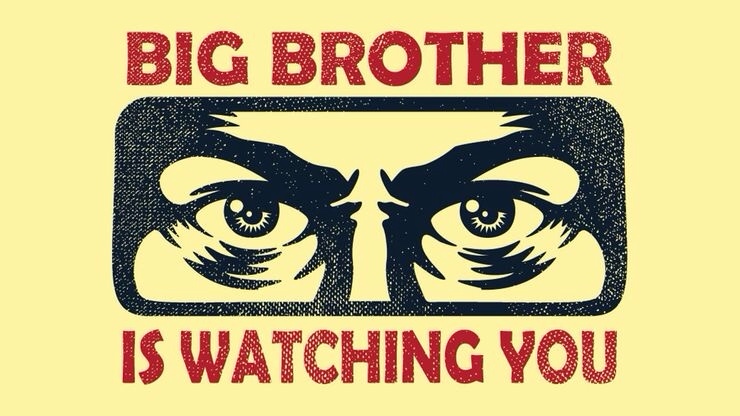
So why am I promoting this 75-year-old novel by a long-deceased writer? I’m not, actually. But I was reminded of it the other day when I was researching information on a particular Russian government ministry and stumbled across one I didn’t know existed: the Ministry of Enlightenment of the Russian Federation. And I gasped. Literally gasped, out loud, for two reasons. First, although there was no “Ministry of Enlightenment” in Orwell’s novel, the principal focus of the book was on the forced dissemination of the government’s lies and propaganda under the guise of enlightenment. And second, the last such ministry in the real world of which I am aware was the “Reich Ministry of Public Enlightenment and Propaganda,” created by Adolph Hitler in Nazi Germany in 1933 and headed by Joseph Goebbels until the war’s end in 1945. (There may, of course, be others by different names in other countries that are not as well known).
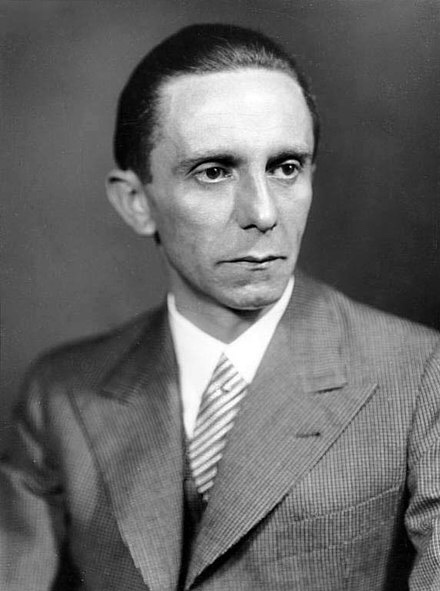
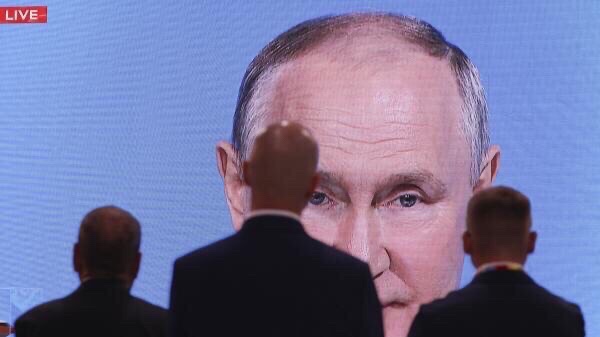
See why I gasped? Because Orwell’s prescience has extended, not just to 1984, but into yet another century. Russia now has one of those real-life ministries, established in 2018, passing along the teachings and the mandates of a virtual clone of Orwell’s Big Brother: none other than Vladimir Putin himself.
Interestingly, if you do a Google search of “Russian Ministry of Enlightenment,” what pops up is the Ministry of Education. And when I double-checked the Russian words for “enlightenment” and “education” — because my Russian language skills are less than perfect and really rusty — I found a cute little translational word play. The most commonly-used Russian word for education is obrazovaniye. But the Ministry of Education is described online as the Ministry of Prosvescheniya — Ministry of Enlightenment, according to the word’s principal usage. However, Prosvescheniye also has a secondary meaning. You guessed it: it’s “education.”
Confused? I’d be shocked if you weren’t. It’s a fine distinction, so just take my word for it: while not technically incorrect, it appears that the word Prosvescheniye was intentionally used in the creation of the new (2018) Ministry to muddy the waters. It would have been so easy to avoid confusion by naming it the Ministerstvo Obrazovaniya, which does not have a dual meaning.
(By the way, the different word endings (“e” and “a”) are not typos; they have to do with the Russian grammatical cases, and you really don’t want me trying to explain those!)
But . . .
As I’ve said before, in Russia there is always a “but.”
But in any event, my point is that Russia already had a Ministry of Education, long before 2018. I know, because I met with Dr. Kezina, then the head of that Ministry, in Moscow, way back in 1993. A highly intelligent, competent woman with a strong personality and direct manner, I found her to be very impressive; she was not a figment of my imagination. She and her Ministry were very real. *
* NOTE: The Ministry existed, under various names, from the early days of the USSR. Until 1946, it was known as the People’s Commissariat for Education — in Russian, the Narodniy Kommissariat Prosvescheniya, or its acronym, Narkompros. Note that the word used for “Education” was the word whose principal definition is “Enlightenment” — Prosvescheniya. Was Vladimir Putin’s chosen naming of the new (2018) Ministry a coincidence, or was it an intentional homage to Narkompros?
So, why the need for a second institution, purportedly with the same or similar functions? Or perhaps it’s just a restructuring of the original Ministry of Education. But in either case, why cloak it under a misleading name?
Although not widely publicized, there has been an awareness of this development in Russia at least since early 2022. On March 3rd of that year, it was reported:
“Russia has a ‘Ministry of Enlightenment’ and it is as dystopian as it sounds.
’The ministry is basically the country’s answer to the ministry of education and the Kyiv Independent today drew people’s attention to its existence when it revealed something the ministry is planning today.
“On Facebook, the ministry announced it is holding a virtual lesson for children to explain why the war on Ukraine is necessary and about the ‘danger’ of Nato [sic] today.
[Quoting from the Ministry’s Facebook post about the lesson]:
‘At the All-Russian Open Lesson, schoolchildren will be told why the liberation mission in Ukraine is a necessity.
The broadcast will take place tomorrow, March 3 in the community of the Ministry of Enlightenment starting at 12 o’clock Moscow time.
Viewers will be told the background of today’s events: about the danger NATO represents to our country, why Russia stood up for the protection of the civilians of the Donetsk and Luhansk People’s Republics, and will also help to figure out how to distinguish the truth from lies in the huge stream of information, photos and videos that are flooding the internet today.
You can use the materials on the broadcast website to conduct such an open lesson in your classroom, in the institute of education’ . . .” [Kate Plummer, indy100, March 3, 2022.]
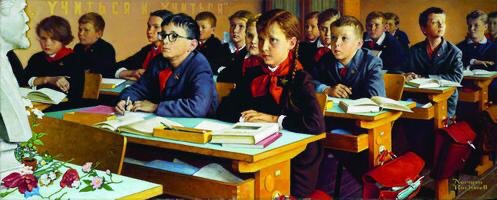
The Hitler Youth . . . the All-Union Leninist Young Communist League (Komsomol) . . . whatever they might name the new Russian youth organization . . . they’re all the same. Get those kids young enough, while they’re still vulnerable and their little psyches still malleable, and you’ve got a whole new generation of zombies eager to do your bidding. Perhaps they should be called “Putin’s Pioneers.” *
* NOTE: The Soviet Union’s “Youth Pioneers” was a compulsory organization for children and adolescents aged 9-14, founded in 1922 and continuing in existence until the dissolution of the Soviet Union in 1991.
*. *. *
But wait . . . they already exist!
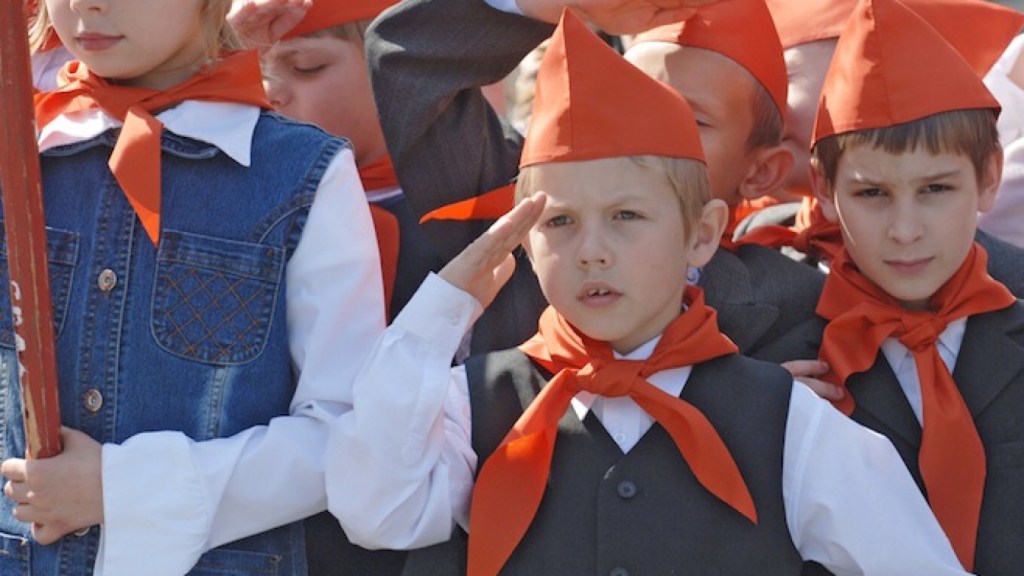
Dig deep enough, and you find the most amazing things. On October 29, 2015 — the 97th anniversary of the 1918 founding of the Soviet Union’s Komsomol* — Vladimir Putin, in a master stroke combining nostalgia and foresight, created what he calls The Russian Schoolchildren’s Movement. Komsomolskaya Pravda said in its website headline: “On Komsomol’s birthday, Putin signed a decree on creating new Pioneers.” But the article went on to clarify that the new movement would be “free from Communist or any other ideology.” Ministry of Education officials “appeared unfamiliar with Putin’s plans, while a social affairs official in Russia’s Cabinet said the new movement was ‘exclusively the presidential administration’s’ idea.” [Anna Dolgov, The Moscow Times, Oct. 30, 2015.]
* NOTE: Komsomol was the Soviet Union’s political youth organization for 14-to-28-year-olds who had graduated from the Pioneers. Komsomol was also dissolved in 1991.
*. *. *
So this apparently was all Putin’s brainchild. And within three years following its inception, along came the new Ministry of Enlightenment, with its Soviet-style, almost subliminal, daily dosage of official rhetoric, now complete with programs available for use in classrooms.
Free from propaganda, huh?
*. *. *
Just sayin’ . . .
Brendochka
11/29/23
 The Blog About Everything … and Sometimes Nothing