9/11/24: Lenin, Come Home (Ch. 23 – Posted 5/11/23)

[NOTE: Chapter 22 has been intentionally omitted, as it was not part of this continuing narrative. You haven’t missed anything.]

The last goodbyes had been said, the last hugs exchanged, the last promises made to keep in touch. And a couple of days earlier I had made my final pilgrimage to Red Square, which — much like tossing a coin into the Trevi Fountain in Rome — had become my personal superstitious ritual, hopefully ensuring that I would some day return to this place. It had worked so far.
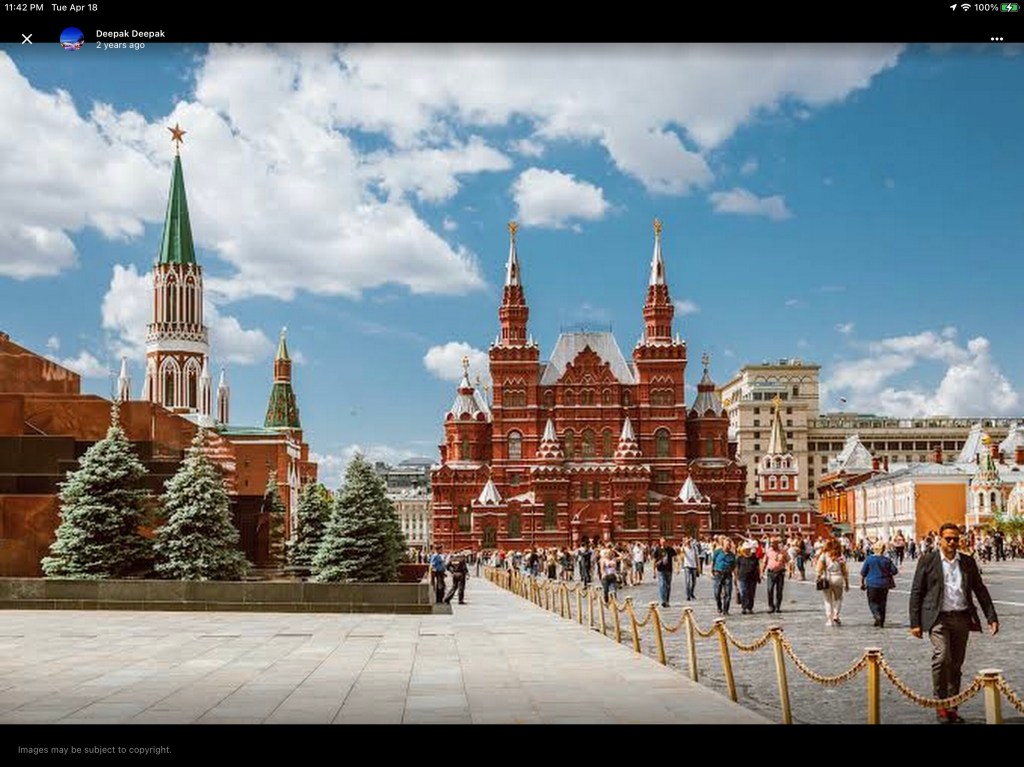
Red Square, Moscow
(Lenin’s Tomb, left; History Museum
, center)

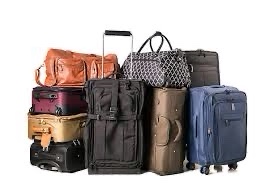
Last, but far from least, my portrait of Vladimir Lenin, still protected by its rickety wooden frame, had been carefully packed between layers of clothes in my biggest Samsonite suitcase. It just fit, thanks to Mr. Pivovarov’s having found a slightly smaller one for me than the one still hanging on his office wall. Now all I needed was a good cover story for the Customs people at the airport the following day, where the wooden frame would surely be caught on x-ray. It wasn’t an antique; but it was, technically, Russian government property.

Sleep eluded me that night as I lay staring at the ceiling, my mind a hopeless jumble of memories from my time in Russia: evenings at the ballet and opera, train rides to Kyiv, armsful of peonies, lunch at Militia Headquarters, burnt-out cars by the side of the road, caviar and ice cream (no, not eaten together), the KGB, the Russian Mafia, little girls with big hair bows, monasteries, the Fourth of July concert . . . and on and on and on. But most of all, there were the people I would miss: Olga, Lena, Vitold, Tamara, and even Maya. They had become my second family, and I had grown to love them.

On the other hand, I would of course be happy to be back with my first family and lifelong friends, and in my own apartment with all of its comforts and familiar surroundings. Little did I know, however, that life would not be calm and peaceful for some time to come. By inviting Valentin Aksilenko and Yuri Shvets to the U.S. in April, I had inadvertently opened a gigantic Pandora’s box of tsuris (Yiddish for “grief”). But for now, I just had to concentrate on getting back home.

Pandora’s Box

I was dressed, packed and ready in the morning when my very own personal KGB escort, Vladimir Bragin, arrived as promised to whisk me out of town. With him was his sidekick, Militia Officer Kostylev, who apparently was to be the designated driver that day. And parked outside, waiting to transport us to Sheremetyevo Airport, was a late model Jeep Cherokee — a far cry from the broken-down truck that had brought me from the airport to my new home on my arrival in Moscow back in May. I was leaving in style, and for perhaps the hundredth time had to ask myself why. Yes, our little humanitarian aid organization did good work, but we didn’t bring millions of dollars into the Russian treasury. I wasn’t a government official, a movie star, or CEO of a major U.S. corporation. What was it that made us, or me, so special? I didn’t know the answer then, and I don’t know it today — not for certain. But it was great fun while it lasted.

There was one more goodbye to be said: to the lady at the little desk in the lobby. She wished me well, but I had the distinct feeling she was relieved to see me go. With the number and variety of people coming and going over the past months, I’m sure she was convinced I was running more than just a humanitarian aid foundation upstairs. And today, with this uniformed Militia officer and the other quiet guy and their big Jeep Cherokee . . . well, she wouldn’t be likely to miss me. And I couldn’t blame her.

Then there I was at last, seated between the two men in the front seat of the Cherokee, headed . . . in the wrong direction!!! What the hell?!! Why were we going south? The airport was north of the city. Was this my worst nightmare about to come true — the long drive to oblivion?
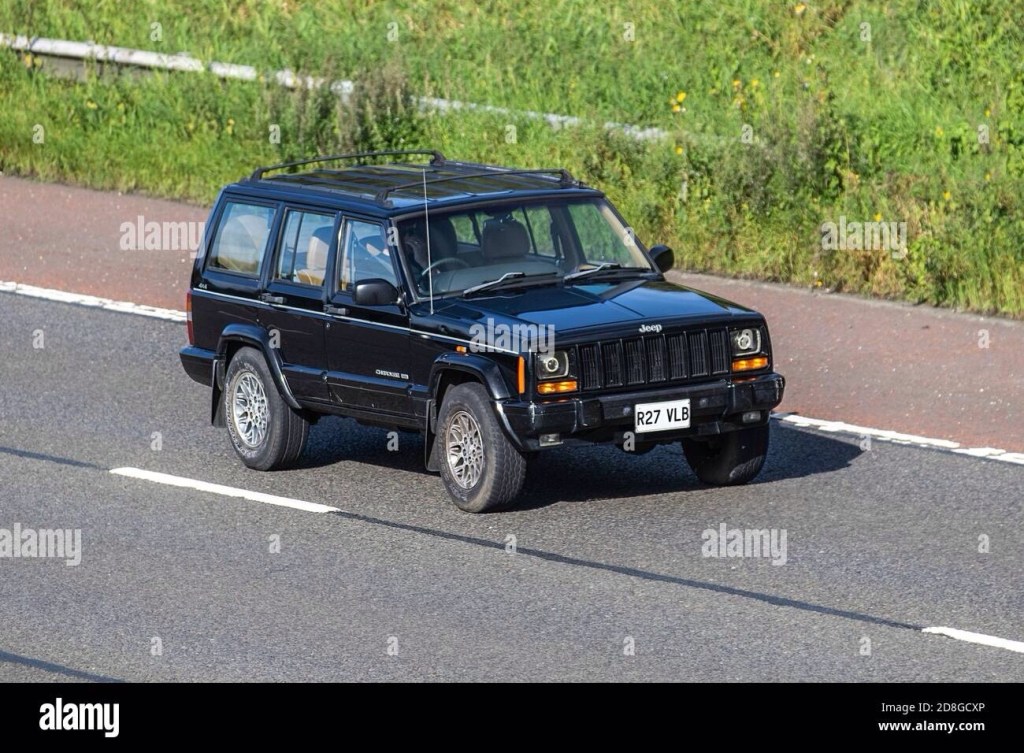
Well, no . . . it wasn’t. These guys had access to the “special lanes” reserved for top government officials, law enforcement, and the like. And they were headed for those lanes on what we would call the beltway, the nearest access road being slightly south of my apartment building. Once they were on the highway’s reserved lanes, where there were apparently no speed limits, they delighted in showing me what their vehicle could do, which — the last time I opened my eyes and looked at the speedometer — was registering 145 kilometers, or about 90 miles an hour. So, since apparently they weren’t going to take me out and shoot me, maybe they were just going to scare me to death instead. I began imagining my obituary in the Moscow Times , , ,

The fact that I am here today, writing this story, tells you that we made it to the airport without bursting into flames, and in plenty of time to get me, and my multiple pieces of luggage, through Customs. And now the suitcase with the Lenin portrait was about to pass through x-ray, and my two guardian angels were still standing behind me, watching over me to the very last. As the picture frame revealed itself, the Customs agent stopped the conveyor belt, studied the x-ray image, and said to me:

Him: “You have picture in suitcase.” (Duh!)

Me: “Yes.” (Brilliant comeback.)

Him: “What is it?”

Me: “It’s a souvenir.” (The absolute truth.)

Him: “Where you get it?”

Me: “The art market across the street from Gorky Park.” (Hmm . . . )

Okay, so that’s where I veered from the truth, just a teensy bit. But there was an art market across from Gorky Park, and I had been there, and maybe — just maybe — there could have been a Lenin portrait there at one time . . .
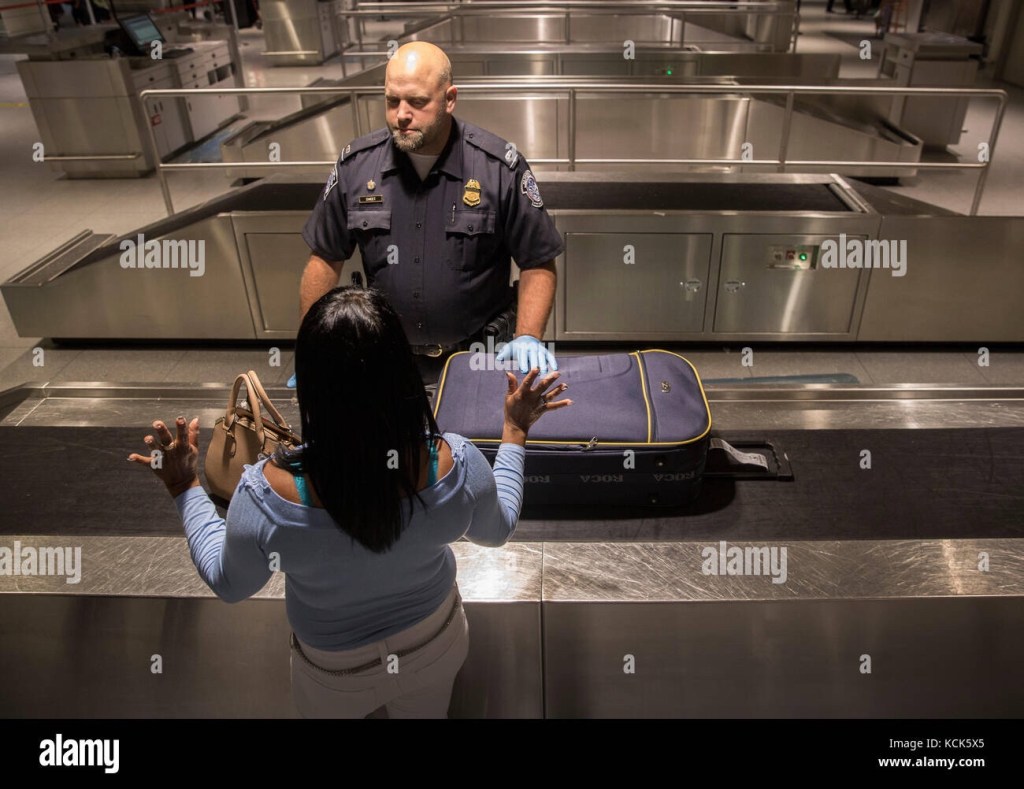
“Busted!”

And that was when I observed the Customs agent looking past my shoulder, obviously at Bragin and Kostylev behind me; and I had a clear mental image of them gesturing with their hands to “let her go, let her go.” Or perhaps it was more like “get her the hell out of here already, we’re tired of babysitting her.” In any event, the agent looked at me — did I imagine the expression of respect, or maybe fear, in his eyes? — said “Hokay,” and passed my bags through, stamping my passport and handing it back to me. I turned around, said one more quick goodbye and thanks to my two bodyguards, and headed toward the departure gates.

Once again, I lacked the ability to see into the future; I had no idea that I was not to have seen the last of Vladimir Bragin. But that’s a tale for another time.

After my elegant transport to the airport, my airline reservation was, to say the very least, disappointing. Trying to save a few more dollars at my expense, Gil Robinson had booked me on Aeroflot all the way from Moscow to Washington, though as a concession I was at least seated in what was laughingly called “first class.” All that meant was more leg room. There was no division between the sections of the plane, and smoking was allowed in coach. It seemed that all Russian men smoked, so the thick gray cloud from the back of the plane easily found its way forward. The seats were incredibly soft, which may sound like a good thing, but they were hardly ergonomic. And when you stood up, the back of the seat flopped forward onto the seat itself. It wasn’t that mine was broken; they were actually designed that way.

As for the luggage rack, it was just that: an overhead rack, with a rope stretched across the front to (hopefully) hold the bags in place — no doors. If we encountered any turbulence, I guess we were just supposed to cover our heads and duck. I found myself wondering which century had given birth to this incredible flying machine, and who had cleared it for today’s flight — Mr. Magoo?
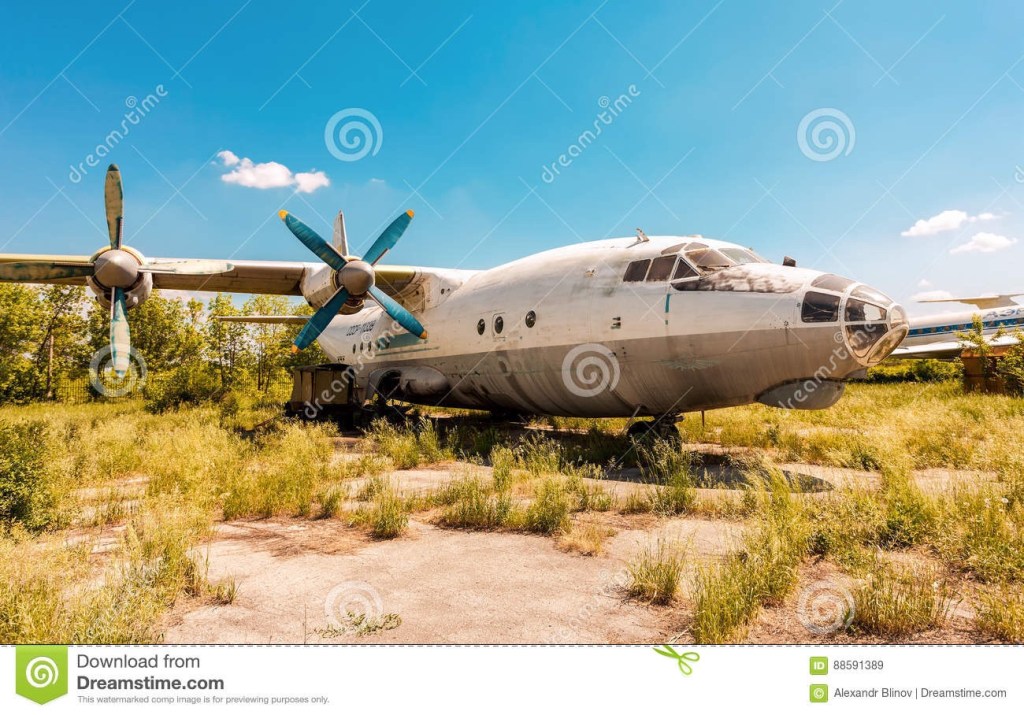

“Come on, baby — you can do it!”

There was one other American passenger aboard, a man in the row ahead of mine, who pointedly ignored me and buried his face in a book or some sort of paper work throughout the flight. Interestingly, the flight attendant correctly spoke to him in English, but when she approached me, she immediately switched to Russian — even though she knew perfectly well I was also American. I felt as though everyone in Moscow knew me and I was always being watched, or watched over — and frankly, it was getting on my nerves.

I hadn’t been feeling particularly well that morning — probably from the excessive amount of food I’d forced down my gullet at Petrovka the previous day, followed by today’s terrifying ride to the airport. So when the attendant asked what I would like to eat, I told her I didn’t want anything because my stomach was a bit upset — which threw her into a frenzy. Her job description required her to take care of the passengers, and she didn’t seem to know what to do when something disrupted her routine. She did seem genuinely concerned, though, and kept trying to find some way she could be of help — offering me medicine, or even a doctor. (I had to wonder where she was going to find one of those at 30,000 feet, but no matter.) So I finally asked for a cup of tea, and she went away happy, returning quickly with an entire pot of a delicious Russian brew. It actually did make me feel a bit better, and she was satisfied that she had done her job.

The rest of the non-stop flight, I am happy to say, was smooth and uneventful. I even managed to catch up on some of the sleep I had missed the night before, and awoke feeling almost normal. When the plane touched down at Dulles Airport outside of Washington, D.C., I heaved a gigantic sigh of relief. I had not, until that moment, realized how stressful living in Russia really had been — my body, and my mind, both constantly on the alert for . . . what? Almost anything, really. I desperately needed a spa day, and as we taxied toward the terminal, I made a mental note to place that at the top of my new to-do list.

“Aaahhh!!!”

Making my way to the baggage claim area, I managed to locate and retrieve all of my bags — though not before reaching for one that was identical to mine but, as it turned out, belonged to a Russian TASS journalist (that’s a real thing, but it’s also frequently used as a cover for KGB officers in foreign countries). When I saw the large ID tag on his suitcase, I immediately pulled my hand back, just in time to see him grab the bag and shoot me a really nasty look. I muttered “sorry” in Russian, which threw him momentarily; then I took the pieces that actually did belong to me and piled them onto two airport luggage carts.

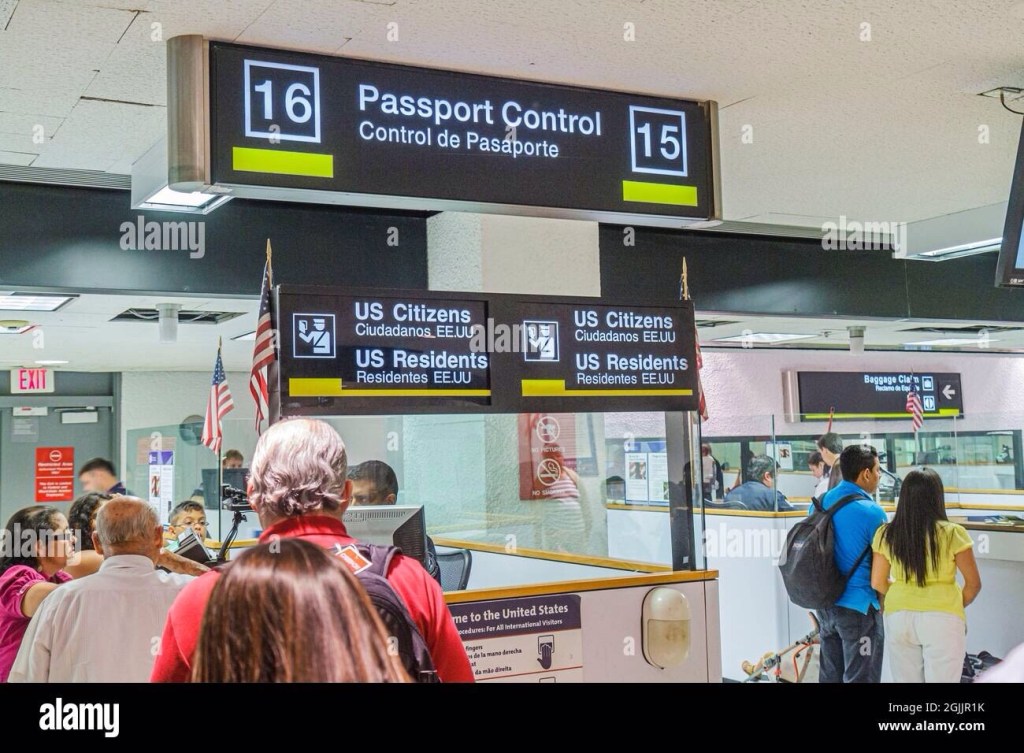
Wheeling one ahead and dragging the other behind — and feeling oddly like Dr. Dolittle’s “Pushmi-Pullyu” — I headed for the Customs area for U.S. citizens and spotted an empty lane. The agent, seeing me with two carts piled high with bags, looked around for another person who should have been accompanying me. Not finding anyone else, he asked, “Are all of those yours?” and when I said they were, he inquired as to where I had been and for how long. I told him “Moscow, for three and a half months,” to which he nodded, smiled sympathetically, said “Welcome home, ma’am,” stamped my passport, and waved me through. I could have been bringing home a Faberge egg from the Kremlin Armory Museum, and no one would have been the wiser. Too bad I didn’t know that in advance!
Home, at last!

My sister was waiting to greet me on the other side of Customs, and seeing her made me realize I was really at home. When we arrived at my apartment, all I wanted was a shower and my bed. Most of the unpacking could wait until the next day, but I did pull out the gifts I had brought for her and a few others. And for myself there was the proud unveiling of the precious Lenin portrait, which had survived the trip undamaged. He had to be reframed, of course, and I had the perfect spot in which to hang him, directly over my desk in my home office. Within a few days, he had an expensive new frame, and he has resided above my desk for the past thirty years. In fact, as I write these words, he is still glaring down at me from my wall. I was once offered $1,000 for him, but I wouldn’t sell; his grim countenance helps to keep alive the memories of those days . . . and my brief career as a smuggler.
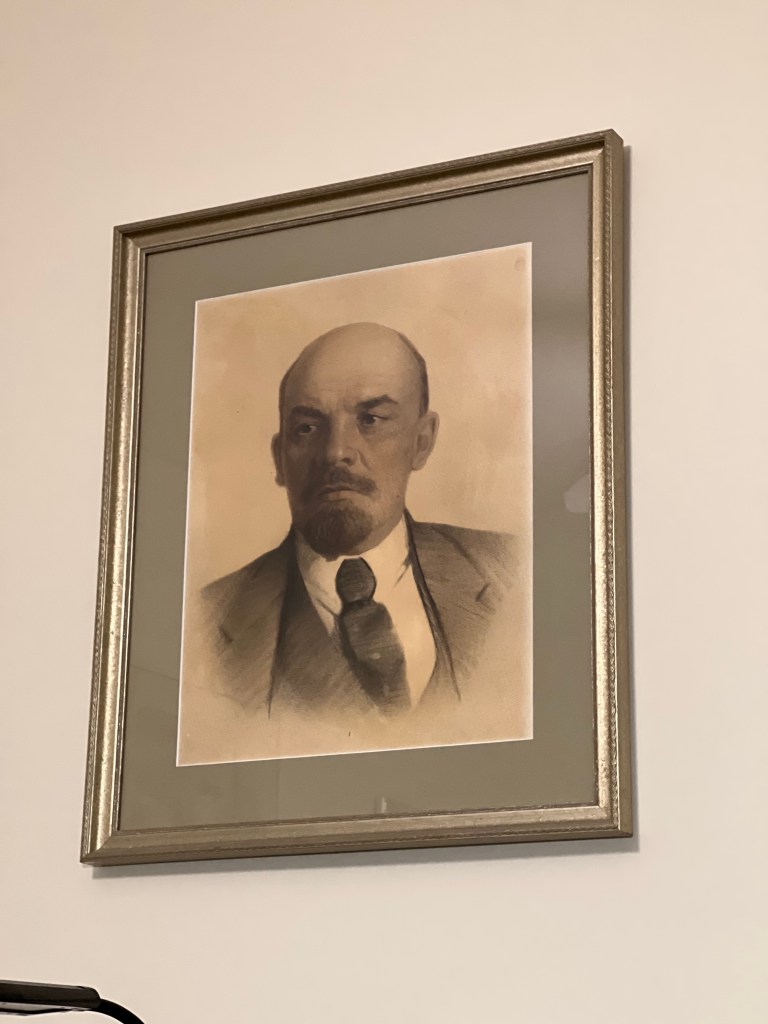
Vladimir Ilyich Ulyanov, a.k.a. Vladimir Lenin

So now it was back to the real world of closing out my relationship with Gil Robinson’s Foundation, continuing my search for financing for my business school project, receiving and dealing with the chapters of Shvets’ book being sent to me from Moscow, and generally regaining some semblance of normalcy in my life. But that’s not so easy to do with the FBI knocking at the door. It all became a juggling act, which I will go into next time. ‘Til then . . .

Do svidaniye,
Brendochka
5/11/23 (re-posted 9/11/24)

9/11/24: Today in History: A Day That Changed Us Forever


Few things bring tears to my eyes these days. This date is one of them. After 23 years, the memories are still so clear, and so painful . . .

The view of the smoke rising from the Pentagon directly across the Potomac River from my office.

Being unable to get a phone line to reach family members so they’d know I was all right.

Traffic jams, but no one honking their horns impatiently, everyone yielding to everyone else.

My Middle Eastern neighbors taking refuge in their apartments, afraid and ashamed to show their faces.

The endless replays on TV of the buildings collapsing in New York . . . the running people . . . the falling man.

My three-year-old grandson running to me, calling out, “Nana! Nana! Some bad guys blowed up a building!”

And for a while afterward, the sense of patriotism, of togetherness, and the determination that it would never happen again.

For a while . . .

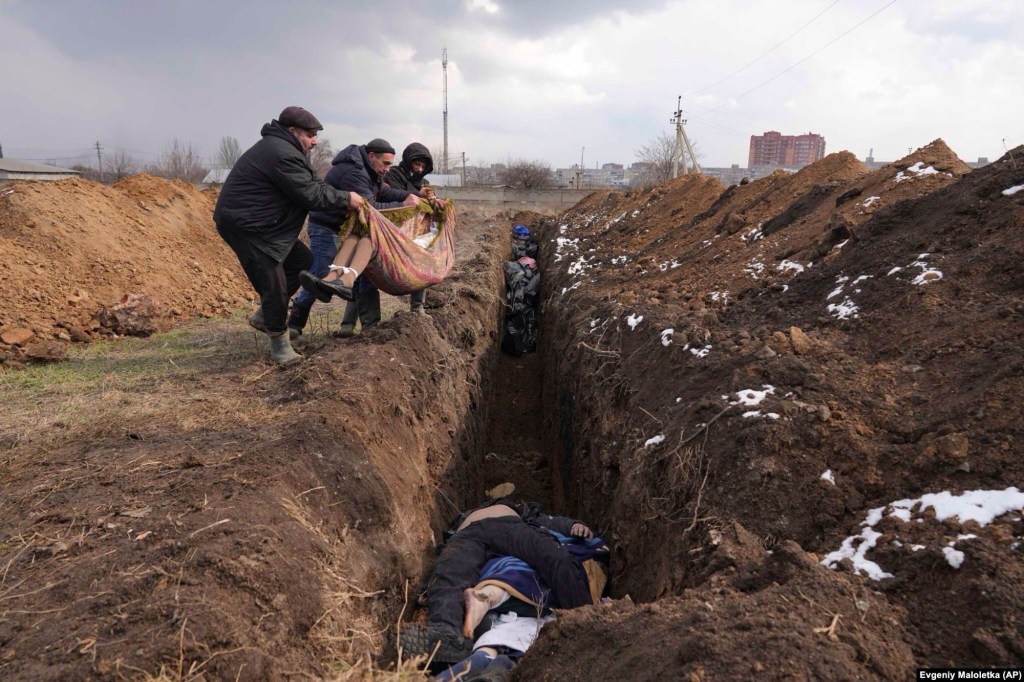
Aftermath of February 24, 2022 – Mariupol, Ukraine
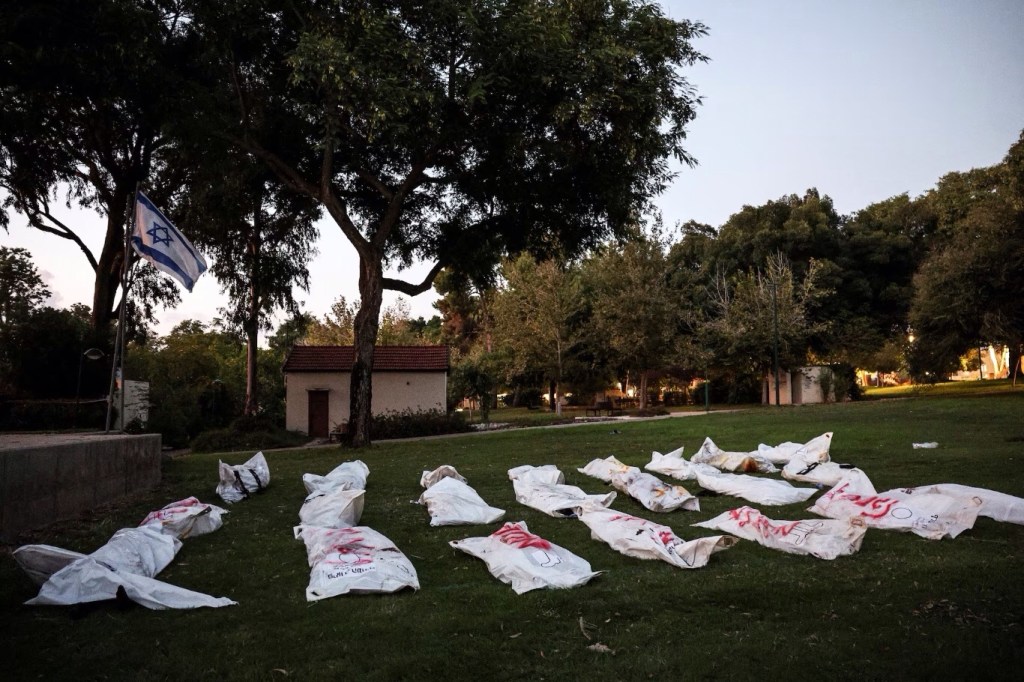
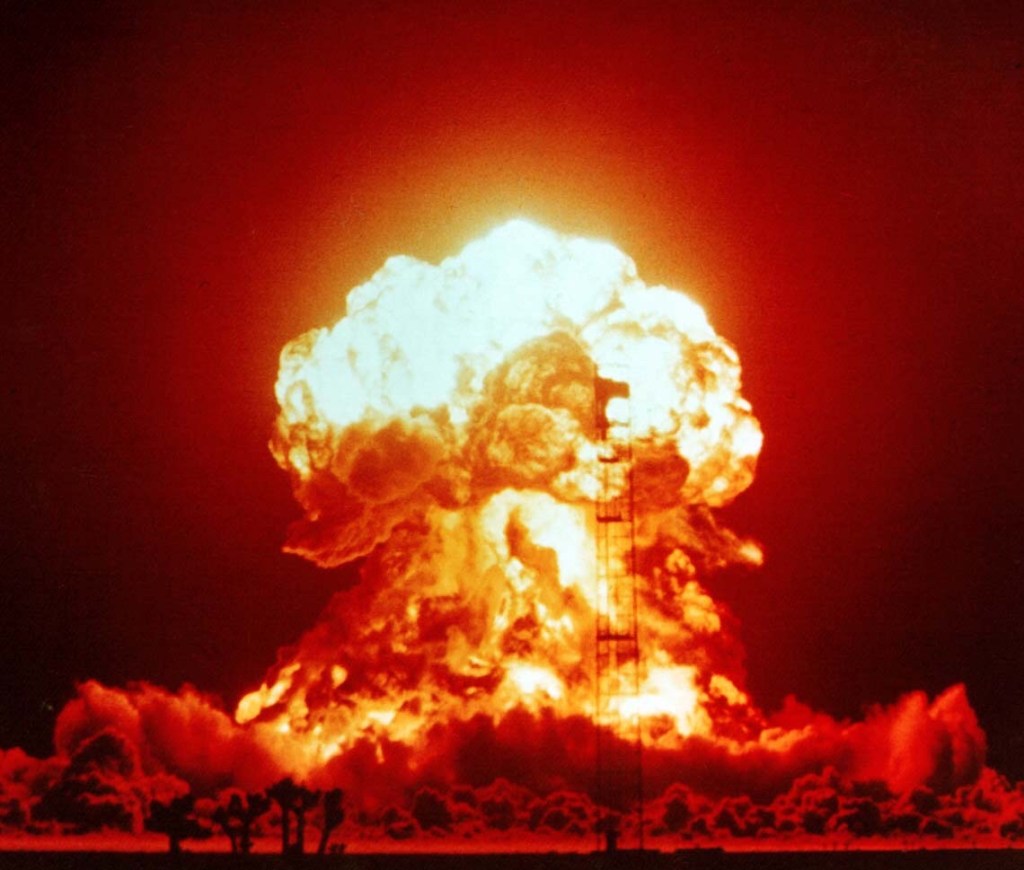
Aftermath of October 6, 2023 – Israel

And after two-plus decades, knowing that the world had learned nothing.

Just sayin’ . . .

Brendochka
9/11/24

9/10/24: The Ever-Present Possibility of Collateral Damage

“War is hell.”

American General William Tecumseh Sherman is credited with having said it first, in an address to military school graduates sometime after the end of the U.S. Civil War (1861-65). And he was an expert on the subject, as the man whose troops had burned a gigantic swath through the State of Georgia from Atlanta to Savannah.

Today, 21st-Century weaponry being what it is, the hell of war has only gotten bigger and more devastatingly destructive.

Ask anyone in Ukraine.

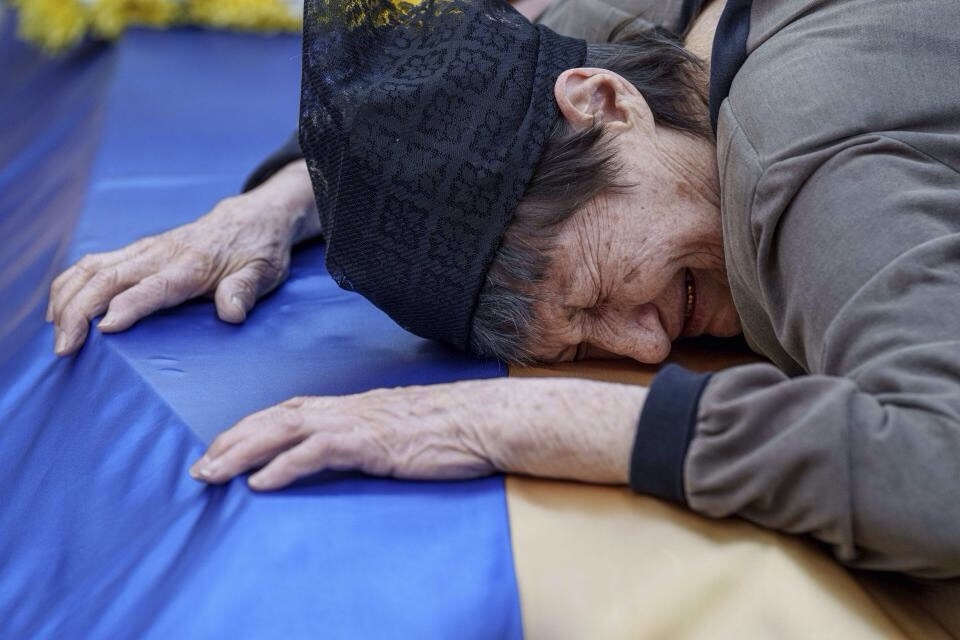
A Grieving Mother in Ukraine

As always, there are thousands upon thousands of innocent victims — civilians who are caught between two warring factions and become what is blithely referred to as “collateral damage.”

But there is another sort of collateral damage to be considered these days: the populations of neighboring countries, accidentally (or otherwise) the unlucky recipients of bits and pieces of weaponry that can’t read a map and don’t know where a border marks the end of one country and the beginning of another.

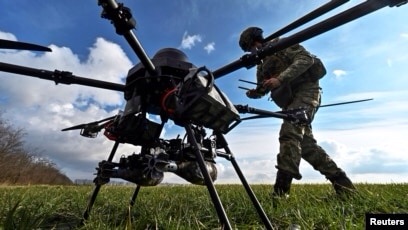
Drones, for example, are “smart” weapons; but they’re not infallible. And on Sunday, Romania and Latvia — both members of NATO — reported incursions into their territories by Russian drones.

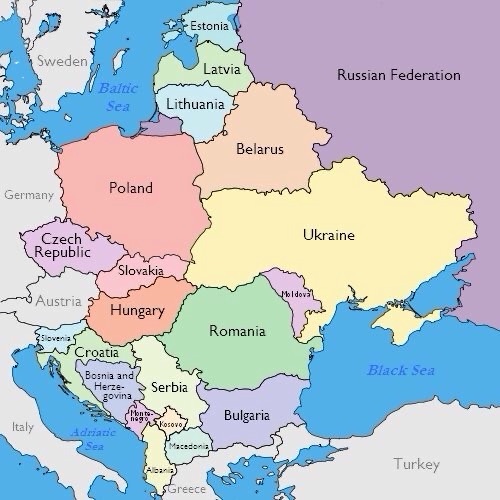
Eastern Europe

In Romania, it was reported by the Ministry of National Defense that a Russian drone had entered its territory early on Sunday as Moscow was engaged in a strike against “civilian targets and port infrastructure” across the Danube River in Ukraine. An investigation was underway as to the actual “impact zone” in an area — fortunately uninhabited — along the Romania-Ukraine border.

Luckily, there were no immediate reports of casualties or damage. But the government in Bucharest deployed F-16 warplanes to monitor its airspace, and issued alerts to the residents of two eastern regions. [Stephen McGrath and Jari Tanner, Associated Press, September 8, 2024.]

And this isn’t the first such incident. Romania has confirmed drone fragments on its territory on several occasions since Russia’s invasion of Ukraine in February 2022.

In this most recent instance, I was able to use the words “fortunately” and “luckily.” But, what if . . .? Just a few degrees in any direction, and human lives might have been lost, residential buildings and critical infrastructure damaged or destroyed . . . in a NATO country. Then what?

World War III?

NATO’s outgoing Deputy Secretary-General — who also happens to be a former top diplomat of Romania — condemned Russia’s violation of his country’s airspace:

“While we have no information indicating an intentional attack by Russia against Allies, these acts are irresponsible and potentially dangerous.” [Id.]

To say the least . . .

*. *. *

Looking at the above map, it’s easy to see how a drone or a missile might travel a little farther than intended and stray across the border into Romania. But what about Latvia? It doesn’t share a border with Ukraine.

It does, however, abut Russia’s good friend Belarus, as well as Russia itself. But a drone coming from either of those countries with a target somewhere in Ukraine would have to be pretty far off-course to end up in Latvian air space. Yet that’s apparently what happened.


The crash site has been identified, and an investigation is underway. But Latvian Defense Minister Andris Spruds has thus far downplayed the incident, saying:

“I can confirm that there are no victims here and also no property is infringed in any way. Of course, it is a serious incident, as it is once again a reminder of what kind of neighboring countries we live next to.” [Id.]

I could tell you what kind of neighbors they are . . . but it’s not necessary. Everyone already knows.

*. *. *

And in Ukraine, Foreign Minister Andrii Sybiha said that the incursions were “a reminder (that) the aggressive actions of the Russian Federation go beyond Ukraine’s borders.” [Id.]

Indeed.


Just sayin’ . . .

Brendochka
9/10/24

9/10/24: Big Brother Is Alive … and May Be Living In Your Workplace

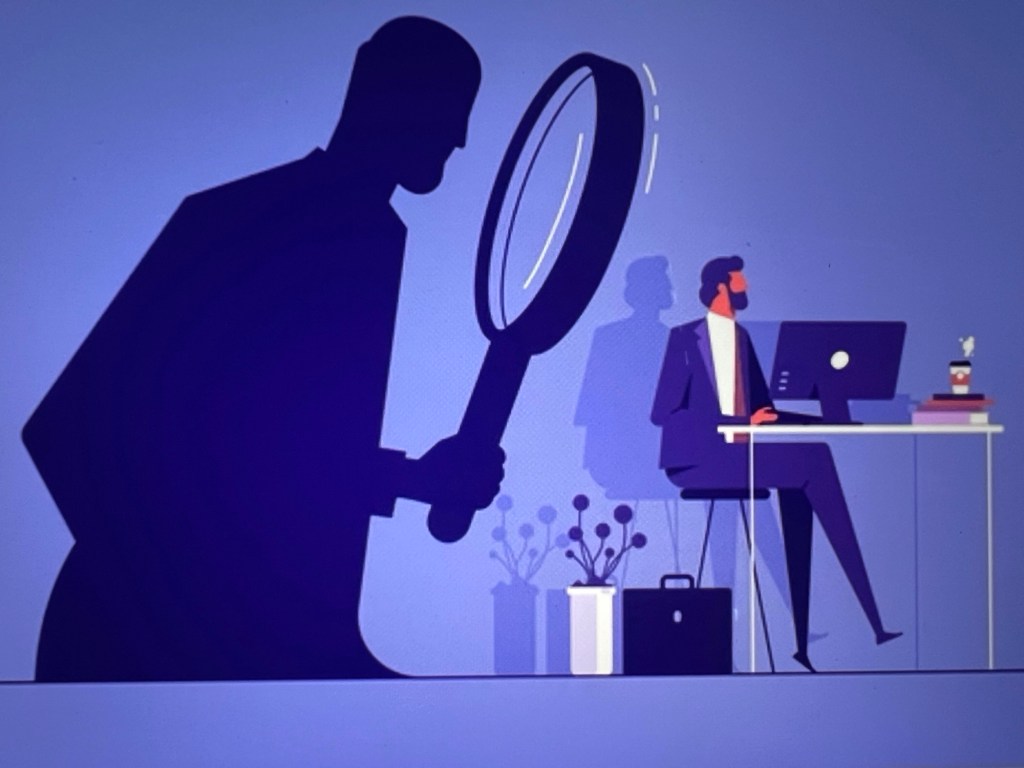
It could happen to anyone, anywhere, at any time. But it has already been announced in the UK offices of “Big Four” accounting firm PricewaterhouseCoopers (PwC), to become effective January 1st. At that time, PwC will begin tracking where its employees in the UK are working.

Happy New Year, folks!


That’s right — they will be using “location data“ to verify where their employees are at any given time, presumably during working hours.

And it’s all because of the Covid-19 pandemic, which gave rise to work-at-home, which then — even after the worst of Covid was said to be behind us — morphed into a hybrid work schedule that has become so popular in many places around the world.

But even the best of intentions can have unexpected negative results. And now some employers are having trouble getting their people back into the office; it seems that folks enjoy working at home in their pajamas, and not having to commute in heavy traffic and all sorts of weather.


But employers have found — and I can’t imagine why they should be surprised — that some people cheat. Or simply don’t work as industriously or conscientiously outside a business environment or without supervision.

In addition, PwC-UK — who now insist that employees spend at least three days a week, or 60% of their time, in the office or with clients — have said:

“Our business thrives on strong relationships — and those are almost always more easily built and sustained face-to-face . . . By being physically together, we can offer our clients a differentiated experience and create the positive learning and coaching environment that is key to our success.” [Lianne Kolirin, CNN, September 6, 2024.]

Further, PwC said, the move is intended to “adjust” the firm’s existing hybrid working approach in order to place “more emphasis on in-person working”:

“We all benefit from the positive impact of a hybrid approach, but the previous guidance of at least two to three days a week was open to interpretation. This update aims to provide clarity around where and how we expect everyone to work.“ [Id.]

They do assure employees that individual working location data will be shared with them on a monthly basis, “to ensure that the new policy is being fairly and consistently applied across our business.” [Id.]

And in a recent online press release, the managing partner of PwC-UK stressed the importance of face-to-face working, while at the same time continuing to offer the flexibility of hybrid working.


Well, that’s all fine and dandy. Personally, before I retired, I preferred working in the office, where the entire atmosphere — the availability of resources, equipment setup, interaction with other human beings — was more conducive to actually getting the job done, and offered a change of scenery and a certain amount of socialization that you just don’t get at home in your jammies. (In all honesty, though, I really hated the morning and evening commutes.)

But where does the tracking stop? Of course, it’s supposed to end at the close of the normal workday — say, for example, 5:30 p.m. And hopefully, at PwC that is exactly what will happen. But where is the guarantee of that? You know this idea is going to spread. What is to stop some not-so-scrupulous employer from failing to turn off the tracker at closing time . . . perhaps in the guise of assuring that their employees aren’t spending personal time in unacceptable — perhaps even illegal — pursuits that might impact negatively on the business? Is that a legitimate excuse for spying on people?

And will the tracking technology be connected solely to the employer’s hardware being used at the employees’ homes, to be deactivated at that 5:30 closing time? Will the employees be able to shut it down? Or will the companies also be geolocating their employees through the individuals’ cell phone GPS software? Will people have to start turning off their personal phones in order to maintain any sense of privacy?

*. *. *

Before I can decide how I feel about this development, I need to know more about how it will work. In the meantime, maybe I’ll just go back to blaming those bats in China for starting the whole Covid thing again.


Just sayin’ . . .

Brendochka
9/10/24

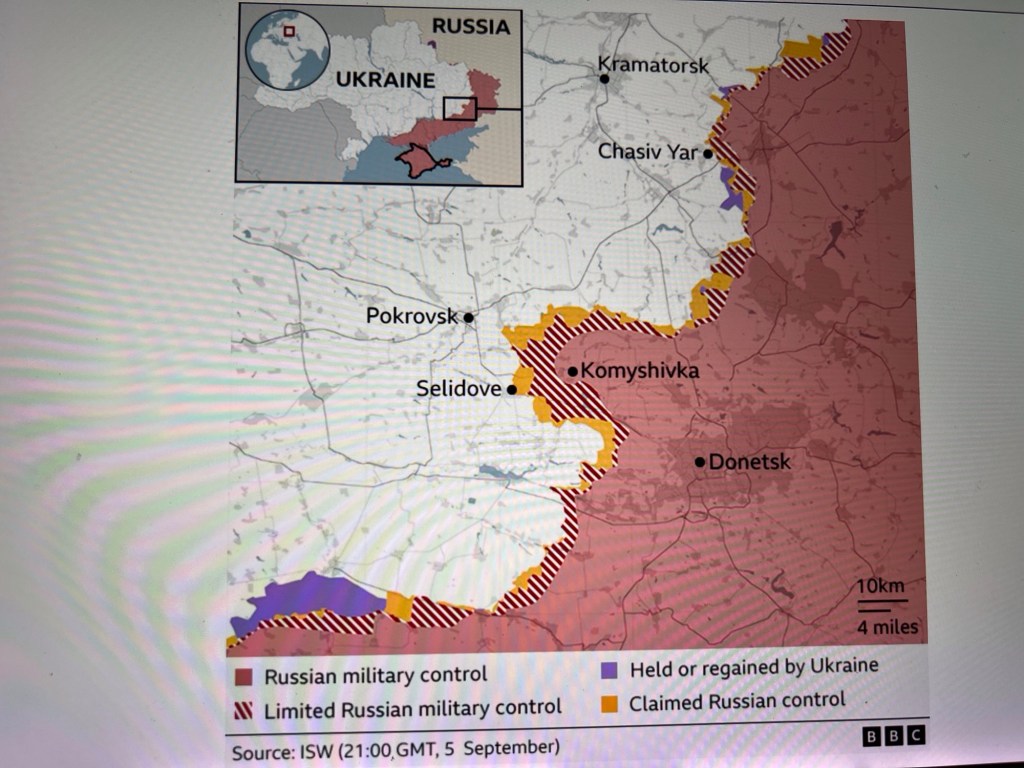
9/10/24: Leaving Pokrovsk

Leaving Pokrovsk

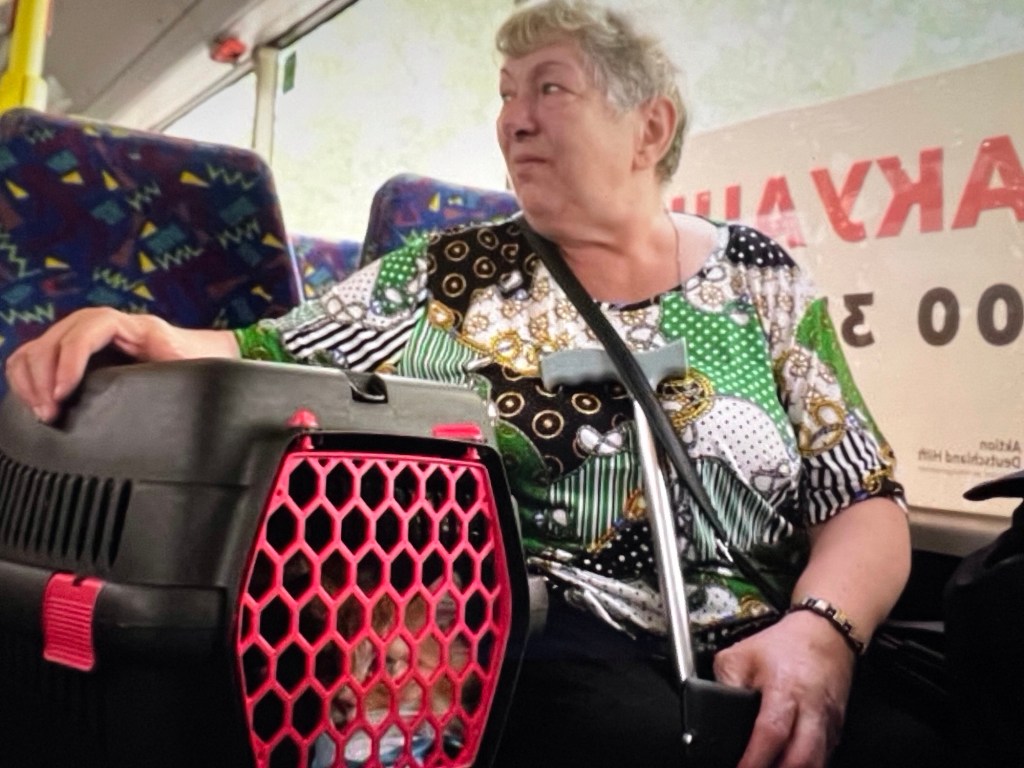
Maria, age 69, and her two kittens sit on a bus waiting to leave the city she has lived and worked in for 30 years, because the shelling and bombing and missile strikes are now too close for comfort. Her city — Pokrovsk, Ukraine — had a population of 48,000 people just two months ago; today, half of them have already left. [Abdujalil Abdurasulov, BBC News, September 9, 2024.]

Relatively few people in other parts of the world have heard of Pokrovsk. But to Ukraine, it is a key transportation hub that is depended upon as one of the main supply routes in the area. If Pokrovsk were to fall to the Russians, it would effectively mean the loss of nearly the entire Donetsk region — which has been a key goal of the Kremlin from day one of the February 24, 2022, invasion.

This is what President Volodymyr Zelensky and his troops hoped to prevent when they launched an offensive into the Kursk region of Russia. Their intent was to force the Russian military to divert offensive troops to the defense of Kursk in sufficient numbers for Ukraine to be better able to defend its remaining territory in the Donbas region.

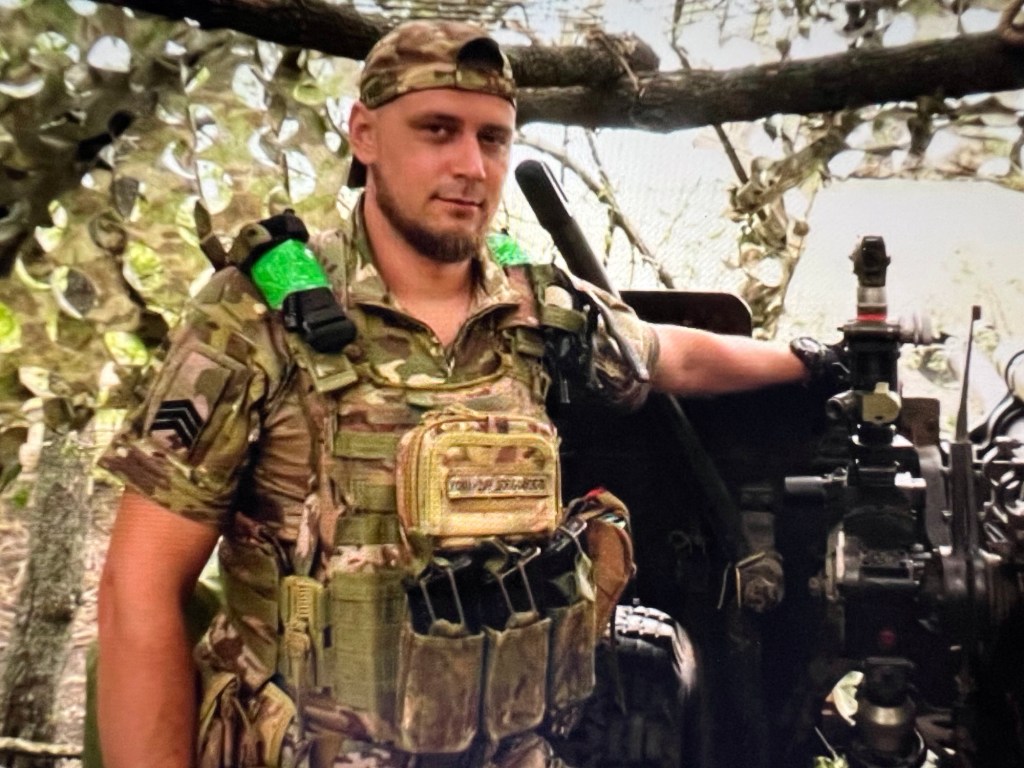
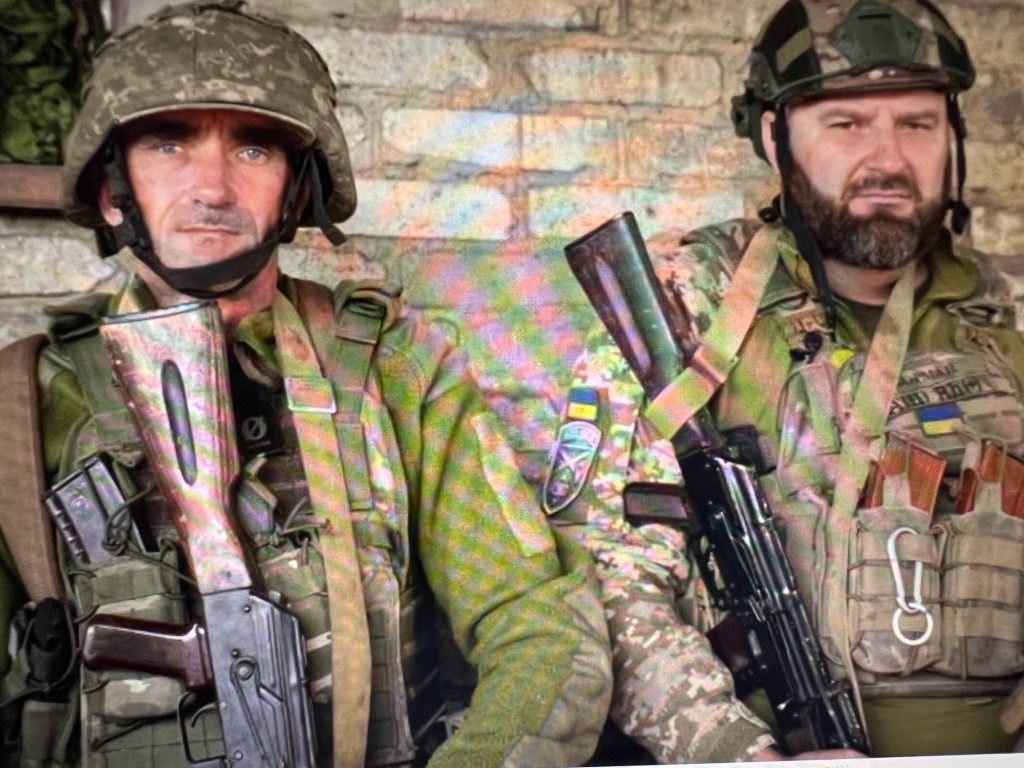
Defending Pokrovsk

But one thing Russia has in seemingly endless numbers is people — human bodies to throw into the front lines, wave after wave of them, conscripted from Chechnya, from friendly foreign countries, from mercenary groups like Wagner (now called the Africa Corps), and even from their own Russian prisons. Human cannon fodder. According to Pokrovsk’s military administration, the ratio of fighting forces in that area is ten-to-one in Russia’s favor. [Id.]

And they have the equipment and the weaponry, much of it also supplied by friendly countries including China and Iran . . . while they continue to protest Ukraine’s use of American and other Western armaments.

On Sunday, Russia claimed to have taken control of the village of Novohrodivka, just 10 kilometers (about 6.2 miles) from Pokrovsk. One unconfirmed report says that Ukrainian forces have retreated from there. [Id.]

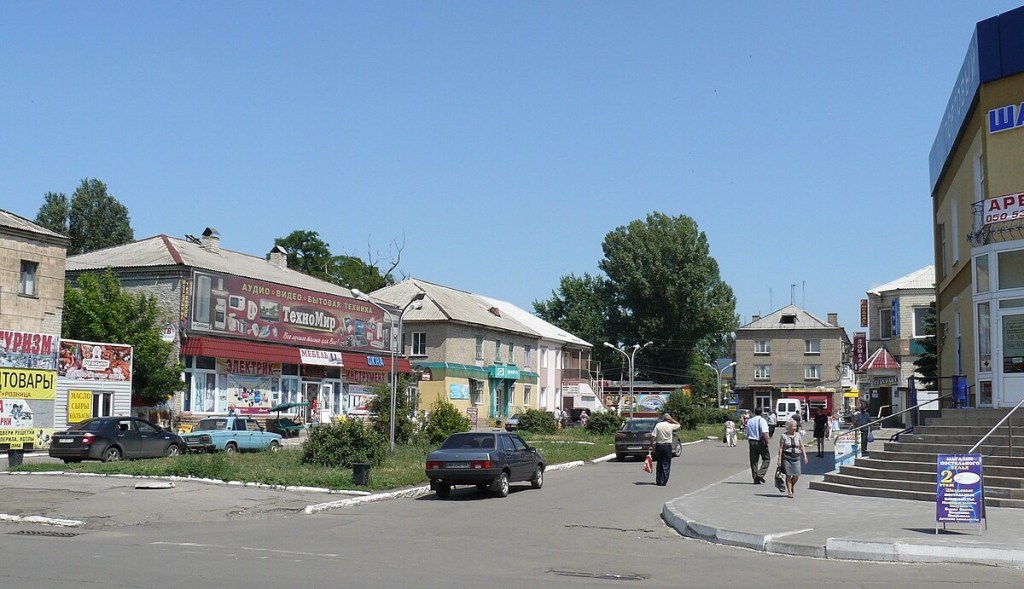
Pokrovsk, Ukraine

*. *. *

And so, Maria sits on the bus with her two precious kittens, waiting to be taken to the next phase of her life . . . wherever and whatever that may be. Hopefully, she will be safer there.

Just sayin’ . . .

Brendochka
9/10/24

9/10/24: The Verdict Is In: Hvaldimir Was Not Murdered

For once, there is some good news to report — although it’s not exactly happy news, because Hvaldimir is indeed still dead. But the big, beautiful beluga whale did not expire as the result of man’s inhumanity to a fellow mammal; he was instead the victim of the sort of hazard that faces all sea creatures: a floating object.

Hvaldimir – 2019

A police autopsy — or necropsy, if you will — has concluded that “human activity” did not cause Hvaldimir’s death. What they did find was that a stick had become lodged in his mouth, and that what were initially thought by some to be bullet holes were just some “completely superficial” injuries. [Tom McArthur, BBC News, September 9, 2024.]

So, whether he was a Russian-trained spy whale who decided to “come in from the cold” and retire in the free world, or just a big bleached ball of blubber with a poor sense of direction, his last years were spent as a sort of folk hero to a lot of good people in Norway.

Once again . . . hvil i fred (R.I.P.), Hvaldimir; and know that you are missed.

Just sayin’ . . .

Brendochka
9/10/24

9/9/24: Now There’s An Interview I’d Pay To See. Too Bad It Will Never Happen.

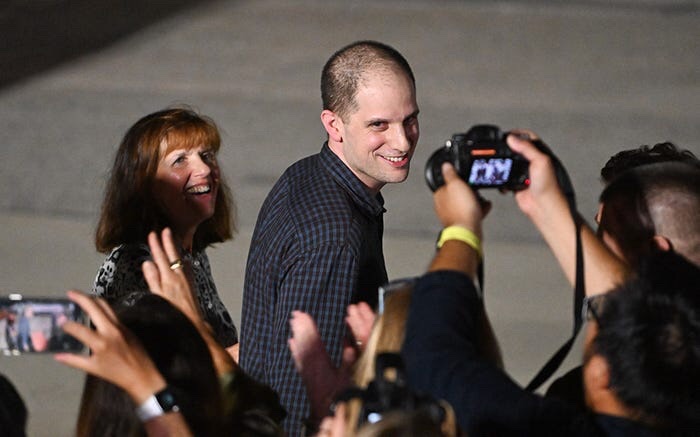
Evan Gershkovich — the first U.S. journalist to be arrested in Russia on charges of spying since the end of the Cold War — was one of the sixteen prisoners released in the momentous spy swap on August 1st of this year. It seems that, as he was being released, Gershkovich — in what must have been a brilliant display of courage, wit and irony — asked Vladimir Putin to grant him an interview. [Dmitry Antonov, Lucy Papachristou, Reuters, September 9, 2024.]

Evan Gershkovich – Free At Last

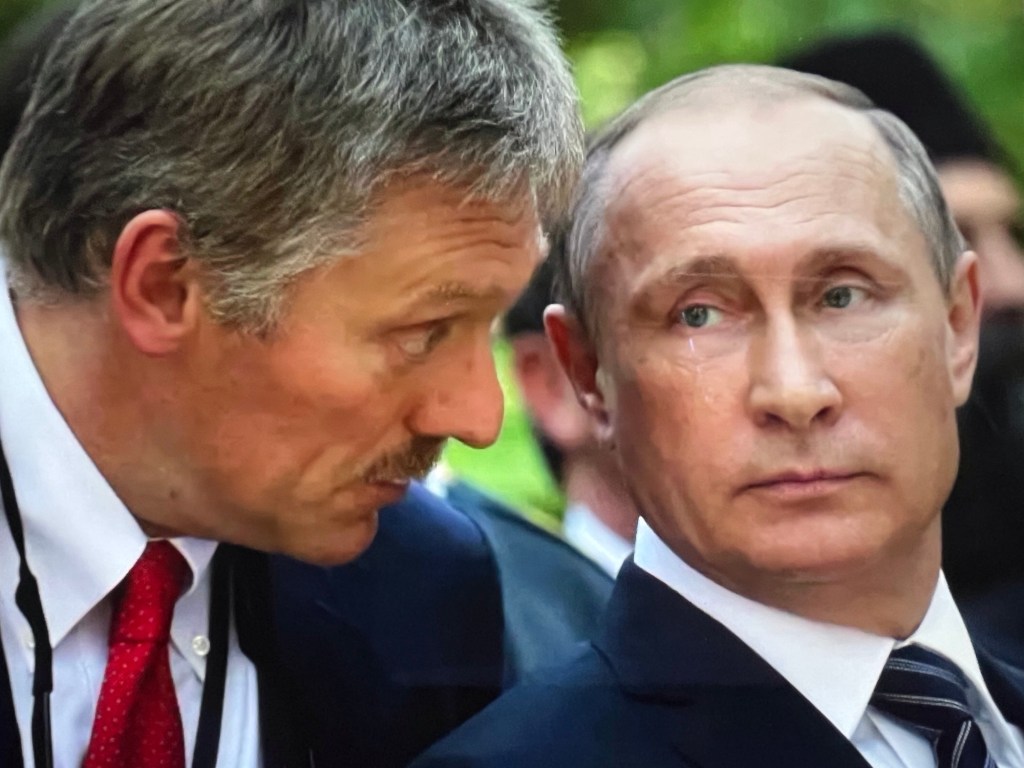
To my knowledge, that comment was not widely reported at the time — or, at least, I never saw it amidst all the coverage of the event. But for some reason, Kremlin spokesman (and my all-around favorite Russian government official) Dmitry Peskov was asked today whether there was a response to Gershkovich’s request. And in his usual straightforward manner, this was Peskov’s reply:

“So far, we are not interested in such an interview. In order for there to be an interview with foreign media, and a specific one at that, we need to have an occasion. So far we don’t see such an occasion.” [Id.]

Dmitry Peskov, With the Boss

I have one question for you, Dima: What was the “occasion” for the specific interview granted Tucker Carlson in February? Was it because you were able to find the one Western “journalist” who wouldn’t ask the tough questions, but would agree to a scripted, almost completely one-way conversation with the boss?

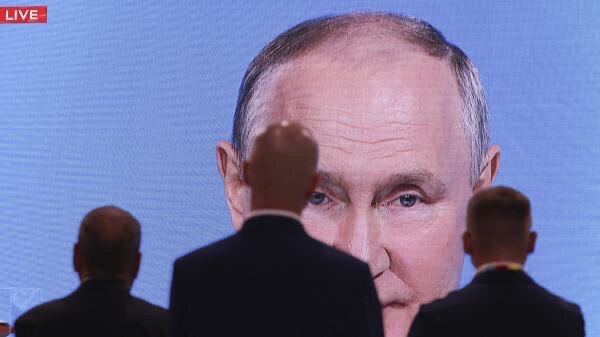
You know that Evan Gershkovich would never play that game. And that strikes fear in Vladimir Putin’s cold, black heart.


Just sayin’ . . .

Brendochka
9/9/24

9/9/24: The Bones in the Basement (Ch. 21 – Posted 5/4/23)

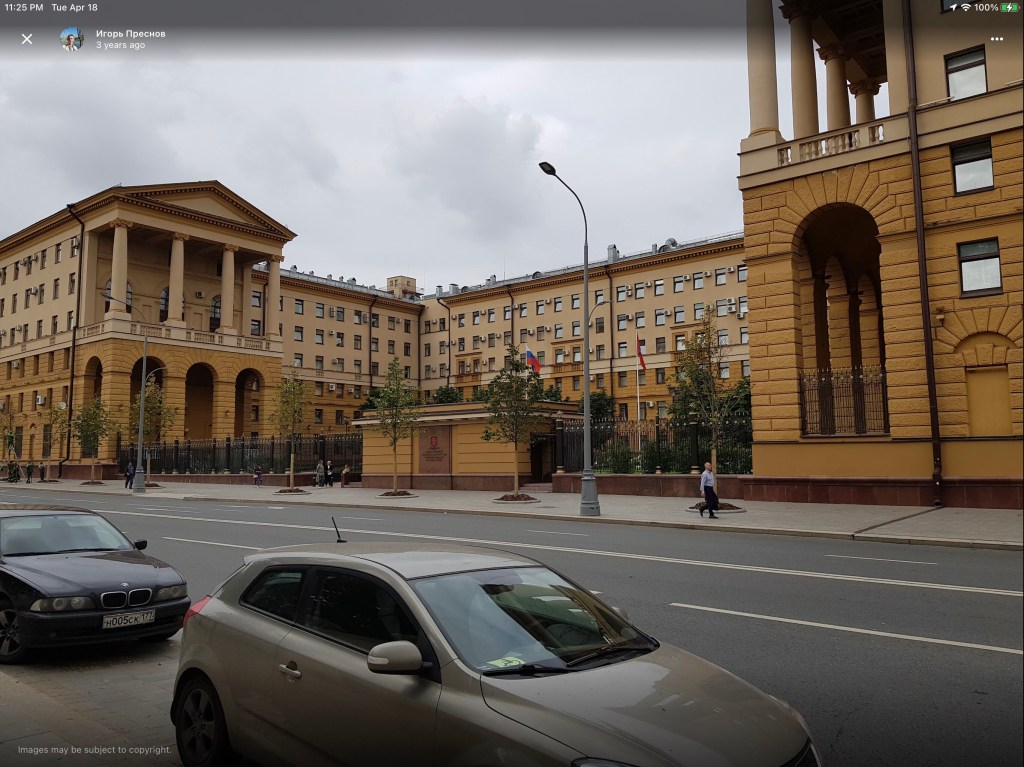
August 1993. Petrovka 38 was one of several buildings in Moscow that no sane Muscovite would ever want to see from the inside — right up there with Lubyanka (KGB HQ) and the notorious Lefortovo Prison. They were sure that, once they entered Petrovka, they would never again see the light of day. That may have been an exaggeration in most cases, but there was always that possibility.

Our first meeting with Messrs. Pashkin, Bragin and Kostylev had been held in an auxiliary building around the corner; but our final gathering was to take place in the main building — a sprawling, dark, solid, forbidding structure fronted by sturdy iron gates. This was the headquarters of the Moscow Militia, and it was meant to be taken seriously.

Petrovka 38 – Moscow Militia HQ

Gil Robinson was not in Moscow at the time, so just Lena and I were on our way with our trusty driver Vitold — who wished us well and said he’d be waiting for us outside . . . when and if we came out. Lena really didn’t need his lame attempt at humor to add to her already obvious nervousness; but to her credit, she screwed up every ounce of courage she had and walked right into that building with me.

Already present, of course, were the Militia representatives, Mikhail Pashkin and Igor Kostylev. And with them stood my KGB watchdog, Vladimir Bragin, who seemed that summer to be everywhere, all the time. An early arrival was our local foodie, Mr. Pivovarov, who I was told was already in the kitchen preparing lunch. Lena and I were given a brief tour of the public parts of the building; thankfully, no one found it necessary to show us the cells or “interrogation” rooms. Pashkin told me I was only the second American ever to have visited Petrovka 38, the first having been a top (unnamed) U.S. Government official; but somehow I felt he might simply have been trying to make me feel important. True or not, though, it sounded good.

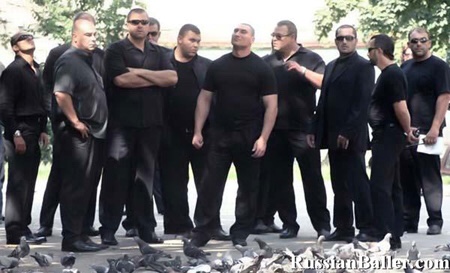
Then we were guided into the “dining room”: a large rectangular room, bare except for a very long, well-worn table surrounded by a couple of dozen chairs — obviously the lunch room for the lower-ranking officers. Seated and waiting patiently on one long side, facing us as we entered the room, were twelve of the biggest, scruffiest, meanest-looking, ugliest human beings I have ever seen gathered in one place. They stopped talking amongst themselves as soon as we entered the room, and were collectively introduced by Pashkin as undercover Militia officers (no names). They had obviously been chosen for their jobs based on their toughness and ruthlessness, and trained to deal with the worst of the worst of the Moscow criminal element — to whom they actually bore an uncanny resemblance. These twelve lucky winners had been selected to have lunch with their boss and the clearly crazy — for why else would she have been there? — American lady now taking her seat on the opposite side of the table.

As I looked at my luncheon companions, my first thought was: “Holy Mother of God! What have I ever done to deserve this?” On the one hand, I felt like Daniel in the lion’s den. But on the other hand, here was a truly unique opportunity to meet a radically different type of individuals from any I had ever known — a once-in-a-lifetime experience that I would surely never forget (and obviously never have). Unfortunately, I wouldn’t have been allowed to photograph them even if I had been foolish enough to ask. I still see them in my mind’s eye, though. And they’re still not pretty.

“Hey! Let’s Do Lunch.”

Lunch wasn’t quite ready yet, so it fell to me to try to make some sort of conversation with Moscow’s answer to the Dirty Dozen — none of whom, apparently, spoke English. Lena was there to translate, but what the hell do you say to these guys? “Where did you go to school?” “How’s business?” “Beaten anyone to death lately?” Not cool. So I started by telling them my name, where I was from, and what our Foundation was doing in Moscow, then waited for some sort of response. Nothing. Not a murmur or a spark of interest from any of them. I felt like a stand-up comic who had just bombed at the Comedy Club.

And just then, thankfully, the food arrived. There was Pivovarov, with a couple of conscripts from the kitchen, and a whole lot of veggie burgers and side dishes. The meal was actually quite well-prepared and tasty, and those twelve cops dug in as though they hadn’t been fed for days. Come to think of it, maybe they hadn’t, just to ensure their eager reaction to our food. In any event, they ate quickly, a couple of them belched in apparent satisfaction, and — on a silent signal from Pashkin — they all got up and left, still without a word. Had they been cautioned not to speak? Were they incapable of carrying on a normal conversation? Or had they simply forgotten how to say “thank you”? I considered calling out “you’re welcome” as they left, but decided it would be a waste of breath. Also, I wasn’t sure they’d appreciate the sarcasm — and I really didn’t want to annoy them! Any one of them could have snapped me like a twig.

*. *. *

At this point, I realized that I needed to use the ladies’ room, and asked if there was one. Yes, indeed there was . . . down the stairway and at the end of a long hall in the basement. Lena and I were not about to split up, so she came with me, whether she needed to or not. We found our way without difficulty, and were amazed to walk into a sparkling clean rest room in excellent condition. There were individual stalls, with doors and functional locks; and all of the plumbing was in perfect working order. Very impressive, indeed.


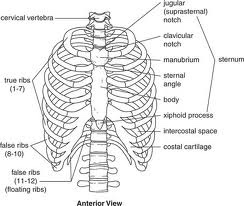
As we left the ladies’ room and retraced our steps along the hallway toward the stairs, I noticed an alcove in the wall that I hadn’t observed from the opposite direction. And in that alcove was something I certainly hadn’t expected: a pile of bones. A gigantic, perfectly cleaned and preserved, stark white . . . rib cage, lying on its back on the floor. I came to a screeching halt, at which point Lena saw what I had been looking at and clapped her hands over her mouth to keep from screaming. What — or who — was this??!!!

But a second look told me those bones couldn’t be human; they were much too large. And then of course I couldn’t resist. Placing the back of my hand dramatically against my forehead, and in my best Shakespearean voice (which admittedly is not very Shakespearean at all), I intoned: “Alas, poor Yorick! I knew him well . . .” And Lena laughed, also realizing by now that these could not possibly be the bones of a human being. Still, what were they, and what on earth were they doing there, in plain sight? But whatever the answer, I couldn’t pass up the opportunity. I had a small camera in my purse, and Lena stood watch while I hurriedly snapped a couple of pictures. Then we headed back upstairs, giggling like a pair of schoolgirls, before someone thought to ask what was taking us so long.

“Yorick! Have you lost your head?”

I had wondered why our hosts hadn’t eaten with us, and I got my answer when Pashkin announced that he had a little surprise for us. We were led into what was apparently the “executive” dining room, with a somewhat smaller table nicely set with real china, where we were presented with yet a second repast: huge servings of tender, perfectly-prepared steak with all the trimmings — and of course, vodka. This was indeed an honor. But why, then, had they let Lena and me eat all that other food? It’s not as though either of us looked malnourished. But eat, we did; and this time Messrs. Pashkin, Kostylev, Bragin and Pivovarov happily joined us. I found myself wishing I could ask for a to-go box so I could bring my portion to poor Vitold out in the car, but . . . well, no. That would have been unspeakably rude.

(Hey, wait a minute! Could those bones have been from the steer that gave its life for our steak dinner? Hmmm . . . )

Dinner

*. *. *

As our second feast was winding down, and we were all basking in a warm, vodka-induced glow, I found a moment to quietly ask Pivovarov about the Lenin portrait. He smiled and inquired whether I had a car and driver with me. When I said I did, he requested that we drive him to his office — he had the portrait ready for me. I was thrilled, and had made sure to bring along enough cash, just in case. It would have been simpler if he’d brought the picture with him; but I understood that he wouldn’t have wanted any witnesses to his little transaction, which was most likely against one or more laws regarding the “liberation” and sale of government property for personal profit — and especially not here, in Militia Headquarters.

Then as we were saying our farewells, Bragin asked what time my flight was scheduled to leave the next day, and said that he would pick me up at my apartment and drive me to the airport. I thanked him for the offer, but told him that Vitold was available to drive me . . . but he insisted that it was no trouble, and told me what time he would be there, around two hours before flight time. It was not a question. And when in Russia, it’s seldom a good idea to try to argue with the KGB. So I thanked him again and said I’d see him in the morning . . . and then spent the rest of the night wondering why I continued to warrant such royal treatment. Again, my mental meanderings led me to question whether it might have anything to do with Valentin Aksilenko, and if so, what was going on that I didn’t know about.

Vitold, of course, was waiting patiently in the car across the street when we left the building, and was clearly relieved to see us. I explained that Pivovarov needed a ride to his office as he had something for me there, and we took off across town once again. Lena and Vitold waited in the car while I went upstairs to the office, where I found the Lenin portrait still hanging on the wall above the desk. But there was another one, slightly smaller, that he had probably scrounged from another office or a dusty basement somewhere and had carefully wrapped in newspaper and twine. He pulled back a corner of the wrapper to show that it was the real thing, and I paid him, thanked him profusely, and headed downstairs with my bounty. When Vitold saw me, he asked how on earth I planned to get that thing home; and I realized I hadn’t figured that out yet. Oops. But I knew I’d manage it somehow; it was just too good to leave behind.

Homeward Bound

And so we finally headed back to the office. I still had some packing to finish, a framed portrait to deal with, several dear friends to bid farewell, and an early flight to catch. I could make up for the sleep I would miss that night, on the plane tomorrow.

*. *. *

But even leaving Moscow was to prove out of the ordinary — yet another tale for the next chapter. And until then, dear readers, I remain faithfully yours . . .

Brendochka
5/4/23 (re-posted 9/9/24)
9/8/24: Sunday’s Headlines

Looking for inspiration for an article or two . . . and naively hoping for something perhaps a bit more cheerful than the Israel-Gaza disaster, the Russia-Ukraine disaster, the Japan-China-Philippines typhoon disasters, or the latest mass shooting disaster . . . I started my Sunday by scanning the headlines.


Bi-i-i-ig mistake.

Come with me, please, as we tiptoe through the titles — just the headers, no details, though maybe a snarky little comment or two — and you’ll see what I mean:

The mother of the teenager suspected of killing four people during a Georgia school shooting called to warn a school counselor prior to the shooting. – Wasn’t anyone listening?!!

Three Israeli border guards were killed in a shooting at the Allenby Crossing on the border between the occupied West Bank and Jordan. – How many more centuries . . . ?

A manhunt continues for an “armed and dangerous” person of interest in the shooting that wounded five people . . . in Laurel County, Kentucky. – Guns, guns, guns!

65 people in nine states have been sickened by a salmonella outbreak linked to recalled eggs. – I guess that “recall” wasn’t loud enough.

Russia takes Ukrainian town in advance on Pokrovsk. – Can we call Putin’s “special military operation” what it is, please: a WAR!!

US believes Iran has transferred short-range ballistic missiles to Russia. – Same %*@#$%# war.

And to wrap things up:

Her father listened as she was shot in the head at Taco Bell.

No. I can’t even.


Come and get me when it stops . . .

Brendochka
9/8/24

9/8/24: Putin’s Hostages: Bring Them Home, Week 36

It’s been another quiet news week insofar as the American hostages in Russia are concerned. Once again, there have been no names to add to the eight still locked away in Putin’s prisons — obviously a good thing. But the eight are still there, in danger of being overlooked now that the most high-profile former prisoners have been released in the historic swap of August 1st.

And so we must remember them once again, and encourage them to stay strong and never give up hope — hope that negotiations for their release are moving forward behind the scenes.

In no particular order, they are:

Ksenia Karelina, dual U.S.-Russian citizen, recently convicted of espionage and sentenced to 12 years in prison for contributing $51.80 to an American charity providing aid to Ukraine.

Ksenia Karelina

*. *. *

U.S. Army Staff Sergeant Gordon Black, who was stationed in South Korea when he fell into a Russian “honey trap.” He was on his way back to his home in Texas, on two weeks’ leave, when he was lured to Vladivostok by the Russian girlfriend he had met in Korea. He was arrested in May of 2024 on charges of alleged larceny and murder threat, and sentenced the following month to a prison term of three years and nine months.

Staff Sergeant Gordon Black

*. *. *

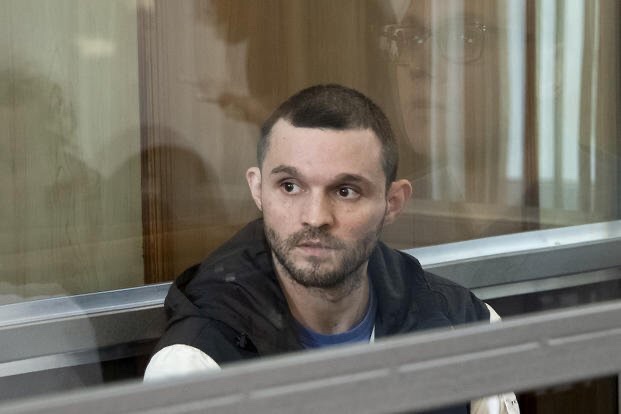
Marc Fogel, a schoolteacher from Pennsylvania, was arrested in August of 2021 for possession of 0.6 ounce of legally-prescribed (in the U.S.) medical marijuana. In June of 2022 he was sentenced to 14 years in prison.

Marc Fogel

*. *. *

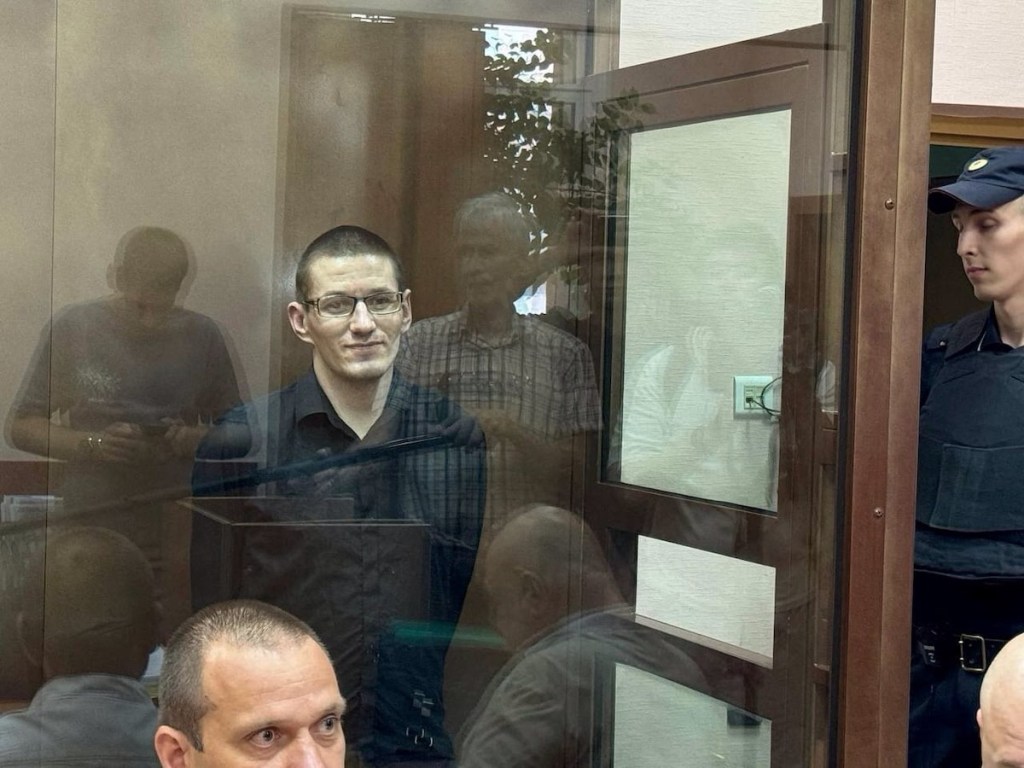
Robert Romanov Woodland, a dual US-Russian citizen, was teaching English in Russia when he was arrested in January of 2024 for allegedly attempting to sell drugs. In July, he was sentenced to 12-1/2 years in a maximum security prison.

Robert Romanov Woodland

*. *. *

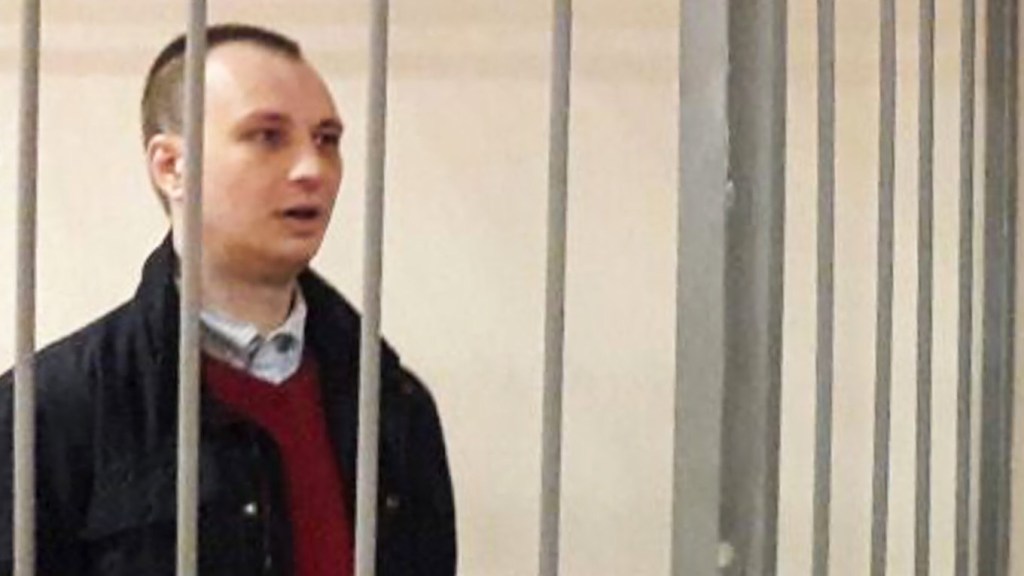
Robert Gilman, already in jail in Russia serving a 4-1/2-year sentence (later reduced to 3-1/2 years on appeal) for kicking a police officer in 2022, found himself facing added charges in 2023 of punching prison staff in the head, and later also attacking a criminal investigator and another prison guard.

Robert Gilman

*. *. *

David Barnes, an American citizen and resident of Texas, was arrested in January of 2022 while visiting his children, who had been taken to Russia from Texas by his Russian wife. He was charged and sentenced in the fall of that year to 21 years in prison for child abuse (allegedly occurring while in Texas), on his wife’s accusation. I really wish I knew more of this story!

David Barnes

*. *. *

Eugene Spector, a dual US-Russian citizen already serving a four-year sentence handed down in June of 2021 on a bribery conviction, received additional charges of suspicion of espionage in August of 2023. No other details have been found, as the evidence is labelled “classified.”

Eugene Spector

*. *. *

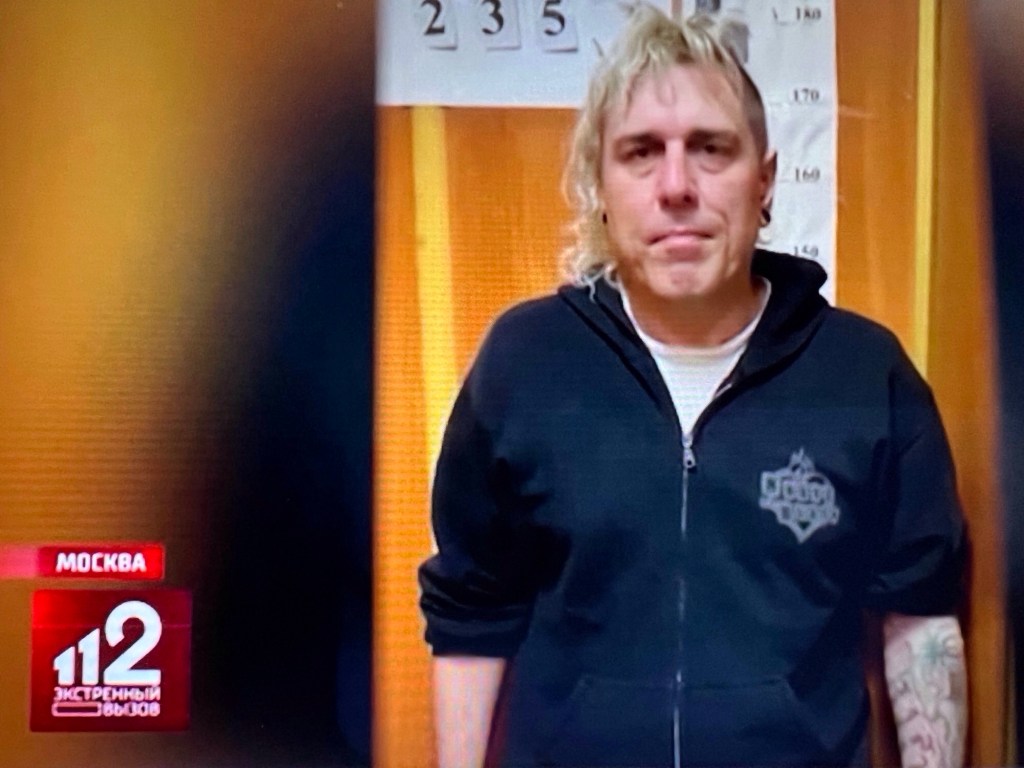
Michael Travis Leake, a rock musician and former paratrooper, was sentenced in July of this year to 13 years in prison on drug charges — specifically, suspicion of selling mephedrone, and organizing a drug trafficking business “involving young people.”

Michael Travis Leake

*. *. *

Are any of these prisoners actually guilty of the charges leveled against them? I don’t know. But I do know that the recent timing of a number of the arrests, and the speed with which they were brought to trial, is a clear indication of Russia’s intentional roundup of American citizens to be used as (what I call) Putin’s Pawns.

What they are, quite simply, are HOSTAGES. And they will not — MUST not — be forgotten. Let’s shorten this list to zero.

Just sayin’ . . .

Brendochka
9/8/24