Imagine it is the year 1812. You are Napoleon Bonaparte, and for numerous complex geopolitical reasons, you and 600,000 or so French soldiers have invaded Russia. And things aren’t going so well.
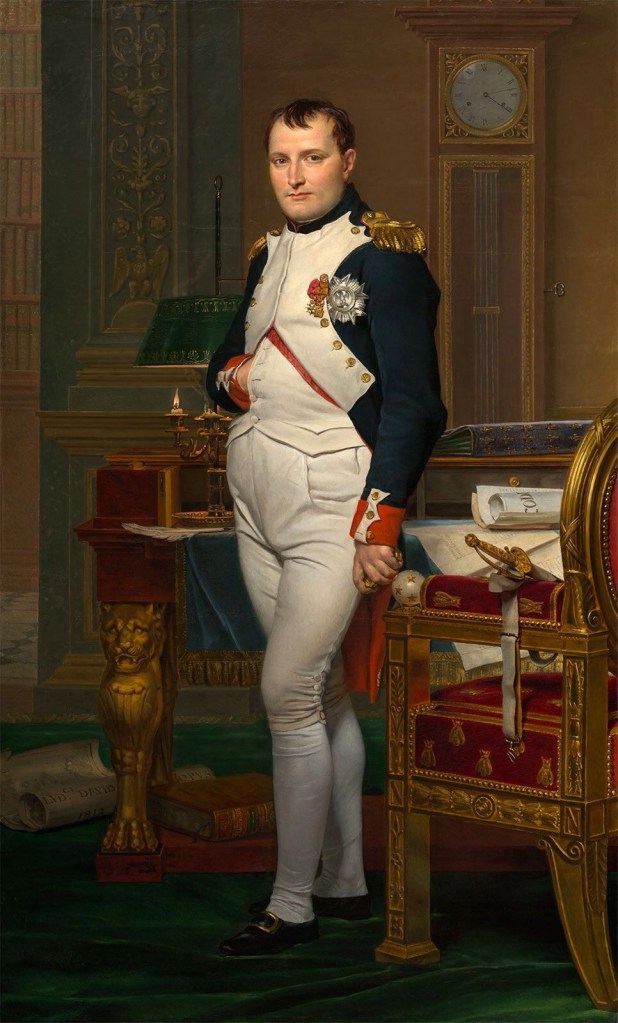
Mile after endless mile, you march across the vast expanse in the summer heat, fighting a separate battle against insect-driven diseases, only to find the villagers and farmers have fled . . . and worse, they’ve burned their buildings and crops behind them. There is no food, no source of supply for your army. And you keep advancing, through Smolensk, and on to Borodino where you win a somewhat indecisive and very costly victory against General Kutuzov’s army; then onward for the last 70 miles to Moscow, where food, shelter and supplies will surely be plentiful.
But they’re not, because the Muscovites have also fled, burning their beloved city on the way out. It’s now September, and in Russia, that means winter is not far away.
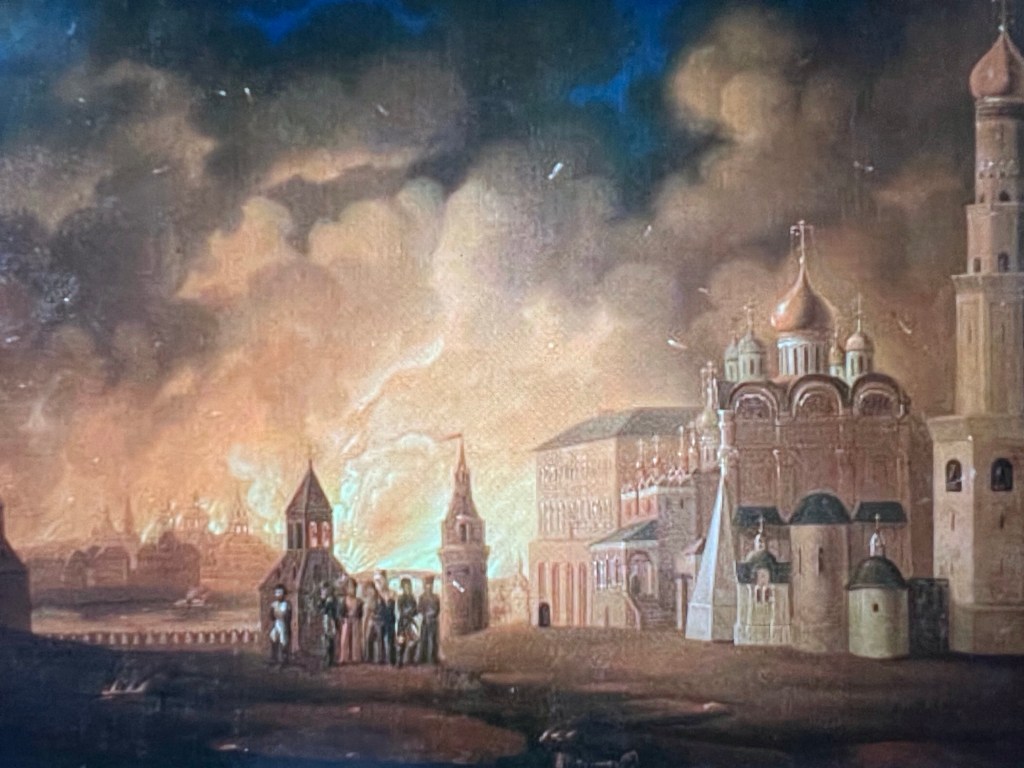
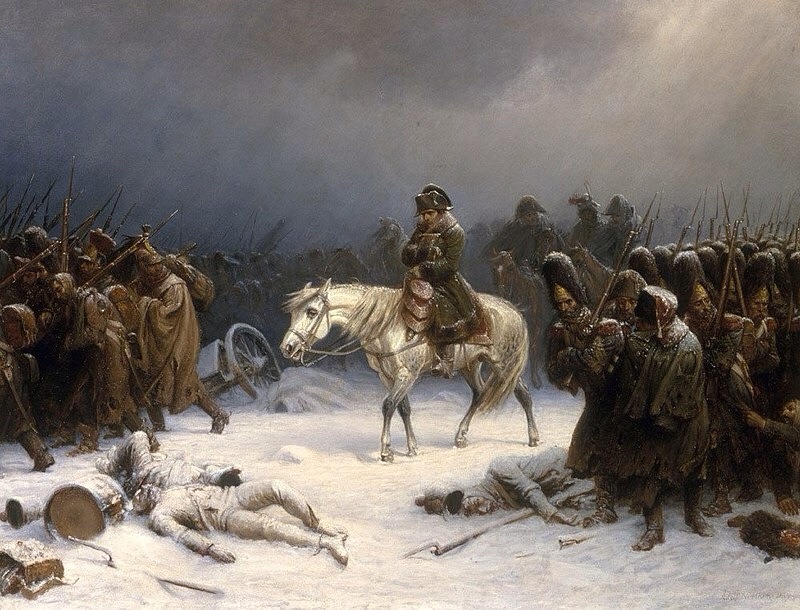
So — having lost about 250,000 troops at Smolensk and Borodino, and without sustenance for your remaining men — you do the only thing you can do: you retreat. And on the long march back to France, it begins to snow.
That winter is recorded as one of the earliest and most brutal in Russia’s history. Men and horses died by the thousands, of exposure and starvation. Eventually, the great Napoleon Bonaparte left his last 100,000 soldiers in someone else’s charge in order to make a mad dash for home and save his own skin. The surviving troops were left to make it back as best they could.
Not a pretty story, particularly from Napoleon’s point of view. The Russians do love it, though. *
* [NOTE: Precise, detailed historical accuracy in the foregoing narrative is not guaranteed, as it is written from memory; but I believe I came close — though maybe not close enough for my long-ago Russian History professor, who was a stickler for detail.]
*. *. *
Now, let’s play “What If.”
What if the Russian people hadn’t been resourceful enough to lay waste to their own homes and land, leaving the French troops without sustenance?
What if the winter hadn’t come on so hard and fast that year?
What if Bonaparte hadn’t been so fucking stupid?
Well, for one thing, Vladimir Putin would not now be sitting in the Kremlin, waging war on Ukraine, plotting his “New World Order,” arresting anyone and everyone who dares to oppose or criticize him.
Tchaikovsky would never have composed his 1812 Overture, thus depriving the Washington National Symphony of a rousing climax to its annual Fourth of July concert.
And there would most likely be no Russian “mafia” or oligarchs, because everyone would be too busy drinking fine French wines and eating escargots in little French bistros; watching the can-can dancers at the Moscow branch of Le Moulin Rouge; and making love in the morning, the afternoon, and all through the night.
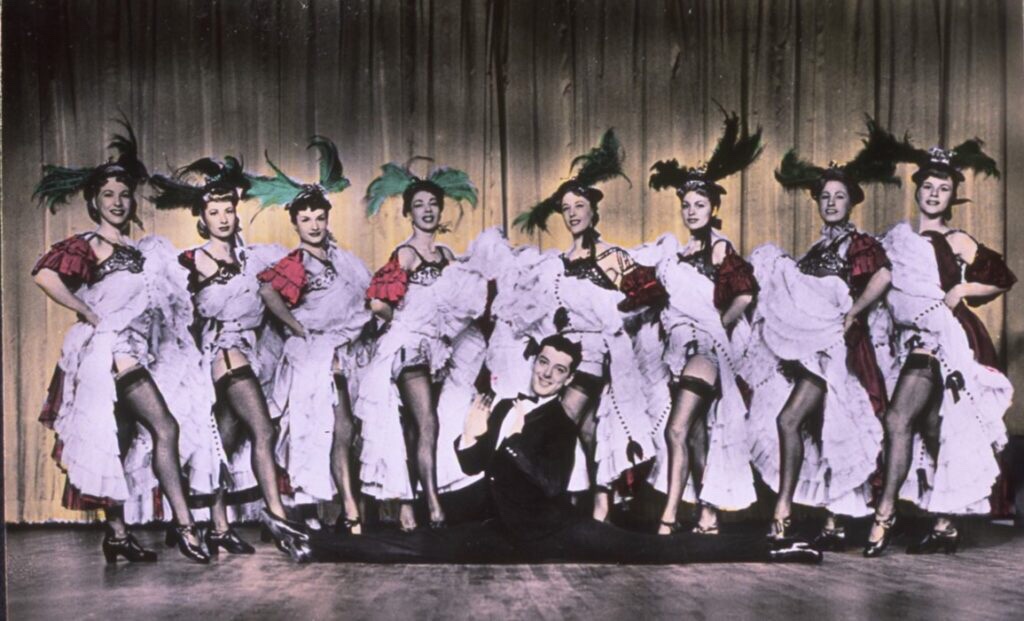
And everyone would be speaking French, instead of having to pronounce words with eight consecutive consonants and figure out which prefix to use with which verb of motion. (Please don’t ask; you really don’t want to know.)
And life in today’s Russia would be tres bon.
If only . . .
*. *. *
David A. Bell, Princeton University professor of history and author of The First Total War: Napoleon’s Europe and the Birth of Warfare as We Know It, has said:
“Charles XII tried it, Napoleon tried it, Hitler tried it. It never seems to work out invading Russia.”
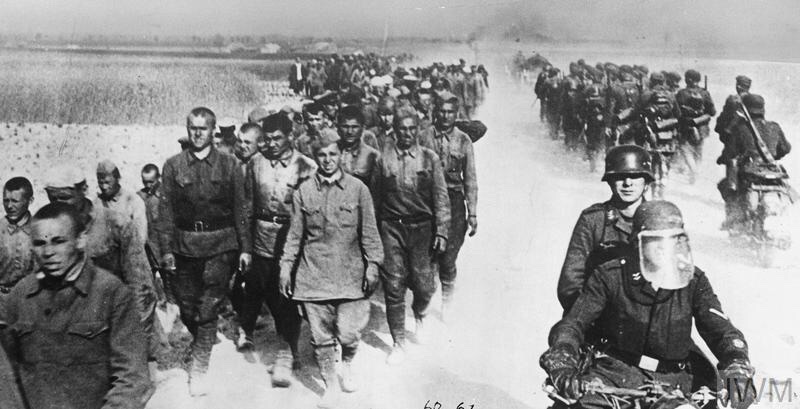
With another winter approaching, that makes me worry even more about present-day Ukraine’s retaliatory foray into Russian territory. Perhaps after three strikes, the fourth time won’t result in another disastrous failure. One can only hope.
Just sayin‘ . . .

Brendochka
10/20/24

