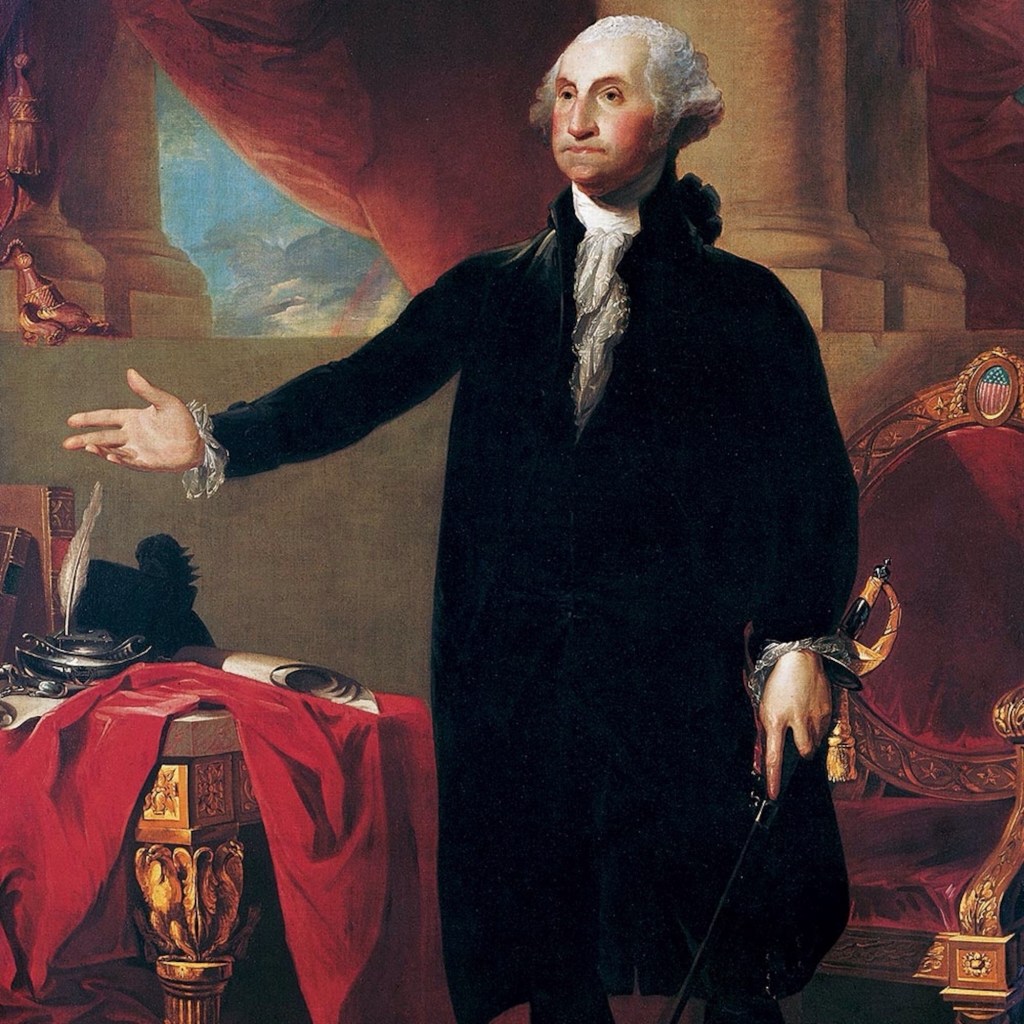
Today marks the 293rd anniversary of the birth of George Washington, born this date in 1732, who ultimately became known as the “Father of our Country.” That is, by any standard, quite an honor.
So . . . what do you think, sir? As your nation approaches its 250th birthday, are you proud of what your descendants have done with your legacy?
President George Washington
I’m sure you were, for about the first 200 years or so. You and your contemporaries got it right, and so did the next six or eight generations. But somewhere along the way, the train went off the tracks.
Oh, sorry . . . you don’t know about railroads trains, do you?
Let’s just say, the principles your generation set forth in the Declaration of Independence and the U.S. Constitution have somehow been shunted aside in the wake of individual political interests. And it sucks. (That’s a modern expression, meaning it’s really, really bad.)
All I can say, President Washington, is that I’m sorry. We’re all sorry . . . those of us who didn’t create the problems but who are most adversely affected by them. If we could go back and start over, we would.
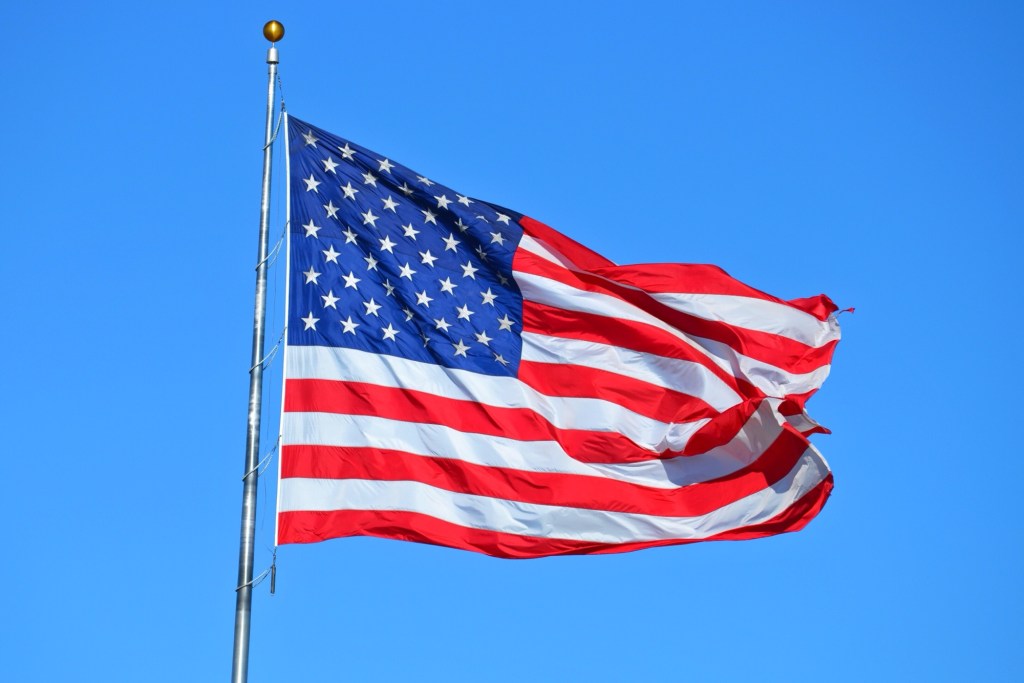
And by the way, we’ve grown. This is how many states we have now (50), with nearly 350 million people from all over the world — people who (or whose forebears) came here seeking opportunity and freedom from oppression, and who built this former wilderness into the shining example it has become for the rest of the world.
We just need to be reminded now and then of our history, of how truly fortunate we are to live here, and of how we need to keep working tirelessly to protect our great nation from tyrants who would destroy us.
*. *. *
I hope you enjoy your birthday, wherever you are, and that you somehow know you are still remembered on this day every year.
And thank you, sir, for being our first President.
The short answer is: Yes, they are. But in the midst of all of the recent hullabaloo emanating from the Washington White House, both internally and internationally, as well as the ongoing negotiations over the Ukraine and Gaza situations, China seems to have been relegated to Page Two for the moment.
But not for long.
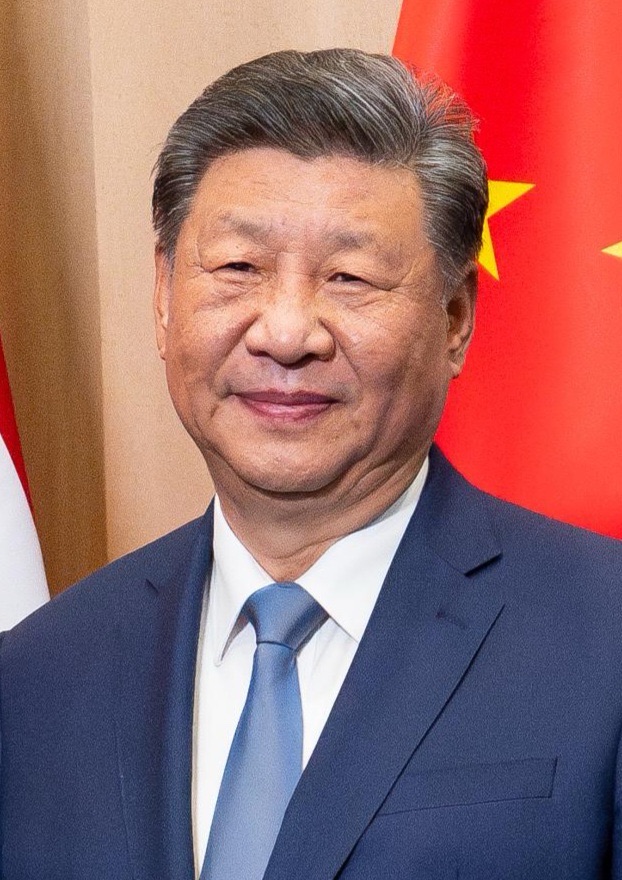
Chinese President Xi Jinping
We must never turn our backs on, or in any way underestimate, the Chinese. Over the past 50-plus years, their relations with Russia have waxed and waned, as have their relations with the United States. And through it all, they’ve grown stronger — economically, diplomatically, and militarily. Make no mistake: they are a force to be reckoned with.
But right now, Chinese President Xi Jinping is faced with a conundrum. He has not criticized Vladimir Putin’s war against Ukraine, even filling many of the gaps in Russia’s economy created by the West’s sanctions since the onset of the war in 2022 — to the advantage of both countries, of course. And Russia has become dependent upon that relationship.
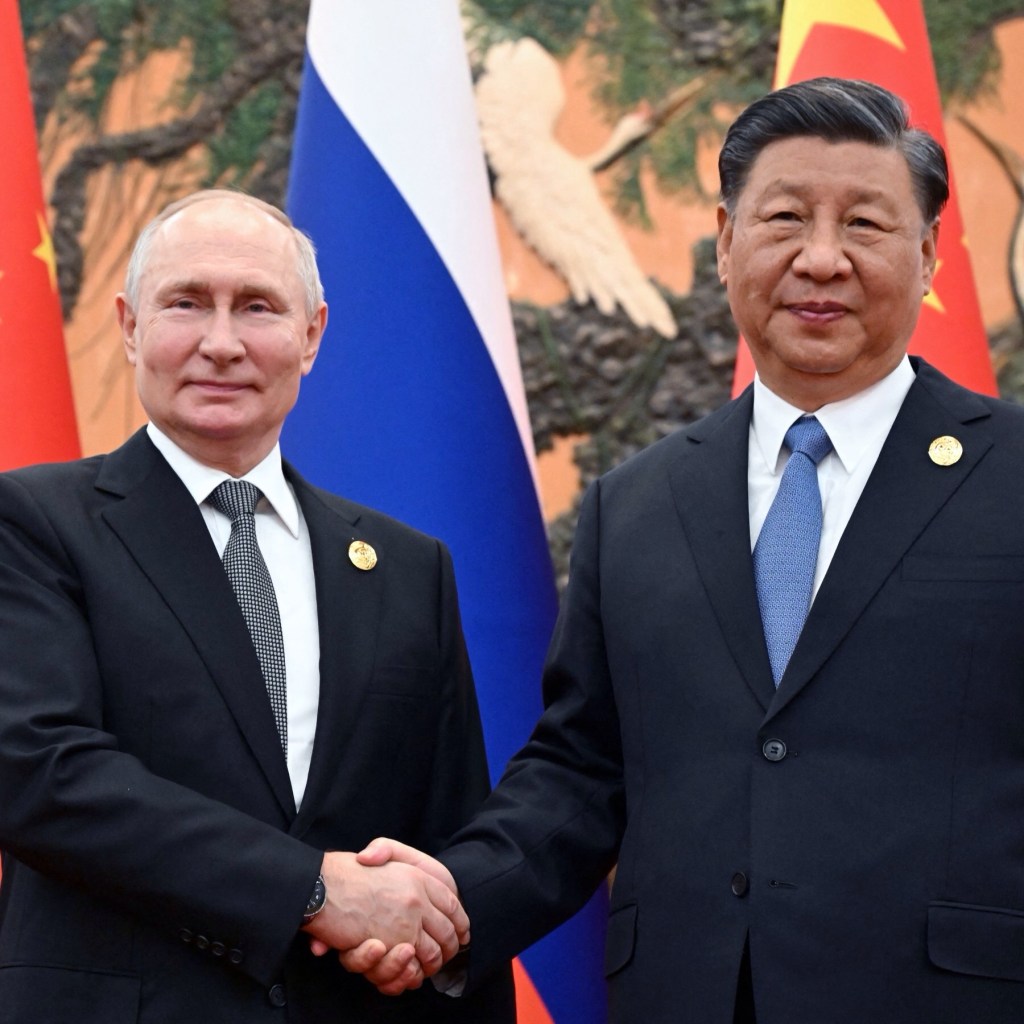
Presidents Putin and Xi: BFFs (for now)
At the same time, Xi has depicted himself as a peacemaker, desirous of assisting as needed in the negotiation process . . . thus placing himself squarely on the fence between Russia and the West, but so far managing not to fall off.
Then along comes Donald Trump, back into the White House, and one of the first things he does is signal his intent to improve relations with Russia by anointing himself the only person in the world who can bring about a peaceful end to the Ukraine conflict. So — completely ignoring the opposition of virtually the entire Western world, the sanctions imposed on Russia by most of America’s allies, and the criminal warrant issued against Putin by the International Criminal Court — he picks up the phone and calls his Russian counterpart, effectively bringing Putin out of purgatory and back into a place of power.
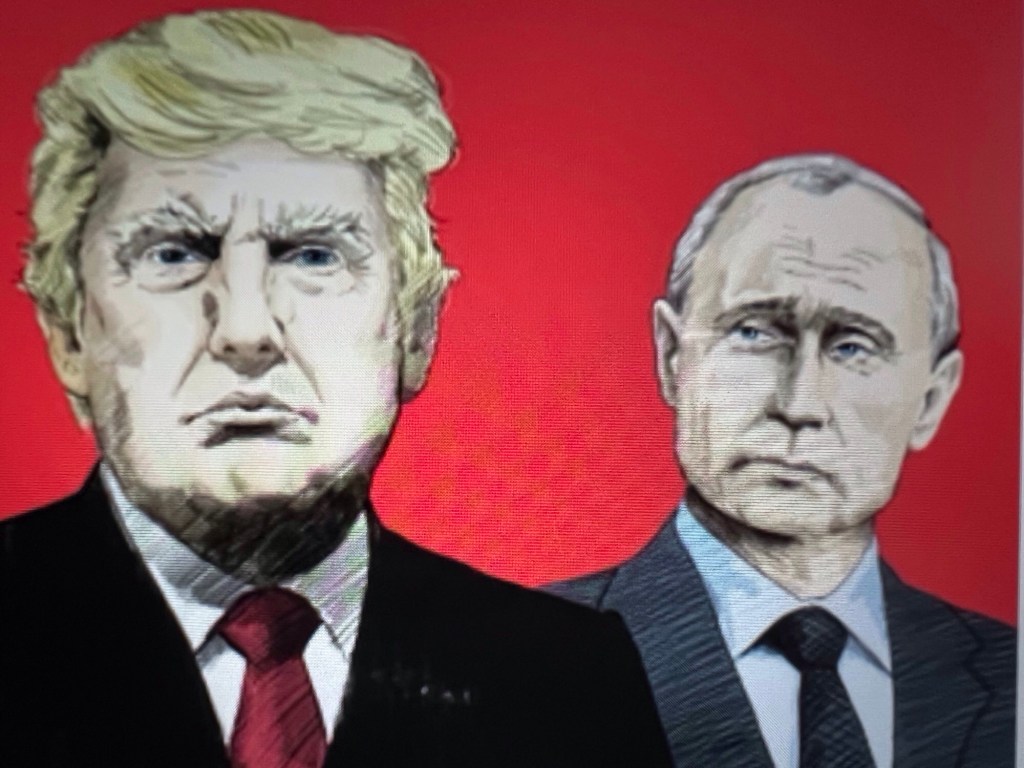
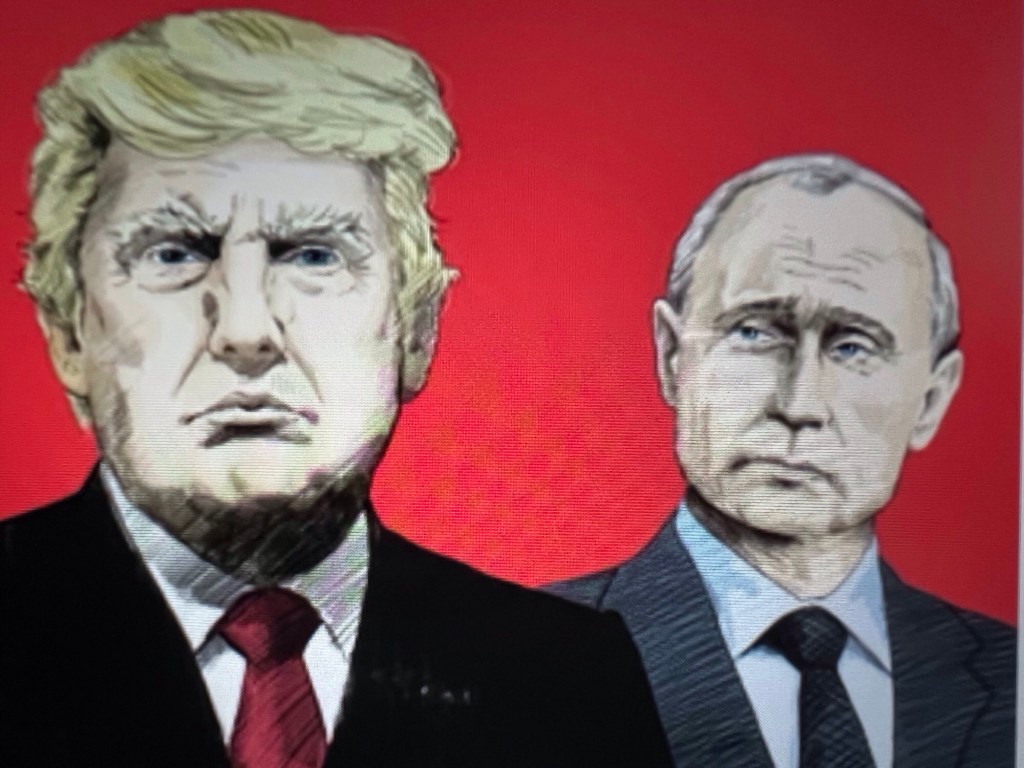
Presidents Trump and Putin: BFFs (again?)
And, if all goes according to plan, before long Russia will no longer be reliant upon China’s increased trade . . . which, needless to say, President Xi finds more than a little distressing. Not to mention the question of whose side Russia would take in the event of a military conflict between China and and its next intended acquisition: Taiwan.
In fact, at the recent Munich Security Conference, U.S. special envoy for Ukraine and Russia Keith Kellogg bluntly stated that the United States aims “to force” Putin into actions he would be “uncomfortable with,” including disrupting Moscow’s ties with China, Iran and North Korea. [Reid Standish, RFE/RL, February 21, 2025.]
And U.S. Vice President JD Vance said in a February 14th interview with The Wall Street Journal that Washington is prepared to reset its relationship with Russia as a move to end Russia’s isolation and its growing dependence on China. [Id.]
*. *. *
To look at it as the most simplistic of analogies, what we seem to have here is a classic case of two high school boys who have been best friends for years, who suddenly find they’re both madly in love with the same girl. And what happens to this trio will depend entirely on the young lady in question. If she is decent and honorable, she will decide which of the young men she likes better, and tell the unfortunate one, as gently as possible, how she feels. With any luck, and hopefully a mature attitude on the part of both boys, they can remain friends.
But if the girl is a slut, and decides she wants to date both of her admirers and play them off against each other, well . . . “trouble” doesn’t adequately describe what they’re in for.
So I suggest you stay tuned for the next chapters of this high-stakes soap opera in your daily news reports, folks . . . it’s bound to be interesting.
I was going to take the day off from writing today, when I suddenly realized why the date sounded familiar.
Unless it was your birthday, wedding anniversary, or the birth date of your first-born child, you probably wouldn’t have the slightest idea where you were on February 21, 1994. But I remember it clearly.
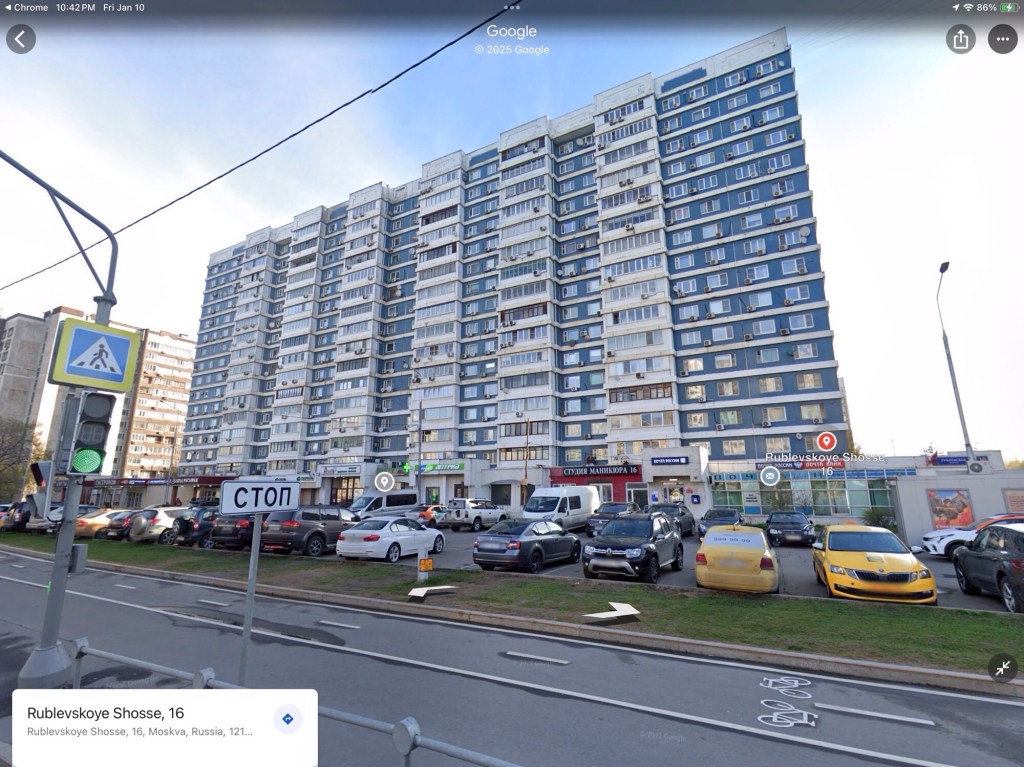
I was in Moscow — the one in Russia, not Idaho USA — staying in the apartment/office where I had lived and worked the previous summer. Back from a full day of meetings and a bit of shopping, I was settling down for the evening, and tuned in to the news on the apartment’s satellite TV.
Home Sweet Home in Moscow
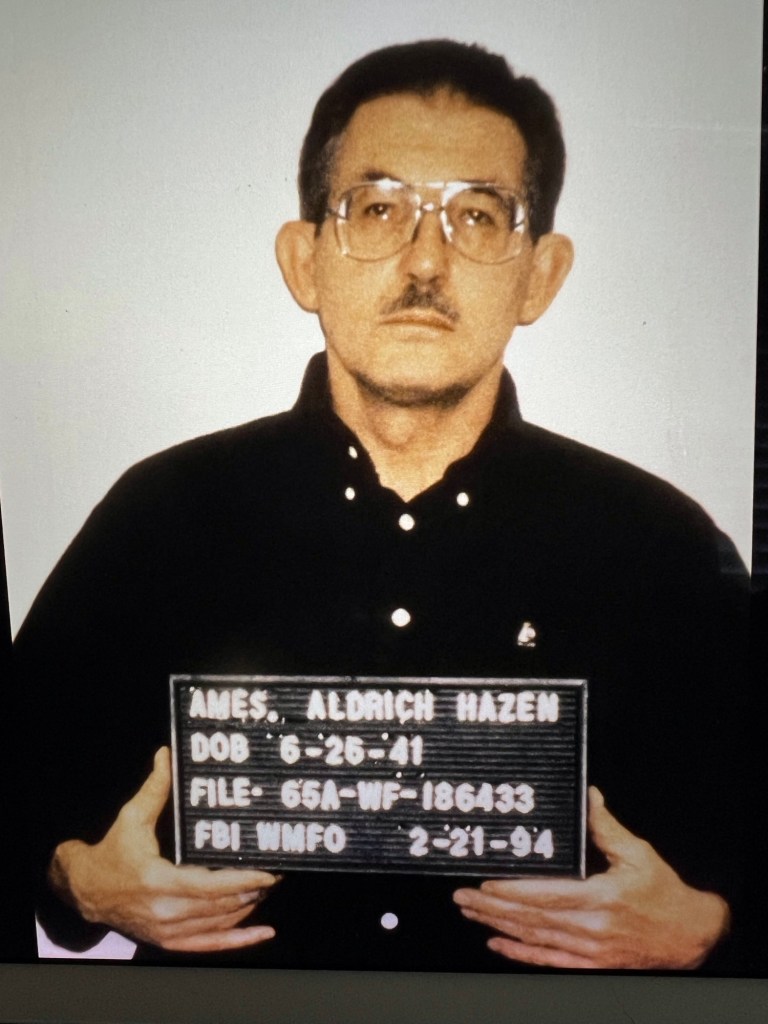
Only half listening, I suddenly heard a news flash about an American who had been arrested in a Washington, D.C. suburb on charges of spying for Russia. That man was Aldrich Ames, and he was said to work for the Central Intelligence Agency (CIA). This was not good news.
But, I thought, it wasn’t all that surprising. The spy games of the Cold War had never really ceased. And who was this Ames guy, anyway? Probably just some low-level pencil-pusher . . . right? Nothing to do with me.
Aldrich Ames’ Mug Shot
How wrong can you be?!!
It’s true that I had never met Ames . . . didn’t even know he existed before that news broadcast. But life is funny, for many reasons, one of them being this phenomenon known as the domino effect. Also sometimes referred to as “shit flows downstream.”
There is also a theory called “degrees of separation,” which posits that any one of us can trace our relationship to any other human being on Earth through no more than six degrees of separation. For example, if I have a friend whose nanny is the cousin of one of the British royal family’s nannies, then I’m only four or five degrees away from being connected to King Charles III.
Do you see where I’m going here? And in Washington, D.C., where everyone is somehow related to everyone else anyway . . . well, it’s easy to find yourself in the midst of a major shitstorm without having done anything wrong.
*. *. *
I have written at length, in this very blog, about my experiences in 1993-95 with the FBI, the CIA, the KGB, and a couple of high-level Russian defectors; there’s no need to go into the whole long, convoluted story again. Suffice it to say, that TV news flash — which didn’t seem to mean much to me at the time — eventually wove its way into my life.
It turned out that I was the person sitting way downstream when the shit began to flow.
*. *. *
Aldrich Ames was convicted of espionage and sentenced to life in prison without possibility of parole. Now 83 years old, he still sits in the Federal Correctional Institution at Terre Haute, Indiana, presumably just waiting to die. It’s where he belongs, having been responsible for the betrayal and deaths — executions, really — of an estimated 30 CIA assets between 1985 and 1994.
As for me . . . well, I’m still here, free as a bird, savoring my memories of those years of travel and adventure. I may have been at the bottom of the poop pile 31 years ago; but in the long run, I believe I got the better end of the deal.
When the world gets to be a bit too much . . . or it’s too cold to go outside . . . or you’re just feeling flat-out lazy . . . you have the option of doing this:
And today, it’s all three. So that’s it for me, for the rest of the day. See you tomorrow.
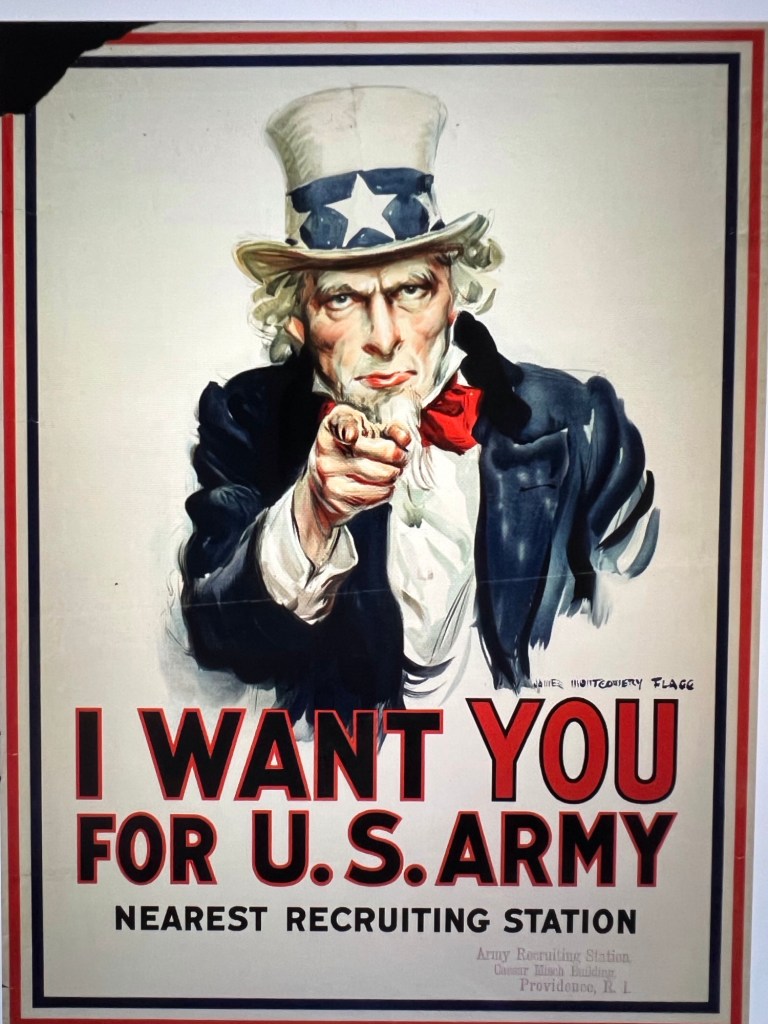
No, this is not “Uncle Sam Wants You” — that was 1940s America.
World War II Recruiting Poster
But apparently it’s also 2020s Russia . . . only it’s “Uncle Vladimir Wants You.” And “you” are any and all Westerners unhappy enough with your lives to buy into his snake-oil sales pitch.
In August of last year, Vladimir Putin established something called a temporary-residency visa, available to foreigners who oppose their native countries’ “destructive neoliberal ideological agenda,” and share “traditional Russian spiritual and moral values.” [Brett Forrest and Vera Bergengruen, Wall Street Journal, February 19, 2025.]
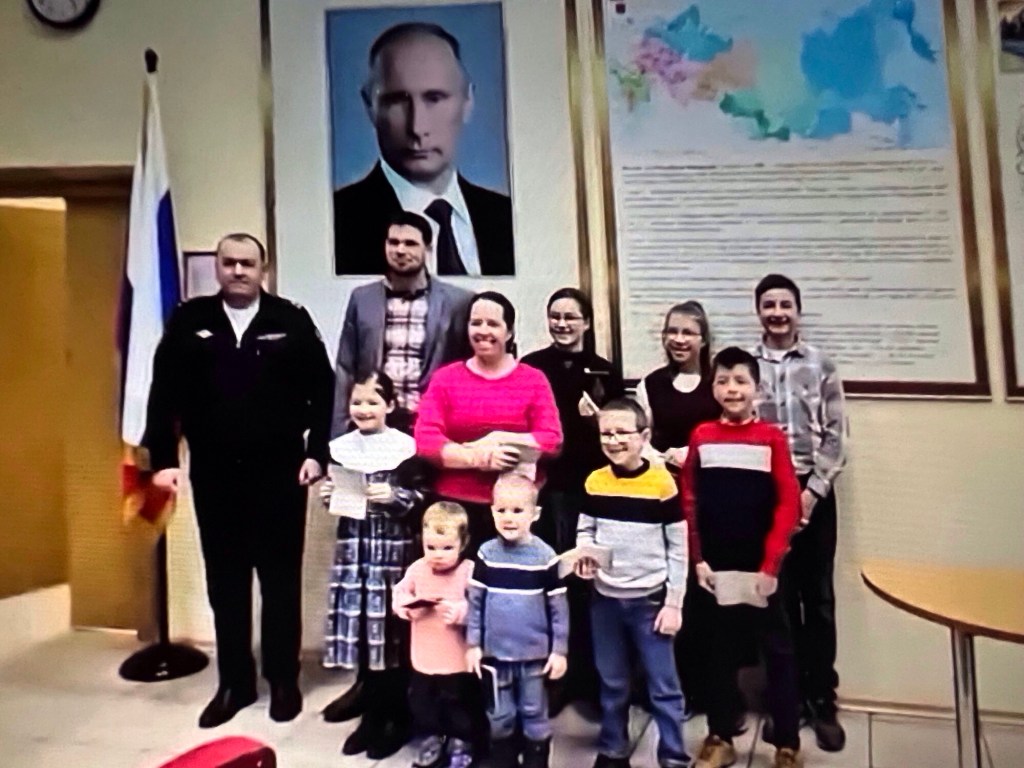
Well, that explains everything . . . everything about the Feenstra family from Canada, that is. All of my questions have now been answered — and my suspicions confirmed — as to their seemingly successful integration into Russian society, their relatively easy movement through the mass of red tape involved in becoming legal residents, their apparent financial comfort, and their popularity on social media.
The Feenstra Family, Receiving their “temporary residency” certifications
In their YouTube broadcasts, they have made frequent mention of an agency in their region of Nizhny Novgorod that has been of invaluable assistance to them in navigating the Russian bureaucratic obstacle course. And they have been outspoken in their desire to welcome more and more families such as theirs to the Russian “promised land.”
What was not mentioned was the breadth of the scope of Putin’s effort to increase Russia’s population — while at the same time giving himself yet another opportunity to stick it to the West. According to official (meaning, unreliable) Russian statistics, temporary residency has been granted to nearly 5,000 Westerners since the beginning of 2022. [Id.]
Russian Propaganda Poster in Italy: “Russia is NOT our enemy”
A new “Welcome to Russia” office has been established to make the transitions easier, and to publicize the emigration of the Western families. And — as a final “nyah, nyah” to the U.S. — the program is headed by member of Parliament Maria Butina . . . who, before returning home for a career in politics, was convicted in U.S. Federal Court in 2018 of acting as an unregistered foreign agent and sentenced to 18 months in prison (a far cry from the sentences handed down in Russia to foreigners convicted of similar charges).
Maria Butina
Another transplant — this one from Florida in the U.S. — is Joseph Rose. He moved to Moscow with his wife and their four children in 2022, and also broadcasts on YouTube. He has recently said:
“There is a place in this world where you can live traditional family values, like your best vision of 1950s America. That place exists right now, and it’s here in Russia.” [Id.]
Unbelievable!
Now, I can certainly understand why some people might, in these more liberal times, be searching for a place to live quietly, where they can adhere to their “traditional spiritual and moral values.” And it’s not unreasonable for them to be willing to move considerable distances to find that perfect place. If that’s the life that makes them happy, then more power to them; I hope they find their peace and joy.
But why would they ever think that Russia would be that place? Don’t they read? Have they not bothered to study a bit about Russia’s centuries-old history of autocracy, oppression, serfdom, communism? Do they not know what Vladimir Putin really stands for? Can they not see that, after 30 short years of relative freedom and an attempt to build a democratic society and a market economy, Putin has taken the country into a 180-degree turn — not just to dictatorship — but to the added tyranny of oligarchy? Have they, in their fear of “wokeness,” become deaf and blind to the truth?
It appears so. And that includes the Feenstras.
But what of the future? When, inevitably, the newness wears off, and Putin abandons them to get by as best they can without his special favors; and when their sons begin receiving military conscription notices; and when the world loses interest in their YouTube channel . . . what then?
*. *. *
In light of the number of emigres who have supposedly come to Russia in the past three years, I ask myself what makes the Feenstras so special that they have become the face of Putin’s “Welcome to Russia” program. And I believe it can be traced back to their arrival in Moscow just over a year ago, when they found their newly-opened bank account frozen, and the farm they had been promised to be non-existent. At that point, stunned and frightened, they took to mass media and told the world of their predicament, sparing no details.
And immediately, things changed. Their account was unfrozen; they were found shelter and ultimately a nice piece of farmland; and everything seemed to fall miraculously into place. And they thanked God for looking after them.
But Vladimir Putin does not like negative publicity. And I hope that Arend and Anneesa Feenstra are aware of the fact that their adopted president also has a long memory, and that their earlier tactic — going public — isn’t going to work twice.
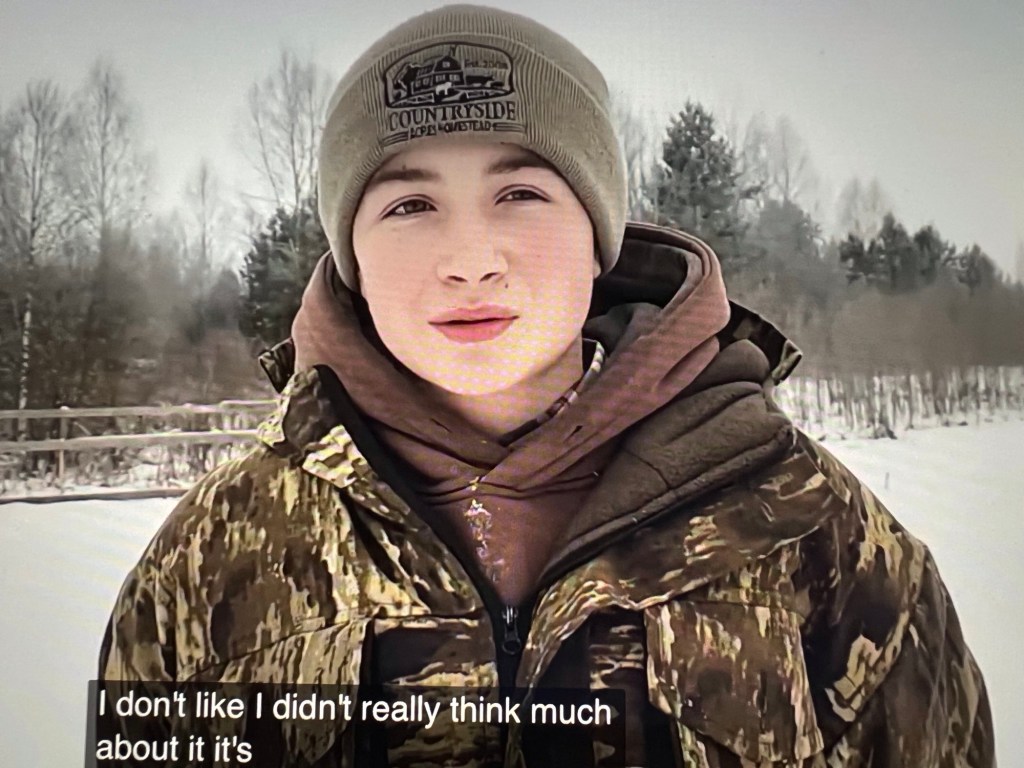
First it was the eldest daughter, Cora, talking to the camera. And now it’s 15-year-old son Wesley — a slightly shy yet delightfully personable young man — starring in that Russian social media hit, “Countryside Acres.”
Wesley Feenstra
It took the form of an interview, with Wesley and the unseen interviewer standing outdoors in the cold Russian February. At first I thought it might have been Cora asking the questions, as sort of a family-fun type of entertainment. The interviewer was female, and spoke perfect English, so it may indeed have been Cora — or even their mother, Anneesa. If that was made clear at the beginning of the video, I’m afraid I missed it.
In any event, the questions were obviously pre-prepared, and Wesley seemed to anticipate them, as his responses were not generally hesitant. He was first asked how he liked Russia, to which he said he liked it “pretty well.” He went on to say that the people were “a bit kinder” than in Canada, and that there seemed to be more opportunity in Russia because there are a lot of things that “can be improved” and that “people here haven’t found yet.”
That struck me as either a naively honest answer, or a scripted come-on for prospective emigres who might be having trouble finding work in their own countries. You know: “Come to Russia, the land of opportunity. We have lots of work, because we’re somewhat behind the times and need people to help us catch up.”
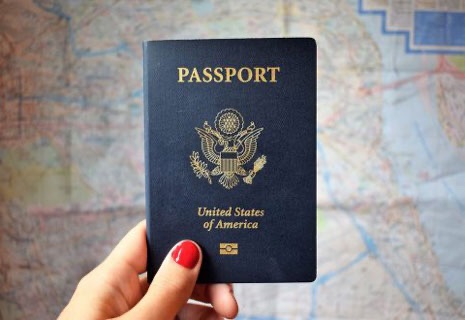
Well, I can tell you right now where they need help: Public relations. Because that sales pitch does not make me want to pack my bags and renew my passport.
Anyway, the interviewer then asked him what he missed about Canada. And for the first time, I heard one of the Feenstras mention the son/brother left behind in Canada. Wesley said — without going into detail — that he missed his brother and his grandparents. He also mentioned a cousin, and said it made him sad to think he might never again be able to visit them in Canada.
And tools; he misses tools. In Canada, they had all the tools they needed, he said; but here in Russia . . . not so much.
Brother, grandparents, cousin, and tools. This young man has his priorities straight.
Does he have any friends in Russia? Uh . . . not so many, apparently. After thinking for a moment, he said there were two in Nizhny Novgorod, and of course, there is his family. The interviewer then prompted him about some old people in the villages, and he remembered that yes, he likes to visit with them. Again, there was no clarification of who these senior citizens are or what connection he might have with them; but I do recall Cora mentioning something similar in her earlier broadcast.
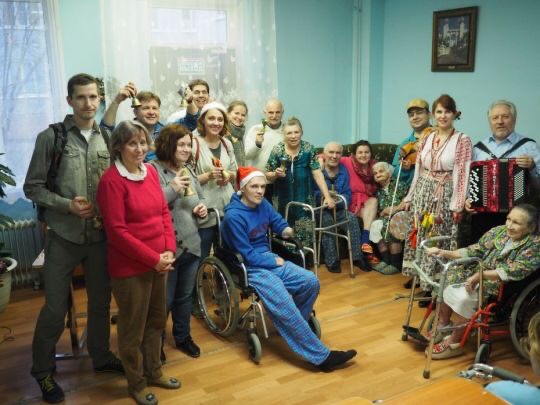
Community service, perhaps — helping out at the old folks’ home? I haven’t a clue.
Visiting a Russian Senior Citizens’ Home
When asked about plans for the future, most teenaged boys would talk about a chosen field of study or career path — engineer, musician, horse whisperer, whatever. But not our Wesley. Emulating his dad, he said he wants to get married and have a family, and to be a farmer and carpenter. But first he would hope to go to college, or to do “something important.” And he would “save up” to be able to buy his own farm. Nothing wrong with any of those ambitions, though he might want to narrow it down a bit.
There were some rather mundane inquiries about such things as his favorite food (Georgian khachapuri — a delicious sort of cheese pizza, sometimes topped with an egg); his least favorite thing (studying, as he would rather be active than seated at a desk); activities (swimming, driving the tractor, carpentry); and learning Russian (he understands it pretty well, but finds it difficult to speak).
Khachapuri
And then came a return to the big question: the one about missing his home in Canada. He started with a straightforward enlargement of his earlier comment, saying that he was sad to know he would never live there (not just visit) again. But then — as though suddenly remembering the correct answer to a test question — he smiled and said that he thinks of life in Russia as an exciting adventure.
But that wasn’t good enough for the interviewer, who continued to goad him, asking again and again if he missed Canada. He finally said that, while he does miss his relatives, he “prefers it here,” and “feels better” about the move after having lived there for a year.
Is he happy about the family’s having cleared the first hurdle toward eventual citizenship?
Well, of course he is. Was there ever any doubt?
*. *. *
And as the sun set on beautiful Countryside Acres Farm in idyllic Nizhny Novgorod, Russia, Wesley Feenstra was free to rejoin his family indoors, having given his premier performance as a shill for Vladimir Putin’s “Come To Russia” campaign.
Forget about democracy, republicanism, autocracy, communism, fascism, monarchy, socialism, despotism, dictatorship, monocracy, tsarism . . . all of the “isms” and other names given to governments throughout the ages. The year 2025 may well go down in history as having given birth to the first new governmental model in centuries:
TRUMPUTINISM
In reality a hybrid of several of the earlier appellations, its uniqueness lies in the fact that it has evolved from the formerly opposing doctrines of two adversarial countries — the United States and the Soviet Union . . . oops, sorry . . . Russia.
In our fable, the current leaders of those two great lands have cannily realized the advantages to themselves of burying the hostilities of the past and joining forces.
Under the umbrella of Trumputinism, they can easily conquer the remainder of the militarily weaker world. There is, after all, enough wealth to share — even for two greedy, narcissistic, power-mad individuals such as themselves. And for several years, they might even rule happily together in their new empire of Mar-a-Moscow.
Well . . . mostly happily, anyway.
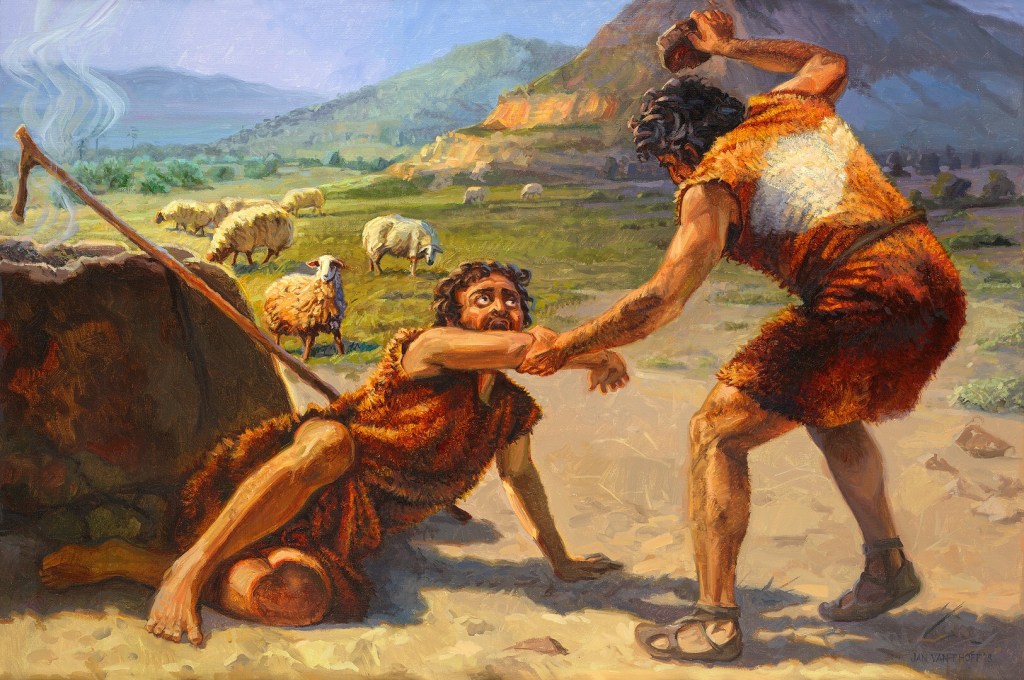
That is, until one fateful day, when one of the co-emperors happens to recall a biblical story of two brothers named Cain and Abel, has an epiphany, and . . .
And the rest, as they say, becomes history repeating itself.
If it weren’t so flagrantly, so outrageously, so egregiously untrue . . . so disgustingly low, so ugly, so . . . so . . . so . . . unAmerican! . . . and if I weren’t so totally sober . . . it would almost be comical.
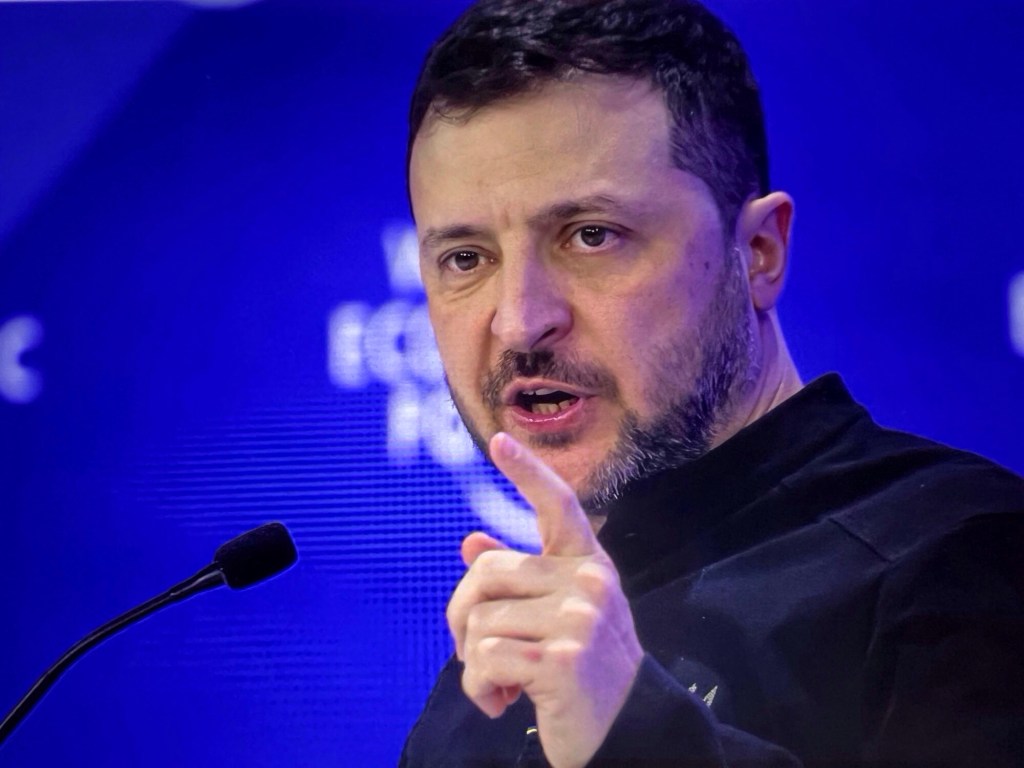
I’m talking about the autocrat in the White House calling Ukrainian President Volodymyr Zelensky — the man who has fought so heroically for three years to keep his country from being swallowed whole by Russian marauders — a “dictator.”
Volodymyr Zelensky: A Man of the People
Surely, he was looking in the mirror when that word escaped his lips.
Emperor Trump
In the end, history will reveal without question who was the dictator and who was the true hero. I just hope I’m still around to see the final reckoning.




















 The Blog About Everything … and Sometimes Nothing