2/26/25: First, My Condolences . . .

To begin with, let me assure you that I don’t think there is anything funny about a person dying in midair on a Qatar Airways flight from Melbourne, Australia, to Doha, Qatar. And in no way do I mean to make light of the woman’s misfortune, or her family’s loss. But what followed her collapse — the way the situation was handled — and the unsuspecting passenger who . . . well, that’s a whole other story.

And that is where . . . I’m sorry, really, but I just can’t stop laughing . . . the whole episode becomes so . . . oh my God! . . . I keep imagining myself in this poor man’s place, and . . . no, sorry, but I just can’t help it.

Okay . . . under control now.

*. *. *

I’ve never flown on Qatar Air, so I can’t speak from personal experience. But I’ve never heard anything negative about it, and I’d guess that Mitchell Ring and Jennifer Colin hadn’t either, or they might have booked on Qantas instead. But whatever the reason for their choice, there they were — en route to their ultimate destination of Venice, Italy, via Doha, for their dream vacation — when this lady’s life came to a sudden end, with some four hours of flying time left before they were to reach Doha. [Maia Davies, BBC News, February 26, 2025.]

Now, the unnamed woman — let’s call her Mary — certainly did not choose to collapse in the aisle next to Mitchell and Jennifer; that is just where her life happened to come to an end. The crew is said to have done their best to revive her, but to no avail. Her time had simply run out.


Airlines have protocols for dealing with all sorts of emergencies, of course . . . including sudden deaths. But there were extra problems in Mary’s case. Apparently, she was a very large woman. Add to that the fact that she was now, quite literally, dead weight, and moving her proved next to impossible. In fact, Mitchell later said in an interview on Current Affair that “they couldn’t get her through the aisle.” [Id.]

It seems they were trying to move her toward business class . . . I guess you get an automatic upgrade if you die on a Qatar Air flight. That’s a nice thought . . . though I can only imagine how the passengers who had paid for business class seats would have felt. But never mind; they were unable to get her there in any event.

Somehow, while all of this was going on, Mitchell’s travel companion, Jennifer, had been moved to another seat. I’m not sure whether she had to climb over Mary’s rather sizable body, or if she was air-lifted by the crew; but in any case, she was out of the line of fire.

It’s also not clear why they didn’t ask Mitchell to move as well, since there were other empty seats. Frankly, I think Mitch and Jen (I feel I know them pretty well by this time) should have been the ones upgraded to business class; but that is now a moot point.

Anyway, Mitch says they asked him, “Can you move over please?” and, having no idea what their plan was, he replied, “Yes, no problem.” My guess is that he thought they just wanted him to be out of the way in case Mary fell over as they were trying to lift her.

But . . . no. What they wanted was his seat, because then, in Mitchell’s own words, “they placed the lady in the chair I was in.” And poor Mitch — having accommodatingly moved over — found himself seated next to Mary’s corpse. Fortunately, someone had thought to cover her with blankets. [Id.]
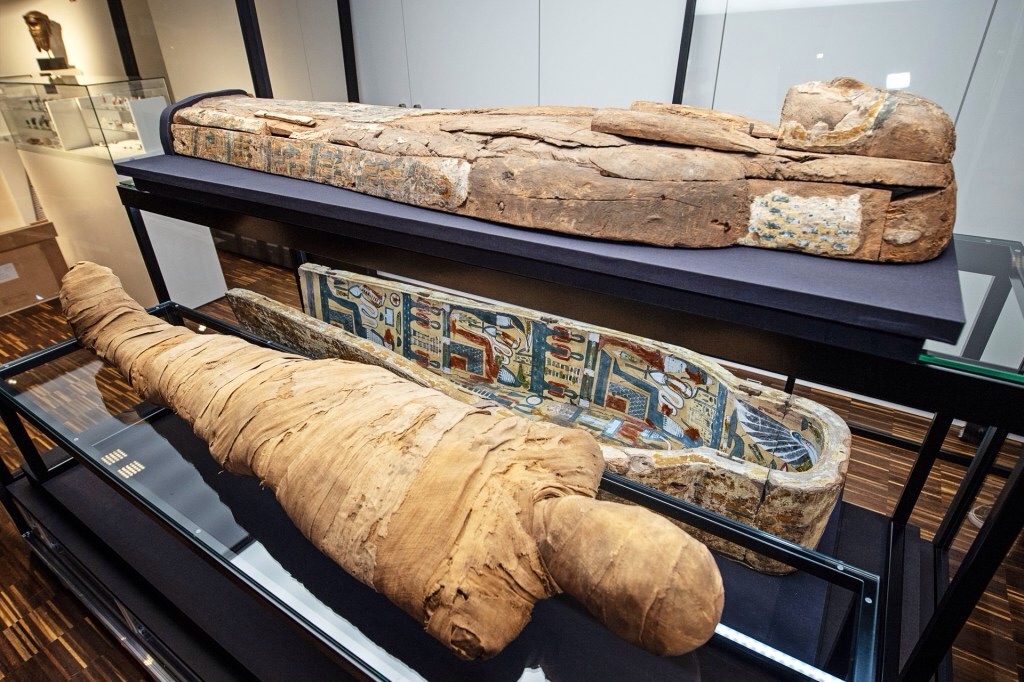

Well, probably not that well-wrapped . . . but covered.

Now, here is where the story gets a little fuzzy. The report doesn’t mention whether Mitch and Jen were in a row of two seats or three across. Presumably, Mitch, when asked to move over, had to move away from the aisle and into a window seat. Since Jen had been relocated, either Mitch moved into Jen’s vacated seat and Mary took Mitch’s place, or (if three seats across) the crew then plopped Mary’s oversized corpse into the two seats previously occupied by the once happy couple. Either way, Mitch and Jen were now separated and couldn’t even hold each other’s hands in consolation. And Mitch was totally, impenetrably blocked in by an unmoving, unmovable cadaver.

So, there sat Mitch with Mary, obviously in silence, for the duration of the flight. And when the plane landed in Doha four hours later, the already difficult situation inexplicably got even worse. The passengers were instructed to stay in their seats while the medical staff and police came on board . . . as though Mitch would have been able to get out in any event, being blocked in by Mount Mary.

And when the ambulance staff arrived, they immediately pulled the blankets off of the blissfully-unaware Mary, thus exposing her dead face to the world . . . and, most closely, to Mitch.


*. *. *

Now, by this time you’re probably wondering why I find this tragedy to be so hilarious. There are actually a couple of reasons. One is that I have an innately twisted sense of humor. Always have. Can’t help it.

The second reason is that, when I mentally put myself in Mitch’s place, the bizarre way in which the situation was handled just becomes more and more like a slapstick comedy routine. I mean, think about it . . .

First, if Mary was too large to be moved through the aisle to business class, how was she managing to maneuver from her seat(s) to wherever she was headed? Presumably, the only place she had to go would be to the rest room. And — again, I’ve never flown Qatar Air so I don’t know —but would she even have fit into the notoriously cramped airline facilities? The mental images conjured up by my fevered brain at this point are not something I want to be forever stuck in my mind.

Second, Mitch had also indicated there were other empty seats in their section. When they moved Jen, why didn’t they also move Mitch out of the way? Could they not lift him over the obstruction then lying in the aisle? Wasn’t that gender discrimination?

So I have this picture of the hapless Mitch looking on as he is hemmed in by Mary for four hours. What if he had had to use the rest room? Were the crew able to serve him a meal, snack, beverages . . . maybe oxygen . . . during the remainder of the flight? And if they had, would he even have felt like eating . . . or breathing? Did they even think to toss him a couple of bottles of booze from the mini-bar?

And when they finally landed and the medics uncovered Mary’s body — likely already in the early stages of rigor mortis — did Mitch just sit there and stare out the window, or did he watch the proceedings in grisly fascination?

I mean . . . what the hell were these people thinking??!!!!


*. *. *

I have seen dead people. (No, not like the movie — I don’t have visitations from spirits.) But I have attended far too many funerals with open caskets, and I have had to say goodbye to my mother and sister. In fact, when I was just eight years old, my great-grandmother died while I was sitting by her bed holding her hand. I don’t freak out. So the idea of being on a plane — an enclosed space — with a recently-deceased person, while sad, would not have been overly traumatic for me.

But would I have chosen dead Mary as my seat mate for four long hours? Uh . . . nope. I’m not squeamish; but I’m also not ghoulish. I might, however, in a mischievous moment, have tried interacting with her . . . just to see the reactions of the other passengers, and hopefully to lighten the general atmosphere a bit:

“Hey, Mary, are you feeling any better? Were you on vacation? Seen any good movies lately? You didn’t have Covid, did you?”
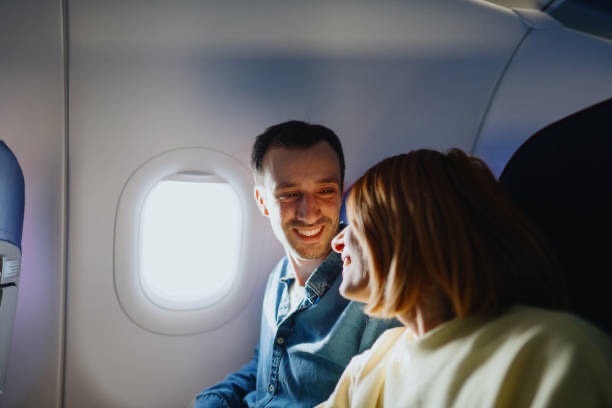

But everyone is different. Mitch, who sounds far more reasonable than I, apparently found this incident traumatic, telling Current Affair:

“We should be contacted to make sure, do you need some support, do you need some counselling [sic]? We totally understand that we can’t hold the airline responsible for the poor lady’s death, but there has to be a protocol to look after the customers on board.” [Id.]

And he makes a good point. So, I have a few suggestions for the folks at Qatar Airlines.
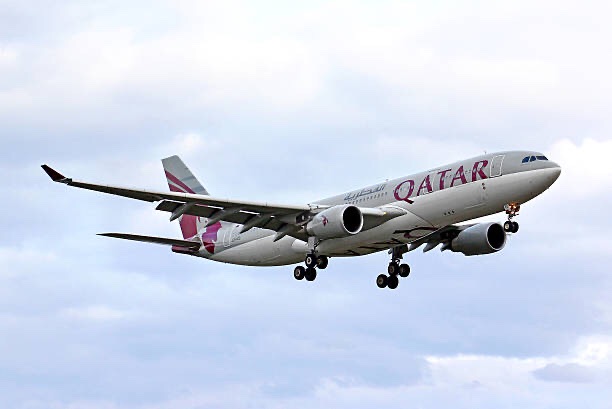

First, perhaps you could seat all extra-large passengers next to the rest rooms, so they don’t have to block the aisle on their way to use the facilities. (It’s not body-shaming . . . just common sense.) And maybe they could be instructed to remain in their seats and not walk about for any other reason, just in case. Of course, there will be an immediate reaction from all of those people who are so hung up on political correctness and equal rights; but I presume you have a Legal Department to deal with that.

Second, when relocating a corpse on a flight, you might want to check with the adjacent person or people before assuming they can deal with being in such close proximity. I mean . . . really?!!

Third, in the event — as in Mary’s case — you might have an obstruction in the aisle (human or otherwise) that is too large and too heavy to move, perhaps you could keep some sort of portable ramp onboard . . . Nah, forget that one. The flight attendants would never be able to get the service carts over it without losing a few ice cubes.

And finally, let’s remember that Mary was dead. She was in no hurry to meet the emergency medical crew. Maybe it would have been better to off-load the passengers first — even to a holding area where the police could conduct any necessary interviews — before exposing her to all and sundry.

I’m sure Mitch would have found some way to get out of his seat.


Just sayin’ . . .

Brendochka
2/26/25

2/26/25: So Tell Us How You Really Feel


Why do I keep saying I’m going to take a day off to do absolutely nothing? I know it’s not going to happen.

This lasted for about an hour

Today’s restus interruptus was not actually breaking news . . . for which I am very grateful, because that kind of news is almost always bad. But I happened to see a video (yes, I did peek at my phone once or twice) of on-the-street interviews by a reporter from RadioFreeEurope/RadioLiberty (RFE/RL) with people in three cities in northwestern Russia: Moscow, Pskov and Vologda. The question they were being asked was what they thought about the war in Ukraine . . . or, in Kremlin-speak, Putin’s “special military operation” . . . and the answers, while guarded, were revealing of the propaganda they’re being fed by state-run media.

I took some screen shots showing the English translations of their comments to share with you. So, without further ado, I present to you . . . improvisational Russia.

THE PEACEMAKERS FROM PSKOV:

*. *. *

THE MOSCOW OPTIMISTS:

*. *. *

THE MOSCOW WARRIOR (WITH A FUTURE AS A STAND-UP COMIC)

*. *. *

AND TO SUM IT UP, THE WISE MAN FROM VOLOGDA:


*. *. *

And I can’t think of a single thing to add to that.


Just sayin’ . . .

Brendochka
2/26/25

2/25/25: Well, There Goes One Ally!

Since the defeat of Hitler’s Nazi regime, Germany has rebuilt itself, becoming one of the world’s great industrial, economic and political powers, and one of America’s staunchest allies. Indeed — when the horrors of World War II were still fresh in everyone’s memories, the U.S. aided in Germany’s renewal by including it as one of the principal beneficiaries of the Marshall Plan. Without Hitler, we could become friends again.

Until now, anyway.

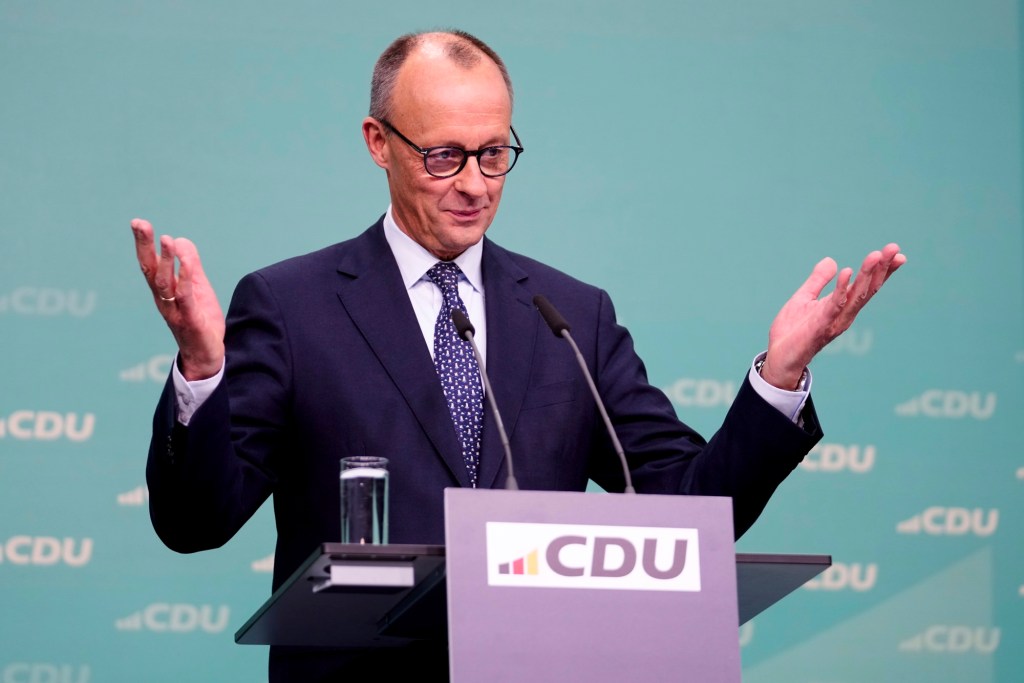
German Chancellor-elect Friedrich Merz

In the wake of the chaos being created by the new administration in Washington, Germany has also seen a shift to the right following its recent election with the emergence of Friedrich Merz’s conservative, center-right CDU/CSU as the majority party in the Bundestag, having won 28.5% of the vote.

An additional concern — and not a small one — is the second-place win of 20.8% of the vote by the far-right, pro-Russian AfD (“Alternative for Germany”) party, which will factor heavily into Merz’s efforts to form his coalition government.

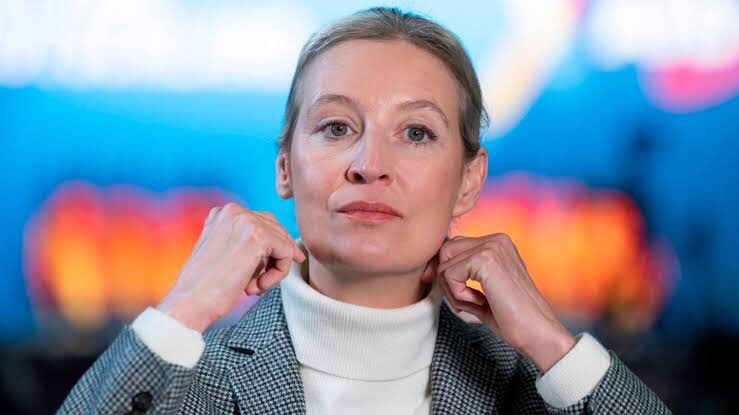
Alice Weidel

AfD is headed by 46-year-old Alice Weidel, a former Goldman Sachs analyst who holds degrees in economics and business administration, and a doctorate in international development. The party is vocally Eurosceptic, and opposes immigration into Germany — especially of Muslims. Germany’s domestic intelligence agency has labelled the party as a “suspected extremist organization.”

*. *. *

Even setting aside AfD’s potential influence, Friedrich Merz — much like Donald Trump — has begun his term as Chancellor with a bang. But it is Trump himself who is the cause of Merz’s turn away from ardent Atlanticism to a more “Europe first” stance. During a post-election debate on Sunday, his comments included this:

“I would never have thought that I would have to say something like this in a TV show but, after Donald Trump’s remarks last week … it is clear that this government does not care much about the fate of Europe. My absolute priority will be to strengthen Europe as quickly as possible so that, step by step, we can really achieve independence from the USA.” [Katya Adler, BBC, February 24, 2025.]

Europe is stunned by Trump’s stated intention to demolish the security guarantees that have existed between the European nations and the United States for the past 80 years, leaving their continent feeling, at the very least, exposed and insecure. Talks have already begun in the direction of forming an independent European defense capability . . . post haste.

Donald Trump may still be living in a world where the United States, because of its geographical separation from Europe on one side and Asia on the other, did not personally suffer the horrors of two world wars. But if so, it’s a dream world.


Europe has never had any such illusions (or, more accurately, delusions). Without the strength of the U.S. in NATO, they would be far more vulnerable to the empirical designs of Vladimir Putin. And Germany is dealing with specific concerns over what will happen to the 35,000 American military troops stationed there . . . particularly in light of Trump’s intended downsizing of the entire U.S. military.

Not to mention his undisguised renewal of his earlier friendship with Putin . . . a whole other nightmare scenario.


*. *. *

Chancellor Merz is not the first European leader to have expressed dismay at the stunning news coming out of Washington these days; and he won’t be the last. But their countries have each other, and they will band together in their own defense.

Who will the United States have when no one else wants anything to do with us? Canada? Mexico? Trump has already alienated them.With the current assault on our own government agencies and systems, we will be too weak to stand alone.

Isolationism in the 21st century is an impossibility. And Donald Trump needs to face that fact before it’s too late.

It’s a world gone mad.


Just sayin’ . . .

Brendochka
2/25/25
2/25/25: Whatever You Do . . . Do Not Feed the Cassowary


I call him Cassius, because . . . well, because he looks as though he might be plotting Caesar’s murder.

Gaius Cassius Cassowary

All right . . . enough Shakespeare, enough Cassius and Brutus and stabbing in the Forum. This is about the star of tonight’s show.

I just happened across an article about “the only animal Australians are afraid of” . . . and it turns out to be a bird. Granted, a very large bird, with a fearsome beak, terrifying horns, and talons that will not just scare the crap out of you . . . they’ll rip it out.

Now, from everything I’ve read, and heard from people who have been fortunate enough to visit Down Under, Australians are a hardy lot. They have to be, because they share their beautiful country with some very exotic — and really frightening — wildlife, including every kind of poisonous snake and spider known to mankind (that last one being my personal worst nightmare) . . . and, as though that weren’t enough, they’ve even made up a fictitious creature they call the Drop Bear.

Someone’s Rendering of a Drop Bear

But the one they’re said to be most afraid of is today’s subject: the cassowary. Like its better-known cousins, the emu and ostrich, the cassowary is flightless; but don’t ever try to outrun it, because it can clock up to 30 miles an hour on foot.

They tend to prefer life in the deep rainforest, away from humans (and who can blame them for that?). They’re very family-oriented: like penguins, the females lay the eggs and then leave the rest up to dad; the males incubate the eggs and raise the hatched chicks. I rather like that idea.

Itty-Bitty Cassowaries

They’re frugivores — the animal kingdom’s equivalent of the human “fruitarian” — consuming dozens of fruits each day and then pooping out the seeds, which then scatter and regrow. So they’re very good for the Australian ecosystem. But they’re not above grabbing a burger if you happen to have stopped by McDonald’s on the way to the forest.

Don’t let the cuteness of the chicks fool you, either; they will grow up to be just as dangerous as their parents, but apparently only if they feel threatened . . . or hungry. According to Peter Rowles, founder of the Community for Coastal & Cassowary Conservation (C4, for short), “Many more cassowaries die from humans than humans die from cassowaries.” [Lilit Marcus, CNN, February 24, 2025.]

A 2001 Journal of Zoology study said that humans offering food to cassowaries accounted for 75% of the dangerous encounters between man and bird. “The feeding of cassowaries appears to change their natural behavior, making them bold and aggressive,” according to author Christopher P. Kofron. He added that “in the single fatal attack, the victim was trying to kill the cassowary.” [Id.]

Clearly a case of self-defense. That’s at least somewhat comforting, don’t you agree?


Oh . . . apparently you don’t! Well, okay, then.

*. *. *

One of the world’s largest birds, the cassowary looks like a leftover from a prehistoric age. It’s as tall as a person, has glossy black feathers and piercing eyes, walks (and runs) on two feet, can weigh up to 140 pounds, and has a large, dagger-like claw on each foot.

Andrew Mack spent five years studying the cassowaries in the wild in Papua New Guinea. He says, “There’s just something primeval about them. They look like living dinosaurs.” [Id.]

Next Stop: Jurassic Park

So if you happen to be strolling through the Australian rainforest one day and run across one of Big Bird’s ancient kin, what do you do? Peter Rowles’ advice is this:

“If you encounter a cassowary in the wild, first thing is put your hands behind your back. Be as boring as you can be, so you’re not attracting that cassowary’s attention. Move behind a tree. Just blend into the environment. Don’t scream and yell and wave your arms around. If you’ve got food in your hand, put it in your pocket, put it behind you, put it out of sight. It’s better to do that and be boring than to be seen as a potential source of more food.” [Id.]

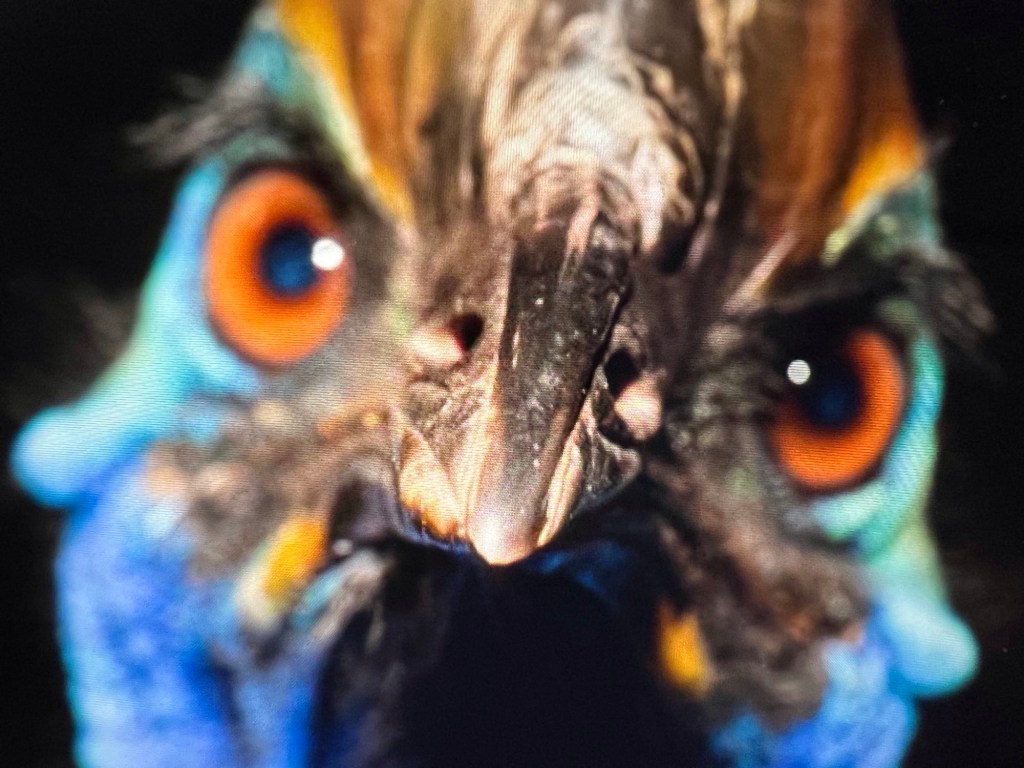
Uh . . . yeah. Good advice. However, I tend to be more the run-around-screaming-and-waving-my-arms sort when suddenly confronted by something that looks like this . . .


. . . and isn’t in a cage in a zoo. So maybe I’ll just stay out of the rainforest, if that’s all right.

*. *. *

While boning up on this extraordinary creature, however, I began thinking of the late, great Ogden Nash and what he would have made of our friend Cassius; and I suddenly had an urge to break into verse (of a sort). I could never hope to compete with his brilliant wit, but here’s what came to my mind in the wee hours of the morning:

If you encounter a cassowary,
You’ll see that it looks very scary.
Its beak is long, its talons deadly,
Its disposition . . . not so friendly.


So my advice, and you should try it,
Is hide behind a tree, be quiet;
Don’t run around or shout or squeal,
Or you might be that bird’s next meal.


See? I told you I was no Ogden Nash. But be honest . . . it took your mind off the daily news for a few minutes, didn’t it?

And these days, that is a very good thing.


Just sayin’ . . .

Brendochka
2/25/25


2/24/25: BRICS is Dead; Long Live BRICS


“Dead,” you say? I hardly think so.

Poster for BRICS 2025 Summit in Brasilia, Brazil

But Donald Trump said so, and therefore it must be true . . . right?

Nah. What he said last week — after threatening the BRICS member nations with 150% tariffs if they attempted to promote an alternative currency to the U.S. dollar — was this:

“BRICS states were trying to destroy our dollar. They wanted to create a new currency. So when I came in, the first thing I said was any BRICS state that even mentions the destruction of the dollar will be charged a 150% tariff, and we don’t want your goods and the BRICS states just broke up. . . . I don’t know what the hell happened to them. We haven’t heard from the BRICS states lately.” [NDTV.com, February 21, 2022.]

It’s difficult to separate the truth from the imaginary in anything said by someone who can’t remember his own words. Because in January, Trump had threatened — not 150% — but a 100% tariff if the BRICS nations wanted to “play games.” [NDTV.com, February 14, 2022.] At a press briefing at that time, he was asked whether he wanted to dismantle BRICS or become a part of it, to which he responded:

“I don’t care, but BRICS was put there for a bad purpose and most of those people don’t want it. They don’t even want to talk about it now. They’re afraid to ask about it because I told them if they want to play games with the dollar, then they’re going to be hit with a 100 per cent tariff. The day they mention that they want to do it and they will come back and say we beg you, we beg you not to do this. BRICS is dead since I mentioned that. BRICS died the minute I mentioned that and know I remember when Obama and Biden, in particular, I guess he said that oh, they have us over a barrel.” [Id.] [Bold emphasis is mine.]


I just want to know one thing: What on earth has Donald Trump been smoking?!! Because there is not one phrase in all of that gobbledegook that makes an ounce of sense.

To begin with, BRICS is neither dead nor dying. If they were, would they have added five new members — Egypt, Ethiopia, Indonesia, Iran and the United Arab Emirates — since last year, doubling their size? And would they have added a new membership category — “Partner States” — in 2024 to accommodate the integration of prospective members?

Those Partner States are effectively observers, not yet officially part of the BRICS bloc, but guaranteed of support from the full members. Thus far, some 22 countries have been invited to become Partner States. Only three — Algeria, Turkiye and Vietnam — had not yet confirmed their status as of mid-January.

BRICS 2024 Summit (Indonesia had not yet become a member)

And if, as Trump would like to believe, BRICS were indeed finished, would they even now be busily planning their 2025 Summit in July, to be hosted in Brazil?

*. *. *

To be sure, Donald Trump is not wrong in considering BRICS a threat to U.S. supremacy — in fact, to the entire structure of the Western world. It was founded by Vladimir Putin in 2009 for the sole purpose of building an organization strong enough to run counter to NATO, the EU, the G7, and — who knows? — possibly even the United Nations.

But if Trump thinks throwing tariffs at the member states is going to cause them to put their chairs back on the table and slink home in defeat, he is living in an alternate reality.

Because, with Vladimir Putin at the helm, it isn’t going to be that easy.


Just sayin’ . . .

Brendochka
2/24/25

2/23/25: It Was a Very Good Day

According to the History Channel’s “This Day In History,” February 23rd has often been a good day for a variety of reasons. These are my personal faves:


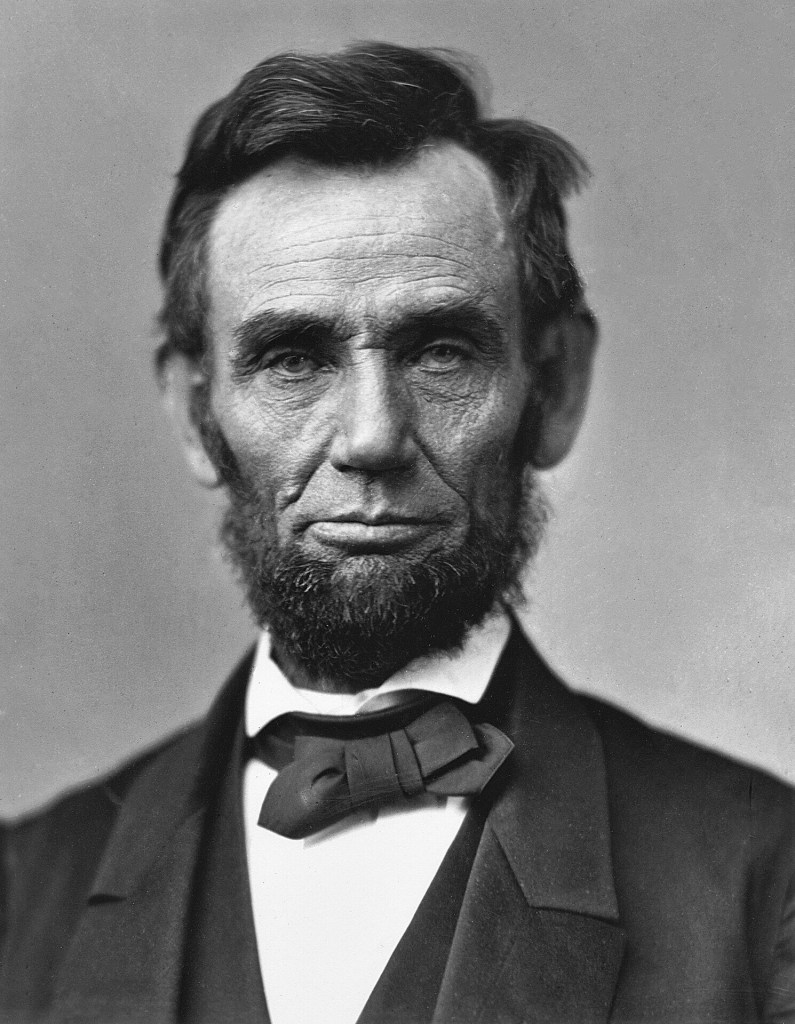
February 23, 1861: Abraham Lincoln arrives in Washington, D.C. And not a moment too soon. Southern states were seceding from the Union; civil war was imminent. Lincoln, about to be inaugurated as President on March 4th, was under threat of assassination and had to sneak into Washington protected by a cadre of Pinkerton security guards. The country needed a leader who could see them through the hard times ahead, and for once, Fate delivered the right person at the right moment.

A man of the people — born in poverty, self-educated, he studied history and the law before entering politics. He knew the value of hard work, he was scrupulously honest, and he loved his country. He didn’t live in a gilded palace, whining because he wasn’t universally loved. Instead, he visited nearby battlefields, gave hope and strength to his troops at Gettysburg, and freed a race of downtrodden people from the oppression of slavery.

The day that Abraham Lincoln arrived safely in Washington was a very good day indeed.

“Honest Abe”

*. *. *

February 23, 1940: Woody Guthrie writes “This Land Is Your Land.” Born in Oklahoma in 1912, Guthrie was a troubadour who chose a life of traveling around the American West, where he chronicled the lives of ordinary, hard-working Americans. He left home at the age of 15, traveled by freight train, found employment as a migrant farm worker, and lived among other migrants and hobos. Eventually arriving in California, he began his musical career on local radio shows, but continued to perform among the homeless victims of the Great Depression.

Woody Guthrie was not a scholar or a politician; he never became president, and didn’t bring an end to war. But he created music that expressed his love of America and the American people — music that continues to inspires us some 85 years later.

We could use more Woody Guthries in our lives today.


*. *. *

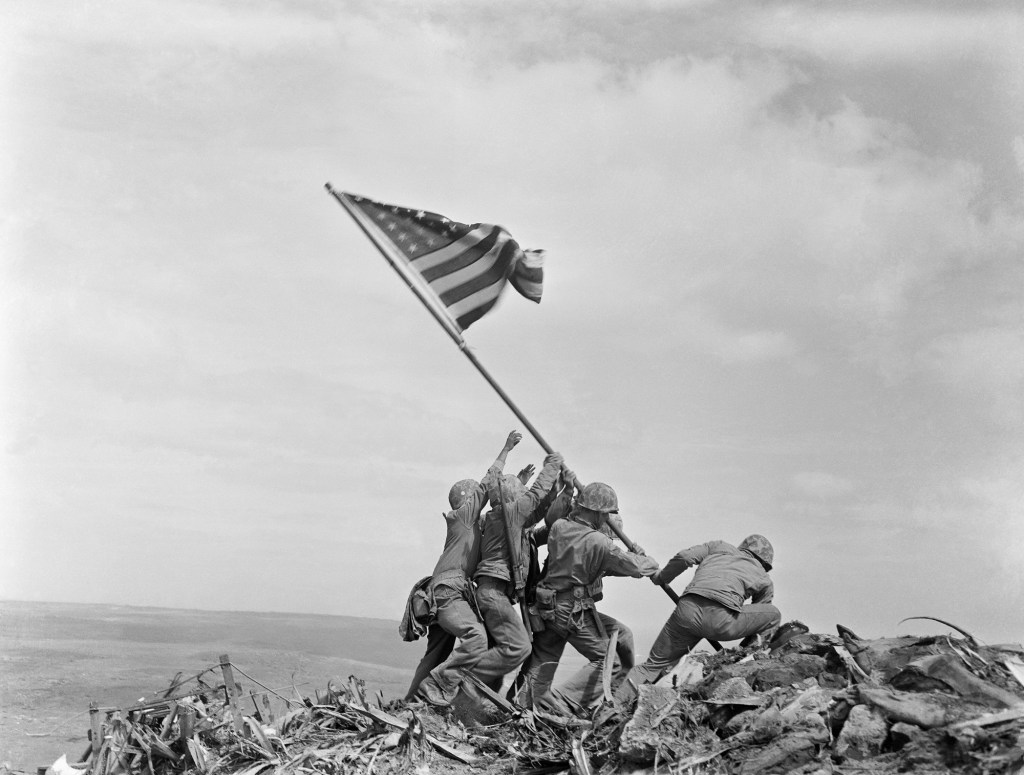
February 23, 1945: U.S. flag raised on Iwo Jima. World War II was struggling toward its end, but the battle for the Pacific was still raging when U.S. Marines on Iwo Jima finally took the island’s most strategic position — Mount Suribachi — and raised the American flag on its crest. Associated Press photographer Joe Rosenthal was there to record the event, and one of the three pictures he took became the most reproduced photograph in history and the inspiration for the Iwo Jima Memorial that now stands in Arlington, Virginia, just across the Potomac River from the nation’s capital.

One cannot look at that statue without feeling the indomitable spirit of the fighting men and women who brought, not only the United States, but the entire free world through those hellish years of global war. It was love of country and unity that carried the troops up Mount Suribachi that day, and to ultimate victory over the tyranny of Adolph Hitler and Emperor Hirohito.

And on this February 23, 2025, we can only hope that the same spirit will carry us through the hard times ahead.

Iwo Jima – February 23, 1945

*. *. *

February 23, 1954: Children receive first polio vaccine. I remember the years of my childhood, when we kids weren’t allowed to go to the movies, to a swimming pool, or anywhere there might be crowds of people in the summertime, because it was “polio season.” And when the development of an anti-polio vaccine by Dr. Jonas Salk was announced to the world, our mother made sure we were first in line for our shots.

There were no anti-vaxxers in those days . . . no nay-sayers, no snake-oil salesmen promoting the ingestion of cleaning fluid to fight off a virus, no one saying medical research was a waste of government money. Instead, people cheered each and every advance in preventive medicine . . . and millions of lives were saved.

How fortunate that Dr. Salk was around in 1954. Would that he were still here in 2025.

Dr. Jonas Salk (1914-1995)

*. *. *

Those were four great days from the dim, distant past — days worth reliving, if only in memory.

But today isn’t over yet, at least in my part of the world. Maybe this February 23rd will still bring us some good news.

Ya think?


Just sayin’ . . .

Brendochka
2/23/25

2/23/25: Putin’s Hostages: Bring Them Home, Week 59 — No News Is Just No News

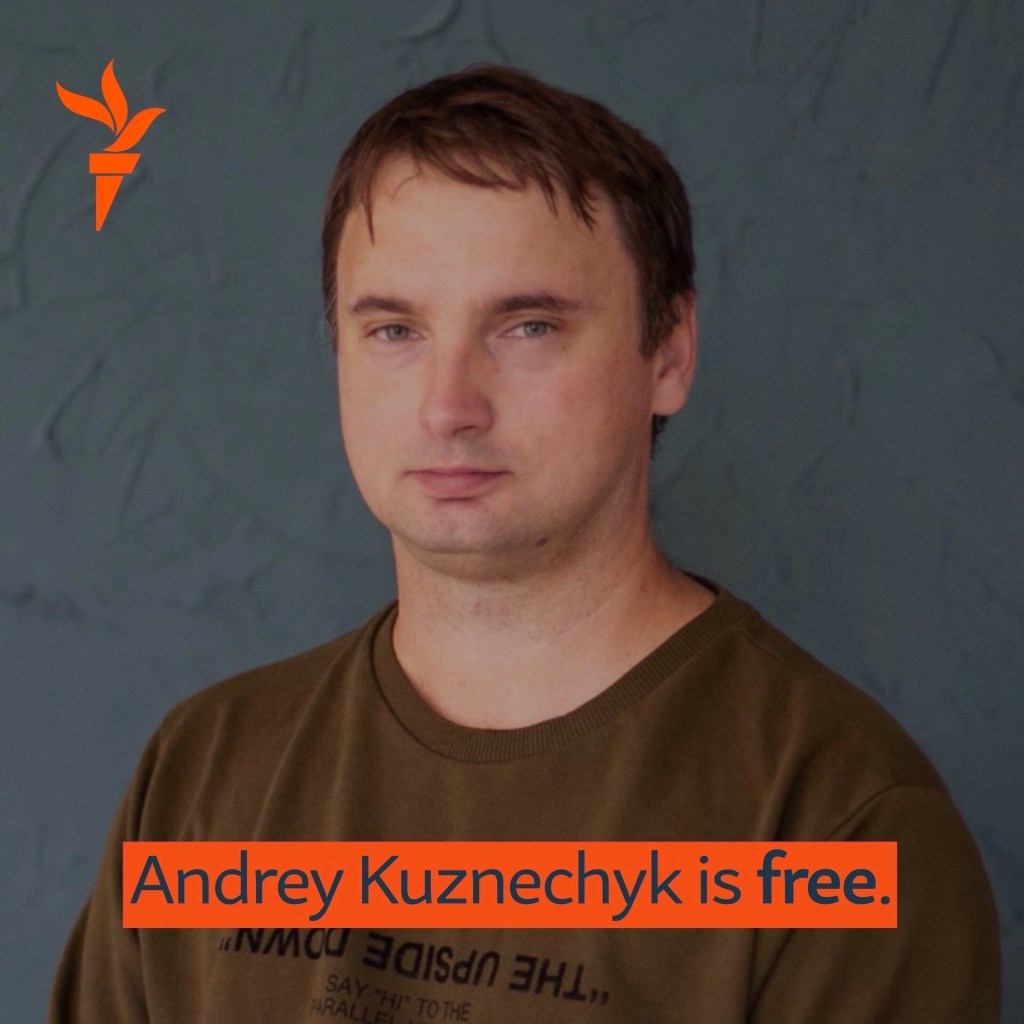
Last week we were happy to report that American Marc Fogel and Belarusian journalist Andrey Kuznechyk had both been released by Vladimir Putin and returned home.

Andrey Kuznechyk
Marc Fogel

The not-so-good news is that this week has brought no further releases. On the other hand, there has been no word of new hostages having been taken, which is always a relief.

Now we need to continue working on bringing back those remaining in prison:

*. *. *

David Barnes
Ales Bialiatski (in Belarus)
Gordon Black
Andrei Chapiuk (in Belarus)
Robert Gilman
Stephen James Hubbard
Ksenia Karelina
Ihar Karney (in Belarus)
Vadim Kobzev
Uladzimir Labkovich (in Belarus)
Michael Travis Leake
Aleksei Liptser
Ihar Losik (in Belarus)
Daniel Martindale
Farid Mehralizada (in Azerbaijan)
Marfa Rabkova (in Belarus)
Igor Sergunin
Dmitry Shatresov
Robert Shonov
Eugene Spector
Valiantsin Stafanovic (in Belarus)
Siarhei Tsikhanouski (in Belarus)
Laurent Vinatier
Robert Romanov Woodland
Vladislav Yesypenko (in Crimea)
Yuras Zyankovich (in Belarus)

*. *. *

And again, in the hope that he may actually see it one day, I reiterate my message to Donald Trump:

“Amidst all of the hubbub of your new administration, it is imperative that these innocent men and women not be forgotten. Negotiations for their safe release have been underway for some time. President Joe Biden succeeded in bringing home 16 innocent people on August 1st of last year, and you have added two others to that list. But you should be trying to do even more. Whatever else you do, this should be high on your list of priorities. The people you promised to represent are counting on you.”

Just sayin’ . . .

Brendochka
2/23/25

2/23/25: Be Careful … You’re Judged by the Company You Keep

My grandmother used to say that. Of course, she was thinking in terms of the narrow confines of our town in 1940s Rhode Island . . . and usually about the kurva (use your imagination) who lived just down the street and had to pass our house on her way to church.

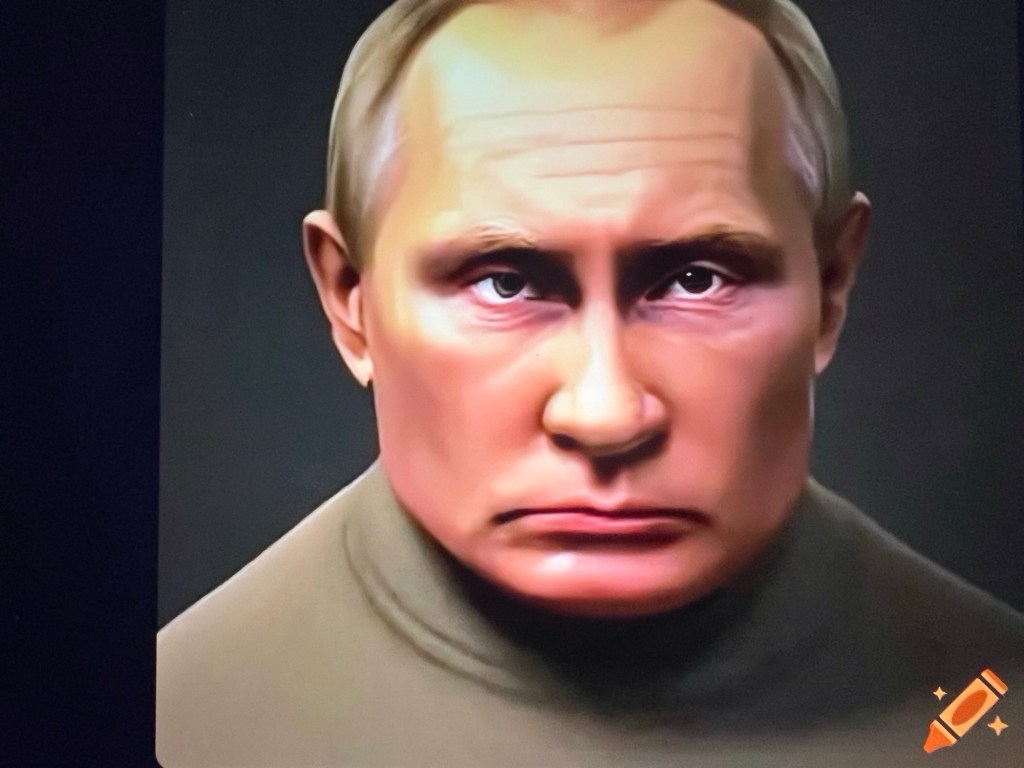
I, on the other hand, am referring to someone much more widely known . . . someone who holds complete power in his own country, and seems to have a terrifying influence over the current occupant of the White House. This guy:

An Angry You-Know-Who (AI internet picture)

So, while this missive should be addressed to the man in the Oval Office as a caution to beware of his Russian counterpart, I know he’ll never read it; and even if he did, it wouldn’t register, because it’s not what he wants to hear.

But some of the details, since they are intentionally not widely publicized by the Kremlin, might be of interest to the casual reader. So here are a few tidbits to add to what you already know.

*. *. *

There’s nothing secretive about what Vladimir Putin is: what he has done, and continues to do, in Ukraine; about the journalists and dissidents he has arrested and imprisoned in recent years; or about the deaths of the more well-known of his victims, including Alexei Navalny and Yevgeny Prigozhin. But did you know about . . .

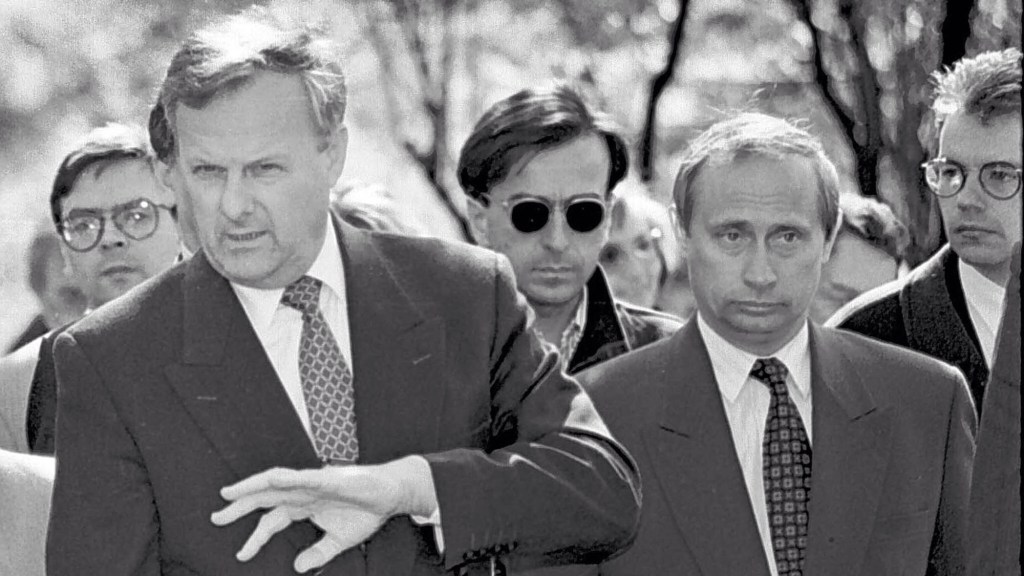
The Early Years. Originally a young hoodlum from St. Petersburg (formerly Leningrad), Putin grew up to become a Lieutenant Colonel in the KGB. He was stationed in East Germany when, in 1991, the Soviet Union was suddenly declared kaput. Returning to his home town, he aligned himself with the then mayor of the city, Anatoly Sobchak, a popular liberal of the day. Putin became Sobchak’s fixer, his procurer of goods, services, and information . . . a latter-day Fagin, if you will.

Anatoly Sobchak (L), accompanied by Vladimir Putin

When Yeltsin, then President of Russia, realized that Sobchak was somehow able to acquire things that were still scarce in Moscow and elsewhere, he asked Sobchak why. Learning that it was due to a wily fellow named Putin, Yeltsin snatched Putin away from St. Petersburg and brought him to Moscow. And the rest . . . well, you know . . . history.

Incidentally, Sobchak died in February of 2000 at the age of just 62 years . . . officially of a heart attack, though the opinions of two medical experts were contradictory.

*. *. *

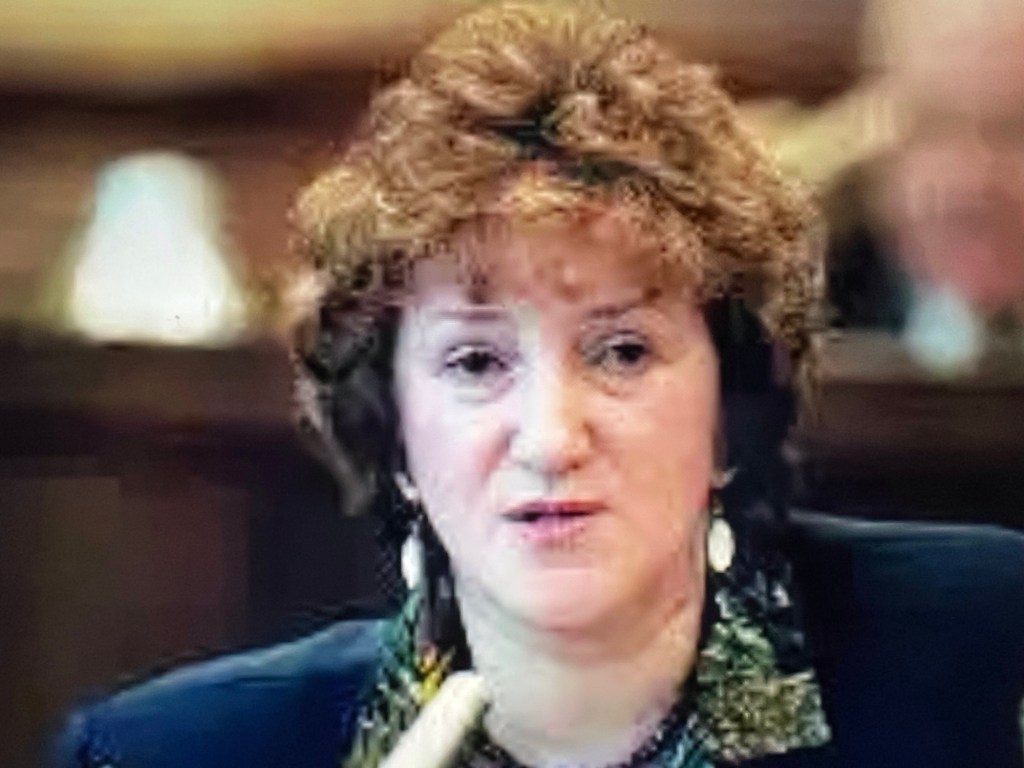
Galina Starovoitova. A former Soviet dissident, she carried on her campaign against corruption in the Russian government and society after the breakup of the Soviet Union by becoming a member of Parliament. She lobbied for legislation to keep former secret intelligence (i.e., KGB) agents out of politics, which would have prevented Vladimir Putin — then an up-and-coming member of the Yeltsin administration — from eventually becoming president. It was, of course, Boris Yeltsin himself who had brought Putin to Moscow from St. Petersburg, and who — on the recommendation of oligarch (now deceased) Boris Berezovsky — had since appointed Putin head of the FSB, a successor agency to the KGB.

Galina Sarovoitova

But Starovoitova’s campaign failed . . . and so did her heart, when she was shot to death in the hallway of her St. Petersburg apartment building in 1998.

The following year, at the end of 1999, Putin — by then having been elevated to the position of Prime Minister of Russia — was handed the interim presidency when Yeltsin resigned. He then stood for election in March of 2000 and won handily . . . as he has done in every election since then by simply amending the Russian Constitution to extend the term limitations provision as needed.

Had Starovoitova’s legislation been passed, that would not have been possible. Her death was a political necessity.

*. *. *

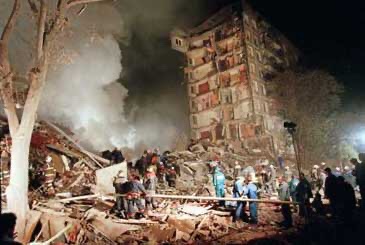
Moscow Apartment Bombings and Theater Hostage Crisis. In 1999, as Vladimir Putin was preparing to run for the presidency, a series of bombings — the largest being in Moscow — took place in three locations in Russia, killing some 300 people and injuring an estimated 1,000 others. The incidents were immediately labeled as terrorist acts, blamed on Chechen rebels, and were all the impetus needed by Putin to stage his second war on Chechnya. He stepped forward to declare his “war on terrorism,” at the moment when the people of Russia were frightened and needed a strong leader. Coincidence . . . right?

Moscow Apartment Bombing – 1999

In 2002, more than 900 audience members were taken hostage in the Dubrovka Theater in Moscow . . . this time by actual Chechen rebels in retribution for Putin’s barbaric invasion of their region. In order to free the hostages without giving the terrorists the opportunity to activate the explosives they were carrying, the FSB (successor to the KGB) security troops filled the theater with an anesthetic gas 1,000 times more potent than ricin. When the anesthetized hostages were removed from the theater to be revived, between 130 and 174 of them were dead . . . along with every one of the Chechen rebels.

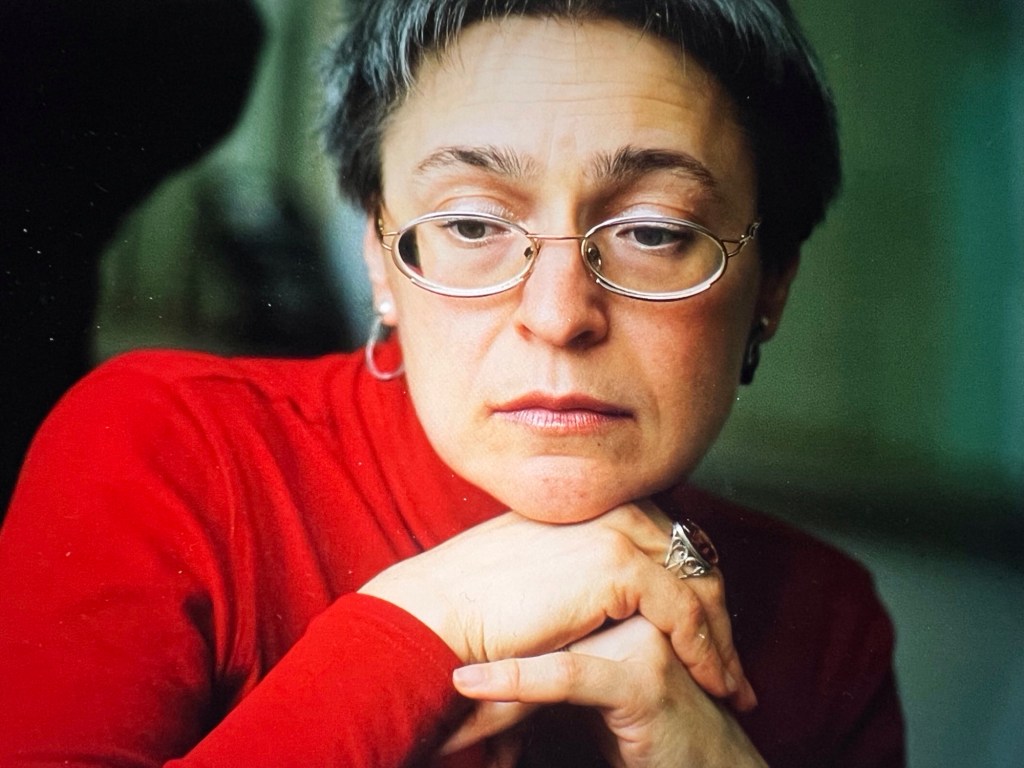
Dead men don’t talk. In order to silence the hostage-takers, all 900 of the hostages’ lives had been placed in danger . . . at the direct orders of Vladimir Putin. Of the six people who attempted to investigate the incident, three died in strange circumstances. One was Anna Politkovskaya. A fearlessly outspoken journalist who dared to oppose the Putin regime, she continued to report on the horrific situation in Chechnya. She too was shot to death . . . ironically, on Vladimir Putin’s birthday in 2006.

Anna Politkovskaya

*. *. *

And the list goes on and on: Boris Nemtsov, Alexei Navalny, Aleksandr Litvinenko, Boris Berezovsky . . . all dead, as well as the attempted murders of Sergei Skripal and his daughter, the exile of Mikhail Khodorkovsky, and countless others. All on the orders of the man in the Kremlin.

The man whom Donald Trump has chosen to rehabilitate at the expense of America’s European allies.

The same Donald Trump who once bragged:

“I could stand in the middle of Fifth Avenue and shoot somebody, and I wouldn’t lose any voters, OK?”


Just sayin’ . . .

Brendochka
2/23/25

2/22/25: Forty-five Years Ago Today

Yes, I’ve been digging back through the history files again, and I see that it was on this date in 1980 that the U.S. Olympic hockey team — comprised of college players and considered the obvious underdogs in the match against the four-time gold-medalist Soviet team — performed the now-famous “Miracle On Ice” at Lake Placid, New York.

Against all odds, the Americans beat the pants off the Russians in a nail-biting game that ended 4-3 for the Yanks. And the world went nuts.

Victory at Lake Placid

In the interest of full disclosure, as always, I admit that I am not a hockey fan. In fact, I’m not much of a sports fan at all, though I do enjoy watching some of the individual sports — particularly gymnastics, skating, swimming and diving. But all in all, I’d rather see a good play or musical.

So why does this event bring back such a clear memory? Actually, it’s because of what happened the following Monday, February 25th, when I was back at work in the law offices of Surrey, Karasik & Morse in Washington.

For those of you who haven’t been following me regularly, allow me to explain, as briefly as possible, that I was working as assistant to the senior partner of the firm, Walter Sterling Surrey, a man of exceptional accomplishments, incredible mental acuity, an unpredictable temper, unflagging loyalty . . . and a sense of humor that knew no bounds and gave no quarter to anyone.

Walter Sterling Surrey (1915-1989)

The firm’s practice consisted in large part of the representation of major corporations in connection with international commercial transactions throughout the world’s six inhabited continents. (For some reason, the penguins on Antarctica never saw the need to retain our services.) And a number of Walter’s clients had business dealings in both China and the Soviet Union, which necessitated maintaining contacts with the commercial attaches in both of their embassies.

On the day in question — Monday, February 25th — it happened that “our man” in the Soviet Embassy, Valentin, was scheduled to meet with Walter in our offices to discuss a possible transaction between one of the firm’s clients and the relevant Soviet Ministry (all business was conducted with the Soviet government in those days).

Valentin was the first “real” Russian I had ever met, and he was nothing like the blustering, threatening image I had previously had of Soviet officials. Instead, he was quiet, well-spoken, obviously intelligent, pleasant, and always helpful to Walter in navigating the Soviet bureaucracy. We knew we couldn’t trust him; but we liked him.

That Monday, the chatter in the office — as in much of the rest of the country — was all about the big hockey win the previous Friday. And when Valentin arrived, and I went to escort him from the reception area to Walter’s office, Beelzebub suddenly took control of my brain and my tongue, as he so often did.

As we shook hands and said good morning, I asked Valentin — as I did with all visitors:

“May I offer you something: Coffee? Tea? Hockey puck?”


Holy Mother of God! What had I done?!!

One would think that, at the very least, I had just lost the best job I’d ever had . . . or, at worst, started World War III. But, though the devil may have been in charge of my tongue that day, an angel was obviously sitting on my shoulder. Because Valentin laughed. And I laughed. And we kept laughing, all the way down the hall to Walter’s office.

Later, when the meeting was over and Valentin had left the office, Walter of course had to know what had been so funny. And when I told him, he too roared with laughter. It was just the sort of thing he would have said . . . which is what saved my skin, and my job, that day.

*. *. *

Recalling this small incident today has brought on a sudden wave of nostalgia for what I call my “Walter years.” The ten years that we worked together were, for me, years of learning, of growing, and of being an integral part of the excitement of the ‘80s. Walter was my boss, my mentor, my friend . . . and a father figure, not only to me, but to all of “his people.”

He was, in his earlier years at the State Department, the chief legal draftsman of both the Marshall Plan and the NATO Treaty. He worked, mostly behind the scenes, with Richard Nixon and Henry Kissinger to reopen commercial relations with China in the ‘70s. And he never met anyone he couldn’t converse with, from heads of state to taxi drivers. But he never bragged of his accomplishments. He didn’t need to; you just knew, when you met him, that he was someone special.

I could write a book about those ten years. And who knows? . . . maybe I will.


Just sayin’ . . .

Brendochka
2/22/25