You may have noticed that I write a lot about Russia: my past travels there in the late 1980s and early 90s, her history, her culture, the beauty of her varied landscapes and cityscapes, and the warmth of her ordinary people.
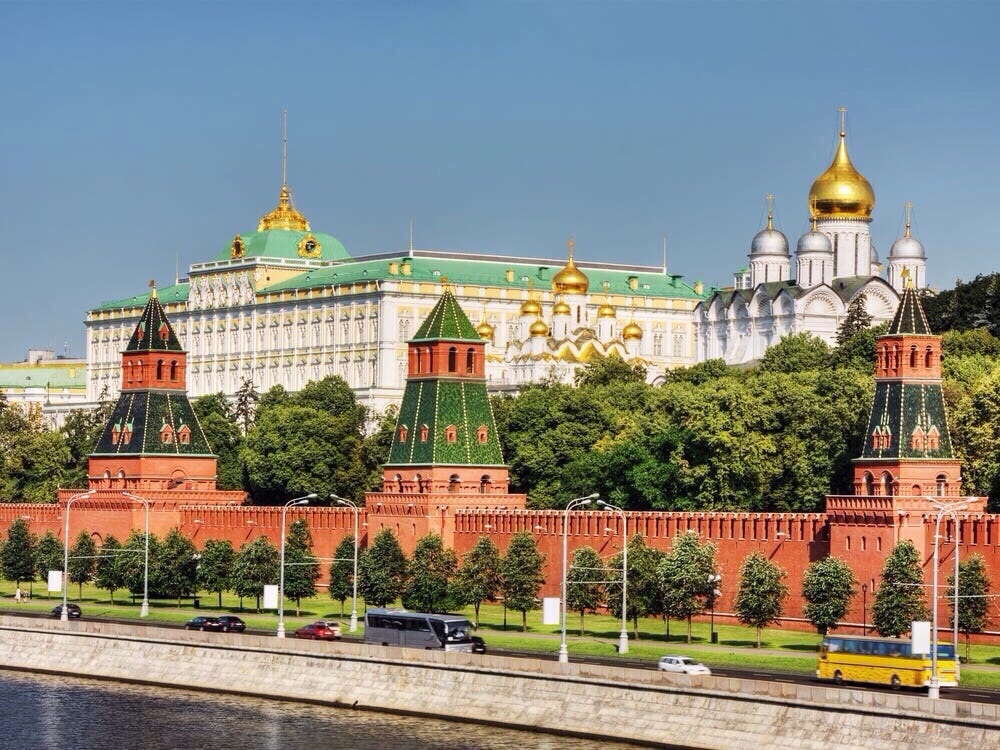
The Moscow Kremlin
Mostly, though, I write about Russian politics, and the murderous, totalitarian regime of Vladimir Putin.
I hold nothing back in calling out Putin and his minions — Lavrov, Medvedev, Shoigu, Patrushev, Dugin, Naryshkin, and all the others — for their undisguised crimes against humanity, both in their own country and what they call “the near abroad” . . . those areas once part of the Soviet Union . . .
. . . for the blatant lies, and twisting the truth to deflect blame onto everyone but themselves . . .
. . . and most of all, for the decimation of the sovereign nation of Ukraine, on the specious excuse that it “belongs” — according to their reimagined version of history — to Russia.
Putin and Company
I hold no illusions as to Putin’s future expansionist agenda; his maniacal compulsion to destroy Western dominance and replace it with an alliance of his own creation; or his manipulation of a pitifully naive Donald Trump in order to achieve those goals.
And I freely express my outrage at his imprisonment of political opponents, journalists and others — both Russian and foreign — to be held as pawns in his political chess games.
I hold these viewpoints, and claim the absolute right to express them, because I am an American. As such, I enjoy the freedom of expression, freedom of choice, freedom of . . .
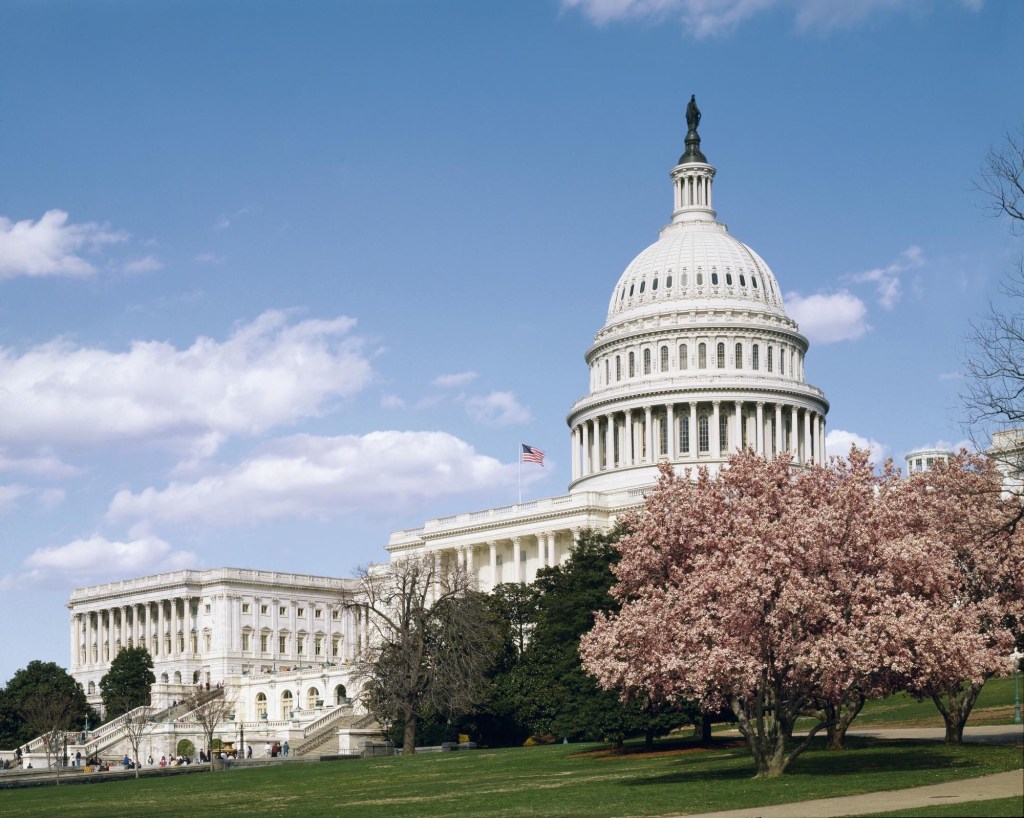
The U.S. Capitol, Washington
But wait a minute. That has always been the case, from the day I was born until . . . let’s see now . . . two months and eight days ago. Until the world began spinning out of control, and millions of Americans, myself included, suddenly realized that those rights and freedoms and blessings of which we have always been so proud and so grateful had begun to erode . . . not gradually, bit-by-bit, but seemingly all at once, practically overnight.
And I awoke this morning, after a vaguely disturbing dream the details of which I can no longer recall, to the horrible reality that my country is no longer the land of the free, where every individual has the same precious rights under the law as every other individual . . . and, more frighteningly, that there is absolutely nothing I can do about it.
Because I am one small, insignificant person — not wealthy, not famous, not influential. I voted, as I do in every election; but my vote wasn’t sufficient. All I can do now is speak out, and hope that enough voices will join mine in a chorus that will be heard.
In the meantime, I have asked myself whether, in good conscience, I now have the right to criticize the people of another country — Russia — for “putting up with” the autocracy that has been forced upon them, when I am in precisely the same situation . . . when the person sitting at the head of my government is engaging in the same sort of lying, manipulative, threatening, illegal, ham-fisted control over the people and the institutions of the United States as Vladimir Putin wields over the Russian people?
Is that not the pot calling the kettle black?
*. *. *
After much soul-searching, I have decided that the answer is no . . . it’s not the same. Because I now realize that we are not, simply by reason of being Americans, superior to the people of Russia or any other country. Thomas Jefferson famously said, “The government you elect is the government you deserve.” And the evidence of his wisdom is clearly before us today.
We — a slim majority of Americans — elected Donald Trump, not just once, but a shocking second time. And we are watching him stack our most vital institutions with unqualified, inept, self-serving billionaires who have set about gleefully annihilating entire agencies, ignoring laws and targeting judges who dare try to enforce them, endangering our environment, weakening our economy, and destroying international relationships so carefully built and nurtured over decades, in order to join forces with the arch enemy of everything America has always stood for: Vladimir Putin.
*. *. *
So I continue to claim the right to speak out, as long as I also recognize that Vladimir Putin and Donald Trump are two sides of the same coin. The only difference is that Trump believes he is smarter than Putin . . . whereas Putin knows better.
And that realization has left me and all of my fellow Americans who didn’t vote for him (and more than a few who did) feeling, well . . .
I’m getting a little tired of regurgitating the daily menu of bad news, and making endless lists of the things that are wrong with the world. So — with your indulgence — I’m going to try a little self-administered therapy today: I’m going to concentrate on things for which I am most thankful. And not just the usual things, like family, friends and reasonably good health . . . but some things we don’t always think about. Such as:
The Kardashians. No, I haven’t flown over the cuckoo’s nest . . . I am not thankful for their presence, but for the fact that they are so seldom in the news lately . . . and that goes for Ye (the scumbag formerly known as Kanye West) as well. Oh, there are the pop-up ads for Kim’s line of sleazy-looking . . . what? . . . I guess you’d call them some kind of apparel. But I can just ignore those. So, all in all, I’m grateful.
*. *. *
And there’s much more that I’m thankful not to have to put up with any longer. For example, the constant presence of . . .
Justin Bieber. Same reason — he’s still out there, and I wish him only good things (and a better wardrobe). But he’s no longer front-page news every day, day after endless day, for doing nothing discernibly worthwhile. Grateful.
*. *. *
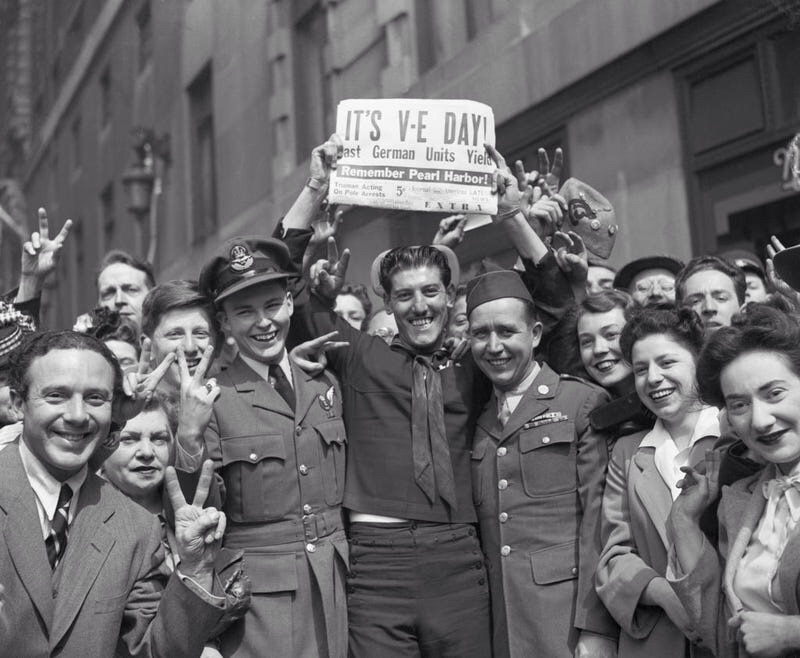
World War II. It’s been over for 80 years. Hallelujah! Let’s not reincarnate it, shall we? Then we can all express our gratitude.
*. *. *
Menopause. Been there, done that, survived it. Once was enough, thank you. Glad it’s over.
*. *. *
Jello molds. Remember those? They always remind me of a line from one of my favorite sitcoms, The Golden Girls, when feisty old Sophia says, “If God had wanted peaches suspended in mid-air, He would have filled them with helium.” I’m with you, Sophia.
*. *. *
Garter belts and girdles. Most uncomfortable things in the world. But we needed something to hold up our nylon stockings, until some genius invented panty hose.
*. *. *
Panty hose. They were an improvement, but still not perfect because they didn’t always fit every figure. And then there were the defective ones, like the pair I was wearing one day when I left the office to run an errand and on the way back I felt the hose slipping slowly down . . . down . . . down . . . until the waistband was below my abdomen and the crotch was somewhere in the vicinity of my knees. Luckily, I was wearing a raincoat and was able to put my hands into the pockets, grab onto the waistband of the hose through my clothes, and keep them from hitting the ground as I Geisha-walked back to the office, where I removed them in the ladies’ room. But I did not throw them away; I took them home, washed them out that night, and the next day mailed them to the manufacturer with a rather hilarious explanatory note. P.S. — I received an apology and three pairs of correctly-sized replacements. Very grateful I only wear slacks and jeans now, so no need for the panty hose . . . ever.
*. *. *
Beehive hairdos. I never had one, but I did have to look at them on other women. I always imagined them being full of things like insects and the unidentifiable stuff that’s always flying around in the air. Eeeew!
*. *. *
Typewriter ribbons and carbon paper. I did love the feel of the keys on the IBM Model B electric typewriter . . . but not so much the accoutrements (good word!) that went with it, like the messy ribbons that invariably got ink all over your hands, and likewise the carbon paper for the multiple copies you had to make before there were Xerox machines. And don’t forget the WhiteOut and erasers to correct your errors. I will say, my typing was much more accurate in those days — it had to be, in the ancient times before “Delete” keys and Spellcheck.
*. *. *
Come to think of it, the list of things we lived with in the past that have been superseded by something better is practically endless. But what’s new is not always an improvement. And if I were able to rid the world of just five things — not acts of nature, but manmade things that are within our control — it would be these:
Wars. Particularly the modern weaponry that allows us to slaughter thousands of people, hundreds of miles away, without ever having to put a human face on them.
*. *. *
Artificial Intelligence. Frankly, AI scares the crap out of me. The thought of all of those brilliant people out there, creating technology to replace human beings (themselves included), is incomprehensible to me, and thus terrifying.
*. *. *
Cilantro. Such a little thing, but I didn’t want to ask only for the big stuff. And it really does taste like soap.
*. *. *
Politics. All right, I know this isn’t realistic . . . in a world of 8.2 billion people, we need some form of government. But a girl can dream, can’t she? Barring this one, though, I’ll settle for doing away with . . .
*. *. *
The entire Trump administration. Actually, this should have been #1. Just send them back to their respective home states, and make them live on Social Security benefits.
Way, way, w-a-a-a-y back when I was a schoolgirl in New Hampshire, communication was simple. In some rural areas, you still placed phone calls through an operator employed by the telephone company; and you might even have a “party line” that you shared with another local family whom you may or may not have known. Our town was advanced: we had dial phones and private lines. But you could only talk to one other person at a time.
On one particular evening after dinner, I was on the phone with one of my classmates reviewing a homework assignment, when we suddenly heard two distinctly male voices overriding our conversation. We listened for a moment, then started calling out, “Hello? Hello? Who’s on this line?”
At first there was silence; then one of the two males responded: “Well, who are you?”
After a minute of back-and-forth, it turned out that they were two boys from our school. We introduced ourselves, had a good laugh and a nice chat, and chalked it up to “crossed wires.” I can’t explain the cause of the mix-up; it was a simple technical glitch — the sort that happened in those days.
It wasn’t the result of some idiot’s royal fuck-up of a classified, high-level, supposedly secure government “chat” concerning an imminent military aerial attack on an adversarial country.
“Holy shit!”
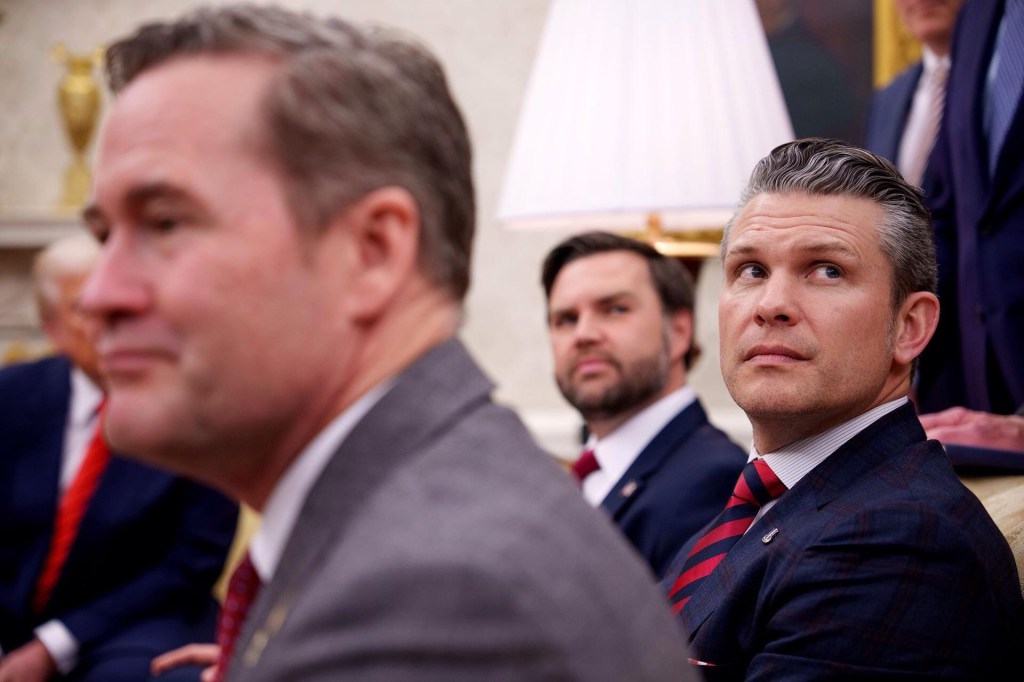
Well, that’s exactly what hit the fan this week in Washington when a conference over an usecured Signal chat app, scheduled to include Secretary of Defense Pete Hegseth, Director of National Intelligence Tulsi Gabbard, CIA Director John Ratcliffe, National Security Adviser Mike Waltz, and even Middle East special envoy Steve Witkoff . . . who was in Moscow for meetings with Vladimir Putin when he joined the call! These were the people at the very top of the national security food chain. But somehow a number had been added to the approved list of participants . . . that of an international journalist, no less.
Jeffrey Goldberg of The Atlantic initially wasn’t sure whether the invitation he received to join the chat was legitimate. Once he realized that it was, and understood the substance of the conversation as having national security implications, he did the only thing he could do: he reported what had happened, without publicly disclosing any classified information. And had someone in the administration been wearing their big-boy panties and taken grown-up responsibility for the blunder, it probably would have ended there.
But this was Washington, where the first impulse is always to deny one’s own culpability, and the second move is to find a scapegoat. So the “Washington Blame Game” began, together with the denials.
Along with a lot of “he-said-she-said,” and people claiming that no classified matters were discussed during the call, the White House and the Pentagon tried to toss a few buckets of whitewash on the whole thing by declassifying everything that could conceivably have been considered classified at the time of the call. But that was another huge mistake, in more ways than one.
Now, Senate Armed Services Committee Chairman Roger Wicker and Democratic panel member Senator Jack Reed are asking for an Inspector General report on the Signal chat for the committee to review, along with a classified briefing from a senior official. Wicker said that the information discussed in the chat was “of such a sensitive nature that, based on my knowledge, I would have wanted it classified.” [Natasha Bertrand, Zachary Cohen, Betsy Klein and Shania Shelton, CNN, March 26, 2025.]
And an (understandably) anonymous Defense Department official has said: “It is safe to say that anybody in uniform would be court martialed for this. We don’t provide that level of information on unclassified systems, in order to protect the lives and safety of the servicemembers carrying out these strikes. If we did, it would be wholly irresponsible. My most junior analysts know not to do this.” [Id.]
Well, perhaps those junior analysts should be running things in D.C. Because Pentagon spokesman Sean Parnell continued to argue: “These additional Signal chat messages confirm there were no classified materials or war plans shared. The Secretary was merely updating the group on a plan that was underway and had already been briefed through official channels. The American people see through the Atlantic’s pathetic attempts to distract from President Trump’s national security agenda.” [Id.]
Right . . . blame the media.
But, as they used to say in the Old West . . . “them’s fightin’ words.“
And so, seeing clearly that the American people were being lied to in order to conceal the total ineptness of the current administration, the folks at The Atlantic did what they do best: they came out fighting, and told the truth. They printed portions of the chat, clearly demonstrating the classified nature of some of the information while redacting portions they felt were too sensitive to publicize.
And then, inevitably, we heard from Donald Trump, who — some eight years after his first election to office — is still relying on the same stale, boring, paranoid retorts. He said, “It’s all a witch-hunt.” [Id.]
And from the equally trustworthy White House press secretary, Karoline Leavitt, we received a social media post claiming that: “The Atlantic has conceded: these were NOT ‘war plans.’ This entire story was another hoax written by a Trump-hater who is well-known for his sensationalist spin.” [Id.]
By the way, you’ll be relieved to know that Ms. Leavitt has assured the American people that Witkoff was receiving the texts in Moscow — in freakin’ Moscow! — on “a secure line of communication [provided] by the U.S. Government, and it was the only phone he had in his possession while in Moscow.” [Id.]
Oh, well . . . I feel much better now.
*. *. *
At this point, I would normally offer a little summation, but I’m sure it isn’t necessary . . . this story has been at the top of the news all week. And if you’ve read this far, you’ve undoubtedly figured out for yourself that we are in deep doo-doo, folks.
This blue blob appeared in the night sky over the U.K., Croatia and Poland on Monday. It has been attributed to the spinning frozen exhaust plume from a SpaceX Falcon 9 launch earlier that day. [Jennifer Thang, KTLA News, March 25, 2025.]
Well, that makes sense. Only Elon Musk has both the means and the ego to write his initial across the sky to remind Europe who’s the boss now.
It was inevitable . . . though you couldn’t have convinced Donald Trump or Elon Musk of that before the damage was done.
Once they began their chainsaw-style purge of all of our country’s illegal immigrants and those guilty of having committed actual crimes on U.S. territory, they figured they were on a roll and might as well keep going. They were having a grand time.
So they started in on those who hadn’t done anything wrong other than having been born in another country. Never mind that those people had been here for years, held honest jobs, raised families, and obeyed our laws; they needed to go — even some who were already on track to citizenship.
Xenophobia, unchecked, develops a momentum of its own.
Never mind the human toll; that clearly was of no significance to Trump and Musk. But what they never bothered to ask themselves — or anyone else — was who would fill all of those jobs previously held by the now-absent immigrants . . . jobs that most natural-born Americans won’t or can’t accept because they don’t pay a living wage, or they’re too difficult, or too “menial.”
But it seems that one day recently, Florida’s Governor Ron DeSantis woke up from what he thought was a bad dream, only to find that it was true: his state was facing a labor shortage. Where were all of those people who had formerly made his and his friends’ lives easier: the invisible people who cleaned the rest rooms in the hotels, resorts, and other public buildings; the street sweepers and trash collectors; the household help; the au pairs, the restaurant dishwashers and school janitors; the orange-pickers?
They were gone, herded into dormitories or tents at Guantanamo, or off to El Salvador, like so many head of cattle.
What to do? Omigod, what to do??!!!
Well, you can’t accuse Ron DeSantis of being unimaginative. He knew he couldn’t risk his political future by speaking out against White House policy, so he quickly came up with a brilliant solution: Fill those jobs with children!
But wait . . . what about child labor laws? Currently, Florida state law prohibits teenagers from working between the hours of 11:00 p.m. and 6:30 a.m. And many of those jobs include overnight work.
No problem . . . we’ll just amend the law. (Why am I suddenly reminded here of Vladimir Putin and his fiddling with the Russian Constitution?)
Anyway, on Tuesday the Florida state legislature advanced a bill that will allow children as young as 14 to work overnight shifts, even on school days. It whizzed through two committees before being put to a vote by the full Florida Senate.
At a panel discussion last week with Tom Homan, acting director of I.C.E. (Immigration and Customs Enforcement), DeSantis had this to say:
“Why do we say we need to import foreigners, even import them illegally, when you know, teenagers used to work at these resorts, college students should be able to do this stuff.” [Jordan Valinsky, CNN, March 25, 2025.]
And, as though that weren’t enough, he added:
“And what’s wrong with expecting our young people to be working part-time now? I mean, that’s how it used to be when I was growing up.” [Id.]
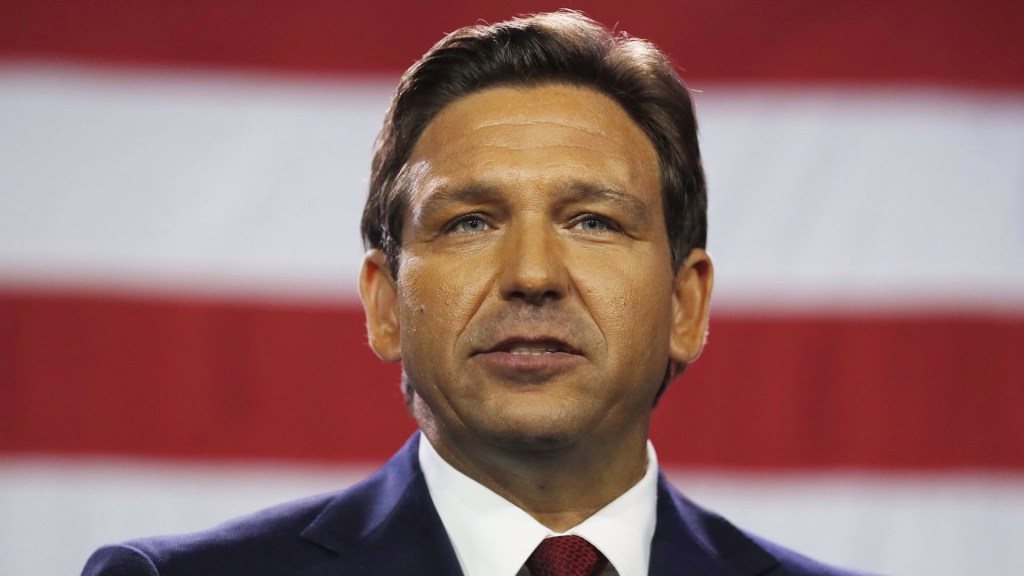
Florida Governor Ron DeSantis
What’s wrong with it? Well, let’s examine that.
First, he’s confusing college students with 14-year-olds. Second, he’s conflating working at a resort, say, as a lifeguard or dining room waiter, with cleaning toilets in the local bus station. And third, he’s mixing up part-time, after-school or weekend work with eight-hour overnight shifts on school days.
And finally, he’s talking about recruiting children for these jobs — which is hardly the same thing as a family making its own, individual decision as to whether a child should take on that type of burden at such an early age . . . whether they’re physically able, and whether it will adversely affect their school work, their family time, and — remember this from your teenage years, Ron? — their social lives.
*. *. *
Yes, there are many American families in need of extra income just to make ends meet. And some of those families have older teenagers who would welcome the opportunity to help out by taking a part-time job. That’s commendable. But when did it become all right to rob younger teens — 14- and 15-year-olds — of the best school years: years of football games, and dances, and just hanging out with friends.
A lot of us had part-time jobs during high school, mostly to pay for those “extras” that can put a strain on some families. In my case, it was baby-sitting for neighbors and family friends. Some of my classmates mowed lawns, shoveled snow, and washed cars. One worked as an usher at the neighborhood movie theater. But the hours were limited, and all in line with the teenager’s best interests, and within the parameters of local child labor laws.
If we just blithely cast those protective laws aside, what’s next: the sweat shops of 100 years ago?
Ron DeSantis has three small children. I wonder what kind of jobs he’ll line up for them when they’re 14.
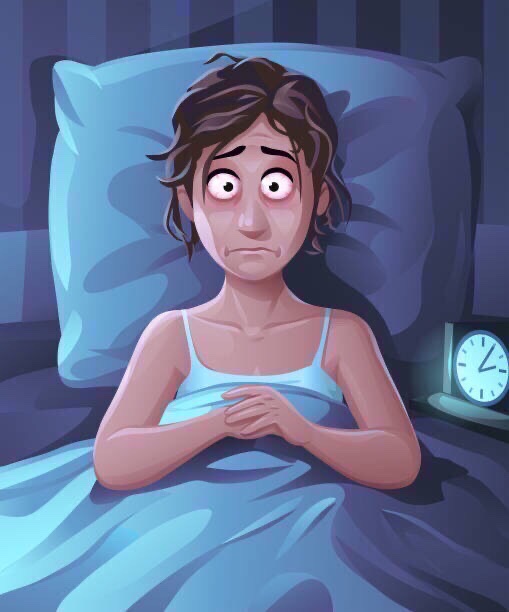
The other night — or, rather, early morning — I wrapped up my news-reading and blog-writing for the day, and happily crawled into bed, blissfully sleepy and ready to journey off into one or more of my notoriously weird dreams.
Four hours later, I was still lying there, staring alternately at the ceiling, the clock, and the insides of my eyelids, and mentally counting everything imaginable (including sheep) in an effort to fall asleep. But slumber continued to elude me.
I wasn’t ill; I wasn’t feeling achy; my feet weren’t twitching with that restless leg thing. But my mind wouldn’t shut down. Between thoughts of wars in Ukraine and Gaza, brush fires in nearby South and North Carolina, the price of Tylenol, and Elon Musk racking up another billion bucks from his government contracts . . . well, there was barely time to count more than 20 or 30 of anything.
And then I realized it might have been that half-pint of coffee ice cream I devoured around 10:00 p.m. That stuff does have caffeine, you know. Brilliant!
Finally, around 6:30 a.m., I got out of bed to answer that irresistible early-morning call of nature, and settled down again to give sleep one more try. That was when the dog started barking. And kept barking . . . and barking some more. It wasn’t her “someone’s trying to break into the house” bark; it was more like “there’s a deer in the back yard and I want to go out and play.”
Well, the rest of the family — and most of the neighborhood — needed to finish their night’s sleep before going off to work, so I finally decided to get up to convince the dog to shut her damned yap.
And at 7:00 that morning — after exactly zero shuteye — there I was, in the den, giving Dixie her first full-body massage of the day.
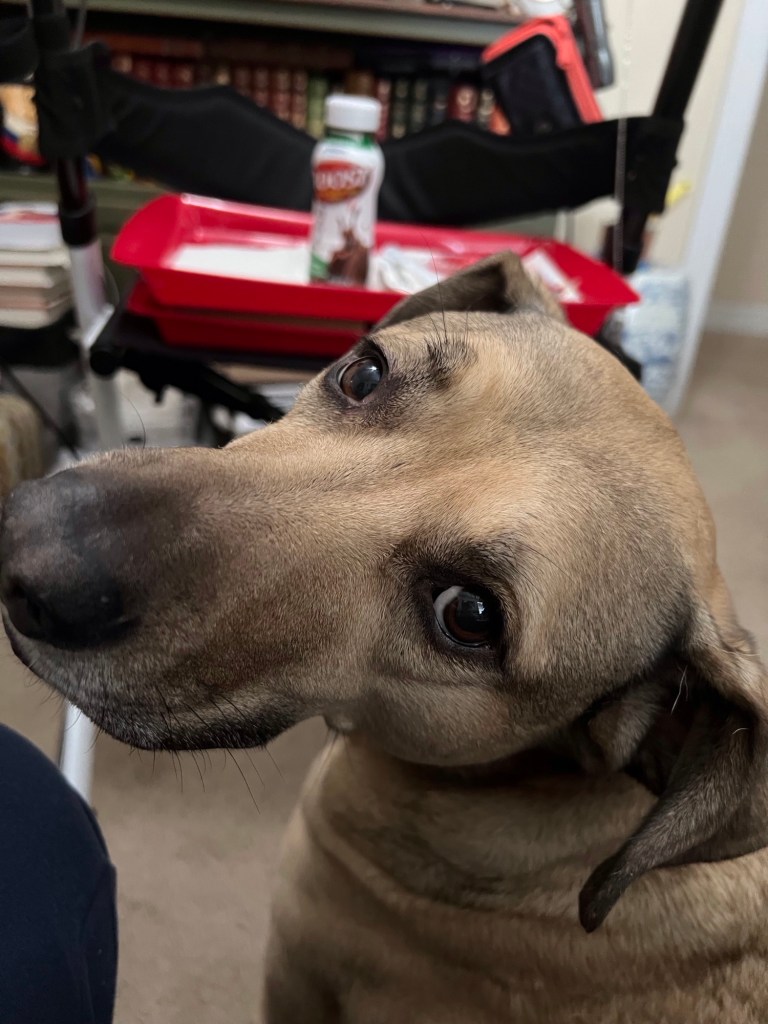
Yes, you read that correctly: I give dog massages. And apparently very good ones, because at least twice a day, she’s in here, staring at me without ever blinking, compelling me to put down whatever I’m doing and give her a “scratch” (that’s the word she knows). And when I finally can’t concentrate any longer . . . well, you try it with a pair of big, sad, brown eyes fixed on your face . . . she smiles knowingly, moves closer, and proudly turns around and backs up to me until I am looking smack-dab at her hind end. Because just above her tail and on both hips is where she is apparently the most itchy.
The Irresistible Miss Dixie
Of course, it doesn’t stop there. There’s the rest of her long back, her belly, the shoulders, back of the neck, top of the head, cheeks, and ears to be treated to my soothing ministrations. It has occurred to me that, with all of the dogs in this neighborhood, I could turn this into a business and make a small fortune — that morning’s massage was worth a good $100, at least.
Anyway, my eyelids had finally begun to droop. So I gave her the three pats on her rump that signal I’m finished rubbing and scratching for now, and she got up and walked out . . . turning, just as she reached the doorway, to give me her “thank you” look. And I took myself — pajamas now amply strewn with dog hair — back to bed, where I finally, miraculously, managed to score four and a half hours of sleep and no fewer than three bizarre dreams.
My final thought before drifting off that morning was that I must remember to warn the family to look out for deer poop in the back yard.
The Deer’s Calling Card
And that, dear reader, is half a day in the life of this blogger. Is it any wonder I sometimes spend the other half doing this . . . ?
It appears that — at least for the next couple of weeks — he is back at home in Dubai, after spending the past seven months as a “guest” of French authorities.
You remember Pavel Durov, don’t you? He’s the multi-billionaire (about $15 billion at last count) citizen of Russia, where he was born, as well as France, the United Arab Emirates (UAE), and the lovely Caribbean island nation of St. Kitts and Nevis. He made his entrepreneurial debut as the founder of Russian messaging service VKontakte, then left Russia to outdo himself by creating the famously encrypted Telegram service.
Pavel Durov
He left Russia as a result of government pressure to reveal confidential client information, which he refused to do as a matter of professional ethics. Last year, similar demands were made by the French government in connection with criminal investigations involving some Telegram subscribers . . . which he again refused. And so he has not been allowed to leave France pending resolution of charges brought against him for his failure to cooperate with their investigations.
Now it appears that the Paris prosecutor’s office has suspended “the obligations of judicial supervision” for a period of three weeks, from March 15th to April 7th. Mysteriously, no further details have been given as to the reason for, or the conditions of, his temporary release. [Joe Tidy, BBC, March 16, 2025.]
While France and the UAE are parties to an extradition treaty signed in 2007, I have to wonder what would stop a person with billions of dollars at his disposal from fleeing to a country that does not share an extradition treaty with France . . . other than personal integrity, that is. And considering his past willingness to leave his native country behind in order to stand by his principles, and his continuing fight to preserve those same principles . . . well, I would hope and expect that he will be back in France by April 7th.
As to whether I think he is right or wrong, I have asked myself whether I would risk everything to protect the privacy rights of suspected criminals who had, by contractual agreement, entrusted their confidential information to me. And I had only to recall my own long-ago history to know the answer.
President Putin: It is my understanding that you have an excellent command of the English language. But, never having met you personally, I cannot be certain of that . . . and your recent behavior suggests to me that you may need a small refresher course. Being a good-natured individual, I have volunteered my services in this regard.
Let us begin, please, with two simple English words: “Peace negotiations.“
Each word individually is simple enough: “peace” is “мир” and “negotiations” is “переговоры.” But when you put them together, they take on a significant meaning: “мирные переговоры.”
Now, you are, from all accounts, an educated man . . . a graduate of the renowned Leningrad State University, no less. I don’t have to explain to you that “peace” is the absence of turmoil, or anxiety . . . or war. And I’m sure you are aware that a “negotiation” is a verbal exchange leading to a compromise decision.
You do understand “compromise,” don’t you? That’s “компромисс” in your native language. Couldn’t be simpler.
Понятно? Да? Хорошо.
So, now I have a question for you:
What the hell are you doing today — at the very hour that these so-called “peace negotiations” are taking place in Saudi Arabia — bombing the daylights out of the Pokrovsk region of Ukraine?!!
According to people in the area, “There are 200-300 explosions per day, all coming in our direction. They’re trying to advance on our positions — but we’re holding them back.” [Andriy Kuzakov, Current Time, RFE/RL, March 24, 2025.]
When asked about his thoughts on the peace talks underway in Riyadh, another gentleman responded: “I don’t believe it. This is a repeat of 2014 when they negotiated a cease-fire. It’s all just to pull in troops and strengthen their positions.” [Id.]
And isn’t that just what you have accused Ukraine of wanting to do if you agree to a 30-day ceasefire?
You are a master at posturing, at playing the peacemaker, and at making promises you have no intention of keeping. But in reality, you are Richard III, delighting in his deceptive nature and blaming his baseness on everyone and everything but himself:
“And thus I clothe my naked villainy With odd old ends stol’n forth of Holy Writ; And seem a saint when most I play the devil.” – Shakespeare, Richard III, Act I, Scene 3
*. *. *
But war is not a stage play, Vladimir Vladimirovich; it is real, it is deadly . . . and it is unforgivable.
Edgar Bergen (1903-78) was a mid-20th century ventriloquist well-known to radio and TV audiences as the voice of the dapper Charlie McCarthy and the countrified, not-so-bright Mortimer Snerd. Bergen and his playful characters were so beloved, they became almost real to those of us who lived in those much more innocent times.
Edgar Bergen, with Charlie McCarthy (L) and Mortimer Snerd (R)
And looking at that photograph in the context of today’s political environment, I can visualize other faces: Vladimir Putin, for example, as the ventriloquist, with any two members of his administration perched on his knees.
Or possibly — and even more ominously — with other, non-Russian adherents of Putin’s policies, such as Belarusian presumptive president Aleksandr “Mortimer” Lukashenko, and . . . let’s see, now . . . perhaps Donald Trump in place of the well-turned-out Charlie McCarthy?
Now, Charlie was a bright enough fellow, often getting the best of his verbal exchanges with Mr. Bergen. So let’s rename him Donnie, and assume he’s clever enough — and sufficiently ambitious — to bring along a few dummies of his own, perhaps named JD, Marco, and Steve.
“Steve? Steve who?” I hear you ask. Why, none other than the newest “expert” on U.S.-Russia relations . . . Donnie’s special envoy to the Middle East (yeah, I know, that doesn’t make any sense) . . . real estate entrepreneur par excellence Steve Witkoff.
What? You’re still asking “Steve who?” Don’t worry . . . so are a lot of people, myself included. So, here he is:
Steve Witkoff
Recognize him now? He’s the one who does the perfect impression of Trump’s superior sneer. Maybe that’s how he got the interview for the job.
Uncanny, isn’t it?
But he needed more than just “the face” to nail the job itself. And that’s where he outshone any and all other candidates with his perfect mimicry of “The Trump Put-down.”
First he referred to Ukrainian President Zelensky’s refusal simply to hand over sovereign Ukrainian territory to Putin as “the elephant in the room” at the so-called peace talks in Saudi Arabia between Russia and the United States . . . to which, by the way, Ukraine was not even invited.
But man does not live by insults alone; we must also master the art of the kiss-up to those whom we’re trying to impress, and whose egos are at least as great as our own . . . in this case, none other than Vladimir Putin himself. And how better to broadcast one’s obeisance to the mighty Russian dictator than by way of an interview with the only journalist guaranteed not to disagree with him: the one, the only (thank God!) . . . Tucker Carlson?
Following his meeting with Putin in Moscow, Witkoff told Carlson that he “liked” the Russian president:
“I don’t regard Putin as a bad guy. He’s super smart,” Witkoff proclaimed. He said that Putin had been “gracious” and “straight up” with him; had told Witkoff he prayed for Trump after last year’s assassination attempt; and had said he even had a portrait of Trump commissioned and presented it to Trump, who was “clearly touched by it.” [Id.]
Parroting some of Putin’s own claims, Witkoff wondered when the world would recognize occupied Ukrainian territory as Russian, and went on to add:
“There’s a sensibility in Russia that Ukraine is just a false country, that they just patched together in this sort of mosaic, these regions, and that’s what is the root cause, in my opinion, of this war, that Russia regards those five regions ** as rightfully theirs since World War Two, and that’s something nobody wants to talk about.” [Id.]
** The five regions at least partially under Russian control at the present time: Crimea, Donetsk, Lukhansk, Kherson, and Zaporizhzhia — three of which Witkoff was unable to name.
I have a question here: Doesn’t anyone in the Trump administration own a freakin’ history book??!!!
*. *. *
And, as to any further expansionist goals on Russia’s part, Witkoff went on to ask: “Why would they want to absorb Ukraine? For what purpose? They don’t need to absorb Ukraine . . . They have reclaimed these five regions. They have Crimea and they have gotten what they want. So why do they need more?” [Id.]
Again . . . history, you nimrod! Read your Russian/Soviet/Russian history — and not just since World War Two, but all the way back to the Russian Primary Chronicle and Kyivan Rus’.
*. *. *
But wait . . . there’s more. (There always seems to be more.)
British Prime Minister, Sir Keir Starmer, recently put forth a plan for an international force to support a ceasefire in Ukraine, to which Witkoff had this to say:
“I think it’s a combination of a posture and a pose and a combination of also being simplistic. There is this sort of notion that we have all got to be like [British wartime prime minister] Winston Churchill. Russians are going to march across Europe. That is preposterous by the way. We have something called Nato [sic] that we did not have in World War Two.” [Id.]
Right . . . that’s the same NATO that Trump has threatened — how many times? — to leave if those “simplistic” Europeans don’t cough up a larger share of the costs.
“What the . . . ?”
*. *. *
Well, every performance has to have a spectacular finish, and this one was no exception. In an attempt to reassure his audience that a ceasefire in the Black Sea would be “implemented over the next week or so [and] we are not far away” from a full 30-day ceasefire (as meanwhile the missiles and drones continue to blast away at cities throughout Ukraine), Witkoff described Trump’s desire to cooperate with Russia once relations have been normalized:
“Who doesn’t want to have a world where Russia and the US are doing collaboratively good things together, thinking about how to integrate their energy policies in the Arctic, share sea lines [sic] maybe, send LNG gas into Europe together, maybe collaborate on AI together?” [Id.]
Right. Just as Little Red Riding Hood trusted the Big Bad Wolf to lead her to Grandmother’s house.
With Ukraine constantly in the headlines, it seems only natural that I have been reminiscing about my visits there in the summer of 1993, while working in the Moscow office of a U.S. humanitarian aid foundation. And one of my most vivid memories is of the difficulties involved in traveling by train from Moscow to Kyiv at the time of Ukraine’s new-found independence . . . not nearly as difficult as today, of course, but still not easy. So I thought I’d recycle the tale of what, in retrospect, was one hell of a good time.
*. *. *
Things had changed in just a few weeks.
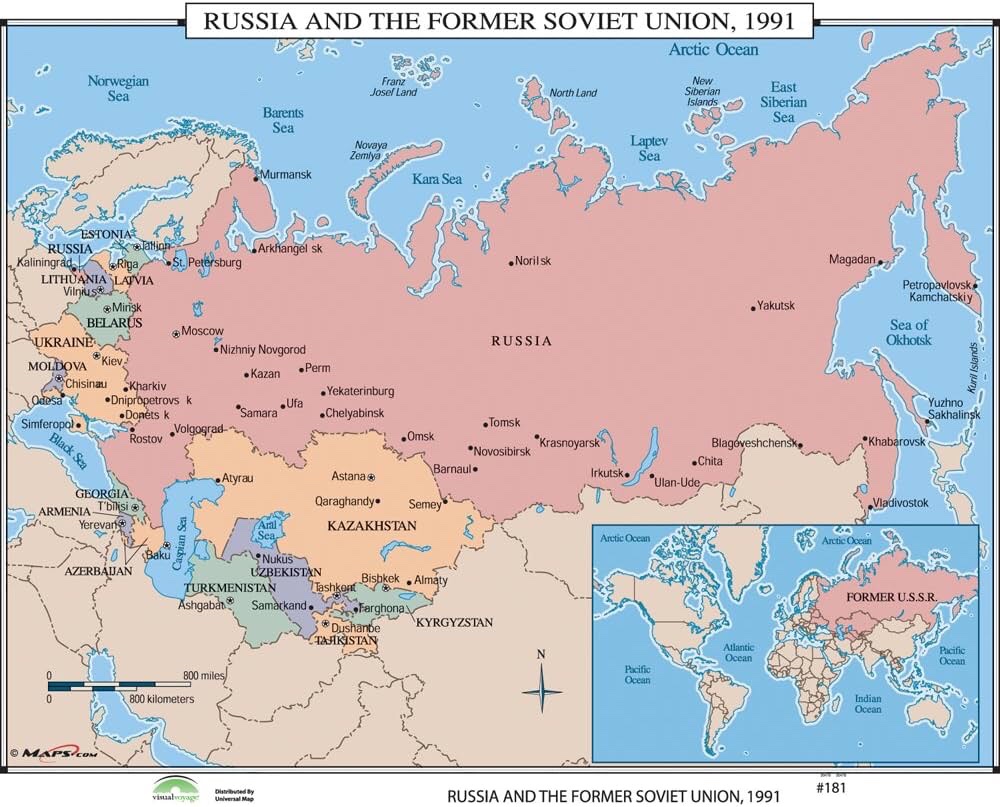
The day after Christmas of 1991, the Soviet Union had ceased to exist. In its place were now fifteen independent nations that previously had been Soviet Republics. And in the summer of 1993, most were still in the process of establishing their chosen forms of government, legal codes, and the institutions required to administer them. Ukraine was one of those fifteen nations, and as part of its development had established Embassies in various countries around the world . . . including neighboring Russia. It had also created official crossings along its nearly 7,000 miles of border abutting seven countries . . . also including Russia.
The 15 Former Soviet Republics
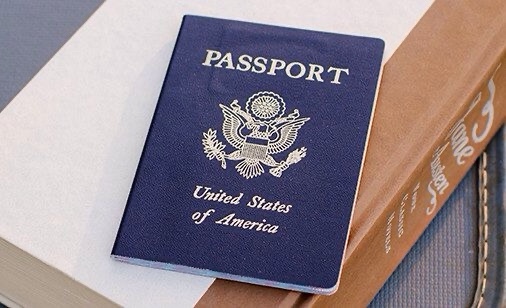
When I arrived in Moscow in May of 1993, much of this work was still in the process of being completed by the Ukrainian government, and my first train trip to Kyiv was easy and seamless. But by the time I was planning my second visit there, it was a whole new ballgame. There was now a Ukrainian Embassy in Moscow, and so I called to inquire whether I would need a visa to cross the border as a U.S. citizen with an American passport. It took a while to find someone who would even attempt to answer that question, and when I did, I was told that people with U.S. passports did not require visas to cross into Ukraine. Good news.
It was especially good news because this time I would be traveling with two American companions. Scott was working with the Foundation in the U.S., assisted by Michelle. Neither of them spoke Russian, and would be relying on my limited translation skills during the trip.
The fun began when we arrived at the Kyivsky Train Station in plenty of time for our scheduled evening departure. There was a woman taking tickets and checking I.D.s, and when she looked at our passports, she asked, in Russian, “But where are your Ukrainian visas?” Stretching my linguistic ability to the max, I explained to her the details of my call to the Embassy and what I had been told about not needing visas with U.S. passports. And she said, quite authoritatively, “Nyet!” I had apparently been given bad information, and her instructions were to see visas from everyone — Americans included.
Kyivsky Railroad Station, Moscow
I also explained that we had to leave that day as we had meetings scheduled the following morning with Ukrainian government officials and could not postpone our departure. She asked how we would get back into Russia, and I said we could get our return visas in Kyiv. She then asked what we would do about the border crossing. At that point, I moved a little closer to her, smiled conspiratorially, and whispered, “Well, that’s the Ukrainian government’s problem, not yours. Right?” Something from her lifetime of Soviet upbringing must have clicked into place. She smiled, handed our passports back to us, and said, “Khorosho” — “Fine.” And we boarded, three foreigners en route to Ukraine without visas. What a great start!
It got even better when the same lady who had taken our tickets showed up as concierge on the train and offered us tea. She obviously wore two hats for her job with the railroad, and I wasn’t crazy about this one, to say the least. She knew we didn’t have visas. What was going to happen when we reached the border? She would be blamed, unless she had a plan in place. This did not bode well for us, but it was too late to do anything about it now. We were already underway, captive on the train for the next 14 or 15 hours.
Michelle and I were sharing a two-bunk sleeper compartment, and Scott had a single at the far end of the same car. I was glad of the company, and we all sat up late in the “girls’ dorm,” swapping stories from our life histories, eating the food we had brought with us, and drinking good Russian tea, before finally kicking Scott out to his own quarters and locking our door. We had dressed comfortably for the trip, and something told me that Michelle and I should sleep in our clothes that night. I was later to be grateful for that decision.
At the border
The movement of the train soon lulled us to sleep, and it was around dawn when we were awakened by the screeching sound of brakes being applied and a whole lot of rattling and clanking going on. We had arrived at the border. Suddenly our door — the carefully locked door — was unlocked and slammed open with great force. Michelle and I both bolted upright in our bunks and were confronted by a very tall, very young, heavily-armed Ukrainian border guard, who stuck out one hand, palm up, and demanded, “Passports.”
Uh-oh. The moment of truth had arrived. Thank goodness we were spared the indignity of having to face it in pajamas!
I told Michelle to hand over her passport and to say nothing. Suddenly, I found myself in charge. Yeah, right. He was the one with the sidearm, not I. And he knew it. He also knew — compliments of the ticket-taker-cum-tea-service lady — that I spoke some Russian, and that we had no visas. But he dutifully scanned through our passports before saying to me, “Where are your Ukrainian visas?” Once more, I went through the whole story of the telephone exchange with the Embassy in Moscow. Then the following dialogue — in Russian — ensued.
Guard: “But you must have visas.”
Me: “No, they told me we didn’t need them with American passports.”
Guard: “But you must have them. How will you go back to Moscow?”
Me: “We will get them in Kyiv.”
Guard: “No, you must get them in Moscow.”
Me: (Looking dramatically at my wristwatch): “But it’s too late.”
Guard: (Repetitiously): “No, you should have gotten them there.”
Me: (For the umpteenth time): “But they told me we didn’t need them.”
Guard: “Well, they told you wrong.”
That was when my patience ran out. I recalled what someone had told me years before, in an entirely different context: that you have as much power as you can make other people believe you have. So — from my still-seated position — I slammed my hand on the small table attached to the wall between our bunks, making the water bottles and glasses do a little dance, and angrily declared, “Well, that’s not my fault, is it?!!”
“So there!”
And there stood one very surprised border guard, wondering who this tough-talking, unintimidated, Russian-speaking American woman might be. At best, I probably reminded him of his mother; at worst, I could have been the First Lady of the United States for all he knew. He clearly had no idea of what to do next. So he did what came naturally: he passed the buck. Taking two steps backward into the corridor, he beckoned to someone farther along the car, and suddenly we had two young, tall, well-armed border guards in our little compartment. They began whispering between themselves, and all I could catch were what sounded like “psst-psst-psst-Americans,” and “psst-psst-psst-no visas.” Then the second guard looked at me and asked, “You will get your visas in Kyiv?” to which I replied, still with supposed authority, “Yes; I already said we would.” Shaking an index finger at me, he came back, “You be sure?” And as I waved a hand dismissively toward the door, I replied, “Yes. Now you get out!”
And by some miracle, they did just that.
Of course, I had known all along that they were just waiting for me to offer a bribe (undoubtedly to be shared with the tea lady who had tipped them off), and I was prepared to pay if all else failed. But when I didn’t offer, they backed off as any schoolyard bully would have done. But I also realized that they had had the power to put us off the train in the middle of nowhere. Thank God they were young and inexperienced!
When they were gone, Michelle finally exhaled and asked what had just happened. I shrugged and told her we would get our visas in Kyiv. No worries.
After more rattling and clanking sounds, the train started forward, and Michelle and I looked at each other and in unison exclaimed, “Scott!” He had been on his own, with no visa, and not speaking a word of Russian. As we rushed out to the corridor to find him, he was walking toward us, grinning from ear to ear. He asked if we were all right, and I said we were fine — that I had managed to talk our way out of it. But how had he gotten through it? Still smiling broadly, he replied, “Oh, I just kept babbling at them in English until they gave up and went away.” There’s frequently more than one way out of a tough situation, and Scott had found his.
P.S. For the remainder of the trip, we saw no more of the tea service lady. Perhaps, being Russian and not Ukrainian, she was dropped off at the border.
*. *. *
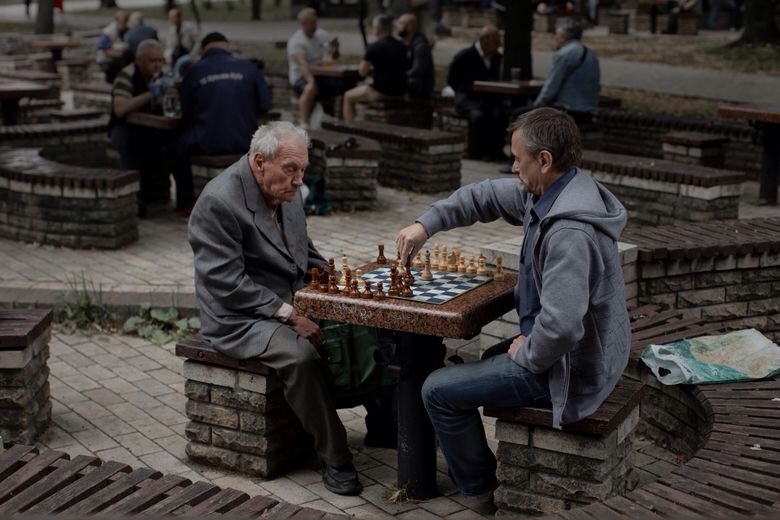
But as clever as Scott had been on the train, he nearly got us into big trouble in Kyiv. On an afternoon when we had some spare time between meetings, we decided to go for a stroll through a nearby park. We were delighted to come across two elderly gentlemen playing chess at a permanently-affixed stone table — a classic scene, just as you see in practically every movie about Russia. I talked to them for a few moments, introducing us as American visitors, and leaving with a traditional Russian farewell, “Vsevo khoroshevo” — “All the best.”
A little farther on, we came to the banks of the Dnieper River, and followed it for a while, enjoying the sound of the rushing water. And then we found ourselves at the edge of the park, on a quiet street alongside a large office building. Turning right, in the general direction of our hotel, I wondered what the building was used for, saying I was feeling an eerie vibe from it. Of course, Scott and Michelle laughed at me. So when we saw a local lady walking toward us, I stopped her and asked, “Excuse me, do you know what this building is?” Her facial expression changed dramatically as she looked all around and over her shoulder. Then she whispered, “KGB.” I just mumbled a quick “Thank you,” as she hurried on her way. I was right about that vibe, and didn’t hold back from rubbing it in.
But Scott had an idea of his own. When we reached the corner and looked at the side of the building, we saw the name clearly engraved above the entrance: Komitet Gosudarstvennoi Bezopastnosti — “Committee for State Security.” KGB. Suddenly calling out “Take my picture,” Scott went charging up the tall staircase to the landing at the entrance and struck a pose, shouting for one of us to snap a photo. Knowing that it’s never a good idea to photograph a government building in that part of the world — and especially the offices of an intelligence agency — I yelled at him to get the hell out of there and refused to photograph him. But he decided this was fun, and wouldn’t budge. Finally I convinced Michelle that we should just walk away, and after a momentary pause he grudgingly gave up and joined us.
Main KGB Building, Kyiv (not the auxiliary building we saw)
And as we left, I noticed a car parked just yards from us, with two men seated in it. Just sitting . . . and watching. And I knew we had been spotted by KGB security. I quietly pointed them out to Scott and Michelle, both of whom finally realized that I hadn’t been joking and that we all needed to behave ourselves. The Soviet Union may have broken apart; but the KGB was, unfortunately, still very much alive. Needless to say, we had no further trouble with Scott on that trip.
In two days we had wrapped up the business side of our visit — my last one ever to Kyiv — and headed back on another long train ride to Moscow, this time with our return visas safely in hand. Scott and Michelle left for home a couple of days later, and I returned to what had become my “normal” life in Moscow.
*. *. *
As I said, the bureaucratic difficulties of those days of transition were minor in comparison to the agonies faced by the people of Ukraine since Vladimir Putin’s first invasion of 2014 and his unrelenting war of attrition now in its fourth year. I have been able to look back and laugh at those long-ago experiences.











































 The Blog About Everything … and Sometimes Nothing