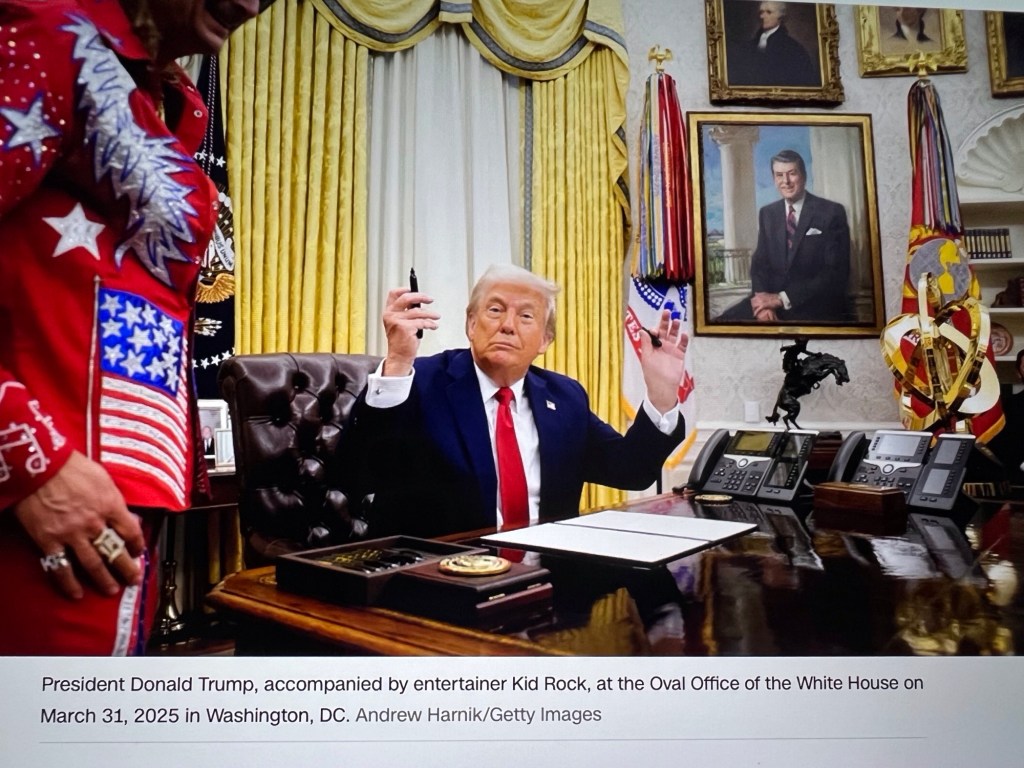
As if we, as a nation, weren’t already mortified enough . . . this is what the Oval Office of the White House looks like now.
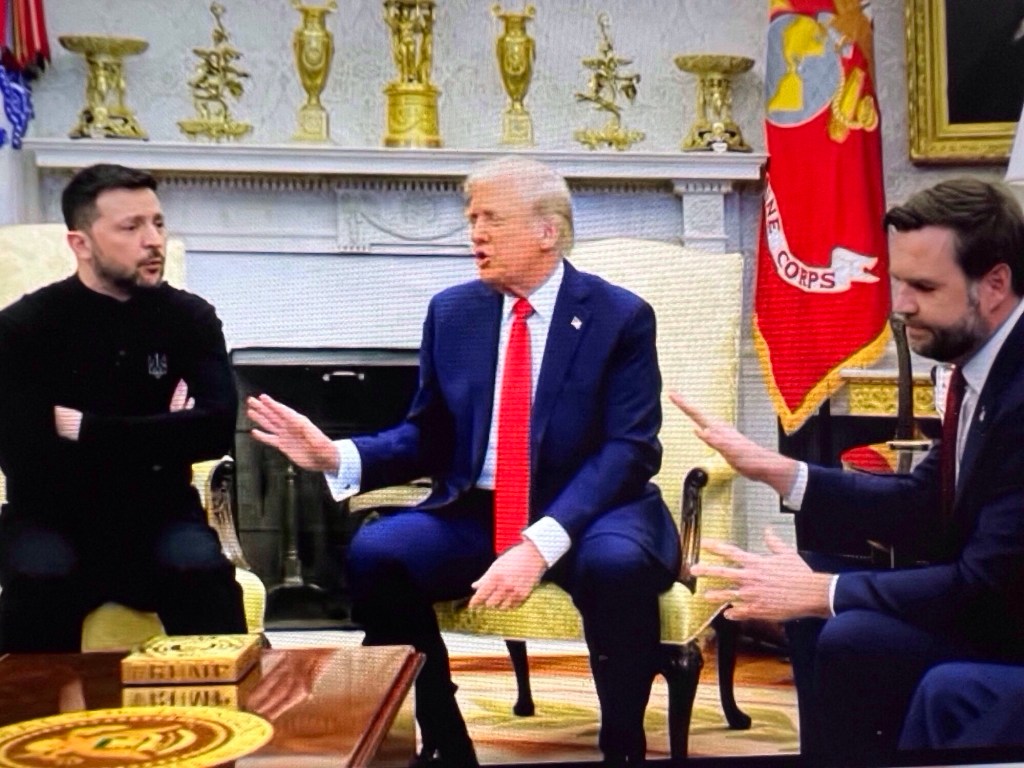
And what was that about Ukrainian President Zelensky “disrespecting” the office by showing up in his official military garb, rather than a civilian coat and tie?
Are you telling me that this . . . this . . . this horror show is respectful? Just because it’s red, white and blue?
Now, I don’t know anything about this “Kid Rock” — he may be a perfectly nice guy. But what the hell is he doing hanging around the Oval Office as though he belongs there . . . and looking like an escapee from a Barnum and Bailey circus?
This appears to have taken place during normal working hours . . . not at an evening social gathering. Isn’t he distracting Trump from doing his job as Destroyer-in-Chief of the United States? Or has he been appointed to head some new, made-up government agency?
In the name of all that’s holy . . . what have we been reduced to??!!!
Nope . . . This has nothing to do with Christopher Columbus packing his bags and leaving for America. It does, however, have everything to do with Queen Isabella and King Ferdinand. You’ll most likely remember them as the Spanish royal duo who provided the financing for Columbus’ westward excursion, because that’s what you were taught in your earliest history classes.
Ferdinand and Isabella
But did you know that there were other famous — or, rather, infamous — acts attributable to them? For example, on this date — March 31st — in that same year of 1492, Ferdy and Izzy issued an edict known as the Alhambra Decree, which ordered the expulsion of all practicing Jews from the Crowns of Castile (Isabella’s domain) and Aragon (Ferdinand’s) within four months.
What had the poor Jewish people done this time? Actually nothing, as usual, beyond existing. In this instance, the royals were afraid that the practicing Jews — those remaining despite the Spanish Inquisition (more about that below) — would influence former Jews who had already converted to Catholicism (thanks to the aforesaid Inquisition) to re-convert to Judaism. So of course, they had to go . . . right?
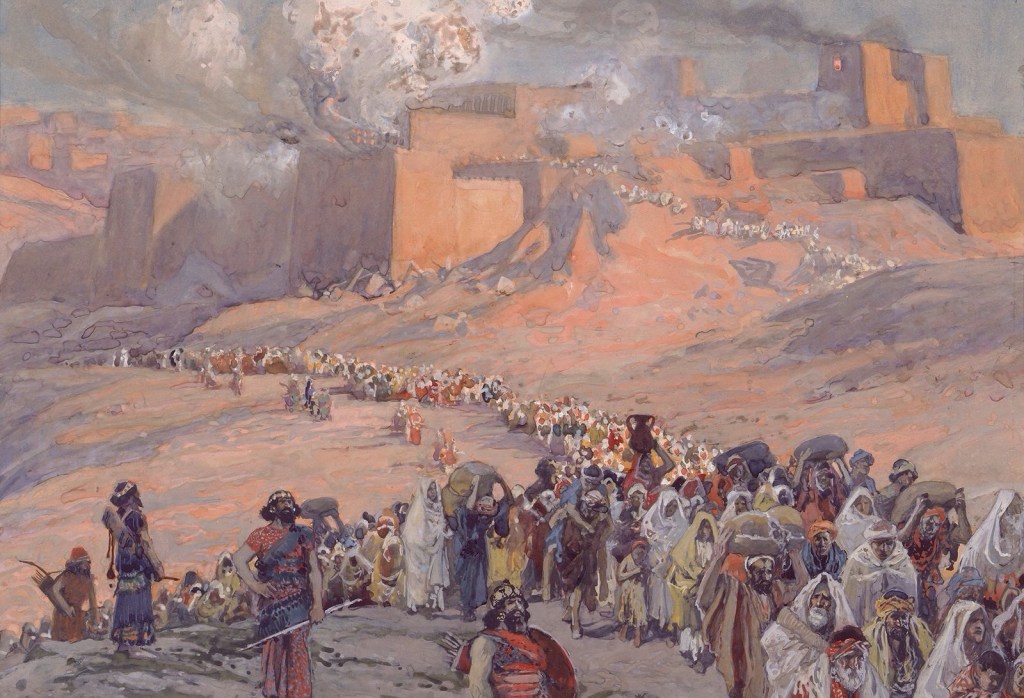
Of course, right. But no big deal . . . the Jews had had a lot of practice packing up and schlepping around the world since biblical times. What’s one more diaspora?
Leaving the Holy Land
*. *. *
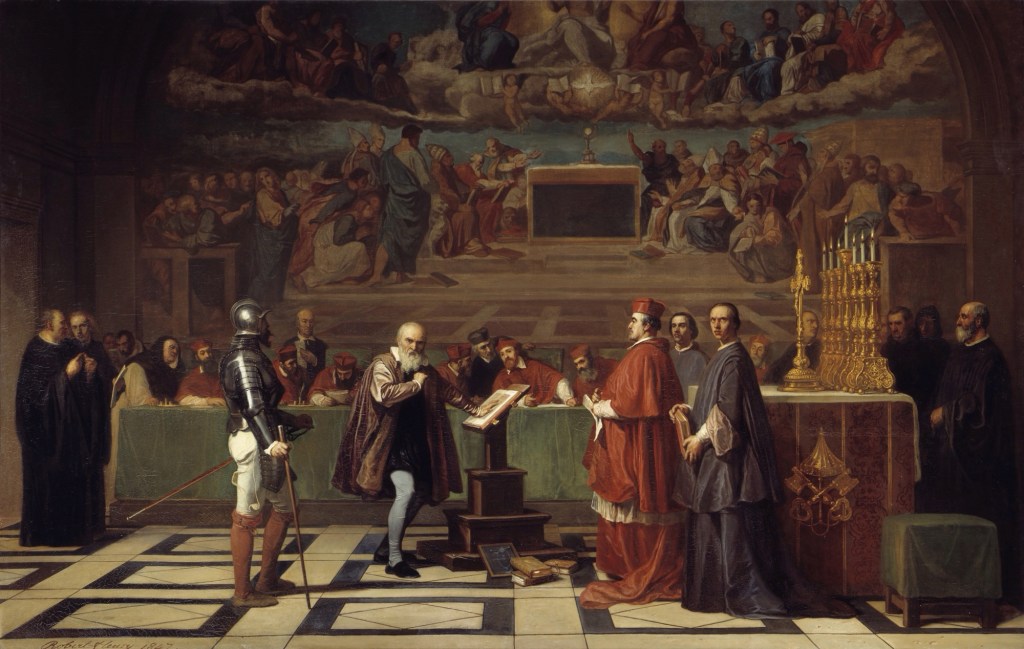
Now, about that infamous Inquisition. I know you’ve heard about it. It had been established some 14 years earlier, in 1478, by the selfsame Ferdinand and Isabella. It was a religious “court” created to combat whatever they deemed to be heresy, specifically targeting Jews, Muslims and Protestants — basically, all non-Catholics. And it lasted for more than three centuries, finally ending in 1834 . . . by which time some 150,000 had been prosecuted, of whom between 3,000 and 5,000 were executed by the most unimaginably grisly means.
The Inquisition
*. *. *
Those clearly were not Spain’s finest years. But there are a few lessons to be learned from their experience . . . aside from the all-important one concerning religious tolerance:
First, that a little digging can turn up fascinating details that completely change our perception of history as we have always believed we knew it;
Second, that today’s actions can have far-reaching consequences . . . as, for example, the fact that Jews, even today, represent less than one percent of the population of Spain; and
Third, that all dark times — no matter how terrible — eventually come to an end.
Just, hopefully, in less than 300 years.
Or, as my beloved Bubbe would have said: From my mouth to God’s ears.
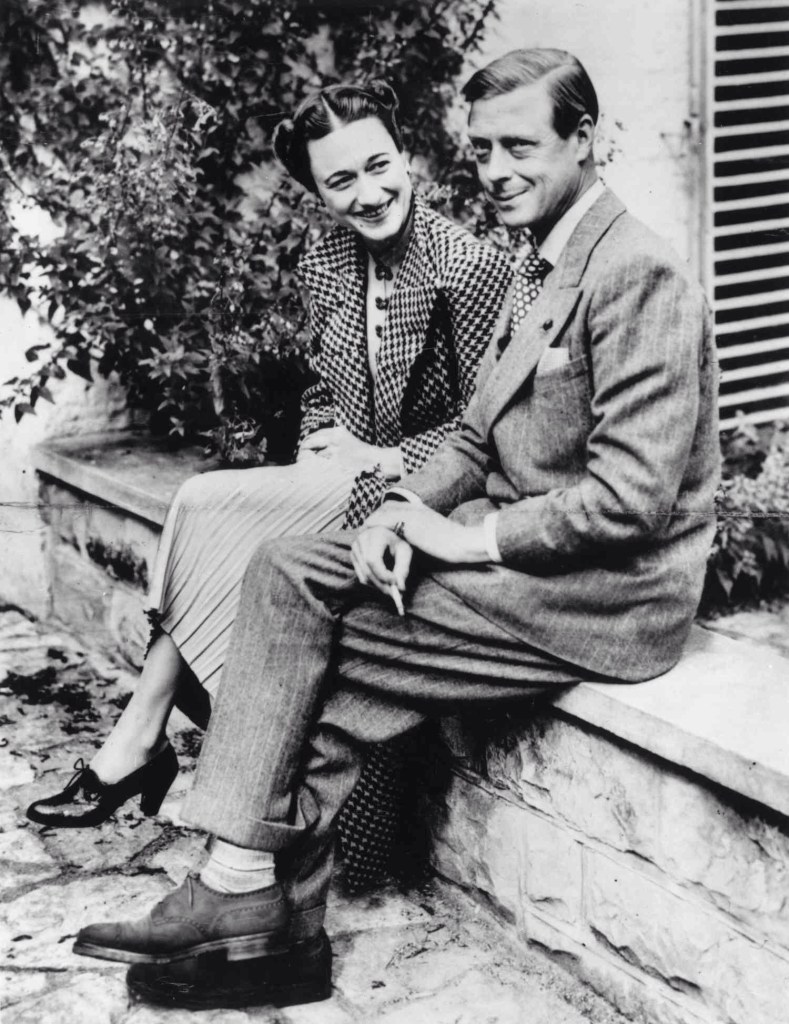
Monarchies have kings and queens who enjoy the ultimate job security: they rule for life, or until they decide to abdicate, perhaps for reasons of ill health, or in order to run off with an American divorcee, like this guy . . .
British King Edward VIII (briefly) and Wallis Simpson
But I digress.
The few monarchies left in the world seem to revere their royal families and the traditions that go along with them, and it’s all very lovely to watch on TV. But for the most part these days — unlike in the times of Henry VIII and Ivan the Terrible — the royals’ jobs are mostly ceremonial, with the day-to-day grind of running the country allocated to a ruling body, such as a parliament.
There are still those individuals, however, who — not having been born to royalty — covet the title, the fawning courtiers, the pomp and circumstance . . . and no doubt the crown jewels . . . that such a position would carry with it. Not to mention that job security perk. And a few have figured out how to achieve their goal . . . most often by nefarious means.
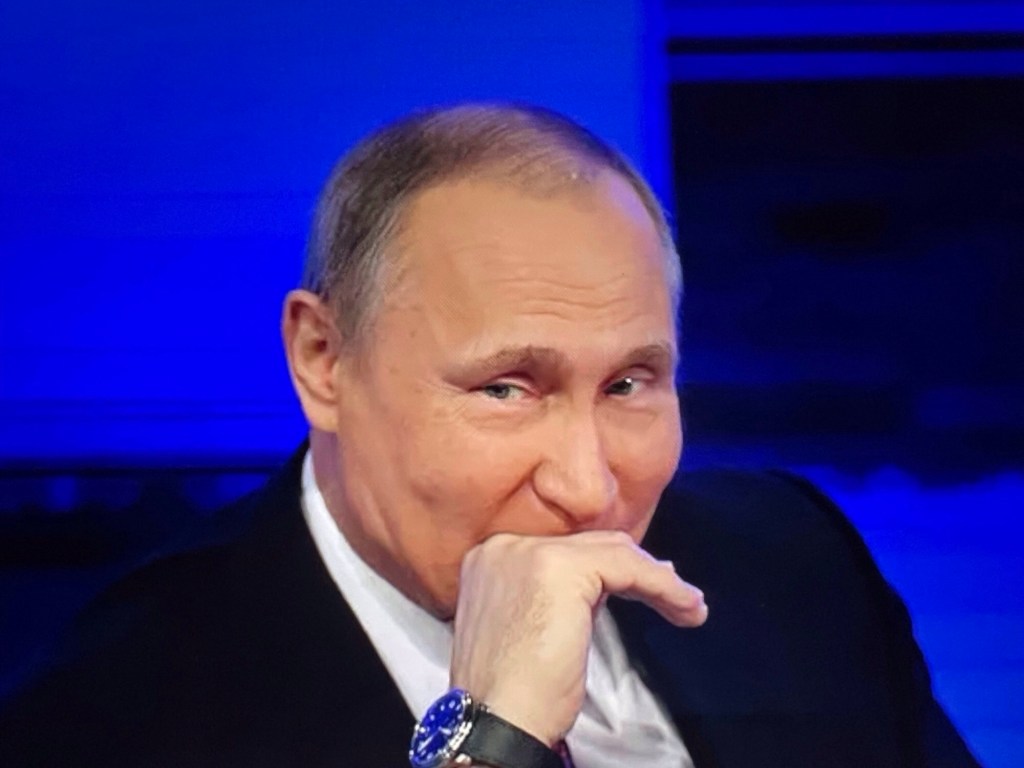
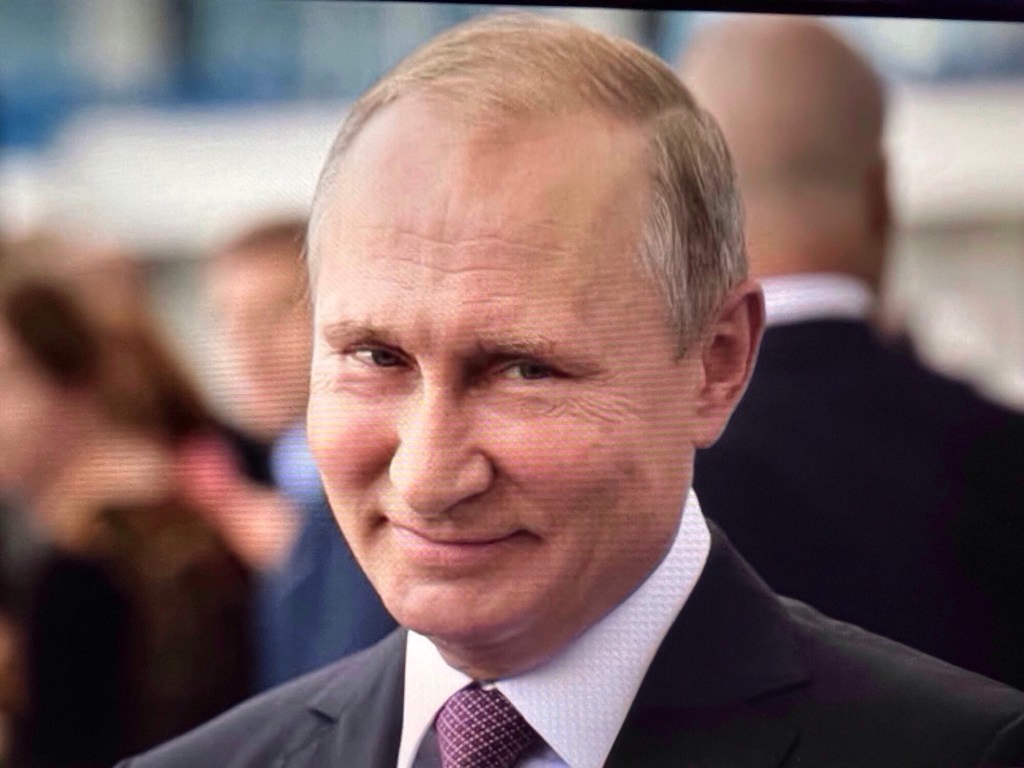
Take Vladimir Putin, as a prime example.
Already second in command when Boris Yeltsin suddenly resigned (not to run off with an American divorcee) in December of 1999, Putin stepped up to complete Yeltsin’s term. He was then elected in March of 2000 to his first four-year term, followed by a second in 2004.
At that time, the Russian Constitution allowed just two consecutive terms — but it did not prohibit future additional terms after a one-term hiatus (or longer). So in 2008, Putin cleverly pulled the old switcheroo and traded places with his loyal Prime Minister, Dmitry Medvedev . . . while still, of course, remaining in control behind the scenes . . . until he was able to run again in 2012.
And here’s the good part. During that four-year period, Medvedev — at Putin’s behest, of course — rammed through the Parliament a constitutional amendment increasing the presidential term from four years to six. I think you can guess the next part. That’s right . . . in 2012 and 2018, Putin was again elected (to no one’s surprise), giving him twelve more years and taking him right up to 2024.
But then what? Forced retirement? Hell, no . . . not for old Vlad. Because in the meantime, yet another constitutional amendment had been quietly slipped through, removing the two-consecutive-terms limitation. As a result — as the world knows all too well — he is presently serving his fifth term in office, with yet another run for office possible in 2030, taking him to 2036 . . . that is, if he hasn’t run off with an American divorcee.
“Say what??!!!”
*. *. *
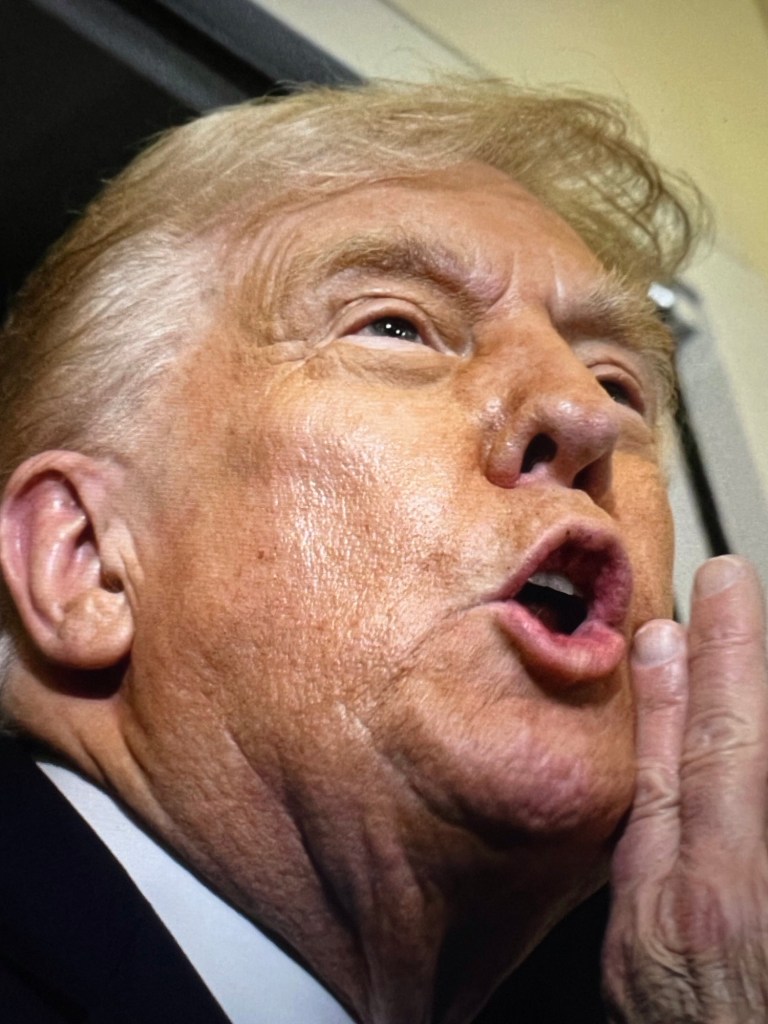
So what is the importance of this little tutorial in Russian history and political subterfuge? Well, it’s this guy:
Mouthing off as usual — this time in a phone interview with Kristen Welker of NBC News, he did not dismiss the idea of seeking a third term . . . again skirting the existence of the U.S. Constitution, in which the 22nd Amendment clearly states:
“No person shall be elected to the office of the President more than twice.”
It doesn’t say consecutively . . . just twice. Period.
But Trump said “there are methods” to achieve this, and emphasized that he was “not joking.” He added: “There are methods which [sic] you could do it.” [Alejandra Jaramillo, CNN, March 30, 2025.]
When Ms. Welker asked if he might consider having JD Vance run in 2028 and then “pass the baton” back to Trump, he replied:
“Well, that’s one. But there are others too.”[Id.]
Well, thanks for putting that thought into his head, Ms. Welker . . . in case he hadn’t already gotten the idea directly from his idol Putin.
Steve Bannon — who we all know lives in the same parallel universe as Trump — has suggested that Trump would indeed be eligible, since the 22nd Amendment doesn’t specify “consecutive” terms.
(Note to Bannon: No, it certainly doesn’t, dipshit. It says “twice” . . . period. He doesn’t get a third chance.)
Of course, there’s always the possibility of a constitutional amendment . . . and, in fact (and rather frighteningly), Tennessee Republican Representative Andy Ogles has already introduced legislation to that effect — with a specific provision that would exclude any former two-term presidents, such as Barack Obama, from coming out of retirement. [Id.]
But such an amendment would require two-thirds votes in both the House and the Senate, and ratification by three-fourths of the states. As Michael Waldman, President and CEO of the Brennan Center for Justice at New York University’s law school, said:
“It’s illegal. He has no chance. That’s all there is to say.” [Id.]
I would love to be able to take comfort from that. But considering the unconstitutional acts we’ve seen from this administration in just the past two months, I’m not sure I can.
It was more than that nagging feeling of unease and depression — otherwise known as gloom and doom — that lately is renewed on a daily basis by the present state of the world. This morning, for some reason, I awoke feeling angry.
I mean really, really, “If-I-don’t-smash-someone’s-face-in-I’ll-explode” furious. It must have been something from my last dream of the night, though thankfully, I don’t remember what that was.
But I’m not the violent type; I don’t hit people, kick pigeons, or put my fist through walls. Even intentionally smashing a piece of china, while tempting, would only mean having to sweep it up. So instead, I deleted all of my research notes from the past 15 months, because they all related to the very subjects that are the cause of my anger.
“You did WHAT??!!!”
It’s okay — it wasn’t a mistake. I’ve already gotten what I needed from them, and I can always re-Google them if necessary.
But I felt cleansed, as though I had washed away more than a year of information overkill. I know it doesn’t mean the horror of the past 15 months never happened; you can’t really erase history . . . nor should we. But at least it’s no longer staring me in the face every minute of the day.
You see, I realized this morning that I’ve reached the point in this life where the thought of eternal sleep no longer feels so frightening, but sometimes — after a day of digesting yet another 24-hour news cycle — actually seems like the best of a bunch of really bad options. And that made me furious.
No, no, no! I’m not going to . . .
Well, after all, if I can’t even smash a teacup . . .
But seriously, I’m just having one of those days when I can’t face any more news stories, opinions or analyses about wars, earthquakes, starving people in Sudan, political hostages in Russia, or the inmates running the cuckoo’s nest known as Washington. And I have simply transitioned from depression to anger.
Maybe that’s a good thing. Depression is debilitating, whereas anger can sometimes be directed toward something useful. Think of all those angry stand-up comics . . .
So I think I’ll stop writing for today, and do something therapeutic. I can no longer go jogging or work out at the gym; but I do have a couple of closets that could stand cleaning out.
Right after I grab some Haagen-Dazs from the freezer.
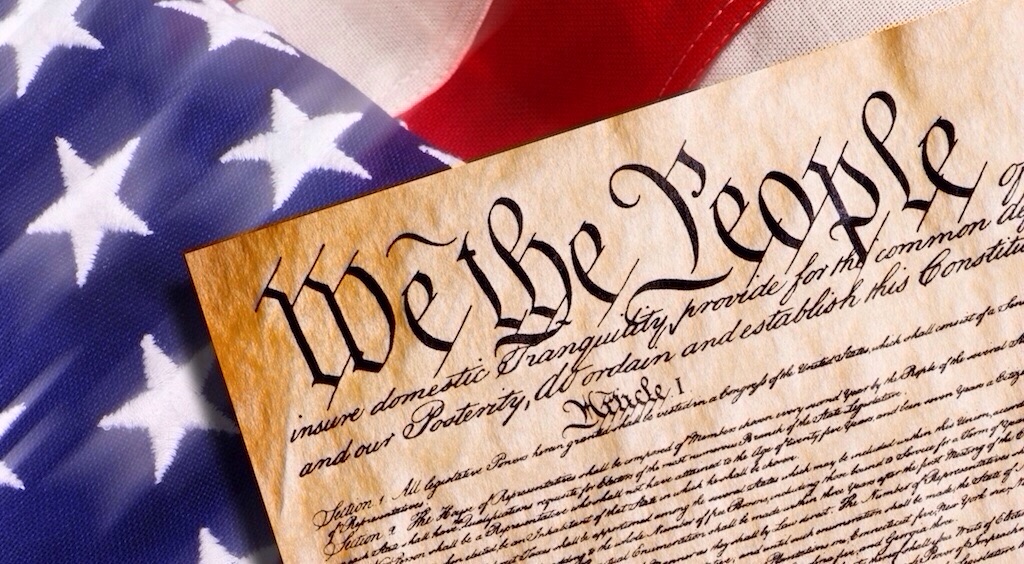
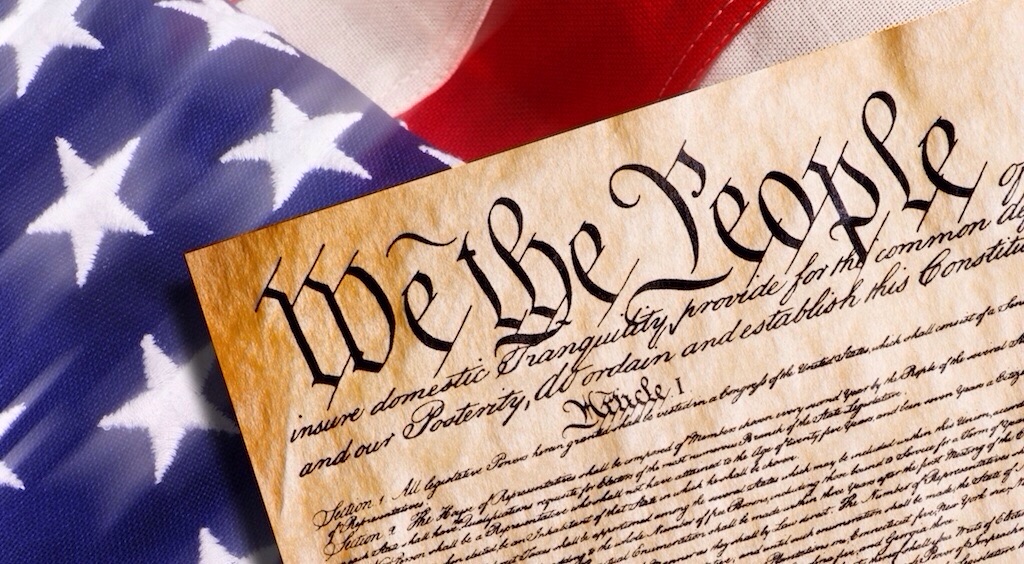
For those of you who weren’t paying attention back in high school Civics class — which would seem to include the entire current administration, half of the U.S. Congress (both houses), and a few members of the Supreme Court — this is the Constitution of the United States of America:
Note that it begins, “We the People . . .”
I know you’ve heard of it, because We the People keep bringing it up in our news articles, social media posts, and YouTube broadcasts. But have any of you actually read it?
Since 1789, it has been the supreme law — and the guiding principle — of this great country. It provides that the government’s power derives from We the People, and specifies limits to that power. It divides the government into three separate branches — Executive, Legislative and Judicial. And it calls for a system of checks and balances to prevent any of those branches from abusing its authority.
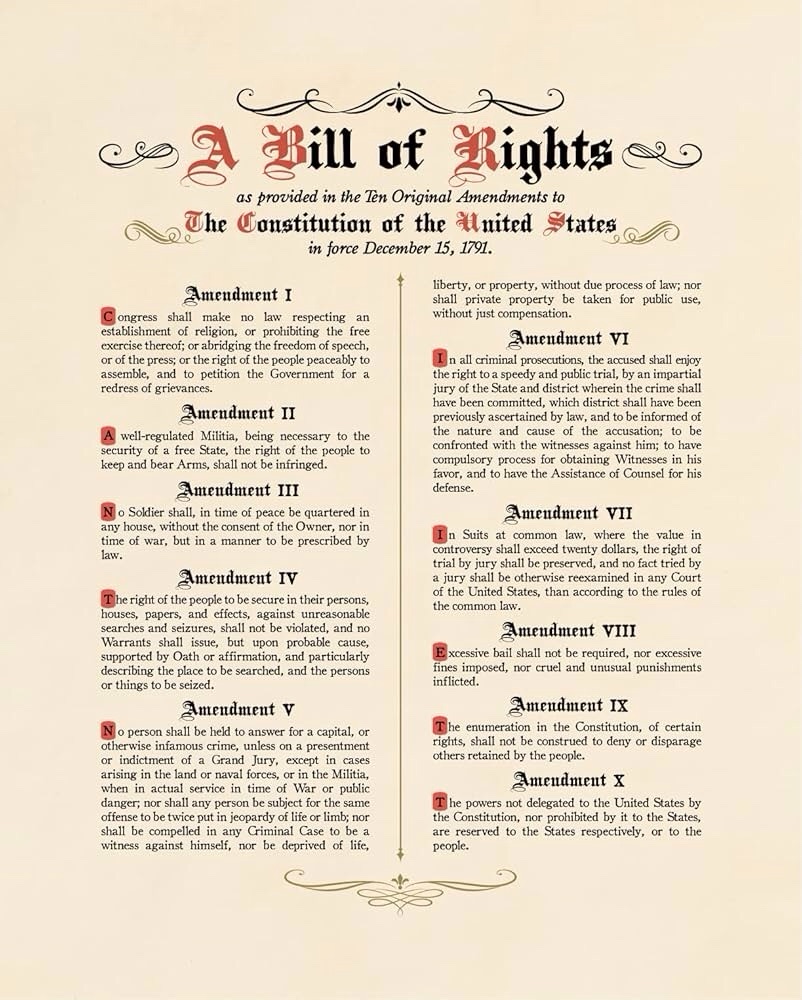
And as the country grew, a total of 27 amendments were added as required to keep current with the changing times. The first 10 of those amendments — adopted in 1791, just two years after the original document — are known as the Bill of Rights. Those are the rights of We the People — not you, the officials elected by We the People.
Bill of Rights of U.S. Constitution
Have you forgotten that We the People elected you to protect those precious rights of ours? To protect this country from its enemies . . . not to cater to them, emulate them, or join with them? To serve us . . . not to subject us to your most maniacal whims?
You must have. Because over the past couple of months, it has become obvious that the very existence of that precious document has been — not merely overlooked — but intentionally, repeatedly contravened. And that is simply unacceptable.
So I am bringing it back into the daylight, sticking it under your noses, and demanding that you acknowledge it . . . read it . . . and obey it.
In the early months of Russia’s war against Ukraine, the city of Mariupol, located in the eastern Ukraine region of Donetsk, was defended in part by the Azov regiment. When the city fell to the brutal onslaught of the Russian forces, prisoners of war were taken, including members of the Azov regiment.
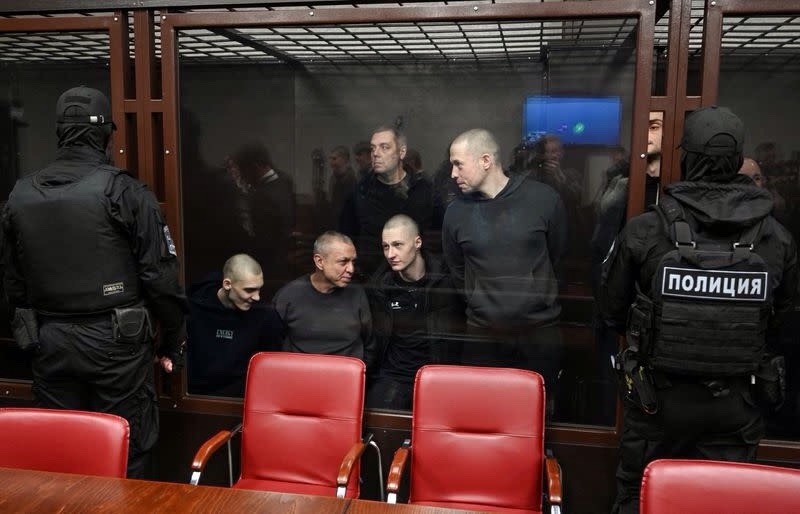
Twelve of those soldiers have just been convicted of terrorist activities and sentenced by a Russian military court to prison terms ranging from 13 to 23 years.
Some of the Azov Regiment Prisoners
They were not tried as ordinary prisoners of war. Rather, their entire regiment has been declared by Russia to be a terrorist organization, thus depriving its members of their rightful protections under the Geneva Conventions of 1949 — to which both Russia and Ukraine are parties.
Russia’s rationale is that the group — known as the Azov Battalion — was founded by a hardline nationalist, Andriy Biletskiy, to fight the Russian forces that had invaded Ukraine’s Donbas region. However, in 2014, it was blended into the Ukrainian National Guard and disassociated from Biletskiy’s radical form of nationalism. It has remained apolitical since that time. In 2022, its members were ordinary soldiers, fighting for their country against an invading enemy.
When the nearly 2,500 fighters in Mariupol eventually surrendered to Russian forces in May of 2022, Vladimir Putin guaranteed that they would be treated according to international standards. But thus far, some 145 have been convicted as terrorists.
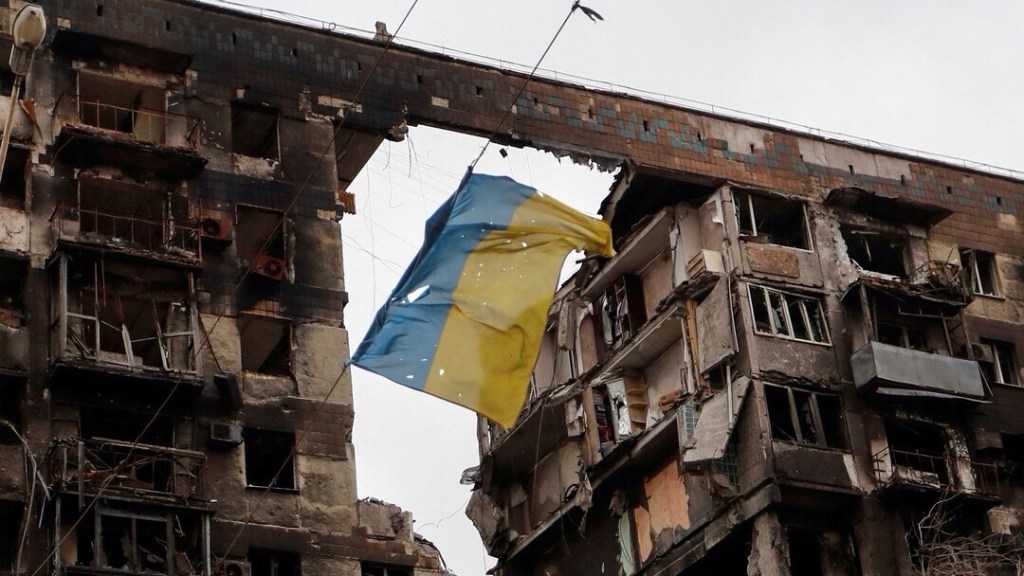
Battle of Mariupol, Ukraine – April 2022
Ukraine’s human rights ombudsman, Dmytro Lubinets, has accused Russia of violating international humanitarian law, and called the verdicts “illegal”:
“Ukrainian prisoners of war are combatants, not criminals! They were fulfilling their duty to the state, protecting its territorial integrity and sovereignty.” [Yulia Dysa, Mark Trevelyan and Andrew Osborn, Reuters, March 26, 2025.]
Once again, Putin circumvents international law by ignoring the truth, twisting the facts, and accusing his victims of being the aggressors. And in so doing in this instance, he has created a new category of political prisoners: not civilian dissidents, but military combatants who had the courage to defend their country against his unprovoked invasion.
I do not have the names of these most recent hostages, but they deserve to be added to our list of those wrongfully imprisoned. I will, for now, simply call them “The Azov 12.”
*. *. *
And we continue to remember all of those on our list of unjustly held hostages in Vladimir Putin’s GULAG of penal colonies:
The Azov 12 David Barnes Ales Bialiatski (in Belarus) Gordon Black Andrei Chapiuk (in Belarus) Robert Gilman Stephen James Hubbard Ksenia Karelina Ihar Karney (in Belarus) Vadim Kobzev Uladzimir Labkovich (in Belarus) Michael Travis Leake Aleksei Liptser Ihar Losik (in Belarus) Daniel Martindale Farid Mehralizada (in Azerbaijan) Nika Novak Marfa Rabkova (in Belarus) Igor Sergunin Dmitry Shatresov Robert Shonov Eugene Spector Valiantsin Stafanovic (in Belarus) Siarhei Tsikhanouski (in Belarus) Laurent Vinatier Robert Romanov Woodland Vladislav Yesypenko (in Crimea) Yuras Zyankovich (in Belarus)
*. *. *
And — like a broken record — I again offer this plea to Donald Trump in the White House . . . though I assume it will likely continue to fall on deaf ears, as it has thus far:
“Amidst all of the hubbub of your new administration, it is imperative that these innocent men and women not be forgotten. Negotiations for their safe release have been underway for some time. President Joe Biden succeeded in bringing home 16 innocent people on August 1st of last year, and you have added two others to that list. But you should be trying to do even more. Whatever else you do, this should be high on your list of priorities. The people you promised to represent are counting on you.
“Perhaps this would be an appropriate time to remind you also of the oath you swore on January 20th:
“‘I do solemnly swear (or affirm) that I will faithfully execute the Office of President of the United States, and will to the best of my ability, preserve, protect and defend the Constitution of the United States.’
“I’m sure there’s a copy of that Constitution lying around the White House. If not, you can Google it. This is what it looks like, in case you’ve forgotten.”
I never had, until — in a recent moment of intense boredom — I took the time to read an article explaining the science behind it. I’ll try to give you an abridged version, because I think it may be the answer to extending human life indefinitely . . . as though anyone really wants to do that in these turbulent times. But anyway . . .
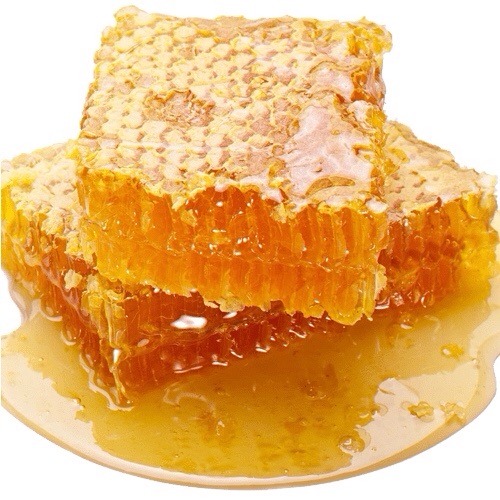
The key to honey’s secret is its unique chemical makeup consisting of low moisture (around 17%) and high sugar content. “At 17%, its water content is much lower than that of bacteria or fungi. Honey also has a low water activity; this is a measure of the amount of water in a substance that is available to support microbial growth.” [Stacey Leasca, Food & Wine, March 9, 2025, citing Andy Brunning of Compound Interest, August 14, 2014.]
Okay. But how, you may ask, does the honey bees’ nectar — which is about 70% moisture — transform into the drier, viscous substance we know as honey? Well, that’s where the fun begins: it’s all thanks to those busy little buzzers:
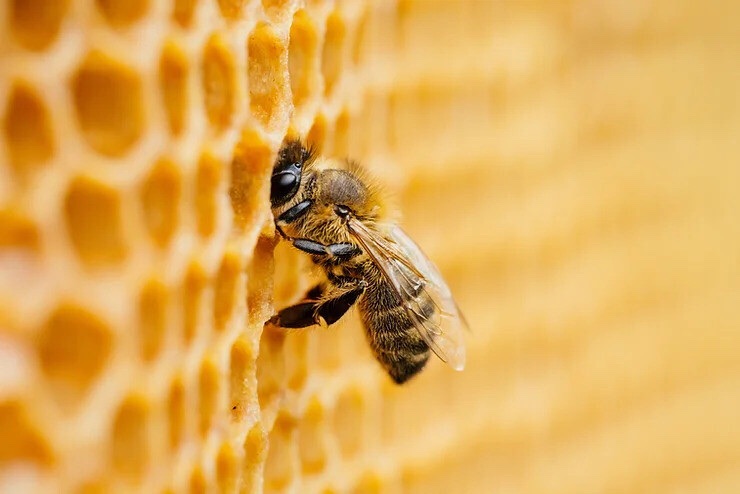
“The bees achieve this by fanning the honeycomb with their wings in order to encourage rapid evaporation of water from the nectar mixture.” [Id.]
Apparently, the continuous flapping of their teeny-tiny wings reduces the water content to the required 17 percent, which is not easy and can take up to three days to accomplish.
Well, bless their little bee hearts!
But of course, the next logical question is how these fascinating facts can help you to live longer. Certainly not by eating gallons of honey; that will just make you fat.
Consider this: Each tablespoon of honey has approximately 64 calories. Thus: 1 gallon = 256 tbsp. x 64 cal. per tbsp. = 16,384 calories.
Not to mention that, probably somewhere around the 20th tablespoon, you’re going to start to gag from all that delicious sweetness. So, no . . . eating the honey is not the answer.
Now, the human body consists, on average, of around 60% water. But what if we were able to increase our sugar intake, decrease all that water and the other liquids that are supposed to be so good for us, and flap our arms continually for three days at a time, until we are dehydrated to the same 17% level as honey? Would we then also be resistant to bacteria, fungi, and the other microbial growths that make us sick? Is it just possible that — as with the preservation of fruits, vegetables and meats by dehydration — we could live for hundreds of years in a parched state?
But, more importantly, would we want to . . . if we looked like this?
All right . . . so this wasn’t one of my brightest ideas. But it was an interesting little lesson in both entomology and nutrition. And didn’t it take your mind off of all the other world news for just a little while?
As children, the vast majority of us were taught to share. If there was only one cookie left, your mother cut it in half so that you and your sibling each had an equal portion. When your friends came over to play, you were told to share your blocks so you could each build something. And you were likely asked, “There now, didn’t it feel good to share?”
And, for most of us, that lesson stuck. Because it does feel good to make someone else happy, or to relieve another person’s burden by offering a helping hand.
For most of us.
But there are always exceptions; we weren’t all blessed with parents who believed that morality is its own reward.
Take little Donnie, for example. Born into a wealthy family, his father owned a real estate empire that included racially-segregated, middle-class housing. Donnie was taught from a very early age that money — not morality — is the ultimate reward . . . money, and the power that comes with having a lot of it.
He probably didn’t care about toys like building blocks, which would have taught him that, if you stack them too high without a proper foundation, they will eventually topple; he was more interested in Monopoly, where he could own everything and hire others to do the actual building. And then he went off to the Wharton School of Business, where he learned to maximize his ingrained greed.
Donnie became far wealthier than even his father had ever imagined, and eventually — shockingly — ramrodded his way into the presidency of the United States of America.
*. *. *
Meanwhile, across the ocean in St. Petersburg, Russia, was little Vlad, whose childhood could not have been more different. Born into a less-than-affluent family — his father was a military conscript, his mother a factory worker — he was always the “underdog,” who quickly became known as a hoodlum and a street fighter. But he was smart, and learned the art of survival. Conscience, sympathy and empathy had no place in his life.
Vlad didn’t go to business school; he was enrolled in Leningrad State University, where he became fluent in the German language, was then enlisted into the KGB — the Soviet Union’s Committee of State Security — and was stationed for a time in East Germany. His life experiences had bestowed upon him the skills of patience, survival, and a killer instinct similar to that of a chess grand master . . . but on a much larger, more deadly, scale.
Little Vlad started with nothing, and wanted everything. He was determined to show the bullies of his childhood what he was made of, and he did . . . conniving his way, step by step, into the presidency of the Russian Federation.
*. *. *
And that was when, against all odds, their lives intertwined . . . not as friends, but as adversaries. Two men — overflowing with money and testosterone, and at the height of political power — each determined to outmaneuver the other for dominance. Picture two stags rutting over the same doe . . .
. . . until finally they realized that there is more than one doe in the forest — in fact, more than enough to keep both of them happy for a lifetime. And so they decided to do what their parents should have taught them decades earlier: Share.
But Donnie and Vlad are no longer teenage boys with uncontrolled hormonal urges. Their ambitions — and their competitiveness — go far beyond seeing who can deflower the greatest number of young females. Their targeted victims are now countries . . . and there are nearly 200 of those to choose from.
Well, Vlad already had his sights set on Ukraine, which he convinced himself rightfully belongs to Russia. In fact, he had already — in the manner of the street thug he truly is — declared war and invaded that sovereign nation. But the opposition turned out to be stronger than he had anticipated — including from the United States.
But there was an election, and now Donnie was in charge in the U.S., so there was a ray of hope: if Vlad could schmooze the big lummox and convince him U.S. policy toward Ukraine has been wrong all along . . . and if he could find something Donnie wanted in return . . . he could steal Ukraine out from under the noses of the rest of the world’s leaders.
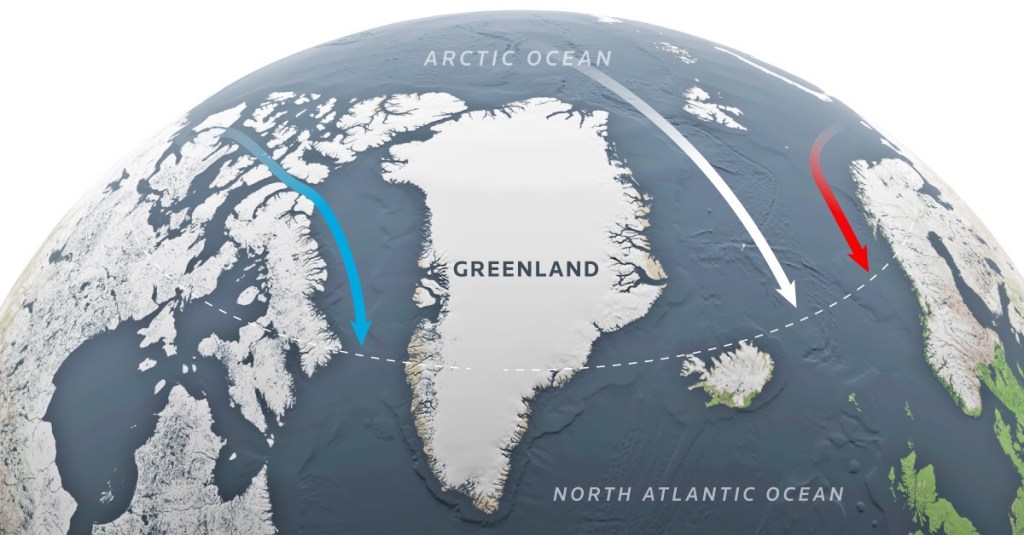
And Donnie had made no secret of the fact that he wanted Greenland. It is strategically located, rife with precious natural resources, and — while technically part of the Kingdom of Denmark — it enjoys considerable autonomy, and is geographically part of the North American continent. However, the same things that make it attractive to Donnie — its Arctic location and valuable resources — also render it a desirable target for Russia.
So what do the Monopoly whiz and the chess player do? Quite simply, they team up, revealing to the world the burgeoning reblossoming of their former bromance. The resultant mutual flattery, in fact, becomes nothing short of nauseating.
Then Donnie begins pulling the U.S. away from Ukraine, putting military aid on hold and warning EU countries to pick up the slack . . . thus placing Ukraine in the untenable position of having to give in to Russia’s demands in order to stop the bloodbath.
Next, Donnie sends one of his hatchet men, JD (whose first name no one seems to know), to Greenland to insult the Danish government and demand that the citizens of Greenland come over to the U.S. side, for their own security.
And what is Vlad up to in the meantime? Why, he’s ignoring the partial ceasefire in Ukraine that was universally believed to have been agreed upon, continually lobbing missiles and drones at the Ukrainian populace while the U.S. is withholding the defensive materiel they desperately need to protect themselves.
But, though Vlad’s word usually means absolutely nothing, he keeps his promise to Donnie by making this seemingly magnanimous announcement at a Russian Arctic Forum in the city of Murmansk:
“In short, America’s plans in relation to Greenland are serious. These plans have deep historical roots. And it’s clear that the US will continue to systematically pursue its geo-strategic, military-political and economic interests in the Arctic.
“As for Greenland this is a matter for two specific countries. It has nothing to do with us.” [Steve Rosenberg, BBC, March 27, 2025.]
*. *. *
Donnie and Vlad are known to have had at least two lengthy phone conversations during this period, the details of which have not been made public. And in the absence of facts, my imagination has, as usual, created its own vivid scenario. Imagine, if you will:
Vlad: This special military operation has gone on long enough. I need a way to stop it without losing face, and without giving up my demands. Any ideas?
Donnie: Would it help if I were to say the U.S. demands that you enter into serious peace negotiations, and in the meantime we cut off aid to Ukraine?
Vlad: That’s perfect! We stall, keep blasting them, and they’ll be forced to capitulate. It’s foolproof. So, what can I do for you in return?
Donnie: Well, you know we want Greenland. Suppose you don’t oppose that, and once we have the island and you have Ukraine, we can do a deal to share the minerals from both places?
Vlad: Donnie, as always, I am in awe of your genius. Consider it done.
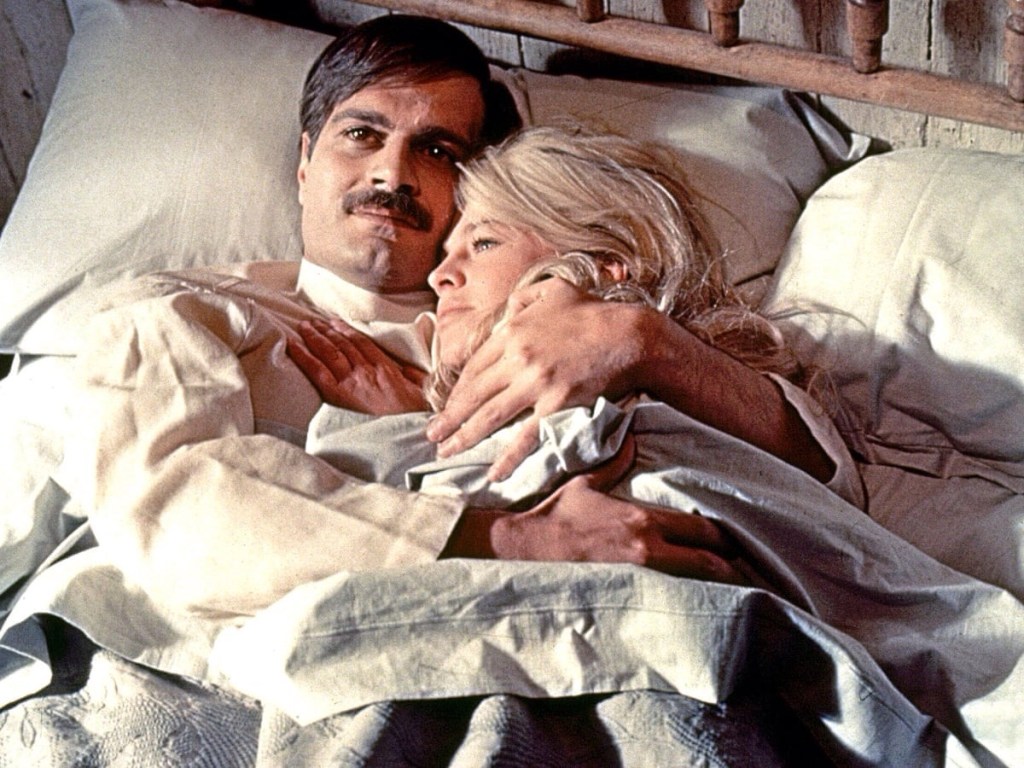
Russian literature is not especially known for its lighter side. Think of Anna Karenina, The Brothers Karamazov, Crime and Punishment, War and Peace, Doctor Zhivago. All of them tragic . . . and all of them art imitating life, with maybe a bit more sex.
Doctor Zhivago (MGM, 1965)
But every now and then, in real life, the Russian people are good for a laugh. Their political satire, for example, is delightfully caustic. And sometimes, quite accidentally, they can be at their wittiest when they’re trying to be serious.
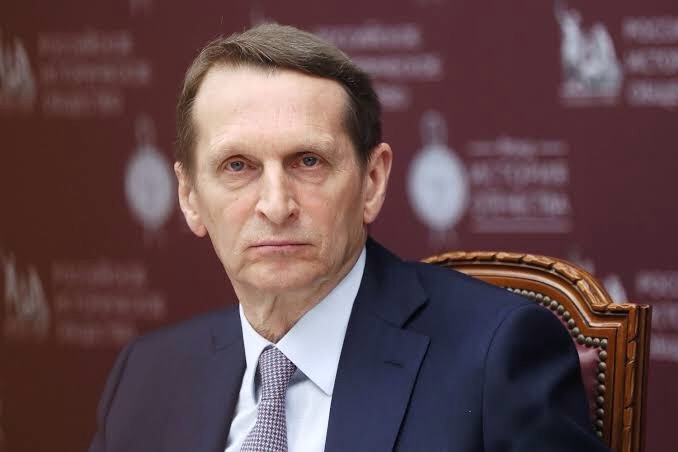
Take, for example, an excerpt from the Wikipedia biography of one Sergey Naryshkin, which reads as follows:
“Sergey Yevgenyevich Naryshkin . . . is a Russian politician who has served as the director of the Foreign Intelligence Service [FSB, successor to the KGB] since 2016. Previously, he was Chairman of the State Duma (2011-2016) and Kremlin Chief of Staff (2008-2012); . . .”
Sergey Naryshkin
So far, so good . . . right? But here is where that Russian wit shows itself:
“ . . . he was also chairman of the Historical Truth Commission from May 2009 until it was dissolved in February 2012.”
“Historical Truth”? Is that anything like “Military Intelligence”?
Well, of course it was dissolved. Who needs truth, historical or otherwise? It just gets in the way, like when you’re about to invade another country and claim that it really belongs to you.























 The Blog About Everything … and Sometimes Nothing