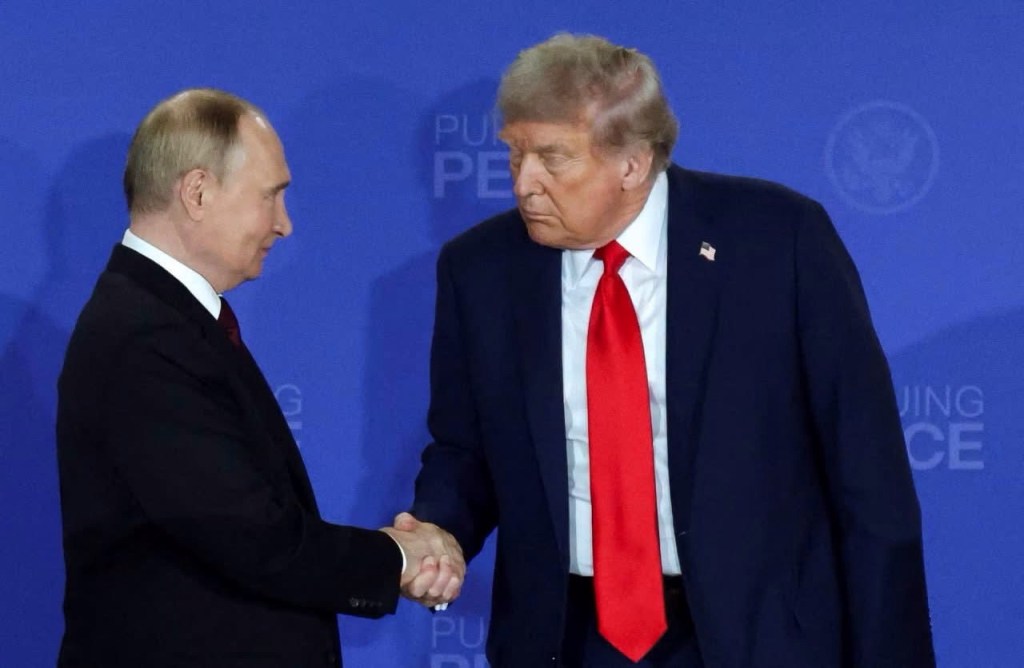
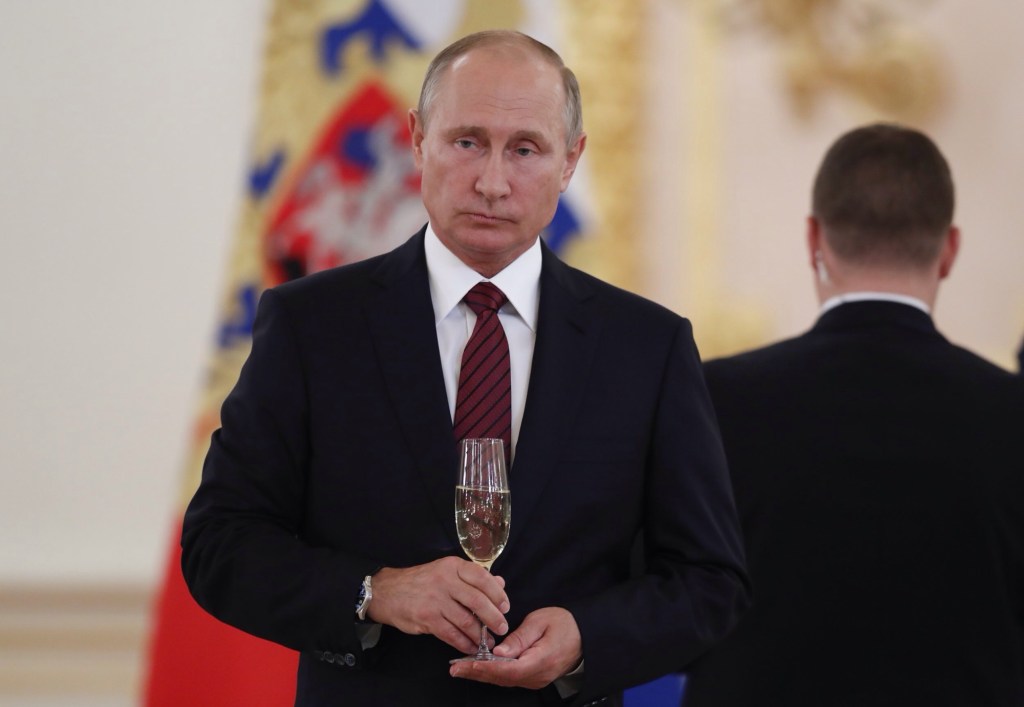
In my earlier post today, I discussed Donald Trump’s betrayal of Ukraine in making an unexpected deal with Vladimir Putin — a deal in which certain sanctions against Russia would be lifted to allow the sale of millions of tons of diesel fuel, earning billions of dollars for the replenishment of Putin’s depleted budget to be used against Ukraine while requiring nothing in return.
At the same time, in a flagrant display of hypocrisy, White House envoys Steve Witkoff and Jared Kushner were meeting in Miami with Ukrainian officials, ostensibly to discuss a proposal to end the war — a proposal that, like the others they’ve presented for Ukraine’s consideration, would undoubtedly require grossly unjust and unacceptable concessions on Ukraine’s part.
Along with much of the rest of the world, I keep asking myself how people can justify being so corrupt, so two-faced , so unfeeling, and how they manage to live with themselves.
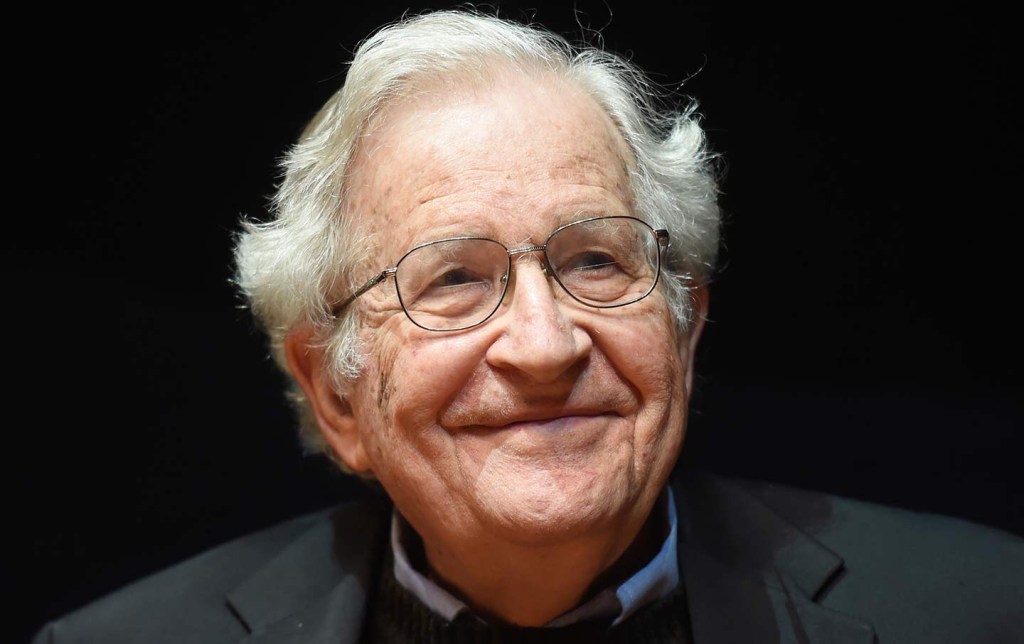
Then I found that philosopher Noam Chomsky had already summed it up perfectly, and in very few words:
“For the powerful, crimes are those that others commit.”
– Noam Chomsky, “Imperial Ambitions: Conversations on the Post-9/11 World”
Noam Chomsky (1928 – present)
The sad truth is, they just don’t give a damn.
What we do about it, how we stop them . . . well, that’s a whole different matter.
Pride. Greed. Lust. Envy. Gluttony. Wrath. Sloth. That’s the list of vices commonly cited, and warned against, in Christian theology.
But when you’ve already committed all of them, I suppose one more doesn’t make much of a difference . . . however vehemently you may preach to others about the importance of Christianity and family values. So I propose adding what I call Political Prostitution to the list. Or we could just call it Betrayal.
And yes, of course I have an example.
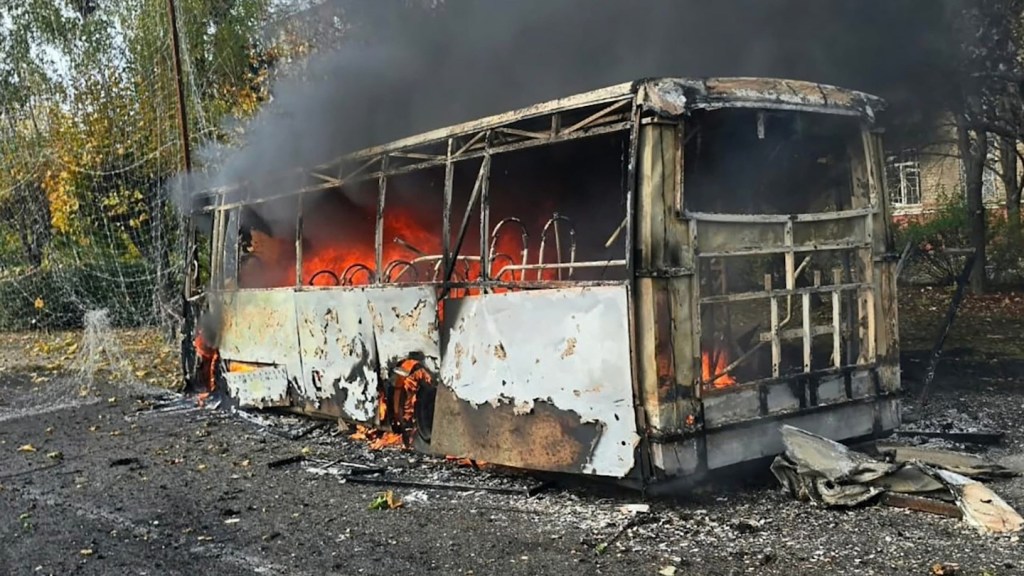
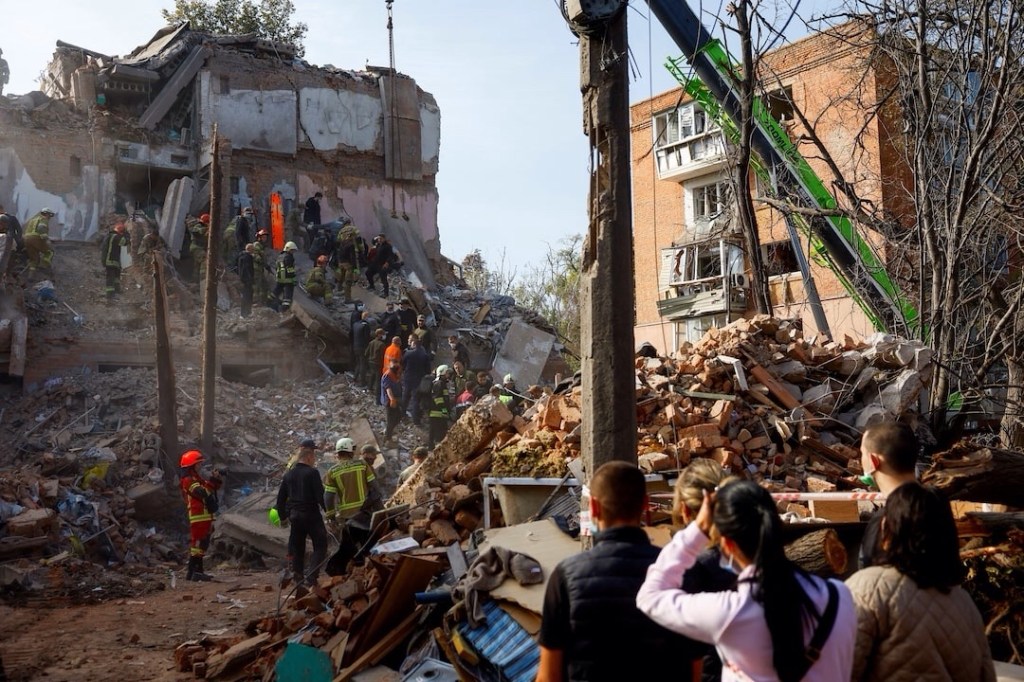
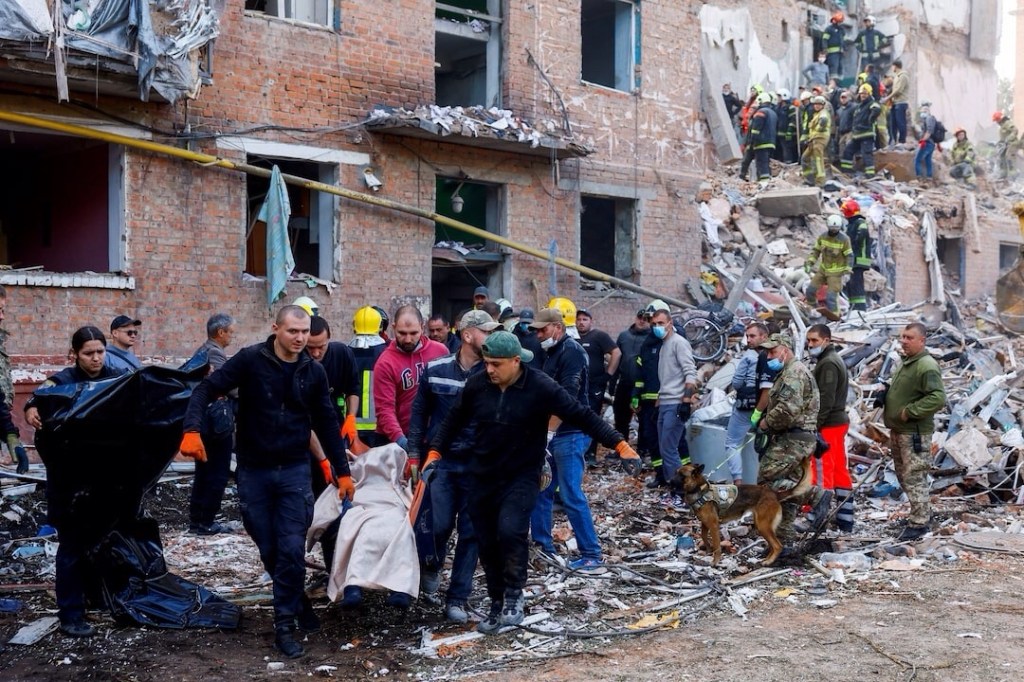
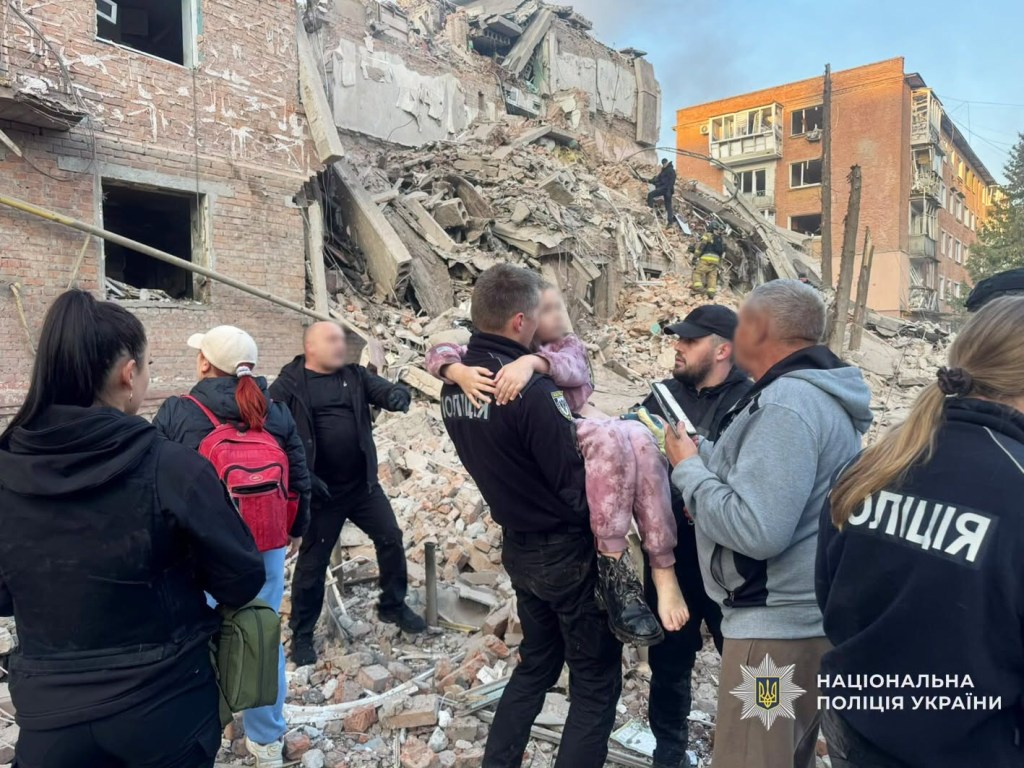
In the past week, Vladimir Putin has murdered two dozen civilians in the Ukrainian town of Pryluky, wiped out another 33 in a targeted missile strike on a civilian bus in Kramatorsk, and left around 6,000 to starve to death in blockaded Oleshky.
What’s left of the bus and its passengers in Kramatorsk, Ukraine
All of these blatant war crimes, and more, were committed in spite of the sweeping new sanctions against Russia passed by the U.S. Congress and signed into law by Donald Trump last month.
One would naturally expect a harsh response from Trump, at least as strongly worded as those issued by European leaders. But that didn’t happen. Instead, he announced on social media yesterday that he had made a deal with the Russian president by phone, in which it was agreed that Russia would immediately supply more than 300,000 tons of diesel fuel, followed by an additional 500,000 tons in November, and another one million tons “immediately thereafter” . . . plus a whopping additional three million tons “within a short period of time” after that. [Michelle L. Price and Collin Binkley, Associated Press, October 9, 2026.]
Sanctions? What sanctions?
And why have they suddenly evaporated?
Actually, that’s easy. The U.S. midterm elections are just around the corner, and Trump’s Republican candidates aren’t doing well at all.
And, as we all know, the main reason they’re in jeopardy of losing the House of Representatives and possibly also the Senate is that the prices Trump had promised his followers he would lower — from food to housing to medical care to gas — have instead skyrocketed. And he thinks that, by allowing Russia to flood the market with an abundance of fuel, our gas and other fuel-related prices will magically drop overnight, winning him some desperately-needed Brownie points with the voters.
At the same time, his friend in the Kremlin will be laughing all the way to the bank as he replenishes his much-depleted war chest without having given anything in return.
So, Ukraine be damned. The rest of Europe be damned. Human decency be damned. Trump has an election to fix, to try to keep himself and his cohorts from having to face accountability for their crimes. And if he has to prostitute himself in the process . . . well, it wouldn’t be the first time.
As an added twist of the knife in Ukraine’s back, even as Trump was making this announcement, Steve Witkoff and Jared Kushner were meeting with Ukrainian officials in Miami to discuss a proposal to end the war. [Id.]
Always good for a laugh — especially when he’s not trying to be funny — Donald Trump outdid himself yesterday when speaking to a group of scientists at the U.S. . . . excuse me, the renamed Donald J. TrumpInstitute of Peace in Washington.
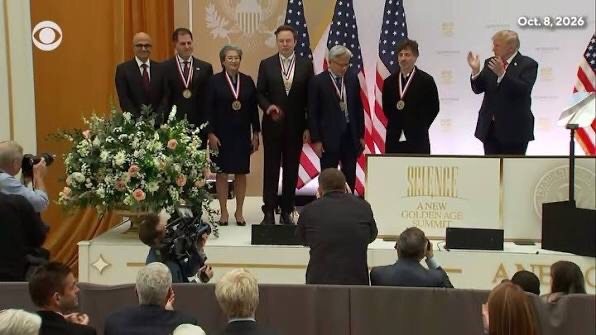
The occasion had nothing to do with “peace” prizes in the same sense as the Nobel Peace Prize he so openly covets (and just lost out on again). Rather, medals were being awarded for scientific achievement, this year going to five tech industry corporate moguls who (incidentally?) just happen to be billionaire contributors to Trump’s campaigns and pet projects:
> Michael Dell, CEO of Dell Technologies; > Sergey Brin, co-founder of Google; > Lisa Su, President and CEO of Advanced Micro Devices; > Satya Nadella, CEO of Microsoft; and > Jensen Huang, CEO of Nvidia
And to top off the event, the National Medal of Science went to a man who needs no introduction: Elon Musk, whom Trump called “our modern-day Thomas Edison.”
It’s interesting to note that these honorifics were being handed out by a man who daily denigrates immigrants to our country as lowlifes and criminals, and who obviously was unaware of the irony in the fact that five of the six recipients were themselves immigrants: Brin born in Russia, Su and Huang from Taiwan, Nadella from India, and of course, Musk from South Africa.
But that was obviously not an issue for Trump as he began his opening remarks at the ceremony by complimenting the day’s honorees:
“We have an extremely high IQ audience for a change. For a change. It’s very nice.”
“Say what?!!”
It never occurred to him that he had just delivered a massive insult to each and every one of his rabid MAGA supporters who have made up the bulk of his rally audiences for the past ten years.
So how does that feel, good buddy? Your hero just called you “low IQ.” (That means “stupid,” you know.)
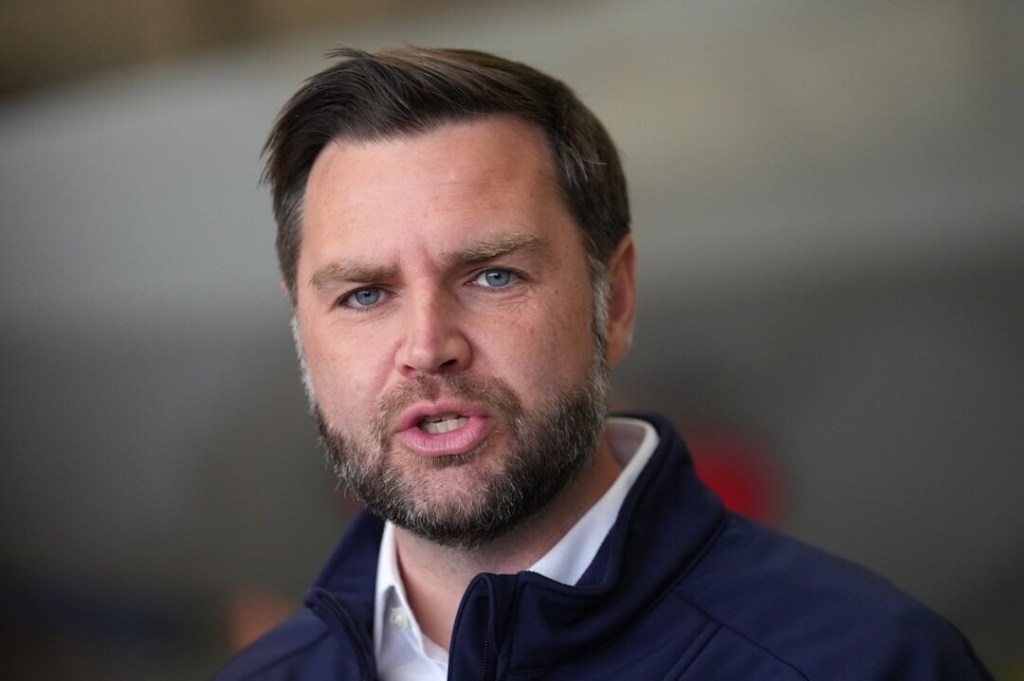
Forget history, and forget the standard dictionary definitions. JD Vance has his own idea of what socialism really is . . . well, sort of.
JD Vance
At a press conference this week concerning the government’s campaign against alleged fraud in the country’s H-1B visa program, he was asked by a reporter: “How do you define socialism personally and why do you think socialist candidates are popping up everywhere across the country?”
That seems like a fair and very relevant question as we approach the November 3rd midterm elections, and particularly in view of the Republican administration’s repeated assertions that liberals are promoting socialism and/or communism.
Now, the long-accepted definition of socialism — and as set out in the Merriam-Webster dictionary — is as follows:
1: any of various egalitarian economic and political theories or movements advocating collective or governmental ownership and administration of the means of production and distribution of goods
2a: a system of society or of group living in which there is no private property
b: a system or condition of society in which the means of production are owned and controlled by the state
3: a stage of society in Marxist theory that is transitional between capitalism and communism and is distinguished by unequal distribution of of goods and pay according to work done
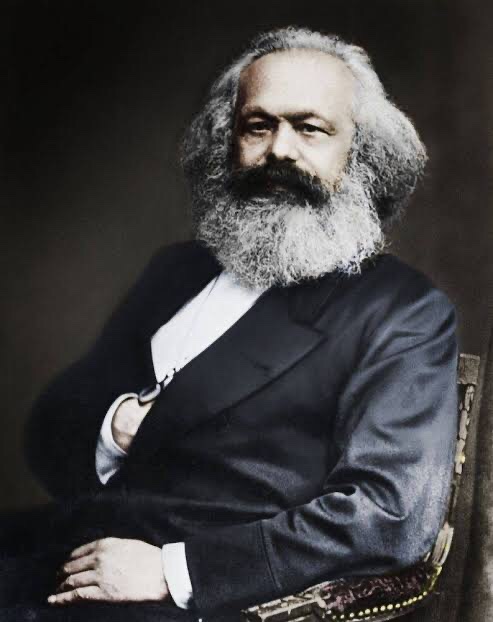
Karl Marx (doing his Napoleon impersonation?)
But Vance had a bit of difficulty with that, because the Democrats and other liberal Americans he has described as “socialists” haven’t been advocating anything close to it. So what he came up with was this bit of word salad:
“Oh man, you know, I guess it’s honestly it’s a hard term to define these days because very often socialism, you know, classically you would think socialism is about prioritizing workers, and yet in reality I guarantee that most of the self-described socialists running across the United States of America are going to howl about this announcement today, which is prioritizing American workers over foreign workers.
“So, I don’t know what the term means anymore. I think in reality what it actually means in the American context is that you want to replace American workers with foreign workers and you want boys to play in girls’ sports. That’s what unites the socialists that I see running across the United States of America today.”
And there you have it, from the lips of the man who is a single heartbeat removed from the presidency of the United States . . . who can’t cobble together a coherent sentence without a script . . . and who conflates socialism with gender identity.
It’s not a protocol, really, because that would imply that it made a modicum of sense. I’d say it’s more like “Mein Kampf” and “1984” mated and gave birth to a cheap imitation of a Stephen King horror story.
“It” is, in fact, Pete Hegseth’s concept of what the U.S. military should look like.
U.S. Military Parade – Crossing Memorial Bridge from the Lincoln Memorial toward Arlington National Cemetery
That’s nice. But no . . . I meant what they should literally look like:
The Perfect Military Man
That’s better.
AI nailed it: male, tall, slender, strong, clean-shaven, White, Christian, and ready to follow any order, whether legal or not. Hegseth has also specified no “beardos” or “weirdos,” and they must possess a satisfactory testosterone level. In addition, he has created a new Office of Religious Affairs in the Pentagon for the purpose of evaluating the “spiritual fitness” of active-duty troops and cladding them — in his terminology — in the “full armor of God.”
The one thing he didn’t ban? Tattoos. The fact is, the self-styled “Secretary of War” is covered in them.
Pete Hegseth, Exposed
So . . . not weird, right?
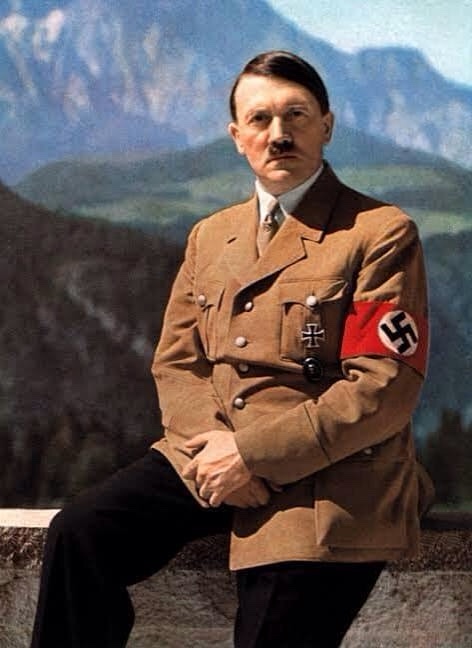
And speaking of “Mein Kampf,” have you ever seen the Iron Cross medals handed out for bravery during Hitler’s Third Reich?
In fact, Der Führer wore one himself:
There were so many similarities between Hegseth’s standards and what I recalled of Hitler’s obsession with creating a so-called “Aryan race” that I did a little further checking, and found that Adolf and Pete had more in common than I had realized. for example, Hitler required:
> Physical characteristics: Straight blond hair, light-colored (blue) eyes, fair skin, tall and athletic stature, and very specific cranial and facial features.
> Racial Purity: Germanic, Nordic and other Northern European stock, with proof of lineage free of Jewish or nonwhite ancestry dating back generations.
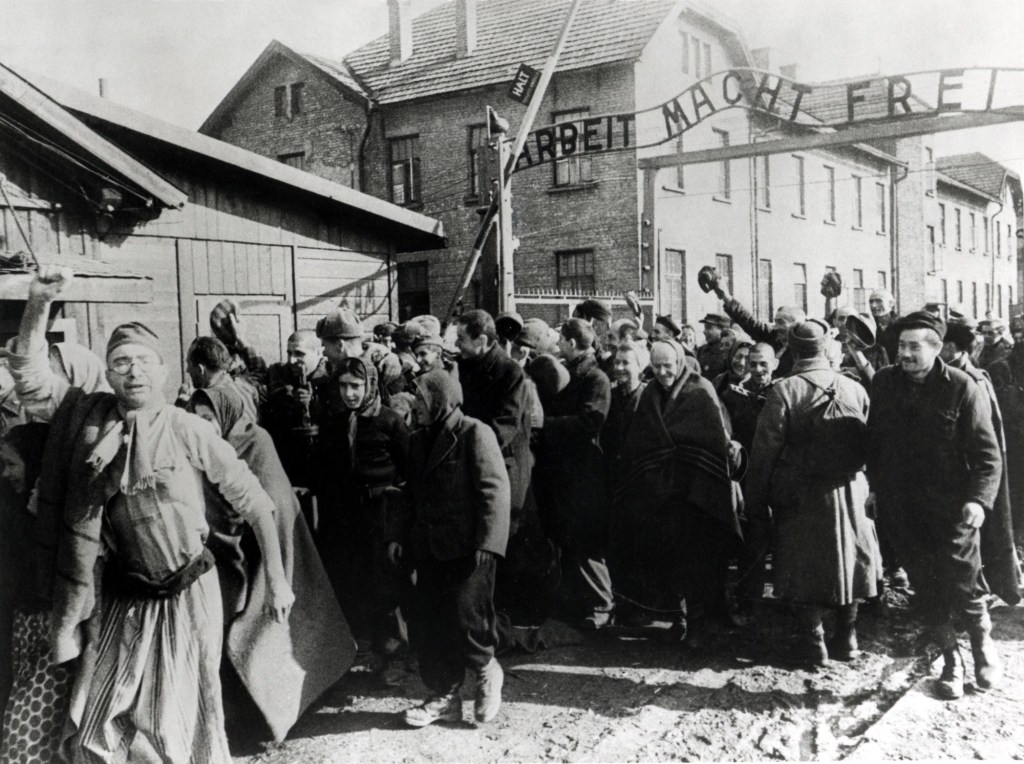
Those who fell outside these definitions — Jews, Romany people, Slavs, people with disabilities, etc. — were labeled as subhumans and considered disposable. And as the world learned, albeit too late, he managed to dispose of some 13 million (or more) of them before he was finally stopped.
The Liberation of Auschwitz Concentration Camp
Are those similarities just coincidences? Is Pete Hegseth consciously emulating Hitler, or did he conjure up these ideas on his own? I don’t have the answers; but it hardly matters. Because either way, this is an individual who shouldn’t be allowed to head up a local Nighborhood Watch, much less have charge of the world’s most powerful military force.
Not everyone is beautiful, or talented, or brilliant. That’s just a fact of life. But what I will never understand is how so many totally ignorant people have suddenly come to occupy such influential (and profitable) positions: corporate moguls, high-ranking politicians, and talking heads who keep trying to pass themselves off as intellectuals.
Today’s case in point: self-described “political commentator” and “media personality” Tucker Carlson.
Tucker Carlson
Since becoming anathema to the mainstream media, including even right-wing Fox News, Carlson has tried to maintain something of the appearance of a journalist by limiting his interviews to people who share his views, or who themselves are not very bright and therefore not likely to challenge him in any way.
But this week he made the mistake of interviewing British former Tory Minister Jacob Rees-Mogg. In a lengthy and often contentious debate on foreign policy — in which Carlson was clearly out of his depth — he blamed the West for having incited Russia’s aggression against Ukraine, incorrectly stating that the Western nations had breached the terms of the 1994 Budapest Memorandum — in which Ukraine agreed to give up its arsenal of nuclear weapons in exchange for security guarantees — by failing to stop NATO’s eastward expansion to Russia’s borders, when in fact the breach was Russia’s 2014 invasion of Crimea.
After Rees-Mogg made mincemeat of that preposterous assertion, Carlson moved on to World War II, claiming that Germany had a legitimate claim over parts of Poland back in 1939, and asking why Britain had bothered entering the war at all.
Rees-Mogg’s reply was, simply and logically: “Otherwise we’d be speaking German.”
And here is where Carlson went completely off the rails when he countered with:
“Who cares? There are a lot of people in Britain who can’t speak English. So it would be nice to have at least a European language spoken in your country.”
Source: Rowena Mason, The Guardian, October 4, 2026.
“You gotta be kidding me!”
So, a racist apologist for both Adolf Hitler and Vladimir Putin, who knows little or nothing of history or politics, tries to palm himself off as an expert on everything.
The deluge of news emanating from there over the past few years has been horrifying. But it has also served to bring back memories of the remarkable months I spent living and working in Moscow in 1993. I’ve written at length about some of those experiences: the funny ones, the heartwarming ones, and the frankly terrifying ones.
Lately, though, I’ve had to admit that, while I would love nothing better than to turn back the clock and revisit those days, I’m actually glad that I can’t. The place that I once called my “second home” is not the Moscow I knew and grew to love. And it goes beyond political considerations.
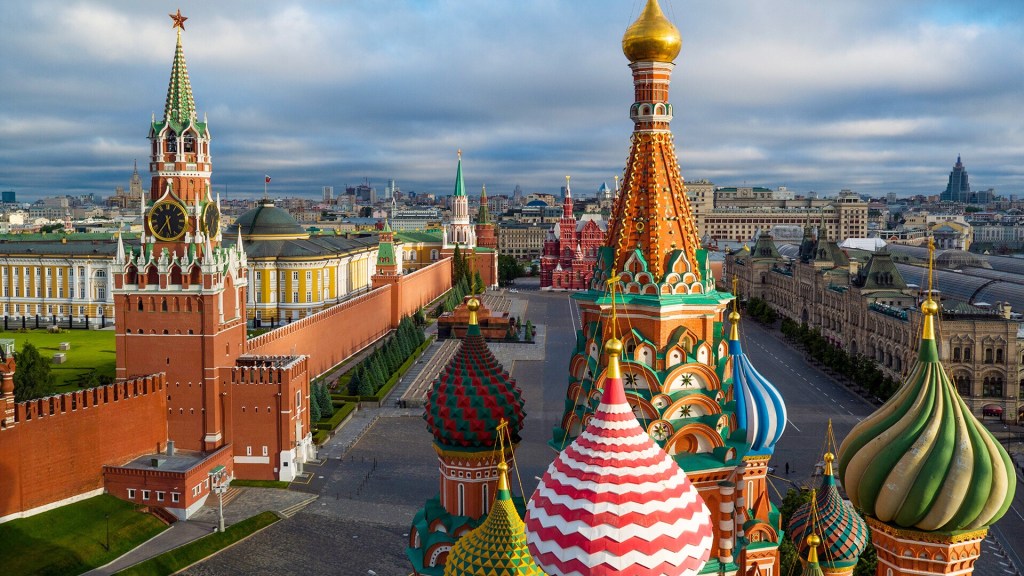
This is the Moscow I carry in my mind:
Red Square and the Kremlin
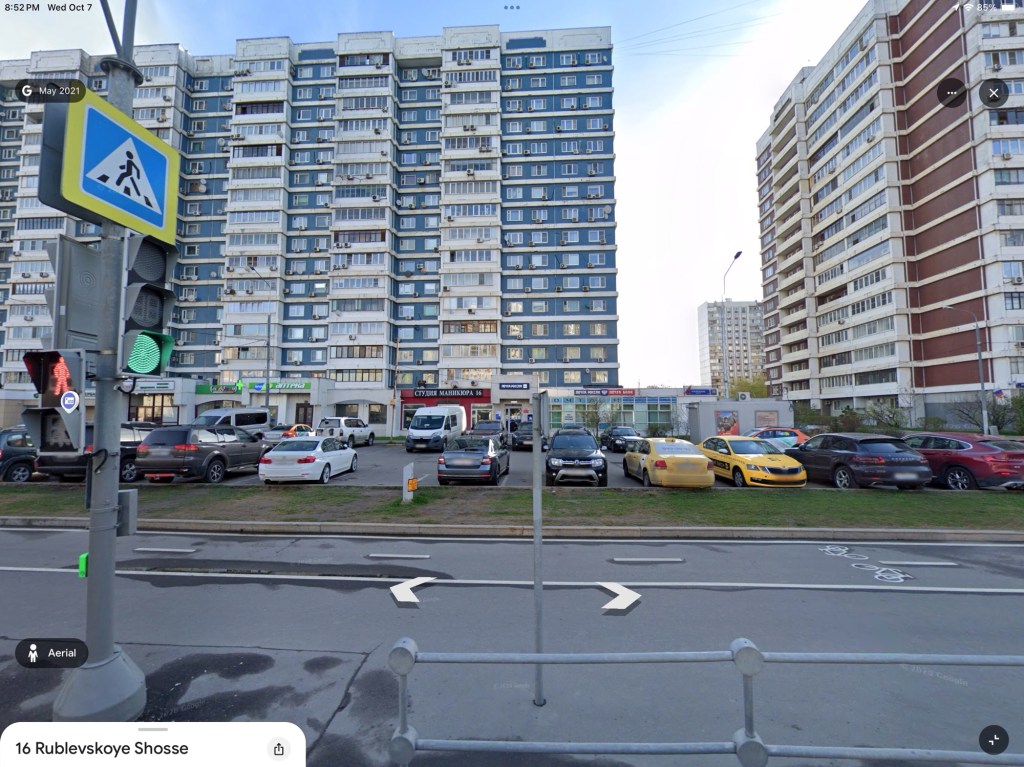
And this:
No. 16 Rublevskoye Shosse, Moscow
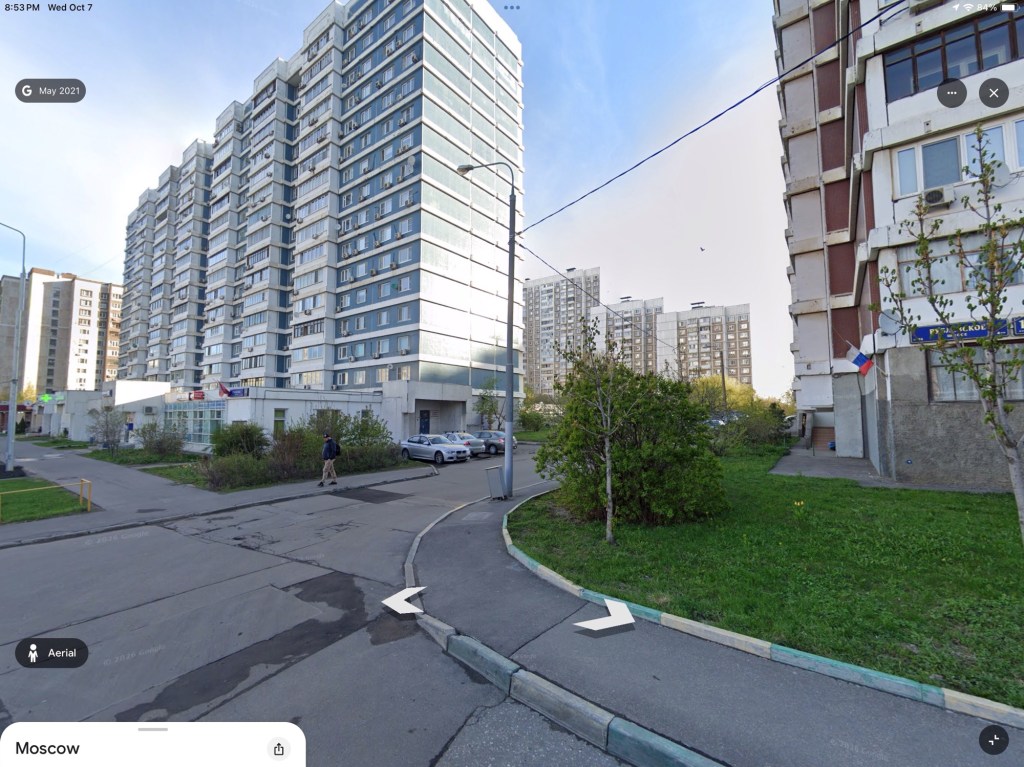
The stately building on the left is where I lived and worked, on the outskirts of the city. These are current photographs from Google, and the building itself doesn’t appear to have changed much. The bank and post office are still there on the ground floor, though the pharmacy, restaurant and nail salon appear to be new — or newer than 33 years, at any rate. And the three big buildings in the background were just holes in the ground when I left.
But just down the road (about a six-minute drive, according to Google Maps), in what was primarily another residential area, is now this:
Kuntsevo Plaza
It’s described as a mixed-use development, encompassing residential, business, commercial, and entertainment venues. And, while I am sure some of the locals appreciate the convenience, I am equally certain that the majority of the neighborhood’s original residents can’t afford what Kuntsevo Plaza has to offer.
Yes, I know we’re living in a whole new era with a new generation in charge. And I know that things change; they have changed here in the U.S. as well. But I like to remember Moscow as it was in 1993: full of optimism for a better future following the collapse of the Soviet Union, but still holding fast to the old Russian traditions, and what has long been described — perhaps a bit over-romantically — as “the Russian soul.”
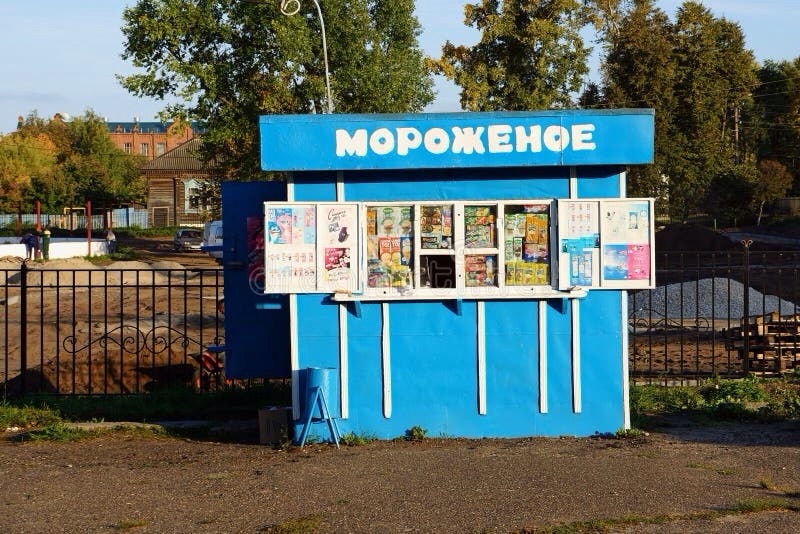
If I were to return today, I would miss the small neighborhood shops where people were thrilled to meet an American who spoke Russian (however badly); the kiosks selling everything from ice cream to caviar to souvenirs; the endless talks around the kitchen table about politics, art, music, the price of vegetables, and more politics; the girls with armsful of peonies, happy to share them with an American lady; the Russian “mafiosi” who treated me with respect because I was someone’s mother; and the home cooking that transported me back to my childhood years in my grandmother’s kitchen.
Ice Cream Kiosk
Those things, or some of them, probably still exist in the hinterlands. But likely not so much in Moscow, or St. Petersburg, or any of the larger cities. It’s partly the natural result of technological advancement, of course. But it’s more than that. It’s a change in outlook, in attitude, in the way people have turned inward as they communicate less in person and more through hand-held “smart” devices.
It’s not just happening in Russia, of course. But perhaps it’s more noticeable there because they were so far behind to begin with, and caught up so quickly. Unfortunately, as the reforms of the ‘90s opened up the entire world to a people who had been closed off for so long, they absorbed some of the worst of the West along with the best.
And that is what I’m glad I’m not there to see today. I’d rather remember it as it was, a generation ago, when I sat around a table with a group of Russian school teachers, slamming down shot after shot of ice-cold vodka and toasting Russian-American friendship. Or when I watched the wonder on the faces of little children experiencing their first opera at the Bolshoi. Or when a mother with her hands full of groceries handed her daughter off to me as we hopped onto the escalator in the Metro station.
That was my Moscow, and I miss it . . . but I will always be grateful to have known it when I did.
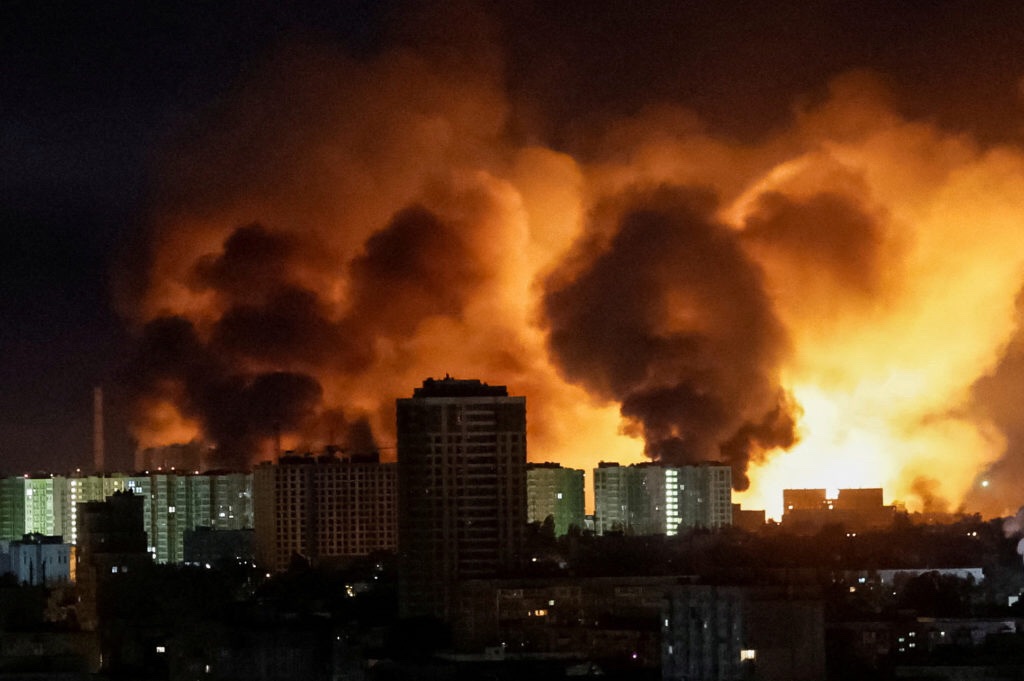
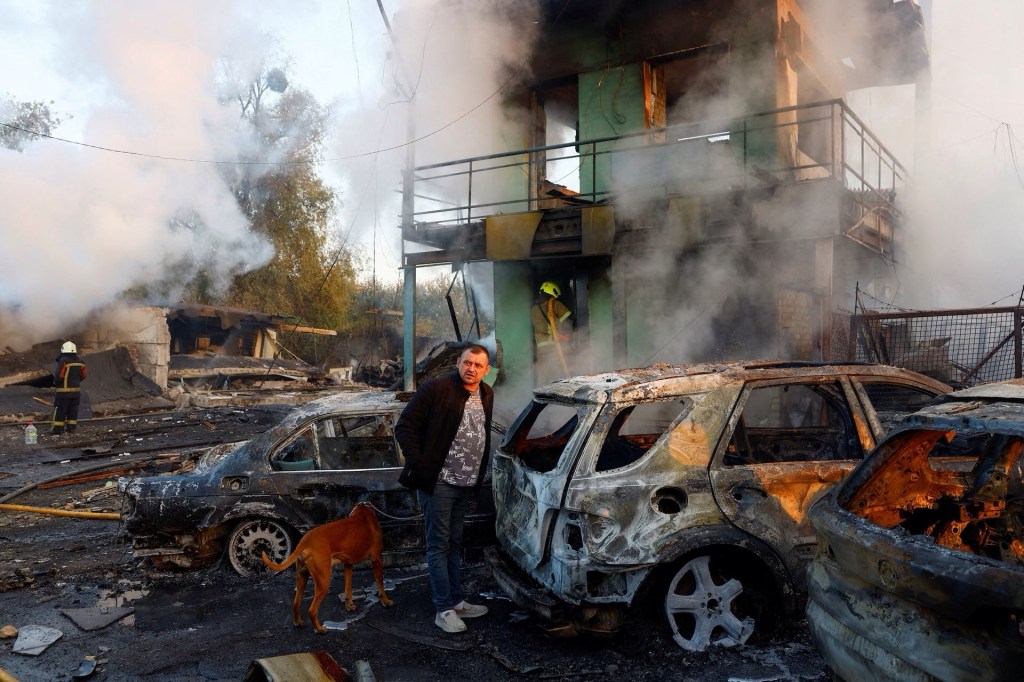
He began his celebrations last night by killing 18 people, including four children (three of them just a year old), in an attack on Pryluky in the Chernihiv region of Ukraine . . .
Pryluky, Ukraine – October 7, 2026
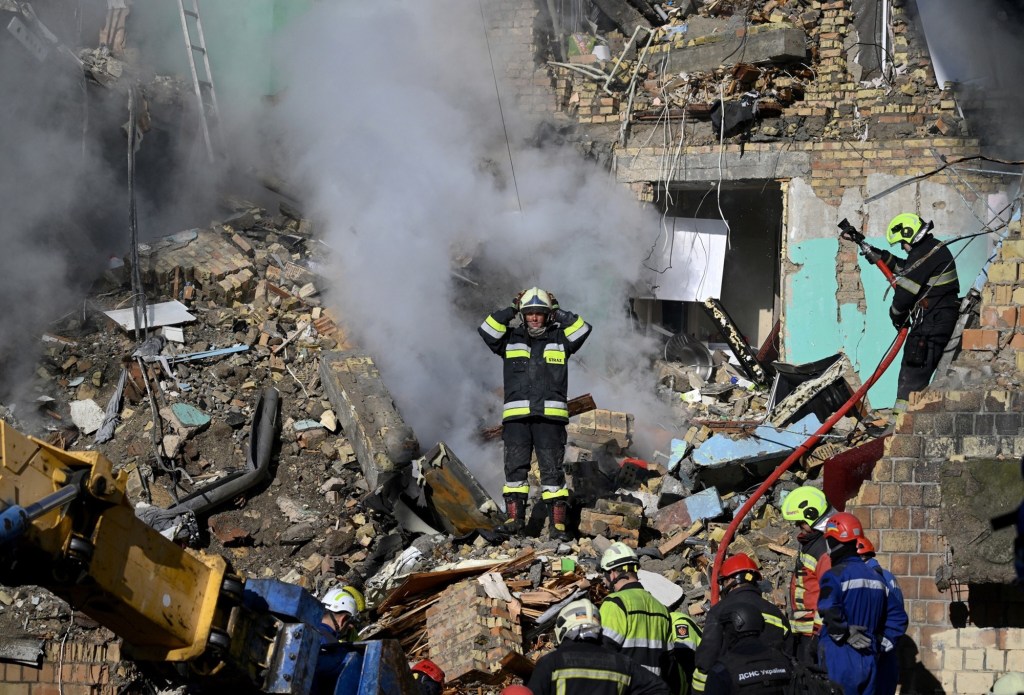
. . . and ending the lives of at least two others in Kyiv . . .
Kyiv, Ukraine – October 7, 2026
. . . racking up a total of 20 to 24 civilian deaths and countless injuries in an overnight series of barrages across Ukraine.
Still, in the spirit of international comradeship, I feel I would be remiss if I failed to send my birthday greetings to this man who has given so much to others. I have no missiles or drones to offer, and he already has more material wealth than most of us could ever dream of; but I do have these wishes for his future:
> I do not wish death or injury on anyone. But we are all destined to shuffle off this mortal coil at some point; and in Vlad’s case, I hope that his final moments, whenever they may arrive, bring him an epiphany: a sudden, total realization of the ignominious nature of the life he has led and the misery he has caused, along with an overwhelming, unbearable feeling of empathy for each and every one of his victims.
> I wish him a sense of loss for the life he might have lived with the opportunities he has been given.
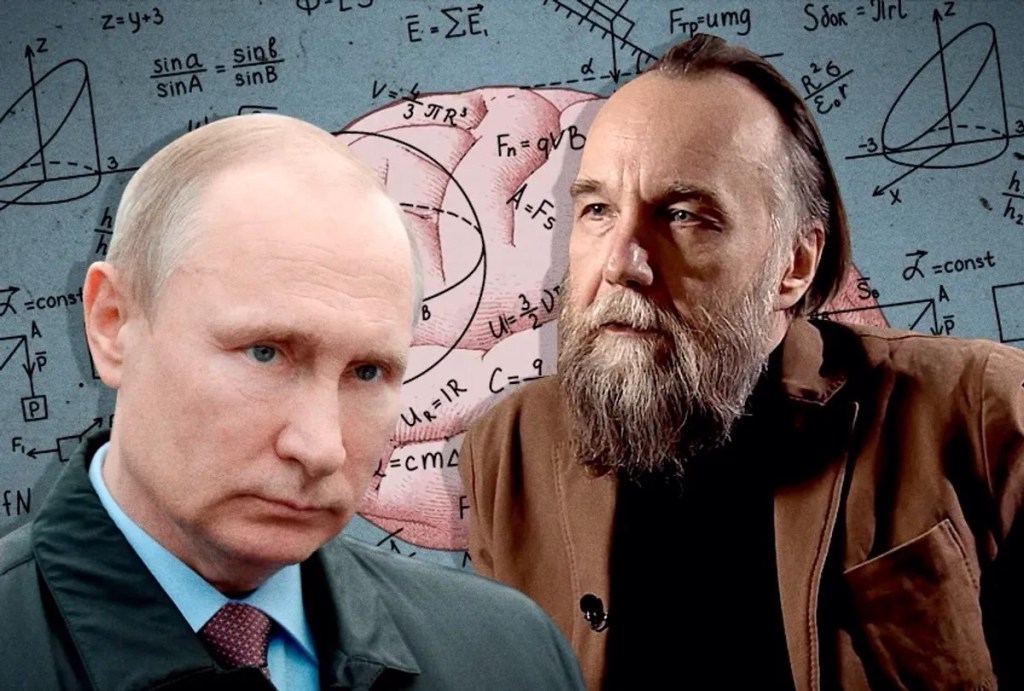
> And, in whatever time he has left on this Earth, I wish him abject failure in every aspect of his life: a rapid, crushing defeat in his war against Ukraine; a coup that removes him from office and deprives him of every bit of his wealth and power; and banishment to the farthest reaches of Siberia, with only his “brain,” Aleksandr Dugin, for company.
Putin and Dugin: Soulmates for Life
Finally, when he is gone, I wish his name to be erased from the annals of history. I believe that the worst punishment one can inflict on a tyrant — worse than becoming an object of scorn and hate — is to be treated as though he never existed at all.
When Bob Dylan sang, “The Times They Are A-changin’,” he had no way of knowing how true those words would still be some six decades later.
Since that song was released in 1964, we have lived through societal, technological, and geopolitical changes that would have seemed like science fiction back then. Much of it has been for the better . . . but not all.
The world today is facing numerous new dangers of a sort undreamt of in 1964: climate change, drone warfare, artificial intelligence, Donald Trump . . .
And I have come to think that the one kind of change we truly need is a change in direction, back to the days when our government, while not perfect, still worked for us, and not against us; when our elected officials — or the majority of them, at any rate — still tried to uphold their oath to the Constitution; and when corruption was rooted out and punished, not ignored or even rewarded.
In today’s increasingly authoritarian world, it often seems impossible to imagine a turn-around of such magnitude. Yet famed anthropologist and author Margaret Mead never lost hope in the possibility, saying:
“Never doubt that a small group of thoughtful, committed citizens can change the world; indeed, it’s the only thing that ever has.”
Margaret Mead (1901 – 1978)
As we approach the U.S. midterm elections in just 27 days, her words seem particularly relevant. We Americans of voting age are no “small group” — we are legion. The question is: Are we thoughtful enough and committed enough to make the changes we need?
In Shakespeare’s Romeo and Juliet, the dying Mercutio blames his fate on the long-standing feud between the Montague and Capulet families, and issues his last wish for both clans:
“A plague o’ both your houses! They have made worms’ meat of me: I have it, And soundly too: your houses!”
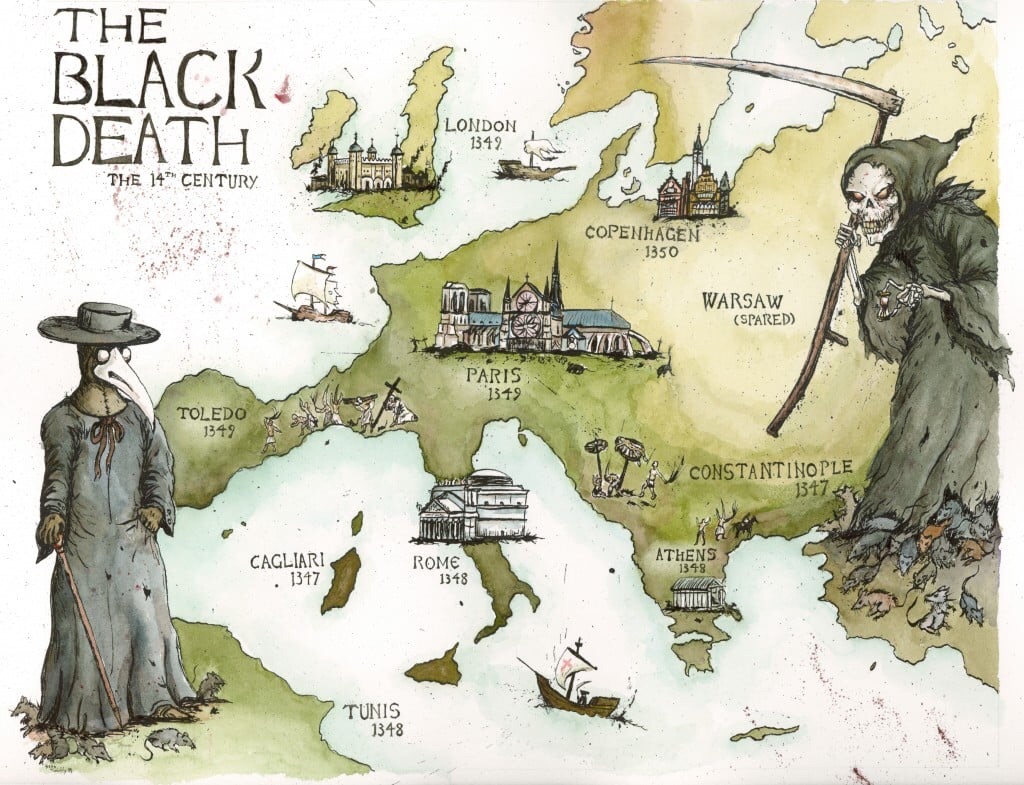
Every now and then, the forces of Nature — without any help or encouragement from Mercutio or anyone else — descend upon some part of the Earth with unspeakable vengeance: a great flood, drought, war, or — perhaps worst of all because of its unknown origin — a new pestilence such as the Black Plague of the 14th century, the Spanish Flu of 1918-20, or the more recent COVID-19 pandemic.
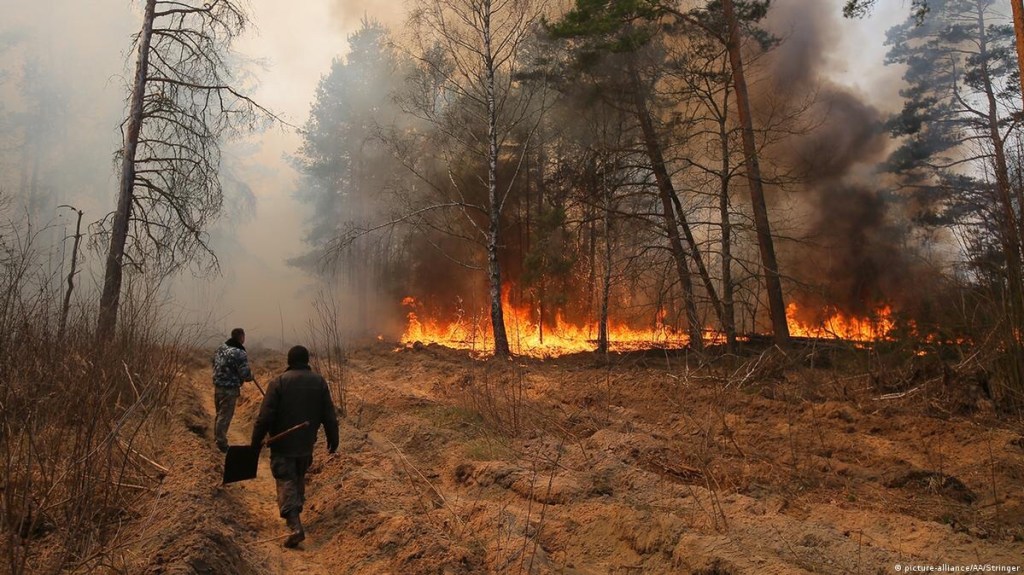
And sometimes we humans do it to ourselves. A classic example might be the explosion of the nuclear reactor at Chernobyl in the Soviet Union in 1986. While no one intentionally caused the reactor to malfunction, negligence was certainly the primary factor. Archives show that there had been a known radiation leak that was covered up “to prevent panic and provocative rumours.” But worse yet was the reaction on the part of the Soviet government following the explosion.
For two full days, the incident was kept secret while workers and firemen — some 31 of whom died in the immediate aftermath — were sent in to try to contain the radiation. It was only when Sweden detected an increase in radiation levels that the truth became obvious; and even then, the Kremlin tried to downplay the seriousness of the disaster. Some 4,000 deaths have been attributed to the effects of long-term radiation exposure.
Exclusion Zone Around Chernobyl – Still Burning
*. *. *
This week, a young Russian woman died in the Irkutsk region of Siberia of an as-yet unconfirmed disease. The 28-year-old laboratory technician, Daria Shipilova, worked in the Anti-Plague Research Institute, where she routinely handled and studied potentially deadly pathogens, including pneumonic plague. Immediately following her death, and even before taking steps to protect public health, the Kremlin set into motion its usual cover-up procedures.
First, 189 individuals across local medical facilities were placed in isolation and denied outside contact. The area hospital was locked down. Official statements were limited to vague references to a “particularly dangerous infection” or “pneumonia of unknown etiology.” [Brent Molnar, “A Voice of Reason,” October 5, 2026.]
State media networks have purged earlier references to any suspicion of pneumonic plague; travel advisories in the region have been removed from municipal sites; and regional leaders have walked back initial statements confirming the infection.
But the word — although still just rumors — had already begun circulating, and there has been a run on broad-spectrum antibiotics from nearby pharmacies. Bad news always travels quickly.
We still don’t know precisely what killed Daria Shipilova. If it was pneumonic plague, there is a reasonable chance her life could have been saved if antibiotic treatment had been administered within 24 hours of the first appearance of symptoms. The same, of course, is true of any others who might have been exposed. Are her co-workers, family members and friends being monitored? Is anyone else known to have been stricken?
And if it wasn’t pneumonic plague, then what was it, and what precautions are being taken? For that matter, will we ever be told the truth about any of it?
Yet there is one additional, overriding issue that comes to my mind, above and beyond the welfare of the people of the Irkutsk region, and that is: What is the purpose of the so-called Anti-Plague Research Institute? What other sorts of pathogens are contained in their facilities? And are they being studied strictly for medical purposes, or as part of some nefarious program of biological warfare?
We need to know . . . because that last possibility could one day bring down a plague on all our houses.