In Shakespeare’s Romeo and Juliet, the dying Mercutio blames his fate on the long-standing feud between the Montague and Capulet families, and issues his last wish for both clans:
“A plague o’ both your houses!
They have made worms’ meat of me: I have it,
And soundly too: your houses!”
Every now and then, the forces of Nature — without any help or encouragement from Mercutio or anyone else — descend upon some part of the Earth with unspeakable vengeance: a great flood, drought, war, or — perhaps worst of all because of its unknown origin — a new pestilence such as the Black Plague of the 14th century, the Spanish Flu of 1918-20, or the more recent COVID-19 pandemic.

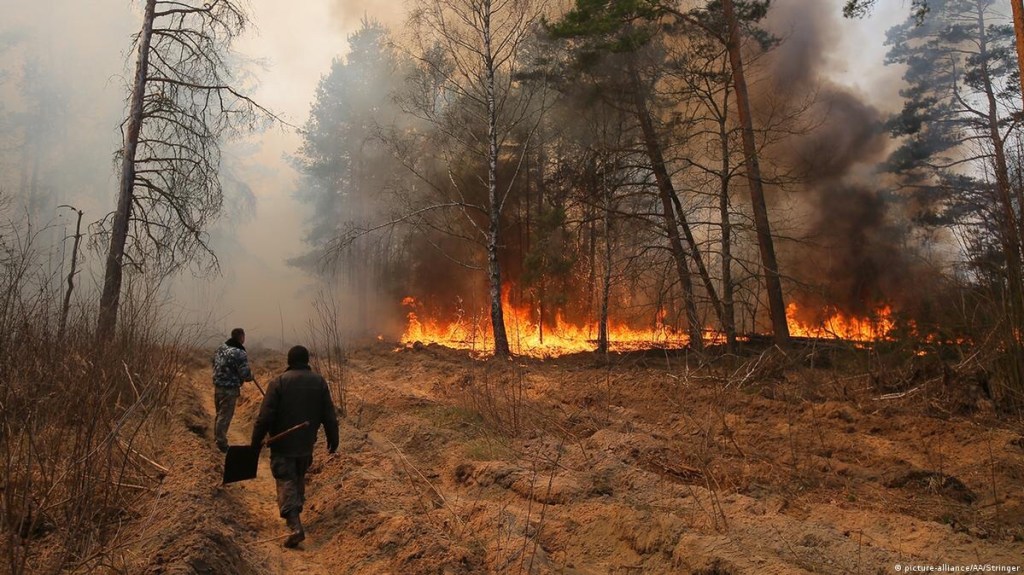
And sometimes we humans do it to ourselves. A classic example might be the explosion of the nuclear reactor at Chernobyl in the Soviet Union in 1986. While no one intentionally caused the reactor to malfunction, negligence was certainly the primary factor. Archives show that there had been a known radiation leak that was covered up “to prevent panic and provocative rumours.” But worse yet was the reaction on the part of the Soviet government following the explosion.
For two full days, the incident was kept secret while workers and firemen — some 31 of whom died in the immediate aftermath — were sent in to try to contain the radiation. It was only when Sweden detected an increase in radiation levels that the truth became obvious; and even then, the Kremlin tried to downplay the seriousness of the disaster. Some 4,000 deaths have been attributed to the effects of long-term radiation exposure.
*. *. *
This week, a young Russian woman died in the Irkutsk region of Siberia of an as-yet unconfirmed disease. The 28-year-old laboratory technician, Daria Shipilova, worked in the Anti-Plague Research Institute, where she routinely handled and studied potentially deadly pathogens, including pneumonic plague. Immediately following her death, and even before taking steps to protect public health, the Kremlin set into motion its usual cover-up procedures.
First, 189 individuals across local medical facilities were placed in isolation and denied outside contact. The area hospital was locked down. Official statements were limited to vague references to a “particularly dangerous infection” or “pneumonia of unknown etiology.” [Brent Molnar, “A Voice of Reason,” October 5, 2026.]
State media networks have purged earlier references to any suspicion of pneumonic plague; travel advisories in the region have been removed from municipal sites; and regional leaders have walked back initial statements confirming the infection.
But the word — although still just rumors — had already begun circulating, and there has been a run on broad-spectrum antibiotics from nearby pharmacies. Bad news always travels quickly.

We still don’t know precisely what killed Daria Shipilova. If it was pneumonic plague, there is a reasonable chance her life could have been saved if antibiotic treatment had been administered within 24 hours of the first appearance of symptoms. The same, of course, is true of any others who might have been exposed. Are her co-workers, family members and friends being monitored? Is anyone else known to have been stricken?
And if it wasn’t pneumonic plague, then what was it, and what precautions are being taken? For that matter, will we ever be told the truth about any of it?
Yet there is one additional, overriding issue that comes to my mind, above and beyond the welfare of the people of the Irkutsk region, and that is: What is the purpose of the so-called Anti-Plague Research Institute? What other sorts of pathogens are contained in their facilities? And are they being studied strictly for medical purposes, or as part of some nefarious program of biological warfare?
We need to know . . . because that last possibility could one day bring down a plague on all our houses.

Just sayin’ . . .
Brendochka
10/7/26


Pingback: 10/7/26: A Plague On Putin’s House? – Soshul Meejah – Ukraine Today .org