Author Archives: brendochka39

Unknown's avatar

About brendochka39

Having a wonderful time reminiscing about all my past travel (and other) adventures. Hope you’ll share them with me in my blog, “All Roads Led to Russia.”

8/30/24: A Yankee Doodle Dandy in Moscow (Ch. 18 – Posted 4/13/23)

July 4, 1993 – So far, so good. I had been in Moscow for nearly two months, and I was still alive and unscarred. In fact, I was thoroughly enjoying myself. And with the occasional unscheduled drop-by visit from Vladimir Bragin of the KGB, I was feeling well protected.

No, not James Bond. The KGB!

I had received a surprise phone call earlier that week from a friend in Washington, Mary Saba. (You may remember her from the London and Prague episodes.) Her husband, Joe, had just left on a business trip to one of the “Stans” — the five Central Asian Republics of the former Soviet Union whose names all end in “stan” (Kazakhstan, for example) — and Mary and their teenage son, Colin, were going to join him there. Since they would have to travel through Moscow and had never been there before, she and Colin were planning to stay over for a couple of days, and she was letting me know of their imminent arrival.

I was thrilled to be seeing a good friend from home. When she told me where they were staying — a Soviet-style hotel on the outskirts of the city — I told her they would find that to be both inconvenient and generally miserable, and that I would pick them up and bring them to my apartment, where I had two spare bedrooms. It didn’t take much to convince her.

The Sabas are the kind of people who fit in anywhere. They’re smart, funny, caring, personable, and genuine — that rare breed known as completely lovable, good people. Mary got along beautifully with Olga, Lena and Tamara; and Colin managed to find common ground with Tamara’s two teenaged daughters, even though they didn’t speak each other’s languages. We did the usual sightseeing tour, and then Colin said he had a special request: he wanted to see the Moscow Military Museum. Tamara’s husband was an Army officer, and he gladly offered his services. He arranged for our admittance, and five of us crammed into his little car.
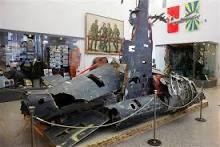
U-2 Spy Plane Wreckage At Military Museum

But first came lunch — at McDonald’s, of course. Doesn’t every American travel 5,000 miles to eat at a Mickey D’s? Colin and Mary were just curious to compare it to the ones at home; Tamara and her husband had never eaten there, because it was too expensive for them as a family of four. So off we went, my treat. Cheapest restaurant meal I ever had — and surprisingly good. Far better quality than in the U.S., in fact. All of the meat and vegetables were locally sourced, and the rolls freshly baked. It was worth the wait in line.

At the museum, admission was free — but I found that I had to pay one ruble (about 1/10 of a cent at the time, as I recall) for the privilege of taking pictures with my own camera. These, of course, were the days before cell phones, so my camera was simply that: a camera — and with actual film, as it was also the pre-digital age. (God, I am old, aren’t I?)

As we wandered through the several rooms and I snapped away, I lost track of how many pictures I had taken, and suddenly ran out of film. I only realized it because my camera told me so, when it started beeping . . . and beeping . . . and beeping. At the unfamiliar sound, all of the other visitors in the room froze where they were standing, and two armed guards came rushing in from the next room, hands on their holstered weapons, to find out who had the bomb. When I saw them, I instinctively held the camera up in the air and called out, “Nyet, nyet! Fotoapparat! Fotoapparat!” (I’m sure you’ve figured out that that means “No! No! Camera! Camera!” I have no idea why I said it twice.) That quick action saved me, though, and I was neither shot, tackled, nor arrested; but the guards and I had managed to scare the bejeezus out of each other . . . and quite a few more people besides. Clearly, I still hadn’t mastered the art of quietly blending in. Come to think of it, I never did.

Mary’s trip happened to fall over the 4th of July weekend, when it turned out that there was to be a show given by some Broadway musical performers at the Estrada Theatre in the renowned (or infamous, depending upon the year) House on the Embankment. Just one of the many outsized Stalinist monstrosities still dotting the landscape throughout the city, this one was completed in 1931 specifically to house the government elite of the time, many of whom later became victims of Stalin’s paranoid political purges. (Sorry — I just seem to keep alliterating). Anyway, someone had given Gil Robinson a pair of tickets, but he wasn’t going to be in Moscow that weekend, so he passed the tickets along to me. Leaving Colin in the safe company of Tamara’s family, Mary and I set out for a girls’ night on the town. As we had done in London, we managed to make it a memorable one.
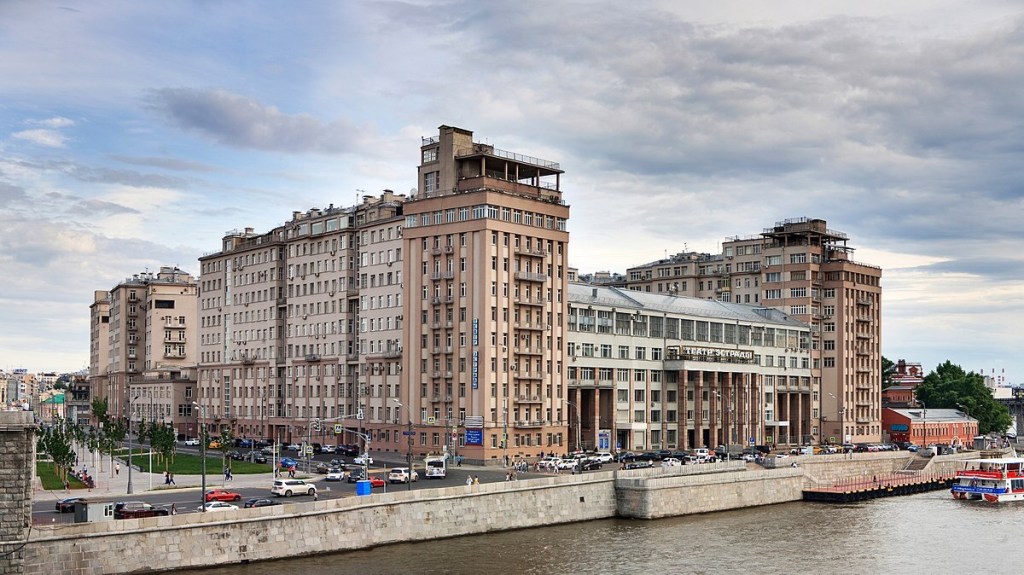
The House on the Embankment
Moscow

Vitold had offered to drive us to the theatre, and said he would be happy to come back to pick us up as well, but I felt that would be too inconvenient for him. The traffic pattern in front of the building was a total mess, and there was no way of knowing what time the show would end. I knew there was a taxi stand in front of the Kempinski Baltschug Hotel, about a 15-minute walk from the theater, so I told him we would manage to get home on our own. Brave words.

For once, Vitold managed to get us to our destination without being stopped by the police for speeding, running a red light, or nearly knocking down any pedestrians. We actually arrived a little early, and since it was a lovely, mild evening, we stood outside the theatre for a while, watching the arrivals and chatting with a couple of acquaintances I had seen in the crowd. The U.S. Ambassador, Thomas Pickering, had already arrived for the occasion. As a motorcade of three or four expensive foreign cars flying Russian flags pulled up, I knew that a Russian VIP had to be in one of them. President Yeltsin was out of the country that week, so I was curious to see who might be taking his place that night. As a man emerged from the car and started up the steps toward us, flanked by three improbably large bodyguards, he passed within a few yards of us and I recognized him immediately. I drew a sharp breath and grabbed Mary’s arm, exclaiming, “Oh my God! It’s Yevgeny Primakov!” Mary wasn’t familiar with the name, and when I told her he was the head of the KGB, she was startled, but also delighted to have a story to bring home to Colin. The crowd then began to move inside, and we headed to our seats.

Yevgeny Primakov

The show was outstanding. The performers were members of the supporting casts of several hit Broadway shows, and had the audience in the palms of their hands from the get-go, singing and dancing to Broadway tunes and a few patriotic songs to honor the holiday. First, however, the orchestra had played the national anthems of both countries, for which everyone stood in unison, but with the Russian and American halves of the audience singing their respective anthems in turn. I am proud to report that our half was louder and much more enthusiastic. Living in Moscow — fascinating though it was — made you all the more proud and happy to be an American.

Happy 4th of July!

The performance ended much too soon, as all good things seem to do, and we filed out into the dark Moscow night around 11:00 p.m. The crowd was huge, and some of the people were walking, as we were, in the direction of the Baltschug, so we didn’t feel at all uncomfortable. And as we approached the hotel, we could clearly see the line of waiting taxis. They were facing away from us, and we had to pass the entire row of about a half dozen cars in order to get to the first taxi in line. No problem.
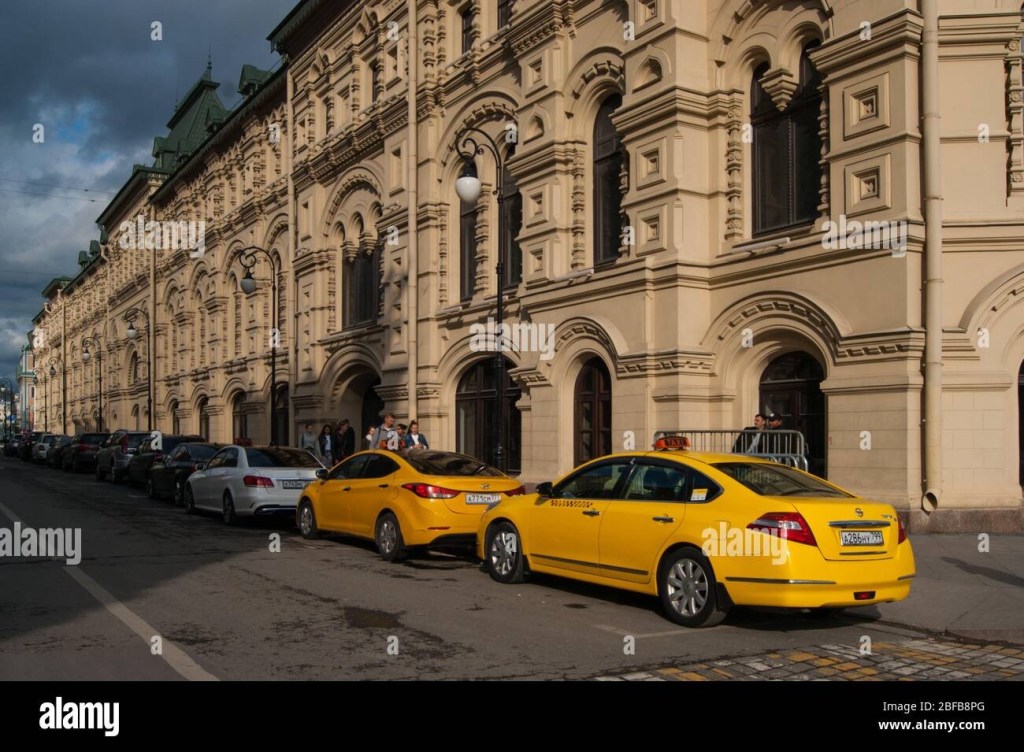
Mary walked around to the left rear door, behind the driver, and I opened the right rear door. When we were both seated and had closed our doors, the driver turned to his right, looked over his shoulder at me, and said, “Rublevskoye Shosse shestnadtsat?” — my exact address. Rublevskoye Shosse 16. And my heart leapt up into my throat. What the hell . . . ???

My first impulse was: RUN! But that was obviously not an option. And I had Mary to think of. Since she didn’t know a word of Russian, she assumed the driver had asked where we were going. So I gulped my heart back down into place, smiled weakly at the driver, and said — in Russian — “That’s right. You have a very good memory.” Mary thought I was giving him our address.

Good memory, my ass! I hardly ever took taxis in Moscow — I had two drivers and an excellent Metro system at my disposal, so who needed taxis? Then who the hell was this guy? He simply nodded, smiled back, and began moving the taxi slowly forward. Once again, I mentally foresaw my imminent death. But as I watched to see the direction he would take, he drove straight along the quickest route, sticking to the main roads, and right up to my building and around to the entrance in the rear. He knew exactly where he was going, and never said another word throughout the 30-minute ride — quite possibly the longest half hour of my life. I thanked him, added a generous tip to the fare, and he waited until we were safely inside before driving off.

So, once again, who was he? How did he happen to be at exactly the right spot at exactly the right moment? If I had ridden with him once before and just didn’t remember, what were the odds of my getting the same taxi twice? Or of his recognizing me, in the dark, in a city of nine million people, and remembering my address? And not saying a word about the coincidence? Was this just another manifestation of Moscow paranoia, or was something spooky actually going on? Could Officer Bragin somehow be keeping tabs on me? But how would it even be possible to arrange such a thing? Again, too many questions without answers.

“Not so elementary after all, eh, Watson?”

I still don’t know the truth, and never will; but I can still feel the fear in the pit of my stomach when I think back on that night. I never did tell Mary.

And while I give you a while to mull that over, I will be — in writing, at least — hopping another train to Kyiv, but this time with two American companions, and complications on the Ukrainian side.

TTFN,
Brendochka
4/13/23 (re-posted 8/30/24)

8/30/24: A Date Hardly Worth Celebrating

Every day seems to have some significance — mostly here in the U.S., where we don’t need much of an excuse to throw a party; but there are also quite a few international days-of-something-or-other. And every now and then, I enjoy throwing the spotlight on some of the quirkier events that people have chosen to commemorate.

Time to Party!

Today, however, turned out to be a total dud. I mean . . . talk about depressing! First we have:

International Day of the Victims of Enforced Disappearance. Wow! I know this is a huge problem worldwide, and the United Nations wants us to not forget about these kidnap victims, but it’s a really sad lead-in to the last weekend of unofficial summer. So, with a respectful nod to all of the victims and their loved ones, and best wishes for a joyous homecoming for all, let us move on to . . .

National Grief Awareness Day. Uh . . . not exactly what I had in mind. But I checked it out, and supposedly this day “recognizes the time it takes to heal from loss doesn’t have a prescribed course and is a reminder closure comes in many forms. When a loved one dies, the void they leave affects everyone differently.” And we can pay tribute to this day by wearing the color blue. Okay.

It’s always a good time for a hug.

But it wasn’t all doom and gloom. I also found:

National College Colors Day. That’s nice. Most of those color combinations of the days of our youth would not be very fashionable out in the working world of today, but if you don’t mind being seen in fuchsia-and-lime, or burgundy-and-puce . . . well, you go right ahead and enjoy yourself. Remembering what were arguably the best days of your life is not a bad thing at all.

And finally, we have:

National Beach Day. Hooray! Something fun for the penultimate day of August, when we’re all thinking ahead to the beauty of autumn. Get out there and splash around in the ocean or the nearest lake, play beach volleyball, build a sand castle, and enjoy a picnic. Just be sure to clean up your trash before you leave. (Really — that’s part of the description.)

*. *. *

So after all of the above, I was looking forward to tomorrow, until I checked the list and found that it includes:

International Overdose Awareness Day.

Enough, already!

Come on, September!

Just sayin’ . . .

Brendochka
8/30/24

8/30/24: Cordyceps and the Tarantula

Who needs Stephen King when you’ve got this? . . .


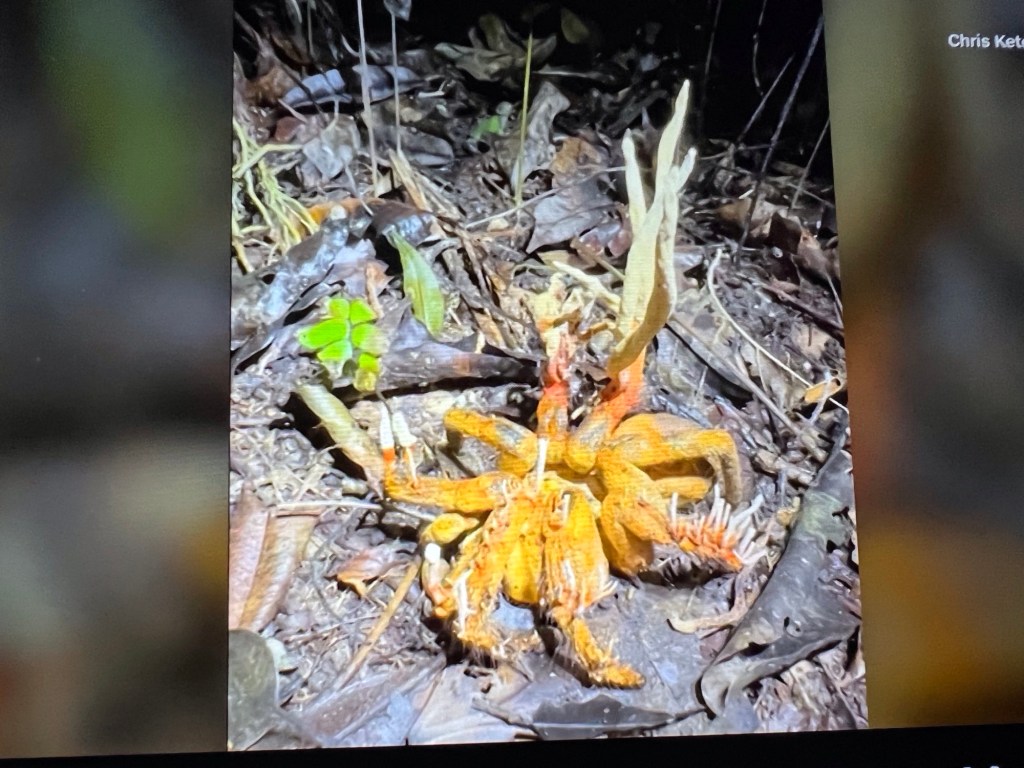
No, its not the guest of honor at tonight’s crab feast. It is, in fact, a tarantula — a dead tarantula — from the Peruvian Amazon.

And it was killed by Cordyceps, which also is not — as you might be imagining — a subterranean creature with 16 tentacles and a big red eye in the middle of its forehead, who just came crawling out of the La Brea Tar Pits hellbent to eat Los Angeles.

Cordyceps turns out to be a fungus, sometimes referred to as a “zombie fungus.” And if that weird yellow color and the white stalagmite-like protrusions on the spider were the result of having been attacked by the fungus, then I can see why it would be called a zombie. That is truly one hideous-looking corpse. Not that tarantulas (tarantulae?) are particularly pretty in life.

And now I find out that this fungus — which is actually a mushroom — is becoming popular as a medicinal supplement. In fact, it has been “long revered in traditional Chinese medicine for its ability to boost energy and vitality.” [Clarissa Berry, Muscle and Health, August 26, 2022.]

Cordyceps . . . Available on Amazon!

And for those of us who are old enough to remember the “magic mushrooms” of the ‘60s . . . Well, we don’t really need a repeat of that, do we? Although that was one hell of a decade, man . . .

Magic Mushrooms: “Wheee! What a ride!”

But does anyone mind if I pass on these latest uppers? I’ll gladly forgo vital and energetic, and settle for weak and lazy. I mean, that Cordyceps killed a freakin’ tarantula! It is not getting its tentacles on me.

*. *. *

I think I’m going to grab a pint of ice cream and watch “Sound of Music” now — you know, something normal, and safe, and not creepy.

At least the hills are alive!

Just sayin’ . . .

Brendochka
8/30/24

8/30/24: The U.N. Security Council — If It Ain’t Broke, Should We Fix It?

The larger question would be: Is it actually broken . . . broken enough to require fixing? And some think it is.

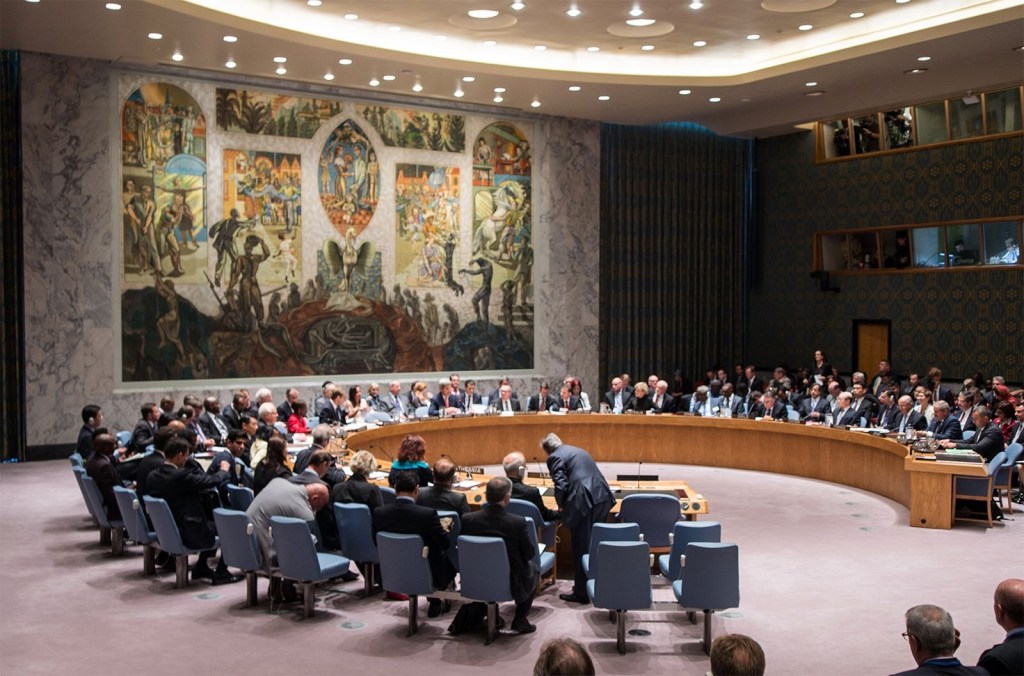
From the beginning, the Security Council has been comprised of five permanent members (the P5): the United States, United Kingdom, France, Russia and China. Other countries alternate as non-permanent members, but without the crucial veto power held by only the five permanent members. Note that those five do not include any nations from the Middle East, Africa, Latin America, or the Caribbean.

United Nations Security Council

With the Council’s annual meeting coming up in September, Africa in particular is pressing for changes that would reform what is being called the “colonial-era world order.” [Tara John, CNN, August 28, 2024.] And Sierra Leone’s President Julius Maada Bio is urging the inclusion of two new permanent member seats for African countries.

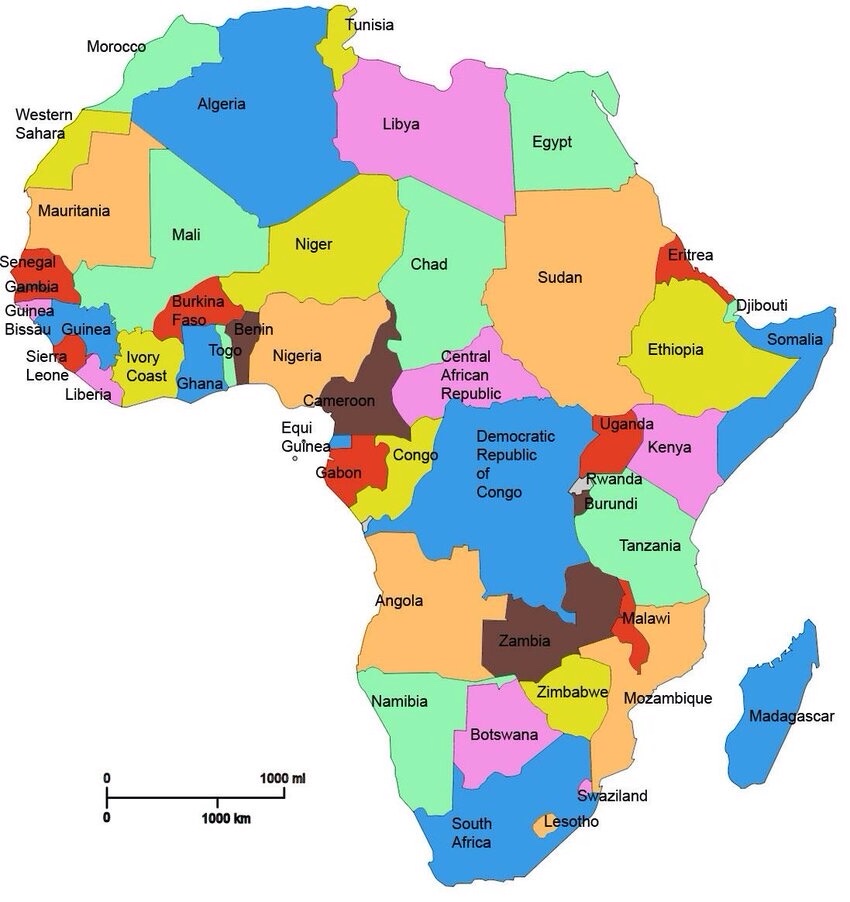
There are logical, solid arguments on his side. There are 54 African countries in the African Group of the UN. The continent contains more than one-fourth of the UN member states, and more than a billion people — but, as President Bio stated — is “grossly underrepresented in this vital organ of the UN.” Further, “African issues take up nearly 50% of the Council’s daily business, and the bulk of its resolutions concerning peace and security.” [Id.]


I certainly see his point; it would be difficult not to — although I do think one seat on the Council would be proportionally more suitable. However, one other thing worries me, and it was alluded to in the CNN article:

“A senior diplomat at the UN told CNN that Africa currently holds a lot of sway among the P5 countries, the final arbiters on any reform, as Russia and America scramble for influence in the continent.” [Id.; bold emphasis is mine.]

And there it is: not so much about the “scramble for influence,” but more concerning the already-existing Russian influence in much of Africa. In addition to the decades-long paternalistic relationship of Russia with numerous African countries, there is the more recently increased presence of the so-called “Africa Corps” — the reincarnation of the late mercenary Yevgeny Prigozhin’s Wagner Group — in countries such as Libya, Mali, the Central African Republic, Burkina Faso, Niger, and Guinea Bissau. And behind it all, Russia’s ultimate goal of a “new world order.”

If the Africa Group were to be granted Security Council permanent membership, which country or countries would be chosen to fill the seat(s)? And what assurance would there be that their votes would not be swayed — even controlled — by any obligation they may owe to Russia, or that they wouldn’t be caught in a political tug-of-war between Russia and one or more of the other permanent members?

These are complex, difficult questions, which I am not qualified to answer. But they are so important, I felt the need to ask them.

Just sayin’ . . .

Brendochka
8/30/24

8/29/24: Three Days of Forgotten History

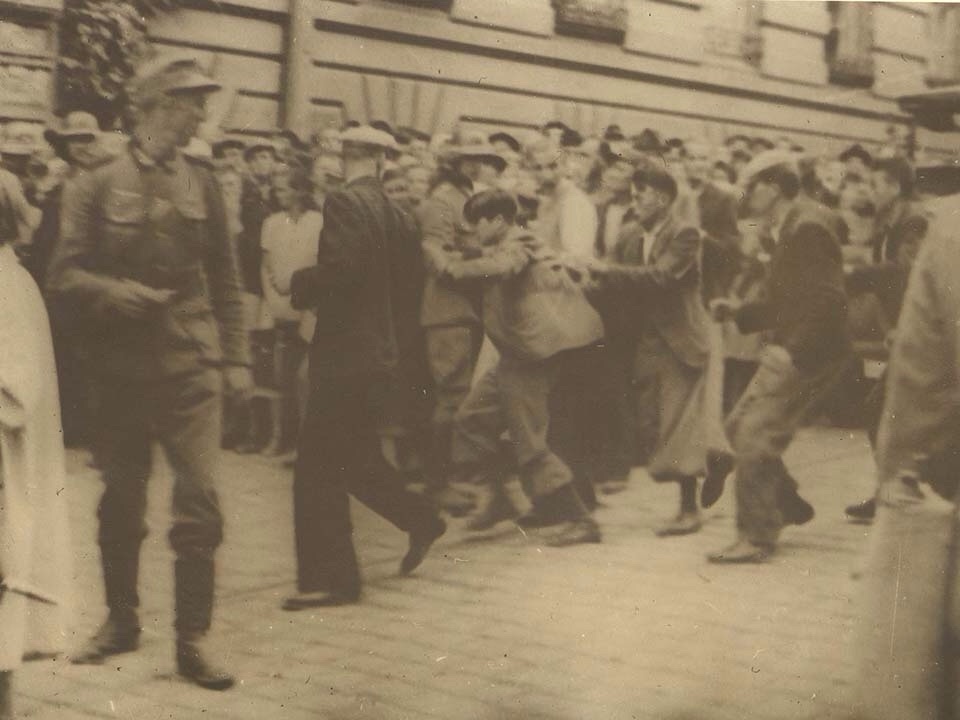
Between August 26 and August 28, 1941, more than 23,000 Hungarian Jews were slaughtered by the German Gestapo in occupied Ukraine.

Gestapo Rounding Up Jews in Lviv, Ukraine – 1941

This is not “hidden” history . . . but it is largely overlooked within the framework of the six million (or more) Jewish lives taken in Europe by the Nazi regime during World War II. It was brought back to mind in yesterday’s “This Day In History” chapter (History.com), and caused me to ponder, once again, the horrors of invasion, occupation, destruction and conquest visited upon Ukraine by various invaders throughout its long history.

This particular story had its beginning in Hungary — a country with its own long, sad history of anti-Semitism. Tens of thousands of Hungarian Jews had been expelled from Hungary and migrated to Ukraine. When Nazi Germany invaded and occupied Ukraine, the German authorities tried to send them back to Hungary, but their homeland would not have them. So SS General Franz Jaeckeln made the decision to deal with the problem in the only way he knew how: by the “complete liquidation of those Jews by September 1.” [History.com, August 28, 2024.]

They were rounded up and, on August 28th, marched — more than 23,000 of them — to bomb craters at Kamenets Podolsk. They were ordered to undress, and were then “riddled . . . with machine-gun fire. Those who didn’t die from the spray of bullets were buried alive under the weight of corpses that piled atop them.” [Id.]

Problem solved . . . and three days ahead of schedule.

In all, more than 600,000 Jews had been murdered in Ukraine by the end of the war.

*. *. *

Today, it is not Jews who are being specifically targeted in Ukraine, but the country itself . . . and this time by Russia, not Germany. The reasons are different; in Russia’s case, it’s a land grab — a first step in its grand plan of expansion and world domination. But the effect — the death, the destruction, the brutality, the fear — are the same.

And still Ukraine carries on, with strength, courage, and undying love of country. To its past, its present, and most of all, its future, I say — Slava Ukraine!

Brendochka
8/29/24

8/29/24: An Unholy Triumvirate: The Moscow Militia, the KGB, and the Russian Mafia (Ch. 17 – Posted 4/6/23)

Back in Moscow following my first visit to Kiev, I had settled into a comfortable routine of busy days and quiet evenings. I’d even begun venturing out by myself on weekends. The nearest Metro stop was an easy walk of only about a kilometer, along a pleasant pathway that skirted a patch of undeveloped, public parkland; and it was a quick ride from there into the city. More often, though, I would investigate my own neighborhood, finding handy little shops and introducing myself to the shopkeepers who didn’t quite know what to make of the newly-arrived American lady in their territory. Or friends would take me to some of the non-touristy areas of Moscow, and invite me to their homes for some good food and “kitchen conversation” — the traditional Russian after-dinner talks around the table that go on for hours. I finally came to understand why my grandparents had rarely used their living rooms: the kitchen was the true heart of the home.

One weekend, Vitold offered to drive me to an amazing place called Izmailovsky Park on the outskirts of the city, which featured a huge weekend open-air market that quickly became my favorite place to find items for the apartment: hand-woven rugs, hand-embroidered tablecloths, hand-crocheted bedspreads, hand-sewn curtains — everything beautifully handmade. And there was the odd trinket, like the famous Russian matryoshka (nesting doll) — a couple of which are staring across the room at me even now, thirty years later, as I write this chapter.

Then one day the office phone rang, and I answered it to hear a man’s deep voice introducing himself as Mikhail Pashkin of the Moscow Militia — and specifically, head of the Moscow Police Workers’ Union. I waved Lena over to the phone to be sure I didn’t miss anything, as Pashkin was, of course, speaking Russian. She was understandably a little nervous, since no law-abiding (or other) Russian citizen wants to be involved with the law enforcement authorities for any reason, even over the phone. And we’d already had one unannounced drop-in by a uniformed officer, “just checking to see how things are going.” Why had we become the beneficiaries of such loving attention? Surely, I thought, they must have better things to do. Did they check up on all registered foreign organizations this way? Quite possibly. Or was there something special about ours? My association with Aksilenko, for example? There was no way of knowing.

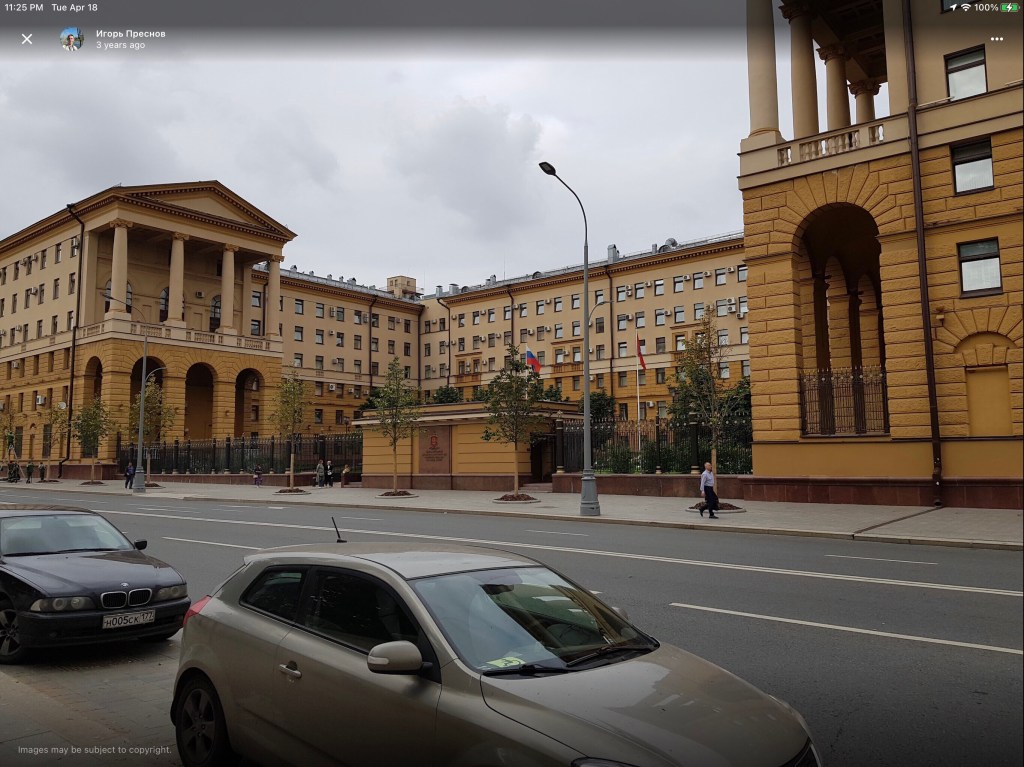
This day, however, Officer Pashkin was calling to invite me to visit him at Militia Headquarters, known to Muscovites by its infamous street address, Petrovka 38. He had heard of our Foundation and was interested in obtaining — gratis, of course — a quantity of our Veggieburger product “for the widows and orphans of Militia officers killed in the line of duty.” A nice way of making it impossible to refuse.

Militia HQ, Petrovka 38, Moscow

As luck would have it, the head of our Foundation, Gil Robinson, was due to arrive in Moscow in a few days. I relayed that information to Officer Pashkin, and we scheduled a meeting several days ahead in order to include Gil. That gave me plenty of time to work up a good case of nerves. But from a practical point of view, I decided it was better to have friends in certain places, in case I ever needed a favor. Spoken like a true Russian citizen.

A few days later, Gil arrived as scheduled. He decided that Maya should accompany us on the visit to Petrovka, mainly because she was the most self-assured of our three interpreters and least likely to be intimidated. So off we went at the appointed time, with Vitold driving but refusing to enter the scary building with us. He would wait in the car, no matter how long it might take, but would not set foot inside. We had been given directions, not to the main headquarters, but to a small, dilapidated old building around the corner. The guard at the desk was expecting us, and accompanied us up the stairway to the third floor (there was no elevator), gratuitously pointing out along the way the “interrogation room” on the second floor — mercifully unoccupied at the moment.

Oh, please! Was that really necessary? Did he actually think we’d enjoy a touch of gallows humor to begin our day? Speaking for myself, I could have done without it.

“Spill it, dirtbag!”

On the third level, three men were waiting in a small — really small — office: one seated behind an old, somewhat scarred desk, and one standing to either side and slightly behind him. There were three mismatched chairs on the front side of the desk for us. And that’s all there was room for in the office; it wasn’t exactly the executive suite. Gil took his seat in the middle, flanked by Maya to his right and me to his left.

The man seated at the desk was, of course, Mikhail Pashkin. He was movie-star handsome, dark-haired, with shoulders, pecs and biceps that strained at the seams of his short-sleeved, light blue shirt. This was not a man you would ever challenge to an arm-wrestling contest. If his intention was intimidation, he succeeded magnificently. (All right, now I’m starting to sound like a Mickey Spillane novel. Enough of that.)

Pashkin introduced the uniformed man to his left (our right) as Militia Officer Kostylev. And on Pashkin’s other side, now perched casually on a windowsill, was a pleasant-looking man in khakis and a plaid sport shirt, who introduced himself as Bragin. Just . . . Bragin.

Mr. Anonymous

After we three had identified ourselves, Gil began by politely asking a couple of questions as to the specific jobs of our hosts. Pashkin talked a bit about his work within the Police Workers’ Union, and Kostylev said that as an officer in the Militia, he was also a member of the Union. Then Gil turned to Bragin and asked, “Are you also with the Militia?”

And that was when the fun began. Bragin simply shook his head and softly replied, “No.” Obviously a man of few words.

Now remember, please, that Gil Robinson was a former Ambassador-at-Large with the U.S. State Department — supposedly a trained diplomat, right? In Washington, and every other world capital, when someone gives you a non-responsive response like that, you don’t press them; you assume their job involves some sort of classified work. And Gil, of all people, should have remembered that. But did he? Oh, no. Instead, he asked, “Well, where do you work?” And when Bragin responded, “A different department,” Gil incredibly went on: “Well, what department is that?” And Bragin softly replied, “It doesn’t matter.”

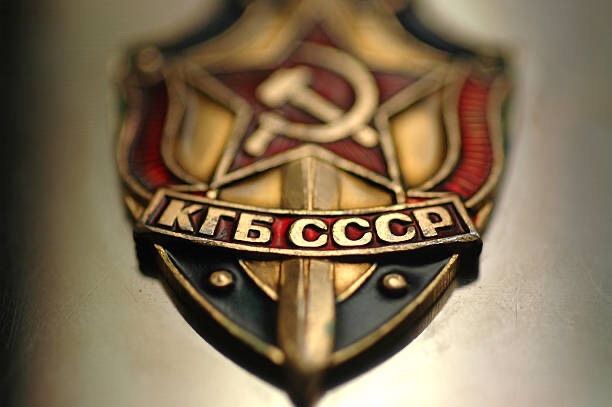
At this point, as Gil prepared to push the envelope with yet another idiotic question, Maya and I began elbowing him in the ribs from both sides, saying quietly, “Gil, drop it.” “Let it go, Gil.” “Just leave it.” Maya understood; I got it; but the professional diplomat remained clueless. Meanwhile, Bragin had caught my eye. Seeing that I was shaking my head in embarrassed disbelief, he smiled and nodded knowingly at me. In that instant I sensed that Vladimir Bragin (I learned his full name later) had become my newest friend in Moscow. He then looked at Gil again, shrugged resignedly, and said, in Russian, “КГБ” — which Maya and I translated for Gil, in unison: “KGB.”

KGB USSR Badge

If the floor had opened up beneath Gil’s chair at that moment, he would have been a happy man. As it was, he was trapped in that little office, trying to worm his way out of a gigantic faux pas. His face turned several shades of reddish-purple, and he began to stammer. I believe the only word he actually managed to choke out was, “Oh.” To his credit, though, he did shift gears fairly quickly, turning from Bragin to Pashkin and asking what we could do for the good folks of the Militia; and the meeting then began in earnest.

When I looked again in Bragin’s direction, he was once more looking at me and smiling. You might say we bonded over Gil’s embarrassment, and I was to be the beneficiary of that connection throughout my stay in Moscow. He was my Russian krysha, literally “roof” — my protection — and it never cost me a thing. It didn’t change what he did for a living, of course, but he turned out to be a very likable fellow.

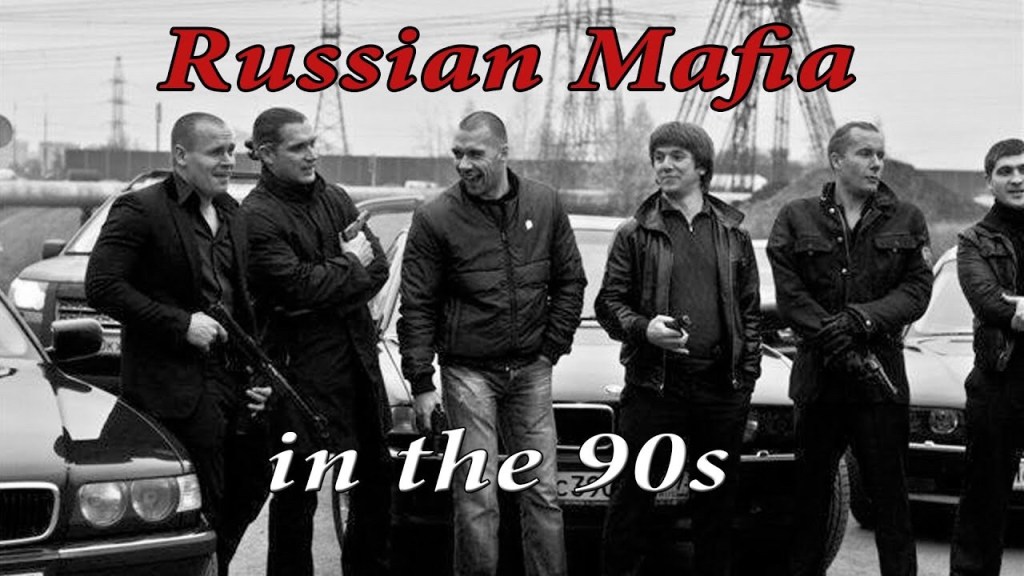
Now, you’re probably wondering where the Russian Mafia comes into play in this story. At that time in Russia — and I’m not sure how this may have changed under the current regime and with the rise of the oligarchs — it was difficult to know with whom you were dealing at any given time. The so-called “Mafia” families — actually just criminal gangs who named themselves after the Italian originals — were so seamlessly woven into the Russian hierarchy and society in general, you simply couldn’t avoid them.

Family Reunion

In the case of Pashkin and his buddies at Petrovka, it all had to do with the final distribution of the huge shipping container of Veggieburger we were able to deliver to them. Information we later received indicated that the widows and orphans had enjoyed little, if any, of it. All or most of it went in the front door and right out the back, directly onto the black market, earning a sizable profit for both the “wholesalers” and the “retailers.” And those operations were generally controlled by the various Mafia gangs. So while I spent those months in Moscow for the most part steering clear of the criminal elements, it proved impossible to bypass them entirely.

A Good Day’s Work

One example of the steps we took to protect ourselves was the safe in the apartment. The ‘90s were a time of rampant criminal activity in Russia, sometimes referred to as “The Great Mafia Wars.” There were daily drive-by shootings; burnt-out vehicles by the side of the road; and kidnappings or slayings of individuals as they entered or left their banks with large amounts of cash — much like living in Newark or Detroit. So we had a sturdy safe in one of the bedrooms in which we kept the thousands of dollars periodically carried over by Gil Robinson for payroll, rent and other expenses. As with the front door, it would have taken a bomb to get into that safe; and it relieved me of the need to go near a bank . . . ever.

*. *. *

When I was preparing to leave D.C. for Moscow that May of 1993, people had frequently asked whether I wasn’t afraid to be going to such a dangerous location. At the time, I had been living in the metropolitan Washington D.C. area for most of my life, and I simply pointed out to them that I was already in what was then known as the murder capital of the United States. The only difference, I argued, was geography. I had long since developed a “que sera sera” attitude, and didn’t think too much about the daily hazards of life. My philosophy was, and still is, that we’re all born with a pre-determined expiration date — though it’s not stamped on our bottoms like a can of beans — and if my time was due to come up in Moscow, then so be it. I was going to have a grand time while I could.

And so I did, for the most part. But there were nerve-wracking moments as well. One of those involved the aforementioned need for my continuing contact with Valentin Aksilenko. We kept our telephone communications brief and infrequent, and only actually met a couple of times during the entire summer. He seemed relaxed enough, but again, I attributed that to his years of KGB training. We would “walk and talk” — strolling outside in busy places near my apartment building to avoid any electronic bugs that might be hidden in the apartment — and I think I managed to appear nonchalant enough. But my insides always felt as though I’d swallowed a gallon of Mexican jumping beans. I fully expected at any moment to be pounced upon by a couple of big thugs, dragged into a car with darkened windows, and driven to an isolated spot where I would be shot in the back of the head and left for the crows to feed on. But then, I always did watch too many bad spy movies. Obviously, I survived without anything of the sort ever happening.

“Uh-oh!”

*. *. *

But there were other moments as well. It seemed that even a holiday — specifically, in this case, the American Fourth of July celebration — could turn scary in Moscow, and not just from any errant fireworks. Join me next time for that memorable episode, which still gives me the willies when I think about it.

So long for now,
Brendochka
4/6/23 (re-posted 8/29/24)
8/29/24: Oh, To Be the Chosen One!

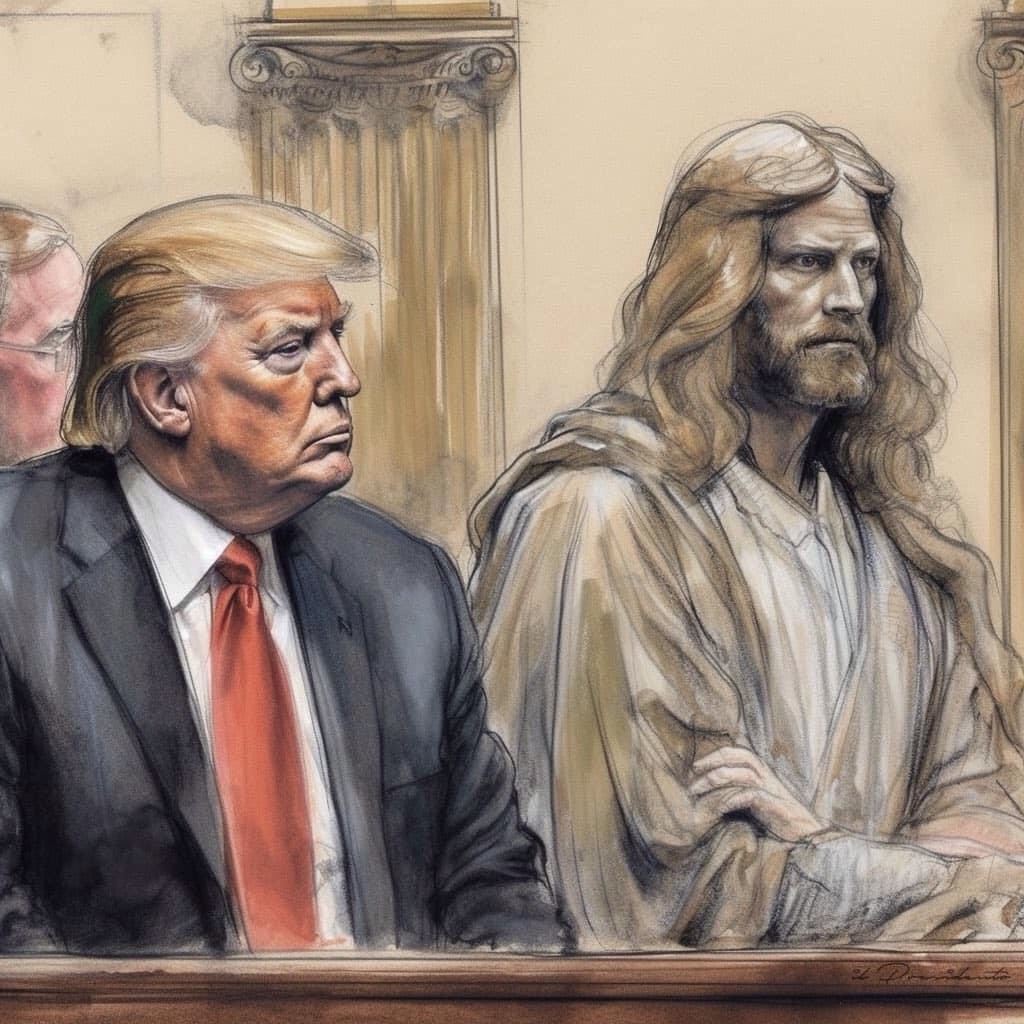
Most of us are fully aware that we will never attain that lofty position, because it’s already occupied . . . by Donald Trump, of course.


And how do we know this? Because he has told us so, in no uncertain terms. His proof? That he survived the attempt on his life in Pennsylvania a few weeks ago. Clearly (to him), it was God’s hand that saved him, because God wants . . .

Wait! Donnie knows what God wants? What do they do . . . text each other?

Okay, let’s say he does know. And he has blessed us by sharing this information. What God supposedly wants is for America to be great again, which means that — you’ve got it — Trump must be elected in November.

Drawing from Facebook, unattributed


He even told Dr. Phil that his purpose in being here is to “save America,” and perhaps the world. He even claimed he would win California — California!!! — ”if Jesus were in charge of voting in the state” (you mean he isn’t?) — and that some people had received as many as seven postal ballots in 2020, thus inflating the Democratic vote (where he actually lost by 5,103,821 votes). [David Charter, The Times, August 28, 2024.]

He never will stop beating that dead horse.

He added that “The only thing I can think is that God loves our country and he [sic] thinks we’re going to bring our country back.” Asked by Dr. Phil if he believed he was spared for a reason, Trump replied, “Well, God believes that, I guess. We’ll have to see.” [Id.]

Maybe Donald Trump thinks he sees the hand of God. What I see is narcissism gone batshit crazy.

Just sayin’ . . .

Brendochka
8/29/24

8/29/24: The Incredible Life of Pavel Durov

In case you missed yesterday’s headlines, Pavel Durov, CEO of Telegram, has been indicted in France on charges of “complicity inn the distribution of child sex abuse images, aiding organized crime, and refusing lawful orders to give information to law enforcement.” [Joseph Menn, Washington Post, August 28, 2024.]

Pavel Durov

After four days of questioning — four days! — he has also been ordered to post a 5 million euro ($5.6 million) bond, and is barred from leaving France. With his multi-billion-dollar fortune, the bond should be no problem; but he’s not going to like being tied down in one place for any length of time.

And his 950 million users are not going to be happy at the prospect of possibly losing the protections of Telegram’s services, which include optional encryption of one-on-one conversations, and absolute privacy of all of their data . . . a good bit of which, it seems, is of a criminal nature. There are probably a lot of very nervous terrorists, kiddie porn distributors, and money launderers out there today — not to mention governmental and other users in Russia, Eastern Europe and the Middle East.

Oops!


But the principal questions remain: As the CEO of Telegram, is Pavel Durov liable for his clients’ actions? Or, alternatively, by refusing to turn over their information, is he complicit in their crimes?

As one who has nothing to hide, I find this fascinating, and particularly from a legal standpoint. I’m a firm believer in privacy and free speech. But I also despise seeing the scariest and smarmiest of criminals (and governments) getting away with their nefarious activities under the umbrella of freedom of speech.

Quite frankly, I would not want to be one of the judges in this case.

Just sayin’ . . .

Brendochka
8/29/24

8/28/24: The Many Mouths of Moscow

Kremlin spokesman Dmitry Peskov has been silent this past week, hopefully away on a well-deserved vacation from what has to be an exhausting job. I can’t imagine having to keep up with the workings of Vladimir Putin’s mind day after day after endless day!

And in his absence, we’ve been hearing from various members of the Kremlin inner circle — a different one each time. Although the topics have varied, the message has been pretty much the same: The United States is to blame for everything bad that happens anywhere in the world. Right.


For example, on Monday Vyacheslav Volodin — Chairman of the State Duma (the equivalent of the Speaker of the U.S. House of Representatives) — accused the U.S. government, with no evidence whatsoever, of being behind the arrest of Telegram CEO Pavel Durov in France in order to be able to take control of his controversial messaging platform, saying:

“Telegram is one of the few and, at the same time, the largest internet platforms over which the United States has no influence. On the eve of the U.S. presidential election, it is important for President Joe Biden to take Telegram under control.” [Billal Rahman, Newsweek, August 27, 2024.]

Vyacheslav Volodin

Yeah, right . . . as though France is going to go through all of this just because we (or anyone) said “pretty please.” Are you nuts?

*. *. *

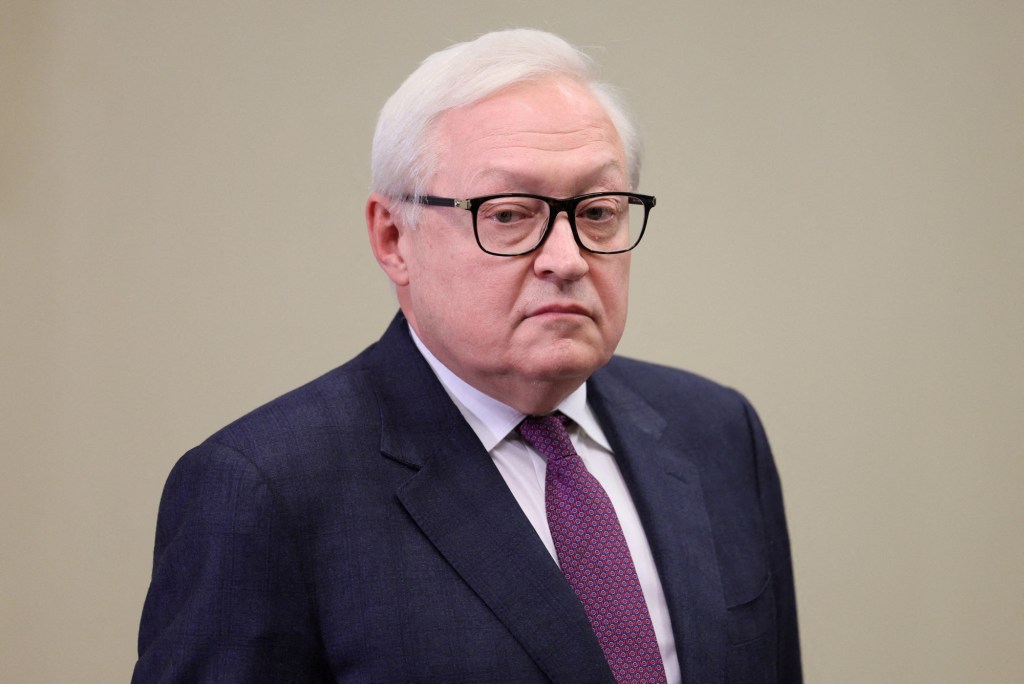
Also on Monday, Russian Deputy Foreign Minister Sergei Ryabkov said unequivocally that U.S. involvement in Ukraine’s counter-offensive (he used the word “incursion”) in Russia’s Kursk region was no longer an accusation, but was now “an obvious fact”:

“Washington’s escalatory path is becoming more and more challenging. The impression is that [U.S.] colleagues have thrown away the remnants of common sense and believe that everything is permissible for them. Similar approaches are followed by their clientele in Kyiv.” [Lucy Papachristou and Guy Faulconbridge, Reuters, August 27, 2024.]

Sergei Ryabkov

First of all, the U.S. doesn’t have “clientele.” He must be thinking of Russia’s own “clients” — in Africa, Latin America, Eastern Europe . . .

And second, speaking of “[believing] that everything is permissible for them . . .” Again, are we looking into a mirror, seeing our own reflection, and confusing the left side with the right? Must be.

*. *. *

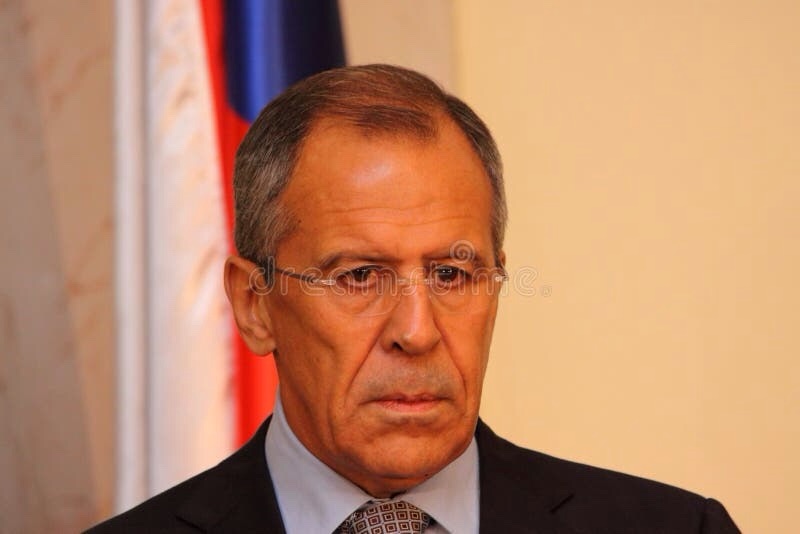
And then they brought out the big gun: Foreign Minister Sergei Lavrov, who declared that the West is escalating the Ukraine war and “asking for trouble” by so much as considering Ukraine’s requests to ease restrictions on the use of foreign (i.e., U.S.) -supplied weapons. In his customary subtle manner, he continued:

“We are now confirming once again that playing with fire — and they are like small children playing with matches — is a very dangerous thing for grown-up uncles and aunts who are entrusted with nuclear weapons in one or another Western country,” he told reporters. “Americans unequivocally associate conversations about Third World War as something that, God forbid, if it happens, will affect Europe exclusively.”

He added that Russia was “clarifying” its nuclear doctrine. [Guy Faulconbridge and Vladimir Soldatkin, Reuters, August 27, 2024.]

Sergei Lavrov

Excuse me, Mister Minister. But have you conveniently forgotten about all those weapons and related technology you’ve been receiving from China, from Iran, and from God-knows-where-else? If there are any restrictions placed on the use of those weapons — say, for instance, in Ukraine — the world hasn’t seen any evidence of it during the past 30 months.

Not too hypocritical, are we?

*. *. *

And while all of these Kremlin officials were busily playing the blame game, what was the Russian military doing? Why, they were having a field day launching their most massive air attack across Ukraine since the start of the war, aiming their Chinese and Iranian missiles and drones at energy infrastructure, killing at least seven people, and causing power outages in several cities. [Svitlana Vlasova, Ivana Kottasova, Daria Tarasova and Christian Edwards, CNN, August 27, 2024.]

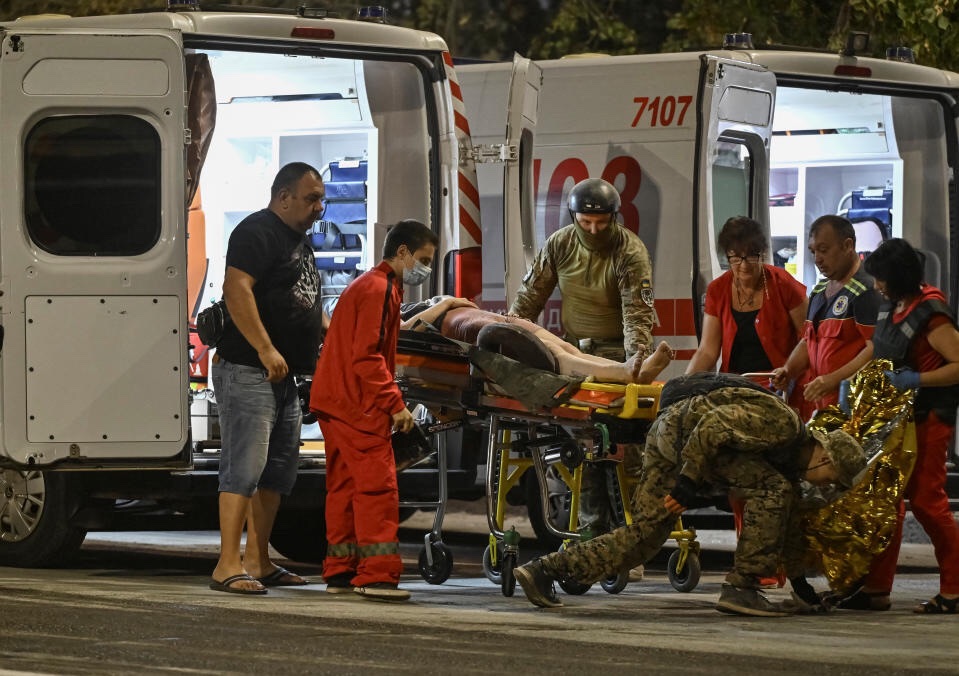
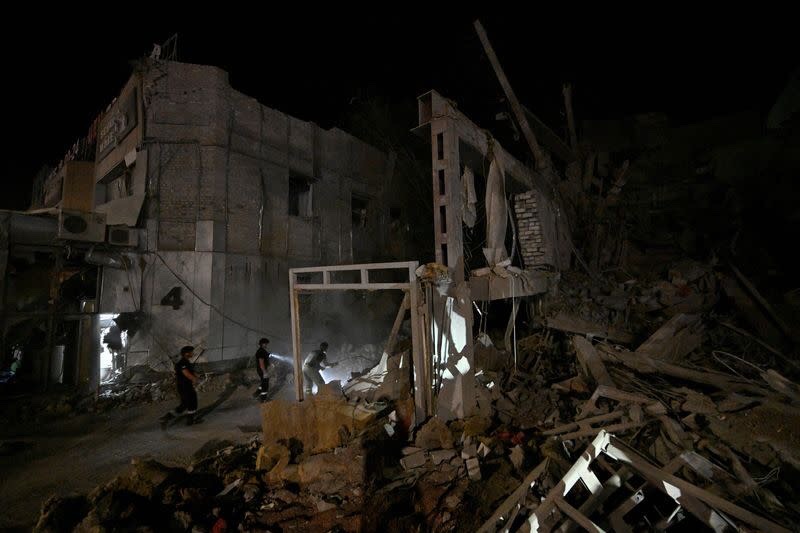
And then they moved in on the civilian residential areas — those very areas they claim not to target — in scores of regions, killing no fewer than another six people. In the city of Kryvyi Rih alone, three people were killed, another five injured, and one person — Serhiy Lysak, Governor of the Dnipropetrovsk region in which Kryvyi Rih is located — was still missing. And three more people were killed in drone attacks in Zaporizhzhia, an already hard-hit city in southeastern Ukraine. [Valentyn Ogirenko, Gleb Garanich and Oleksandr Kozhukhar, Reuters, August 27, 2024.]

Kryvyi Rih, Ukraine – August 27, 2024

*. *. *

You know, what really gets my goat is not the posturing, not the cover-ups, not the false accusations, the veiled threats, or even the outright bald-faced lies. What I can’t understand is how you — all of you Kremlin mouthpieces — can think that we in the West are stupid enough to buy your bullshit . . . or weak enough to cave in to it.

Because — surprise! — we’re not.

Just sayin’ . . .

Brendochka
8/28/24

8/28/24: Oh, You Are So Grounded!

It’s probably happened to you. You take your four-year-old into the Christmas Shoppe to buy some new ornaments for this year’s tree; you let him out of your sight for a nanosecond; and . . . smash! . . . you hear the sound, and somehow you just know who caused it. The sales clerk you couldn’t find to help you two minutes ago suddenly materializes; you explain and apologize, and you pay for the broken piece and thank your lucky stars it wasn’t an entire display.

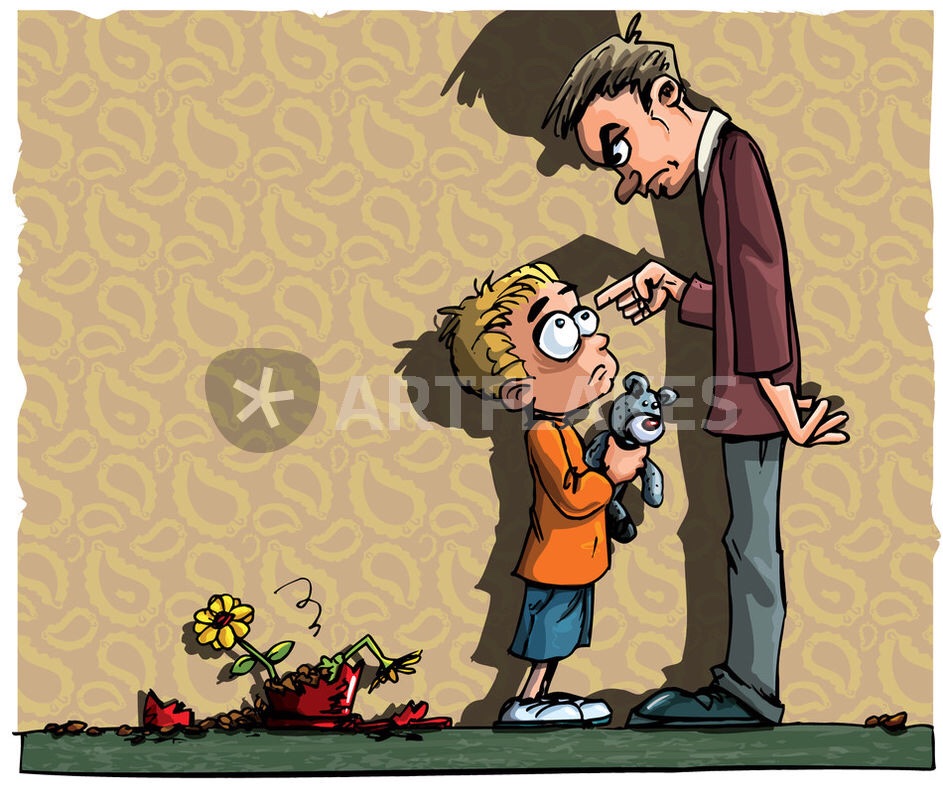
“Oh, no-o-o-o!”

Then you gently scold your little one, explaining that this is why he shouldn’t touch things that don’t belong to him, knowing perfectly well he doesn’t understand and this won’t be the last time something like this happens. And you feel guilty when the tears begin to well up in his eyes, so you buy him an ice cream cone on the way home and all is forgiven and forgotten.

Simple, huh? After all, it’s not the end of the world.

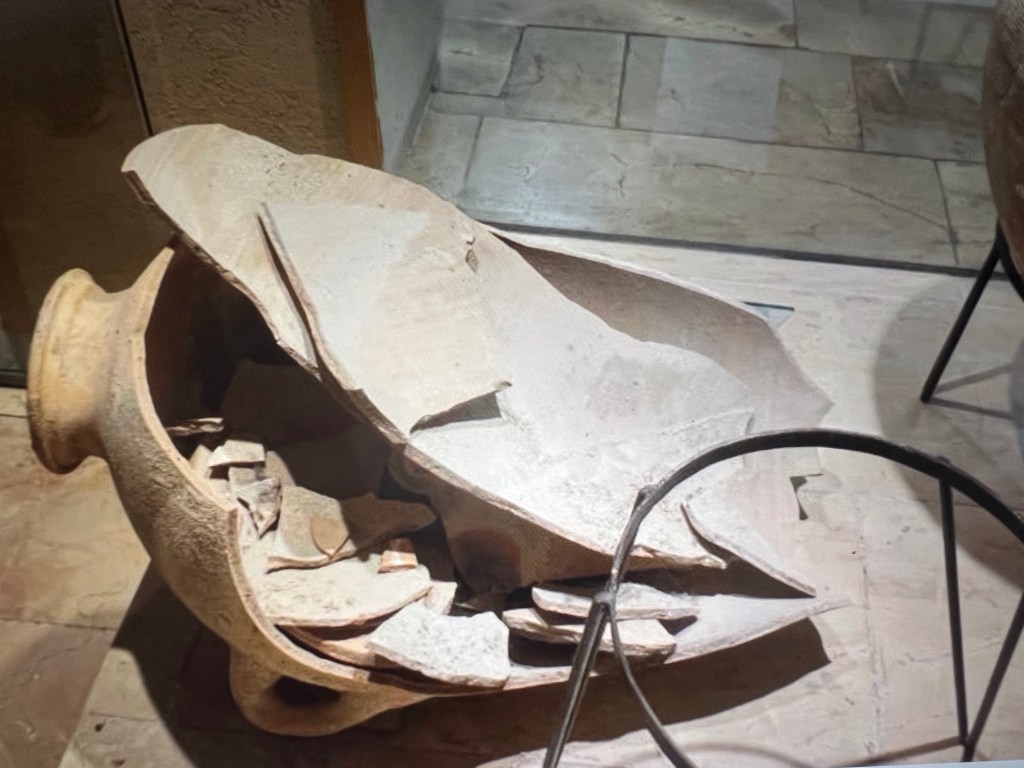
But what if that ornament is a 3,500-year-old Bronze Age artefact, previously in perfect condition, on display in a museum in Israel, and it’s your four-year-old son whose curiosity gets the better of him?

After the Fall

Holy crap!

Well, if you’re very, very, very lucky, you will be in the Hecht Museum in Haifa, which has to be run by absolutely the nicest, kindest, most understanding people in the entire universe . . . because they didn’t turn the little boy, Alex, and his father over to the police, or set the kid on fire, or anything else. In effect, they simply said they’d have the jar restored. [Jack Burgess, BBC News, August 27, 2024.]

Seriously, that is how it was resolved. Little Alex was upset at first, because he had pulled at the jar slightly to try to see if there was anything inside, and he was startled when it fell over. He probably also was expecting to be yelled at, at the very least. (Although I should think Dad was also feeling a little guilty for not having tied Alex’s hands behind his back before entering the museum.)


Instead, the museum folks invited Alex and his family back for an organized tour. A museum representative, Lihi Laszlo, said:

“There are instances where display items are intentionally damaged, and such cases are treated with great severity, including involving the police. In this case, however, this was not the situation. The jar was accidentally damaged by a young child visiting the museum, and the response will be accordingly.” [Id.]

Now, that’s what I call civilized.

*. *. *

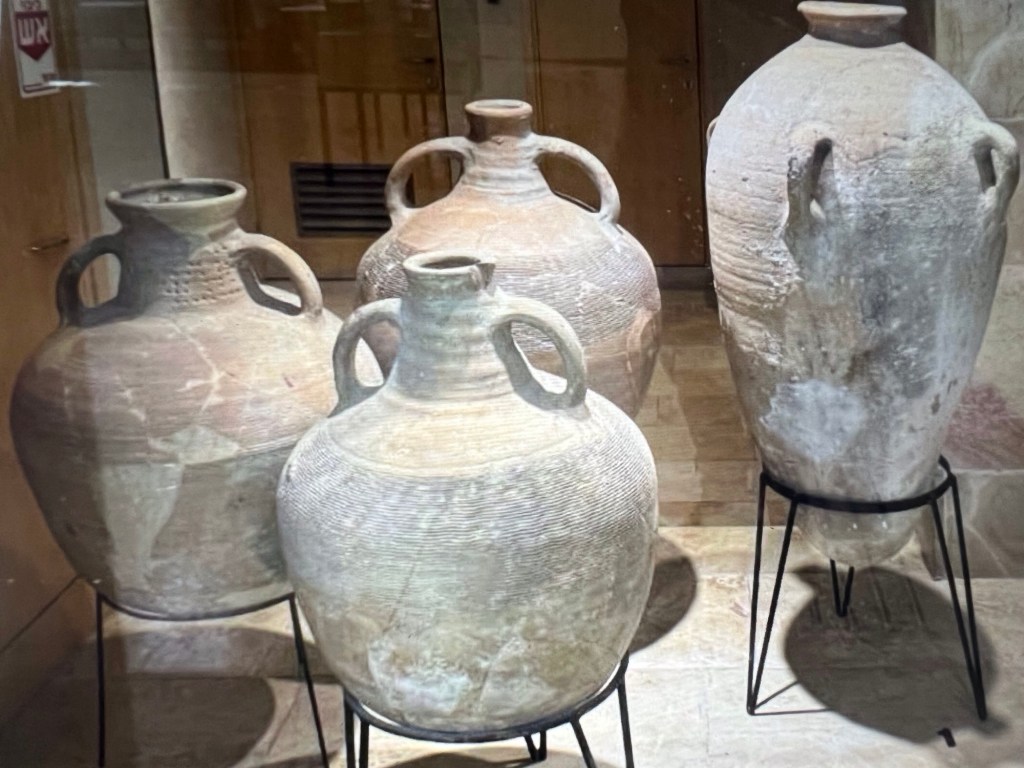
But what about the artefact itself? Why were it and its mates on display without any protection, obviously vulnerable to the vicissitudes of life . . . like the presence of four-year-old kids? The museum’s answer: because they believe there is a “special charm” in showing archaeological finds “without obstructions.” And they have every intention of continuing the tradition, despite little Alex’s mishap.

Before Alex got there

And it’s not as though these things are replaceable. Most likely used to carry supplies such as wine or olive oil, the jar dates back to a time between 2200 and 1500 B.C. It predates the era of the Biblical King David and King Solomon, and is characteristic of the Canaan region on the eastern Mediterranean coast. When discovered, it was considered an “impressive find” because of its intact condition. [Id.]

Just think about it. It survived more than three millennia without damage. And it took a four-year-old kid named Alex two seconds to destroy it.


Never, ever underestimate the power of children.

Just sayin’ . . .

Brendochka
8/28/24