From the sound of it, he seems to have destroyed his own political future, at the very least.
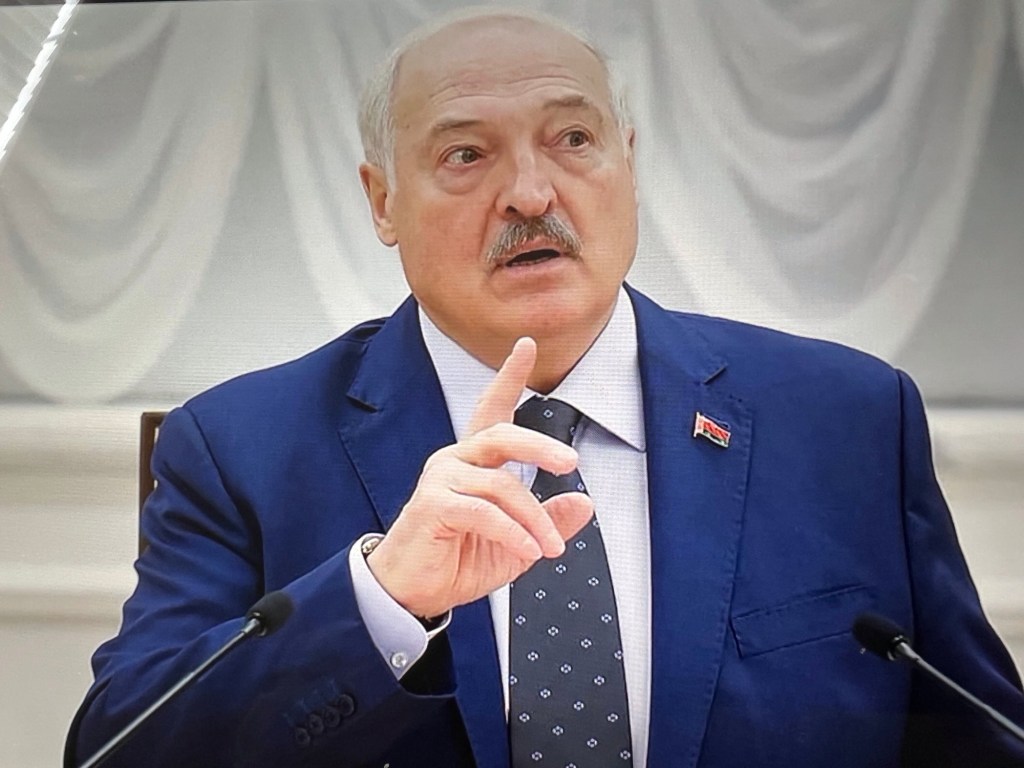
In an interview with French magazine Le Point, Belarusian presumptive president Aleksandr Lukashenko bluntly contradicted one of Vladimir Putin’s principal justifications for his invasion of Ukraine.
Putin claims that — according to his version of history — Ukraine rightly belongs to Russia, and always has. But serious historians have disputed that claim, pointing to various periods of history during which borders have shifted, and regions have come under the influence of different rulers.
And in his interview, Lukashenko cited one specific instance: the period of Mongol domination over the Russian principalities between the 13th and late 15th centuries, saying:
“And today to say that these lands are Russian and have been since time immemorial . . . At some point they were Russian. But if you look more deeply, Russian lands themselves were once Mongol-Tatar, remember? Then we should hand over the whole of Russia to whom, Mongolia?” [Alexei Doval, EuroNews, November 27, 2026.]
He also referenced what happens to be my own argument against Putin’s claim on Ukraine: the era of Kyivan Rus’ in the 11th and 12th centuries, in what is now Ukraine, which gave rise to the much later Russian Empire — not the other way around. He added that later historical periods could not be used to justify claims on today’s independent states.
But then he apparently backpedaled a bit, saying that Putin “perfectly understands this,” that he does not dispute the existence of the Ukrainian people of Ukrainian statehood, and that he (Putin) has simply been “misinterpreted.” [Id.]
Seriously?
Perhaps realizing that he had stepped on a political landmine, he added that he shares Moscow’s position on “the need for a common future for the peoples of the region.” [Id.]

“Oops!”
Has Putin’s Belarusian puppet inadvertently cut the strings with his puppeteer? If so, will his attempt to soften the blow be enough to rehabilitate him?
Or, in some convoluted manner, was the entire thing staged to offer Putin a way of softening his insistence on Russia’s historic hegemony over Ukraine? Might he be preparing to make some small territorial concessions in order to gain favor for his other demands?
It’s also possible that, observing Putin’s increasingly weakened position both militarily and domestically, Lukashenko has decided it’s time to begin setting his own course.
Whatever the answer, one thing is for certain: It’s never dull in that part of the world.

Just sayin’ . . .
Brendochka
11/28/26

