On Thursday, a day after his meeting with U.S. envoy Steve Witkoff , Vladimir Putin said in a TV interview that Russia is ready to resume U.S.-mediated talks with Ukraine next month.
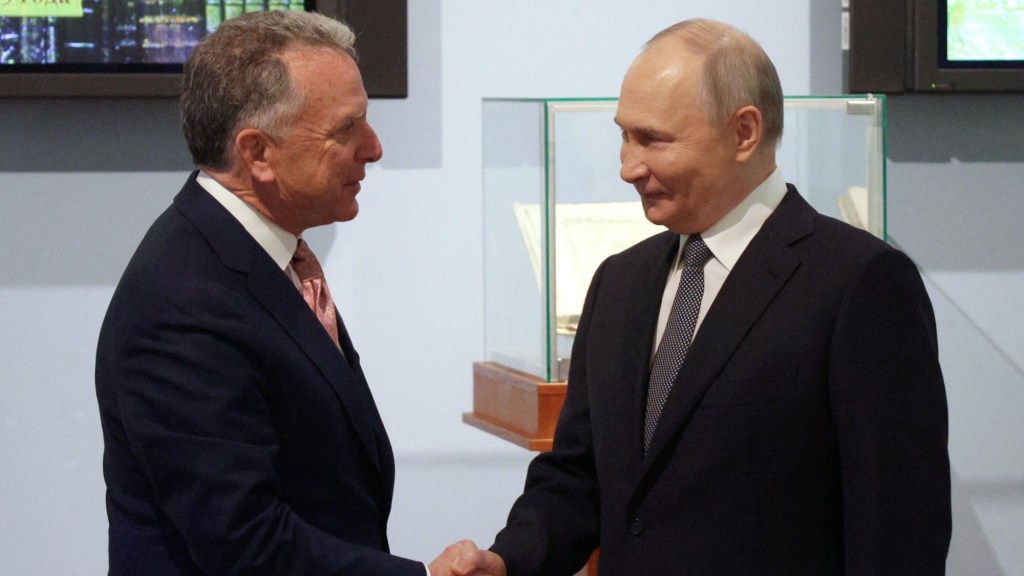
But of course, there are conditions. He said that future talks should focus on security guarantees for both Ukraine and Russia, as well as an overall framework for security throughout Europe. And he reiterated that he was interested only in seeking a satisfactory end to the conflict, and not a short-term ceasefire, saying:
“The goal of these talks will be to ensure the security of Ukraine and Russia after reaching peace agreements, in their final form, not as a result of a temporary ceasefire for some short period of time. We are ready to resume these contacts to achieve this goal.” [Vladimir Soldatkin and Maxim Rodionov, Reuters, October 22, 2026.]
He added that Witkoff had stressed that discussions must extend to “the architecture of European security as a whole. And I [Putin] agree with that too. Well, let’s see how things develop in the coming days.” [Id.]
On Ukraine’s part, President Volodymyr Zelensky said, after earlier having met with Witkoff, that Ukraine is ready for talks that support “any proposals for a ceasefire, an end to the war, an energy ceasefire as well as humanitarian initiatives.” [Id.]
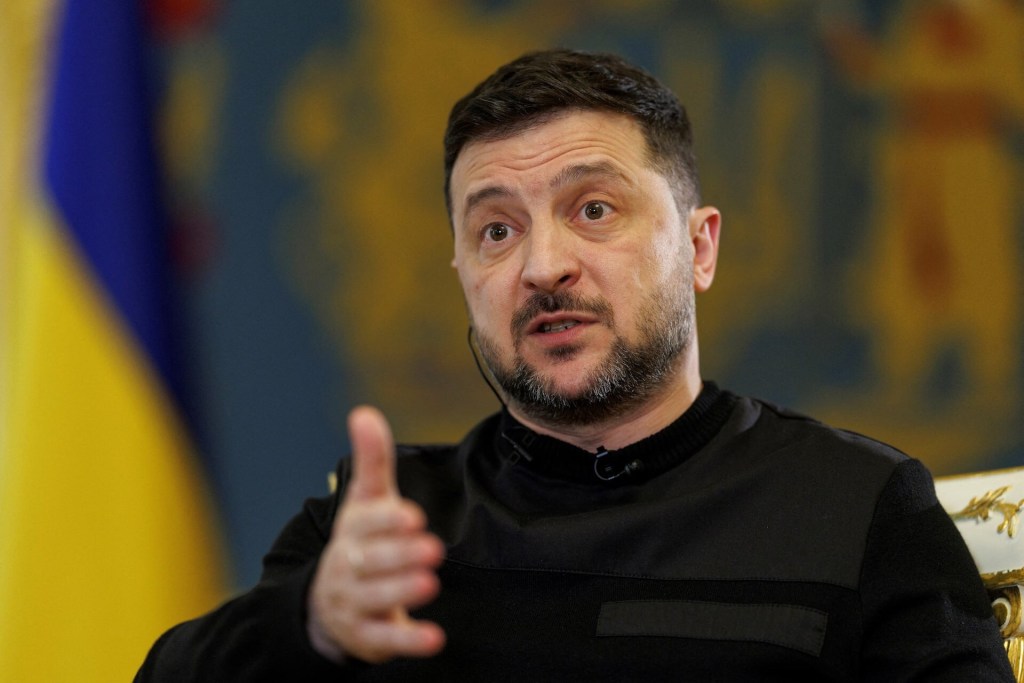
It was not clear whether Putin himself would finally meet with Zelensky (and presumably Donald Trump), or where any such meetings would be held. Further, Putin again reinforced his insistence that those areas of Ukraine already occupied would remain Russian territory. He also claimed that residents of those regions — presumably Donetsk, Luhansk, Kherson, and Zaporizhzhia — had voted in a referendum during the first year of the war to become a part of Russia. The legitimacy of that referendum is questionable, of course, and remains a subject of dispute. But, according to Putin:
“Firstly, my attitude on this matter is that this is not their territory. It’s the territory of historical Russia.” [Id.]
Clearly, the two sides are still worlds apart, and it’s hard to see what, if anything, might be accomplished by further meetings as long as Putin remains recalcitrant on the question of territory. In addition, his insistence that Ukraine must waive any future consideration of membership in either NATO or the EU brings into serious question what he will propose regarding “the security of Ukraine and Russia . . . [and] the architecture of European security as a whole.”
But, as Putin so blithely remarked, we’ll see how things develop.

*. *. *
In 1986, Bjorn Ulvaeus and Tim Rice wrote the lyrics to a wonderful musical called “Chess,” about an imaginary chess match between an American and a Soviet chess master. In one song, titled “Nobody’s Side,” one of the characters sings:
“Everybody’s playing the game,
But nobody’s rules are the same.
Nobody’s on nobody’s side.“
It seems that some things never change. The Cold War may be officially over; the Soviet Union has splintered into 15 parts; and Mikhail Gorbachev has been replaced, first by Boris Yeltsin, and now by Vladimir Putin. But U.S.-Russian relations remain precarious at best.
Add to that the deeply ingrained animosity between Putin and Zelensky; stir in a dose of Trump’s infatuation with Putin leading to his indefensible betrayal of Ukraine; and it becomes painfully obvious that chess is not the only game in which “nobody’s on nobody’s side.”
Just sayin’ . . .
Brendochka
10/23/26

