I’ve been in love with Russia for as long as I can remember. My grandparents emigrated from there — the part that is now Ukraine — in 1905. The food they prepared for us was old-world style. Even as a teenager, my favorite composers were Tchaikovsky and Rachmaninoff. I have devoured the works of Dostoevsky, Tolstoy, and Pasternak; marveled at the treasures of St. Petersburg’s Hermitage Museum, Moscow’s Kremlin Armory, and Washington’s Hillwood Museum; and lost count of the number of times I’ve watched the film versions of War and Peace, The Brothers Karamazov, and Doctor Zhivago.
As an adult, I studied the Russian language, history, and literature, and finally — in 1988 — took my first trip to what was still the Soviet Union. Those who follow my blog with any regularity know that I lived in Moscow for several months in 1993, when the Soviet Union no longer existed and Russia was excitedly becoming a more prosperous, democratic society.
So it has pained me to write about the return of totalitarianism under the Putin regime, his taking of political hostages, and especially his war of attrition against Ukraine — the homeland of my ancestors. But facts are facts. And — as I have had to do in relation to my own country recently — I constantly remind myself that the people of any nation cannot be judged by their leaders.
With all of these thoughts running through my head today, my brain has done one of its inexplicably circuitous maneuvers, depositing me back in 1988 and that first visit, with a friend from my Russian language class and as part of a licensed tour group, to the forbidden land behind the Iron Curtain.
It began — in what I should have taken as an omen — on our arrival at Moscow’s Sheremetyevo Airport.
After an exhausting trip from DC to New York and overnight from New York to Moscow (an eight-hour time difference), we arrived at Sheremetyevo looking like a bunch of . . . well . . . just what we were: bedraggled American tourists. We were greeted by Tamara, our official Intourist guide (one of a slew of government-controlled organizations directly answerable to the KGB), claimed our luggage, and headed for Passport Control.
There were two lines open, and I was steered to one that was presided over by a tall, blond, handsome young man with an appropriately stern facial expression. I put my passport, open to the front page, in the little tray at the base of the bullet-proof glass window. He picked it up, checked the visa, looked at the picture, looked at me, looked at the picture, looked at me, looked at . . . well, you get the idea. Then he asked, in his best, heavily-accented English, “This your photo?”
At the time, I was a 40-something, reasonably decent-looking redhead, not easily disguised, so yes, it was obviously my photo. I replied, in my best, American-accented Russian, “Yes, that is I.” My language professor was a stickler for grammar.
Tall-blond-and-handsome began again: looked at the passport, looked at me, looked at the passport, etc., and finally asked: “You sure this your photo?”
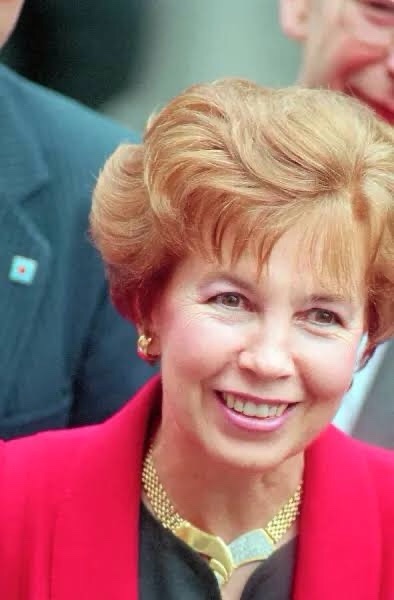
Enough, already. The impatient, impetuous, and somewhat Puckish American in me took over, and I smiled, replying: “Well, it’s not Raisa Gorbacheva.”
Oh, my God! What had I done? I began to wonder what the inside of a Russian prison looked like, and what the average sentence was for being an American smart-ass.
But miraculously, that startled young officer hesitated, forgot his training . . . and smiled. Barely managing to stifle an audible laugh, he choked out, “Hokay,” stamped my passport and waved me through. And I knew I had made his day.
Welcome to Moscow, Mrs. Gorbacheva— or whoever you are.
But then it was on to Customs. We had filled out the necessary forms on the plane, and I had dutifully declared the only valuables I had brought with me: some cash, and my favorite go-to jewelry: three gold chains of varying lengths, and one gold ring, all of which I was wearing in plain view.
When I handed the form to the Customs officer, he read aloud, “Three gold chains,” and I pointed to them around my neck. Check. Then he recited, “One gold ring,” and I held up my right hand to show him the ring. Check.
Looking at my face, he noticed the gold-colored hoops on my ears and asked, “Earrings?” When I said that no, they weren’t real gold, he shot back, with just a touch of a smile, “Oh . . . cheap, huh?”
I was beginning to think everyone in Moscow was a stand-up comedian. And we hadn’t even left the airport yet!

The entire two-week stay was one memorable exchange after another: the smarmy character who tried to convince me his car was a taxi, and the nice old man who congratulated me after he heard me tell the scumbag (in Russian) what he could do with his “taxi”; the government official who offered to exchange rubles for dollars (illegal in those days); the drunk in Sochi who kept blocking my path, to the amusement of the local bystanders; and the man who tried to lure my friend and me down an alleyway in Tbilisi, Georgia.
But then there was the woman — a total stranger — who drove us out of her way to our hotel in Leningrad when there were no taxis around, and wouldn’t accept payment for it.
And there were all of the random people we met — in the tourist attractions, the restaurants, on the Metro, or on the street — who were thrilled to meet Americans and wanted to know all about our lives in the outside world.
There was also the maid in our hotel who took the time to check on my friend the day she missed our excursion and stayed in bed because of an intestinal bug that had afflicted half of our group.
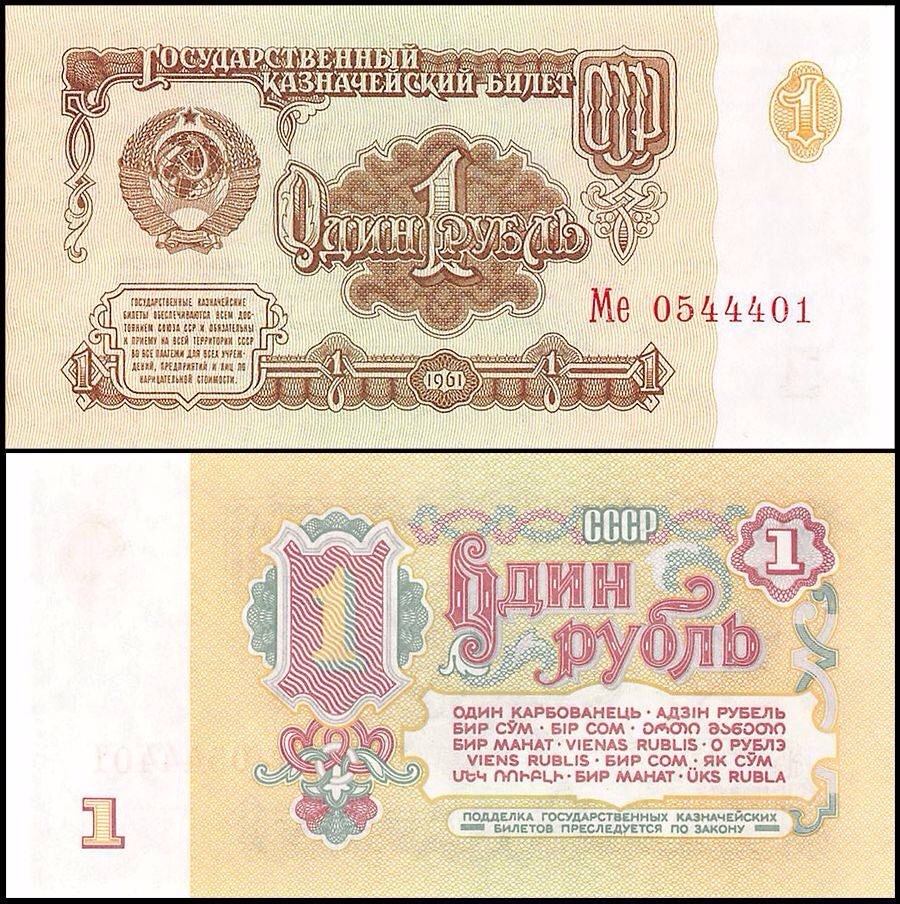
And the elderly lady — clearly a retiree — who was supplementing her pension by working at a public rest room, selling single squares of toilet paper for one kopek (about a penny) apiece. When I asked for five squares and handed her five kopeks, she was astonished — but even more so when I tipped her a ruble (100 kopeks) for herself.
I could go on indefinitely. In fact, I have done just that, in past posts. But thinking and writing about these experiences helps to remind me — and I hope it also reassures you — that, like people everywhere, the Russian people are not their government. They have their scoundrels, of course; but for the most part, they are a warm, generous, smart people who desire only to live their lives in peace and some measure of security. Just like the rest of us.
So, while I shall continue to castigate Vladimir Putin and his henchmen, and to support Ukraine completely in its battle against his onslaught, I cannot give up on the Russian people as a whole. Nor can I stop worrying about their safety in the face of Ukraine’s justifiable counter-attacks.
You can despise a country’s government, and still love its people. It is the very definition of ambivalence.

Just sayin’ . . .
Brendochka
9/5/26
 The Blog About Everything … and Sometimes Nothing