Prague, 1968. The Cold War. Czechoslovakia was in the midst of the “Prague Spring” — a massive liberal protest against the Soviet Union’s forcible hegemony over the country.
But on the night of August 20th, some 200,000 troops and 5,000 tanks invaded to crush the liberal movement. First Secretary Alexander Dubcek was ousted, his reforms were repealed, and a hard-line successor, Gustav Husak, was installed in his place.
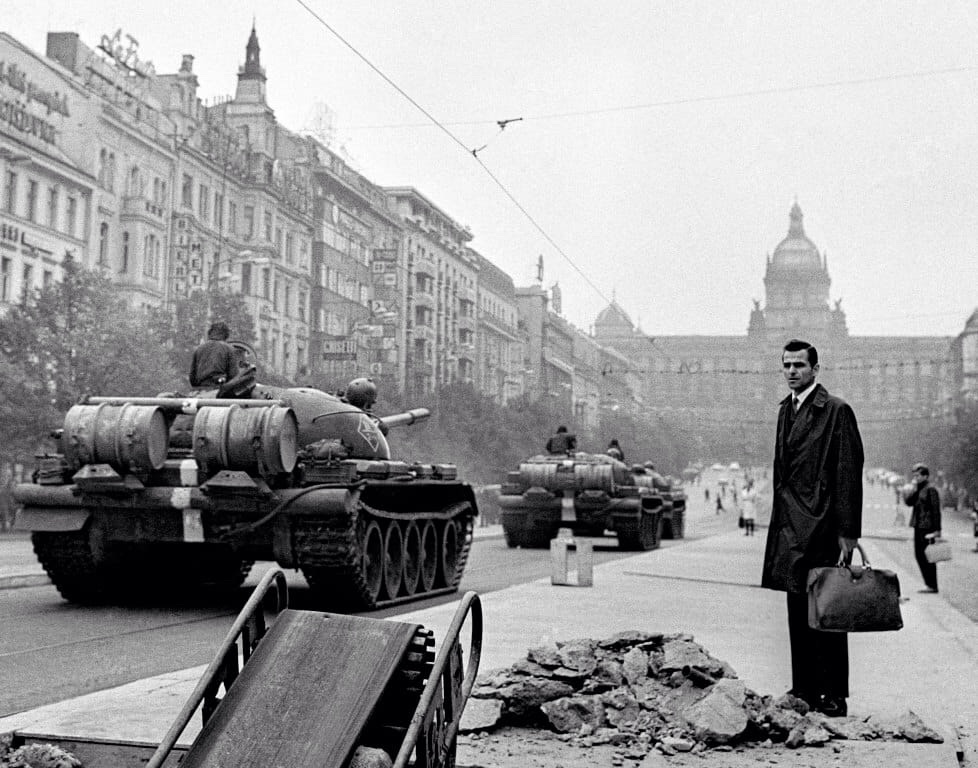
Twenty-nine years later, as the Soviet Union itself was in the throes of disintegration, Czechoslovakia reclaimed its independence in what became known as the “Velvet Revolution” of 1989. And in the spring of 1991, the last of the Soviet troops finally withdrew from the country — just as I arrived in Prague to live and work for several months with the U.S. law firm assisting the Czech government in the development of its new legal and economic policies under reformist President Vaclav Havel.

By that time, there were few remnants of the communist occupation still visible in the city. Instead, there were celebrations everywhere, and an almost palpable spirit of optimism for the future. It was a magical time, about which I have already written at length . . . a period of my life that I still recall in the minutest detail, and with a sense of gratitude for having been privileged to experience it.
More importantly, though, it was an important turning point in modern European history, and one that deserves to be marked today as a reminder of how tenuous our freedoms are, how quickly our lives can change, and how fiercely we must defend those freedoms . . . every single day.

Just sayin’ . . .
Brendochka
8/20/26

