That’s me. (Actually, I should say “That is I”; but this is just a conversation — not a term paper or a treatise — so let’s be casual about the grammar today.
The sad fact — unless you happen to be, say, Brittney Griner or Barron Trump — is that we all start to shrink after a certain age. And I was never tall to begin with: 5’ 2-1/2” at best. So it comes as no surprise that I can no longer reach even the lowest shelf in the kitchen cabinets, and have to step up onto a stool to use the microwave above the stove. In fact, between the normal compression of my intervertebral spaces due to age, and the five lumbar vertebrae that were surgically fused some years ago, I’ve shrunk so much that I think I could be officially classified as a “little person.” If this were 1939, I might even consider auditioning for a role as a Munchkin in The Wizard of Oz.
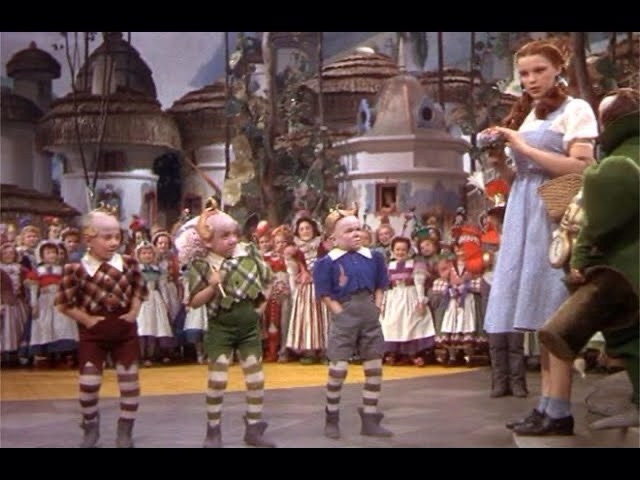
But it’s not physical shrinkage that is on my mind today. Rather, it is the ongoing reduction in the scope of our lives — both our physical environment and our social/intellectual reach.
The phenomenon — let’s call it the obsession with growth — begins in our childhood with toys; progresses in our teens to clothes and accessories, souvenirs of our accomplishments, and the latest electronic must-haves; and carries on throughout our working years with bigger acquisitions such as cars, furniture, jewelry, books, more electronics . . . whatever our individual interests happen to be.
At the same time, we are building our chosen careers as well, working toward promotions that will bring greater responsibility, higher earnings, and perhaps opportunities for travel.
If we start families, we move to bigger and bigger living spaces. And since nature abhors a vacuum, we fill that additional space over time with more and more stuff. Some of it is fairly expensive, much of it has only sentimental value. And we grow attached to all of it because it’s the story of our lives.
As we grow older, all of those things conjure up memories, and bring us comfort. They remind us of more active days, perhaps happier times. And while our children and grandchildren only see it all as a pile of dust collectors, we see treasures.
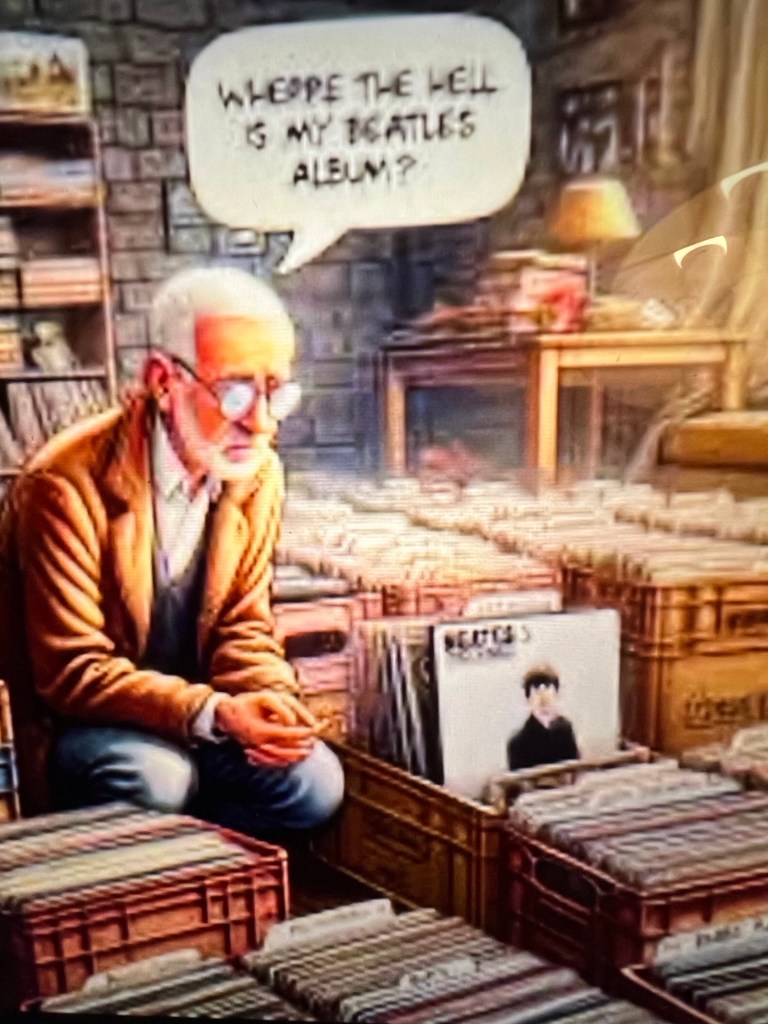
Then it begins to happen. We wake up one morning and realize that something has changed. It’s a little harder to get out of bed, or to bend over, or to climb the stairs. Maybe we’ve developed a chronic ailment or two, or just seem to need more sleep than we used to. Perhaps we’ve retired from the work force, and are living on a severely reduced income, forcing us to forego some of our favorite activities.
The kids are grown and gone. The spouse or significant other may no longer be with us, or experiencing physical problems of their own. Suddenly the home that you spent years growing into is too big, too hard to keep clean, or simply has too many stairs. And you finally admit to yourself that . . . good grief! . . . it’s time to downsize.
Well, if you think all of those earlier moves into bigger and bigger homes were difficult, just wait until you try it in reverse — and at a time in your life when you are least able to cope with the stresses, both physically and emotionally.
That big, comfortable furniture — purchased to fill those spacious rooms — will never fit into the new little apartment.
And without all of your built-in book shelves, what will you do with the hundreds of precious books that have taught you so much?
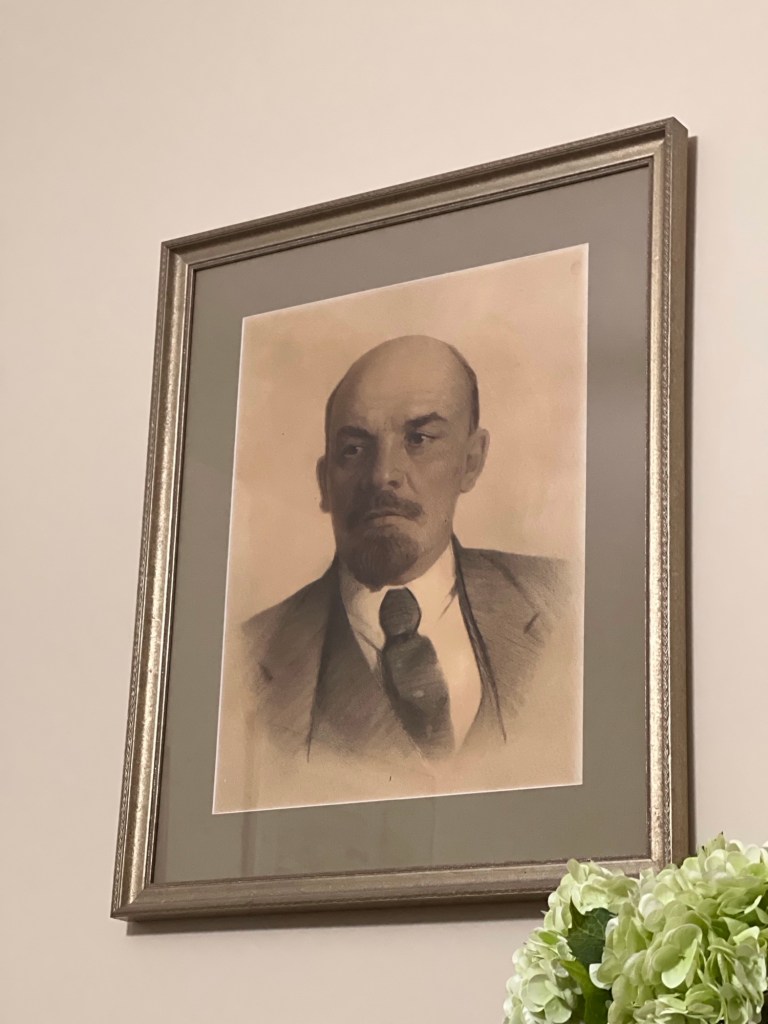
Will you have enough wall space for all of the framed pictures of the kids, grandkids, and travel adventures? (In my case, there’s also the Lenin portrait smuggled out of Russia in 1993.)
Have you really looked in every closet, every drawer, every nook and cranny lately? I mean, really looked. Try it, even if you’re not planning to move. You won’t believe the stuff you’ll find! What will you do with all of it?
I can’t even imagine what it would be like trying to transition to an assisted living facility. But Heaven help you even if you’re lucky enough to be able to move in with one of your offspring. No matter how much you love each other, how compatible you are, and how often they tell you “Mi casa es su casa,” it will never really be your casa in the fullest sense, because you would rather cut off your right arm than upset their lives any more than necessary. It’s their home, not yours, and they have their own way of doing things. You have come the full 360 degrees around that circle of life; you raised them, and now it’s time to let them help you.
Anyway, you’re finally resettled, having disposed of 90% of your worldly belongings and memories — or placed most of it in storage, where you’ll pay rent for it forever and probably never look at any of it again, leaving it for someone else to deal with after you’re dead.
So now what? Along with the furniture and other things, you’ve also left behind your regular routines, the daily habits cultivated over however-many-decades. You have other people’s needs and schedules to work around. And you can no longer run through the house naked, or leave the bathroom door open when you . . . Well, you get the picture.
But that’s actually not the hard part. Because you have most likely moved to an entirely new location, perhaps a new city where you don’t know anyone, or where anything is located, or which way is north from wherever you are. And you’ve likely left behind your old friends — the few who are still alive — with whom you have shared the better part of a lifetime of laughter and tears, good times and bad, and your deepest, darkest secrets. Your history is now just a few weeks old, and while the new people you meet may be perfectly lovely, they will never replace your old friends.
Your entire world has shrunk to the size of your assigned living space. The range of your small talk has also shrunk because there is no one around who shared all those earlier decades with you. And your new people don’t know the vibrant, active, interesting person you used to be. Instead, they see only the shrunken physical remains, and assume that you are now content to sit on the sidelines and watch the world go by.
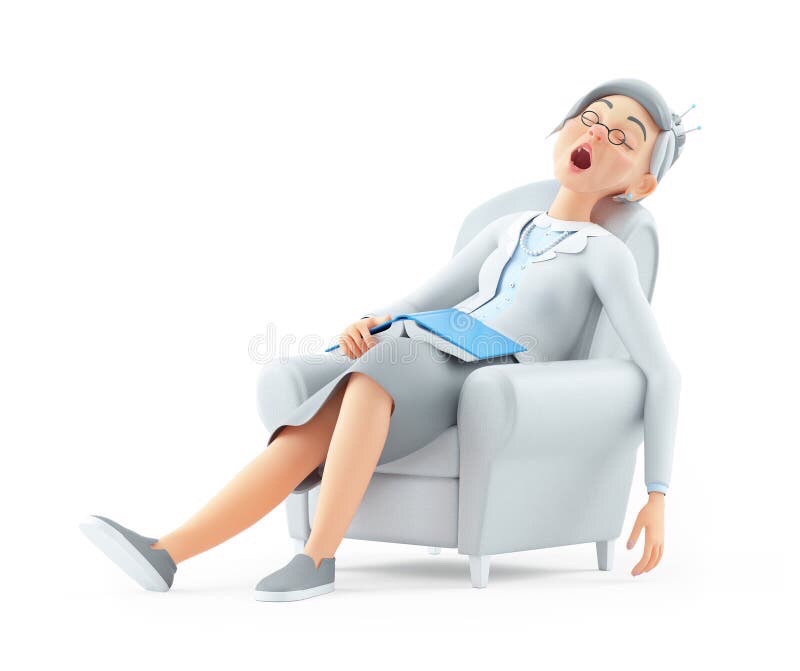
But they’re wrong. What they don’t see . . . what they won’t understand until they get there themselves . . . is that inside of you is that same vibrant, interesting person you were 30, 40 or 50 years ago. Maybe not as active, but still aware, alert, and capable of learning and participating and contributing.
We don’t all want to be told to join the local senior center and weave baskets or paint little pictures or do chair yoga. Some of us still crave mental stimulation, in-depth conversation, the opportunity for academic enrichment.
And some of us write, sending our thoughts out to anyone who has the time and the curiosity to read.
That’s me . . . sorry . . . That is I.

Just sayin’ . . .
Brendochka
7/22/26

