“Who is John Galt?”
That was the first line of an 1,168-page novel titled Atlas Shrugged, written in 1957 by Russian-born author Ayn Rand. It was her second, and by far the better, novel based on her doctrine of Objectivism — a philosophy far too complex to try to explain here, even if I completely understood it myself. And as I read through the weighty volume back then, I found myself caught up in her belief system, certain that she had found the answer to all of the world’s problems. I was a teenager, and I knew it all.
Then I came to the end of the book, closed the cover, and said, “Wow!” That was the world I wanted to live in. But days and weeks went by during which I thought about it from time to time, and one day — to my total surprise and disappointment — I came to the conclusion that it was absolute bullshit. Ms. Rand had invented a world of just two types of people: pathetic weaklings whose lack of intelligence, foresight and morality (as she defined it) would inevitably bring about the collapse of the world as we know it; and — at the distant opposite end of the spectrum — individuals of such superior intellect and ability that they would be capable of rebuilding, in their perfect image, both the physical infrastructure and the political and economic bases of a brave new world. It’s not clear to me where all the millions of reasonably intelligent, competent, hard-working people in the mid-spectrum would come from to do the actual work of rebuilding and operating this new society, as they seemed not to exist at all in Ms. Rand’s world; but I’m sure the answer is in there somewhere, if only I had the desire to reread the whole book.
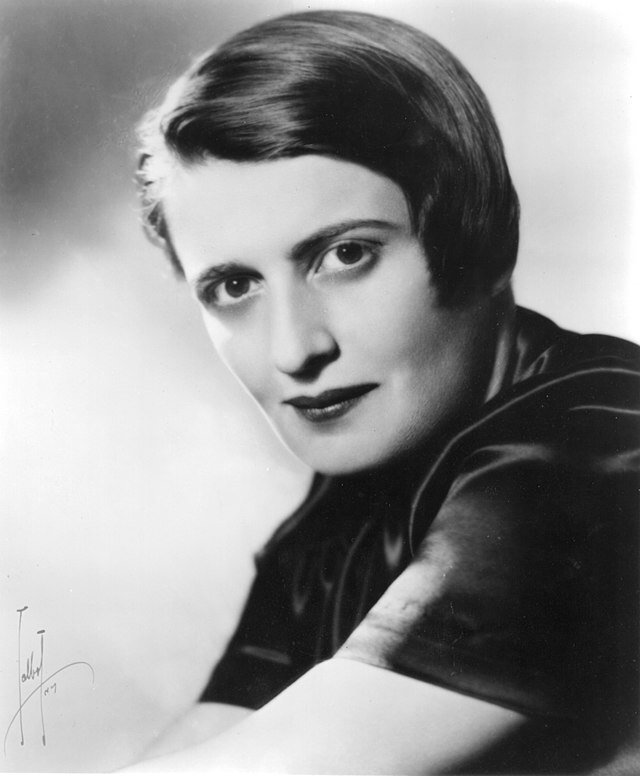
And incidentally, the doctrine of her superheroes is centered around their allegedly indisputable belief that selfishness and greed are good; helping others is counterproductive and therefore bad; and that it is only in obeisance to the almighty dollar that anything worthwhile can ever be accomplished. I wonder if it might be Ms. Rand’s reaction to having lived the first 21 years of her life in Russia and the Soviet Union (1905-26) before moving to the United States and embarking on an all-encompassing love affair with capitalism, then carrying it to the nth degree and beyond. At least, that’s my very simplistic takeaway from it; you really have to read it to get the full impact. (But don’t watch the movie; it’s dreadful.)

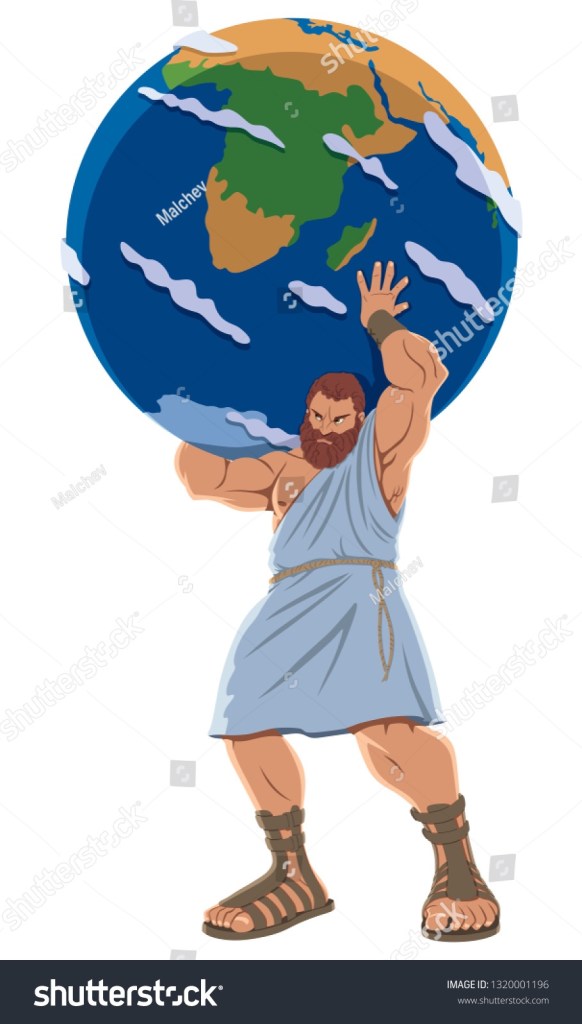
Anyway, in Ms. Rand’s fantasy world, “Atlas” — the metaphor for any and all of her superior beings — simply withdrew from the world and allowed it to collapse under the weight of the lesser mortals. Atlas had shrugged. And then the small complement of supermen began rebuilding it from scratch, and everyone supposedly would live happily ever after. John Galt, by their way, was their leader: the perfect human being.
It was, clearly, fiction. But fascinating fiction.
*. *. *
Or was it completely unreal? If I didn’t know better, I might be inclined to believe that that’s more or less what’s happening to our world today (but minus the hero/antihero characterizations). Think about global warming, causing wildfires, receding waters, droughts, floods, frequent natural disasters, the extinction of multiple species. Crumbling infrastructures: buckling roads, collapsing buildings, failing bridges and dams. The worst possible selection of people, concerned only with their personal agendas, being elected to the highest offices; economies sinking; people attacking one another out of sheer frustration and fear. And we’re too busy to deal effectively with any of that — too busy fighting wars in Ukraine and Israel, and trying to avoid wars between other adversaries.

It feels like a world on the edge of Armageddon . . . and it may well be. But where is our Atlas to save us from ourselves? We have to do something, before he shrugs. But who will take the lead? Well, let’s see. Both Vladimir Putin and Xi Jinping have so graciously offered their services as negotiators in Russia/Ukraine and Gaza/Israel, presenting themselves as the best-qualified individuals to bring peace to parts of the world that have never known real peace. That sounds wonderful . . . if by “peace” you mean a surrender to worldwide totalitarianism. I seem to recall that that’s already been tried. Ask the North Koreans, the Cubans, the Chinese how that’s working out for them.
I cannot solve the planet’s problems; I can only ask the same questions that most of the world’s people are asking. My first question, though, would be . . .
Where is John Galt?
Brendochka
10/21/23
 The Blog About Everything … and Sometimes Nothing