Ch. 13 – Look Out, Moscow, Here I Come!

I learned a lot of things in Prague. I learned that Adolph Hitler had considered it too beautiful to destroy, so only two German bombs hit the city during WWII: one landing on the City Hall, and the other on my friend Beata’s grandparents’ home (luckily, no one was in the house at the time). I learned that Russian and Czech are two distinctly different languages, and that Doberman Pinschers can be friendly. I learned that Mozart really rocks, and that cobblestones are murder on your feet. And I learned that I loved living abroad.

But most significantly, I learned that in 1991 there was a huge need in the recently de-Soviet-ized countries of Eastern and Central Europe for some sort of training programs for the thousands of individuals who would be lining up to work for all of the new Western companies springing up everywhere.

And I had an epiphany. If the need was so great in those countries, how much more desperate must it be in Russia, which had never known democracy or free enterprise. There were programs in the United States and elsewhere being created to train the new generation of Russian entrepreneurs, but what about the people who would be working for them? And who better to develop such a program than someone with years of exactly that type of work experience? Someone like me, for instance.

Again, the timing was serendipitous. My son and daughter were grown and on their own, and my mother had passed away shortly after my return from Prague, leaving me with an unexpected case of empty-nest syndrome. I had no one dependent on me any longer, and being back in a routine job just wasn’t cutting it. It was time for this little bird to fly. So I started spending my evenings and weekends writing — not fiction, not a travelogue, but a business plan. And when it was finished, I took it directly to the Russian Embassy. Now, if that’s not chutzpah, I don’t know what is.

And it paid off. My new contact at the Embassy, Natalya, loved it. A very bright and well-connected lady, she immediately set about referring me to people in Moscow who could partner with me in establishing my business school on their side of the Atlantic. As luck would have it, Natalya also was acquainted with — and introduced me to — the person at Northern Virginia Community College (NOVA) best suited to create the curriculum that would be needed there. My plan was to bring teachers to the U.S. for training in Western business methods and office procedures at one of NOVA’s campuses, who would then return to Moscow to pass on their knowledge to the students at a business school to be established there. Those students then would be qualified to become office assistants, bookkeepers, shop managers, and the like. Direct, uncomplicated, and workable.

Everyone loved it. But, like any project, it had to be financed. Ugh! So I began promoting my business plan, including a proposed budget, to several American foundations, venture capital companies, and even a couple of government agencies. And while I waited for my financial “angel” to show up, I began planning my first solo trip to Moscow for meetings with Natalya’s contacts in February of 1992.

“February??? You’re going to Russia in February??????”
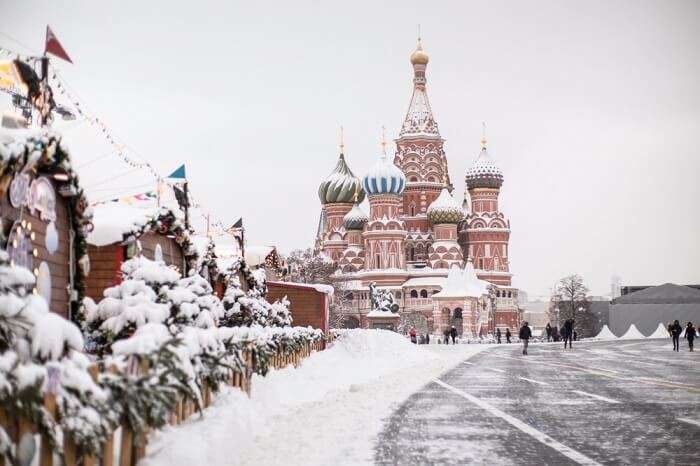
St. Basil’s Cathedral
Moscow in Winter

That was what I heard from everyone. And my reply was always, “Sure — why not?” Actually, I’d always wanted to see the Russian winter of Doctor Zhivago, and here was my chance. I took a week’s vacation from the law firm, packed some winter clothes, grabbed my warmest down coat and fur-lined boots, and made a reservation at the Slavyanskaya Radisson Hotel in central Moscow. And off I went.

On the long overnight flight, somewhere between dinner and a three-hour nap, I studied my notes and finalized my schedule. This time, when the plane landed at Sheremetyevo Airport, there was no Intourist guide or bus waiting for me as there had been on my first trip as a tourist three and a half years earlier. I had to fetch my own bags and find a taxi to take me into the city. And I had no American law firm backing me up, as I had in Prague. For the first time, it hit me that I was entirely on my own, in what was arguably one of the scariest cities on earth. What in hell had I been thinking?!!

Once I got to the hotel, though, my confidence began to return. It was a Radisson, after all, with all of the usual comforts and amenities, and staff who spoke English. In 1992, Moscow was crawling with Americans and other foreigners looking for business opportunities that just a couple of years earlier hadn’t existed there. The bar was full of them, the dining room was full of them, and the business center on the mezzanine was buzzing with them, in a cacophony of half a dozen different languages.

Now, about those Russian winters. They were right, all those people who said it was insanity to go there in February. But I found it perversely invigorating. It snowed a bit every night, and nearly every day. The snow was swept from the sidewalks by little old ladies with brooms; on the streets, it was simply driven over and packed down by the heavy traffic — no need for snow plows. The temperature barely inched above zero during the day, and dipped to around 20-below at night.

To compensate, Russians tend to overheat their buildings — including the Western hotels like the Radisson. But I can’t sleep in an oven, so I was pleased to find that the window in my room could be opened, and I lifted it just an inch or so before turning in that first night. The next morning, I went down to the coffee shop for breakfast and came back to my room to fetch my things for my first meeting, where I found a hotel maid — a very pretty young woman — fussing over the snow on the windowsill. She kept apologizing for what she assumed was an oversight by a hotel employee, and I had to calm her down before she could comprehend that I had opened the window myself. We chatted, and I gave her the little gifts I had brought for her — just some small American cosmetic and toiletry items, but unavailable in Russia in those days. Every day after that, I would leave her a little something, and — as I had hoped — nothing was ever missing from my room. And on my last day in the hotel, she actually brought a gift for me: a lovely picture book of Moscow. All because of a little snow.

The meetings Natalya had arranged for me were going well, and I was running non-stop from one to another. At the same time, I was learning about a Moscow I hadn’t known before: the small-town Moscow, where everybody knew everybody, and where — out of nine million people — you were still likely to bump into someone you knew.

One morning, as I sat at a table in the hotel coffee shop, grabbing another quick breakfast before my first meeting of the day, I looked up and spotted a familiar face — and an American one, at that. I called out his name and he turned, completely surprised to see me in such unexpected surroundings. Randy Bregman was an attorney from Washington whom I had known for years, and with whom I shared a number of mutual friends and acquaintances. He sat down, ordered a cup of coffee, and we talked for a while.

He was associated at the time with the large, well-known law firm of Arnold & Porter. He told me that they had created a public relations firm called APCO, which had established a business presence in Russia, and they were looking for the right person who could move to Moscow and manage their office. Knowing my background, he asked if I might be interested, and I answered almost before he finished the question. Of course I was interested! Are you kidding? This was my dream come true: another overseas opportunity, and one that would put me onsite where my new business school would be operating. I could multi-task.

“Just one thing, though,” Randy cautioned. They had a Russian partner, a man he called simply Vlad, who could be — in his words — rather bossy and difficult to get along with. Shrugging it off, I reminded him of my ten years with Walter Surrey, the attorney I had been working with when Randy and I first met, and assured him that if I could handle Walter, I could handle anyone. He laughed, and agreed. He gave me the name of the partner (Sarah something, as I recall) in Arnold & Porter’s Washington office who was in charge of finding a manager for the Moscow APCO office. He said he would let her know to expect a call from me when I got back to the States the following week. I couldn’t believe my luck — and as it turned out, there was good cause for my disbelief. More on that coming up later.

Among the people with whom I met that week was a group of educators from a district known as Lyubertsy on the outskirts of Moscow. (It also happened to be the location of one of the most notorious, violent “Mafia” gangs in the entire Moscow area, but that was beside the point.) They invited me to visit their district and to join them, their Mayor, and some of their teachers for lunch one day, transportation to be provided. It was a fairly long drive, and afforded me the extra perk of seeing some of the rural area outside of the city that I might not otherwise have seen.

Their building was located on a former government-run collective farm, which had now been privatized. The food they served was all locally produced, including the pig who had given its life so that we might have shashlik (shishkebab) for lunch — prepared right there, on the farm, outdoors, in a clearing surrounded by three feet of piled-up snow. And that was where the table had also been set with a typically Russian over-abundance of food: Outdoors. In ten-degree weather. At a picnic table. In the snow. Get my drift? This was “frigid,” redefined.

There was a little warmth radiating from the barbecue grill if you stood right in front of it, but the only real heat source was from the bottles of vodka they had stashed in the snow beneath the table. Hospitable, hardy folks, these Russians. Of course, every bite of food had to be preceded by a toast: to U.S.-Russian friendship, to President Yeltsin, to success in business, to world peace, to President Bush, to you, to me, to someone’s evil mother-in-law . . . to all of us. And we’re talking about bottoms-up shots of ice-cold vodka, not dainty sips of wine. I was doing fine, relying on my Russian/Ukrainian heritage to sustain me, until it was time to go indoors for our meeting. (Please don’t ask why we had to eat outdoors when there was a perfectly lovely building just 20 or 30 yards away; apparently, it’s a thing over there. Or perhaps they were just testing my mettle. In any event, it would have been rude to question it.)

Did you know that it’s possible to consume a whole lot of alcohol in icy-cold surroundings without feeling any effect? Or that it will hit you like a brick wall as soon as you come indoors to the warmth? Well, I didn’t know — but I found out quickly enough. The funny thing was, as off-kilter as I suddenly found myself, I was also speaking the most fluent Russian of my life, and understanding everything the others said, without relying on the interpreter. At least, I think that’s what happened. Later, when I sobered up, I just had to pray that I hadn’t nullified any existing treaties between our governments. Without my sloppily-scribbled notes, I would have had no clue as to what transpired at that meeting, but I did recall that we parted as great friends. I suppose there is a moral to this story somewhere, but I’m damned if I know what it is.

I also found time that week to have dinner at the home of a couple I knew: a Russian lawyer and his wife who had been in Washington the year before, and who were also friends of Randy Bregman. See what I mean about everybody knowing everybody? And there was a whirlwind tour of the city with a delightful group of young Russian folk dancers who had been given my name as someone who might be able to arrange a U.S. tour for them (which, unfortunately, I wasn’t — not my bailiwick).

During that walkabout with the dancers, though, I learned a bit more about the nature of the typical Russian babushka (grandmother). I was wearing my nice warm, puffy down coat, scarf, gloves, and boots, but typically my head was uncovered — I hate wearing hats and hoods. I get hat hair. So, as we were standing in a scenic spot while I took a few pictures, this elderly woman came rushing up to me, scolding me in Russian: “Cover your head, you’re going to catch pneumonia,” she kept repeating as she actually reached out and tried to pull the scarf that was around my neck up higher onto my head. As I tried to wave her hands away without actually slapping them, I told her that I was fine, that I was from the north and accustomed to the cold, etc. — until she finally gave up, uttered one last “tsk,” and walked away, muttering under her breath. Not shy, those wonderful little old Russian ladies. I used to have a beloved grandmother like that.

What turned out to be the most significant meeting of that week, however, seemed at the time to be the least meaningful. If you’ve been following my journey from the beginning, you may remember “my first Commie,” Viktor Akimov, and my having missed seeing him on my first trip to Moscow as a tourist in 1988. Before leaving for this visit in 1992, I sent him a fax (the world had advanced from telexes), and this time I received a reply happily agreeing to get together. And so we did, in the business center of the Radisson, where we drank tea and had a fine time catching up on the ten years since he had left Washington. I told him about my business school proposal; but he said very little about what he was currently doing. He seemed tired, and somewhat at a loss in the new open environment in Russia. We agreed to keep in touch, and that was that. I could never have imagined what lay just a year in the future . . . and a year after that.

It had been a hectic week, and I left Moscow worn out but optimistic. Except for the money thing. The Russians didn’t have any, and I was going to have to raise it all at home. And of course I still had to follow up on the APCO opportunity. So when I got home, I called Sarah and scheduled a meeting.

*. *. *

Hydrogen peroxide and vinegar . . . chlorine bleach and ammonia . . . alcohol and barbiturates . . . Brenda and Sarah. What do they have in common? They’re all toxic combinations.

Now, we’ve all met people to whom we’ve formed either an instant attraction or an instant dislike. But this woman had such an incredibly off-putting attitude, and an air of all-knowing superiority, that she was in a class of her own. She began by describing her plans for the Moscow office and her requirements for the person to fill the opening. She needed someone who could serve two roles: office manager, and IT specialist. Two completely different, incompatible jobs, requiring two different and incompatible skill sets and personality types. Two roles that, in every other organization, are filled by at least two people; but she was convinced that one should be able to do the job. Then she capped it off by naming a salary that was not just laughable — it was downright insulting. Even for Washington, it would have been ridiculously low; for Moscow, a notorious hardship posting, it was ludicrous. She clearly knew nothing about the reality of Russia.

I left that meeting feeling very let down. It wasn’t the end of the world, of course, but it was the end of what I had considered potentially a great opportunity. I was sorely disappointed — until about eight years later, when I was reading a newly-published book about Boris Berezovsky, one of the first, and wealthiest, of the new Russian oligarchs. In the book was a mention of another oligarch, Vladimir Gusinsky, who had been involved in many successful business enterprises, including — are you ready? — APCO. Omigod! This clearly was Vlad: Randy Bregman’s “bossy-and-difficult-to-get-along-with” Vlad. And the same Vlad who had since fallen out of favor with the government, been arrested on charges of corruption, and who — even today, in 2023 — is living in exile somewhere in the world, still on Vladimir Putin’s hit list. Go ahead and check him out on Google; it’s a fascinating story, and one in which I might easily have become an innocent bystander — or even deemed guilty by association. I had dodged that bullet, perhaps literally. I guess I owe Sarah my thanks after all, for what was arguably the worst job interview ever. So . . . belatedly and somewhat grudgingly . . . I do thank you, Sarah.

*. * . *

Have I mentioned that I’m writing a book? No? Well, I am. In fact, it’s the impetus for my having started this blog in the first place. But I’ve gone on long enough today, so please come back next Thursday for the beginning of that story, the reveal of the true identity of “Viktor Akimov,” and a segue into the most memorable two years of my life. In the words of the immortal Al Jolson, “You ain’t heard nothin’ yet.”

A Work in Progress

So long for now,
Brendochka
3/9/23

Ch. 12 – Golden Prague – Part II

Now, where did we leave off last week? Right — Valerie had been rescued from the elevator and made good her escape from Prague. It was her loss; she missed out on a lot of good times.

On the way to work one day, I noticed printed signs posted on utility poles and trees all along the main streets, but couldn’t make out what they said. When I asked someone at work, I was told they were an announcement of the regular five-year cleaning of the pipes. All water was to be shut down throughout the city — except in the central, Old Town district — for the upcoming weekend. That explained the rusty water in my shower.

But what does one do without water for an entire weekend? Well, if you’re an American on an expense account, you either leave town or check into a hotel where there is water. But being tourist season, all the major hotels were already full, and I could only find space in a lovely little boutique hotel, the Ungelt, just off the Old Town Square. It was perfectly located, and for $200 I had — not just a room — but a beautiful two-bedroom, two-bath suite with a huge living room and a full kitchen. Good thing, too, since it turned out I was going to have to share it with a partner coming in from the Cleveland office.

The partner’s secretary called one day just before the water shutdown to ask whether we could help out with a hotel issue. Her boss would be arriving in Prague a day earlier than originally planned, but when she had tried to add a day at the start of his hotel reservation, she had been told that all rooms in the city were booked, due both to the usual tourist crush and the upcoming water issue. I explained the situation to her, which she of course found incredible, being from Cleveland where tourist invasions were not really a problem and the water system wasn’t 500 years old. But I had a brilliant idea. I said I had just reserved a two-bedroom suite for myself, and I would be happy to have company for the one night. Her reaction was hilarious! She simply could not believe that I — a woman — would agree to share living space with a man — and a married man at that — whom I had never even met. Ah, these moral midwesterners! She just didn’t understand, first, that in most of the western world this would not be considered shocking; second, that he was a partner in the firm and if he tried anything objectionable, I would know exactly where to find his wife; and third, that this was Prague, where practically nothing was considered unusual. So she checked with her boss, and he said “yes please” — which must have sent her into spasms.

As it turned out, though, the water was restored before he arrived and I was able to move back into my apartment after only one night in the hotel. He was already on a plane by that time, so I left a note and the key for him at the hotel desk, and said I’d see him at the office on Monday. When we did finally meet, he said he and his wife had had a good laugh over the situation, and yes, his secretary was a bit on the puritanical side. No kidding!

Astronomical Clock, Tyn Church
Prague

Anyway, while I was staying at the hotel, I was able to do some wandering around the Old Town, where I encountered a family of three from Germany: a young couple and a middle-aged woman, who were driving around Europe on the cheap. The young man spoke English, and told me they had lost their bearings in the city’s twisted streets. He asked if I could direct them back to the student hostel where they had stayed the night before. He showed me a piece of paper with the supposed address on it, but what they had written down was the word “Ulitsa,” which they had copied from a street sign, and which I had to explain means “Street” — not the name of the street as they had thought. They didn’t realize that the street names were shown in reverse, as for example, “Street Main.” Dismayed, they asked where else they might stay, and I told them about the water situation and the packed hotels, and that I had even had to move out of my apartment to an expensive hotel for two days. The young man suddenly became very excited. Could they stay in my apartment, since I wasn’t using it?

Now, I’ve heard of chutzpah, but this was beyond belief. Did I have “STUPID” written across my forehead? Was I really going to let three total strangers — and wayfaring tourists at that — move into my apartment, where all my belongings were, and where they couldn’t bathe or flush the toilet for two days??? Really? So I quickly made up a story about a landlord who wouldn’t allow tenants to sublet, wished them well, and got away from them as quickly as I could. They had a car, and I assume they slept in it that night. If they could even remember on which ulitsa they’d parked it!

As wonderfully friendly and generally safe as Prague was, it was not without its problems. The Romany people — commonly referred to as Gypsies — live in many parts of Europe, and were considered a huge problem in Prague at that time. Sadly, they were blamed for every crime that occurred anywhere in the city, whether they were guilty or not. One day, Rudy had picked me up at my apartment, and as we drove down the hill and around the corner, I noticed a man lying on the ground near the rear of a parked car, and saw blood on the ground near his head. I shouted at Rudy to stop, but instead he merely slowed down, took one look at the man, and kept going, saying it was not safe to stop. That was not like Rudy at all, and I kept asking him what was wrong with him. His answer shocked me. He said the man was a Gypsy, and if he was alive, regained consciousness and became frightened, he could very easily pull a knife and kill us both.

Now, I’m a city girl, and I’m no stranger to the dangers posed by all sorts of unsavory people. But I’ve also seen the results of hatred and bigotry, and I just could not allow a man to lie there and possibly die simply because we were afraid. So I told Rudy to find the nearest police or fire station. As luck would have it, just up the street we encountered a police car with two officers, stopped them, and led them back to the injured man, who was by then sitting up and holding the back of his head. The officers took charge, and we were able to go on our way. Sadly, that too was Prague. It’s the one truly negative memory I have of that summer, and it will never go away.

But, as with any ethnic group, there are Gypsies . . . and there are Gypsies.

Of all of the wonderful restaurants in Prague that year, my favorite was located outside the city center in a big, rustic log cabin set back from the road in a thinly wooded area. I never would have found it on my own, but my co-workers seemed to know every eating spot in town. The dining room was huge, and in the center was an enormous open fire pit, with a dozen or more chickens turning continuously on a long spit. And there was entertainment: a group of Gypsy musicians, who — along with the owners of the restaurant — were delighted to meet the friendly American woman who spoke to them in Russian. As a result, I was always given the best table near the rotisserie, and serenaded to the strains of Gypsy violins whenever I visited. (And yes, you can get sick and tired of hearing Zigeunerweisen.) Of course, as an American, I was by Eastern European standards a good tipper, so those guys weren’t stupid. But I had grown very fond of them, and hated saying goodbye at the end of the summer. If they went out and committed crimes after work, I never knew about it, and didn’t want to know. They were my Gypsies.

Then there was U Fleku — a brewpub that had been in continuous operation since the year 1499, even through the much more recent Nazi and Communist occupations. My friends Joe and Mary Saba — you may remember them from the London episode — came to Prague to work for a couple of weeks, during which time Joe had a big birthday to celebrate. So we —about a half dozen of us — took him to U Fleku and surprised him with a birthday cake. However, the only candles we had been able to find were the size of Chanukah candles, and when they were all lit, we were sure the blaze was going to burn down the 500-year-old wooden building. But it didn’t. And as we sang “Happy Birthday,” we were surprised and delighted to hear everyone in the room join in, singing in Czech. Who knew it was such a universal melody? I have to say, those Czechs really know how to party.

Oh, and about that cake. I had stopped that morning at my favorite bakery to order it. It was to be freshly baked and ready for pick-up that afternoon. I couldn’t decide which of several flavors to choose, so I said — or thought I said — “either that one or that one,” pointing to two of the samples. The cost was an incredible $7.00, which would have been the price of just a couple of slices back home. But when Rudy went to pick up the cake in the afternoon, he returned to the office with, not one, but two cakes, and for the same $7.00 — an unbelievable $3.50 apiece! I guess I must have gotten my conjunctions mixed up; clearly, I didn’t know my “or” from my “and.” The second cake did not go to waste, though — my Czech friends knew how to eat as well as drink. I could never quite understand how they stayed so slender; must have been all the walking.

One more restaurant story. I received a call one day from Michael Silverman in the Washington office (also from my London and Budapest adventures), telling me that a client and friend from Rutgers University, Dan Matuszewski, was coming to Prague and would be calling me to touch base. Dan was a delightful guy, and I was looking forward to hearing from him. When he called a few days later, to my surprise he invited me to join him for dinner, and said that there would be a third person with us: Father Theodore Hesburgh, then President of Notre Dame University. I had heard of but never met “Father Ted,” as he was affectionately called, and was honored to have the opportunity. However, not being Catholic, I wasn’t quite sure what to expect, and decided I had better be on my best behavior.

To begin with, I couldn’t find the restaurant. I had the name (the Beograd — Belgrade, in English), as well as the address, and I knew where the street was, just off of the lower end of the famous Wenceslas Square. But I couldn’t find a building with the right street number, nor was there a visible sign with the name of the restaurant. So I approached a man walking by, who didn’t speak English, and asked him for the “Restaurace Beograd” — the Czech words for Belgrade Restaurant. Again, though, my pronunciation must have been less than perfect, because the poor man kept saying, “Ne Beograd. Praha. Praha.” (“Not Belgrade. Prague. Prague.”) He obviously thought I was suffering from some form of dementia and believed I was in Yugoslavia! As he walked away, shaking his head slowly from side to side in apparent sympathy, I was thinking about how to find a Czech language tutor, and soon. But first I had to find the restaurant.

I did locate it a few minutes later, with the help of another passerby, just around the corner from where I had been looking. It seemed that the street, which appeared to end at a cross street, actually made a 90-degree right turn and continued under the same name. Oh, well . . . that’s Prague.

When I finally arrived, Dan and Father Ted were already finishing their first round of drinks, and I soon discovered to my everlasting delight that Father Ted was one of the funniest, most interesting, and most down-to-earth priests one could imagine. I can’t think of a topic we didn’t cover during that dinner, most of it with a distinct overtone of irreverence and accompanied by a good bit of raucous laughter. I’m not sure how much any of us managed to eat that night, but it was a great time and one of my fondest memories of Prague. I do regret, though, that I never did make it to Yugoslavia.

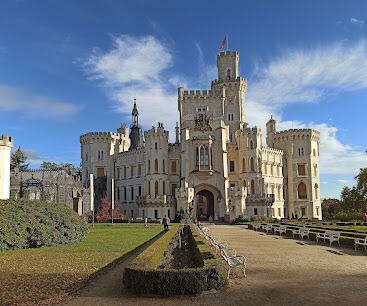
My very first chapter of this blog began with the sentence, “I once climbed a mountain in Czechoslovakia.” I did not lie, although “mountain” may have been a slight exaggeration. It sure felt like a mountain, though. Google Maps tells me that the tallest mountain in the Czech Republic is Snezka, at 1,603.3 meters, or 5,260 feet — just twenty feet short of a mile high. On the other hand, my mountain, Hluboka, is described as “a hill.” But from personal experience, I can tell you that even the hills of San Francisco can’t hold a candle to the one leading up to Hluboka Castle. To me, it was a mountain. And you can’t drive right up to the castle, whether by car or tour bus; parking is at the bottom, and then you walk. Straight up. It probably only took about 10-15 minutes, but it felt like hours. All of my walking around Prague had not prepared my body for that experience, and my legs were sore for a week (a good excuse for more of that marvelous, medicinal Becherovka!). But the magnificent castle at the top was well worth the trek. And that was just one part of a lovely weekend spent at Jana’s parents’ home in the nearby town of Pisek.

Hluboka Castle – Czech Republic

Before I go on with that weekend, let me tell you about all of those Janas I keep mentioning. In order of seniority, they were: Jana Pilatova (the one from Pisek and the smartest), Jana Stefakova (the hottie with the equally hot boyfriend), and Jana Jungmannova (the youngest, prettiest, and sweetest). If you noticed the “ova” ending on all their family names, that’s the feminine designation. The Czechs — in 1991, at least — had no problem with the centuries-old system of gender-specific identification.

So Jana P. had invited me to meet her family and get out of the city for a couple of days. It was about a two-hour bus ride through the beautiful countryside of Bohemia. Her parents had a very nice, comfortable, older home on a substantial piece of land with a huge vegetable garden in the rear. Her father was a farmer who worked for a large produce grower, and everything they ate was freshly picked or killed, skillfully prepared, and incredibly delicious. But they couldn’t understand why I had such a small appetite — which, I promise you, was not the case at all. They could not have been more hospitable, and I found them to be well-educated and politically well-informed, as was their daughter Jana. The dinner conversation was lively, mostly about their joy at finally being rid of the [expletive deleted] Russians. It is a truism that you don’t really get to know a country until you have spent time with the “ordinary” people, away from the tourist areas; and I felt privileged to have had that opportunity.

But all good things must come to an end. I was scheduled to return home during the last week of August, having already extended my stay for a couple of weeks at the firm’s request. As much as I loved being there, it was the longest I had ever been away from home, and I was feeling a bit homesick. I had a tape of Simon & Garfunkel’s concert in Central Park, and kept playing “Homeward Bound,” over and over and over again. So when I was asked to extend once more until after Labor Day, some little voice in the back of my head told me I had to decline. When I announced to the gang from the office that I was going, they planned a farewell barbecue at Rudy’s house, and I felt as though I had truly found a second family — a diverse and somewhat quirky family — in Prague, and it was not easy to leave them. But that voice kept telling me to get on home, and so I left as scheduled, with my six pieces of overweight luggage, some beautiful Czech crystal, the strains of Mozart and Gypsy melodies lingering in my mind and heart, and a wealth of incredible memories.

A week or so later, just before Labor Day, my mother became ill and entered the hospital. She passed away on September 18th, of congestive heart failure. I had come home just in time. Always, always listen to that little voice.

But even in the aftermath of a tragedy, good things can happen. The loss of someone close to you can bring with it the realization of how precarious life really is, and how important it is to make the most of the time we’re allotted. And as I prepared to do exactly that, it became more and more clear that, for me, all roads did indeed lead to Russia.

Signing off until next week,
Brendochka
3/2/23

Ch. 11 – Golden Prague – Part I

In 1991, I was working in the Washington office of the Squire Sanders law firm, and feeling bored with my life in general, when a bit of manna from Heaven fell into my lap. Two of the partners — one from the home office in Cleveland — were discussing the firm’s foreign offices. I said, half jokingly, that if there was any thought being given to opening an office in Moscow, I’d like to volunteer. The Cleveland partner said there was not, but that they had a new branch in Prague in need of someone who could organize the office and help to train the Czech staff. He asked if I would be interested, and — assuming he was also kidding — I laughingly replied that I could be packed and ready in an hour.

Never assume anything.

A few short weeks later, I found myself, and my six pieces of seriously overweight luggage, on a plane to the historic capital of Czechoslovakia, where I knew absolutely no one. I also did not know the Czech language, but I had studied Russian, and since they’re both Slavic languages, I figured it couldn’t be that hard, right? This was going to be great!

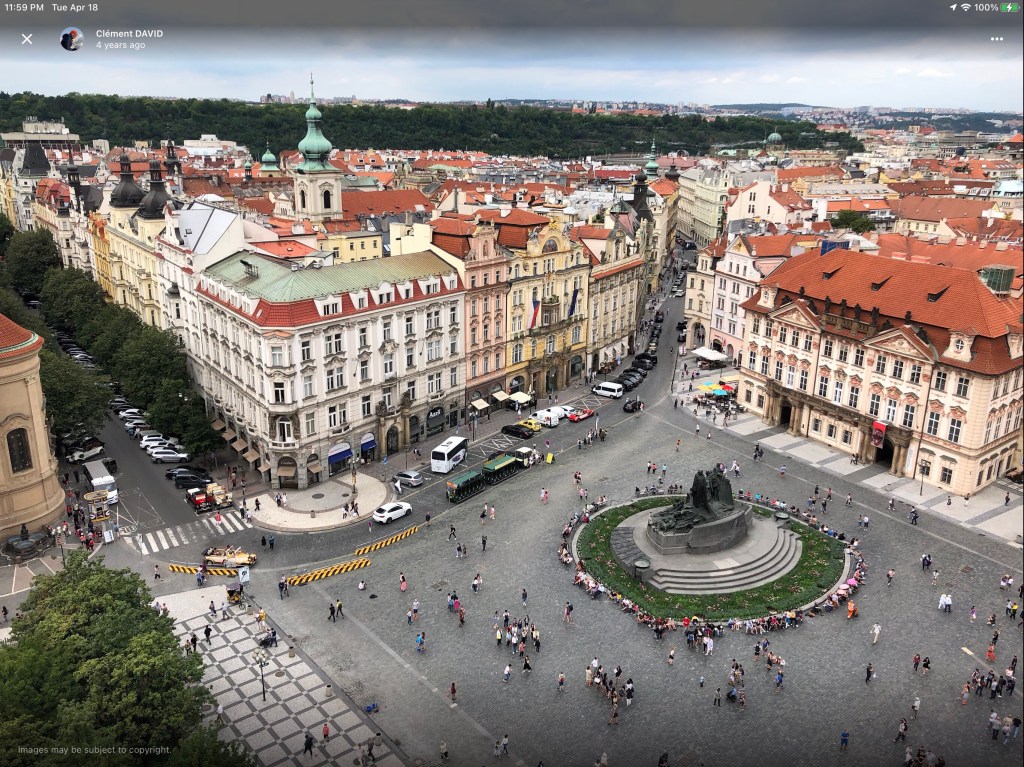
Old Town Square
Prague

When my overnight flight landed at Prague, I found a very pleasant-looking young man named Rudy holding a sign with my name, and I met my first friend in my new home. On the ride from the airport, I discovered why Prague is called the Golden City: the name refers to the golden spires of its abundance of churches, the estimated number ranging anywhere from 100 to 1,000, depending on which travel guide you’re reading. Rudy drove me first to the apartment the firm had rented for me, about a kilometer from the office; dropped off my luggage; and then headed straight for the office along a very direct route that would clearly be an easy walk for me the next morning, and every day after that for the next three months.

I could not have arrived in Prague at a better time. It was May of yet another “Prague Spring.” But this time it was not about an anti-communist revolt as it had been when the Soviet Union invaded in 1968; it was, conversely, all about celebrating the departure of the last of the occupying Soviet troops that very week. Independence had at last returned to Czechoslovakia, and to the rest of Eastern Europe, after the fall of the Berlin Wall a year and a half earlier; and Prague had not stopped partying since.

My apartment was on the second floor of a generic Soviet-style building near the foot of a ridiculously steep hill. The hallway light operated on a timer and had to be switched on each time I entered the building or left my apartment, if I didn’t want to be groping around in the dark. The apartment itself had a fairly large bedroom, and a small living room, where there was a wardrobe with a man’s clothes still hanging in it. (I never did find out who they belonged to, and no one ever came to claim them.) There was also a tiny bathroom where the hot water ran reddish-brown for several minutes before clearing enough for a quick shower. A sit-down bath was out of the question. The kitchen contained a working refrigerator, stovetop and sink; but I never learned to use the oven, which showed temperatures in centigrade, or the Russian-made microwave, which I was sure would zap me with some sort of deadly rays if I dared try.

But none of that mattered, as I only slept, showered and changed clothes there. The rest of my time was spent at the office, followed by dinner every evening with one or more of my co-workers at any of the many outstanding restaurants the city had to offer, and sightseeing all weekend, every weekend. I quickly got into the habit of stopping on my way to work in the morning at a bakery near my apartment for fresh bread and pastries to share with all of my new colleagues, and Rudy brought in our daily supply of deli meats and cheeses for lunch.

On my first walk to work, I also discovered that I had seemingly been transported to Dorothy’s Emerald City. At the top of my hill was a store with a large sign that appeared from a distance to read “OZ.” Of course, my curiosity led me directly to it, and as I came closer, I found that those letters were — not the end of the yellow brick road — but the initials of the words “ovoshchi” and “zelenina.” Optimistically thinking that there must be a measure of similarity between the two Slavic languages, I tried to use my limited Russian skills to translate. In Russian, “ovoshchi” means vegetables, so that one was easy — or so I thought. But “zelenina” was a bit of a puzzle. I reasoned that it had to come from the root word for “green,” which in Russian is “zelyoni.” So, OZ seemed to stand for vegetables and . . . what? green things? — which obviously made no sense whatsoever. OZ was a produce store, all right, but it turned out that a Russian vegetable translated to a Czech fruit, and the “green things” were the veggies. My first foray into this new language was a complete bust, and it never did get much better. But I arrived at work that morning with a bag full of delicious fruit.

The next day I got to the office to find that there was great excitement among all the employees, who included the aforementioned Rudy (our driver and jack-of-all-trades); another young man named Roman (our second driver and office courier); three very attractive, blonde young ladies all named Jana; Beata, who was a multi-lingual American paralegal of Czech birth; and a Czech-American attorney named Milan. It seemed that Rudy — a man of many talents, as it turned out — had scored a handful of tickets for a concert coming up the following weekend at the local football — soccer, to us Americans — stadium to celebrate the Russian exodus. The performer was none other than Paul Simon, of Simon & Garfunkel fame; and there was a ticket for me. And I’d only had to travel 4,300 miles to get there!

As if that weren’t enough, when we arrived at the packed stadium on Saturday evening, we discovered that an even greater star was in attendance: President Vaclav Havel, the hero of the newly freed, democratic Czechoslovakia. We were able to see him from our seats, and the excitement was palpable throughout the crowd. Welcome to Prague, Brenda. This was just the first week, and I had spent it with an American music icon, the President of Czechoslovakia, and a whole bunch of welcoming strangers, most of whose females seemed to be named Jana.

Vaclav Havel, Hero of the Velvet Revolution

But Paul Simon wasn’t the only act in town. It happened that 1991 also marked the bicentennial anniversary of the death of one Wolfgang Amadeus Mozart, and throughout Europe his genius was being celebrated ad nauseum, all summer long. And I couldn’t get enough of it. Dragging various people along with me, I must have gone to a half dozen concerts. My favorites were held in a small theater on the banks of the Vltava River, and were called — if I remember correctly — “Mostly Mozart.” To the beautifully performed melodies and lyrics of the operatic arias (in the originally written languages), satirical plays were presented by the singers onstage that were absolutely hilarious; and somehow, the interplay of comedy and Mozart’s masterpieces just worked. “Wolfie” may have been turning over in his grave, but I loved it, and so did the rest of Prague.

*. *. *

As for any spoken language barrier, I soon learned that everyone in the country had been required to study Russian during the Soviet occupation, but that most Czechs refused to speak it any longer, for obvious reasons. Along with their other freedoms, they were thrilled to have their native language back. But when I rode in a taxi or shopped in a local store, the conversation would usually go something like this:

Me (in Czech): “Dobry den” (“Good day”). Then, in English: “Do you speak English?”

Them (in German): “No. Do you speak German?” (It seemed they’d forgiven the Germans for the long-ago Nazi occupation, but the Russians . . . not so much.)

Me: “Nein.” (One of the dozen or so words I know in German, two of the others being Schweinehund and Dummkopf. You see how my mind works?)

Me (continuing, this time in Russian): “Maybe you speak Russian?”

Them (in Czech, and suddenly stiffening as though someone had shoved a pole up their butt): “No! No Russian!”

Me (still in Russian, and very apologetically): “Sorry. I’m American, and I only speak English and a little Russian. Can you understand me?”

Them (still in Czech, but now visibly relaxing): “Oh, American! Good! Welcome! Yes, I understand a little Russian.”

Problem solved. They would continue to speak in Czech, very slowly and with a lot of gestures; and I would respond in Russian, the same way. And somehow, we managed to communicate. Through the weeks, as I picked up some words and phrases in Czech, I would use a mixture of the two languages. Every cab driver in Prague came to know me and where I lived and worked — there weren’t a lot of American expats in Prague at the time, and a redheaded American woman who spoke to them in Russian was memorable. Being a good tipper didn’t hurt either.

*. *. *

Personal note: I hate beer. In my opinion, it’s bitter, it’s bloating, it smells bad, and it leaves a bad aftertaste. (I feel the same way about coffee, except for the bloating part). If that makes me weird, so be it. But the folks in Prague weren’t ready to accept that, and kept trying to convince me that their renowned Czech beer, Pilsner, was different and so much better. So one evening, when we were all out partying after work (not an unusual occurrence), I agreed to take a sip from Jana’s (it doesn’t matter which Jana’s) glass — and almost did a vaudeville-style spit-take. I’m sorry, but beer is beer, and I can’t tell a good brewski from a bad one. And I said so, as gently as possible. But I don’t think they ever forgave me for that.

I did, however, discover a local drink that I loved, and still keep in my freezer to this day, right next to the Stolichnaya vodka. It’s called Becherovka, and is a clear, herbal, after-dinner liqueur, to which I was introduced one evening at dinner when I happened to mention that my feet were killing me from all the sight-seeing along the cobblestoned streets of Prague. On their promise that it would relieve my pain, I tried a shot before dinner. And a second. It was uniquely refreshing, and couldn’t possibly do any harm — after all, it was herbal, wasn’t it? Well, after those two shots, and another one after dinner, absolutely nothing hurt. In fact, although I swore I was not the least bit lightheaded, I couldn’t feel my feet at all. Luckily, I wasn’t doing the driving. So who needs opioids — or even ibuprofen — when you’ve got Becherovka? I do limit myself these days to one or two small shots, but it’s still my pain-killer of choice. (BTW, it can be ordered online, if you’re interested, and over 21.)

Herbal Pain Killer

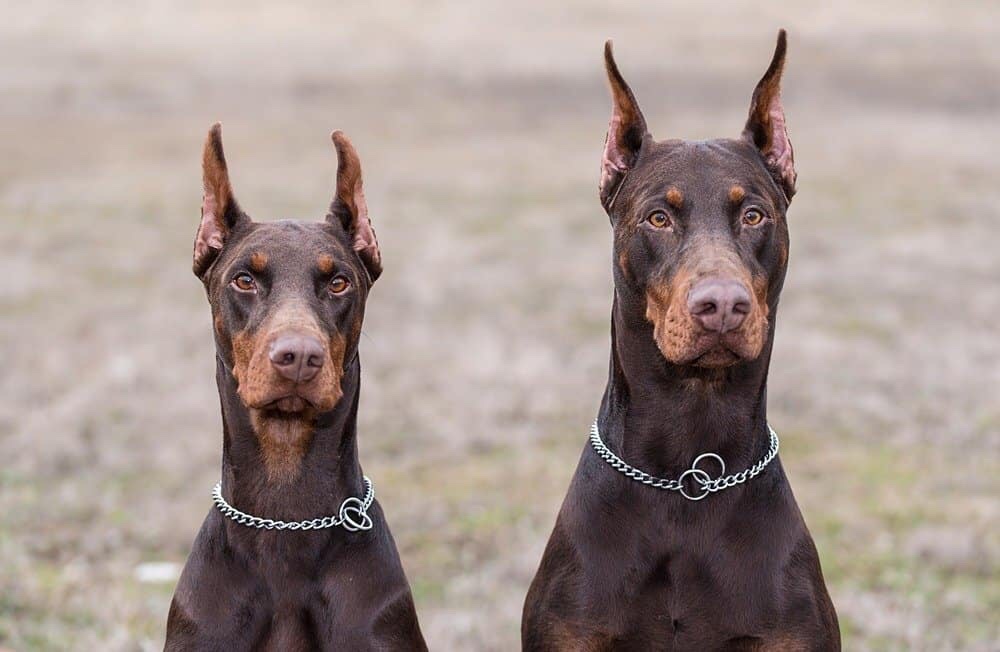
Then there was the night I met the Dobermans. No, not the nice Jewish couple next door; these two were from upstairs. When I got out of the taxi in front of my building after dinner one evening, there was a small group of men standing nearby, just talking and enjoying the mild summer air. One of them called out to me, but he was speaking Czech and I couldn’t understand him. Thinking they were just being neighborly, I gave them a friendly wave as I opened the door to my building . . . and was confronted in the dark hallway by two humongous, solid black, barking, drooling, straining-at-the-leash Doberman Pinschers, ears up and tails down, obviously looking for someone to kill. Someone like me. Startled out of my wits, I let loose with a primal scream . . . the dogs’ owner screamed in response . . . the dogs barked louder . . . and all the while the men on the street were roaring with laughter. That was what they had been trying to tell me: look out for the dogs, who had just come back from their evening walkies. And when my neighbor and I finally stopped screaming, we joined the others in laughing at ourselves. The dogs — who lived directly above me — turned out to be sweethearts, once they got to know me, and their owner was also quite friendly; though I would have preferred to meet them some other way — any other way.

Howdy, Neighbors

Dogs are treasured as pets in Europe, just as they are here. And that included the dog belonging to the Czech Foreign Minister.

We had an American attorney working with us — a bright but spoiled young woman from a well-to-do family, who never quite adapted to the easy-breezy way of life in Prague. Our law firm had been retained by the new Czech government to advise and assist in formulating a new constitution and legal framework, and she — we’ll call her Valerie — had been assigned a desk at the Foreign Ministry where she worked pretty much full-time. As a convenience, she brought her lunch to work every day and kept it in the Ministry’s refrigerator, as did many others.

Now, I have to insert here that Valerie was, shall we say, less than popular with the Ministry staff. She had way too much Attitude. On the day in question, the Foreign Minister was leaving town on government business, and had brought along his beloved dog — a terrier, I believe — to hand over to a friend who was going to care for the pooch during his master’s absence. The Minister parked in his usual spot in front of the building, opened the driver’s-side car door, and before he could turn around, his dog ran out into the street — and directly into the path of an oncoming vehicle. The poor baby was killed instantly as his owner watched, helpless.

Needless to say, the Minister was devastated, but was unable to cancel or postpone his official trip at the last moment. So he had to make some hasty arrangement for his dog until a funeral could be planned for the following week. And this being Prague, the solution turned out to be . . . well . . . unique.

When Valerie arrived for work a little later that morning, no one took the trouble to warn her that anything was amiss. She went directly to the kitchen to put her lunch into the refrigerator, and had one item that needed to be kept frozen. So she opened the freezer door . . . and let out a SHRIEK that must have been heard in Belgium. Because in the freezer — staring sightlessly out at her, arms and legs akimbo, a silvery frost already forming on his fur and his little black nose and protruding pink tongue — was the Minister’s dog. The Minister’s dead dog. Sad . . . stiff . . . bloody . . . undeniably, irretrievably dead doggie . . . without so much as a blanket or a newspaper to cover his sorrowful condition. And the shrieking continued, while all around her, Valerie’s co-workers were laughing their asses off. Not at the dog, of course, but at her. They really didn’t like her.

NOT the Minister’s Dog

You will be relieved to know, incidentally, that that unfortunate, cryogenically-preserved canine received what was reportedly a lovely burial the following week in the Minister’s home town, alongside all of his previous pets. I assume he was thawed first. The dog, not the Minister. Requiescat in pace — R.I.P., little pup.

Prague seemed intent on getting back at Valerie for not being happy there. Sometime during the summer, we suffered a city-wide power failure for nearly an entire day. As the locals were fond of saying, “Oh, well . . . that’s Prague.” While the rest of us enjoyed a lunch at a nearby restaurant, consisting of cold cuts and fresh vegetables, with potatoes cooked slowly over a huge collection of candles (Czech ingenuity at its finest), Valerie was stuck in the elevator at the Ministry. Stranded alone in the car, she again displayed her usual aplomb in times of crisis: she screamed, pounded the elevator door, screamed some more, repeatedly pushed the buttons to all the floors . . . and continued to scream for someone to get her the %#*#& out of there. When stressed, it seemed her upper-class upbringing went directly down the drain. She was, of course, ultimately rescued. But no one was in the least surprised — or in the least saddened — when she finally was granted a transfer back to the States.

Valerie may have considered Prague to be a living theatre of the absurd; but to me it was an endless tapestry of humanity at its best, and life as it is meant to be lived: freely, joyously, and always hopefully.

There is so much more to tell about that summer in Prague — water shut-offs, Gypsies, German tourists, rotisserie chickens, a Catholic priest, Chanukah candles, and more — so I’ll have to make this a two-part chapter. See you next week for the rest of the story.

TTFN,
Brendochka
2/23/23

Ch. 10 – The Confederate Air Force

The War Between the States — more popularly known as the Civil War, though there doesn’t seem to have been anything even remotely civil about it — ended just about 158 years ago, on April 9, 1865, at Appomattox, Virginia. But history cannot be erased entirely, despite growing efforts to disclaim parts of it; and the use of “Confederate” still pops up from time to time in the American South.

One day in 1990, an attorney friend of mine from Washington, DC, Bill Anawaty, was in his home state of Texas, driving along a highway near Harlingen, when he spotted a sign directing travelers to something called the Confederate Air Force. The imaginative name caught his attention, and on a whim he decided to check it out. What he found was so totally unexpected that it led him to undertake a project that would ultimately involve a group of World War II pilots, diplomats from the Soviet Embassy in Washington, another attorney from DC, and yours truly.

A naturally gregarious individual, Bill went directly to the CAF’s office and began asking questions of some of the people there. What he learned was that the CAF (today known by the more politically correct name of Commemorative Air Force) had begun in 1957 with the purchase and restoration of a single P-51 Mustang by a small group of ex-service pilots, and had since grown to include an example of virtually every aircraft that flew during World War II. [For more information on the fascinating history and mission of the CAF, check out their website at commemorativeairforce.org.]

Timing is everything in life, and the timing of Bill’s impulsive detour could not have been more fortuitous. The 50th anniversary of the start of America’s World War II Lend-Lease program was coming up in 1991, and he had just stumbled upon a group of WWII veterans, with a collection of WWII planes, performing WWII-themed air shows around the country. Why not take the show across the Atlantic to Europe, Bill thought, where the Lend-Lease program had actually taken place half a century earlier? What an amazing hands-across-the-sea celebration that would be!

Never one to let grass grow under his feet, Bill immediately began looking into the possibilities. And as his excitement grew, so did his vision. Along with Great Britain and France, he reasoned that we couldn’t ignore the Soviet Union, which had been one of our staunchest allies in the fight against Nazi Germany. And who better to make the initial contact with the Soviet Embassy than his Russia-obsessed friend: me?

Another attorney friend, former American Enterprise Institute president Bill Baroody, signed on, and the two Bills set about planning and seeking logistical and financial support for the project. At the same time, I contacted my friend at the Soviet Embassy — the aide to the Ambassador mentioned in last week’s Chapter 9 — to determine what the level of interest might be on their end. I never dreamed that the mere mention of WWII planes would have such a dramatic effect. It turned out that my friend — let’s call him Dima — was crazy about planes, and about history in general. And when I told him that we had also discussed inviting the Soviet Ambassador to accompany us on a visit to the CAF in Texas, the deal was as good as sealed. Dima took the plan to the Ambassador, who loved the idea, and dates were chosen for a trip to Texas in July.

But, as we all know, the best-laid plans . . .

As apparently happened all too frequently, the Ambassador’s schedule changed at the 11th hour, and he — accompanied by a terribly disappointed Dima — was needed elsewhere. But interest in the Lend-Lease project was still high, and the then Minister-Counselor/Deputy Ambassador, Sergei Chetverikov, was given the pleasure of taking the Ambassador’s place, with Mrs. Chetverikov to accompany him. Second only in rank to the Ambassador himself, Sergei was no slouch when it came to diplomacy. And he and his wife were a delightful and fascinating couple, who contributed greatly to what turned out to be a memorable few days.

Being the closest thing our trio had to a Russia expert, it fell to me to figure out the legal and diplomatic implications of traveling from state to state with a Soviet diplomat, and then to make the appropriate arrangements. Since diplomats and staff members from the Embassy were not allowed to travel more than twenty-five miles from Washington without special permission, it was necessary to begin my inquiries with the U.S. Department of State. Talk about opening a bureaucratic can of worms! Not only did I have to answer more questions than a new patient in a doctor’s office; I was also told that I was to be the individual responsible for the welfare, safety, and good behavior of the Chetverikovs. So if something were to happen to either of them on this trip . . . Well, I didn’t even want to think about that.

Among the slew of questions asked were several having to do with our means of travel and our actual schedule. Bill Anawaty had made all the travel arrangements, so airline schedules were no problem. But, to cap off the day at the CAF in Harlingen, he had thoughtfully booked a huge duplex apartment for a two-night stay on South Padre Island, in a building directly on the shores of the Gulf of Mexico, with its own private strip of beach. The man at the State Department asked how we were going to get from the airport to Harlingen and then to South Padre, and when I said we would be driving, he wanted to know the make, model, color, and tag number of the car. But I couldn’t answer that one. Bill had reserved a rental car, and we wouldn’t have those details until we picked it up at the airport. So I was instructed to call a certain number at State and report in once we had arrived at Houston Airport and gotten the vehicle.

Sounds good, right? Well, first of all, this was at a time before cell phones were attached to everyone’s hands, and it was anyone’s guess as to whether I would even be able to sneak off to a pay phone. I did manage to find one easily enough, but no one answered at the number I had been given, and there was no voice mail at that number, and no one to take a message. I even tried reaching my contact through the main State Department number, but still no luck. So I shrugged it off and decided to try again later. Their mistake; their problem. But Sergei was very observant and noticed my telephone activity. Irritated at the State Department official’s failure to be where he was supposed to be when he was supposed to be there, I decided to let the team in on the screw-up. Sergei merely rolled his eyes, shook his head, and smiled. He was well acquainted with bureaucratic bull . . . er, nonsense.

In the rush to get to the CAF, that call never did take place. But somehow we were still on someone’s radar, as evidenced by the man and woman — dressed in business suits despite the blistering hot weather — lingering in the CAF hangar, ostensibly eyeing the planes but clearly far more interested in our group as we were given a tour by our new CAF friends. Sergei also spotted the couple, and he and I had a good laugh at their expense. I never did figure out whether they were “our” people or “his,” but my guess is they were ours. Subtle. Really subtle.

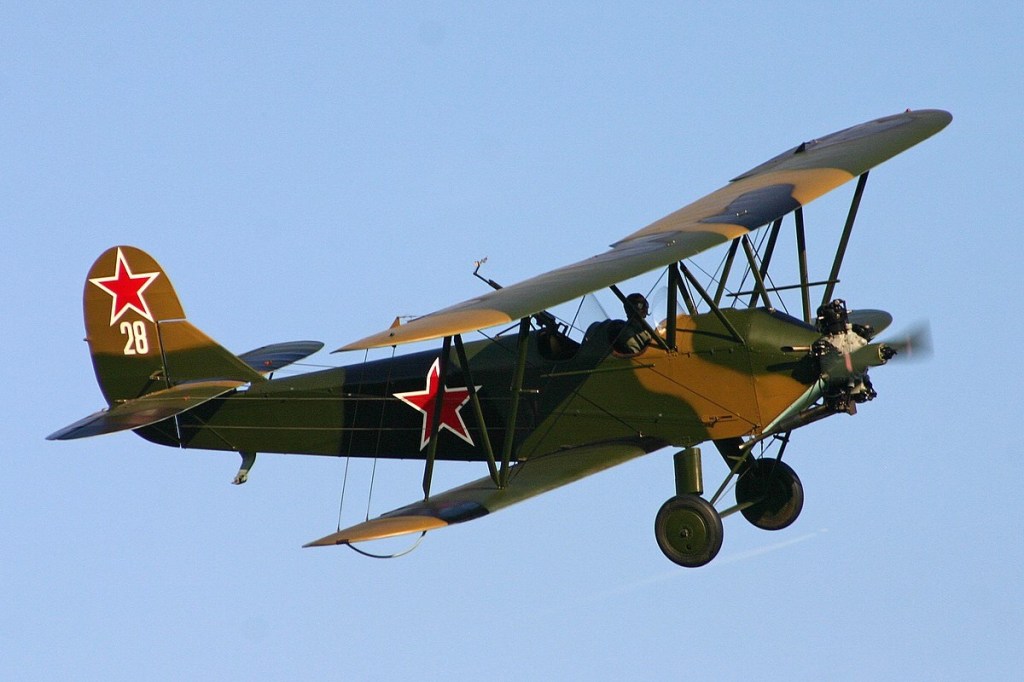
That day was spent on an airfield and in the gigantic hangar in what I call 99-square weather: 99 degrees, with 99% humidity. It was brutal. We did take a break from the heat in midday, when we met to discuss our vision for the European tour, and were treated to a lovely lunch (in an air-conditioned dining hall) by the great airmen of the CAF — all World War II veterans, of course — followed by a flight in a plane of our choice. The two Bills and Mrs. Chetverikov passed on the offer, and only Sergei and I opted for a flight — he in a fighter plane, and I in a biplane with the passenger seat in front of the pilot, and just above tree-top level. I felt as though I was piloting the plane, and I could have stayed in the air forever — or until we ran out of fuel — whichever came first. But as exhilarating as it was, I kept wondering how quickly I could get across the border into Mexico in the event Sergei’s plane took a nosedive into the ground and the full force of two governments came looking for me.

World War II Biplane

One other nerve-wracking incident occurred when Sergei decided to go swimming in the Gulf the next morning. I don’t know whether the water there is always that choppy, but again I was plagued by nightmarish mental images of his being carried out to sea on a giant wave. I was beginning to feel like Walter Mitty with a death wish! But Sergei was a strong swimmer and emerged from the sea unscathed and refreshed. We spent the remainder of the day relaxing, playing chess, eating, drinking, and discussing every controversial subject imaginable.

All too soon the two days had passed and it was time to leave for the long drive back to the airport. Sergei asked if it would be possible to see the Mexican border, as he had never been to Mexico. He knew he would not be able to cross the border that day either, but he just wanted to be able to say he had seen it, and perhaps to buy some Mexican souvenirs. Bill Anawaty knew of a place at Brownsville where the Rio Grande River was quite narrow and nearly dry at that time of the year, and there was an actual border crossing, so off we went.

The crossing at that point consisted of a pedestrian bridge, over which Mexican workers would come into the U.S. each morning to their jobs, and return home at the end of the day. There were no souvenir shops — or shops of any kind — within sight, so I approached the lone Border Patrol officer and asked if he knew of any on this side of the river. He said there were none, but that we would find plenty if we just walked across the bridge into Mexico. I explained to him that we couldn’t do that, as two of our party were a Soviet diplomat and his wife from Washington, and that they did not have clearance to leave the country.

Now, our modern-day problems along the U.S.-Mexican border are legion and well-known, but nothing I’ve heard lately can compare with the response I received from that officer. He simply shrugged nonchalantly and said, “Oh, that’s all right — they can go across. No problem.”

NO PROBLEM??????? What the hell had he been smoking??!!!

I gave him my best “mother-who-just-caught-her-child-sneaking-a joint” look, and said, “Well, it may not be a problem for you, but it damn well would be a problem for the Soviet Embassy, and it would be a problem for your bosses, and it would be a problem for the State Department — and it would be a gigantic problem for me!” Sure, this was long before 9-11, so things were somewhat more relaxed, but still . . . I tried to explain the legal and diplomatic implications to him, but he just didn’t get it. So we turned around, got back into our rental car, and continued on our way to the airport. I have no idea whether we were still under surveillance at that point, but if we were — and whoever they were — I can just imagine the nail-biting that went on in their vehicle when the Chetverikovs walked right up to that border crossing!

Luckily, we found a Mexican restaurant along the highway with a nice little gift shop. It was between lunch and dinner hours and they were officially closed; but when we introduced ourselves, they happily invited us in, went back to the kitchen, and prepared a wonderful, authentic Mexican lunch for us. So we were able to satisfy our appetites for food and souvenirs, and to meet some lovely, generous people, before continuing on our way.

We made it to the airport with plenty of time to spare, and also in time to witness the very swift, well-executed arrest of a young man, on charges unknown. Drugs? Smuggling? Mass murder? It’s always something, isn’t it?

Our flight home was smooth, except for the mother with the crying baby seated next to me, whom I did manage to calm down for a while by making funny faces and letting him play with my keys. Oh . . . and there was the encounter with the Stealth aircraft. At some point during the flight, the pilot announced that if we hurried and looked out the left side of the plane, we might catch a glimpse of a Stealth fighter passing in the opposite direction. Being seated on the right side, and with a baby on my lap, I didn’t even try. But Sergei did, and was disappointed to have missed it. Then he said to me that of course there was no way we could have seen it anyway, since it was a Stealth and thus invisible.

Excuse me? Did I hear that correctly? I have to assume he was joking, right?

Well, we finally landed safely at National Airport, and I was able to return the baby to his mother and Mr. and Mrs. Chetverikov back into the hands of their Soviet keepers. I also reported in to the State Department the following morning. They never asked why they hadn’t heard from me earlier, and I wasn’t about to bring it up.

The disappointing end to this story, though, is that, despite our continuing efforts and the enthusiastic backing of all of the countries involved, the financing for the project never came through. It turned out to be horrifically expensive to try to transport all of those planes and people over to Europe and from country to country, with no guarantee that the shows would earn enough to cover the costs. Which is why you never heard anything about it, of course. But it was a wonderful idea, and would have been a grand adventure.

It wasn’t a total loss, however. New friendships were forged, with the wonderful airmen of the CAF, and with the Chetverikovs (who later chose to stay in the United States, where Sergei — an accredited attorney — joined the renowned law firm of Hogan Lovells in Washington).

Of course, I had no idea at that point that a different sort of adventure awaited me a year later, in the summer of 1991. So tune in again next week, please, for my tale of castles, water shutdowns, German tourists, power failures, beer halls, gypsies, dogs, Paul Simon, and the Czech President. And arguably the most beautiful, magical city in the world: Prague.

TTFN,
Brendochka
2/16/23

Ch. 9 – On the Road Again

It seemed as though life would never be right again after Walter died. But, as inevitably happens, there came a time when things did quiet down and I settled into what we now call a “new normal.” It was never again as much fun, but I found comfort in working with other partners from the Surrey & Morse days, though now under the Jones Day umbrella.

On February 15, 1989 — just two weeks after Walter’s passing — the last of the Soviet troops withdrew from Afghanistan. And as 1989 eased toward the ‘90s, it seemed as though relations between the United States and the Soviet Union were stabilizing. But the world doesn’t seem happy to remain stable for too long. In Eastern Europe, rumblings of discontent were being heard throughout Poland, Hungary, Czechoslovakia, Romania — in fact, the entire Eastern Bloc. On November 9, 1989, the Berlin Wall was breached, and the people of Communist East Germany were, for the first time in nearly three decades, finally able to reunite with their families and friends in the West. As the old folk song says, the times they were a-changin’.

But it didn’t happen overnight. The Soviet Union would remain the Soviet Union for another two years. And a client of Jones Day would begin planning a series of symposia on “Doing Business in Eastern Europe and the Soviet Union,” with Jones Day as a co-sponsor and presenter. I was thrilled to be able to participate. The first presentation was held in Washington, with speakers brought in from some of the Eastern Bloc countries and from their embassies in Washington. And through my contacts at the Soviet Embassy, I was able to arrange a closing reception at the Embassy itself, to the delight of the American attendees from all over the country who had never dreamt of being able to see the inside of that establishment. As icing on the cake, I was even invited to stand in the reception line at the Embassy, alongside the aide to the Ambassador. What fun!

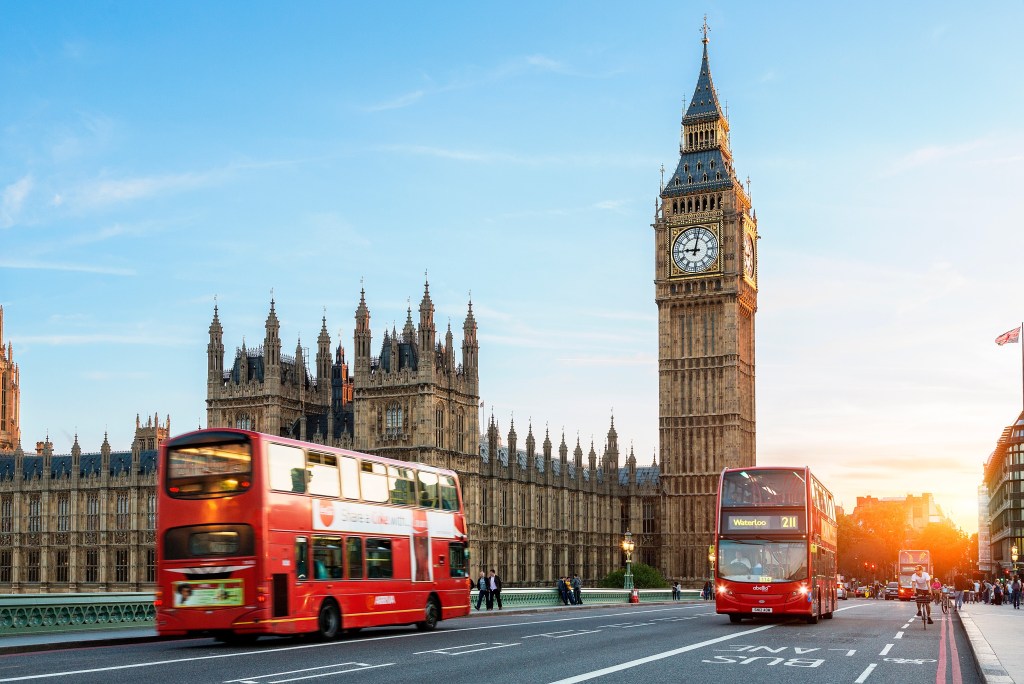
And then we took the show on the road. First was London, in April of 1990. At last, my travel lust was to be satisfied again — and on someone else’s dime. It doesn’t get much better than that. The partners involved from Jones Day were old friends of mine — Michael Silverman and Joe Saba — as well as Vladimir, whom you will remember from the burning bed episode. And Joe’s wife Mary, also a good friend, was to accompany him on the trip.

British Parliament, Big Ben
London

All of our people from Jones Day had been accommodated at the Mayfair Hotel, where the conference was being held — except me. In the rush of travel preparations, someone had counted wrong, and by the time the error was discovered, there were no more rooms available. So I was being housed at a bed and breakfast in another part of the city, a few stops away from the Mayfair on the Underground (metro), in one of the largest cities in the world, and one about which I knew nothing.

The B&B was in one of those beautiful London row houses in a very nice neighborhood, so I figured the only real inconvenience would be the need to allow for travel time to and from the hotel each day. No big deal. Until I got inside, that is. Those London row houses, as beautiful as they may be on the outside, are — how can I put this politely? — old, and not the most conveniently designed residences. This one, typically, was three stories high above the ground floor, and my room was — you guessed it — on the top floor. And the one, shared guest bathroom — care to guess again? — first floor. Figuring on showers, applying makeup in the morning and removing it at night, washing and “doing” my hair, not to mention the usual bathroom usage — just the thought of all of those up-and-down trips every morning and night was exhausting.

Then there was the room itself. It must at one time have been a well-to-do woman’s clothes closet, or more likely, a servant’s room. Now, it held a single bed, pushed up against a wall to save space, a dresser, an ironing board in the wall that came down across the bed, and . . . Nope, there was no “and.” That was all there was room for. Oh, and a miniscule closet. My suitcase had to live under the bed, and it just barely fit.

Well, after making my way from the airport to the B&B, checking in and leaving my luggage in the closet . . . sorry, the room . . . I headed for the nearby Underground and by some miracle made it to the Green Park Station and located the Mayfair. Luckily, I’m good with maps. When Mary asked how everything had worked out at the inn, I told her the truth, and she immediately went into action. She found Joe, told him the arrangement was totally unacceptable, and said he absolutely had to do something. But what? There was no room at the Mayfair.

Or was there? This was the moment I began believing in serendipity. It turned out that one of the scheduled Soviet speakers had — for reasons that of course were never explained — been denied entry into the UK, and his room had just become available. We changed the name on the registration from his to mine, and we were all able to set to work for the remainder of the day. The issue of what to do about the B&B and my belongings was shelved for the time being.

(By the way, that room at the Mayfair was gigantic, with a bed big enough to hold an entire unit of the Soviet Army, and a bathroom twice the size of the entire room at the B&B. Serendipity, indeed.)

Never one to stand by and do nothing, Mary pitched right in at the conference, and together we handled the nitty-gritty tasks involved in greeting, registering, and hand-holding of the European speakers, and ensuring that all the program activities went off smoothly. All was going well that first day, until the principal Soviet speaker, Dmitri Popov (not his real name), arrived and Michael referred him to me, telling him that I spoke a little Russian. And all hell broke loose upon my head.

It seemed that it wasn’t only Chinese officials who formed a liking to me. Apparently, I held a certain appeal for pompous, egotistical, overweight, over-sixty Soviet Foreign Ministry officials as well. Or perhaps Dmitri was just a horny old man, happy to be out of Moscow for a few days, wifeless, and looking for a good time. That would be my guess. In any event, he moved his portly frame rapidly across the room toward our registration table, introduced himself, and declared that I should be his helper for the next few days — totally ignoring the female interpreter who had arrived with him. He was clearly feeling frisky; I was beginning to feel nauseous. And thus began four days of weaving and dodging to avoid old Dmitri, who was usually too inebriated to keep up with me in any event. What was it with me and communists?

But I couldn’t worry about that. There was still the inn to deal with. So, after dinner — which ended around 10:00 p.m. — Mary and I hopped into one of those marvelous London taxis and headed out. When we arrived, the owners had already retired to their apartment on the basement level, and the house was quiet. So we tiptoed up the three flights, gathered my things, left a note and the key, and tiptoed back out to the waiting taxi. What that driver must have thought about two American women stealing about London at night, making off with luggage belonging to who-knows-whom . . . well, we could only imagine, and couldn’t stop giggling. But it worked, and the driver was too polite to ask questions.

FYI, the next morning I called the owners of the B&B, explained that I was needed at the Mayfair, and arranged to pay the bill for the entire five days. So, no harm done, except perhaps to our reputations. Crazy Americans, right? Then it was back to work.

During the week, Mary and I did manage to find a few hours to break away and do a little sight-seeing and shopping, and found London to be a beautiful and — in the word that I thought most fitting — civilized city. We were even blessed with unusually good weather for April. It had snowed a little — just flurries, really — on the day of my arrival, but then the sun came out and stayed out for the remainder of our time there. Bloody good show, as they say.

Finally, on the last full day of the conference, there was to be a reception at the Soviet Embassy, which I had been able to arrange through the previously-mentioned Ambassador’s aide in DC. But I wasn’t invited to this one — only the speakers and the sponsors were to attend. Which was fine with me — I had made plans with some others to head to a disco in the Piccadilly neighborhood of London. Yes, I said “disco,” as in “discotheque” — it was, please remember, 1990. Michael, Joe and Mary were to join us there after the Embassy reception.

Before that reception, however, we had our own gathering at the hotel for all of the people involved in the symposium, at which Dmitri, already halfway to Happyland on vodka, finally managed to zero in on me. I tried to keep the conversation on a business footing, but he turned it to political matters, and somehow was able to throw in an insulting remark about America’s involvement in Vietnam. He didn’t know me very well, or he would never have dissed my country to my face. While acknowledging that Vietnam had not been our finest hour, I then turned the tables and said that at least we had been there to defend the South Vietnamese, whereas his country had outright invaded Afghanistan. At that point, he puffed up like a six-foot blowfish, turned even more red in the face, and declared, “That is an internal matter” — standard verbiage when Russians don’t want to discuss something. My immediate response was, “Oh, really? Try telling that to the Afghanis.”

I then turned on my heel and walked away for a while, giving the now apoplectic Dmitri time to cool down, and apparently to have another drink or two. When next he caught up with me, he was feeling amorous again, and asked if I would be attending the Soviet Ambassador’s reception. I told him that I had not been invited, and would instead be going out with some friends, to which he grandly declared, “Then I invite you.” When I reminded him that that would be a major breach of diplomatic protocol on both our parts, he ever-so-magnanimously offered, “Then I also will not go.”

At that point, I had had all I was prepared to take from Dmitri Popov. The symposium was over, and I no longer had to be nice to him. With Michael, Joe, Vladimir, Mary, and several others watching in obvious amusement, I began poking Dmitri in the chest with two fingers, gradually backing him up against a wall as I loudly told him the facts of life:

“Listen, Dmitri. You did not get where you are in life by being stupid. [Poke] Don’t. [Poke] Start. [Poke] Now. You are going to the Ambassador’s reception because that is your job. I am going to a disco with my friends because that is what I want to do. You are free to join us later if you wish. End of discussion.” Please note that I never told him the name or location of the disco, but he was too snockered to realize it.

We had a great time that evening, drinking, dancing, and carrying on as travelers do. Dmitri never showed up, though Michael, Joe and Mary did. At 2:00 a.m., when the disco closed, one of our English friends led us to a nearby all-night diner for an early breakfast, where a customer slam-dunked a waiter for some unknown reason, but was quickly quieted down and the two shook hands like true English gentlemen. I told you: civilized! Then it was back to the Mayfair for a couple of hours of sleep. But before turning in, I pushed a dresser in front of my door, just in case Dmitri regained consciousness and got any bright ideas. Fortunately, he didn’t.

I stayed on in London for an extra day of sightseeing (and shopping, of course), and it wasn’t until I got back to the office on Monday that I learned from Vladimir what had transpired at the Embassy reception. Dmitri, bombed out of his gourd, had made a complete jackass of himself. At one point, he had cornered Vladimir and started asking questions about me. Trying to be tactful, Vladimir mentioned my study of Russian, and asked what Dmitri thought of my linguistic ability, to which the reply was, “It’s pretty good, but it’s Zhidovskiy Russkiy.”

Let me explain. Zhidovskiy is the derogatory — really offensive — Russian word for Jewish. And Vladimir, being both Russian and Jewish, was, to put it mildly, less than amused. That was his “I-really-want-to-deck-this-guy-but-I-know-I-can’t” moment, and I completely empathized with him. I also greatly appreciated his sticking up for me.

I am happy to report that there were no diplomatic repercussions — not on our end, in any event — from our run-ins with Dmitri. I sometimes wonder what happened to him, but only out of curiosity, not concern. Dmitri was the master of his own fate, however it may have turned out.

[Grammar footnote: Is it “run-ins” or “runs-in”? You know, like “mothers-in-law,” “attorneys general,” and “Knights Templar”? Just wondering. This unfortunately is the sort of thing that eats into my sleep at night.]

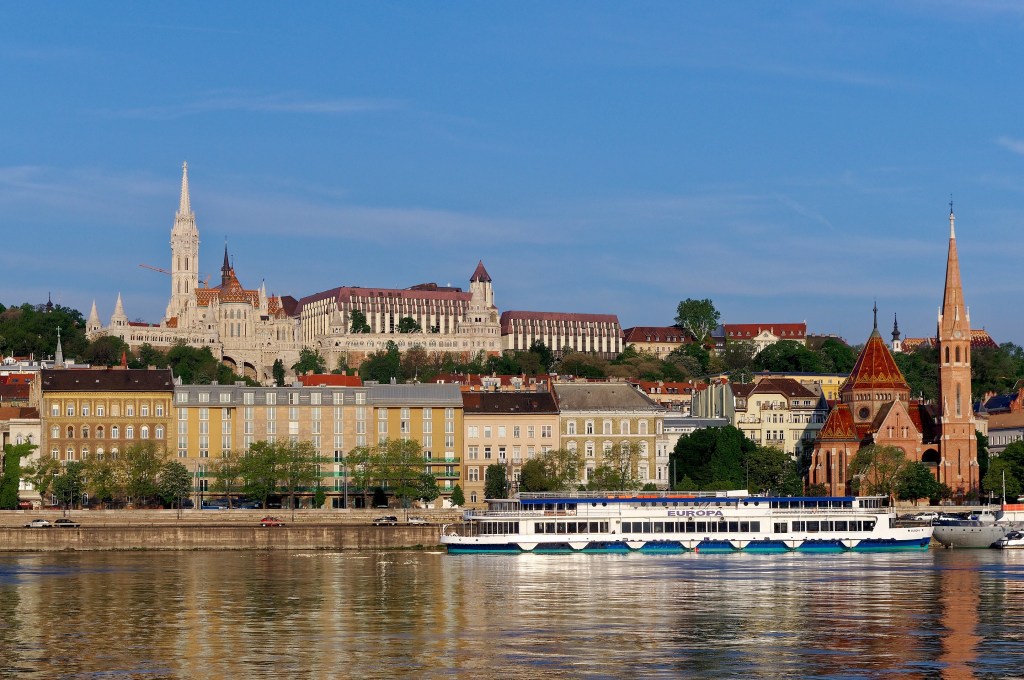
We recreated the symposium that September in Budapest, Hungary, which was another incredible trip: riding the nearly vertical funicular railway up to the Royal Palace and Fisherman’s Bastion; a private, guided tour of the magnificent Parliament as arranged by Michael; a boat trip up (or down, I’m not sure which) the beautiful Danube to the artists’ village of Szentendre; a bit of antique shopping; dinner with a local attorney at a non-tourist-y neighborhood restaurant owned by a Jewish family and employing Gypsy musicians; and some of the most delicious food (and pastries) I’ve ever eaten. And, as a bonus, no Dmitri. The trip may have lacked the drama of London, but it was more than made up by the wondrous, historic beauty of a country then in the throes of reinventing itself as a free nation once more, and the hospitality of its beautiful people.

Budapest

And squeezed in between trips to London and Budapest, during the blistering hot July of 1990, there was a visit to the Confederate Air Force in Harlingen, Texas, with the Minister-Counselor of the Soviet Embassy in Washington, his wife, and two American lawyers. What a rip-roarin’ time that was! Details next week — see y’all then.

Brendochka
2/9/23

Ch. 8 – Reflections on Aging

My next scheduled blog was supposed to have been about my taking to the road again, but something happened a few days ago that caused me to take a brief detour and post some extra thoughts today. We will be off to Europe on Thursday as planned, but in the meantime, please let me share the following with you.

I just learned that another long-time friend has passed away. Not a BFF in the traditional sense, but an overseas friend with whom I shared a past business association, mutual friends, and the exchange of Christmas cards every year for some 30 years. And the sad news started me thinking of all the people I’ve lost over the past couple of decades, and how those losses have become an all-too-common feature of my life as I grow older.

But, true to my innate, somewhat wacky nature, I try not to depress myself by dwelling too long on the sadness of those occasions. I prefer, instead, to think of the good times, and of course, the funny stuff. Stuff that was always among the topics of conversation with my actual BFFs — we called ourselves the Golden Girls of Washington — over lunch or whenever.

Like hair.

Why is it that hair always seems to grow where we don’t want it, and disappear where we would prefer to keep it? Not the hair on our legs or underarms; those, for us women at least, are superfluous, and who wants to keep shaving for the rest of her life anyway? But our scalps, which used to be kept warm by our crowning glories of blonde, brunette, black, or red tresses that we spent so much time washing, conditioning, drying, curling, brushing, and showing off, and insisting, “This? Oh, no, this is completely natural,” and which suddenly seem to become thinner and thinner each day until one morning we wake up, look in the mirror, and see looking back at us . . . YODA!

“OH, MY GOD! I’M FREAKIN’ YODA!”

Yoda

So we think, if only we could pluck and transplant the unwanted follicles that have come alive elsewhere on our otherwise baby-naked bodies. Like the one that keeps reappearing just below my left nostril, that I don’t notice until it begins to tickle my upper lip when I exhale. And the slightly stiffer little hair that sprouts, time after time, from an old childhood scar on my chinny-chin-chin, despite being pulled out root and all. Or the fuzzy blonde ones on the sides of my friend’s face just in front of her ears, looking for all the world like soft sideburns. All of which send me rushing for my tweezers and magnifying mirror again.

And about that chin. When the hell did it decide to double in size and drop halfway down to my collar bone? Perhaps it’s been searching for the rest of my descending flesh, which also seems to have been on a long, slippery slope toward my swollen ankles while I wasn’t looking. I have a feeling I should have been paying attention to Jane Fonda all those years ago — not her politics, just her fitness advice. Too late now, I fear.

The aches and pains of age go without saying. Like the first time one of your group lets out an audible grunt as she sits down at the restaurant table, and the conversation immediately shifts from the latest party or theater production you attended to the best topical medication for arthritis, or the best orthopedist for that snapping sound in your hip. Or when you realize you’ve stopped bragging about your kids and are now showing off pictures of your amazing grandchildren and complaining that you can’t keep up with them. “Grunt.”

Then, of course, there’s the issue of gas. Now, I know that occasional flatulence is a natural bodily function — though obviously not one of the more attractive ones. But we’re talking today about bellies that inflate like Chinese weather balloons, then suddenly let loose — not only in the moments following a colonoscopy — but at the most inauspicious times, like the middle of Thanksgiving dinner with the entire extended family, or at opening night of the opera at the Met. (No, I’ve never been to the Met, but I have seen Moonstruck a half dozen times. Great flick.) So, for those of us who try to keep to a fairly healthy diet and avoid all the spicy and fatty foods we loved in our younger days, it’s a complete mystery. Where does it all come from? And shouldn’t there be a better way of dealing with it? Preferably in private? My mother used to blame hers on our dog Toby, though no one actually believed her. Perhaps we should all just keep a dog handy — a big English bulldog would be perfect. They just look the part.

And about shrinking. Not our hips, to which we’d love to bid farewell, but our vertical measurement. I was never even close to tall — 5’2” tops, and as a kid always in the front row in school, right where the teacher could see me sneaking the little hard cinnamon candies from my desk. So I really couldn’t spare any of the 62 inches allotted to me, and yet they’re somehow being stolen away, bit by bit. Now I can no longer even reach the bottom shelf of the overhead kitchen cabinets, or straighten a crooked picture on the wall — and for one who is ever-so-slightly OCD, that’s a real issue. Some of that loss I blame on the two operations in which all five of my lumbar vertebrae were fused, but most of it is just another of the joys of getting old. Which, as some wise old person once said, really ain’t for sissies.

For the sake of all of our waning dignities, I won’t even go into the subjects of post-menopause, prostates, incontinence, IBS, liver spots, or our libidos. Those are better left for chats with our ever-expanding lists of medical specialists, or for our interminable online research.

But on the upside, we seniors do have our memories of good times, many of which are now the subjects of my series of blogs. And of old friends — like the other five Golden Girls, who are gone now but still fresh in my mind. In order of age, oldest to youngest, they were Amelia, my sister Merna, Marilyn, Simin, and Diane: a wonderfully diverse group, yet somehow totally compatible. I was the second youngest, wedged in between Simin and Diane. We lost two to cancer, one to heart disease, one to complications from Type 1 diabetes, and one to the ravages of some pulmonary disease as a result of a lifetime of smoking. I miss them every day. And here I am, the Betty White of our namesake group, determined to make it to 100. We shall see. In the meantime, I continue to write.

As for the friend I just lost, I wish him a happy journey to the other side — assuming, and devoutly to be desired, there is one. And wishing myself all sorts of heavenly reunions in the (hopefully not-too-near) future, I remain, until next time,

Brendochka
2/4/23

Ch. 7 – Life With Walter

For ten years, I was known simply, and affectionately, as “Bitch.”

“Bitch!”

Walter Surrey’s and my verbal sparring quickly became office legend. Though it was all in good fun, we could seem quite ferocious, and people took bets on who would emerge victorious. On the occasions when I won, Walter’s response was always the same: he would pause as he tried to think of a comeback, finally wave his hand dismissively in the air, mutter “Bitch,” and walk away. It wasn’t long before that became my name, and when he actually, and rarely, called me Brenda, it was either because there was an outsider in the office or he was not in a joking mood. “Bitch,” in Walter’s world, was a term of endearment.

And there were others whom he honored with nicknames. Like my mother.

Aside from keeping his professional life running smoothly, I had other responsibilities: I dealt with Walter’s banker, investment broker, insurance agent, doctors, dentist, barber, ex-wives, and countless others. At some point between marriages (he finally got it right on the third try), he had gotten into the habit of keeping his financial records in the office. I hadn’t been working with him for long when one day I noticed that his checking account balance was running low. I asked him which other account he wanted to draw from to replenish it, and I happened to joke, “Jeez, my mother has more money in the bank than you do.” Without hesitating, he said, “Really? What’s her phone number?” Wrongly assuming he was bluffing, I gave him her office number, then watched in horror as he picked up the phone and began punching buttons. When she answered, he said — to this woman he had never met — “Hello, Moneybags? This is Walter.”

“Walter who?”

“Walter Surrey. Your daughter tells me you have more money than I do. Want to go to Vegas?”

Little did he know that he had hit her soft spot — she loved Vegas! To my great surprise, she never missed a beat, but jumped right in and replied, “Tomorrow soon enough?” And thus was born “Moneybags.” I’m not sure he ever remembered her real name, but Walter and Moneybags became fast friends, despite the fact that the Las Vegas trip never materialized.

* *. *

Then there was the dearest man who ever lived: Hal Krents, a brilliant young lawyer who had been blind since childhood, and who had graduated near the top of his class at Harvard Law. But because of what others considered his handicap — a thing he had never allowed to hold him back from anything he decided to do — he had been turned down for jobs with every respectable law firm along the Eastern seaboard.

Hal’s life is chronicled in his autobiography, “To Race the Wind.” If it’s still available, I consider it required reading for anyone looking for inspiration and a lot of laughs. His life was also the basis — though not strictly biographical — for the Goldie Hawn movie “Butterflies Are Free.” Everyone adored him; but no one had the guts to hire him — until he met Walter. After one interview, Walter went to his partners and said he was going to give “the little blind guy” a chance. When asked if it wasn’t risky, he answered simply, “Maybe. But I like the kid.” And thus began a successful legal career for a bright, funny, talented, totally decent and lovable young man . . . until the previously undetected brain tumor that had caused his blindness in childhood began to grow and ultimately took his life before his 43rd birthday. He left behind a beautiful young wife and three small children.

But during those good years, Walter never ceased to have his fun with “the little blind guy.” Hal refused to use a white cane, a service dog, or any other helpful device; he learned to find his own way, including his path from the elevator to his office. One day — just for kicks — Walter moved a waste basket into that pathway, and laughed diabolically as Hal tripped over it. He didn’t actually fall; he simply laughed, said something to the effect of “thanks a lot, Walter,” and continued on his way. Walter never gave Hal any special treatment because of his disability, and Hal loved him for that. That was just Walter.

*. *. *

Of course, I have to mention the unforgettable ladies’ room incident. Our office occupied two floors of a large building, with rest rooms on each floor. The ladies’ room on the upper floor, where we were located, consisted of two separate areas: a sort of powder room, with a long counter, mirror, and seats, used mostly for primping or just relaxing for a few minutes; and an inner bathroom, which had several private stalls and wash basins. I was alone in the inner area one day, for the obvious reason, when Walter decided he needed my help more than I needed to relieve myself. He stood outside the first door and shouted for me: “Hey, Bitch, what’s taking you so long?”

Thinking, “Oh, for God’s sake, can’t I have a moment to myself?” I shouted back: “You’ll have to come in and get me.”

Incredibly, I heard the outer door open and close as Walter replied: “Okay, I’m in. And I’m waiting.”

Now in fighting mode, I called out: “There’s another door.”

Momentary silence. Then, “Bitch!” as the outer door opened and closed again, and Walter finally retreated in defeat. Score one for the Bitch. What would I have done if he’d taken the dare? I honestly don’t know, but fortunately my faith in his good sense was justified and I never had to find out.

*. *. *

And while we’re on the subject of nicknames, let us not forget Shithead. One day, around 1985 or ‘86, I received a phone call from an attorney whose name I don’t recall now, but who is better left unnamed in any event. He had been on the other side of a legal dispute with one of Walter’s clients some years earlier, and now was representing a client whose case demanded specialized legal knowledge of international law. He was seeking Walter’s help.

But Walter was always hopeless when it came to people’s names. He could remember other details to the nth degree, though, and he told me the story of his old interaction with this lawyer. It was a lengthy and tiresome negotiation involving multiple parties, and all the parties and attorneys had finally come to an agreement, with one exception: this attorney. To try and conclude the matter once and for all, Walter took him aside and said, “Listen, everyone else is agreed. Don’t be a shithead; do what’s best for your client and the others.” The attorney finally saw the light, the matter was settled, and that nameless lawyer became forever known in Walter’s mind as “Shithead.” If I had ever mentioned the man to Walter by his real name, I would have been met with a blank stare.

As it turned out, the new matter was of great importance, and Walter agreed to be co-counsel for Shithead’s client. One day, Walter was expecting an urgent call from him, but had to attend a partners’ meeting in our large conference room. He asked me to cover his phones and to get him out of the meeting if that call came in. Which, of course, it did. Placing the call on hold, I ran to the conference room, flung open the door without knocking, looked across the table at Walter, and urgently announced, “Shithead’s on the phone.”

A dozen heads — managing partners from our DC, New York, London, Paris, Geneva, Brussels, Hong Kong, and Riyadh offices — all swiveled to stare at me. They waited, eyes wide and mouths gaping, to see what would surely be the end of my career. But Walter merely stood up, walked around the table to the doorway where I was waiting, and said, “Sorry, I have to take this call. I’ll be back.” And left the room, as I followed and closed the door behind me. That, too, was Walter.

*. *. *

I could fill a book with tales of my years with Walter Surrey; in fact, I just may do that. But for now, I’ll continue here with the saga of my “China Syndrome.”

Having worked with Richard Nixon and Henry Kissinger in the reopening of relations with the People’s Republic of China (PRС) — more commonly known then as “Red,” China — Walter naturally encouraged some of his corporate clients to become more involved in doing business there. And as Chairman of the National Council for US-China Trade (now the US-China Business Council), and legal counsel for the Embassy of the PRC in Washington, he was uniquely positioned to assist those clients in establishing some very successful joint ventures and other commercial relationships in Beijing, where he traveled frequently and several times met with Chinese leader Deng Xiaoping. In fact, China became the principal focus of his work for many years.

It was not unusual, therefore, for meetings to be held in our offices with representatives of the Chinese Embassy, as well as dignitaries visiting Washington from China. One such occasion involved negotiations for the establishment of a joint venture between a multinational corporate client and the China Council for the Promotion of International Trade (CCPIT), for which their representatives had flown in from Beijing. After a week of discussions, involving much wining and dining and bowing and cowtowing, an agreement was finally hammered out. When it was over, I was responsible for arranging a celebratory luncheon at an authentic Chinese restaurant. When I told the restaurant manager that we were bringing a delegation from Beijing, they pulled out all the stops.

Our group — about ten or twelve people, including two interpreters — were seated at a large round table in a quiet alcove, and were being served from the banquet menu. Dish after dish of the most incredible food made their way around the table. Seated to my right was a rather plump Chinese gentleman who spoke no English, and who seemed to have taken a liking to me. As the food was passed to him, he would serve himself, and then begin scooping food onto my plate.

Now, I had recently succeeded in losing those last five stubborn pounds that so many of us have to deal with, and was determined not to gain it back. So, as my new friend prepared to load me up with yet another plateful, I tried to make myself understood by shaking my head from side to side, and holding a hand above my plate. Then I placed my hands by my sides and — still shaking my head — said, “No, no. Fat. Fat.” To which the smiling gentleman bobbed his head up and down, and proceeded with great glee to plop yet another spoonful of food onto my plate.

Walter told me later that my benefactor was probably searching for an American concubine to take back to China with him, but that I was not quite round enough to make the grade and needed to be fattened up a bit. And to think . . . I could have spent the last 40 years living in China, not dieting. Damn!

But though I was able to make my escape on that occasion, it wasn’t to be my last offer from our friends from the Far East. At another meeting in our office, with a different group of people from the PRC Embassy, there was one particularly distinguished gentleman in uniform, a Military Attache with the rank of Colonel. The conference was concluded without incident, but a week or so later, when Walter returned from a meeting at the Embassy, he was wearing a huge, rather devilish grin. He said he had bumped into the Colonel, who had stopped him to chat. Somewhat uncomfortably, the Colonel had said, in his rather limited English (and this is verbatim, as reported by Walter, with his usual lack of concern for political correctness and a dreadful Charlie Chan impersonation):

“Uh, Miss Brenda. She pretty lady, yes?” Walter was taken aback, and cautiously replied, “Yes, I guess so.”

The Colonel then asked, “She married?”

Walter, still cautiously: “No, not any longer.”

Colonel, eagerly wagging a finger back and forth between Walter and himself: “You fix?”

Now, Walter was an incredibly quick thinker, and realized that Chinese culture would require certain social niceties in these circumstances, so he replied, “Oh, no, I can’t do that. First of all, I am not a matchmaker; and second, that is not how we do things in this country. If you want to see her again, you will have to call her yourself.” Obviously, he knew that would never be allowed to happen, so once again I had been snatched from the jaws of an unknown fate.

I don’t know what it was those two men saw in me. I was, I guess, not totally unattractive, but certainly no raving beauty. Whatever it was, I was very flattered, and had another couple of great stories to bring home to my family. Life with Walter could be frustrating, exhausting, and sometimes infuriating; but it was never, ever dull.

*. *. *

And finally, there was Walter’s Rome adventure. A client required Walter’s presence at a negotiation that was sufficiently complex to warrant his bringing with him an associate — a younger, non-partner attorney. The associate who had been working on this matter happened to be female, which made the story all the more interesting. When I called our travel agent to book the trip, I told her he preferred a certain hotel — I can’t recall now whether the name was the Ritz or the Palace. She called me back and said there were five hotels in Rome by the same name, and I said it would surely be the best — and therefore the most expensive — of the five. And that was that . . . or so I thought.

A day or two later, Walter and the associate left for Rome on the evening flight. The next morning, I received a call from him in Rome. He was laughing so hard I could barely understand him, but he finally managed to ask me what hotel I had told the agent to book. I told him it was the most expensive of the five choices, and he — still laughing — said, “Well, the rooms must be pretty nice for that price, but we never got to see them — the lobby was full of hookers. You booked us into a g**damned whorehouse!” And we all — I could also hear the female associate in the background — exploded in laughter.

Now, a lot of people in Walter’s position would have been upset, even furious. But not Walter, who always managed to get a good story out of any situation. As for the end of this tale, with the help of a very understanding “concierge” at the house of ill repute, they managed to find the right hotel and get the two rooms they needed. But it took a while before I — and the travel agent — lived that one down.

*. *. *

Once again, I’ve rambled on for too long, so I will leave you now with a pretty good picture of Walter Surrey, and with the image of an Italian bordello firmly lodged in your brain — a very expensive Italian bordello at that. So long for now, and see you next Thursday, when I get to pack my bags once more, this time for London.

Brendochka
2/2/23

Ch. 6 – Return to “Civilization”

Well, here I was, back in the land of the free after two incredible weeks in the Soviet Union. Once we had deplaned at JFK Airport, and while waiting for our connecting flight to Washington, I found a phone booth — remember the days before cell phones? — and called my mother. She was a champion worrier, and I knew she had to have been frantic for the past two weeks with no word from me, all the while imagining the ghastly fate that surely had befallen her younger daughter in the Evil Empire. When she answered the phone and I said, “Hi, we’re in New York,” her relieved response was, “Oh, good! You’re back in civilization.”

I looked out at the mass of humanity passing by my phone booth: harried travelers, panhandlers, homeless folks, and more than a few apparent pickpockets, and I said, “If this is civilization, I’m on the next plane back to Moscow.”

JFK Airport
New York

Anyway, it was on to DC, and a real surprise awaiting me. In my absence, my sister had obtained tickets to the Kennedy Center for the one show I had been dying to see: Les Miz. Jet-lagged or not, that was an event I would not have missed. (And the only show I have ever paid to see more than once — a total of five times, in fact, plus the movie, which I really wish I had missed.) And as I sat in the darkened theater, watching the stirring portrayal of the days leading up to the French Revolution, I couldn’t help thinking of the current plight of the Soviet people I had just left behind, living under the yoke of the Communist regime and longing only for a bit of freedom and a decent life. I couldn’t have imagined then that in just over a year the Berlin Wall would come down and the entire Soviet Bloc would begin to crumble.

But that was yet to come. For now, it was back to the daily grind.

Walter, of course, was delighted that his good right hand had returned to the office, where — in his mind, at least — I rightfully belonged. But it was Vladimir who was most anxious to see me, or rather the gifts he had been waiting to receive from Galina. As the reader will recall, the two small paintings had been given to me unframed, and so I had been at some pains to pack them between two souvenir books I had bought so they wouldn’t be damaged. But a corner of one of them had sustained a small wrinkle, which wouldn’t even show when framed, so I didn’t think it was a big deal. Vladimir, on the other hand, had a different reaction. Instead of being the least bit appreciative of the fact that Gisela and I had taken the time from our vacation to meet his friend — not once, but twice — under less than ideal circumstances, and to bring his paintings home to him, the little twerp focused only on the one corner of the one painting . . . and whined.

Have you ever wanted to just smack someone? I mean, just really haul off and deck them? Of course, you have. And so did I, at that moment. Naturally, I couldn’t do it, but I did give him a good piece of my mind, ending with a sarcastic “You’re very welcome,” and storming off as he realized what he had done and tried to thank me. Too little, too late.

A few words here about Vladimir. He was very, very smart. And very, very spoiled, full of himself, and — oddly, for someone who had grown up under Communism — entitled. He was the only child of a couple who had been, if not in the very top echelon of Soviet society, at least at one of the more respected professional levels. And he had been catered to by his parents, who apparently had led him to believe he was solely responsible for the rising and setting of the sun each day. But for all his scholastic brilliance, he sometimes exhibited zero common sense. For example . . .

His mother once told me that as a child he loved to read, and would often take a flashlight and a book to bed and read under the blankets at night. One such night, the batteries in his flashlight died, as batteries will do, so he found an alternative source of light: a candle. And set his bed on fire. It was just plain, dumb luck — and presumably the quick reaction of his parents — that kept him from barbecuing himself.

Even as an adult, he never learned. He couldn’t remember the PIN for his bank debit card, so he wrote it on a little piece of paper, which he kept in his wallet . . . conveniently alongside the debit card. When his wallet was stolen from his office one day — because he always left it in his jacket pocket, hanging unattended on the back of his office door — he didn’t discover the loss until the next morning, by which time the thief had made off with the maximum daily withdrawal . . . twice: once before midnight, and again after midnight. (P.S.: The bank cancelled his card and refused to issue another one.)

Then there was the new, very expensive bicycle he bought and had mounted on the roof of his car, rather than at the rear. Not thinking to measure the combined height of the car and bike, he drove happily home to his apartment building, opened the garage door with his remote, and drove forward with enough speed, not simply to dislodge the bike from the roof of the car, but to rip the roof itself halfway off of the car, front to back, with the bike still firmly attached. That was one securely-mounted bicycle! I can only imagine the reaction of his insurance adjusters when they heard that one.

But enough about Vladimir. In 1988, life was good, except for one circumstance. The partners at Surrey & Morse had, two years earlier, made the fateful decision to merge with a firm that had a wider national presence and was seeking the broader international presence that we offered. That firm was Jones, Day, Reavis & Pogue (now simply Jones Day). They were, and are, a very large, very successful, and very reputable old firm; yet their entire personal philosophy was diametrically opposed to that of Surrey & Morse. Whereas S&M was a family, JDR&P was a corporation. And Walter Surrey regretted that merger to his dying day — which, tragically, was not as far off as it should have been.

Less than a year before I joined the Surrey firm in 1979, Walter had suffered his second heart attack. Since that time, he had done all the right things: changed his diet, entered a therapeutic exercise program, given up smoking. He was doing so well, until the effects of the 1986 merger began gnawing at him, and he reverted to his old, unhealthy habits. On the morning of January 30, 1989, he finished his treadmill exercise at home, headed for the shower, and suffered his third — and this time, fatal — heart attack. He was only 73. His wife had lost her husband, his adult children their father, and I . . . I had lost my mentor, my father figure, and my best friend. We were all devastated.

But there was no time to grieve. As the keeper of the keys to Walter Surrey’s office kingdom, I had three main tasks to perform after his death: reviewing each and every one of his client files and preparing a status report on each one for the office’s managing partner; gathering all of his personal financial files for his estate attorney; and notifying half the world of his passing. The third task came first.

Now, if you’ve been following my blog from the beginning, you may recall the two huge rolodexes on my desk in 1979. They were still there — but even larger — in 1989, and I had to go through them, card by card, and begin calling those individuals I could reach and sending telexes to those I couldn’t (including, you’ll remember, Viktor Akimov in Moscow). So I moved the two rolodexes and myself into Walter’s office, closed the door, and started calling. It was one of the most gut-wrenching jobs I’ve ever had to do, speaking to ambassadors, foreign dignitaries, top U.S. government officials, leaders of industry, an actual Empress, a couple of Rockefellers, and so on, to deliver the dreadful news. And, of course, there were his long-time “China colleagues,” Henry Kissinger and Richard Nixon.

In the last two cases, I did not actually reach them directly. I did speak to a very nice lady in Dr. Kissinger’s office, and an unspeakably officious woman in former President Nixon’s New York office who was interested only in how I had gotten his unlisted office number. I refused to tell her the whole convoluted story, which was that I had a friend at the State Department who had a friend in Reykjavik, Iceland, who had previously been on Nixon’s staff, and who had been kind enough to search out his current number for me. I was in no mood to quibble, and told her that it was none of her business (I believe the word I actually used was “irrelevant”), and that she should just do her job and give the message to President Nixon.

Do not mess with me when I’m in mourning.

But life goes on, in one form or another. After two weeks of holding it together in the office, followed by nightly visits to Walter’s widow to keep her advised of what was being done, I finally had time for a good cry, and a look at an uncertain future. Which — while never again as it had been with Walter — turned out to be pretty good after all, thanks almost entirely to his tutelage. Walter Sterling Surrey was the gift that kept on giving, and does to this day.

Thinking back to those years of working with him, I remember a few colossal arguments, but mostly I recall the hilarious times. From the very beginning, we were the Laurel and Hardy of Surrey & Morse. Like the time he came into the ladies’ room after me; the episode of the Chinese Military Attache who asked him to arrange a date with me; and the time the travel agent inadvertently booked him into a whorehouse in Rome. And let us not overlook “Bitch,” “Moneybags,” “Shithead,” and “The Little Blind Guy.” Obviously, this was all many years before political correctness reared its ugly head. But somehow, I doubt even that would have stopped Walter being Walter.

So next week, before getting back to my overseas adventures of 1990 and beyond, I’ll shift gears and take a walk with Walter on the lighter side. Until then, have a great week, everyone.

Brendochka
1/26/23

Ch. 5 – The Chernobyl Effect

On April 26, 1986, Armageddon was visited upon the unsuspecting people of Pripyat, Ukraine, when a nuclear reactor at Chernobyl failed and rained deadly radiation, not only upon the local citizens, but throughout a substantial portion of Eastern and Western Europe as well.

Pripyat School, Today

In August of 1988, nearly 2-1/2 years after that disaster, my friend Gisela and I were on a tour of the Soviet Union that was supposed to have included a visit to Kyiv, the beautiful and historic capital of Ukraine. But we had been notified that, for unexplained reasons, that part of the tour had been cancelled and we were instead going to enjoy a few days in the resort city of Sochi on the Black Sea coast. We didn’t need anyone to tell us why we were going to miss seeing the Great Gate of Kyiv, the stirring monument at Babi Yar, and the Cathedral of Saint Sophia. We knew it was the lingering radiation, and that its effect was still being felt, even 95 miles from Pripyat. (I did get to Kyiv five years later, but that is a tale for another chapter.)

So, from Tbilisi, Georgia, Aeroflot Airline transported us the short distance to Sochi in about an hour, depositing us in a subtropical paradise that seemed totally alien in a land better known for its frozen tundras and birch forests. On the bus ride from the airport to our hotel — the Zhemchuzhina (translation: “Pearl”) — we were astonished to see palm trees, tropical flowers galore, and wide streets lined with beautiful white and pastel-colored buildings.

Unfortunately, the Pearl Hotel failed to live up to its name. As with the Cosmos Hotel in Moscow, it was no gem; it looked fine on the outside, but this Pearl’s nacre was only skin-deep. There was a spacious but simple lobby, elevators that mostly worked, and the usual dezhurnaya — sort of a hall monitor — watching out for us (or actually, just watching us) on each floor. And our room contained the expected twin beds (with sheets starched and ironed to a board-like stiffness), a dresser, and a small desk and chair. We found one electrical outlet, located next to the desk at baseboard level, so that when we washed our hair, we had to sit on the floor to use our dryers.

But it was the bathroom that kept us laughing for our entire stay. First was the paper strip affixed across the toilet seat each day, on which was printed a single word in Russian: Disinfected. That was nice, but something we take pretty much for granted in the U.S. — we don’t really need a sign. Still, clean is good.

And then there was the shower. The head and faucet were, quite logically, attached to the wall in an area surrounded on three sides by tile. The fourth side, though, was wide open — no door, no curtain, no tub, no surround of any kind. Not even a lip to keep the water inside. The floor drain in the middle of the shower area didn’t quite keep up with the normal flow of water, so when the shower was running, the entire bathroom — did I fail to mention that it sloped slightly downhill from the shower? — flooded and threatened to flow out to the bedroom, in which event the single electrical outlet on the baseboard would have been in danger of electrocuting anyone unfortunate enough to be sitting on the floor with their hair dryer plugged in. We quickly figured out how to shower with just a trickle of water in as few minutes as possible. And even so, I’m sure the hotel maids were puzzled and less than amused when we kept ordering more towels each day to try to stanch the overflow and returning them sopping wet.

But when on vacation, one does not typically spend a lot of time in the hotel room. Beautiful Sochi awaited.

One of our memorable afternoons was spent at the beach. Now, you readers should please rid yourselves of any mental images you may have of a stretch of beautiful, white sand as far as the eye can see. There was no sand; there were rocks, stretching into infinity. And they weren’t trucked in and spread there for effect; that was the natural “groundscape” (if there is such a word, and if there isn’t, there should be) of that part of the Black Sea shore. The local people, walking barefoot across that unforgiving surface, must have had feet made of rawhide. We Americans unabashedly donned our flip-flops, and I even wore mine into the water, much to Tamara’s amusement.

Rocky Beach at Sochi

And by the way, the name of the Black Sea was not just pulled out of thin air. No Caribbean blue waves for this beach. The water is very still where it meets the shore, and actually is black, or dark gray. There are many theories as to the reason for this anomaly, none of which is particularly appetizing, but we were assured that it was quite safe. However, it was some distance out to where the water was deep enough to actually swim, so we were pretty much restricted to wading in any event, and thus safe from encountering anything gross or treacherous.

Or were we? . . . [Cue “Jaws” music.]

No, there were no sharks, at least not that close to shore. But at one point, I saw Tamara reach into the water and pick something up in her hand. Thinking she had found some sort of treasure, I waded over to see what it was, and was alarmed to note that she was holding a live jellyfish. I shouted something like, “What are you doing? You’re going to get stung!” which made her laugh. She explained that these were not stinging jellyfish, and pointed out that I was already wading in a large gathering of them. “Ewwww.” She was right. But after an initial freak-out, and upon being dared by Tamara, I tentatively reached into the water and scooped up one of the little critters. How did it feel? How do you think it felt? It was viscous, glutinous and muculent (per my online thesaurus) — or, in plain English, slick, slimy and slippery. Back into the water it went, and out of the water I went. Enough of the Black Sea for me, thank you.

By the way, does anyone know the correct name for a group of jellyfish? A school? A herd? A flock? Not that it matters, but being naturally curious, I Googled it, and it turns out to be — drumroll, please — a “smack.” A smack of jellyfish. Not in a million years would I have guessed that one.

But enough of the vocabulary lesson — let’s get back to Sochi.

After dinner and a musical performance that night, we saw from the window of our room — which looked out across the sea — some strange searchlights sweeping back and forth across the water. Asking about it the next day, we were told, very quietly, that it was shore patrol on the lookout for drug runners from Turkey. Even Paradise had its seamy side.

The next day, it was off to the Moscow Circus, which happened to be on tour in Sochi that week. The wonder of it shone from the faces of the scores of children in the audience, who undoubtedly had few such diversions to look forward to from day to day. I even learned from one child seated next to me — a beautiful little girl with two gigantic pink bows in her hair — that the Russian word for elephant is slon — which I assure you has not come up in conversation in any context since then, but for some reason has stuck in my mind. Right up there with zhemchuzhina. And, now also, a smack of jellyfish. Travel, as they say, is certainly broadening.

Walking back from our bus along the flower-lined path to our hotel one beautiful summer evening, we American tourists were mixed in among a number of locals apparently out for an evening of dining and dancing at the hotel restaurant and bar. Staggering toward us was an obviously drunk-out-of-his-mind Russian man, weaving and bobbing along the path and headed straight (or not so straight) at us. He stopped directly in front of me, trying to focus on my face, and smelling like a 1920s bootlegger. As the crowd of onlookers watched with amusement, I tried sidestepping to the left; he went to his right. I went right, he went left. And so on, about five or six times. Finally I bluffed, went the opposite of the way he expected, and he was able to stagger on his merry way. As he passed, I blurted out, in Russian, “Pyanniy durak” — “Drunken fool.” And every Russian person within earshot cracked up to hear a foreigner reacting like a local. I was beginning to feel very much at home in this enormous, strange, and varied land.

We also spent a glorious, but very long, day traveling by bus to a tea plantation near Krasnodar, where we were treated to a delicious lunch followed by an assortment of desserts and — of course — a selection of exquisite teas brewed from freshly-harvested leaves. The inside of the picturesque teahouse was strewn with dozens of antique samovars, any one of which I would gladly have purchased except for two things: first, they were not for sale, and more importantly, as antiques they could not be taken out of the country without a mess of paperwork, and even that didn’t guarantee success. Oh, and a third factor: I couldn’t have afforded one in any event. So I contented myself with a few packages of tea to carry home.

At Krasnodar we were once again educated in yet another new means of dealing with a most basic aspect of life: the bathroom. There were separate outbuildings for men and women, just a short walk from the teahouse. The exterior of the ladies’ facility looked very nice, and the interior was clean and well-kept — or perhaps I should say well-swept, as there was really nothing to “keep.” Nary a toilet, nor a sink, nor any sort of fixture to be found. Just a couple of deep holes dug into the dirt floor of the single large room. Here was a perfect example of the physical advantages that men have over women: they can pee anywhere. But as a woman wearing slacks (and, presumably, underwear), how does one stand over a hole to go without wetting her clothes — short of completely undressing, that is, since there was nowhere to lay the clothes down other than the dirt floor?

Krasnodar Tea Plantation

As it turned out, the answer was simple but awkward: by removing one leg from the garments and holding them off to the side. Then you plant one foot firmly on each side of the makeshift urinal, and squat. But not too low, of course. And Heaven help you if you have balance problems, as there was no rail or solid object of any kind to hold onto. This also is where those little packs of Kleenex came in handy again, as there was no toilet paper to be seen, either. I wondered momentarily, as I dropped the used tissues into the bottomless pit, whether they were biodegradable, but didn’t linger long on the thought.

All of this actually made the hotel’s bathroom look downright luxurious. But after drinking several cups of tea, and with another long bus ride ahead of us, we got through it relatively unscathed because we had no choice — though it would have been much simpler if I’d had a third hand to hold the Kleenex pack.

At the end of that fun-packed but exhausting day, and after another long bus ride back to Sochi, the whole group was ready for dinner and some much-needed shuteye. I don’t know about the others, but I slept the sleep of the innocent that night.

Then Tamara vanished.

We awoke on our final day in Sochi to find that we now had a young lady named Masha to accompany us on the last leg of our journey. No explanation, no answers to our questions . . . nothing. Just “Hi, I’m Masha, your new Intourist guide.” Even Lisa, our American guide, was unable to learn what had happened. Everything in the Soviet Union seemed to operate on a need-to-know basis, and apparently no one needed to know. Anything. Ever.

(Note: Lest the reader be concerned about Tamara’s fate, never fear — she showed up in my life again a couple of years later, at my apartment in Virginia, after calling and inviting herself to stay for a few days. As my beloved grandmother would have said — and often did — “Oy, vay!” I must remember to include the story of that visit in a later episode.)

And so we were off once more, this time on a somewhat longer flight to Leningrad — since renamed St. Petersburg, the earlier Soviet name having been consigned to the dustbin of history following the collapse of the Soviet Union, right along with all tributes to the tyrant after whom it was named. Of course, Peter the Great — after whom the city was renamed — was no sweetheart either, but we’re not here for a history lesson . . .

It was late August when we arrived in the city on the Baltic that had once been the Imperial capital of Russia. Often referred to as the Venice of the North, it is a city built on 42 islands threaded throughout with canals and rivers, deservedly boasting of magnificent palaces, broad avenues, manicured parks, decorative bridges, domed cathedrals, the Kirov (now Mariinskiy) Theatre . . . and frequent flooding. We toured the Winter Palace (a.k.a. the Hermitage), the Admiralty, a lesser palace or two, St. Isaac’s Cathedral, and rode on a hydrofoil across a stretch of the Gulf of Finland to Petrodvoryets — the incredible Summer Palace of the Tsars. One night, after dinner, we returned to our hotel, the Pribaltiskaya, in an outlying part of the city around 10:00 p.m., thinking it couldn’t be past 8:00 because it wasn’t yet fully dark. But we had arrived in late summer, in time to witness the end of the famous White Nights — which, while certainly fascinating, also turned out to be quite disorienting.

Petrodvoryets – Summer Palace of the Tsars

Gisela and I had one errand to run in Leningrad: a visit to Galina, a woman we didn’t know, but who was a childhood family friend of a young attorney from my firm. Vladimir had been born to a Jewish family originally from Ukraine who, long before his birth, changed their last name to something non-Jewish and managed to find their way to Leningrad to escape the Nazi invasion of their homeland. Smart move, except that they then had to endure the 900-day siege of their new home. But with their adopted name, they survived, thrived, and eventually emigrated to the United States, where young Vladimir, by then a college graduate, was able to attend law school and join Walter Surrey’s firm. He had given me a small gift to bring to Galina, and she invited us to dinner at her apartment. Once again, we missed our evening activity with the group, but it was well worth it.

Leaving our hotel, we were directed by a concierge to a specific taxi, which we had requested earlier in the day. This was a nicer car than most of the taxis — cleaner, and with a tape player and a wide selection of American music tapes most likely bought on the black market, like everything else of any value in those days. But the driver was too friendly and asked too many questions. I had a strange feeling about him, so instead of giving him the exact address, I told him to take us to the intersection near Galina’s building that I had found on a map. He hesitated, asked if I was sure about that, and then finally acceded when I insisted. When we got to the corner, paid him and left the cab, he just sat there and didn’t drive away, but watched to see which way we would go. So we dawdled, fiddling with a purse or the package for Galina, adjusting our jackets and tying an imaginary shoelace, until he finally drove off. Was he being protective, or just nosy? There was no way to know, but it felt decidedly strange.

We had no problem finding Galina’s building. But locating her apartment was a whole new experience. As Vladimir had cautioned me, we found ourselves in a pitch-dark entry, and had to grope for a light switch. The lights were on a timer to conserve electricity, and we hurried up the steps to the second floor before it went dark again. Reaching for the rickety handrail, I immediately recoiled. It was slimy and stank of years — or more like seven decades — of neglect, as did the rest of the building. It was obvious that the common areas had never, ever been cleaned. We couldn’t wait to see what Galina’s communal apartment looked like.

History note: Communal apartments in the Soviet Union dated back to the early Bolshevik days, following the 1917 Revolution. Each family had its own living and sleeping space, but kitchens and bathrooms were shared with other families, usually total strangers (but not strangers for long). Use your imagination — or better yet, don’t.

Gracious Living, Soviet Style

Galina turned out to be a lovely, bright, charming woman who spoke little or no English but had studied German, so Gisela was able to act as interpreter when our Russian language skills failed us. Using a combination of three languages, we got along famously. The apartment — the living area, at least — was poor but immaculate. We glimpsed the tiny communal kitchen, from which, by some miraculous feat of legerdemain, Galina had managed to turn out an exquisite meal. When she skipped over the bathroom on our tour, we took the hint and decided it would be wise to avoid it completely. In any event, the typical Russian “bathroom” consists of a toilet in one room and small bathtub or shower in an adjoining room, with the kitchen sink serving a dual purpose. The Russians are very big on “washing up” before a meal, and after the handrail incident I wasn’t about to argue, but we were glad to use the kitchen sink.

After dinner and more talk of life in America vs. Russia, Galina said that she had a gift for us to please carry back to Vladimir, but that she could only pick it up the next day. She asked if we could meet her in the afternoon at St. Isaac’s Cathedral, and we agreed. When we left around 10:00 p.m., carefully avoiding the offending handrail, she turned the hallway light on for us. Then we had to try to find a taxi in a residential neighborhood — no easy feat, since there were no taxi stands and no way to simply call for one. It was late, and the streets in that part of the city were nearly devoid of traffic. We stood on the same corner that we knew from our earlier drop-off, and after a few minutes, a plain car pulled over and the window was rolled down by a woman driver. At that time in Russia, most families could only afford one vehicle (if any), and that one was usually monopolized by the husband, so seeing a woman driver was strange in itself. But when she offered to go far out of her way to drive us to the Pribaltiskaya on the outskirts of the city, and said she would not accept payment, we were suspicious. Yet, with no taxis in sight, we saw no option and finally agreed to accept her offer.

Four Wheels and a Chassis

The woman was an excellent driver, well dressed, and — from what little she said — apparently well-educated, but didn’t talk about herself, not even her name. Nor did she ask many questions of us, which was odd, considering that she had just picked up two female American tourists on a dark street corner in a residential neighborhood in Leningrad at 10:00 at night — certainly not an everyday occurrence. She should at least have been curious about what we were doing there. Instead, she simply drove us directly to the hotel, said a quick goodbye, again refused an offer of gas money, and left without so much as a wave of the hand. Like a Russian Lone Ranger, she was there exactly when we needed her, then rode off into the night — just not on a white horse. The question was: Who was she, and why was she also there at that hour? (I know, that’s two questions, again with no answers.)

The next day, we met Galina at St. Isaac’s as agreed, on the landing outside the main entrance, at the top of the tall outdoor stone staircase. Her gift for Vladimir consisted of two small paintings by his favorite Russian artist, unframed and in a plastic shopping bag. As we talked for a few minutes, I noticed a man standing at the far end of the veranda, smoking and trying to be nonchalant but clearly watching our little trio. He never approached us, and did not follow Gisela and me (as far as we knew) when we headed off toward Nevsky Prospekt for a bit of shopping; so I chose to believe that he was just stationed there for “security” purposes. Maybe so, maybe not.

St. Isaac’s Cathedral, Leningrad (St. Petersburg)

Even here in Leningrad, far from Moscow, we seemed to be of some interest. But to whom? And why? Was this just common practice with American tourists? Or because we sometimes ventured out on our own, without our group and Tamara or Masha? Or because of Viktor Akimov and Georgi Karpov again? I’ll never know. It was like being in a bad spy movie, and we were enjoying it — or maybe just imagining it — like a couple of big kids.

Despite our little escapades, we survived our tour of the USSR, which was now drawing to a close. We hated to leave, but had no option: when your visa expires and your tour group goes home, you’d better be with them. But there was one last bit of rather sadistic fun. One of our group — a woman whose entitled attitude had not endeared her to the rest of us — had inadvisedly decided to purchase one of those outrageously expensive samovars, not at the tea house, of course, but at an antique shop in Sochi. She knew she couldn’t sneak it out in her luggage, so she very openly, and wisely, declared it at Customs. Seeing that it was a genuine antique, the Customs agent told her, in no uncertain terms, Nyet!!!! Despite the papers the antique dealer had given her, this was not allowed, and her treasure was confiscated. Several of us had tried to warn her, but she wouldn’t listen. I don’t know what she paid for it, but she might as well have flushed the money down a disinfected toilet. She just couldn’t understand why she hadn’t been able to bully the Customs agent into letting her have her own way — the sort of American tourist who gives all American tourists a bad name — or why she didn’t receive a lot of sympathy from her fellow travelers.

Homeward Bound

And finally, we were aboard our PanAm flight home. After lunch in the airport during our stopover in Helsinki, Finland, and a much-needed nap on the plane, we arrived safely at JFK’s international terminal in the late afternoon, jet-lagged and suffering from reverse culture shock. But that one excursion to a foreign land had been enough to infect me with an incurable case of travel fever. It would be a year and a half before my next overseas trip, but when the opportunity arose, I was more than ready. In the meantime, life at home was anything but dull.

See you next time, when I chronicle my return to “civilization.” Enjoy your weekend, and be well.

Brendochka
1-19-23 (re-posted 11/___/23)

Ch. 4 – If It’s Tuesday, This Must Be Georgia

Having survived our first day in Moscow, Gisela and I joined Tamara and our group of adventurers in the lobby and experienced a typical Russian breakfast in the hotel dining room. Not bacon, eggs and toast; not cereal and fruit; not even a bagel with cream cheese. We were proudly served Russian black bread (deliciously reminiscent of my grandfather’s from my childhood), sliced cheese, some sort of thinly-sliced salted meat, a plate of tomatoes and fresh herbs, and a choice of coffee or tea. It was certainly . . . well, as my mother used to say when she didn’t care for something but didn’t want to hurt another person’s feelings . . . different.

As the others took off toward the exit to begin their first tour, Gisela went back to our room to wait for me while I headed to the coffee shop to meet with Georgi Karpov. She and I had agreed that we would stick together throughout the two-week trip, and had also arranged to take advantage of this morning away from Tamara’s eagle eye to visit the American Embassy. The husband of one of our former classmates was stationed there, and had suggested that we drop by to register our presence in the country, “just in case” — hardly a comforting thought — so that was our plan for the remainder of the morning.

Shortly before 9:00, I settled at a table facing the door, ordered a cup of tea, and waited for an unknown man who would appear unsure of whom he was supposed to be meeting. He arrived precisely on time, but had no difficulty identifying me. I was the only woman sitting by herself, and I was fairly certain that Viktor had given him some sort of description.

Georgi headed right to my table, introduced himself, shook my hand (rather weakly, I noted), and sat opposite me, ordering a cup of tea. He was totally unremarkable: medium height, medium build, graying hair, unmemorable face. He was “Mr. Cellophane” — the invisible man. He spoke excellent English, and we talked a bit about my job and about Viktor, how he and I had become acquainted at my law office in Washington, and what a shame it was that he was on holiday and not in Moscow to greet me. I told him about the shavers and our client’s hopes for future sales in Russia. And then we ran out of conversation.

A little hesitantly, Georgi inquired whether there was anything else he could do for me during my stay in Moscow, and pointedly offered: “Do you need to buy some rubles? I can help you.”

Whoa! Warning bells began chiming in my head. Walter had wisely cautioned me about all sorts of things to look out for, and this was near the top of the list. In 1988 it was, even under Gorbachev’s more relaxed reign, still illegal for Russian citizens simply to possess hard currency, much less to trade rubles for dollars, pounds, francs, etc. Either I was talking to the most stupid individual in Moscow, or the most dishonest; or — worst-case scenario — it was an outright provocation, designed to establish whether I might be a naive, and thus vulnerable, American. I looked him straight in the eyes . . . and lied my ass off.

“Thank you so much, but I’ve already purchased rubles at the bank here in the hotel.”

I had done no such thing. But there was a bank in the hotel, and I was going to buy rubles that morning, so it was almost the truth. The important thing was, he bought it. He appeared disappointed, but he also seemed to have run out of excuses to hang around. Standing and shaking my hand again — still rather limply — he said his farewells and retreated with the two shavers, but without any of my dollars. I paid for the tea with the few rubles I had acquired at the airport the previous day — he made no pretense at reaching for the check — and headed for my room to reconnect with Gisela.

And the fun had only just begun. Exiting the hotel — remembering to stop first at the cashier’s window to load up on more rubles — we found what appeared to be a taxi stand outside. There was also a bus stop nearby, with a little old man standing there, obviously waiting for a bus. On the far side of the expansive, semicircular driveway was a parked vehicle with a suspicious-looking, younger man leaning against the driver’s-side door. But there were no taxis at the moment, so we settled in to wait. After a few minutes, the guy across the way stood up straight and began sauntering toward us. He was respectably dressed in casual slacks and sport shirt, but projected a distinctly cocky attitude. Walking up to us, he asked — in English — “You need taxi? Where you going?”

His car was not a taxi, but I thought it best not to be rude right out of the starting gate, so I said, in Russian, “American Embassy. How much?”

“Fifty.”

“Rubles?”

Nyet. Dollars.”

Oh, crap! What was it with these people and their dollars? So I forgot about politeness and said, “No, that’s too much. And dollars are illegal. And, by the way, your car is not a taxi.”

He continued to insist that he was a taxi driver and that it was legal for him to charge dollars, so I decided it was time to end the conversation. I recalled a wonderfully obscene Russian expression that I had learned for just such an occasion, that translates to “[Do something unspeakable] to your mother,” and I let ‘er rip, in Russian. Obviously more than a little surprised at the expletive coming from the mouth of a respectable-looking American woman, he finally shrugged and slunk his way back to his non-taxi.

Meanwhile, the little old man by the bus stop had silently been taking in the entire exchange. He now took a few steps to my side, slapped me repeatedly on the shoulder, and said, “Molodyets. Nyet dollari. Molodyets!” (“Good for you. No dollars. Good for you!”) As with the handsome young man at passport control in the airport the day before, I seemed to have made this gentleman’s day as well. Obviously, it didn’t take much to amuse these good Russian people, and I was happy to oblige.

Just then, a legitimate taxi arrived and took us — for far less than the ruble equivalent of fifty dollars — to the Embassy, where the line of locals hoping to obtain visas to visit the U.S. was a good half block long. But as U.S. citizens, we went to a different entrance. After passing inspection by the Marine guards, we met with our friend’s husband, left copies of the front pages of our passports and our itinerary, and managed to grab another taxi back to the hotel in time for lunch and the afternoon tour. Tamara was clearly relieved to see us, and I could only imagine what flack she must have caught for letting us out of her sight for the entire morning. And frankly, that thought made my day. She was already not my favorite person, and we offered no explanation or insight into where we had been or what we had been doing for the past four hours, which of course she was dying to know in order to report back to her bosses.

After a few more fascinating but thankfully less eventful days in Moscow, which included the usual tours of the Kremlin and Red Square, an evening at the ballet in the Kremlin Theatre, and dinners in neighborhood restaurants with wonderful food and folk musicians, it was onto an Aeroflot plane (a bone-chilling experience in itself) and off to the Soviet Socialist Republic — today the sovereign nation — of Georgia and its historic capital, Tbilisi. (The “T” is silent. I don’t know why.)

This was a whole different world. The climate was milder, the older architecture vaguely Middle Eastern, and the people quite handsome and freer in their attitudes and lifestyles. A lot freer. Our hotel was in the center of town on a street called the Shata Rustaveli, very conveniently located within walking distance of shops, restaurants, and a Metro station. Our tours included a visit to a centuries-old monastery; a performance by a troupe of fearsome male Georgian dancers whose kneecaps surely were destined to be shattered by age 30; and a terrifying bus trip into the wildly beautiful Caucasus Mountains, to the ancient capital of Mtsxeta. (That is not a misspelling; don’t even try pronouncing it.) The ride was terrifying because of the condition of the steep, narrow, winding mountain road, and the glee with which the driver alternately hugged the edge of the cliff and took aim directly at every pothole, in a bus obviously lacking any sort of shock absorber, not to mention seat belts. But we concentrated on the magnificent scenery, and — not for the first or last time — survived the seemingly unsurvivable.

Mtsxeta, Georgia

We also had some free time in Tbilisi, during which Gisela and I, along with some other of our new American friends, took in a few local sights on our own, including a Metro ride to a vast outdoor market. The foods were fresh and wonderful, though the sight of newly-slaughtered piglets hanging unrefrigerated in the hot August midday was a bit disconcerting. And I drew quite a crowd of local ladies when I took a small pack of Kleenex from my purse and extracted one to blow my nose. I didn’t know how to explain in Russian what they were, so I said something like “papers for the nose, then you throw them away,” accompanied by some very exaggerated gestures. They were awestruck, and I finally gave the pack to the nearest woman, who thanked me as though she’d just hit the lottery.

That evening, we were treated to a delicious dinner in a Georgian restaurant where Tamara read the limited menu to us and took our orders. She then invited Gisela and me (obviously teacher’s pets, despite the fact that the affection was not mutual) to join her in a back room with the mafioso-looking owner of the establishment, where she placed the order for all our dinners and haggled over the cost, which was then tallied by the owner on a centuries-old abacus. In 1988, Georgia was still stuck way, way, wa-y-y-y back in the past. Sort of a Caucasian Brigadoon. Frankly, that was a large part of its charm.

After dinner, we returned to the hotel, and Gisela and I took a stroll down the street, stopping at a small sweetshop for some ice cream to top off our decadently caloric dinner. On the way back, we passed an alleyway where we saw a neon sign about halfway down, written in both Georgian (totally unintelligible) and Russian. I was trying to read the sign without actually entering the alley, when a man came up behind us and gestured toward it, clearly suggesting that we might want to accompany him there. Oh, goody — a date for the evening. Do you suppose he has a friend?

But seriously, the internal alarm bells were clanging again. Having read about the human trafficking problems in that part of the world, both Gisela and I started backing away, saying in unison, “Nyet! Nyet! Thanks anyway,” and hightailed it up the street to our hotel, where we joined the groups of people enjoying the summer evening in the plaza out front. For some reason, we hadn’t quite been able to see ourselves as some Caucasian warlord’s arm candy. Go figure.

Then things really got lively. A car that had been passing rather quickly on the street suddenly hit the curb, blew a tire, and came careening toward the fountain in the plaza, where we and a whole lot of other people were standing. It hit the fountain’s concrete surround and came to a stop, mercifully without running anyone down. A young woman in the front passenger seat jumped out with a package in one hand, ran back to the street, and hopped into a second vehicle that was stopped there and appeared to have been following the first car.

In the meantime, the driver of the damaged car was still behind the wheel, trying unsuccessfully to disengage his vehicle from the fountain, when several uniformed police officers appeared out of nowhere like a bunch of Keystone Kops and surrounded his car. But these guys were no silent movie comedians; they were on a serious mission. One of the officers had a German shepherd on a leash, who began sniffing the vehicle and apparently gave the signal to the officer that something was amiss. While they were searching the car, obviously for drugs, the young woman had returned to the scene of the crime — without the package — and was trying to blend into the crowd, nonchalantly pretending that she had just arrived. But a good citizen — or snitch, depending on your point of view — pointed her out to the police, and she too was taken into custody. When I looked toward the street again, the second car was gone, leaving the young woman and her companion to face the consequences.

The whole thing probably took no more than ten minutes. The damaged car was hauled off, the police disappeared back into their dark corners, and the spectators returned to enjoying the night air. It may as well have been a scene from a play, as it was obviously not considered newsworthy as far as the locals were concerned. Life went on as usual.

Of course, we also had with us for the entire two-week journey an American tour guide: a young woman named Lisa, who was blonde and blue-eyed, quite pretty, and not too bright, and seemed content to remain in the background and allow Tamara to run things. The day after the drug bust, she tried to convince me to accompany her, at the invitation of a Georgian man she had just met in the hotel lobby, to a Thursday night service at the local synagogue. Now, please tell me what is wrong with this picture: A strange man, in a strange and dangerous land, who somehow knew she was Jewish, inviting her to a service in a synagogue on a Thursday night?!! I explained the facts of life to her, emphasizing the parts about the trafficking of fair-haired foreign women in Georgia, and how no synagogue anywhere in the world holds services on other than Friday nights and Saturdays, and told her that if she even thought about going, I would tie her to her bed until it was time to leave the city. I must have been really convincing, because she believed me. That girl seriously needed to rethink her career choice.

Anyway, that was Tbilisi, my kind of town: never a dull moment. But all good things must end, and soon we were on our way, courtesy of Aeroflot again, to our next stop. (Or, as I’d heard it called, Aeroflop. Very reassuring.)

*. *. *.

Once again, I’ve gone on longer than intended. I’ll finish our tour of the Soviet Union next week, first in Sochi, a semi-tropical paradise on the shores of the Black Sea, followed by much more European Leningrad on the Baltic in the waning days of the White Nights.

TTFN,
Brendochka
1/12/23