Before you start yelling at me, that was not my idea. That was one of the thoughts thrown out there by Donald Trump in describing his plans for a new — if he’s elected, of course — “government efficiency commission” (it doesn’t have an official name yet).
Another of his off-the-cuff plans: steep regulation cuts. That would presumably be corporate regulation, of course.
Trump also has someone lined up to head his new commission: a good friend, one who sees eye-to-eye with him on so many wackadoodle subjects, one might almost think they were father and son.
And that person’s name?
ELON MUSK.
Yup, that one. That’s the guy that Trump would appoint to conduct “a complete financial and performance audit of the entire federal government, [and make] recommendations for drastic reform.” [Alex Leary and Richard Rubin, Wall Street Journal, September 5, 2024.] In fact, it was Musk who recently suggested on X that Trump form such a commission to tackle government spending as a way to address inflation. He said last month, “I’d be happy to help out on such a commission,” and just last Thursday added, “I look forward to serving America if the opportunity arises. No pay, no title, no recognition is needed.” [Id.]
What a guy! Such generosity! Such altruism! Such modesty!
Such bullshit!
So why does this worry me? Could it be because we’re talking about an individual who doesn’t even know — much less care — that the average person exists? About an egotistical, self-absorbed, conscienceless, anti-Semitic, racist, misogynistic narcissist who listens to no one but himself? And who would, if supposedly working for Donald Trump, eventually become a “shadow president,” because he could never stand being second fiddle to anyone?
Or simply because his “drastic reform” of the federal government would inevitably be in favor of the super-wealthy — not because it would be best for the country, but because it would be best for Elon and Donnie and all their little one-percenter friends?
AI Picture from Trump’s Truth Social Post
I keep thinking about Musk’s takeover of Twitter — not just the change to a stupid single-letter name, but the layoffs of 80% of Twitter’s employees. Is that what would be in store for our government workers?
Of course, I could be wrong; I’m not an economist. And he is a highly successful businessman, a self-made billionaire. He must know what he’s doing. But . . .
Yup, there’s always a but, and this is a big one, with both legal and moral implications: But what about the little matter of conflict of interest? For example:
– SpaceX’s most important customers include NASA (National Aeronautics and Space Administration), whose astronauts are transported to the space station by SpaceX, and the Pentagon for the launching of national security satellites. [Id.]
– Tesla’s car sales and energy business, are both subsidized by federal tax credits and grants issued from various government agencies.
– X is regulated by the FTC (Federal Trade Commission.
– Neuralink (his brain implant startup), is regulated by the FDA (U.S. Food and Drug Administration). [Id.]
What is he planning to do — “step down” from all of those companies while serving the government . . . much as Trump supposedly did while he was in the White House? At least Trump had kids he trusted to pretend to run things for him; I’m not sure Musk can say as much about his dozen offspring.
Trump Times Twelve
But really — what am I worried about? They’d find a way around it. They always do.
The handsome but unhappy-looking couple above are Linda Sun, former deputy chief of staff to New York Governor Kathy Hochul, and Sun’s husband, Chris Hu — both now under arrest on charges of acting as agents of the Chinese government.
Specific charges against Sun were violating and conspiring to violate the Foreign Agents Registration Act, visa fraud, smuggling of aliens, and conspiracy to commit money laundering. While working for the New York State government, she is alleged to have “influenced the messaging of high-level state officials regarding issues of importance to China, blocked Taiwanese government representatives from access to the officials, and obtained official New York State proclamations for Chinese government representatives without authorization.” [Gloria Pazmino and Mark Morales, CNN, September 4, 2024.]
Her husband was also charged with money laundering conspiracy and conspiracy to commit bank fraud, as well as misusing means of identification. In a news release, prosecutors said that Sun acted as “an undisclosed agent of the Chinese government while her husband, Hu, facilitated the transfer of millions of dollars in kickbacks for personal gain.” [Id.]
The couple were arrested on Tuesday at their Long Island home, seen below.
The Sun-Hu Homestead
The defendants’ attorneys have denied the accusations against their clients, and say they “have a lot of confidence in our case.”
Not surprisingly, the Chinese Ministry of Foreign Affairs’ spokesperson, Mao Ning, said that they were not familiar with the aide (Ms. Sun):
“I am not aware of the situation you mentioned. I will not comment on the domestic cases in the United States, but we oppose malicious associations and slander against China.” [Id.]
At a time when U.S.-China relations are already at a low ebb, the last thing we need is a dust-up over spying. But it’s inevitable that these situations will present themselves from time to time; we are, after all, talking about the world’s second oldest profession. It’s not going anywhere — not in my lifetime.
Only a Photo Op
And yet again, we’re reminded that you never really know who your next-door neighbor, your co-worker, or your beautician might turn out to be.
* NOTE: In deference to the tragically and brutally besieged, independent nation of Ukraine and its strong preference for the use of its own language, I have switched to the Ukrainian spelling of its capital city, Kyiv, rather than the Russian “Kiev.” Slava Ukraine.
*. *. *
Things had changed.
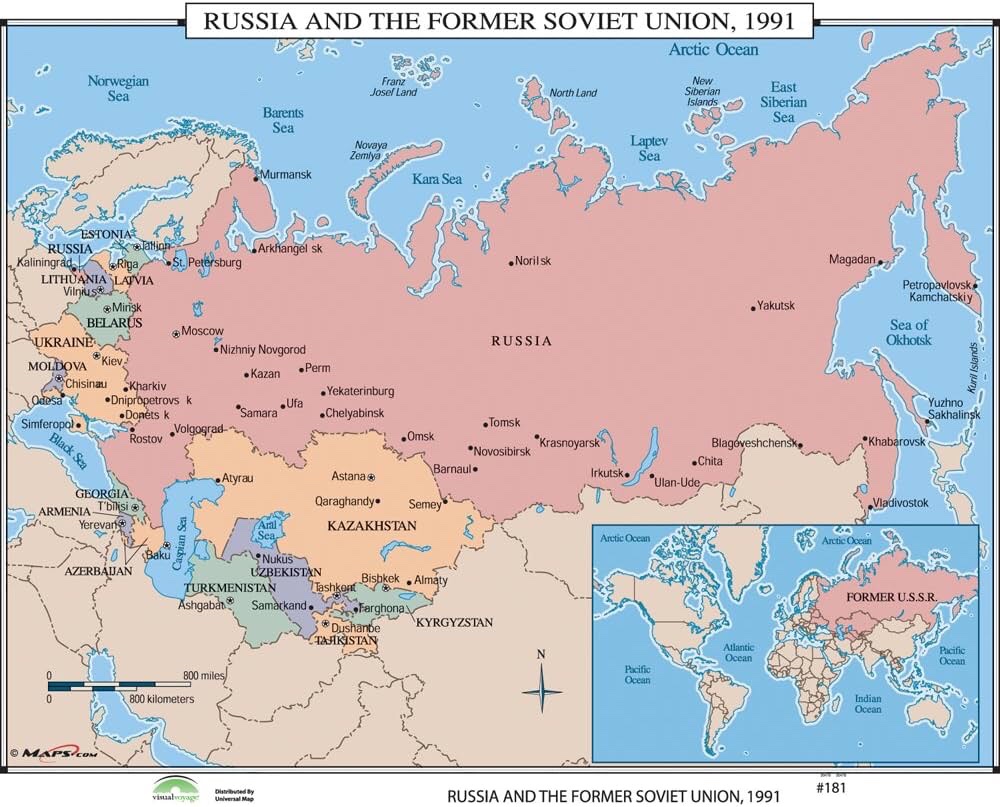
The day after Christmas of 1991, the Soviet Union had ceased to exist. In its place were now fifteen independent nations that previously had been Soviet Republics. And in the summer of 1993, most were still in the process of establishing their chosen forms of government, legal codes, and the institutions required to administer them. Ukraine was one of those fifteen nations, and as part of its development had established Embassies in various countries around the world . . . including neighboring Russia. It had also created official crossings along its nearly 7,000 miles of border abutting seven countries . . . also including Russia.
The 15 Former Soviet Republics
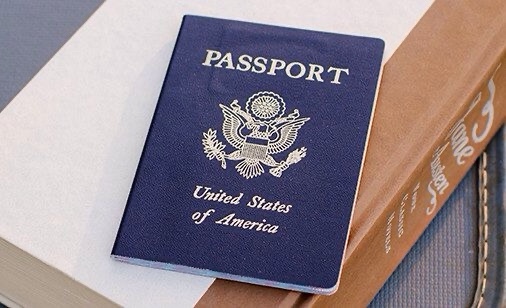
When I arrived in Moscow in May of 1993, much of this work was still in the process of being completed by the Ukrainian government, and my first train trip to Kyiv was easy and seamless. But by the time I was planning my second visit there, it was a whole new ballgame. There was now a Ukrainian Embassy in Moscow, and so I called to inquire whether I would need a visa to cross the border as a U.S. citizen with an American passport. It took a while to find someone who would even attempt to answer that question, and when I did, I was told that people with U.S. passports did not require visas to cross into Ukraine. Good news.
It was especially good news because this time I would be traveling with two American companions. Scott was working with the Foundation in the U.S., assisted by Michelle. Neither of them spoke Russian, and would be relying on my limited translation skills during the trip.
The fun began when we arrived at the Kyivsky Train Station in plenty of time for our scheduled evening departure. There was a woman taking tickets and checking I.D.s, and when she looked at our passports, she asked, in Russian, “But where are your Ukrainian visas?” Stretching my linguistic ability to the max, I explained to her the details of my call to the Embassy and what I had been told about not needing visas with U.S. passports. And she said, quite authoritatively, “Nyet!” I had apparently been given bad information, and her instructions were to see visas from everyone — Americans included.
Kyivsky Railroad Station, Moscow
I also explained that we had to leave that day as we had meetings scheduled the following morning with Ukrainian government officials and could not postpone our departure. She asked how we would get back into Russia, and I said we could get our return visas in Kyiv. She then asked what we would do about the border crossing. At that point, I moved a little closer to her, smiled conspiratorially, and whispered, “Well, that’s the Ukrainian government’s problem, not yours. Right?” Something from her lifetime of Soviet upbringing must have clicked into place. She smiled, handed our passports back to us, and said, “Khorosho” — “Fine.” And we boarded, three foreigners en route to Ukraine without visas. What a great start!
It got even better when the same lady who had taken our tickets showed up as concierge on the train and offered us tea. She obviously wore two hats for her job with the railroad, and I wasn’t crazy about this one, to say the least. She knew we didn’t have visas. What was going to happen when we reached the border? She would be blamed, unless she had a plan in place. This did not bode well for us, but it was too late to do anything about it now. We were already underway, captive on the train for the next 14 or 15 hours.
Michelle and I were sharing a two-bunk sleeper compartment, and Scott had a single at the far end of the same car. I was glad of the company, and we all sat up late in the “girls’ dorm,” swapping stories from our life histories, eating the food we had brought with us, and drinking good Russian tea, before finally kicking Scott out to his own quarters and locking our door. We had dressed comfortably for the trip, and something told me that Michelle and I should sleep in our clothes that night. I was later to be grateful for that decision.
At the border
The movement of the train soon lulled us to sleep, and it was around dawn when we were awakened by the screeching sound of brakes being applied and a whole lot of rattling and clanking going on. We had arrived at the border. Suddenly our door — the carefully locked door — was unlocked and slammed open with great force. Michelle and I both bolted upright in our bunks and were confronted by a very tall, very young, heavily-armed Ukrainian border guard, who stuck out one hand, palm up, and demanded, “Passports.”
Uh-oh. The moment of truth had arrived. Thank goodness we were spared the indignity of having to face it in pajamas!
I told Michelle to hand over her passport and to say nothing. Suddenly, I found myself in charge. Yeah, right. He was the one with the sidearm, not I. And he knew it. He also knew — compliments of the ticket-taker/tea service lady — that I spoke some Russian, and that we had no visas. But he dutifully scanned through our passports before saying to me, “Where are your Ukrainian visas?” Once more, I went through the whole story of the telephone exchange with the Embassy in Moscow. Then the following dialogue — in Russian — ensued.
Guard: “But you must have visas.”
Me: “No, they told me we didn’t need them with American passports.”
Guard: “But you must have them.”
Me: “We will get them in Kyiv.”
Guard: “No, you must get them in Moscow.”
Me: (Looking dramatically at my wristwatch): “But it’s too late.”
Guard: (Repetitiously): “No, you should have gotten them there.”
Me: (For the umpteenth time): “But they told me we didn’t need them.”
Guard: “Well, they told you wrong.”
That was when my patience ran out. I recalled what someone had told me years before, in an entirely different context: that you have as much power as you can make other people believe you have. So — from my still-seated position — I slammed my hand on the small table attached to the wall between our bunks, making the water bottles and glasses do a little dance, and angrily declared, “Well, that’s not my fault, is it?!!”
“So there!”
And there stood one very surprised border guard, wondering who this tough-talking, unintimidated, Russian-speaking American woman might be. At best, I probably reminded him of his mother; at worst, I could have been the First Lady of the United States for all he knew. He clearly had no idea of what to do next. So he did what came naturally: he passed the buck. Taking two steps backward into the corridor, he beckoned to someone farther along the car, and suddenly we had two young, tall, well-armed border guards in our little compartment. They began whispering between themselves, and all I could catch were what sounded like “psst-psst-psst-Americans,” and “psst-psst-psst-no visas.” Then the second guard looked at me and asked, “You will get your visas in Kyiv?” to which I replied, still with supposed authority, “Yes; I already said we would.” Shaking an index finger at me, he came back, “You be sure?” And as I waved a hand dismissively toward the door, I replied, “Yes. Now you get out!”
And by some miracle, they did just that. I had known all along that they were just waiting for me to offer a bribe (undoubtedly to be shared with the tea lady who had tipped them off), and I was prepared to pay if all else failed. But when I didn’t offer, they backed off as any schoolyard bully would have done. But I also realized that they had had the power to put us off the train in the middle of nowhere. Thank God they were young and inexperienced!
When they were gone, Michelle finally exhaled and asked what had just happened. I shrugged and told her we would get our visas in Kyiv. No worries.
“Yes-s-s-s!”
After more rattling and clanking sounds, the train started forward, and Michelle and I looked at each other and in unison exclaimed, “Scott!” He had been on his own, with no visa, and not speaking a word of Russian. As we rushed out into the corridor to find him, he was walking toward us, grinning from ear to ear. He asked if we were all right, and I said we were fine — that I had managed to talk our way out of it. But how had he gotten through it? Still smiling broadly, he replied, “Oh, I just kept babbling at them in English until they gave up and went away.” There’s frequently more than one way out of a tough situation, and Scott had found his.
P.S. For the remainder of the trip, we saw no more of the tea service lady. Perhaps, being Russian and not Ukrainian, she was dropped off at the border.
*. *. *
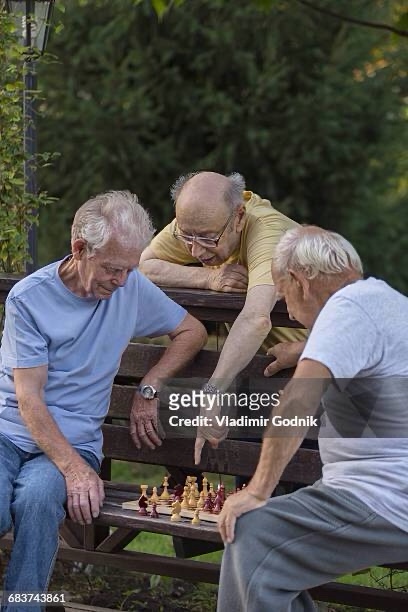
But as clever as Scott had been on the train, he nearly got us into big trouble in Kyiv. On an afternoon when we had some spare time between meetings, we decided to go for a stroll through a nearby park. We were delighted to come across two elderly gentlemen playing chess at a permanently-affixed stone table — a classic scene, just as you see in practically every movie about Russia. I talked to them for a few moments, introducing us as American visitors, and leaving with a traditional Russian farewell, “Vsevo khoroshevo” — “All the best.”
Passing the Time
A little farther on, we came to the banks of the Dnieper River, and followed it for a while, enjoying the sound of the rushing water. And then we found ourselves at the edge of the park, on a quiet street alongside a large office building. Turning right, in the general direction of our hotel, I wondered what the building was used for, saying I was feeling an eerie vibe from it. Of course, Scott and Michelle laughed at me. So when we saw a local lady walking toward us, I stopped her and asked, “Excuse me, do you know what this building is?” Her facial expression changed dramatically as she looked all around and over her shoulder. Then she whispered, “KGB.” I just mumbled a quick “Thank you,” as she hurried on her way. I was right about that vibe, and didn’t hold back from rubbing it in.
But Scott had an idea of his own. When we reached the corner and looked at the side of the building, we saw the name clearly engraved above the entrance: Komitet Gosudarstvennoi Bezopastnosti — “Committee for State Security.” KGB. Suddenly calling out “Take my picture,” Scott went charging up the tall staircase to the landing at the entrance and struck a pose, shouting for one of us to snap a photo. Knowing that it’s never a good idea to photograph a government building in that part of the world — and especially the offices of an intelligence agency — I yelled at him to get the hell out of there and refused to photograph him. But he decided this was fun, and wouldn’t budge. Finally I convinced Michelle that we should just walk away, and after a momentary pause he grudgingly gave up and joined us.
Main KGB Building, Kyiv (not the auxiliary building we saw)
And as we left, I noticed a car parked just yards from us, with two men seated in it. Just sitting . . . and watching. And I knew we had been spotted by KGB security. I quietly pointed them out to Scott and Michelle, both of whom finally realized that I hadn’t been joking and that we all needed to behave ourselves. The Soviet Union may have broken apart; but the KGB was, unfortunately, still very much alive. Needless to say, we had no further trouble with Scott on that trip.
In two days we had wrapped up the business side of our visit — my last one ever to Kyiv — and headed back on another long train ride to Moscow, this time with our return visas safely in hand. Scott and Michelle left for home a couple of days later, and I began preparing for the big event scheduled at Militia Headquarters: Petrovka 38.
‘Til next time, Brendochka 4/20/23 (re-posted 9/5/24)
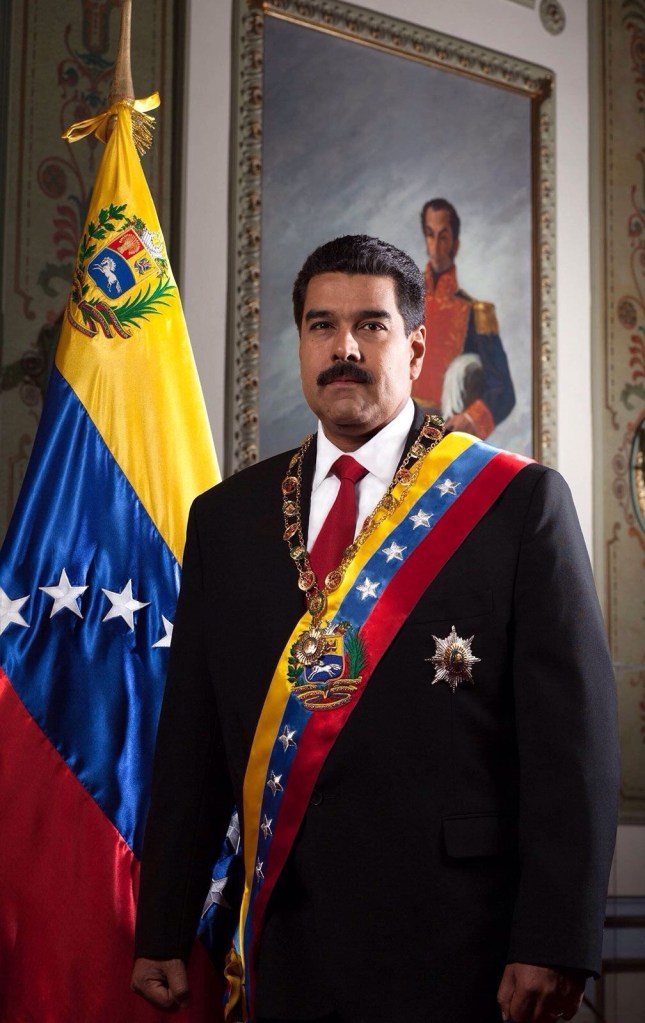
Venezuela’s self-proclaimed president, Nicolas Maduro, has had his share of problems lately. Aside from the legitimacy of his presidency itself being denied and protested, he has been widely criticized for his friendship with Russia’s Vladimir Putin; had his illegally-purchased $13 million plane seized; and had to fight off growing political unrest among Venezuela’s citizens who are fed up with his authoritarian rule. And that’s just for starters.
Nicolas Maduro
But he believes he’s found a way to keep his people happy, or at least distracted . . . for the next few months, anyway. On his weekly television show on Monday, he proclaimed:
“September smells like Christmas! This year and to honor you all, to thank you all, I am going to decree the beginning of Christmas on October 1. Christmas arrived for everyone, in peace, joy and security!” [Stefano Pozzebon, CNN, September 4, 2024.]
Well, that ought to do it — particularly for the dissidents he’s thrown into prison. And for opposition leader Edmundo Gonzalez, who has been accused by Maduro of “crimes associated with terrorism,” and is now the subject of an arrest warrant issued just hours before the big Christmas announcement.
Edmundo Gonzalez
Since the start of the protests over the election, some 2,400 people have been arrested, and Human Rights Watch says it has documented eleven related killings. (Non-governmental organizations have reported 24 people killed.) Maduro has ordered two new prisons to be opened, and has called for “everyone in the streets to be imprisoned.” [Id.]
If they were speaking Russian instead of Spanish, I would swear . . . well, never mind.
To say that things are not going well in Venezuela would be a gross understatement. Obviously, then, what we need is a little . . .
Aside from this having been my parents’ wedding anniversary — without which, as I’m sure you realize, I would not be here to amuse and amaze you with my mental meanderings day after day — a number of even more significant events took place on September 5th. For example, in . . .
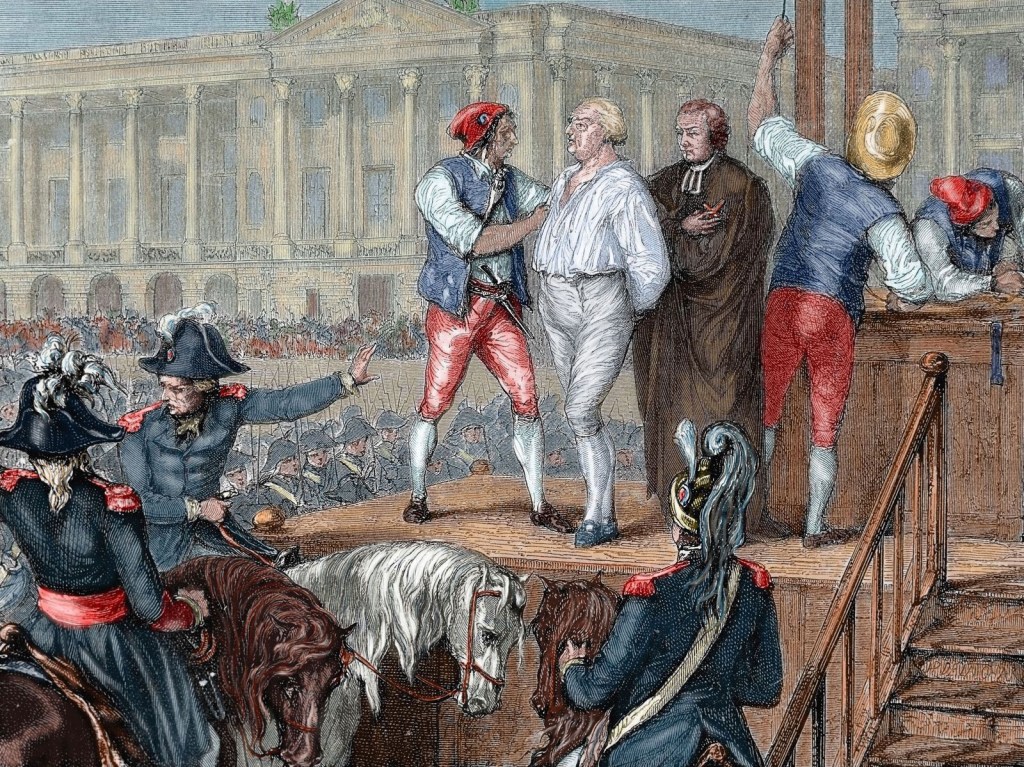
1793. The Reign of Terror began against enemies of the French Revolution. Those suspected of being traitors to the cause included nobles, priests and hoarders (according to britannica.com), and a wave of executions followed in Paris for nearly a year.
The Reign of Terror
*. *. *
1836. Sam Houston was elected president of the Republic of Texas. It took Mexico a long time to get over that loss (assuming they ever did).
First Flag of the Republic of Texas
*. *. *
1877. Chief Crazy Horse dies. His date of birth is uncertain but is estimated at around 1842, which would make the Sioux warrior just 35 when he was killed in a scuffle with soldiers who were trying to imprison him in a guardhouse at Fort Robinson, Nebraska. A sad ending to a brave chieftain.
Chief Crazy Horse
*. *. *
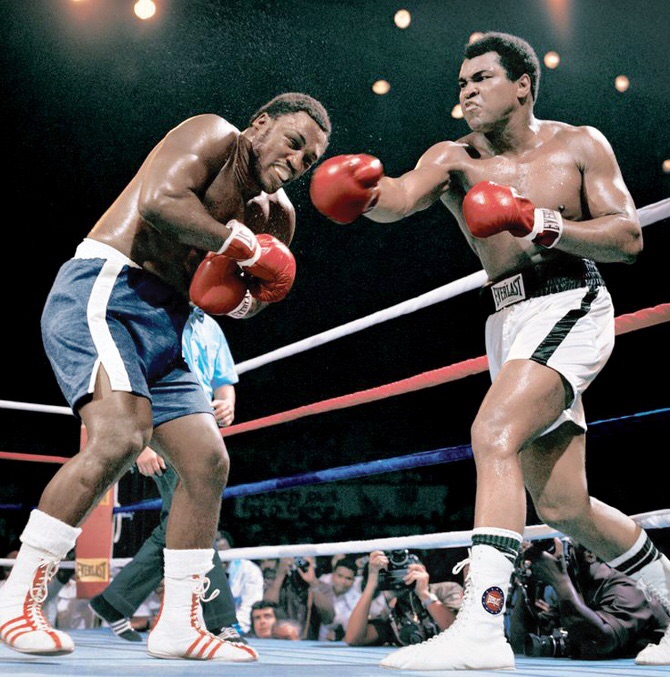
1960. Muhammad Ali won the gold medal at the Olympic Games in Rome. Then known as Cassius Clay, he was entered in the 175-pound division. He thereafter went on to a professional career that made him a sports legend.
Joe Frazier vs. Muhammad Ali: “The Thrilla in Manila”
*. *. *
1972. Palestinian terrorists attacked the Olympic Village in Munich. A time of horror in the history of the Olympics. Hostages were taken, and eleven members of the Israeli team were killed. The Black September group, as they were called, were demanding the release of 200 Palestinian prisoners being held in Israel. The rescue attempt failed; along with the hostages, five of the captors and a West German policeman were also slain.
Masked Terrorist at Munich Olympics
*. *. *
1975. Assassination attempt on U.S. President Gerald Ford. The attempt was made by Lynette (“Squeaky”) Fromme, a follower of Charles Manson. She was sentenced to life in prison, but was released in 2009. Now aged 75, she and her boyfriend are said to be living in Marcy, New York, in a house decorated with skulls. I don’t know what to say about that.
Lynette “Squeaky” Fromme
*. *. *
1976. The first episode of The Muppet Show aired. Aww . . . Kermit, Miss Piggy, Cookie Monster, Big Bird . . . Who could ever forget them?
Some of the Sesame Street Gang
*. *. *
1997. Mother Teresa dies in Calcutta at age 87. I was on vacation at Cape Cod when the news broke, eclipsed by the funeral the following day of Princess Diana, who had been killed in that horrible car wreck on August 31st. Even the “party city” of the Cape — Provincetown — was sad that week.
Mother Teresa
*. *. *
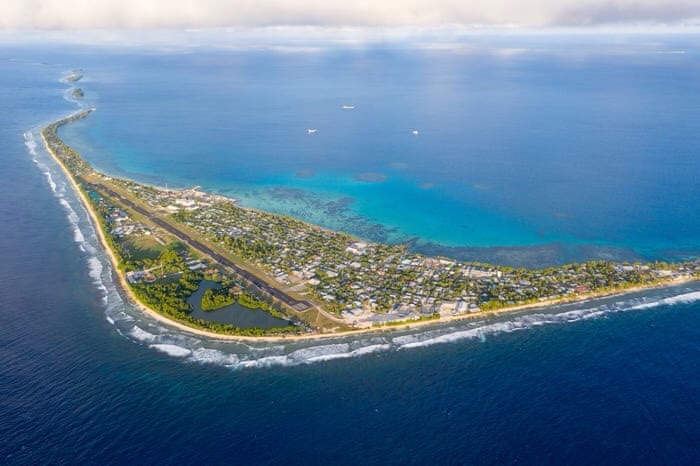
2000. Tuvalu becomes the 189th member of the United Nations. Never heard of it? Also known as the Ellice Islands, it’s a group of nine coral islands in the west-central Pacific, with a population of about 10,000, featuring palm-fringed beaches and World War II sites, beautiful flora and fauna — all threatened by rising sea levels. Will we be writing one day of the sinking of Tuvalu? I hope not.
Tuvalu
*. *. *
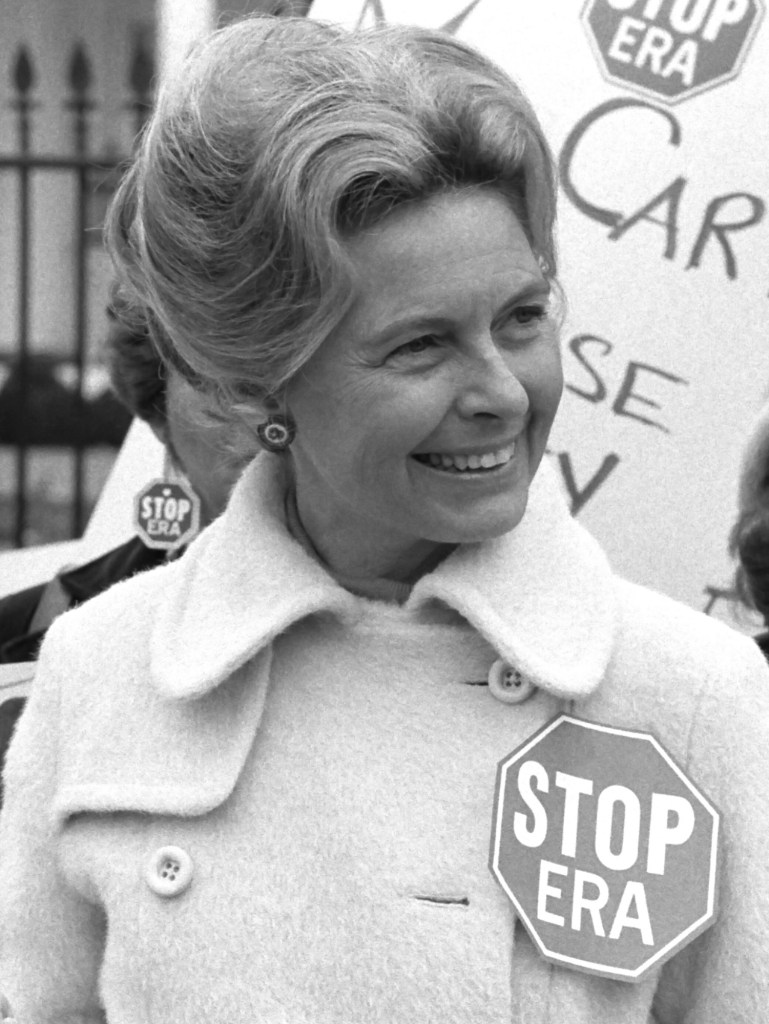
2016. Phyllis Schlafly dies at age 92. An American writer and political activist best-known for her opposition to the women’s movement and the Equal Rights Amendment, she was a woman way behind her time.
Phyllis Schlafly
*. *. *
And thus ends another day in history. Today, September 5, 2024, two Chinese spies were arrested in New York; charges and sanctions were levied against a number of Russian individuals and entities for trying to interfere with the upcoming U.S. presidential election; wars continued to rage in Ukraine and Gaza; and a 14-year-old boy in a suburb of Atlanta, Georgia, shot and killed two classmates and two teachers. I can file those away for next year’s column on this date.
The Biden administration has announced actions to be taken to counteract the Russian government’s efforts to influence the upcoming presidential election. These will include criminal charges against two Russian nationals (not yet named), sanctions on ten individuals and entities, and the seizure of 32 internet domains.
Deputy U.S. Attorney General Lisa Monaco revealed that three Russian companies have used fake profiles on social media to advance false information. Internal documents of one of those companies show that one of its goals was to promote the candidacy of Donald Trump, or any other Republican nominee in this year’s election. [Sean Lyngaas, Evan Perez, Kylie Atwood, Zachary Cohen and Jennifer Hansler, CNN, September 4, 2024.]
In addition, two employees of RT, Russia’s state media network, were charged in connection with a scheme that targeted millions of American news consumers with — in the words of Attorney General Merrick Garland — “hidden Russian government messaging.” [Id.]
A lengthy FBI affidavit released today describes a Kremlin-backed program involving the planting of fake news stories attacking American politicians who support Ukraine.
In the indictment of the two RT employees, an operation is also described whereby news articles and online content are presented to favor Trump and others who are considered by the Kremlin to be friendlier to its interests. [Id.]
A great deal more detail is available — too much to present here. My purpose in commenting on these developments is not to reiterate someone else’s hard work, but to remind the reader, once again, that our enemies are still out there, and that their methods have become more sophisticated — so much so that we are not always able to recognize them. Like artificial intelligence, it’s not always easy to distinguish the real from the fake.
So be careful out there — and don’t believe everything you read.
Kremlin Spokesman Dmitry Peskov, with Vladimir Putin
“. . . either of these two guys today” . . . is what I was going to say. And then I saw this morning’s headline:
“Exclusive: Biden administration to accuse Russia of sustained effort to influence 2024 election.” [Sean Lyngaas, Evan Perez, Kylie Atwood and Zachary Cohen, CNN, September 4, 2024.]
Not that there’s anything new in being told that Russia — among others — has never stopped trying to interfere in our internal affairs, including our elections. What is new here is what the U.S. government is planning to do about it . . . and how effective those actions are likely to be. As of this writing, that announcement is yet to be made.
As reported by CNN, it is expected that, in addition to the White House’s public condemnation of Russia’s activities, the Justice Department will be taking “law enforcement action targeting the covert Russian campaign.” [Id.] Russia’s state media network, known as RT — a main propaganda outlet for the Kremlin — is expected to be a focus of any such actions:
“The Russian disinformation operation is being laundered through both Americans and non-American voices, four of the sources said.” [Id.]
CNN’s report further states: “Wednesday’s expected actions are a reminder that US officials continue to see Russia as a prominent foreign influence threat to November’s election, the sources said.” [Id.]
Well, I should certainly hope so!
Looking forward to the rest of the report, hopefully later today.
Those funny Russians — they just can’t resist a good propaganda opportunity (“prop op”?). And Pavel Durov has become too good an opportunity to pass up.
You may recall that Durov is the billionaire CEO of messaging app Telegram, and is presently under investigation by the French government for alleged criminal complicity for not preventing users of his platform from conducting illicit transactions, including drug trafficking, fraud, child sex abuse, and even terrorism.
Pavel Durov
Russia’s interest in Durov stems from the fact that he was born and raised in Russia, where he proved to be a computer whiz at an early age. He eventually developed the highly successful Russian version of Facebook, which he called VKontakte (“In Contact”), or VK. But when the Russian government began demanding that he give them access to some of his clients’ confidential information, he refused, and ended up leaving Russia for France.
Not one to rest on his laurels, Durov — having obtained French and UAE citizenship — then developed Telegram, widely used for messaging throughout the world — ironically including by the Russian government.
And now — having previously forced him to leave his native land — Russia has latched on to Durov’s latest troubles as a bit of manna from Heaven: a chance to turn things around and blame the whole mess on the West.
Say what??!!!
Russian Foreign Minister Sergey Lavrov addressed the subject in a recent speech to students at Moscow’s prestigious MGIMO (Moscow State Institute of International Relations), parroting the Kremlin position that the French investigation is part of “a larger political ploy by the West to exert power over Russia,” and saying:
“Pavel Durov was too free. He didn’t listen to Western advice on moderating his brainchild.” [Lucy Papachristou, Reuters, September 2, 2024.]
But wait a second: If “the West” advised Durov to “moderate” Telegram, and he simply didn’t listen, how then is it a conspiracy on our (the West’s) part against Russia?
Enter — yet again — the effervescent Kremlin spokesman, Dmitry Peskov, ready as always to inject his own special brand of humor into a decidedly un-funny situation:
“The main thing is that what is happening in France does not turn into political persecution. We know that the president of France has denied any connection (of the case) with politics, but on the other hand, certain accusations are being made.” [Id.]
Dmitry Peskov: The Wordmaster
All right, then!
So, as I understand you, Dima . . . France is the bad guy, Durov is the fall guy, and Russia is the good guy for defending the guy they originally drove out of their country.
I can’t wait to see whose fault it will be tomorrow. I’ll have to check my political barometer.
National Wildlife Day. This is, of course, a very good thing — we must protect our precious animals. But let us not forget that today is also . . .
World Sexual Health Day. Can’t argue with that one either. We must protect our . . . well, anyway . . .
And since they turn up on the same day, I wonder what would happen if we decided to celebrate them together with one big party and . . .
Par-tay!
Okay, back to reality now. There’s more going on tomorrow, besides the birthday of someone I must remember to send a greeting. September 5th is . . .
International Day of Charity. We shouldn’t do this on only one day of the year, or just at Christmastime, or before December 31st for the tax deduction. Whenever you can, just choose your favorite(s) and send whatever you can afford; or contribute your time to help someone. It’s a good thing.
National Cheese Pizza Day. I like mine with the standard pizza sauce and cheese, plus bell peppers, onions, and eggplant. Yes, eggplant. I only know of one place that makes those, and it’s about 500 miles away, so I just have to fantasize about them. But you do yours, your own way. And enjoy.
National Be Late For Something Day. Oh, that’s too easy. But if the person you’re supposed to be meeting is also planning to be late, then won’t you both be on time?
World Samosa Day. You don’t have to choose between this and the pizza. It’s just once a year — live it up, and have both. I won’t tell.
*. *. *
That’s it — two days wrapped up into one. Come to think of it, that makes life go twice as quickly, so I’d probably better stop doing that.
Leaders and delegates from multiple African nations are descending upon Beijing for a three-day summit this week, drawn by China’s promises of “further practical cooperation” and Xi Jinping’s vision for a “community with a shared future.” [CNN’s Meanwhile In China, September 2, 2024.]
African Leaders Arrive in Beijing – September 2, 2024
Hopefully, they will have a little free time to see something of Beijing besides the inside of a conference hall. And while they are doing the town, their host will be doing his thing: tying his African clients up in big, tight knots — financial ones, that is.
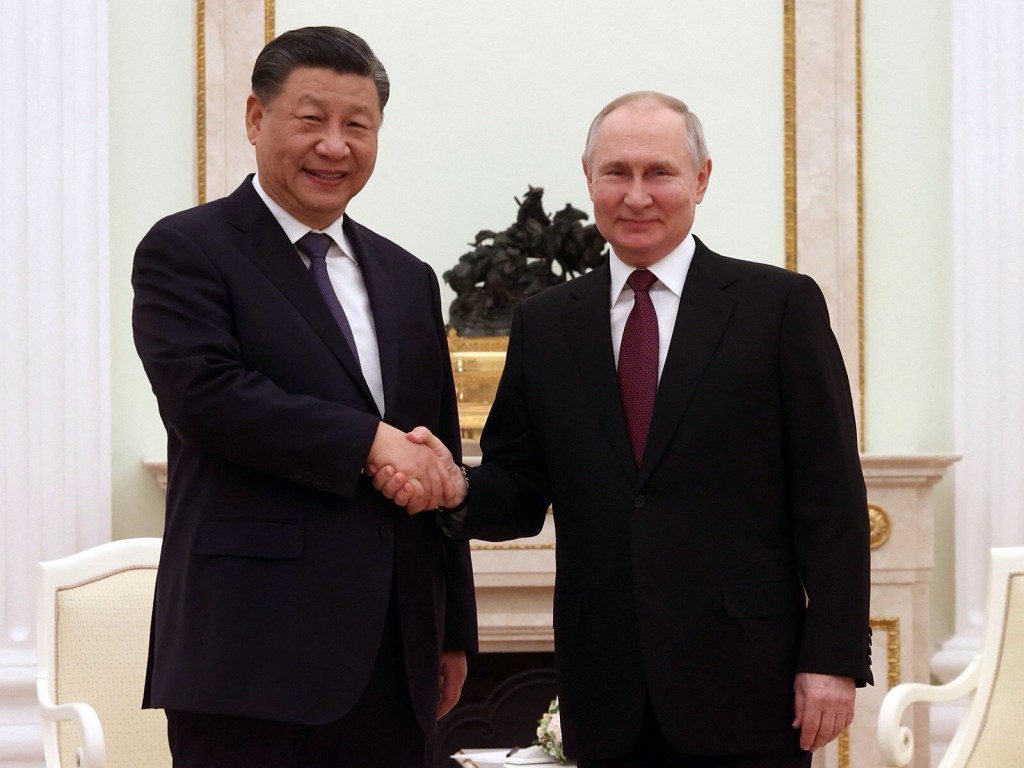
I’ve written in the past about China’s so-called Belt and Road Initiative,** by which — under the guise of infrastructure development — China has, over more than ten years, gradually increased loans to a number of already impoverished countries, many in Africa, until they have become crushingly burdensome for the borrowers. And now those loans are coming due. It is, of course, all part of this dynamic duo’s long-range plan to create a new world order . . . under their control.
** See 11/10/23: Putin and Xi: The Real World’s Romulus and Remus?
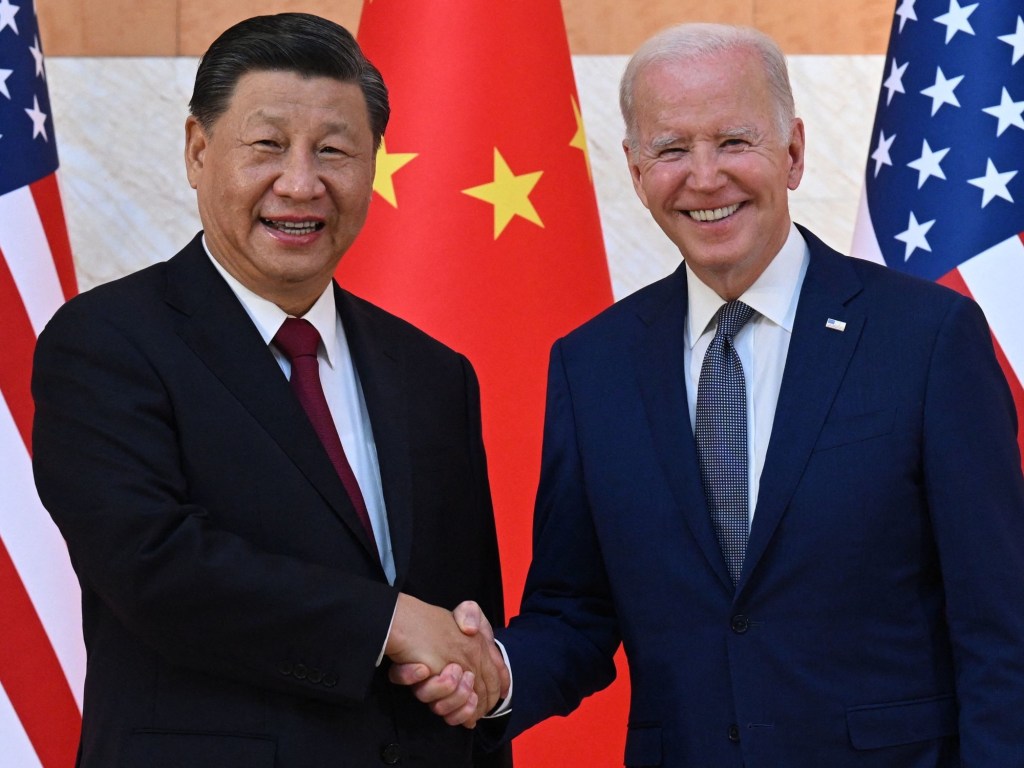
Xi Jinping and Vladimir Putin
But with specific regard to Africa, Yun Sun, director of the China Program at Washington’s Stimson Center think tank, says:
“The Chinese approach to Africa in the past has been driven by hardware infrastructure projects, funded by Chinese loans. We know now that model is not going to be operational anymore, because now the debt sustainability issue has become such a big challenge for the continent.[Now] . . . the world is watching — what is going to happen to China’s relationship with Africa next?” [Simone McCarthy, CNN’s Meanwhile in China, September 2, 2024.]
It is hoped that this week’s summit in Beijing will provide some answers to that question.
In the meantime, however, it appears that Chinese President Xi Jinping has a pleasant surprise for his African visitors: Satellite TV.
“Yessir, step right up and get your 50-inch screen here. If it doesn’t fit into your hut, we’ll lend you the money to enlarge the hut.”
*. *. *
Actually, you’re probably thinking — as I did at first — that Xi’s plan is to provide satellite TV capability to Africa’s largest cities. But not so; they already have TV. Instead, nearly a decade ago, he promised the heads of state attending the Forum on China-Africa Cooperation in Johannesburg “that China would provide over 10,000 remote villages in 23 African countries with digital TV access.” [Id.] And, in Xi’s favor, more than 9,600 of those villages have now received satellite infrastructure. So . . . bring on the soap operas, the game shows, and the other mind-bending entertainment — rural Africa is ready to plug in those TV sets.
One type of “typical” African village
Seriously, we’re talking about impoverished people living in some of the world’s most impoverished nations. Never mind that they often go to bed hungry; that their children have no shoes; that education is sparse, if it exists at all; that alternating droughts and floods have killed their crops. They need satellite TV.
Those villagers who were part of China’s project ostensibly received everything for free — satellite dish, battery, installation, and a subscription to the programming. But the subscription was not for a lifetime; it ran out after a few months, and they had to pay to renew it. Some could not afford it, and gave up their access. The party was over.
In one household in the village of Olasiti, about three hours’ drive from the capital of Nairobi, Kenya, the family of Nicholas Nguku was thrilled to be able to watch the Paris Olympics. They clearly live in a more comfortable home, not a hut; and their TV is a reasonable size. The satellite service is inexpensive, by U.S. standards . . . but we’re not talking about U.S. standards.
The Nguku Family and Friends at Olasiti, Kenya
And by the way, the programming content is provided by a Chinese company. So those soap operas and game shows are from China, dubbed or subtitled in English, and by some accounts are frequently old and dated.
But the villagers needed satellite TV.
Don’t get me wrong — it isn’t that I don’t think they deserve a little fun in their lives. They absolutely do; their lives are difficult. But is TV really the answer? If offered a choice between that and a steady supply of food and clean water, vaccines and medicines . . . which do you think they would choose?
*. *. *
Think about this: If you lived in the Soviet Union in the last century, you were given a free vacation every summer, and for that you were supposed to forget about the lines at the stores for inferior, often non-existent goods. Forget about the squalor of your communal apartment. Forget about being forced to live and work wherever you were told to. Forget about the absence of hope for a better future for your children. You had that free vacation to look forward to, and for that you were expected to be eternally grateful to Papa Joe Stalin.




































 The Blog About Everything … and Sometimes Nothing