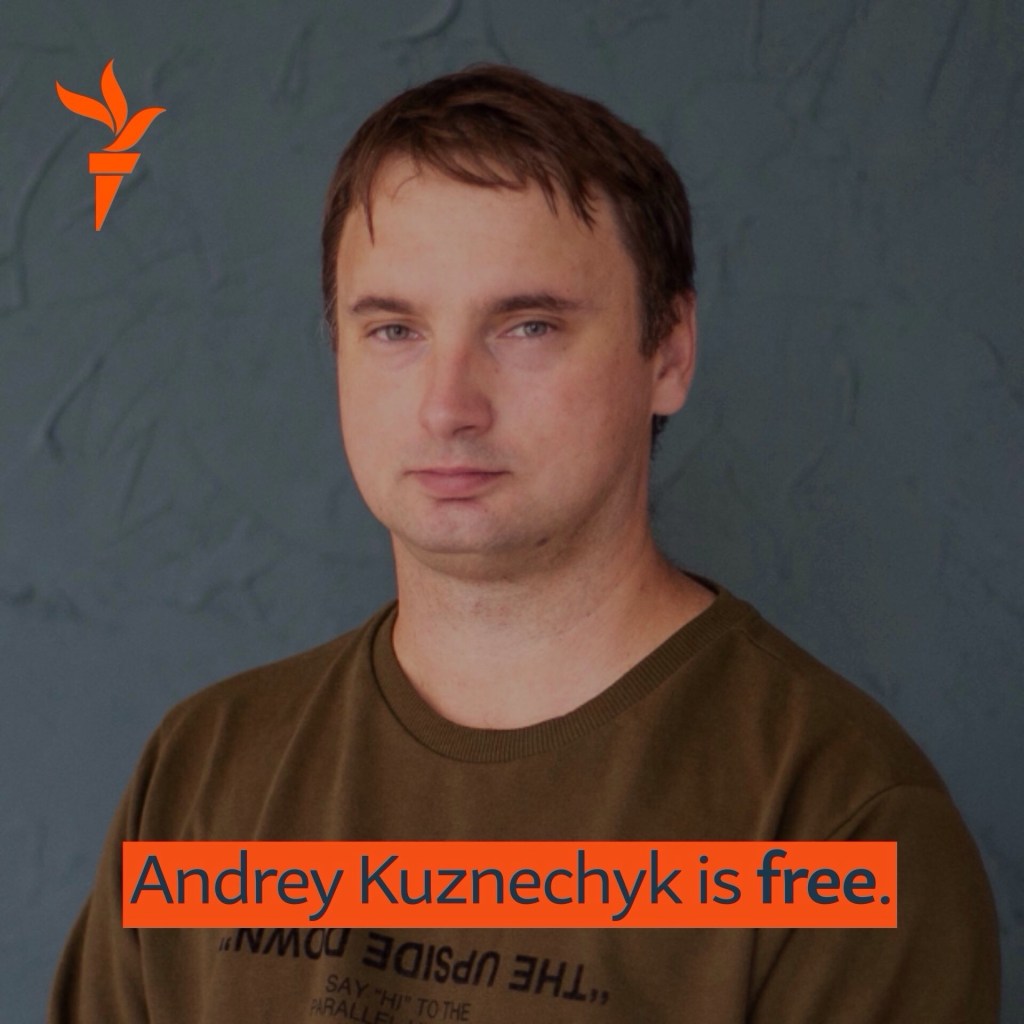
Last week we were happy to report that American Marc Fogel and Belarusian journalist Andrey Kuznechyk had both been released by Vladimir Putin and returned home.
Andrey KuznechykMarc Fogel
The not-so-good news is that this week has brought no further releases. On the other hand, there has been no word of new hostages having been taken, which is always a relief.
Now we need to continue working on bringing back those remaining in prison:
*. *. *
David Barnes Ales Bialiatski (in Belarus) Gordon Black Andrei Chapiuk (in Belarus) Robert Gilman Stephen James Hubbard Ksenia Karelina Ihar Karney (in Belarus) Vadim Kobzev Uladzimir Labkovich (in Belarus) Michael Travis Leake Aleksei Liptser Ihar Losik (in Belarus) Daniel Martindale Farid Mehralizada (in Azerbaijan) Marfa Rabkova (in Belarus) Igor Sergunin Dmitry Shatresov Robert Shonov Eugene Spector Valiantsin Stafanovic (in Belarus) Siarhei Tsikhanouski (in Belarus) Laurent Vinatier Robert Romanov Woodland Vladislav Yesypenko (in Crimea) Yuras Zyankovich (in Belarus)
*. *. *
And again, in the hope that he may actually see it one day, I reiterate my message to Donald Trump:
“Amidst all of the hubbub of your new administration, it is imperative that these innocent men and women not be forgotten. Negotiations for their safe release have been underway for some time. President Joe Biden succeeded in bringing home 16 innocent people on August 1st of last year, and you have added two others to that list. But you should be trying to do even more. Whatever else you do, this should be high on your list of priorities. The people you promised to represent are counting on you.”
My grandmother used to say that. Of course, she was thinking in terms of the narrow confines of our town in 1940s Rhode Island . . . and usually about the kurva (use your imagination) who lived just down the street and had to pass our house on her way to church.
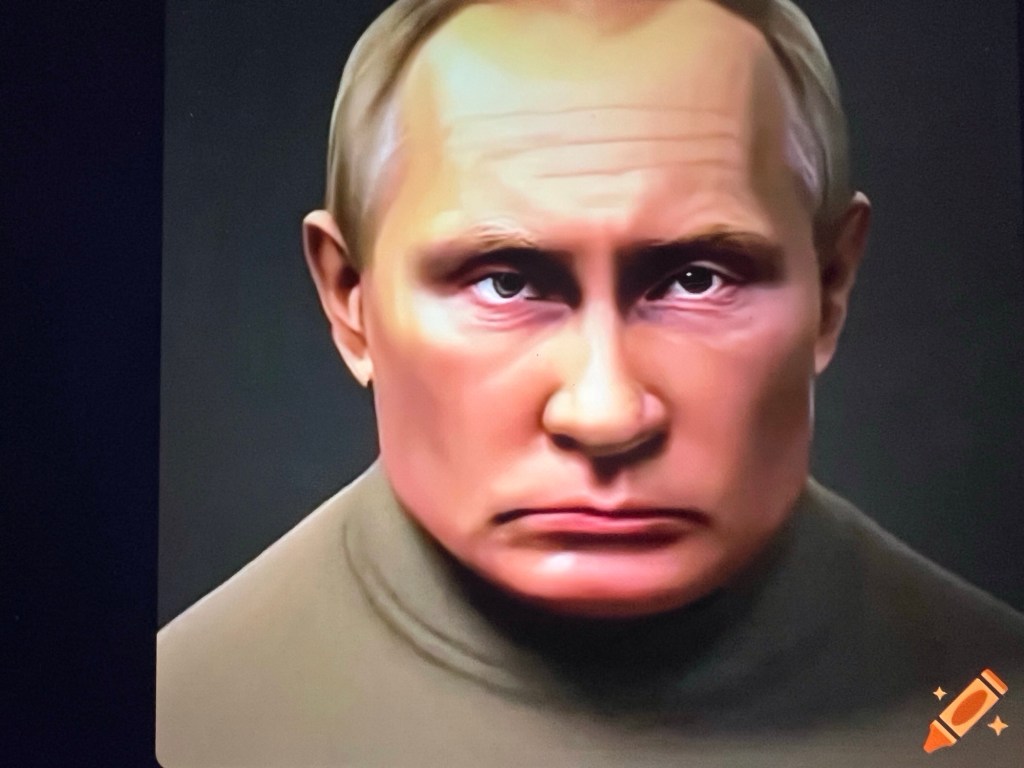
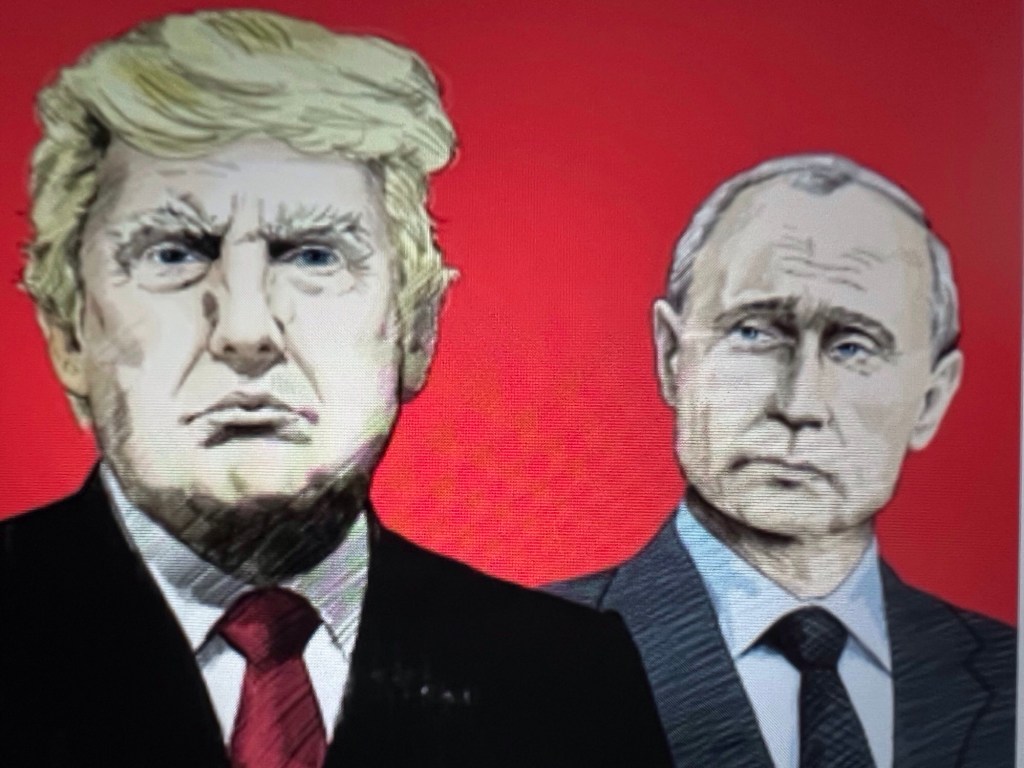
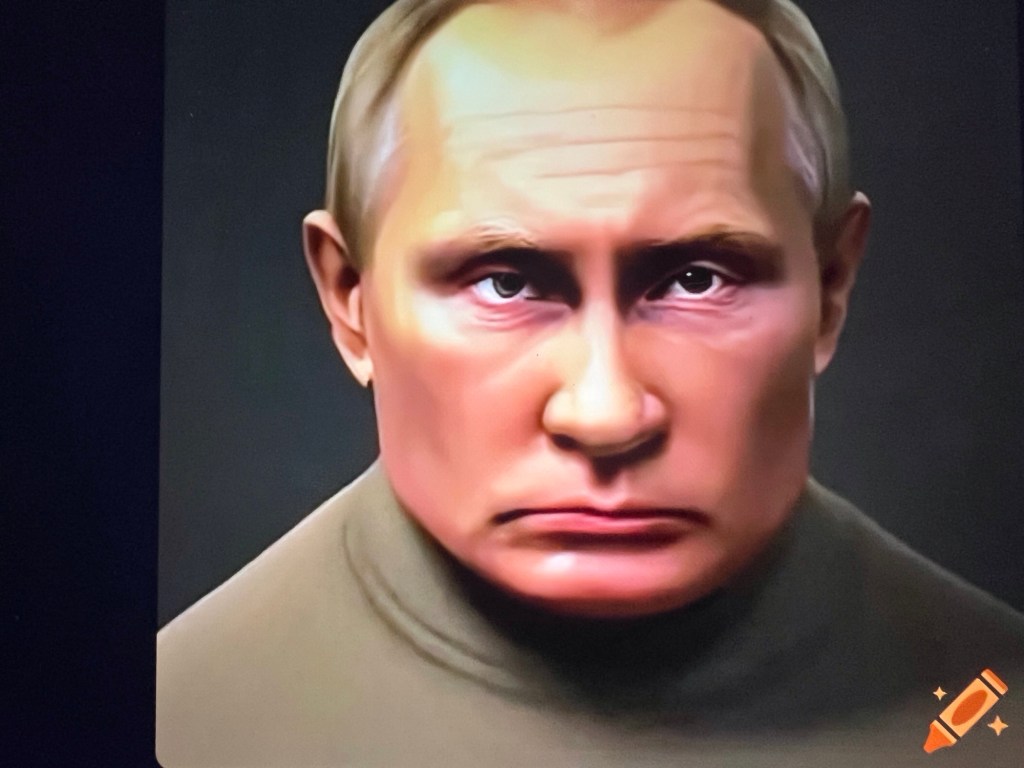
I, on the other hand, am referring to someone much more widely known . . . someone who holds complete power in his own country, and seems to have a terrifying influence over the current occupant of the White House. This guy:
An Angry You-Know-Who (AI internet picture)
So, while this missive should be addressed to the man in the Oval Office as a caution to beware of his Russian counterpart, I know he’ll never read it; and even if he did, it wouldn’t register, because it’s not what he wants to hear.
But some of the details, since they are intentionally not widely publicized by the Kremlin, might be of interest to the casual reader. So here are a few tidbits to add to what you already know.
*. *. *
There’s nothing secretive about what Vladimir Putin is: what he has done, and continues to do, in Ukraine; about the journalists and dissidents he has arrested and imprisoned in recent years; or about the deaths of the more well-known of his victims, including Alexei Navalny and Yevgeny Prigozhin. But did you know about . . .
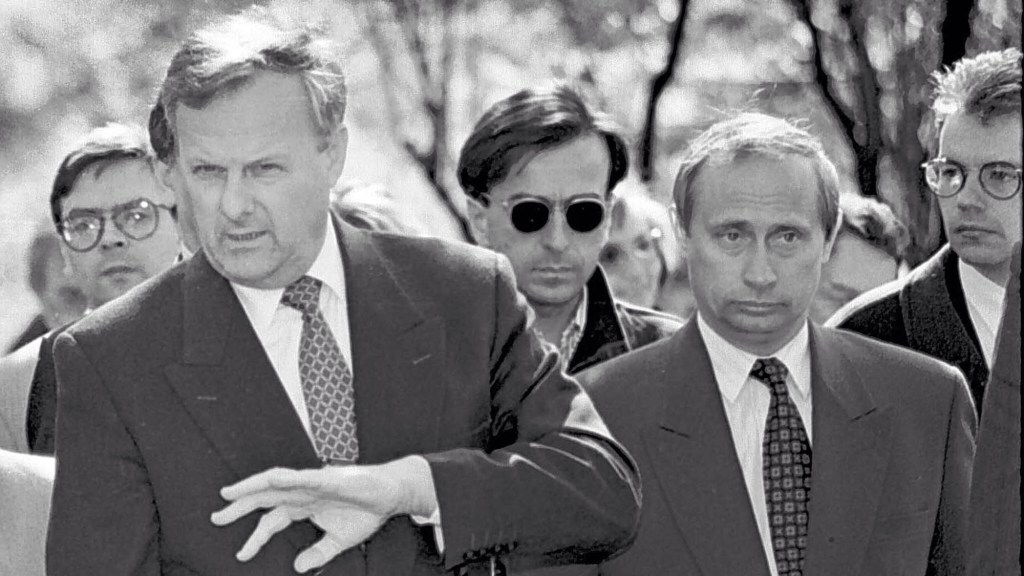
The Early Years. Originally a young hoodlum from St. Petersburg (formerly Leningrad), Putin grew up to become a Lieutenant Colonel in the KGB. He was stationed in East Germany when, in 1991, the Soviet Union was suddenly declared kaput. Returning to his home town, he aligned himself with the then mayor of the city, Anatoly Sobchak, a popular liberal of the day. Putin became Sobchak’s fixer, his procurer of goods, services, and information . . . a latter-day Fagin, if you will.
Anatoly Sobchak (L), accompanied by Vladimir Putin
When Yeltsin, then President of Russia, realized that Sobchak was somehow able to acquire things that were still scarce in Moscow and elsewhere, he asked Sobchak why. Learning that it was due to a wily fellow named Putin, Yeltsin snatched Putin away from St. Petersburg and brought him to Moscow. And the rest . . . well, you know . . . history.
Incidentally, Sobchak died in February of 2000 at the age of just 62 years . . . officially of a heart attack, though the opinions of two medical experts were contradictory.
*. *. *
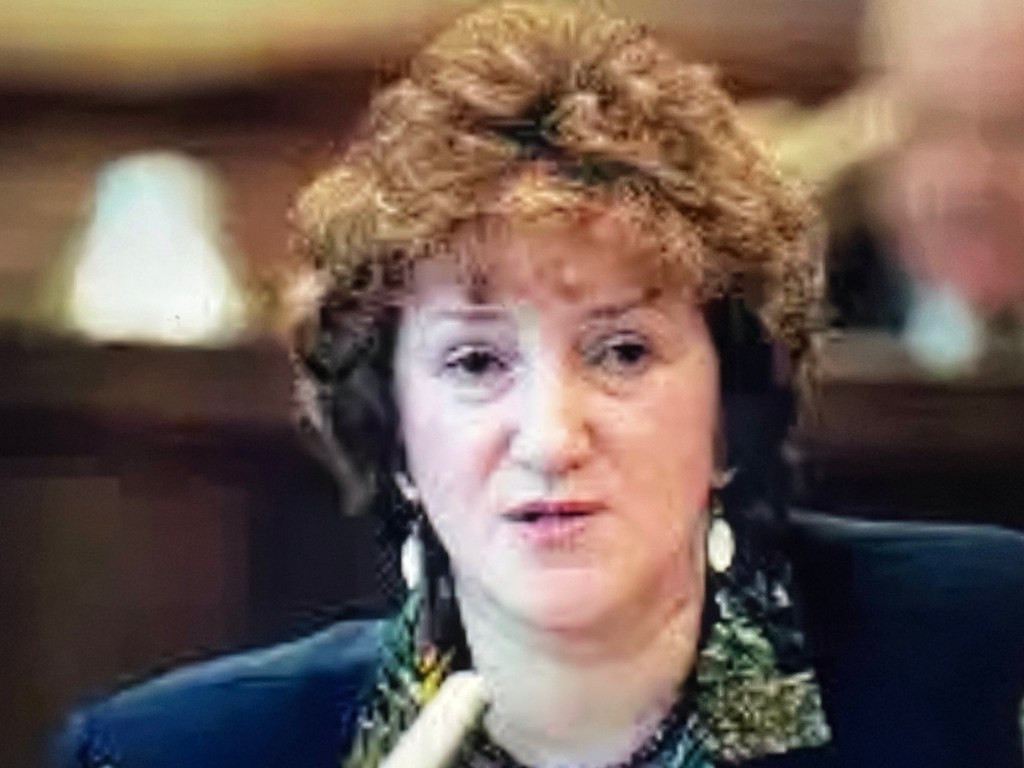
Galina Starovoitova. A former Soviet dissident, she carried on her campaign against corruption in the Russian government and society after the breakup of the Soviet Union by becoming a member of Parliament. She lobbied for legislation to keep former secret intelligence (i.e., KGB) agents out of politics, which would have prevented Vladimir Putin — then an up-and-coming member of the Yeltsin administration — from eventually becoming president. It was, of course, Boris Yeltsin himself who had brought Putin to Moscow from St. Petersburg, and who — on the recommendation of oligarch (now deceased) Boris Berezovsky — had since appointed Putin head of the FSB, a successor agency to the KGB.
Galina Sarovoitova
But Starovoitova’s campaign failed . . . and so did her heart, when she was shot to death in the hallway of her St. Petersburg apartment building in 1998.
The following year, at the end of 1999, Putin — by then having been elevated to the position of Prime Minister of Russia — was handed the interim presidency when Yeltsin resigned. He then stood for election in March of 2000 and won handily . . . as he has done in every election since then by simply amending the Russian Constitution to extend the term limitations provision as needed.
Had Starovoitova’s legislation been passed, that would not have been possible. Her death was a political necessity.
*. *. *
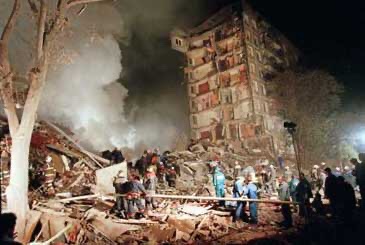
Moscow Apartment Bombings and Theater Hostage Crisis. In 1999, as Vladimir Putin was preparing to run for the presidency, a series of bombings — the largest being in Moscow — took place in three locations in Russia, killing some 300 people and injuring an estimated 1,000 others. The incidents were immediately labeled as terrorist acts, blamed on Chechen rebels, and were all the impetus needed by Putin to stage his second war on Chechnya. He stepped forward to declare his “war on terrorism,” at the moment when the people of Russia were frightened and needed a strong leader. Coincidence . . . right?
Moscow Apartment Bombing – 1999
In 2002, more than 900 audience members were taken hostage in the Dubrovka Theater in Moscow . . . this time by actual Chechen rebels in retribution for Putin’s barbaric invasion of their region. In order to free the hostages without giving the terrorists the opportunity to activate the explosives they were carrying, the FSB (successor to the KGB) security troops filled the theater with an anesthetic gas 1,000 times more potent than ricin. When the anesthetized hostages were removed from the theater to be revived, between 130 and 174 of them were dead . . . along with every one of the Chechen rebels.
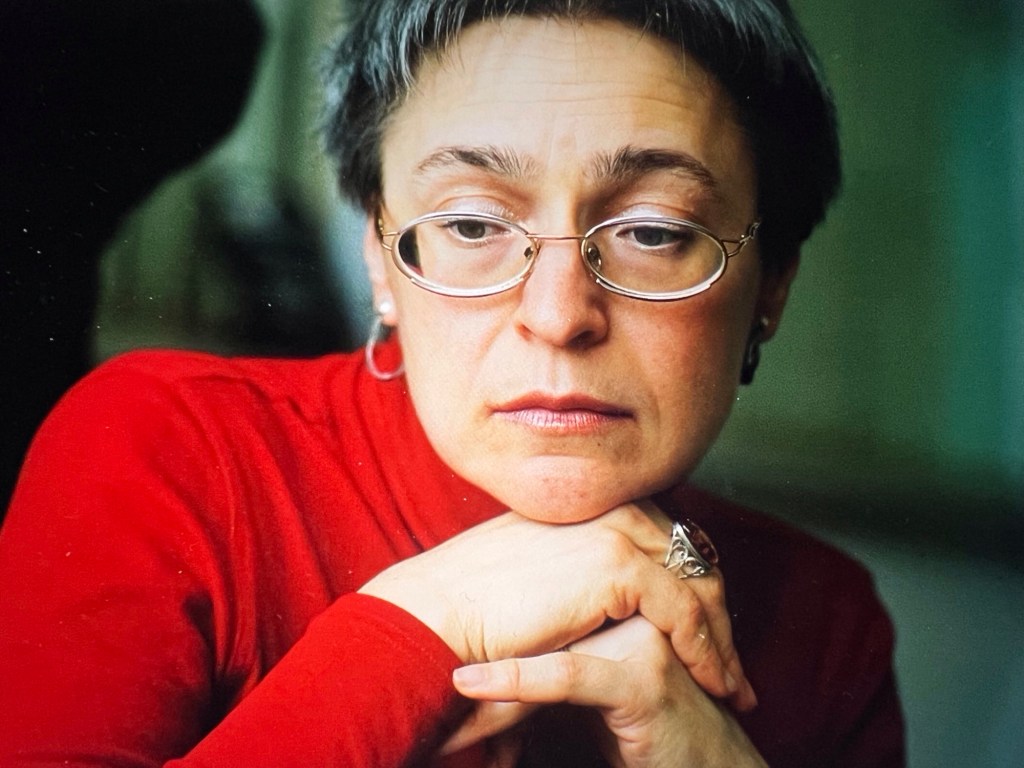
Dead men don’t talk. In order to silence the hostage-takers, all 900 of the hostages’ lives had been placed in danger . . . at the direct orders of Vladimir Putin. Of the six people who attempted to investigate the incident, three died in strange circumstances. One was Anna Politkovskaya. A fearlessly outspoken journalist who dared to oppose the Putin regime, she continued to report on the horrific situation in Chechnya. She too was shot to death . . . ironically, on Vladimir Putin’s birthday in 2006.
Anna Politkovskaya
*. *. *
And the list goes on and on: Boris Nemtsov, Alexei Navalny, Aleksandr Litvinenko, Boris Berezovsky . . . all dead, as well as the attempted murders of Sergei Skripal and his daughter, the exile of Mikhail Khodorkovsky, and countless others. All on the orders of the man in the Kremlin.
The man whom Donald Trump has chosen to rehabilitate at the expense of America’s European allies.
The same Donald Trump who once bragged:
“I could stand in the middle of Fifth Avenue and shoot somebody, and I wouldn’t lose any voters, OK?”
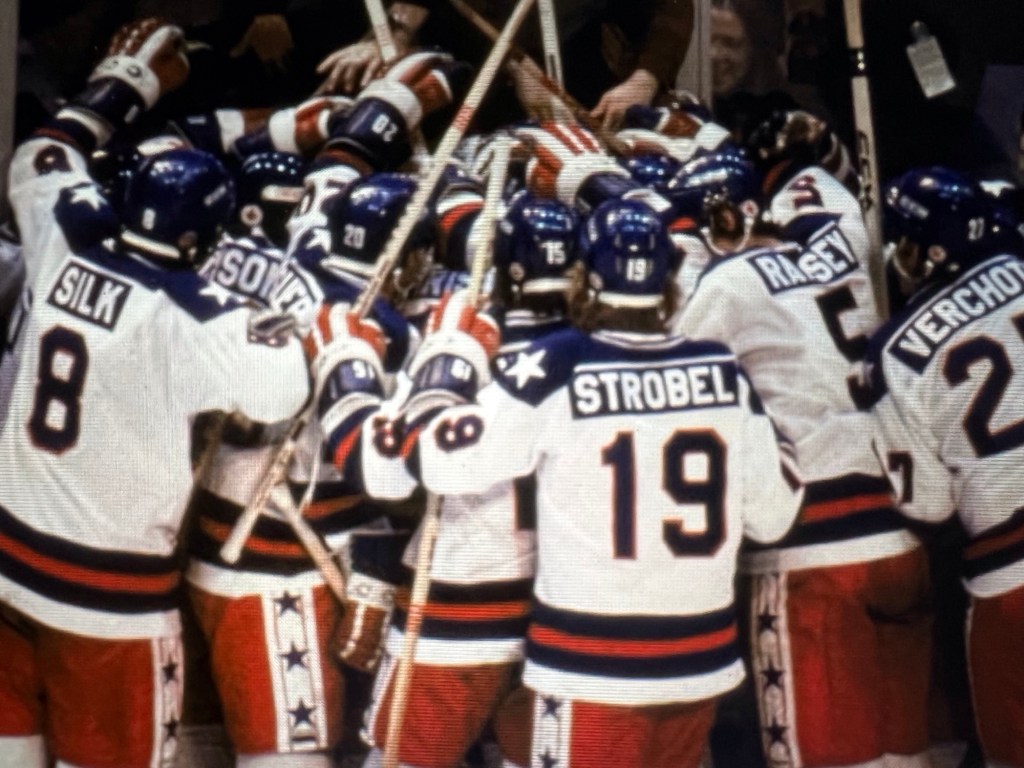
Yes, I’ve been digging back through the history files again, and I see that it was on this date in 1980 that the U.S. Olympic hockey team — comprised of college players and considered the obvious underdogs in the match against the four-time gold-medalist Soviet team — performed the now-famous “Miracle On Ice” at Lake Placid, New York.
Against all odds, the Americans beat the pants off the Russians in a nail-biting game that ended 4-3 for the Yanks. And the world went nuts.
Victory at Lake Placid
In the interest of full disclosure, as always, I admit that I am not a hockey fan. In fact, I’m not much of a sports fan at all, though I do enjoy watching some of the individual sports — particularly gymnastics, skating, swimming and diving. But all in all, I’d rather see a good play or musical.
So why does this event bring back such a clear memory? Actually, it’s because of what happened the following Monday, February 25th, when I was back at work in the law offices of Surrey, Karasik & Morse in Washington.
For those of you who haven’t been following me regularly, allow me to explain, as briefly as possible, that I was working as assistant to the senior partner of the firm, Walter Sterling Surrey, a man of exceptional accomplishments, incredible mental acuity, an unpredictable temper, unflagging loyalty . . . and a sense of humor that knew no bounds and gave no quarter to anyone.
Walter Sterling Surrey (1915-1989)
The firm’s practice consisted in large part of the representation of major corporations in connection with international commercial transactions throughout the world’s six inhabited continents. (For some reason, the penguins on Antarctica never saw the need to retain our services.) And a number of Walter’s clients had business dealings in both China and the Soviet Union, which necessitated maintaining contacts with the commercial attaches in both of their embassies.
On the day in question — Monday, February 25th — it happened that “our man” in the Soviet Embassy, Valentin, was scheduled to meet with Walter in our offices to discuss a possible transaction between one of the firm’s clients and the relevant Soviet Ministry (all business was conducted with the Soviet government in those days).
Valentin was the first “real” Russian I had ever met, and he was nothing like the blustering, threatening image I had previously had of Soviet officials. Instead, he was quiet, well-spoken, obviously intelligent, pleasant, and always helpful to Walter in navigating the Soviet bureaucracy. We knew we couldn’t trust him; but we liked him.
That Monday, the chatter in the office — as in much of the rest of the country — was all about the big hockey win the previous Friday. And when Valentin arrived, and I went to escort him from the reception area to Walter’s office, Beelzebub suddenly took control of my brain and my tongue, as he so often did.
As we shook hands and said good morning, I asked Valentin — as I did with all visitors:
“May I offer you something: Coffee? Tea? Hockey puck?”
Holy Mother of God! What had I done?!!
One would think that, at the very least, I had just lost the best job I’d ever had . . . or, at worst, started World War III. But, though the devil may have been in charge of my tongue that day, an angel was obviously sitting on my shoulder. Because Valentin laughed. And I laughed. And we kept laughing, all the way down the hall to Walter’s office.
Later, when the meeting was over and Valentin had left the office, Walter of course had to know what had been so funny. And when I told him, he too roared with laughter. It was just the sort of thing he would have said . . . which is what saved my skin, and my job, that day.
*. *. *
Recalling this small incident today has brought on a sudden wave of nostalgia for what I call my “Walter years.” The ten years that we worked together were, for me, years of learning, of growing, and of being an integral part of the excitement of the ‘80s. Walter was my boss, my mentor, my friend . . . and a father figure, not only to me, but to all of “his people.”
He was, in his earlier years at the State Department, the chief legal draftsman of both the Marshall Plan and the NATO Treaty. He worked, mostly behind the scenes, with Richard Nixon and Henry Kissinger to reopen commercial relations with China in the ‘70s. And he never met anyone he couldn’t converse with, from heads of state to taxi drivers. But he never bragged of his accomplishments. He didn’t need to; you just knew, when you met him, that he was someone special.
I could write a book about those ten years. And who knows? . . . maybe I will.
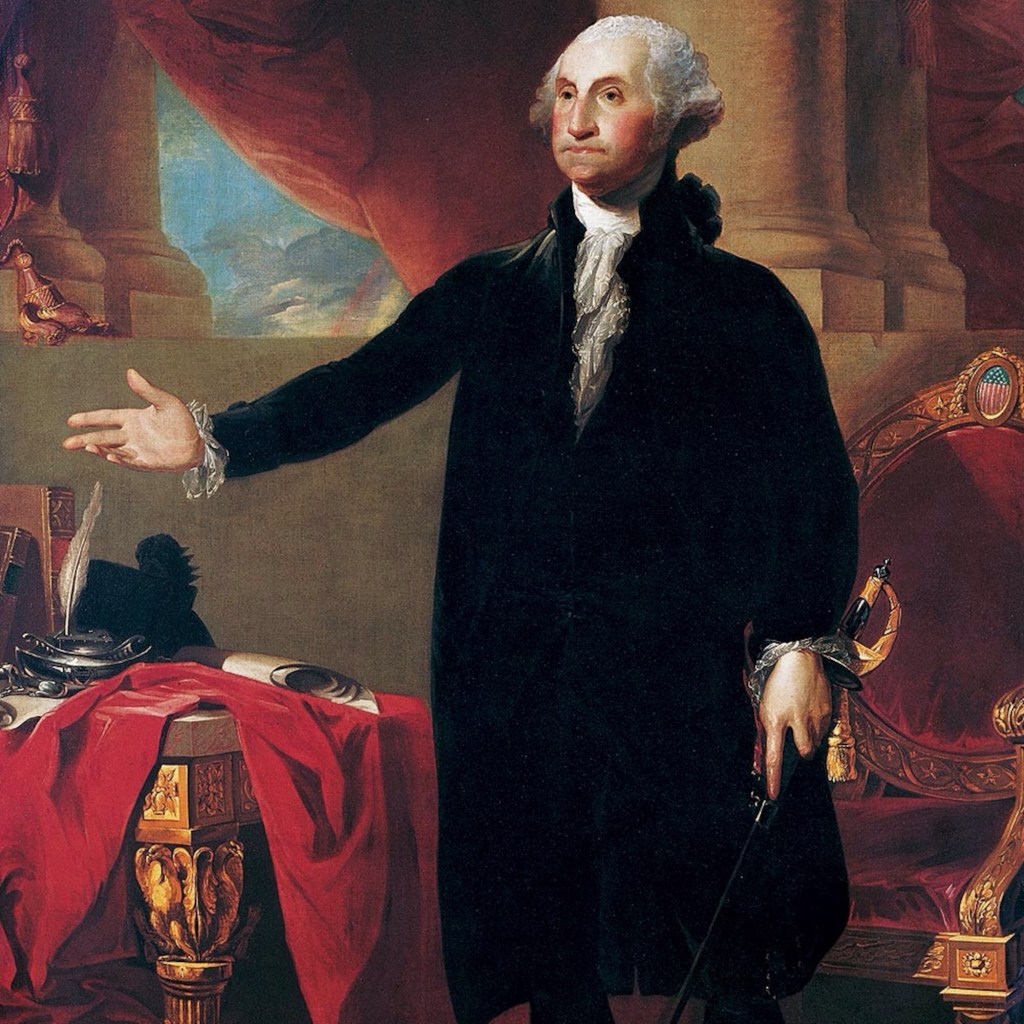
Today marks the 293rd anniversary of the birth of George Washington, born this date in 1732, who ultimately became known as the “Father of our Country.” That is, by any standard, quite an honor.
So . . . what do you think, sir? As your nation approaches its 250th birthday, are you proud of what your descendants have done with your legacy?
President George Washington
I’m sure you were, for about the first 200 years or so. You and your contemporaries got it right, and so did the next six or eight generations. But somewhere along the way, the train went off the tracks.
Oh, sorry . . . you don’t know about railroads trains, do you?
Let’s just say, the principles your generation set forth in the Declaration of Independence and the U.S. Constitution have somehow been shunted aside in the wake of individual political interests. And it sucks. (That’s a modern expression, meaning it’s really, really bad.)
All I can say, President Washington, is that I’m sorry. We’re all sorry . . . those of us who didn’t create the problems but who are most adversely affected by them. If we could go back and start over, we would.
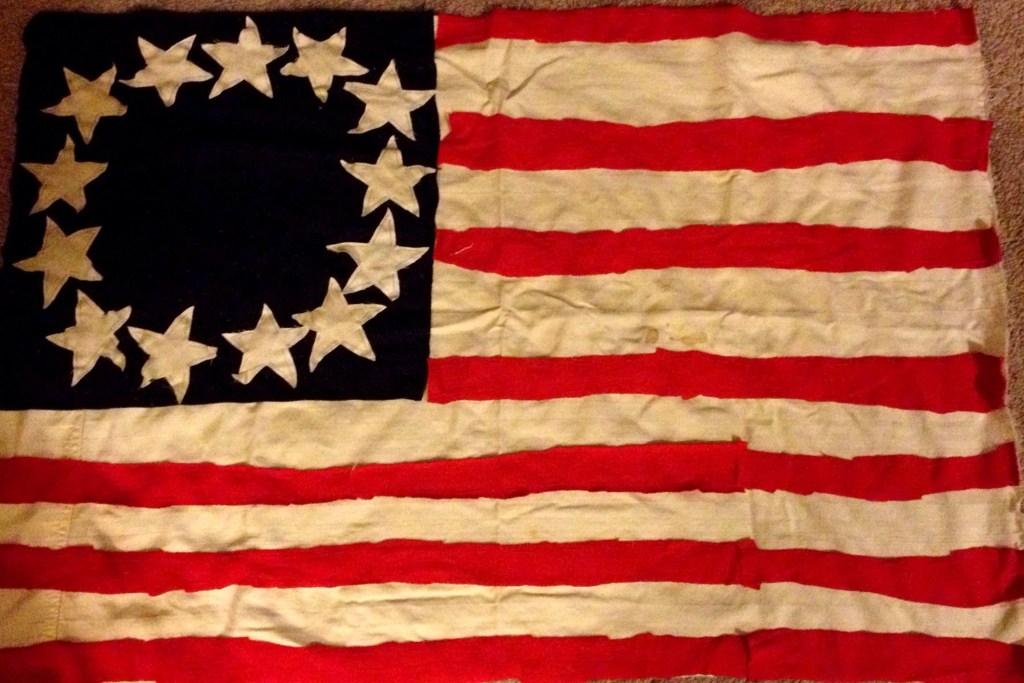
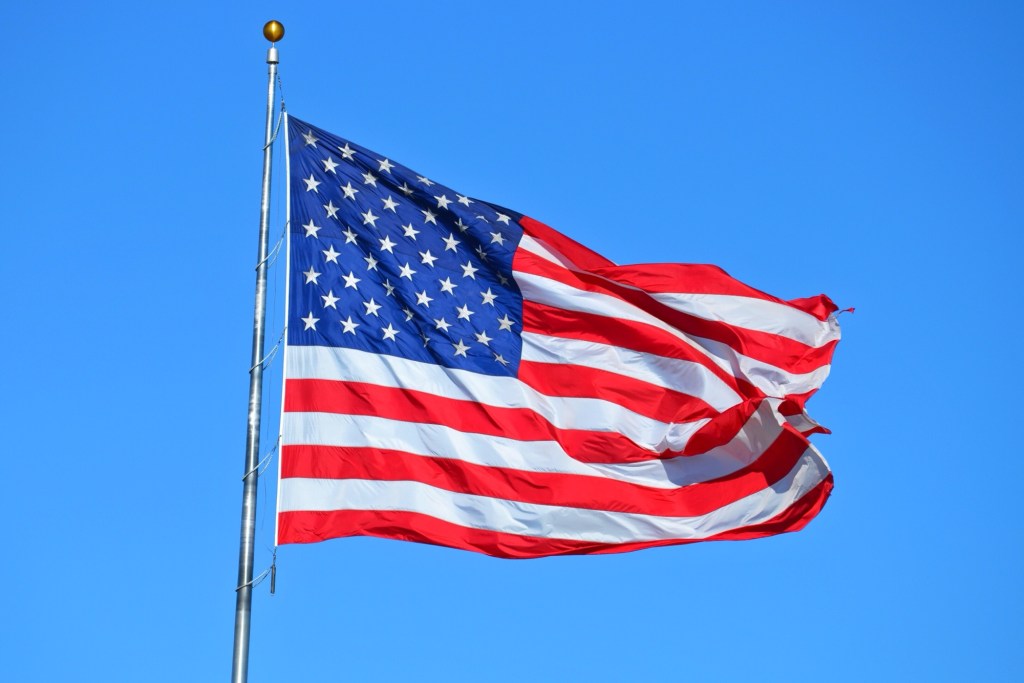
And by the way, we’ve grown. This is how many states we have now (50), with nearly 350 million people from all over the world — people who (or whose forebears) came here seeking opportunity and freedom from oppression, and who built this former wilderness into the shining example it has become for the rest of the world.
We just need to be reminded now and then of our history, of how truly fortunate we are to live here, and of how we need to keep working tirelessly to protect our great nation from tyrants who would destroy us.
*. *. *
I hope you enjoy your birthday, wherever you are, and that you somehow know you are still remembered on this day every year.
And thank you, sir, for being our first President.
The short answer is: Yes, they are. But in the midst of all of the recent hullabaloo emanating from the Washington White House, both internally and internationally, as well as the ongoing negotiations over the Ukraine and Gaza situations, China seems to have been relegated to Page Two for the moment.
But not for long.
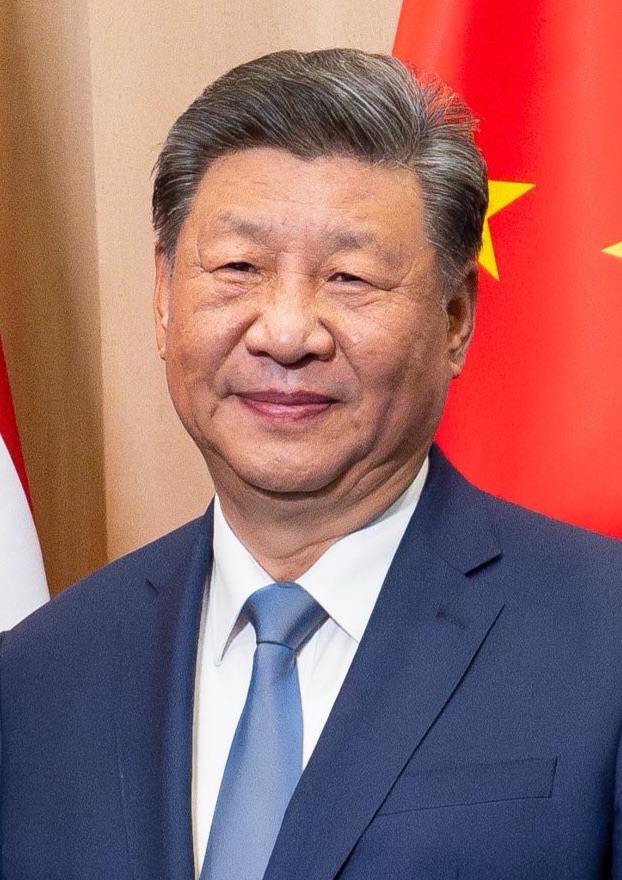
Chinese President Xi Jinping
We must never turn our backs on, or in any way underestimate, the Chinese. Over the past 50-plus years, their relations with Russia have waxed and waned, as have their relations with the United States. And through it all, they’ve grown stronger — economically, diplomatically, and militarily. Make no mistake: they are a force to be reckoned with.
But right now, Chinese President Xi Jinping is faced with a conundrum. He has not criticized Vladimir Putin’s war against Ukraine, even filling many of the gaps in Russia’s economy created by the West’s sanctions since the onset of the war in 2022 — to the advantage of both countries, of course. And Russia has become dependent upon that relationship.
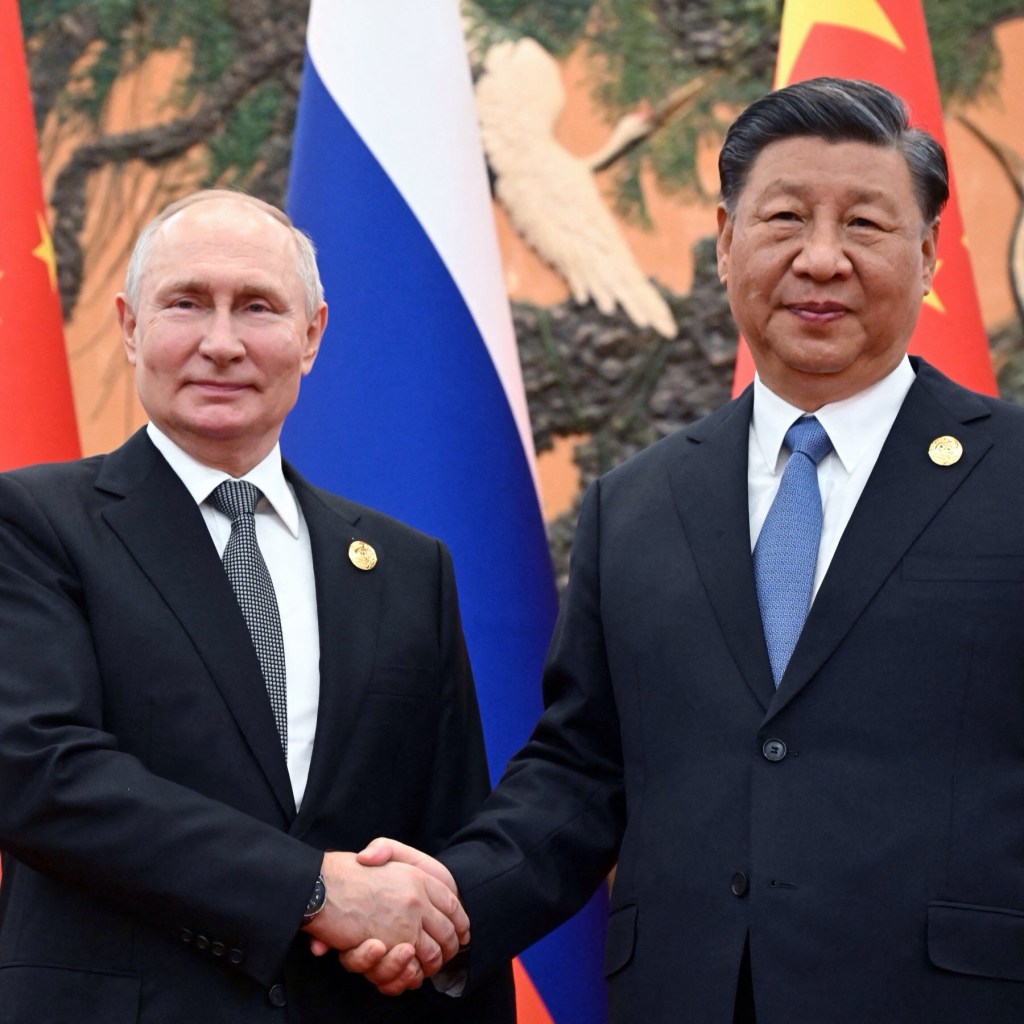
Presidents Putin and Xi: BFFs (for now)
At the same time, Xi has depicted himself as a peacemaker, desirous of assisting as needed in the negotiation process . . . thus placing himself squarely on the fence between Russia and the West, but so far managing not to fall off.
Then along comes Donald Trump, back into the White House, and one of the first things he does is signal his intent to improve relations with Russia by anointing himself the only person in the world who can bring about a peaceful end to the Ukraine conflict. So — completely ignoring the opposition of virtually the entire Western world, the sanctions imposed on Russia by most of America’s allies, and the criminal warrant issued against Putin by the International Criminal Court — he picks up the phone and calls his Russian counterpart, effectively bringing Putin out of purgatory and back into a place of power.
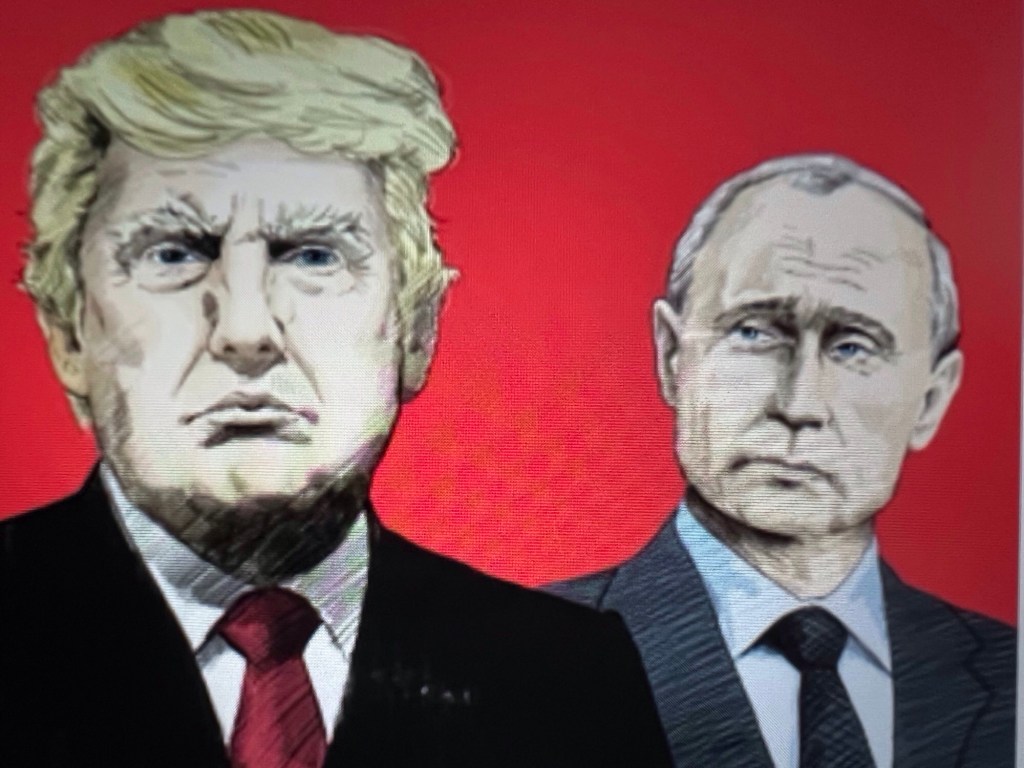
Presidents Trump and Putin: BFFs (again?)
And, if all goes according to plan, before long Russia will no longer be reliant upon China’s increased trade . . . which, needless to say, President Xi finds more than a little distressing. Not to mention the question of whose side Russia would take in the event of a military conflict between China and and its next intended acquisition: Taiwan.
In fact, at the recent Munich Security Conference, U.S. special envoy for Ukraine and Russia Keith Kellogg bluntly stated that the United States aims “to force” Putin into actions he would be “uncomfortable with,” including disrupting Moscow’s ties with China, Iran and North Korea. [Reid Standish, RFE/RL, February 21, 2025.]
And U.S. Vice President JD Vance said in a February 14th interview with The Wall Street Journal that Washington is prepared to reset its relationship with Russia as a move to end Russia’s isolation and its growing dependence on China. [Id.]
*. *. *
To look at it as the most simplistic of analogies, what we seem to have here is a classic case of two high school boys who have been best friends for years, who suddenly find they’re both madly in love with the same girl. And what happens to this trio will depend entirely on the young lady in question. If she is decent and honorable, she will decide which of the young men she likes better, and tell the unfortunate one, as gently as possible, how she feels. With any luck, and hopefully a mature attitude on the part of both boys, they can remain friends.
But if the girl is a slut, and decides she wants to date both of her admirers and play them off against each other, well . . . “trouble” doesn’t adequately describe what they’re in for.
So I suggest you stay tuned for the next chapters of this high-stakes soap opera in your daily news reports, folks . . . it’s bound to be interesting.
I was going to take the day off from writing today, when I suddenly realized why the date sounded familiar.
Unless it was your birthday, wedding anniversary, or the birth date of your first-born child, you probably wouldn’t have the slightest idea where you were on February 21, 1994. But I remember it clearly.
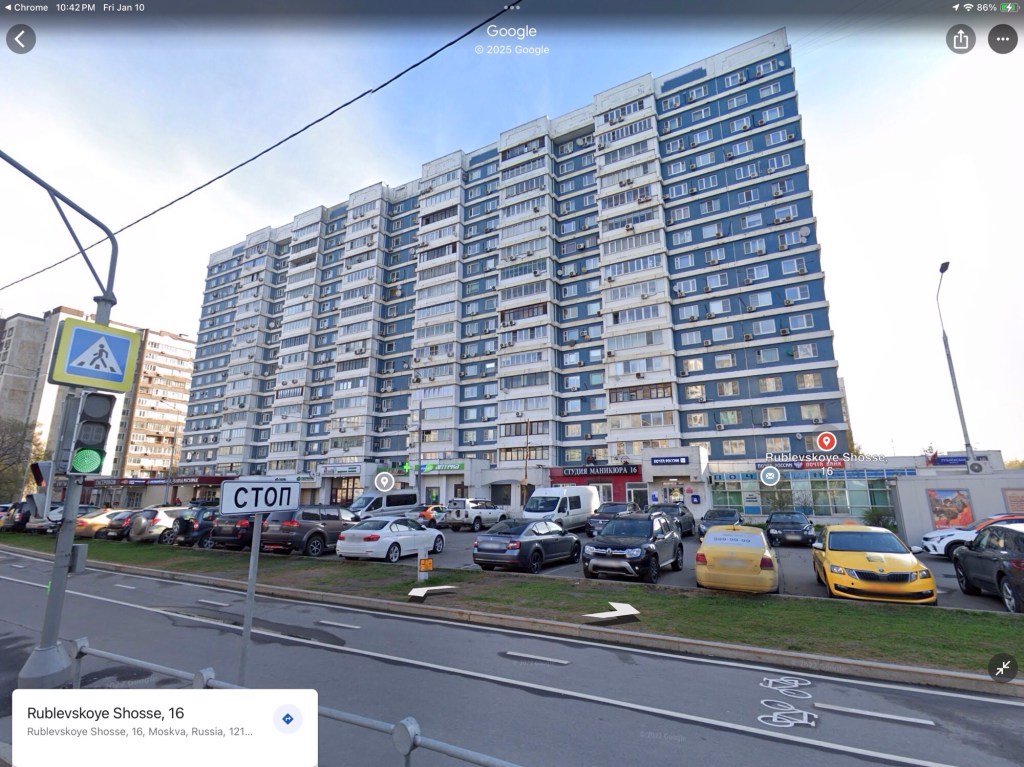
I was in Moscow — the one in Russia, not Idaho USA — staying in the apartment/office where I had lived and worked the previous summer. Back from a full day of meetings and a bit of shopping, I was settling down for the evening, and tuned in to the news on the apartment’s satellite TV.
Home Sweet Home in Moscow
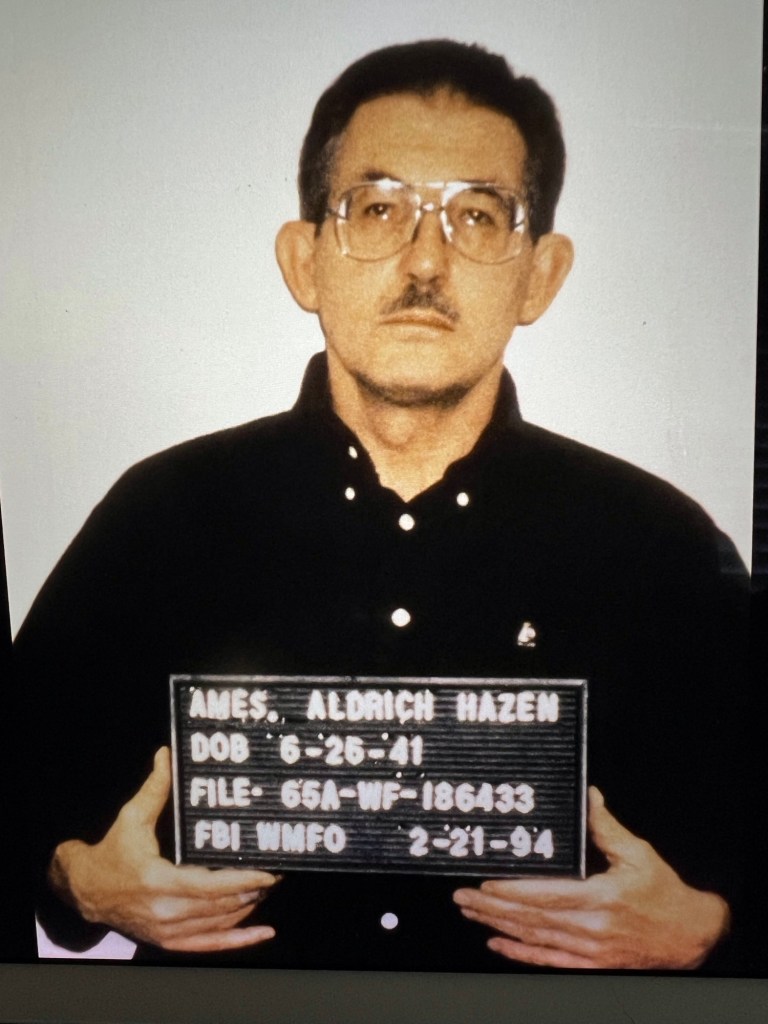
Only half listening, I suddenly heard a news flash about an American who had been arrested in a Washington, D.C. suburb on charges of spying for Russia. That man was Aldrich Ames, and he was said to work for the Central Intelligence Agency (CIA). This was not good news.
But, I thought, it wasn’t all that surprising. The spy games of the Cold War had never really ceased. And who was this Ames guy, anyway? Probably just some low-level pencil-pusher . . . right? Nothing to do with me.
Aldrich Ames’ Mug Shot
How wrong can you be?!!
It’s true that I had never met Ames . . . didn’t even know he existed before that news broadcast. But life is funny, for many reasons, one of them being this phenomenon known as the domino effect. Also sometimes referred to as “shit flows downstream.”
There is also a theory called “degrees of separation,” which posits that any one of us can trace our relationship to any other human being on Earth through no more than six degrees of separation. For example, if I have a friend whose nanny is the cousin of one of the British royal family’s nannies, then I’m only four or five degrees away from being connected to King Charles III.
Do you see where I’m going here? And in Washington, D.C., where everyone is somehow related to everyone else anyway . . . well, it’s easy to find yourself in the midst of a major shitstorm without having done anything wrong.
*. *. *
I have written at length, in this very blog, about my experiences in 1993-95 with the FBI, the CIA, the KGB, and a couple of high-level Russian defectors; there’s no need to go into the whole long, convoluted story again. Suffice it to say, that TV news flash — which didn’t seem to mean much to me at the time — eventually wove its way into my life.
It turned out that I was the person sitting way downstream when the shit began to flow.
*. *. *
Aldrich Ames was convicted of espionage and sentenced to life in prison without possibility of parole. Now 83 years old, he still sits in the Federal Correctional Institution at Terre Haute, Indiana, presumably just waiting to die. It’s where he belongs, having been responsible for the betrayal and deaths — executions, really — of an estimated 30 CIA assets between 1985 and 1994.
As for me . . . well, I’m still here, free as a bird, savoring my memories of those years of travel and adventure. I may have been at the bottom of the poop pile 31 years ago; but in the long run, I believe I got the better end of the deal.
When the world gets to be a bit too much . . . or it’s too cold to go outside . . . or you’re just feeling flat-out lazy . . . you have the option of doing this:
And today, it’s all three. So that’s it for me, for the rest of the day. See you tomorrow.
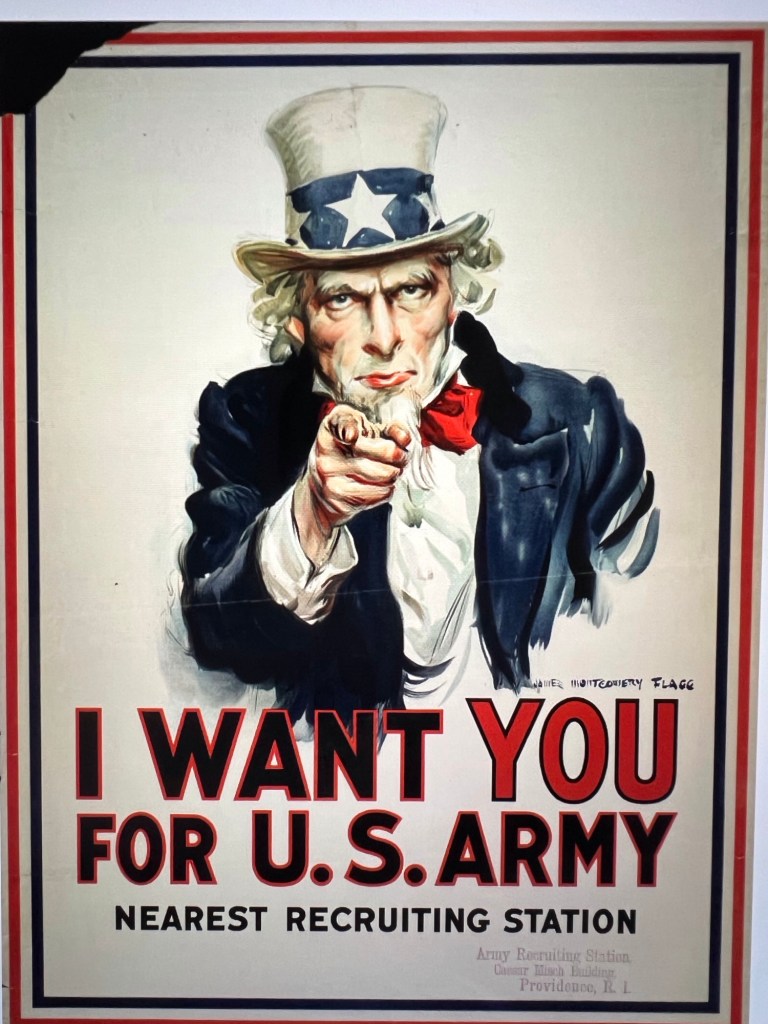
No, this is not “Uncle Sam Wants You” — that was 1940s America.
World War II Recruiting Poster
But apparently it’s also 2020s Russia . . . only it’s “Uncle Vladimir Wants You.” And “you” are any and all Westerners unhappy enough with your lives to buy into his snake-oil sales pitch.
In August of last year, Vladimir Putin established something called a temporary-residency visa, available to foreigners who oppose their native countries’ “destructive neoliberal ideological agenda,” and share “traditional Russian spiritual and moral values.” [Brett Forrest and Vera Bergengruen, Wall Street Journal, February 19, 2025.]
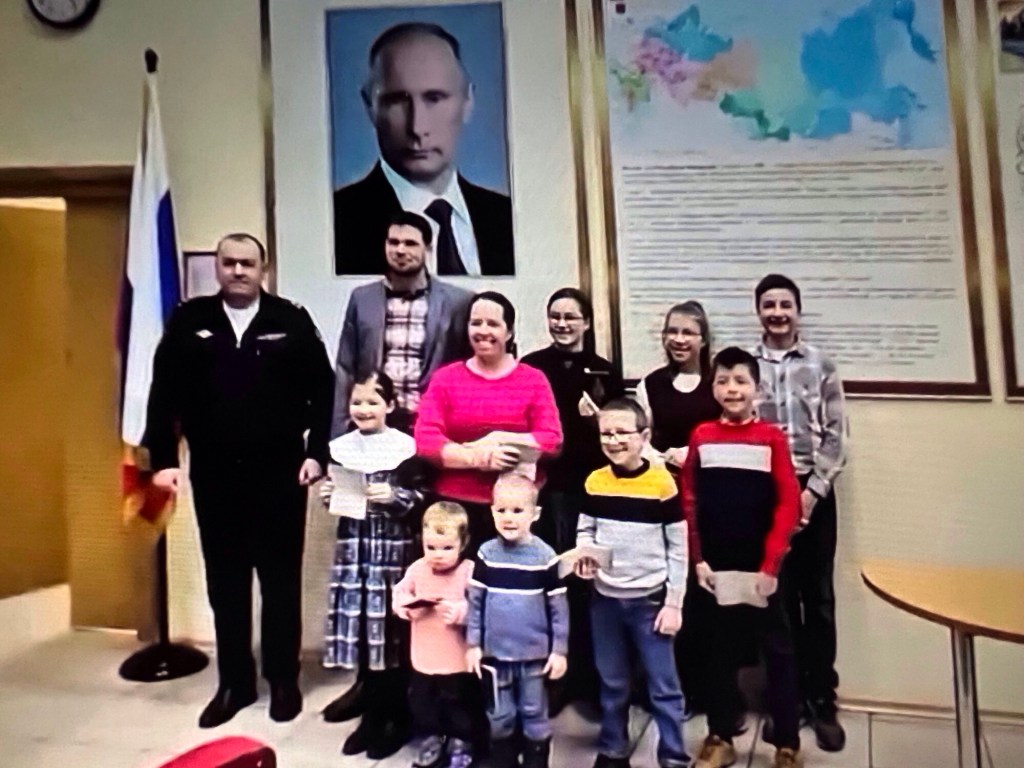
Well, that explains everything . . . everything about the Feenstra family from Canada, that is. All of my questions have now been answered — and my suspicions confirmed — as to their seemingly successful integration into Russian society, their relatively easy movement through the mass of red tape involved in becoming legal residents, their apparent financial comfort, and their popularity on social media.
The Feenstra Family, Receiving their “temporary residency” certifications
In their YouTube broadcasts, they have made frequent mention of an agency in their region of Nizhny Novgorod that has been of invaluable assistance to them in navigating the Russian bureaucratic obstacle course. And they have been outspoken in their desire to welcome more and more families such as theirs to the Russian “promised land.”
What was not mentioned was the breadth of the scope of Putin’s effort to increase Russia’s population — while at the same time giving himself yet another opportunity to stick it to the West. According to official (meaning, unreliable) Russian statistics, temporary residency has been granted to nearly 5,000 Westerners since the beginning of 2022. [Id.]
Russian Propaganda Poster in Italy: “Russia is NOT our enemy”
A new “Welcome to Russia” office has been established to make the transitions easier, and to publicize the emigration of the Western families. And — as a final “nyah, nyah” to the U.S. — the program is headed by member of Parliament Maria Butina . . . who, before returning home for a career in politics, was convicted in U.S. Federal Court in 2018 of acting as an unregistered foreign agent and sentenced to 18 months in prison (a far cry from the sentences handed down in Russia to foreigners convicted of similar charges).
Maria Butina
Another transplant — this one from Florida in the U.S. — is Joseph Rose. He moved to Moscow with his wife and their four children in 2022, and also broadcasts on YouTube. He has recently said:
“There is a place in this world where you can live traditional family values, like your best vision of 1950s America. That place exists right now, and it’s here in Russia.” [Id.]
Unbelievable!
Now, I can certainly understand why some people might, in these more liberal times, be searching for a place to live quietly, where they can adhere to their “traditional spiritual and moral values.” And it’s not unreasonable for them to be willing to move considerable distances to find that perfect place. If that’s the life that makes them happy, then more power to them; I hope they find their peace and joy.
But why would they ever think that Russia would be that place? Don’t they read? Have they not bothered to study a bit about Russia’s centuries-old history of autocracy, oppression, serfdom, communism? Do they not know what Vladimir Putin really stands for? Can they not see that, after 30 short years of relative freedom and an attempt to build a democratic society and a market economy, Putin has taken the country into a 180-degree turn — not just to dictatorship — but to the added tyranny of oligarchy? Have they, in their fear of “wokeness,” become deaf and blind to the truth?
It appears so. And that includes the Feenstras.
But what of the future? When, inevitably, the newness wears off, and Putin abandons them to get by as best they can without his special favors; and when their sons begin receiving military conscription notices; and when the world loses interest in their YouTube channel . . . what then?
*. *. *
In light of the number of emigres who have supposedly come to Russia in the past three years, I ask myself what makes the Feenstras so special that they have become the face of Putin’s “Welcome to Russia” program. And I believe it can be traced back to their arrival in Moscow just over a year ago, when they found their newly-opened bank account frozen, and the farm they had been promised to be non-existent. At that point, stunned and frightened, they took to mass media and told the world of their predicament, sparing no details.
And immediately, things changed. Their account was unfrozen; they were found shelter and ultimately a nice piece of farmland; and everything seemed to fall miraculously into place. And they thanked God for looking after them.
But Vladimir Putin does not like negative publicity. And I hope that Arend and Anneesa Feenstra are aware of the fact that their adopted president also has a long memory, and that their earlier tactic — going public — isn’t going to work twice.
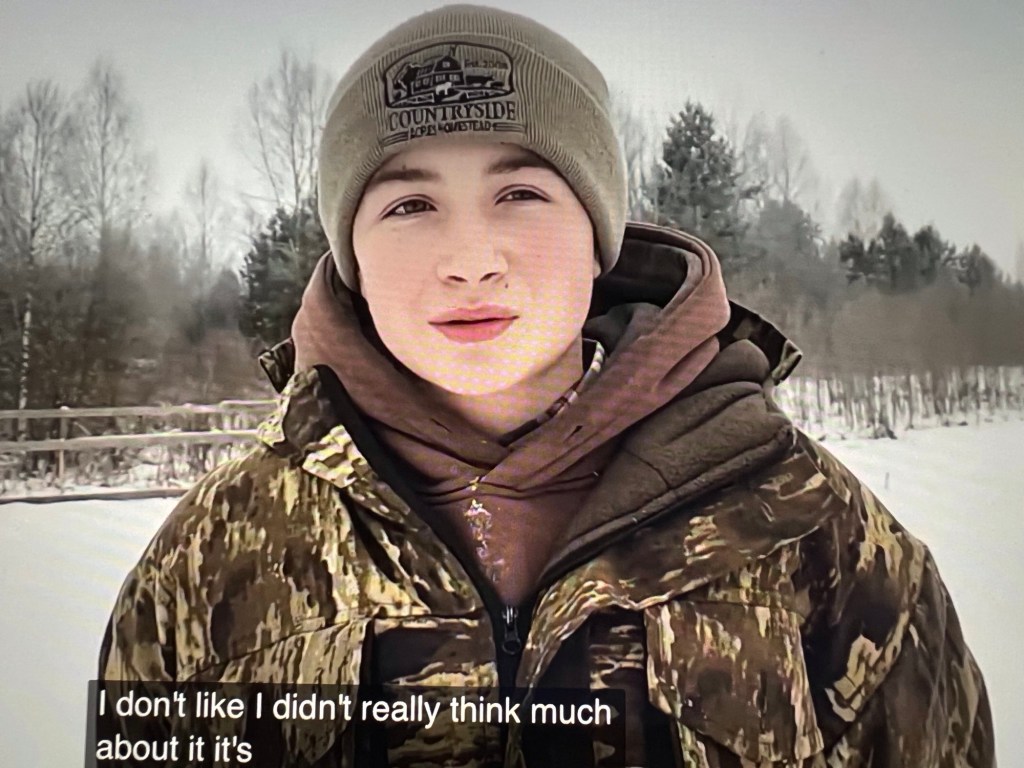
First it was the eldest daughter, Cora, talking to the camera. And now it’s 15-year-old son Wesley — a slightly shy yet delightfully personable young man — starring in that Russian social media hit, “Countryside Acres.”
Wesley Feenstra
It took the form of an interview, with Wesley and the unseen interviewer standing outdoors in the cold Russian February. At first I thought it might have been Cora asking the questions, as sort of a family-fun type of entertainment. The interviewer was female, and spoke perfect English, so it may indeed have been Cora — or even their mother, Anneesa. If that was made clear at the beginning of the video, I’m afraid I missed it.
In any event, the questions were obviously pre-prepared, and Wesley seemed to anticipate them, as his responses were not generally hesitant. He was first asked how he liked Russia, to which he said he liked it “pretty well.” He went on to say that the people were “a bit kinder” than in Canada, and that there seemed to be more opportunity in Russia because there are a lot of things that “can be improved” and that “people here haven’t found yet.”
That struck me as either a naively honest answer, or a scripted come-on for prospective emigres who might be having trouble finding work in their own countries. You know: “Come to Russia, the land of opportunity. We have lots of work, because we’re somewhat behind the times and need people to help us catch up.”
Well, I can tell you right now where they need help: Public relations. Because that sales pitch does not make me want to pack my bags and renew my passport.
Anyway, the interviewer then asked him what he missed about Canada. And for the first time, I heard one of the Feenstras mention the son/brother left behind in Canada. Wesley said — without going into detail — that he missed his brother and his grandparents. He also mentioned a cousin, and said it made him sad to think he might never again be able to visit them in Canada.
And tools; he misses tools. In Canada, they had all the tools they needed, he said; but here in Russia . . . not so much.
Brother, grandparents, cousin, and tools. This young man has his priorities straight.
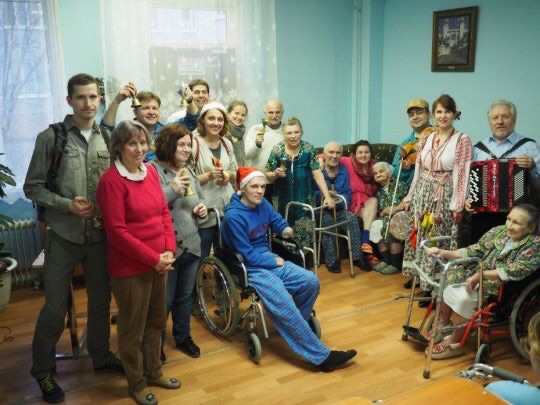
Does he have any friends in Russia? Uh . . . not so many, apparently. After thinking for a moment, he said there were two in Nizhny Novgorod, and of course, there is his family. The interviewer then prompted him about some old people in the villages, and he remembered that yes, he likes to visit with them. Again, there was no clarification of who these senior citizens are or what connection he might have with them; but I do recall Cora mentioning something similar in her earlier broadcast.
Community service, perhaps — helping out at the old folks’ home? I haven’t a clue.
Visiting a Russian Senior Citizens’ Home
When asked about plans for the future, most teenaged boys would talk about a chosen field of study or career path — engineer, musician, horse whisperer, whatever. But not our Wesley. Emulating his dad, he said he wants to get married and have a family, and to be a farmer and carpenter. But first he would hope to go to college, or to do “something important.” And he would “save up” to be able to buy his own farm. Nothing wrong with any of those ambitions, though he might want to narrow it down a bit.
There were some rather mundane inquiries about such things as his favorite food (Georgian khachapuri — a delicious sort of cheese pizza, sometimes topped with an egg); his least favorite thing (studying, as he would rather be active than seated at a desk); activities (swimming, driving the tractor, carpentry); and learning Russian (he understands it pretty well, but finds it difficult to speak).
Khachapuri
And then came a return to the big question: the one about missing his home in Canada. He started with a straightforward enlargement of his earlier comment, saying that he was sad to know he would never live there (not just visit) again. But then — as though suddenly remembering the correct answer to a test question — he smiled and said that he thinks of life in Russia as an exciting adventure.
But that wasn’t good enough for the interviewer, who continued to goad him, asking again and again if he missed Canada. He finally said that, while he does miss his relatives, he “prefers it here,” and “feels better” about the move after having lived there for a year.
Is he happy about the family’s having cleared the first hurdle toward eventual citizenship?
Well, of course he is. Was there ever any doubt?
*. *. *
And as the sun set on beautiful Countryside Acres Farm in idyllic Nizhny Novgorod, Russia, Wesley Feenstra was free to rejoin his family indoors, having given his premier performance as a shill for Vladimir Putin’s “Come To Russia” campaign.