It is often said that the road to hell is paved with good intentions. And that certainly proved to be the case when, on this date in 1920, the 18th Amendment to the U.S. Constitution went into effect, and the era of Prohibition came roaring in. America was officially “dry.”
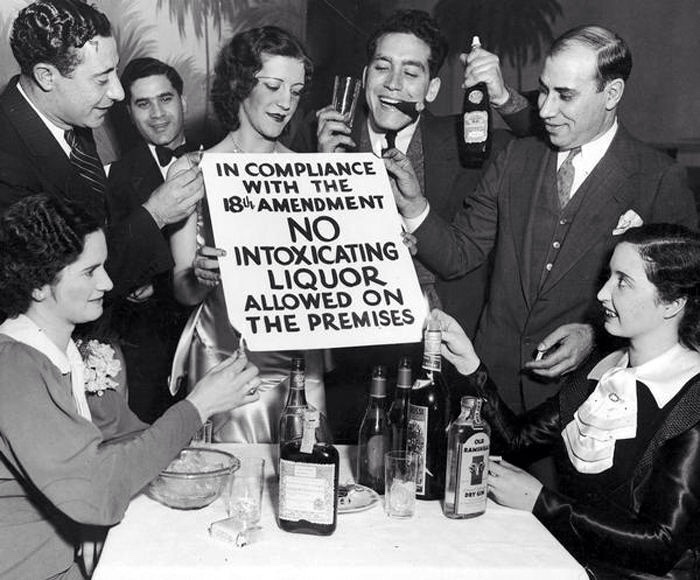
There was a reason they called it the Roaring Twenties. It wasn’t just the jazz, and the short skirts, and the women’s right to vote (19th Amendment, same year). It was also the speakeasies, the bootleg liquor, and the gang wars that arose as a result of that well-intended 18th Amendment.
Party Time in a 1920s Speakeasy
And wow! Did that ever backfire!
Originally aimed at reducing “crimes, corruption, social issues, prison and poorhouse taxes, and to improve health and hygiene in the United States” [calendarr.com, January 17, 2025], what it actually did was create a whole new set of the same problems, along with an additional one — a sharp decrease in government revenues that had once been received by way of taxes from the manufacture and sale of alcoholic beverages.
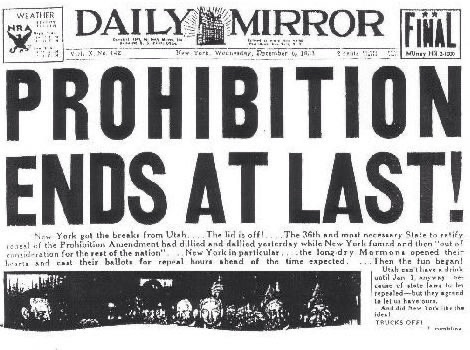
It took 13 years and a Great Depression, but in 1933 Congress finally woke up and passed the 21st Amendment; the bootleggers were put out of business; and people were once again able to buy beer, wine and liquor that they could be pretty certain wouldn’t kill them — consumed in moderation, of course.
*. *. *
Other than that, not much else seems to be worth commemorating on January 17th. But looking ahead, I can suggest some excuses for planning a party or two during the second half of January, such as:
January 20th – U.S. Inauguration Day. You may or may not be inclined to celebrate this one; it’s entirely up to you. But if you are one of those who won’t be making merry on this day, take heart . . . because the very next day is:
January 21st – National Hugging Day. And there’s nothing more comforting than a big, sympathetic hug from a like-minded individual. So find a soulmate, lean in, and hug away. It’s only for four years.
January 22nd – National Blonde Brownie Day. In case the hugs didn’t do the trick, a sugar rush might help.
January 27th – National Chocolate Cake Day and National Bubble Wrap Appreciation Day. A double catharsis for those still in mourning from the 20th.
January 31st – National Hot Chocolate Day. To wash down the chocolate cake, of course. And just because it’s more chocolate.
The Stuff of Dreams
*. *. *
I haven’t looked any farther ahead on the calendar, but I’m hoping there will be something in February on the order of:
National Snap Out Of It and Get Back To Eating Healthy Day. Because by the end of this month, we’ll all have ten pounds of sugar-induced bloat to get rid of.
As I read yesterday’s “This Day In History” column, I focused on an item that brought back a vivid personal memory:
“January 16, 1991: The Persian Gulf War begins.”
It was the memory of a death, a quick round-trip visit to New York, a memorial service, a surprise message from the Kremlin . . . and the start of a war in the Middle East. It was quite a day.
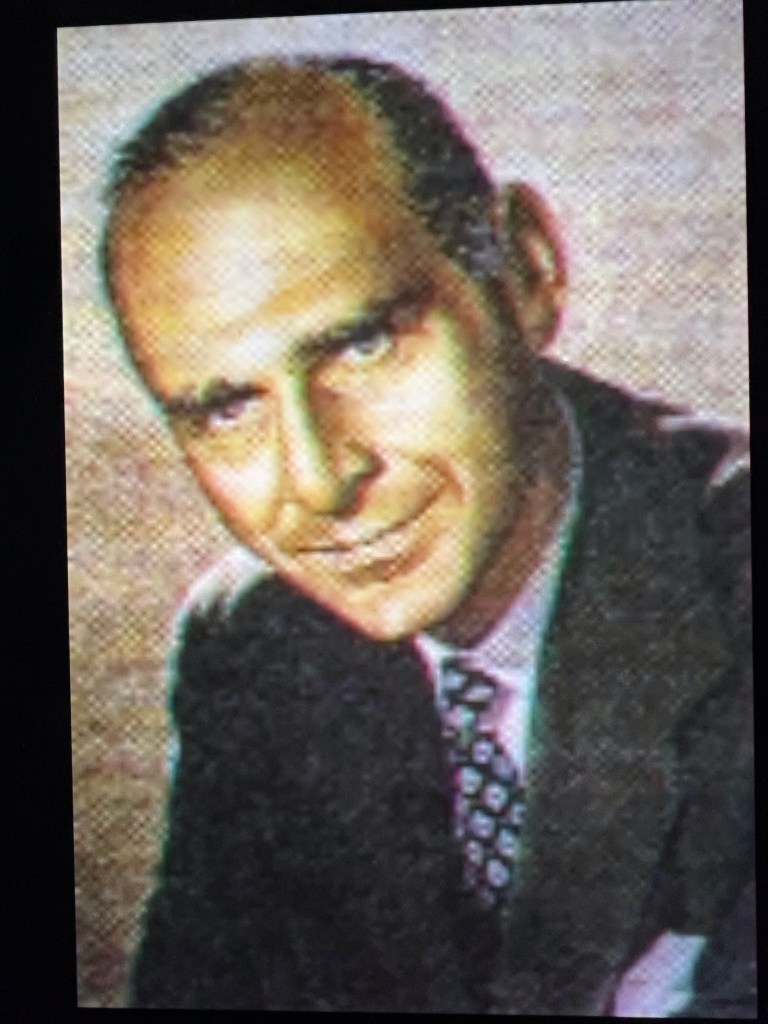
And immediately I was transported back to a time when our law firm had just lost one of its senior, and most distinguished, partners: David A. Morse: former U.S. Undersecretary of Labor; for 22 years Director-General of the United Nations International Labor Organization (ILO); old-world gentleman; and one of those people you could honestly say you were privileged to know.
David A. Morse (1907-1990)
Although he spent a great deal of time in our Washington office, New York was his home town, and that is where his memorial service was to be held. A group of us from the D.C. office arranged to travel to New York that morning for the service, and I offered to go along with Mr. Morse’s assistant, Diana Minghi, who was also my good friend and in need of a bit of moral support. Leaving my car at Washington’s Union Station, we took an early express train, arriving at Penn Station in plenty of time for the service at the prestigious Temple Emanu-El on upper Fifth Avenue.
Temple Emanu-El
We had expected a good turnout; but we were not prepared for what awaited us upon entering the synagogue. There was a security detail that would have sufficed for a president or a monarch — metal detectors, bag searches, and a complement of guards positioned every few feet around the sanctuary. What was going on?
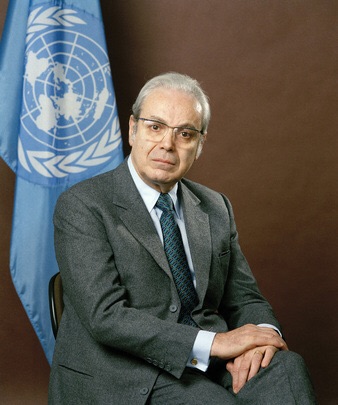
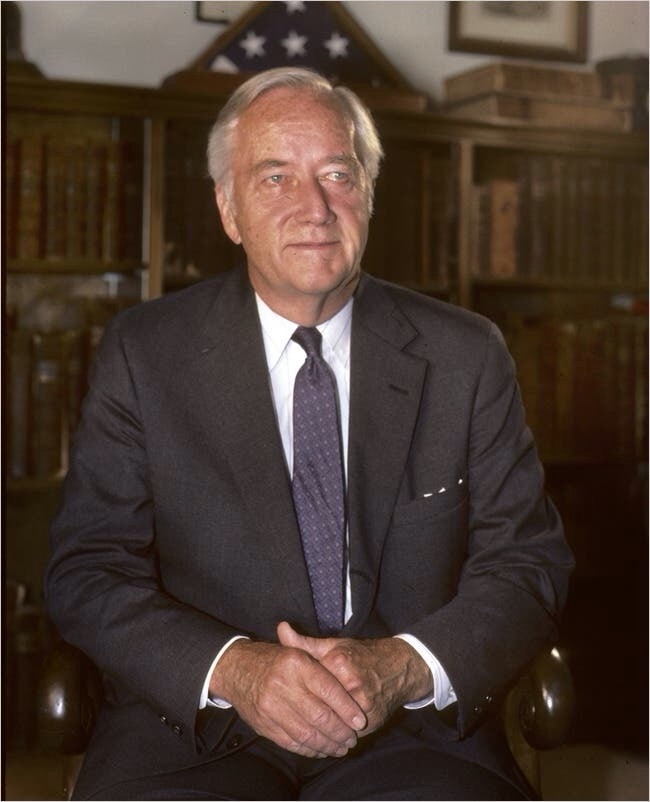
We had part of the answer to that question once we were seated and looked at the program for the service. Among the speakers — in addition to former Maryland Senator Charles McC. Mathias, who had joined our firm following his retirement from politics — was then Secretary-General of the United Nations Javier Perez de Cuellar, who was there to honor the former head of the ILO.
So the big, scary-looking men lining the walls of the sanctuary were United Nations security. That made sense . . . but it still seemed a bit excessive for a private event.
Javier Perez de Cuellar
And then the service began. It was — as are most funerals — sad, inspiring, and infused with memories both sorrowful and funny. When it ended, our group from Washington gathered together, hailed a couple of taxis, and headed for the New York office where a luncheon had been organized for us.
*. *. *
Even the worst of days can have its moments of levity; and the day of David Morse’s memorial service was no exception. I was standing with a group of our New York people in the office when Senator Mathias walked by. Spotting me, he stopped and walked toward us. He had flown in from Paris that morning on the Concorde, following a business trip to Moscow, in order to speak at the service, and was looking a bit jet-lagged.
“Sir Senator,” as I used to call him, had a droll sense of humor, and could drag a story out endlessly while still keeping your attention. As he began speaking, no one could have imagined what was coming. He started out slowly:
“Yesterday morning . . .” (looking at his wristwatch) “. . . at about this time . . . I was in Moscow. In fact, I was in the Kremlin. In the Great Hall of the Kremlin. At a reception for President Gorbachev. I was talking to some people, when suddenly I heard a booming voice call out to me from across the room: ‘Senator Mathias! Say hello to Brenda Lipson for me!’”
At which point, Sir Senator stopped talking and just stared at me, a slight smile showing itself in his eyes. And all I could do was stare back, open-mouthed . . . as did every other person in the room. And after a few seconds it hit me: I knew who he was talking about.
“Dmitri?” [Not his real name.]
The Senator nodded.
“Oh, he didn’t!” I exclaimed in disbelief.
He nodded again, and went on:
“Oh yes, he did. No ‘Hello, Senator.’ No ‘How are you, Senator?’ No ‘Good to see you, Senator.’ Just, ‘Say hello to Brenda Lipson for me.’”
And we both laughed, leaving the bystanders wondering who in hell I knew in the Kremlin, and why he would think to send me such a vocal greeting.
Senator Charles McC. Mathias
I never did enlighten them, but my anonymous “admirer” in Russia was someone I had met, through our firm’s commercial dealings on behalf of clients, when he had been stationed at the Soviet Embassy in Washington, and who was now back in Moscow on President Gorbachev’s staff. I just grinned and left them in the dark, probably imagining that I was leading some sort of intriguing double life. I figured a little mystery never hurts anyone’s reputation.
And it did break up an otherwise depressing day.
*. *. *
But by now, you’re no doubt wondering what any of this has to do with Desert Storm. Actually . . . everything.
Because after we had left the New York office, and Diana and I had arrived back at Union Station, I still had to drive her home. It was my long-standing habit to immediately turn on the car radio to my favorite music station, and as I did, we heard — instead of soothing music — a special news bulletin.
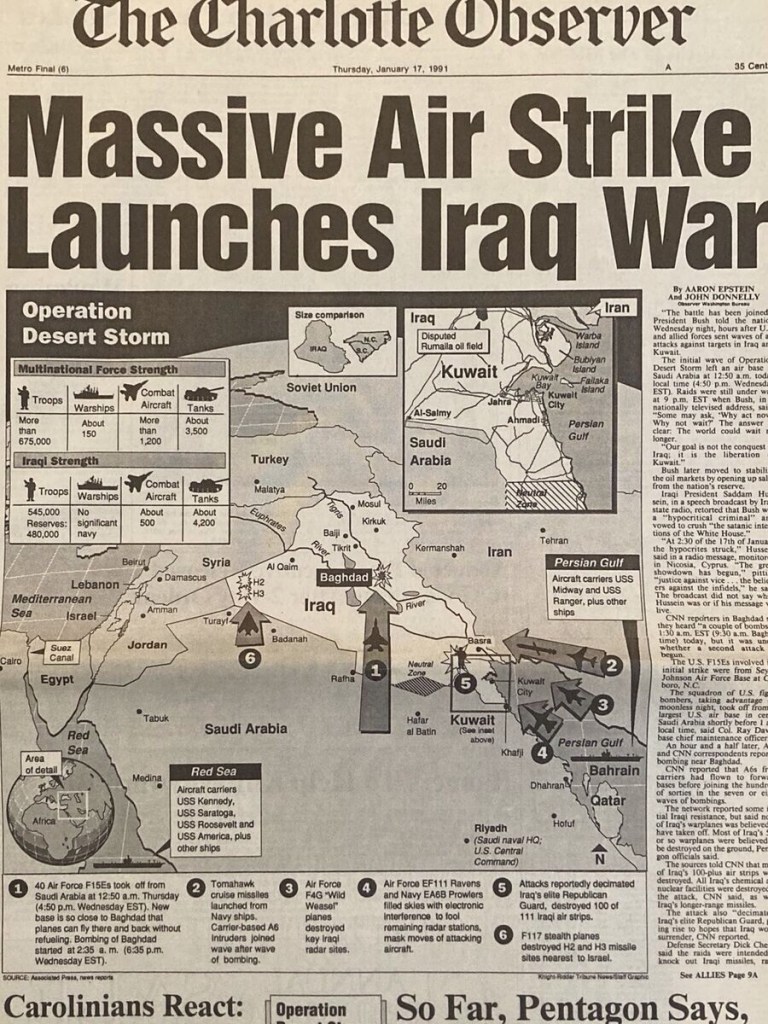
At midnight (Iraq time), U.S. and British forces had begun bombing Iraq in retaliation for its five-month occupation of Kuwait. The deadline for Iraq’s withdrawal of troops had expired; they had been warned; they had ignored the warnings; and we followed through.
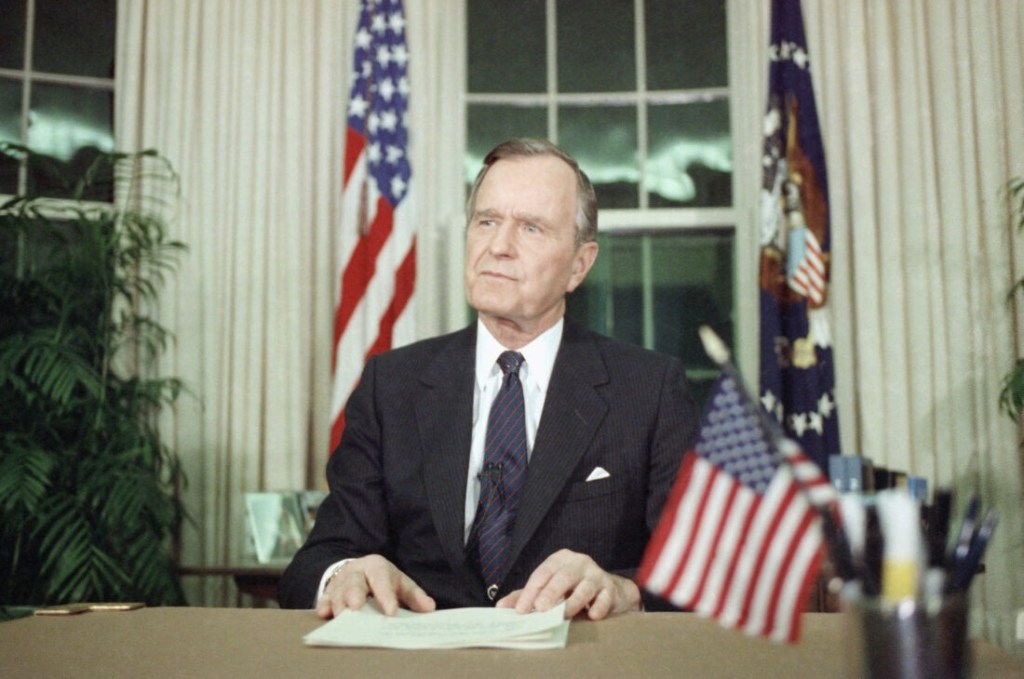
President Bush had announced the start of Operation “Desert Storm” while we were attending a funeral, eating lunch, and riding a train from New York back to D.C. There were no cell phones in those days, and no internet; we had to wait until we could turn on a TV or radio to find out what was going on in the world.
President George H.W. Bush
We sat in that garage for a full ten minutes, listening to the broadcast, before I could begin the drive home. It was the perfect dismal end to an already dismal day . . . and it finally explained the extent of the security for Perez de Cuellar, who had been giving his eloquent eulogy while knowing that yet another war was about to be launched in the Middle East.
And it was the day I received a hilarious message from a friend in Moscow by way of a retired U.S. Senator following a funeral at a Fifth Avenue synagogue in New York some 250 miles from my home. It was a day I wouldn’t be likely ever to forget.
Life is endlessly surprising . . . as it should be.
In his farewell speech to the nation yesterday, U.S. President Joe Biden expressed his concern that our country is descending into oligarchy. And this, of course, immediately brought to mind the existing oligarchy in Vladimir Putin’s Russia.
In the 1990s — the “Yeltsin years” — Russia’s economy was in free-fall. The Soviet Union had ceased to exist as of Christmas Day 1991; and in the absence of a solid structure to replace it, most of its assets were up for grabs by those shrewd enough to know what to grab, when to grab it, and for how much (usually pennies on the dollar).
And thus was born a whole new category of Russian big shots who became known, rather derisively, as the oligarchs. Suddenly, a handful of billionaires found themselves wielding previously unheard-of personal power; and Boris Yeltsin seemed quite content to let it happen as he watched his country’s economy growing with the creation of new industries and services.
But in December of 1999, Yeltsin suddenly resigned the presidency, passing the torch to his then Prime Minister — a considerably younger, previously unknown former KGB officer and career opportunist from St. Petersburg named Vladimir Putin — to complete his term of office. And in March of 2000, Putin ran in his first election and won. Today, 25 years later, he’s still in power . . . and shows no signs of letting go. Ever.
He has kept his position as absolute ruler of Russia — some liken it to being self-appointed “Tsar for Life” — by various heavy-handed, even ruthless means, including pushing through constitutional amendments to extend the number of years for each term of office, and the number of times he can be reelected.
And by reeling in the oligarchs.
One of his early acts upon first being elected was to call a closed-door meeting in the Kremlin during the summer of 2000, summoning 21 of the wealthiest men in Russia to hear what the future had in store for them. These men were not what one would call pillars of society; they had gained their wealth and power through shady deals, corruption, and sometimes even murder. But there was a new kid in town, and the rules were about to change.
What Putin told them that day shook them — and the foundation upon which they stood — to their very core:
“I want to draw your attention to the fact that you built this state yourself, to a great degree, through the political or semi-political structures under your control. So there is no point in blaming the reflection in the mirror. So let us get down to the point and be open and do what is necessary to do to make our relationship in this field civilized and transparent.” [Greg Rosalsky, NPR News, March 29, 2022.]
The deal he offered them was this: bend to his authority, stay out of his way, and they could keep their mansions, super-yachts, private jets, and multibillion-dollar corporations. [Id.]
And most of them did just that. But some didn’t; and they didn’t fare well. Some — like Vladimir Gusinsky and Mikhail Khodorkovsky — ended up in prison, were forced into exile, or both. Others — such as Boris Berezovsky — died in suspicious circumstances.
Bottom line: Vladimir Putin no longer has an oligarch problem. Easy.
*. *. *
And today I ask myself if this is the future that President Biden foresees for America under the incoming administration, with its innately autocratic leadership and its “Billionaires’ Club”?
Okay, bad pun. But in this January of sub-zero temperatures in half the world, blistering heat in the other half, continuing wars in various and sundry places, and TikTok fans in the U.S. facing serious withdrawals, I thought a smile might be a welcome way to start the day.
And so I present to you “the world’s happiest animal” — the quokka.
Quincy the Quokka
An Australian marsupial, he is one of the smallest wallabies, about the size of an average house cat, and lives in family units, hiding from predators in swampy places with heavy vegetation. He loves a diet of shrubs, berries, seeds and succulents, and can store fat in his tail for those times when food may be scarce.
Look at him. (I’m just guessing it’s a male because I don’t see a pouch.) Look at his perpetual smile and those big brown eyes that radiate love and trust. Those stand-up ears, the freckles, and the adorable little arms and fingers.
I have dubbed this little fellow Quincy, and I want to bring him home with me, though it would undoubtedly be illegal. Still, I can look at his picture, imagine how sweet it would be to have a little cuddle, and I feel happier somehow. Don’t you?
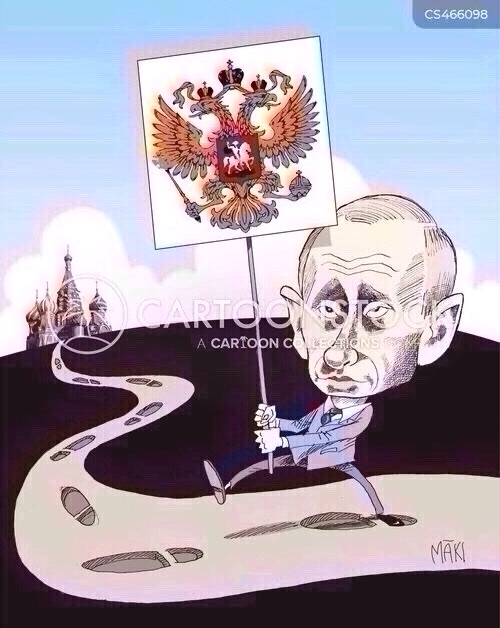
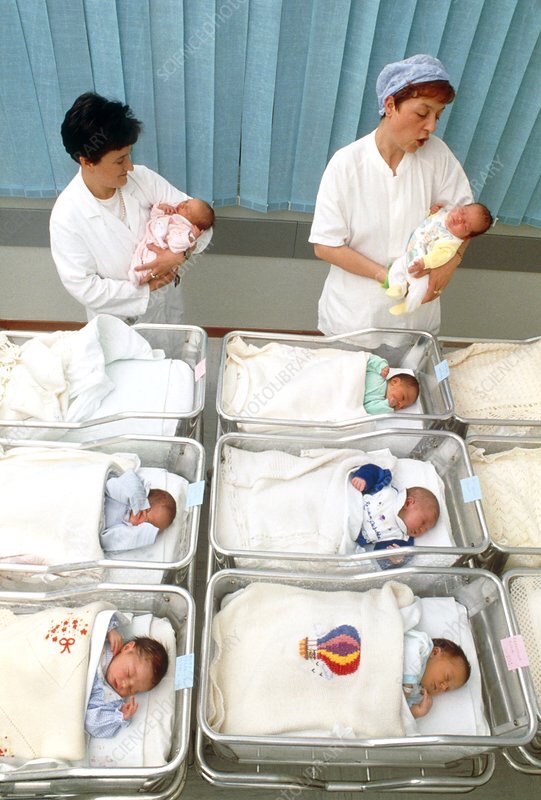
Vladimir Putin — amidst much fanfare and hoopla — declared 2024 to be Russia’s “Year of the Family,” shamelessly touting the alleged joys and benefits of having more children than you could ever conceivably afford, take care of, or find space for. His purpose was to get everyone busy replacing all the souls that have been lost in recent years as a result of his “special military operation” in Ukraine and other causes (such as suicide, and mass migration from Russia to almost anywhere else in the world).
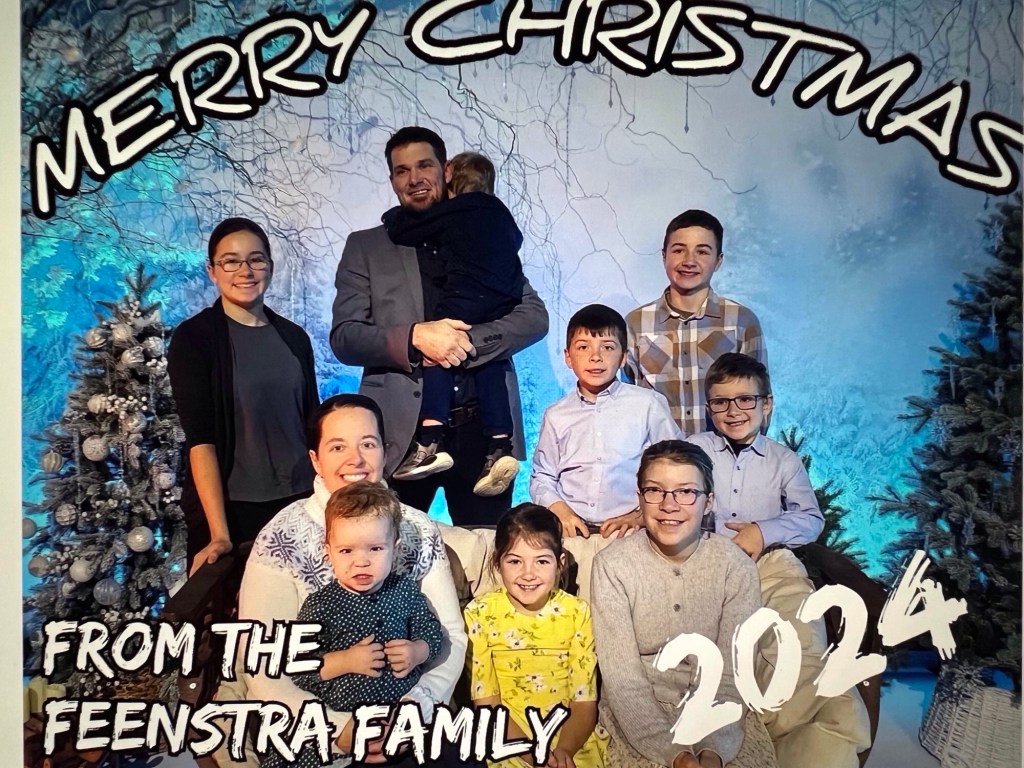
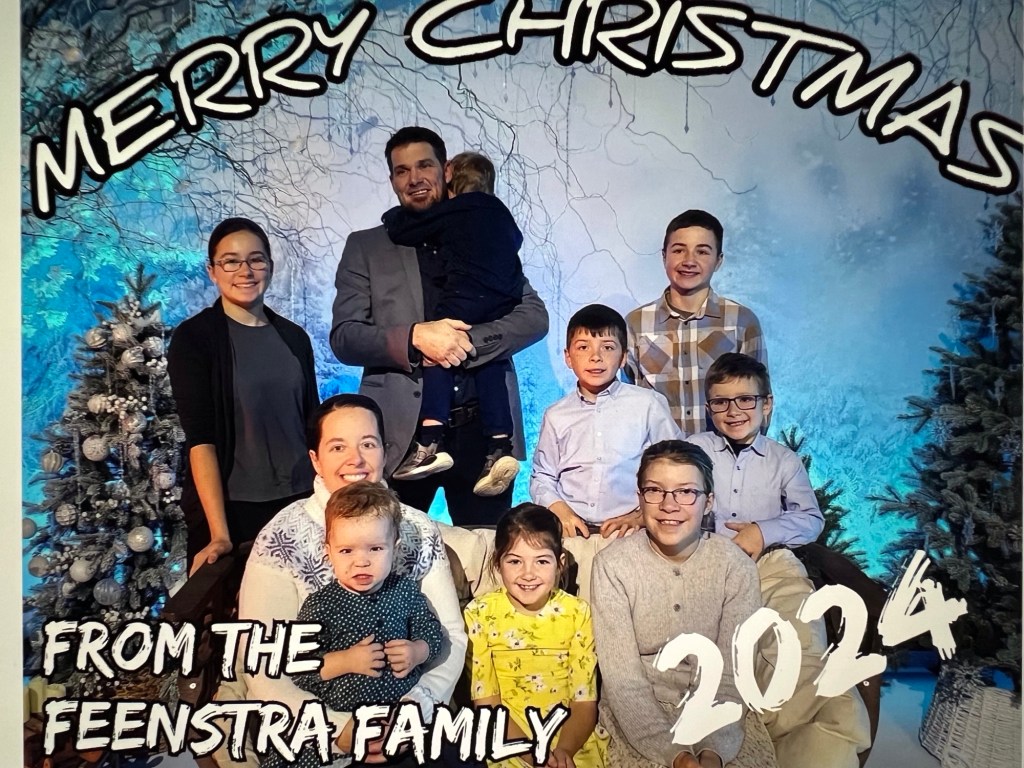
And what a grand year-long party it was! There was even a competition to choose the outstanding families of 2024, with award ceremonies in various locations throughout the country . . . one of which, at Nizhniy Novgorod, included Putin’s favorite new emigre family from Canada, Arend and Anneesa Feenstra and the eight little Feenstras.
In one region — Chelyabinsk — the local authorities even offered a benefit of 1,000,000 rubles ($10,000) for producing an offspring, provided both parents are studying at a higher education institution in the region. [Chris Rickleton, RFE/RL, January 13, 2025.]
Never mind that the student couples would presumably be quite young — perhaps in their early twenties or even late teens. And forget about the difficulties involved in balancing studies, some sort of paying job, and caring for a child. And don’t worry about the stress of building toward a post-graduate career, or perhaps enjoying life as a young couple for a few years before settling down to family life. Just crank out those kids, kids.
I don’t know how successful Putin’s year of encouragement and incentivization has been in terms of the number of babies born or on the way; but it is apparent that 2024 was only the beginning. Because — in addition to the already-established, rather draconian fines for so much as disagreeing with or speaking against his baby-boom obsession — he has come up with even more means of increasing the population of Mother Russia.
Would anyone be surprised to learn that criminal prosecution is among them?
More than a dozen regions have passed laws banning “coercion to abortion,” calling for fines of up to 100,000 rubles (around $1,000) for doctors and employers who have “forced” advice on pregnant women. In fact, women are telling of being given advice against it when visiting medical clinics for legal abortions, or having the procedure delayed under one pretext or another. [Id.]
Anti-abortion films are being shown in movie theaters, with special screenings arranged for government employees, university students, and even for school children. In addition, a new subject — Family Studies — was introduced in schools at the beginning of the current school year to teach children that “family is the foundation of any state.” [Id.]
And last year, an amendment was proposed to the law “On the Basics of Healthcare in the Russian Federation” to include the concept of rights “before as well as after birth.” [Id.]
Now, this has nothing to do with whether you’re anti-abortion or pro-choice; that’s a strictly personal, individual matter. Rather, it’s about one man — Vladimir Putin — taking away another long-standing legal right for the wrong reasons.
*. *. *
All of this follows on the heels of 2022’s legislation prohibiting “LGBT propaganda.” And added to Russia’s list of extremist organizations in March of 2024 was a nameless — in fact, non-existent — “international LGBT social movement and its structural units,” thereby officially criminalizing any support of LGBT rights.
But wait . . . there’s more.
Divorce has long been rampant in Russia — which, of course, flies in the face of Putin’s promotion of family values. So in September, legislation was submitted to the State Duma subjecting spouses filing for divorce to a three-month waiting period to attempt reconciliation, and mandating psychological consultations for both parties. The law, if passed, would also require the couple to undergo “reeducation” if they have underage children, or if the divorce is contested by either spouse. [Id.]
And what about cases of domestic violence? Apparently not an issue. It’s all about increasing the population, at any cost.
Is it any wonder I’m having flashbacks to George Orwell’s “1984”?
*. *. *
Now, there’s certainly nothing inherently wrong with promoting family values: honesty, loyalty, decency, and respect for one another are of supreme importance. In fact, don’t we all give in to a little soggy sentimentality when we watch the old movies and TV sitcoms about big, happy families? And remember the Andy Williams Christmas shows, with all the parents, grandparents, siblings, children, neighbors, and anyone else who happened to drop by, laughing and singing and making merry? There’s nothing more comforting than sharing your life with people you love, and who love you . . . right?
But that’s not always the way it works out. Life intervenes, with its day-to-day problems, differences of opinion, personality clashes, illnesses, financial difficulties, job issues, and so on . . . and so on . . . and so on. And we each have to handle our problems in our own way, according to our individual circumstances.
The bottom line is, not everyone wants a big family; and not everyone is cut out to have a big family. And it’s none of the government’s business how many children you have, when you choose to have them, or if you choose to have any at all . . .
. . . unless, of course, your government is controlled by a heartless autocrat.
If Vladimir Putin wants to stop the population drain, perhaps he should just stop sending hundreds of thousands of young men to Ukraine to become casualties of his lust for empire. Then let Mother Nature take her own course.
On the heels of the news that TikTok may be banned in the United States if its present parent company, ByteDance, doesn’t sell its U.S. assets by January 19th, along came the inevitable rumors concerning prospective buyers. And of course, the first name that came to mind for many — in fact, probably most — people was . . . drumroll, please . . .
Elon Musk.
Well, that’s no surprise. After all, who else would have both the money and the chutzpah to be able to pull it off?
Frankly, as a non-TikTok user, I don’t care who buys it. And I’m not about to get into a discussion here as to the free-speech-vs-national-security issue. But if it did turn out to be Musk’s newest venture, I can’t help wondering what he would rename it. Under his stewardship, “Twitter” inexplicably became “X” . . . so what would be TikTok’s fate?
I don’t claim to possess an imagination anywhere close to Musk’s. Let’s face it: not many people do. Honestly . . . do you know anyone else who would name a child “X AE A-12,” “Techno Mechanicus,” or “Exa Dark Siderael”? I mean, aside from the issue of cruelty, that’s just weird.
However, I did manage to come up with a couple of possibilities for his consideration . . . not that he needs my help. But just for fun, how about one of these:
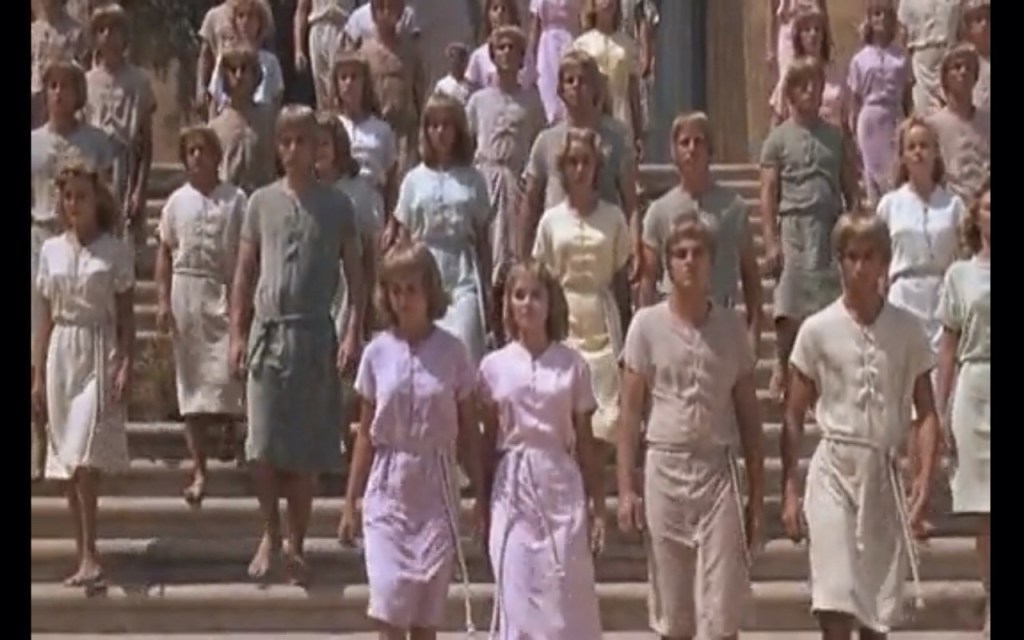
Elon’s Eloi: In the H.G. Wells novel, The Time Machine, the Eloi are descendants of the British elite, which should fit nicely into Musk’s recent obsession with all things British.
Eloi
Toys Я We: Yes, it’s a knock-off name, but it would be a grammatically correct appellation for Musk’s newest plaything.
QJZ: No particular logic here — just a meaningless, Musk-ish, unpronounceable grouping of consonants. And since they do happen to be the most valuable letters on the Scrabble board, they would probably appeal to his inherently money-centric nature as well.
Donnie: An homage to you-know-whom, because it’s what narcissistic BFFs do to feed one another’s egos.
. . . and finally . . .
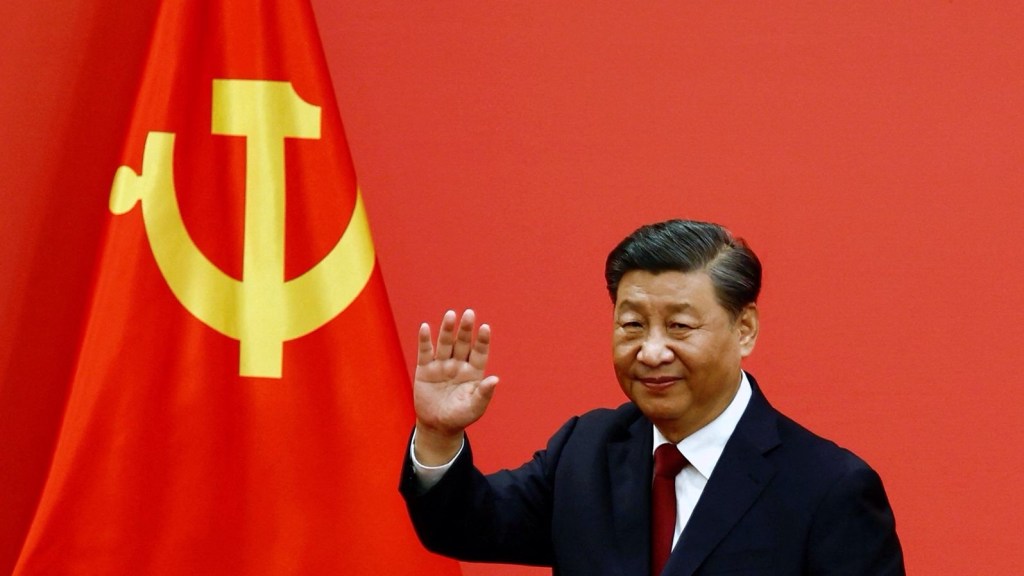
Screw-You-China: This one should be self-explanatory, and completely in line with the incoming administration’s philosophy of the best way to conduct international relations.
Chinese President Xi Jinping
As an afterthought, it occurs to me that he might even name it Mexico or Canada, since — if his best buddy has his way — one or both of those names could soon be available for use.
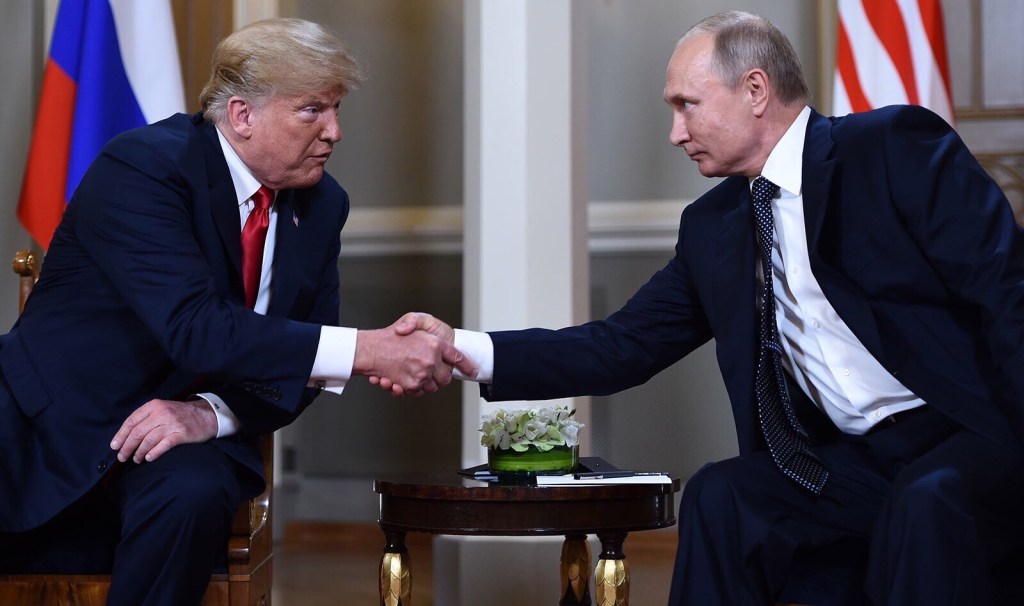
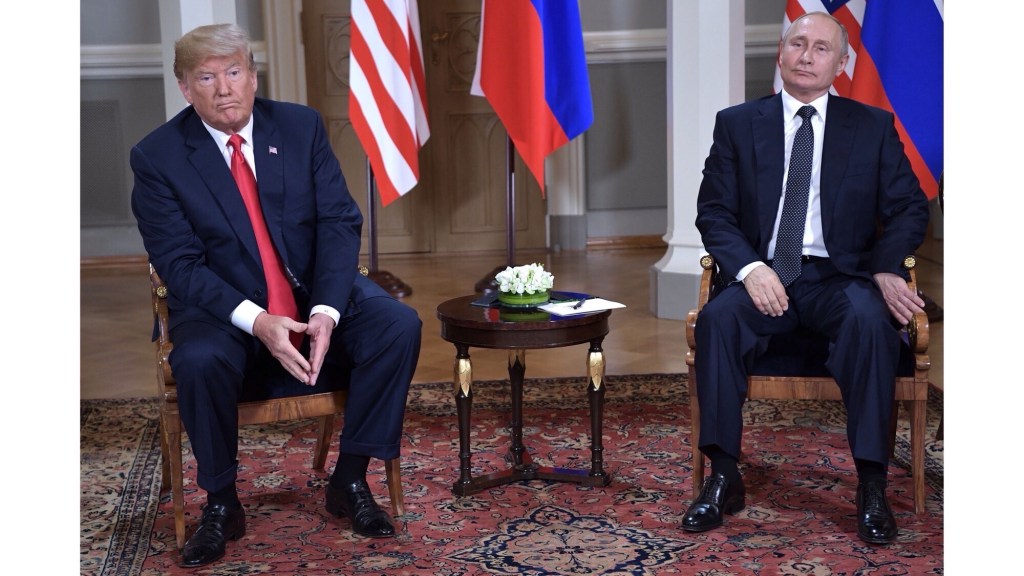
Step right up, folks . . . plenty of front-row seats available on your nearest smart phone or tablet . . . date and time TBA. But all indications are that it is going to happen.
Will it be an instant replay of this?
Or will there be a distinct chill in the air?
That, of course, remains to be seen, as both of the participants are playing their cards close to the chest. In fact, they’re still sparring like a couple of school kids:
“He says he wants to meet as soon as possible.” – DJT
“No, I never said that. But I’m open to negotiations.” – VVP
So let’s turn to the actual grown-ups for some clarification. For example, Mike Waltz — President-elect Trump’s appointee as national security adviser — commented on Ukraine’s demands that Russia withdraw from all presently occupied territories as follows:
“I just don’t think it’s realistic to say we’re going to expel every Russian from every inch of Ukrainian soil, even Crimea. President Trump [jumping the gun by about five days] has acknowledged that reality, and I think it’s been a huge step forward that the entire world is acknowledging that reality. Now let’s move forward.” [Mike Eckel, RFE/RL, January 14, 2025.]
And eight time zones away in Moscow, Foreign Minister Sergei Lavrov indicated that his boss might be willing to listen, as the incoming (i.e., Trump) administration has “started to acknowledge the realities on the ground.” But he added: “We will be waiting for specific initiatives. President Putin has said on multiple occasions that he is ready to meet, but no proposals have been made yet.” [Id.]
And back to Trump himself, on January 13th: “I know he [Putin] wants to meet and I’m going to meet [him] very quickly. I would’ve done it sooner but … you have to get into the office. For some of the things, you do have to be there.” [Id.]
Yes, you read that correctly: “For some of the things, you do have to be there.”
But moving on . . .
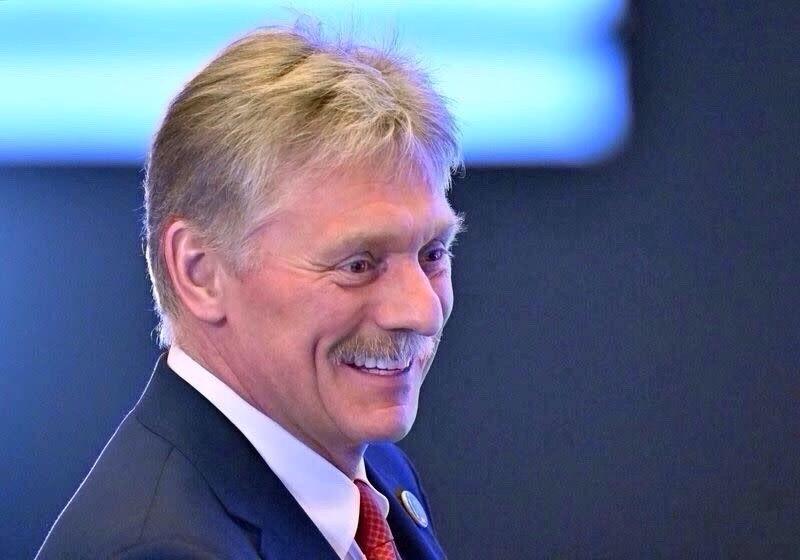
Finally, we hear from the one who has been absent from the news for a while, and whose dulcet tones have been sorely missed . . . by me, at least: Kremlin spokesman Dmitry Peskov. All he had to say to reporters, shortly before Lavrov’s news conference, was that there were “no specifics” agreed on as yet for a meeting between Trump and Putin. [Id.]
Well, that was helpful, Dima.
Dmitri (“Dima”) Peskov
So, it looks as though . . . quite possibly . . . just maybe . . . if all goes according to plan . . . and provided the conditions are just right . . . there may be . . . at some future date . . . sooner or later . . . an actual meeting. Ta-da!
But no one really knows for sure.
And if there is to be a meeting, where will it be held? Presumably, it would have to be in Moscow or a Russia-friendly country, since Putin is still subject to an ICC arrest warrant in most of the rest of the world. So, will it be a closed-door, one-on-one session, or will there be aides and lackeys present?
An Assortment of Aides and Lackeys
Again, there is much to be decided. So stay tuned, folks — I’m afraid that’s the best we can do for now.
After following this Canadian family of ten throughout their first year of adjustment to their new home in Nizhniy Novgorod, Russia — during which time most of the narration has been provided by the father of the large brood, Arend Feenstra — we have been treated to a solo presentation by the eldest daughter, Cora-Lynn, whom I have frequently heard addressed simply as Cora.
Cora-Lynn Feenstra
At 16, Cora is a charming and poised young lady, who says that many of the followers of her family’s YouTube program have asked about her impressions of life in Russia, how she occupies her time, what her interests and goals for the future are, etc. And so she was on camera to fill us in — clearly reading, at least partially, from a prepared script.
Cora’s emphasis was on two life goals: becoming a wife and mother, and serving God. She has been raised in a very religious, conservative family, and seems to accept this as her preordained role in the world. She talked about the supreme importance of “faith, family and freedom,” saying that these were the reasons the family had decided that Russia was the best place in the world for them to live their lives.
Her days appear to be filled with work, work, and more work. She says she helps with whatever is needed: cleaning, cooking, laundry, looking after the younger children. Although she didn’t specifically mention it, earlier videos have shown her, along with the other children, working on the farm during the warmer seasons as well, and the endless construction work on the house and farm buildings.
In addition, she teaches the little ones reading and writing, studies Russian online, and enjoys sewing and reading. There is no talk of a social life, other than occasional trips to the villages to interact with the older people and practice her Russian.
Then there was the obligatory homage to Russia: how glad she is that they moved there; how happy she is with the way things are in Russia; and how grateful she is for the opportunity she has been given. There was a brief moment of nostalgia when she mentioned missing her grandparents; but then she immediately changed course and said again that she is excited to “strike out on new adventures,” believing this to be “a better place to live.”
And then it was back to talk of fulfilling God’s plan for her. She wants more than anything to be a wife and mother, which she considers the best way for her to honor God. But if He has other plans for her, she will, of course, accept His will . . . though she still hopes there will be room for marriage and motherhood. I suppose her mother makes it look easy.
She closed with a couple of well-worn aphorisms about light at the end of the tunnel, and sunshine after every storm . . . which sounded strangely out of context after her glowing accolade to life in Russia.
*. *. *
I’ve tried for a year to look on the bright side of this family’s move to the land of tsars and dictators, and I’m saddened to say that I haven’t been able to find it. They are a very close-knit group, and obviously share a mutual love and respect that many of us would envy. That’s a wonderful thing; but they would have that anywhere. Why Russia?
Because of the “freedom” to live their lives as they choose, away from the “evils” of liberalism? Because of the “opportunities” to live fuller, more comfortable lives on a farm in Nizhniy Novgorod than they did on their farm in Canada? To provide their children with a wider range of opportunities and choices for the future?
That’s what they were promised, and what they prayed for and anticipated when they made their choice. So far, they have behaved as is expected of them, and are being treated royally.
We all have them, if we live long enough: those compartmented times of our lives that stand out separately and distinctly in memory, like little soap operas in our minds.
And sometimes a single compartment will contain multiple spaces, each a memory of its own. As in the case of my Russia Years.
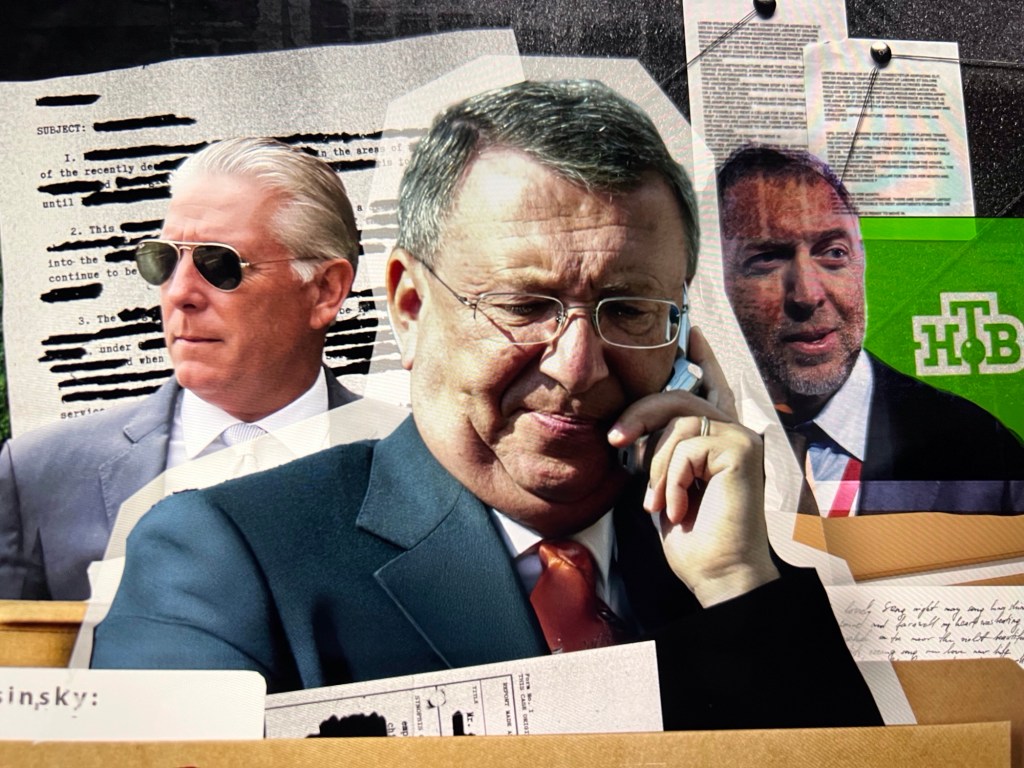
Yesterday morning, as I began my customary wandering through the daily news reports, one of those compartmented spaces came flashing back before my eyes, in the person of former Russian oligarch Vladimir Gusinsky.
As I read the rather lengthy and convoluted tale — now the subject of an FBI investigation — of Gusinsky’s past and recent machinations, involving a former diplomat, other oligarchs, a dead Russian press minister, an estranged wife, a retired FBI agent, and a mountain of debt, I thought — not for the first time in the last 30 years — how lucky I was that some unseen guardian angel had been looking over my shoulder back in 1992, keeping me from becoming even marginally involved with Gusinsky’s vipers’ nest.
Vladimir Gusinsky
His tale, excellently set forth by Mike Eckel and Todd Prince of RadioFreeEurope/RadioLiberty (RFE/RL) (January 13, 2025), makes fascinating reading, worthy of a John Le Carre novel. What makes it so meaningful to me, however, is how close I came back then . . .
*. *. *
February, 1992. It was my first solo trip to Russia, for a week of meetings with officials — arranged by the Russian Embassy in Washington — to seek out potential partners for an educational program I was preparing to undertake in Moscow. Those were the days immediately following the breakup of the Soviet Union, when private businesses were being established and the need for well-trained office personnel had become glaringly obvious. It was my plan to establish a business school to provide that training.
On one cold, snowy morning, I was enjoying breakfast in the coffee shop of the Slavyanskaya Radisson Hotel before my first meeting of the day, when I happened to look up in time to see a familiar face from home: an attorney from Washington, Randy Bregman, who at the time was a member of the prominent law firm of Arnold & Porter (A&P) — one of the first U.S. firms to jump into the promising new Russian market on behalf of their clients.
Slavyanskaya Radisson Hotel, Moscow
I called out to him, taking him completely by surprise; I was probably the last person he would have expected to see in Moscow. After talking for a while about my reason for being there, he told me that Arnold & Porter had established a consulting/public relations company — separate from the law firm — called APCO. And then he had an apparent revelation.
APCO was in need of an American manager for its new Moscow office, and I was just the person for the job . . . if I might be interested.
“If”??!!! There was no “if” — it was the answer to my prayers. A job with an American firm, in the very place where I was trying to create a business school . . . the perfect opportunity had just fallen into my lap.
Randy had one caution that he felt compelled to mention. APCO’s Russian partner, a man he referred to simply as “Vlad,” could be difficult to get along with. But knowing my background of working with challenging people, he was sure I could handle it . . . if anyone could.
And so we agreed that he would notify the A&P partner in Washington in charge of hiring for APCO to expect a call from me when I returned. We shook hands on it, and parted company.
I could barely contain my excitement when I returned home at the end of the week and made the phone call to the A&P partner, whose name I believe was Sarah. Our meeting a few days later was so disastrous, I believe I intentionally blocked her name from my mind.
Never mind her officious, off-putting manner. More importantly, she had no idea of the challenges of working in Moscow. She wanted to hire one person to fill two distinctly different — and mutually exclusive — jobs, and at a salary that was ludicrous for even one of those jobs. The skill sets required for an office manager are very specific . . . and very different from those of an IT specialist. Yet she was looking for someone who could do both, and for compensation that was an insult.
The bottom line, obviously, is that I thanked her for her time and left her office downcast, my dream of an overseas job crushed by someone who was under-qualified for her own job. It was one of the biggest disappointments of my life.
Until about eight years later.
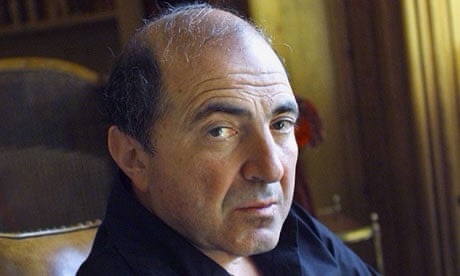
I was reading a book about one of Russia’s earliest and wealthiest oligarchs, Boris Berezovsky, and the notorious manner in which he and his fellow multi-millionaires had made their fortunes during the wild years of transition in Russia throughout the early ‘90s. In it was a mention of one Vladimir Gusinsky, who had prospered through his association with various ventures . . . including the American company known as APCO.
Boris Berezovsky
And suddenly I knew just how lucky I had been when I walked out of that interview with Sarah (or whatever her name was). Because Vladimir Gusinsky was the “Vlad” of whom Randy Bregman had spoken all those years before . . . the Russian partner who was “difficult to get along with” . . . and who was, eight years later, on the wrong side of Russia’s new president, Vladimir Putin.
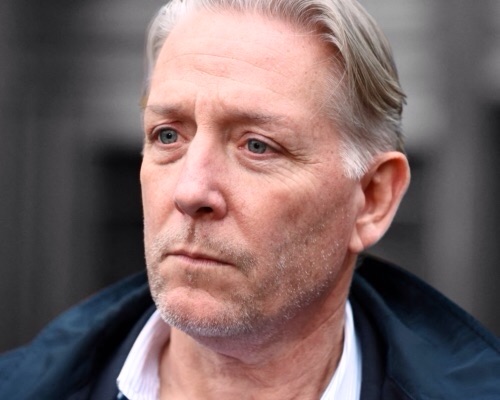
The same “Vlad” who has ever since been living in exile; has been “dogged by debts, disputes, and divorce”; and is now under scrutiny by the FBI for his association with a number of interesting characters, including a retired FBI agent, Charles McGonigal, who was arrested in 2023 and charged with conspiracy to violate U.S. sanctions and money laundering. [RFE/RL, id.]
Charles McGonigal
*. *. *
Those years that I fondly call my “Russia Years” were exciting, sometimes nerve-wracking, often frustrating, and supremely educational. So many people — large corporations, law firms, accounting firms, and individuals such as myself — saw a huge opportunity there, and gave it our best shot. Some succeeded (at least until Vladimir Putin’s invasion of Ukraine in 2022); a lot more didn’t. But I think it’s safe to say, we all had fun.
I wonder, though . . . If I had had any inkling then as to how it would all turn out — the criminal activities of the Russian oligarchs, the downslide of the Putin regime into totalitarianism, and the return to a Cold War atmosphere — what I would have done differently.
But I do know one thing for certain: I owe that unseen guardian angel a huge debt of gratitude for keeping me safe through it all, so that I can view today’s events from the secure perspective of an outsider and take comfort in having dodged that bullet.
On a rather gloomy, chilly Monday, I decided to look for some bright events to commemorate on this January 13th; but all I came up with were these three:
Korean American Day: A celebration of the first arrival of Korean immigrants to the United States, and of the continuing contributions of the 1.8 million present-day Americans of Korean descent to our culture and society. A very nice honorific for a great segment of the American population, and the continuing success of our legal immigration program.
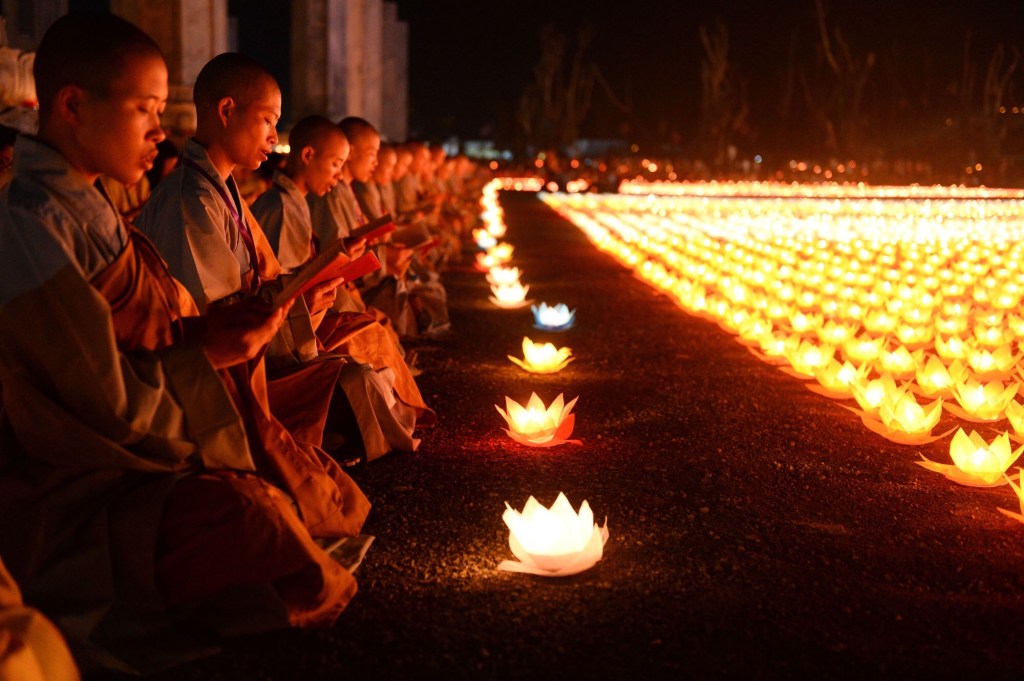
Mahayana New Year: This was completely new to me. It turns out to be the celebration of the New Year for all of the folks out there who adhere to the Buddhist faith; so . . . Happy New Year!
A Buddhist New Year Celebration
And finally:
Stephen Foster Memorial Day: I’m not sure why this date was chosen to memorialize Mr. Foster, as he was born on July 4, 1826, and died — at the tender age of 37 — on January 13, 1864. But here it is, for whatever reason, on January 13th.
In any event, it seems fitting to pay tribute to the man known as “the father of American music,” who after a century and a half, is still remembered for such classics as Oh! Susanna, Camptown Races, Old Folks At Home (Swanee River), My Old Kentucky Home, Jeanie With the Light Brown Hair, and Beautiful Dreamer.
And let us not forget the immortal Old Black Joe.
Well . . . nobody’s perfect.
Stephen C. Foster
And to prove it, he also left, as part of his legacy of around 200 songs, a number we’ve likely never heard . . . and that I, for one, would rather not. But judge for yourselves from some titles:
Bury Me in the Morning, Mother Don’t Bet Your Money on de Shanghai The Great Baby Show I Would Not Die in Spring Time I Would Not Die in Summer Time [Okay, that leaves fall and winter] If You’ve Only Got a Moustache Little Mac! Little Mac! You’re the Very Man My Wife is a Most Knowing Woman Parthenia to Ingomar [A Greek-Swedish love letter, perhaps?] Poor Drooping Maiden [Um . . . ] A Soldier in de Colored Brigade [Different times, indeed] What Must a Fairy’s Dream Be [Your guess is as good as mine]
And so on. There were, of course, a great many songs about the Civil War (1861-65), a number of romantic ballads, and enough homages to his mother to keep Sigmund Freud happy for quite a while.
A most prolific songster, was Mr. Foster. And so — no matter how corny his work may sound to us now — we salute him for being the first to reach No. 1 on the Hit Parade.
























 The Blog About Everything … and Sometimes Nothing