2/5/25: Blowing Up Moscow


It’s not like the London Blitz of World War II; there are no bombs dropping from enemy planes flying over the city of Moscow . . . although there is the occasional Ukrainian drone.

The explosions hitting Moscow recently are much more personal, directly aimed at specific individuals, and with the added “benefit” (to the perpetrators) of being likely to take out a few bystanders, destroy a bit of property, and instill fear in the Russian people.


The question is: Who is doing it?

There have been two instances in just the past three weeks, both involving the Russian military. The first, previously reported on, was Igor Kirillov, commander of the Russian chemical, biological and radiation defense troops, who was killed when a motor scooter parked in front of his apartment building was detonated by remote control as he and his aide exited the building on December 17, 2024. The aide also died in the explosion.

In that case, Ukraine’s intelligence agency, the SBU, did not deny responsibility; in fact, an SBU source has “informally” stated that the blast was “the result of an operation” by their agency. [Steve Gutterman, RFE/RL, February 3, 2025.]

Igor Kirillov

*. *. *

And on Monday, February 3rd, Armenian-born Armen Sarkisian was killed, along with one other individual, by an explosion in the high-end Alye Parusa (“Scarlet Sails”) residential complex in northwest Moscow.

Alye Parusa (“Scarlet Sails”) Complex, Moscow

Sarkisian was a long-time member of notorious crime groups, who worked his way up during the early 2000s to found his own paramilitary force known as “Arbat” — short for Armenian Battalion — which is now part of Redut, a mercenary network backed by Russia’s military intelligence agency, the GRU. [Id.]

He has been wanted by Ukraine since the first Russian invasion in 2014, charged with aiding the Russian forces, and for “organizing murders in the center of Kyiv.” [Id.]
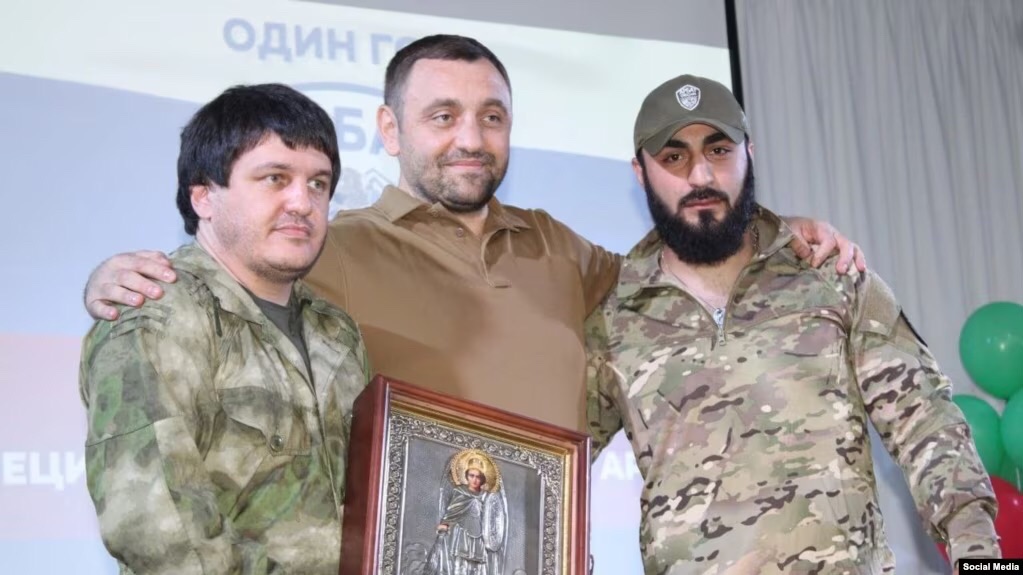
Armen Sarkisian (Center)

In this case, there is not yet a clear-cut picture of responsibility; but there is a good bit of finger-pointing taking place. On the one hand, because of Sarkisian’s criminal activities, this may have been just one more Mafia-style hit by a rival gang, of the sort that was so commonplace in Russia in the 1990s.

But on the other hand, it may have been another assassination by Ukrainian forces of Russian commanders considered responsible for so much of the devastation of the past three years. No “credit” has as yet been claimed for this hit, and the investigation is ongoing.


*. *. *

While the frequency of these incidents seems to be increasing, they’re really nothing new. These types of killings, along with attacks by alleged terror groups such as last year’s slaughter at the Crocus Music Hall, have all the earmarks of the “Wild East” days of Moscow in the 1990s. It brings back memories of the months I lived and worked there in ‘93: the burnt-out cars by the side of the road; the daily reports of shootings, kidnappings, and robberies; the limousines with darkened windows that you knew belonged to the new oligarchs and their security details.

In other words . . . the good old days.

“Russian Mafia”

And, in the words of the old (1974) Peter Allen song, it seems that indeed, “everything old is new again.”

Just sayin’ . . .

Brendochka
2/5/25

2/4/25: The View From My Pillow


Having had all I could take of current world news for now, I lay in bed this morning, staring at the ceiling and trying to think of something pleasant to write about for today’s blog. The best I could come up with was a search through today’s date in history for some interesting bits and pieces that — due to the fact that they are in the past — were not likely to be upsetting.

I was at least partially right.


First, the good stuff:

1789: George Washington unanimously elected first U.S. president. Probably the last time the Electoral College was ever unanimously in agreement on anything. But at the time, there were only 69 electors, representing the 11 states that had ratified the U.S. Constitution. Simpler times, indeed.

1826: “The Last of the Mohicans” is published. A classic.

1913: Civil rights icon Rosa Parks is born. Good news for the future.

1938: Disney releases “Snow White and the Seven Dwarfs.” Probably not politically correct nowadays, but in my view, you still can’t outdo Disney for sheer joy.

“Hi-ho, hi-ho . . .”

*. *. *

Next, a bit of quirky news:

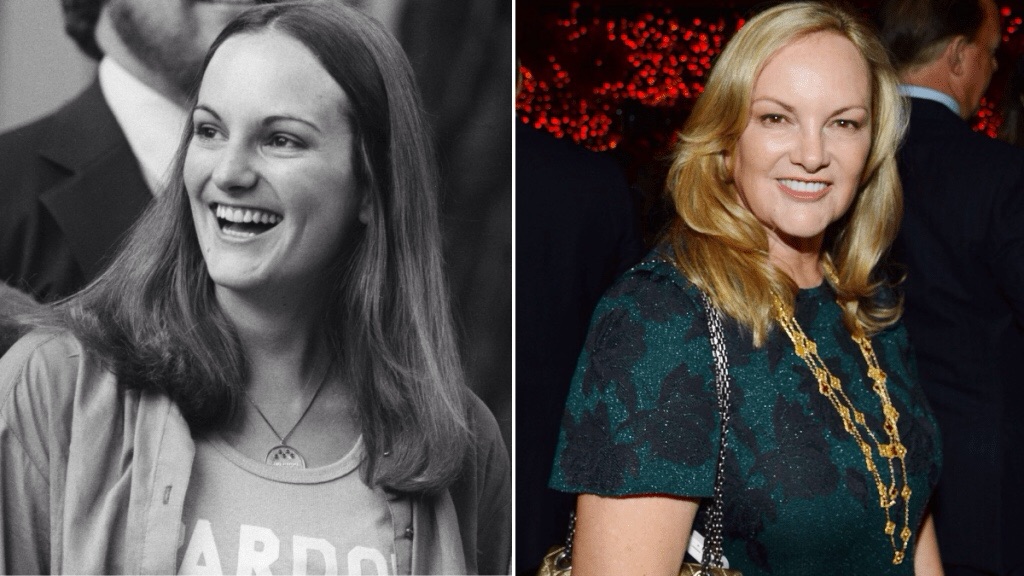
1974: Patty Hearst kidnapped by the Symbionese Liberation Army. Following payment of ransom by her father, media tycoon Randolph Hearst, surveillance videos of bank and store robberies showed Patty — in what appeared to be a classic example of Stockholm Syndrome — having willingly joined with her captors in their crime spree. Eventually captured by authorities, she was convicted of armed robbery and served 21 months of a seven-year sentence before having her sentence commuted by President Jimmy Carter. She later married her bodyguard, Bernard Shaw, and lives with him and their two daughters in New York and Connecticut. In an amusing twist of fate, Shaw is now head of security for . . . wait for it . . . the Hearst Corporation.

Patty Hearst – Then and ow

*. *. *

And some good news/bad news, depending upon your view of social media:

2004: Facebook launches. This one is still open for debate.


*. *. *

Unfortunately, even looking to the past, I found items related to man’s continuing inhumanity to man:

1861: States meet to form Confederacy. Leading to the start of a bloody four-year conflict that — emotionally, at least — never really ended.

1915: Germany declares war zone around British Isles. World War I, of course.

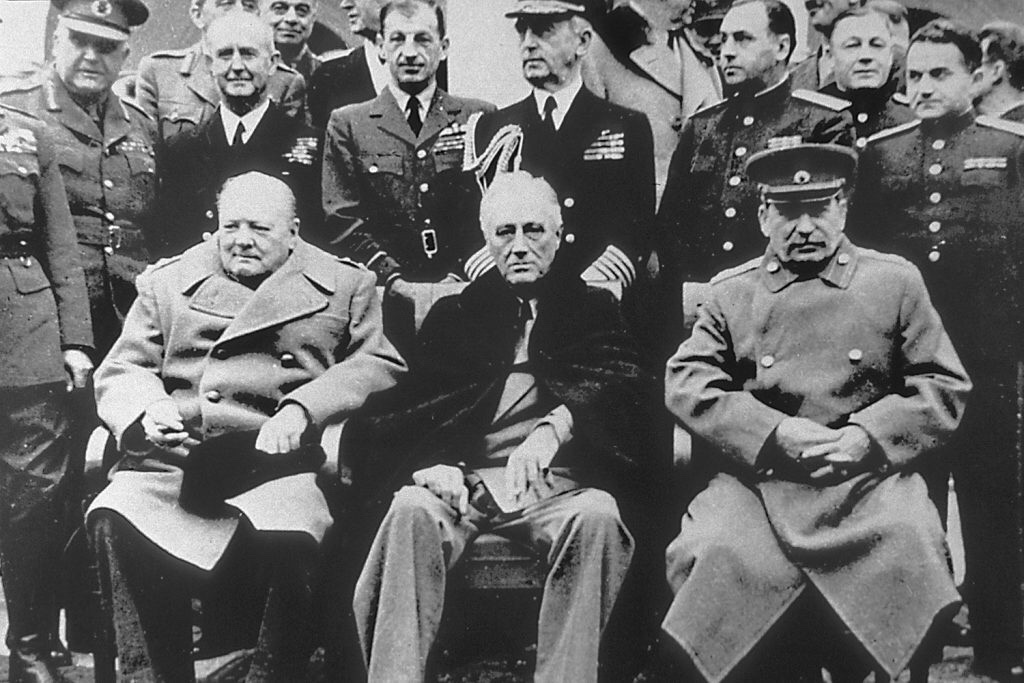
1945: Yalta Conference foreshadows the Cold War. With World War II drawing to an end, this historic meeting among U.S. President Franklin Roosevelt, British Prime Minister Winston Churchill, and Soviet leader Joseph Stalin would seem to have been good news. But, with each of the three leaders determined to fulfill their respective agendas, compromises were necessary, and issues remained at the close of the conference that ultimately led to the decades-long Cold War . . . another one that, like the many-headed Hydra of mythology, seems destined never to die.

Churchill, Roosevelt and Stalin at Yalta

*. *. *

And, as though we needed another war:

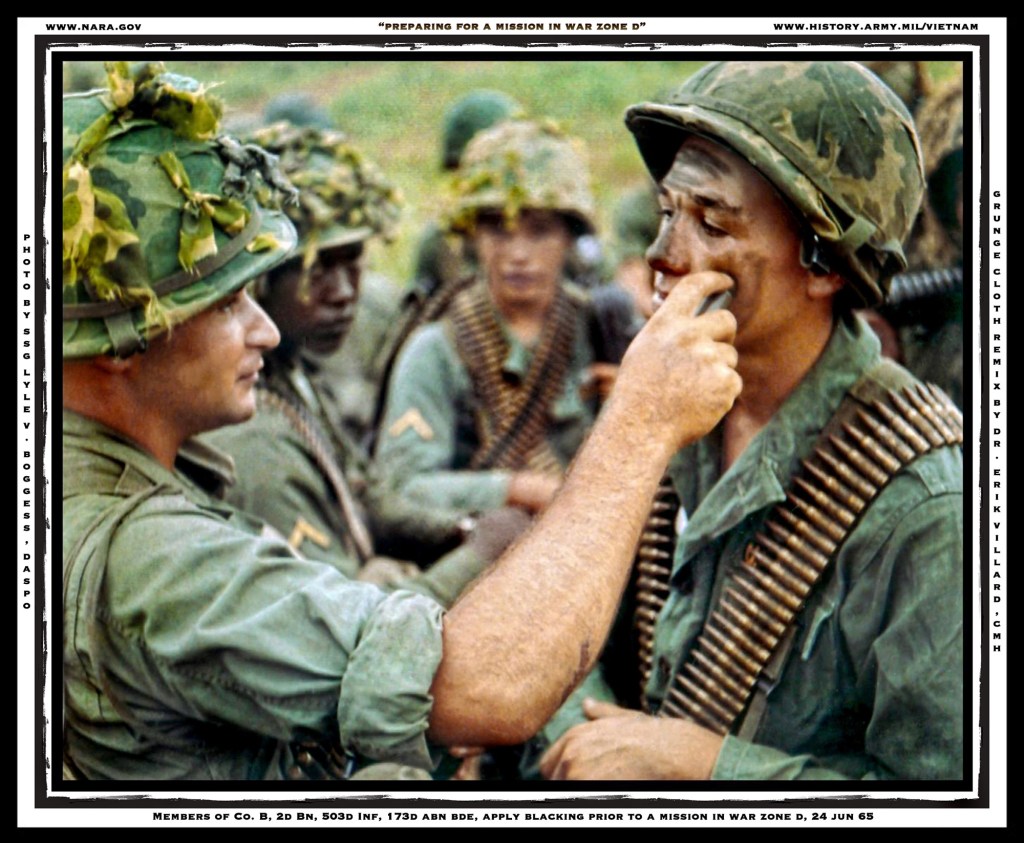
1962: First U.S. helicopter is shot down in Vietnam. By any standards, a major disaster that would drag on for another 13 years.


*. *. *

I think I’ll go back to staring at the ceiling now, while I contemplate which of today’s news flashes are screaming most loudly for my attention.


Just sayin’ . . .

Brendochka
2/4/25

2/4/25: Either Polonius Was Wrong … Or He’s Been Misapplied For Centuries


When his son, Laertes, was leaving home for university, Polonius famously gave him a good deal of fatherly advice on how to conduct his life as an honorable man — with caution, common sense, and above all, with integrity. And he ended with this bit of wisdom:

“This above all: to thine own self be true,
And it must follow, as the night the day,
Thou canst not then be false to any man.”
(William Shakespeare, Hamlet, Act I, Scene 3)

Polonius and Laertes (from the play)


Excellent advice. But what Polonius was obviously counting on was that his son was inherently honorable, and that by being true to his “own self,” he would be certain to behave honorably.

But what if Polonius had been wrong about Laertes? What if, underneath a benign exterior, his son had been a lying, cheating, heartless, misogynistic, power-mad, narcissistic scumbag who wanted from life only what benefited him, no matter how many other lives — or nations — he destroyed along the way?

Then being true to himself would take on an entirely different meaning, wouldn’t it? Certainly, the effects of his behavior would not be at all what poor, deluded Polonius had in mind for his beloved offspring.

Indeed, Laertes would more likely have ended up as did poor old King Richard III — glorying in his evil nature:

“And thus I clothe my naked villainy
With odd old ends stol’n out of holy writ,
And seem a saint, when most I play the devil.”
(William Shakespeare, King Richard III, Act 1, Scene 3)

Image of King Richard III

Now, does that description remind you of anyone . . . covering his villainy with meaningless, purposely deceptive speeches “stol’n out of holy writ”?

Just sayin’ . . .

Brendochka
2/4/25

2/3/25: I Have A Friend In New Zealand

He’s a new friend. We’ve never met, and doubtless never will, as I live halfway around the world in America. But we read each other’s blogs, and sometimes comment on them, always with the greatest mutual respect. And I know that if we ever did meet, we would become the best of friends.

Much like myself, he writes on a variety of topics. And what he has written about his country has stirred my interest in a land to which I frankly had not given a lot of thought in the past — probably because it doesn’t make the headlines with tales of war and other horrors that fill the daily news reports from so many parts of the world. So I have ordered a book on the history of New Zealand, which Amazon has promised to deliver by tomorrow, and I can’t wait to dive into it.

Meet the Kiwi: National Bird of New Zealand

In the meantime, though — and by one of the rare true coincidences in life — I happened upon an online article a few days ago about a mountain in New Zealand — Mount Taranaki — that has been granted personhood.

And I thought: “What on earth . . . ?!!!”

I know that in some languages — French and Russian, to name just two — many inanimate objects are referred to as possessing either masculine or feminine gender. But my native language is English, and to me, an inanimate object is neuter . . . plain and simple. Dogs and cats have genders; birds and fish have genders; dishes and silverware do not.

Nope . . . never gonna happen!

But on the other hand, who are we to say that a mountain is inanimate? It gives life and shelter to countless flora and fauna. Its winter snows provide springtime moisture to the lands below. The Maori — the indigenous people of New Zealand — consider Taranaki Maunga (the mountain’s Maori name) to be their ancestor. It is a pristine, snow-capped dormant volcano, and a popular spot for hiking and snow sports. And it is not the first natural feature to be granted personhood in New Zealand, that honor also having been awarded to a river and a stretch of sacred land. [Associated Press, January 30, 2025.]

Taranaki Maunga

And the recognition of Taranaki Maunga has both spiritual and legal significance for the Maori people, as it is a part of the vast lands that have, since the arrival of the first Europeans on New Zealand, been the subject of conflict between the original Polynesian settlers — now known as the Maori — and the more recent occupants. [Id.]

So, congratulations to Taranaki Maunga, and to all of your people. May you continue to live in peace and harmony with nature, and with one another.

Just sayin’ . . .

Brendochka
2/3/25

P.S. And to my Kiwi friend, I hope I have gotten all my facts straight, and that you will let me know if I haven’t.

2/3/25: And Then You Seize the Treasury

The anatomy of a coup d’état:

It started with the wholesale firing of dozens of good, honest employees who were devoted to doing the jobs with which they had been entrusted, and were not willing to become the personal lackeys of a single, power-crazed individual.

In With the New, Out With the Old

The second step was to replace those suddenly unemployed individuals with loyal sycophants who would do anything to earn a place near the seat of power . . . including the seizure of the confidential data of millions of federal employees, and locking out those workers who had spent their careers guarding that very information.

In ages past, the next move would likely have been to seize the railways and telegraph offices. But those halcyon days are long gone, and it’s much simpler now to have one’s sidekick use his technological resources to seize all the electronic data.

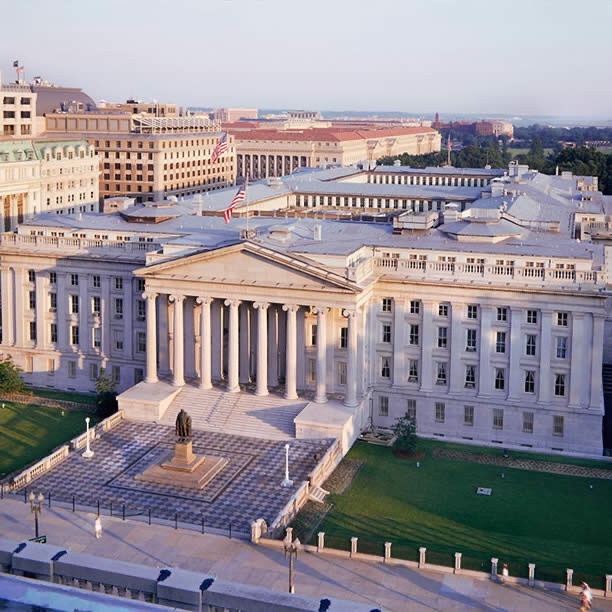
Therefore, the third target became the one thing that makes the world go ‘round: the money. And that meant a takeover of the U.S. Treasury.

U.S. Treasury Building (Located one block from the White House)

“Impossible!” I hear you cry. “Unspeakable!” “Un-American!” “Treasonous!”

Well, you’re certainly right about the last three. But there was no reason for anyone at the Treasury Department to be concerned about a routine visit from a presidential transition team about a week before the January inauguration to discuss the seamless handover of authority. After all, they weren’t armed . . . not with AK-47s or Molotov cocktails, at any rate.

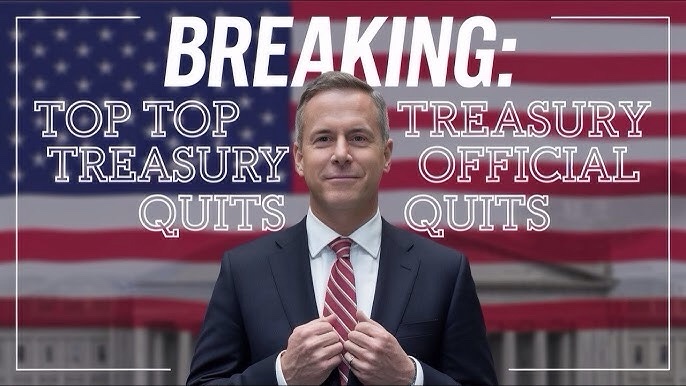
But this meeting was not routine. Unexpectedly — and quite unusually — the team battered the Treasury officials with specific questions concerning its Bureau of the Fiscal Service, “an arcane branch that distributes nearly 90 percent of all federal payments, including Social Security benefits, tax refunds and payments to federal workers and contractors. That adds up to a billion annual transactions totaling more than $5 trillion.” [Katelyn Polantz, Phil Mattingly and Tierney Sneed, CNN, February 1, 2025.]

On Friday, January 31st, acting U.S. Secretary of the Treasury David Lebryk suddenly left his post “after Trump-affiliated officials expressed interest in stopping certain payments made by the federal government, according to three people familiar with the situation.” [Id.]

David Lebryk

And now, Elon Musk and his DOGE associates have total access to the U.S. government’s payments systems.

When an individual familiar with the department — who wished to remain anonymous — was asked about the matter, the reply was:

“They [the Trump/Musk team] seem to want Treasury to be the chokepoint on payments, and that’s unprecedented.” That individual further emphasized that it is not the Bureau’s role to decide which payments to make — it is “just to make the f-ing payments.” [Id.]

This action followed closely on the heels of Trump’s earlier, unsuccessful attempt to freeze trillions of dollars in federal spending. And while the nation’s leadership does not normally concern itself with the day-to-day logistics of issuing payments, Trump’s team has, according to career officials, shown an “odd interest” in the inner workings of the process . . . raising suspicions about the administration’s possible intentions of disrupting the entire operation of the nation’s economy. [Id.]

We all know — but sometimes tend to forget — that what affects the U.S. economy also affects the world’s economy. So while we sit here wondering what’s going to happen to our Social Security benefits, our tax refunds, Medicare and Medicaid coverage, the price of everything, and whether the poorest of our citizens will even be able to eat next month, the rest of the world trembles right along with us.

But no matter . . . because the Washington Billionaires Club is looking out for us.

*. *. *

And this, my fellow Americans, is the government that half of you voted for.

Happy now?


Just sayin’ . . .

Brendochka
2/3/25

2/2/25: The Rip Van Winkle Syndrome

It’s a pretty safe bet that I’m not the only American who has fantasized recently about going to sleep — maybe not for twenty years, but at least for four — and waking up when this whole nightmare is finally over. Perhaps a medically-induced coma . . . ?


Obviously, that’s not terribly practical, so I began musing about other options. And, thanks to the wonders of the internet, I stumbled across this little tidbit:

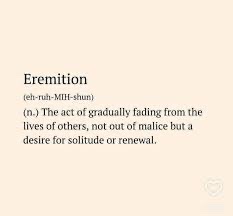
There it was: the perfect description of the way I’ve been feeling since the November 5th election . . . and a new word for my vocabulary as an added bonus. But further digging into the good old reliable Merriam Webster Dictionary revealed that . . .

. . . it doesn’t exist.

Ah, the good old unreliable internet! I should have known better than to trust something posted by someone identified as “The Language Nerds.”

There is, however, a noun from which this made-up word most likely evolved: “eremite,” which is defined as a “hermit.” That makes sense.

So, if we can’t sleep it off, we might be able simply to withdraw from all contact with humanity for four years — that is, if there’s any place left on Earth that’s remote enough, but still accessible to a grocery store, a pharmacy, and Amazon delivery. Probably not.

“Damn!”

*. *. *

And then I thought: Are today’s problems really the worst they’ve ever been? Certainly there have been other eras throughout history when people wanted to give up, dig a hole, and climb in. Such as:

The Great Flood (about 4,000 years ago): After 150 days on water and 221 days stranded on a mountain top with a flock of smelly animals, don’t you think Noah ever wished he had just drowned?

The Golden Horde (13th Century): Really scary times for anyone in the path of the marauding Mongols.


The Black Plague (1347-51): The not-so-good old days before modern medicine.

Russia’s Time of Troubles (1598-1613): Actually, those have never really ended for the poor, beleaguered Russian people, have they?

Spanish Flu Pandemic (1918-20): It killed an estimated 50 million people worldwide — more than World War I. And we thought Covid was bad!

The Great Depression (1929-39): It took another world war to get us out of that one.


The Siege of Leningrad
(September 8, 1941 to January 27, 1944 – a total of 872 days): Just one of the horrors of that war in Europe.

World War II and the Holocaust (1939-45): Six years of pure hell.

*. *. *

Well, that sort of puts things into perspective, doesn’t it? Yes, we’ve got some major problems right now — a lot of them, in fact. But are they insoluble? Don’t we have legal options?

I seem to be saying this a lot lately, but I’m going to repeat myself once more, for those who may have forgotten:

“The only thing necessary for the triumph of evil is for good men to do nothing.”


And that, to me, seems the biggest problem of all.

Just sayin’ . . .

Brendochka
2/2/25

2/2/25: “Months” now?! What happened to “24 hours”?

As far back as May of 2023, at a CNN town hall, Donald Trump boasted:

“They’re dying, Russians and Ukrainians. I want them to stop dying. And I’ll have that done — I’ll have that done in 24 hours.” [Edith M. Lederer, AP, July 2, 2024.]

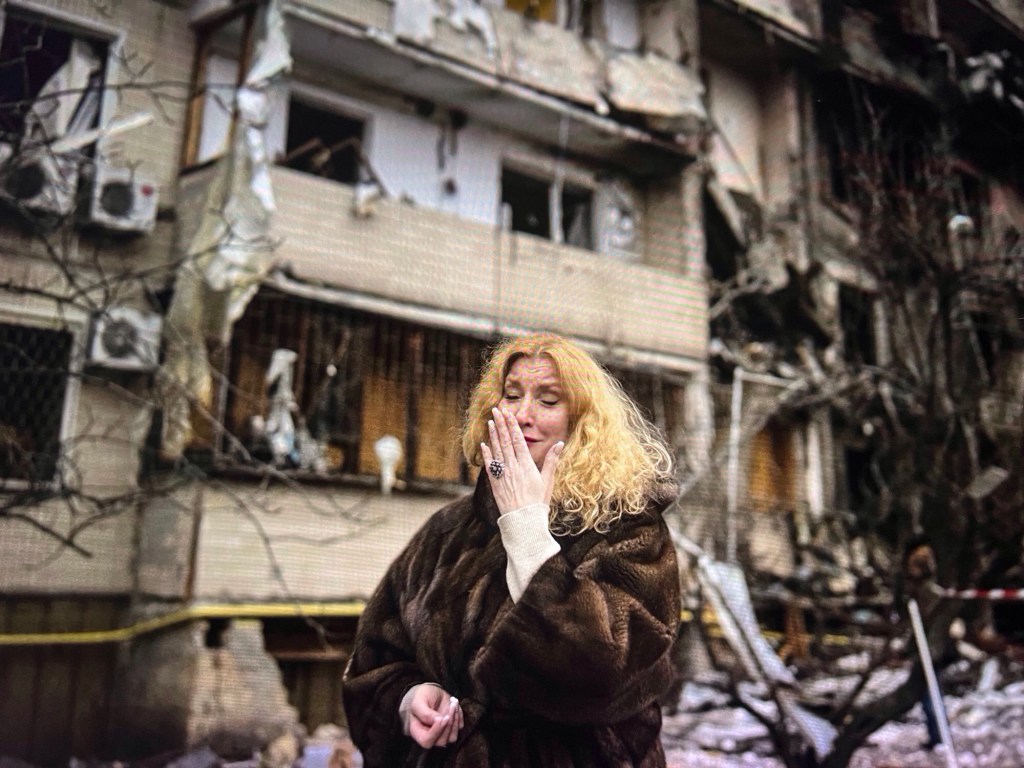
The Ravages of War

And we heard the same blustering assurances throughout the presidential-campaign-we-thought-would-never-end.

But by the time he shockingly won the election, those promises had faded into whispers. And there was no mention at all in his inaugural address of that little dust-up in Ukraine.

The Face of Victory

Now, we hear from the administration’s special representative for Ukraine and Russia, Keith Kellogg, that Donald Trump has a “solid” strategy to end the war in Ukraine “in months.” [RFE/RL’s Ukrainian Service, February 1, 2025.]

Months!! Not 24 hours. Not days. Not weeks. Months!!

More months of bombings, and missile attacks, and on-the-ground combat. More people wounded and dying. More children orphaned, parents grieving, homes and lives demolished. More soldiers — Ukrainian, Russian, even North Korean — maimed and killed.

Months.

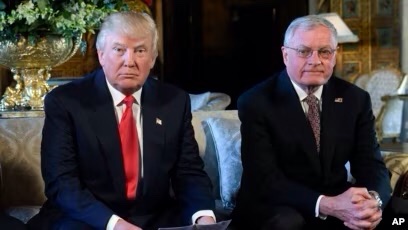
Keith Kellogg (R), with Donald Trump

We all knew what he was promising was an impossibility — that Vladimir Putin would never capitulate that easily (if at all). And it is surely not Donald Trump’s fault that both Putin and Ukraine’s President Zelensky have proved . . . shall we say . . . steadfast in their demands. That has been the case all along.

But knowing this, why make promises he knows he can’t conceivably keep? Why lie?

Because his loyal supporters are gullible enough to believe the lies, and to vote for him on the basis of those lies . . . that’s why. And it worked; the lies always work.

Promising to quickly lower prices on food and other essentials . . . then turning around and imposing tariffs that are guaranteed to increase, not decrease, those prices . . . is one thing.

But promising to stop the killing and devastation of a war that has already gone on far too long, while knowing full well you can’t do it . . . well, that’s simply unconscionable.

Just sayin’ . . .

Brendochka
2/2/25

2/2/25: Putin’s Hostages: Bring Them Home, Week 56 – More Journalists Targeted

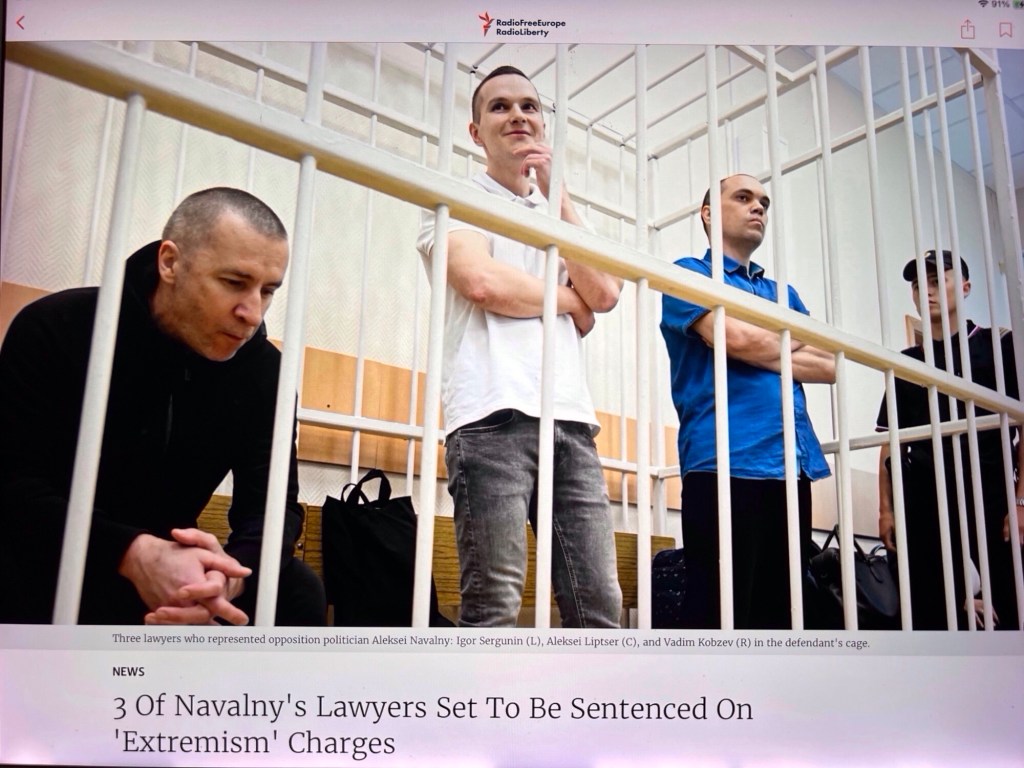
Another week, another reminder that hundreds — perhaps thousands — of prisoners sit and suffer in Russian, Belarusian, and other penal colonies, convicted of having broken laws that were specially concocted for political reasons, but who are in fact guilty only of having spoken the truth about Vladimir Putin, his ally Aleksandr Lukashenko, or Russia’s war against Ukraine.


The list hasn’t changed this week — no additions, no deletions — but there are seven people known to have been newly designated by Russia as “foreign agents.” Two of them are journalists with RadioFreeEurope/RadioLiberty (RFE/RL): Dmitry Sukharev, who works with Systema, RFE/RL’s Russian investigative unit; and Andrei Novashov, a contributor to RFE/RL’s Russian and North Caucasus Services. Luckily, both are presently living outside of Russia; but returning there to work would subject them to almost certain arrest and detention. [Current Time and RFE/RL’s Russian Service, January 31, 2025.]

The other five are Elizaveta Fokht and Ilya Abishev of the BBC Russian Service; Vladimir Rayevsky, a contributor to Meduza; Dima Zitser, an educator, writer and blogger; and Anton Suvorkin, a video blogger who covers Russian show business. [Id.]

Seven professionals, whose only “crime” has been reporting the facts surrounding Putin’s “special military operation” in Ukraine. But in Russia, as well as in Belarus, you don’t have to be James Bond to be classified as a “foreign agent”; you merely have to be critical of the regime.


To the seven new designees, I wish a safe and successful future. And to those on our list, already imprisoned — in Russia, Belarus, Crimea and Azerbaijan — once again, my hopes and prayers for a speedy return home:

David Barnes
Ales Bialiatski (in Belarus)
Gordon Black
Andrei Chapiuk (in Belarus)
Marc Fogle
Robert Gilman
Stephen James Hubbard
Ksenia Karelina
Ihar Karney (in Belarus)
Vadim Kobzev
Andrey Kuznechyk (in Belarus)
Uladzimir Labkovich (in Belarus)
Michael Travis Leake
Aleksei Liptser
Ihar Losik (in Belarus)
Daniel Martindale
Farid Mehralizada (in Azerbaijan)
Marfa Rabkova (in Belarus)
Igor Sergunin
Dmitry Shatresov
Robert Shonov
Eugene Spector
Valiantsin Stafanovic (in Belarus)
Siarhei Tsikhanouski (in Belarus)
Laurent Vinatier
Robert Romanov Woodland
Vladislav Yesypenko (in Crimea)
Yuras Zyankovich (in Belarus)

And my message to Donald Trump is this:

“Amidst all of the hubbub of your new administration, it is imperative that these innocent men and women not be forgotten. Negotiations for their safe release have been underway for some time; President Joe Biden succeeded in bringing home 16 innocent people on August 1st of last year. So whatever you do, do not drop the ball on this. The people you promised to represent are counting on you.”

Perhaps you could make this your new motto:

“No Hostage Left Behind.”


Just sayin’ . . .

Brendochka
2/2/25