It’s been a quiet news week insofar as the American hostages in Russia are concerned. The good news is that there have been no names to add to the eight still locked away in Putin’s prisons; the not-so-good news is that they are still there: the same eight whose names and faces have become so sadly familiar.
And so we remember them once again, and encourage them to stay strong and never give up hope — hope that negotiations for their release are moving forward behind the scenes.
In no particular order, they are:
U.S. Army Staff Sergeant Gordon Black, who was stationed in South Korea when he fell into a Russian “honey trap.” He was on his way back to his home in Texas, on two weeks’ leave, when he was lured to Vladivostok by the Russian girlfriend he had met in Korea. He was arrested in May of 2024 on charges of alleged larceny and murder threat, and sentenced the following month to a prison term of three years and nine months.
Staff Sergeant Gordon Black
*. *. *
Ksenia Karelina, dual U.S.-Russian citizen, recently convicted of espionage and sentenced to 12 years in prison for contributing $51.80 to an American charity providing aid to Ukraine.
Ksenia Karelina
*. *. *
Marc Fogel, a schoolteacher from Pennsylvania, was arrested in August of 2021 for possession of 0.6 ounce of legally-prescribed (in the U.S.) medical marijuana. In June of 2022 he was sentenced to 14 years in prison.
Marc Fogel
*. *. *
Robert Romanov Woodland, a dual US-Russian citizen, was teaching English in Russia when he was arrested in January of 2024 for allegedly attempting to sell drugs. In July, he was sentenced to 12-1/2 years in a maximum security prison.
Robert Romanov Woodland
*. *. *
Robert Gilman, already in jail in Russia serving a 4-1/2-year sentence (later reduced to 3-1/2 years on appeal) for kicking a police officer in 2022, found himself facing added charges in 2023 of punching prison staff in the head, and later also attacking a criminal investigator and another prison guard.
Robert Gilman
*. *. *
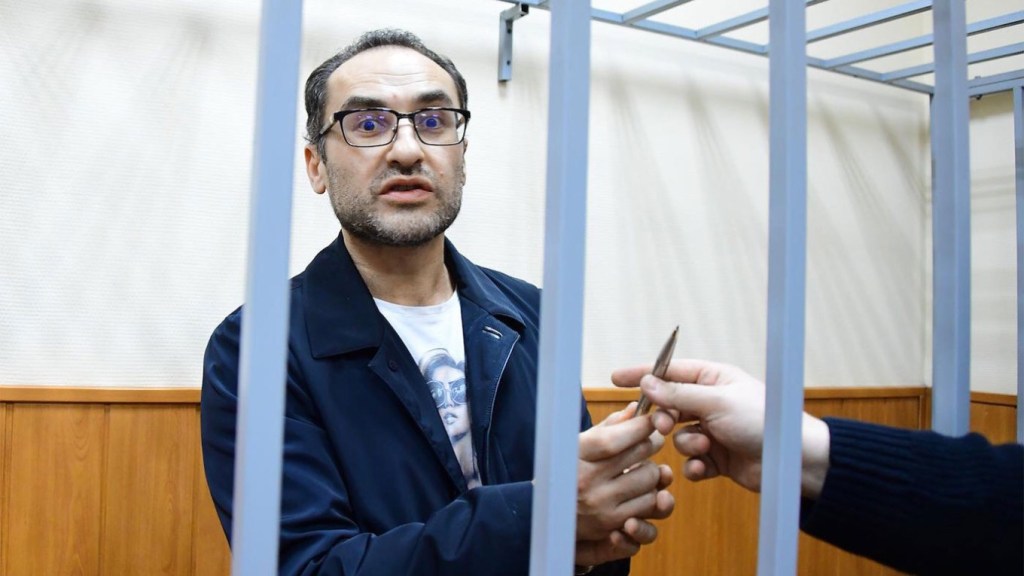
David Barnes, an American citizen and resident of Texas, was arrested in January of 2022 while visiting his children, who had been taken to Russia from Texas by his Russian wife. He was charged and sentenced in the fall of that year to 21 years in prison for child abuse (allegedly occurring while in Texas), on his wife’s accusation. I really wish I knew more of this story!
David Barnes
*. *. *
Eugene Spector, a dual US-Russian citizen already serving a four-year sentence handed down in June of 2021 on a bribery conviction, received additional charges of suspicion of espionage in August of 2023. No other details have been found, as the evidence is labelled “classified.”
Eugene Spector
*. *. *
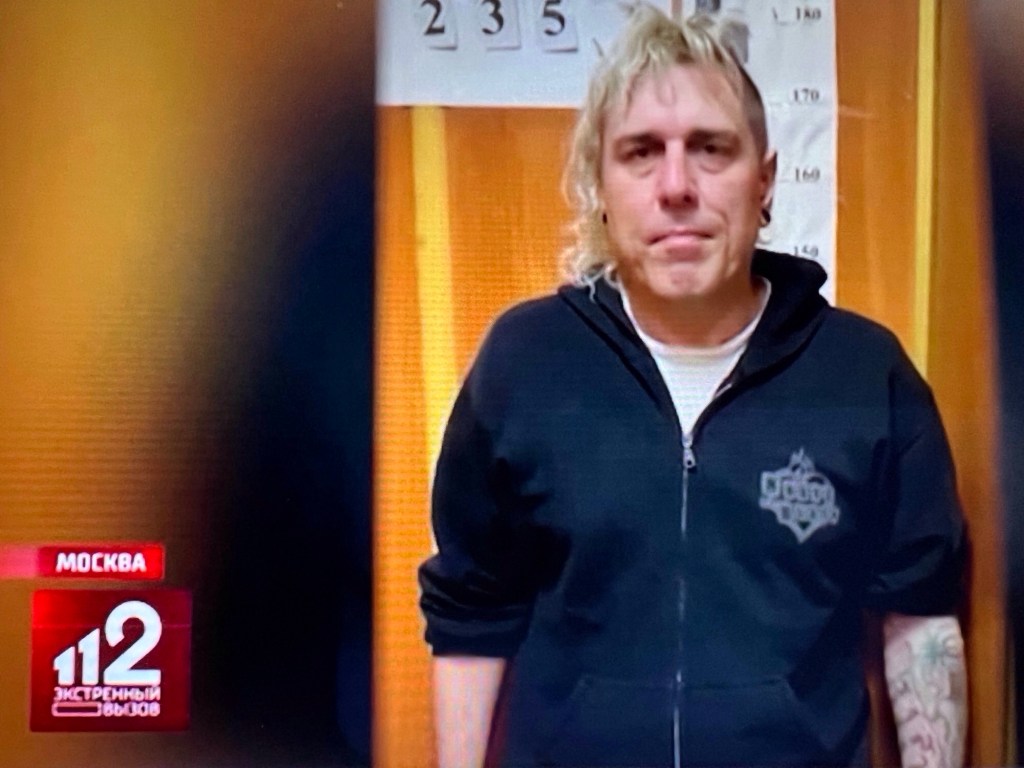
Michael Travis Leake, a rock musician and former paratrooper, was sentenced in July of this year to 13 years in prison on drug charges — specifically, suspicion of selling mephedrone, and organizing a drug trafficking business “involving young people.”
Michael Travis Leake
*. *. *
Are any of these prisoners actually guilty of the charges leveled against them? I don’t know. But I do know that the recent timing of a number of the arrests, and the speed with which they were brought to trial, is a clear indication of Russia’s intentional roundup of American citizens to be used as (what I call) Putin’s Pawns.
What they are, quite simply, are HOSTAGES. And they will not — MUST not — be forgotten. Let’s shorten this list to zero.
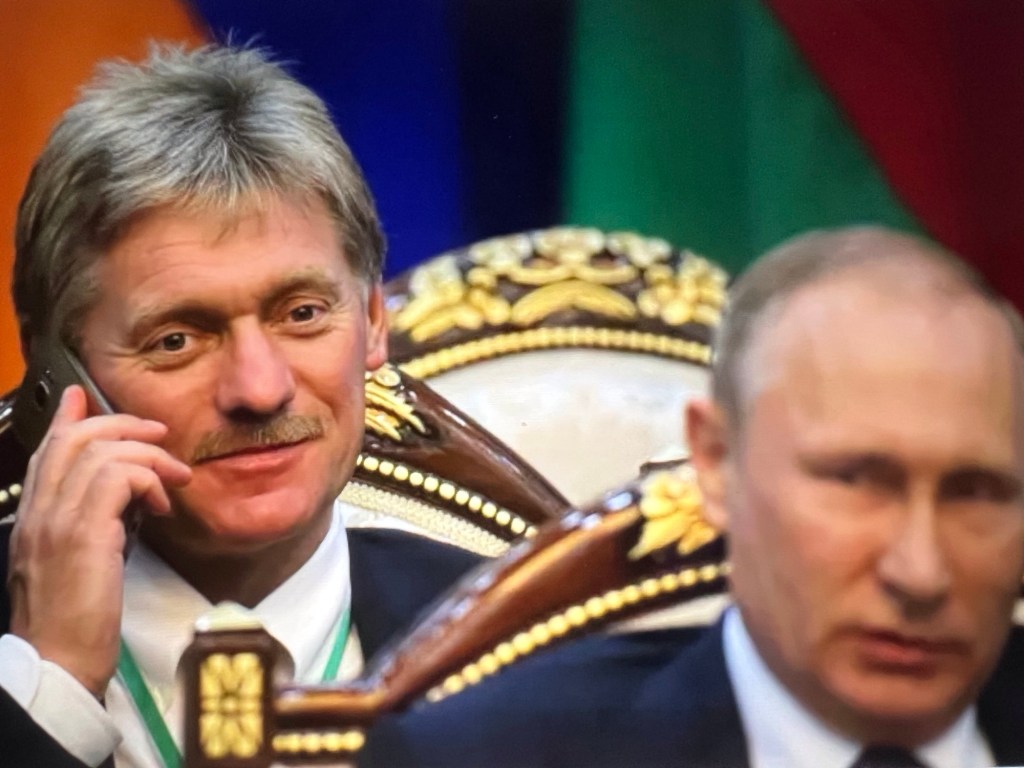
That would be my very favorite Kremlin spokesman, Dmitry Peskov, whose name has been missing from the news for the past week or so. But it cropped up again yesterday, briefly, when he said that his boss — that would be Vladimir Putin, of course — isn’t concerned about being arrested when he travels to Mongolia next week, despite the outstanding warrant issued against him by the International Criminal Court (ICC) in March.
Welcome back, Dima. Your “voice” in the daily news out of Moscow has been sorely missed.
Dmitry Peskov (the one on the left, obviously)
But about that trip to Ulaanbaatar . . .
I have to assume that you’re aware of the legal ramifications of Mongolia’s participation in the ICC’s Rome Statute, requiring that country to comply with the Court’s warrant. Yet you have said, in your inimitable casual manner:
“There are no worries, we have a great dialogue with our friends from Mongolia.” [The Moscow Times, August 30, 2024.]
And when specifically asked if the arrest warrant had been discussed with Mongolia’s authorities ahead of the scheduled visit, you replied that:
“ . . . all aspects of the visit were carefully prepared.” [Id.]
Oh, you are the master of dissembling. Let’s just hope, for the sake of your job security, that your “friends” in Mongolia — who have thus far maintained a neutral position on Putin’s “special military operation” in Ukraine — know what they’re doing.
“They” are high-ranking military officers and officials. And “over there” is, of course, in Russia.
Not that they’re dropping dead . . . just being fired, reassigned, or arrested on various charges such as corruption or incompetence. It is Putin’s Purge . . . although he calls it a “cleansing.” But that’s just semantics.
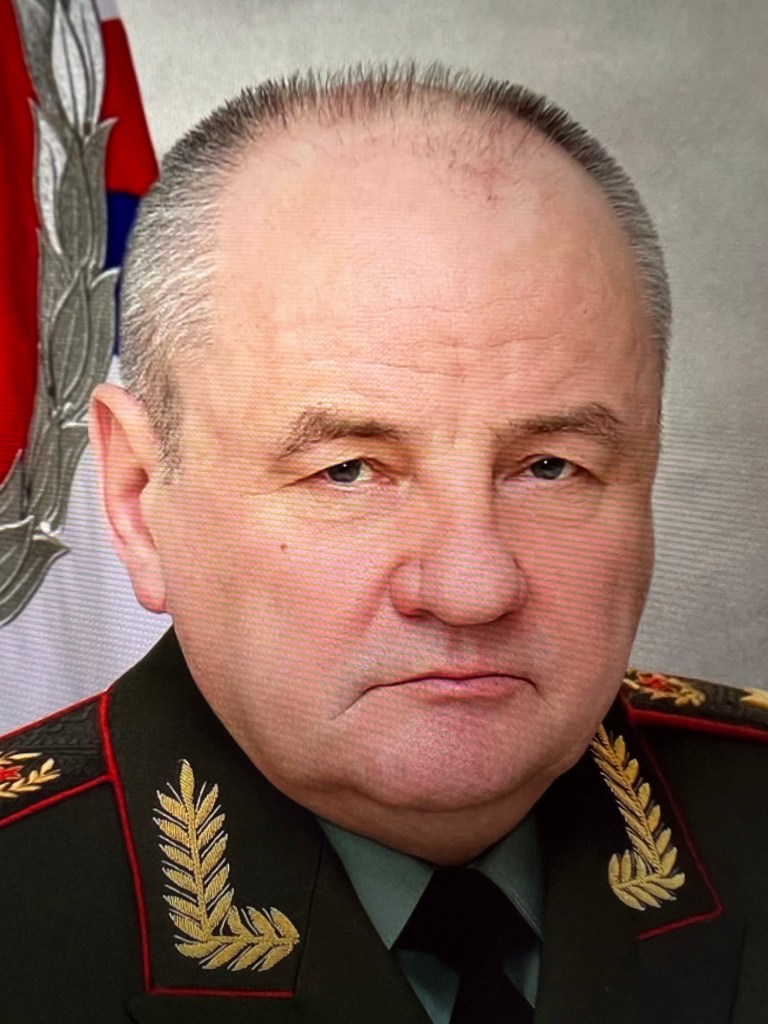
And this is his latest victim: Former Russian Deputy Defense Minister, General Pavel Popov:
Russian Army General Pavel Popov
General Popov has been charged with fraud. On a military officer’s salary, he seems to have acquired “numerous properties in prestigious areas of Moscow, the Moscow and Krasnodar region [sic] worth more than 500 million rubles . . .” [Anton Gerashchenko, x.com, August 29, 2024.]
That’s approximately US $5,463,000.
Popov probably knew his days were numbered when he was relieved of his post as Deputy Defense Minister in June. He is suspected of “illegal enrichment via fraudulent activities linked to his supervision of the operations of the Defense Ministry’s Patriot Park near Moscow in 2021-24.” [RadioFreeEurope/RadioLiberty, August 29, 2024.]
Also arrested earlier this month in connection with the same project, and charged with embezzlement, were Patriot Park Director Vyacheslav Akhmedov, and Major General Vladimir Shesterov, Deputy Chief of the Defense Ministry’s Department for Innovative Development.
And Deputy Defense Minister Timur Ivanov — said to have supervised the construction and development of Patriot Park — was arrested in April on bribe-taking charges. Shortly thereafter, two civilian businessmen — Sergei Borodin and Aleksandr Fomin — were also arrested in connection with the same case. [Id.] That’s a lot of people allegedly getting rich from just one project. It makes one wonder what the original budget must have been.
But wait . . . there’s more.
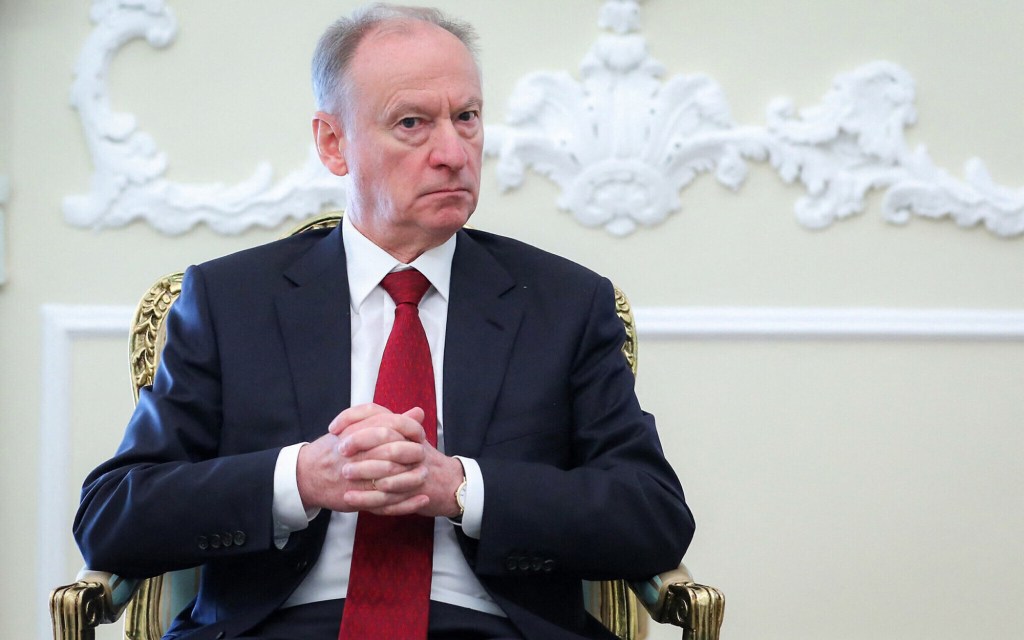
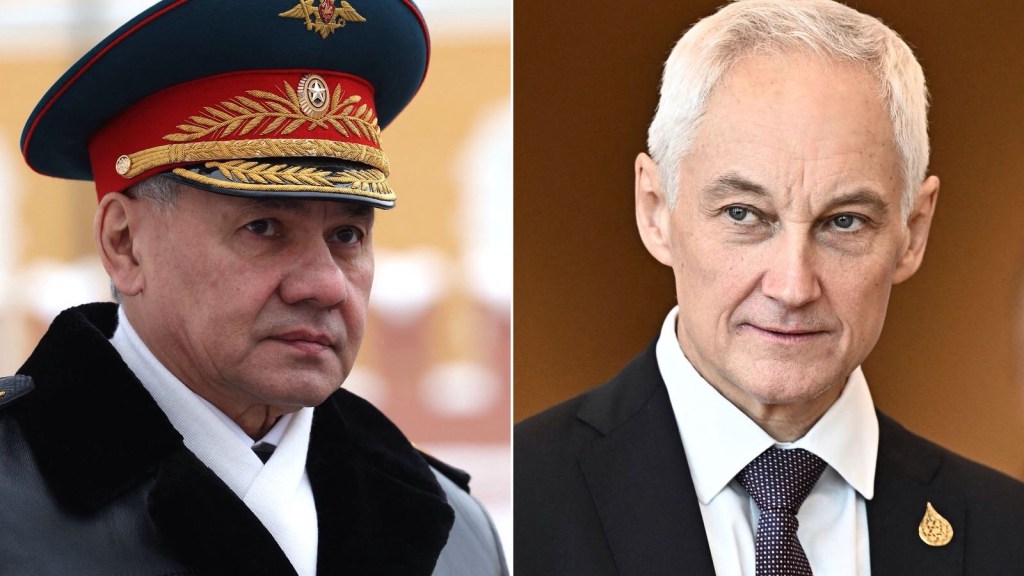
In May of this year, Vladimir Putin unexpectedly dismissed General Sergei Shoigu as Minister of Defense, moving him to the non-military position of Secretary of the Security Council of the Russian Federation (a seat formerly occupied by one Nikolai Patrushev, who now seems to have faded into obscurity, and is currently identified as an “aide” to President Putin).
Nikolai Patrushev: Anyone remember him?
In this game of musical chairs, Shoigu’s position as Minister of Defense was filled by a non-military numbers-cruncher, former First Deputy Prime Minister Andrei Belousov. (Since Belousov’s appointment, Russia has been invaded and occupied — for the first time since World War II — and by Ukraine! But that’s probably just coincidence, right?)
Sergei Shoigu (L) and Andrei Belousov
May turned out to be a busy month for Putin’s Purges:
– In that month, the chief of the Defense Ministry’s Main Human Resources Department, Lieutenant General Yury Kuznetsov, was arrested, also on charges of bribe-taking.
– On May 21st, Major General Ivan Popov (no relation to Pavel Popov), former commander of Russias 58th Army, was arrested on charges of fraud; he was later transferred to house arrest.
– On May 22nd, Deputy Chief of the Armed Forces General Staff, Lieutenant General Vadim Shamarin, was sent to pretrial detention on charges of bribery.
– And also in May, Vladimir Verteletsky, a top official in the Defense Ministry’s Department for Handling Armament Orders, was arrested on a charge of abuse of power.
– Finally were the announcements of the sudden deaths of Deputy Defense Minister Ivanov’s subordinate, Magomed Khandayev in June; and businessman Igor Kotelnikov in July, who was being held in detention on charges of bribing senior Defense Ministry officials. [RFE/RL, id.]
Did I say they weren’t dropping dead? My mistake.
*. *. *
To give credit where it’s due, I will say this: When Putin cleans house, he really cleans house! But what I’d like to know is . . .
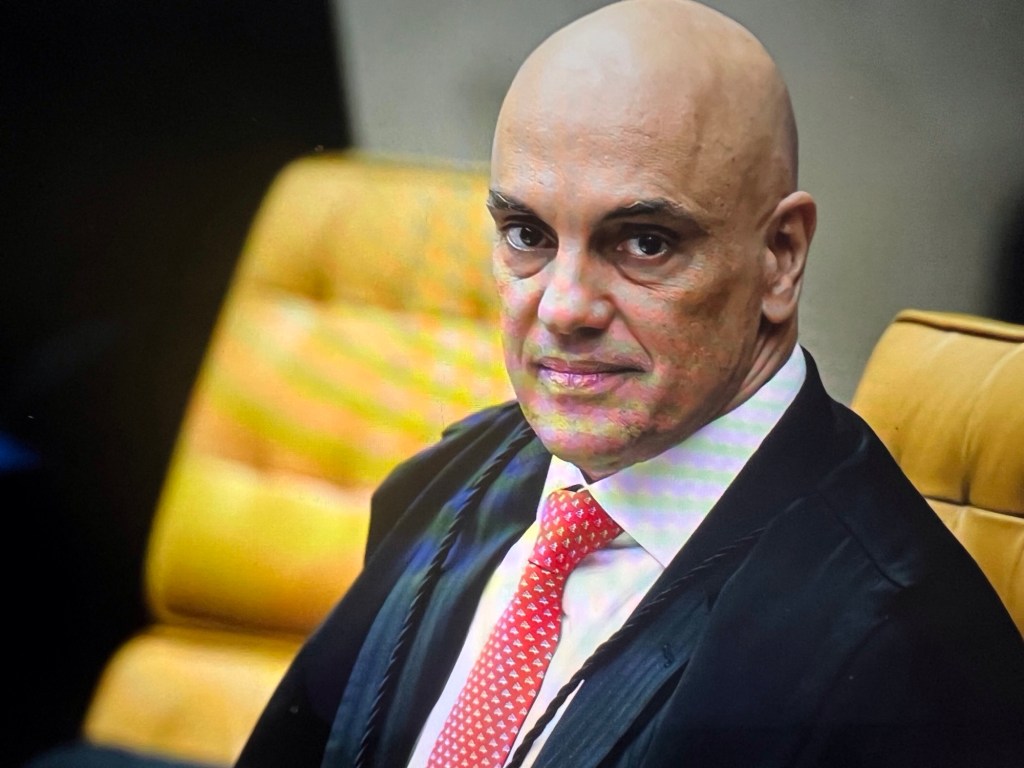
Yesterday, Brazilian Supreme Court Justice Alexandre de Moraes made good on his warning of 24 hours earlier to Elon Musk that Musk’s social media platform — annoyingly known as X — would be blocked throughout the country if Musk did not comply with an order to name a legal representative in Brazil. Musk refused; the deadline passed; and Judge de Moraes ordered X blocked, leaving some 40 million Brazilians unXpectedly, inXplicably, and — to them — inXcusably . . . X-less.
Justice Alexandre de Moraes
X’s side of the story, posted on its official Global Government Affairs page on Thursday, was that it expected to be shut down by de Moraes, “simply because we would not comply with his illegal orders to censor his political opponents. When we attempted to defend ourselves in court, Judge de Moraes threatened our Brazilian legal representative with imprisonment. Even after she resigned, he froze all of her bank accounts. Our challenges against his manifestly illegal actions were either dismissed or ignored. Judge de Moraes’ colleagues on the Supreme Court are either unwilling or unable to stand up to him.” [Associated Press, August 30, 2024.]
Previous orders by the Brazilian government included shutting down accounts belonging to lawmakers affiliated with former President Bolsonaro’s party, as well as activists accused of undermining Brazilian democracy. [Id.]
Musk, who identifies himself as a “free speech absolutist,” says that Judge de Moraes’ actions amount to censorship, and has called him a dictator and a tyrant. [Id.]
Elon Musk: The Good Guy?
If all of this is beginning to sound familiar to you, you’re not imagining things. Because a similar battle is presently raging in France, where the CEO of messaging app Telegram is under arrest for allegedly being complicit in criminal activities of some of his company’s clients. That man is Russian-born billionaire entrepreneur Pavel Durov, now a dual citizen of France and the United Arab Emirates, and — like Musk — an advocate of the absolute right of free speech . . . no exceptions!
Pavel Durov: The Bad Guy?
So what are we looking at here? Two caped crusaders who happened to come to Earth at the same time, fighting the same battle against evil and injustice?
Or a couple of very smart, very rich, very entitled narcissists who will fight to the bitter end simply because they can’t bear to admit they might conceivably be wrong?
Or — what a concept! — two people who really, honestly, sincerely believe in every individual’s right to privacy and freedom of speech?
Whatever the case may be, their stories will be fascinating to follow.
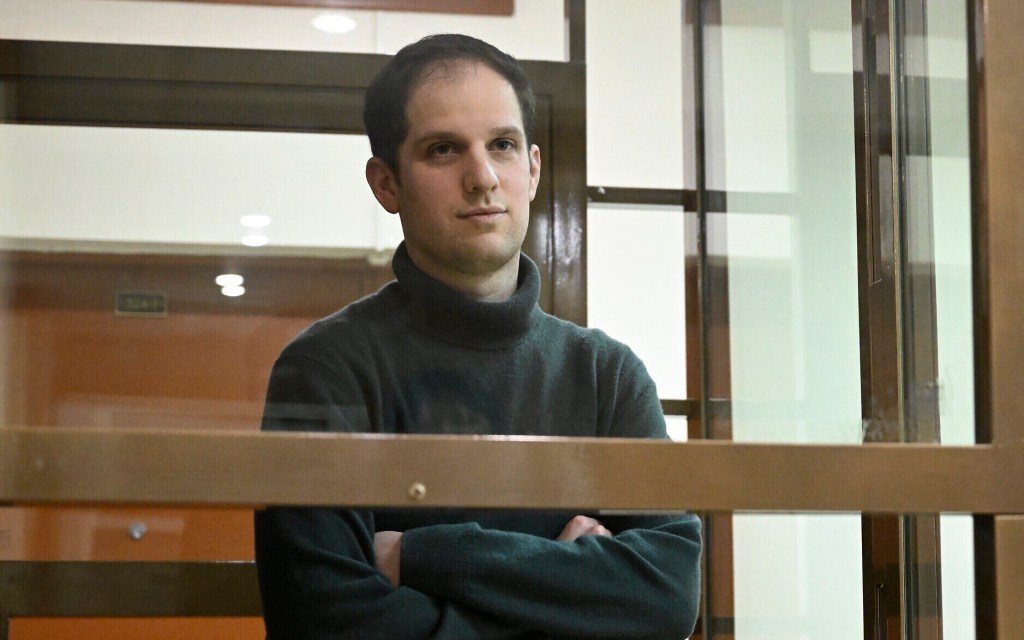
Evan Gershkovich – Wall Street Journal Reporter, Former Hostage
He and a number of others — many of them journalists, all of them guilty only of having spoken or written the truth — have spent months or years in Russian prisons for their alleged “crimes.” There are still eight Americans locked up in Putin’s penal colonies on similarly specious charges.
They know that when Putin says you are not welcome here, he means it.
Since Russia’s invasion of Ukraine on February 24, 2022, the United States and a number of other countries have lodged increasingly onerous sanctions against the Russian government and scores of individuals in an effort to make it financially more difficult for Putin to carry on his war of attrition against Ukraine. And in retaliation, he has arrested as many Americans as he can get his hands on.
This week, Putin banned entry — as though Americans are beating on Russia’s doors begging to get in — to 92 more American citizens, including journalists from The Wall Street Journal, New York Times, and Washington Post, as well as academics from Harvard University, University of Pittsburgh and the University of Virginia. Also included were U.S. Government officials from the Justice and Treasury Departments and Space Force. [Katharina Krebs and Lauren Kent, CNN, August 28, 2024.]
And my initial reaction was: “Yeah? So what?”
According to the Russian Foreign Ministry, the bans are “in response to the Russophobic course pursued by the Biden administration with the declared goal of ‘inflicting a strategic defeat on Moscow.’” [Id.]
Specifically regarding the American journalists, the Ministry went on to say that “The ‘stop list’ also includes editorial staff and reporters of leading liberal-globalist publications involved in the production and dissemination of ‘fakes’ about Russia and the Russian armed forces, and the propaganda ‘cover’ for the ‘hybrid war’ unleashed by Washington.” The Ministry warned that the ban list will be expanded in the future. [Id.]
Well, I have news for the Foreign Ministry. They PNG’d me — cut off my visiting privileges — about 30 years ago. It made me sad; but my world didn’t come to an end. And neither will it finish off the careers or productive lives of any of the 92 people on their shit . . . excuse me . . . stop list.
In fact, the Wall Street Journal — which no longer has any reporters inside Russia in any event — agrees. In response to this latest ban, their spokesperson said that “The Putin regime is farcically consistent in its all-out assault on free press and truth. This laughable list of targets is no exception.” [Id.]
July 4, 1993 – So far, so good. I had been in Moscow for nearly two months, and I was still alive and unscarred. In fact, I was thoroughly enjoying myself. And with the occasional unscheduled drop-by visit from Vladimir Bragin of the KGB, I was feeling well protected.
No, not James Bond. The KGB!
I had received a surprise phone call earlier that week from a friend in Washington, Mary Saba. (You may remember her from the London and Prague episodes.) Her husband, Joe, had just left on a business trip to one of the “Stans” — the five Central Asian Republics of the former Soviet Union whose names all end in “stan” (Kazakhstan, for example) — and Mary and their teenage son, Colin, were going to join him there. Since they would have to travel through Moscow and had never been there before, she and Colin were planning to stay over for a couple of days, and she was letting me know of their imminent arrival.
I was thrilled to be seeing a good friend from home. When she told me where they were staying — a Soviet-style hotel on the outskirts of the city — I told her they would find that to be both inconvenient and generally miserable, and that I would pick them up and bring them to my apartment, where I had two spare bedrooms. It didn’t take much to convince her.
The Sabas are the kind of people who fit in anywhere. They’re smart, funny, caring, personable, and genuine — that rare breed known as completely lovable, good people. Mary got along beautifully with Olga, Lena and Tamara; and Colin managed to find common ground with Tamara’s two teenaged daughters, even though they didn’t speak each other’s languages. We did the usual sightseeing tour, and then Colin said he had a special request: he wanted to see the Moscow Military Museum. Tamara’s husband was an Army officer, and he gladly offered his services. He arranged for our admittance, and five of us crammed into his little car.
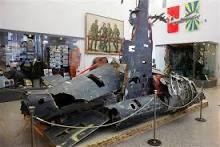
U-2 Spy Plane Wreckage At Military Museum
But first came lunch — at McDonald’s, of course. Doesn’t every American travel 5,000 miles to eat at a Mickey D’s? Colin and Mary were just curious to compare it to the ones at home; Tamara and her husband had never eaten there, because it was too expensive for them as a family of four. So off we went, my treat. Cheapest restaurant meal I ever had — and surprisingly good. Far better quality than in the U.S., in fact. All of the meat and vegetables were locally sourced, and the rolls freshly baked. It was worth the wait in line.
At the museum, admission was free — but I found that I had to pay one ruble (about 1/10 of a cent at the time, as I recall) for the privilege of taking pictures with my own camera. These, of course, were the days before cell phones, so my camera was simply that: a camera — and with actual film, as it was also the pre-digital age. (God, I am old, aren’t I?)
As we wandered through the several rooms and I snapped away, I lost track of how many pictures I had taken, and suddenly ran out of film. I only realized it because my camera told me so, when it started beeping . . . and beeping . . . and beeping. At the unfamiliar sound, all of the other visitors in the room froze where they were standing, and two armed guards came rushing in from the next room, hands on their holstered weapons, to find out who had the bomb. When I saw them, I instinctively held the camera up in the air and called out, “Nyet, nyet! Fotoapparat! Fotoapparat!” (I’m sure you’ve figured out that that means “No! No! Camera! Camera!” I have no idea why I said it twice.) That quick action saved me, though, and I was neither shot, tackled, nor arrested; but the guards and I had managed to scare the bejeezus out of each other . . . and quite a few more people besides. Clearly, I still hadn’t mastered the art of quietly blending in. Come to think of it, I never did.
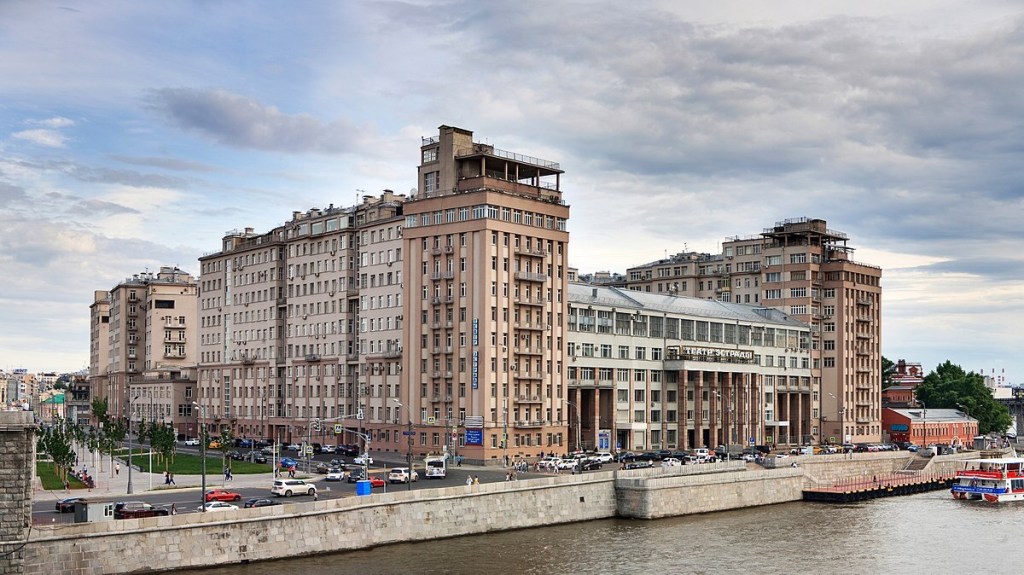
Mary’s trip happened to fall over the 4th of July weekend, when it turned out that there was to be a show given by some Broadway musical performers at the Estrada Theatre in the renowned (or infamous, depending upon the year) House on the Embankment. Just one of the many outsized Stalinist monstrosities still dotting the landscape throughout the city, this one was completed in 1931 specifically to house the government elite of the time, many of whom later became victims of Stalin’s paranoid political purges. (Sorry — I just seem to keep alliterating). Anyway, someone had given Gil Robinson a pair of tickets, but he wasn’t going to be in Moscow that weekend, so he passed the tickets along to me. Leaving Colin in the safe company of Tamara’s family, Mary and I set out for a girls’ night on the town. As we had done in London, we managed to make it a memorable one.
The House on the Embankment Moscow
Vitold had offered to drive us to the theatre, and said he would be happy to come back to pick us up as well, but I felt that would be too inconvenient for him. The traffic pattern in front of the building was a total mess, and there was no way of knowing what time the show would end. I knew there was a taxi stand in front of the Kempinski Baltschug Hotel, about a 15-minute walk from the theater, so I told him we would manage to get home on our own. Brave words.
For once, Vitold managed to get us to our destination without being stopped by the police for speeding, running a red light, or nearly knocking down any pedestrians. We actually arrived a little early, and since it was a lovely, mild evening, we stood outside the theatre for a while, watching the arrivals and chatting with a couple of acquaintances I had seen in the crowd. The U.S. Ambassador, Thomas Pickering, had already arrived for the occasion. As a motorcade of three or four expensive foreign cars flying Russian flags pulled up, I knew that a Russian VIP had to be in one of them. President Yeltsin was out of the country that week, so I was curious to see who might be taking his place that night. As a man emerged from the car and started up the steps toward us, flanked by three improbably large bodyguards, he passed within a few yards of us and I recognized him immediately. I drew a sharp breath and grabbed Mary’s arm, exclaiming, “Oh my God! It’s Yevgeny Primakov!” Mary wasn’t familiar with the name, and when I told her he was the head of the KGB, she was startled, but also delighted to have a story to bring home to Colin. The crowd then began to move inside, and we headed to our seats.
Yevgeny Primakov
The show was outstanding. The performers were members of the supporting casts of several hit Broadway shows, and had the audience in the palms of their hands from the get-go, singing and dancing to Broadway tunes and a few patriotic songs to honor the holiday. First, however, the orchestra had played the national anthems of both countries, for which everyone stood in unison, but with the Russian and American halves of the audience singing their respective anthems in turn. I am proud to report that our half was louder and much more enthusiastic. Living in Moscow — fascinating though it was — made you all the more proud and happy to be an American.
Happy 4th of July!
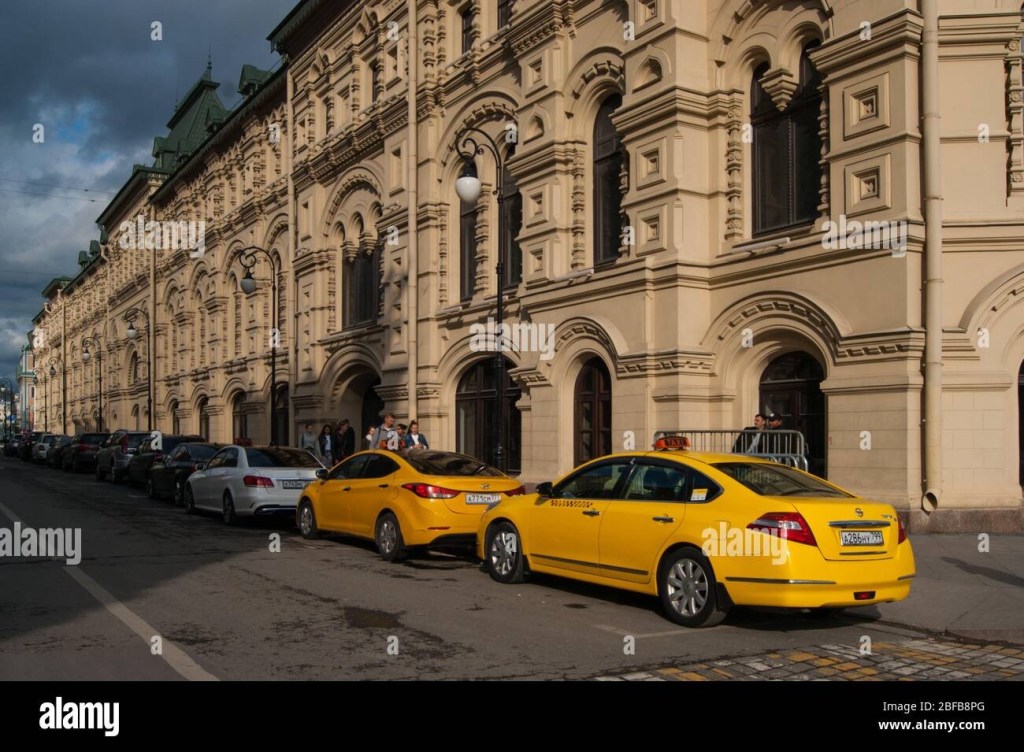
The performance ended much too soon, as all good things seem to do, and we filed out into the dark Moscow night around 11:00 p.m. The crowd was huge, and some of the people were walking, as we were, in the direction of the Baltschug, so we didn’t feel at all uncomfortable. And as we approached the hotel, we could clearly see the line of waiting taxis. They were facing away from us, and we had to pass the entire row of about a half dozen cars in order to get to the first taxi in line. No problem.
Mary walked around to the left rear door, behind the driver, and I opened the right rear door. When we were both seated and had closed our doors, the driver turned to his right, looked over his shoulder at me, and said, “Rublevskoye Shosse shestnadtsat?” — my exact address. Rublevskoye Shosse 16. And my heart leapt up into my throat. What the hell . . . ???
My first impulse was: RUN! But that was obviously not an option. And I had Mary to think of. Since she didn’t know a word of Russian, she assumed the driver had asked where we were going. So I gulped my heart back down into place, smiled weakly at the driver, and said — in Russian — “That’s right. You have a very good memory.” Mary thought I was giving him our address.
Good memory, my ass! I hardly ever took taxis in Moscow — I had two drivers and an excellent Metro system at my disposal, so who needed taxis? Then who the hell was this guy? He simply nodded, smiled back, and began moving the taxi slowly forward. Once again, I mentally foresaw my imminent death. But as I watched to see the direction he would take, he drove straight along the quickest route, sticking to the main roads, and right up to my building and around to the entrance in the rear. He knew exactly where he was going, and never said another word throughout the 30-minute ride — quite possibly the longest half hour of my life. I thanked him, added a generous tip to the fare, and he waited until we were safely inside before driving off.
So, once again, who was he? How did he happen to be at exactly the right spot at exactly the right moment? If I had ridden with him once before and just didn’t remember, what were the odds of my getting the same taxi twice? Or of his recognizing me, in the dark, in a city of nine million people, and remembering my address? And not saying a word about the coincidence? Was this just another manifestation of Moscow paranoia, or was something spooky actually going on? Could Officer Bragin somehow be keeping tabs on me? But how would it even be possible to arrange such a thing? Again, too many questions without answers.
“Not so elementary after all, eh, Watson?”
I still don’t know the truth, and never will; but I can still feel the fear in the pit of my stomach when I think back on that night. I never did tell Mary.
And while I give you a while to mull that over, I will be — in writing, at least — hopping another train to Kyiv, but this time with two American companions, and complications on the Ukrainian side.
Every day seems to have some significance — mostly here in the U.S., where we don’t need much of an excuse to throw a party; but there are also quite a few international days-of-something-or-other. And every now and then, I enjoy throwing the spotlight on some of the quirkier events that people have chosen to commemorate.
Time to Party!
Today, however, turned out to be a total dud. I mean . . . talk about depressing! First we have:
International Day of the Victims of Enforced Disappearance. Wow! I know this is a huge problem worldwide, and the United Nations wants us to not forget about these kidnap victims, but it’s a really sad lead-in to the last weekend of unofficial summer. So, with a respectful nod to all of the victims and their loved ones, and best wishes for a joyous homecoming for all, let us move on to . . .
National Grief Awareness Day. Uh . . . not exactly what I had in mind. But I checked it out, and supposedly this day “recognizes the time it takes to heal from loss doesn’t have a prescribed course and is a reminder closure comes in many forms. When a loved one dies, the void they leave affects everyone differently.” And we can pay tribute to this day by wearing the color blue. Okay.
It’s always a good time for a hug.
But it wasn’t all doom and gloom. I also found:
National College Colors Day. That’s nice. Most of those color combinations of the days of our youth would not be very fashionable out in the working world of today, but if you don’t mind being seen in fuchsia-and-lime, or burgundy-and-puce . . . well, you go right ahead and enjoy yourself. Remembering what were arguably the best days of your life is not a bad thing at all.
And finally, we have:
National Beach Day. Hooray! Something fun for the penultimate day of August, when we’re all thinking ahead to the beauty of autumn. Get out there and splash around in the ocean or the nearest lake, play beach volleyball, build a sand castle, and enjoy a picnic. Just be sure to clean up your trash before you leave. (Really — that’s part of the description.)
*. *. *
So after all of the above, I was looking forward to tomorrow, until I checked the list and found that it includes:
Who needs Stephen King when you’ve got this? . . .
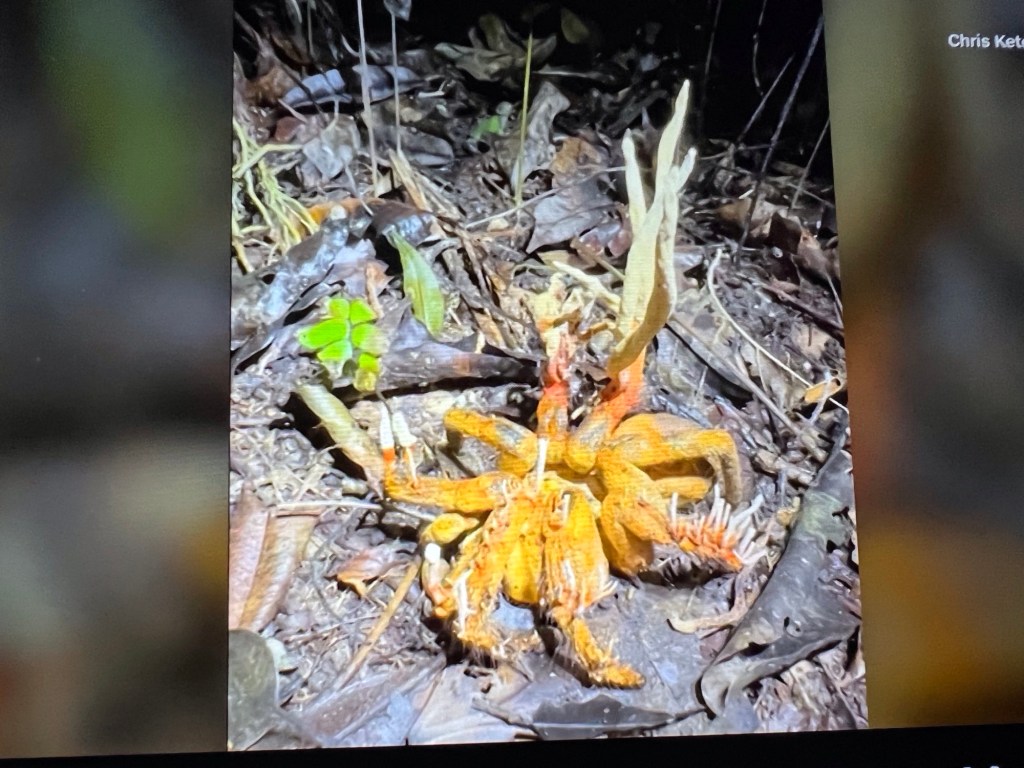
No, its not the guest of honor at tonight’s crab feast. It is, in fact, a tarantula — a dead tarantula — from the Peruvian Amazon.
And it was killed by Cordyceps, which also is not — as you might be imagining — a subterranean creature with 16 tentacles and a big red eye in the middle of its forehead, who just came crawling out of the La Brea Tar Pits hellbent to eat Los Angeles.
Cordyceps turns out to be a fungus, sometimes referred to as a “zombie fungus.” And if that weird yellow color and the white stalagmite-like protrusions on the spider were the result of having been attacked by the fungus, then I can see why it would be called a zombie. That is truly one hideous-looking corpse. Not that tarantulas (tarantulae?) are particularly pretty in life.
And now I find out that this fungus — which is actually a mushroom — is becoming popular as a medicinal supplement. In fact, it has been “long revered in traditional Chinese medicine for its ability to boost energy and vitality.” [Clarissa Berry, Muscle and Health, August 26, 2022.]
Cordyceps . . . Available on Amazon!
And for those of us who are old enough to remember the “magic mushrooms” of the ‘60s . . . Well, we don’t really need a repeat of that, do we? Although that was one hell of a decade, man . . .
Magic Mushrooms: “Wheee! What a ride!”
But does anyone mind if I pass on these latest uppers? I’ll gladly forgo vital and energetic, and settle for weak and lazy. I mean, that Cordyceps killed a freakin’ tarantula! It is not getting its tentacles on me.
*. *. *
I think I’m going to grab a pint of ice cream and watch “Sound of Music” now — you know, something normal, and safe, and not creepy.
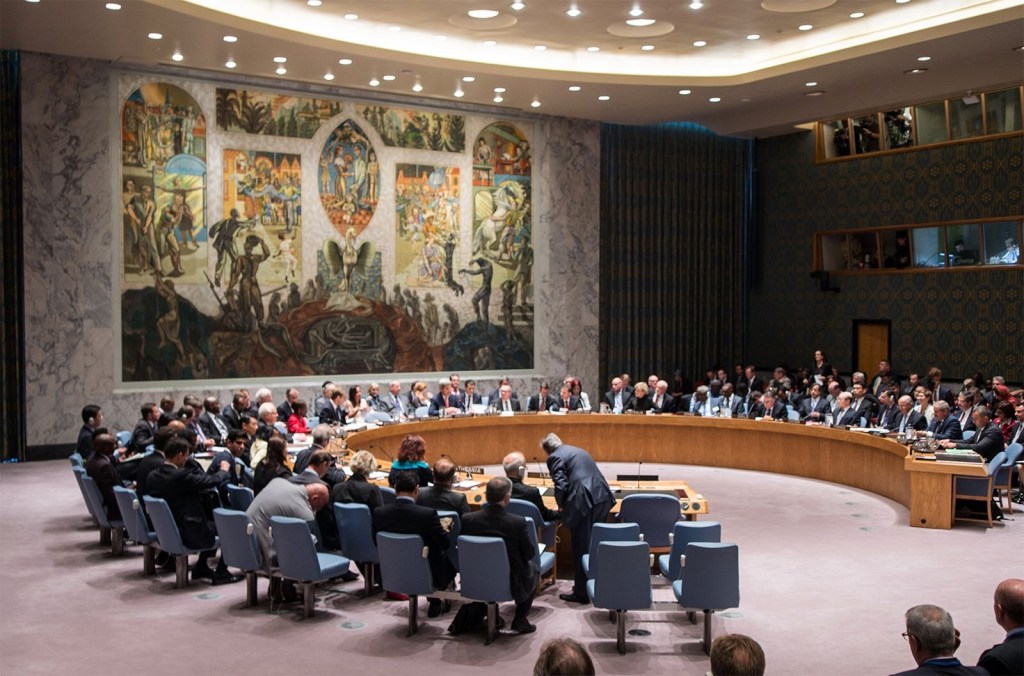
The larger question would be: Is it actually broken . . . broken enough to require fixing? And some think it is.
From the beginning, the Security Council has been comprised of five permanent members (the P5): the United States, United Kingdom, France, Russia and China. Other countries alternate as non-permanent members, but without the crucial veto power held by only the five permanent members. Note that those five do not include any nations from the Middle East, Africa, Latin America, or the Caribbean.
United Nations Security Council
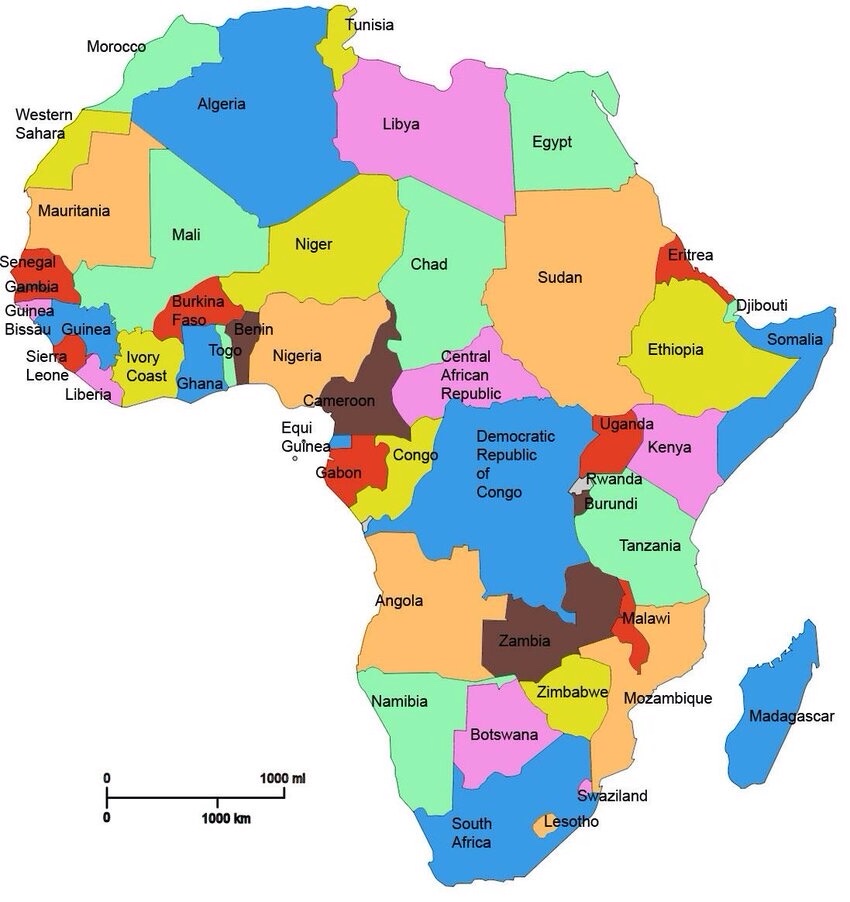
With the Council’s annual meeting coming up in September, Africa in particular is pressing for changes that would reform what is being called the “colonial-era world order.” [Tara John, CNN, August 28, 2024.] And Sierra Leone’s President Julius Maada Bio is urging the inclusion of two new permanent member seats for African countries.
There are logical, solid arguments on his side. There are 54 African countries in the African Group of the UN. The continent contains more than one-fourth of the UN member states, and more than a billion people — but, as President Bio stated — is “grossly underrepresented in this vital organ of the UN.” Further, “African issues take up nearly 50% of the Council’s daily business, and the bulk of its resolutions concerning peace and security.” [Id.]
I certainly see his point; it would be difficult not to — although I do think one seat on the Council would be proportionally more suitable. However, one other thing worries me, and it was alluded to in the CNN article:
“A senior diplomat at the UN told CNN that Africa currently holds a lot of sway among the P5 countries, the final arbiters on any reform, as Russia and America scramble for influence in the continent.” [Id.; bold emphasis is mine.]
And there it is: not so much about the “scramble for influence,” but more concerning the already-existing Russian influence in much of Africa. In addition to the decades-long paternalistic relationship of Russia with numerous African countries, there is the more recently increased presence of the so-called “Africa Corps” — the reincarnation of the late mercenary Yevgeny Prigozhin’s Wagner Group — in countries such as Libya, Mali, the Central African Republic, Burkina Faso, Niger, and Guinea Bissau. And behind it all, Russia’s ultimate goal of a “new world order.”
If the Africa Group were to be granted Security Council permanent membership, which country or countries would be chosen to fill the seat(s)? And what assurance would there be that their votes would not be swayed — even controlled — by any obligation they may owe to Russia, or that they wouldn’t be caught in a political tug-of-war between Russia and one or more of the other permanent members?
These are complex, difficult questions, which I am not qualified to answer. But they are so important, I felt the need to ask them.
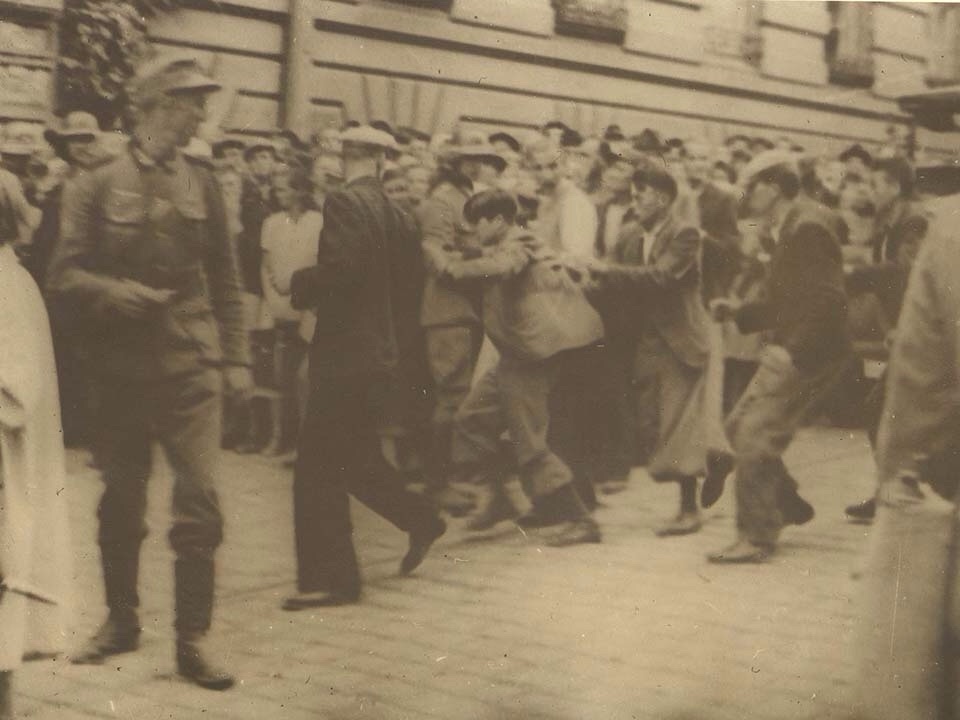
Between August 26 and August 28, 1941, more than 23,000 Hungarian Jews were slaughtered by the German Gestapo in occupied Ukraine.
Gestapo Rounding Up Jews in Lviv, Ukraine – 1941
This is not “hidden” history . . . but it is largely overlooked within the framework of the six million (or more) Jewish lives taken in Europe by the Nazi regime during World War II. It was brought back to mind in yesterday’s “This Day In History” chapter (History.com), and caused me to ponder, once again, the horrors of invasion, occupation, destruction and conquest visited upon Ukraine by various invaders throughout its long history.
This particular story had its beginning in Hungary — a country with its own long, sad history of anti-Semitism. Tens of thousands of Hungarian Jews had been expelled from Hungary and migrated to Ukraine. When Nazi Germany invaded and occupied Ukraine, the German authorities tried to send them back to Hungary, but their homeland would not have them. So SS General Franz Jaeckeln made the decision to deal with the problem in the only way he knew how: by the “complete liquidation of those Jews by September 1.” [History.com, August 28, 2024.]
They were rounded up and, on August 28th, marched — more than 23,000 of them — to bomb craters at Kamenets Podolsk. They were ordered to undress, and were then “riddled . . . with machine-gun fire. Those who didn’t die from the spray of bullets were buried alive under the weight of corpses that piled atop them.” [Id.]
Problem solved . . . and three days ahead of schedule.
In all, more than 600,000 Jews had been murdered in Ukraine by the end of the war.
*. *. *
Today, it is not Jews who are being specifically targeted in Ukraine, but the country itself . . . and this time by Russia, not Germany. The reasons are different; in Russia’s case, it’s a land grab — a first step in its grand plan of expansion and world domination. But the effect — the death, the destruction, the brutality, the fear — are the same.
And still Ukraine carries on, with strength, courage, and undying love of country. To its past, its present, and most of all, its future, I say — Slava Ukraine!






























 The Blog About Everything … and Sometimes Nothing