If all y’all Republicans down there in Texas are so determined to continue with your redistricting, why not go whole hog, and gerrymander your cheatin’ selves straight back to your roots?
Mexican Texas
For those of you who skipped history class, here’s your chance to catch up. From 1821 to 1836, after Mexico gained its independence from Spain (that’s in Europe), Texas was part of Mexico. I know that’s a surprise, but it’s true.
Anyway, in 1836, the folks in Texas decided to declare their independence, and they formed the Republic of Texas. But then the United States decided it wanted Texas for itself — even before they knew about all the oil buried there — and they annexed it in 1845. Mexico and the United States went to war in 1846, and by the time it was over in 1848, Texas, and a whole lot more territory, had become part of the United States.
Mexican-American War
That’s a very simplified version of the history of your great state, but I wanted to be sure y’all understood that Texas started out in Mexico, and that all y’all Texans are really the sons and daughters of Mexican immigrants to the United States.
So I’m thinkin’ that maybe, if y’all ain’t happy with the way things are, or you’re not willin’ to do things accordin’ to our laws, you might want to consider goin’ back to Mexico and lettin’ us get on with the important things in our lives.
As for your oil, I’m sure we can make up the difference from places like Oklahoma and Alaska, and that can be our gift to Mexico for takin’ you back.
Happy trails, y’all.
Just sayin’ . . .
Brendochka 8/5/25
P.S. Just one more thing: To all the Texas Democrats who left the state this week to prevent a vote on an illegal redistricting measure . . . good work. I’m sure we can find jobs for you in the 49 remaining states.
On March 22, 2024, 149 people were killed and at least 600 injured in a horrific terror attack on the Crocus City Hall entertainment center outside of Moscow. Shortly afterward, the Islamic State-Khorasan, known as ISIS-K, claimed responsibility; both U.S. and French intelligence agreed that ISIS-K was solely responsible for the attack.
Crocus City Hall, Moscow – March 22, 2024
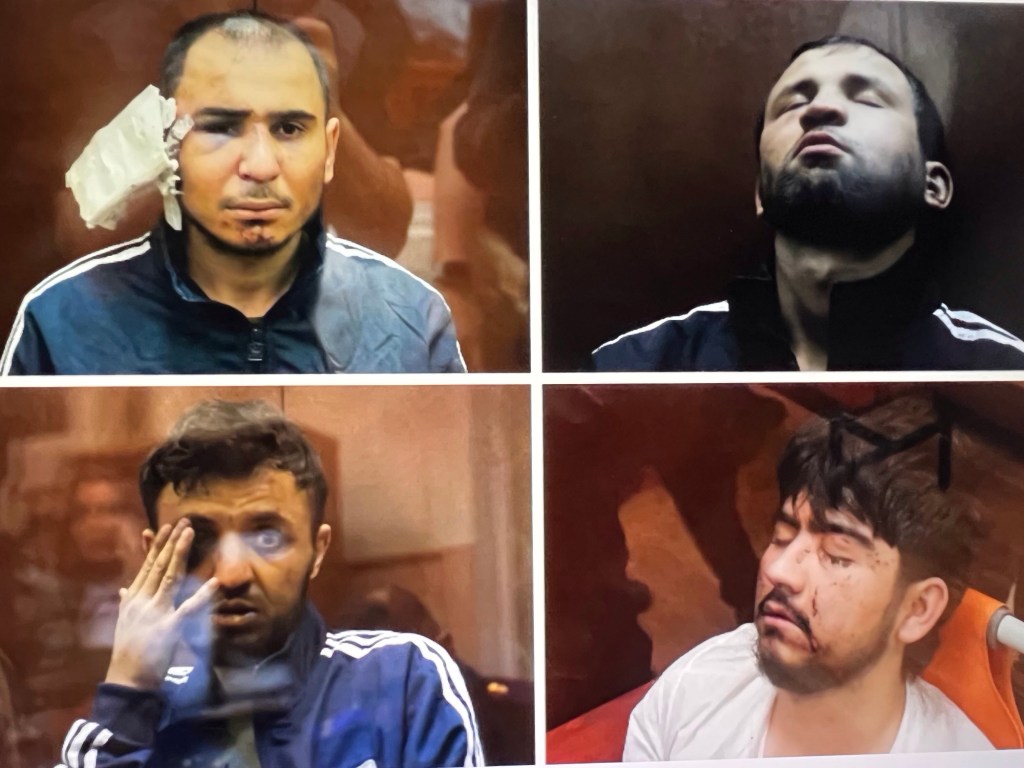
The following day, four Tajik nationals were arrested and accused of having committed the atrocity. The four — Dalerdzhon Mirzoyev, Shamsidin Fariduni, Muhammadsobir Faizov, and Saidakram Rachabalizoda — are shown below as they appeared in court following their arrest, obviously having been badly beaten while in custody. One appeared, in a video posted on Telegram, to have had an ear cut off.
The Four Tajik Suspects – March 2024
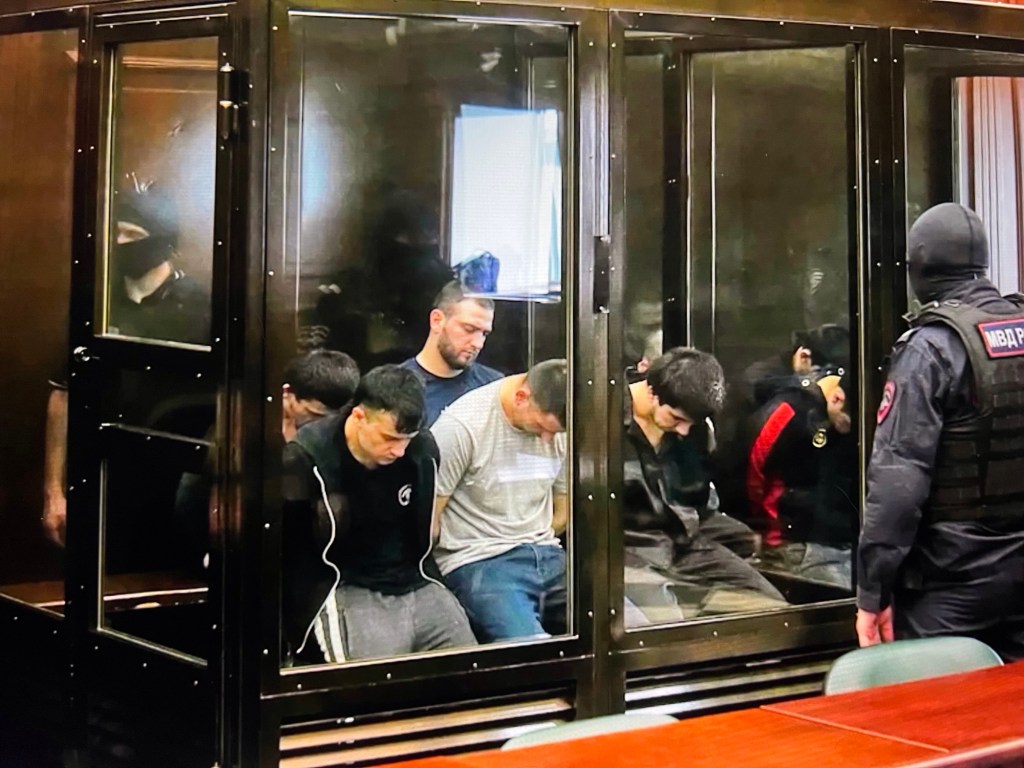
Yesterday — more than 16 months after the attack — the four suspects were at last brought to trial, along with 15 other individuals arrested in the meantime on various charges of involvement. Not surprisingly, three of the four principal defendants pleaded guilty before a three-judge panel at the Second Western District Military Court; the fourth, Saidakram Rachabalizoda, pleaded “partly guilty.” [RFE/RL, August 4, 2025.]
From the start, human rights groups have expressed concerns that their trial would not be a fair one. One — activist Karimjon Yorov — said:
“In normal democratic countries, this would never happen — confessions were beaten out of people accused of a terrorist attack and they [the authorities] don’t even hide it.” [Id.]
And some have questioned the arrests of the other 15 charged with ancillary offenses, such as renting apartments to those actually involved in the attack . . . whether or not there was proof they had knowledge of the circumstances.
Gennady Gudkov — himself a former FSB officer and deputy in the State Duma — has said:
“In my opinion, they simply recruited scapegoats. It is difficult to understand the degree of their guilt. I have the impression that this trial is an excuse for not conducting a real investigation.” [Id.]
At Trial, in the Defendants’ Box – August 4, 2025
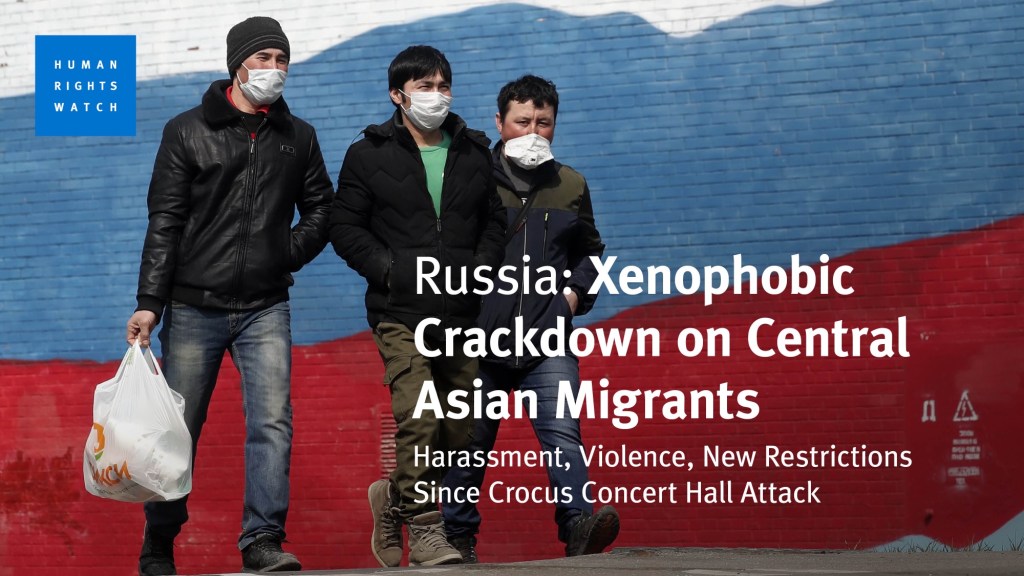
This has all taken place in the shadow of Moscow’s tightening of its immigration policies, the increase of ethnic profiling and arbitrary arrests of Central Asians, and the numerous instances of racist attacks by far-right nationalist groups. New legislation was enacted a year ago giving police greater powers to expel migrants without court orders.
Human Rights Watch (HRW) said in a March 2025 report: “While failing to condemn these xenophobic actions, Russian authorities have also intensified their targeting of Central Asian migrants.” [Id.]
And Russian officials say that a new system will be activated in September combining biometric registration, location tracking, and intensified police oversight to monitor migrant workers — all in the name of of national security and social order. [Id.]
*. *. *
But apparently, one set of suspects was not enough for the Kremlin. Taking advantage of an opportunity to manufacture justification for its “special military operation” against Ukraine, Russia’s Investigative Committee has promoted the theory — and claimed to have evidence — that Ukraine was behind the terror attack.
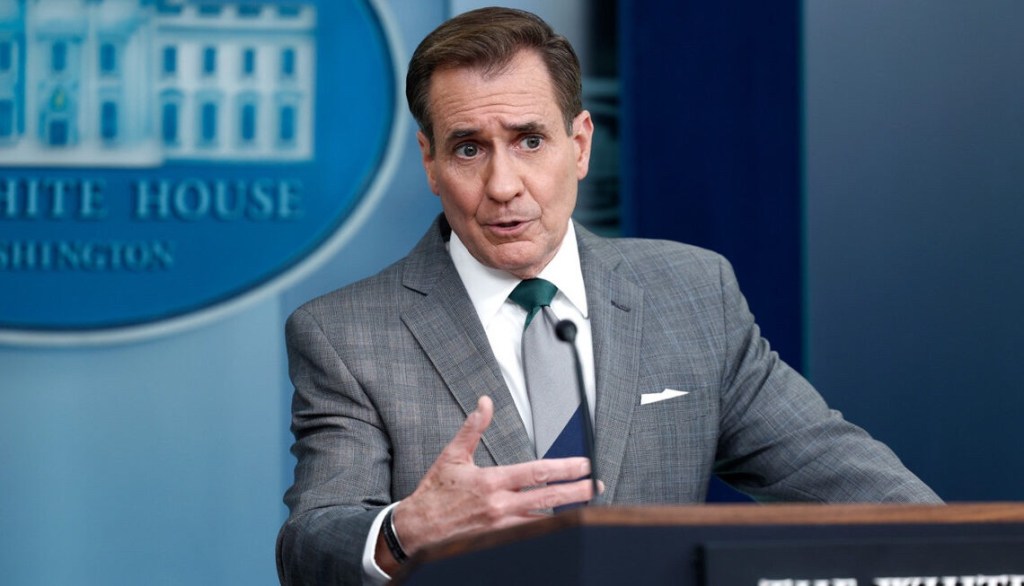
John Kirby, then White House National Security Council spokesman, said at the time that Russia’s attempt to place blame on Ukraine was “nonsense and propaganda.” Adding that Washington had sent a message to Russia’s security services two weeks before the attack occurred, and that there had been multiple such advance warnings about potential extremist attacks on concerts and other large gatherings in Moscow, he said:
“It is abundantly clear that [Islamic State] was solely responsible for the horrific attack in Moscow last week. In fact, the United States tried to help prevent this terrorist attack and the Kremlin knows this.” [RFE/RL, March 28, 2024.]
John Kirby
*. *. *
Are these four men from Tajikistan actually guilty of the heinous attack on March 22, 2024? We’ll never know for sure, as we have only the Russian authorities’ word as to the thoroughness of their investigation, and the methods used to elicit the guilty pleas.
What we do know is that, once charged, their fates were sealed. Now, as with every trial in Russia, the verdicts are a foregone conclusion; we only have to await news of their sentences.
As to the other 15 defendants . . . at this point, it’s anyone’s guess.
The Russian word for “bear” is “medved ” — and it appears that the loud-mouthed “bear” in the Kremlin, Dmitry Medvedev, may finally have roared once too often for his own good.
Because it sounds, from today’s reports, as though Papa Bear Vladimir Putin is trying to do a bit of damage control after Little Dima’s latest temper tantrum.
What happened is this:
> On July 30th, in response to Donald Trump’s threat of further sanctions if Putin failed to meet an August 8th deadline, the Kremlin said they were “taking measures to counteract all of this or even turn it to our own advantage.”
> Trump called Russia’s continuation of the war in Ukaine “disgusting” and “sad.”
> Then Medvedev chimed in with an unsolicited comment that “each new ultimatum is a threat and a step towards war” — the first public use of the “W” word from the nation that still refers to its invasion of Ukraine as a “special military operation.”
> On the 31st, not satisfied that he’d sounded hawkish enough, Medvedev gave an encore performance, warning of a “dead hand” action — a reference to Russia’s codename for its retaliatory nuclear strikes control system. Suddenly, the “N” word had been dropped.
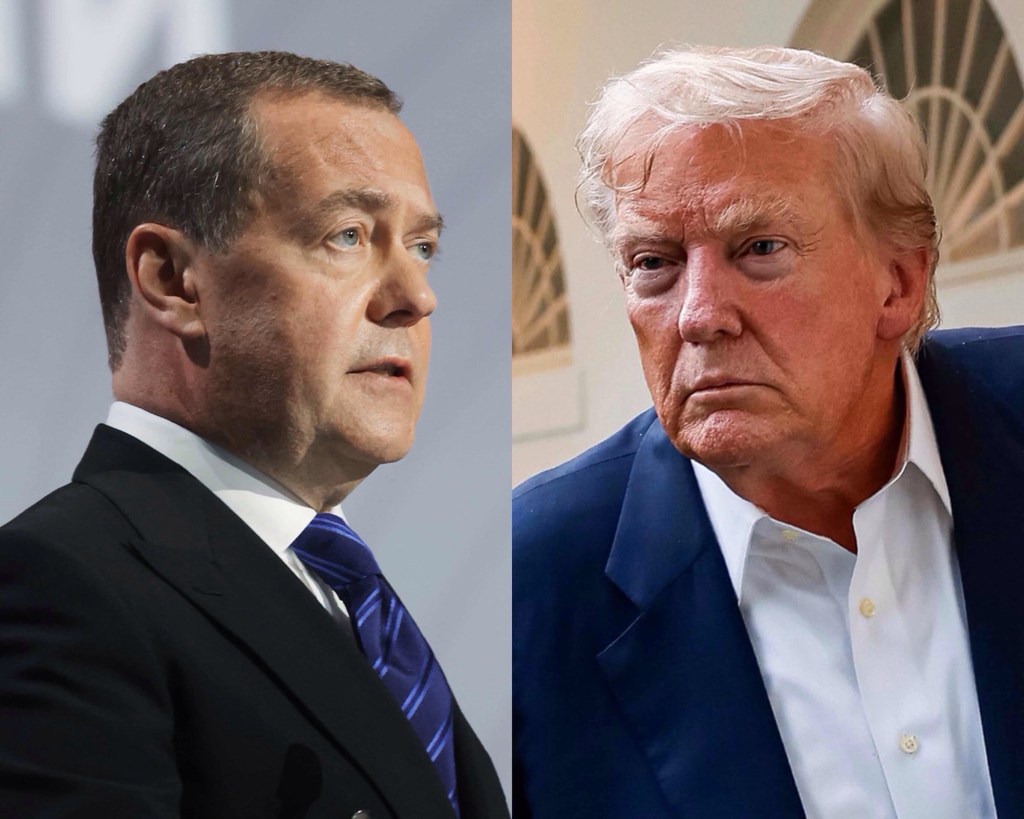
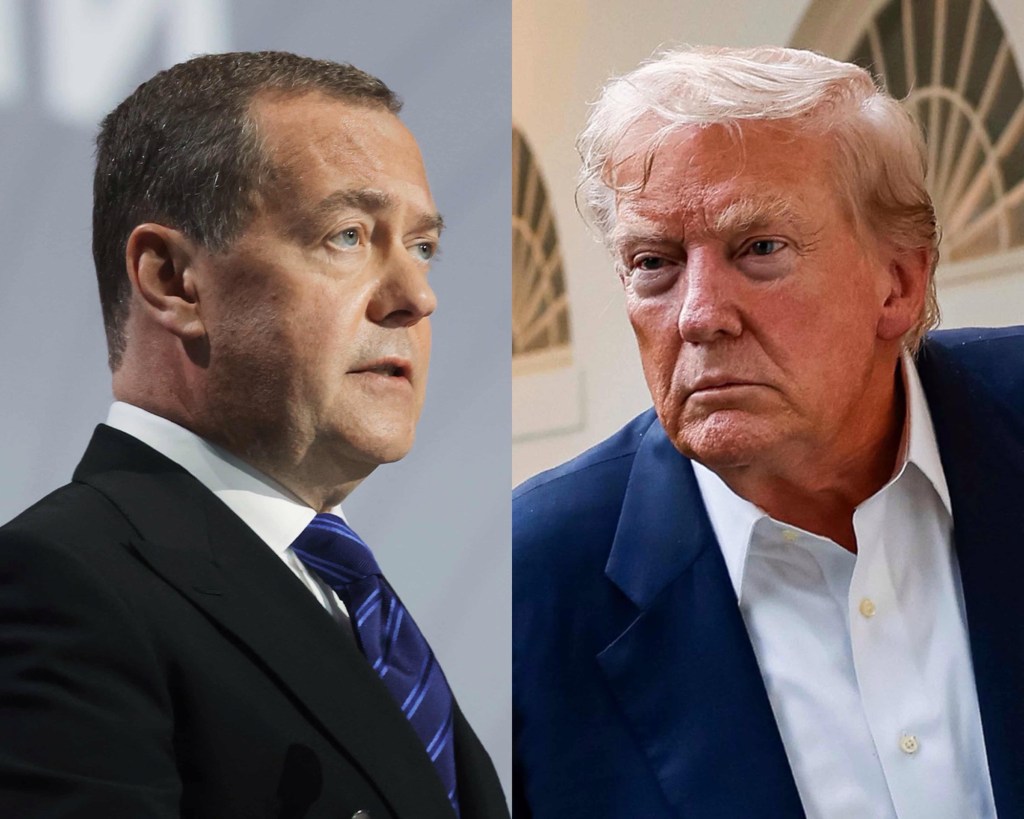
The Combatants – Medvedev vs. Trump
> And Trump, never to be trumped, called Medvedev “the failed former president of Russia, who thinks he’s still president,” and cautioned him to “watch his words … he’s entering very dangerous territory!” . . . later adding that “words have meaning.” (While certainly appropriate in this case, I’m sure Trump completely missed the irony of those last words issuing from a mouth that itself has no filter. But I digress.)
> Trump then, on August 1st, said he was ordering two U.S. nuclear submarines (not specifying whether they were nuclear-powered or nuclear-capable) to be repositioned in unnamed, “appropriate” locations closer to Russian territory.
On the Move?
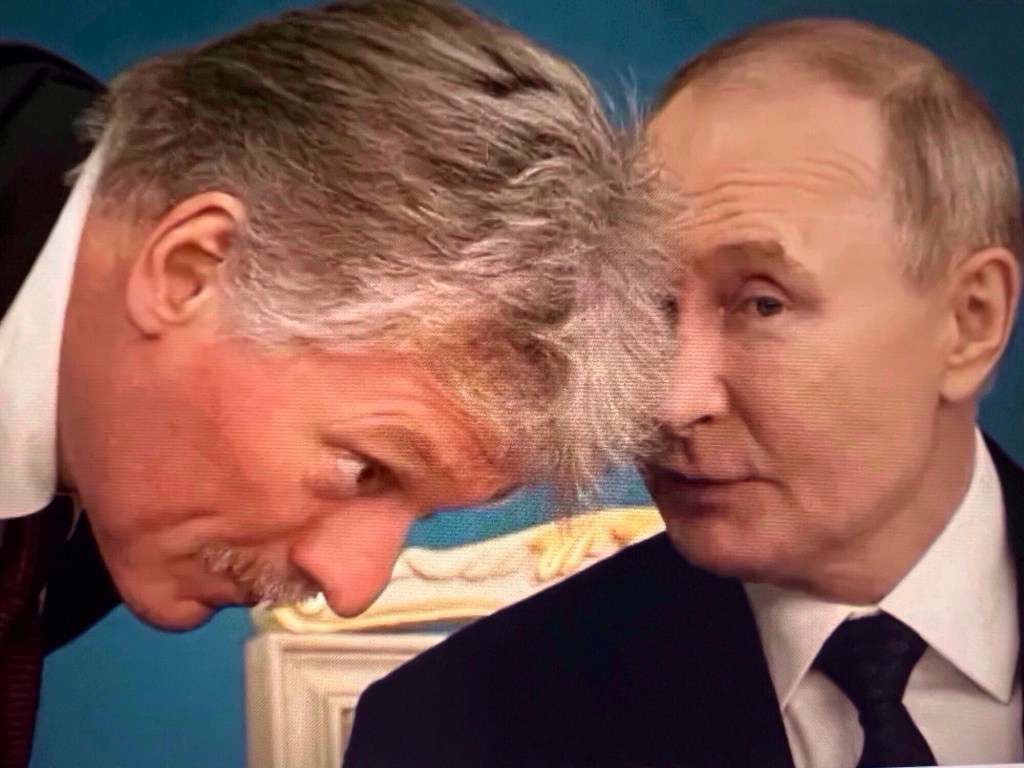
Now it was becoming clear that someone had to come to their senses before the U.S. and Russia began lobbing nuclear missiles at each other across the Bering Strait. Luckily, Putin was alert to the problem, and had his spokesman, Dmitry Peskov, make a statement to the press:
“In this case, it is obvious that American submarines are already on combat duty. This is an ongoing process, that’s the first thing. But in general, of course, we would not want to get involved in such a controversy and would not want to comment on it in any way. Of course, we believe that everyone should be very, very careful with nuclear rhetoric.” [Dmitry Antonov and Mark Trevelyan, Reuters, August 4, 2025.]
And, without specifically mentioning Medvedev’s comments, Peskov added that, while “in every country members of the leadership … have different points of view,” Russian policy is dictated by Putin alone. [Laura Gozzi, BBC News, August 4, 2025.]
Well said, comrades.
In Sync: Peskov and Putin
At this point, I would venture a guess that Dmitry Medvedev — to say the very least — is not having his best week at work. He has not publicly reacted to Trump’s last response, and has not been active on X since sending the controversial post.
In fact, if he were to ask my advice, I might recommend posting his resume on LinkedIn . . . if it isn’t already too late.
I suppose it was just a matter of time, really, before the cracks would begin to show.
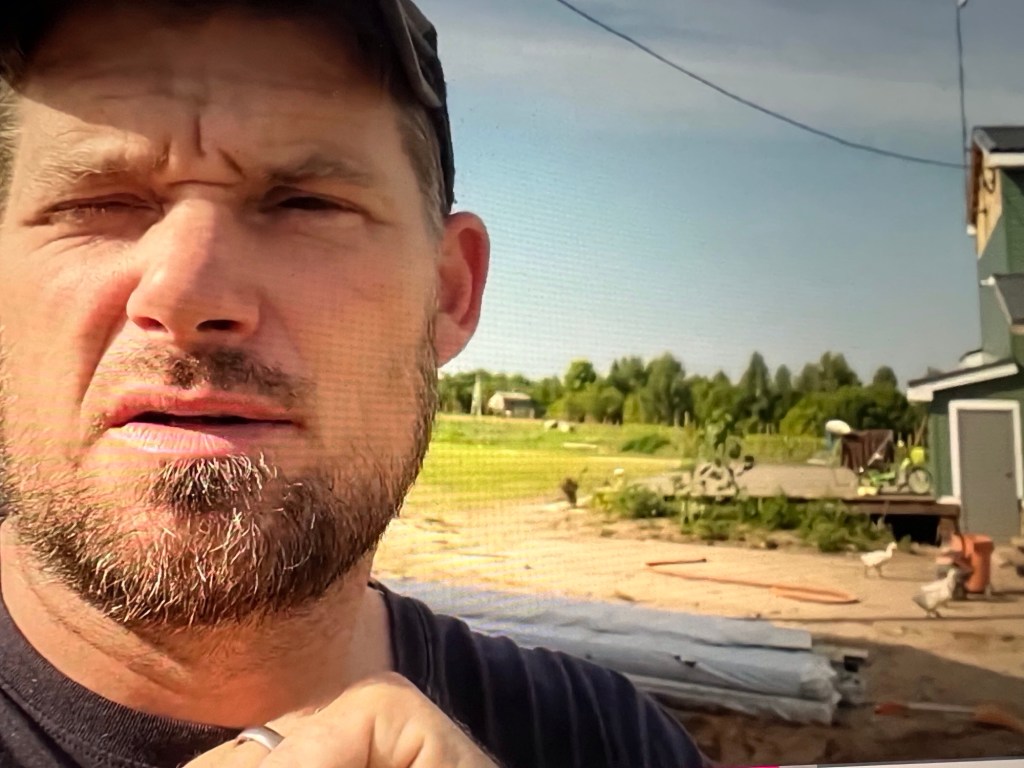
Arend Feenstra; From Canadian Farmer to Russian Media Star
One might argue that the Feenstras of Saskatchewan had already succumbed to the lure of Vladimir Putin’s “Year of the Family” sales pitch when they moved to Russia a year and a half ago. They were intent on escaping what they considered the unhealthy “wokeness” of Canadian culture, and believed that the conservative, anti-LGBTQ, land-rich nation was the one place on Earth they would find the ideal life for the youngest eight of their nine children.
And since their arrival — though after a somewhat rocky start — they have indeed managed to build a new life on a large piece of farmland near Nizhny Novgorod. They’ve constructed — with their own hands — a big house, a barn, a workshop, a root cellar, and a nearly-completed guest house (purpose not yet revealed): found markets for their eggs and produce and home-baked goods; and begun building a herd of cows, a flock of sheep, a drove of pigs, and flocks of chickens, ducks and geese. “Old MacDonald” would have been right at home with the Feenstras.
The Idyllic Version
But at what cost?
Not just dollars, or rubles. The real cost has been the sale of their souls to the man in the Kremlin. Every aspect of their busy, hard-working lives is covered by cameras and interviewers, as well as their own daily broadcasts on YouTube, Telegram, Russia’s own Rutube, and something called Boosty. And, as I have previously pointed out, each broadcast — with dad Arend Feenstra as the affable host — is peppered with subtle (and sometimes not-so-subtle) mentions of the great privilege of being allowed to live and work in Russia; the outstanding medical care; the attentiveness and assistance received from the local officials; the friendliness and generosity of everyone they have come in contact with . . . and even the occasional, shameless promotion of a commercial product or service.
Not to mention the overt invitations to people around the world who might be looking for a new home . . .
Soviet Propaganda Poster
But I hadn’t realized how deeply mired the Feenstras are in the muck of Putin’s regime until yesterday, when I was watching yet another update on the construction of the guest house and learning of an upcoming “big announcement” concerning their first guest(s).
Toward the end of the video, Arend mentioned that they had been seeing YouTube channels “disappearing,” and reminded viewers that his broadcasts could also be found on the other channels — all free except Boosty — in the event they had any problems with YouTube.
And I immediately understood what was happening: Putin is known to have been actively working to block YouTube throughout the country, or at the very least to limit what is available on it, as part of his overall crackdown on independent media; and the “disappearances” of channels are no doubt a result of those efforts.
But it wasn’t clear whether Arend Feenstra was completely aware of that. Because after herding the sheep into their stalls and a flock of geese into a cozy little outbuilding of their own for the night, he signed off with a reminder about his other free media outlets . . . plus a solicitation for paid subscriptions on Boosty for those who might inclined to help support them. And what he said, in part, was:
“We are still at serious risk of losing YouTube channels because of the country we live in and the good things we say about it. That’s all I’ll say, don’t want to mess up the algorithm.”
“Say what?!!”
But he sort of mumbled through it, seeming a little uncomfortable. And it struck me: He has most likely been told that other countries are cutting off Russian programming because they don’t want their people hearing positive remarks about Russia, rather than the other way around. Whether he honestly believes it, or he simply knows he has to accept it, is irrelevant . . . the damage has been done.
The Feenstra family is now part of the Russian populace, though not yet citizens. But as long as they remain there, they will not be in control of their own lives, but will belong — lock, stock and poultry — to the State. And all because they couldn’t cope with people whose beliefs and lifestyles were different from theirs.
I wonder . . . are they now fully aware of the consequences of the choice they made? And if so, do they still think it was worth it?
If you’ve read Part 1 of this tale (July 31), you may have been waiting for an explanation of how I knew about Carlos the Jackal’s background, and also wondering who in hell this Yuri Shvets guy is. And if you haven’t read the first part, you might want to do that . . . it’s up to you, of course, but it would probably be helpful.
Anyway, finding both of their names on a list of Moscow’s Patrice Lumumba University alumni was not surprising in and of itself, as Shvets has always claimed to have been a classmate of The Jackal. And while I take most of what Shvets says as questionable (at best), it appears that he may have been telling the truth about this.
But who is Shvets, and how did I come to be — through him — just two degrees of separation from The Jackal: one of the 20th century’s most notorious terrorists? It’s a long and convoluted story dating back some 30 years, when a Russian acquaintance — Valentin Aksilenko, a retired Colonel in the KGB — asked my help in finding a potential publisher for a tell-all book about the KGB being written by a colleague of his in Moscow. That colleague was Shvets, himself a Major in the KGB, and also supposedly retired.
I’ve written about that little adventure at length in the earliest chapters of my blog, so I won’t go into the grisly details again. But it did end with Shvets’ book — more of an homage to himself than anything resembling provable fact about the KGB — being written and published, and both men defecting with their families to the United States.
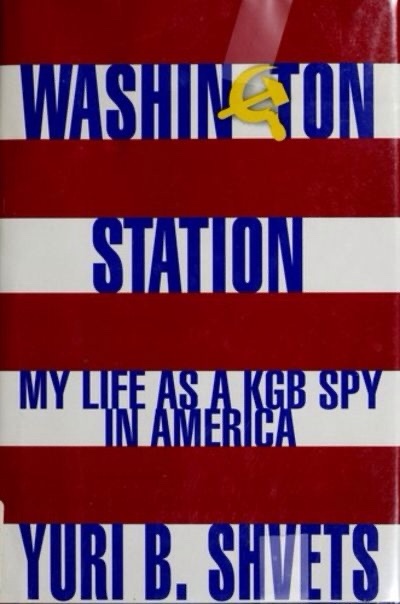
The Book
During the time all of this was taking place — 1993 to 1995 — it became painfully obvious to me that there were gaping holes in Shvets’ stories, and particularly those of his own past accomplishments and his final “escape” from Moscow. I expressed my misgivings to the FBI agents in charge of their resettlement, and left it to the experts to sort out.
Since then — for 30 blissfully peaceful years — I have had no contact with either Shvets or Aksilenko. I know nothing of their lives in the past three decades, other than having run across Shvets’ YouTube channel, which, after a couple of brief attempts to listen to what he had to say, I dismissed as a waste of my time.
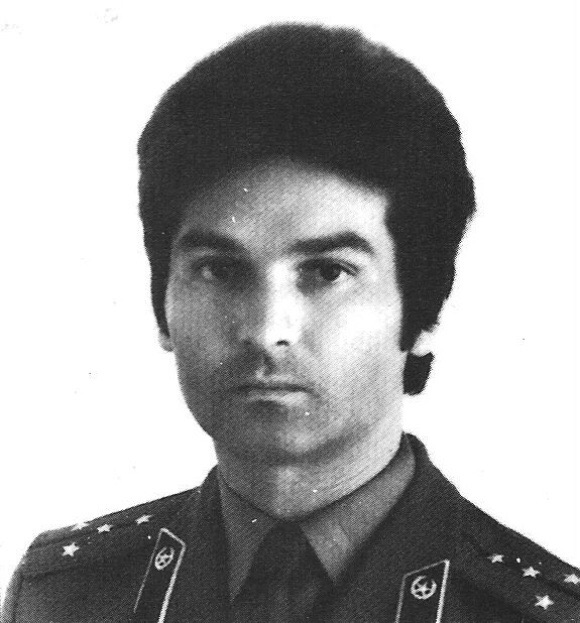
Yuri Shvets’ KGB Identification Photo
Then — as so often occurs in the course of my online searches — I happened upon an article by Ukrainian independent news medium Babel.ua from last December, titled:
“Pseudo-expert Yuriy Shvets became famous thanks to Dmitry Gordon and Putin. He constantly makes false predictions, invents facts and mentions ‘his country’ — the Soviet Union.”
And I immediately regretted not having paid closer attention to those YouTube broadcasts. Because here were investigative reporters, some 30 years after the fact, echoing my much earlier thoughts . . . only now based on more recent data. And, of course, I wondered why.
According to the Babel report, Shvets’ entire recorded history is founded on unconfirmed, and largely unverifiable, information provided by him. (Note: What can be confirmed is the period of his service at the Soviet Embassy in Washington, D.C. (1985-87), as he was under surveillance by the FBI during that time.)
The reporters also refer to the inaccuracy of the many conspiracy theories he promotes on YouTube, with special emphasis on matters involving Ukraine.
Shvets also has his pet theories about Vladimir Putin, even alleging that he has colon cancer and suffers from a severe mental disorder; that he is fed up with the West, “serious people in the leadership of the Russian Federation” and China, because “he is always walking around with an outstretched hand with idiotic ideas.” [Sofiia Korotunenko and Kateryna Kobernyk, Babel.ua, December 2, 2024.]
I know . . . it makes absolutely no sense. But, from my own experience with Shvets, that’s not surprising.
An Older Shvets
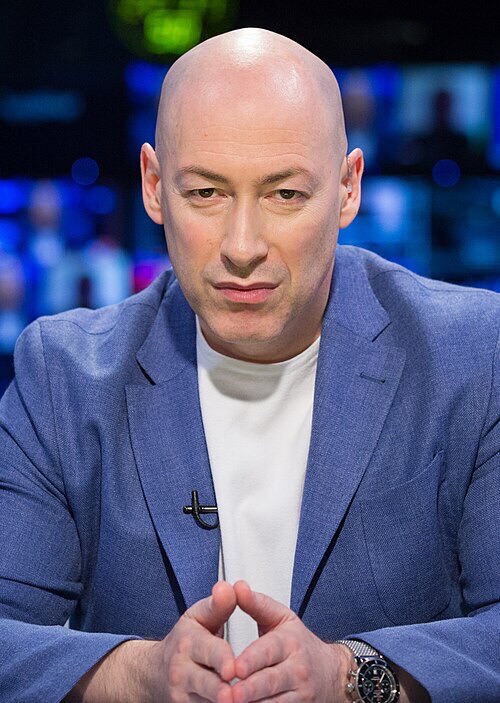
According to the Babel report, Dmitry Gordon — a Ukrainian journalist, TV host and blogger — gave Shvets his 15 minutes of fame in 2017, when he invited the former spy for an interview and introduced him on air as a classmate of Vladimir Putin at the KGB Institute. Although not quite true — records indicate that they studied at the Institute at different times — the sound bite was picked up by Ukrainian media, and suddenly Shvets was considered “an expert on everything related to Russia and the Kremlin” . . . despite the fact that he has not been to Russia since 1993 and has no known connection to Putin. [Id.]
Dmitry Gordon
Babel journalist Sofiia Korotunenko says she has watched dozens of Shvets’ broadcasts and interviews, and has read his book, Washington Station: My Life As a KGB Spy In America” — which, for those who might be interested in obtaining a copy, disappeared from the shelves almost as soon as it was published and is only occasionally available from second-hand sources.
Korotunenko gives numerous examples in her article as to why Shvets’ word is not to be trusted, including his bizarre conspiracy theories and usually incorrect predictions. I won’t attempt to repeat all of her revelations here, but one point, having to do with Russia’s invasion of Ukraine, is particularly notable:
“On the eve of a full-scale invasion, Shvets estimated the chances of a Russian invasion as ‘well below 50%,’ because only a ‘crazy fanatic’ would go for it, and Putin is not like that. Besides, Putin and his state are unable to fight, he said.
“Subsequently, Shvets regularly predicted the date of victory and liberation of the occupied Ukrainian territories. And he was constantly wrong.” [Id.]
Note: For those who choose to read the Babel report, let me explain the confusing references to “the Swede.” This is an obvious translation error; the Russian word for “Swede” is ... you guessed it ... “Shvets.” There is no actual Swedish person in this story.
Sofiia Korotunenko
*. *. *
Upon reading the Babel article, my reaction was strictly a personal one . . . an affirmation of what I already knew about Yuri Shvets from a different, earlier segment of my life. Then I read these statistics, which I hadn’t seen before:
> He has 1.5 million subscribers on his YouTube channel;
> Since 2021, he has released new videos almost every day, which have collected 725 million views; and
> Almost 130,000 more followers follow Shvets on TikTok, Instagram, X, and Telegram. [Id.]
At that point, I realized that — even if the numbers are exaggerated, which is entirely possible — the formidable power of social media has exposed millions of people . . . most of them lacking the knowledge or the experience to separate the truth from the bullshit . . . to this man’s alleged “expertise.”
In addition, American author Craig Unger, in his book American Kompromat — a blatant, scathing indictment of Donald Trump — relies heavily upon “information” provided by Shvets and apparently taken by Unger as gospel.
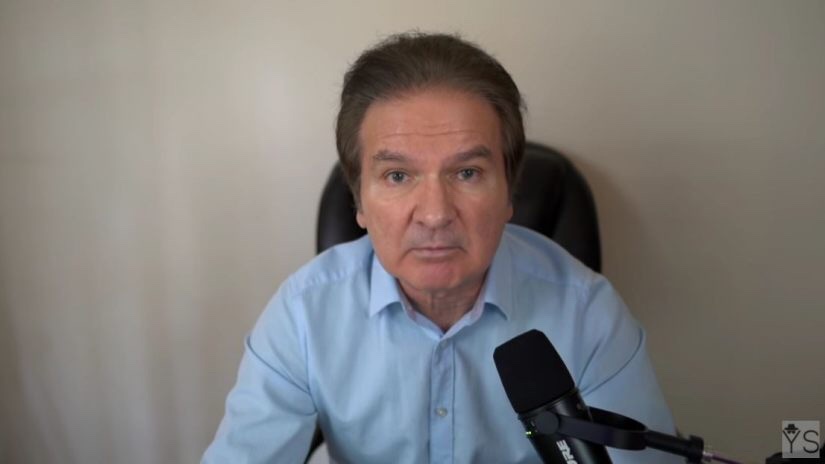
Yuri Shvets, on YouTube
So I felt that this was an opportunity — aside from sharing a bit of personal history — to point out yet another example of the nature and extent of the misinformation — and intentional disinformation — floating around out there in cyberspace, ready to pull the innocent reader into its quagmire of lies and propaganda.
In the simplest of terms, there’s a lot of dangerous crap on the internet. It’s hard not to get sucked into it; but at least we can watch where we step.
Yesterday, in reporting on former hostage Paul Whelan’s first year at home following his release after five and a half years in a Russian prison, I also paid homage to those still incarcerated there. I specifically named the Americans on our list, but I regret to say that I miscounted — there are seven, not six as I reported.
So, a day late — and with my deepest apologies — here again is Stephen James Hubbard, age 72 (or possibly 73 by now), from Michigan. He had been living in Ukraine since 2014, and was arrested there by Russian forces in April of 2022 on charges of fighting as a mercenary for Ukraine. On October 5, 2024, he was convicted and sentenced to seven years in a maximum-security penal colony.
Stephen James Hubbard, in Prison – 2024
And, for the 82nd Sunday in a row, here is our remembrance of those remaining in Russia, Belarus, and Azerbaijan as hostages to Vladimir Putin’s reign of terror. The names of the Americans are bolded this week, solely for clarification of my earlier error; their safe return is no more or less urgent than any of the others.
Let’s bring them all home soon.
*. *. *
Prisoners of War:
The People of Ukraine The Azov 12
Endangered Exiles:
Mikita Losik Yulia Navalnaya Countless Journalists and Other Dissidents
Ales Bialiatski Andrei Chapiuk Uladzimir Labkovich Ihar Losik Marfa Rabkova Valiantsin Stafanovic Yuras Zyankovich
In Russia:
David Barnes Gordon Black Antonina Favorskaya Konstantin Gabov Robert Gilman Stephen James Hubbard Sergey Karelin Vadim Kobzev Darya Kozyreva Artyom Kriger Michael Travis Leake Aleksei Liptser Grigory Melkonyants Nika Novak Nadezhda Rossinskaya (a.k.a. Nadin Geisler) Igor Sergunin Dmitry Shatresov Robert Shonov Grigory Skvortsov Eugene Spector Laurent Vinatier Robert Romanov Woodland
In her epic novel, Atlas Shrugged, Ayn Rand famously wrote:
“Contradictions do not exist. Whenever you think that you are facing a contradiction, check your premises. You will find that one of them is wrong.”
That’s good advice for scientists, economists, doctors, lawyers . . . and “stable geniuses” who think they know everything.
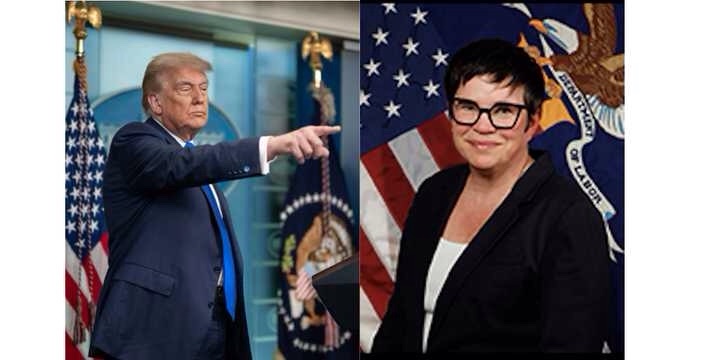
Donald Trump didn’t like the fact that the most recent report from the Bureau of Labor Statistics (BLS) showed a weaker-than-expected job market, raising worldwide alarms about his incomprehensible tariff policies. So he did what he always does in a fit of childish pique:he found someone to blame, and fired her.
This week’s victim was BLS Commissioner Erika McEntarfer, whom he accused — without evidence — of manipulating jobs figures for political reasons. [Natalie Sherman, BBC, August 1, 2025.]
Because he could. Because he needed a scapegoat. Because the numbers contradicted his delusional insistence that his punitive tariffs against every one of America’s trade partners throughout the world are, or eventually will be, beneficial.
And because he cannot stand to be wrong.
Never Wrong
But if he were smart enough, and honest enough, to check his premises, he would find that one of them — his — is indeed wrong. His tariffs are a total disaster.
Everyone in the world knows it . . . except him. Following this past week’s latest round of tariff increases, the three major U.S. indices dropped, following earlier sell-offs in Europe and Asia. [Id.]
Ryan Sweet, the chief U.S. economist at Oxford Economics, said the decision to fire Ms. McEntarfer was concerning because reliable economic data is essential to businesses, and cannot easily be replicated by private sources. He added:
“Clearly, this is a step in a very bad direction. If there are any questions around the integrity of the data … it’s going to create a lot of problems.” [Id.]
Donald Trump to Erika McEntarfer: “You’re Fired!”
Importantly, Ms. McEntarfer, who holds a degree in Economics from prestigious Virginia Tech, knows her job. She previously worked in the U.S. Treasury Department’s Office of Tax Policy, the U.S. Census Bureau’s Center for Economic Studies, and as a senior economist in the Council of Economic Advisers. She was appointed Commissioner of Labor Statistics in July of 2023 by — aha! — then President Joe Biden.
Well, there you are . . . that explains a lot.
Now Trump can fill the position with someone — a rabid Republican, of course — who will manage to come up with figures more to his liking . . . someone as qualified for the position as, say, Bobby Kennedy, Jr., is for his job . . . and we can Make America Poor Again!
*. *. *
If Trump has the slightest inkling of the scope of his latest disastrous misstep, he will never admit it. When in his entire lifetime has he ever been man enough to do that?
Clearly, someone has to have the cojones to do it for him: someone like the members of his Cabinet, or Congress, or the Supreme Court.
It doesn’t end for them the day they walk out of prison and board a plane for home.
A year ago today, the world was celebrating the previous day’s release of 16 political prisoners being held hostage in Vladimir Putin’s penal colonies on a variety of specious charges, including Evan Gershkovich, Vladimir Kara-Murza, Alsu Kurmasheva, and Paul Whelan. In return, ten Russians being held on criminal charges in various locations were sent home.
On the Way Home
We were treated to joyous scenes of the returnees being reunited with their families and friends, presumably ready to resume their normal lives after a period of well-deserved recuperation.
But were their lives instantly back to normal? That, of course, would differ according to each person’s particular circumstances, and their individual mental and physical conditions. PTSD affects everyone differently.
In an interview with CNN, former U.S. Marine Paul Whelan has said that, after more than five years of imprisonment in Russia, his return has been challenging:
“You’re literally starting over. For people like me who have come home after five-and-a-half years, we really don’t have very much. House is gone. Cars are gone. Employment’s gone. No health insurance.” [Jennifer Hansler, CNN, August 1, 2025.]
U.S. Marine Paul Whelan
Having been “violently arrested” in his Moscow hotel room while visiting for a friend’s wedding, hotel rooms are now a trigger for Paul’s PTSD. He also found that he had developed new seasonal allergies from being away for so long, and that the most ordinary activities can be challenging:
“It took a little bit of time for me to kind of feel comfortable driving down the same streets that I used to or going to a park or doing things that I used to do, especially with my dog when she was alive.”[Id.]
Sadly, his beloved dog passed away while Paul was in prison, never knowing why her best friend had left her.
The Ordinary Things: No Longer Ordinary
Paul has also been unable to find a new job. He says that — despite the mitigating circumstances of his imprisonment — there are companies that won’t hire people who have been in prison for any reason. There is also the disadvantage of a six-year employment gap on his resume.
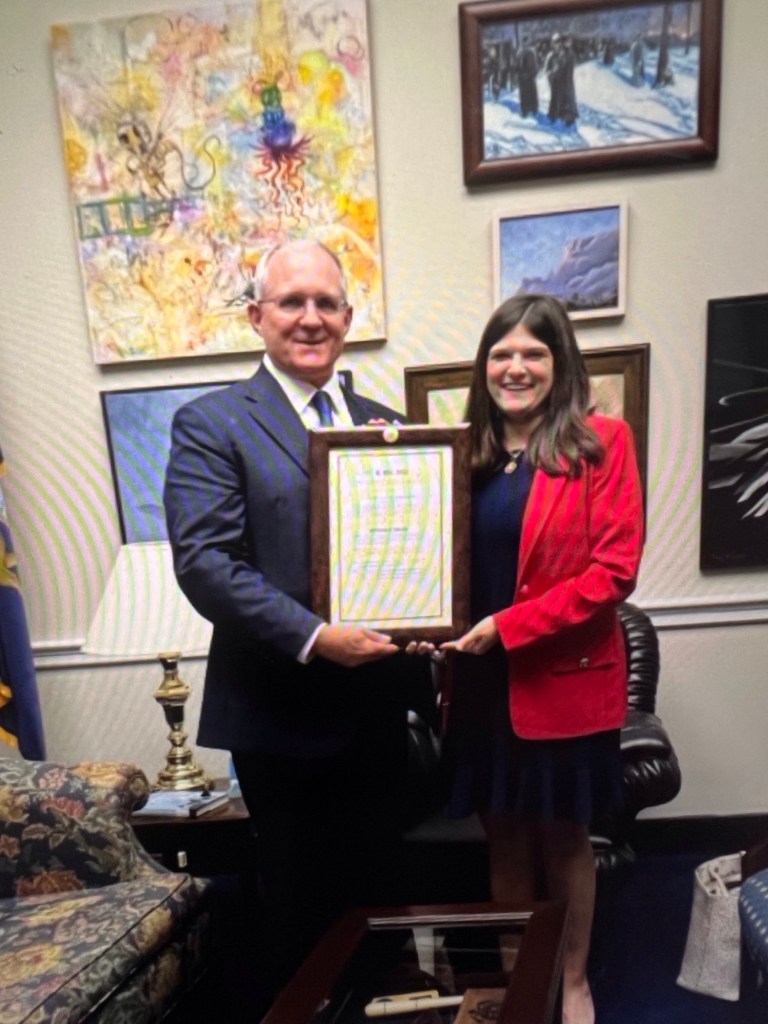
But he is working with Michigan Democratic Representatives Debbie Dingell and Haley Stevens, among others, on a law “that would fund the medical, dental and psychological care listed in the Levinson Act that was never funded,* as well as to provide compensation and things like that for former hostages who were wrongfully detained.” [Id.]
[* S.712 - The Robert Levinson Hostage and Recovery and Hostage-Taking Accountability Act of 2020]
Paul Whelan with his Parents and Rep. Debbie Dingell
Paul Whelan with Rep. Haley Stevens
But in the meantime, Paul — and likely others as well — will continue to struggle with their reentry into their “normal” lives.
*. *. *
Since that day in August of 2024 — while a few more hostages have been swapped, including Americans Marc Fogel and Ksenia Karelina — there are countless others still being held unjustly, including at least six Americans (to my knowledge): Robert Romanov Woodland, Staff Sergeant Gordon Black, Robert Gilman, David Barnes, Eugene Spector, and Michael Travis Leake.
It is imperative that, in addition to continuing efforts to negotiate their release, work be pursued for the passage — and funding — of effective legislation to ensure that these innocent victims of Vladimir Putin’s repressive regime be given the help they need once we welcome them back home.
Surely, there must be room in the federal budget to help these people who, through no fault of their own, have been through so much. Or is that no longer the American way?
I suppose, as long as these two keep exchanging threats and snarky comments, they’ll be too preoccupied to do anything worse.
One can only hope.
Dmitry Medvedev and a Very Tired-Looking Donald Trump
Except that the taunts keep escalating. From Medvedev today:
“If some words from the former president of Russia trigger such a nervous reaction from the high-and-mighty president of the United States, then Russia is doing everything right.” [RFE/RL, August 1, 2025.]
And the goading reminder from Trump on Truth Social:
“I have just been informed that almost 20,000 Russian soldiers died this month in the ridiculous War with Ukraine.
“Russia has lost 112,500 soldier since the beginning of the year. That is a lot of unnecessary DEATH! Ukraine, however, has also suffered greatly. They have lost approximately 8,000 soldiers since January 1, 2025, and that number does not include their missing.” [Id.]
Russian Military Losses Have Been Substantial
Yet the question remains: Is Dmitry Medvedev (derogatorily referred to in his own country as “Little Dima”) someone we need to be worried about? Or is Trump using him as the target for his invective in order to avoid a direct confrontation with Putin?
And who is Medvedev, anyway?
Yes, he was the titular president of Russia from 2008 to 2012 — but only as a stand-in for Vladimir Putin until Putin could run for his third term. At the time, the Russian Constitution provided for two permissible consecutive four-year presidential terms. So Putin served his two consecutive terms; took a required break for one term; installed his puppet Prime Minister, Medvedev, in the office in the interim; and made his comeback in 2012. (In the meantime, Putin had engineered a couple of changes in the Constitution to keep himself in office almost indefinitely.)
Russian Role Reversal
So, when Medvedev refers to himself as the former President of Russia, while he is not lying, he is glorifying his own past accomplishments. After his four years on the throne with Putin pulling the strings from behind, he returned to the position of Prime Minister in 2012. That lasted until 2020, when he was inexplicably removed from office and given the consolation role of Deputy Chairman of the Security Council of the Russian Federation . . . a position not totally without influence, but with little or no actual decision-making authority.
There are varying opinions as to whether Medvedev actually has a great deal of influence on Putin, or whether he is just kept around to play the part of the warmonger while Putin pretends to be concerned with peace negotiations and other diplomatic niceties.
But what I don’t like is the idea of Donald Trump blithely throwing around the “N” word, even if it is only a tactical maneuver. As he himself said just yesterday:
“Words are very important, and can often lead to unintended consequences, I hope this will not be one of those instances.” [Jaroslav Lukiv, BBC News, August 1, 2025.]




























 The Blog About Everything … and Sometimes Nothing