The very first time I heard the term “artificial intelligence,” I felt a sense of trepidation. I didn’t completely understand what it was, of course; and like the rest of the world at the time, I had no inkling of how quickly it would grow or how powerful it would become. I just knew it felt . . . well . . . wrong, somehow.
Today, when the leaders in the AI industry are themselves suddenly calling for restraint so as to prevent mankind from being overtaken by its own artificial creation, that little nagging feeling of mine has become all too real.
What have they discovered that they’re not telling the rest of us?
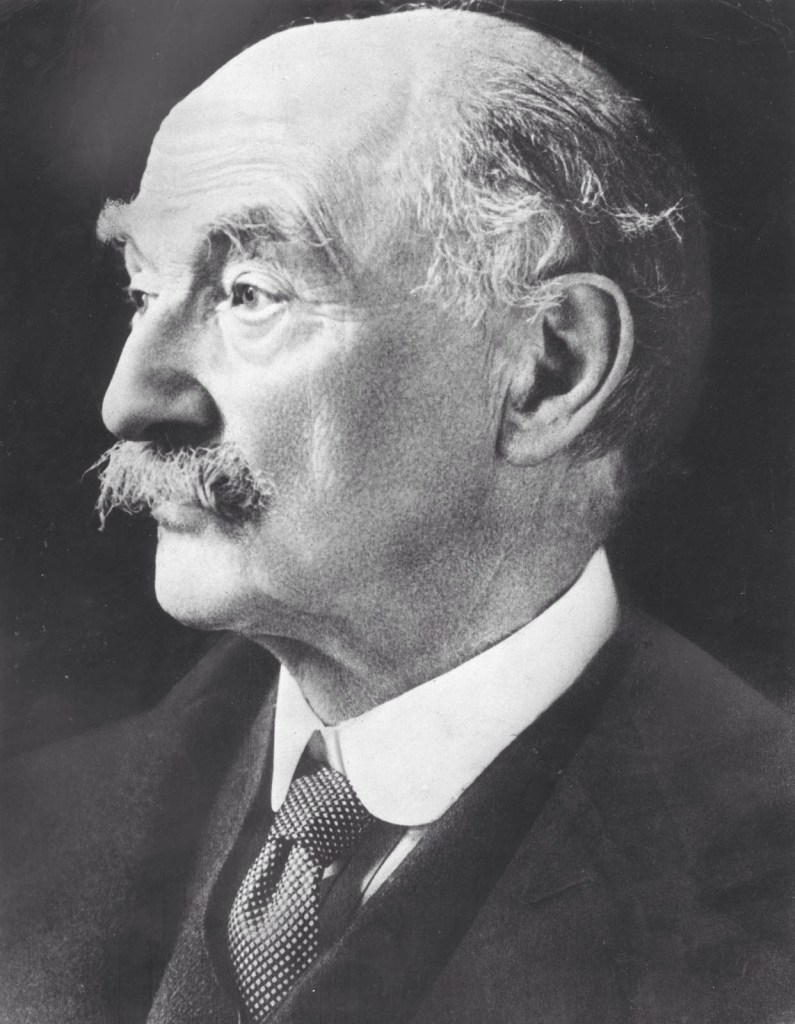
More than 100 years ago, English novelist Thomas Hardy offered this hopeful view:
“Fear is the mother of foresight.”
Thomas Hardy (1840 – 1928)
We can only hope the creators of today’s AI industry have the foresight needed to prevent the Apocalypse — because they are the only ones who can do it.
And that is exactly what we are seeing from Kyiv and Moscow today . . . despite anything Donald Trump may have us believe.
What Trump said on Truth Social yesterday was this:
“Ukraine has agreed not to hit Russian Energy targets. Russia has agreed to do likewise! The World’s Diesel price rise is mostly caused by the Russia/Ukraine War, not Iran.” [RFE/RL, September 14, 2026.]
Well, where do we begin? With his insistence that his gratuitous war against Iran has little or nothing to do with the skyrocketing price of fuel? Or with his belief that his bullying of Ukraine to cease their counterattacks against Russia’s oil refineries has actually convinced both sides to back off?
Let’s set aside, for the moment, the first issue: Trump’s delusional conviction that he is at fault for nothing — not the malfunctioning of nearly every department of the government, not the state of the economy, and certainly not the mess in Iran. We all know the truth . . . and we also know that he is incapable of facing it.
But this latest statement that both Ukraine and Russia have agreed to stop attacking each other’s energy targets is not just another product of his overactive imagination; it is blatantly untrue, and it would be disastrous to accept it as fact.
Following Trump’s post, Ukrainian President Volodymyr Zelensky said that Kyiv was indeed prepared to stop such strikes on Russia if — and presumably only if — they could be given solid assurances that Moscow would stop its attacks on Ukrainian energy facilities, infrastructure, and food supply routes. In a post on X, Zelensky stated:
“The war must be brought to an end. And a de-escalatory step regarding critical infrastructure could be the first step toward peace. We expect specifics from our partners.” [Id.]
So far, so good. Now let’s hear from Moscow.
While of course welcoming Trump’s call for Ukraine to stop striking Russian energy infrastructure, Kremlin spokesman Dmitry Peskov did not say whether Moscow would reciprocate. What he did say was that Russian forces will continue operating across Ukraine. [Id.]
Not exactly a commitment, is it?
Furthermore, even if the Kremlin had offered assurances that it would honor such an agreement, that would carry as much weight as their promises in early 2022 that they were not planning to invade Ukraine — right up until February 24th, when they did.
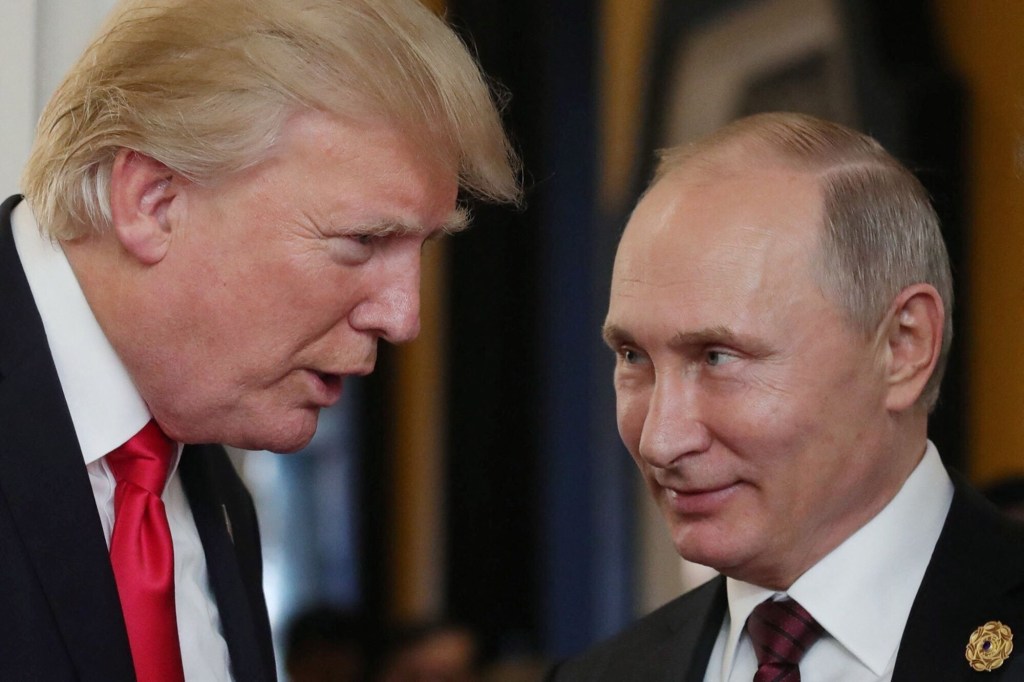
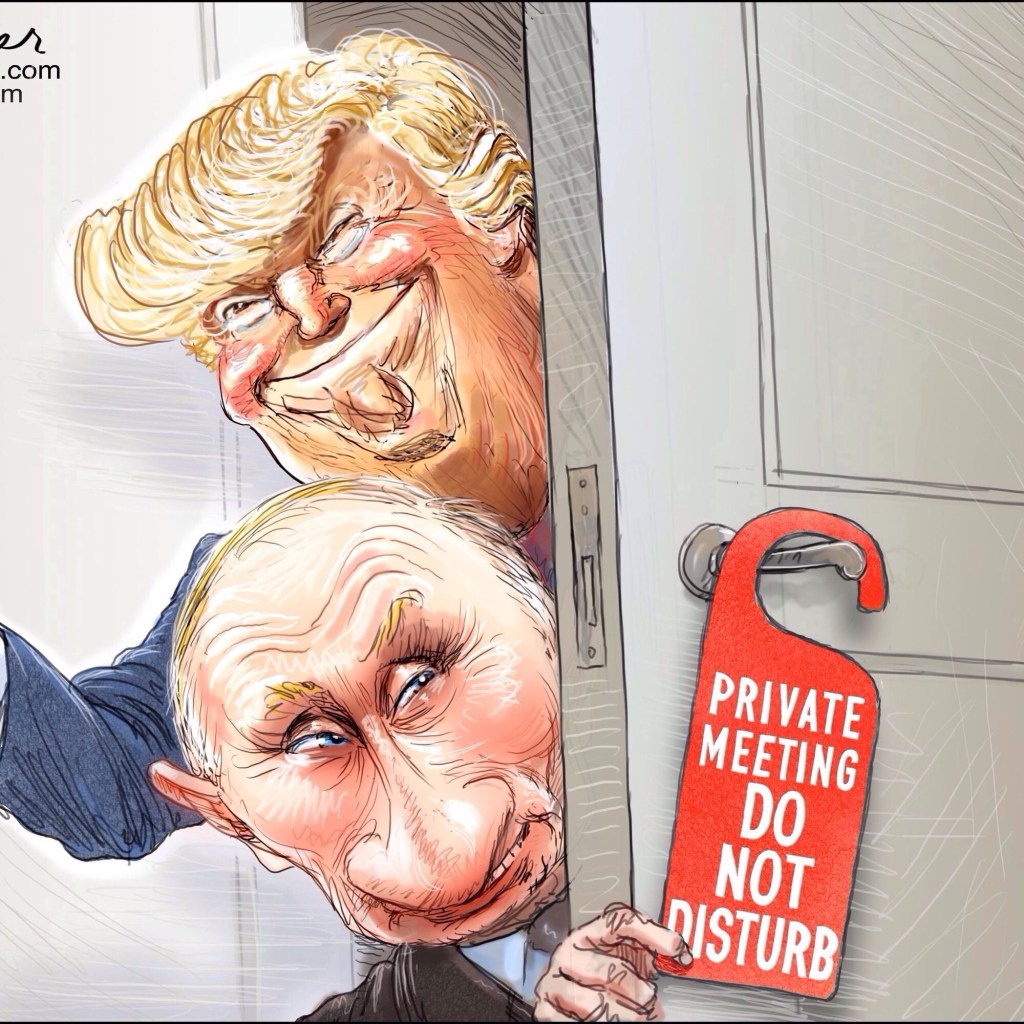
Yet Trump would have us believe that, if Ukraine agrees to call a halt to its attacks, Russia will do the same. Because that is what his friend Putin wants him to believe. And that is where Trump’s loyalty (such as it is) really lies.
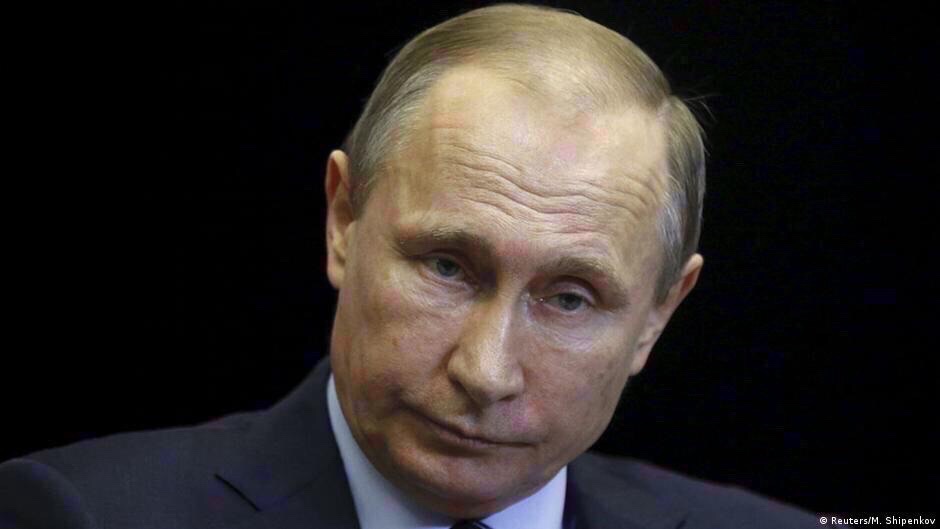
Vladimir Putin has no intention of easing up his attacks on Ukraine. And Volodymyr Zelensky is smart enough to know that — as are the leaders of the allied European nations. It’s only Donald Trump who has no clue as to the true nature of his so-called friend in the Kremlin.
After four and a half years of watching Vladimir Putin decimate the sovereign nation of Ukraine in an effort to “reclaim” it for Russia; and after watching the people of Ukraine fight for their very existence, despite horrific losses of life, infrastructure, and irreplaceable historic treasures; I was appalled, and indescribably ashamed, to read the following statements in yesterday’s news:
“Mr. Zelenskyy has to do one thing. He has to stop knocking out diesel fuel in Russia. We spoke to Mr. Zelenskyy about it. There are plenty of other targets. Don’t hit diesel fuel, because that’s hurting, that’s hurting the world.”
– Donald J. Trump (as reported by AP News, September 13, 2026)
Whose Side Are We On?
And, keeping it in the family, there was this little gem:
“President Putin’s laid out his line of what he wants to achieve. If Ukraine wanted to withdraw to that line, then obviously we have the rest of the deal set up and put together. Ukraine right now does not want to do that.”
– Jared Kushner (as reported by Ukrainska Pravda, September 13, 2026.)
Apparently, the Wrong Side
I would comment, but honestly, I can’t. I just keep waiting to wake up from this never-ending nightmare of stupidity and betrayal.
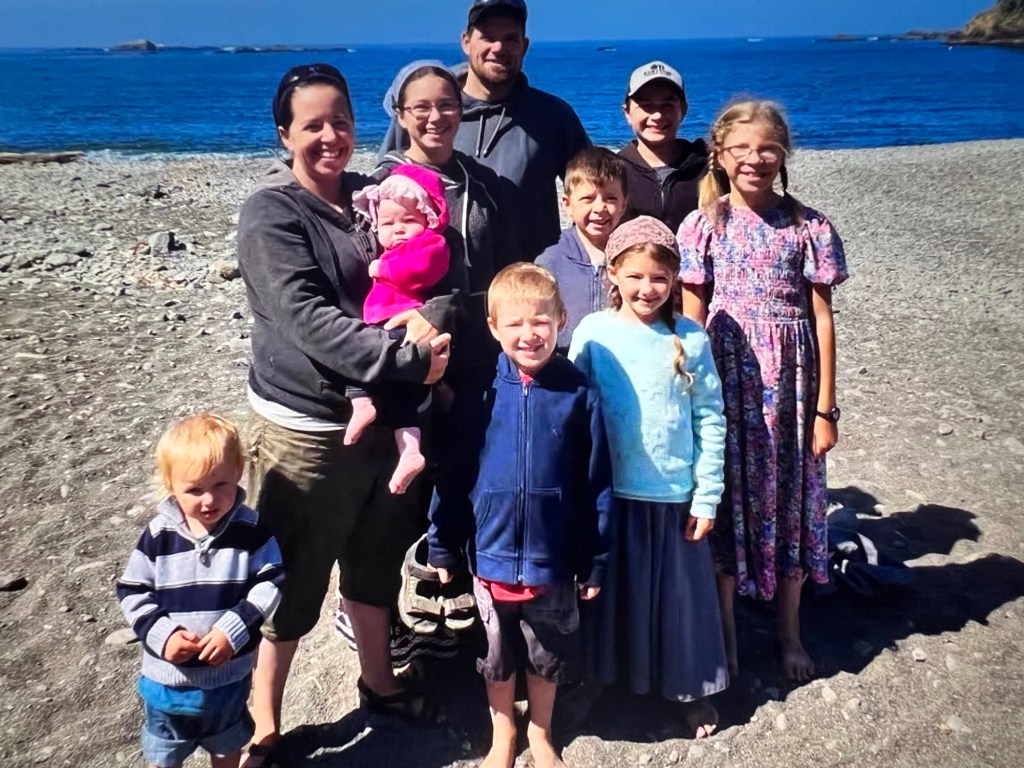
For about the last two and a half years, we’ve been spoiled by the nearly daily reports from Arend and Anneesa Feenstra — the Canadian couple who, with eight of their nine children, sold their farm in Canada and moved to Russia to find peace, harmony, and freedom to live their lives in accordance with their own conservative religious beliefs.
Just Starting Out
Okay, so that wouldn’t have been your choice . . . or mine. But it was theirs, and I haven’t been able to resist keeping track of their adventures.
So when their videos became less and less frequent after their return from a rather strange tour of farmlands in Crimea (where no mention was made of that little war taking place in the region), I began to worry that perhaps things weren’t going so well.
Also, with talk of a possible second military mobilization to replace the distressing number of troops lost in Ukraine, I was concerned when eldest son Wesley — who had stayed home to tend the farm while the rest of the clan was in Crimea — seemed to be unaccounted for.
But at last, two videos were released during the past two weeks, and Wes does appear briefly in one of them, though hidden behind a welding mask. However, the tone of these reports is different: more moderated, subdued, and not nearly as upbeat as those we’ve been accustomed to seeing.
Just Another Day On the Farm
Granted, life on the farm — in any country — is a lot of hard work, and not one big, continuous party. But there have been no reports of the usual trips into the city, or birthday celebrations, or gatherings with neighbors, or visits from distant friends . . . the sorts of activities that frequently arose to break the routine of farm life for the Feenstras over the past couple of years.
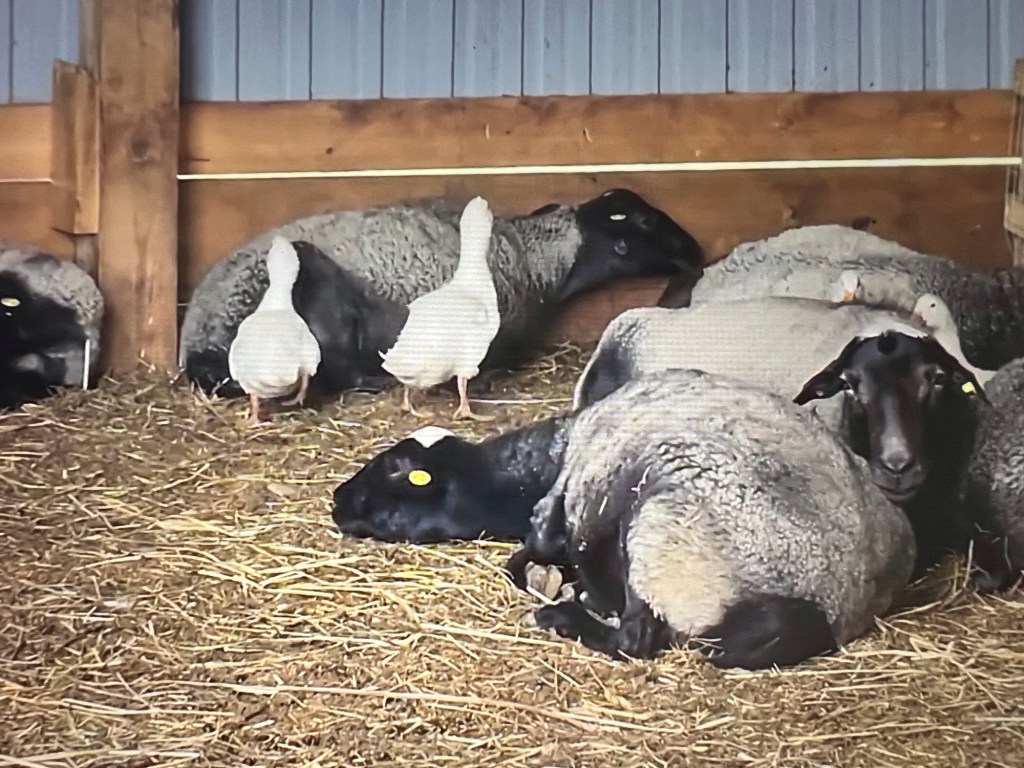
In the first video, released around September 3rd, Arend showed us the enormous store of hay they had gathered and baled for the winter; young Wes helping him with a construction project; some new hog pens with an impressive number of little piglets; three new heifer calves they had just purchased; one ewe who is not being bred because she is about to become food for the family; and a flock of ducks invading the sheep pen to snack on the abundance of flies plaguing the animals. Normal farm stuff.
Helping the Sheep
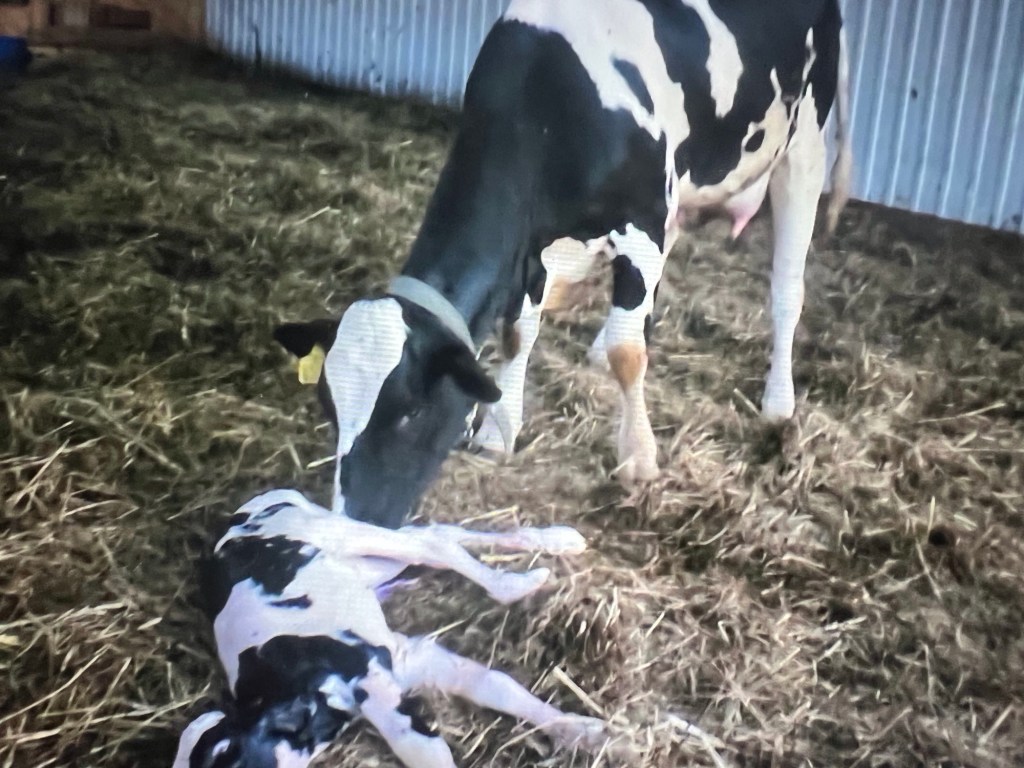
Some five days later, the second youngest daughter — appearing very grown-up and poised — led us to the cow barn where one of the herd was giving birth to her first calf. She filmed and narrated the entire procedure; and while I will withhold most of the pictures in case any of my readers are sensitive about such matters, I must admit I found it beautifully fascinating. Here is just one screen shot, of the new mother lovingly giving her little girl her first bath.
The New Little Family
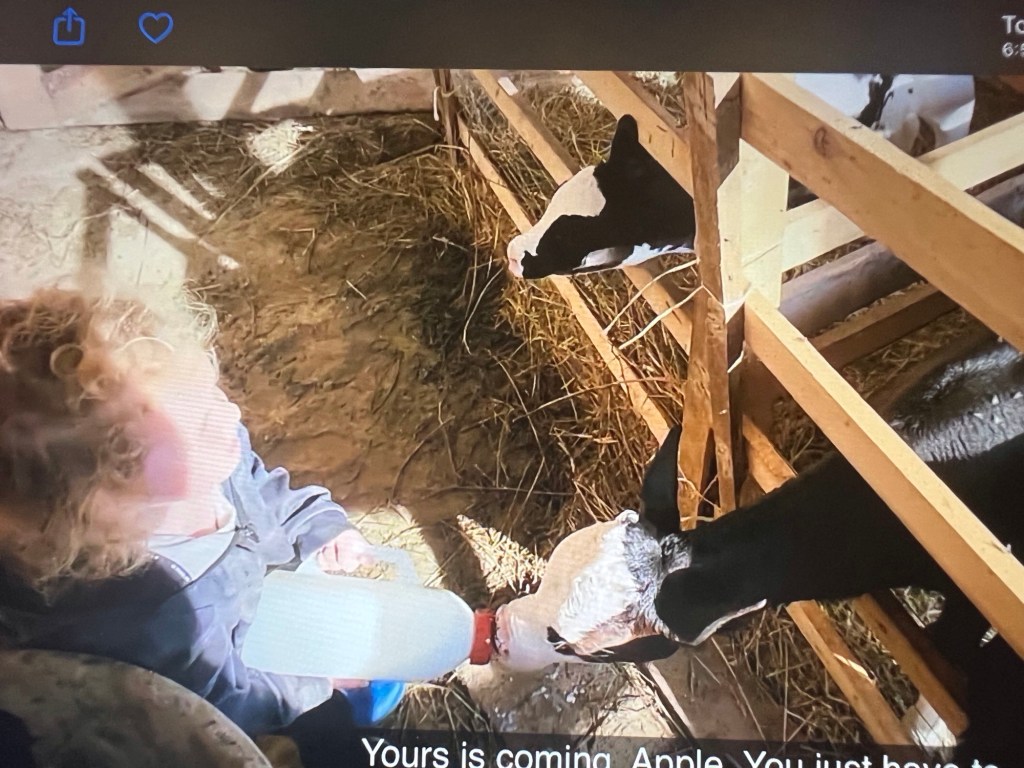
Whereas their big, beautiful farmhouse has in the past looked well organized, the exterior now appears cluttered and in disarray. And there were no views of the inside — in fact, notably absent from both videos were mom Anneesa and eldest daughter Cora, with only glimpses of some of the other children, including adorable little Maddie helping to bottle-feed one of the new calves.
Even Little Maddie Gets to Help
Missing, too, were their tenants, the Pulley family — though Arend did mention that Justin Pulley had been putting up fencing over the past few weeks.
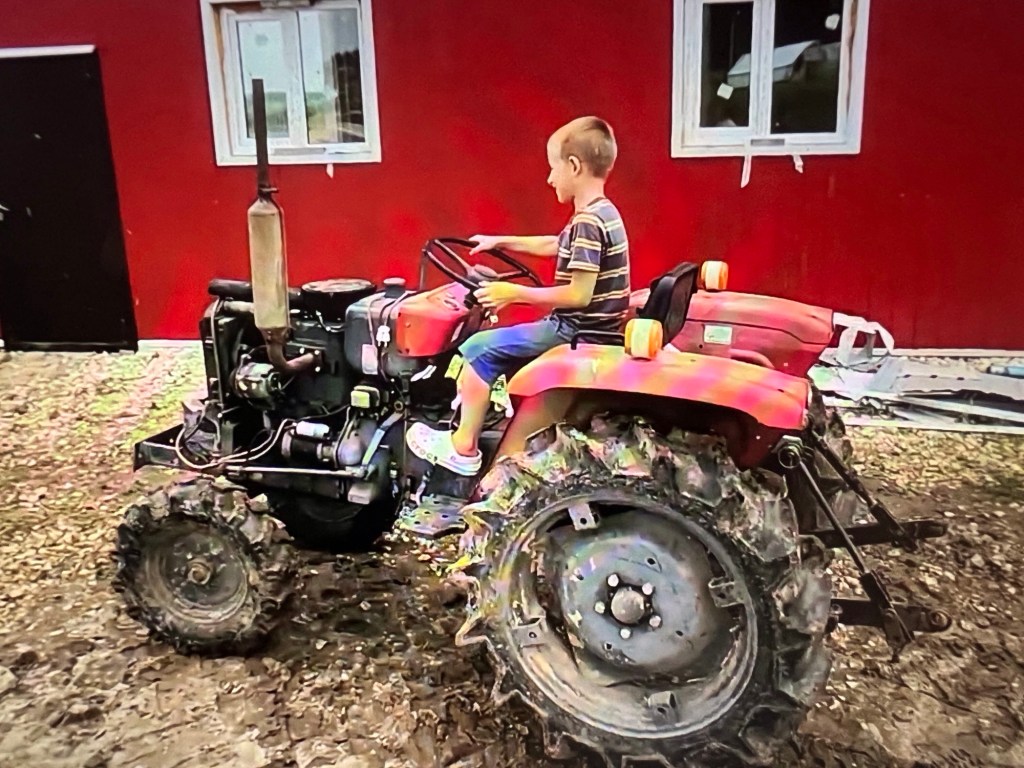
He also said that he’d been working on fixing up their big family van in preparation for selling it, despite the fact that it’s been a great vehicle and is in excellent shape. But apparently he’s been pulled over by the police frequently because of the unusual size of the van, and has had to pay special fees of some sort. So it’s become a bureaucratic headache, and they’ll have to make do with something a bit smaller.
Well, maybe a little roomier than this!
*. *. *
All in all, this virtual visit with the Feenstras — or some of them — was somewhat concerning. But with all that is happening in Russia today, it would not be surprising to learn that the restraints on communications, the shortages and other economic difficulties caused by the war in Ukraine, and the increasing counter-attacks by Ukraine on Russian territory — recently including a drone attack on a nearby oil refinery — are taking their toll. And perhaps the Feenstras’ Russian “workers’ paradise” isn’t looking so idyllic after all.
In the hope that their access to social media isn’t completely cut off, I will of course keep an eye out for further videos from them.
A reminder popped up on my blog site this morning. Three years ago today, on September 13, 2023, I published the following imaginary “report” of an actual meeting between two of the world’s most outrageous autocrats. And re-reading it today, I am astonished at how little the world has changed — despite a myriad of earthshaking events — in the intervening 36 months.
So, for your amusement (I hope), I’d like to share it with you again. Enjoy.
*. *. *
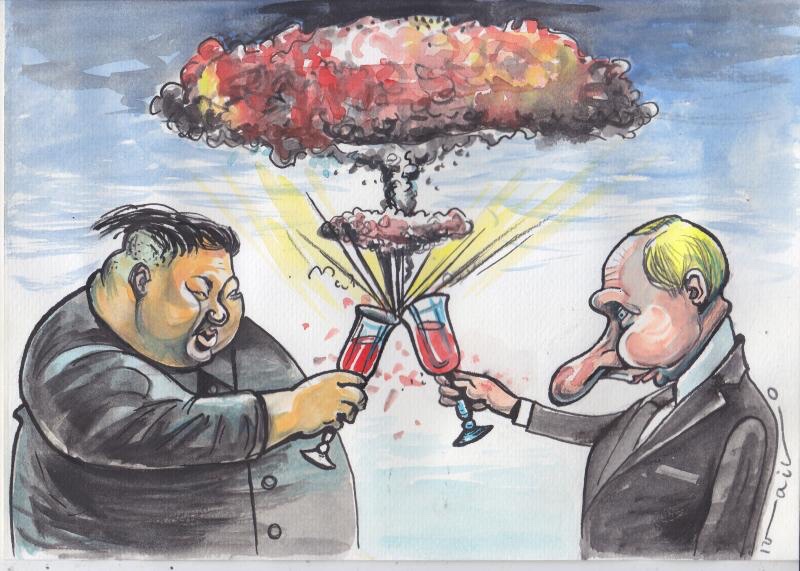
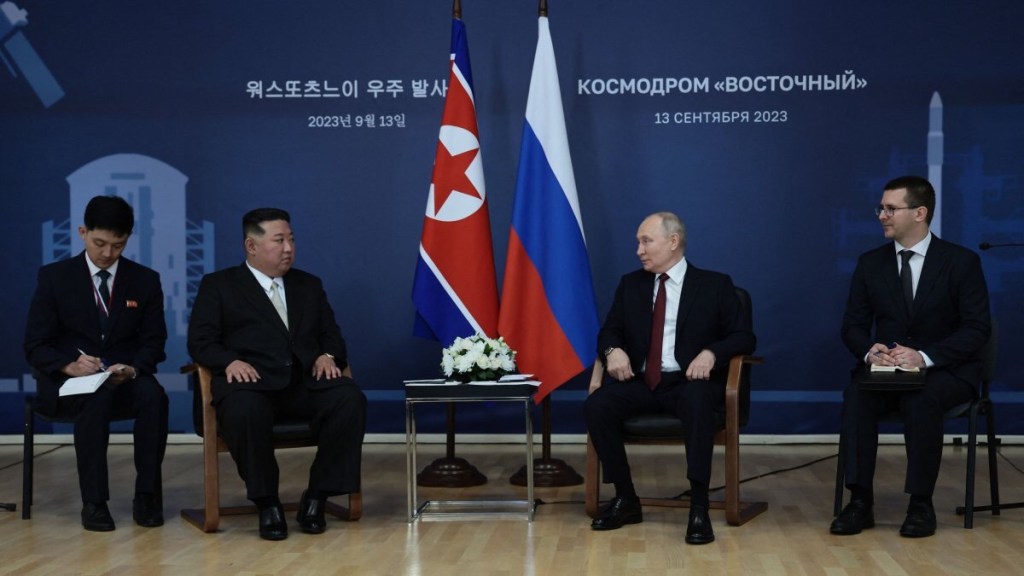
It’s early fall in far eastern Russia. The huge, heavily-armored, puke-green train chugs into the railroad station, where a seriously overweight man named Kim disembarks and enters a waiting limousine for the ride to the Vostochny Cosmodrome — the Russian space station not far from the city of Vladivostok. There, the fat man is greeted by a much, much smaller man named Vlad. They smile broadly; they shake hands; and Vlad speaks first.
Fraternity Handshake
Vlad:“Greetings, President Kim; long time no see. Welcome to our glorious motherland and our beautiful Cosmodrome. We are delighted that you were able to join us here before our upcoming economic conference in Vladivostok. I hope that your journey was comfort . . .”
Kim: “Uh-huh.”
(The handshake ends as they walk toward a nearby building.)
Vlad:“And here we have our elegant conference center, where we can meet in comfort and privacy, and perhaps enjoy a repast . . .”
Kim: “Uh-huh.”
(They enter the building and are seated, surrounded by interpreters and security guards.)
Vlad:“I know you are most anxious to view our very advanced space program and an actual rocket ship, as well as our nuclear . . .”
Kim: “Uh-huh.”
Vlad:“But first, perhaps you would like to discuss our agricultural program . . .”
Kim: “We take food. Much food.”
Vlad:“Da, da.Of course. I understand. And we are in a position to provide whatever you need. We can iron out the details . . .”
Kim: “Uh-huh.”
Vlad:“And of course we are also willing to share with you our advanced technology for our nuclear missiles . . .”
Kim:“Yes. We take.”
Vlad:“Khorosho.Good, good. Of course, we would also like to discuss the matter of the excellent North Korean weapons that we need for the furtherance of our Special Military Operation in Ukraine . . .”
Kim:“Yes, yes. We eat now.”
*. *. *
There followed what must have been one hell of a lunch, because they reportedly remained together for a total of five hours. Both men are surely adept at speaking with their mouths full of food (on top of the voluminous ration of bullshit that usually flows from those gaping maws), because it is reported that the following was achieved during the historic exchange:
“Practically, Russia gets artillery shells and missiles. North Korea, in exchange, gets food aid and possibly technology that can help develop its nuclear and missile programme.” [BBC News, September 13, 2023.]
*. *. *
This is where my head drooped and I woke up, my hands still positioned on the keyboard — which never seems to leave my lap these days. I really must stop obsessing over the daily news; my dreams are becoming weirder and weirder . . .
Throughout the first weeks of 2022, as Russian military units massed near the Ukrainian border, Vladimir Putin consistently maintained that they were merely conducting a “routine military exercise,” and that — contrary to the concerns of the rest of the world — he had no intention of invading Ukraine.
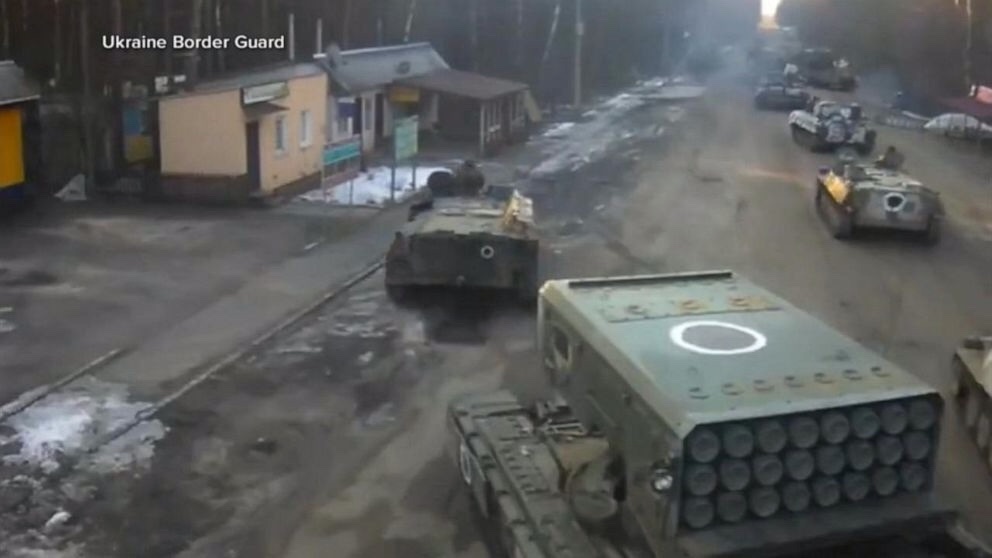
On February 24, 2022, Putin’s military crossed the border in a full-scale invasion that he said would be over within days. Four and a half years later, what he has since renamed a “special military operation” continues to decimate the sovereign nation of Ukraine, with millions of dead and wounded on both sides and no end in sight.
The Start of Russia’s “Special Military Operation” – February 2022
Since that time, Ukraine has fought back valiantly, in the process becoming a world leader in drone technology. But they haven’t done it alone; support from the United States and multiple European nations has been vital to their survival.
That support has also infuriated Putin, who has been conducting a vengeful hybrid war on the side, targeting a number of EU member nations with a combination of drone incursions into their airspace, acts of sabotage, cyber attacks, and other threats in an attempt at intimidation . . . like that explosive-laden drone aimed at a Ukrainian cargo plane in Leipzig.
But it hasn’t worked. Instead, the European nations have united, strengthened their defenses, issued sanctions against Russian entities, and increased their support for Ukraine. And Putin, on the eve of the 2026 BRICS summit in New Delhi, made the following comments in what is an almost comical self-contradiction:
“They are currently talking about how to send troops into Ukraine. That means war with Russia. Regarding security, the issue is clear: it is an attempt to ‘finish off’ the Russian Federation. First using terrorists and separatists in the Caucasus, then through other tools, and now via the neo-Nazi regime in Ukraine. Yet, it does not stop.” [Kanyshai Butun, aa.com.tr, September 12, 2026.]
“That means war with Russia.” Hmmm . . . I don’t know. That kind of sounds like a threat to me.
Yet in the next breath, he pivots to his usual attempt at deflection, adding:
“They [‘European elites’] are frightening their populations with an imaginary threat from Russia. We are not threatening, nor do we intend to threaten, European countries. Why would we? No one even considers the fact that we have no grounds for any conflict with Europe.”[Id.]
Now, why does that sound so familiar? And are we really supposed to swallow it . . . again?
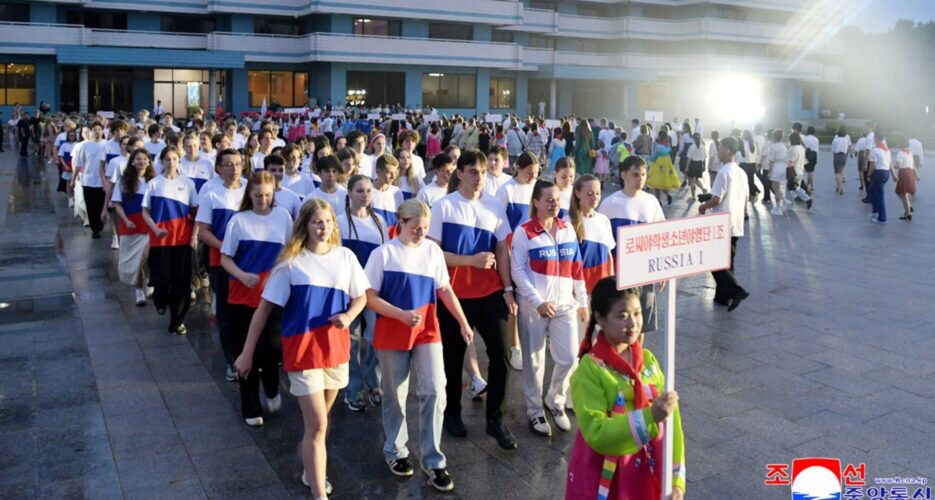
Last week I wrote about the kidnapped Ukrainian children who have been sent by Vladimir Putin to a “summer camp” in North Korea, for what appears to be more of a military indoctrination than a summer of fun in the sun.
Songdowon Camp, North Korea
These children are just a fraction of the total number — estimated at over 20,000 — who have been forcibly removed from their own country and sent to various locations, some in Russian-occupied Ukraine, and others already “re-homed” in Russia itself. They are all being schooled in the Russian language and history, drilled in Russian political propaganda, and forbidden to speak their native Ukrainian tongue.
Volodymyr Zelensky’s government has consistently demanded the return of the children, to no avail. The International Criminal Court has issued an arrest warrant against Putin, charging him with the war crime of illegal deportation of children, which he calmly shrugs off. And Ukraine’s allies around the world have joined in the crusade to get the youngest and most innocent victims of Putin’s war back where they belong.
One of the most effective organizations engaged in the tracking of these children has been Yale University’s Humanitarian Research Lab, with funding coming from the U.S. State Department. But now that funding — intended to support the identification, return, rehabilitation, and reintegration of the children — is in jeopardy, as the State Department moves to restructure the program of which the Yale Lab was to be a recipient.
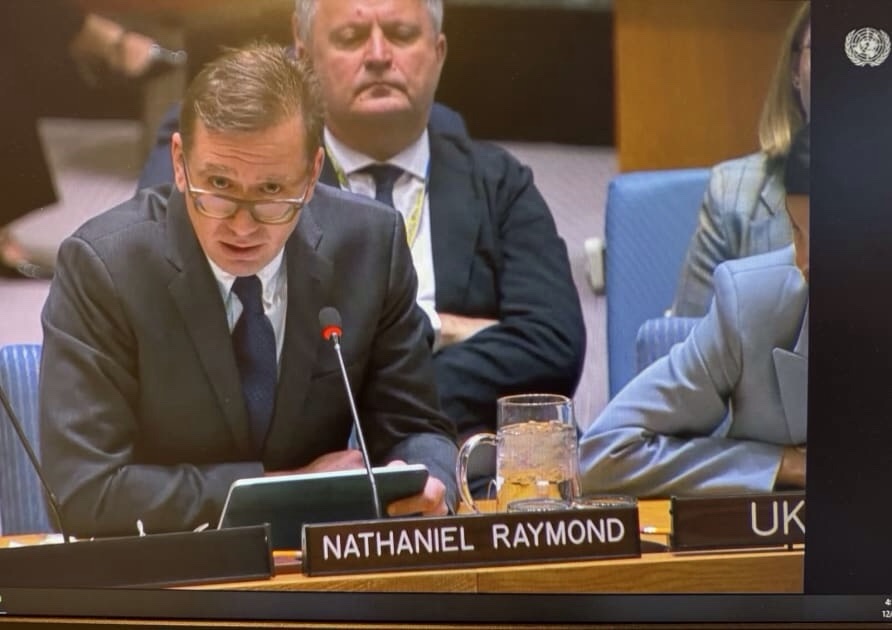
Nathaniel Raymond, the Yale Lab’s executive director, has said that researchers on the Ukraine team are scheduled to be terminated around Christmas unless new funding is found. As he explained:
“We’re running out of the last of the donations we’ve received.” [Alex Raufoglu, RFE/RL, September 9, 2026.]
Raymond also said that, after more than four years, Moscow’s focus has changed:
“It’s less about taking them [the children] and more about indoctrinating them in place.” [Id.]
Testifying at the U.N. Security Council
Putin’s program is well-financed, with Russian state oil and gas giants Rosneft and Gazprom, along with their subsidiaries and affiliated trade unions, helping to facilitate the transportation and/or re-education of the children. If programs such as Yale Lab’s lose their support, what hope will remain for the futures of these children?
There are other countries, such as the Netherlands, who are involved in finding a solution to this problem. But more help is urgently needed; and the United States cannot abdicate its moral responsibility, hoping that someone else will pick up the slack. That is not how my country operates.
Or at least, it wasn’t . . .
*. *. *
And, in the same vein, let us again remember the other prisoners still being held hostage by Putin and his cohorts:
Prisoners of War:
The 20,000+ Kidnapped Ukrainian Children The People of Ukraine
Immigrant Detainees in Russia:
Migrants from the Central Asian nations of Kazakhstan, Kyrgyzstan, Tajikistan, Turkmenistan and Uzbekistan
Endangered Exiles:
Pavel “Pasha” Talankin Mikita Losik Yulia Navalnaya Oleg Orlov Countless Journalists and Other Dissidents
Political Prisoners:
In Afghanistan:
Mahmoud Habibi (Afghan-American) Paul Overby (American, missing since 2018)
Andrei Chapiuk Uladzimir Labkovich Andrzej Poczobut Marfa Rabkova Valiantsin Stafanovic Yuras Zyankovich
In Georgia:
Mzia Amaglobeli
In Russia:
The “Crimea 8”: – Oleg Antipov – Artyom Azatyan – Georgy Azatyan – Aleksandr Bylin – Roman Solomko – Artur Terchanyan – Dmitry Tyazhelykh – Vladimir Zloba
James Scott Rhys Anderson (British) Aleksandr Andreyev David Barnes (American) Yevgenia Berkovich Gordon Black (American) Hayden Davies (British) Yury Dmitriyev Anastasia Dyudyaeva Antonina Favorskaya Konstantin Gabov Robert Gilman (American) Stephen James Hubbard (American) Sergey Karelin Timur Kishukov Vadim Kobzev Darya Kozyreva Artyom Kriger Michael Travis Leake (American) Aleksei Liptser Svitlana Loi (in Ukraine) Mikhail Loshchinin “Madame Z” (in Ukraine) Grigory Melkonyants Boris Nadezhdin Nika NovakSvetlana Petriichuk Leonid Pshenychnov (in Russian-occupied Crimea) Ilya Remeslo Nadezhda Rossinskaya (a.k.a. Nadin Geisler) Lev Schlossberg Sofiane Sehili (French) Igor Sergunin Dmitry Shatresov Robert Shonov Grigory Skvortsov Eugene Spector (American) Joseph Tater (American, disappeared) Karina Tsurkan Arseniy Turbinin (age 18) Laurent Vinatier Robert Romanov Woodland (American)
You have not been, and will not be, forgotten. Stay strong.
I know it’s customary to make resolutions each January 1st in the hope of improving ourselves and our relationships in the coming year. But today I thought, “Why wait? Why not make my resolutions on this first day of Rosh Hashanah — the Jewish New Year 5787 — and get a head start on all of that betterment?”
And the first — in fact the only — resolution I came up with was to laugh more. That’s not an easy thing to do in a world that seems determined to destroy itself at any given moment, which is exactly why I think it’s such a good idea.
And it turns out that my new philosophy is supported by none other than my literary idol, the Bard himself, who wrote:
“With mirth and laughter let old wrinkles come.”
– William Shakespeare, “The Merchant of Venice,” Act I, Scene 1.
Shakespeare In a Lighter Moment?
So that’s it. I’m pretty old; the wrinkles have already come. Now it’s up to me to seek out the humor to accompany them.
In any adversarial relationship, there will obviously be opposing points of view and a clash of individual interests. But when one or both of the parties appear to be disconnected from reality, it’s difficult (if not impossible) to be sure of what is actually happening.
Unless, of course, we’re misreading the “adversarial” part.
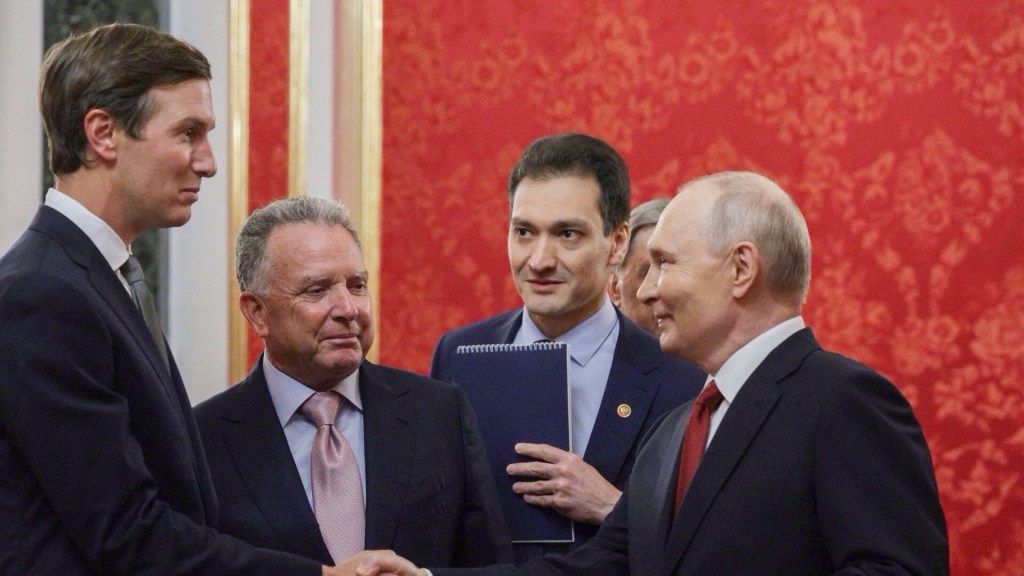
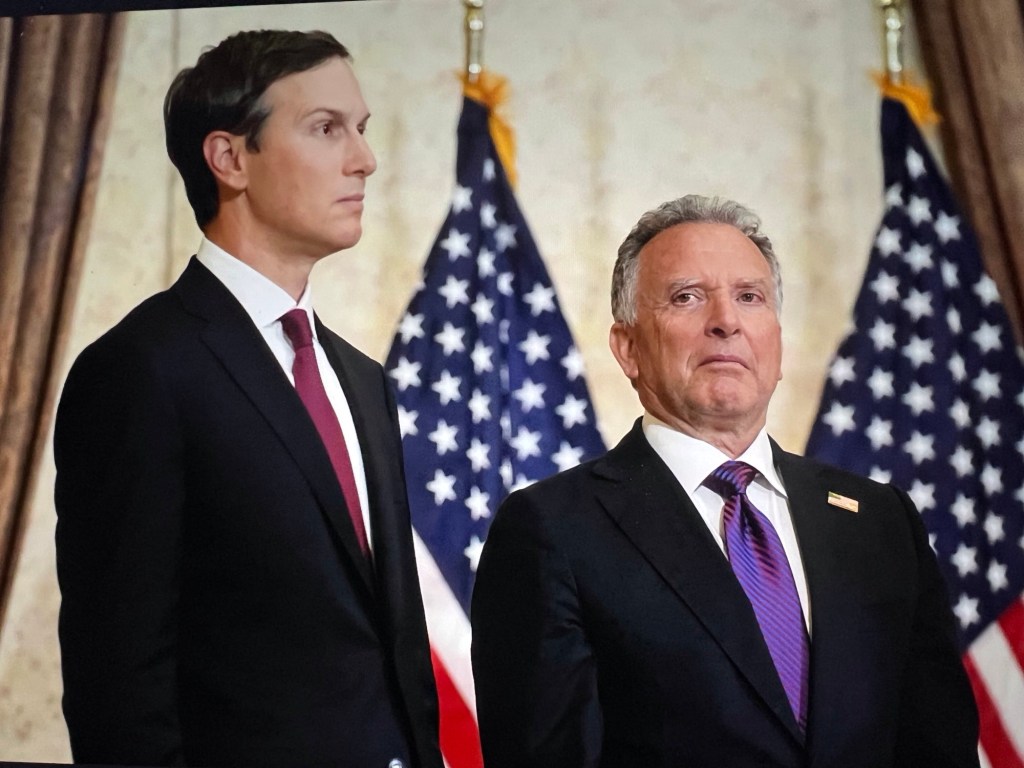
A perfect example of this is what we are (or are not) being told about this week’s telephone conversation between Vladimir Putin and Donald Trump on Tuesday, which followed the meetings between Trump’s Keystone Kops envoys, Steve Witkoff and Jared Kushner, and the presidents of Russia and Ukraine.
What Trump had to say on Wednesday was that his talk with good old Vlad had been “great,” and that:
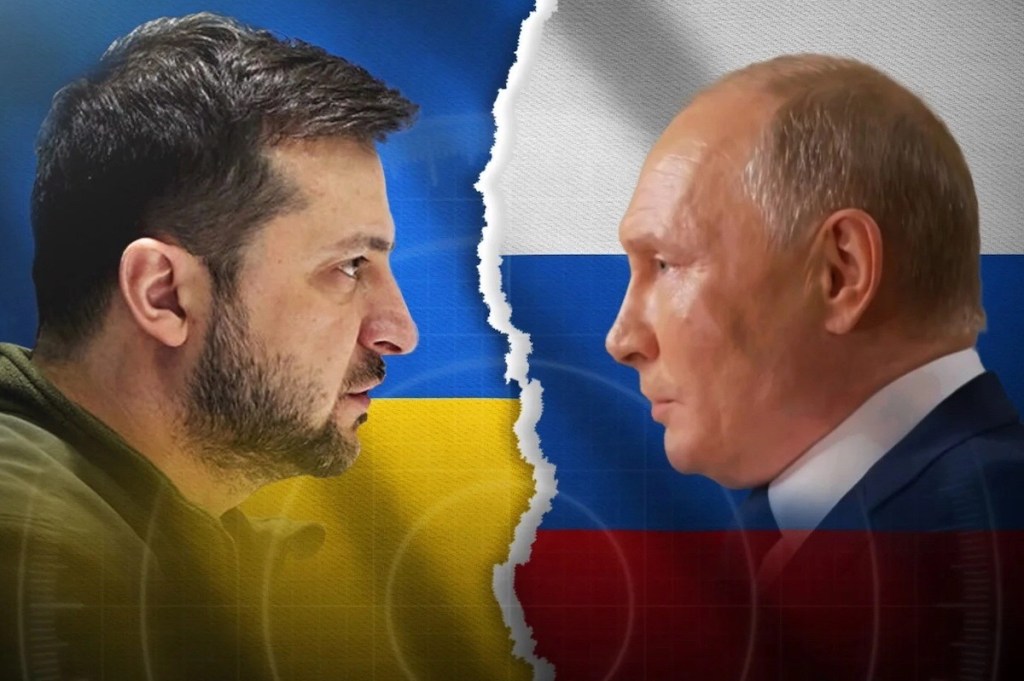
“He is wanting to make a deal, and if Zelensky is wanting to make a deal, that’d be very nice. . . . The holdup is two people who hate each other. I think more than anything else, it’s two people that hate each other.” [Steve Holland and Gram Slattery, Reuters, September 9, 2026.]
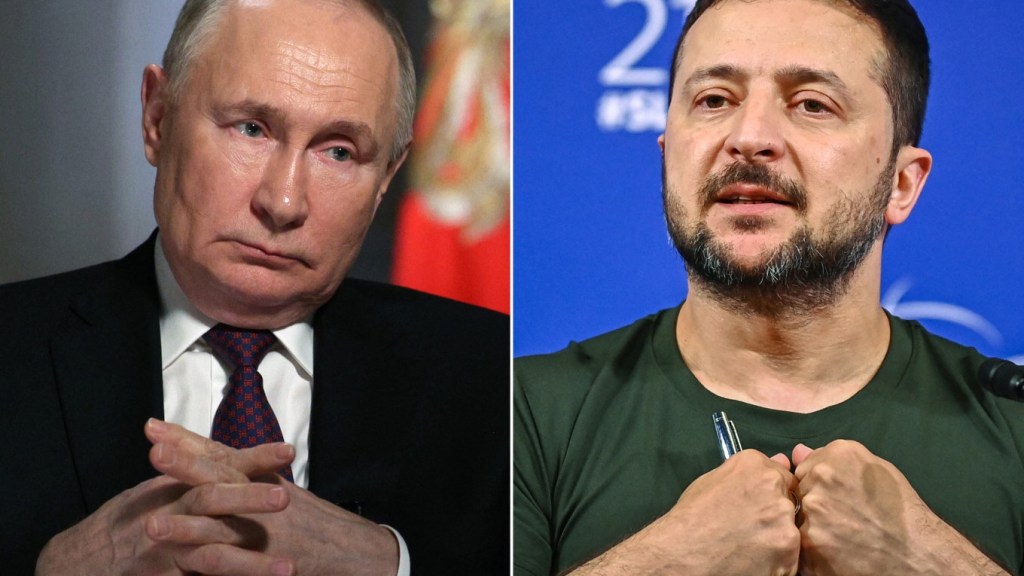
Well, I really can’t argue with any of that. It would indeed be “very nice” if we could finally see an end to this war — or what Trump prefers to call “a deal.” And there’s certainly no doubt in anyone’s mind that Vladimir Putin and Volodymyr Zelensky are bitter enemies. So Trump did not lie; he just didn’t say anything useful.
The question is: Does Putin really want to make a deal? If so, then why did his bombardments continue across multiple regions of Ukraine, sparing only the capital city, throughout the duration of Witkoff and Kushner’s meetings with Zelensky — and then resume against Kyiv itself immediately following their departure?
Why does he continue to target civilians, killing children, women, the elderly and infirm, and destroying schools, hospitals, and vital life-sustaining infrastructure?
And why does he continue to strengthen his already outrageous demands, and threaten military action against any other countries that offer aid to Ukraine?
Finally, please explain why Trump would for one moment believe that Putin really wants to make a deal.
The answer is simple: Because Putin actually does want to end the war. His country is hurting. He just wants to end it on his terms; and the only way he can conceive of doing that is by continuing to kill, and destroy, and threaten, until — he hopes — Ukraine has no choice but to agree to cede some 20 percent of their territory to him, renounce all rights to future security guarantees and membership in the EU and NATO, and leave themselves wide open for the next invasion and the eventual loss of the remainder of their nation and their heritage.
And Trump, ever anxious not to damage the prospects of increased, mutually-profitable trade and economic relations with his friend Vlad, is more than willing to go along with that while he pressures Zelensky to make concessions that would be ruinous to Ukraine.
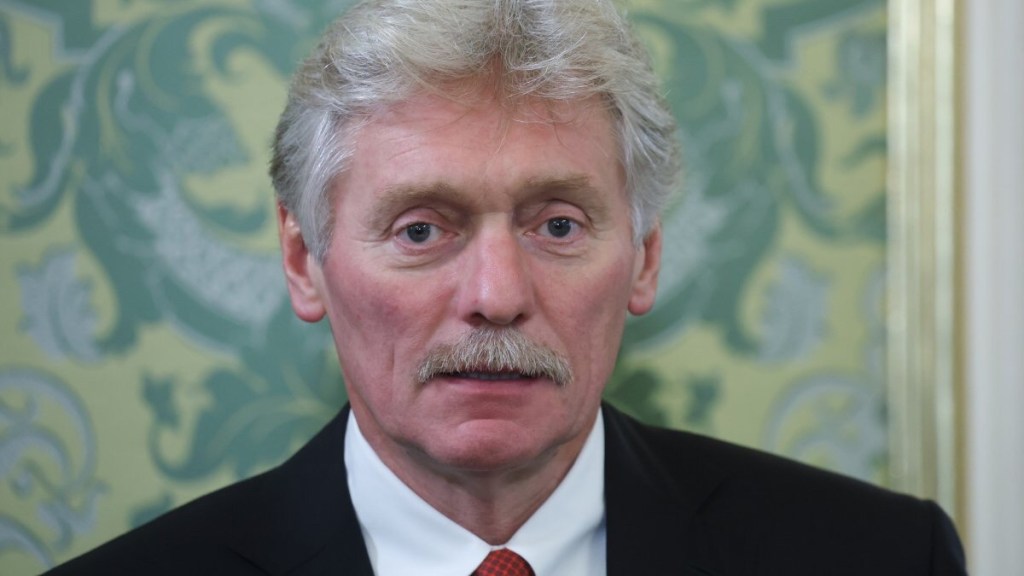
Then, as if Trump’s attachment to Putin weren’t already obvious enough, the irrepressible Kremlin spokesman, Dmitry Peskov, had this to say in an interview with Izvestia this week concerning a meeting between the two leaders in the near future:
“We remain open to negotiations. We hope that, as was said with the American negotiators, in the foreseeable future we will be able to gather again as a group of three and continue the dialogue.” [Daily Sabah, September 11, 2026.]
And while discussing any potential attempts by Zelensky to influence Trump ahead of such a meeting, Peskov added that Trump has his own view of his relationship with Putin, which is unlikely to be changed by anyone. [Id.]
Best friends forever.
Kremlin Spokesman Dmitry Peskov
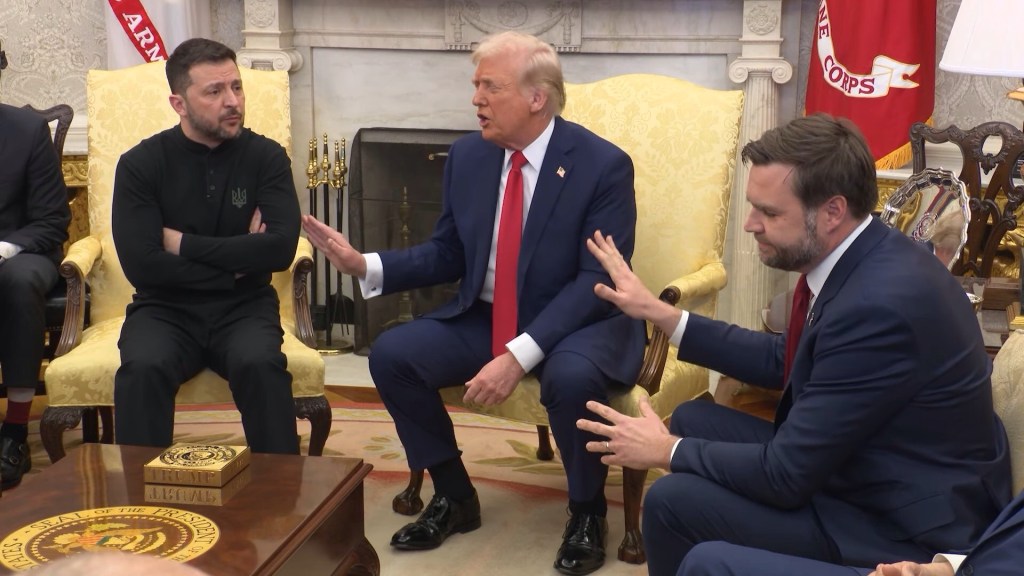
Which also explains why Trump continues to send Frick and Frack to the negotiating table, rather than find someone with historical knowledge and diplomatic experience who might apply some pressure against the tyrant who actually started the war, and not against the victim.
So it’s a good thing that Europe is stepping up to play a greater role in dealing with Russia and providing increased aid to Ukraine. Because I wouldn’t trust these two stiffs to negotiate the sale of my condo . . . and that’s supposed to be their area of expertise.