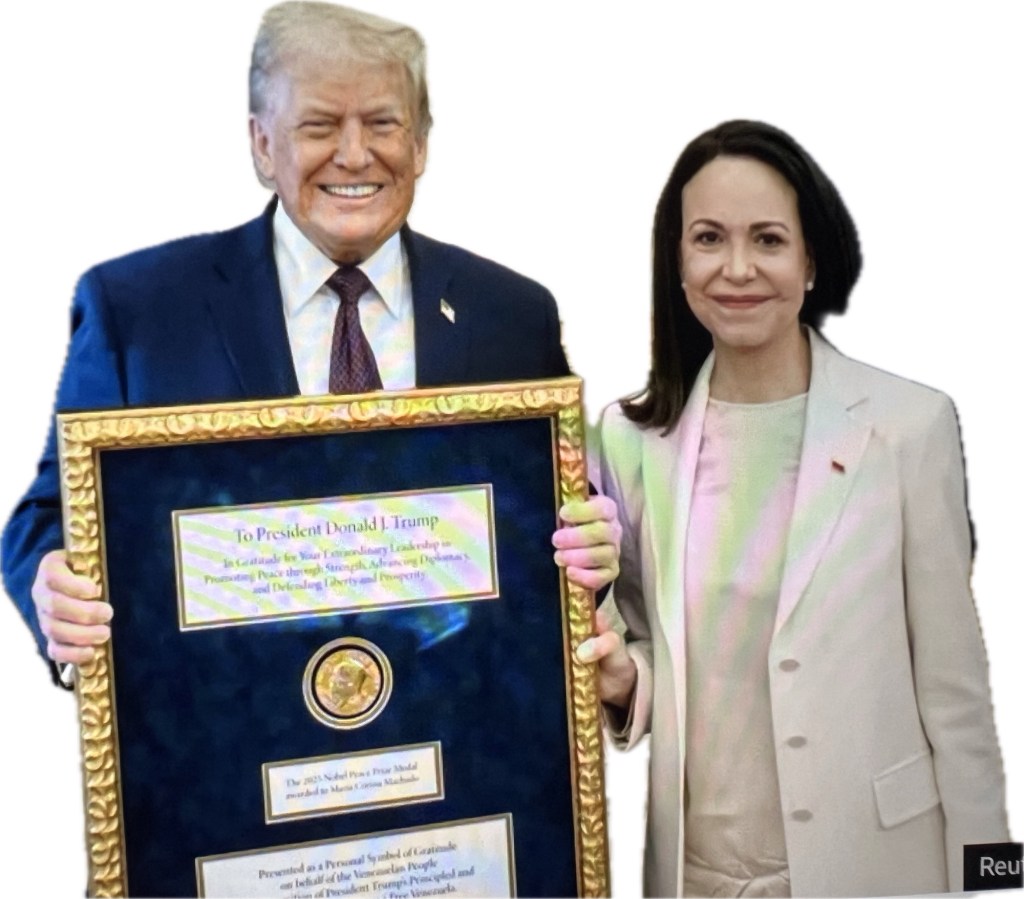
From this late-breaking photo, it appears that Donald Trump — looking as happy as a 3-year-old who has just been rewarded for going a whole day without wetting his pants at nursery school — did accept that non-transferable Nobel Peace Prize from Maria Machado after all.
Not that there was ever any doubt.
It’s just a shame that the rules of the Nobel Institute provide that their prizes are also not revocable, because this one has just lost its meaning.
I’m willing to bet that you Gilbert & Sullivan fans out there are now humming the tune to “A Modern Major-General” from The Pirates of Penzance, which will undoubtedly be stuck in your heads for the rest of the day. Sorry about that.
But life in Venezuela today is no operetta; and opposition leader Maria Corina Machado is no major-general. The newest recipient of the Nobel Peace Prize, she seemed to be Venezuela’s best hope for a democratic future . . . until she immediately offered to “share” her prize with Donald Trump for his supposed contributions to her country’s fight for freedom.
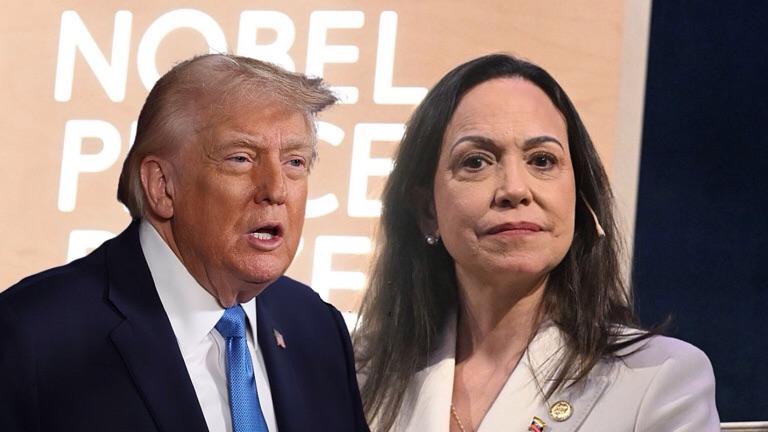
Donald Trump and Maria Corina Machado
Aside from the fact that Nobel prizes are not — in accordance with the rules of the Nobel Institute — transferable, shareable or revocable; and the obvious fact that Trump is the last person in the world to deserve any sort of peace-related award; the mere fact that Machado so swiftly and unhesitatingly acted to mitigate his displeasure at her receipt of the prize by offering to share it with him is, to my mind, indicative of a basic weakness of will and character on her part.
Yes, she is fighting for the leadership of her country, presumably to rid it of the tyrannical rule of President Maduro’s linear successor, Venezuela’s current vice-president Delcy Rodriguez. And it is understandable that anyone in her position would be willing to go to great lengths to achieve that goal. But is toadying to Trump’s basest, ego-driven instincts the right way to do it? Does she not realize that his objective is not to “save” Venezuela, but to take control of it?
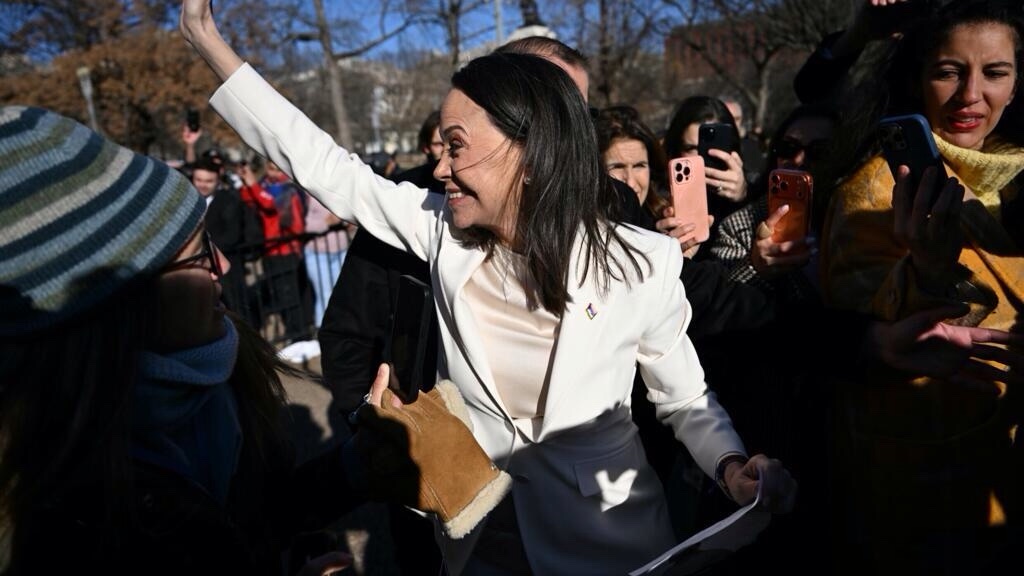
Yesterday, Machado met privately with Trump in the White House, following which she said, “I think today is a historic day for us Venezuelans.” After leaving the White House, she told a group of supporters gathered outside the gates:
“We can count on President Trump. I presented the president of the United States the medal of the Nobel Peace Prize [in] recognition for his unique commitment with our freedom.. . . as a sign of the brotherhood between the United States, the people of the United States, and the people of Venezuela in their fight for freedom against tyranny . . . as a recognition for his unique commitment with our freedom.” [Max Matza, BBC, January 15, 2026.]
Leaving the White House
It wasn’t immediately clear whether Trump had actually accepted the medal, though there was a later report that it had been “left” at the White House. And prior to yesterday’s meeting, he had expressed his reluctance to “appoint” her as the next leader of her country, due to what he considers her lack of sufficient domestic support — as though it is his choice to make, and not for the voting citizens of Venezuela to decide.
And as the meeting was in progress, White House press secretary Karoline Leavitt told reporters:
“The president was looking forward to this meeting and expecting a frank and positive discussion. He wants to hear directly from Ms Machado about the realities on the ground in Venezuela and what is taking place in the country.” [Id.]
We’ll see what happens in the next few days; but for now, I wouldn’t place any bets, pro or con, on Machado’s chances of an imminent victory.
There is panic down here in the southeastern corner of the State of Georgia, where we are experiencing a cold snap — a predicted low of 20 degrees (F) tonight — and the possibility of as much as an inch of snow on Sunday. Now, I know that to our friends in Greenland, Canada and Finland, that’s a mild winter day; and I was born and raised in New England, where I walked to school between snow banks that were taller than I was. But we’re talking about the South here. If that snow materializes, there will be trouble.
As far as I know, there is no country in the world in which it is illegal to complain about the weather, which is fortunate because we all do it. And natural disasters, of course — droughts, floods, volcanic eruptions, tornadoes, earthquakes, pandemics — are, by definition, disastrous. But they’re also fairly common, and we humans have learned to deal with them.
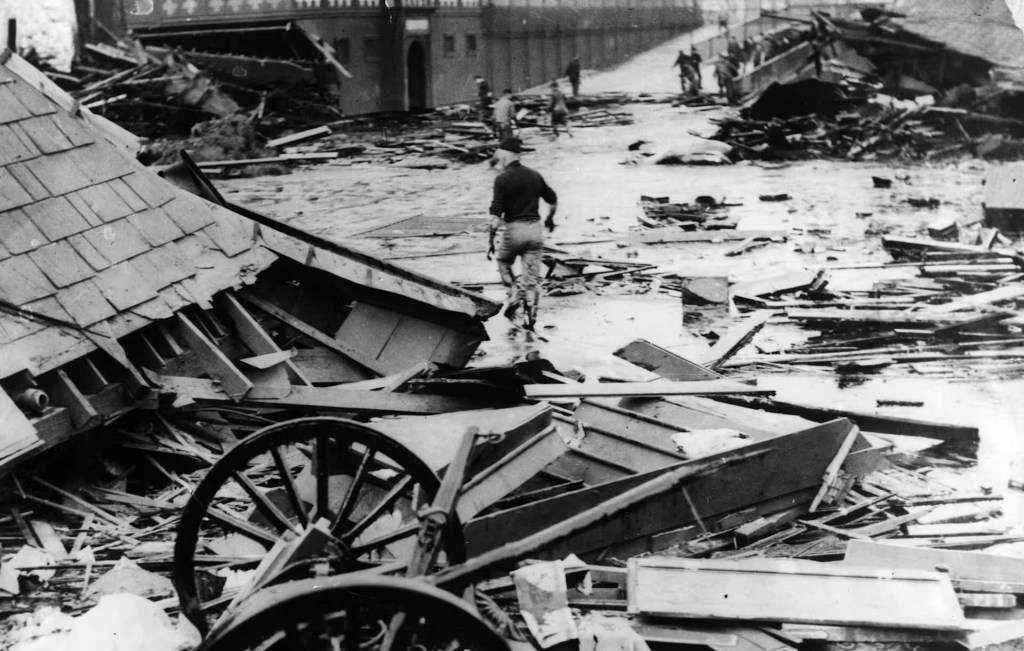
But on this date 107 years ago — January 15, 1919 — something unforeseen happened in Boston, Massachusetts, that, to my mind, redefines the concept of horrible ways to die.
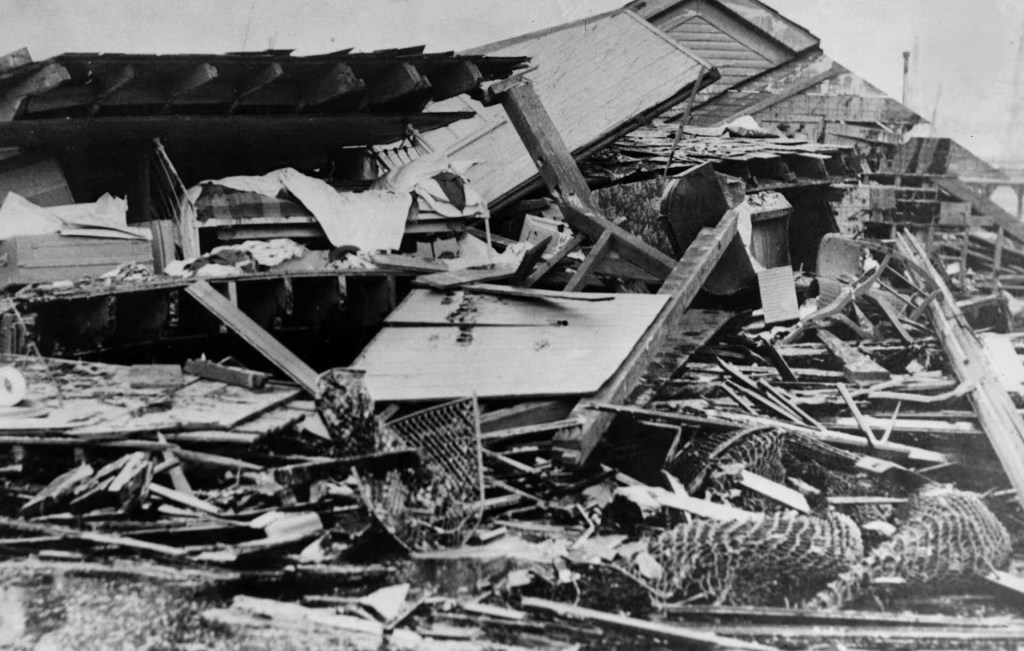
The Great Molasses Flood – Boston, Massachusetts – January 15, 1919
It was an unseasonably warm winter day in Boston, where workers at the United States Industrial Alcohol building near Boston’s North End Park were loading product onto freight-train cars inside the building. It was close to lunchtime when a 58-foot-high tank filled with 2.5 million gallons of crude molasses exploded, the bolts holding the bottom of the tank shooting out like bullets, and the hot molasses spewing forth in an eight-foot-high wave that swept away the freight cars and caved in the building’s doors and windows. The few workers in the cellar of the building were trapped and killed. [“This Day in History,” History.com, January 15, 2026.]
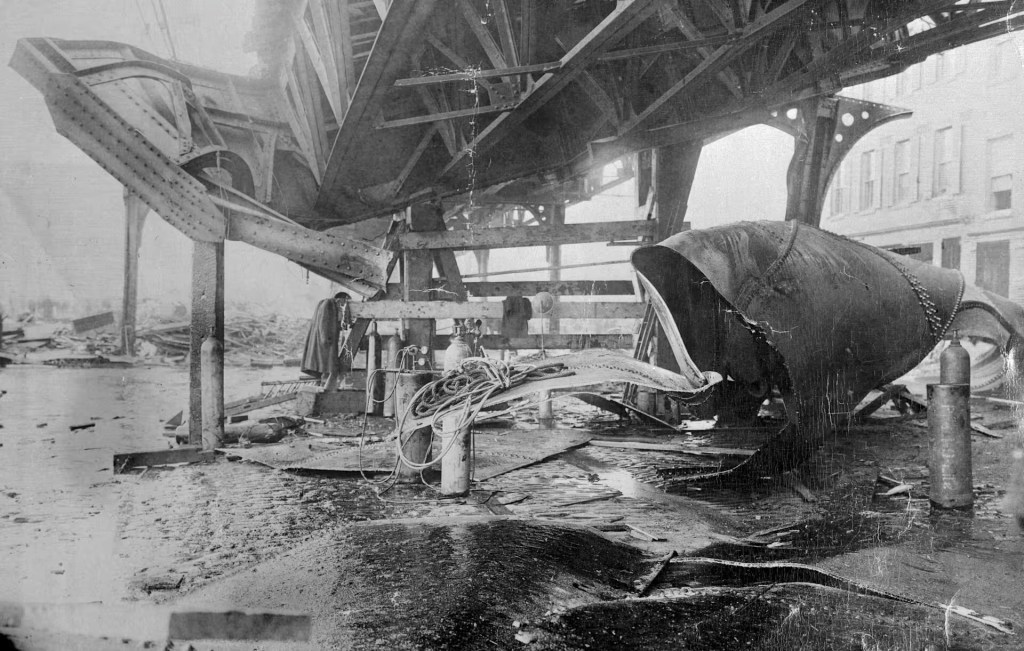
The torrent of molasses then flowed into the street, knocking over the local firehouse and pushing over the support beams for the elevated train line. Five workers at the nearby Public Works Department were drowned and burned. In all, 21 people and dozens of horses were killed by the flood.
It took weeks to clean the molasses from the streets, and even longer to repair the damage. More than 100 lawsuits were filed against the United States Industrial Alcohol Company, resulting in a six-year-long investigation involving 3,000 witnesses and 45,000 pages of testimony. The company was finally held liable, and nearly $1,000,000 — the equivalent of about $19,000,000 today — was paid to settle the claims.
Elevated Train Damage
And now I have yet another nightmare scenario to invade my sleep. I think I prefer the old dreams in which I’m being pursued by killers who keep finding my hiding places, or . . . well, never mind. Suffice it to say, almost anything is preferable to being buried in burning hot molasses.
Only this time it wasn’t Ukraine that left empty-handed. Yesterday, Denmark’s and Greenland’s foreign ministers were the unlucky duo who flew across the Atlantic to run into a wall of intransigence that would put Vladimir Putin’s stubbornness to shame.
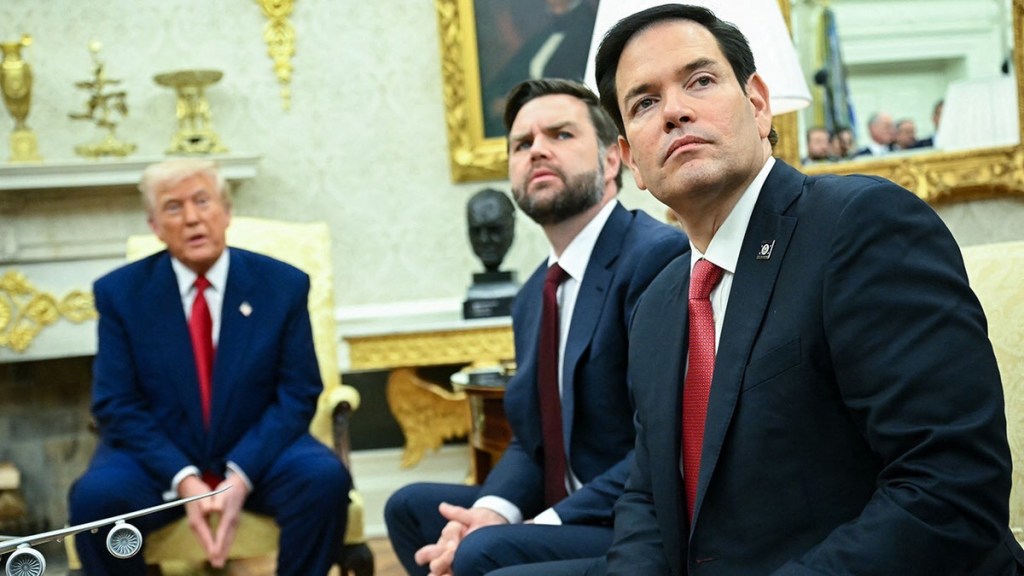
The Triumvirate: Trump, Vance and Rubio
Though Donald Trump did not attend the meeting — because, after all, the visitors were foreign ministers, not heads of state — JD Vance and Marco Rubio were the dummies through whom the puppet-master in the Oval Office was speaking.
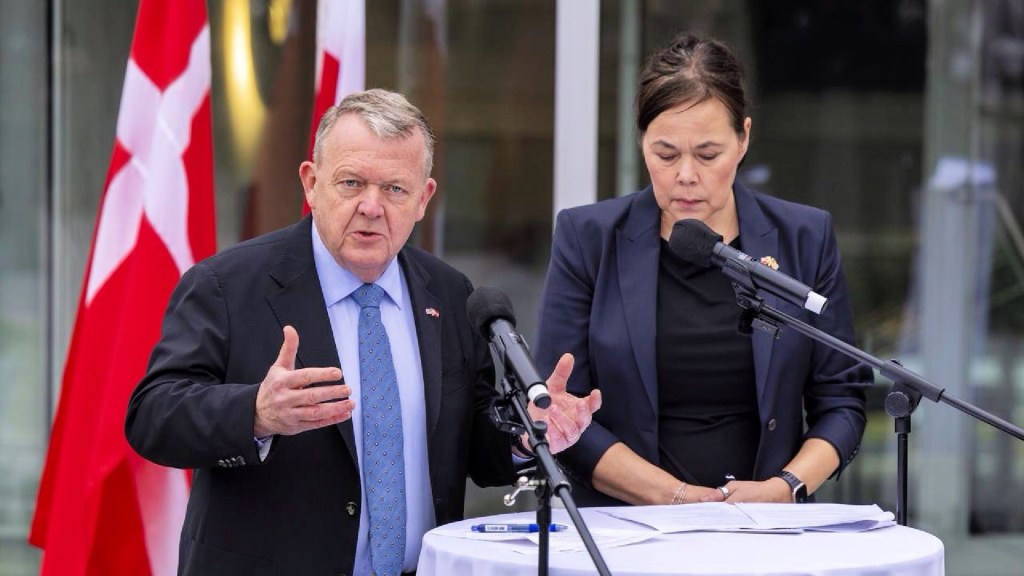
But the challengers of the day — Denmark’s Lars Lokke Rasmussen and Greenland’s Vivian Motzfeldt — were not here as supplicants. They were in Washington to defend Greenland, an autonomous territory of Denmark, against Trump’s threats of acquisition of a land and a people that do not want to be acquired.
Following the meeting, Rasmussen said it had been “frank but constructive,” adding that Trump was continuing to insist on “conquering” Greenland, which is “totally unacceptable.” He also said:
“We made it very, very clear that this is not in the interest of [Denmark].” [Daniel Bush, BBC, January 14, 2026.]
Foreign Ministers Rasmussen and Motzfeldt
While agreeing with Trump’s view that security should be intensified to counter any possible threats from Russia and China in the Arctic region, he said that Trump’s allegations of a heavy presence of Russian and Chinese warships around Greenland were “not true.” [Id.]
Neither Vance nor Rubio commented immediately after the meeting. But Trump reiterated to reporters in the Oval Office:
“We need Greenland for national security. The problem is there’s not a thing that Denmark can do about it if Russia or China wants to occupy Greenland, but there’s everything we can do.”[Id.]
. . . which is absolutely untrue, since Denmark, as a member of NATO, has the full military backing of the alliance under Article 5 of the NATO Treaty, which — for now, at least — includes the United States. In fact, several of those European countries have already begun taking steps to increase their defensive positions on Greenland, protecting the island nation — not against Russia or China as the imminent threat — but against the aggression of the United States.
Furthermore, the U.S. already has, by agreement with Denmark, the right and the ability to station as many military troops and facilities on Greenland as it feels necessary. But that is never enough for Trump, to whom outright possession is the measure of his power — whether it’s ownership of real estate, currency, gold-plated trinkets, fake peace prize medals . . . or entire countries.
Because it’s all about him. And he doesn’t care how many people he has to destroy to get what he wants.
In the wake of the killing in Minneapolis, I have chosen this quotation from George Orwell; and if it doesn’t set off alarm bells in your mind and your soul, then I fear you are already lost:
“The Party told you to reject the evidence of your eyes and ears. It was their final, most essential command.”
Sometimes it seems as though the mainstream and independent media are getting their analyses of the news from me.
“I beg your pardon?”
No . . . I’m kidding, of course. But when my thoughts on a particular subject coincide with those of the experts, I do at least feel validated.
Early yesterday morning — in fact, just after midnight — I posted my comments on “The Ominous Silence From the Kremlin,” expressing concern about the lack of response from Moscow to recent world events. I worried about what might be quietly taking place behind those high Kremlin walls, without speculating about the possibilities because most of them were frankly too terrifying to contemplate . . . and because I felt — and hoped — I might be exaggerating the implications of the silence. What I said was:
“No, the silence is emanating — if silence can actually emanate — from the Kremlin. Why are we not hearing the customary daily rhetoric from Vladimir Putin, Sergey Lavrov, or Dmitry Peskov? While they’re inexplicably not bombarding the world with verbal threats of impending Armageddon, what the hell are they doing?”
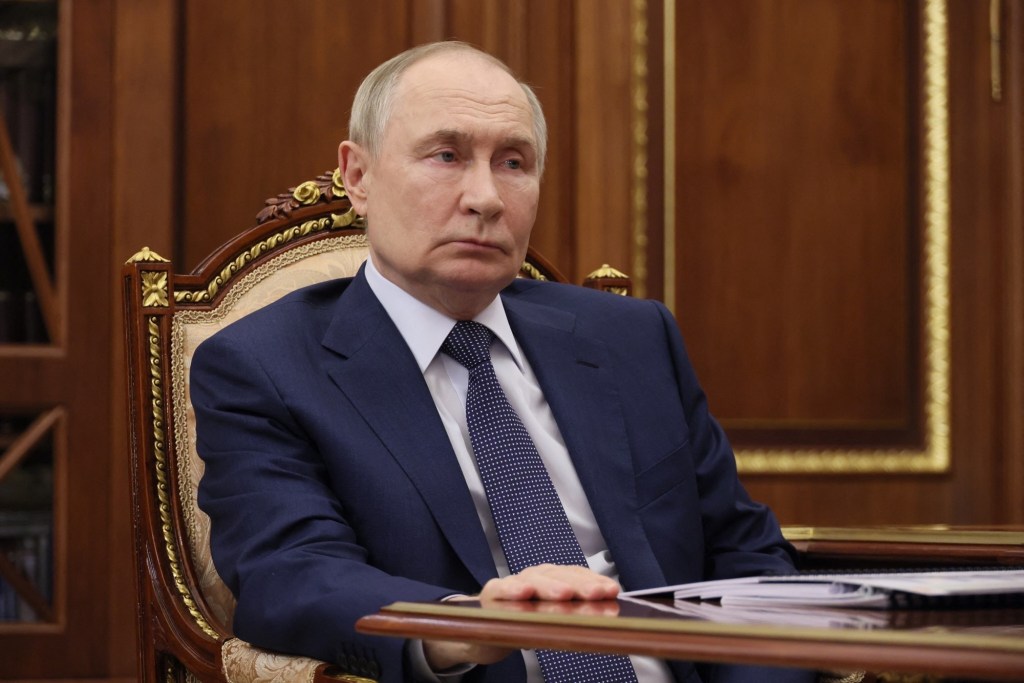
But last evening, my concerns were vindicated by an article from RadioFreeEurope/RadioLiberty on that very subject, following the first publicly-shared, work-related meeting of 2026 for Vladimir Putin, which took place on January 12th . . . not with his foreign minister, defense minister, or top security advisers, but with a deputy prime minister on the mundane subjects of Russian manufacturing and the space program.
The article read, in part:
“No, the US raid on Venezuela — a close ally of Moscow — and the seizure of its president the previous week was not on the agenda, at least not publicly. Nor were the snowballing public protests roiling Iran — another vital ally for Moscow. Not even Cuba, whose government is under stress due to the Venezuela turmoil, was discussed.” [Mike Eckel, RFE/RL, January 14, 2026.]
Mr. Eckel then quoted Hanna Notte, director of the Eurasia Nonproliferation Program at the James Martin Center for Nonproliferation Studies:
“The Russians must say something on these issues, and so the [Foreign Ministry] will come with expected language and expected criticism, but overall the Russian system does not want to criticize the United States too brazenly, so that’s why you have total silence from the Kremlin and the [sic] Putin. . . . I think Russia cannot really do anything to change the US course of action, or to sort of restrain it. And so in that kind of situation: what is Vladimir Putin going to say? And so he says nothing that [sic].” [Id.]
And that was followed by a statement from Nicole Grajewski, a Middle East expert and assistant professor at Sciences Po University in Paris:
“I wouldn’t say that they’re being silent. I would say that maybe we just aren’t seeing what they’re doing behind the scenes, especially in Iran.” [Id.] [Bold emphasis is mine.]
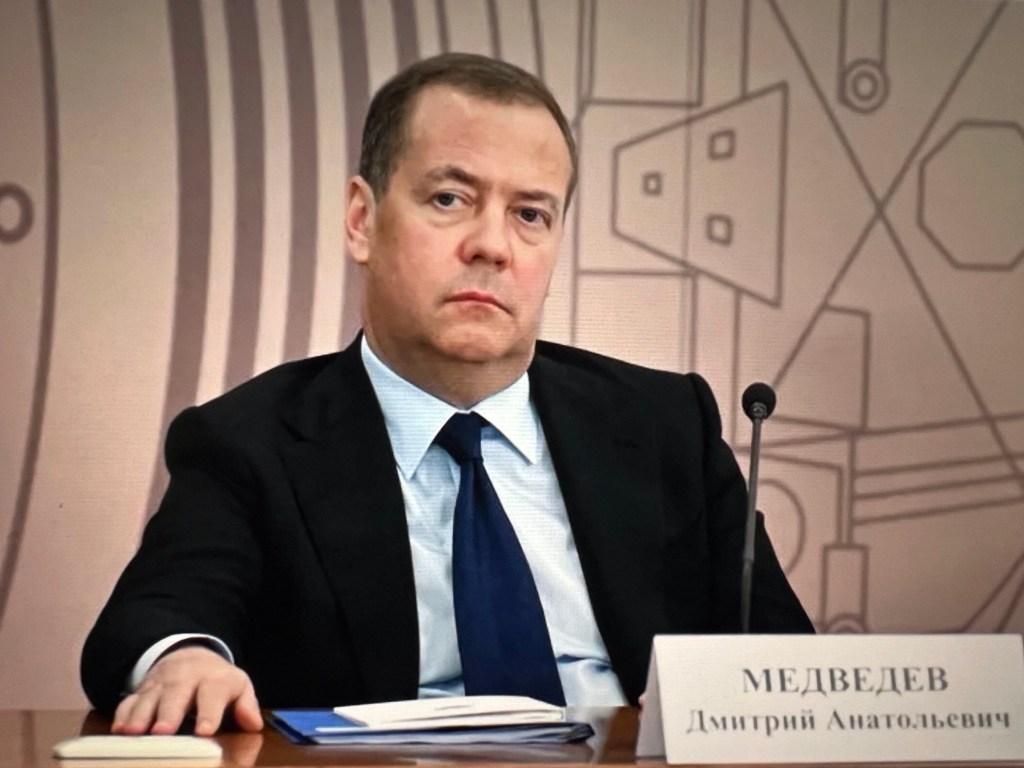
His name is Dmitry Anatolyevich Medvedev, and he takes himself very seriously . . . which is what makes him so freakin’ funny.
Dmitry Medvedev
Medvedev, you may recall, was the titular president of Russia for four years from 2008 to 2012, keeping the seat warm while Vladimir Putin sat out the then constitutionally requisite one term before being able to run again. He then served eight years as Prime Minister before moving into his current seat as Deputy Chairman of the Russian Security Council — a very powerful position, considering that the Chairman is none other than Putin himself.
Medvedev, who presented himself in the early part of this century as a reformer, has turned out to be one of Moscow’s most virulent hawks. And he loves nothing better than to hear the sound of his own voice threatening the West with imminent doom.
He also occasionally comes up with comments that send me into spasms of uncontrollable laughter — like this one, reported by Interfax on Monday, January 12th, with regard to Greenland:
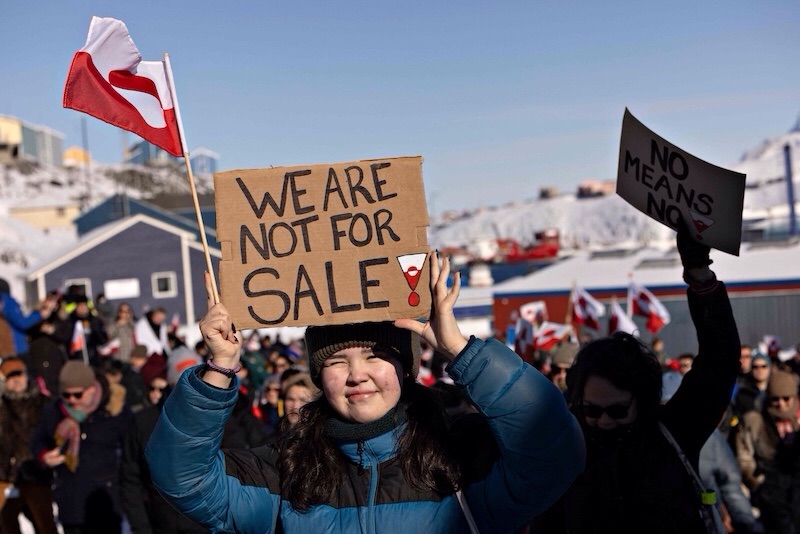
“Trump needs to hurry. According to unverified information, in a few days there could be a sudden referendum, at which the entire 55,000-strong Greenland could vote to join Russia.” [Lidia Kelly, Reuters, January 12, 2026.]
Based solely on that one remark, I’m betting he hasn’t seen any of these recent news reports from those 55,000 Greenlanders:
Get some rest, Dmitry. You have clearly lost the plot.
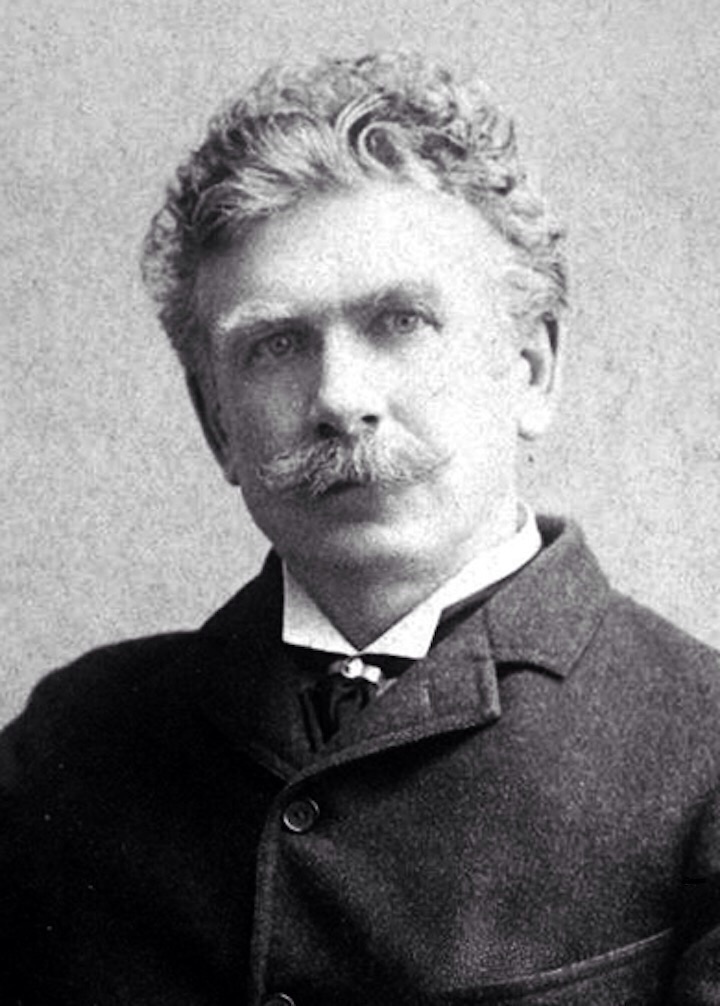
Having newly discovered the satirical works of the late Ambrose Bierce, I find myself struggling to choose just one from a multitude of brilliant comments.
Ambrose Bierce (1842 – c. 1914)
But since the upcoming midterm elections are such a hot topic of conversation these days, I’ve decided on this one for today’s quote. It is a definition from Bierce’s Devil’s Dictionary that is so on point, it needs no explanation:
“VOTE, n. The instrument and symbol of a freeman’s power to make a fool of himself and a wreck of his country.”
Thank you, Mr. Bierce, for pointing out what it has taken us far too long to figure out for ourselves.
It’s almost as though someone in the Kremlin is listening in on my thoughts . . . or perhaps I’m anticipating theirs. Either way, it’s a somewhat spooky coincidence in timing.
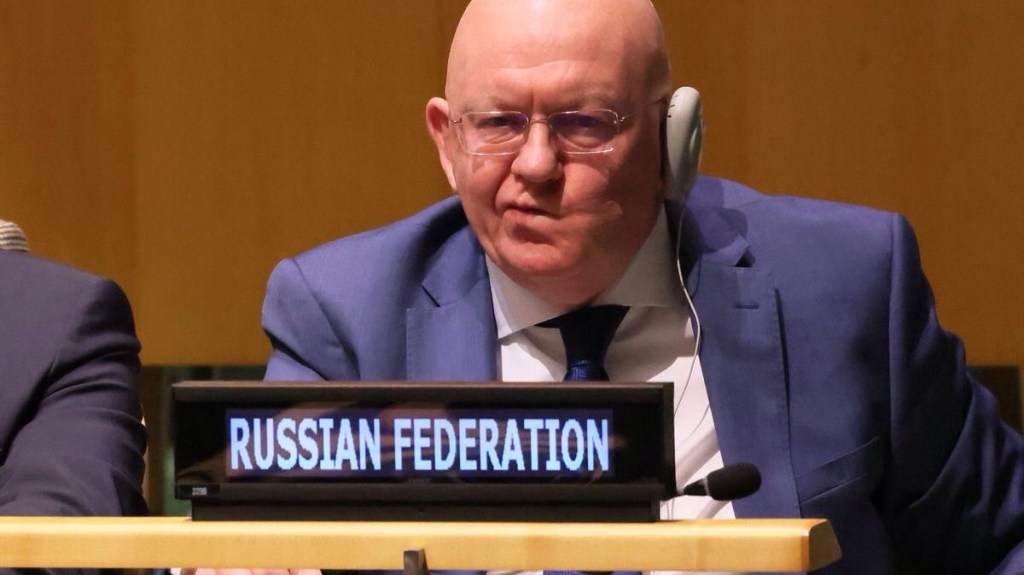
Just an hour ago, I posted a piece that I had actually composed yesterday concerning the recent silence from the usual talking heads at the Kremlin. And then I read about this statement, issued on Monday, January 12th, by Russia’s Permanent Representative to the United Nations, Vasily Nebenzya:
“Until the leader in Kyiv comes to his senses and agrees to realistic negotiating terms, we will continue to resolve the issue militarily . . . with every day he wastes, the negotiating conditions will only worsen.” [Julia Struck, Kyiv Post, January 13, 2026.]
Vasily Nebenzya
Nebenzya also said that discussions about deploying peacekeepers as part of post-war security guarantees would not be helpful to Ukraine, as — in Russia’s view — the advance of NATO forces toward Ukraine’s borders was unacceptable.
He further continued to advance the Kremlin’s absurd allegations that Russia had not caused Ukrainian civilian casualties — claims that have been debunked by irrefutable, multi-source, visual evidence.
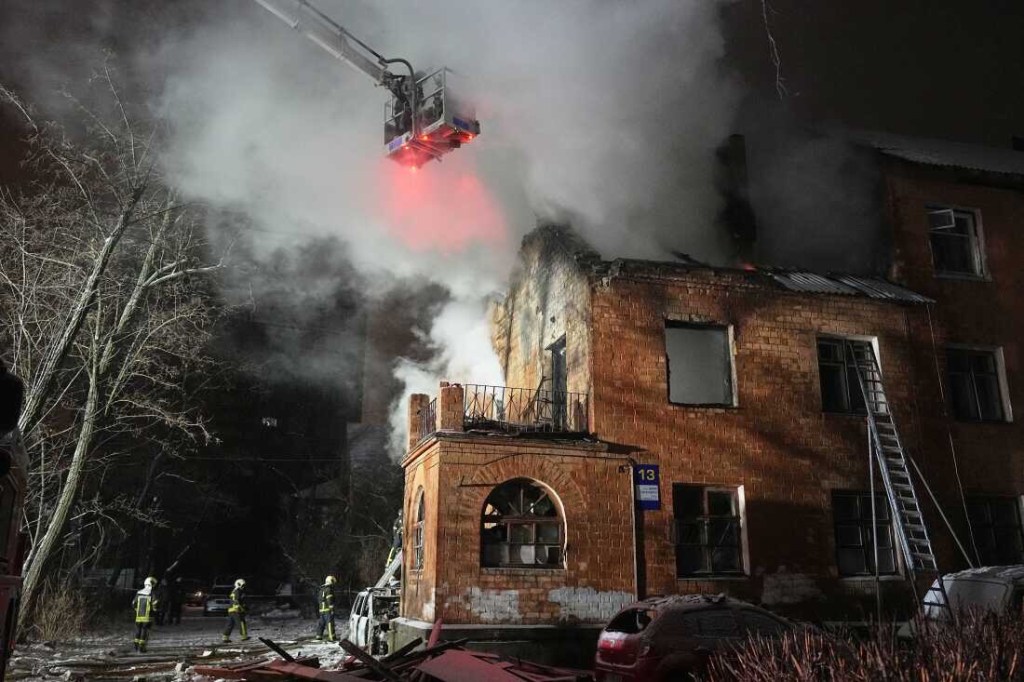
The emergency UN session was convened after Russian forces struck Ukraine’s Lviv region with a multiple-warhead Oreshnik ballistic missile.
Attack on Lviv, Ukraine – January 12, 2026
So there you have it: SSDD (Same Shit, Different Day). But at least we know they’re not asleep at the switch in the Kremlin . . . because those words would not have been spoken by Vasily Nebenzya without the instruction, or at least the authorization, of Vladimir Putin.
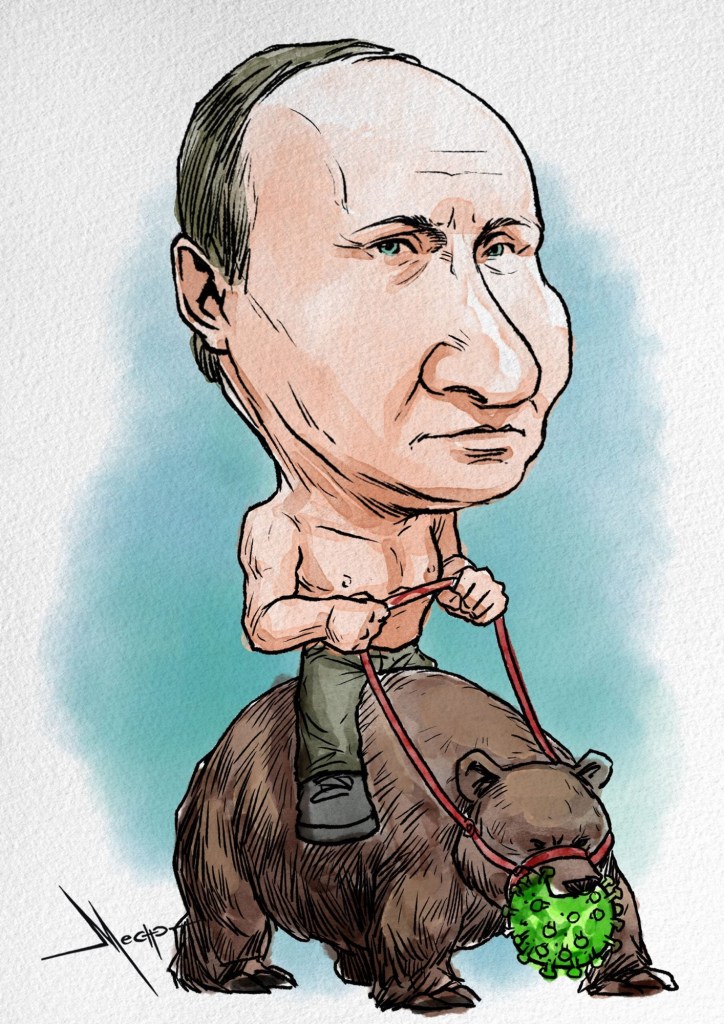
I’m afraid the Great Russian Bear is very much alive and awake after all.
Has anyone noticed the silence? Not in Ukraine, of course, where the Russian missiles and drones continue to arrive by the dozens (or more) on a daily basis, damaging or destroying essential infrastructure, maiming and killing civilians, and leaving the survivors without heat, electricity, water, or proper shelter.
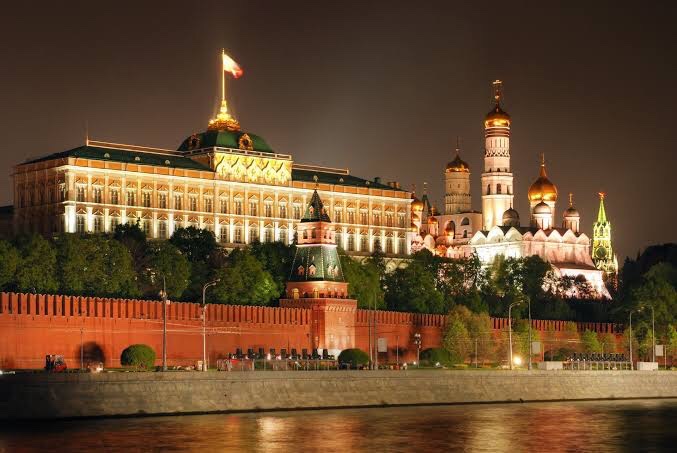
No, the silence is emanating — if silence can actually emanate — from the Kremlin. Why are we not hearing the customary daily rhetoric from Vladimir Putin, Sergey Lavrov, or Dmitry Peskov? While they’re inexplicably not bombarding the world with verbal threats of impending Armageddon, what the hell are they doing?
The Moscow Kremlin
It is, of course, impossible to know what goes on behind the Kremlin gates. But beyond Russia’s borders — throughout Europe — Putin’s hybrid war has been continuing, bit by bit, incident by incident, in ways that provide Moscow with at least a semblance of deniability. Consider:
Drones over Europe. They’re not attacking; they’re simply showing up, violating NATO airspace, surveilling, and making Poland, Germany, Finland, Lithuania, and the rest of Europe . . . well, more than a little edgy.
Baltic undersea cables being cut. Accidental? Once, maybe. But multiple incidents in the Baltic? Hardly.
Railway explosion. Poland has charged three people for the November explosion on a key railway route used to transport aid to Ukraine.
Explosive device in Lithuania. One of the three people charged in Poland has also been found guilty of detonating a device at an Ikea store in Lithuania in November.
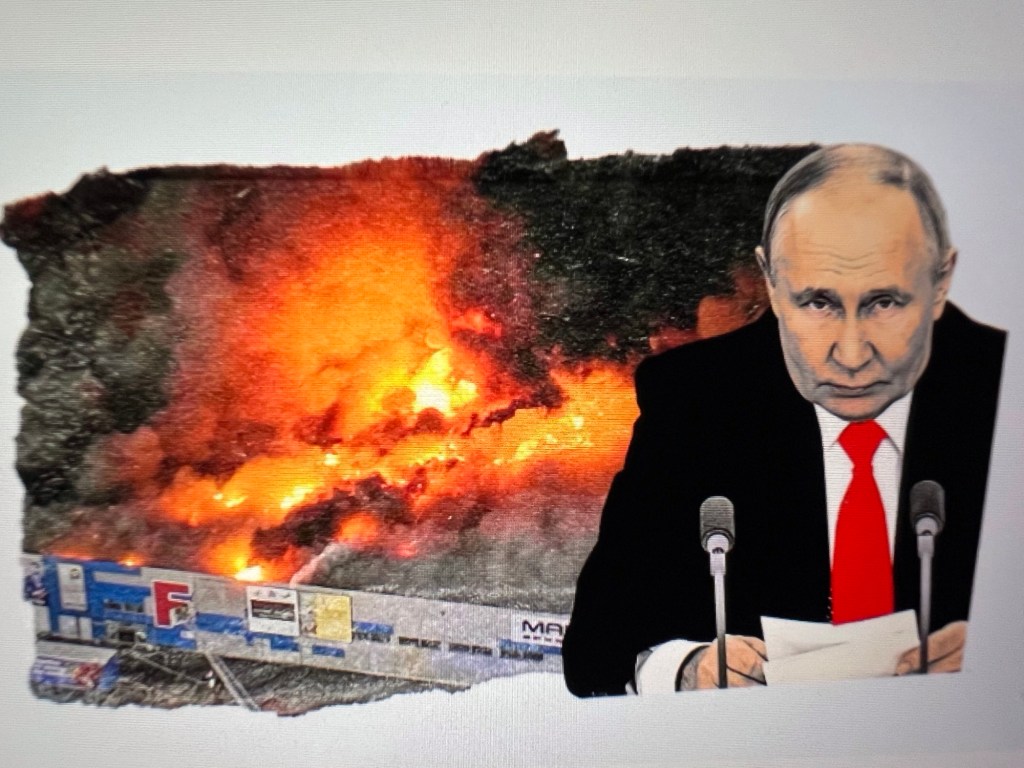
Arson. A shopping center was set afire in Warsaw, Poland, in 2024.
Communications and transportation. The jamming of GPS systems used by airports in the Baltic region has been attributed to Moscow.
Graffiti and cyber propaganda. Anti-Ukraine sentiment is being stirred up in numerous countries.
Election interference. An old story, continuing unabated.
*. *. *
Several days ago, Germany’s capital city of Berlin suffered a five-day blackout when arsonists attacked a gas-fired power plant. An estimated 100,000 people were left without electricity and heat in the frigid winter weather; some schools were closed; and hospitals were forced to rely on emergency generators.
A radical far-left group — Vulkangruppe — has claimed responsibility. But were they indeed acting independently? Or might they be part of Russia’s newest assemblage of mercenaries, sometimes referred to as Russia’s “disposable” saboteurs?
In much the same way as they recruit young men to serve in the military by offering financial incentives, the Russian authorities are now using online messaging apps and cryptocurrency payments to recruit “disposable” agents for sabotage operations throughout Europe . . . including financially-needy Ukrainian refugees who may not be aware of who is paying them. [Marc Bennetts, Thetimes.com, January 14, 2026.]
A report by the Royal United Services Institute (RUSI), a London-based think tank, said:
“The methods used to recruit and task saboteurs have shifted from Cold War-era reliance on trained intelligence operatives to a model characterised by remote, freelance and highly deniable assignments: the ‘gig-economy era’ of Russian sabotage.
“Low-level operatives are commonly recruited via encrypted messaging apps, such as Telegram, and paid small sums, often in cryptocurrency.” While most recruits are paid a few dollars for simple acts of vandalism such as graffiti, while others receive up to $10,000 for more serious crimes, the report stated that: “In several cases, saboteurs were not paid at all, underscoring their disposability.” [Id.]
One of the authors of the report — Kinga Redlowska, an expert on illicit finance and security — said that eroding support and creating fear and tension “is part of the logic of low-level [Russian] sabotage, even when the physical damage itself is limited. Europe has been relatively slow to recognise these incidents as part of a co-ordinated sabotage campaign. Money moves quickly, especially via crypto and informal cash services, while legal and cross-border co-operation processes move slowly. Even failed or low-impact attacks still achieve Russian objectives by creating fear, draining security resources and testing response thresholds.” [Id.]
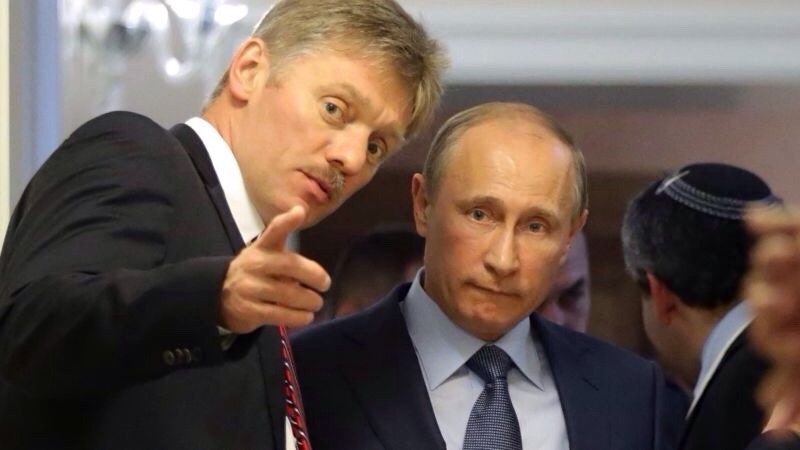
Vladimir Putin with Kremlin Spokesman Dmitry Peskov
*. *. *
Whatever else they may be up to inside those massive red brick walls, one thing is for certain: the Kremlin’s insidious work continues, albeit more quietly than usual. And that quiet is itself cause for concern.