It’s nearly time to consign 2025 to the dustbin of history. And for the occasion, from the pen of Austrian poet and novelist Rene Karl Wilhelm Johann Josef Maria Rilke — better and more simply known as Rainer Maria Rilke — I offer you these words of hope and inspiration for the coming year:
“And now let us believe in a long year that is given to us, new, untouched, full of things that have never been, full of work that has never been done, full of tasks, claims, and demands; and let us see that we learn to take it without letting fall too much of what it has to bestow upon those who demand of it necessary, serious, and great things.”
Rainer Maria Rilke (1875-1926)
So let’s celebrate the passing of the old, and cheer the beginning of what awaits us . . . with renewed hope, determination, courage, and the spirit of kindness and brotherhood in our hearts.
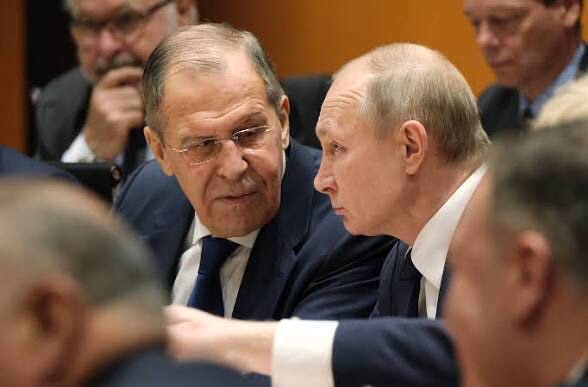
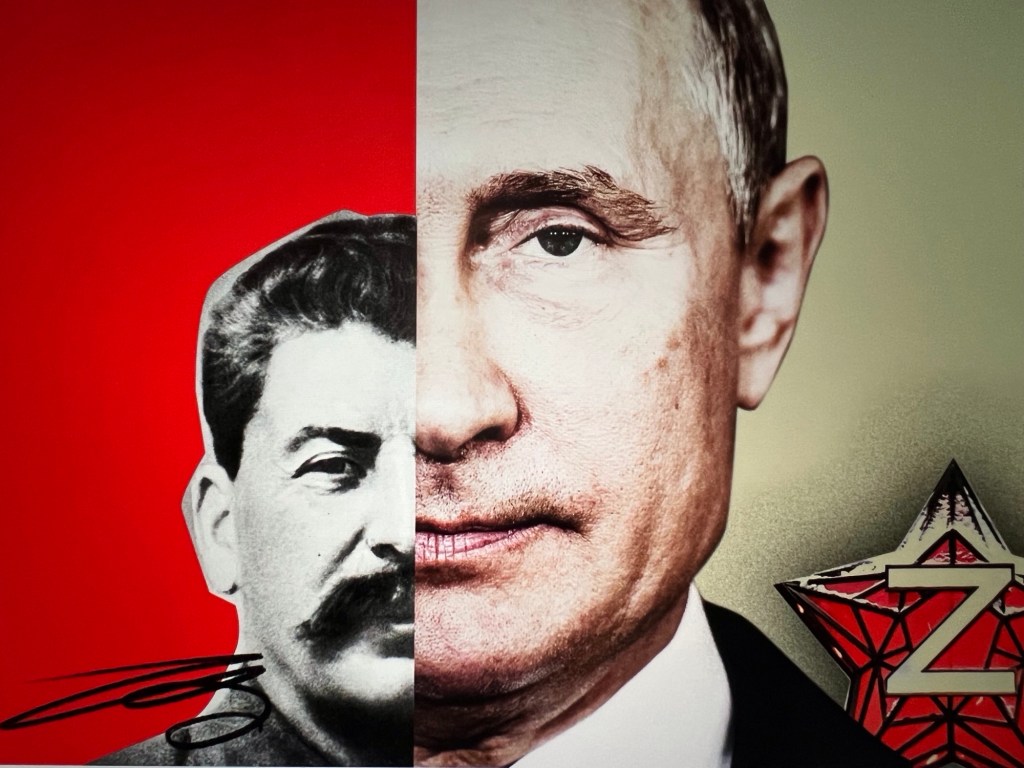
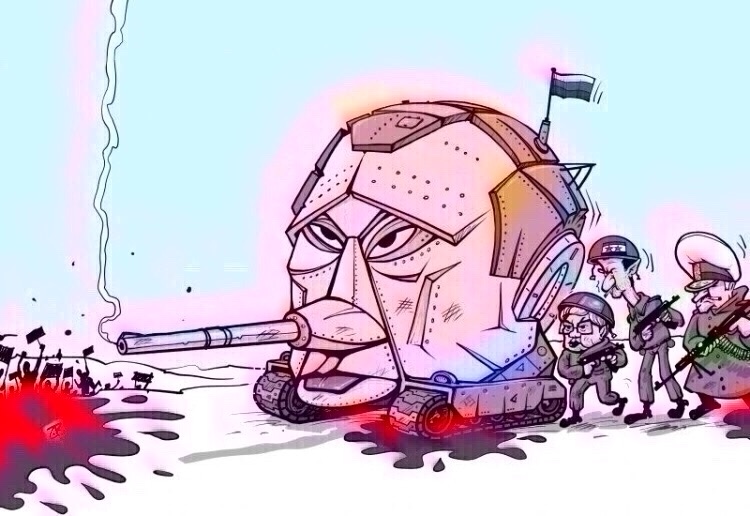
This one is unusual, in that it comes from the day’s headlines rather than the archives of history or literature. In fact, it is doubly unusual, because it is part of an article published yesterday by Russian news outlet Komsomolskaya Pravda — described by the EU as Vladimir Putin’s favorite newspaper, and obviously not one of my normal sources of inspiration.
Komsomolskaya Pravda
In general, Russian media have been hailing Donald Trump’s stance on the “special military operation” in Ukraine as being decidedly pro-Russian. And this is a prime example, as reported today:
“America no longer sees our country as a threat. The threat is now a militaristic Europe. The US leader’s philosophy is closer to the values of Russia’s president, not the politicians of the Old World . . . he understands that a clash between two nuclear powers means the Apocalypse. He sees Europe as a liberal stronghold that must be destroyed to Make America Great Again.” [Charlie Bradley, Express.co.uk, December 29, 2025.]
*. *. *
Winston Churchill once famously described the Soviet Union as “a riddle wrapped in a mystery inside an enigma.”
To me, the language from Komsomolskaya Pravda sounds more like a smirk wrapped in a “hallelujah” inside an existential threat.
Is it any wonder we’re feeling as though the world has turned upside-down?
This one needs no commentary from me. You know who you are.
“For last year’s words belong to last year’s language And next year’s words await another voice. And to make an end is to make a beginning.” – T. S. Eliot, “Little Gidding”
During the countdown to the New Year, I’m trying to focus on three things: avoiding the news, working on my January 1st retrospective of 2025, and starting the book I received from good friends for the holidays.
And maybe cutting back on the chocolate. (But not the Haagen-Dazs . . . never, ever the Haagen-Dazs!)
So, other than my daily quote from someone else’s wisdom — coming at you a little later today — this is it for now.
But why would anyone have expected anything else, when Donald Trump’s meeting at Mar-a-Lago with Volodymyr Zelensky was — yet again — preceded by an hour-long phone call to Vladimir Putin?
Everyone knows that Trump’s thought processes are always influenced by the last person he talked to. So he went into the meeting — bolstered by his army of attack dogs, including Marco Rubio, Pete Hegseth, and Stephen Miller — with Putin’s words ringing in his ears.
Not surprisingly, although both sides emerged from the three-hour session spouting the usual banal assurances that progress had been made, and that — in Trump’s words — “ . . . we’re getting a lot closer, maybe very close,” they were still a long way from a resolution to the Russia-Ukraine conflict.
Confusingly, Trump also said:
“I think we’re in the very final stages of talking, and we’re going to see. It’ll either end or it’s going to go on for a long time, and millions of additional people are going to be killed.” [Kevin Liptak, CNN, December 28, 2025.]
As clear as mud . . . as usual. But I suppose he was hoping to sound reassuring when he added:
“There are one or two very thorny issues, very tough issues, but I think we’re doing very well. We’ve made a lot of progress today, but really we’ve made it over the last month. This is not a one-day process deal, this [is] very complicated stuff. It’s possible it doesn’t happen. In a few weeks, we’ll know one way or another.” [Id.]
“Translation, please?”
Zelensky, on the other hand, remained concerned about future security guarantees, saying:
“Without security guarantees, this war cannot be considered truly over. We cannot acknowledge that it has ended, because with such a neighbour there remains a risk of renewed aggression.” [Bernd Debusmann, Jr. and Harry Sekulich, BBC, December 29, 2025.]
And, as if to prove Zelensky’s point — while Christmas bombardments continued unabated in Kyiv and elsewhere in Ukraine — Russian Foreign Minister Sergei Lavrov claimed today that Ukraine had targeted one of Putin’s several residences, and that Moscow would be retaliating and further reviewing its stance in the negotiations.
While Zelensky called Lavrov’s statement a lie, saying that it was a tactic to undermine the peace talks and provide an excuse to continue its strikes on Ukrainian territory, Donald Trump once again chose to believe his friend Putin. He said that he had learned about the alleged attack from Putin himself, that it had made him “very angry” at this “very delicate time.” He pointed out his earlier refusal to provide Ukraine with long-distance Tomahawk missiles, saying:
“It’s one thing to be offensive, because they’re offensive. It’s another thing to attack his house. It’s not the right time to do any of that.” [RFE/RL, December 29, 2025.]
I wonder how the thousands of Ukrainians who have lost their homes to Russia’s missiles and drones over the past four years would feel about that.
In the meantime, as Ukraine, Europe and the U.S. scramble to schedule further talks on a wide variety of outstanding issues, Putin maintains his rock-solid refusal to compromise . . . and continues to pursue his unchecked killing spree.
And we enter another year with peace looking less and less likely in the foreseeable future.
My Bubbe (grandmother) had a lot of colorful old-world sayings. One of my favorites was her standby when anyone spoke hopefully or optimistically about some future event: “From your mouth to God’s ears.” Once she had added her blessing, I was absolutely certain that everything would turn out well.
Their paths never crossed — they were from different lands, and he died when she was just a baby — but had my Bubbe met Alfred Lord Tennyson, I’m sure she would have had the perfect response to his New Year’s wish:
“Hope Smiles from the threshold of the year to come, Whispering ‘it will be happier’ . . .”
– Tennyson, “The Foresters”
Alfred Lord Tennyson
I can almost hear my Bubbe now, in her warm, fragrant kitchen, whispering, “From his mouth to God’s ears.” And, while I no longer retain that childish certainty, I still hold out hope that everything will indeed work out for the best. Because she said so.
I’m talking about the Russian oligarchs (not the Washington Billionaires’ Club) — the ones who made their first millions from the economic chaos that followed the breakup of the Soviet Union 34 years ago this week, thereby gaining tremendous political influence under newly-anointed President Boris Yeltsin.
Boris Berezovsky and Vladimir Gusinsky
Among the biggest of the big shots in those early days of Russian-style capitalism were Boris Berezovsky, Mikhail Khodorkovsky, Mikhail Fridman, Vladimir Gusinsky, Vladimir Potanin and Roman Abramovich. Among them, they gained control of the most profitable major industries, including oil and gas, metals, banking, and the media. Wisely, they tied themselves to Yeltsin’s apron strings, for his financial benefit as well as their own.
Then along came Vladimir Putin. Having worked his way up from his years in the KGB, to a position as aide to reformist St. Petersburg Mayor Anatoly Sobchak, and then through the ranks of the Yeltsin hierarchy, he was perfectly situated as Prime Minister to step in when Yeltsin resigned the presidency on December 31, 1999. Serving as interim president until an election could be held the following March, his victory was practically assured — as it has been in every election since.
But despite his years with Sobchak, Putin was no reformer, as we now know all too well. And life for the oligarchs began to change when Putin informed them in no uncertain terms that they would be allowed to keep their fortunes and conduct their businesses . . . as long as they understood that he, and only he, was in charge of the government.
And some have continued to thrive by staying on Putin’s good side. For example:
> Mikhail Fridman, 61, was a co-founder of Alfa Bank, and remains a member of numerous Russian organizations, including the National Council of Corporate Governance in Russia and the Russian Union of Industrialists and Entrepreneurs. As of 2024, Bloomberg listed his net worth at approximately $13.1 billion.
Mikhail Fridman
> Vladimir Potanin, 64, is founder and president of Interros, which holds stakes in MMC Norilsk Nickel, Rosbank, Yandex, and others. He is said to be Russia’s fifth-richest businessman; Forbes estimates his net worth at $24.2 billion.
Vladimir Potanin
> Roman Abramovich, 59, is one of the most widely known of this little group today. He once owned London’s Chelsea Football Club, though he was forced to sell it in 2022 due to sanctions imposed after Putin’s invasion of Ukraine. He is said to have a good relationship with Putin, though he denies it, and has even been labeled by U.S. intelligence sources as Putin’s financial middleman. In 2023, Forbes estimated his net worth at $9.2 billion.
Roman Abramovich
Others haven’t been quite so lucky.
> Mikhail Khodorkovsky, 62, once thought to be the wealthiest man in Russia, ran afoul of Putin in 2001 when he founded Open Russia, a reform-minded organization aimed at strengthening civil society in Russia. In 2003, his assets were frozen and he was imprisoned. After serving ten years, he was pardoned in 2013 and immediately left Russia, obtaining residency in Switzerland. He later moved to London, and continues to work, both independently and in conjunction with other exiles, in opposition to the Putin regime. Though he is no longer the multi-billionaire he had been in Russia — thought to have been worth around $15 billion from his energy and other holdings — he is still worth an estimated $170 million or more. But he knows that, at least as long as Vladimir Putin sits in the Kremlin, he can never go home again.
Mikhail Khodorkovsky
> Vladimir Gusinsky,73, is also living in exile due to legal problems in Russia. His original multi-billion-dollar fortune was largely derived from his media holdings, including Media-Most (which includes the NTV channel), the Sevodnya newspaper, and a number of magazines. He now enjoys both Israeli and Spanish citizenship, and has considerable investments in both countries. While his net worth is unknown, he did sell his remaining media assets in Russia for $300 million before fleeing in 2000, and it can be assumed that he has built on that in the past 25 years. Still, like Khodorkovsky, he has been forced to leave behind his homeland and the political and professional status he once enjoyed.
Vladimir Gusinsky
> Boris Berezovsky is unquestionably the saddest case of all. One of the original oligarchs, he had been a government official, an engineer and mathematician, and a member of the illustrious Russian Academy of Sciences. In 1997, he was estimated to have accrued holdings of $3 billion, primarily from Russia’s main TV channel, Channel One. But his foray into politics was his downfall. After initially backing Putin’s election, and himself being elected to the State Duma, Berezovsky opposed Putin’s increasingly autocratic rule, resigned from the Duma, and joined the vocal opposition. Under threat of investigation, he fled Russia for the UK in 2000, where he was granted political asylum. But he was dogged by personal problems and financial losses, and was found, at the age of 67 on March 23, 2013, hanged in the bathroom of his Berkshire home. Nearly bankrupt, he had reportedly become depressed and isolated. But his death was classified by police as “unexplained” due to questionable findings by investigators and a pathologist. The final inquest resulted in an “open verdict,” with a statement by the coroner saying: “I am not saying Mr Berezovsky took his own life, I am not saying Mr Berezovsky was unlawfully killed. What I am saying is that the burden of proof sets such a high standard it is impossible for me to say.” [en.wikipedia.org.]
Boris Berezovsky
*. *. *
Today, it is estimated that there may be as many as 100 oligarchs in Russia, many of them billionaires. Despite sanctions since the start of the war in Ukraine, they continue to live their sumptuous lives . . . as long as they pledge fealty to Vladimir Putin. What they lack — what the first oligarchs enjoyed to the fullest — is political power. But they no longer seem to care.
Which sounds very much like billionaires around the world.
Well, at least my worst fears were not realized: Volodymyr Zelensky left Mar-a-Lago visibly unscathed, and on a somewhat hopeful note.
Meeting at Mar-a-Lago – December 28, 2025
According to Ukrainian journalist Vitaly Shevchenko, speaking to BBC News, Zelensky indicated that his latest 20-point proposal has been 90% guaranteed . . . though he didn’t say which 10% remained at issue. Presumably, that would involve Russia’s territorial claims on the Donbas and Zaporizhzhia regions, and the possibility of establishing a demilitarized zone (DMZ) or special economic zone along the Ukraine-Russia border.
University of Southern California Professor Robert English told the BBC that he felt the parties were trying hard to be optimistic in the face of the major sticking points not yet agreed to, but that there remained a good deal of work to be done.
And speaking alongside Zelensky on CNN, Donald Trump — well, he was just being Trump. He said they had made “a lot of progress,” and “had discussions on just about every subject,” including in his pre-meeting phone call with Vladimir Putin. He then added — taking on his real identity as a hotelier — that they had had a nice lunch, and hoped Zelensky had enjoyed the food.
To which the Ukrainian President — in Florida for the sole purpose of saving what is left of his country and not for the food — sidestepped that little non sequitur, instead reiterating that Ukraine is ready for peace. And he wisely remembered to thank Trump again for all of his efforts . . . but stopped short of genuflecting.
After the Meeting: Still Smiling
So there we are, without sufficient details on which to base a forecast, or even a guess, as to what we might expect from all of this year-end effort. There is, of course, still the post-meeting call to be held between Trump and Putin, which I doubt will hold many surprises in view of Putin’s immovable demands and his refusal even to agree on a ceasefire during negotiations.
And as we await the results of that upcoming talk, I can’t help visualizing that conversation taking place between a Russian Dr. Strangelove, with his finger on the nuclear button, and an American version of an innkeeper named Thenardier (from Les Miserables), “relieving” his guests of whatever he could get his grubby little hands on.
Such is the world we now inhabit. But how on earth did we allow it to get to this point?
In February of 1945, the leaders of Great Britain, the United States and the Soviet Union — Sir Winston Churchill, Franklin Delano Roosevelt and Josef Stalin — met at Yalta on the Black Sea coast of the Crimean Peninsula to discuss the final stages of World War II and the postwar reorganization of Europe. By May 8th, the war in Europe was over.
Church, Roosevelt and Stalin at Yalta – February 1945
Today, Ukrainian President Volodymyr Zelensky has arrived in Palm Beach, Florida, for yet another meeting with Donald Trump. And once again, Trump chose to precede the meeting with a one-on-one, hour-long phone call to Vladimir Putin — presumably to gauge whether there has been any modification of Putin’s position regarding settlement of his so-called “special military operation” in Ukraine, but more likely to solidify their own agreement on how to convince Zelensky to accede to Putin’s principal territorial and security demands.
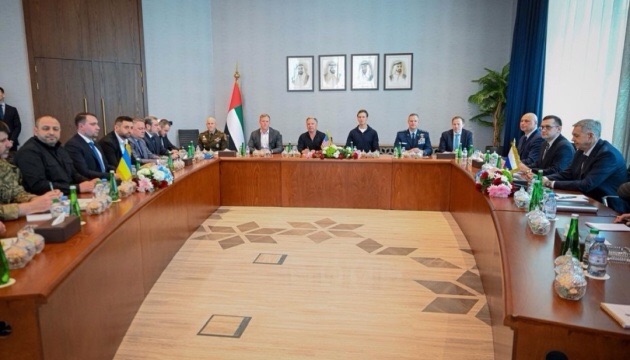
And — in sharp contrast to the gathering of equals at Yalta — this is what Zelensky has walked into:
The American Inquisition
Instead of the tripartite meeting he has been requesting — which Putin has steadfastly refused — Zelensky has once more been led into a viper’s nest of eight venomous reptiles hell-bent to claim credit for ending an unjust war, regardless of the ultimate cost to the victims or the future security of Europe.
Aligned against Zelensky, in addition to Trump (fourth from left, with his chin characteristically stuck up in the air), were Secretary of State Marco Rubio; Secretary of Defense Pete Hegseth; special envoy (and real estate mogul) Steve Witkoff; Trump son-in-law (and fellow real-estate guru) Jared Kushner; Chairman of the Joint Chiefs of Staff Dan Caine; General Services Administration’s federal acquisitions service commissioner Josh Gruenbaum (for whatever reason); and — most poisonous of all — White House deputy chief of staff for policy Stephen Miller (second from right, glaring menacingly at the photographer).
That is what passes for diplomacy at Mar-a-Lago.
The day is far from over, and anything could happen. I will, of course, be following events closely; but at the moment, I don’t have a good feeling about this.
In the spirit of the approaching New Year, and as promised yesterday, I’ve decided to focus on the positive and have been searching for quotes that are optimistic, uplifting, and perhaps even humorous.
Benjamin Franklin
Today, my eye landed on the words of Benjamin Franklin: a man well-known, not only for his statesmanship, but for his mischievous sense of humor as well . . . though in this case, I’m quite sure it is my own, often diabolical and sometimes even twisted, interpretation that sees the funny side of this:
“Be at war with your vices, at peace with your neighbors, and let every new year find you a better man.”
What Ben meant, of course, was that you should become a better person in the new year.
But my immediate reaction was: “Yes, please! I’ve been looking for a better man for years, and haven’t found him yet.”
Either way, I think Ben’s sentiment is a good one for 2026 . . . especially after what we’ve all been through in 2025.