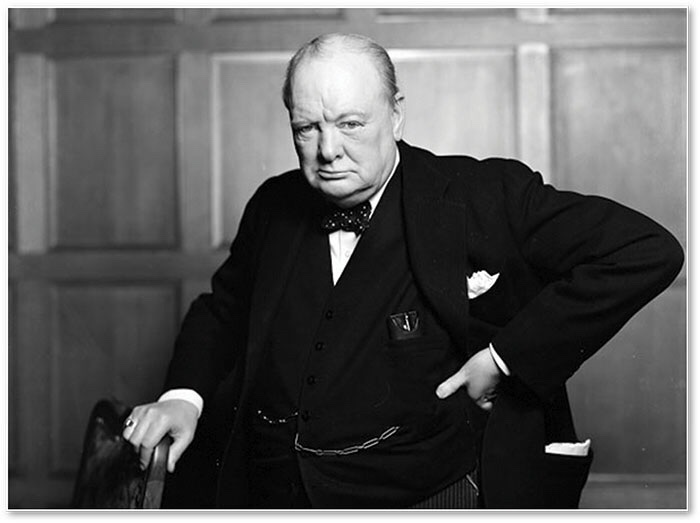
The writings of Winston Churchill contain a never-ending trove of wit, whimsy and wisdom. And today’s quote is being passed along for the benefit of all of those Cabinet members and other Washington insiders who might not already have learned from Kristi Noem’s experience:
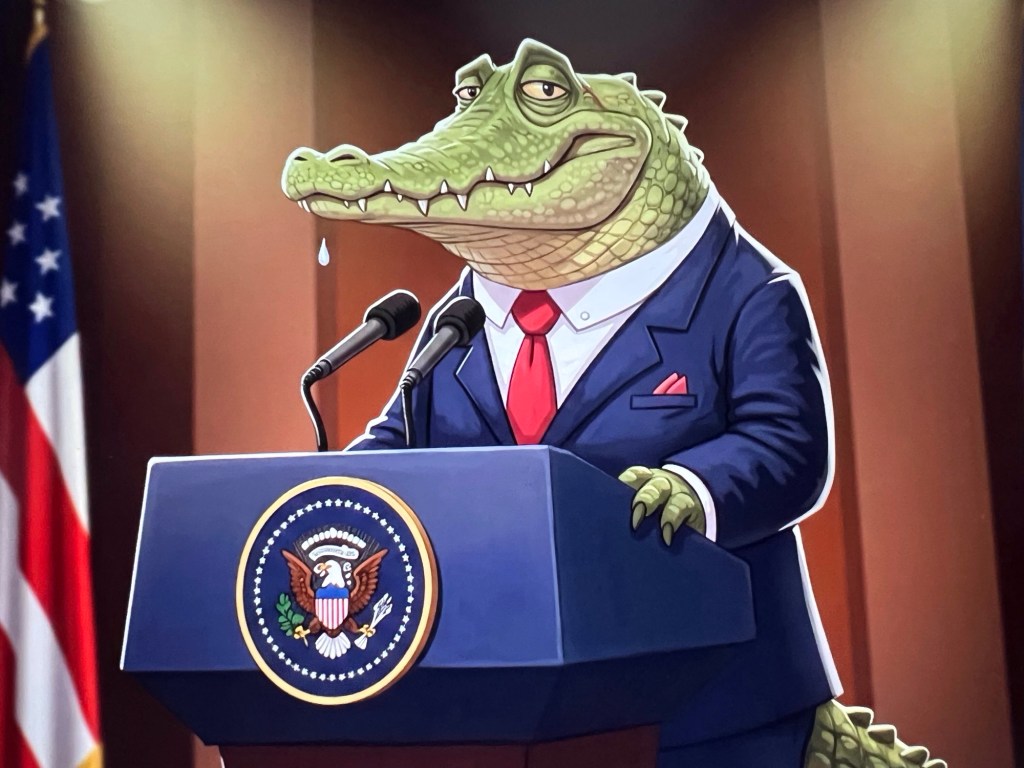
“An appeaser is one who feeds a crocodile, hoping it will eat him last.”
– Winston S. Churchill
Sir Winston Churchill
It also might be good advice for those world leaders who haven’t yet figured it out.
Take a hint, people: The crocodile’s appetite is insatiable.
It’s difficult to say, as the organization itself seems to remain out of the headlines except during their annual summit. But some of their individual member nations have been very much in the news lately, in ways that would appear to be giving the bloc a substantial boost in achieving its ultimate goal — which is nothing less than the establishment of a new world order to replace the existing Western-dominated political and economic systems.
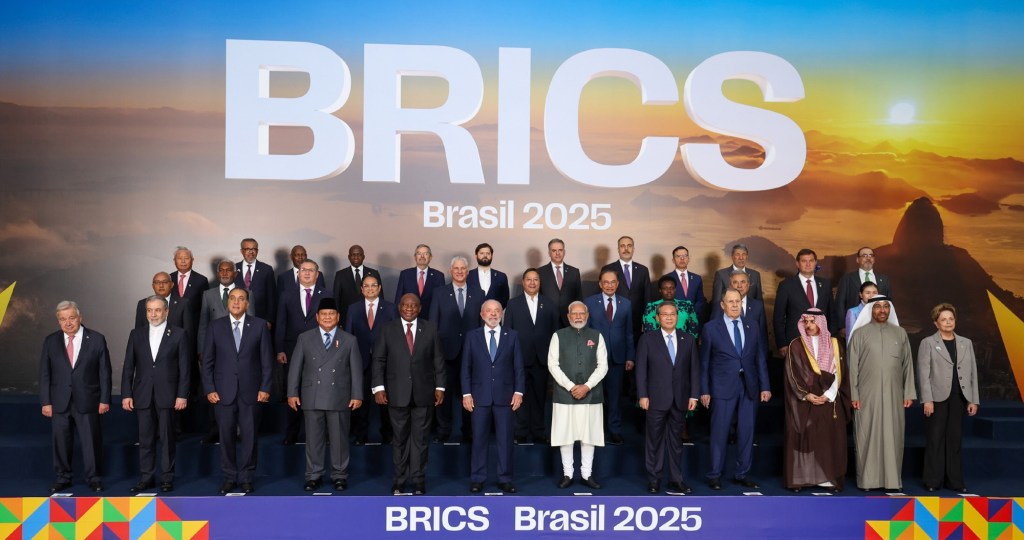
BRICS 2025 Summit in Brasilia, Brazil
And Donald Trump’s misguided war against Iran is playing right into their hands.
Last year, on February 24, 2025, I posted an article titled “BRICS is Dead; Long Live BRICS,” which read in part:
*. *. *
What he (Trump) said last week — after threatening the BRICS member nations with 150% tariffs if they attempted to promote an alternative currency to the U.S. dollar — was this:
“BRICS states were trying to destroy our dollar. They wanted to create a new currency. So when I came in, the first thing I said was any BRICS state that even mentions the destruction of the dollar will be charged a 150% tariff, and we don’t want your goods and the BRICS states just broke up. . . . I don’t know what the hell happened to them. We haven’t heard from the BRICS states lately.” [NDTV.com, February 21, 2022.]
It’s difficult to separate the truth from the imaginary in anything said by someone who can’t remember his own words. Because in January, Trump had threatened — not 150% — but a 100% tariff if the BRICS nations wanted to “play games.” [NDTV.com, February 14, 2022.] At a press briefing at that time, he was asked whether he wanted to dismantle BRICS or become a part of it, to which he responded:
“I don’t care, but BRICS was put there for a bad purpose and most of those people don’t want it. They don’t even want to talk about it now. They’re afraid to ask about it because I told them if they want to play games with the dollar, then they’re going to be hit with a 100 per cent tariff. The day they mention that they want to do it and they will come back and say we beg you, we beg you not to do this. BRICS is dead since I mentioned that. BRICS died the minute I mentioned that and now I remember when Obama and Biden, in particular, I guess he said that oh, they have us over a barrel.” [Id.] [Bold emphasis is mine.]
I just want to know one thing: What on earth has Donald Trump been smoking?!! Because there is not one phrase in all of that gobbledegook that makes an ounce of sense.
To begin with, BRICS is neither dead nor dying. If they were, would they have added five new members — Egypt, Ethiopia, Indonesia, Iran and the United Arab Emirates — since last year, doubling their size? And would they have added a new membership category — “Partner States” — in 2024 to accommodate the integration of prospective members?
Those Partner States are effectively observers, not yet officially part of the BRICS bloc, but guaranteed of support from the full members. Thus far, some 22 countries have been invited to become Partner States. Only three — Algeria, Turkiye and Vietnam — had not yet confirmed their status as of mid-January.
And if, as Trump would like to believe, BRICS were indeed finished, would they even now be busily planning their 2025 Summit in July, to be hosted in Brazil?
To be sure, Donald Trump is not wrong in considering BRICS a threat to U.S. supremacy — in fact, to the entire structure of the Western world. It was founded by Vladimir Putin in 2009 for the sole purpose of building an organization strong enough to run counter to NATO, the EU, the G7, and — who knows? — possibly even the United Nations.
But if Trump thinks throwing tariffs at the member states is going to cause them to put their chairs back on the table and slink home in defeat, he is living in an alternate reality.
Because, with Vladimir Putin at the helm, it isn’t going to be that easy.
*. *. *
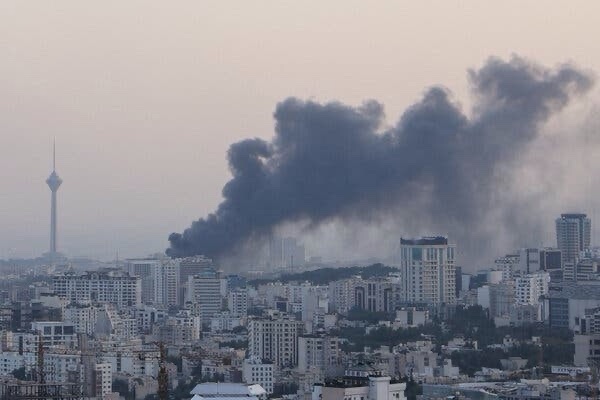
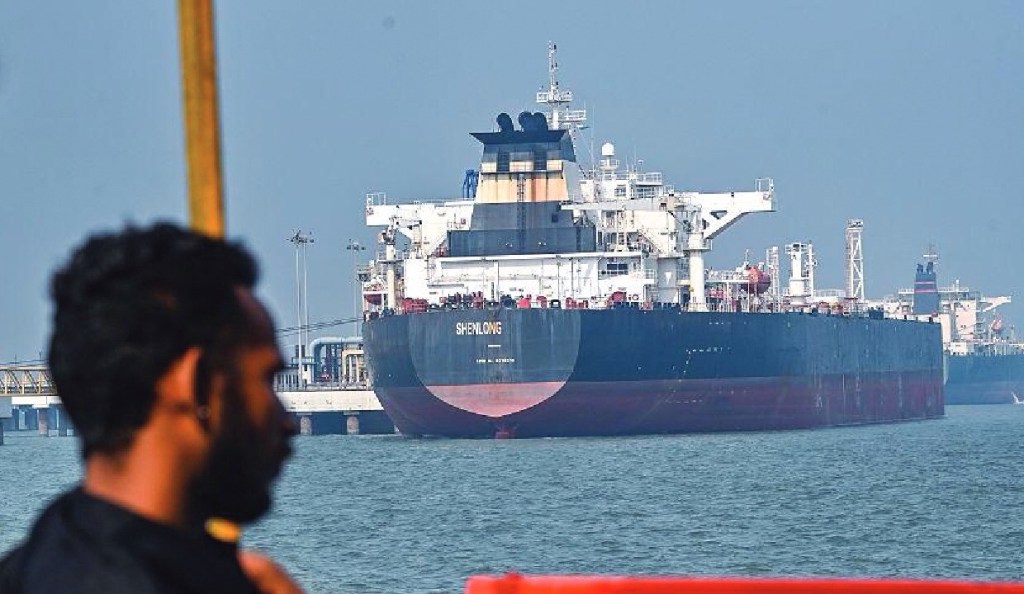
That was then. Fast-forward to March 2026, with the U.S. and Israel bombarding Iran and killing off its leaders, and Iran retaliating by attacking U.S. and Israeli interests throughout the Middle East . . . and, perhaps most significantly, closing the Strait of Hormuz to virtually all oil shipments — normally 20 percent of the world’s supply — thereby plunging international energy systems and markets into total chaos.
U.S. Attack on Iran – March 2026
Do you remember the French uprising of 1832 as depicted in Les Miserables . . . and how the opportunist innkeeper and his wife benefited by robbing the dead of their valuables? It was a vivid illustration of a fact of life: that from every tragedy, someone finds a way to profit from other people’s misery.
And today, it is BRICS, and a number of its members, that will reap the benefits from Trump’s fiasco. Case in point:
In a futile effort to mitigate the worldwide surge in energy prices resulting from his disastrous actions, Trump has already eased sanctions against Russia, allowing it to continue selling oil to China, India, Brazil, Turkey, Hungary, Slovakia and others. Russia thereby profits financially, enabling it to refill its war chest and continue its brutal invasion of Ukraine. And the purchasers obviously benefit from the availability of that cheap Russian oil.
As for China, they received an added boon when Pakistan made a deal with Iran to allow a Pakistani tanker, the MT KARACHI, through the Hormuz Strait on the condition that payment be made — not in dollars, euros, or any other Western currency — but in Chinese yuan.
MT KARACHI, Navigating the Strait of Hormuz – March 2026
Note that Russia, China, India, Brazil and Iran are all members of BRICS, and Pakistan has applied for membership. The fact that Chinese yuan are now being accepted — in fact, preferred — as payment on the world market cannot be coincidental.
BRICS is far from dead; on the contrary, it would appear to be making significant progress toward its ultimate goal. And, intentionally or otherwise, Donald Trump is helping to accelerate the process by creating the perfect conditions for its growth.
Let’s say you’ve had a best friend since you were kids in elementary school together. You had sleepovers at each other’s homes, helped one another with homework, swapped Legos and trading cards, shared your innermost secrets . . . even went to the same college.
As adults, you remained friends. You double-dated, were in each other’s weddings, your spouses became friends, your children grew up together. You carpooled, gave each other career advice, helped out during family emergencies, vacationed together, and talked about retirement communities for the future.
Then one day something happened. Maybe a couple of your children had a falling-out, or you disagreed about a political issue, or a mutual acquaintance told one of you a lie about the other. It doesn’t matter what caused it; the breakup was devastating.
From that time on, you didn’t speak; you quit the country club you loved because your ex-friend was a member; you even switched doctors so you wouldn’t accidentally bump into each other there.
But that wasn’t enough. Your ex-friend was so hurt and so upset, they began publicly ridiculing and insulting you, posting terrible lies on social media, claiming that you had never really been a true friend at all. They became so embittered, their spouse — and most of their other friends — left them.
After a while, they made new friends. And at a party one evening, they had a couple of drinks too many, got behind the wheel, and on the way home caused an accident that killed someone in another vehicle. They were arrested and charged with vehicular manslaughter. They needed help . . . but they had burned all their bridges and had no one to turn to.
Then they remembered their trusted old friend: you. They knew — or thought they knew — that you couldn’t let them languish in jail. So they called you and said that they needed you to put up the bail money for them, and — when their case came to trial — to lie: to testify that you had been with them at the party and knew that they had not been drinking after all. To risk everything for them.
Now, here’s the hypothetical question: What do you do? Do you help your unfaithful ex-friend . . . or tell them to take a flying leap into the nearest active volcano?
This is not a “Dear Abby” column. As you may have surmised, the question is analogous to the situation in which Donald Trump now finds himself, after having spent years bad-mouthing and double-crossing every one of America’s allies, the United Nations, NATO, the EU, and all those “shithole countries” (his words) around the world.
And all because he went batshit crazy one day, invaded Iran against all advice and all logic, and created a world crisis so widespread and so dangerous that he hasn’t the vaguest idea of how to fix it. Then he suddenly remembered those old allies — and Article 5 of the NATO treaty dealing with collective defense — and tried to convince them that they should send their military forces, and spend their money, to get him out of the mess he’d made.
And when they reminded him that Article 5 does indeed refer to defense, and not to offensive actions in which they had no part and had never even been consulted, he once again lashed out at them, saying he didn’t need them after all.
But he does need them. And, like our fictitious bad friend, he finds himself alone and lonely . . . but on the world stage, and with a lot more deaths and other misdeeds to answer for.
“Where’d everybody go?”
The only thing Trump has going for him that our hypothetical ex-friend didn’t is the fact that all of those allies have a major stake in the outcome of his latest fiasco. And they have consciences, meaning that they want the best possible result for everyone.
Right now, they’re not responding as Trump would have liked. But in the long run, they may have no choice.
Today is my birthday . . . again. (Wasn’t the last one only a couple of months ago?)
Don’t ask for a number; I’ll just tell you that, while my mind still operates on the level of a 13-year-old, my body keeps reminding me that I’m older than dirt.
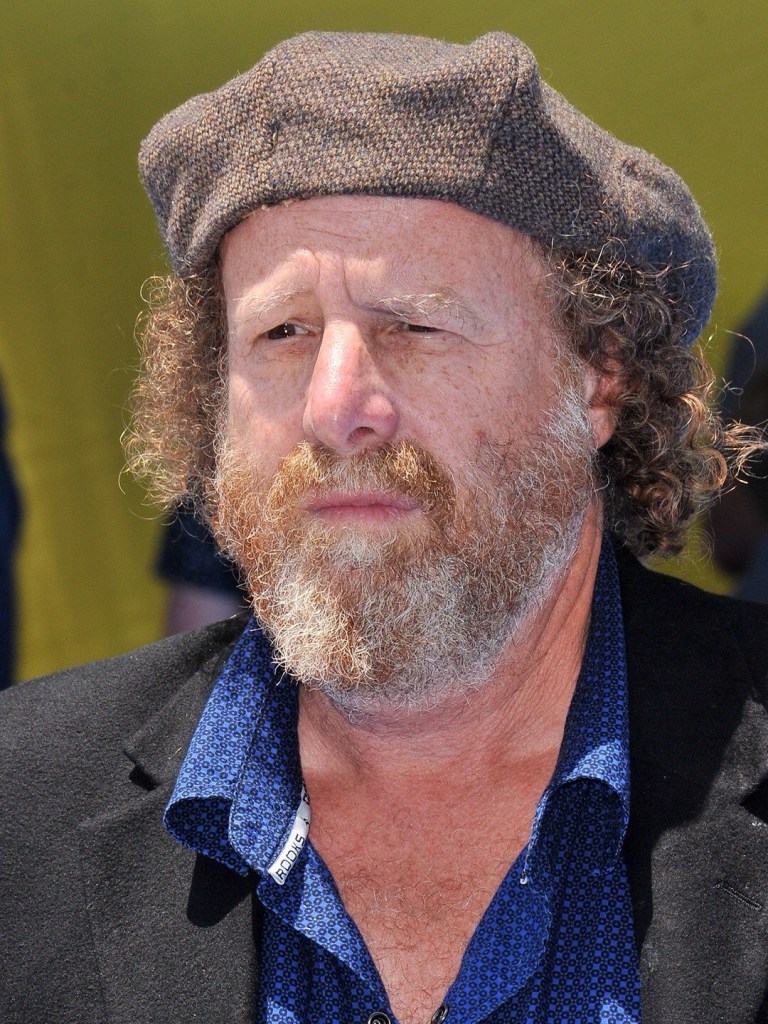
But stand-up comedian, actor, writer and film producer Steven Wright — who is a few years younger than I — has a great attitude about aging. He has said:
“I intend to live forever. So far, so good.”
Steven Wright (1955 – present)
Yeah? Well, let’s see if he still feels that way about living forever when he reaches my age and everything that doesn’t hurt like hell has gone completely numb or stopped working altogether.
But for now, I will agree with the second half of his philosophy: “So far, so good.”
I was watching a David Pakman broadcast on YouTube last evening, in which a guest referred to certain people in the Trump administration as “sycophants.”
Closed captioning was turned on, and I happened to glance at the screen at exactly that moment . . . just in time to catch the description of those government employees ingloriously translated for all the world to see as:
“Sicko pants”
As though being a sycophant isn’t demeaning enough!
Now, I’ve seen some funny ones over the years — we all have — but what struck me about this one was its absolute appropriateness . . . and I just had to share it with you.
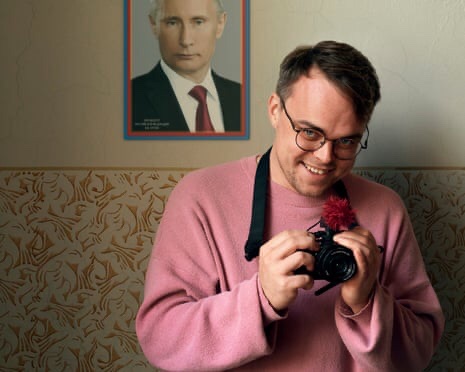
From elementary school teacher in Karabash, Chelyabinsk Oblast, Russia (near the northern border of Kazakhstan), to Academy Award recipient at Hollywood’s biggest night of the year, is one giant step for a self-described “Mr. Nobody.” But Pavel (“Pasha”) Talankin just made that leap.
Pavel (“Pasha”) Talankin
Once a student at Karabash Primary School No. 1, where his mother worked as school librarian, Pasha later returned there as a teacher and the school’s videographer — by all accounts, a very normal, contented life.
But in 2022, Vladimir Putin invaded Ukraine, and to support his “special military operation” — in truth, nothing more than an illegal land grab — he began a massive propaganda program throughout the country, focusing heavily on the population’s most vulnerable: the children. The official curriculum in the country’s schools was changed to require “patriotic” teaching, including references to the war as the “de-Nazification” of Ukraine.
But Pavel Talankin couldn’t accept the lies. He continued filming school programs as usual, though under new instructions to delete any material that might reveal the nature and extent of the Soviet-style curriculum. And he began secretly making duplicate, unedited videos of classes, pro-war student assemblies — even including weapons training by the infamous paramilitary Wagner Group. He found a way to send the unedited videos out of the country to an American man he had met online, filmmaker David Borenstein, who became his co-director and worked with him remotely from Europe for two years.
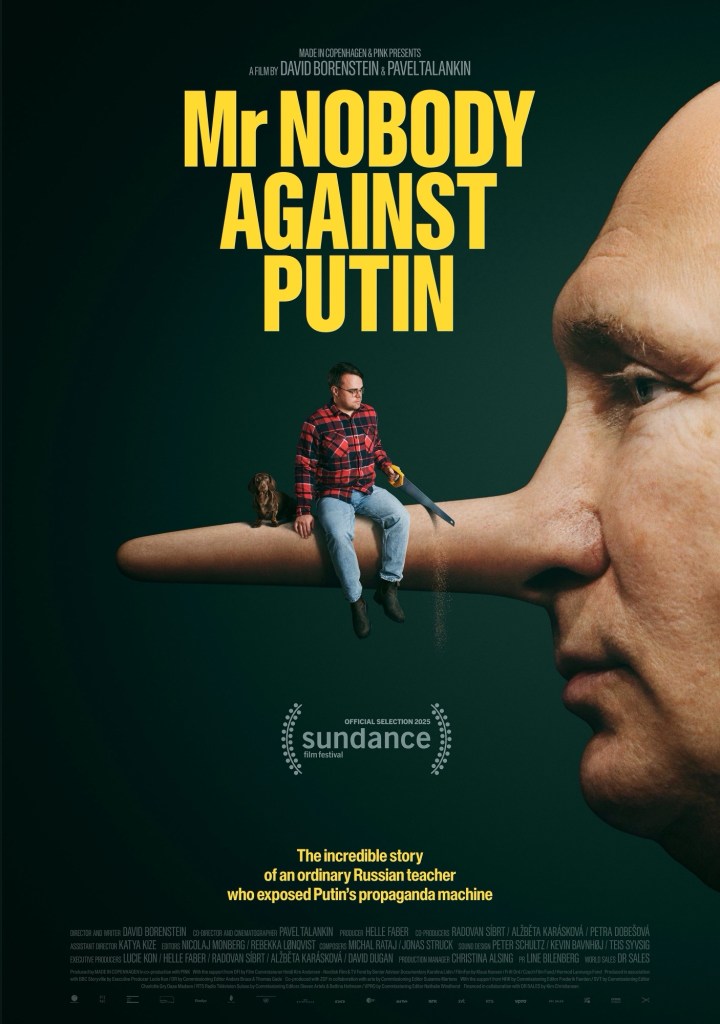
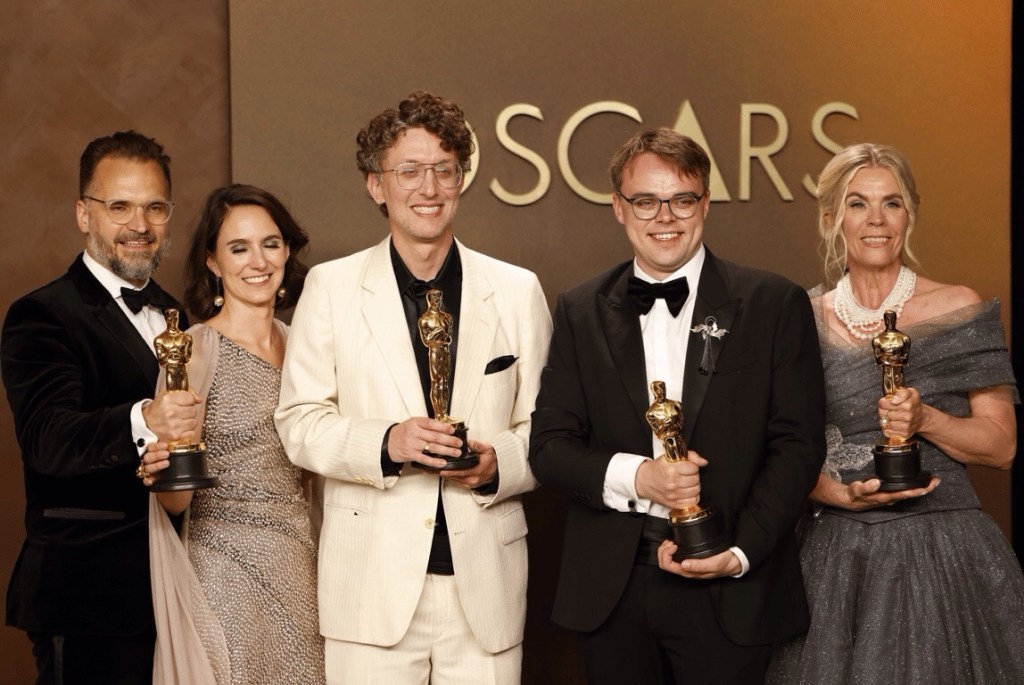
Those films ultimately became the documentary, “Mr. Nobody Against Putin.” And on Sunday, Pavel Talankin and David Borenstein took home Oscars.
Pasha eventually had to flee Russia, leaving behind his mother, his friends, his students, and a job that he once loved. As Borenstein explained:
“When Pasha picked up the camera, it was because he felt he was trapped in this Kafkaesque system. He says it in the film: ‘Being a propagandist at this school is like walking a tightrope.’” [Elizabeth Palmer, CBS News, March 16, 2026.]
He booked a supposed vacation in Turkey, and never returned home. He is currently living in an undisclosed location somewhere in Europe.
Before flying to Los Angeles, Pavel gave an interview on CBS News’ “Sunday Morning” in London, in which he said:
“When the teacher had to say Ukraine had taken the path of neo-Nazism and neo-fascism, and we must ‘liberate’ it, at that moment I understood that I had no moral right to delete this material, because it is part of the evidence of what’s happening in Russian schools today.” [Id.]
Asked if he believed Russian authorities had become suspicious of him, Pavel replied:
“Sometimes I thought so. In Russia you never know. No one will call you; no one will knock on your door. They just watch, and then suddenly break the door down, throw you on the floor, and the floor is the last thing you see in your apartment. That’s it; you don’t exist anymore.” [Id.]
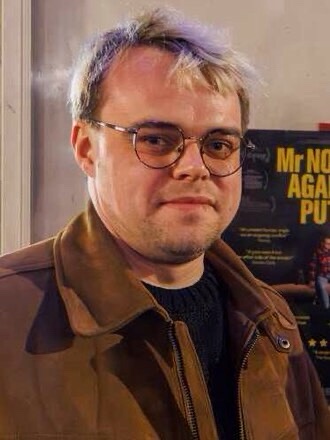
Pavel Talankin in Los Angeles
The Kremlin claims they’ve been too busy to watch the film. Translation: they’ve seen it, and haven’t yet decided what to do about it.
But Pavel’s mother, who appears in the film, has seen it. She even gave an interview to the New York Times in which she expressed her pride in her son. Conscience and courage obviously run in the family.
*. *. *
Like the samizdat of Soviet times, Pavel Talankin’s film is a vital means of getting out to the world the truth of life in Putin’s Russia. He expresses his fear for the future of the children he left behind:
“This is a very important document, because it shows what Russian society will be like in a few years. Putin may no longer exist, but society will be evil, because propaganda entered schools and was taught to children.” [Id.]
In response to a question, he said that he feels “probably 80 percent safe” from retribution, but that:
“It’s also, to me, a story about resistance. Everybody faces a moral choice wherever you are, and this is a story also about what you do when there is a government around you tearing down everything that you have built up.” [Id.]
And when his co-director David Borenstein accepted his Oscar, he had this to add:
“‘Mr. Nobody Against Putin’ is about how you lose your country. And what we saw when working with this footage, it’s that you lose it through countless small, little acts of complicity, when we act complicit, when a government murders people on the streets of our major cities, when we don’t say anything when oligarchs take over the media and control how we can produce it and consume it. We all face a moral choice. But luckily, even a nobody is more powerful than you think.” [Id.]
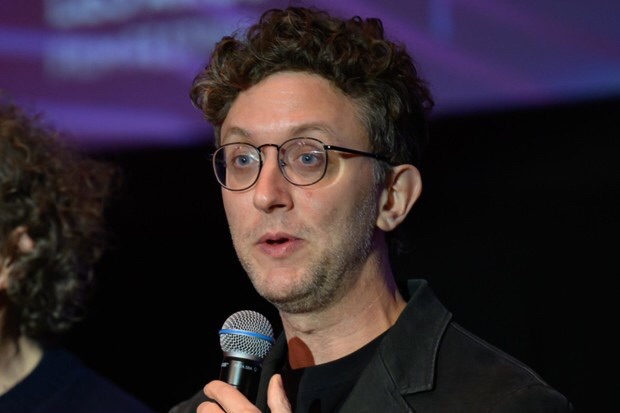
David Borenstein
Pavel Talankin and David Borenstein — two “Mister Somebodies,” whose courage and conviction stand as a shining example to us all.
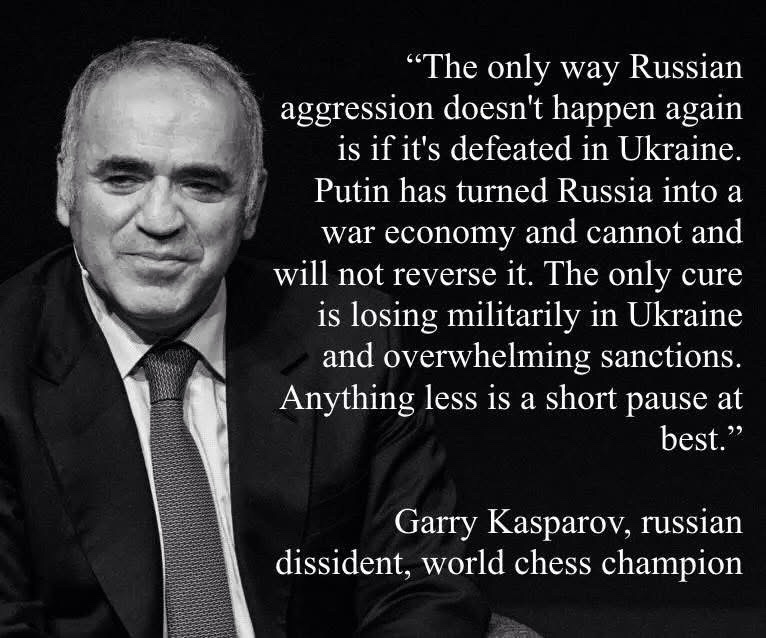
Garry Kasparov is a world chess grandmaster, author, and Russian political dissident living in exile in Croatia, who knows the workings of the Russian hierarchy as well as anyone alive.
When asked about the prospects of peace talks with Vladimir Putin, he had this to say:
Garry Kasparov
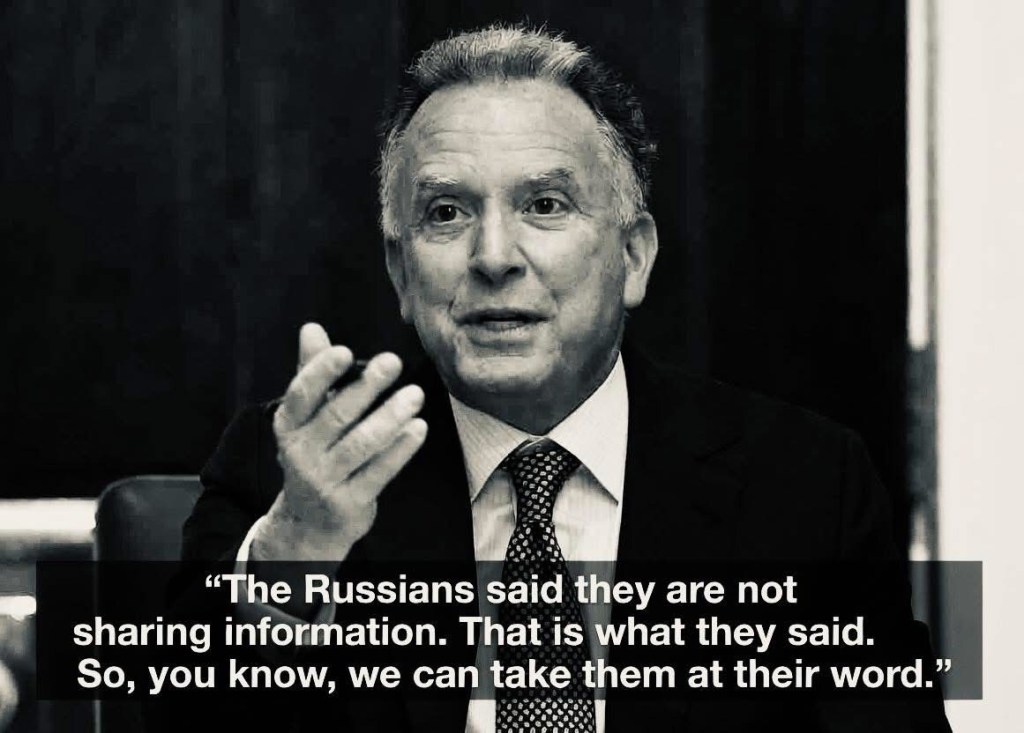
Conversely, real estate huckster and U.S. special envoy to everywhere, Steve Witkoff, recently offered an opinion based on a few meetings with Putin, in which he proffered:
Steve Witkoff
If you were asked to decide, whose word would you be inclined to take?
Things weren’t going so well for Donald Trump. Negotiations to end the war in Ukraine — the one he said he would wrap up within days of taking office in January 2025 — were stalled; Americans were seeing through his lies about prices coming down, jobs being created and salaries going up; U.S. citizens were being killed as collateral damage in his brutal immigration roundup; his MAGA base, and even his Republican-majority Congress, were beginning to develop cracks; his administration was being run by incompetent, self-serving yes-men (and women); and worst of all, the Epstein files weren’t going away.
So he did what any normal person occupying the most powerful office in the world would immediately think to do: he invaded Iran, with no legitimate justification, no authorization from Congress, no sane strategy, and no exit plan.
In the meantime, Ukraine continued to fight for its life for the fifth consecutive year. But the next round of peace talks, which had been tentatively slated to begin last week, were put on hold — to the obvious delight of Vladimir Putin. According to Kremlin spokesman Dmitry Peskov, scheduling the negotiations had become difficult because it was unclear when U.S. officials would be able to participate. [Alex Raufoglu, RFE/RL, March 13, 2026.]
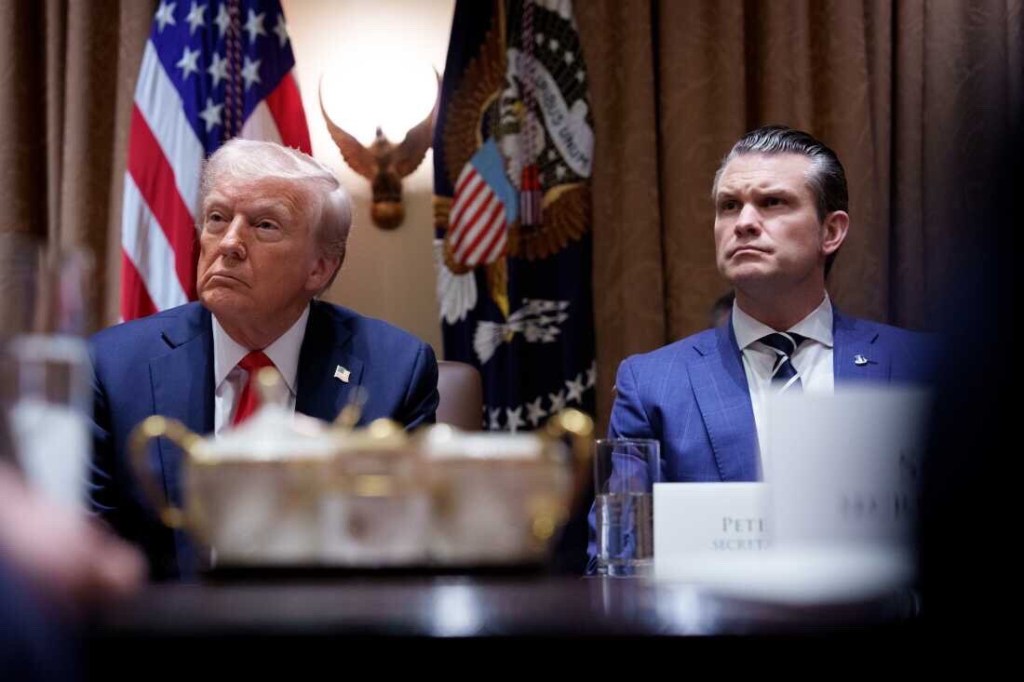
This time it was not Putin who caused the postponement; it was Trump’s and Secretary of Defense Pete Hegseth’s decision to divert the nation’s military resources to the Middle East, where their disastrous attack on Iran — initially touted as a surgical strike that would be over in the blink of an eye — has instead broadened into a multi-nation war of retribution against U.S. allies in the region.
Who starts a new war — and on false pretenses, at that — before an ongoing war is wrapped up? A blithering idiot, that’s who. One who, despite a lifetime of failures, still believes he can cover up his disastrous mistakes by creating more chaos. Who has no sense of loyalty to his allies. Who doesn’t give a flying fig how many people are killed, crippled, bankrupted and disenfranchised by his actions. Who is motivated only by ego and greed.
Trump and Hegseth: Harbingers of Doom
And when the shit once again hits the fan, what does he do? First, he dissembles — no, he LIES — about his justifications, his “goals,” and how things are going. Then he calls upon those very allies he so recently insulted and turned his back on — our traditional NATO allies — and asks them to put themselves in harm’s way by helping him out of his latest mess, because suddenly we’re all friends again.
And what about Ukraine? Well, here’s where it gets interesting. It seems that four years of being forced to stand up against the might of Russia’s forces has also provided the smaller country with an unexpected opportunity. Ukraine has suddenly emerged as the world’s leading experts in drone technology, production and wartime application, with particular emphasis on the Iranian Shahed drones that Iran has been selling to Russia and is now using in its own retaliatory strikes against U.S. interests in the Middle East.
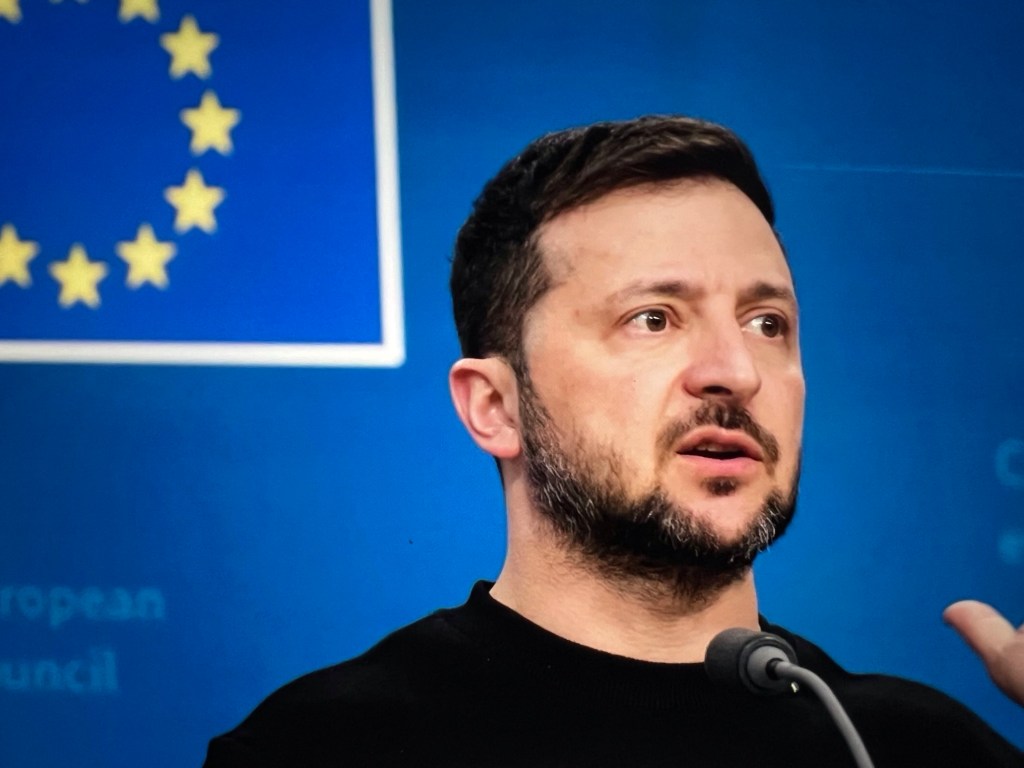
Ukrainian President Volodymyr Zelensky, in appreciation for America’s assistance throughout the course of Russia’s assault, had offered to share its innovative technology with the U.S., but was met with a shocking lack of interest . . . until recently. Suddenly, Trump and his squad of stable geniuses have come to realize that we may need these newer, more effective, and less expensive weapons after all. And Zelensky — being the far bigger man — is still willing to share his bounty with us.
“Beware the Ides of March.” – Shakespeare, “Julius Caesar,” Act I, Scene 2
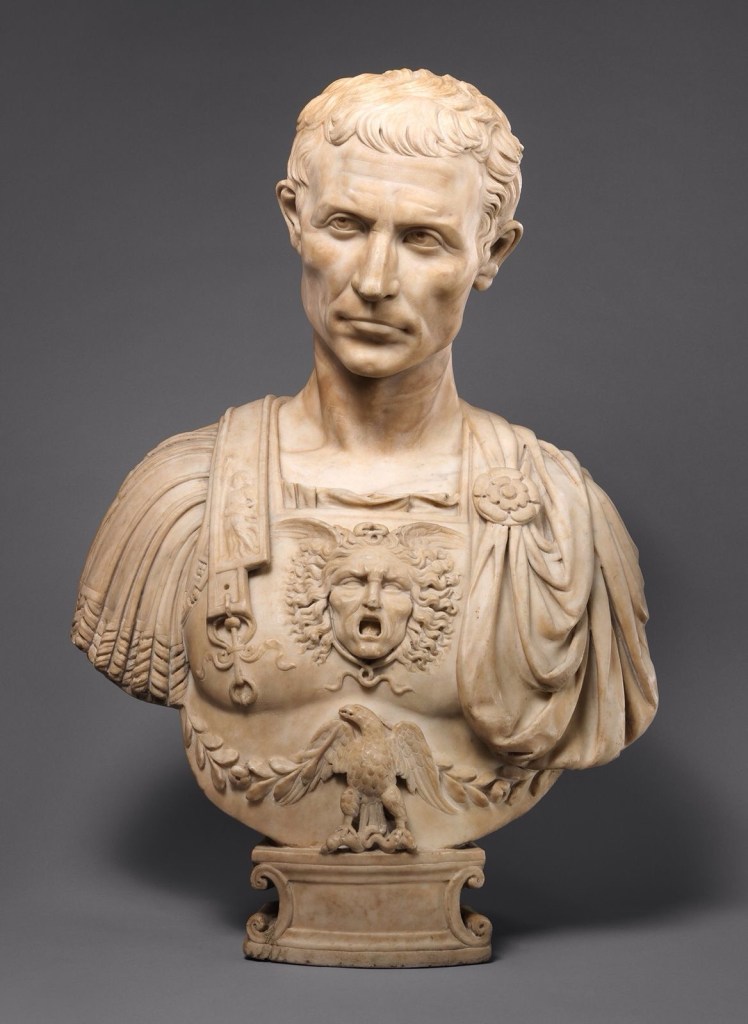
According to William Shakespeare, if Julius Caesar had been a superstitious man, he would have heeded the words of the soothsayer, avoided the forum on that March 15th in the year 44 B.C., and possibly lived to see another day.
Bust of Julius Caesar (100 B.C. – 44 B.C.)
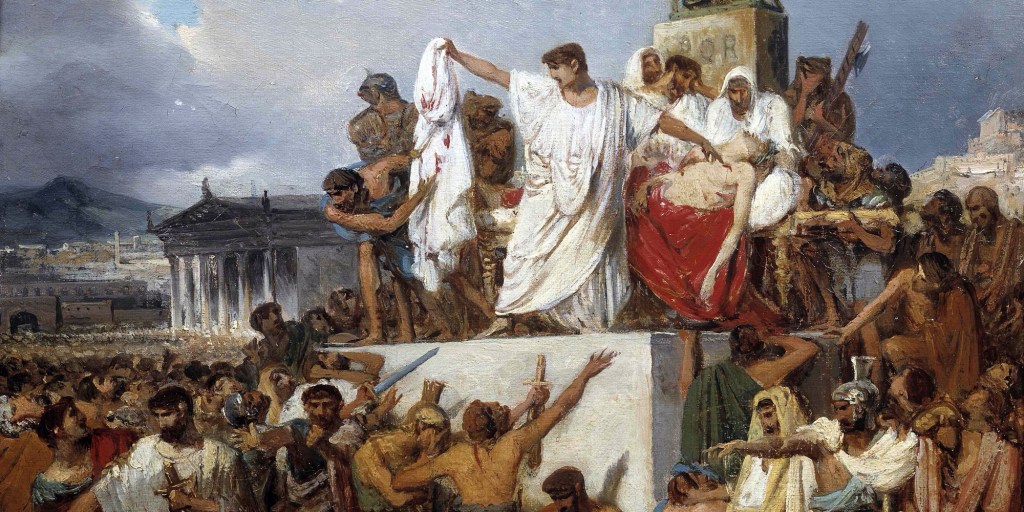
But he wasn’t, and he didn’t. Instead, when the fictitious soothsayer uttered those immortal words, Caesar ignored him and proceeded on, where his supposed friends, Brutus and Cassius — with the eager participation of other members of the Roman Senate — stabbed him to death.
And as he lay dying, he famously spoke his last words to Brutus, the friend who had betrayed him:
“Et tu, Brute?” (“And you, Brutus?”) – Id., Act III, Scene 1
Assassination of Julius Caesar – March 15, 44 B.C.
The words of the soothsayer and Caesar were Shakespeare’s inventions, but the assassination is historic fact. It altered the fate of a nation, as on that day — under the rule of Caesar’s successor, Augustus — Rome began its transition from a Republic to an Empire.
*. *. *
Thus was another superstition born of myth, as most superstitions are. Black cats, broken mirrors, spilled salt, opals . . . most date back to ancient beliefs, some to real-life coincidences, and others — like Shakespeare’s Ides of March — to the imaginations of writers.
But if taking precautions against any of them makes you feel better, then by all means, go for it. Julius Caesar probably wished that he had.
As of last month, there were an estimated 1,214 political prisoners being held by Cuba’s communist government, according to the nonprofit Prisoners Defenders organization. On March 12th, it was announced that 51 prisoners were to be released in the coming days, though it was unclear how many, if any, were political prisoners. Cuba’s Ministry of Foreign Affairs stated that “all have served a significant part of their sentence and have maintained good conduct in prison.” [CBS News, March 12, 2026.]
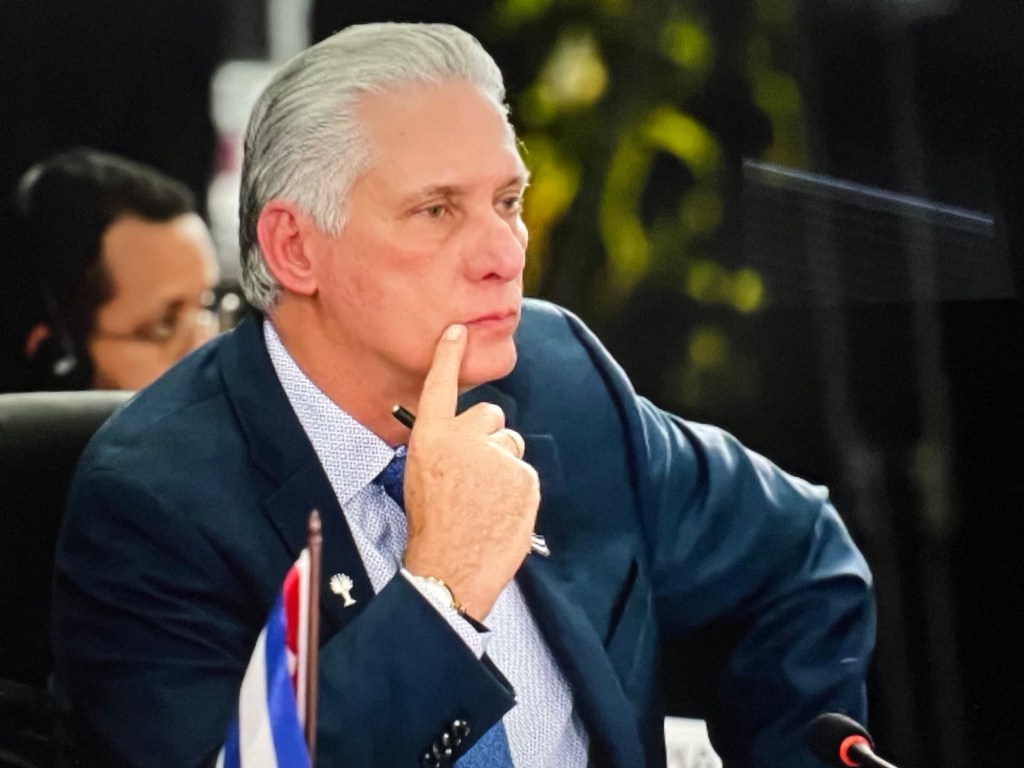
Cuban President Miguel Diaz-Canel
While the CBS News report called this “an unexpected move amid pressure from Trump” [id.], a statement released by Cuban officials said:
“In a spirit of goodwill and of the close and fluid relations between the Cuban State and the Vatican — relations through which communication has historically been maintained regarding review processes and the release of persons deprived of liberty — the Government of Cuba has decided to release, in the coming days, 51 people serving prison sentences.” [Vatican News, March 13, 2026.]
This was followed by a statement from Director Matteo Bruni of the Holy See (Vatican) Press Office to the effect that there have been recent discussions between the Holy See and Cuban authorities “regarding the release of prisoners” in Cuba. [Id.]
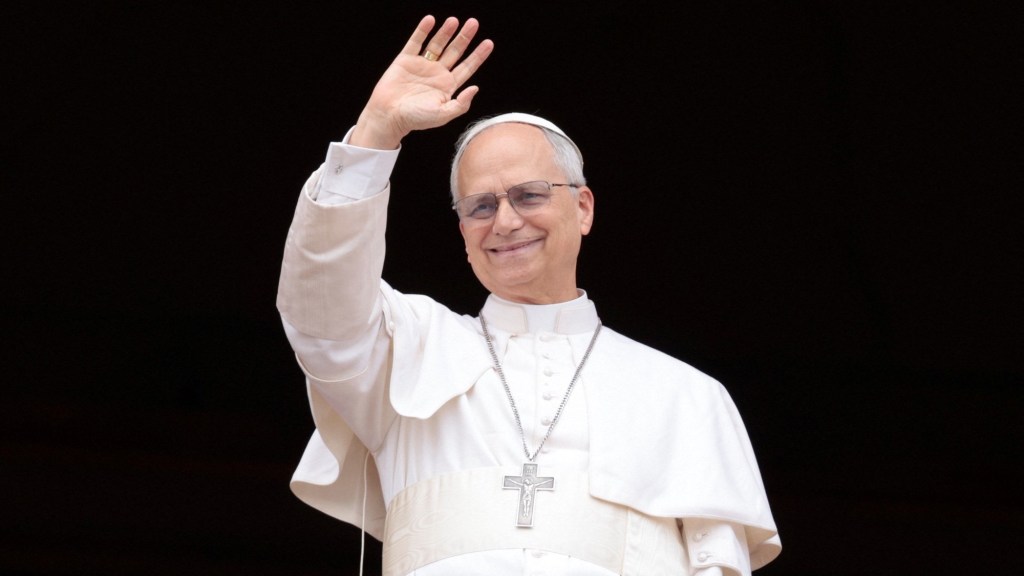
Pope Leo XIV: A True Peacemaker
Whoever claims credit — and history dictates that it rightfully belongs to the Vatican — this is obviously good news.
*. *. *
But it is yet another Sunday with no further news concerning those on our list of political prisoners. So once again, we send them greetings and assurances that they are not being overlooked during this time of crisis, not only in Ukraine, but now also in Iran and the surrounding regions. They include, among many others:
Prisoners of War:
The 19,500 Kidnapped Ukrainian Children The People of Ukraine
Immigrant Detainees in Russia:
Migrants from the Central Asian nations of Kazakhstan, Kyrgyzstan, Tajikistan, Turkmenistan and Uzbekistan
Endangered Exiles:
Mikita Losik Yulia Navalnaya Countless Journalists and Other Dissidents
Andrei Chapiuk Uladzimir Labkovich Andrzej Poczobut Marfa Rabkova Valiantsin Stafanovic Yuras Zyankovich
In Georgia:
Mzia Amaglobeli
In Russia:
The “Crimea 8”: — Oleg Antipov — Artyom Azatyan — Georgy Azatyan — Aleksandr Bylin — Roman Solomko — Artur Terchanyan — Dmitry Tyazhelykh — Vladimir Zloba
James Scott Rhys Anderson (British) David Barnes (American) Gordon Black (American) Hayden Davies (British) Anastasia Dyudyaeva Antonina Favorskaya Konstantin Gabov Robert Gilman (American) Stephen James Hubbard (American) Sergey Karelin Timur Kishukov Vadim Kobzev Darya Kozyreva Artyom Kriger Michael Travis Leake (American) Aleksei Liptser Grigory Melkonyants Nika Novak Leonid Pshenychnov (in Russian-occupied Crimea) Nadezhda Rossinskaya (a.k.a. Nadin Geisler) Sofiane Sehili (French) Igor Sergunin Dmitry Shatresov Robert Shonov Grigory Skvortsov Eugene Spector (American) Joseph Tater (American, disappeared) Laurent Vinatier Robert Romanov Woodland (American)