Category Archives: History, Travel, Memoirs

4/19/26: Close Encounters of the Human Kind

Yesterday my blog site asked me to “describe a random encounter with a stranger that stuck out positively to [me],” which immediately sent my mind off in a hundred different directions — most of them to places I’ve traveled outside the United States. It turns out that my most memorable random encounters — particularly the positive ones — took place overseas . . . and most of those, not surprisingly, in Russia, since that’s the one place I spent the most time outside the U.S.

St. Basil’s Cathedral, Red Square, Moscow

Oh, there had been earlier experiences in other places, like the Romany (Gypsy) man lying unconscious in the street near my apartment in Prague, with blood oozing from the back of his head. But I didn’t interact with him — instead, I found a police patrol car and led them to him. (He was alive.)

And there were the cute young Russian soldiers near Fisherman’s Bastion in Budapest; but I unintentionally scared them off when I spoke to them in Russian. It was 1990, just before the breakup of the Soviet Union, and I’m sure they thought I was from the KGB or GRU, keeping tabs on them. I tried to tell them I was American, though I’m not sure they believed me. Couldn’t really blame them.

Fisherman’s Bastion, Budapest

But then there was Moscow — a city of about nine million people at the time, and one of the last places a foreigner would expect to find warm, friendly, generous strangers. But I did, all the time.

Like the little old woman, on a bitterly cold February afternoon, who was appalled at my uncovered head (I hate hats) and rushed up to me, trying to pull my scarf up to cover it while loudly warning that I was going to catch pneumonia. I kept telling her I was from “the north,” and I wasn’t cold; but she refused to accept it. She was someone’s mother and babushka— much like my own grandmother — and she was simply doing what came naturally. So I thanked her, waited until she was out of sight, and lowered my scarf back around my neck where I wanted it. As long as she was happy, I was happy.

A Gathering of Russian Babushki

Then there was the late spring afternoon — probably a Saturday or Sunday — when I was out for a stroll in my neighborhood and encountered two young women carrying armloads of my favorite flowers: pink peonies. I stopped and asked them where I could buy some, and they laughed, saying they hadn’t bought them; they had just picked them, and that I could do the same. When I hesitated, one of the women asked where I was from. And when I explained that I was an American living and working in Moscow, she simply handed me half of her flowers, saying, “Please take them. We love Americans!” I wonder whether she would feel the same way today . . . which makes my happy memory somewhat bittersweet. I can still remember the scent of those gorgeous flowers filling my apartment for nearly a week; and the spontaneous generosity of that young woman still fills me with joy.

A Bunch of Heaven

For a people who are naturally suspicious of authority, Russians can conversely be disarmingly trusting. Like the woman with her little girl in the Moscow Metro station.

To begin with, you have to understand that many of those stations were originally built just prior to and during World War II, and served a dual purpose as bomb shelters. So they were constructed deep, deep, deeeeep underground; and their escalators are necessarily steep, looking for all the world like stairways to Hell. And incredibly fast! So you have to be pretty agile to jump on without maiming yourself or anyone else.

Which is why I was so startled when the woman, who was carrying two shopping bags filled with groceries, suddenly thrust her little girl toward me, telling (not asking) me, in Russian, to take her hand and help her onto the escalator.

Sometimes you don’t have time to think; you just react. We were at the very top of the moving stairs, with a crowd inching toward us from behind. The child — who was around five or six years old, and apparently a veteran of the Moscow Metro system — gave me her hand, jumped onto the first step with me, and looked back to be sure her mother was right behind us. Which, of course, she was . . . still holding onto her groceries, balancing them and herself, without ever touching the handrail. I don’t know how she did that.

It was a long ride down, so I tried to speak to the girl, telling her my name — Brenda Georgievna, using the formal Russian patronymic* as one should when speaking to a child — and asking hers. But she was shy, remaining mute and staring at her shoes as though she’d never seen them before. And as we jumped off the escalator at the bottom, she let go of my hand, ran to her mother, and the two of them simply walked away without a word of acknowledgment. Clearly, I had done what was expected of any woman, Russian or otherwise: they needed a helping hand (literally), and mine was the nearest one. It’s how the Russian people have always survived: by helping one another — no questions asked, no thanks required.

* Russian middle names — known as patronymics — are derived from the father’s first name, with a masculine or feminine ending tacked on. My father’s name was George, or Georgiy in Russian, so my patronymic would be Georgiyevna. (If I were a man, it would be Georgiyevich.) This is always used in formal situations, with strangers, and with children, as a matter of courtesy. It also helps in distinguishing one “John Smith” from another.
An Endless Ride

One other encounter that has stuck in my mind occurred late on the night of July 4th in 1993 with a Moscow taxi driver who knew me and my address without asking . . .

Oh, but that was probably not random, so never mind. It was, however, memorable for its spookiness . . . just one of many unusual occurrences during those months of living and working in one of the most fascinating, and sometimes scariest, cities in the world.


I could go on, and on, and on, but that’s enough wandering down Memory Lane for now. My thanks to WordPress.com for the suggestion; it reminded me that an occasional detour into the past can be a pleasant escape from the weight of the present . . . and that was just what I needed today.

Just sayin’ . . .

Brendochka
4/19/26

4/19/26: Quote of the Day: From an Abomination in a Suit and Tie

On April 14th, at a sparsely-attended Turning Point USA event in Athens, Georgia, U.S. Vice President JD Vance recalled an exchange with a Ukrainian-American individual concerning his (Vance’s) position on de-funding support to Ukraine.

JD Vance, applauding himself – Athens, Georgia (April 14, 2026)

What he told his embarrassingly small audience was this:

“And this person got really agitated at me because I was saying we should stop funding the Ukraine war. And I still believe that, obviously, and it’s one of the things I’m proudest that we’ve done in this administration is we’ve told Europe that if you want to buy weapons, you can, but the United States is not buying weapons and sending them to Ukraine anymore.”

– JD Vance [As reported by Martin Fornusek, The Kyiv Independent, April 15, 2026.]

Well, I’m thrilled that Vance is feeling proud of himself, and that he is able to sleep well at night despite the fact that yesterday, April 18th:

  • In Kyiv, Ukraine, five people were killed, including two children, and at least 60 others injured; 17 apartment buildings and 10 private homes were damaged, as well as a hotel, an office center, a car dealership, and a shopping mall — all civilian targets.
  • In Odesa, nine people were killed and 23 injured. In addition, port infrastructure, administrative buildings, dormitories, and residential homes were damaged.
  • In Dnipro, three people were killed and 34 injured.
  • In Kharkiv, one woman was killed and six others injured. [Roman Sheremeta, Facebook, April 18, 2026.]

Those are some good “Christian” values you’ve got there, JD. I’m sure it will all be taken into consideration when you are finally brought to justice . . . whether in this world or the next.

“Guilty as shit!”

Just sayin’ . . .

Brendochka
4/19/26

4/19/26: Putin’s Hostages – Bring Them Home, Week 119: Good News and Bad News from Afghanistan

Let’s start with the good news.

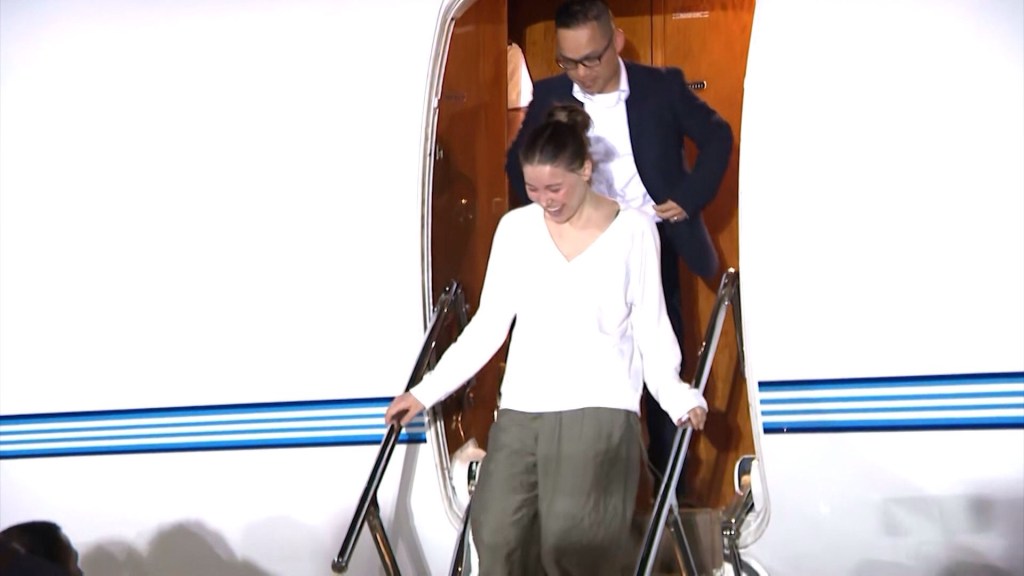
Russia is far from the only country illegally holding political hostages from the United States and elsewhere. One such has been Dennis Coyle, 64, who — after more than a year in a prison in Afghanistan with no charges having been filed against him or any reason given for his arrest — is now back in the United States with his family.

Dennis Coyle (center), leaving Afghanistan

Coyle had spent more than 20 years working as an academic researcher in Afghanistan. His release was negotiated, with the help of the United Arab Emirates and Qatar, just weeks after the U.S. declared Afghanistan a sponsor of wrongful detention. The Taliban Foreign Ministry confirmed his release, saying in a statement that:

“ . . . the Supreme Court determined that his previous detention was sufficient. The Islamic Emirate of Afghanistan carried out this action based on humanitarian considerations and goodwill, and believes that such steps can further strengthen an atmosphere of trust between countries. It also expressed hope that both nations will find solutions to remaining issues through mutual understanding and constructive dialogue in the future.” [Jennifer Hansler, CNN, March 25, 2026.]

Right . . . the Taliban suddenly grew a heart.

Taliban Members in Afghanistan

Following Coyle’s return, U.S. Secretary of State Marco Rubio issued the following carefully-worded statement:

“Today, after more than a year of captivity in Afghanistan, Dennis Coyle is on his way home. We thank the United Arab Emirates for its support in securing Dennis’ release. We also appreciate Qatar’s continued support and advocacy for Americans unjustly detained in Afghanistan.

“While this is a positive step by the Taliban, more work needs to be done. We are still seeking the immediate return of Mahmood Habibi, Paul Overby, and all other unjustly detained Americans.” [Id.]

U.S. Secretary of State Marco Rubio

*. *. *

Which brings us to the bad news: that, despite U.S. hopes that Habibi and Overby would be produced and released along with Coyle, that did not happen.

Habibi, a joint Afghan-American citizen, had led the Afghan Aviation Authority under the U.S.-backed government before the withdrawal of U.S. troops in 2021. He was working as a consultant for a Kabul-based telecommunications firm when he and his driver were abducted from their vehicle in Kabul by Taliban forces in August of 2022, and has been held incommunicado ever since. According to his family, the Taliban deny that they are holding him. [Foley Foundation, undated.]

Mahmood Habibi

*. *. *

Paul Overby’s case is even more mysterious than Habibi’s. He is an 84-year-old American author who was last seen in Khost City, Afghanistan, in May of 2014, while conducting research for a new book. He was reportedly on his way to Waziristan in Pakistan’s Federally Administered Tribal Areas when he disappeared. In May of 2018, the FBI’s Washington Field Office announced a reward of up to $1,000,000 for information leading to his safe return, which as of the present time remains unclaimed. [Foley Foundation, April 6, 2026.]

Paul Overby, Jr.

While Overby’s fate is unknown, his family believes he is being held by the Taliban, and continues to hold out hope for his eventual return.

*. *. *

In the meantime, we continue our watch over the many other political prisoners still incarcerated in Russia and elsewhere. Here again is the list of those known, which sadly is only a fraction of the total:

Prisoners of War:


The 20,000+ Kidnapped Ukrainian Children
The People of Ukraine

Immigrant Detainees in Russia:

Migrants from the Central Asian nations of Kazakhstan, Kyrgyzstan,
Tajikistan, Turkmenistan and Uzbekistan

Endangered Exiles:


Pavel “Pasha” Talankin
Mikita Losik
Yulia Navalnaya
Countless Journalists and Other Dissidents

Political Prisoners:

In Afghanistan:

Dennis Coyle (American)
Mahmoud Habibi (Afghan-American)
Paul Overby (American, missing since 2018)


In Azerbaijan:

The “Azerbaijan 7”:
— Farid Mehralizada
— Ulvi Hasanli
— Sevinj Abbasova (Vagifqiai)
— Mahammad Kekalov
— Hafiz Babali
— Nargiz Absalamova
— Elnara Gasimova

In Belarus:

Andrei Chapiuk
Uladzimir Labkovich
Andrzej Poczobut
Marfa Rabkova
Valiantsin Stafanovic
Yuras Zyankovich

In Georgia:

Mzia Amaglobeli

In Russia:

The “Crimea 8”:
— Oleg Antipov
— Artyom Azatyan
— Georgy Azatyan
— Aleksandr Bylin
— Roman Solomko
— Artur Terchanyan
— Dmitry Tyazhelykh
— Vladimir Zloba

James Scott Rhys Anderson (British)
Aleksandr Andreyev
David Barnes (American)
Gordon Black (American)
Hayden Davies (British)
Anastasia Dyudyaeva
Antonina Favorskaya
Konstantin Gabov
Robert Gilman (American)
Stephen James Hubbard (American)
Sergey Karelin
Timur Kishukov
Vadim Kobzev
Darya Kozyreva
Artyom Kriger
Michael Travis Leake (American)
Aleksei Liptser
Grigory Melkonyants
Nika Novak
Leonid Pshenychnov (in Russian-occupied Crimea)
Nadezhda Rossinskaya (a.k.a. Nadin Geisler)
Sofiane Sehili (French)
Igor Sergunin
Dmitry Shatresov
Robert Shonov
Grigory Skvortsov
Eugene Spector (American)
Joseph Tater (American, disappeared)
Laurent Vinatier
Robert Romanov Woodland (American)

You have not been, and will not be, forgotten.


Just sayin’ . . .

Brendochka
4/19/26

4/18/26: Quote of the Day: A Question of Conscience

Earlier today I related the strange tale of Ilya Remeslo, a Russian lawyer and blogger who, after years of being a vocal supporter of Vladimir Putin and his regime, suddenly did an about-face last month and posted a disavowal of Putin, his administration, and the war in Ukraine. In return for his outspokenness, he spent 30 days in a horrific psychiatric hospital in St. Petersburg.

It is not yet known what caused Remeslo to change his tune so abruptly, though he has promised that an explanation will be forthcoming in the near future. One possibility, of course, is that he did suffer a psychotic break and genuinely needed treatment. But more likely, he — like so many people living in authoritarian societies around the world — simply saw the light and felt compelled to speak out against the lies, the violence, and the corruption, and was punished for it.

If Remeslo did indeed have an epiphany, perhaps he had been reading the works of one of Russia’s preeminent authors — the creator of the immortal War and Peace, Anna Karenina, and others — who wrote:

“Wrong does not cease to be wrong because the majority share in it.”

– Leo Tolstoy, “A Confession”

Lev (Leo) Tolstoy (1828 – 1910)

Perhaps that is something we all — not just Russians — should keep in mind in these strange and turbulent political times.

Just sayin’ . . .

Brendochka
4/18/26

4/18/26: The Strange Case of Ilya Remeslo

While famed Russian dissident Aleksei Navalny was fighting for his life in Germany after being poisoned in a Kremlin-inspired assassination attempt in 2020, one of his most outspoken critics was Russian lawyer and blogger Ilya Remeslo, an avid supporter of Vladimir Putin. He continued his barrage of criticism after Navalny, fully recovered, returned to Moscow in January of 2021. Navalny, as the world knows, was arrested upon arrival at the airport in Moscow and imprisoned in a Siberian penal colony until his death under suspicious circumstances in February of 2024.

Ilya Remeslo

Remeslo’s support of Putin never wavered . . . until March 17, 2026, when he suddenly posted on Telegram:

“Vladimir Putin is not a legitimate president. He must resign and be brought to justice as a war criminal and thief.” [Mike Eckel, RFE/RL, March 19, 2026.]

Titled “Five Reasons Why I Stopped Supporting Vladimir Putin,” his screed continued:

“What started as a ‘police operation’ has now claimed 1-2 million casualties. The war is being waged solely to satisfy Putin’s insecurities; we, ordinary citizens, gain nothing from it, we only lose.

“He’s afraid of debates and fair elections, because the emperor has no clothes. Long live freedom, dammit!” [Id.]

He said what??!!!

Now, that kind of criticism of Putin — or of the Ukraine war in general — is sufficient to earn anyone a prison sentence for “discrediting the armed forces” under a law passed after the February 2022 invasion. But coming from a known supporter of the government, this was big — and mystifying — news.

As expected, it did not go unnoticed. But, rather than being arrested, it was reported on March 19th that Remeslo was in a psychiatric hospital in St. Petersburg, claiming to have checked himself in the previous day. Speculation was that he might have considered this a way to avoid a possible criminal investigation. Yet in an interview with Russian-language news outlet Agentstvo on March 18th, he repeated some of his critical remarks about Putin, stated that he did not plan to leave the country, and said:

“They can’t really jail everyone for criticizing Putin. That’s nonsense.” [Id.]


In a post on X, Leonid Volkov — a leading member of Navalny’s Anti-Corruption Foundation now living in exile in Europe — called Remeslo’s action “the most amazing mid-air flip I’ve ever seen. I find it hard to imagine any arrangement in which someone in the presidential administration would greenlight Remeslo going after Putin personally. That opens a far too dangerous Pandora’s box. It crosses every red line. Something doesn’t add up. [Id.]

*. *. *

I saw no further mention of Remeslo until yesterday, when an apparent selfie of him appeared on his Telegram channel above the following post:

“Good evening, dear friends! Today I left the 20th section of the Skvorotsova-Stepanova [sic] hospital, where I spent 30 days. Harsh criticism of top state officials comes at a price — bear that in mind.” He added that conditions at the hospital were “quite harsh, even compared to a prison,” and that he had not been allowed any time outdoors while there. [RFE/RL, April 17, 2026.]

Skvorotsov-Stepanov Hospital, St. Petersburg, Russia

Not surprisingly, I was unable to find any interior photos of the building; but judging solely from the exterior, that is not a place I would willingly enter at all, much less check myself into. Remeslo has not yet stated the reason for his admittance, but has suggested he would do so soon. He did say that he was not under the influence of drugs or alcohol when he was admitted.

As with many reports from Russia, there are more questions than answers here. Why did Remeslo openly turn against Putin? Was he in his right mind at the time, or did he suffer some sort of mental break? If he knew what he was doing, what did he think would happen to him? Did he actually self-admit to a hellish psychiatric hospital, or was he forced to go? Was the most recent post really submitted by him, or was it faked by the Russian authorities? And most importantly — and assuming, in a best-case scenario, that he actually is alive and free — what’s next for him?

In the April 17th statement, he said nothing further — neither pro nor con — about the Putin administration. But he did offer this teaser:

“I don’t regret what I did in essence, but if I were to do it now, I would use more measured and balanced wording, without resorting to personal attacks. I intend to address this oversight in the future. . . . within two or three days I’ll tell you why all this was done and I’ll tell you about my future plans.” [Id.]

And, rather oddly, he added that he is “open to proposals for cooperation.” [Id.]

But from whom, or in what context, remains a mystery . . . much like the rest of his tale.

Frankly, I don’t like the sound of that last post; it feels as though it was written for him, or under duress. Or perhaps after 30 days of typical Russian psychiatric “treatment.”

One thing I do know: I’ll be on the lookout for follow-up.


Just sayin’ . . .

Brendochka
4/18/26

4/17/26: Quote of the Day: Speaking of War . . .

And who isn’t, these days? Speaking of war, that is.

There is perhaps no more distinguished authority on the subject than the ancient Chinese military general and strategist, Sun Tzu, who wrote:

“All warfare is based on deception. Hence, when able to attack, we must seem unable; when using our forces, we must seem inactive.”

– Sun Tzu, “The Art of War”

Sun Tzu (544 – 496 B.C.)

In light of my earlier article today concerning Vladimir Putin’s most recent threats against Ukraine’s European allies, I can only hope that he hasn’t also been reading Sun Tzu’s famous treatise . . . and that Volodymyr Zelensky has.

Just sayin’ . . .

Brendochka
4/17/26

4/17/26: The Folly of Opening a Second Front

Already embroiled in his march across Europe since 1938, Adolph Hitler decided to launch Operation Barbarossa on June 22, 1941, sending aircraft, tanks, and some 3.8 million troops eastward into the Soviet Union along a front stretching 1,800 miles from the Baltic Sea to the Black Sea. In so doing, he not only violated the Molotov-Ribbentrop non-aggression pact of 1939; he also stretched his already limited resources to an unsustainably thin point. Ultimately, it cost him his dreamed-of victory.


Hitler had learned nothing from Napoleon’s disastrous 1812 attempt to conquer Russia. And it is possible that Vladimir Putin is now ignoring Hitler’s 1941 mistake as he threatens — while mired in the fifth year of his stalled war against Ukraine — to attack other European countries that dare to aid their Slavic ally.

And to make matters worse, Dmitry Medvedev had to add his two cents’ worth of vitriol to the mix.

But I’m getting ahead of myself.

It all started with Donald Trump’s loss of interest in Ukraine, when he decided instead to spend his time — and his country’s money — on a takeover of Venezuela, an obscene pass at Greenland, a stab at Cuba, and a little misadventure in Iran. This predictably, and rightly, catapulted Europe into crisis mode, where leaders who have always been able to rely on backing from the U.S. have stood up to the challenge, pulled together, increased their own defenses . . . and jumped in to pick up the slack in Ukraine.

Bravo, Europe!

Europe Stands With Ukraine

What apparently drove Putin over the edge was Germany’s recent announcement of a €4 billion military aid package for Ukraine focusing on air defense and drones, followed by an announcement from Ukrainian President Volodymyr Zelensky and Italian Prime Minister Giorgia Meloni that they are exploring a joint drone production project.

Since the start of the war, Ukraine — in accordance with the old adage that “necessity is the mother of invention” — has developed state-of-the-art technology for inexpensive drones that are now sought after by other countries. In order to boost production, Ukraine has been seeking co-production agreements with some of its allies — an obvious threat to Russia’s pursuance of its offensive.

Ukrainian Drones

For once not referring to the conflict in Ukraine as a “special military operation,” the Russian Ministry of Defense issued a statement on Telegram on April 15th:

“We consider this decision to be a deliberate step leading to a sharp escalation of the military and political situation on the entire European continent and creeping transformation of these countries into a strategic rear for Ukraine. Instead of strengthening the security of European states, the moves of European leaders are increasingly dragging these countries into the war with Russia.” [Kjeld Neubert, Euractiv, April 16, 2026.]

Listing the names and addresses of 11 Ukrainian manufacturers and 10 European companies, the statement continued:

“The European public should not only clearly understand the underlying causes of the threats to their safety but also know the addresses, as well as the location of ‘Ukrainian’ and ‘joint’ companies producing UAVs.” [Id.]

And, just to be sure there was no misunderstanding, Dmitry Medvedev — the war-mongering Deputy Chairman of the Russian Security Council — added his bit in a separate social media post, saying that the Foreign Ministry’s statement should be taken “literally,” and that the list represents “potential targets for the Russian armed forces.” [Id.]

Dmitry Medvedev

That’s pretty clear, all right. Imagine going to work each day, knowing that there is a figurative target painted on the roof of your building and a Russian drone with your company’s name on it. Or that you’re the owner of that business, responsible for making a decision on which the lives of your employees might depend.

That, of course, is how Putin wants the targeted companies to think. But realistically, is he prepared — or even able — to prosecute a war on numerous fronts, when it has taken him four years to achieve only about 20 percent of his original goal in Ukraine . . . a goal that was supposed to have been reached in a matter of days or weeks?

Only Vladimir Putin knows for sure, of course. But — unlike Donald Trump and his erotic dreams of wiping out an entire civilization — Putin, while decidedly evil, is intelligent, surrounded by expert military advisers, and at least presumably sane.

On the other hand, like his American alter-ego, he does not react well to setbacks.


He also does nothing without a reason. The listing of the locations of those Ukrainian and European businesses is unusual and worrisome. It may be that what he has in mind is something more along the lines of the type of hybrid warfare in which he has already been engaged throughout Europe: perhaps some sort of lesser, deniable activity, such as sabotaging power plants, water systems, transportation hubs, or communications networks on which those industries rely.

Or it might all be bluff and bluster. Whatever the answer, Europe is on edge as it has not been for decades . . . not since the supposed end of the Cold War. And it is not a good feeling.


Just sayin’ . . .

Brendochka
4/17/26

4/16/26: Remember When Ingesting Lysol Killed COVID?

Well, hold onto your hats, folks, because there’s more good news on the health and nutrition front: Diet Coke kills cancer cells.


Or at least in Trumpmania, it does. And how does he know? Because it kills grass.

But somehow, miraculously, it doesn’t seem to harm your esophagus, your stomach, or any of those other internal organs that might be harboring the cancer cells.

What an incredible discovery! It’s right up there with his findings on COVID a few years ago. Surely, this will win him — if not the Peace Prize — at least the Nobel Prize for Medicine.

And by the way, Dr. Donald J. (for Jesus) Trump also tells us that Orange Fanta is good for us because it’s fresh-squeezed. He really should direct the manufacturer (Coca-Cola Deutschland) to print that on the cans from now on, because . . .

“I did not know that!”

If you’re having a hard time absorbing all of this good news, just ask Dr. Oz. Because he was the first to hear it from the horse’s mouth (or the horse’s ass . . . in this case, the same thing).

Actually, it was related to Dr. Oz by Donald Trump, Jr., on a podcast this week, when he inexplicably decided it was a good idea to publicly ridicule his father. But one horse’s backside is pretty much like every other horse’s backside, so there’s really no reason to doubt him, is there?

A new trophy for the Oval Office

Just sayin’ . . .

Brendochka
4/16/26

4/16/26: Quote of the Day: On Surviving a Really Awful Day

For whatever reason, Wednesday was a really bad day. Not because it was tax day — I filed and got my refund months ago — or because of the daily sh*t storm of world news. I didn’t receive word of a death or disaster among my circle of friends and acquaintances, the weather outside was lovely, and I managed to avoid any accidents by not doing much of anything.

But I felt lousy, like you do just before you get really, really sick. And everything hurt — literally everything, from my scalp, down past my left side where I think my pancreas resides but it felt more like just gas, all the way to the pinky toe on my right foot (probably not gas).


So I spent the day sitting. Well, most of it anyway; I did manage to do one load of laundry before curling up in my easy chair with a heating pad and taking a three-hour nap, thus practically guaranteeing that I won’t be able to fall asleep at a reasonable hour tonight. Not that I do anyway, most nights.

Luckily, the day’s news was more of the “Same-Sh*t-Different-Day” variety, so I was able to avoid getting wrapped up in that horror show for once. Instead, I went in search of a quotation that would sum up my day, and this is what I found:

“You know, Hobbes, some days even my lucky rocket ship underpants don’t help.”

– Bill Watterson, “Calvin and Hobbes”

Calvin and Hobbes, by Bill Watterson

I know how you feel, Calvin. But hang in there, kid; this too shall pass . . . along with that gas.

Just sayin’ . . .

Brendochka
4/16/26

4/15/26: When Russia and China Shake Hands, the World Trembles

Three years ago, I shared my memory of the time I had to keep representatives from the Soviet Embassy and the Chinese Embassy from crossing paths in my office in Washington, D.C.(“Ch. 7 – Life With Walter,” February 2, 2023.)

That was in the early 1980s, when the two countries were bitter enemies, and we could not have them bumping into each other under our roof. I used to joke that I prevented World War III that day, which is probably a slight exaggeration; it actually took three people to pull off that little Keystone Kops maneuver. But we did it.

It is now 2026, and oh! how things have changed.

Russian and Chinese Foreign Ministers,
Sergei Lavrov and Wang Yi – April 14, 2026

Aside from a shared political ideology (authoritarianism), modern-day Russia and China have found common ground in their efforts to structure a new world economic force to rival, or even replace, the dollar-based economy of the West.

And with Donald Trump working day and night to destroy what is left of the United States’ standing as the preeminent power of the free world, their drive toward world dominance is clearly well served by their close cooperation.

This week, Russian Foreign Minister Sergei Lavrov is in Beijing, meeting with his counterpart, Wang Yi. According to a statement issued by the Russian Foreign Ministry:

“A thorough exchange of views is expected on a number of ‘hot topics’ and regional issues, including the Ukrainian crisis and the situation in the Middle East” . . . as well as Chinese-Russian cooperation at multilateral bodies including the Asia-Pacific Economic Cooperation, BRICS, the G20, the Shanghai Cooperation Organization, and the United Nations (in which both countries are permanent members of the Security Council). [Reid Standish and Colin Hood, RFE/RL, April 14, 2026.]

In 1964, in the midst of the Vietnam War, Bob Dylan wrote and recorded what became an anthem for the anti-war movement of that decade: The Times They Are A-Changin’. He was right — things were indeed changing in ways no one had imagined. But that was nothing compared to this past decade.


What we are seeing now is the beginning of a new world order — and not the one Bob Dylan’s and my generation fought for. We probably won’t be around to see it come to full fruition . . . but I fear for the future of our children’s children.

And knowing that my country’s elected leadership enabled it is more than I can bear.


Just sayin’ . . .

Brendochka
4/15/26