Have you ever felt as though you might be psychic? I know I’m not; but this is one of those days when I almost wonder . . .
This morning, for no particular reason, I wrote about Nikolai Patrushev, Secretary of the Russian Security Council: an old friend, former KGB colleague, and now good right hand of Vladimir Putin. Complicit in the invasions of Crimea in 2014, Syria in 2015, and Ukraine in 2022-23-whenever. A hawk who blames the West — and particularly the United States — for all of the world’s ills, and for what he considers the disastrous collapse of the Soviet Union.
And now, as it turns out, advocate of weapons of mass destruction.
Today, Patrushev — echoing the recent declarations of his boss, Vladimir Putin, and Putin’s BFF, Xi Jinping — has said that the era of U.S. dominance is over. “The natural consequence of the United States’ destructive policies is the deterioration in global security. The risk that nuclear, chemical and biological weapons will be used is increasing. The international arms control regime has been undermined.” [Guy Faulconbridge, Reuters, Nov. 8, 2023, quoting TASS (Russian news agency).]
[Note: What Mr. Patrushev neglected to mention was Russia’s withdrawal — just yesterday, November 7, 2023 — from the Treaty On Conventional Armed Forces in Europe (CFE), or its own war of aggression against Ukraine, which is completely adverse to the Treaty’s terms. Certainly, today’s comments cannot be coincidental.]
As reported by Reuters, Patrushev did not offer specific details as to the possible target(s) of such weapons, but did accuse Washington of “failing to bring peace to the Middle East and of escalating the war in Ukraine by supporting Kyiv.” [Guy Faulconbridge, Nov. 8, 2023.]
These are hardly original thoughts conjured by Patrushev alone. In today’s Russia — as in the seven decades of the Soviet Union’s existence — all policy is directed from the top, and only a fool would issue such a public statement without express direction or authorization from Putin himself.
Only A Fool Would Dare . . .
Unless, of course, those recent, persistent rumors of Putin’s death or serious disability should turn out to be true . . . in which case, this could be the first indication of an attempted power grab. But I’m jumping the gun (so to speak). As I said, I absolutely do not have, or claim to have, powers of divination. But knowing the pathological need of the Russian hierarchy for secrecy, especially in times of internal crisis, it’s awfully tempting to speculate.
Forget the mile-long patronymics (middle names, based on the father’s first name) that are such a traditional — and actually useful — part of the Russian naming protocol. To simplify, we’re talking here about Vladimir Putin and Nikolai Patrushev.
“WHO??” I’m sure I heard that coming from several directions, and not surprisingly. Outside of Russia — and the rarified world of Russophiles — Nikolai Patrushev is not exactly a household name. Which is probably why I overlooked him in a previous blog post when I was contemplating possible successors to Putin in the event of his . . . well . . . departure from the Kremlin. But with all of the recent rumors concerning Putin’s health, the slight possibility that he might choose not to run again in next March’s election, and even his possibly already being dead and mummified, up popped Patrushev’s name. So, being insatiably curious, I of course embarked on a little research trip into his background.
Nikolai Patrushev
I thought this was a pretty nice picture of him; he looks like a man trying out the executive chair at the Security Council table. Easy, Nikolai — I don’t think Putin is gone just yet. Unless you know something the rest of us don’t . . .
But Patrushev does belong at that table, if not (yet) at the head. He is Secretary of the Security Council of Russia, where he has served since 2008. Prior to that, he was employed as Director of the Federal Security Service (FSB), one of the two successor agencies to the KGB, from 1999 to 2008. (Coincidentally — that is, if you actually believe in these kinds of coincidences — 1999 was also the year in which Putin was first elected President of Russia.)
And speaking of coincidences that probably aren’t . . . Patrushev, who is just a year older than Putin, hails from the same home town of St. Petersburg (formerly Leningrad), and has known Putin since the 1970s, when they worked together as young men in the Leningrad KGB. He is now considered one of Putin’s inner circle of siloviki (people of influence), and is said to have played a key role in the decisions to invade Crimea in 2014, Syria in 2015, and . . . no surprise here . . . Ukraine, again, in 2022. He is generally known to be politically hawkish, and vehemently anti-Western.
Old “Friends.”
So, if Putin’s whereabouts are indeed in question, Patrushev is one of the few people who might actually know what’s going on. And let us not overlook the fact that seated right next to (or across from) him at that long Security Council table is the mercurial Dmitri Medvedev, who occupies the role of Deputy Chairman — the Chairman being Putin himself.
Now, that may sound like a nice cozy little triad, except for three very important facts: they’re Russian politicians, they’re all former “spooks” (as we Americans refer to our community of spies), and they all have their eyes fixed on climbing over each other and landing their asses in that cushy executive chair. Which makes them — besides contortionists — “frenemies” at best. And at worst . . . well, I’d say, capable of just about anything.
Well . . . hopefully not that!
*. *. *
At any rate, this situation ranks (in my view, at least) as 2023’s guessing game of the year. Actually, it’s a two-parter: “Is Putin Alive?” and “Who’s Next?” And that second part, whenever the time does come, is bound to be a thriller. Considering Russia’s long history of “palace intrigues,” and the lineup of contestants for this jackpot, I plan to settle in with a big bowl of chips; a family-size bag of M&Ms; and a quart of Stolichnaya’s finest vodka, chilled to warming perfection. It should be quite a show.
It’s heartwarming and reassuring to know that, amidst all the horror of the last 20 months, the devastation caused by the Russian “special military operation” begun in February of 2022, the deaths, destruction and displacements — while most assuredly taking their toll on his body and soul — have not been able to destroy Volodymyr Zelensky’s innate sense of humor. Not completely, anyway. But it took the likes of Donald Trump to bring it back to life.
Zelensky, the EntertainerZelensky, the Commander-In-Chief
We’ve probably all heard about Trump’s boast that, given the chance (i.e., being elected to the presidency next year), he could bring the war in Ukraine to an end within 24 hours. That was certainly enough to make me laugh out loud. And speaking with host Kristen Welker on NBC’s “Meet the Press,” President Zelensky offered this response:
“Former President Trump said that about 24 hours, that he can manage it and finish the war. For me, what can I say? So he’s very welcome as well.
”President Biden was here, and I think he understood some details which you can understand only being here. So I invite President Trump. If he can come here, I will need 24 minutes.”
Trump had previously said he could “solve” the war in Ukraine in one day, and that the negotiation process would be “very easy.” Zelensky said he would need just 24 minutes to explain to Trump that that wouldn’t be as easy as he thinks.
The ridiculous boast is funny enough. And President Zelensky’s response is characteristically witty. But what really tickles my funny bone is the thought of Donald Trump in a war zone. One whistling missile . . . one exploding drone . . . the sight of one Russian soldier, and . . . well, use your imagination as to how Mr. “I-can’t-go-to-Vietnam-because-I-have-bone-spurs” would react. (Mine is running amok.)
Trump, the Great Negotiator
Humor aside, Zelensky addressed the impossibility of trying to negotiate a peace with Putin in the face of Putin’s unacceptable demands for concessions from Ukraine — namely, giving up any part of Ukraine’s territory or its autonomy as an independent nation. Those are not negotiable . . . not by Donald Trump or anyone else.
“He can’t bring peace because of Putin,” Zelensky continued. “If he’s not trying and if he’s not ready to give our territory to this terrible man, to Putin, if you are not ready to give it, if you are not ready to give our independence, he can’t manage it.” [All quotes from The Hill, Nov. 5, 2023.]
Asked if he thought Trump would support Ukraine if he were to be elected in 2024, Zelensky said, “Really, I don’t know. I hope that it depends not only on the president institutionally. I think it depends on the opinion of Americans, of your society. I think that is most important.”
A smart man, President Zelensky. I hope we don’t disappoint him.
Aleksandr Grigoryevich Lukashenko, President of Belarus
Well, isn’t that just what this world needs: another mouth in the babble of voices already emanating from the general direction of Russia. There’s Putin, Medvedev, Lavrov, Peskov, Kadyrov . . . and now, not for the first time, Lukashenko. Putin’s Belarusian lapdog, sometimes referred to as “Europe’s Last Dictator” (we wish!), offering his two cents’ worth of advice to Ukraine . . . which is just about what it’s worth.
Ironically, this time he may have judged the situation correctly, at least in part. But what he has chosen to say about it is, as usual, despicable and inflammatory. And we can only hope that the conclusions he has drawn, and the predictions he has made, are just more of his attempts to appear relevant.
This week, speaking at a meeting with representatives of the Belarusian Nuclear Power Plant’s labour collective, construction workers, social infrastructure workers, and residents of the city of Ostrovets, he claimed that “Ukraine is already fading into the background as far as the United States is concerned, and that Ukrainian President Volodymyr Zelenskyy is supposedly preparing to leave the country.” [Ukrainska Pravda, Nov. 3, 2023.]
(The first part of that sentence is, sadly, not completely wrong. The second part is a complete mystery.) – ed.
Making A Point
And continuing: “Ukraine will still be ours. Nobody needs this Ukraine. Trouble brewing in the Middle East . . . I warned him when the war started. I called Zelenskyy and said: ‘Volodya, listen to me. I’m an experienced man, I’ve worked for years. As soon as some trouble begins, you’ll be forgotten.’ And then what happened? Ukraine is now being overshadowed.
“You have to use your head before getting the country involved in some reckless scheme.”
“Really, Sasha?”
(“Getting involved in”? Is that the same as “being invaded by”?) – ed.
*. *. *
Of course, he had something more to say about the U.S.:
“[The United States is] far away, they are big, they absolutely don’t need this.”
And: “Their policy is to muddy the waters. They like starting something in these muddy waters . . . You know, it’s good fishing in troubled waters. That’s their policy. Everything else is expendable, just like Ukraine today. This is why this region [Ukraine] is our region, in the sense that we will be together.”
Stirring Things Up
(The only thing “muddy” here would seem to be his thought process. He believes Ukraine and Russia belong together because the United States likes to fish in troubled waters? Um . . . okay, then. Although, in all fairness, maybe it’s the translation.) – ed.
*. *. *
Lukashenko also claimed that, sooner or later, “Europe will crawl back to Belarus and Russia [because] the Americans are tearing Europe apart any way they want today. And Europe cannot resist because everything depends on the American market — credit, property, and the rest.”
(I’m trying to imagine Europe “crawl[ing] back to Belarus and Russia.” When was most of Europe there in the first place? Except, of course, for the several Baltic and Eastern European nations that were invaded and dragged into the Soviet Bloc during and after World War II.) – ed.
Continuing: “They [Western politicians] don’t even think about their people. They go to prison once or twice, they steal, pocket their gains and run away somewhere. Just like Zelenskyy is getting ready to run off.” [All quotes as reported by Ukrainska Pravda, Nov. 3, 2023.]
(There’s that reference to Zelensky running away again. I’d be most interested to know where he got that tidbit of “information.”) – ed.
“Volodya! Where are you going?”
*. *. *
I’ve referred to Putin in an earlier post as “the mouth that roars . . . and roars . . . and roars.” Aleksandr Lukashenko doesn’t measure up to that description; his is the mouth that spews toxic waste. Are these merely the inarticulate ramblings of an ambitious man attempting to curry favor with “the boss” in Moscow? Or is he already in Putin’s circle of favored puppets, doing the boss’ bidding? Whatever he’s trying to accomplish, he’s doing a lousy job of it.
But he is the dictatorial leader of a small nation with big ambitions on the world stage, and a useful part of Putin’s world because of his country’s strategic location. We should be careful not to overlook him while dealing with bigger concerns. The world has made that mistake too many times throughout history. And, at the risk of being boringly repetitious, a reminder: “Those who forget history . . .” You know the rest.
Did Hitler remember Napoleon? Apparently not . . .
Fashions come and fashions go; tastes change with the changing times. And it’s not only clothes, cars, and forms of entertainment; it’s also what we eat. What we consider tasty today bears little resemblance to the things we ate twenty, thirty . . . all right, seventy years ago. Think back with me, as far as you can . . .
The Eternal, Eternally Yummy, Mac and Cheese
Fine! So some things don’t change! I can’t explain the mystique surrounding mac and cheese; but like the lights on a Christmas tree, it’s here to stay. Maybe because every child who’s ever been born goes through that phase of refusing to eat anything else. This may not be the most nutritious toddler food, but at least it fills their little tummies. And the cheese does have protein. Why we adults continue to worship at its altar, is another question entirely.
I’ll skim quickly through my early childhood, because my family didn’t eat like everyone else in those days, so I have no frame of reference as to what was generally popular. My Russian/Ukrainian grandparents were an ever-present (and wonderful) part of our lives then, and my maternal grandmother (Bubbe) was a fantastic cook, while my grandfather (Zayde) owned a one-man Kosher bakery. So we ate pot roast and potato latkes, knishes, rolled cabbages, blintzes, kasha with bow tie pasta moistened with real chicken fat (rendered from real chickens), along with those chickens fixed a dozen different ways . . . and lots of bread. Rye bread, challah, bagels, all fresh from the brick oven in Zayde’s bakery just down the street. And in the summer, fresh vegetables from the garden in the back yard.
But by the ‘50s, we had moved on. Zayde had passed away; my aunt was looking after Bubbe, who didn’t cook as much by then; and life had changed. My mother was a good cook and had held on to a lot of her mother’s ways, but with the addition of a few more “contemporary” things. Like the spaghetti sauce she learned to make from an Italian friend. And the incredibly light cheesecake from a New York lady she knew. And fish . . . always fried. But I also began eating some meals at school, and at friends’ houses. And I remember something called chicken a la king. It was, as I recall, chunks of chicken floating in a creamy sauce, and it had peas and pimientos in it. I hate pimientos, so I tried to avoid it, but it wasn’t always possible when it was the main course at your friend’s house. And sometimes pork chops, a treat that we didn’t get at home because they were tref and might kill us.
In later elementary school (through the 8th grade), we came home for lunch. I think my mother kind of resented having her daily radio soap operas interrupted by my lunch hour, because those meals were always quick and easy: grilled cheese and tomato soup (still a winter favorite); tuna, bologna, or PB&J sandwiches; and canned Spaghetti-os, or Chef Boy-ar-dee ravioli. Fortunately, dinners were much better because my father would not have been happy with Spaghetti-os.
There were even more changes when we got to high school. Pizza — or a reasonable facsimile of the Italian original — made its way to the United States, and we kids couldn’t get enough of it! In the Washington area, we also had a chain of family-style restaurants called Hot Shoppes, where my mother took my sister and me for dinner as a special treat at the end of each work/school week. Their food was about as original as the theme song to their TV ads: “East side, west side, morning, noon or night . . . you’ll always find that Hot Shoppes food is absolutely right.” Can’t you just picture James Cagney tap-dancing to it? That was the ‘50s for you.
Ice cream concoctions were also all the rage, some big enough to serve twelve gluttonous teenagers, to finish off the evening after a school dance or football game. We didn’t worry about double-dipping in those days; sharing our germs wasn’t an issue because we were all friends. And nobody died from it.
It wasn’t until the later ‘50s and into the ‘60s that things started to change drastically. I was out of school and working by then, and mixing with an older group of co-workers who ate out (and drank out) a lot. I remember a growing interest in “foreign” foods: quiche, ratatouille, chicken Kiev. And my older sister was quite fond of throwing dinner parties, where she liked to experiment with the latest trends. One of the big things at the time was fondue — chunks of crusty bread dipped into a hot cheese mixture, or fruit and cubes of cake slathered in melted chocolate. It was messy, and you didn’t eat a lot of it, but it was yummy. I understand it’s made something of a comeback, though obviously not among the health-conscious.
Through the ‘60s and ‘70s, people gave a lot of parties, especially around the holidays. Our tree-trimming party in December was always a big hit, mainly because my mother and I would spend two full days preparing a mountain of food. She made miniature versions of her rolled cabbages — a huge job — while I worked on the three-layer taco dip, sour-cream-and-onion dip with potato chips, veggie platter with more dip, fruit-and-cheese platter, jumbo shrimp platter, and the last-minute preparation of hot mini Reuben sandwiches (served on a platter, of course), and a delicacy called Rumaki: chicken liver and water chestnut wrapped in a slice of bacon and broiled just until the bacon was crisp. And to top it all off, my mother created the world’s best cheesecake for dessert. If there was no cheesecake, it wasn’t a party.
And the bar in those days was not just wine and beer. We stocked up on bourbon, Scotch, gin, vodka, rum, ginger ale, soda, tonic water, and every kind of mixer ingredient you can imagine. Bags of ice were brought in and set outside in coolers on the balcony, and the jars of olives, cocktail onions and maraschino cherries were neatly lined up on the bar. And if we could persuade her, one friend would bring a huge bowl of her homemade eggnog, amply spiked, thank you. As you can imagine, by the time our food-and-booze orgy was over, the tree trimmings sometimes looked a little cockeyed, but that was half the fun. The other half was sleeping it off the next day.
The Morning After
That was also a time when families began to discover a “need” for all sorts of marvelous new kitchen gadgets, like electric knives (you could dissect that Thanksgiving turkey in no time); deep fryers (everything soaked in yummy, recycled grease); blenders (frozen daiquiris sent sales of rum through the roof); and a whole assortment of Ron Popeil’s magical goodies like his Veg-O-Matic (a best seller thanks to an endless barrage of TV commercials). All we needed was a bigger kitchen to hold it all.
And today . . . what do we have? The electric knife is still around, but I don’t know anyone who actually owns one; we do, however, have a lovely set of Ginsu knives. The deep fryer has been replaced by the air fryer; the blender — some of the more pricey of which will also make hot soup without a source of heat — is mostly used for healthy smoothies; and the Veg-O-Matic is a collector’s item, long since discarded in favor of a food processor that does everything except the dishes.
Just A Few Necessities
*. *. *
And what about the food itself? In this calorie-counting, reduced-sodium, sugar-free, vegan, Keto, low-carb world of ours, what do we eat? Not much worth remembering years from now . . . or even tomorrow. Salads with a drizzle of olive oil and a splash of lemon juice or vinegar. Broiled fish or white-meat chicken, and maybe — very rarely — a very lean steak, which usually means a tough, dry steak, so why bother? Sushi, if you can stand it. Or, as an occasional treat, the diet plate at the Chinese restaurant where you used to order, in the good old days, the wonton soup, coconut shrimp, fried rice, fried dumplings, egg foo yung, mooshu pork with extra pancakes, and a couple of spring rolls.
We have become “health-conscious” . . . in a world that has given us in return a hundred different varieties of cancer, kidney disease, diabetes, pancreatitis, reflux, hiatal hernias, and all sorts of heart diseases. And you can’t convince me that they’re solely the result of our formerly bad diets. Because back when people just ate what was available, and what tasted good, we felt better. And we enjoyed life, without all the guilt we suffer today if we dare to order dessert. So if we’re going to get old and die anyway, why not go back to the rolled cabbages, and the fried everything, and the eggnog and cheesecake? And wash it all down with a couple of frozen daiquiris. At least we’d have better odds of leaving this world with smiles on our faces.
In this era of “body positivity,” when we’re also told that “curvy” is a good thing, why not just go ahead and let it all hang out?
According to some reports, Vladimir Putin has been dead for a week, and a dvoinik (a double) has been standing in for him. Others, including the ever-present, irrepressible Kremlin spokesman, Dmitry Peskov, vehemently deny the rumors.
Oops! Losing your grip, Vlad?
Of course, these rumors are nothing new; they’ve been circulating for years. “He’s being treated for cancer.” “No, he isn’t.” “He was visibly shaking during a meeting.” “No, he wasn’t.” “He looks pale.” “Of course he does; he’s White!” If any of these rumors had been true, he would have been dead years ago.
According to 2020 statistics, the average life expectancy of the Russian male is 71.34 years. Putin celebrated his 71st birthday last month; so by that standard too, he should probably be dead . . . that is, if he were an average male. But he’s far from average, in more ways than one.
On the positive side, he’s always been very athletic. As far as is publicly known, he doesn’t smoke or drink. He maintains a healthy weight. So, barring any genetic anomalies, the odds for a long life are in his favor. On the other hand, his stress factor is off the charts, but maybe he’s one of those people who thrive on stress. I don’t know him personally, of course, but it seems pretty obvious that he’s a Type A personality — AA, if there is such a thing. He’d probably die faster from the boredom of retirement than the anxiety of being President of Russia.
Retirement: What A Load Of Fun!
But there’s an election coming up in March, and he’s been a little cagey about stating exactly what his plans are. The general consensus is that he’ll run again — and win again — keeping him in charge for the next six years. And, based on constitutional amendments that he himself instigated a number of years ago, he could run for yet another six-year term after that. That would put him into his early 80s . . . which, by American standards, seems to have become the norm for presidential and congressional candidates these days. But in Russia, that’s pretty old.
And there’s also the question being asked of what would happen if he were prematurely removed from office . . . in a coup, for example. So it’s quite natural that people should have started wondering: After Putin . . . who?
Good question. And a scary one, when you consider the slate of likely contenders. Since there’s little hope of Alexei Navalny being released from prison in time to start a campaign, let’s be realistic and look at who’s lurking behind the curtains at “Elsinore” — or, in this case, the Kremlin.
Sorry, couldn’t ignore the similarity to Hamlet.
Of course, there have been mentions of the Prime Minister, Sergei Lavrov; the Defense Minister, Sergei Shoigu; Chief of the General Staff, Valery Gerasimov; and a few with whom I’m not that familiar . . . all, unfortunately, hard-liners in the mold of Putin himself. But there’s one who’s at or near the top of the list of contenders who frightens me the most: Dmitry Medvedev, Deputy Chairman of the Russian Security Council.
Medvedev. The man who — when Putin’s first two consecutive terms as president ran out in 2008, forcing him to step down for one term — smoothly moved in for four years as Charley McCarthy to Putin’s Edgar Bergen; and who became Prime Minister when Putin resumed the presidential office in 2012; and who now sits so close to Putin’s right hand he may as well be seated in his lap, like the puppet he is. And the same man who has gone so far off the rails in the past couple of years, he is hardly recognizable as the same Medvedev who played the role of a kinder, gentler president little more than a decade ago.
Medvedev and Putin: Best Buddies
What do I mean by “off the rails”? I think that can best be demonstrated by Medvedev’s own words:
Speaking on his official social media platform regarding Ukraine: “Scumbags and freaks understand only cruelty and force. Apparently, the strikes on Odesa, Izmail, and other places were not enough for them.” [Andrew Osborn, Reuters, Aug. 5, 2023.]
Later, on Telegram: “Ukrainian criminals announced that they received approval for any strikes throughout Russia, for example, Crimea. If this is true (and there is no reason to doubt it now), then this is direct, legally significant evidence of the West’s complicity in the war against Russia . . . and the opportunity for Russia to act within the jus ad bellumagainst everyone and everything in the NATO countries. Sad, unfortunately. The prophecies of the Apocalypse are getting closer.” [Ukrainska Pravda, Aug. 29, 2023.]
And, again on Telegram: “The special military operations will continue until Kyiv’s Nazi regime is annihilated and historically Russian territories are liberated from the enemy. The victory will be ours. More new territories will become part of Russia.” [Ukrainska Pravda, Sept. 30, 2023.]
Just last month, when the chair of the Defence Committee at the German Bundestag urged the German government to give long-range Taurus missiles to Ukraine because, she believes, Ukraine has the right to attack targets on the territory of the Russian Federation, Medvedev — clearly not pleased, to state it mildly — lashed out: “In this case, attacks on German plants where these missiles are made will be entirely within the norms of international law. These imbeciles really are pushing us towards the Third World [War] . . .” [Ukrainska Pravda, Oct. 1, 2023.]
Russia vs. Germany again? Where are Molotov and von Ribbentrop when you really need them?
An Historic Treaty. (Too bad it didn’t stick.)
And this week, in a lengthy article published in the November 2nd issue of Rossiyskaya Gazeta, he included a warning to Poland — which he denounced as a “dangerous adversary of Moscow” — of a possible “loss of statehood,” and cautioned that “history has warned the Poles on multiple occasions that their ambitions, no matter how ambitious, could lead to the collapse of the entire Polish state.”
And I’ve lost count of the number of times he’s off-handedly tossed out the nuclear option in various contexts.
*. *. *
I’m sure you see what I mean. This is clearly a man with a short fuse, and not to be lightly dismissed; nor is he the one you want with his finger on Russia’s nuclear button. When I hear his pronouncements and outright threats, suddenly Vladimir Putin doesn’t look quite so bad. So don’t be fooled into thinking things couldn’t possibly get worse than they are today; that’s probably what you believed yesterday.
No, he hasn’t been revived; he’s still dead and buried. Just, perhaps, reincarnated . . . sort of. You see, there’s his 25-year-old son, Pavel Prigozhin, who now has stepped forward as the possible successor to his late father, Yevgeny, as head of the Wagner Group of mercenaries. Remember them?
Wagner Group HQ, St. Petersburg, Russia
Of course, you do. They’re the ones who began a march to the Kremlin last June in support of Yevgeny’s criticism of the Russian military’s handling of the war in Ukraine. They didn’t quite make it, though; the march was mysteriously halted, Yevgeny more or less fell off the radar for a while, and no one could figure out what to do with the suddenly leaderless Wagner troops. Thousands of violent, brutal, military-trained thugs, many of them hardened criminals recruited from Russia’s vast prison system, more or less at large somewhere in Russia. Or Belarus. Or maybe Crimea, which is either part of Russia or Ukraine, depending on whom you ask. (It’s Ukraine, actually.) Some of the Wagner troops were already on various assignments in Africa and the Middle East, which is a whole other part of the story, but totally relevant to today’s news.
And today’s news is that, according to the Wall Street Journal, U.S. intelligence has reason to believe that the Wagner Group may be about to provide anti-aircraft weaponry to . . . are you ready for this? . . . Hezbollah! Yes, that Hezbollah: the Lebanese, Iranian-backed equivalent of Hamas — the same Hamas that recently invaded Israel and started a war.
A Party of Three: Hezbollah, Hamas, and the Palestinian Islamic Jihad
So how does this concern a Russian PMC (Private Military Company)? Well, they’re mercenaries. Which means they’ll work for anyone who will pay them. And the dirtier the work, the better. This raises two disturbing questions: first, who actually controls Wagner now; and second, why are they so interested, and involved, in the most recent Arab-Israeli conflict?
Apparently, Pavel Prigozhin will inherit much of his father’s substantial wealth. It has also been rumored for some time that he will stand as successor to the Wagner Group. Wagner has begun openly recruiting fighters again, three months after the unexplained private plane crash that killed its leader. According to a report from 59.RU, a regional news outlet based in Perm, Russia, and as confirmed by a Wagner member in Perm, the fighters are led by young Pavel. A similar report has also come from news outlet NGS.RU, based in Novosibirsk, citing a source inside Wagner’s local branch. And a Telegram channel affiliated with Wagner, Prigozhin 2023, has also spoken of Pavel as the future leader of the organization. [Business Insider, Nov. 2, 2023.]
Pavel Prigozhin, at his father’s funeral
But . . .
Remember, this is Russia, where there is always a “but.” But . . . “recruitment was suspended on Wednesday evening [November 1st], according to the accounts, which did not specify why.” [Business Insider, Nov. 2, 2023.] It has for some time been expected that the Russian Ministry of Defense would assume control of the Group’s men and resources, and Western intelligence has reported that the Ministry is trying to restructure Wagner.
However, both NGS.RU and 59.RU have reported that Wagner has been absorbed into the Rosgvardiya, the Russian National Guard, which reports directly to Vladimir Putin on matters of internal security. And the Russian news site Military Review has likewise reported that Wagner would continue its operations as a division of Rosgvardiya, with Wagner’s Perm office writing the same on their social media accounts as further confirmation.
Ministry of Defense . . . National Guard. Potato . . . potahto. Whichever one takes control of Wagner Group, how will it affect Pavel Prigozhin’s position vis-a-vis his leadership role? That does not appear to have been clarified as yet . . . at least, not publicly. Does he even have the experience, the training, or the toughness required to do the job as his father did? That, too, remains to be seen.
The sins of the father . . .
*. *. *
As for the second question — what Russia and Wagner have to do with two Islamic terror groups and their war against Israel — that’s easy: Russia needed a distraction from its “special military operation” in Ukraine in order to pull worldwide military support away from Ukraine, thus easing the way to a Russian victory there. In addition, Russia and its current best friend China have welcomed the opportunity to offer their services as arbitrators of a peaceful settlement in the Middle East. To accomplish this, Russia has long built up its relationships with numerous countries in both Africa and the Middle East, and most recently with Iran, with whom it has forged agreements for the swapping of advanced, military-grade weapons and technology. And Iran, of course, is a known supporter of both Hamas and Hezbollah. Strange bedfellows, indeed.
On its part, China has been busily attempting to expand its economic and diplomatic influence abroad. President Xi Jinping recently welcomed to Beijing a gathering of world leaders and delegations, notably excluding the United States, but at which Vladimir Putin was the honored guest and keynote speaker. It was a rare travel opportunity for him in many months, as he has stayed close to home while under threat of an arrest warrant issued against him by the International Criminal Court following his invasion of Ukraine. China, of course, would not honor the warrant, and the visit — which gave the two leaders a unique opportunity to meet privately — speaks to the growing closeness of the two nations.
And why do Russia and China want so badly to step into the Middle Eastern quagmire that no one else has been able to resolve? Well, simply to lay the groundwork for the first steps to their proposed “New World Order,” displacing the Western nations — and particularly the United States — as world leaders, with themselves at the helm of their own, supposedly Utopian, version of a peaceful, orderly world. Goodbye, Democracy; hello, Big Brother.
New World Order?
I can’t speak for you, of course . . . but this scares the hell out of me.
I’d been thinking about doing it for 25 years — even started a couple of drafts in a variety of formats, crumpled them up, and tossed them into the “circular file.” The truth is, I was afraid I might inadvertently reveal information that could still be considered sensitive, or even classified, which I had promised not to do. And I didn’t want to open another can of worms by inquiring. So I hesitated. But time passed — lots of it . . . and far too quickly, I might add. Finally, three years ago, I decided it was time: I sat down at my laptop and began writing for real. It felt good, and right . . . a sort of catharsis. And now I have a 300-page manuscript, and a proposal — in draft form, at least.
So, what next? I sent the proposal, as sort of a test drive, to a literary agent I knew from years ago through a mutual acquaintance. Got an email acknowledgment, and then . . . nothing. So I bought a book on how to submit a proposal, including a listing of what has to be every publisher and literary agent, living or dead, on this and every other planet. And I’m telling you: there are thousands of them. And each and every one of them has their own requirements for submission.
Obviously, I had never heard of most of these folks, so I began with the best-known — which also means the biggest — of them. The advantage of that is knowing that they’re reputable, and also are able to pay the biggest advances to their authors. The downside, of course, is that they’re literary snobs; they can afford to be. Most publishers won’t even consider a writer who isn’t represented by a literary agent, unless you’re already famous (or infamous) for some other reason. And if they will deign to look at a manuscript or, more likely, a book proposal (and more about those little devils later), they caution you that it can take weeks, or even months, before you can expect a response.
Waiting . . . waiting . . . waiting . . .
So you start checking out the lesser-known publishers. Some will tell you they only represent authors who specialize in certain genres, which is very helpful to the elimination process. Then they tell you whether they want the proposal or the whole manuscript, or sometimes both. And I don’t know about you, but I hesitate to send my life’s work — my intellectual property — to an unknown individual who may or may not like it enough to agree to publish it, without first having that individual sign an ironclad non-disclosure agreement . . . which is just one more aggravation and not likely to succeed in any event. So, eliminate that pile of names.
Of course I had also bought and studied a book by a successful author on how to write my book proposal. Omigod! Do you remember those end-of-the-school-year term papers? They were nothing compared to a book proposal. It’s not just a two-page summary; it’s a book in itself, with sections titled Background, The Story, Purpose, The Theme, Approach & Style, About Me, Format & Delivery Date, A Market For This Book (I always thought that was the publisher’s job!), then the Chapter Summaries . . . a brief outline of each and every chapter, with an actual chapter attached, a description of any photographs or drawings to be included, etc., etc., etc. The worst section was “About Me.” It was kind of like a job interview: how much is too much? When does self-confidence become bragging? Or, conversely, when does modesty become a sign of incompetence? I’m never quite sure.
Oh, and don’t forget the cover letter — oddly called a “query letter” — which has a requisite format of its own. Putting the whole package together was actually more agonizing than the three years of research and writing of the book itself. You know those old movies where the young aspiring writer puts his typewritten manuscript into a brown envelope with a short cover note saying “Dear Mr. Publisher, I hope you like my book, I put my whole heart and soul into writing it,” and drops it into a nearby mailbox. The publisher reads it, loves it, buys it, it becomes an immediate best-seller, and the young writer finds fame and fortune, marries his childhood sweetheart, and they and their two-and-a-half kids all live happily ever after in their little vine-covered cottage with the white picket fence. Yeah . . . like that’s ever going to happen.
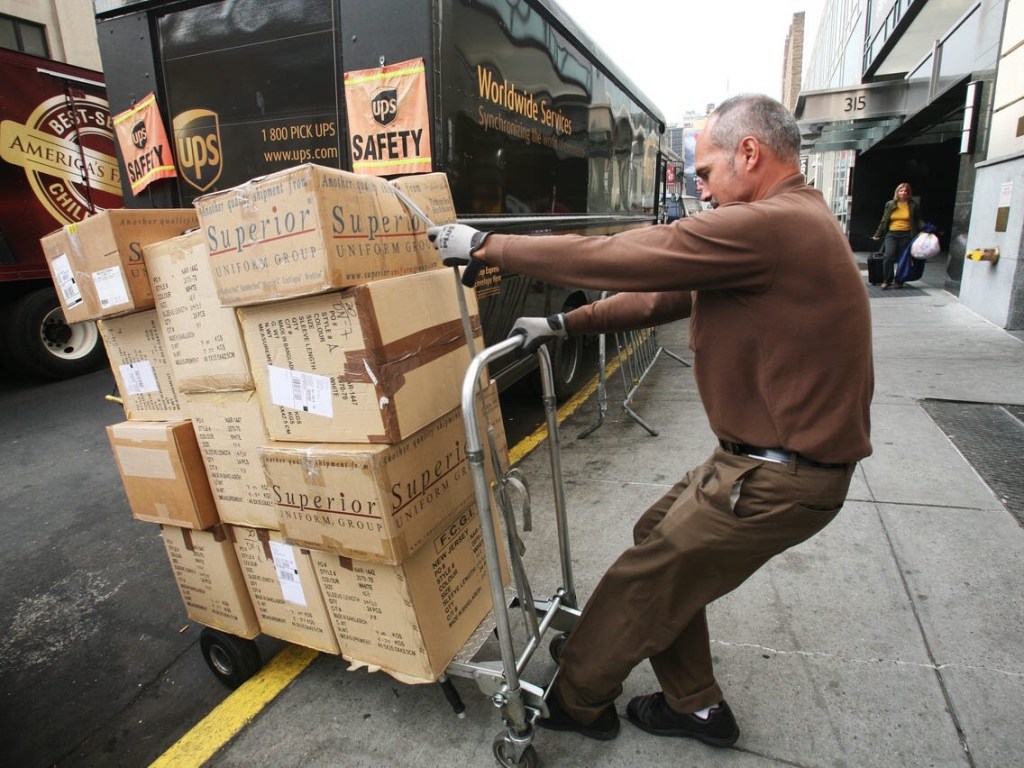
Well, no, it’s not — because there’s also the matter of the prescribed method of submitting your work. A hand-addressed brown envelope will never even be opened. Some publishers want a paper copy, but most want a flash drive or electronic transmission, and a few even require two or all three formats. And don’t forget that the query letter has to be customized for each publisher. This is not only getting logistically nightmarish; it’s also getting expensive, if you’re going to submit to multiple publishers. Do you know what it costs to send 300-plus pages by overnight courier, receipt requested? Paper is freakin’ heavy . . . and those little flash drives aren’t free either!
Delivery at the publisher’s office
Then you decide that maybe it would be best to try to retain an agent after all. Wow! Talk about your literary snobs! They’re even tougher to get to than the publishers. They do provide very worthwhile services, of course, in that they are able to shop your masterpiece to multiple publishers where they already have a foot in the door, and they can schedule book signings all over the country, and arrange the kind of publicity that will sell hundreds of thousands of books. And not incidentally, they receive a standard 15% of your advance and all royalties for their services, including — if you should happen to have that best-seller on your hands — ancillary income from the likes of movie and TV rights, videos, games, comic books, tacky souvenir items like mugs and tee shirts, and whatever. Of course, by that time you’ve generated so much income you’ll be happy to pay the 15% just to avoid the extra taxes. But let’s face it — most of us will never have a best-seller. How many Harry Potters are there? So I should probably quit the Walter Mitty dreamfest and get back to the real world, where I can barely afford the printer paper and ink cartridges, let alone the UPS charges.
Then a well-meaning friend suggested that I might consider self-publishing, so I looked into it. They’re kidding, right? Depending on the number of copies you want to produce, that can cost you thousands of dollars out of your own pocket — the pocket you were hoping to line with an advance from a publisher. And the process of designing, creating, and marketing the book itself . . . well, forget that; it’s not one of my areas of expertise.
But English is. I’ve read a couple of self-published books, and the first thing I noticed was that they’re also self-edited, or possibly done by someone for whom English is a second language. The glaring errors and typos were excruciating to someone like me who was schooled in the old days when we were required to learn proper grammar, spelling and punctuation. But it’s probably not that important, because the absence of any publicity will guarantee that your work will forever remain in relative obscurity. So, self-publishing? A total non-starter.
“Someone, please tell me what to do!”
*. *. *
Of course, while I’m stressing over all of this new information, I’m also still working on my book. I’ve got a fairly complete first draft, which I print out and begin to review because I’m old-fashioned in some ways and I prefer reading from paper and editing with a red pen, rather than staring at a computer screen for hours at a time. And it all starts off pretty well. I like my introduction and my preface, and I even have a great epilogue to cap it all off. The first few chapters are good, the middle needs a little bit of work, and then . . .
Oh, shit! I realize at this point that I’ve completely lost my sense of direction. You see, this is a non-fiction work, and — though it all happened a long time ago, back in my “Russia days” of the early 1990s — it still might ruffle a few feathers if it ever gets published. No, it’s not about any famous people, or anyone’s sexual adventures; and I’m happy to say I’ve never slept with (or even met) Donald Trump, Jeffrey Epstein, or any member of the British royal family. It’s not that kind of book. But it does name names. No, what I have lost is the sense of where I want to go with my story, how much I have to include in order for it to be worth reading, and how much I’m willing to risk in order to tell it properly.
And, to make matters more complicated, since I finished — or thought I had finished — my draft, I’ve come across additional, potentially contradictory information from other sources. So there’s a bunch of reading and rewriting to be done, and that will require some changes to the book proposal as well, so I’m nowhere near ready.
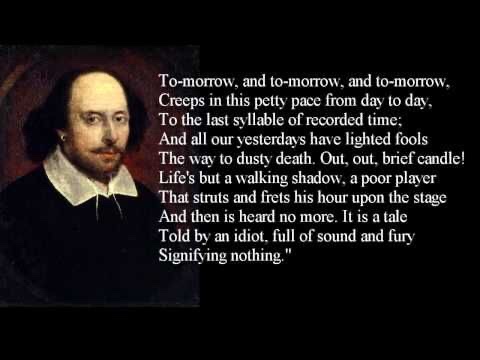
And there’s that little nagging thought — that not-so-slight possibility — that when . . . or if . . . I do finally put the last finishing touches to it, I’ll read it one more time and discover after all that it is, to quote the immortal bard, “A tale told by an idiot, full of sound and fury, signifying nothing.” Every writer’s worst nightmare.
Shakespeare, Macbeth, Act 5 Scene 5
*. *. *
So do you see my problem? I’ve got this book that I’ve nearly written. Now what the hell do I do with it? Do I devote another year of my life to it? Will it still be relevant in another year? Do I just call it a learning experience and file it away? Or maybe I’ll just buy a parrot and line its cage with those marked-up pages. Then I could teach the bird to call me “Dummkopf,” because that’s how I would feel at that point. It’s not writer’s block; it’s a G**damned roadblock!
How the world loved him! We couldn’t get enough of him: that dear, sweet man — a professional entertainer, charming, witty, outspoken, honorable, instantly likable. Suddenly thrust into a presidency for which he was only partly prepared; faced with an invasion that no one foresaw until it was gathering on his doorstep.
Yesterday . . . and Today
Suddenly he was everywhere: in a bunker, in a hospital cheering up the wounded, in the streets encouraging his people, in the trenches encouraging his soldiers. Discarding the suit and tie, living in his now-signature khakis, growing a beard. Visiting the countries all too eager to help out, to save his beloved Ukraine from the Russian invaders . . . from the hell of war. Stepping up and doing the job with a courage and fortitude few had believed possible. Inspiring a nation and a world.
It all began in February of 2022. It was supposed to be over quickly. The Russian leader bragged that the Ukrainian people would welcome him as their “saviour,” that he would “rescue” them from the “Nazis and fascists” that only exist in his mind; and that within days, or a couple of weeks at most, he would have “reclaimed” the Ukraine he believed was rightfully Russia’s. But he didn’t count on Volodymyr Zelensky, or on the Ukrainian people’s determination to hold onto the country they love. Nor did he count on the unity of the West, the NATO nations that banded together to help an ally that wasn’t yet a member of their alliance. Vladimir Putin had seriously miscalculated. And so, twenty months later, Russia’s “special military operation” — Putin’s war of attrition — slogs on, mired in a bloodbath of their own making.
And where is Zelensky today? Still there, still standing strong against his enemy, still resolved to save his country from the invaders. But twenty months of war will inevitably bring changes. Daily bombings, missile strikes, death, destruction, hunger, privation. Optimism vanishes, hope fades, weariness settles in. Cities are decimated, families are broken — what is there left to fight for? Can even the strength of their President keep them going? Does he have any strength of his own left to share with them?
As long as he had the Western nations standing firmly behind him, he was a bastion of strength, of determination, of hope. But what is happening to the support he depended upon all these past months? Where are the Ukrainian flags flying in neighborhoods and town squares all over the world? The civilian groups collecting food, clothing, household goods for the refugees? The borders opening to admit those refugees? The world’s anger at this unnecessary suffering? Have we simply wearied of a war that isn’t “ours”?
And where is the international support from all of those allied nations? Why is it slacking off? Are countries simply running out of missiles, and planes, and tanks, and weaponry . . . and money? Or are they just running out of interest in a war that isn’t “theirs”?
And where is the daily press coverage? The live reports from the front, the brave men and women of the BBC, CNN, Al Jazeera? They haven’t suddenly gone chicken, have they?
Absolutely not. But here’s what has happened:
Israel, Oct. 7, 2023
Hamas invaded Israel; and Israel retaliated. That’s what is different from just a month ago. The focus has shifted. The world suddenly has more of its children to care for, and we’re all spread too thin. The money, the weapons, the aid workers . . . they can only stretch so far. Our attention is divided between two fronts; we’re desperately needed in two places at once, and we’re having trouble handling it.
There are those — even in the U.S. Congress! — who want to give Ukraine short shrift, rationalizing that the war in the Middle East will have more far-reaching consequences and is thus more important. But they’re wrong. Because the two wars are not disconnected. Behind both lurks the ominous presence of a terrifying triumvirate: Russia, China, and North Korea. Determined to rule the world, to create a “new world order” based on their demented vision. And countries and organizations such as Iran, Syria, Hamas, Hezbollah, are all too willing to be the pawns on their global chessboard. And too many people just . . . don’t . . . get it.
Iran, Russia, Hamas – Moscow, Oct. 26, 2023
And caught in the squeeze is President Volodymyr Zelensky, who, after 20 months of living in hell, must surely be nearing the limits of his strength, his optimism, and his hope. He is said recently to have changed. He is “angry with allies and no longer optimistic, but continues to believe in Ukraine’s victory.” [Simon Shuster, Time, as reported by Ukrainska Pravda, Oct. 30, 2023.] Mr. Shuster tells of a conversation with a longtime member of Zelensky’s team, revealing that Zelensky’s “usual sparkle of . . . optimism, his sense of humor, his tendency to liven up a meeting in the war room with a bit of banter or a bawdy joke . . . [are gone]. Now he walks in, gets the updates, gives the orders, and walks out.” His team members feel that his convictions haven’t changed; in fact, they’ve hardened. Some believe that he is deluding himself, that “We’re out of options. We’re not winning. But try telling him that.”
*. *. *
So that’s where Zelensky is now. Not missing, but lost in a different sense. And if he cannot stay the course, and Ukraine is ultimately lost to the red menace from the East, it is we in the West who have allowed it to happen. It is we who have been misled, who have incorrectly read the signals that have been in front of us for years.
It is not Zelensky who will have failed his people; it is we who will have failed Zelensky.
I am not the biggest fan of former Governor Chris Christie. But even the least of us will do something right every now and then; and that is precisely what happened recently in an interview on CNN’s “State of the Union” when he spoke about Donald Trump, and about what Christie called Trump’s “bad worldview.” Quite an understatement for one not in the habit of soft-pedaling his opinions.
“Blah, blah, blah!”
Christie has thrown his hat into the ring in opposition to Trump (and others) for the 2024 GOP presidential nomination, and would be expected to be less than complimentary in speaking about any of his opponents. But in this case, he avoided blatant name-calling, and instead reminded listeners of a few already-known facts. Disturbing ones . . .
Like Trump’s intention — should the country go totally batshit and reelect him in ‘24 — of doing exactly what the new GOP House Speaker Mike Johnson wants to do: divide U.S. aid to Israel and Ukraine, expedite a stand-alone bill for Israel, and postpone a decision on continuing aid to Ukraine pending a resolution on a reduced amount to be allotted. (My blog post of Oct. 30th expounds on that very subject.) Christie attributes Trump’s view on this to a desire to “coddle” Vladimir Putin; and considering Trump’s cozy history with the Russian dictator . . . er, president . . . Christie is probably right on target.
He goes on to explain — as have so many others — why Trump’s view on Ukraine is not just wrong, but treacherously so. Yet Trump continues to scream to the world, from his imaginary throne on Mount Olympus, that only he knows best. And he does so while in reality he sits — right here on lower Earth — in court, charged with numerous crimes and misdemeanors, including fomenting the January 6, 2021 insurrection in Washington . . . and while under a gag order to boot, which he has already violated, resulting in a court-ordered fine. The man just cannot shut up. Where most people would, by now, have sensed the inevitability of defeat, he just keeps fuming.
Going down for the third time?
I’m not here to campaign for or against anyone; I don’t do that. I simply feel the need to express my frustration at the constant barrage of misinformation, disinformation (yes, there is a difference), anger, hatred, and outright stupidity spewing from this one individual’s little rosebud lips. But unfortunately, Trump is news, and we are stuck with him, at least for a while.
I suppose it wouldn’t be so bad if his rhetoric were at least benign. But his pronouncements — such as his promise to withdraw from NATO “when he is reelected” — are inherently dangerous. And no one knows that better, or is more anxious to take advantage of it, than Vladimir Putin. But what’s the solution? Can we plead with the press to stop writing about him? Nope; First Amendment. Do we lock him in a rubber room until 2025? Kidnapping. Whack him with one of his own golf clubs? Assault and battery. Ask Melania to . . . oh, yeah. Never mind.
It seemed hopeless until I discovered that Pulitzer Prize-winning editorial cartoonist Ann Telnaes had already gotten it exactly right:
By Ann Telnaes, Washington Post, Oct. 6, 2023
Now, who wants to hold him down while I wield the cork?