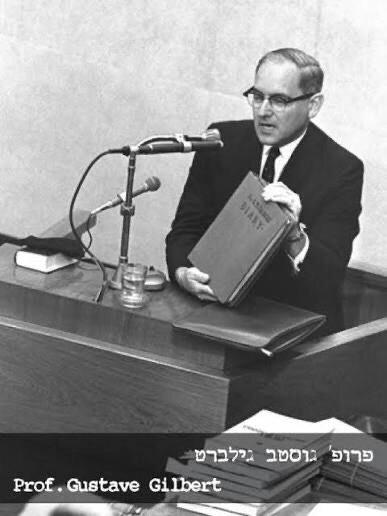
Dr. Gustav Gilbert was an American psychologist who, while serving as a Captain in the United States Army, was sent to work with the International Military Tribunal at the post-World War II trials of German prisoners at Nuremberg.
Upon arrival, he was appointed to serve as prison psychologist, in collaboration with a psychiatrist, Dr. Douglas Kelley, to evaluate and observe — but not to treat — the prisoners. Their work resulted in their becoming the confidants of the likes of Hermann Goering, Joachim von Ribbentrop, Rudolf Hess, and other infamous members of Hitler’s inner circle.
Dr. G. M. Gilbert (1911 – 1977)
If anyone was acquainted with absolute evil, it would surely be Dr. Gilbert, who later defined the term thus:
“I told you once that I was searching for the nature of evil. I think I’ve come close to defining it: a lack of empathy. It’s the one characteristic that connects all the defendants. A genuine incapacity to feel with their fellow men. Evil, I think, is the absence of empathy.”
– G. M. Gilbert
I certainly would not argue with Dr. Gilbert’s conclusion; but I might presume to add this to it: that the absence of empathy may also be inextricably tied to a condition known as malignant narcissism. Besides Dr. Gilbert’s Nazi subjects, one need only think of others who have personified evil in just the last century: Joseph Stalin, Benito Mussolini, Idi Amin, Osama bin Laden . . . and others living today who are better left unnamed here.
Does this imply that all people who suffer from a lack of empathy are necessarily evil? I don’t think so . . . though they’re certainly not the most pleasant of people. But perhaps the combination of malignant narcissism and lack of empathy in an individual increases the tendency toward evil. Or are the two pathologies simply two sides of the same coin?
I’ll leave those questions to the professionals to answer. But it does make me wonder about some of those living persons I haven’t named.
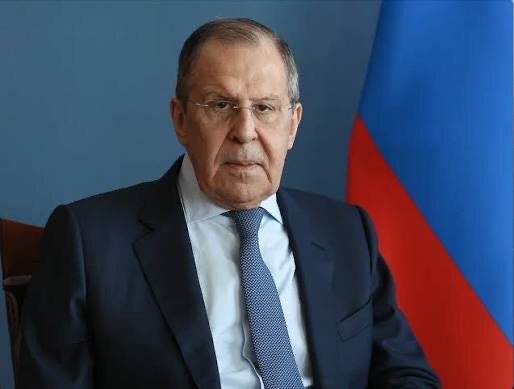
Either Russian Foreign Minister Sergey Lavrov has suddenly become delusional, or the Kremlin has run out of believable propaganda and is merely recycling the same tired nonsense, over and over again.
I suspect the latter.
As reported yesterday by Russia’s state-run TASS news agency, Lavrov declared that:
“This is no laughing matter: the entire West has united against Russia.” [Kyiv Post, July 29, 2026.]
Russian Foreign Minister Sergey Lavrov
No . . . really? What the hell did they expect, with their country in the fifth year of its brutal war of attrition against Ukraine? Undying devotion? Applause? Flowers?
In a clear sign that Ukraine’s recent military successes have had a serious psychological impact on the Putin regime, Lavrov attempted to deflect as usual, claiming that Ukraine’s progress has only been possible as a result of an alleged alliance of Western nations determined to “dismember” Russia and to turn the Russian public against its leaders. [Id.]
Ignoring the fact that it was Russia that started the war, and Putin who steadfastly refuses to reduce any of his ludicrous demands before he will even discuss a ceasefire, Lavrov accused the West of issuing ultimatums to Moscow. And then he re-drew the same old red line, reiterating that the Kremlin was unwilling to make any concessions:
“Russia should not become angry or fall into hysteria, but develop a healthy anger in its foreign policy.” [Id.]
“Come again?”
While it sounds like more of the same-old-same-old, there are now undertones of paranoia and desperation creeping into these statements from Moscow as Ukraine’s drones continue to take out more and more of Russia’s oil production and storage facilities, military material warehouses, tankers from their “shadow fleet,” etc.
And, while that desperation might inspire some leaders to capitulate, Vladimir Putin’s history would indicate otherwise. When angered, or backed against a wall, he tends to escalate.
I’ve been thinking a lot lately about friends, both old and new, as well as those departed.
Thoughts of the departed, of course, bring nostalgia and bittersweet memories; the new friends bring company and current pleasures. But the old friends — the ones who share our deepest secrets, our best and worst moments, and our wickedest recollections — those are the ones who continue to touch us in ways the others cannot.
Oddly enough, I found the best example of this in a comic strip: the inimitable Winnie the Pooh, as he helped his incessantly grumpy friend Eeyore make it through a bad day:
Eeyore: “I’m not much good today, Pooh.”
Pooh: “That’s all right, Eeyore,” said Pooh gently. “Some days aren’t meant for being much good. They’re just meant for being.”
Eeyore sighed. ”It’s just that everything feels a bit heavier than usual.”
Pooh nodded thoughtfully. “Then I shall stand here and help you carry it,” he said.
Eeyore blinked, surprised. “You can’t see it, Pooh. It’s not that sort of heavy.”
”I know,” said Pooh. “But sometimes, even invisible things feel a little lighter when someone’s beside you.”
Eeyore looked at him for a long moment, and then — very quietly — said,
”Thank you, Pooh.”
Pooh smiled. “You don’t have to thank me, Eeyore. That’s what friends do — they stay, even when they can’t fix the weather.”
– A.A. Milne, “Winnie the Pooh”
That’s right, Pooh. Through the best and the worst times, they stay. Even when they’re far away, they stay. And sometimes, on a bad day, just knowing they’re out there — at the other end of a telephone line or an email — is all the comfort we need.
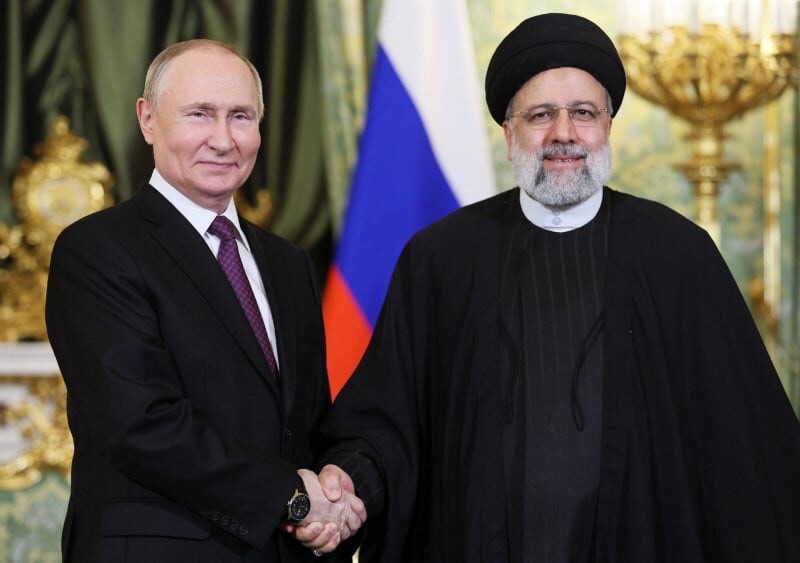
It’s no secret that Iran has been supplying Russia with so-called “kamikaze” drones to be used in the war against Ukraine. And last year, Moscow and Tehran signed a “comprehensive strategic partnership” treaty expanding cooperation in military affairs, trade and technology.
As a favor in return for the drones, Russia has helped reduce the economic pressure on Tehran resulting from Western sanctions by promoting Iran’s membership in both BRICS and the Shanghai Cooperation Organization.
And now reports from Ukrainian intelligence indicate that Vladimir Putin has been supplying his Iranian friends with satellite imagery of U.S. bases in the Middle East.
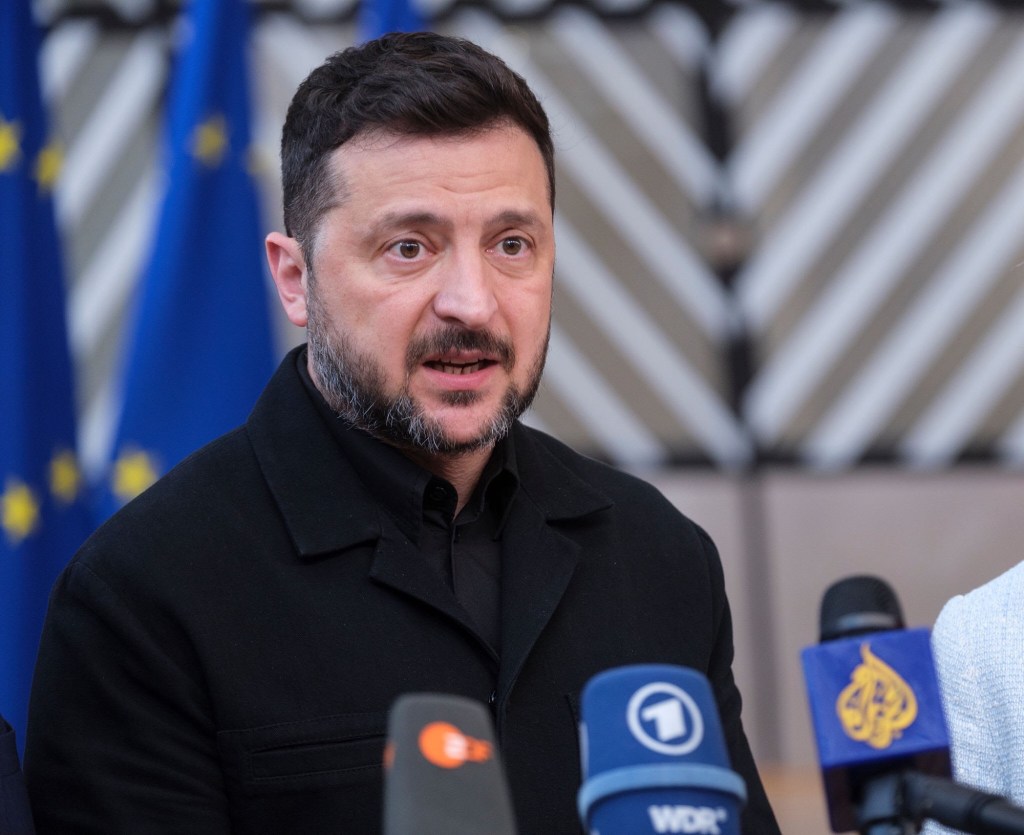
Preceding a scheduled meeting with Donald Trump, Ukrainian President Volodymyr Zelensky said last week that he would share evidence with the U.S., posting on X:
Since the beginning of July, we have recorded active Russian satellite surveillance of the Gulf states and U.S. military facilities located there. These images subsequently appear in Iran. At the same time, there is a clear correlation between Russia’s satellite imagery of these sites and Iranian strikes — both before the attacks, in preparation for them, and afterward, to assess the damage inflicted.” [Mark Osborne, CBS News, July 25, 2026.]
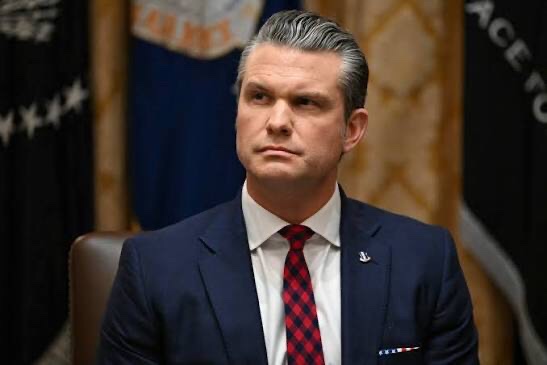
Subsequently, during a hearing on Capitol Hill, Defense Secretary Pete Hegseth was asked whether Russia and China were helping Iran, and responded:
“There’s definitely adversary alignment, attempts to do so, and there are many ways that we deter that. And the depth and extent of it ought to remain classified, and it should. But there are ways in which both of those countries are limiting, at different levels, enabling some of the things Iran is doing, yes.” [Id.]
But — never one to accept the word of his own hand-picked “experts” — Trump once again chose instead to put his faith in the words of his country’s principal adversaries, posting on Truth Social that both Chinese President Xi Jinping and Russian President Vladimir Putin had assured him they were not involved, and that:
“Therefore, two major Countries that people speak of often in terms of Iran are, in my opinion, not participating. If they did, it would be very bad for them — Certainly not in their best interests.” [Id.]
(Right . . . I can hear them both quaking in their boots.)
And on Monday, when asked by reporters aboard Air Force One to comment on Zelensky’s information, Trump replied:
“Well, we’ll find out if that’s true. I’ll ask Putin about it. We’ll find out.”
All right, then . . . that certainly puts my mind at ease. We all know Vlad would never lie to his good friend Donnie.
Isn’t it nice to be able to go to sleep at night, secure in the knowledge that our country is in such capable hands?
Of all the things that happened on July 28th in past years — “Animal House” hitting the theaters in the U.S. (1978), Jacqueline Bouvier Kennedy being born (1929), a dreadful earthquake in China (1976), Austria-Hungary declaring war on Serbia (1914), and Hillary Clinton accepting the Democratic nomination for president (2016) — two jumped out at me as being of particular interest this year:
The 14th Amendment to the Constitution Is Adopted (1868). For those who have been asleep for the last couple of years, or simply have their heads stuck in the sand (or elsewhere), let me remind you that the 14th Amendment grants citizenship to all persons born or naturalized in the United States.
Need I say more?
*. *. *
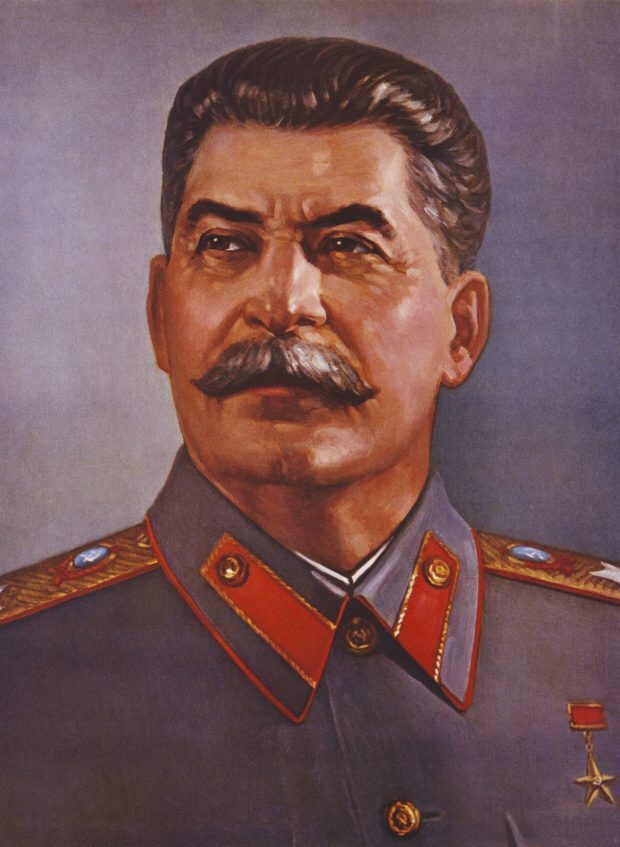
And next, to borrow the actual headline from my source: “Stalin issues Order No. 227 — outlawing cowards.”
Iosif Vissarionovich Dzhugashvili – a.k.a Joseph Stalin
That is not as funny as it sounds. On July 28, 1942 — in the midst of World War II, with both Leningrad and Stalingrad under siege by Hitler’s forces — Premier of the Soviet Union Joseph Stalin issued what became known as the “Not one step backward” order, which declared:
“Panic makers and cowards must be liquidated on the spot. Not one step backward without orders from higher headquarters! Commanders . . . who abandon a position without an order from higher headquarters are traitors to the Motherland.” [“This Day In History,” History.com, July 28, 2026.]
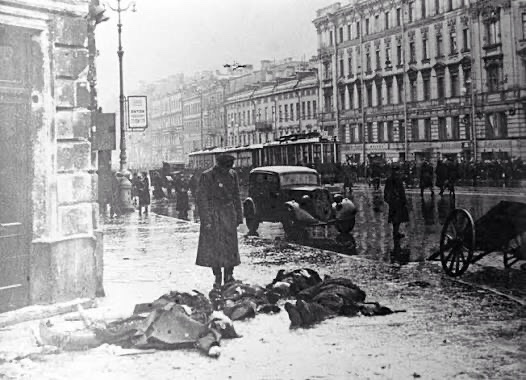
No one thought for a moment that Stalin was joking. It took six months to defend Stalingrad, and 872 days and a million deaths in the hell that was Leningrad, but the Nazi invasion of the Soviet Union was ultimately repulsed.
Siege of Leningrad (September 8, 1941 to January 27, 1944)
Lest anyone try to compare those events with Vladimir Putin’s current war against Ukraine, I would remind you that Stalin’s armies were defending their nation against Nazi Germany, and were thus motivated by genuine patriotism and love of country.
The poorly-trained soldiers being sent into Ukraine as cannon fodder in support of Putin’s offensive (in every sense of the word) war of attrition have no such incentive. But the same threat — though perhaps not set out in an official order — hangs over them.
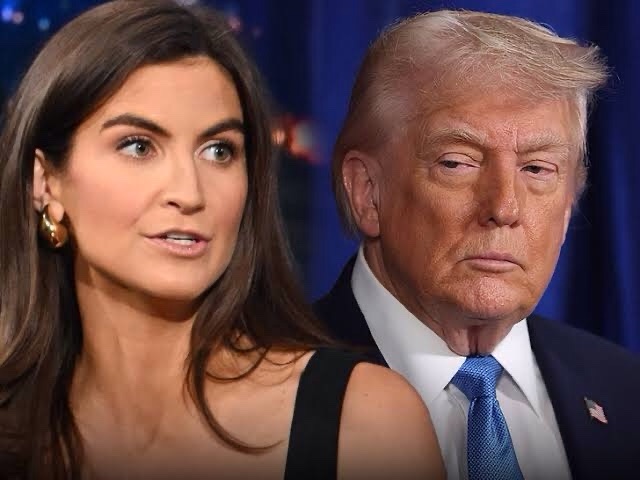
What CNN journalist Kaitlan Collins might have said after Donald Trump’s appalling insults at the White House Correspondents Association dinner on Friday:
“[He] speaks an infinite deal of nothing.”
– William Shakespeare, The Merchant of Venice, Act I, Scene 1
For that matter, it’s a perfect description of him at any given time.
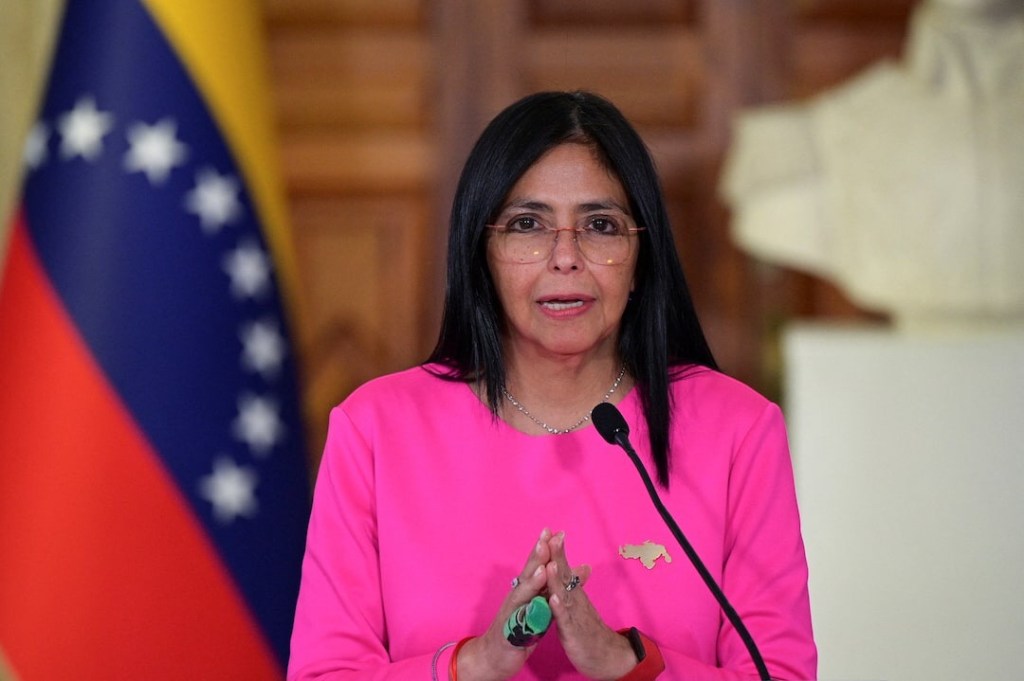
Technically, the President of Venezuela, since the kidnapping of Nicolas Maduro by Donald Trump’s storm troopers in January of this year, has been former Vice President Delcy Rodriguez.
Delcy Rodriguez, President of Venezuela
But is she really in charge? Or has she simply been allowed to remain in office as long as she continues to do Trump’s bidding, sitting quietly by while U.S. interests take over Venezuela’s lucrative oil exports to the tune of an estimated $13 billion in sales so far this year? [CNBC, July 27, 2026.]
The answer to that question became a little clearer this week when the U.S. State Department hailed the news of the Venezuelan government’s withdrawal from the International Criminal Court (ICC) . . . the same institution that Trump has recently described as being “corrupt and worthless.” [Middle East Eye, July 26, 2026.]
In a post on X, the State Department said that the ICC’s investigation into Maduro had produced “no result,” and added:
“The ICC has instead wasted its resources on investigating and charging persons from countries that have competent, independent judicial systems and which never submitted to the jurisdiction of the court.* This is blatant overreach, political bias and selective enforcement” . . . adding that the Court is “neither credible, independent, nor legitimate. It is time to dismantle the ICC.” [Id.]
[* Ed. Note: Possibly referring to outstanding ICC warrants against Vladimir Putin and Benjamin Netanyahu.]
The statement further called for all ICC member states to “withdraw from the Rome Statute” — the international treaty that created the Court in 1998. There are currently 111 full and associate members.
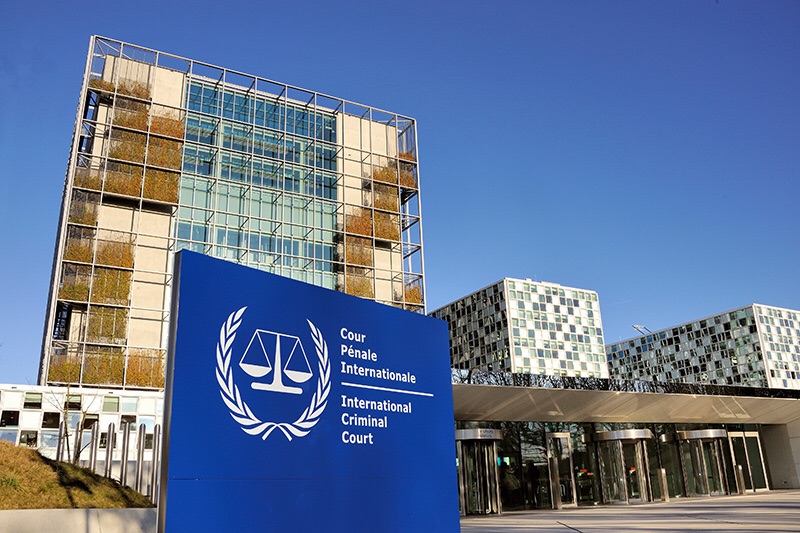
ICC Headquarters – The Hague, Netherlands
However, the United States is not a member, having originally and repeatedly cited concerns over national sovereignty. The same holds true for autocratic states such as Russia, China, North Korea, Saudi Arabia, Iran, etc., and others (including Israel) who would not grant oversight to an independent authority — which makes perfect sense if you are a nation that has committed, or might in the future be likely to commit, acts that could be considered war crimes or major human rights violations.
So is it a coincidence that Venezuela, a member of the ICC since the year 2000, has suddenly decided to withdraw from the organization that Donald Trump has sworn to annihilate? That seems doubtful . . . which raises the next question: What “incentive,” or pressure, did he apply to persuade Delcy Rodriguez that this is in the best interests of her nation? Or has Trump taken over as de facto president of a country of which he is not a citizen?
. . . which, if true, would open up a whole new can of worms . . .
Fifty-two years ago today, on July 27, 1974, the U.S. House Judiciary Committee began impeachment proceedings against President Richard M. Nixon as a result of what had become known as the Watergate scandal.
They had ordered that he turn over 3,700 hours of secretly-taped conversations; he complied; and the evidence in those recordings of his involvement in numerous criminal acts and conspiracies was irrefutable.
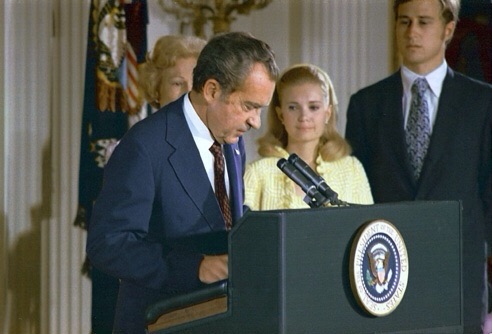
Twelve days later, on August 8, 1974, Nixon announced his resignation from office.
Nixon’s Resignation – August 8, 1974
To dredge up a phrase recalled from my years of working in the legal profession: “Res ipsa loquitur” . . . “The thing speaks for itself.”
The past ten years have brought several major changes to my life, at the stage of life when change is most difficult and least welcome and I would have much preferred constancy and stability.
In past decades, I happily moved across the country and back, traveled abroad, and twice lived overseas — savoring each new experience as an opportunity for learning, growth, adventure, and a whole lot of fun. Those were great times.
But — no matter how we may miss the years of always planning something new and potentially exciting — and if we’re lucky enough to reach seniority without senility, there inevitably comes that day when we must accept that an “adventure” now consists of dinner out, a new book by our favorite author, or an evening at the theater, and that the parameters of our lives are shrinking rather than expanding.
Anything more is simply not gonna happen.
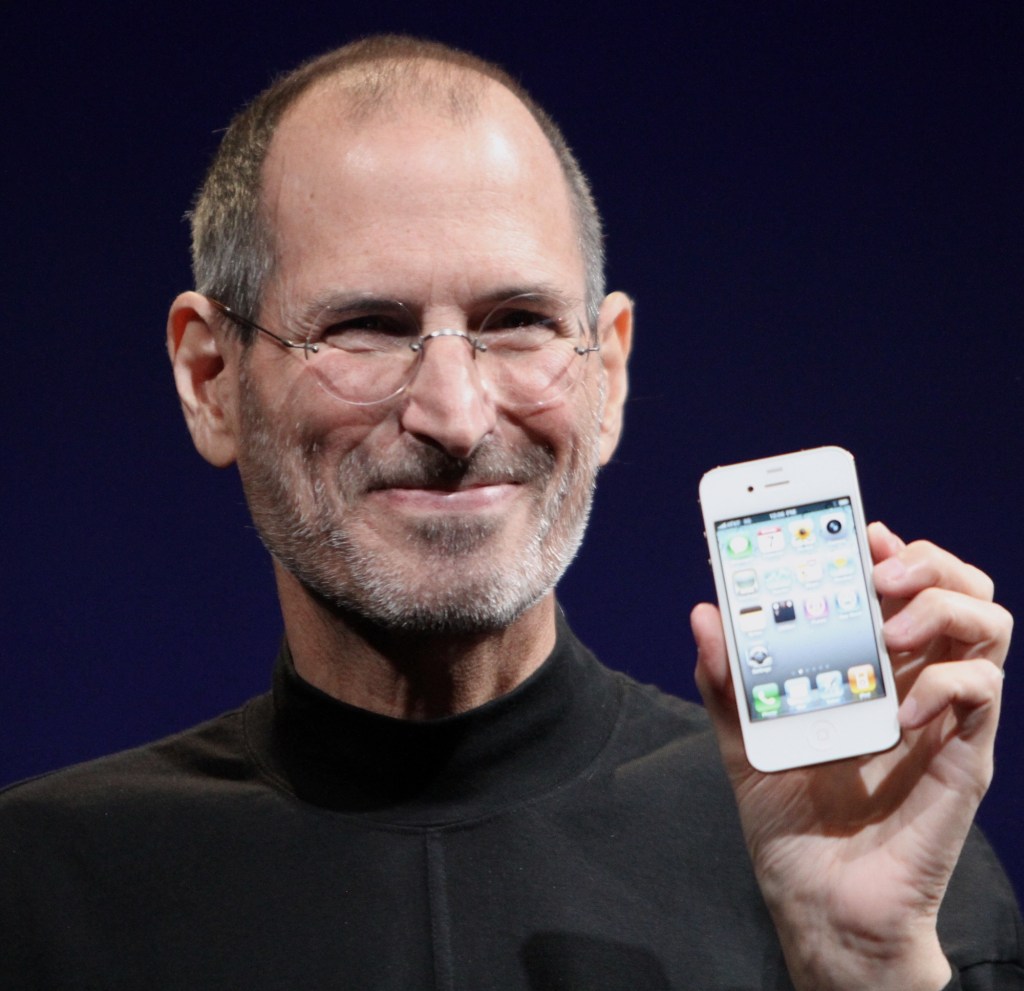
Seeking words of wisdom on the subject of dealing with life’s vicissitudes, I came across this from computer technology pioneer Steve Jobs:
“For the past 33 years, I have looked in the mirror every morning and asked myself: ‘If today were the last day of my life, would I want to do what I am about to do today?’ And whenever the answer has been ‘No’ for too many days in a row, I know I need to change something.”
Steve Jobs (1955 – 2011)
Well, that was easy for him to say. Jobs passed away at just 56 years of age, and thus was always young enough to be able to contemplate change with a minimum of trepidation. And it is good advice for those who are still able to take a leap of faith, rather than risk being stuck in an imperfect situation.
As for me, while I applaud Jobs’ forward-looking approach, I’m still searching for the words of wisdom that apply to people of my generation. Perhaps I’d better narrow my search to the utterances of octogenarians.
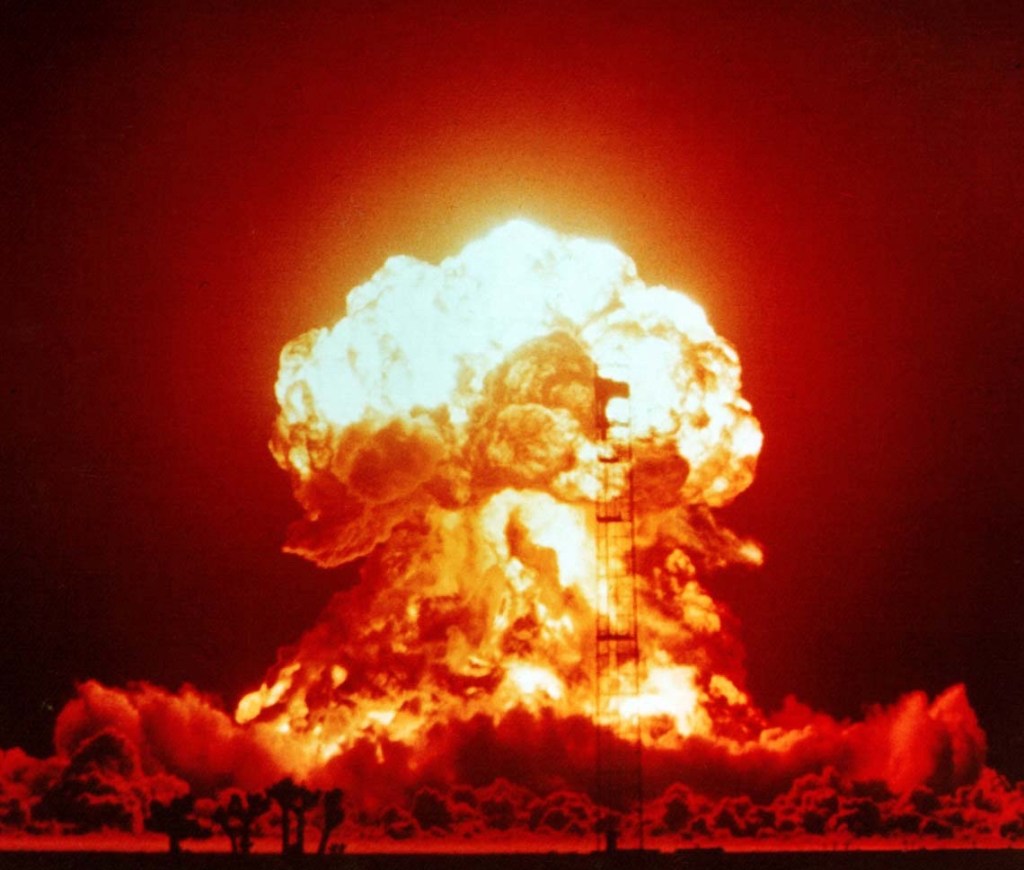
As I sat down last evening to begin writing today’s blog post, my mind was on the most recent brainstorm to issue from the Oval Office: the nuclear agreement with Saudi Arabia.
And out of the blue, I thought of a song written by the late Harvard-educated math professor / satirist / songwriter / performer, Tom Lehrer, who became famous in the 1950s and ‘60s for his totally irreverent, sometimes dark, often political, and always hilarious musical observations on life.
Tom Lehrer (1928 – 2025)
The song that came to my mind yesterday was titled “Who’s Next?” and dealt with nuclear proliferation. Remember that those were the early years of the Cold War. Yet it seemed particularly relevant for today, some 60 years later, so of course I Googled the lyrics; and in doing so, I also found that yesterday was the one-year anniversary of Lehrer’s passing. So I decided to include a tribute to him in this article.
Lehrer made it to age 97. I don’t know how lucid he was in his last years, but I’m reasonably certain he would not have been happy with the present state of U.S. politics. I can only imagine what scathing lyrics he would have churned out about the members of the current administration if he were still writing today.
For those of you who are too young to have been the beneficiaries of his genius, here are the lyrics to “Who’s Next?” (It’s better with the music, of course, so you might want to check it out on YouTube.)
First we got the bomb and that was good, ’Cause we love peace and motherhood. Then Russia got the bomb, but that’s O.K., ’Cause the balance of power’s maintained that way! Who’s next?
France got the bomb, but don’t you grieve, ’Cause they’re on our side (I believe). China got the bomb, but have no fears, They can’t wipe us out for at least five years! Who’s next?
Then Indonesia claimed that they Were gonna get one any day. South Africa wants two, that’s right: One for the black and one for the white! Who’s next?
Egypt’s gonna get one, too, Just to use on you know who. So Israel’s getting tense, Wants one in self defense. ”The Lord’s our shepherd,” says the psalm, But just in case, we better get a bomb! Who’s next?
Luxembourg is next to go And, who knows, maybe Monaco. We’ll try to stay serene and calm When Alabama gets the bomb! Who’s next, who’s next, who’s next? Who’s next?
Lehrer was of course being sardonic in suggesting that Luxembourg and Monaco might enter the nuclear arms race; but he made his point. And given a choice between those two tiny, peaceable sovereign nations or Saudi Arabia having the capability of destroying the world, well . . .
*. *. *
But back to the subject of the U.S.-Saudi agreement, my thoughts are straightforward. As I see it, it is yet another instance of Donald Trump siding with the world’s most treacherous, authoritarian leaders for the sole purpose of gaining personal benefit, and to hell with the risk. While blithely destroying relations with our proven long-term allies, he panders to the worst of the worst — the “strong men” whom he so much admires and strives to emulate — trusting that their promises actually mean something despite historic proof to the contrary.
He ignores the fact that he started a war against Iran — which had not threatened the U.S., and had indeed honored the previous agreement reached with the Obama administration — for the alleged purpose of denying that country nuclear capability.
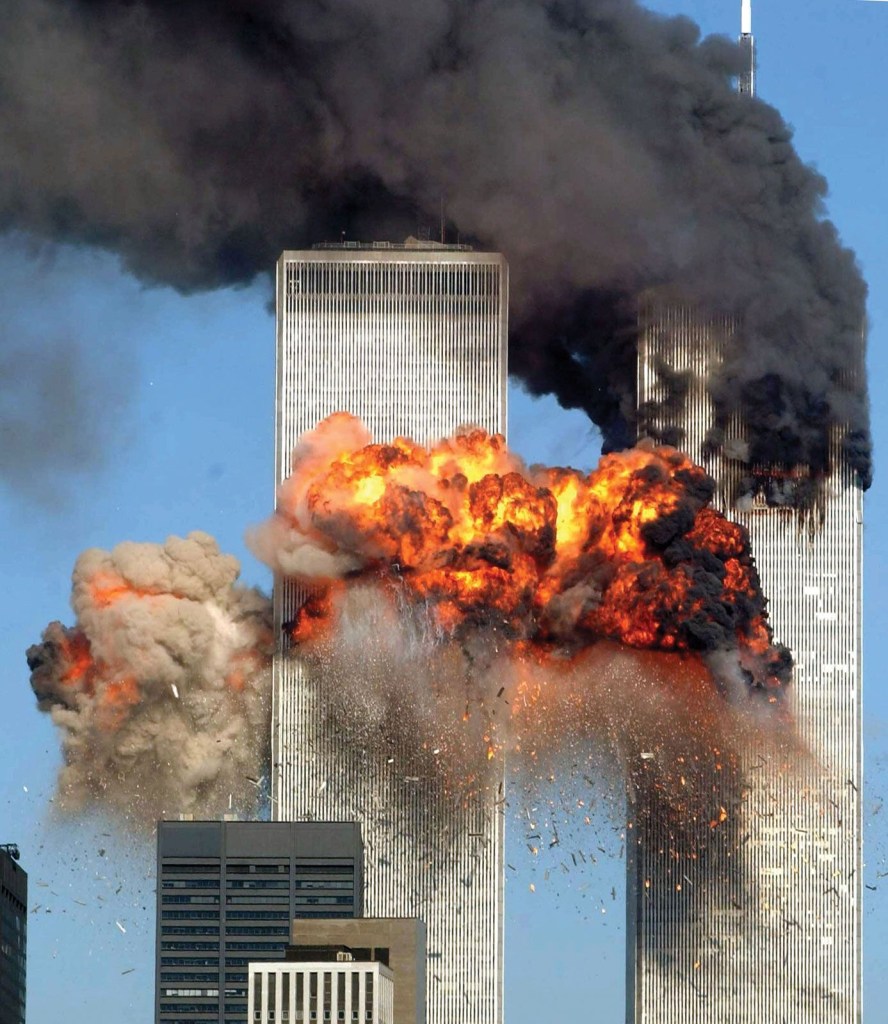
And he forgets about 9/11, when 19 hijackers — 15 of whom were Saudi nationals — attacked New York, Washington and Pennsylvania, killing some 3,000 innocent civilians, for no reason other than to inflict terror on America. And they did it without nuclear or other conventional weapons; they simply used four of our own commercial aircraft.
September 11, 2001
But none of that matters, as long as the Trump family is able to maintain their real estate, licensing, and private equity transactions with their Saudi friends — opportunities that Iran cannot offer. So what seems at first face to be a contradiction is really quite simple: It’s all about the money. And the rest of us be damned.