Can’t help it . . . reading (and commenting on) the news is a hard habit to break, and I didn’t say I was going cold turkey.
This is just a quick pat on the back to one of my favorite people in the whole world: Ukrainian President Volodymyr Zelensky, who was heard on Friday to tell Russia, in effect:
“You cut our power, we kneecap your biggest economic driver [oil and gas infrastructure].” [Ben Lefebvre, Politico, Nov. 10, 2023.]
“Ta-da!”
Go, Volodya! No bullies in your schoolyard.
*. *. *
My apologies . . . I know that’s no way to address a President, but you are my hero, sir.
All good things must come to an end. How many times during our lives do we hear that? Unfortunately, it’s true. And today marks another end: the end of my daily blog. It is with a heavy heart that I tell you — my very few readers — that I am giving it a rest . . . at least partially.
No, it is not due to illness. But it seems that publishing every day may have been overdoing it. Even reading Shakespeare — okay, especially reading Shakespeare! — can get tiresome after awhile, and I regret to say that my readership has dropped off to almost nothing on many days.
I’ve kept going for the sheer pleasure of writing — I really love doing it. But these little presentations take time and effort. Before my fingers ever touch the keyboard, there’s reading (mostly of the daily news), background research, thought, analysis . . . and only then, searching for my own words. It’s a joyous process, and I shall miss it, and I suspect that I shall direct it elsewhere before long.
But writing for oneself is a lonely undertaking. Maybe I’ve chosen the wrong subject matters; or perhaps a blog just isn’t the right venue. Anyway, it’s time to cut back. But . . .
Yes, there is always a “but.” But I will probably be popping up once or twice a week, as inspiration strikes. And all those old blog posts are still there for the reading. So it’s not goodbye . . . just “see ya.”
Back in the early 1970s, I was a working, single mom whose two young children were attending a local day camp during the summer months in the Virginia suburbs of Washington, D.C. It was a great place, where they had earlier been year-round pre-school students. Now that they were a little bigger — ages 8 and 10 — they were able to enjoy the many summer activities, including swimming lessons, horseback riding lessons, and the occasional field trip.
In 1972, then-President and Mrs. Richard Nixon were enjoying dinner in Beijing, China, with Premier Zhou Enlai, when the subject of two newly-captured pandas came up, and Mrs. Nixon commented that she was very fond of the big, cuddly-looking animals. Impulsively, Premier Zhou is said to have offered, “I’ll give you some” . . . and thus began 50 years of “fostering” of China’s most adorable wild denizens, one pair at a time, at the National Zoo in Washington. The first couple — Ling-Ling and Hsing-Hsing — lived happily in their new home until 1992 and 1999, respectively, and were the Zoo’s main attraction throughout their lives.
It looks like a cashew nut to me. Go ahead … try it.
Of course, a field trip to the Zoo was a must for the day camp children and their counselors, and so off they went one bright, hot summer day. It started out wonderfully, with the kids enjoying the beautiful park and the variety of exotic animals as they made their way to the Panda House — a large area with both an indoor space and an outdoor garden reminiscent of the pandas’ native China. Because of the heat of the day, Ling-Ling and Hsing-Hsing were being kept indoors, where their air-conditioned “house,” liberally planted with bamboo, was enclosed behind glass for easy viewing by the visitors. In addition, there was a long metal railing in front of the window, set back a few feet, where visitors were required to stand in order to keep them from tapping on the glass or otherwise disturbing the residents.
Let me explain here a little bit about my daughter. A bright, energetic, happy child, with an insatiable curiosity about everything, she somehow managed to be the unwitting target of any trouble that might be lurking within easy range. And Zoo day was no exception. Standing behind the metal railing with her friends, exactly where they belonged, she did what the others were doing — rested her hands on the railing. But for whatever reason, she moved her hands to the underside of the railing . . . and literally got the shock of her life.
In some way, for some reason, and by someone unknown — none of which were ever explained to me — underneath that railing and extending its full length was a live, exposed electrical wire. And when her hands touched it, the shock was great enough that her hands stuck to the railing and the charge went through her entire body. One of the female counselors — putting herself in danger — grabbed her to try to pull her away, and was herself stuck to my daughter and unable to let go. A second counselor — a young man with considerable strength — then grabbed the first counselor, and was finally able to pull them both away from the railing and the wire.
Not Funny In Real Life
Needless to say, the field trip was cut short. The two counselors were all right, but my daughter had received burns to the palms and fingers of both hands . . . and no one knew what else at that point. What worried her most of all, though, was that she had wet her pants; and at eight years of age, that’s really, really bad.
The bottom line is that, other than the burns, she was all right. They rushed her to the zoo’s on-site clinic, where her burns were treated and her hands wrapped. Then everyone piled back onto the school bus and headed back to school, where the principal called me at work . . . there were no cell phones in those days. I made it from downtown D.C. to the school, about eleven miles away in Virginia, weaving through city traffic and running a few red lights, in a record seven minutes . . . and never saw a police car the whole way there.
Woman On A Mission
When I arrived, she was sitting there, in her embarrassingly wet panties and shorts, rather enjoying all the attention, as her brother sat worriedly nearby. After profusely thanking the two counselors who had saved my daughter’s life, I hustled both kids into the car and headed for the nearest hospital emergency room, where they tried to keep me out of the treatment area because, they said, some parents tended to faint. I told them I wasn’t going to do anything that ridiculous, and that I would gladly sign a release and sit in a corner, but no army was going to separate me from my little girl at that point. As they unwrapped her hands, I could see that the burns were actually not as bad as I had imagined, and I was able to relax a bit. And my daughter — did I mention she’s a Leo, and a bit of a drama queen? — once again stole the show when she turned her big blue eyes toward the doctor and said, “I’m just so glad this happened to me, and not my brother.”
That’s my girl.
End of story: The Panda House was closed to the public for a while, during which time the indoor viewing space was completely redesigned. My daughter is still alive and kicking. And the pandas were blissfully unaware that anything unusual had happened.
Xiao Qi Ji – Son of Mei Xiang and Tian-Tian
*. *. *
I’ve gone through this whole long tale simply to point out the reason that the panda program at the National Zoo has special, sentimental meaning to me. I visited Ling-Ling and Hsing-Hsing many times after that day, as well as their successors, Mei Xiang and Tian-Tian. The entire country holds them very dear, and none more so than the people of Washington, who received that first pair. Zoos in San Diego, Memphis and Atlanta have been similarly blessed; and now, they’ve all gone home (except Atlanta’s, who will follow shortly). They have been, for five decades, a symbol of friendship between two powerful nations that otherwise have more than their share of contentious issues.
And now, even that link is in danger of being severed. The current program was scheduled to end on December 7th of this year anyway. As has happened at each expiration date in the past, it was expected to be renewed again; but this time, there has been no indication from the Chinese officials as to when — or if — that will happen. I have a sinking feeling it won’t, at least not right away. And if not, the pandas would effectively be held hostage, their travel privileges and their panda passports revoked and held by the Chinese Panda Police; America would feel the loss, as though of our own children; and there would be one more bone of contention between our two countries — the very last thing this world needs right now.
“Panda Express”
*. *. *
Message to President Xi: “What is it . . . spite? Some new sort of panda diplomacy? Pardon my language, sir, but this really sucks. Regardless of political differences, certain things in this world should remain inviolate: humanitarian aid, the Olympics, and the Panda Program, for starters. We Americans, in general, are a sentimental lot. We love our children and our animals. We know the pandas really belong to China, but we cherish them as though they were our own. We’ve taken first-rate care of them for 50 years, delivered their babies, and mourned them when their time ran out. So I will try to remain hopeful that the program may be renewed without interference from political issues. Anything less would be just plain mean.”
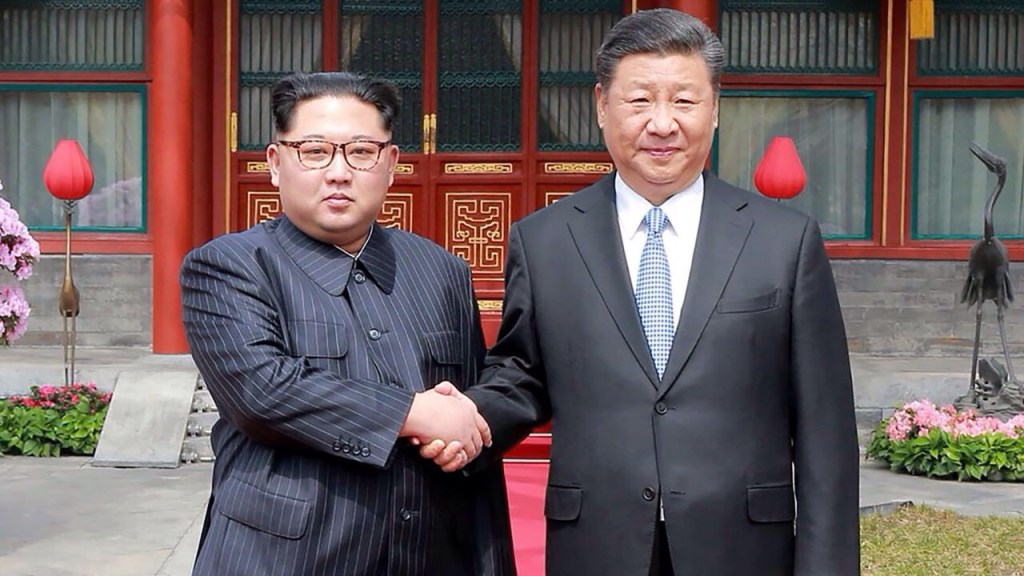
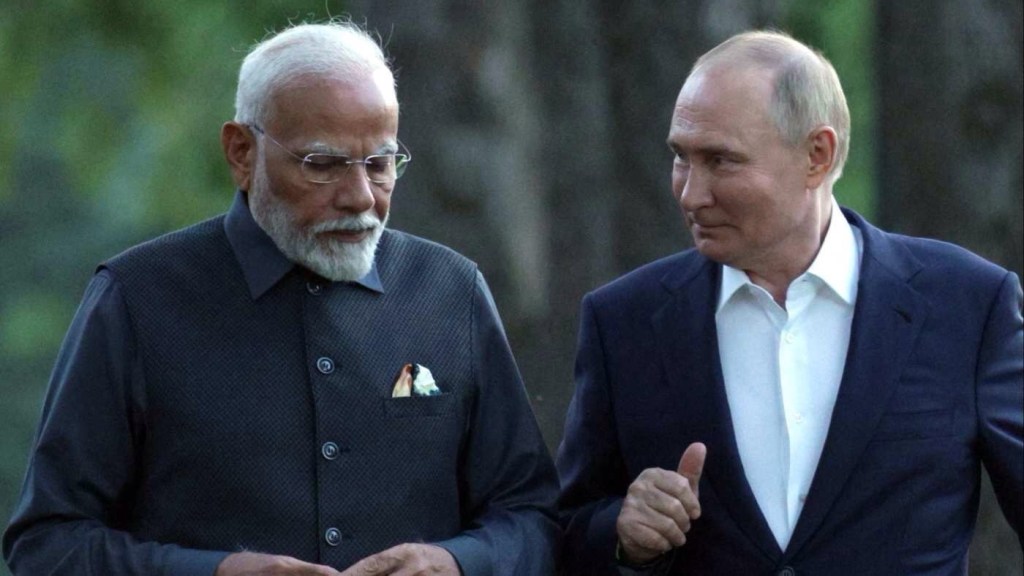
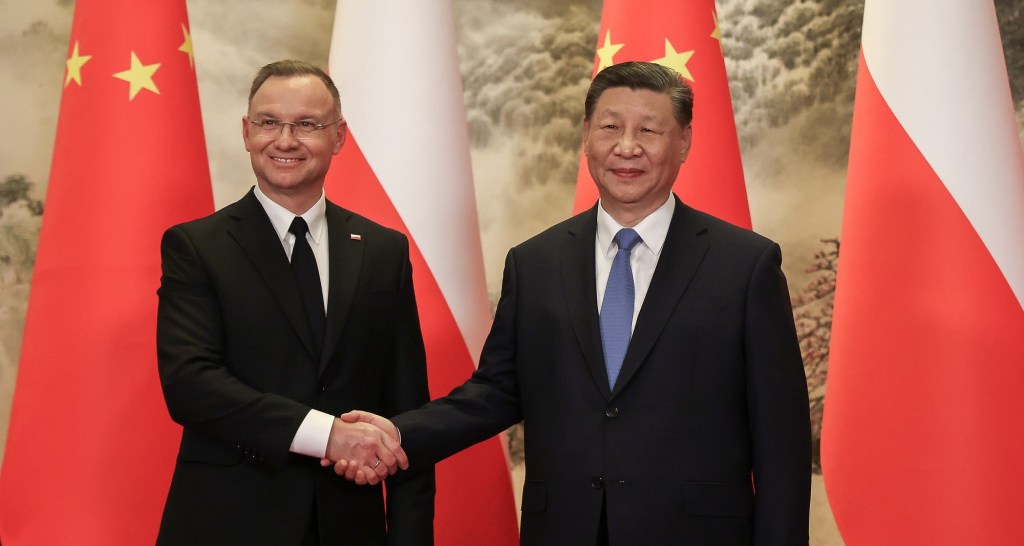
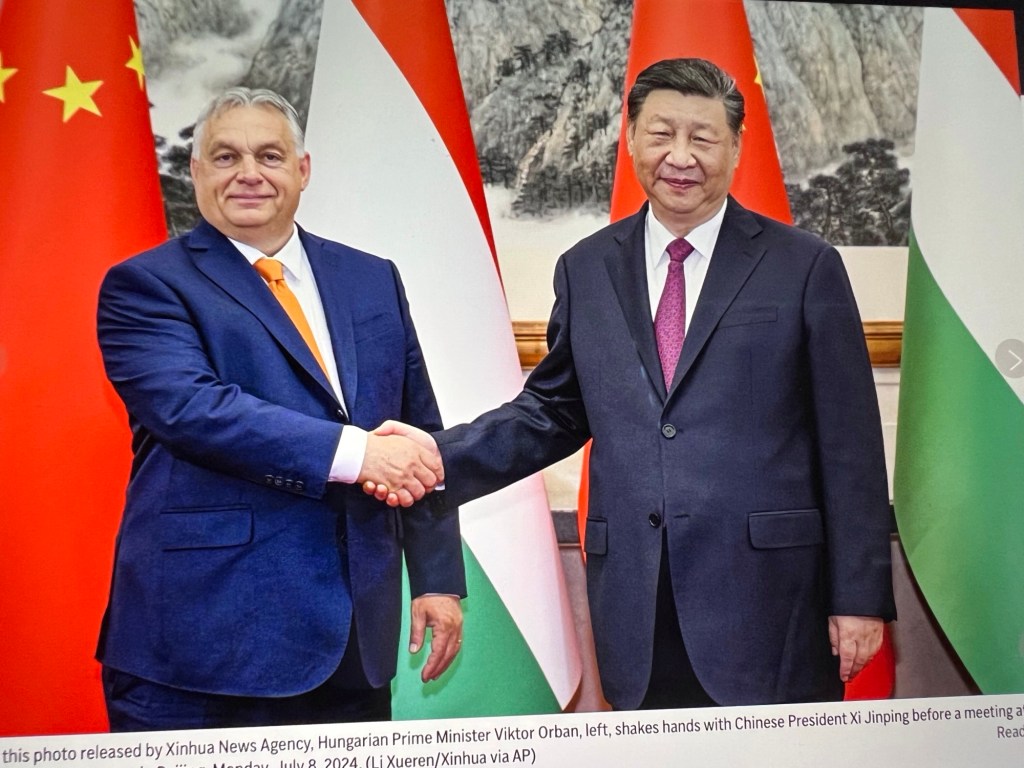
No, they’re not twins, separated at birth or otherwise. They’re not “brothers by another mother.” They’re not, as far as anyone knows, related at all. But their life ambitions, their political and humanistic views, and their projected personae are so disturbingly similar as to make one wonder what serendipitous tricks of fate brought them together at this point in their lives . . . and how their relationship will ultimately turn out.
On October 17th, I wrote about Vladimir Putin’s and Xi Jinping’s plans — no longer a mere dream — for a “New World Order” to replace what they term “Western dominance.” And yesterday, using Hong Kong as an example, I delved further into the sort of patient, long-term planning required to execute such a scheme.
Meeting in Moscow – March 2023
Along the same lines, there’s also news this week about the progress of Xi’s ten-year (thus far) “Belt and Road Initiative,” supposedly designed by him to demonstrate China’s intention and ability to assist the poorer nations of the world in rebuilding their economies and infrastructures. What generosity! What nobility! What altruism!
What a crock!
Originally conceived in 2013 by Xi as a program of development and investment initiatives designed to link East Asia and Europe by means of physical infrastructure, it has since been expanded to include a dozen or more countries throughout the world, including Pakistan, Kenya, Zambia, Laos, Mongolia, Afghanistan, and the five (former Soviet) Central Asian nations of Kazakhstan, Uzbekistan, Kyrgyzstan, Tajikistan and Turkmenistan. And we are expected to believe that the more than a trillion dollars thus far invested by China in this massive undertaking was given solely for the benefit of the recipients.
Seriously?
“Daddy Warbucks”
To begin with, nothing was “given,” except loans. Some of the world’s poorest nations have been plunged so deeply into debt, they are now in imminent danger of complete economic collapse; those loans are coming due, and default is a very strong possibility, even a likelihood in many cases. Then what? That, of course, depends largely upon the terms of the loans — and whatever else Xi may have in mind — and remains to be seen.
But for ten years, Xi has been gaining dominance over those countries, as well as an image of the benevolent uncle, always ready with a helping hand — and an open wallet — whenever and wherever help is needed. That takes time . . . and infinite patience.
As for the other twin — Vladimir Putin — it comes as no surprise, in looking back on his two decades as president of Russia, to realize that he has, in his own way, been maneuvering himself into similar positions in Africa, the Middle East, Cuba, etc., offering food, munitions, technology, training, military support, and the like. And in some mineral- or gemstone-rich regions, he has actually been receiving payment in precious materials, such as diamonds. Lots and lots of diamonds. Not too shabby.
Payday for Putin
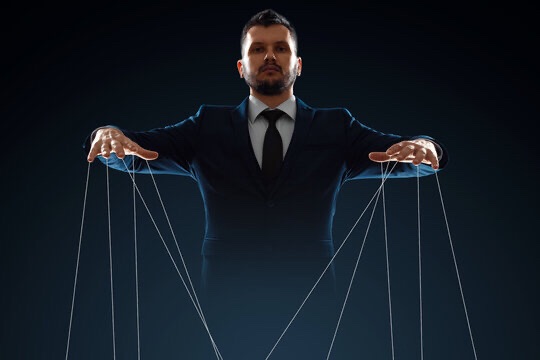
So there we have the fraternal “twins,” each doing what he does best and working toward a common goal: world domination. Not simply dominance; I said domination. The difference is subtle, and more than a little significant. And they both know it.
*. *. *
And what happened to Romulus and Remus? Well, after a somewhat bumpy childhood, as young men they set out to build a city together. But they fell out over the best location for it, and Remus made the mistake of insulting Romulus’ ideas for their plan. A fatal mistake, at that; he was killed, either by Romulus himself or one of his minions. And Romulus then went on to build the city-state of Rome according to his own vision. Problem solved.
“To Brotherhood”
So . . . Cain and Abel; Romulus and Remus; Hitler and Stalin . . . Putin and Xi? As always, we — the non-involved public — can only wait and see what shakes out of the trees, and then prepare to live with the bruised fruit. In the case of Messrs. Putin and Xi, I am breathless with anticipation . . . and a fair measure of sarcasm.
When my son was still an infant, I noticed that he always seemed to be a little late in entering a new phase of physical development, whether it was rolling over, sitting up, crawling, or standing. But I also noticed that, rather than spending days or weeks simply trying to do something, one day he would just do it, and would actually be pretty much on schedule after all, according to the “experts.” It took me a while — because he turned out to be a pretty clever little kid — but I finally figured it out.
What success looks like
He had been taking his afternoon nap in his room one day, and I went to check on him to see whether he was awake yet. I peered around the corner of his doorway and found him wide awake, kneeling and holding onto the bars of his crib, trying ferociously to pull himself up to a standing position. I waited quietly out of sight, mentally struggling with him, as he made little grunting sounds and pulled, and pulled, and pulled. And then . . . he did it! He was standing, all by himself, holding on to the top of the crib rail. And I was so excited, I burst into his room, shouted “You did it!” . . . and scared the bejeezus out of the poor baby. Startled, he let go of the rail, lost his balance, and plopped down on his fanny. Of course, he was fine; I picked him up, smothered him with hugs and kisses, and told him what an amazing, wonderful baby he was.
And I learned an important lesson about my little genius: He didn’t want to be seen trying and failing; he wanted to surprise and impress us by doing it right, seemingly for the first time. So he would practice when no one was looking, no matter how long it took, until he mastered whatever it was. He’s still like that.
Just like China.
*. *. *
It would be foolish to underestimate the intelligence and skill — and the patience — of a people who could create a traversable wall, snaking more than 13,000 miles through the mountains of their vast, isolated country, that would be visible from space some 2,000 years later . . . and complete it way back in the year 220 B.C.E. How many years, and how many lives, must that have taken?
The Great Wall of China
And around the same time, to have been capable of creating a collection of more than 8,000 lifelike terracotta sculptures depicting the army of Emperor Qin Shi Huang, including warriors, chariots and horses — each with unique features — to be buried with the Emperor upon his death as protection in the afterlife. And to preserve them in such a way that they would be discovered, almost twenty centuries later, in nearly pristine condition.
Terracotta Army at Xi’an, China
Yet that may be just what we have done. We may have underestimated — not the technical or artistic skills of the Chinese people — but the quiet political skills of their current leader, Xi Jinping, now just months into his third five-year term as President of China.
Oh, we’re well aware of his hard-line method of ruling his nation of nearly 1.5 billion people, spread out over 3.7 million square miles. And we’ve seen his gradual tightening of control over Hong Kong. We’re all too well aware of his designs on Taiwan; and he’s made no secret of his recent weapons testing and technological advances.
But what of this “New World Order” that he and his most recent best friend, Vladimir Putin, have been cooking up for an unknown length of time and have only recently begun to tout openly and loudly? You know, the one in which the United States and the rest of “the West” are relegated to second place, and the world is dominated by their vision of peace and control? Have they been perfecting that while no one was looking, only to spring it on the world when it’s already a done deal?
Soulmates
A perfect example of the implementation of Xi’s Utopian vision is Hong Kong. In 1997, when Jiang Zemin was at the helm of the government of the People’s Republic of China (PRC), Hong Kong had been a colony of the United Kingdom for more than 150 years under the terms of a treaty with China originally signed in 1842 and extended in 1898 for an additional 99 years. Looking ahead to 1997, the Sino-British Joint Declaration of 1984, together with Hong Kong’s Basic Law (the city’s constitutional document), dictated that Hong Kong would retain a “capitalist system and way of life,” and “a high degree of autonomy,” to include executive, legislative, and independent judicial powers for 50 years, until 2047. Under those terms, Hong Kong reached theretofore unprecedented levels of prosperity, and its citizens enjoyed freedoms unknown on the Chinese mainland . . .
. . . and a very active night life.
Xi clearly realized the benefits to be reaped from Hong Kong’s economic success, and few changes were instituted during the early years of his rule. But all of that began to change a few years ago; since then, “Beijing has taken increasingly brazen steps to encroach on Hong Kong’s political system and crack down on dissent. In 2020, Beijing imposed a sweeping national security law on Hong Kong. Since then, authorities have arrested dozens of pro-democracy activists, lawmakers, and journalists; curbed voting rights; and limited freedoms of the press and speech. These moves have not only drawn international condemnation but have also raised questions about Hong Kong’s status as a global financial hub and dimmed hopes that the city will ever become a full-fledged democracy.” [Lindsay Maizland, Council on Foreign Relations, last updated May 19, 2022.]
The creation of a “new world order” does not happen overnight. It takes time, thought, planning . . . and patience. The sort of patience that China has shown in its treatment of Hong Kong since 1997. Is it a coincidence that this new vision is being presented to the world at the same time the reins are being tightened on Hong Kong? Or when the free world is being stretched nearly to the breaking point by two disastrous wars? Or when China and Russia are once more best friends, each offering to step in to “fix things”?
Was it coincidence, all those years ago, that my baby boy finally reached each new level of accomplishment when someone just happened to be watching?
Have you ever felt as though you might be psychic? I know I’m not; but this is one of those days when I almost wonder . . .
This morning, for no particular reason, I wrote about Nikolai Patrushev, Secretary of the Russian Security Council: an old friend, former KGB colleague, and now good right hand of Vladimir Putin. Complicit in the invasions of Crimea in 2014, Syria in 2015, and Ukraine in 2022-23-whenever. A hawk who blames the West — and particularly the United States — for all of the world’s ills, and for what he considers the disastrous collapse of the Soviet Union.
And now, as it turns out, advocate of weapons of mass destruction.
Today, Patrushev — echoing the recent declarations of his boss, Vladimir Putin, and Putin’s BFF, Xi Jinping — has said that the era of U.S. dominance is over. “The natural consequence of the United States’ destructive policies is the deterioration in global security. The risk that nuclear, chemical and biological weapons will be used is increasing. The international arms control regime has been undermined.” [Guy Faulconbridge, Reuters, Nov. 8, 2023, quoting TASS (Russian news agency).]
[Note: What Mr. Patrushev neglected to mention was Russia’s withdrawal — just yesterday, November 7, 2023 — from the Treaty On Conventional Armed Forces in Europe (CFE), or its own war of aggression against Ukraine, which is completely adverse to the Treaty’s terms. Certainly, today’s comments cannot be coincidental.]
As reported by Reuters, Patrushev did not offer specific details as to the possible target(s) of such weapons, but did accuse Washington of “failing to bring peace to the Middle East and of escalating the war in Ukraine by supporting Kyiv.” [Guy Faulconbridge, Nov. 8, 2023.]
These are hardly original thoughts conjured by Patrushev alone. In today’s Russia — as in the seven decades of the Soviet Union’s existence — all policy is directed from the top, and only a fool would issue such a public statement without express direction or authorization from Putin himself.
Only A Fool Would Dare . . .
Unless, of course, those recent, persistent rumors of Putin’s death or serious disability should turn out to be true . . . in which case, this could be the first indication of an attempted power grab. But I’m jumping the gun (so to speak). As I said, I absolutely do not have, or claim to have, powers of divination. But knowing the pathological need of the Russian hierarchy for secrecy, especially in times of internal crisis, it’s awfully tempting to speculate.
Forget the mile-long patronymics (middle names, based on the father’s first name) that are such a traditional — and actually useful — part of the Russian naming protocol. To simplify, we’re talking here about Vladimir Putin and Nikolai Patrushev.
“WHO??” I’m sure I heard that coming from several directions, and not surprisingly. Outside of Russia — and the rarified world of Russophiles — Nikolai Patrushev is not exactly a household name. Which is probably why I overlooked him in a previous blog post when I was contemplating possible successors to Putin in the event of his . . . well . . . departure from the Kremlin. But with all of the recent rumors concerning Putin’s health, the slight possibility that he might choose not to run again in next March’s election, and even his possibly already being dead and mummified, up popped Patrushev’s name. So, being insatiably curious, I of course embarked on a little research trip into his background.
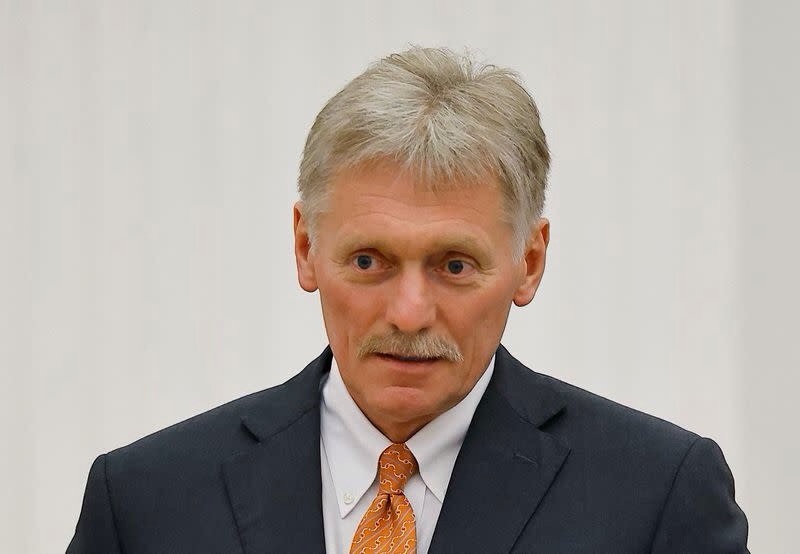
Nikolai Patrushev
I thought this was a pretty nice picture of him; he looks like a man trying out the executive chair at the Security Council table. Easy, Nikolai — I don’t think Putin is gone just yet. Unless you know something the rest of us don’t . . .
But Patrushev does belong at that table, if not (yet) at the head. He is Secretary of the Security Council of Russia, where he has served since 2008. Prior to that, he was employed as Director of the Federal Security Service (FSB), one of the two successor agencies to the KGB, from 1999 to 2008. (Coincidentally — that is, if you actually believe in these kinds of coincidences — 1999 was also the year in which Putin was first elected President of Russia.)
And speaking of coincidences that probably aren’t . . . Patrushev, who is just a year older than Putin, hails from the same home town of St. Petersburg (formerly Leningrad), and has known Putin since the 1970s, when they worked together as young men in the Leningrad KGB. He is now considered one of Putin’s inner circle of siloviki (people of influence), and is said to have played a key role in the decisions to invade Crimea in 2014, Syria in 2015, and . . . no surprise here . . . Ukraine, again, in 2022. He is generally known to be politically hawkish, and vehemently anti-Western.
Old “Friends.”
So, if Putin’s whereabouts are indeed in question, Patrushev is one of the few people who might actually know what’s going on. And let us not overlook the fact that seated right next to (or across from) him at that long Security Council table is the mercurial Dmitri Medvedev, who occupies the role of Deputy Chairman — the Chairman being Putin himself.
Now, that may sound like a nice cozy little triad, except for three very important facts: they’re Russian politicians, they’re all former “spooks” (as we Americans refer to our community of spies), and they all have their eyes fixed on climbing over each other and landing their asses in that cushy executive chair. Which makes them — besides contortionists — “frenemies” at best. And at worst . . . well, I’d say, capable of just about anything.
Well . . . hopefully not that!
*. *. *
At any rate, this situation ranks (in my view, at least) as 2023’s guessing game of the year. Actually, it’s a two-parter: “Is Putin Alive?” and “Who’s Next?” And that second part, whenever the time does come, is bound to be a thriller. Considering Russia’s long history of “palace intrigues,” and the lineup of contestants for this jackpot, I plan to settle in with a big bowl of chips; a family-size bag of M&Ms; and a quart of Stolichnaya’s finest vodka, chilled to warming perfection. It should be quite a show.
It’s heartwarming and reassuring to know that, amidst all the horror of the last 20 months, the devastation caused by the Russian “special military operation” begun in February of 2022, the deaths, destruction and displacements — while most assuredly taking their toll on his body and soul — have not been able to destroy Volodymyr Zelensky’s innate sense of humor. Not completely, anyway. But it took the likes of Donald Trump to bring it back to life.
Zelensky, the EntertainerZelensky, the Commander-In-Chief
We’ve probably all heard about Trump’s boast that, given the chance (i.e., being elected to the presidency next year), he could bring the war in Ukraine to an end within 24 hours. That was certainly enough to make me laugh out loud. And speaking with host Kristen Welker on NBC’s “Meet the Press,” President Zelensky offered this response:
“Former President Trump said that about 24 hours, that he can manage it and finish the war. For me, what can I say? So he’s very welcome as well.
”President Biden was here, and I think he understood some details which you can understand only being here. So I invite President Trump. If he can come here, I will need 24 minutes.”
Trump had previously said he could “solve” the war in Ukraine in one day, and that the negotiation process would be “very easy.” Zelensky said he would need just 24 minutes to explain to Trump that that wouldn’t be as easy as he thinks.
The ridiculous boast is funny enough. And President Zelensky’s response is characteristically witty. But what really tickles my funny bone is the thought of Donald Trump in a war zone. One whistling missile . . . one exploding drone . . . the sight of one Russian soldier, and . . . well, use your imagination as to how Mr. “I-can’t-go-to-Vietnam-because-I-have-bone-spurs” would react. (Mine is running amok.)
Trump, the Great Negotiator
Humor aside, Zelensky addressed the impossibility of trying to negotiate a peace with Putin in the face of Putin’s unacceptable demands for concessions from Ukraine — namely, giving up any part of Ukraine’s territory or its autonomy as an independent nation. Those are not negotiable . . . not by Donald Trump or anyone else.
“He can’t bring peace because of Putin,” Zelensky continued. “If he’s not trying and if he’s not ready to give our territory to this terrible man, to Putin, if you are not ready to give it, if you are not ready to give our independence, he can’t manage it.” [All quotes from The Hill, Nov. 5, 2023.]
Asked if he thought Trump would support Ukraine if he were to be elected in 2024, Zelensky said, “Really, I don’t know. I hope that it depends not only on the president institutionally. I think it depends on the opinion of Americans, of your society. I think that is most important.”
A smart man, President Zelensky. I hope we don’t disappoint him.
Aleksandr Grigoryevich Lukashenko, President of Belarus
Well, isn’t that just what this world needs: another mouth in the babble of voices already emanating from the general direction of Russia. There’s Putin, Medvedev, Lavrov, Peskov, Kadyrov . . . and now, not for the first time, Lukashenko. Putin’s Belarusian lapdog, sometimes referred to as “Europe’s Last Dictator” (we wish!), offering his two cents’ worth of advice to Ukraine . . . which is just about what it’s worth.
Ironically, this time he may have judged the situation correctly, at least in part. But what he has chosen to say about it is, as usual, despicable and inflammatory. And we can only hope that the conclusions he has drawn, and the predictions he has made, are just more of his attempts to appear relevant.
This week, speaking at a meeting with representatives of the Belarusian Nuclear Power Plant’s labour collective, construction workers, social infrastructure workers, and residents of the city of Ostrovets, he claimed that “Ukraine is already fading into the background as far as the United States is concerned, and that Ukrainian President Volodymyr Zelenskyy is supposedly preparing to leave the country.” [Ukrainska Pravda, Nov. 3, 2023.]
(The first part of that sentence is, sadly, not completely wrong. The second part is a complete mystery.) – ed.
Making A Point
And continuing: “Ukraine will still be ours. Nobody needs this Ukraine. Trouble brewing in the Middle East . . . I warned him when the war started. I called Zelenskyy and said: ‘Volodya, listen to me. I’m an experienced man, I’ve worked for years. As soon as some trouble begins, you’ll be forgotten.’ And then what happened? Ukraine is now being overshadowed.
“You have to use your head before getting the country involved in some reckless scheme.”
“Really, Sasha?”
(“Getting involved in”? Is that the same as “being invaded by”?) – ed.
*. *. *
Of course, he had something more to say about the U.S.:
“[The United States is] far away, they are big, they absolutely don’t need this.”
And: “Their policy is to muddy the waters. They like starting something in these muddy waters . . . You know, it’s good fishing in troubled waters. That’s their policy. Everything else is expendable, just like Ukraine today. This is why this region [Ukraine] is our region, in the sense that we will be together.”
Stirring Things Up
(The only thing “muddy” here would seem to be his thought process. He believes Ukraine and Russia belong together because the United States likes to fish in troubled waters? Um . . . okay, then. Although, in all fairness, maybe it’s the translation.) – ed.
*. *. *
Lukashenko also claimed that, sooner or later, “Europe will crawl back to Belarus and Russia [because] the Americans are tearing Europe apart any way they want today. And Europe cannot resist because everything depends on the American market — credit, property, and the rest.”
(I’m trying to imagine Europe “crawl[ing] back to Belarus and Russia.” When was most of Europe there in the first place? Except, of course, for the several Baltic and Eastern European nations that were invaded and dragged into the Soviet Bloc during and after World War II.) – ed.
Continuing: “They [Western politicians] don’t even think about their people. They go to prison once or twice, they steal, pocket their gains and run away somewhere. Just like Zelenskyy is getting ready to run off.” [All quotes as reported by Ukrainska Pravda, Nov. 3, 2023.]
(There’s that reference to Zelensky running away again. I’d be most interested to know where he got that tidbit of “information.”) – ed.
“Volodya! Where are you going?”
*. *. *
I’ve referred to Putin in an earlier post as “the mouth that roars . . . and roars . . . and roars.” Aleksandr Lukashenko doesn’t measure up to that description; his is the mouth that spews toxic waste. Are these merely the inarticulate ramblings of an ambitious man attempting to curry favor with “the boss” in Moscow? Or is he already in Putin’s circle of favored puppets, doing the boss’ bidding? Whatever he’s trying to accomplish, he’s doing a lousy job of it.
But he is the dictatorial leader of a small nation with big ambitions on the world stage, and a useful part of Putin’s world because of his country’s strategic location. We should be careful not to overlook him while dealing with bigger concerns. The world has made that mistake too many times throughout history. And, at the risk of being boringly repetitious, a reminder: “Those who forget history . . .” You know the rest.
Did Hitler remember Napoleon? Apparently not . . .
Fashions come and fashions go; tastes change with the changing times. And it’s not only clothes, cars, and forms of entertainment; it’s also what we eat. What we consider tasty today bears little resemblance to the things we ate twenty, thirty . . . all right, seventy years ago. Think back with me, as far as you can . . .
The Eternal, Eternally Yummy, Mac and Cheese
Fine! So some things don’t change! I can’t explain the mystique surrounding mac and cheese; but like the lights on a Christmas tree, it’s here to stay. Maybe because every child who’s ever been born goes through that phase of refusing to eat anything else. This may not be the most nutritious toddler food, but at least it fills their little tummies. And the cheese does have protein. Why we adults continue to worship at its altar, is another question entirely.
I’ll skim quickly through my early childhood, because my family didn’t eat like everyone else in those days, so I have no frame of reference as to what was generally popular. My Russian/Ukrainian grandparents were an ever-present (and wonderful) part of our lives then, and my maternal grandmother (Bubbe) was a fantastic cook, while my grandfather (Zayde) owned a one-man Kosher bakery. So we ate pot roast and potato latkes, knishes, rolled cabbages, blintzes, kasha with bow tie pasta moistened with real chicken fat (rendered from real chickens), along with those chickens fixed a dozen different ways . . . and lots of bread. Rye bread, challah, bagels, all fresh from the brick oven in Zayde’s bakery just down the street. And in the summer, fresh vegetables from the garden in the back yard.
But by the ‘50s, we had moved on. Zayde had passed away; my aunt was looking after Bubbe, who didn’t cook as much by then; and life had changed. My mother was a good cook and had held on to a lot of her mother’s ways, but with the addition of a few more “contemporary” things. Like the spaghetti sauce she learned to make from an Italian friend. And the incredibly light cheesecake from a New York lady she knew. And fish . . . always fried. But I also began eating some meals at school, and at friends’ houses. And I remember something called chicken a la king. It was, as I recall, chunks of chicken floating in a creamy sauce, and it had peas and pimientos in it. I hate pimientos, so I tried to avoid it, but it wasn’t always possible when it was the main course at your friend’s house. And sometimes pork chops, a treat that we didn’t get at home because they were tref and might kill us.
In later elementary school (through the 8th grade), we came home for lunch. I think my mother kind of resented having her daily radio soap operas interrupted by my lunch hour, because those meals were always quick and easy: grilled cheese and tomato soup (still a winter favorite); tuna, bologna, or PB&J sandwiches; and canned Spaghetti-os, or Chef Boy-ar-dee ravioli. Fortunately, dinners were much better because my father would not have been happy with Spaghetti-os.
There were even more changes when we got to high school. Pizza — or a reasonable facsimile of the Italian original — made its way to the United States, and we kids couldn’t get enough of it! In the Washington area, we also had a chain of family-style restaurants called Hot Shoppes, where my mother took my sister and me for dinner as a special treat at the end of each work/school week. Their food was about as original as the theme song to their TV ads: “East side, west side, morning, noon or night . . . you’ll always find that Hot Shoppes food is absolutely right.” Can’t you just picture James Cagney tap-dancing to it? That was the ‘50s for you.
Ice cream concoctions were also all the rage, some big enough to serve twelve gluttonous teenagers, to finish off the evening after a school dance or football game. We didn’t worry about double-dipping in those days; sharing our germs wasn’t an issue because we were all friends. And nobody died from it.
It wasn’t until the later ‘50s and into the ‘60s that things started to change drastically. I was out of school and working by then, and mixing with an older group of co-workers who ate out (and drank out) a lot. I remember a growing interest in “foreign” foods: quiche, ratatouille, chicken Kiev. And my older sister was quite fond of throwing dinner parties, where she liked to experiment with the latest trends. One of the big things at the time was fondue — chunks of crusty bread dipped into a hot cheese mixture, or fruit and cubes of cake slathered in melted chocolate. It was messy, and you didn’t eat a lot of it, but it was yummy. I understand it’s made something of a comeback, though obviously not among the health-conscious.
Through the ‘60s and ‘70s, people gave a lot of parties, especially around the holidays. Our tree-trimming party in December was always a big hit, mainly because my mother and I would spend two full days preparing a mountain of food. She made miniature versions of her rolled cabbages — a huge job — while I worked on the three-layer taco dip, sour-cream-and-onion dip with potato chips, veggie platter with more dip, fruit-and-cheese platter, jumbo shrimp platter, and the last-minute preparation of hot mini Reuben sandwiches (served on a platter, of course), and a delicacy called Rumaki: chicken liver and water chestnut wrapped in a slice of bacon and broiled just until the bacon was crisp. And to top it all off, my mother created the world’s best cheesecake for dessert. If there was no cheesecake, it wasn’t a party.
And the bar in those days was not just wine and beer. We stocked up on bourbon, Scotch, gin, vodka, rum, ginger ale, soda, tonic water, and every kind of mixer ingredient you can imagine. Bags of ice were brought in and set outside in coolers on the balcony, and the jars of olives, cocktail onions and maraschino cherries were neatly lined up on the bar. And if we could persuade her, one friend would bring a huge bowl of her homemade eggnog, amply spiked, thank you. As you can imagine, by the time our food-and-booze orgy was over, the tree trimmings sometimes looked a little cockeyed, but that was half the fun. The other half was sleeping it off the next day.
The Morning After
That was also a time when families began to discover a “need” for all sorts of marvelous new kitchen gadgets, like electric knives (you could dissect that Thanksgiving turkey in no time); deep fryers (everything soaked in yummy, recycled grease); blenders (frozen daiquiris sent sales of rum through the roof); and a whole assortment of Ron Popeil’s magical goodies like his Veg-O-Matic (a best seller thanks to an endless barrage of TV commercials). All we needed was a bigger kitchen to hold it all.
And today . . . what do we have? The electric knife is still around, but I don’t know anyone who actually owns one; we do, however, have a lovely set of Ginsu knives. The deep fryer has been replaced by the air fryer; the blender — some of the more pricey of which will also make hot soup without a source of heat — is mostly used for healthy smoothies; and the Veg-O-Matic is a collector’s item, long since discarded in favor of a food processor that does everything except the dishes.
Just A Few Necessities
*. *. *
And what about the food itself? In this calorie-counting, reduced-sodium, sugar-free, vegan, Keto, low-carb world of ours, what do we eat? Not much worth remembering years from now . . . or even tomorrow. Salads with a drizzle of olive oil and a splash of lemon juice or vinegar. Broiled fish or white-meat chicken, and maybe — very rarely — a very lean steak, which usually means a tough, dry steak, so why bother? Sushi, if you can stand it. Or, as an occasional treat, the diet plate at the Chinese restaurant where you used to order, in the good old days, the wonton soup, coconut shrimp, fried rice, fried dumplings, egg foo yung, mooshu pork with extra pancakes, and a couple of spring rolls.
We have become “health-conscious” . . . in a world that has given us in return a hundred different varieties of cancer, kidney disease, diabetes, pancreatitis, reflux, hiatal hernias, and all sorts of heart diseases. And you can’t convince me that they’re solely the result of our formerly bad diets. Because back when people just ate what was available, and what tasted good, we felt better. And we enjoyed life, without all the guilt we suffer today if we dare to order dessert. So if we’re going to get old and die anyway, why not go back to the rolled cabbages, and the fried everything, and the eggnog and cheesecake? And wash it all down with a couple of frozen daiquiris. At least we’d have better odds of leaving this world with smiles on our faces.
In this era of “body positivity,” when we’re also told that “curvy” is a good thing, why not just go ahead and let it all hang out?