When my son was still an infant, I noticed that he always seemed to be a little late in entering a new phase of physical development, whether it was rolling over, sitting up, crawling, or standing. But I also noticed that, rather than spending days or weeks simply trying to do something, one day he would just do it, and would actually be pretty much on schedule after all, according to the “experts.” It took me a while — because he turned out to be a pretty clever little kid — but I finally figured it out.

He had been taking his afternoon nap in his room one day, and I went to check on him to see whether he was awake yet. I peered around the corner of his doorway and found him wide awake, kneeling and holding onto the bars of his crib, trying ferociously to pull himself up to a standing position. I waited quietly out of sight, mentally struggling with him, as he made little grunting sounds and pulled, and pulled, and pulled. And then . . . he did it! He was standing, all by himself, holding on to the top of the crib rail. And I was so excited, I burst into his room, shouted “You did it!” . . . and scared the bejeezus out of the poor baby. Startled, he let go of the rail, lost his balance, and plopped down on his fanny. Of course, he was fine; I picked him up, smothered him with hugs and kisses, and told him what an amazing, wonderful baby he was.
And I learned an important lesson about my little genius: He didn’t want to be seen trying and failing; he wanted to surprise and impress us by doing it right, seemingly for the first time. So he would practice when no one was looking, no matter how long it took, until he mastered whatever it was. He’s still like that.
Just like China.
*. *. *
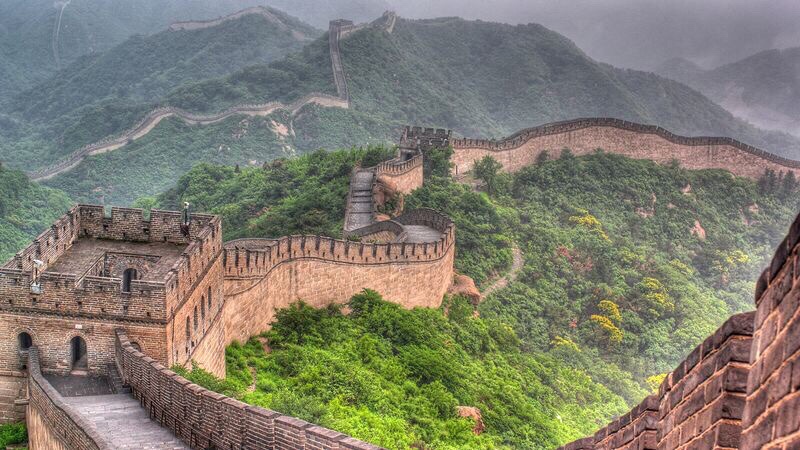
It would be foolish to underestimate the intelligence and skill — and the patience — of a people who could create a traversable wall, snaking more than 13,000 miles through the mountains of their vast, isolated country, that would be visible from space some 2,000 years later . . . and complete it way back in the year 220 B.C.E. How many years, and how many lives, must that have taken?
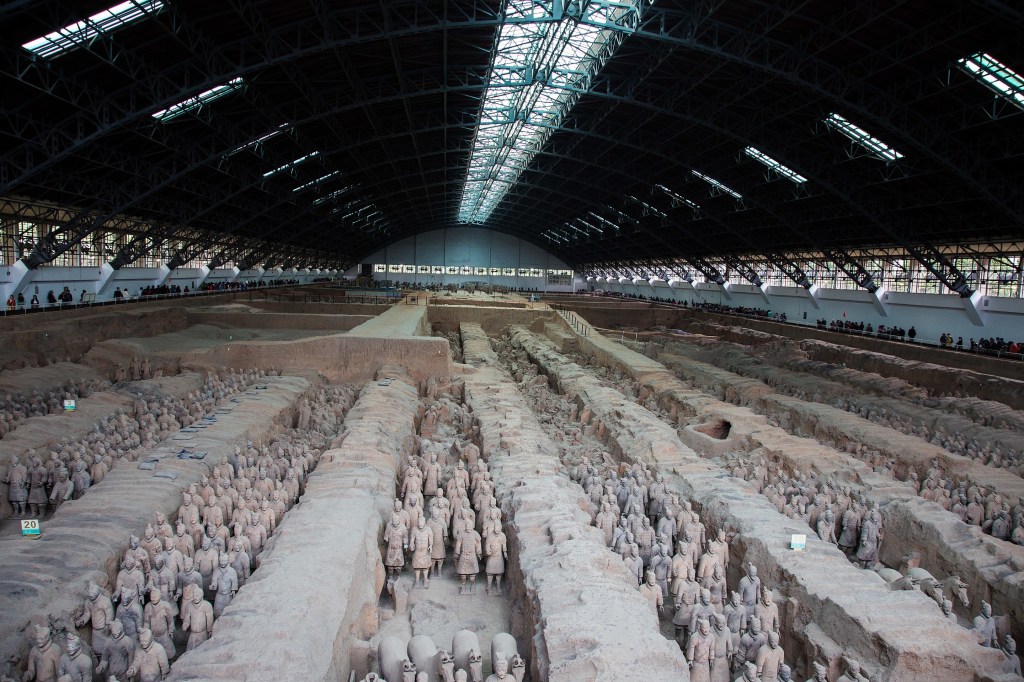
And around the same time, to have been capable of creating a collection of more than 8,000 lifelike terracotta sculptures depicting the army of Emperor Qin Shi Huang, including warriors, chariots and horses — each with unique features — to be buried with the Emperor upon his death as protection in the afterlife. And to preserve them in such a way that they would be discovered, almost twenty centuries later, in nearly pristine condition.
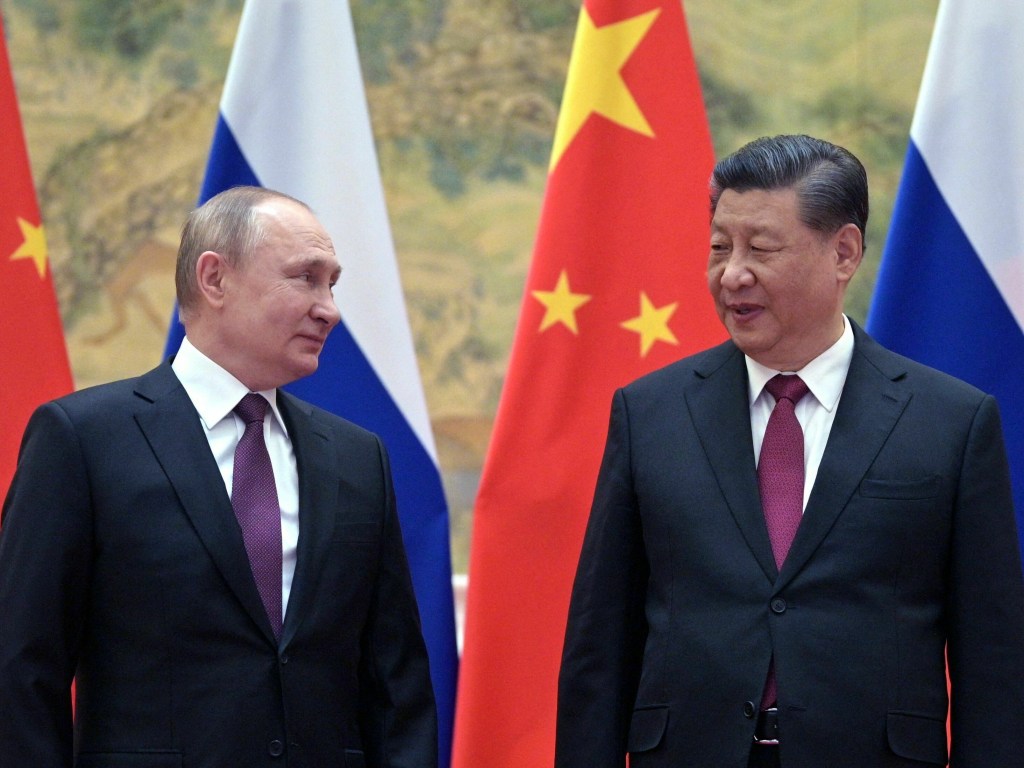
Yet that may be just what we have done. We may have underestimated — not the technical or artistic skills of the Chinese people — but the quiet political skills of their current leader, Xi Jinping, now just months into his third five-year term as President of China.
Oh, we’re well aware of his hard-line method of ruling his nation of nearly 1.5 billion people, spread out over 3.7 million square miles. And we’ve seen his gradual tightening of control over Hong Kong. We’re all too well aware of his designs on Taiwan; and he’s made no secret of his recent weapons testing and technological advances.
But what of this “New World Order” that he and his most recent best friend, Vladimir Putin, have been cooking up for an unknown length of time and have only recently begun to tout openly and loudly? You know, the one in which the United States and the rest of “the West” are relegated to second place, and the world is dominated by their vision of peace and control? Have they been perfecting that while no one was looking, only to spring it on the world when it’s already a done deal?
A perfect example of the implementation of Xi’s Utopian vision is Hong Kong. In 1997, when Jiang Zemin was at the helm of the government of the People’s Republic of China (PRC), Hong Kong had been a colony of the United Kingdom for more than 150 years under the terms of a treaty with China originally signed in 1842 and extended in 1898 for an additional 99 years. Looking ahead to 1997, the Sino-British Joint Declaration of 1984, together with Hong Kong’s Basic Law (the city’s constitutional document), dictated that Hong Kong would retain a “capitalist system and way of life,” and “a high degree of autonomy,” to include executive, legislative, and independent judicial powers for 50 years, until 2047. Under those terms, Hong Kong reached theretofore unprecedented levels of prosperity, and its citizens enjoyed freedoms unknown on the Chinese mainland . . .
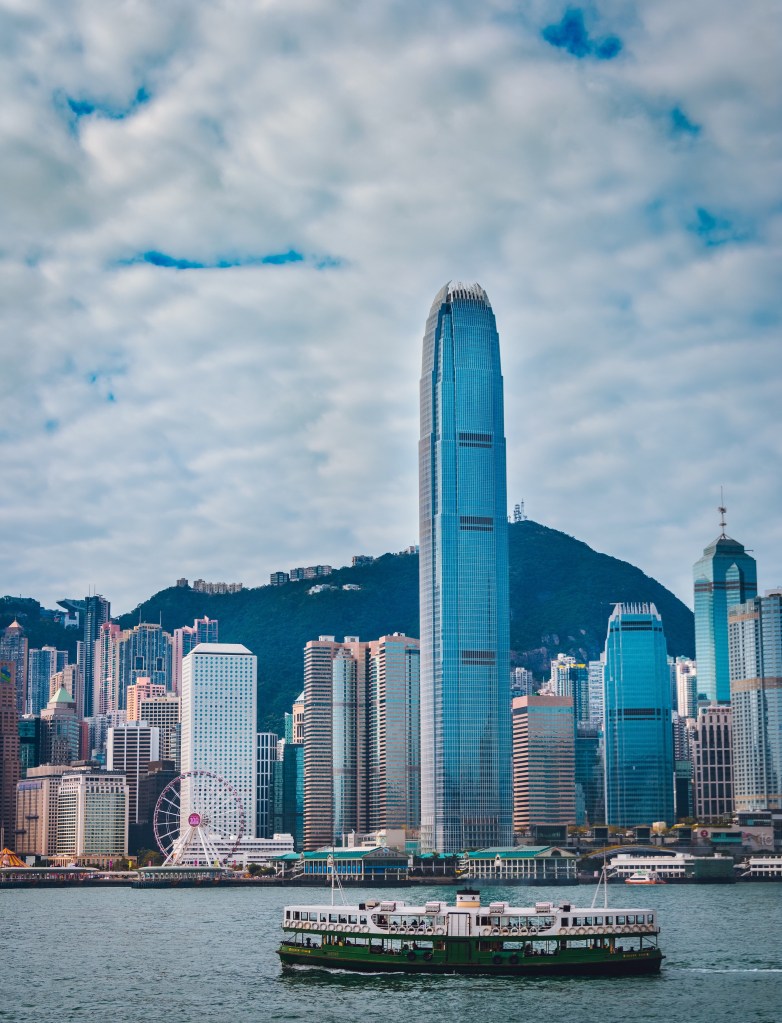
. . . and a very active night life.
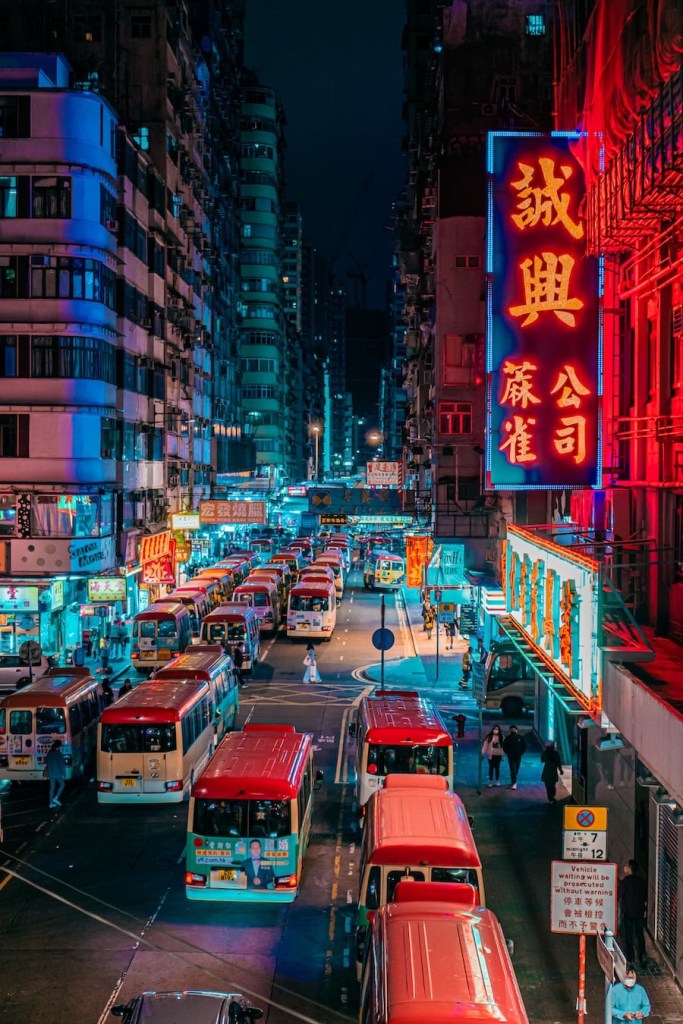
Xi clearly realized the benefits to be reaped from Hong Kong’s economic success, and few changes were instituted during the early years of his rule. But all of that began to change a few years ago; since then, “Beijing has taken increasingly brazen steps to encroach on Hong Kong’s political system and crack down on dissent. In 2020, Beijing imposed a sweeping national security law on Hong Kong. Since then, authorities have arrested dozens of pro-democracy activists, lawmakers, and journalists; curbed voting rights; and limited freedoms of the press and speech. These moves have not only drawn international condemnation but have also raised questions about Hong Kong’s status as a global financial hub and dimmed hopes that the city will ever become a full-fledged democracy.” [Lindsay Maizland, Council on Foreign Relations, last updated May 19, 2022.]
The creation of a “new world order” does not happen overnight. It takes time, thought, planning . . . and patience. The sort of patience that China has shown in its treatment of Hong Kong since 1997. Is it a coincidence that this new vision is being presented to the world at the same time the reins are being tightened on Hong Kong? Or when the free world is being stretched nearly to the breaking point by two disastrous wars? Or when China and Russia are once more best friends, each offering to step in to “fix things”?
Was it coincidence, all those years ago, that my baby boy finally reached each new level of accomplishment when someone just happened to be watching?
Really?

Just sayin’ . . .
Brendochka
11/9/23
 The Blog About Everything … and Sometimes Nothing